9 Best Intelligent Support Assistant Software Solutions in 2026
Intelligent support assistant software leverages AI to automate routine customer inquiries, reduce response times, and allow human agents to focus on complex issues. This guide reviews the nine best intelligent support assistant software solutions for 2026, evaluated on AI capabilities, integration options, deployment ease, and real-world performance to help support teams handle growing ticket volumes while meeting customer expectations for instant, accurate responses.
 Matt PattoliFounder11 min read
Support teams are drowning in tickets while customers expect instant, accurate responses around the clock. Intelligent support assistant software uses AI to handle routine inquiries, guide users through complex processes, and escalate issues to human agents when needed—all while learning from every interaction. The right solution can dramatically reduce response times and free your team to focus on high-value conversations.
We evaluated dozens of platforms based on AI capabilities, integration depth, ease of deployment, and real-world performance. Here are the nine intelligent support assistant tools worth your attention this year.
1. Halo AI
Best for: Teams seeking AI-first support that continuously learns and connects across their entire business stack.
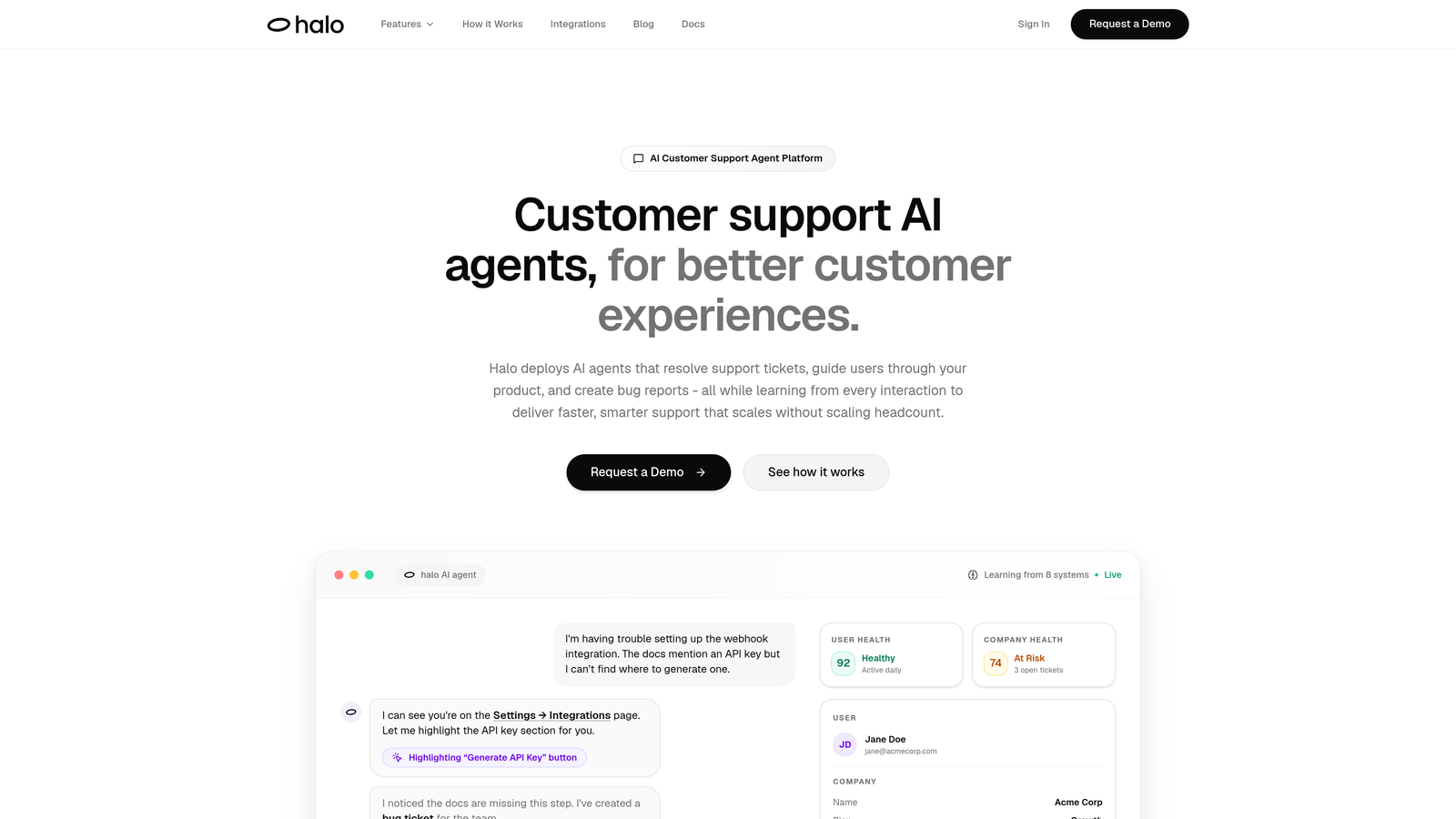
Halo AI is an AI-powered customer support platform built around intelligent agents that resolve tickets, guide users through your product, and create bug reports autonomously.
Where This Tool Shines
Unlike legacy helpdesks with AI bolted on, Halo was architected as an AI-first platform from the ground up. Its page-aware chat widget sees exactly what users see on their screens, enabling visual UI guidance that goes beyond text-based responses.
The platform continuously learns from every interaction, improving its resolution accuracy over time without manual retraining. When issues require human expertise, the system escalates intelligently while preserving full context for your team.
Key Features
Page-Aware Context: The chat widget understands user location and screen content, providing visual guidance tailored to what customers are actually seeing.
Autonomous Ticket Resolution: AI agents handle routine inquiries end-to-end, escalating only when complexity requires human judgment.
Auto Bug Ticket Creation: Automatically generates detailed bug reports in Linear from support conversations, streamlining product team workflows.
Business Intelligence Analytics: Surfaces customer health signals, revenue intelligence, and anomaly detection beyond standard support metrics.
Deep Stack Integrations: Connects to Linear, Slack, HubSpot, Intercom, Stripe, Zoom, PandaDoc, and Fathom for unified business context.
Best For
B2B companies and product teams using helpdesk systems like Zendesk, Freshdesk, or Intercom who need support automation that understands product context and connects to their entire business stack. Particularly valuable for teams where support conversations contain product feedback and engineering signals.
Pricing
Contact for custom pricing based on team size and feature requirements. Demo available to explore capabilities before commitment.
2. Intercom Fin
Best for: Teams already using Intercom who want GPT-4 powered automation with minimal setup effort.
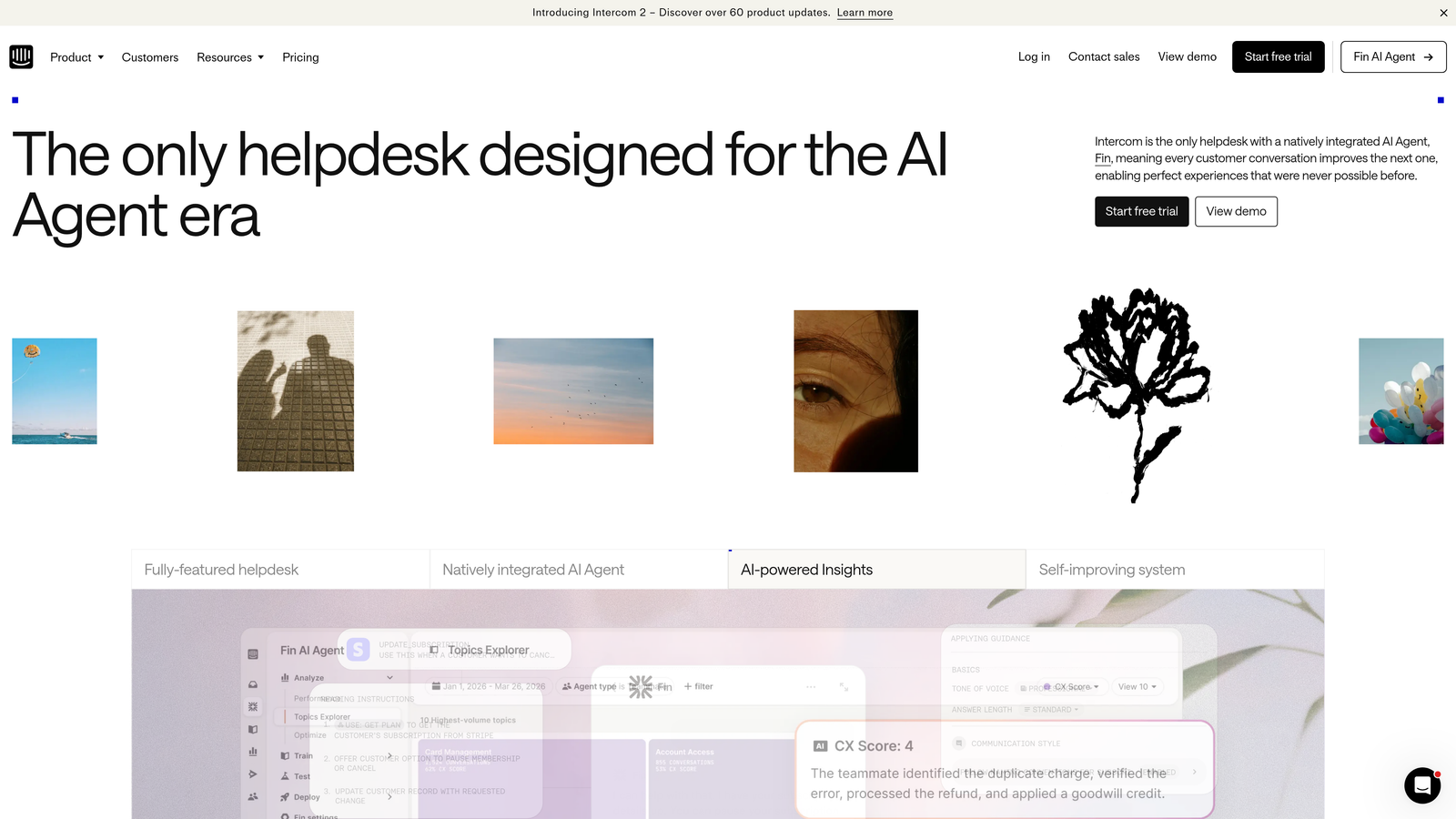
Intercom Fin is an AI chatbot that resolves customer questions using your existing knowledge base and past conversations.
Where This Tool Shines
Fin leverages GPT-4 to deliver conversational responses that feel natural and contextually relevant. Because it's built directly into Intercom, deployment takes minutes rather than weeks—no separate platform to manage or integrate.
The system learns from your help center articles and historical support conversations, continuously improving its understanding of your product and common customer needs. When it encounters questions beyond its scope, handoff to human agents preserves conversation context seamlessly.
Key Features
GPT-4 Conversational AI: Uses advanced language models to understand intent and generate human-like responses.
Knowledge Base Learning: Automatically trains on your help center content and past support interactions without manual configuration.
Customizable Personality: Adjust tone, voice, and response style to match your brand guidelines.
Resolution Analytics: Track which questions Fin resolves autonomously versus those requiring human escalation.
Seamless Agent Handoff: Transfers conversations to human agents with full context when complexity exceeds AI capabilities.
Best For
Companies already invested in the Intercom ecosystem who want to add AI automation without switching platforms. Works well for teams with established knowledge bases and clear documentation.
Pricing
Starts at $0.99 per resolution, making costs directly tied to value delivered. Volume discounts available for high-resolution counts.
3. Zendesk AI
Best for: Enterprise teams using Zendesk Suite who need AI capabilities integrated across their existing workflows.
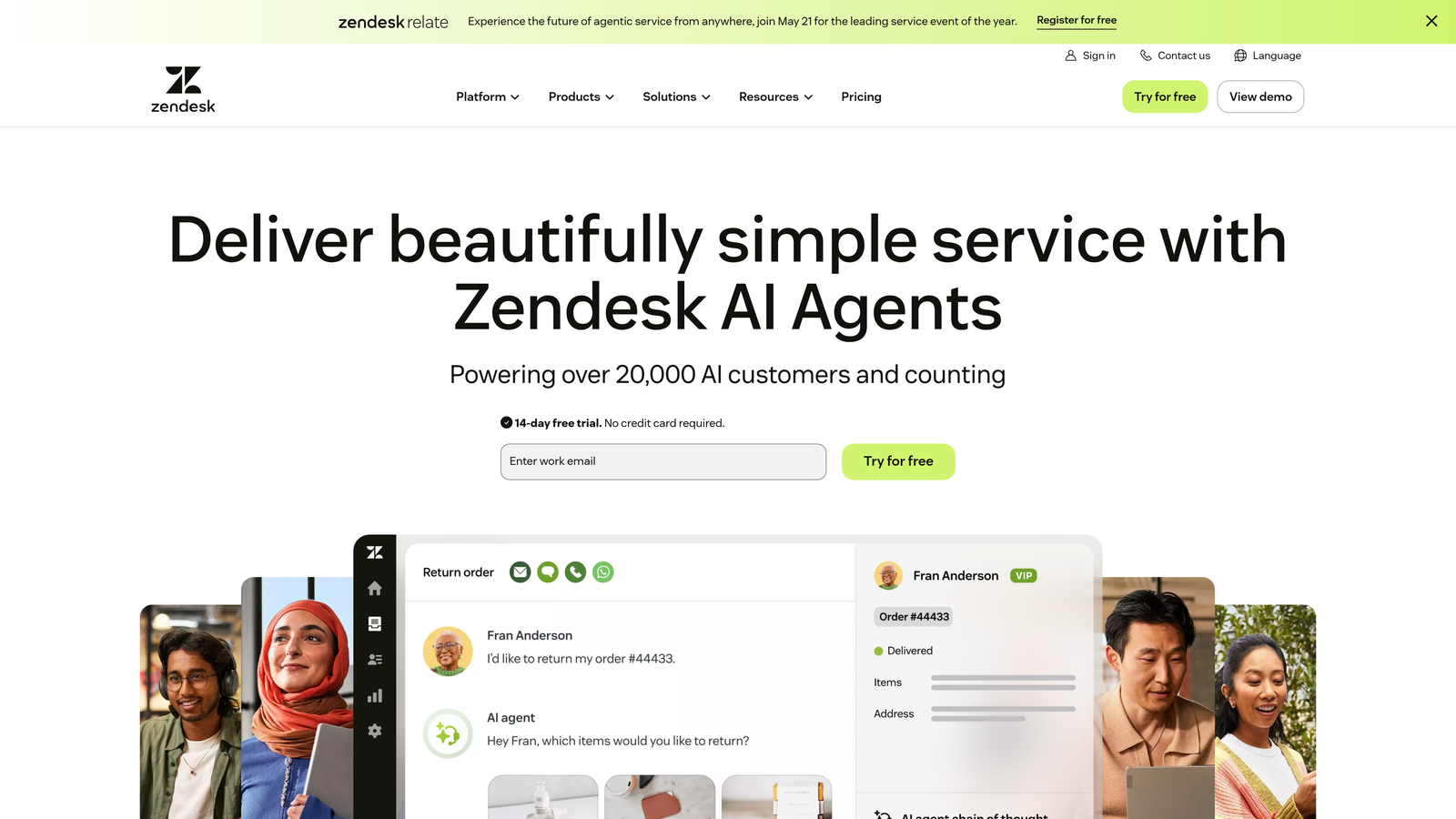
Zendesk AI provides intelligent triage, agent assistance, and automated responses built directly into the Zendesk platform.
Where This Tool Shines
For teams already running on Zendesk, the AI features integrate seamlessly with existing ticket workflows, macros, and reporting structures. There's no learning curve for a separate platform—your agents work within the same interface they already know.
The intent detection and sentiment analysis capabilities help prioritize urgent issues automatically, ensuring high-stakes conversations reach the right agents quickly. Agent-assist features suggest relevant macros and knowledge base articles in real-time, accelerating response times even when humans handle the interaction.
Key Features
Intent and Sentiment Detection: Automatically classifies incoming tickets by topic and emotional urgency for smarter routing.
Intelligent Ticket Routing: Directs conversations to the most qualified agents based on expertise, workload, and ticket complexity.
Agent-Assist Suggestions: Recommends relevant macros and knowledge base articles as agents respond to tickets.
Zendesk Ecosystem Integration: Works natively with Guide, Talk, Chat, and other Zendesk products without additional configuration.
Automated Response Generation: Creates draft responses for common inquiries that agents can review and send with one click.
Best For
Enterprise support organizations already standardized on Zendesk who want to enhance existing workflows with AI rather than replacing their entire support infrastructure.
Pricing
Included in Suite Professional and above, starting at $115 per agent per month. No separate AI licensing required for these tiers.
4. Freshdesk Freddy AI
Best for: Small to mid-sized teams seeking affordable AI automation with no-code bot building capabilities.
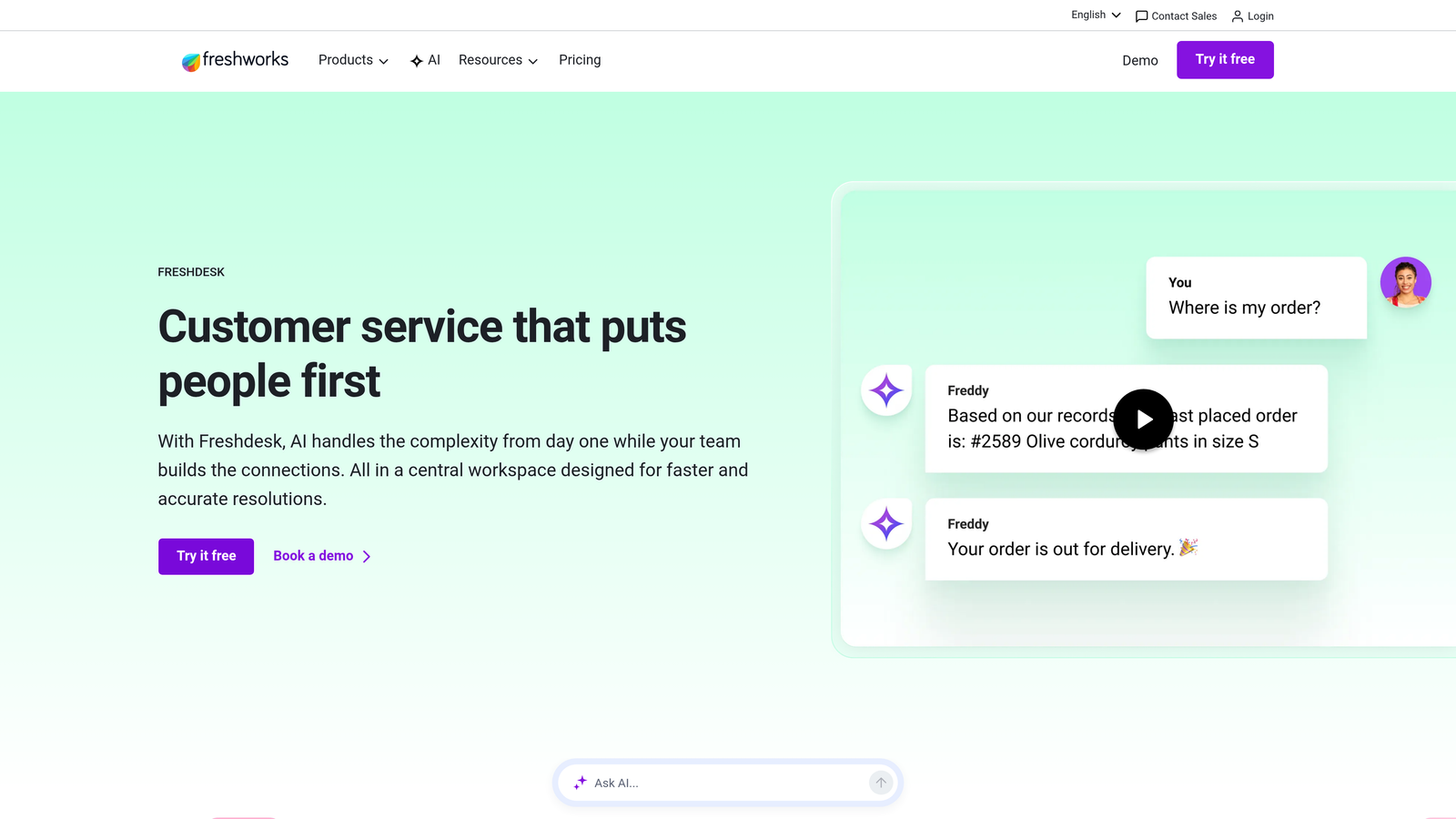
Freshdesk Freddy AI handles ticket triage, suggests responses to agents, and enables chatbot creation without technical expertise.
Where This Tool Shines
Freddy AI makes intelligent automation accessible to teams without dedicated engineering resources. The no-code bot builder lets support managers create conversational flows using a visual interface, eliminating dependency on developers for deployment and updates.
The auto-triage functionality categorizes and prioritizes incoming tickets based on content analysis, saving agents from manual sorting. A particularly clever feature is the thank you detector, which prevents reopening tickets when customers simply reply with gratitude after resolution.
Key Features
Auto-Triage System: Automatically categorizes tickets by topic and assigns priority levels based on content analysis.
AI Response Suggestions: Recommends complete responses to agents based on ticket content and historical resolutions.
No-Code Bot Builder: Create conversational workflows using drag-and-drop interface without writing code.
Thank You Detection: Identifies gratitude responses and prevents unnecessary ticket reopening.
Multi-Channel Support: Works across email, chat, phone, and social media channels within Freshdesk.
Best For
Growing companies that need AI capabilities at an accessible price point, particularly teams without technical resources to build and maintain custom automation.
Pricing
Basic AI features start at $15 per agent per month. Advanced capabilities available in higher-tier plans.
5. Ada
Best for: High-volume consumer brands requiring multilingual support automation across global markets.
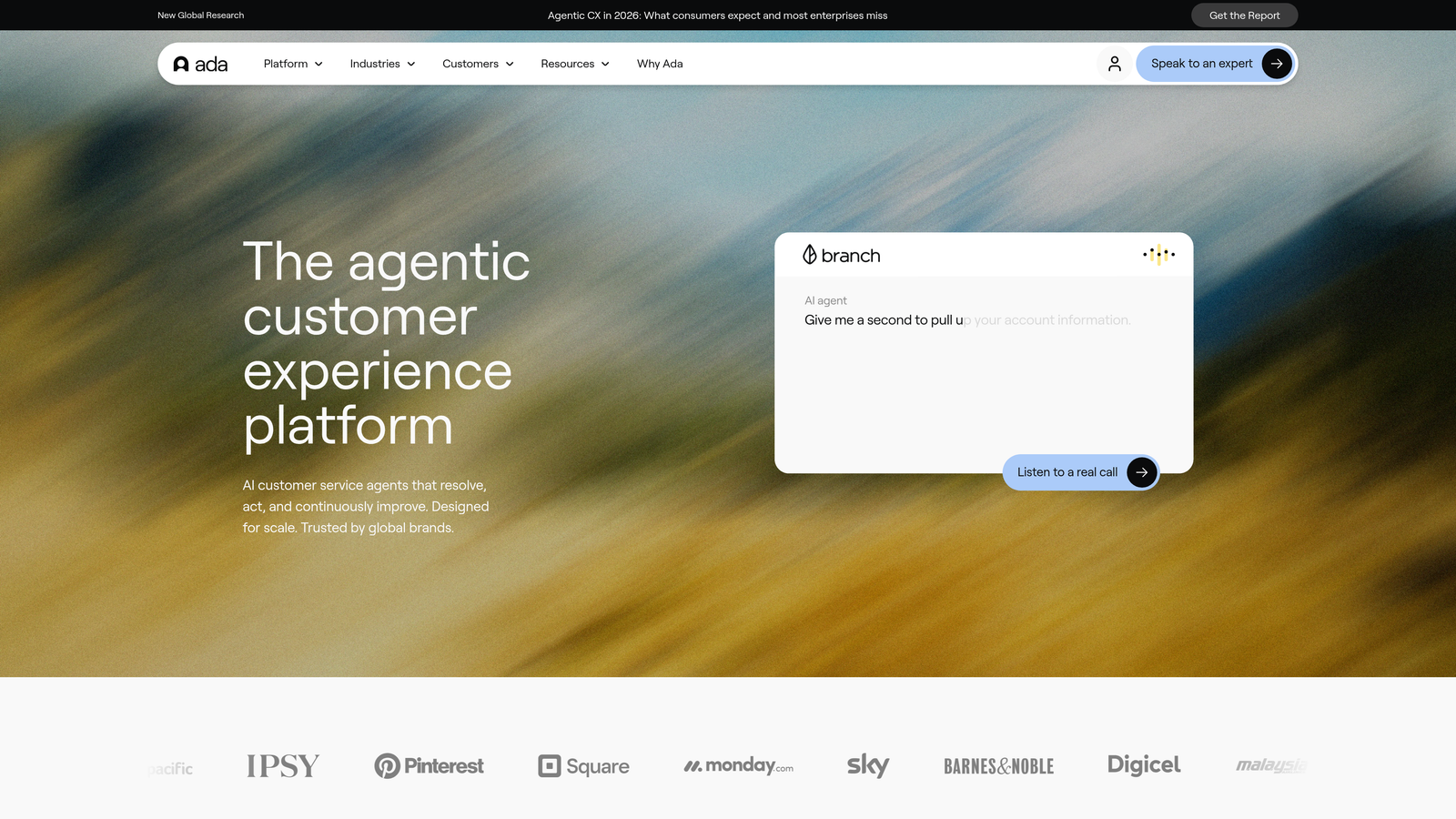
Ada is an AI-powered customer service platform designed for automated resolution without requiring human handoff in most interactions.
Where This Tool Shines
Ada's native support for 50+ languages makes it particularly valuable for companies serving global customer bases. The platform doesn't just translate—it understands cultural context and language nuances across different markets.
The system is built around automated resolution as the primary goal rather than just deflection. Most customer interactions complete entirely through AI, with proactive messaging capabilities that anticipate needs based on customer behavior patterns.
Key Features
Native Multilingual Support: Handles conversations in over 50 languages with cultural context awareness, not simple translation.
Full Automated Resolution: Designed to complete most customer interactions without human intervention.
Proactive Messaging: Initiates conversations based on customer behavior signals and journey stage.
Personalization Engine: Tailors responses using customer data and interaction history for relevant experiences.
Enterprise Security: Meets compliance requirements for regulated industries with SOC 2, GDPR, and HIPAA certifications.
Best For
Large consumer brands handling high conversation volumes across multiple countries and languages, particularly in retail, travel, and financial services sectors.
Pricing
Custom pricing based on monthly conversation volume and feature requirements. Contact sales for quotes tailored to your scale.
6. Kustomer IQ
Best for: E-commerce and retail companies needing unified customer views with intelligent automation.
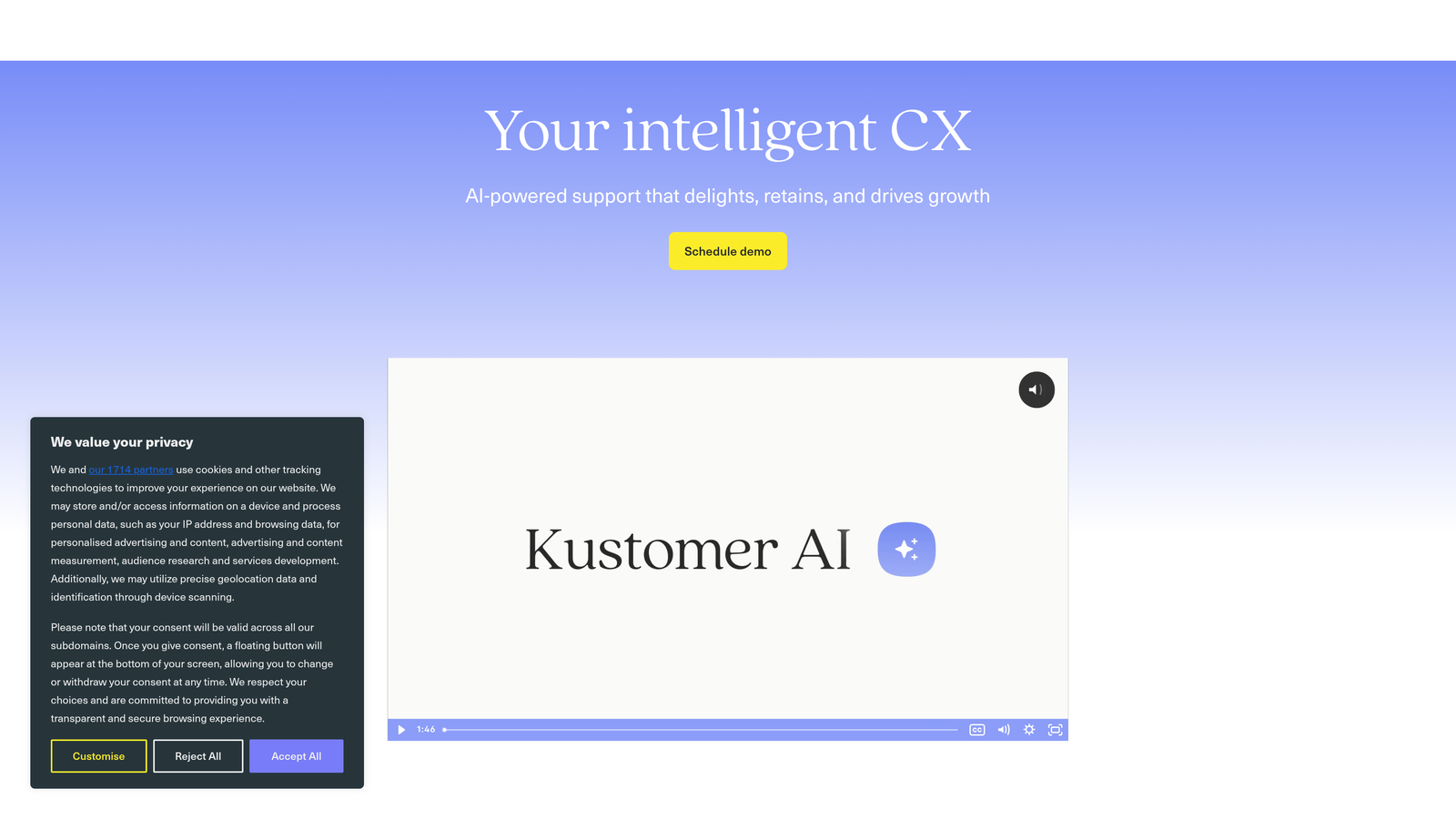
Kustomer IQ provides AI capabilities within the Kustomer CRM platform, specializing in retail and e-commerce support workflows.
Where This Tool Shines
Kustomer's unified customer timeline aggregates every interaction, purchase, and support conversation into a single view that AI uses for context-rich responses. When a customer contacts support, the system already knows their order history, previous issues, and current account status.
The platform excels at proactive outreach based on customer signals—abandoned carts, shipping delays, or account changes trigger automated conversations that feel personalized rather than generic. For e-commerce teams, the order tracking and fulfillment integrations eliminate repetitive "where is my order" inquiries.
Key Features
Unified Customer Timeline: Aggregates all customer data, interactions, and transactions into a single chronological view.
Intent Classification AI: Automatically categorizes conversation intent for intelligent routing and response suggestions.
Proactive Outreach: Triggers automated conversations based on customer behavior signals and lifecycle events.
Order Tracking Integration: Connects to e-commerce platforms for real-time shipping and fulfillment status updates.
Retail-Specific Workflows: Pre-built automation for returns, exchanges, loyalty programs, and product recommendations.
Best For
E-commerce and retail companies that need support automation tightly integrated with order management, inventory systems, and customer purchase history.
Pricing
Starts at $89 per user per month. E-commerce-specific features may require higher-tier plans.
7. Tidio Lyro
Best for: Small businesses and startups seeking quick deployment and affordable AI chat capabilities.
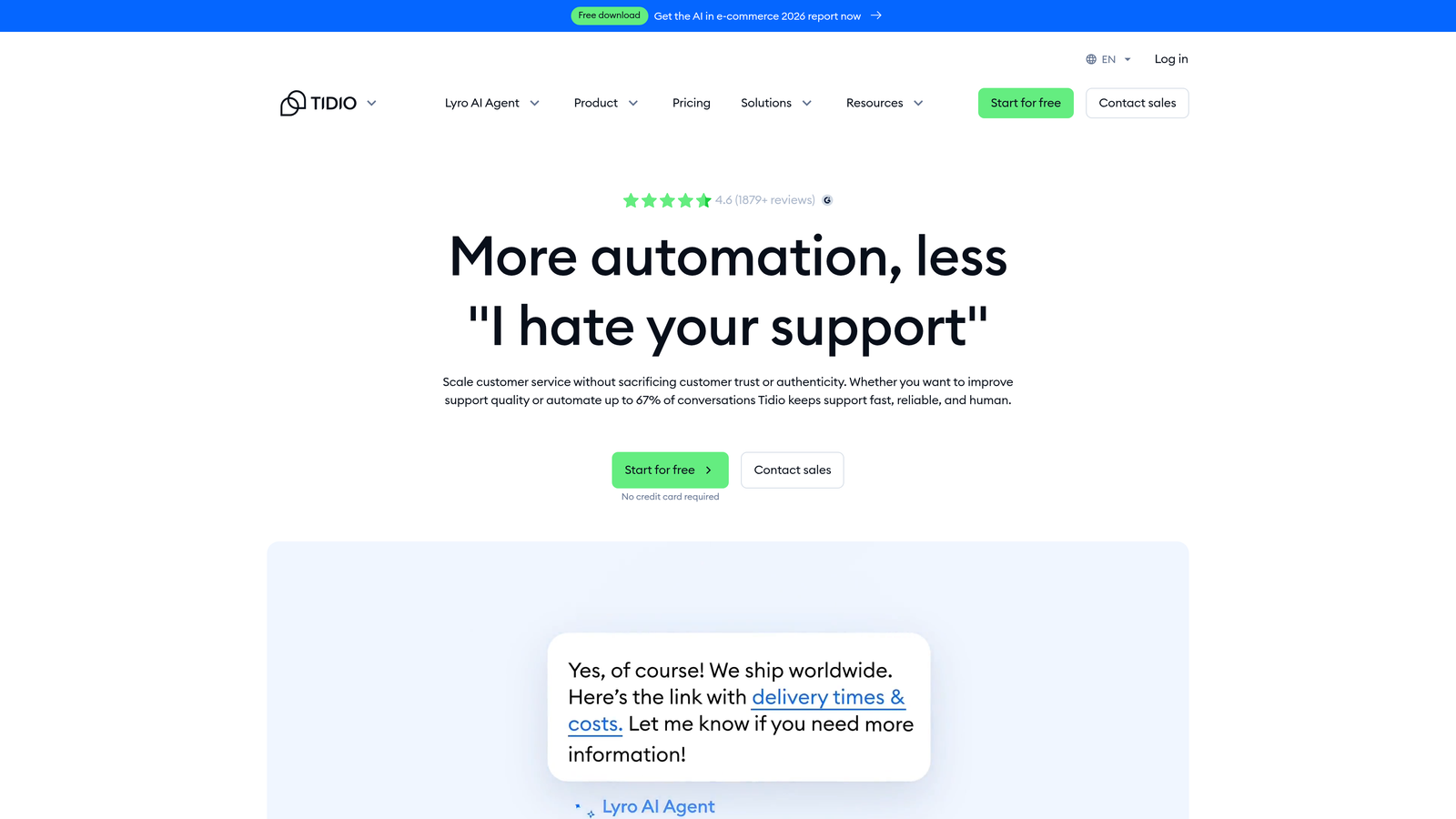
Tidio Lyro is a conversational AI chatbot designed for fast setup with minimal technical configuration.
Where This Tool Shines
Lyro gets teams up and running in minutes rather than weeks. The setup process involves pointing the system at your FAQ page or help documentation—no complex training workflows or API integrations required initially.
For small teams without dedicated support staff, the live chat handoff ensures customers can still reach a human when needed. The Shopify and WordPress integrations make it particularly accessible for small e-commerce stores and content sites looking to add basic support automation.
Key Features
Quick Setup: Deploy functional AI chat in under 10 minutes using existing FAQ and support content.
FAQ Learning: Automatically trains on your help documentation without manual question-answer mapping.
Live Chat Handoff: Seamlessly transfers conversations to available team members when AI reaches its limits.
Shopify Integration: Connects to Shopify stores for order status lookups and basic e-commerce support.
WordPress Plugin: Installs on WordPress sites with minimal configuration for content and blog support.
Best For
Startups, small businesses, and solopreneurs who need basic AI chat capabilities without enterprise complexity or pricing. Works well for teams just starting to automate support.
Pricing
Free tier available with basic features. Paid plans start at $29 per month for expanded capabilities and higher conversation volumes.
8. Drift
Best for: B2B sales and support teams focused on revenue generation and meeting scheduling.
Drift is a conversational AI platform that prioritizes revenue-focused conversations and qualification over pure support deflection.
Where This Tool Shines
Drift approaches conversations through a revenue lens, routing high-value prospects to sales while handling support inquiries appropriately. The calendar integration enables instant meeting scheduling directly within chat, eliminating the back-and-forth of finding available times.
Account-based targeting uses firmographic data to personalize conversations based on company size, industry, and deal stage. For B2B teams where support conversations often uncover upsell opportunities, Drift surfaces these signals to sales teams in real-time.
Key Features
Revenue-Focused Routing: Prioritizes high-value conversations and routes qualified leads to sales representatives immediately.
Calendar Integration: Enables instant meeting scheduling within chat conversations without leaving the interface.
Account-Based Personalization: Tailors conversation flows based on company data, industry, and account value.
Salesforce Integration: Syncs conversation data, lead qualification, and opportunity tracking with Salesforce CRM.
HubSpot Connectivity: Works with HubSpot for teams using that ecosystem instead of Salesforce.
Best For
B2B companies where support and sales overlap significantly, particularly in SaaS, technology, and professional services where conversations often lead to expansion opportunities.
Pricing
Starts at $2,500 per month. Enterprise pricing available for larger organizations with custom requirements.
9. HubSpot Service Hub AI
Best for: Companies using HubSpot CRM who want support automation leveraging existing customer data.
HubSpot Service Hub provides AI-powered service tools that use CRM data for personalized support automation.
Where This Tool Shines
For teams already running on HubSpot, Service Hub AI leverages the full context of your CRM data—contact properties, deal history, marketing interactions, and previous support conversations. This creates responses that feel genuinely personalized rather than generic.
The knowledge base includes AI-powered search that understands natural language queries, helping customers find answers without contacting support. Customer feedback tools and survey automation close the loop, capturing satisfaction data that feeds back into your CRM for lifecycle marketing.
Key Features
Native CRM Integration: Uses contact properties, deal data, and interaction history for context-rich automated responses.
AI Ticket Routing: Automatically assigns conversations based on agent expertise, workload, and customer account value.
Knowledge Base AI Search: Natural language search helps customers find relevant help articles without support team involvement.
Customer Feedback Tools: Automated surveys and satisfaction tracking that feed data back into CRM records.
HubSpot Ecosystem Access: Works seamlessly with Marketing Hub, Sales Hub, and CMS Hub for unified customer experience.
Best For
Companies standardized on HubSpot who want support automation that leverages their existing CRM investment and customer data infrastructure.
Pricing
Free tier available with basic features. Professional tier starts at $90 per month for advanced AI capabilities and automation.
Matching Your Team to the Right Intelligent Assistant
The intelligent support assistant market has matured significantly. You're no longer choosing between basic chatbots and expensive enterprise platforms—today's options range from AI-first architectures to legacy helpdesks with sophisticated AI layers.
Key differentiators come down to four factors. First, autonomy depth: can the system actually resolve issues end-to-end, or does it just deflect to knowledge base articles? Second, contextual awareness: does it understand what users are doing in your product, or only what they type in chat? Third, integration breadth: does it connect to your existing stack, or operate in isolation? Fourth, learning capabilities: does it improve over time, or require constant manual retraining?
Your primary use case matters more than feature lists. High-volume consumer support differs fundamentally from complex B2B product support. A retail brand handling thousands of order status inquiries needs different capabilities than a SaaS company troubleshooting technical implementations. Match the tool's strengths to your actual support patterns rather than theoretical requirements.
Most platforms offer free trials or demos, making hands-on evaluation essential before committing. Test with real support scenarios from your queue—the ones your team handles daily. See how the AI performs with your actual customer language, product complexity, and edge cases. What works for another company's use case may not translate to yours.
Your support team shouldn't scale linearly with your customer base. Let AI agents handle routine tickets, guide users through your product, and surface business intelligence while your team focuses on complex issues that need a human touch. See Halo in action and discover how continuous learning transforms every interaction into smarter, faster support.