9 Best Intelligent Support Tools for Software Companies in 2026
This guide ranks the 9 best intelligent support for software companies platforms in 2026, evaluating each on AI capability, developer workflow integration, and scalability. From seed-stage startups to high-volume SaaS teams, these tools go beyond generic ticketing to resolve issues faster and close the loop between support and product.
 Grant CooperFounder13 min read
Software companies face a support challenge that most helpdesk vendors quietly ignore: your users are technical, your product changes weekly, and your team can't spend half their day explaining the same onboarding steps. Generic ticketing platforms were built for a different era. The tools in this list were built for yours.
Whether you're running a two-person support team at a seed-stage startup or managing thousands of tickets per month at a scaling SaaS, intelligent support platforms can resolve issues faster, close the loop between support and product, and free your team to focus on work that actually moves the needle. We evaluated these tools on AI capability depth, integration fit with developer workflows, and scalability. Halo AI leads the list because it was purpose-built for this use case, but every tool here earns its place.
1. Halo AI
Best for: SaaS and software teams that want AI-first autonomous support with deep product integration
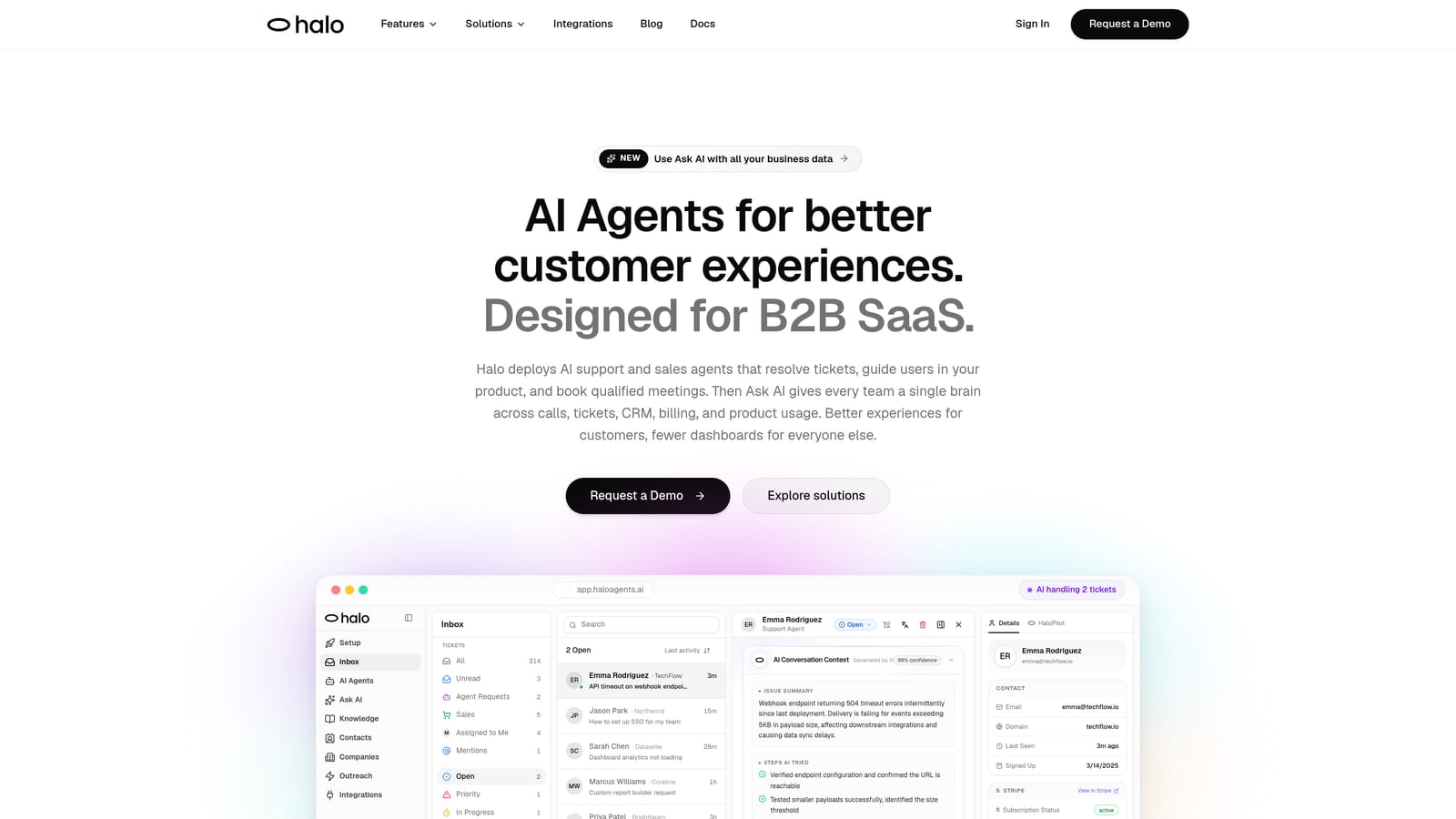
Halo AI is an AI-native customer support platform built ground-up for software companies, not adapted from a legacy helpdesk.
Where This Tool Shines
Most AI support tools are augmentation layers sitting on top of existing ticketing infrastructure. Halo was designed differently. Its AI agents don't just suggest replies; they resolve tickets autonomously, learn continuously from every interaction, and understand the context of where a user is inside your product at the moment they ask for help.
The page-aware chat widget is a genuine differentiator. When a user hits a snag on your billing settings page, Halo's AI already knows where they are and can deliver targeted, contextual guidance rather than a generic FAQ response. That context-awareness is what separates intelligent support from smart search.
Key Features
Page-Aware Chat Widget: The AI understands the user's current location within your product UI, enabling contextually relevant guidance without the user having to explain their situation.
Autonomous Ticket Resolution: AI agents handle tickets end-to-end, with continuous learning from every resolved interaction to improve accuracy over time.
Auto Bug Ticket Creation: When users report issues, Halo automatically creates bug tickets routed directly to Linear or your preferred issue tracker, closing the loop between support and engineering.
Smart Inbox with Business Intelligence: The inbox surfaces customer health signals, anomaly detection, and revenue risk indicators, turning support data into strategic insight.
Deep Integration Ecosystem: Native connections to Linear, Slack, HubSpot, Intercom, Stripe, Zoom, PandaDoc, and Fathom mean Halo fits into your existing stack rather than replacing it.
Live Agent Handoff: Complex issues escalate seamlessly to human agents with full conversation context preserved.
Best For
Software companies and product teams that want AI to do real work, not just assist. Particularly strong for teams already using Linear for bug tracking, Slack for internal communication, and HubSpot or Stripe for customer data. Ideal for companies that see support as a source of product intelligence, not just a cost center.
Pricing
Contact for pricing via a demo-based sales process. Reach out through the Halo AI website to get a tailored quote based on your team size and use case.
2. Intercom
Best for: Product-led SaaS teams that want proactive engagement alongside reactive support
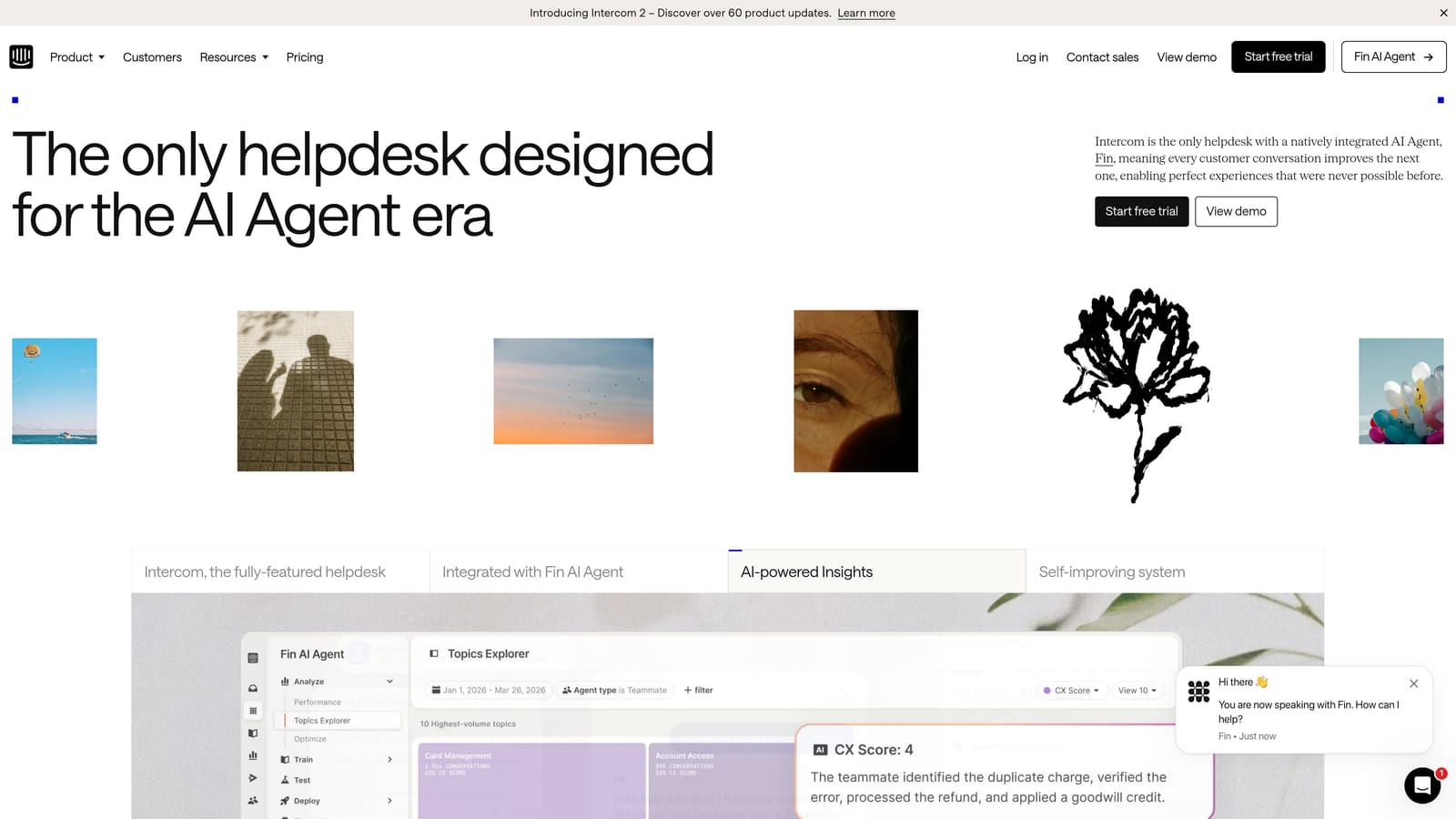
Intercom is a mature customer messaging platform with a powerful AI agent, Fin, built for software companies that want to combine onboarding, engagement, and support in one system.
Where This Tool Shines
Intercom's strength is the combination of proactive and reactive support in a single messenger-first interface. You can run onboarding message sequences, product tours, and targeted campaigns alongside traditional ticket resolution. That makes it especially valuable for product-led growth companies where the line between marketing, onboarding, and support is intentionally blurry.
Fin, Intercom's AI agent, handles common queries autonomously using large language models and can be trained on your documentation. The routing logic is sophisticated, and the mobile SDK support is among the best in the category.
Key Features
Fin AI Agent: Handles autonomous query resolution by drawing on your knowledge base and product documentation.
Product Tours and Onboarding Sequences: Build in-product walkthroughs and targeted message flows without a separate tool.
Conversation Routing and Segmentation: Deep logic for routing conversations based on user attributes, behavior, and intent.
Messenger-First Design: Clean, modern chat experience with strong mobile SDKs for teams building apps.
Best For
Mid-market SaaS companies with a product-led growth motion, teams that want to consolidate onboarding messaging and support into one platform, and companies where proactive customer engagement is as important as reactive issue resolution.
Pricing
Tiered pricing structure; AI features like Fin are available on higher-tier plans. Costs can scale significantly as usage grows, so evaluate total cost carefully against your ticket volume.
3. Zendesk
Best for: Enterprise software companies that need compliance, scale, and a proven ticketing foundation
Zendesk is the industry's most established ticketing platform, now with AI triage and automation capabilities layered onto its robust enterprise foundation.

Where This Tool Shines
Zendesk's core advantage is its maturity. The platform has been battle-tested at enterprise scale, and its compliance certifications, security controls, and reporting capabilities are difficult to match. If your company operates in a regulated industry or has procurement requirements around SOC 2, GDPR, or HIPAA, Zendesk typically clears those bars without friction.
The app marketplace is enormous, which means you can extend the platform in almost any direction. The tradeoff is that Zendesk's AI capabilities feel more like additions to an existing architecture than a native intelligence layer. Teams that want AI to do real autonomous work often find themselves adding third-party tools like Forethought on top.
Key Features
Zendesk AI (Intelligent Triage): Automatically classifies, prioritizes, and routes incoming tickets with suggested responses for agents.
Customizable Workflows: Highly configurable automation rules, triggers, and macros for complex support operations.
Enterprise Compliance and Security: Strong certifications and controls suited for regulated industries and large procurement processes.
Omnichannel Coverage: Unified inbox across email, live chat, phone, and social channels.
Large App Marketplace: Thousands of integrations and extensions for virtually any workflow requirement.
Best For
Enterprise software companies with established support operations, strict compliance requirements, and large agent teams. Less suited for lean startups that want AI to handle tickets autonomously without significant configuration overhead.
Pricing
Suite plans start at a mid-range per-agent monthly price; enterprise pricing is available and typically negotiated. AI features may carry additional costs depending on the plan tier.
4. Freshdesk
Best for: Growing software teams that want solid AI-assisted support at a budget-friendly price point
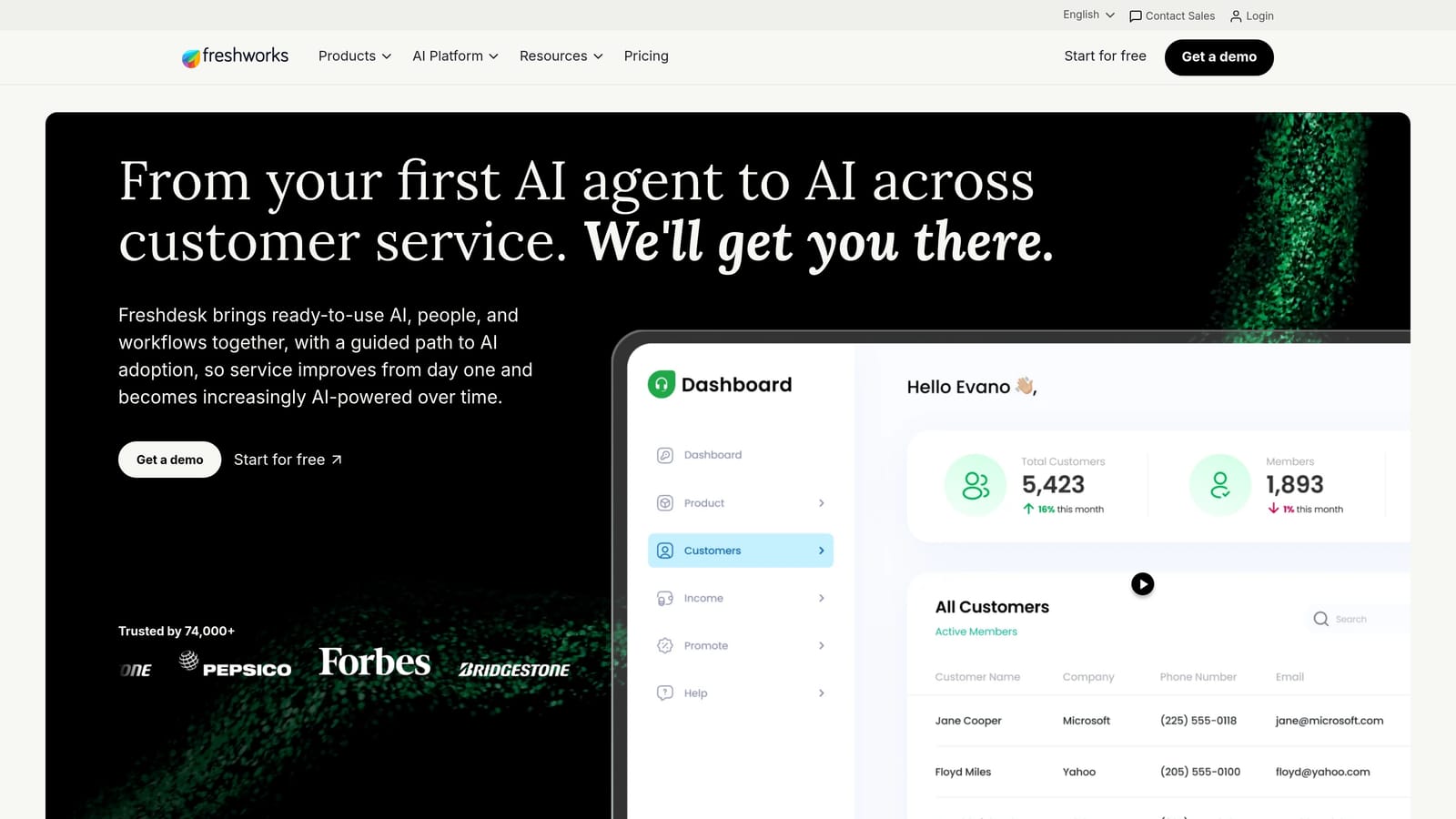
Freshdesk is a cost-effective helpdesk platform with Freddy AI handling categorization, suggested responses, and some autonomous resolution, making it a strong alternative for mid-market teams watching their tooling spend.
Where This Tool Shines
Freshdesk punches above its price point. Freddy AI handles ticket categorization and response suggestions competently, and the automation builder gives teams meaningful control over routing and escalation logic without requiring developer involvement. The free tier is genuinely useful for very small teams, not just a lead-generation tool.
The omnichannel coverage is solid across email, chat, phone, and social. Where Freshdesk shows its limits is in the depth of AI autonomy: Freddy assists agents more than it replaces them, which is fine for teams that want AI as a copilot rather than a pilot.
Key Features
Freddy AI: Handles ticket categorization, suggests responses to agents, and can resolve certain query types autonomously.
Automation Builder: No-code routing and escalation rules that cover most mid-market workflow requirements.
Omnichannel Support: Unified handling across email, live chat, phone, and social channels.
Free Tier: A genuinely functional free plan for small teams getting started with structured support.
Best For
Growing software companies with budget constraints, teams migrating from email-only support to a structured helpdesk, and organizations that want AI assistance without committing to a full AI-first platform.
Pricing
Free tier available for small teams; paid plans scale per agent per month. Generally more accessible than Zendesk or Intercom at equivalent feature tiers.
5. Help Scout
Best for: Developer tools companies and open-source projects that prioritize a human-feeling support experience
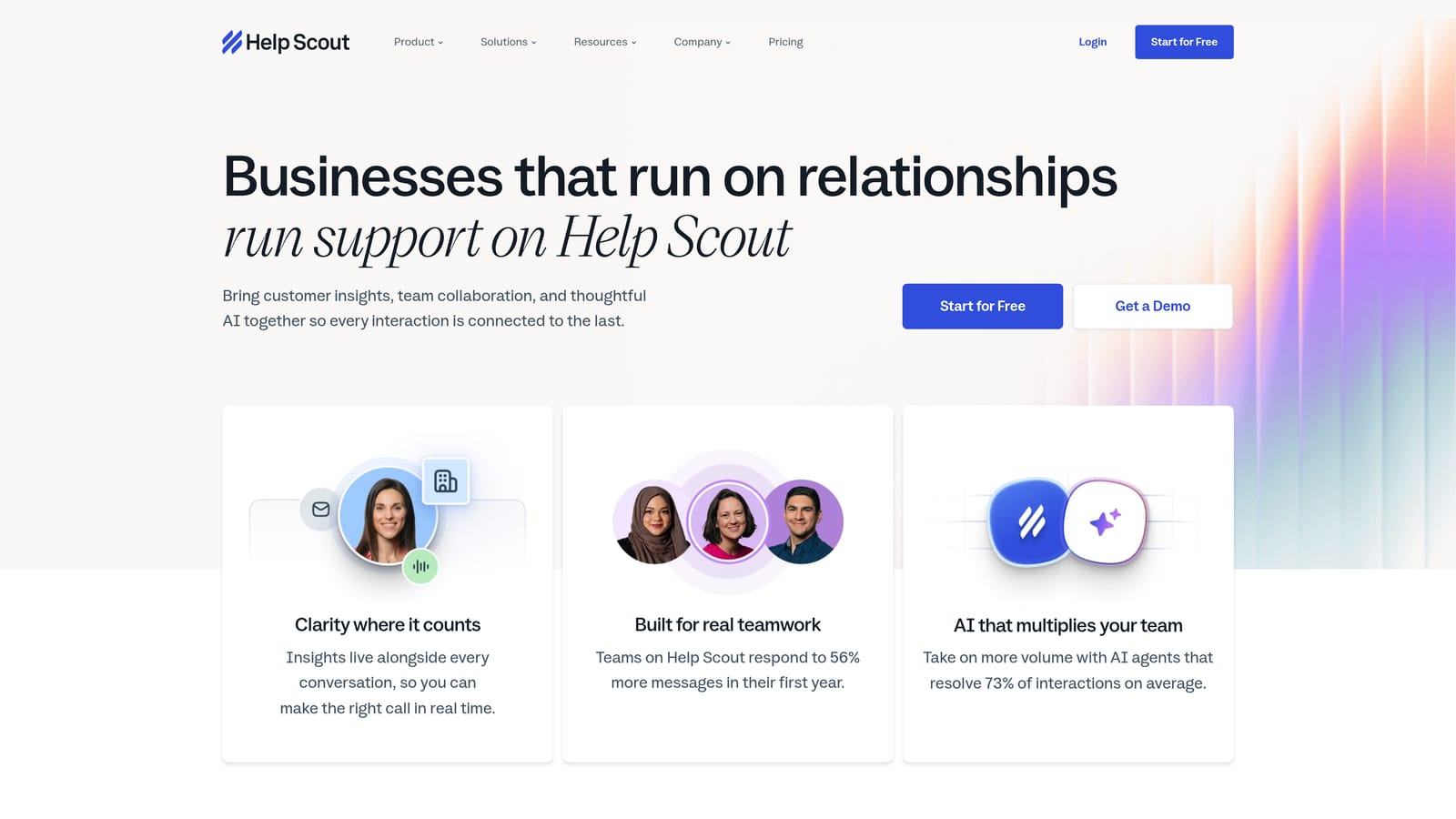
Help Scout is a shared inbox platform built around the philosophy that support should feel personal, with AI Drafts and AI Summarize features added for teams that want assistance without sacrificing their brand voice.
Where This Tool Shines
Help Scout's reputation is built on its clean, minimal UX and the way it keeps support conversations feeling like genuine human interactions rather than ticket numbers. That positioning resonates strongly with developer tools companies and open-source projects where community trust is part of the product.
The recent AI additions are well-integrated rather than bolted on. AI Drafts generates reply suggestions that agents can edit and personalize, and AI Summarize compresses long conversation threads into quick briefings. The Docs knowledge base with AI-powered search adds a meaningful self-serve layer without requiring a separate tool.
Key Features
AI Drafts: Generates suggested replies that agents can review, edit, and send, preserving a human voice in every response.
AI Summarize: Condenses long conversation threads into brief summaries for faster agent context-switching.
Shared Inbox UX: Clean, minimal interface designed to feel like email rather than a ticketing system.
Docs with AI Search: Knowledge base with intelligent search that helps users self-serve before contacting support.
Best For
Small to mid-size software teams, developer tools companies, and open-source projects where the quality and tone of support interactions matter as much as resolution speed. Less suited for teams that need deep AI autonomy or complex workflow automation.
Pricing
Per-user monthly pricing; generally accessible for small to mid-size teams. Pricing is transparent and straightforward compared to enterprise-focused competitors.
6. Guru
Best for: Software teams with complex documentation who want to reduce ticket volume through intelligent self-serve
Guru is an AI-powered knowledge management platform that surfaces answers in-context across Slack, your browser, and your helpdesk, reducing ticket volume by enabling both agents and users to self-serve effectively.

Where This Tool Shines
Guru addresses a problem that sits upstream of most support tools: agents spending time searching for answers rather than giving them. The browser extension surfaces relevant knowledge cards during live support conversations, which means agents spend less time context-switching between tabs and more time actually resolving issues.
The knowledge verification workflow is a genuinely useful feature for software companies where documentation goes stale quickly. Content owners get prompted to review and update articles on a schedule, keeping the knowledge base accurate as your product evolves.
Key Features
AI Search Across Sources: Searches internal documentation, Slack conversations, and connected tools to surface relevant answers instantly.
Browser Extension: Surfaces contextually relevant knowledge cards during live support conversations without requiring agents to leave their current tab.
Knowledge Verification Workflows: Prompts content owners to review and update articles on a defined schedule to prevent documentation drift.
Helpdesk and Slack Integrations: Connects with major helpdesk platforms and Slack to embed knowledge where agents already work.
Best For
Software companies with deep, complex, or frequently changing documentation. Particularly valuable as a complement to existing helpdesk tools rather than a standalone support platform. Works well for teams where agent knowledge gaps are a meaningful driver of ticket handle time.
Pricing
Per-user monthly pricing; a free tier is available for small teams. Paid plans unlock more advanced AI features and integrations.
7. Kustomer
Best for: Software companies where full customer lifecycle context is central to every support interaction
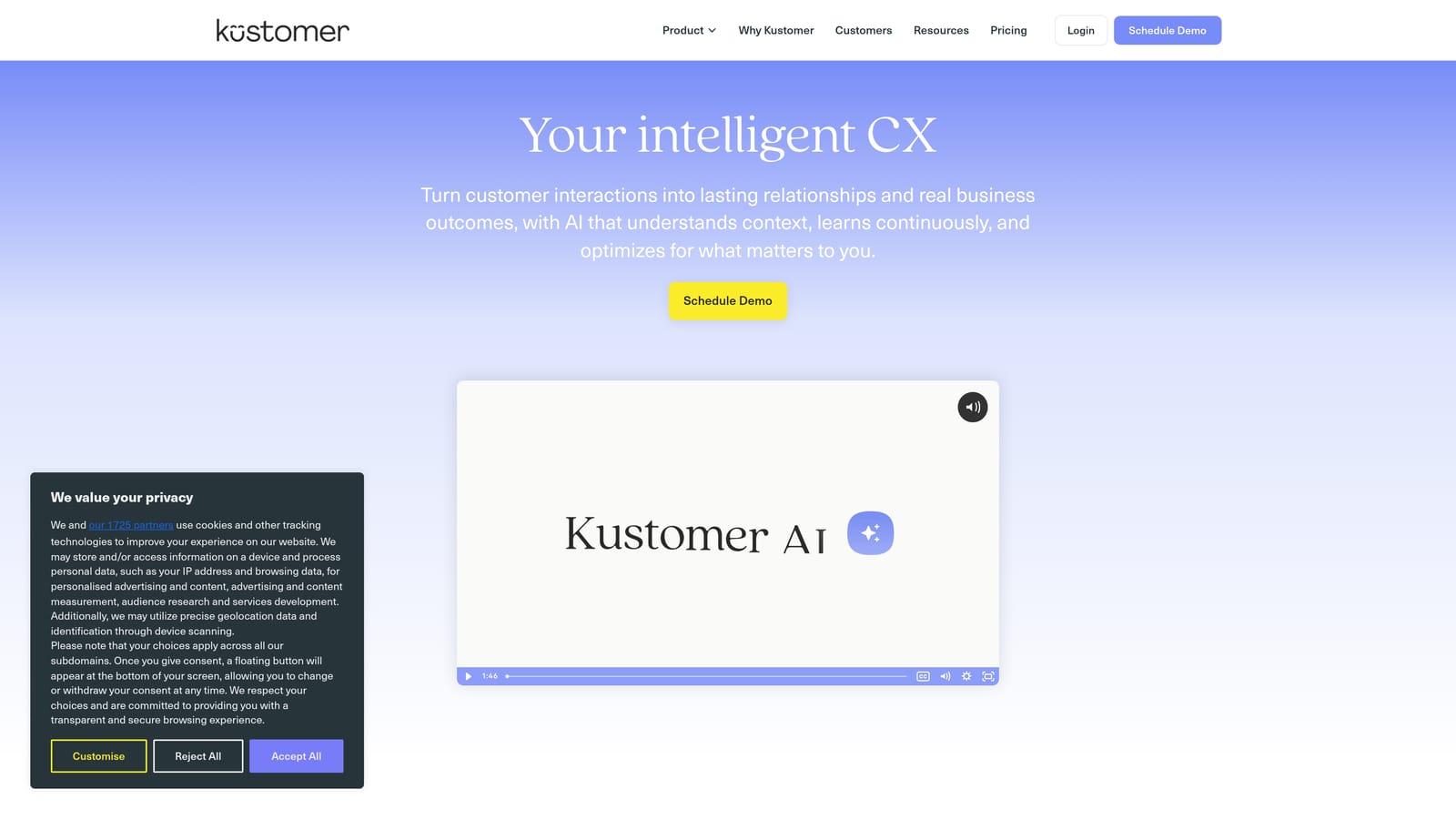
Kustomer is a CRM-native support platform that unifies customer lifecycle data with support context, using AI to route and resolve issues with full customer history always in view.
Where This Tool Shines
Kustomer's unified customer timeline is the platform's defining feature. Rather than treating each support ticket as an isolated event, Kustomer shows agents the complete customer history: past purchases, previous conversations, subscription status, and behavioral signals, all in a single view. For software companies where understanding a customer's plan tier or usage pattern is essential context for resolving an issue, this is genuinely useful.
The AI routing logic factors in that customer context rather than just ticket content, which means high-value or at-risk customers can be prioritized automatically based on real signals rather than manual tagging.
Key Features
Unified Customer Timeline: Combines CRM data, support history, and behavioral signals into a single agent view.
Context-Aware AI Routing: Routes tickets based on customer attributes and intent signals, not just ticket content.
Omnichannel Coverage: Handles conversations across email, chat, social, and voice with strong automation capabilities.
Deep Workflow Customization: Flexible configuration for complex support operations with non-standard requirements.
Best For
Software companies where customer lifetime value, subscription tier, or usage data should directly influence support prioritization and resolution. Owned by Meta, which may be relevant for enterprise procurement teams evaluating vendor relationships.
Pricing
Per-user pricing at enterprise-focused rates; contact Kustomer directly for current pricing. Not the right fit for small teams or budget-constrained organizations.
8. Tidio
Best for: Early-stage software companies that need intelligent chat support without enterprise complexity or cost
Tidio is a fast-to-deploy AI chat platform featuring its Lyro AI chatbot, designed for early-stage software companies that need intelligent support up and running quickly.
Where This Tool Shines
Tidio's core value is speed and accessibility. The Lyro AI chatbot can be configured without writing code, and the combined live chat and chatbot interface means you're not managing two separate systems. For a founding team or a one-person support operation, that simplicity is worth a lot.
The platform won't match the depth of enterprise tools for complex software support workflows. But for early-stage companies that need to stop losing users to unanswered questions, Tidio provides meaningful AI capability at a price point that doesn't require a budget conversation.
Key Features
Lyro AI Chatbot: No-code AI chatbot setup that handles common queries and escalates to live agents when needed.
Unified Chat Interface: Live chat and AI chatbot in a single interface, reducing operational complexity for small teams.
SaaS and E-commerce Integrations: Connects with common early-stage tooling without requiring custom development.
Affordable Entry Point: Free tier and low-cost paid plans make it accessible for pre-revenue or early-revenue teams.
Best For
Seed-stage and early-growth software companies that need to get intelligent support deployed quickly without dedicated support operations staff. Teams that will outgrow it as they scale, but it serves its purpose well in the early stages.
Pricing
Free tier available; paid plans are among the most affordable in this category. A practical starting point before committing to a more sophisticated platform.
9. Forethought
Best for: Enterprises that want AI triage and deflection without replacing their existing helpdesk investment
Forethought is an AI triage and deflection layer that sits above existing enterprise helpdesks like Zendesk or Salesforce Service Cloud, adding intelligent classification and resolution without requiring a platform migration.
Where This Tool Shines
Forethought solves a specific problem: you've invested heavily in a helpdesk like Zendesk or Salesforce, your team is trained on it, your workflows are built around it, and you're not ready to rip and replace. But you need AI to handle more of the volume. Forethought slots in as an overlay, classifying and routing tickets before they reach agents and deflecting common queries before they even become tickets.
The sentiment and intent detection for priority routing is a practical feature for software companies managing a mix of routine questions and genuinely urgent issues. Critical tickets surface faster without requiring manual triage.
Key Features
AI Triage Layer: Automatically classifies and routes incoming tickets based on content, intent, and priority signals.
Deflection Before Ticket Creation: Resolves common queries through AI responses before they generate a ticket in your helpdesk.
Helpdesk Overlay Architecture: Works on top of Zendesk, Salesforce Service Cloud, and similar platforms without replacing them.
Sentiment and Intent Detection: Identifies urgent or high-risk tickets for priority routing based on tone and intent signals.
Best For
Enterprise software companies already committed to a major helpdesk platform that want to add AI intelligence without a full migration. Not the right fit for teams evaluating their helpdesk from scratch or for smaller organizations where enterprise pricing isn't justified.
Pricing
Enterprise pricing; contact Forethought directly for current rates. Positioned for larger organizations with significant ticket volume.
Which Tool Is Right for Your Team?
The honest answer is that the best intelligent support tool depends on where your company is today and where it needs to go. Here's a quick framework to help you decide.
If you want AI to do real autonomous work: Halo AI is the strongest choice for software companies that want an AI-first platform built for SaaS workflows. The page-aware context, auto bug ticket creation, and business intelligence layer make it more than a support tool; it becomes a product intelligence system.
If you're enterprise with compliance requirements: Zendesk remains the default for large organizations with procurement requirements and established support operations. Add Forethought on top if you need to layer AI intelligence without a migration.
If budget is the primary constraint: Freshdesk gives you the most capable AI-assisted support at mid-market price points, with a free tier that's genuinely functional for very small teams. Tidio is the right starting point for early-stage companies that need something deployed this week.
If proactive engagement is as important as reactive support: Intercom's combination of Fin AI, product tours, and onboarding messaging makes it the strongest fit for product-led growth companies where support and activation overlap.
If documentation depth is your core problem: Guru reduces ticket volume at the source by making knowledge accessible in-context, and it complements rather than replaces your existing helpdesk.
Your support team shouldn't scale linearly with your customer base. Let AI agents handle routine tickets, guide users through your product, and surface business intelligence while your team focuses on complex issues that need a human touch. See Halo in action and discover how continuous learning transforms every interaction into smarter, faster support.