9 Best Intelligent Support Platforms to Get a Quote From in 2026
Finding the right intelligent support platform is difficult when vendors hide pricing behind demo walls — this guide evaluates nine leading platforms on pricing transparency, AI maturity, and B2B SaaS fit so you can shortlist fast and request an intelligent support platform quote with confidence.
 Grant CooperFounder14 min read
Finding the right intelligent support platform is harder than it should be. Most vendors bury their pricing, offer vague "contact sales" pages, and require a full demo cycle before you can even ballpark a budget. This guide cuts through that friction.
We've evaluated nine leading intelligent support platforms across pricing transparency, feature depth, AI maturity, and fit for B2B SaaS teams. Whether you're replacing a legacy helpdesk, scaling a lean support team, or building a fully autonomous support operation, this list gives you the clarity to shortlist fast and request quotes with confidence.
Each entry covers what the platform does best, who it's built for, and what you can realistically expect to pay — so you walk into every vendor conversation prepared.
1. Halo AI
Best for: B2B SaaS teams that want AI-native support with continuous learning and business intelligence built in.
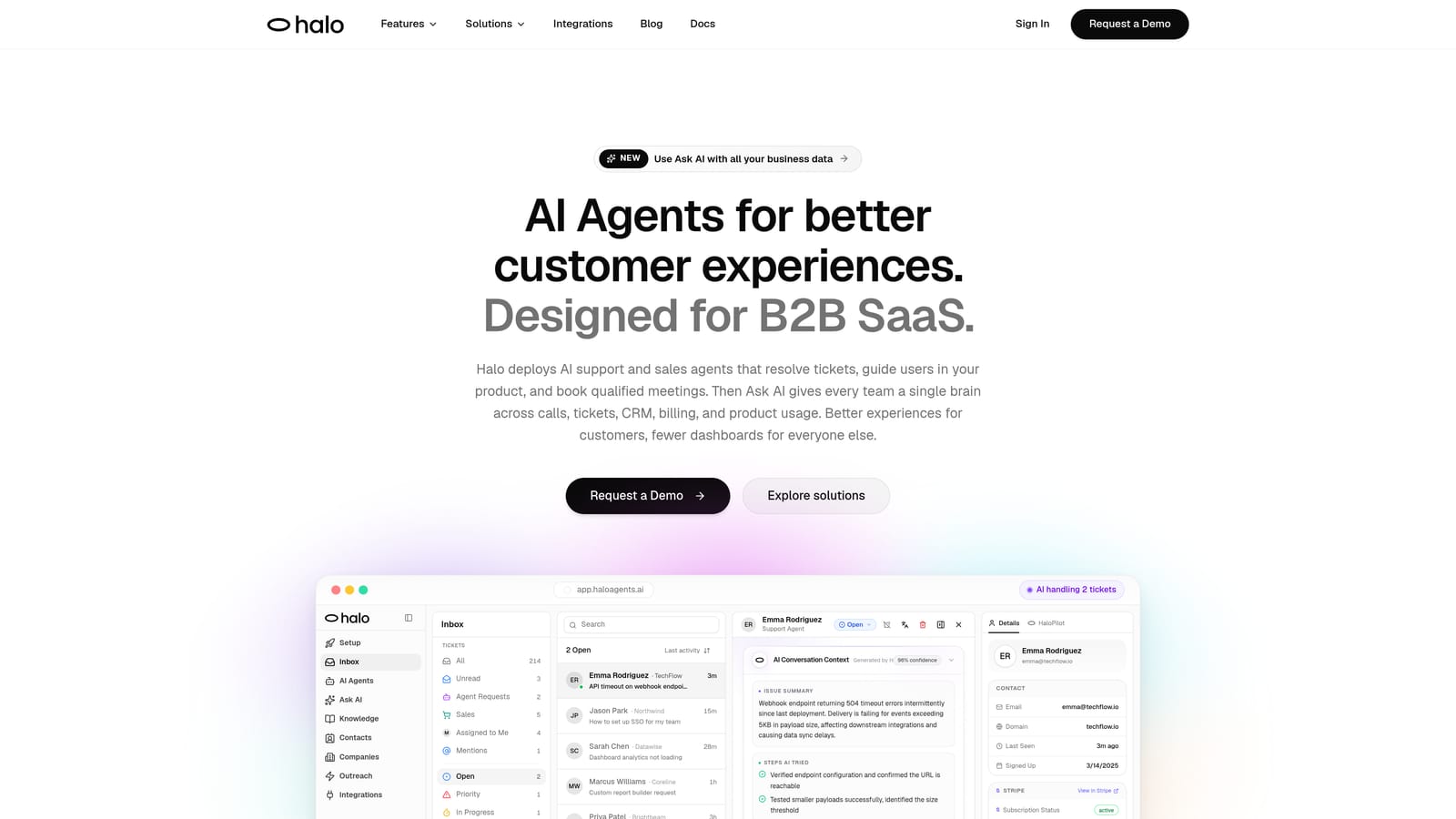
Halo AI is an AI-first customer support platform that deploys autonomous agents to resolve tickets, guide users through your product with page-aware context, and surface actionable business intelligence from every interaction.
Where This Tool Shines
Most support platforms add AI as a layer on top of an existing helpdesk architecture. Halo is built AI-first from the ground up, which means its agents don't just respond to tickets — they understand context. The page-aware capability is particularly distinctive: Halo's agents can see what a user is looking at in your product and provide visual guidance specific to that exact screen. That's a meaningful difference when your users are stuck mid-workflow.
Beyond support, Halo surfaces business intelligence that most teams only discover through separate analytics tools. Customer health signals, revenue anomalies, and product friction patterns emerge from support interactions automatically, giving product and success teams intelligence they wouldn't otherwise have.
Key Features
Page-Aware AI Agents: Agents see what users see in your product and deliver contextually relevant visual guidance rather than generic instructions.
Continuous Learning: Every resolved ticket improves future responses — the system gets smarter with your specific customer base over time.
Smart Inbox with Business Intelligence: Surfaces customer health signals, anomaly detection, and revenue intelligence beyond standard support metrics.
Auto Bug Ticket Creation: Automatically identifies and routes bug reports to Linear or your engineering stack without manual triage.
Live Agent Handoff: Escalates complex issues to human agents with full conversation context preserved, so nothing gets repeated.
Native Integrations: Connects directly to Slack, HubSpot, Intercom, Stripe, Zoom, PandaDoc, Fathom, and Linear out of the box.
Best For
B2B SaaS product teams and support leaders who want support that scales without adding headcount. Particularly strong for teams already using HubSpot, Intercom, or Linear who want AI that connects their entire business stack rather than sitting in a silo.
Pricing
Custom pricing based on your team's needs. Request a quote or book a demo directly through the Halo AI website to discuss your specific use case and get accurate numbers.
2. Zendesk
Best for: Enterprise teams that need a mature, deeply configurable helpdesk with broad compliance and marketplace depth.
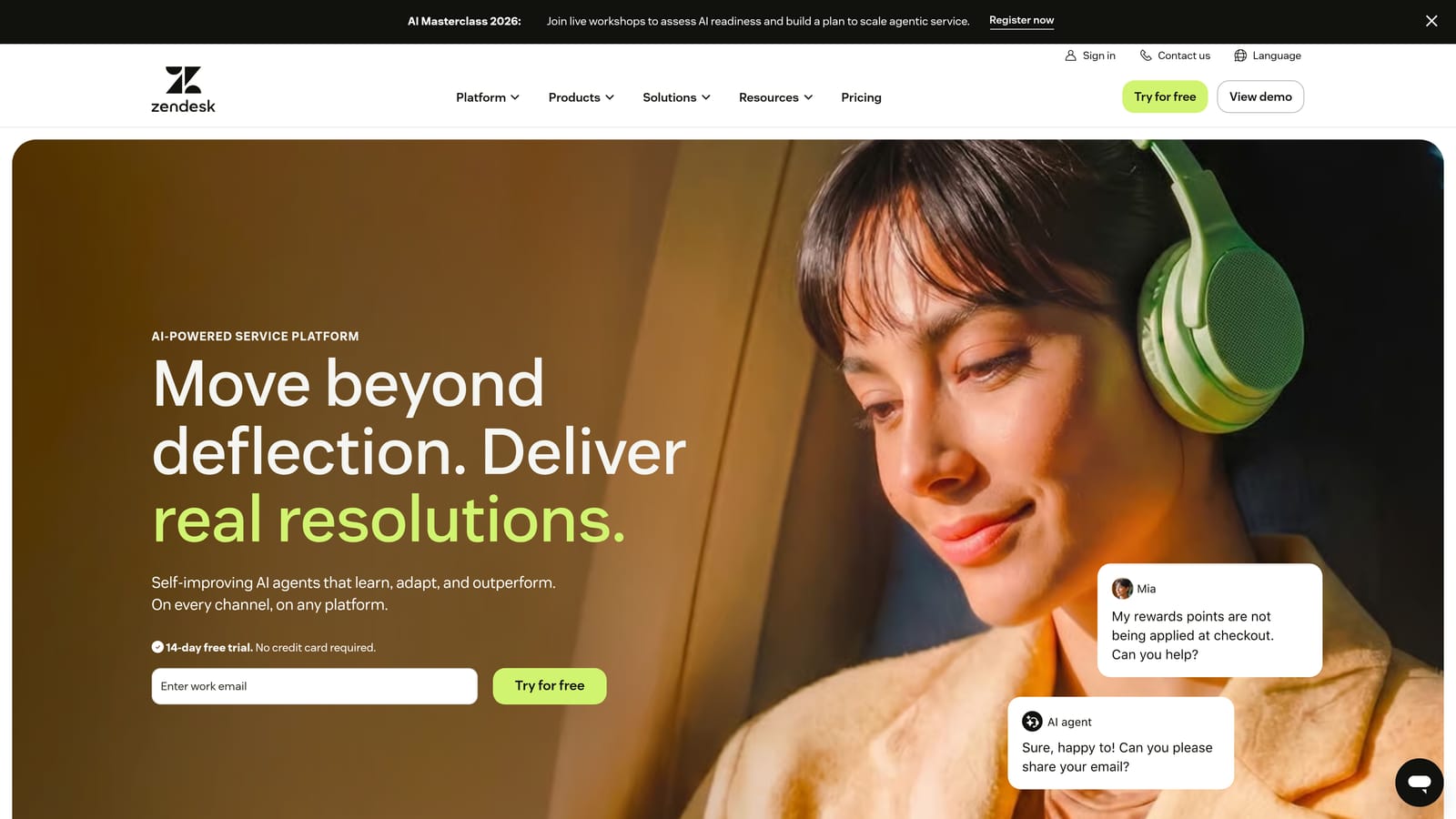
Zendesk is one of the most established enterprise helpdesk platforms, offering deep ticketing workflows, a large app marketplace, and AI capabilities across its Suite plans.
Where This Tool Shines
Zendesk's strength is its maturity. The ticketing engine is battle-tested across thousands of enterprise deployments, and the workflow configurability is genuinely deep — SLA management, routing rules, and escalation logic can be tuned to match complex organizational structures. For teams with compliance requirements, Zendesk's certifications and security controls are among the most comprehensive in the market.
The 1,000+ app marketplace means you can almost always find an integration for whatever tool your business runs on. That ecosystem breadth is a real advantage when you're evaluating long-term extensibility.
Key Features
Mature Ticketing System: Highly configurable workflows, SLA management, and escalation rules built for complex enterprise support operations.
Zendesk AI: Automated triage, suggested replies, and agent assist features available across Suite tiers or as add-ons.
Extensive App Marketplace: Over 1,000 integrations covering CRM, billing, analytics, and communication tools.
Omnichannel Support: Handles email, chat, voice, social media, and messaging from a unified interface.
Enterprise Compliance: Strong security certifications and data governance controls for regulated industries and enterprise procurement requirements.
Best For
Mid-to-large enterprise support teams with complex workflows, compliance requirements, or existing investments in the Zendesk ecosystem. Less ideal for teams that want AI-native architecture rather than AI bolted onto a traditional helpdesk.
Pricing
Suite plans start at published per-agent monthly rates; enterprise tiers are quote-based. Check the Zendesk website for current published pricing, and request a quote for enterprise or customized plans.
3. Intercom
Best for: Product-led SaaS companies that want AI-powered query resolution combined with proactive messaging and onboarding flows.
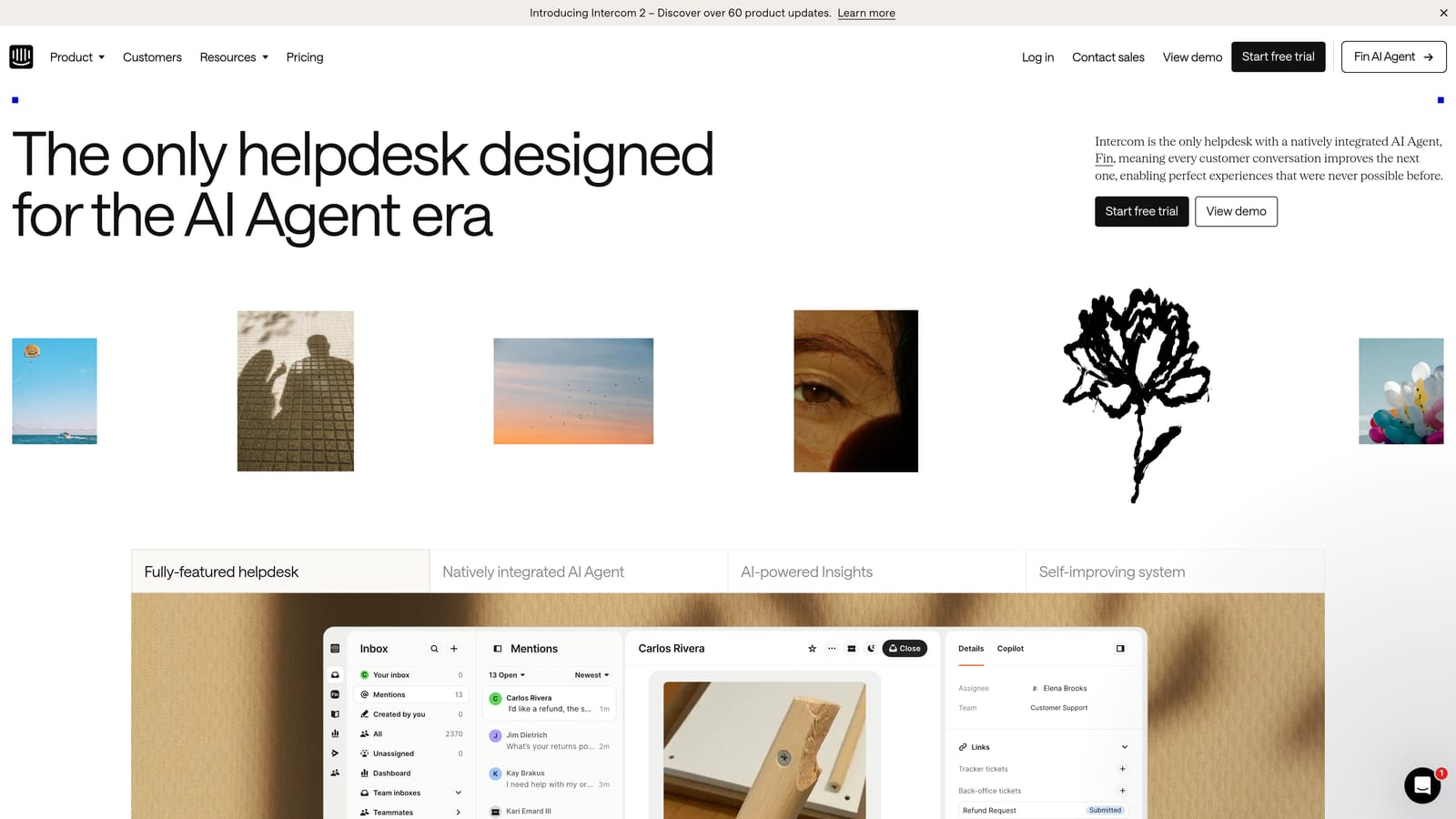
Intercom is a conversational support platform with a strong AI agent called Fin, capable of handling a significant portion of inbound queries autonomously, plus proactive messaging and onboarding tools.
Where This Tool Shines
Fin, Intercom's AI agent, is one of the more capable AI products in this category for conversational query resolution. It draws on your help content and product knowledge to answer questions autonomously across chat and email, and the deflection rates teams report are meaningful. For SaaS companies where user onboarding and retention messaging matter as much as support, Intercom's combination of proactive campaigns and reactive support in a single platform is genuinely useful.
The unified inbox that combines support, sales, and product engagement conversations is a strong feature for smaller teams where roles overlap and context-switching between tools creates friction.
Key Features
Fin AI Agent: Autonomous query resolution across chat and email, trained on your help content with configurable escalation paths.
Proactive Messaging: In-app campaigns, onboarding sequences, and retention messaging built into the same platform as support.
Unified Inbox: Combines support, sales, and product engagement conversations in one view.
Flexible Pricing Models: Usage-based and seat-based pricing options depending on tier and use case.
Product Tour Builder: Build in-app onboarding flows and feature announcements without additional tooling.
Best For
SaaS teams that want a single platform covering support, onboarding, and proactive engagement. Strong fit when the line between support and customer success is blurry and you want one tool handling both.
Pricing
Tiered plans with usage-based components. Pricing structure has evolved, so request a current quote from Intercom's sales team for accurate team-level pricing.
4. Freshdesk
Best for: Mid-market teams that need solid omnichannel support with AI capabilities at a price point below enterprise-tier platforms.
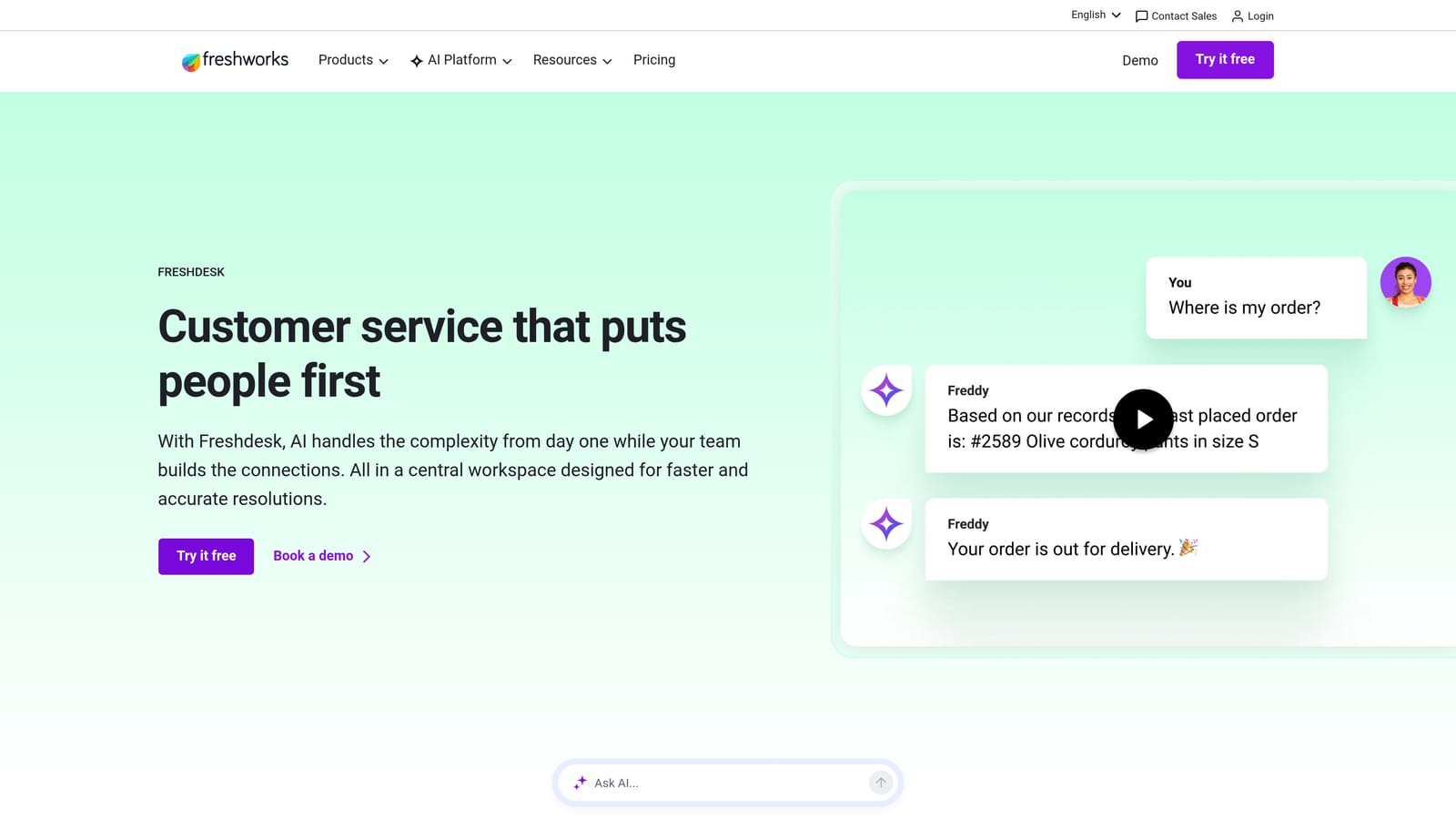
Freshdesk is a Freshworks product offering omnichannel helpdesk capabilities with Freddy AI, positioned as strong value for teams that need reliable features without enterprise-level spend.
Where This Tool Shines
Freshdesk's value proposition is straightforward: you get a capable, well-rounded helpdesk with AI features at a price point that mid-market teams can actually justify. The free tier makes it accessible for small teams getting started, and the paid plans scale predictably as headcount grows. Freddy AI handles the core AI use cases — triage, suggested replies, and self-service deflection — without requiring a separate AI add-on purchase.
Collision detection and team collaboration tools are built in, which matters for support teams where multiple agents might otherwise accidentally work the same ticket simultaneously.
Key Features
Freddy AI: Handles ticket triage, suggested replies, and self-service deflection without requiring a separate AI subscription.
Omnichannel Support: Email, chat, phone, and social media support included at higher tiers in a unified interface.
Free Tier: Available for small teams; a genuine entry point rather than a severely limited trial.
Collision Detection: Prevents multiple agents from working the same ticket simultaneously, reducing duplicated effort.
Marketplace Integrations: Connects to CRM, billing, and communication tools through the Freshworks marketplace.
Best For
Growing mid-market teams that need a reliable, full-featured helpdesk with AI capabilities and predictable per-agent pricing. Also a strong starting point for teams new to structured support tooling.
Pricing
Free tier available for small teams. Paid plans start at published per-agent monthly rates and scale by tier. Check Freshdesk's website for current pricing — it's among the more transparent in this category.
5. Salesforce Service Cloud
Best for: Organizations already running Salesforce CRM that want support deeply integrated with their existing customer data and revenue workflows.
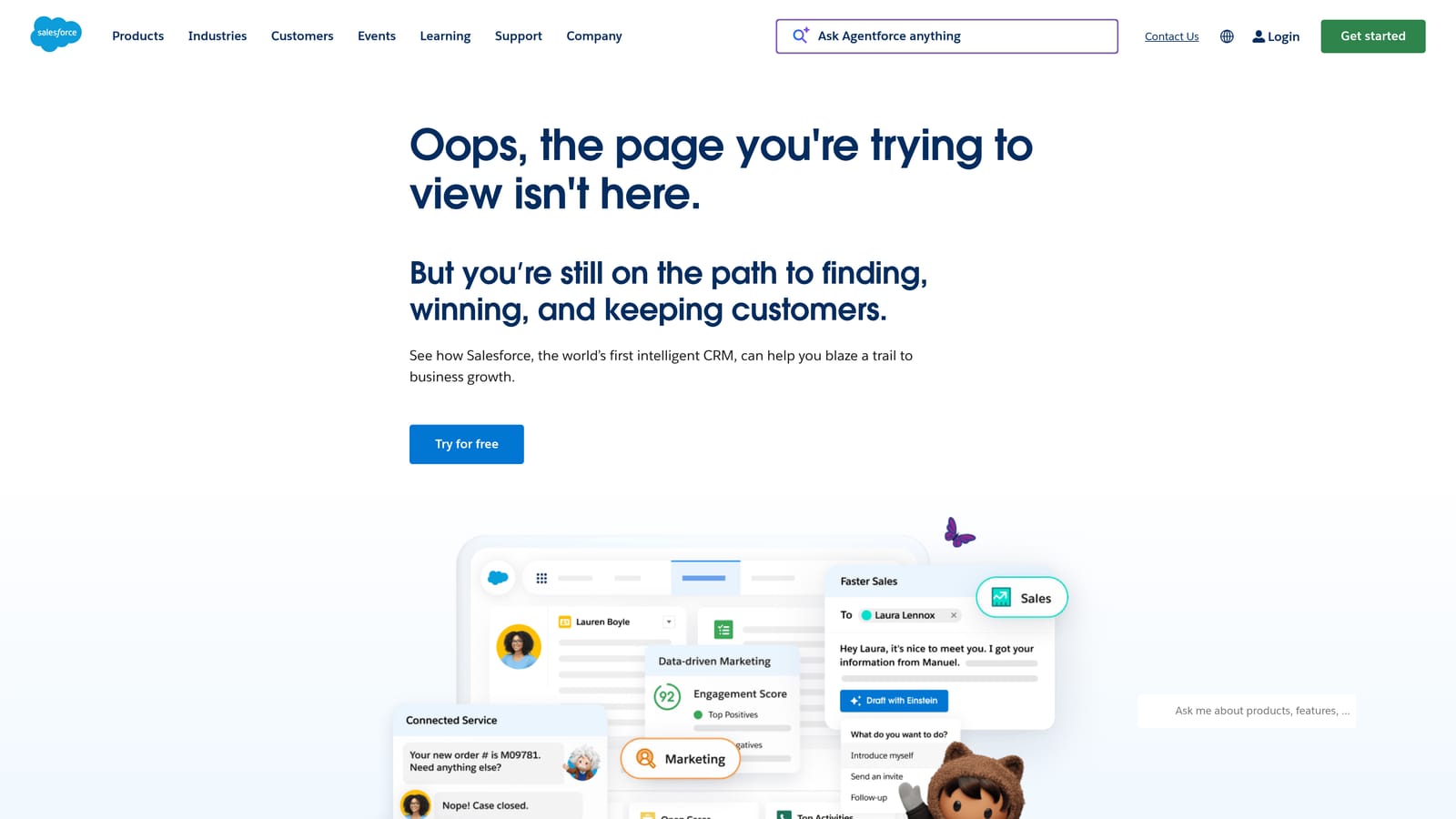
Salesforce Service Cloud is the support arm of the Salesforce platform, offering deep CRM-native support with Einstein AI and Agentforce for intelligent automation.
Where This Tool Shines
If your organization is already on Salesforce, Service Cloud's core advantage is obvious: support agents have native access to the full customer record — deals, contracts, billing history, marketing touchpoints — without any integration overhead. That context makes every support interaction more informed and reduces the back-and-forth that frustrates customers when agents lack background.
Agentforce, Salesforce's autonomous AI initiative, is evolving quickly and is worth evaluating if you're looking at this platform. The Flow automation builder and AppExchange ecosystem give technically capable teams significant configurability.
Key Features
Einstein AI and Agentforce: Intelligent case routing, suggested responses, and autonomous resolution capabilities built into the Salesforce platform.
Native CRM Data Access: Full Salesforce CRM data available to support agents without integration — deals, contacts, contracts, and billing in one view.
Omni-Channel Routing: Intelligent routing across voice, chat, email, and field service based on agent skills and availability.
Advanced Analytics: Reporting tied directly to revenue and customer lifecycle data rather than support metrics in isolation.
AppExchange Ecosystem: Extensive marketplace of certified extensions and integrations built specifically for the Salesforce platform.
Best For
Enterprise organizations already invested in the Salesforce ecosystem. The platform's value compounds significantly when your sales, marketing, and support teams are all operating within Salesforce. Less compelling as a standalone support tool for teams not already on Salesforce.
Pricing
Almost always quote-based at meaningful scale. Pricing varies significantly by edition, add-ons, and user count. Request a quote directly from Salesforce; expect a consultative sales process.
6. HubSpot Service Hub
Best for: Teams already using HubSpot for marketing and sales who want unified customer data across the full customer journey.
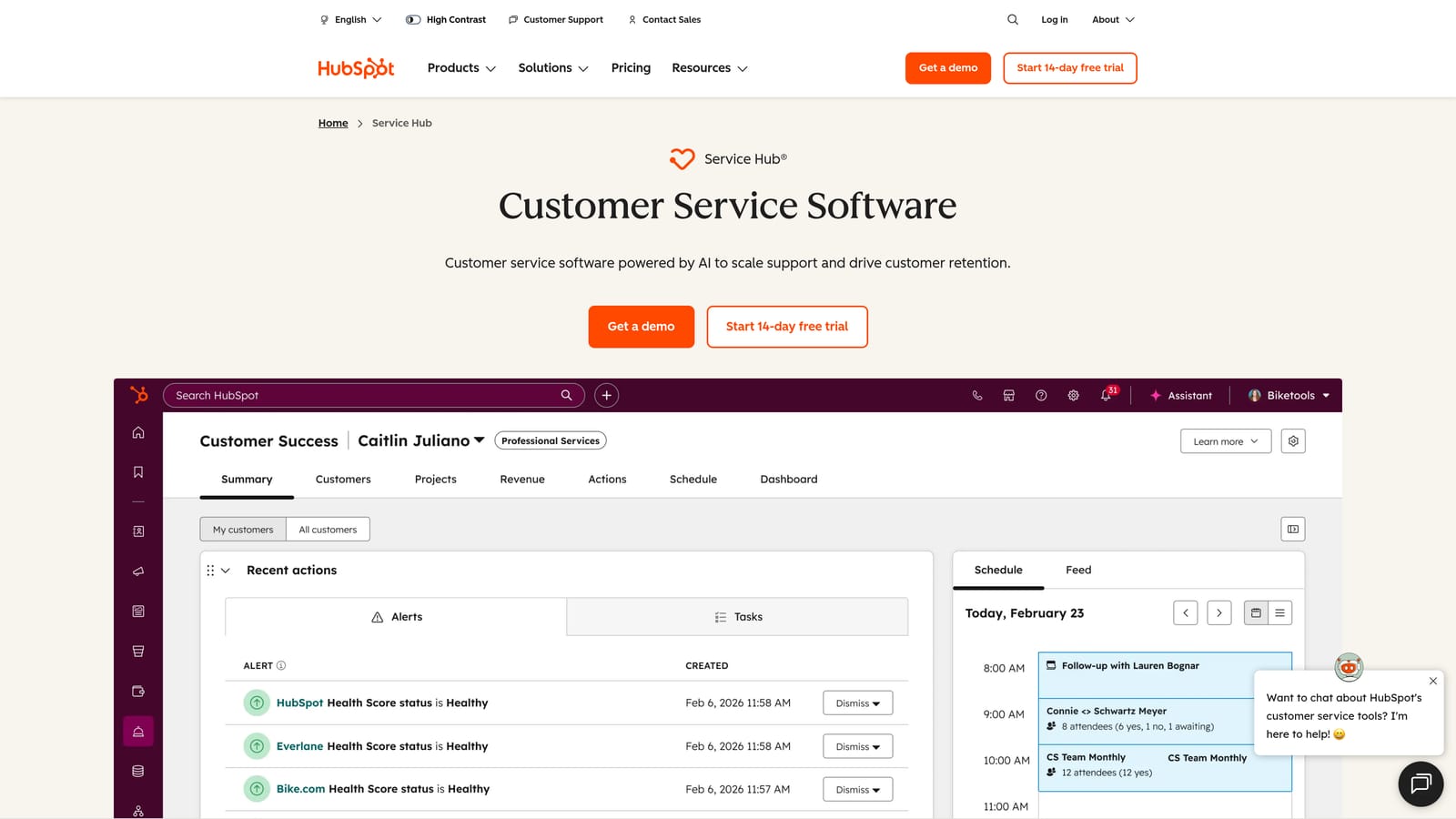
HubSpot Service Hub is HubSpot's customer service product, built directly into the HubSpot CRM platform, giving support teams full visibility into the customer journey across marketing, sales, and service.
Where This Tool Shines
The most compelling thing about Service Hub isn't any individual feature — it's the absence of data silos. When marketing, sales, and support all operate within the same HubSpot CRM, every support agent can see the full customer history: which campaigns they responded to, what they bought, what their renewal date is, and what they've already contacted support about. That context changes the quality of every interaction.
The transparent published pricing across Starter, Professional, and Enterprise tiers is also genuinely refreshing in a category where most platforms require a sales call just to understand the cost structure.
Key Features
Shared CRM: Marketing, sales, and support data unified in one platform — no integrations required, no data lag.
AI-Powered Automation: Chatbot and ticket automation features built into higher tiers and expanding with each platform update.
Customer Portal: Self-service portal where customers can track tickets and access the knowledge base without contacting support.
SLA Management and CSAT: Built-in SLA tracking, customer satisfaction surveys, and conversation intelligence at Professional tier and above.
Transparent Published Pricing: Starter, Professional, and Enterprise tiers with pricing listed publicly on the HubSpot website.
Best For
B2B SaaS teams already using HubSpot for marketing or sales. The value multiplies significantly when you're already in the ecosystem. Less compelling as a standalone support tool if you're not already a HubSpot customer.
Pricing
Free tier available. Starter, Professional, and Enterprise tiers with published pricing on HubSpot's website. One of the more transparent pricing structures in this category.
7. Kustomer
Best for: High-volume support environments that want conversation-based pricing and a unified customer timeline across all channels.
Kustomer is a customer service CRM platform built around a unified customer timeline, offering conversation-based pricing and strong performance in high-volume support environments.
Where This Tool Shines
Kustomer's conversation-based pricing model is a meaningful differentiator. Most platforms charge per agent seat, which creates a perverse incentive to limit headcount even when volume demands more coverage. Kustomer's model aligns cost with actual usage, which can work significantly in your favor if your team handles high conversation volumes with a relatively small agent count.
The unified customer timeline aggregates every interaction across every channel into a single chronological view per customer. For support teams managing customers across email, chat, SMS, and social simultaneously, this eliminates the context-switching and history-hunting that slows agents down.
Key Features
Unified Customer Timeline: All customer interactions across every channel aggregated into a single chronological view.
Conversation-Based Pricing: Charged per conversation rather than per agent seat — a model that can favor high-volume, lean-team operations.
AI-Powered Automation: Routing, classification, and response suggestion automation built into the workflow engine.
Deep Workflow Automation: Business rules and branching logic for complex support operations with multiple teams or escalation paths.
E-Commerce and Payments Integrations: Strong native connections to e-commerce platforms, payment processors, and logistics tools.
Best For
High-volume support operations, particularly in e-commerce, retail, and consumer SaaS, where conversation volume is high and the per-seat model creates cost pressure. Enterprise teams that want a CRM-style customer view in their support platform.
Pricing
Enterprise pricing, quote-based. Conversation-based rather than per-seat — contact Kustomer's sales team for a quote tailored to your conversation volume and team structure.
8. Tidio
Best for: Small businesses and early-stage SaaS teams that want to deploy AI-assisted support quickly with minimal technical overhead.
Tidio is an accessible AI-powered customer support tool featuring the Lyro AI chatbot, designed for teams that want to get AI-assisted support running without a lengthy implementation process.
Where This Tool Shines
Tidio's strongest attribute is its low barrier to entry. The deployment is fast, the interface is intuitive, and the Lyro AI chatbot can start handling common customer questions almost immediately after setup. For teams that have been managing support manually and want to introduce AI without a major platform migration or technical project, Tidio is one of the most practical starting points available.
The free tier is genuinely functional rather than a stripped-down trial, making it accessible for bootstrapped teams or early-stage products with limited support volume.
Key Features
Lyro AI Chatbot: Handles automated resolution of common customer questions using your existing help content as its knowledge base.
Unified Dashboard: Live chat, email, and Messenger support managed from a single interface without channel-switching.
Quick Deployment: Minimal technical setup required — teams can be operational within hours rather than weeks.
Visitor Tracking: Proactive chat triggers based on visitor behavior, page visits, and time on site.
Accessible Pricing: Free tier available with paid plans at price points suited to small teams and early-stage budgets.
Best For
Small businesses, early-stage SaaS products, and e-commerce teams that want AI-assisted support without the complexity or cost of enterprise platforms. Less suited to complex B2B support workflows with deep integration requirements or high escalation rates.
Pricing
Free tier available. Paid plans start at published monthly rates that are among the most accessible in this category. Check Tidio's website for current tier pricing.
9. Gladly
Best for: Premium brands that prioritize relationship quality over ticket throughput and want all customer interactions in a single lifelong thread.
Gladly is a people-centric support platform that eliminates ticket numbers entirely, organizing all customer interactions across every channel into a single lifelong conversation thread per customer.
Where This Tool Shines
Gladly's philosophical difference from most platforms in this list is worth understanding before evaluating it. Most helpdesks organize around tickets. Gladly organizes around people. Every email, chat, SMS, voice call, and social message from a customer lives in one continuous thread, regardless of when it happened or which channel it came through. Agents always have the full history without hunting through separate systems or asking customers to repeat themselves.
The people-match routing feature connects customers to agents who have prior history with them or who are best suited based on the nature of the issue — a small detail that meaningfully improves relationship quality at scale.
Key Features
No Ticket Queue: All channels (email, chat, voice, SMS, social) unified in one continuous customer conversation thread — no ticket numbers, no fragmented history.
People-Match Routing: Routes customers to the best-fit agent based on prior interaction history and issue type.
AI Self-Service and Agent Assist: AI-powered self-service options and in-conversation agent suggestions built directly into the customer view.
Task Management: Internal collaboration and task assignment without leaving the customer context.
Relationship-First Design: Built for brands where the quality of the support relationship is a differentiator, not just a cost center.
Best For
Premium consumer brands and SaaS companies with high-touch customer relationships where relationship quality is a competitive differentiator. Strong fit for teams where agents are expected to know their customers, not just resolve tickets.
Pricing
Per-agent pricing, quote-based. Enterprise-focused with pricing tailored to team size and conversation volume. Contact Gladly's sales team for a current quote.
Which Platform Is Right for Your Team?
The right intelligent support platform depends less on feature checklists and more on your operational model. Here's a quick way to think through your shortlist.
If you want AI-native architecture with business intelligence: Halo AI is built for this from the ground up, with page-aware agents, continuous learning, and integrations across your entire business stack.
If you're already in the Salesforce or HubSpot ecosystem: Service Cloud and Service Hub, respectively, offer the path of least resistance to unified customer data across sales, marketing, and support.
If you need enterprise-grade compliance and workflow depth: Zendesk's maturity and marketplace breadth are hard to match at scale.
If you want conversational AI plus proactive messaging in one tool: Intercom's Fin agent and campaign tools make it a strong choice for product-led SaaS companies.
If you're mid-market and budget-conscious: Freshdesk offers the best combination of features and transparent pricing without enterprise-level spend.
If you're early-stage and want to start fast: Tidio gets you AI-assisted support running in hours, not weeks.
Before requesting a quote from any vendor, come prepared with three questions: How does your AI learn and improve over time? What does escalation to a human agent look like in practice? And what integrations exist with the tools we already run on?
Your support team shouldn't scale linearly with your customer base. Let AI agents handle routine tickets, guide users through your product, and surface business intelligence while your team focuses on complex issues that need a human touch. See Halo in action and discover how continuous learning transforms every interaction into smarter, faster support.