9 Best Intelligent Support Software for B2B in 2026
B2B support demands more than generic chatbots — it requires intelligent support software built for SLAs, technical escalations, and multi-seat accounts. This guide ranks the 9 best intelligent support software platforms for B2B in 2026, evaluated on native AI capabilities, B2B-specific features, analytics depth, and the ability to scale support operations without proportional headcount growth.
 Grant CooperFounder13 min read
B2B support is a different beast. Your customers are power users with SLAs, technical escalations, multi-seat accounts, and zero patience for generic chatbot responses. The right intelligent support software doesn't just deflect tickets — it understands context, integrates with your business stack, and gets smarter over time.
This list covers the best platforms built for B2B support complexity: tools that handle ticket resolution, live handoffs, product guidance, and business intelligence, not just FAQ lookups. Whether you're running a lean support team at a growing SaaS company or managing enterprise-scale operations, there's a fit here.
Selection criteria: native AI capabilities (not bolt-on), B2B-specific features like multi-account management and escalation logic, depth of analytics, and real scalability without proportional headcount growth.
1. Halo AI
Best for: B2B SaaS teams wanting AI-first support with business intelligence built in
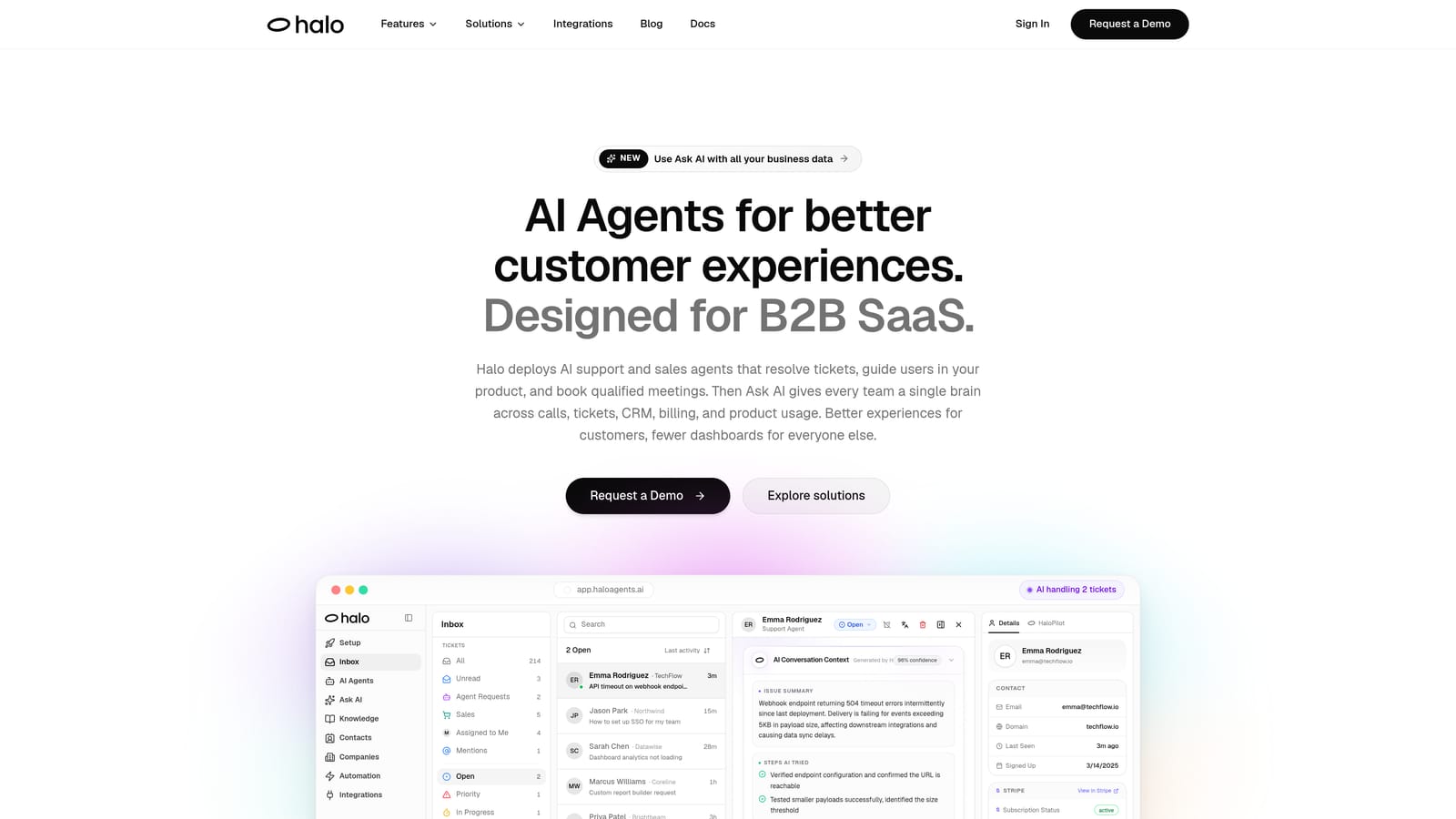
Halo AI is an AI-first customer support platform that resolves tickets autonomously, guides users through your product with page-aware context, and surfaces business intelligence signals across every interaction.
Where This Tool Shines
What separates Halo from AI-augmented legacy tools is architecture. It wasn't built as a chatbot layer on top of a ticketing system. The AI is the foundation, which means every feature, from ticket resolution to bug reporting, is designed around autonomous intelligence rather than agent assistance.
The page-aware chat widget is particularly compelling for SaaS teams. The AI agent understands which product page or feature a user is currently on, enabling genuinely contextual guidance rather than generic responses. Pair that with a smart inbox that surfaces customer health signals and revenue anomalies, and you get a support tool that doubles as a business intelligence layer.
Key Features
Page-Aware AI Agents: The AI understands which product page or feature a user is on, enabling context-specific guidance and resolution without users having to explain their situation.
Smart Inbox with Business Intelligence: Goes beyond support metrics to surface customer health signals, revenue anomalies, and support trends that matter to the whole business.
Auto Bug Ticket Creation: Automatically creates and routes bug reports to Linear or other engineering tools, closing the loop between support and product without manual handoffs.
Live Agent Handoff: Complex escalations transfer smoothly to human agents with full context preserved, so customers never have to repeat themselves.
Continuous Learning Loop: Every resolved interaction improves the AI's future performance, meaning the system gets meaningfully smarter over time rather than staying static.
Deep Integration Stack: Connects natively with Linear, Slack, HubSpot, Intercom, Stripe, Zoom, PandaDoc, and Fathom, covering the full B2B business stack beyond just the support layer.
Best For
Product-led growth SaaS companies and B2B teams that want AI to handle autonomous resolution, not just assist agents. Especially strong for teams that need support intelligence to feed into product, engineering, and revenue workflows simultaneously.
Pricing
Contact Halo AI directly for pricing. Given the AI-first architecture and business intelligence capabilities, it's positioned for teams ready to invest in a platform rather than a point solution.
2. Intercom
Best for: SaaS teams wanting mature AI chat with a rich integration ecosystem
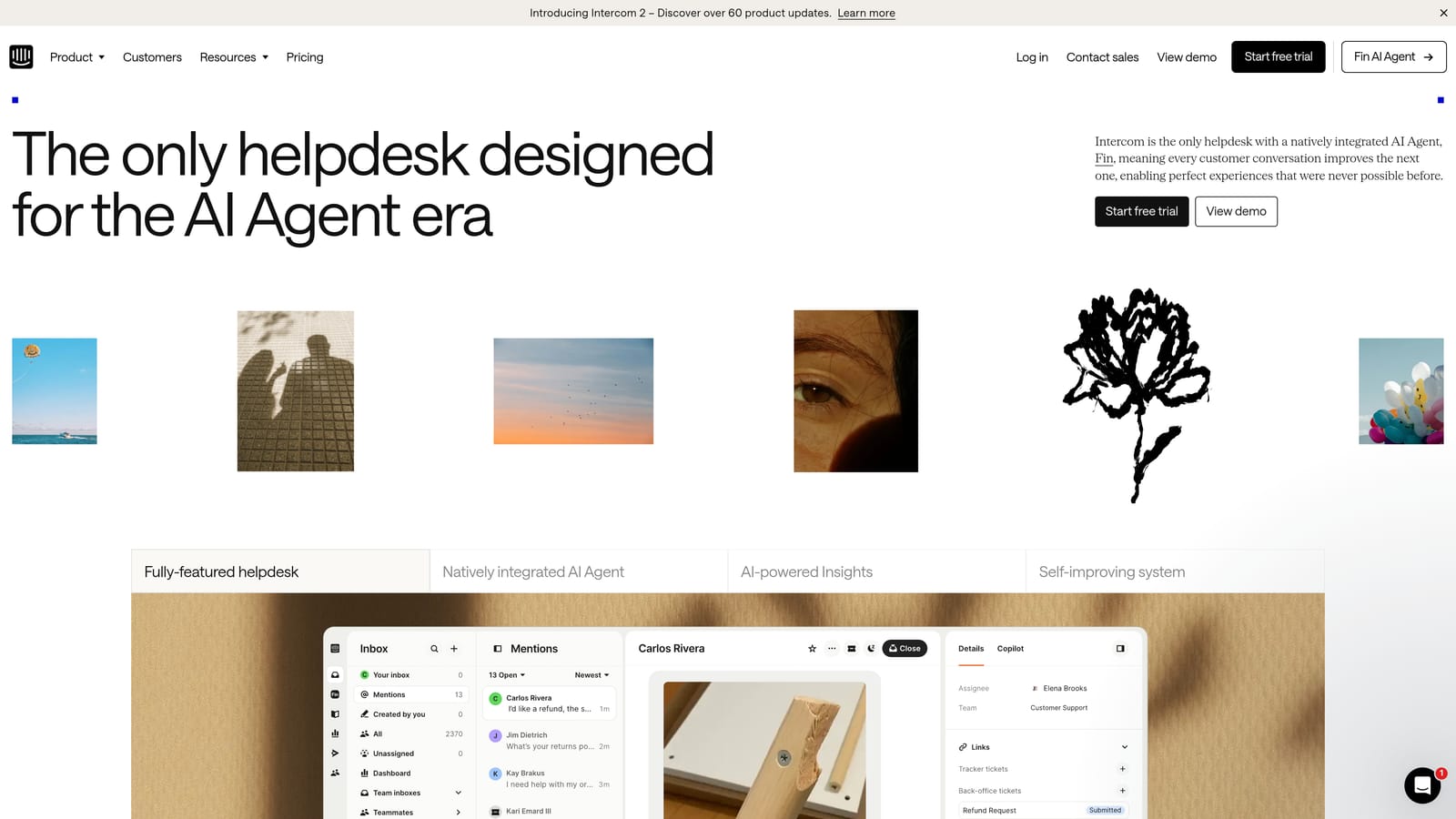
Intercom is a customer messaging platform featuring Fin, its GPT-4-powered AI agent, handling autonomous support conversations across chat, email, and in-product messaging.
Where This Tool Shines
Intercom's maturity is its biggest asset. The platform has years of refinement behind its routing logic, conversation design, and integration ecosystem. Fin handles a meaningful portion of inbound conversations autonomously, and the handoff to human agents is smooth when escalation is needed.
For PLG SaaS companies, the in-product messaging and onboarding flow capabilities make Intercom useful beyond pure support. It can guide new users, trigger contextual messages based on behavior, and handle support in the same interface.
Key Features
Fin AI Agent: GPT-4-powered agent handles autonomous ticket resolution across multiple channels without requiring heavy configuration.
Intelligent Routing: Conversations are automatically classified and routed to the right team or agent based on content and context.
In-Product Messaging: Supports onboarding flows, proactive messages, and contextual support directly within your product interface.
Integration Marketplace: Extensive library of integrations covering CRM, analytics, and productivity tools commonly used by B2B teams.
Conversation Analytics: Reporting on resolution rates, response times, and conversation volume helps teams track AI performance and agent workload.
Best For
SaaS companies already invested in the Intercom ecosystem, or teams that want a well-rounded messaging platform with solid AI capabilities and don't need deep business intelligence or engineering tool integrations out of the box.
Pricing
Starts at $29/seat/month. Fin AI Agent usage is priced separately based on resolution volume, so costs can scale significantly for high-volume teams.
3. Zendesk
Best for: Enterprise B2B teams needing robust SLA management and omnichannel ticketing
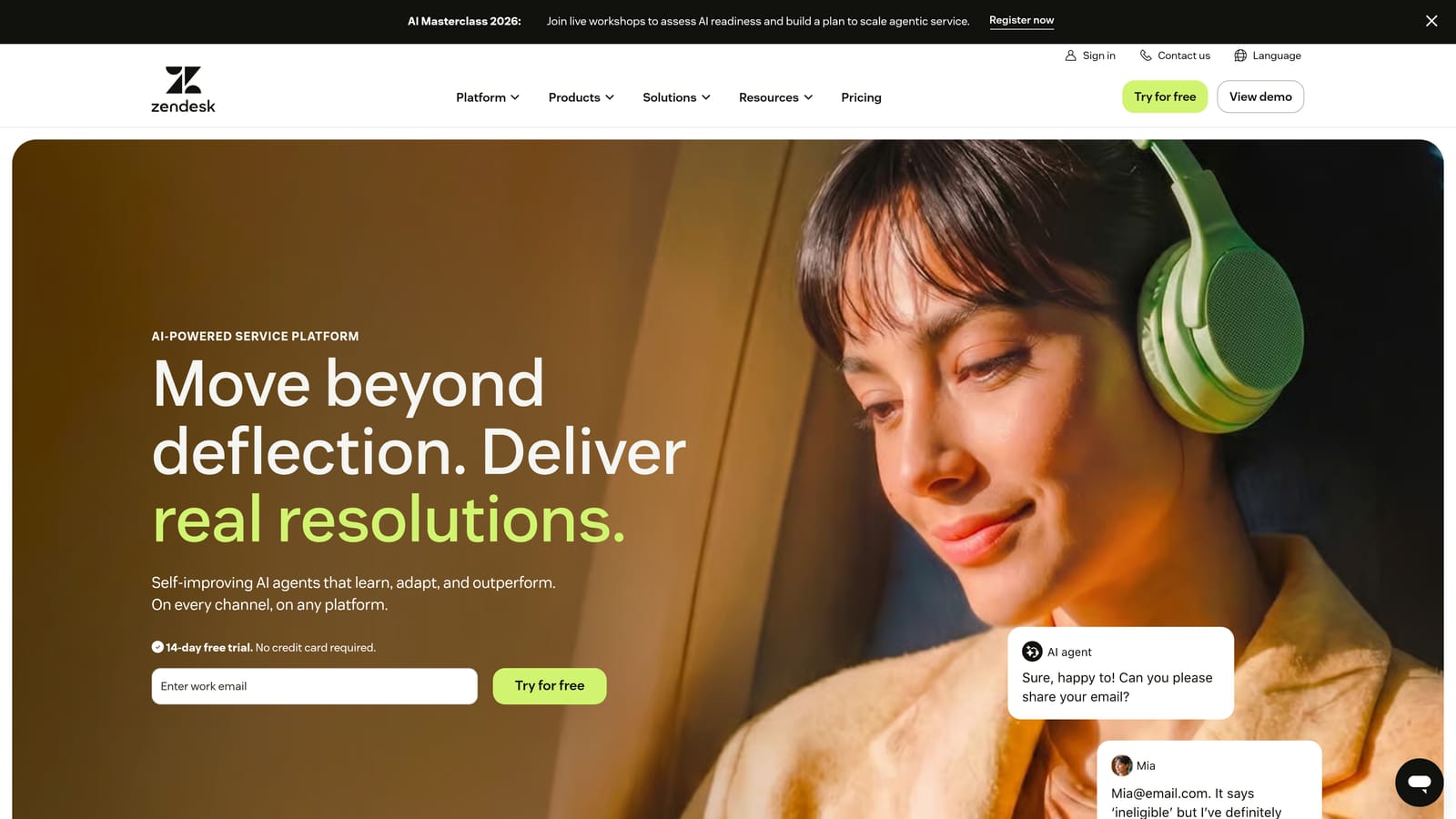
Zendesk is the industry-standard enterprise helpdesk, featuring AI Agents and Intelligent Triage for automated resolution alongside a vast integration ecosystem suited to complex B2B operations.
Where This Tool Shines
Zendesk's strength is infrastructure. For enterprise B2B teams managing complex SLA contracts, multi-tier escalation workflows, and omnichannel volume, it provides a level of operational control that few platforms match. The breadth of its marketplace, with over 1,000 integrations, means it fits into almost any existing tech stack.
The AI capabilities have matured significantly. Intelligent Triage classifies and routes tickets automatically, and AI Agents handle resolution for common queries. That said, the AI feels like an enhancement to a ticketing system rather than the core product, which is worth considering if autonomous resolution is your primary goal.
Key Features
AI Agents with Intelligent Triage: Automatically classifies incoming tickets and routes them to the appropriate team or attempts autonomous resolution for common queries.
Enterprise SLA Management: Sophisticated SLA tracking, breach alerts, and escalation workflows designed for complex B2B contract structures.
Omnichannel Support: Handles email, chat, voice, social, and messaging in a unified agent workspace.
1,000+ Marketplace Integrations: Extensive ecosystem covering CRM, developer tools, analytics, and communication platforms.
Workforce Management: Advanced reporting, agent performance tracking, and workforce planning tools built for large support operations.
Best For
Mid-market to enterprise B2B companies with high ticket volumes, complex SLA requirements, and established support operations that need a reliable, scalable backbone. Less ideal for teams prioritizing AI-first autonomous resolution over operational control.
Pricing
Suite plans start at $55/agent/month. Enterprise pricing is available for larger deployments with advanced security and customization requirements.
4. Freshdesk
Best for: Growing B2B teams wanting accessible AI-assisted support without enterprise pricing
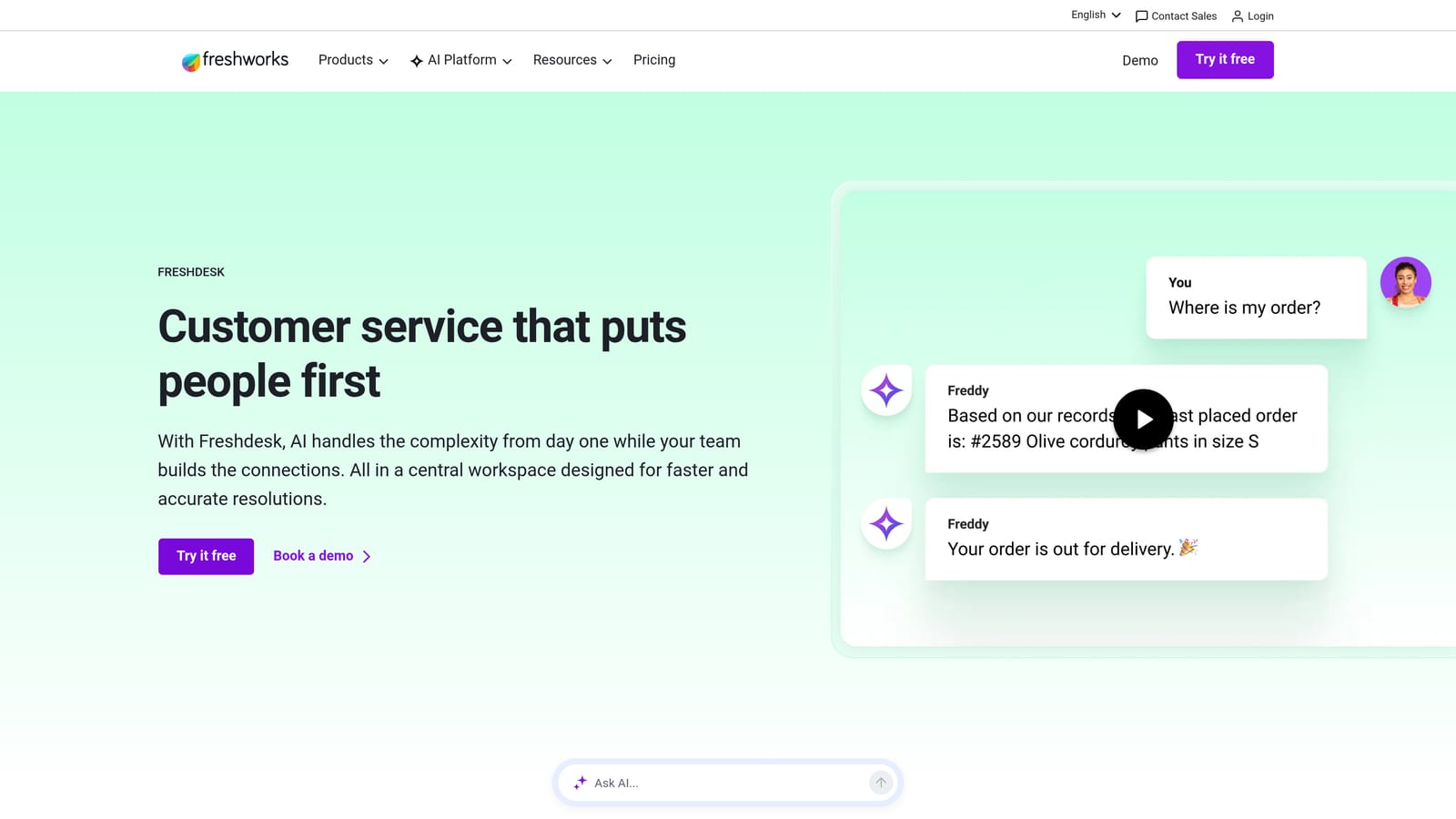
Freshdesk is Freshworks' helpdesk platform featuring Freddy AI for ticket triage, agent assistance, and customer self-service at a price point accessible to growing B2B teams.
Where This Tool Shines
Freshdesk hits a sweet spot for teams graduating from basic email support. Freddy AI handles two distinct jobs: Freddy Copilot assists agents with suggested responses and summaries, while Freddy Self Service manages customer-facing deflection. That separation makes it practical for teams that want AI assistance without fully removing humans from the loop.
The collision detection feature is a small but meaningful detail for B2B teams. When multiple agents are viewing the same ticket, they're alerted in real time, preventing duplicate responses and wasted effort on complex accounts.
Key Features
Freddy AI Copilot: Assists agents with suggested responses, ticket summarization, and next-step recommendations to speed up resolution.
Freddy Self Service: Customer-facing AI deflection that handles common queries before they reach a human agent.
Omnichannel Support: Manages email, chat, phone, and social channels from a unified inbox.
Collision Detection: Alerts agents when multiple team members are working on the same ticket, reducing duplicated effort.
B2B Tool Integrations: Marketplace integrations with popular B2B tools including CRM platforms, project management tools, and communication apps.
Best For
SMB and mid-market B2B teams that want solid AI assistance and omnichannel coverage without the complexity or cost of enterprise platforms. A practical step up from email-only support.
Pricing
Free plan available for small teams. Paid plans start at $15/agent/month, making it one of the more accessible options on this list for budget-conscious teams.
5. Salesforce Service Cloud
Best for: Enterprise B2B teams already in the Salesforce ecosystem with complex account hierarchies
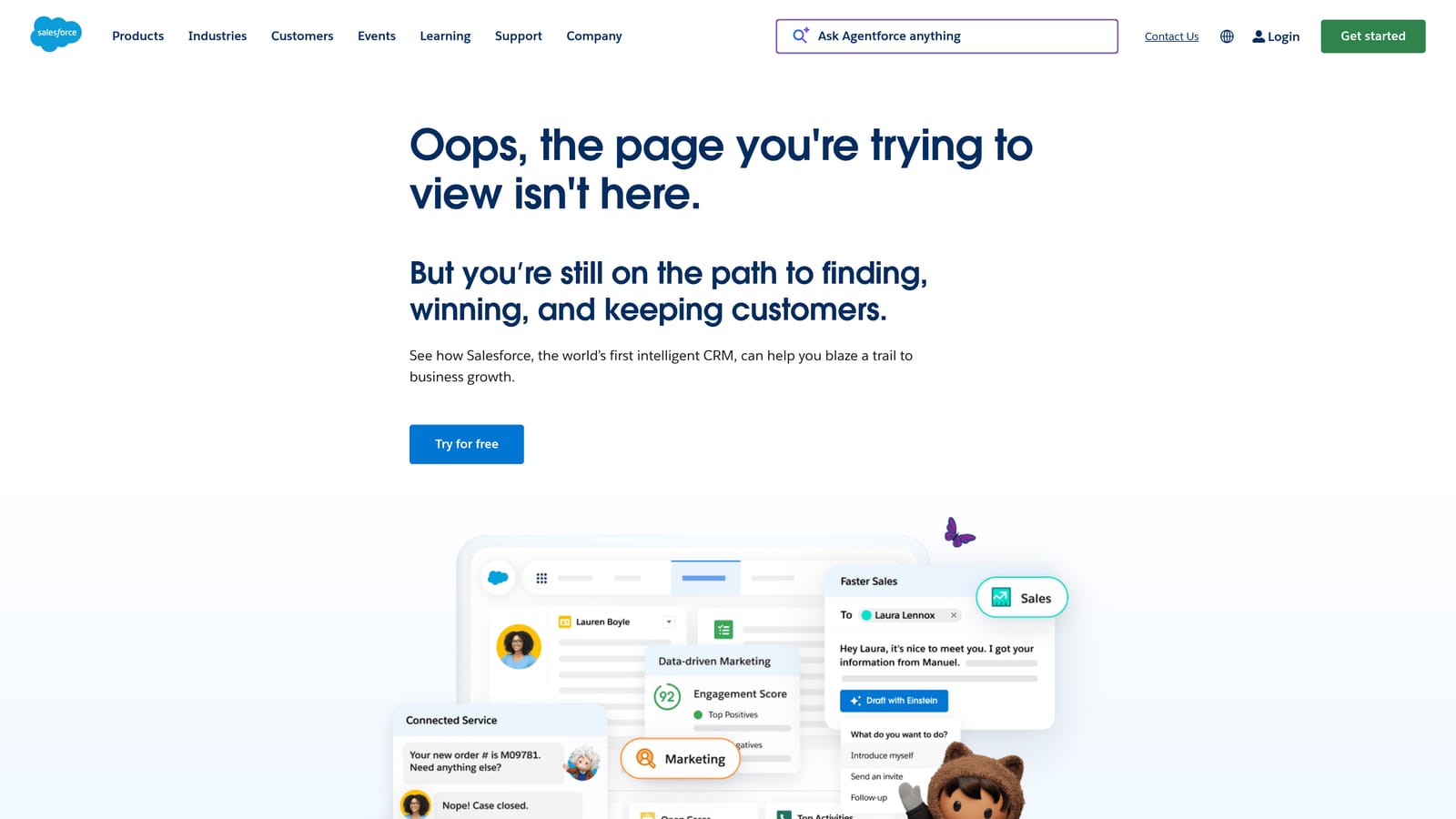
Salesforce Service Cloud is enterprise support built natively inside Salesforce CRM, with Einstein AI powering case management, intelligent routing, and proactive service across complex B2B account structures.
Where This Tool Shines
If your business runs on Salesforce, Service Cloud is the natural support extension. Every support case carries the full CRM context: account history, contract details, open opportunities, and relationship data. For B2B companies managing enterprise accounts where a single customer relationship involves dozens of stakeholders, that context is genuinely valuable.
Einstein AI handles case classification, routing, and next-best-action recommendations with the full weight of your CRM data behind it. The entitlement management system is particularly strong for teams managing complex SLA contracts tied to specific account tiers.
Key Features
Einstein AI: Powers case classification, intelligent routing, and next-best-action recommendations using full CRM context.
CRM-Native Account Context: Every support case includes complete customer and account data from Salesforce, eliminating context-switching for agents.
Entitlement and SLA Management: Sophisticated entitlement tracking for enterprise contracts with multiple service tiers and SLA structures.
Omni-Channel Routing: Automatically routes cases across all support channels based on agent skills, availability, and case priority.
Sales and Marketing Integration: Deep native integration with Salesforce Sales Cloud and Marketing Cloud for unified customer lifecycle visibility.
Best For
Enterprise B2B companies already invested in the Salesforce platform. The value compounds significantly when support, sales, and marketing data all live in the same system. Less compelling as a standalone purchase given implementation complexity and cost.
Pricing
Enterprise plans start at $165/user/month. Implementation costs and Salesforce ecosystem investment should be factored into total cost of ownership.
6. Drift (Salesloft)
Best for: B2B teams where the line between support and sales qualification is intentionally blurry
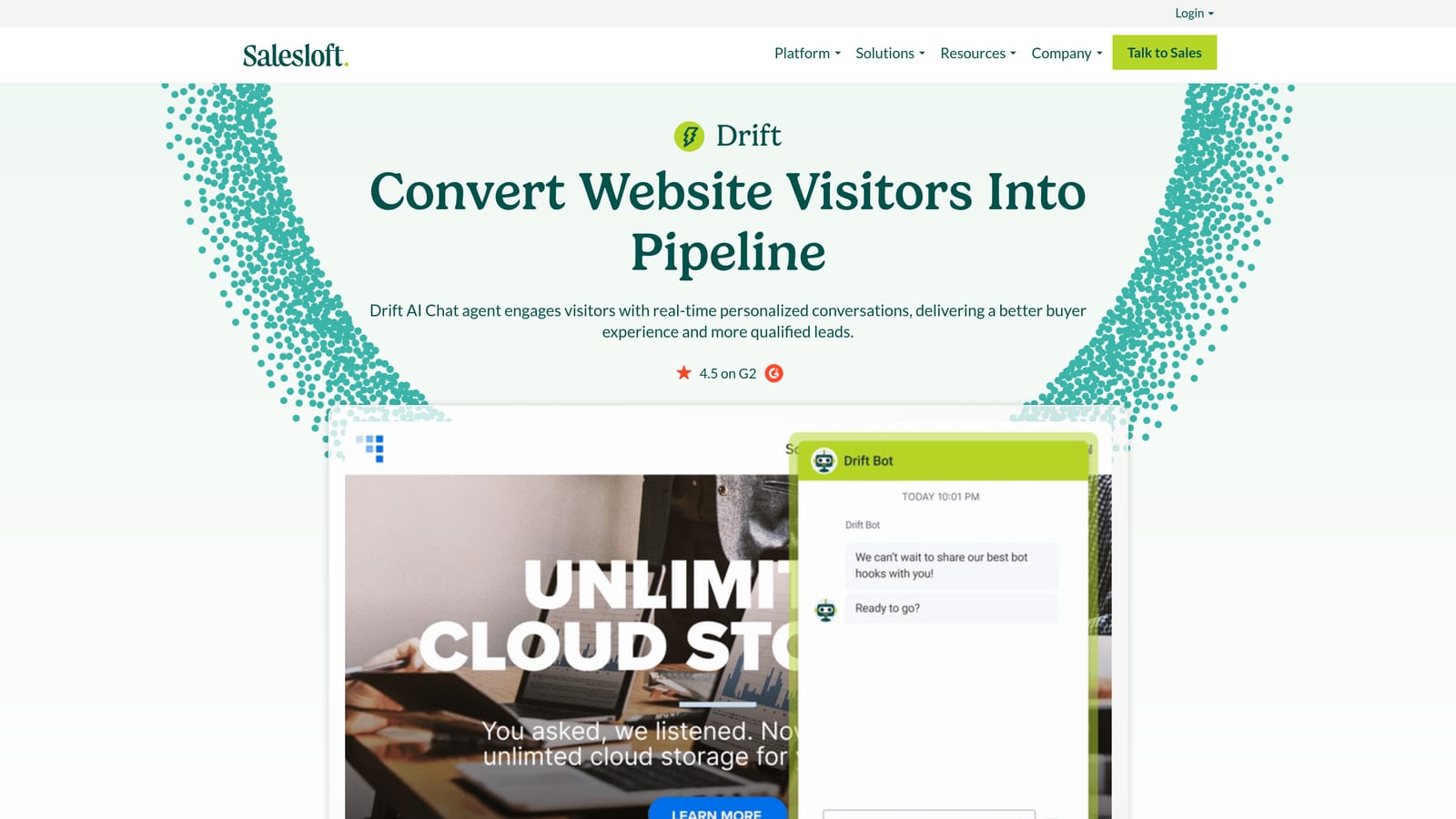
Drift is a conversational AI platform that bridges B2B sales and support, with strong ABM integrations and revenue intelligence layered in through its Salesloft acquisition.
Where This Tool Shines
Drift occupies a unique category: it's less a pure support platform and more a revenue conversation platform that handles support as part of a broader customer engagement strategy. For B2B companies where inbound chat conversations can be both support requests and sales opportunities, that positioning is genuinely useful.
The Salesloft acquisition adds revenue intelligence to the mix, meaning conversation data can feed directly into sales workflows. Account-based targeting allows the platform to recognize high-value visitors and route them differently from standard support inquiries.
Key Features
Conversational AI: Handles both support resolution and sales qualification within the same conversation interface.
Account-Based Targeting: Recognizes known accounts and routes conversations based on account tier, intent signals, or CRM data.
Revenue Intelligence via Salesloft: Conversation data integrates with Salesloft's revenue intelligence layer for sales team visibility.
Meeting Booking and Live Handoff: Seamlessly books meetings or transfers to live agents without breaking the conversation flow.
CRM Integrations: Native integrations with Salesforce and HubSpot for bidirectional data sync.
Best For
B2B companies where sales and support share ownership of customer conversations, particularly those running account-based go-to-market strategies. Less suited for teams that need pure support ticket management at scale.
Pricing
Contact Drift for pricing. The platform is enterprise-focused, and pricing reflects that positioning.
7. HubSpot Service Hub
Best for: HubSpot-centric B2B teams wanting support, CRM, and customer feedback in one place
HubSpot Service Hub is HubSpot's native support product, powered by Breeze AI, connecting help desk, knowledge base, and customer portal to the full HubSpot CRM timeline.
Where This Tool Shines
Service Hub's core advantage is unification. If your marketing, sales, and service teams all live in HubSpot, every support interaction is automatically attached to the full contact and company record. Agents see the complete customer journey without switching tools, and support data feeds back into marketing and sales workflows naturally.
Breeze AI handles the practical day-to-day: drafting ticket responses, summarizing long conversation threads, and suggesting replies based on historical data. It's AI as an agent productivity tool rather than autonomous resolution, which suits teams that want AI assistance with humans remaining in control.
Key Features
Breeze AI: Handles ticket drafting, conversation summarization, and suggested replies to speed up agent response times.
Unified CRM Timeline: Every support interaction is linked to the full contact and company record across marketing, sales, and service.
Knowledge Base and Customer Portal: Self-service resources and a branded customer portal reduce inbound ticket volume.
SLA Tracking and Ticket Pipelines: Customizable SLA rules and visual ticket pipelines for managing support operations.
Built-In Feedback Surveys: NPS, CSAT, and CES surveys are native to the platform, closing the feedback loop without additional tools.
Best For
B2B companies already using HubSpot for CRM, marketing, or sales. The value of Service Hub multiplies significantly within the HubSpot ecosystem. As a standalone support platform, it's solid but less differentiated.
Pricing
Free tier available. Starter plans from $15/seat/month; Professional from $90/seat/month. Pricing scales with features and seat count.
8. Tidio
Best for: Lean B2B support teams wanting fast AI chat deployment at accessible pricing
Tidio is a lightweight AI support platform featuring Lyro, its conversational AI chatbot, designed for fast deployment and accessible pricing, making it a strong fit for lean B2B support teams.
Where This Tool Shines
Tidio's main selling point is speed to value. Where enterprise platforms require weeks of implementation and configuration, Tidio can be deployed quickly with Lyro handling a meaningful portion of inbound conversations from day one. For smaller B2B teams that need AI chat without heavy infrastructure investment, that matters.
The visual chatbot flow builder allows teams to create custom automation paths without engineering resources. It's not as sophisticated as the enterprise platforms on this list, but for teams with straightforward support needs, the simplicity is a feature rather than a limitation.
Key Features
Lyro AI Chatbot: Handles autonomous customer conversations and resolves common queries without human intervention.
Live Chat with Human Fallback: Smooth escalation from AI to human agent when conversations exceed Lyro's capabilities.
Visual Flow Builder: Drag-and-drop automation builder for creating custom conversation paths without code.
Email and Messenger Integration: Extends support coverage beyond live chat to email and social messaging channels.
Analytics Dashboard: Tracks conversation volume, resolution rates, and agent performance in a straightforward reporting interface.
Best For
Small to mid-sized B2B teams that want AI-powered chat without the complexity or cost of enterprise platforms. A strong entry point for companies adding AI support for the first time.
Pricing
Free plan available. Lyro AI starts at $29/month, with paid plans scaling based on conversation volume and feature requirements.
9. Kustomer
Best for: High-volume B2B operations needing a unified customer timeline across all support channels
Kustomer is a CRM-native support platform that unifies every customer interaction into a single timeline, with AI-driven summaries and proactive service capabilities for complex B2B operations.
Where This Tool Shines
Kustomer's unified timeline is its defining feature. Rather than presenting agents with a list of disconnected tickets, it shows the complete customer story: every interaction, across every channel, in chronological order. For B2B teams managing accounts with long histories and multiple stakeholders, that context dramatically improves the quality of support.
The AI layer handles conversation summarization and next-best-action recommendations, helping agents move faster through complex cases without losing important context. Intelligent routing considers customer history and agent skill sets, ensuring the right person handles the right conversation.
Key Features
Unified Customer Timeline: Aggregates every customer interaction across all channels into a single, chronological view for agents.
AI Conversation Summaries: Automatically summarizes long conversation threads so agents can get up to speed instantly without reading full histories.
Intelligent Routing: Routes conversations based on customer history, case complexity, and agent skills rather than simple round-robin assignment.
Proactive Service Automation: Triggers outreach and service workflows based on customer behavior or account signals without waiting for inbound requests.
B2B Tool Integrations: Connects with e-commerce platforms and B2B business tools to pull relevant customer data into the support context.
Best For
Mid-market to enterprise B2B teams with high conversation volumes and complex customer histories. Competes directly with Zendesk and Salesforce Service Cloud for teams that prioritize a unified customer view over deep CRM integration.
Pricing
Enterprise plans start at $89/user/month. Positioned for teams with the volume and complexity to justify the investment.
Choosing the Right Fit for Your Team
The honest answer is that the best intelligent support software depends on where your team sits today and where you're trying to go. Here's a quick way to think through the decision.
If you want AI-first with business intelligence: Halo AI is the standout choice. It's built from the ground up around autonomous resolution, and the business intelligence layer, covering customer health signals, revenue anomalies, and engineering escalations, makes it genuinely useful beyond the support function.
If you need enterprise ticketing infrastructure: Zendesk is the reliable choice for complex SLA management, omnichannel volume, and operational control. It's the platform that scales to enterprise without falling apart.
If you're CRM-embedded in Salesforce: Service Cloud is the natural extension. The Einstein AI capabilities are strong when backed by full CRM data, and the entitlement management is best-in-class for complex B2B contracts.
If HubSpot is your source of truth: Service Hub makes sense. The unified timeline across marketing, sales, and service is genuinely valuable when your team already lives in HubSpot.
If support and sales share the same conversations: Drift's account-based targeting and Salesloft revenue intelligence make it the right tool for revenue-focused B2B teams where the support and sales motions overlap.
If you're a lean team wanting fast deployment: Tidio or Freshdesk offer accessible pricing and quick time to value without the implementation overhead of enterprise platforms.
Your support team shouldn't scale linearly with your customer base. Let AI agents handle routine tickets, guide users through your product, and surface business intelligence while your team focuses on complex issues that need a human touch. See Halo in action and discover how continuous learning transforms every interaction into smarter, faster support.