9 Best Intelligent Support Systems Compared for 2026
This intelligent support system comparison evaluates nine leading AI-powered platforms for 2026, analyzing their autonomous resolution capabilities, learning features, integration options, and suitability for different business sizes. The guide helps teams select the right system to improve customer retention, automate issue resolution, and extract actionable business intelligence from support interactions.
 Grant CooperFounder11 min read
Choosing the right intelligent support system can mean the difference between customers who stay and customers who leave frustrated. With AI capabilities advancing rapidly, today's support platforms do far more than route tickets—they resolve issues autonomously, predict customer needs, and surface business intelligence you'd otherwise miss.
This comparison breaks down nine leading intelligent support systems across key criteria: AI resolution capabilities, learning and adaptation, integration depth, and value for different team sizes. Whether you're scaling a startup or optimizing enterprise operations, you'll find a clear match for your support needs.
1. Halo AI
Best for: Teams wanting AI-first autonomous resolution with continuous learning and business intelligence
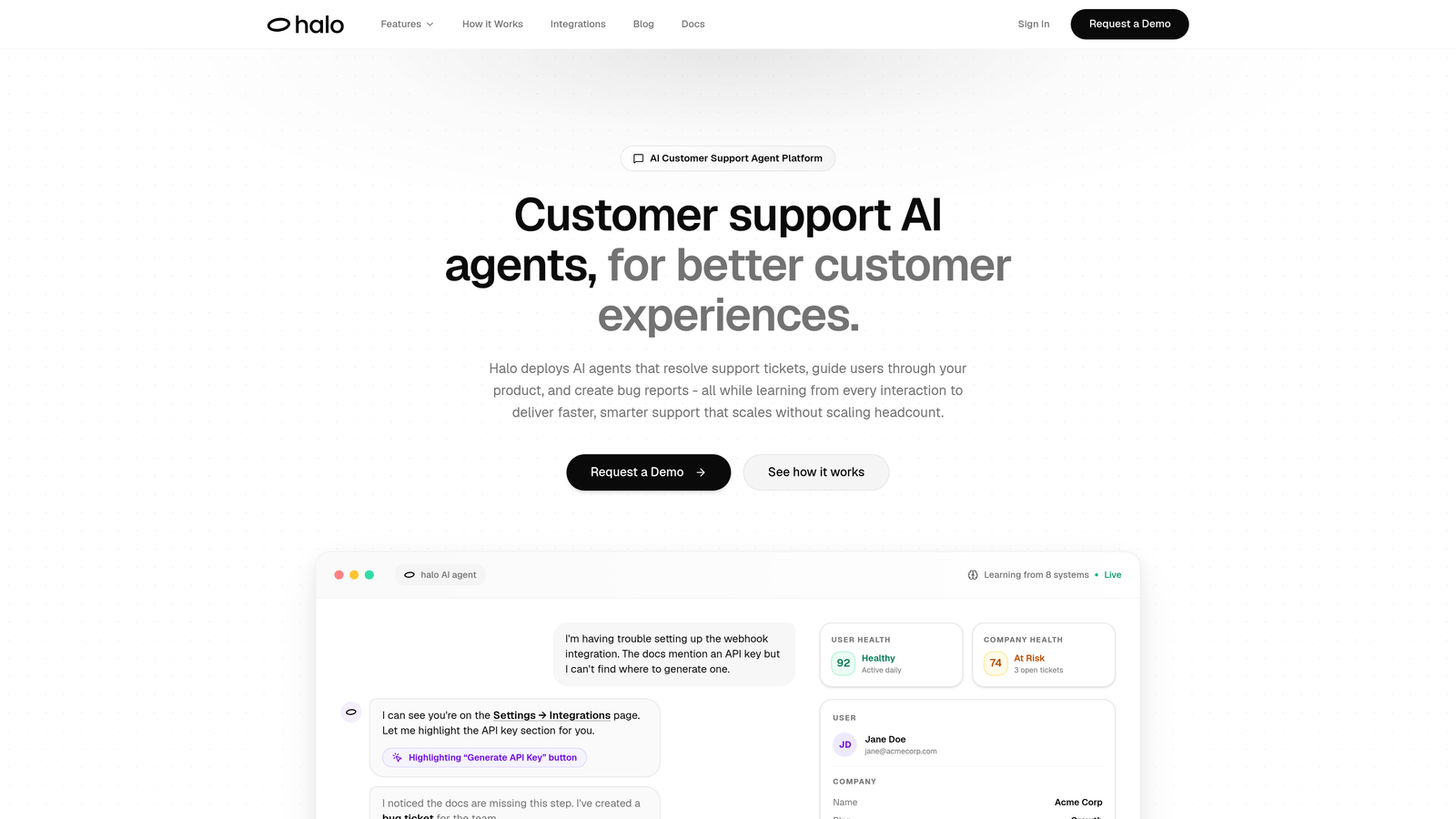
Halo AI is an AI-native customer support platform that resolves tickets autonomously while learning from every interaction to deliver progressively smarter support.
Where This Tool Shines
Unlike traditional helpdesks with AI bolted on, Halo AI was built from the ground up with AI at its core. The platform doesn't just answer questions—it sees what users see through page-aware context, understands where they're stuck in your product, and provides visual guidance that goes beyond text responses.
The continuous learning architecture means every resolved ticket, every escalation, and every customer interaction trains the system to handle similar issues better next time. This creates a compounding intelligence effect that traditional rule-based systems simply can't match.
Key Features
Page-Aware Chat Widget: Sees what users see on your product interface and provides contextual visual guidance, not just text answers.
Autonomous Ticket Resolution: Handles routine support issues end-to-end with intelligent escalation to human agents only when needed.
Business Intelligence Beyond Support: Surfaces customer health signals, revenue intelligence, and anomaly detection from support interactions.
Auto Bug Ticket Creation: Automatically creates detailed bug reports in Linear or your project management system when issues are identified.
Deep Multi-System Integration: Connects to your entire business stack including Linear, Slack, HubSpot, Intercom, Stripe, Zoom, and PandaDoc.
Best For
B2B SaaS companies and product teams who want maximum automation without sacrificing quality. Particularly valuable for teams using modern helpdesk systems like Zendesk, Freshdesk, or Intercom who want AI capabilities that actually reduce ticket volume rather than just assist human agents.
Pricing
Contact for custom pricing based on ticket volume and integration requirements.
2. Intercom Fin
Best for: Conversational support teams already using Intercom's messaging platform
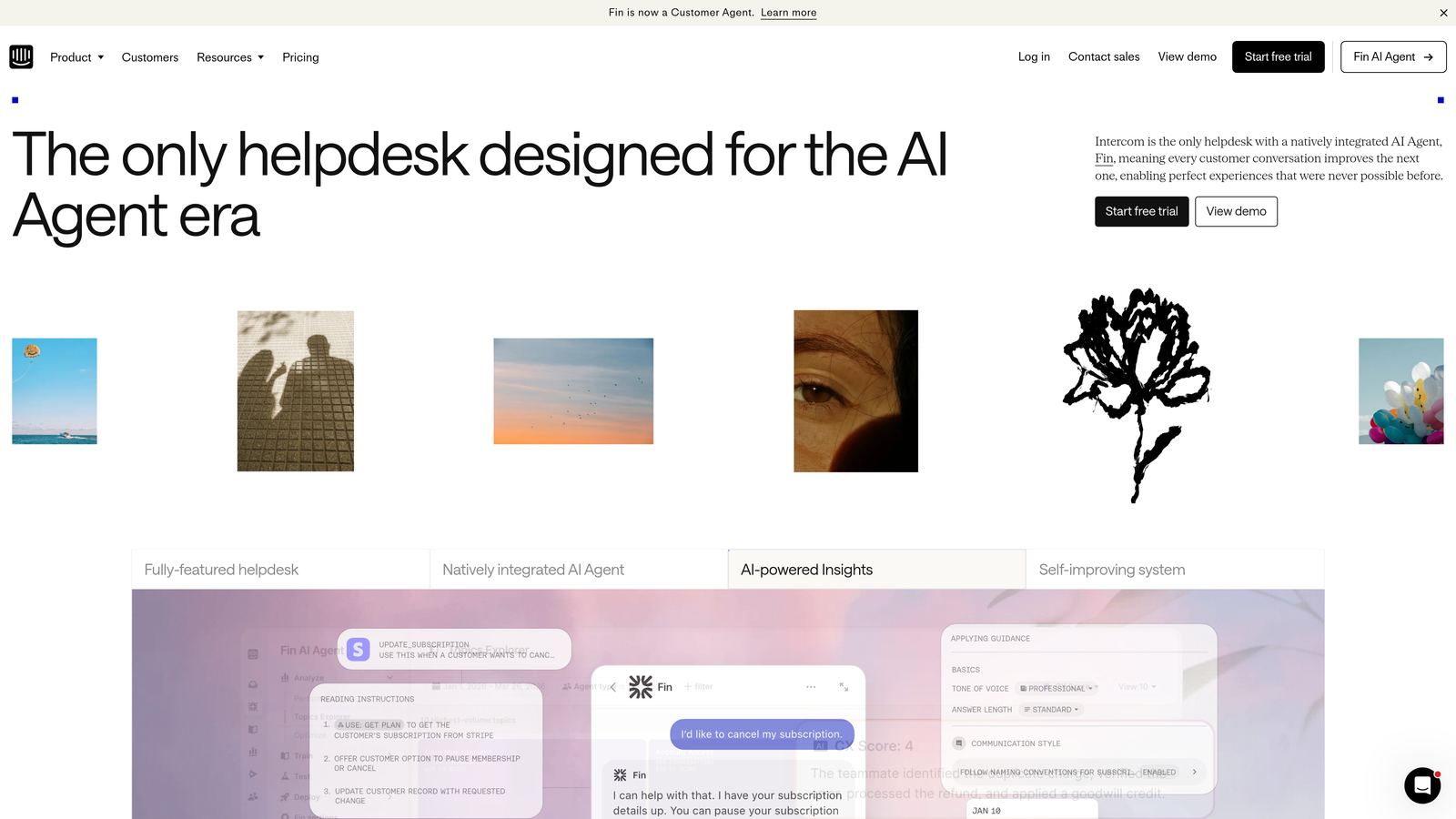
Intercom Fin is an AI agent that lives inside Intercom's established messaging infrastructure and trains on your help center content.
Where This Tool Shines
If you're already invested in Intercom's ecosystem, Fin offers the smoothest integration path to AI support. The agent pulls directly from your existing help articles, meaning setup doesn't require rebuilding your knowledge base from scratch.
The handoff between AI and human agents feels natural because it happens within the same conversation thread. Customers don't get bounced between systems or forced to repeat themselves when escalation is needed.
Key Features
Help Center Training: AI agent automatically learns from your existing help documentation without manual configuration.
Seamless Human Handoff: Transfers conversations to human agents within the same thread with full context preserved.
Conversation Analytics: Tracks resolution rates, customer satisfaction, and topic trends across AI and human interactions.
Multi-Language Support: Handles customer inquiries in multiple languages using the same knowledge base.
Custom Answer Approval: Lets you review and approve AI responses before they go live to maintain quality standards.
Best For
Companies already using Intercom who want to add AI capabilities without switching platforms. Works well for teams prioritizing conversational support over traditional ticketing.
Pricing
Starts at $0.99 per AI resolution, charged only when Fin successfully resolves a conversation without human intervention.
3. Zendesk AI
Best for: Enterprise teams needing AI on top of established ticketing workflows
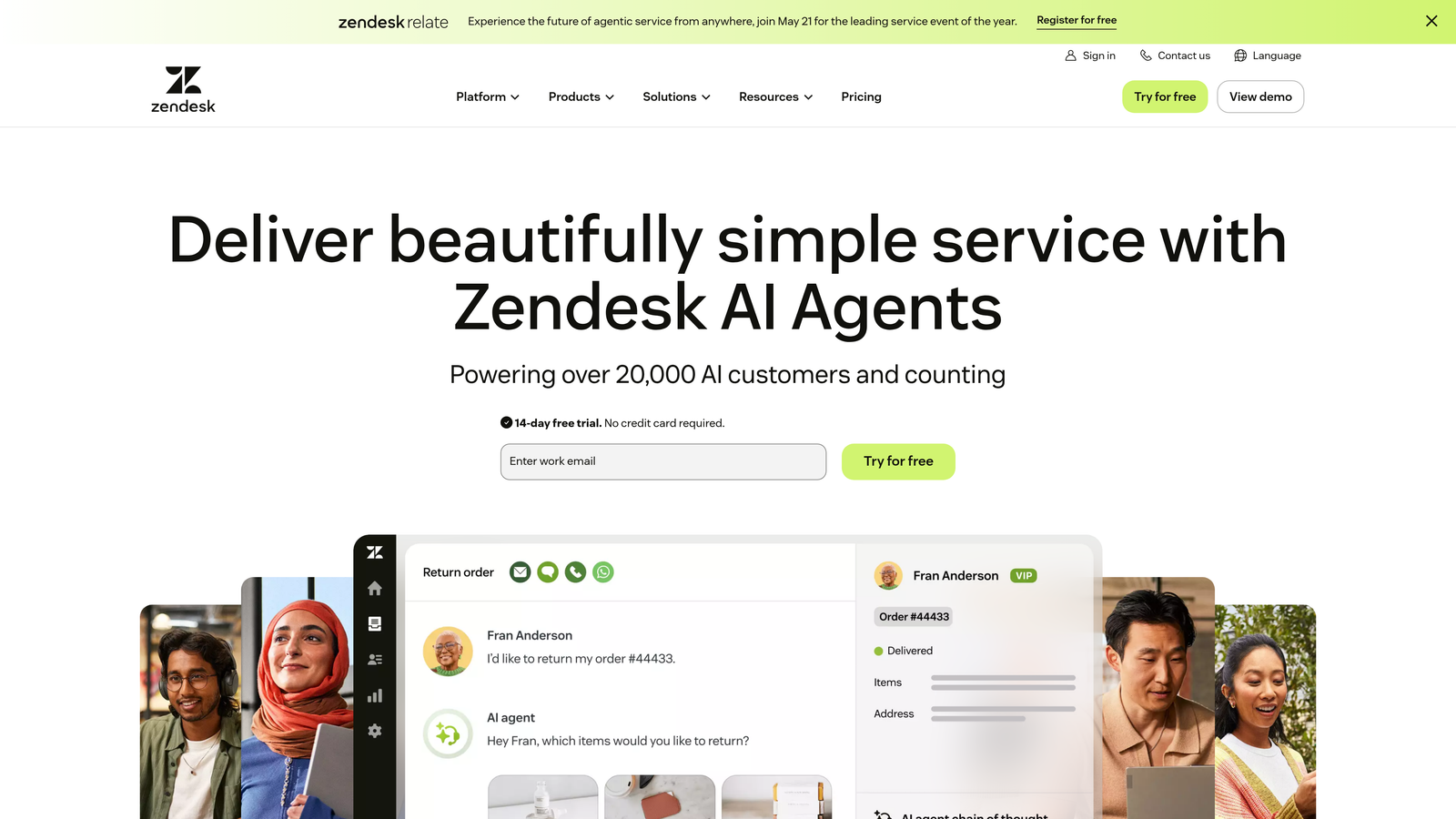
Zendesk AI is an enterprise-grade AI layer built into the Zendesk platform with intelligent routing and generative response capabilities.
Where This Tool Shines
Zendesk brings the weight of enterprise experience to AI support. If you're managing complex ticket workflows across multiple departments, the AI capabilities integrate directly into routing rules, macros, and reporting you've already built.
The agent assist features provide real-time suggestions to human agents rather than replacing them entirely. This collaborative approach works well for teams handling nuanced issues where full automation isn't appropriate.
Key Features
Intelligent Triage and Routing: Automatically categorizes and routes tickets to the right team based on content analysis.
Agent Assist Suggestions: Provides real-time response recommendations to human agents based on ticket context and historical resolutions.
Generative AI Replies: Creates draft responses for agents to review and send, speeding up resolution time.
Advanced Analytics: Tracks AI performance metrics alongside traditional support KPIs in unified dashboards.
Intent Detection: Identifies customer intent from unstructured messages to improve categorization accuracy.
Best For
Large enterprises with established Zendesk implementations who want to enhance existing workflows rather than replace them. Ideal for teams managing high complexity across multiple products or departments.
Pricing
AI capabilities available as add-on starting at $50 per agent per month on top of base Zendesk subscription.
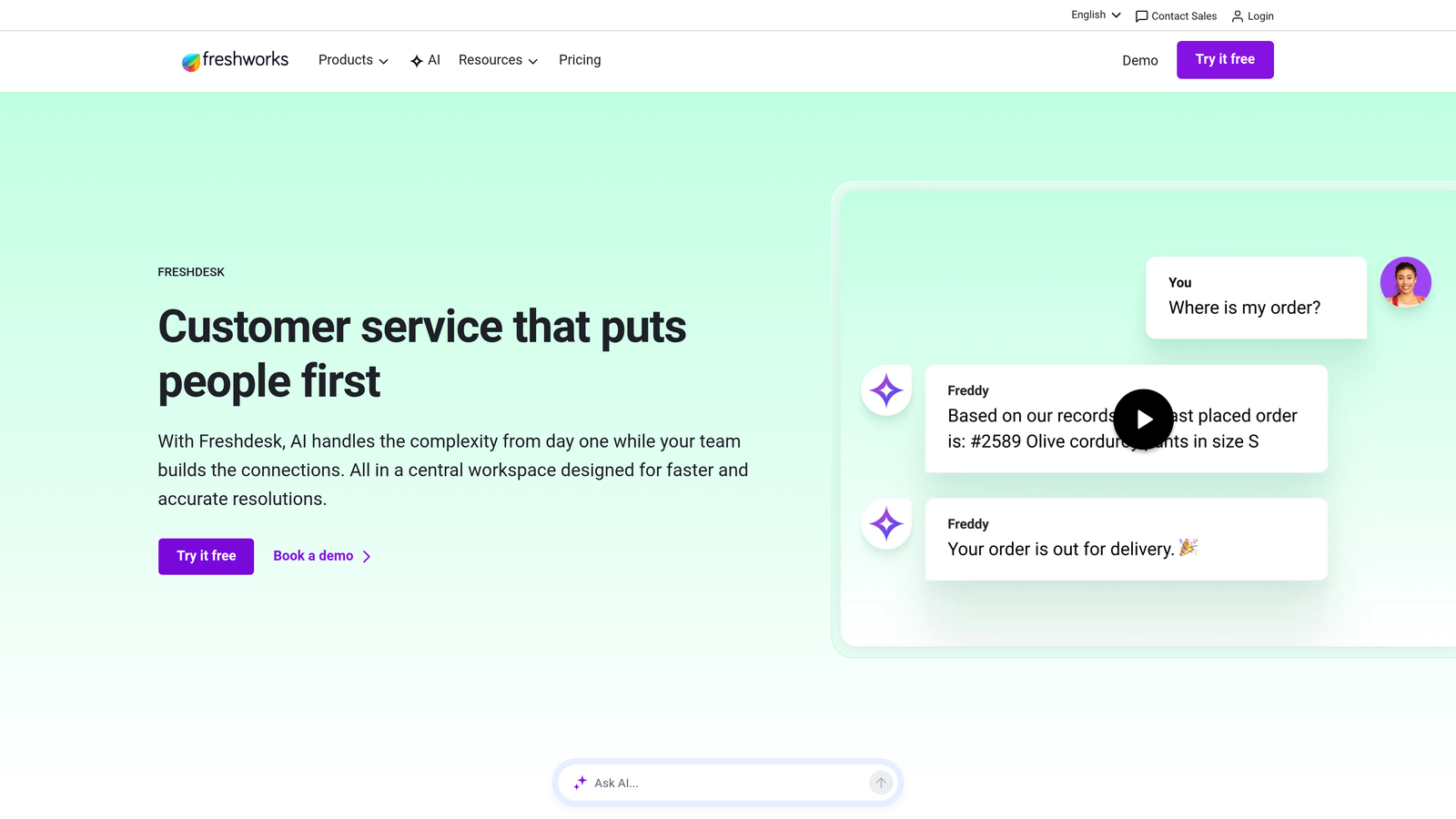
4. Freshdesk Freddy AI
Best for: Growing teams wanting omnichannel AI without enterprise pricing
Freshdesk Freddy AI is an AI-powered support suite within the Freshworks ecosystem offering automation across email, chat, phone, and social channels.
Where This Tool Shines
Freddy AI delivers solid AI functionality at a price point that makes sense for mid-market companies. The omnichannel approach means you get consistent AI assistance whether customers reach out via email, chat, or social media.
The visual bot builder lets non-technical team members create and modify automated workflows without developer involvement. This democratization of AI configuration reduces dependency on engineering resources.
Key Features
AI-Powered Ticket Classification: Automatically tags and categorizes incoming tickets across all channels for better organization.
Canned Response Suggestions: Recommends pre-written responses based on ticket content to speed up agent replies.
Self-Service Bot Builder: Visual interface for creating chatbot workflows without coding knowledge.
Omnichannel Support: Maintains AI assistance consistency across email, chat, phone, WhatsApp, and social media.
Predictive Support: Identifies tickets likely to escalate or require urgent attention based on historical patterns.
Best For
Mid-market companies handling support across multiple channels who need AI capabilities without committing to enterprise-level contracts. Works well for teams transitioning from basic helpdesk to intelligent automation.
Pricing
Starts at $15 per agent per month with AI features available in Growth tier and above.
5. Ada
Best for: High-volume resolution scenarios where automation rate is the primary metric
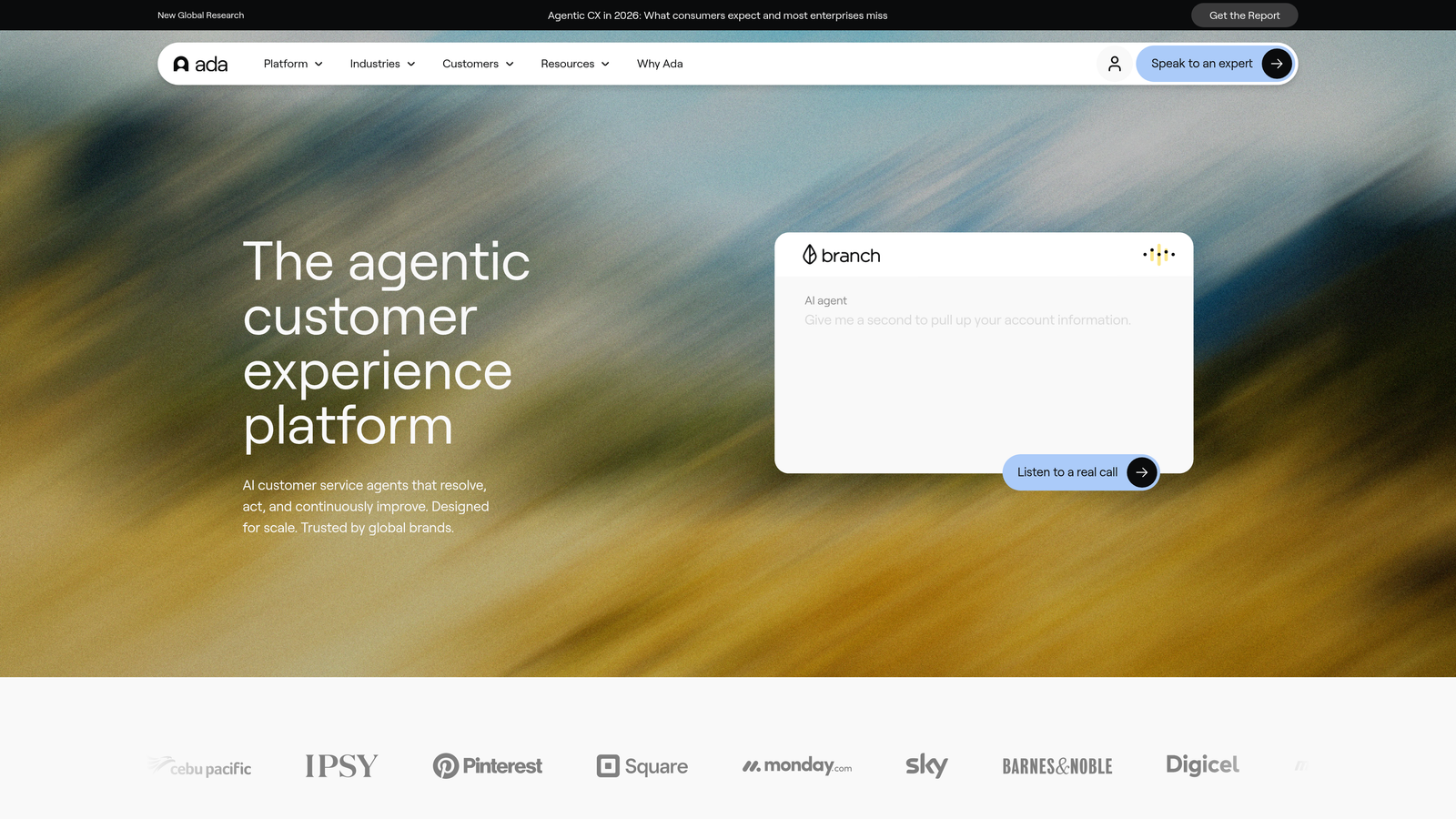
Ada is an AI-first customer service automation platform designed specifically to maximize resolution volume without human intervention.
Where This Tool Shines
Ada focuses relentlessly on one goal: resolving as many customer inquiries as possible without human agents. The platform measures success by automation rate rather than agent efficiency, which fundamentally changes how you think about support operations.
The no-code builder empowers support teams to create sophisticated automation flows themselves. You don't need developers to launch new bot capabilities or adjust conversation paths based on what's working.
Key Features
No-Code Bot Builder: Drag-and-drop interface for creating complex conversation flows without technical expertise.
Proactive Messaging: Initiates conversations based on customer behavior triggers to prevent issues before they become tickets.
Multi-Channel Deployment: Deploy the same bot across web, mobile, SMS, and social platforms with unified management.
Resolution-Focused Metrics: Dashboard centered on automation rate, containment, and resolution volume rather than agent productivity.
A/B Testing: Test different conversation flows to optimize resolution rates based on real performance data.
Best For
Companies with high support volume where many inquiries follow predictable patterns. Particularly effective for subscription services, e-commerce, and SaaS products with large user bases.
Pricing
Custom pricing based on expected resolution volume and channel deployment needs.
6. Kustomer
Best for: Teams wanting unified customer context with AI-enhanced workflows
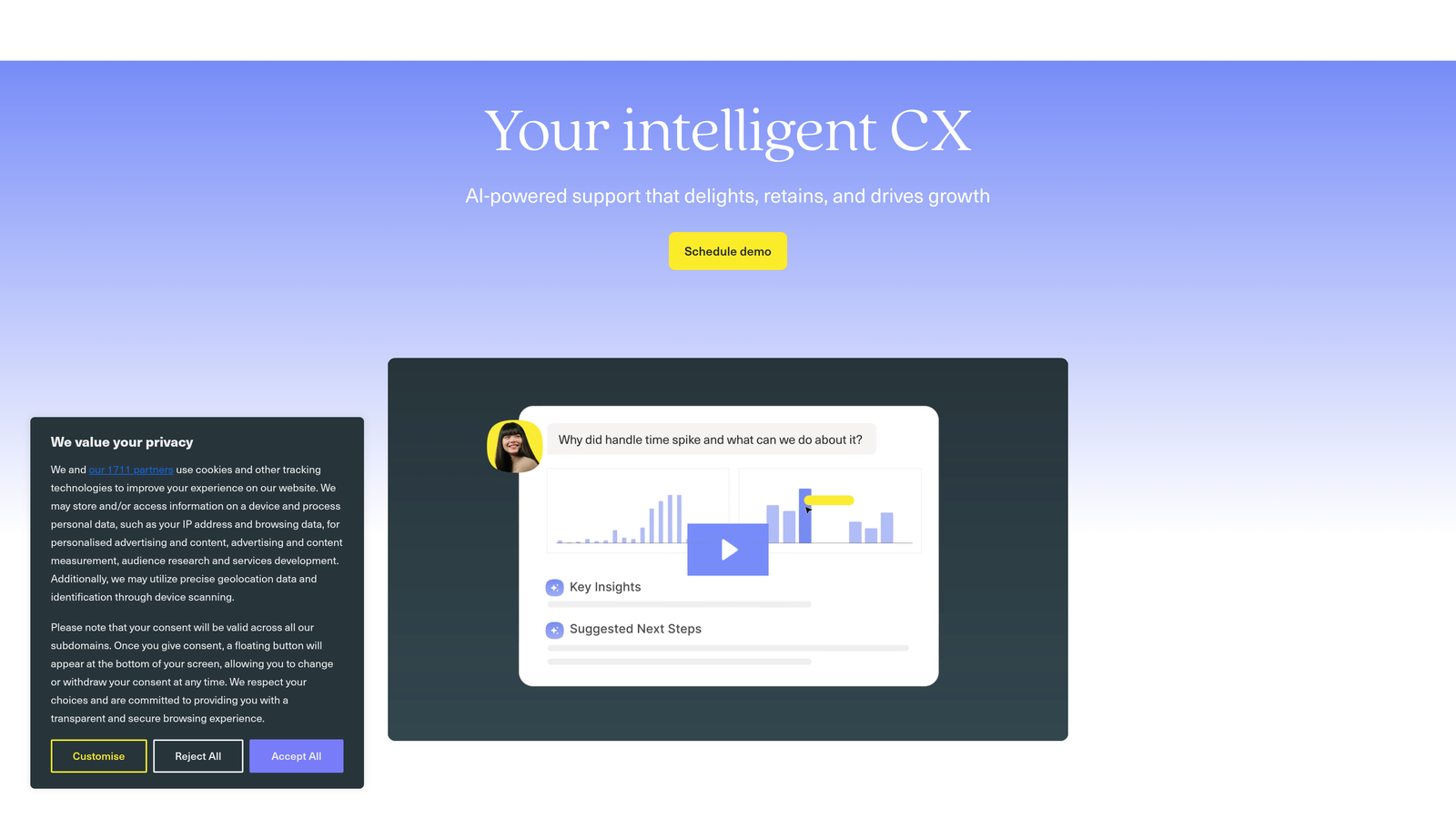
Kustomer is a CRM-powered customer service platform that combines comprehensive customer timelines with AI-driven automation and classification.
Where This Tool Shines
Kustomer treats every customer interaction as part of a continuous relationship rather than isolated tickets. The unified timeline shows purchase history, past conversations, and product usage in one view, giving both AI and human agents complete context.
The workflow automation goes beyond simple ticket routing. You can build complex conditional logic that triggers different actions based on customer value, sentiment, or conversation history.
Key Features
Unified Customer Timeline: Displays complete interaction history, purchases, and product usage in chronological view for full context.
AI-Powered Classification: Automatically categorizes conversations and identifies priority issues based on content and customer data.
Sentiment Analysis: Detects customer emotion in real-time to flag frustrated customers for priority handling.
Workflow Automation: Creates sophisticated conditional workflows that route and respond based on multiple customer attributes.
Business Intelligence: Connects support data to revenue metrics and customer lifetime value for strategic insights.
Best For
B2C companies with complex customer journeys who need support context beyond just previous tickets. Works well for subscription businesses and retail where purchase history informs support quality.
Pricing
Starts at $89 per user per month with AI features included in Enterprise tier.
7. Tidio
Best for: Small businesses wanting accessible AI chat without technical complexity
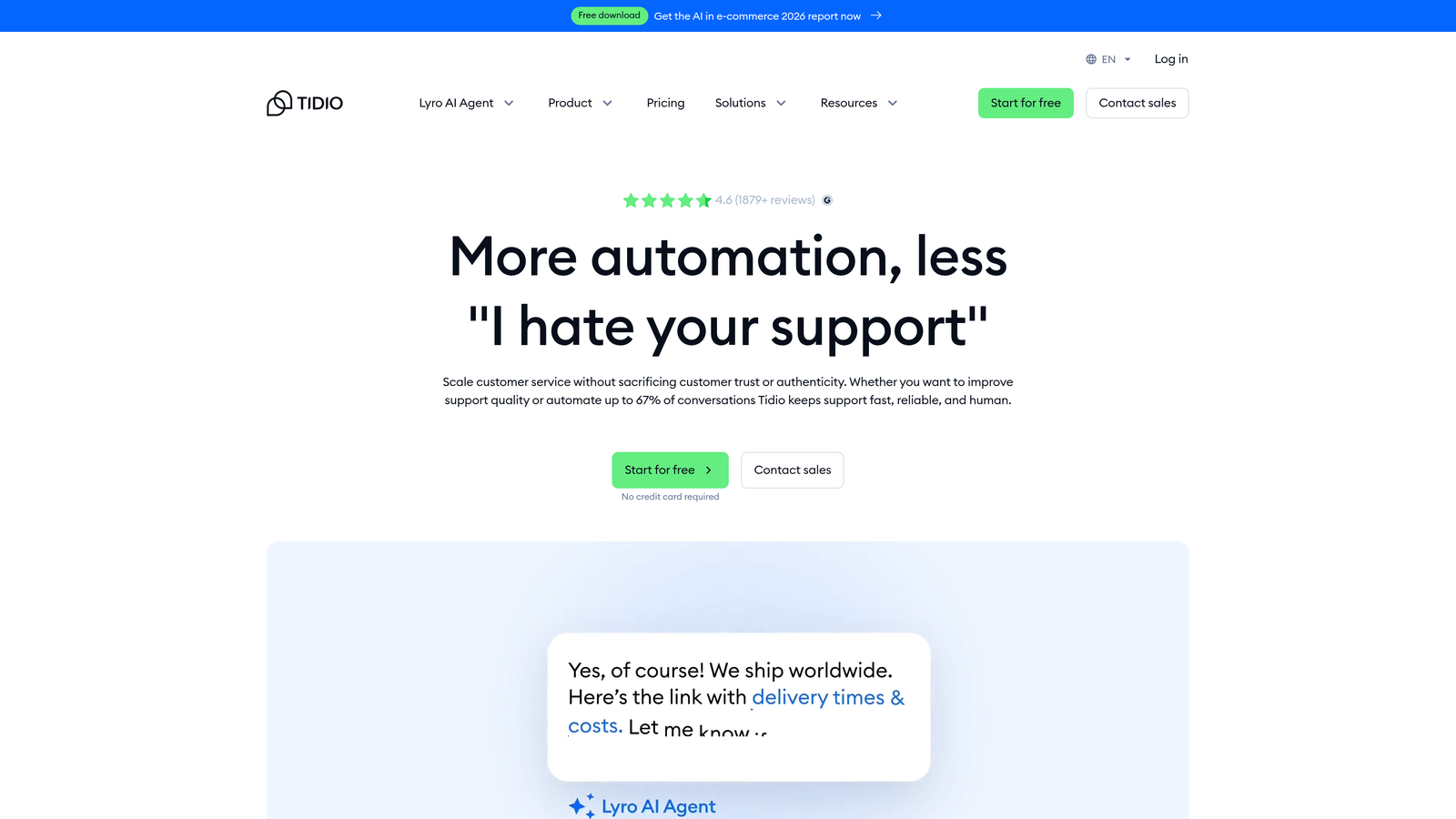
Tidio is a live chat and AI chatbot platform designed for small businesses with straightforward setup and visual bot building.
Where This Tool Shines
Tidio removes the intimidation factor from AI support. The Lyro AI chatbot works out of the box with minimal configuration, making it possible to launch intelligent chat support in hours rather than weeks.
The visual chatbot builder uses simple if-then logic that anyone can understand. You don't need to learn complex conversation design principles or hire specialists to create effective automated responses.
Key Features
Lyro AI Chatbot: Pre-trained conversational AI that handles common questions without requiring extensive setup.
Visual Chatbot Builder: Drag-and-drop interface for creating custom bot flows using simple conditional logic.
Shopify Integration: Direct connection to Shopify stores for order tracking and product recommendations in chat.
Visitor Tracking: See what pages visitors are viewing in real-time to provide proactive assistance.
Mobile Apps: Respond to chats from iOS and Android apps to maintain availability without desktop access.
Best For
Small e-commerce businesses and service providers who need chat support quickly without technical resources. Ideal for teams of one to five people handling moderate conversation volume.
Pricing
Free tier available with basic features, paid plans start at $29 per month for AI capabilities.
8. Gorgias
Best for: E-commerce brands needing order management inside support conversations
Gorgias is an e-commerce focused helpdesk with AI automation and deep integrations into Shopify, BigCommerce, and Magento.
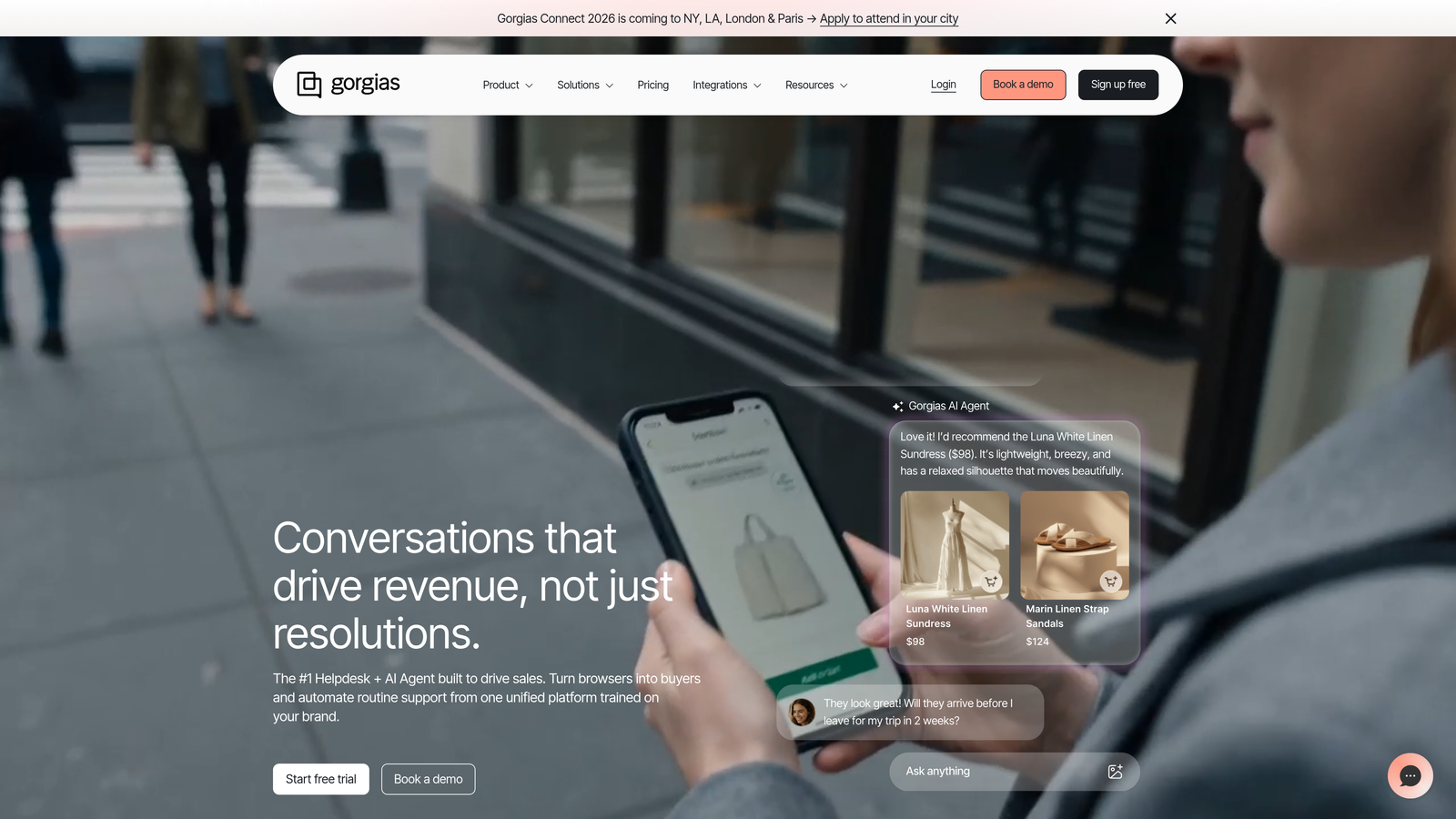
Where This Tool Shines
Gorgias understands that e-commerce support is fundamentally different from SaaS or service support. Agents can view order details, process refunds, and modify subscriptions directly within the ticket interface without switching to your commerce platform.
The revenue attribution feature connects support interactions to sales outcomes. You can see which conversations led to purchases, helping justify support investments with concrete revenue data.
Key Features
Order Management: View, modify, and refund orders directly from support tickets without leaving the platform.
Automated Responses: Pre-built automation for common e-commerce queries like order status, shipping updates, and return policies.
Revenue Attribution: Tracks which support conversations directly lead to purchases or prevent cancellations.
Shopify Integration: Deep two-way sync with Shopify for customer data, order history, and subscription management.
Social Commerce Support: Handle Instagram and Facebook Shop inquiries alongside traditional support channels.
Best For
Direct-to-consumer e-commerce brands on Shopify or BigCommerce who handle high volumes of order-related inquiries. Particularly valuable for subscription box services and fashion retailers.
Pricing
Starts at $10 per month for up to 50 tickets, scales based on monthly ticket volume.
9. HubSpot Service Hub
Best for: Companies already using HubSpot CRM wanting unified customer data
HubSpot Service Hub is customer service software that integrates directly with HubSpot's CRM platform for unified sales, marketing, and support data.
Where This Tool Shines
If you're already using HubSpot for sales or marketing, Service Hub eliminates data silos between departments. Support agents see the same customer timeline that sales reps see, including deal history, marketing engagement, and website behavior.
The knowledge base builder connects directly to your website, making it easy to create self-service resources that match your brand. Articles automatically sync with chatbot responses for consistent information across channels.
Key Features
Unified CRM Access: Complete visibility into customer sales history, marketing interactions, and support conversations in one platform.
Knowledge Base Builder: Create and publish help articles that integrate with your website and feed AI chatbot responses.
Conversation Intelligence: AI-powered analysis of support conversations to identify trends and coaching opportunities.
Customer Feedback Tools: Built-in surveys and NPS tracking to measure satisfaction and gather product insights.
Reporting Dashboards: Unified analytics showing support performance alongside sales and marketing metrics.
Best For
B2B companies using HubSpot for sales or marketing who want to extend the platform to customer support. Works well for teams prioritizing cross-functional visibility over specialized support features.
Pricing
Free tier available with basic ticketing, Professional tier starts at $90 per month for two users with AI features.
Making the Right Choice
The intelligent support system you choose should align with how you think about customer support's role in your business. Are you optimizing for maximum automation, or do you see AI as an assistant to human agents? Do you need deep e-commerce integration, or are you supporting a complex SaaS product?
For AI-first autonomous resolution with continuous learning, Halo AI delivers the most sophisticated approach to reducing ticket volume while surfacing business intelligence. If you're already invested in Intercom's ecosystem, Fin offers the smoothest path to AI capabilities within your existing workflows.
Enterprise teams managing complex multi-department support will find Zendesk AI's integration with established ticketing processes most familiar. Budget-conscious growth companies should look at Freshdesk for solid omnichannel AI at mid-market pricing.
E-commerce brands need Gorgias's specialized order management features, while small businesses wanting simple setup will appreciate Tidio's accessible approach. Companies using HubSpot CRM benefit from Service Hub's unified customer data, and high-volume operations focused purely on automation rates should evaluate Ada.
The key distinction across all these platforms: legacy helpdesks adding AI versus platforms built AI-first from the ground up. Systems designed around AI from inception tend to deliver higher autonomous resolution rates because every feature assumes AI involvement rather than treating it as an optional enhancement.
Your support team shouldn't scale linearly with your customer base. Let AI agents handle routine tickets, guide users through your product, and surface business intelligence while your team focuses on complex issues that need a human touch. See Halo in action and discover how continuous learning transforms every interaction into smarter, faster support.