9 Best Intelligent Support Systems: Complete Cost Breakdown for 2026
Understanding intelligent support system cost requires looking beyond monthly fees to include licensing, AI resolution charges, integrations, and hidden overages. This comprehensive breakdown of nine leading platforms reveals total cost of ownership, setup expenses, scaling considerations, and realistic ROI expectations to help B2B companies choose the right solution whether upgrading from legacy helpdesk systems or implementing AI support for the first time.
 Matt PattoliFounder11 min read
Investing in an intelligent support system is one of the most impactful decisions B2B companies make—but understanding the true cost goes far beyond the sticker price. Between per-agent licensing, AI resolution fees, integration costs, and hidden overage charges, the pricing landscape can be surprisingly complex.
This guide breaks down nine leading intelligent support platforms, examining not just what you'll pay monthly, but the total cost of ownership including setup, scaling, and the ROI you can realistically expect. Whether you're replacing a legacy helpdesk or implementing AI support for the first time, you'll find transparent pricing details to make an informed decision.
1. Halo AI
Best for: Companies seeking continuous improvement in AI resolution without per-agent fees
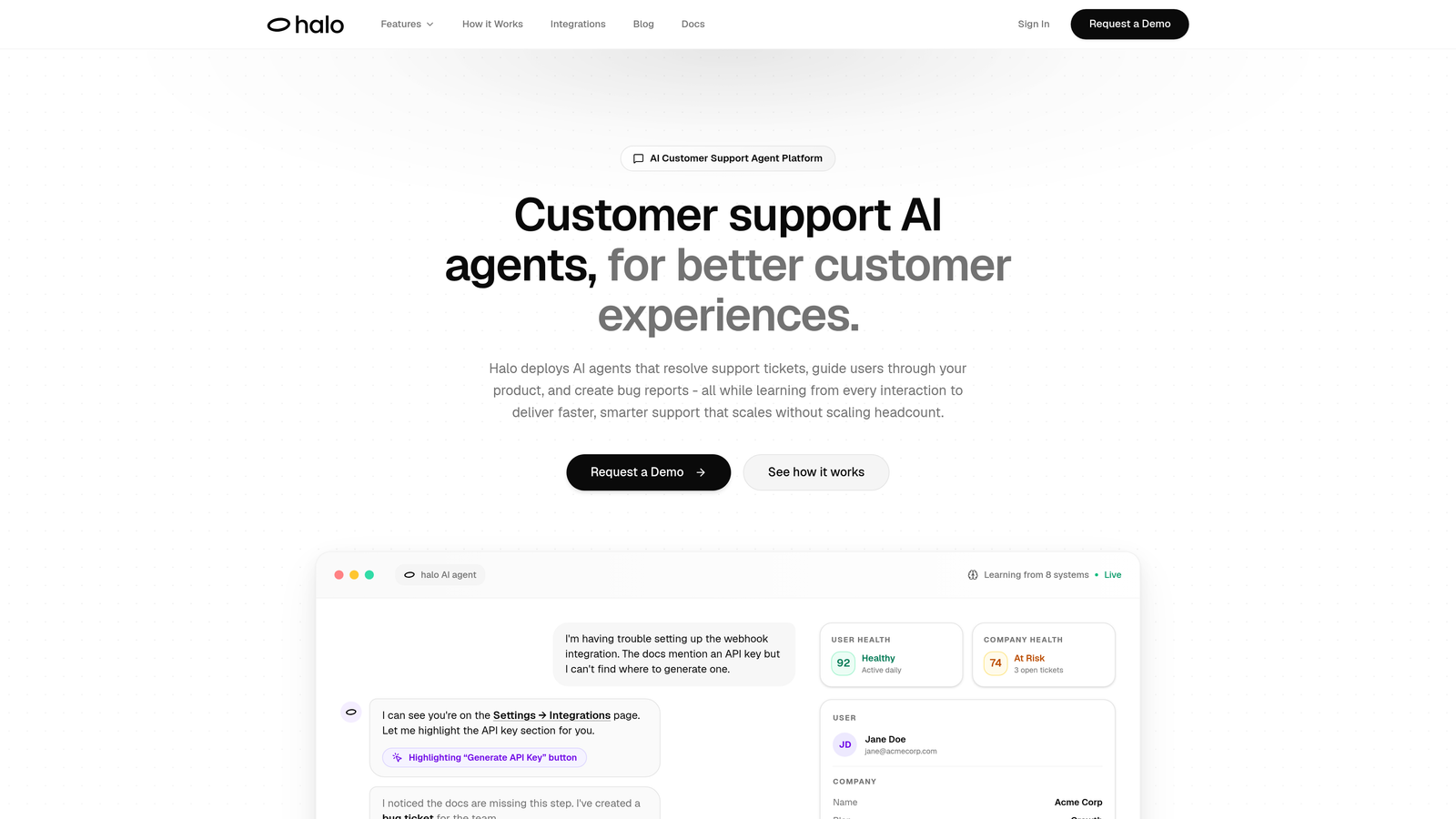
Halo AI is an AI-first customer support platform with intelligent agents that resolve tickets, provide page-aware guidance, and continuously learn from interactions.
Where This Tool Shines
Unlike traditional helpdesks with AI bolted on, Halo's architecture is built around continuous learning. Every interaction makes the system smarter, which means your resolution rates improve over time rather than plateauing. This creates compounding ROI that's difficult to achieve with static AI models.
The page-aware chat widget represents a significant cost advantage—it sees what users see, providing contextual guidance that reduces escalations. When your AI agent knows exactly which screen a customer is viewing, resolution quality improves dramatically without requiring human intervention.
Key Features
Continuous Learning AI: Resolution accuracy improves with every ticket, creating better outcomes over time without additional configuration.
Page-Aware Context: Chat widget understands user location within your product, enabling precise visual guidance.
Business Intelligence Analytics: Smart inbox surfaces customer health signals and revenue intelligence beyond basic support metrics.
Auto Bug Ticket Creation: Automatically generates detailed bug reports in Linear or similar tools when technical issues are detected.
Cross-Platform Integrations: Connects with Linear, Slack, HubSpot, Intercom, Stripe, Zoom, and PandaDoc for unified operations.
Best For
B2B SaaS companies and product teams who want AI that gets smarter with use rather than requiring constant retraining. Particularly valuable for teams currently using Zendesk, Freshdesk, or Intercom who want better intelligence without per-seat cost scaling.
Pricing
Custom pricing based on usage with no per-agent fees. This structure means costs scale with customer volume rather than support team size, which can provide significant savings as you grow.
2. Intercom Fin
Best for: Existing Intercom users wanting GPT-4 powered automated resolutions
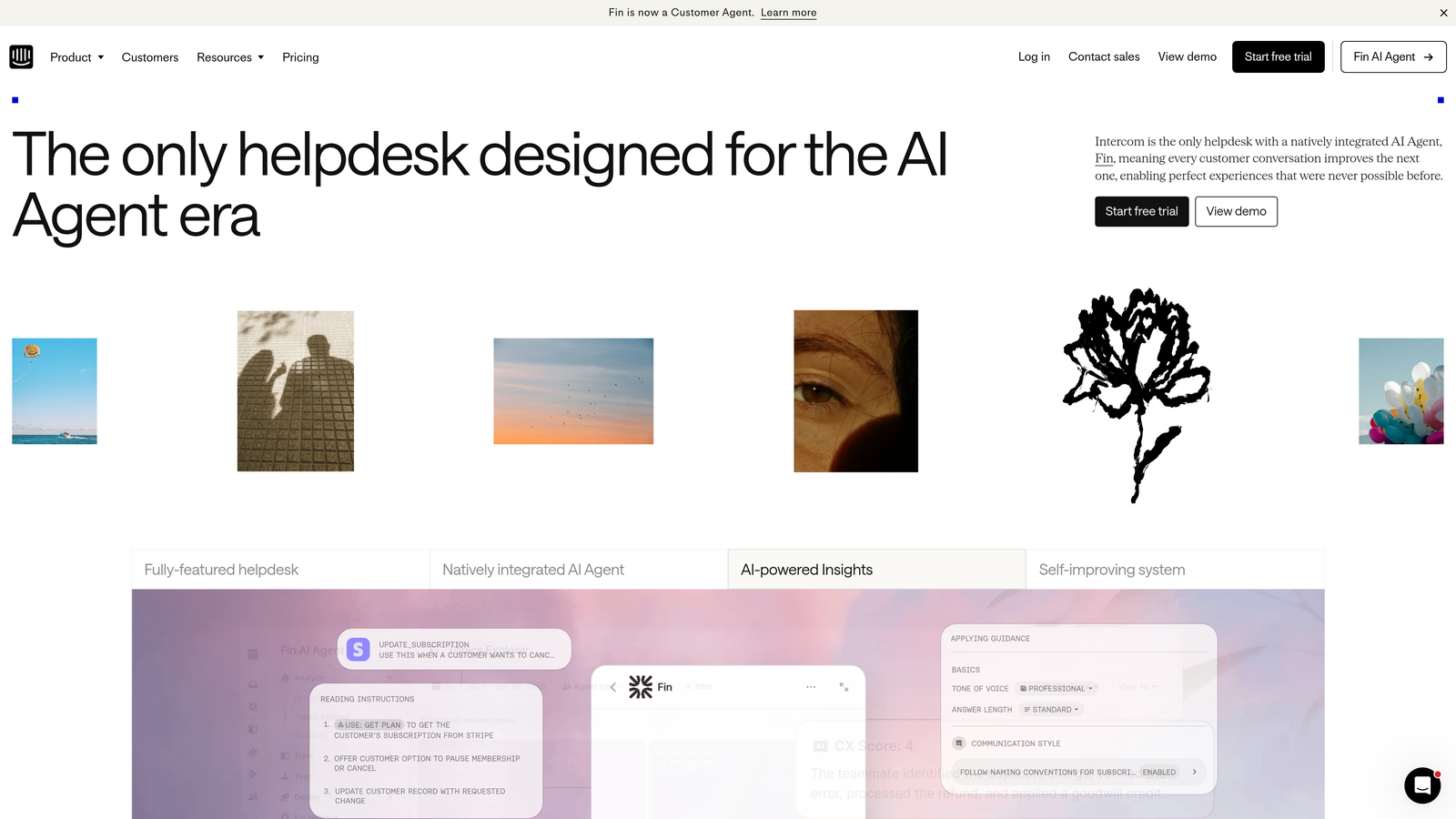
Intercom Fin is an AI-powered customer service bot built on GPT-4 that resolves support queries within the Intercom platform.
Where This Tool Shines
If you're already invested in the Intercom ecosystem, Fin integrates seamlessly with minimal setup friction. The GPT-4 foundation provides sophisticated natural language understanding, and the native messenger integration means customers experience consistent branding throughout their journey.
The per-resolution pricing model can be cost-effective for companies with lower ticket volumes or seasonal fluctuation. You only pay when Fin successfully resolves a conversation, which creates clear ROI attribution.
Key Features
GPT-4 Conversational AI: Leverages advanced language models for nuanced understanding of customer intent.
Native Messenger Integration: Works within Intercom's existing chat interface without requiring separate deployment.
Help Center Learning: Automatically pulls answers from your knowledge base to maintain consistency with documented policies.
Human Handoff Workflows: Smoothly escalates complex issues to live agents with full conversation context.
Multi-Language Support: Handles customer inquiries across multiple languages without separate configuration.
Best For
Companies already using Intercom for customer engagement who want to add AI resolution capabilities without switching platforms. Works well for teams with established help centers and moderate ticket volumes.
Pricing
$0.99 per successful resolution, plus Intercom base plan starting at $39 per seat monthly. Total cost depends on resolution volume—high-volume teams may find this structure expensive compared to flat-rate alternatives.
3. Zendesk AI
Best for: Enterprise organizations needing comprehensive omnichannel support with AI augmentation
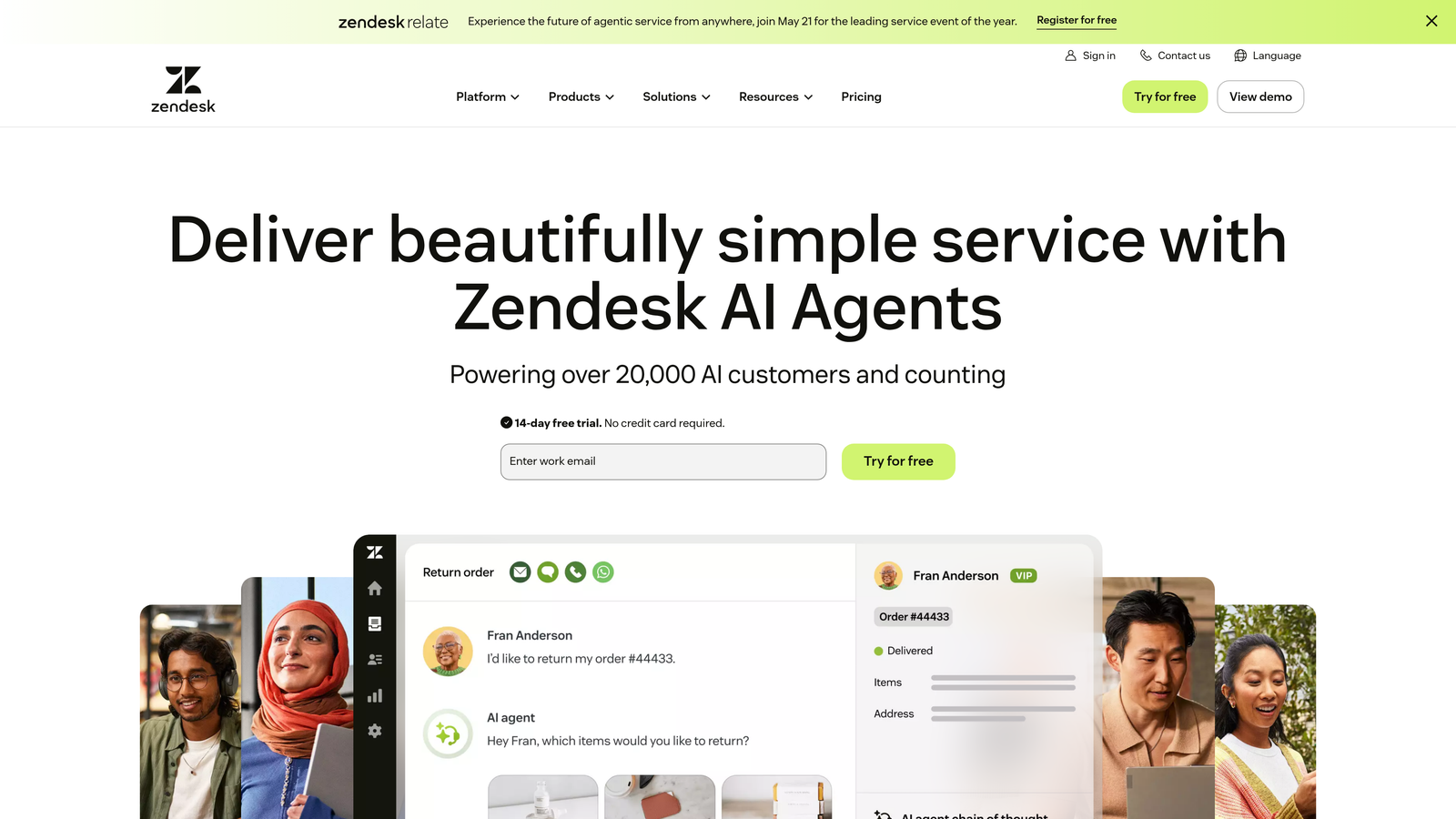
Zendesk AI delivers enterprise-grade AI capabilities layered onto the established Zendesk customer service platform.
Where This Tool Shines
Zendesk's AI excels in large enterprise environments where workforce management and advanced routing are critical. The platform handles massive ticket volumes across multiple channels while maintaining sophisticated SLA tracking and reporting.
For companies with complex support hierarchies and specialized teams, the intelligent routing capabilities ensure tickets reach the right expert quickly. The generative AI assists agents with response drafting, which can significantly reduce handle times for experienced teams.
Key Features
AI-Powered Routing: Automatically assigns tickets to appropriate teams based on content analysis and historical patterns.
Generative Agent Assistance: Suggests response drafts and relevant knowledge base articles while agents work tickets.
Advanced Analytics: Provides detailed reporting on team performance, customer satisfaction trends, and resolution metrics.
Workforce Management: Includes scheduling, forecasting, and capacity planning tools for large support organizations.
Omnichannel Capabilities: Unifies email, chat, phone, social media, and messaging into a single agent interface.
Best For
Large enterprises with established support operations, complex routing needs, and multiple specialized teams. Best suited for organizations prioritizing agent productivity tools over full automation.
Pricing
AI add-on starts at $50 per agent monthly, added to Suite plans beginning at $55 per agent monthly. Total cost of $105+ per agent makes this one of the more expensive options for growing teams.
4. Freshdesk Freddy AI
Best for: Mid-market companies wanting AI features with a free tier option
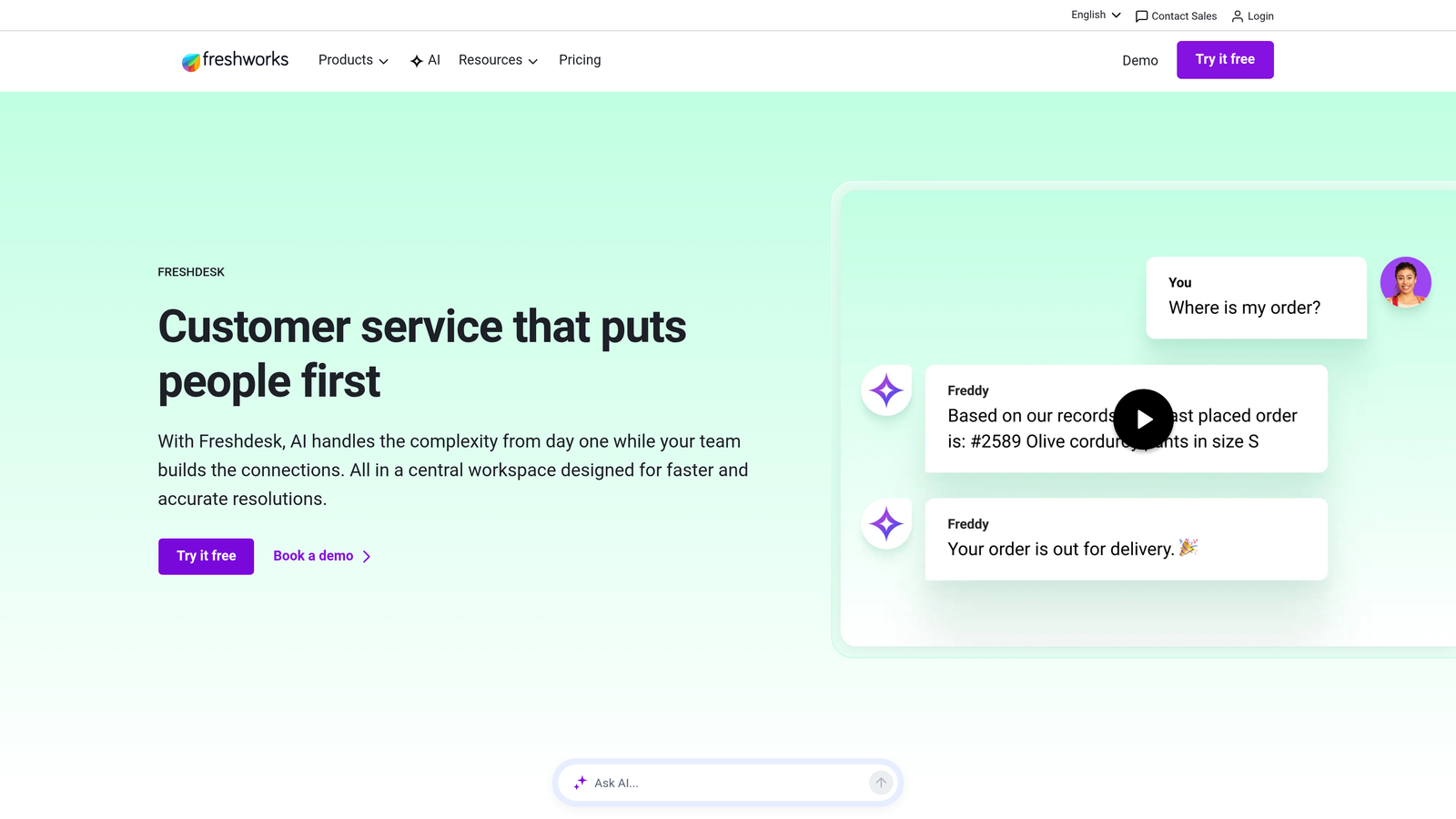
Freshdesk Freddy AI is an AI assistant integrated into Freshdesk for automated ticket handling and agent productivity enhancement.
Where This Tool Shines
Freshdesk offers one of the most accessible entry points for AI-powered support, with a genuinely functional free tier that lets small teams experiment before committing budget. This makes it ideal for startups testing intelligent support concepts.
The AI-powered chatbots provide solid self-service capabilities without requiring extensive technical setup. Teams can deploy basic automation quickly, then expand functionality as their support needs grow and budgets allow.
Key Features
AI Chatbots: Handles common inquiries through automated self-service before escalating to human agents.
Intelligent Assignment: Routes tickets to appropriate agents based on skills, availability, and workload.
Response Suggestions: Recommends canned responses based on ticket content to speed up agent replies.
Knowledge Base Integration: Pulls relevant articles automatically to assist both customers and agents.
Multi-Channel Ticketing: Consolidates email, chat, phone, and social media into unified workflows.
Best For
Growing companies that need AI assistance without enterprise pricing. Particularly valuable for teams transitioning from basic email support to structured helpdesk operations.
Pricing
Free tier available for up to 10 agents with basic features. AI capabilities included in Pro plan at $49 per agent monthly, making it competitively priced for mid-market adoption.
5. Ada
Best for: Enterprise companies requiring multilingual automated support at massive scale
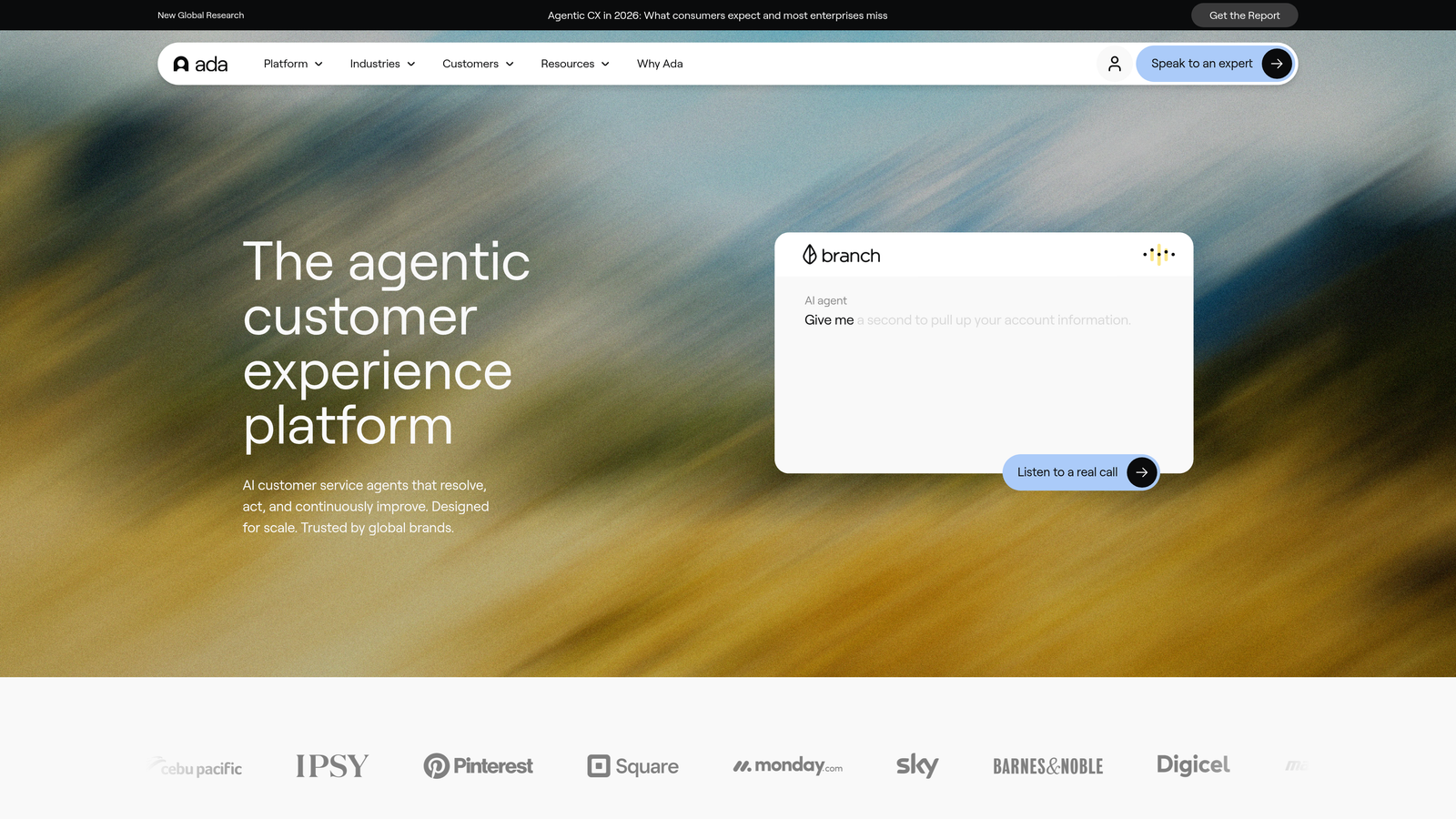
Ada is an enterprise conversational AI platform focused on automated customer service across global markets.
Where This Tool Shines
Ada's strength lies in handling high-volume, multilingual support operations without requiring separate implementations per language. The platform supports over 50 languages natively, which eliminates the complexity of managing regional support variations.
The no-code automation builder empowers non-technical teams to create sophisticated conversation flows. This reduces dependency on engineering resources for support automation updates, which can significantly lower total cost of ownership for large organizations.
Key Features
No-Code Builder: Visual interface for creating complex automation workflows without programming knowledge.
Generative AI Responses: Produces contextually appropriate answers beyond scripted responses.
50+ Language Support: Handles global customer base with native language understanding across major markets.
Deep CRM Integration: Connects with Salesforce, HubSpot, Zendesk, and other enterprise systems for unified data.
Analytics Dashboard: Provides detailed insights into automation performance, resolution rates, and customer satisfaction.
Best For
Global enterprises with substantial international customer bases needing consistent automated support across multiple languages and regions. Best suited for organizations handling 10,000+ monthly conversations.
Pricing
Custom enterprise pricing based on resolution volume, typically starting around $10,000 annually. The high entry point reflects the platform's enterprise focus and extensive language capabilities.
6. Tidio
Best for: Small businesses and e-commerce stores needing affordable chat automation
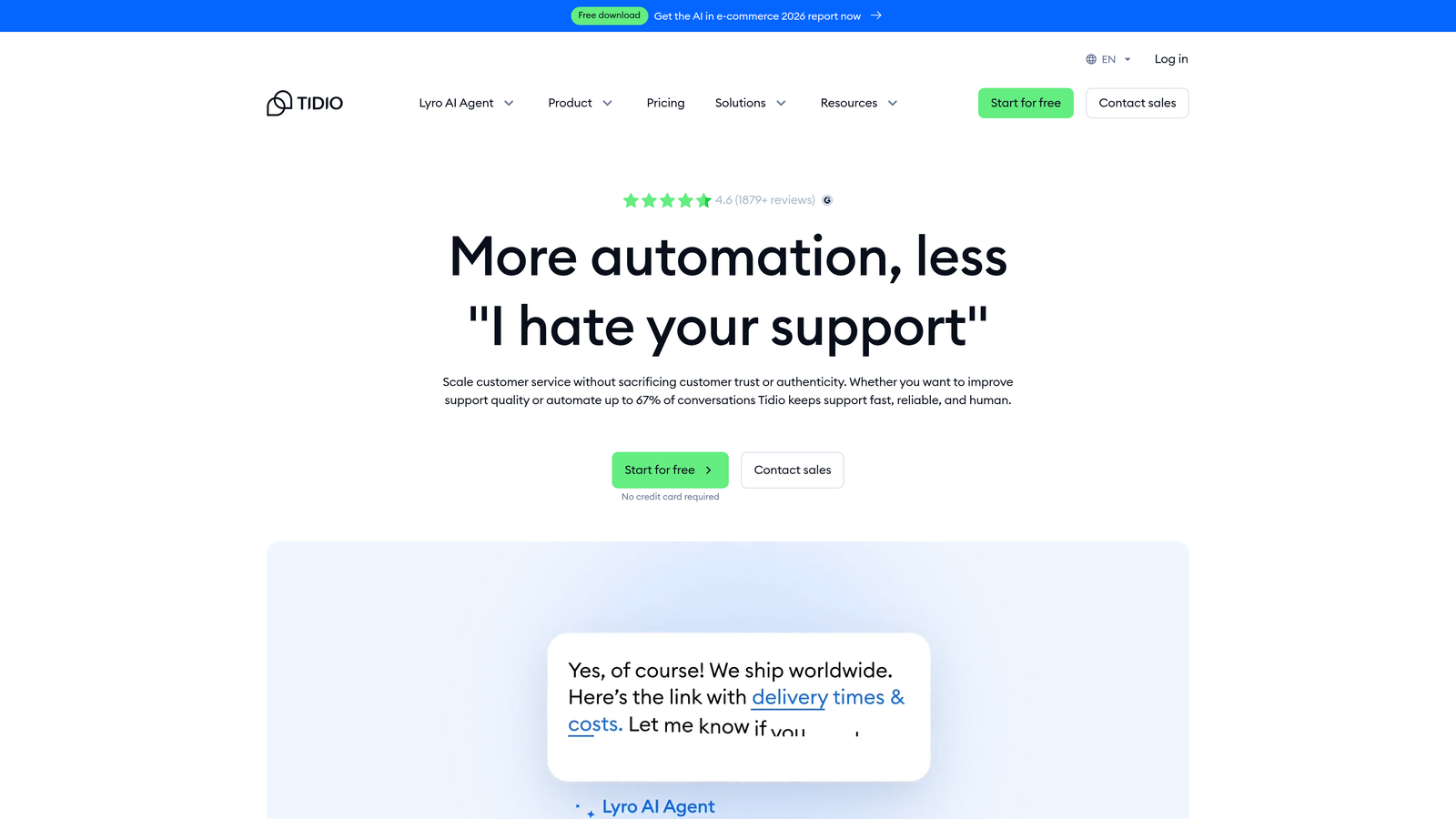
Tidio is an affordable live chat and chatbot platform designed specifically for small to mid-sized businesses.
Where This Tool Shines
Tidio excels at providing immediate value for small teams with minimal technical resources. The visual chatbot builder is genuinely intuitive—you can deploy basic automation in under an hour without touching code.
For e-commerce businesses, the Shopify and WordPress plugins integrate seamlessly, and the visitor tracking features help teams understand customer behavior patterns. The mobile app ensures you never miss urgent customer inquiries, even outside office hours.
Key Features
Visual Chatbot Builder: Drag-and-drop interface for creating automated conversation flows quickly.
Live Chat with Tracking: See visitor behavior in real-time and proactively engage based on browsing patterns.
Email Marketing Integration: Capture leads and sync with email campaigns directly from chat interactions.
E-Commerce Plugins: Native integrations with Shopify, WordPress, and other popular platforms.
Mobile App: Respond to customers from iOS or Android devices with full feature access.
Best For
Small e-commerce businesses, solo entrepreneurs, and growing online stores that need professional chat capabilities without enterprise costs. Ideal for teams of 1-5 support agents.
Pricing
Free tier for up to 50 conversations monthly. Chatbots plan at $29 monthly for basic automation. Tidio+ from $394 monthly includes advanced features for scaling businesses.
7. Kustomer
Best for: High-touch retail and e-commerce brands prioritizing customer relationship depth
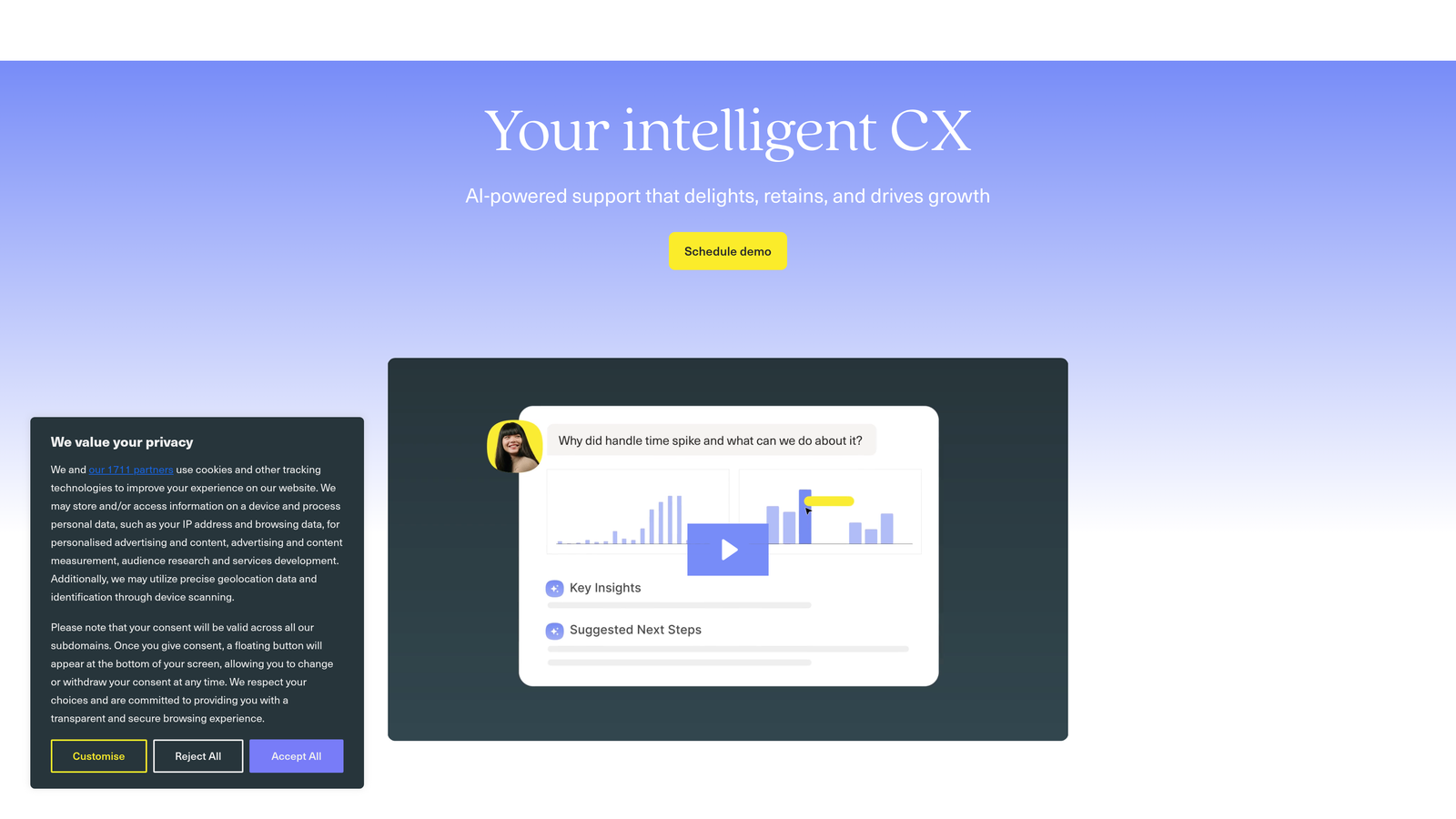
Kustomer is a customer service CRM with AI capabilities designed for brands that emphasize personalized customer experiences.
Where This Tool Shines
Kustomer's unified timeline view transforms how agents understand customer relationships. Instead of seeing isolated tickets, agents view complete customer histories including purchases, previous interactions, and sentiment trends. This context dramatically improves resolution quality for high-value customers.
The AI-powered sentiment analysis helps teams prioritize at-risk customers before minor issues escalate. For brands where customer lifetime value justifies premium support experiences, this proactive capability delivers measurable retention improvements.
Key Features
Unified Customer Timeline: Single view of all customer interactions, purchases, and support history across channels.
AI Sentiment Analysis: Automatically detects customer frustration levels to prioritize urgent interventions.
Proactive Support Triggers: Initiates outreach based on customer behavior patterns and risk signals.
Native Voice and SMS: Handles phone and text message support within the same platform as digital channels.
Robust API: Enables custom integrations with proprietary systems and specialized tools.
Best For
E-commerce and retail brands with high customer lifetime values where personalized support directly impacts retention. Best for companies prioritizing relationship depth over ticket volume efficiency.
Pricing
Enterprise plan at $89 per user monthly. Ultimate tier at $139 per user monthly includes advanced AI features. The premium pricing reflects the platform's CRM-centric approach.
8. Drift
Best for: B2B companies wanting to convert support conversations into sales opportunities
Drift is a conversational AI platform focused on transforming support interactions into measurable revenue outcomes.
Where This Tool Shines
Drift uniquely bridges the gap between support and revenue teams. The platform tracks which support conversations lead to upsells, renewals, or expansion opportunities, providing attribution that typical helpdesks miss entirely.
For B2B companies where support interactions often involve decision-makers evaluating additional products, the meeting scheduling automation and account-based features turn reactive support into proactive revenue conversations. This changes the cost-benefit calculation significantly—support becomes a profit center rather than pure overhead.
Key Features
Revenue Attribution: Tracks which chatbot conversations contribute to pipeline and closed revenue.
Meeting Scheduling: Automatically books sales calls when support conversations reveal buying intent.
Account-Based Marketing: Tailors chatbot responses based on company size, industry, and existing relationship.
CRM Integrations: Deep connections with Salesforce and HubSpot for unified customer data.
Video Messaging: Enables personalized video responses for high-value accounts.
Best For
B2B SaaS companies and professional services firms where support teams regularly interact with expansion opportunities. Best suited for organizations with clear paths from support to sales.
Pricing
Premium plan starts at $2,500 monthly. Advanced and Enterprise tiers require custom pricing. The significant investment reflects the platform's revenue-generation focus rather than pure cost reduction.
9. Help Scout
Best for: Teams prioritizing human-centric support with AI assistance rather than full automation
Help Scout is a human-centric helpdesk platform with AI assistance features designed to enhance rather than replace support teams.
Where This Tool Shines
Help Scout takes a fundamentally different approach—AI assists human agents rather than attempting to replace them. The AI drafts and summarization features help agents respond faster without sacrificing the personal touch that builds customer loyalty.
The shared inbox with collision detection prevents duplicate responses, which is surprisingly valuable for small teams where multiple people might jump on urgent tickets. The Beacon widget provides in-app support without disrupting user workflows, maintaining context throughout the help experience.
Key Features
Shared Inbox: Team collaboration on customer emails with collision detection to prevent duplicate responses.
AI Drafts and Summarization: Suggests response drafts and summarizes long conversation threads for quick context.
Beacon Widget: Embeddable help widget that provides contextual support within your application.
Knowledge Base Builder: Create and maintain self-service documentation with built-in analytics.
Customer Satisfaction Surveys: Automated CSAT tracking after every resolved conversation.
Best For
Small to mid-sized teams that view support as a competitive advantage through human connection. Ideal for companies where brand voice and personalized responses matter more than pure automation efficiency.
Pricing
Standard plan at $22 per user monthly. Plus tier at $44 per user monthly includes additional features. AI capabilities available as add-on, keeping base costs reasonable for growing teams.
Making the Right Choice for Your Budget
The intelligent support system landscape offers options for virtually every budget and strategy, but the "best" choice depends entirely on your specific situation and growth trajectory.
For teams seeking continuous improvement without per-agent cost scaling, Halo AI's usage-based model and learning architecture provide compounding ROI as resolution rates improve over time. If you're already invested in Intercom or Zendesk, their native AI additions integrate seamlessly but watch for per-resolution or per-agent costs that can escalate quickly.
Small businesses and startups should consider Tidio or Freshdesk's free tiers for initial experimentation—they provide genuine value without upfront investment. Mid-market companies often find the sweet spot with Freshdesk or Help Scout, balancing AI assistance with human-centric approaches.
Enterprise organizations handling global operations benefit from Ada's multilingual capabilities or Kustomer's relationship-focused CRM approach, though the premium pricing requires substantial ticket volumes to justify. For B2B companies where support conversations lead to revenue opportunities, Drift's attribution features transform support from cost center to profit driver.
The critical factor isn't just monthly cost—it's total cost of ownership including implementation time, integration complexity, and whether the system gets smarter with use or requires constant manual optimization. Your support team shouldn't scale linearly with your customer base. Let AI agents handle routine tickets, guide users through your product, and surface business intelligence while your team focuses on complex issues that need a human touch. See Halo in action and discover how continuous learning transforms every interaction into smarter, faster support.