9 Best Intelligent Support Systems for Growing Teams in 2026
Growing B2B teams struggling with rising ticket volume and agent burnout can find relief through an intelligent support system for growing teams that combines AI automation, smart routing, and analytics. This guide evaluates nine leading platforms in 2026, comparing automation depth, integration capabilities, and analytics quality to help fast-scaling teams choose infrastructure that grows alongside them.
 Matt PattoliFounder14 min read
Growing B2B teams hit a familiar breaking point: support ticket volume scales with the product, but headcount can't keep up. The result is longer response times, burned-out agents, and customers who churn quietly rather than complain loudly.
Intelligent support systems address this by combining AI-powered automation, smart routing, and business intelligence into a single platform. But the architecture underneath matters more than most buyers realize. Some tools bolt AI onto legacy helpdesk infrastructure; others are built AI-first from the ground up. Some focus purely on deflection; others surface revenue signals buried inside support conversations.
This list covers nine platforms worth evaluating in 2026, with a focus on teams scaling fast and needing support infrastructure that grows with them. We've evaluated each tool on automation depth, integration breadth, analytics quality, and how well it handles complex tickets that can't be templated away.
1. Halo AI
Best for: Product-led SaaS teams that need AI-native support with deep business intelligence
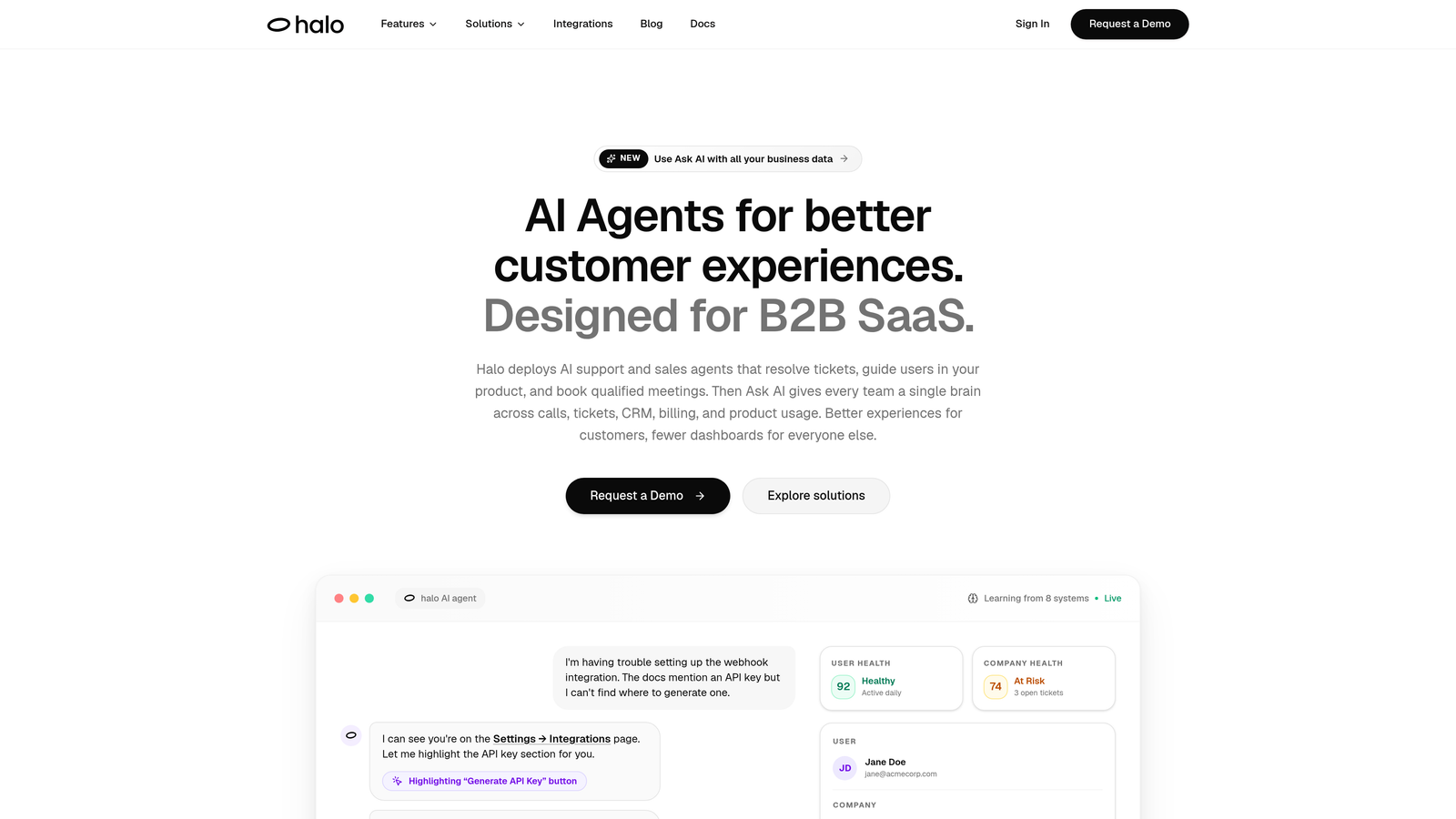
Halo AI is an AI-first customer support platform that deploys intelligent agents to resolve tickets autonomously, guide users with page-aware context, and surface business intelligence signals.
Where This Tool Shines
What separates Halo from most tools on this list is the architectural decision to build AI into the core rather than layer it on top. The page-aware context engine is a meaningful differentiator: the AI agent actually sees what the user is looking at, which means it can provide visual UI guidance in context rather than generic instructions that may not match what's on screen.
Beyond deflection, Halo's smart inbox surfaces business intelligence that most support tools ignore entirely. Customer health scoring, anomaly detection, and revenue signals turn your support queue into a strategic data source, not just a task list. For teams where support conversations are a leading indicator of churn or expansion, this is genuinely useful.
Key Features
Page-Aware AI Agents: The agent sees what users see and delivers visual UI guidance matched to the exact page or feature they're interacting with.
Autonomous Ticket Resolution: Resolves tickets end-to-end with continuous learning from every interaction, improving over time without manual retraining.
Auto Bug Ticket Creation: Automatically creates and routes bug reports directly to Linear, eliminating manual triage between support and engineering.
Smart Inbox with Business Intelligence: Surfaces customer health scores, anomaly detection, and revenue signals alongside standard ticket metrics.
Live Agent Handoff: Escalates complex issues to human agents with full conversation context preserved, so nothing gets repeated or lost.
Integration Stack: Connects natively with Slack, HubSpot, Intercom, Stripe, Zoom, PandaDoc, and Fathom for full business stack coverage.
Best For
Halo is a strong fit for product-led SaaS companies where support, product, and revenue teams need to share context. If your support conversations are a source of customer intelligence and not just a cost center to minimize, the business intelligence layer pays dividends quickly. Lean teams scaling beyond what manual triage can handle will find the autonomous resolution and auto bug routing particularly valuable.
Pricing
Contact for pricing. Visit haloagents.ai for current plans and to discuss team-specific requirements.
2. Intercom
Best for: Teams already using Intercom for lifecycle messaging who want support and engagement in one platform
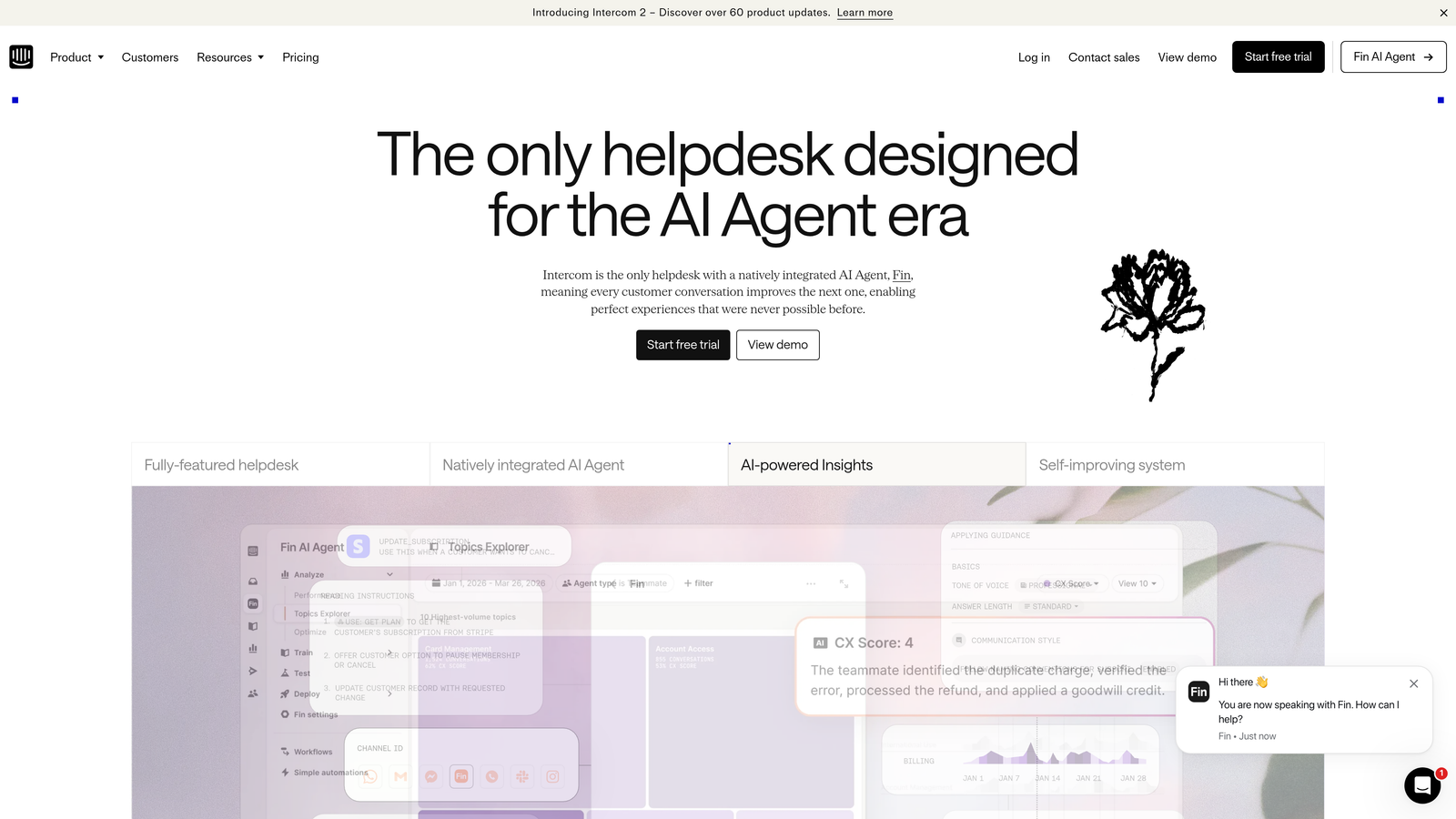
Intercom is a long-established conversational support platform featuring the Fin AI agent alongside deep product engagement tooling for onboarding and lifecycle messaging.
Where This Tool Shines
Intercom's Fin AI agent handles a meaningful portion of inbound queries across chat and email, and the unified inbox combining support, sales, and product engagement conversations is genuinely useful for teams that don't want to manage separate tools for each function. The product tour and onboarding flow capabilities alongside support tooling make it appealing for product-led teams.
The AI Copilot for agent assistance on complex tickets is a practical addition for teams that aren't ready to go fully autonomous. Where Intercom sometimes struggles is cost: teams that only need the support layer can find themselves paying for product engagement features they don't use.
Key Features
Fin AI Agent: Handles autonomous query resolution across chat and email with conversational responses grounded in your knowledge base.
Unified Inbox: Combines support, sales, and product engagement conversations in a single workspace.
Product Tours and Onboarding Flows: Built-in tooling for user onboarding alongside support, reducing the need for separate engagement platforms.
AI Copilot: Assists human agents on complex tickets with suggested responses and context surfacing.
App Marketplace: Extensive integrations with CRM, billing, and analytics tools.
Best For
Teams already invested in Intercom for lifecycle messaging or onboarding who want to add AI-powered support without switching platforms. Also well-suited for growth-stage SaaS companies that want support and product engagement under one roof.
Pricing
Starts at approximately $39/seat/month. Fin AI usage is billed separately per resolution, so total cost scales with query volume. Verify current pricing at intercom.com.
3. Zendesk
Best for: Larger organizations with complex multi-channel support needs and mature SLA requirements
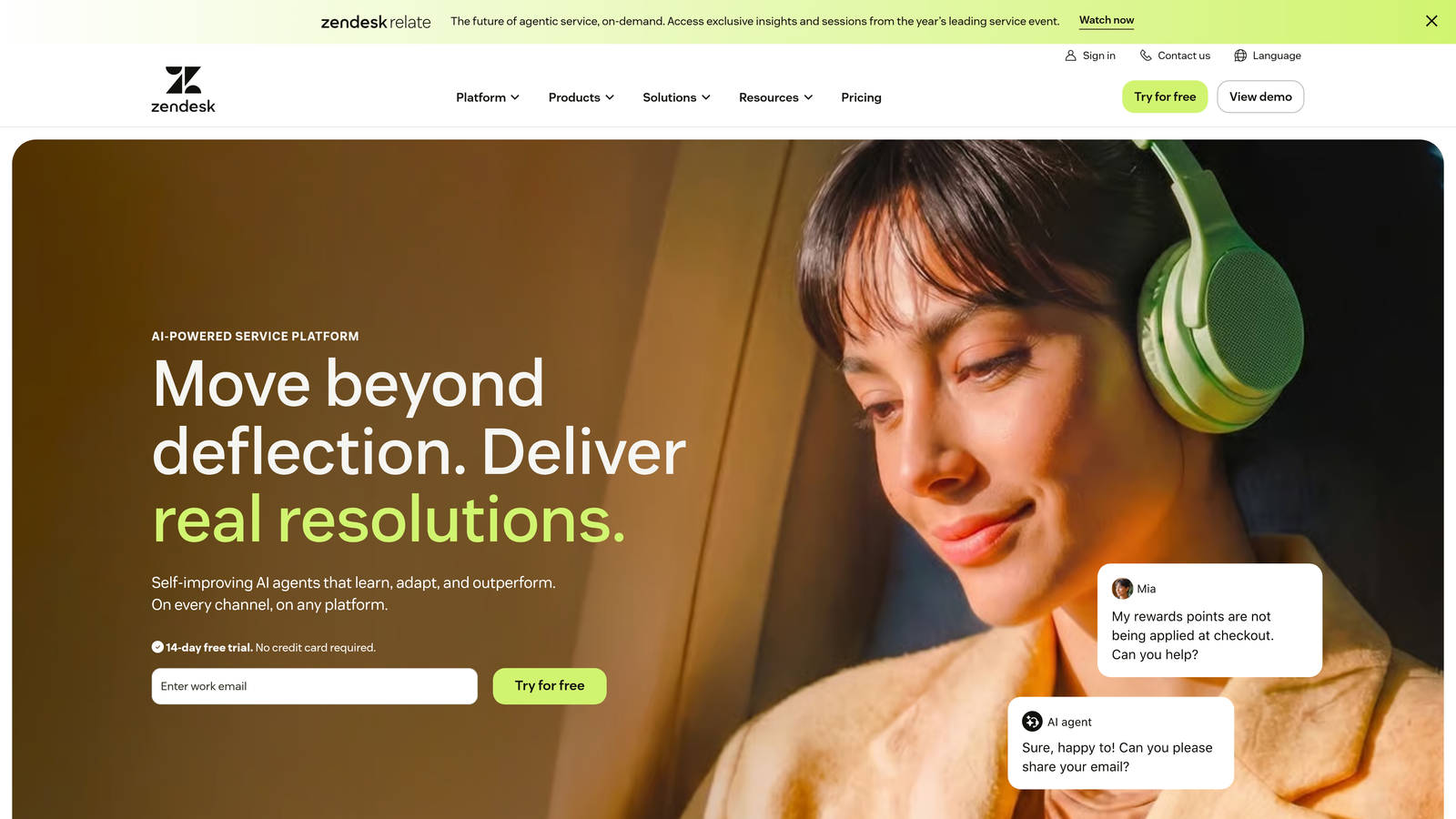
Zendesk is the incumbent enterprise helpdesk with mature SLA management, omnichannel support, and a growing suite of AI features built on proven ticketing infrastructure.
Where This Tool Shines
Zendesk's strength is breadth and maturity. The SLA management tooling, breach alerts, and escalation workflows are battle-tested at enterprise scale. If you're running support across email, chat, voice, social, and messaging simultaneously, Zendesk handles the orchestration reliably. The marketplace of over 1,000 integrations means it connects to nearly any existing tool stack.
The honest caveat is that Zendesk's AI capabilities, while improving, remain largely additive rather than architecturally core. Intelligent triage, suggested replies, and summarization are useful, but teams expecting deep autonomous resolution may find the AI layer requires more configuration and maintenance than newer AI-native alternatives.
Key Features
Intelligent Triage and Auto-Routing: Routes tickets based on detected intent and priority, reducing manual sorting overhead.
SLA Management: Robust breach alerts and escalation workflows for teams with formal service level commitments.
Omnichannel Support: Unified handling across email, chat, voice, social, and messaging platforms.
Zendesk AI: Suggested replies, ticket summarization, and agent guidance on complex cases.
Integration Marketplace: Over 1,000 integrations covering CRM, billing, analytics, and developer tools.
Best For
Mid-market and enterprise organizations with established support operations, formal SLA requirements, and multi-channel complexity. Teams that need the stability and ecosystem maturity of an incumbent platform rather than the flexibility of a newer AI-native tool.
Pricing
Suite Team starts at approximately $55/agent/month. AI features are available on higher tiers. Verify current pricing at zendesk.com as plans evolve regularly.
4. Freshdesk
Best for: SMBs and growing teams moving off shared email inboxes for the first time
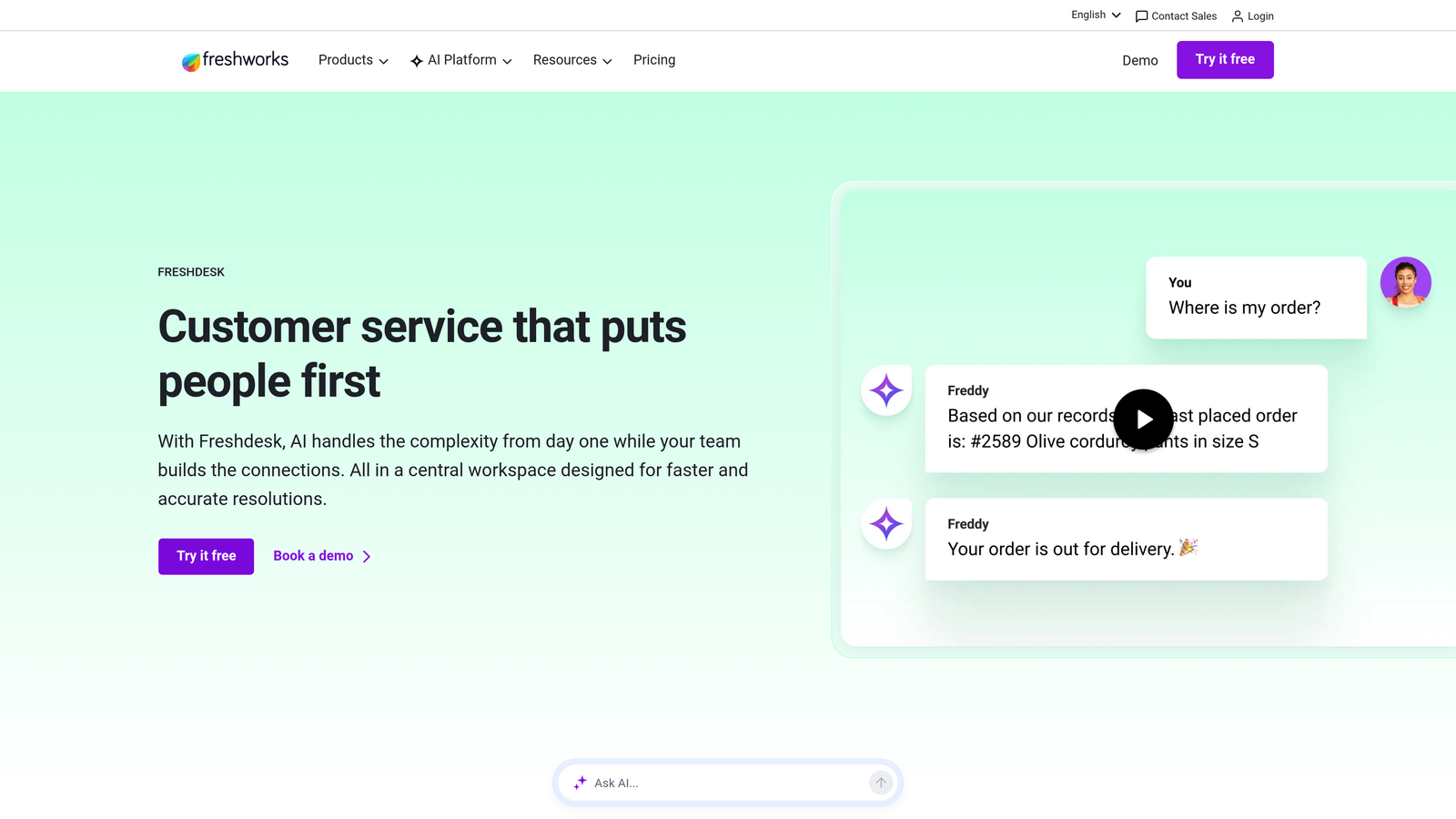
Freshdesk is an accessible helpdesk platform with Freddy AI for automated triage, suggested responses, and self-service, designed to be approachable for teams scaling beyond informal support setups.
Where This Tool Shines
Freshdesk's pricing tiers are genuinely competitive, which makes it a practical starting point for teams that need structured support tooling without committing to enterprise-level investment. Freddy AI covers the core automation needs: triage, priority assignment, suggested replies, and chatbot-based self-service through Freddy Self Service.
The collision detection feature, which prevents multiple agents from working the same ticket simultaneously, is a small but meaningful quality-of-life improvement for teams transitioning from shared inboxes. The AI-assisted knowledge base article suggestions also help teams build self-service content without treating it as a separate project.
Key Features
Freddy AI: Handles ticket triage, priority assignment, and suggested replies to reduce manual agent workload.
Freddy Self Service: Autonomous chatbot-based resolution for common queries without agent involvement.
Collision Detection: Prevents duplicate agent effort on the same ticket, a practical fix for teams coming from shared inboxes.
AI-Assisted Knowledge Base: Suggests relevant articles during ticket creation to encourage self-service before escalation.
Accessible Pricing Tiers: Structured plans that scale from free to enterprise without a steep initial investment.
Best For
SMBs and teams in the early stages of formalizing support operations. Also a solid choice for organizations that need a capable helpdesk at a competitive price point before they're ready to invest in more AI-intensive platforms.
Pricing
Free plan available. Paid plans start at approximately $15/agent/month. Freddy AI add-ons are priced separately. Verify current plans at freshdesk.com.
5. Tidio
Best for: Startups that need immediate AI chat deflection with minimal configuration
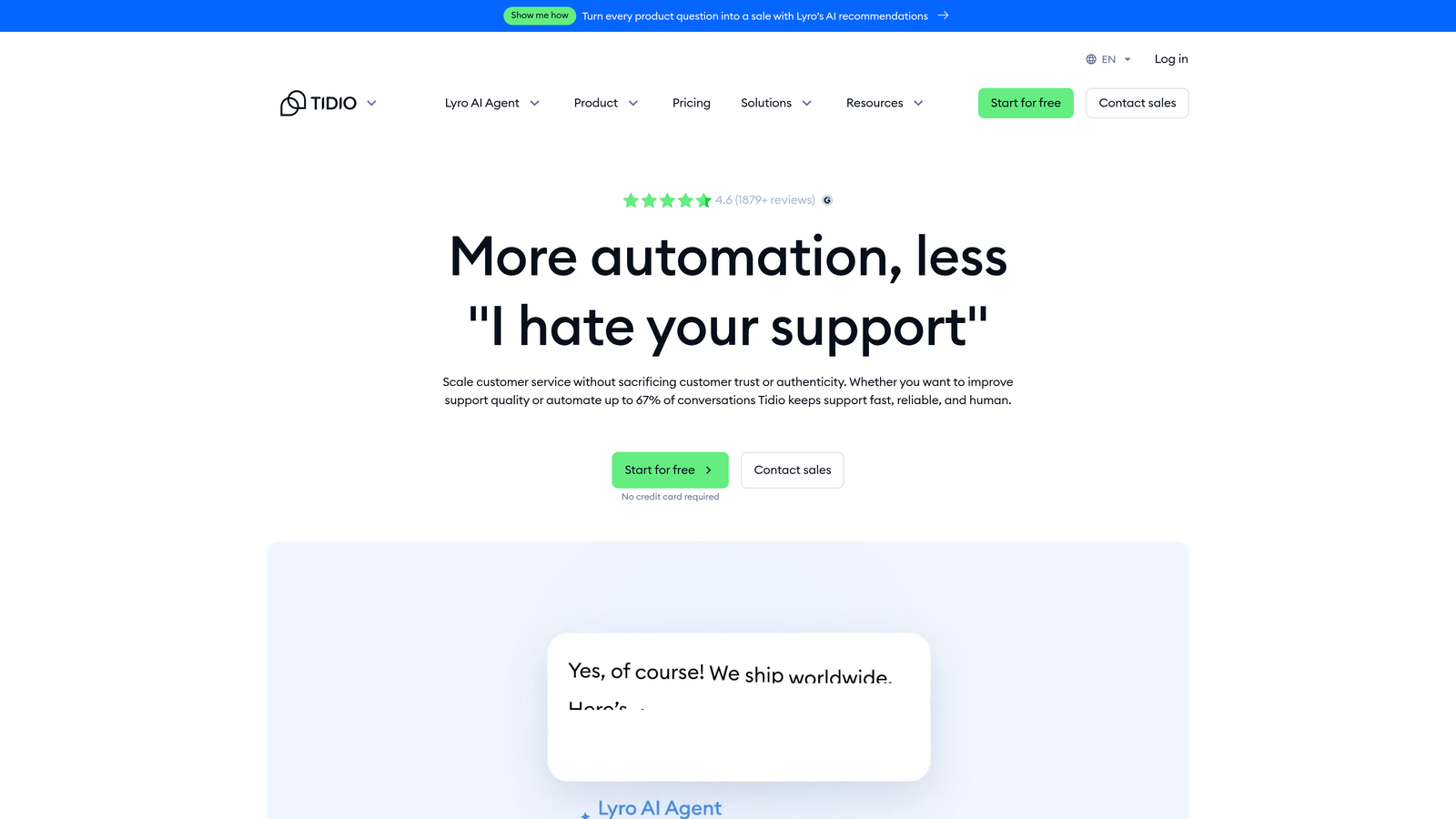
Tidio is a lightweight AI chat and support platform built for fast deployment, featuring the Lyro AI chatbot designed to deflect common queries without heavy setup.
Where This Tool Shines
Tidio's core value proposition is speed to value. Lyro AI is designed to start resolving common support queries quickly, without requiring extensive training data or ops investment upfront. For early-stage teams that need immediate deflection while they build out a more structured support operation, this is a meaningful advantage.
The trade-off is depth. Tidio works well for chat-centric, relatively straightforward query patterns. Teams managing complex multi-channel support environments or needing deep business intelligence from their support data will likely outgrow it. Think of it as a strong starting point rather than a long-term enterprise solution.
Key Features
Lyro AI Chatbot: Conversational resolution for common support queries with minimal configuration required.
Fast Deployment: Designed to go live quickly without heavy technical setup or training overhead.
Unified Inbox: Handles live chat, email, and Messenger conversations in a single interface.
Pre-Built Automation Flows: Ready-made automation for common support scenarios to reduce initial setup time.
Platform Integrations: Connects with Shopify, WordPress, and other SaaS and e-commerce platforms.
Best For
Early-stage startups and small teams that need AI-powered chat deflection deployed fast. Also a reasonable fit for e-commerce and SaaS companies with straightforward, high-volume query patterns where speed of setup outweighs depth of customization.
Pricing
Free plan available. Lyro AI starts at approximately $29/month, with pricing scaling by conversation volume. Verify current plans at tidio.com.
6. Help Scout
Best for: Customer-success-oriented teams where relationship quality and agent experience matter most
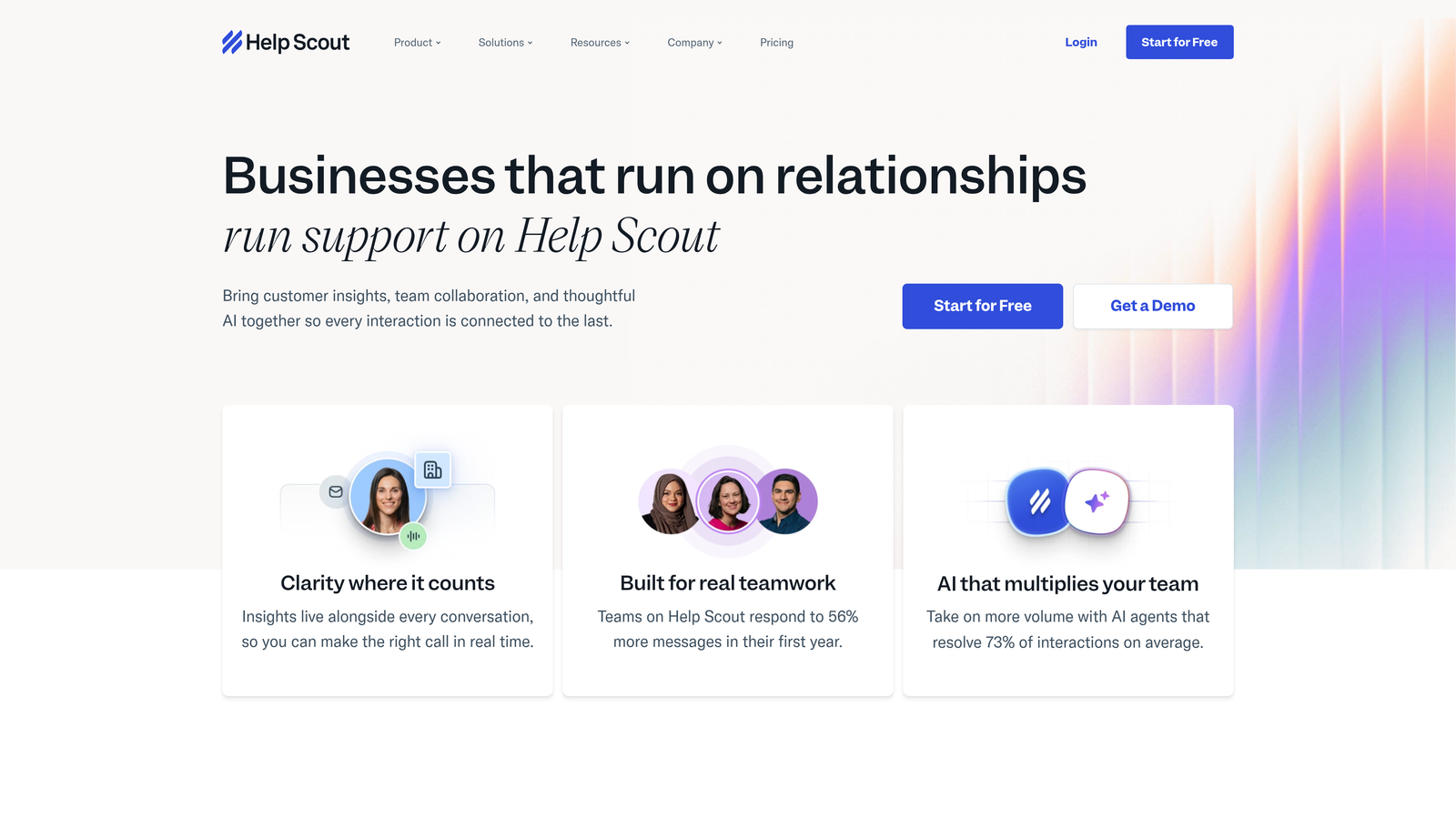
Help Scout is a human-centered support platform that prioritizes agent experience and conversation quality, with AI features designed to assist rather than replace human judgment.
Where This Tool Shines
Help Scout takes a deliberately different approach from the automation-maximalist tools on this list. The AI features, AI Summarize and AI Assist, are built to reduce agent cognitive load without removing the human from the conversation. For teams where support quality and customer relationship depth are the primary metrics, this philosophy translates into a noticeably cleaner agent experience.
The Docs knowledge base is well-executed and integrates naturally with the support workflow. AI-powered article recommendations during ticket handling encourage self-service without feeling forced. If your team's identity is built around high-touch, relationship-driven support, Help Scout fits that culture in a way that pure-automation platforms often don't.
Key Features
AI Summarize: Provides instant ticket context without requiring agents to read full conversation threads.
AI Assist: Offers draft suggestions and tone adjustments to help agents respond faster and more consistently.
Shared Inbox UX: Clean interface designed specifically to reduce agent cognitive load during high-volume periods.
Docs Knowledge Base: AI-powered article recommendations surfaced during ticket handling to encourage self-service.
Built-In CSAT Reporting: Customer satisfaction ratings and reporting included without requiring third-party add-ons.
Best For
Teams where support is a relationship function, not just a cost center. Strong fit for customer success teams, high-touch SaaS businesses, and organizations where agent experience quality directly affects customer retention.
Pricing
Starts at approximately $22/user/month. Higher tiers unlock advanced AI and reporting features. Verify current pricing at helpscout.com.
7. Gorgias
Best for: Teams managing high volumes of repeatable, transactional support queries with revenue attribution needs
Gorgias is a support automation platform with a powerful rules engine and revenue attribution capabilities, suited for teams where support interactions have a direct connection to conversion outcomes.
Where This Tool Shines
Gorgias built its reputation on automation rules and macros, and that foundation remains its strongest asset. For teams handling high volumes of predictable, repeatable queries, the rules engine can deflect a substantial portion of inbound volume without AI involvement. The addition of an AI agent for common query resolution adds another layer of automation on top of that foundation.
The revenue statistics feature is genuinely differentiated: it links specific support interactions to downstream conversion and revenue outcomes. For teams that need to demonstrate the ROI of their support operation, or that want to prioritize high-value customer interactions, this attribution capability is worth attention. Originally built for e-commerce, it has expanded meaningfully into SaaS use cases.
Key Features
Advanced Automation Rules and Macros: High-volume ticket deflection through configurable rules without requiring AI involvement for every scenario.
Revenue Attribution: Links support interactions to conversion outcomes, providing visibility into support's direct revenue impact.
AI Agent: Autonomous resolution for common query types layered on top of the rules engine.
Billing Platform Integrations: Deep connections with subscription and billing systems for transactional support context.
Omnichannel Inbox: Unified handling across email, chat, social, and SMS.
Best For
Teams with high-volume, repeatable query patterns who want strong automation without heavy AI configuration. Also a strong fit for organizations that need to attribute support interactions to revenue outcomes and justify support investment with data.
Pricing
Starts at approximately $10/month for 50 tickets, scaling by ticket volume rather than per seat. This pricing model can be advantageous for larger teams. Verify current plans at gorgias.com.
8. Kustomer
Best for: Enterprise teams where agents need deep customer context to resolve complex, relationship-sensitive issues
Kustomer is a CRM-native support platform that unifies the full customer timeline, giving agents complete purchase history, prior conversation context, and account status in every interaction.
Where This Tool Shines
Kustomer's core differentiator is the unified customer timeline. Rather than treating each support ticket as an isolated event, Kustomer surfaces the full history of a customer's interactions, transactions, and account status in a single view. For agents handling complex, relationship-sensitive issues, this context dramatically reduces the time spent piecing together background before addressing the actual problem.
The AI-powered routing based on customer value, intent, and agent expertise adds intelligent prioritization on top of that context layer. Proactive support workflows triggered by customer behavior signals mean the platform can surface issues before customers escalate them. The trade-off is cost: Kustomer sits at the higher end of the pricing spectrum, which reflects its enterprise positioning.
Key Features
Unified Customer Timeline: Combines all interactions, transactions, and account history in one view for complete agent context.
AI-Powered Routing: Routes tickets based on customer value, intent, and agent expertise for optimized resolution.
Proactive Support Workflows: Triggered by customer behavior signals to surface and address issues before escalation.
Omnichannel Inbox: Unified handling across email, chat, voice, and social channels.
Flexible Data Model: Connects to external systems to pull full customer context into the support workflow.
Best For
Mid-market and enterprise teams where agent context quality directly affects resolution quality. Strong fit for businesses with complex customer relationships, high account values, or support interactions that require understanding the full customer history to resolve effectively.
Pricing
Starts at approximately $89/user/month. Enterprise pricing available for larger deployments. Verify current plans at kustomer.com.
9. Drift (Salesloft)
Best for: B2B teams where support conversations frequently surface sales, upsell, or renewal opportunities
Drift is a conversational AI platform that bridges support and revenue, built for B2B teams where the line between a support interaction and a sales conversation is frequently blurred.
Where This Tool Shines
Drift occupies a distinctive position on this list: it's less a pure support tool and more a revenue-aware conversational platform that handles support as part of a broader customer engagement function. The AI chatbot qualifies, routes, and supports simultaneously, which means a visitor asking a support question can be identified as a high-value account and routed to the right team member without manual intervention.
The integration with Salesloft for revenue workflow continuity is the key differentiator for teams already in the Salesloft ecosystem. Revenue intelligence features that flag upsell and renewal signals within support conversations make it particularly relevant for customer success and account management teams that want support data feeding directly into their revenue workflows.
Key Features
Revenue-Aware AI Chatbot: Qualifies, routes, and supports visitors simultaneously, flagging high-value accounts for priority handling.
Revenue Intelligence: Surfaces upsell and renewal signals from support conversations for revenue team follow-up.
Account-Based Routing: Connects high-value visitors to the right team member based on account data.
Salesloft Integration: Deep workflow continuity with Salesloft for teams managing revenue and support in a unified motion.
Meeting Scheduling and Live Handoff: Built-in scheduling and live agent handoff within the chat experience.
Best For
B2B mid-market and enterprise teams where support and revenue functions overlap. Particularly well-suited for companies already using Salesloft and looking to connect support conversation data to their revenue workflows.
Pricing
Custom pricing. Contact Salesloft/Drift directly for current plans. Typically positioned for mid-market and enterprise buyers. Visit drift.com for details.
Which Tool Is Right for Your Team?
The right choice depends less on feature checklists and more on where your team is architecturally and strategically.
If you're a product-led SaaS team that needs AI-native support with business intelligence baked in, Halo AI is the strongest fit. The page-aware context engine, autonomous ticket resolution, and smart inbox that surfaces customer health and revenue signals go well beyond what most tools offer out of the box. For teams where support data should be informing product and revenue decisions, not just closing tickets, that depth matters.
For teams already invested in Intercom for lifecycle messaging, staying in that ecosystem makes sense. Zendesk remains the default for enterprise organizations with complex multi-channel requirements and formal SLA commitments. Freshdesk is the practical starting point for SMBs moving off shared inboxes. Tidio is the fastest path to AI chat deflection for early-stage teams. Help Scout is the right call when relationship quality and agent experience are the primary metrics. Gorgias earns its place for high-volume, transactional query patterns with revenue attribution needs. Kustomer fits enterprise teams where full customer context is the determining factor in resolution quality. Drift belongs in the conversation for B2B revenue teams where support and sales operate as a unified function.
The broader pattern worth noting: the tools that will serve growing teams best in 2026 are the ones where AI is an architectural decision, not a feature addition. The difference shows up in how well the system learns, how deeply it integrates, and how much manual maintenance it requires to stay effective over time.
Your support team shouldn't scale linearly with your customer base. Let AI agents handle routine tickets, guide users through your product, and surface business intelligence while your team focuses on complex issues that need a human touch. See Halo in action and discover how continuous learning transforms every interaction into smarter, faster support.