9 Best Intelligent Support Systems for Enterprises in 2026
This guide ranks the 9 best intelligent support systems for enterprises in 2026, evaluating each platform on AI capability, integration depth, scalability, and the ability to move beyond reactive ticketing into proactive intelligence. Whether you manage a lean SaaS support team or a multi-region operation, it identifies the right fit for your specific complexity and growth stage.
 Matt PattoliFounder13 min read
Enterprise support teams are under more pressure than ever: higher ticket volumes, rising customer expectations, and headcount constraints that don't budge. The answer isn't more agents — it's smarter systems.
Intelligent support systems combine AI-driven automation, contextual understanding, and deep integrations to resolve issues faster, surface business insights, and scale without proportional cost increases. But not every platform is built for enterprise complexity. Some excel at deflection, others at analytics, and a few are genuinely rethinking what support infrastructure can do.
This list covers the top intelligent support systems for enterprise teams in 2026, evaluated on AI capability, integration depth, scalability, and how well they move beyond reactive ticketing into proactive intelligence. Whether you're running a lean support team at a scaling SaaS company or managing a multi-region operation, there's a right fit here.
1. Halo AI
Best for: SaaS and B2B companies that want an AI-first support platform built to resolve, learn, and surface business intelligence
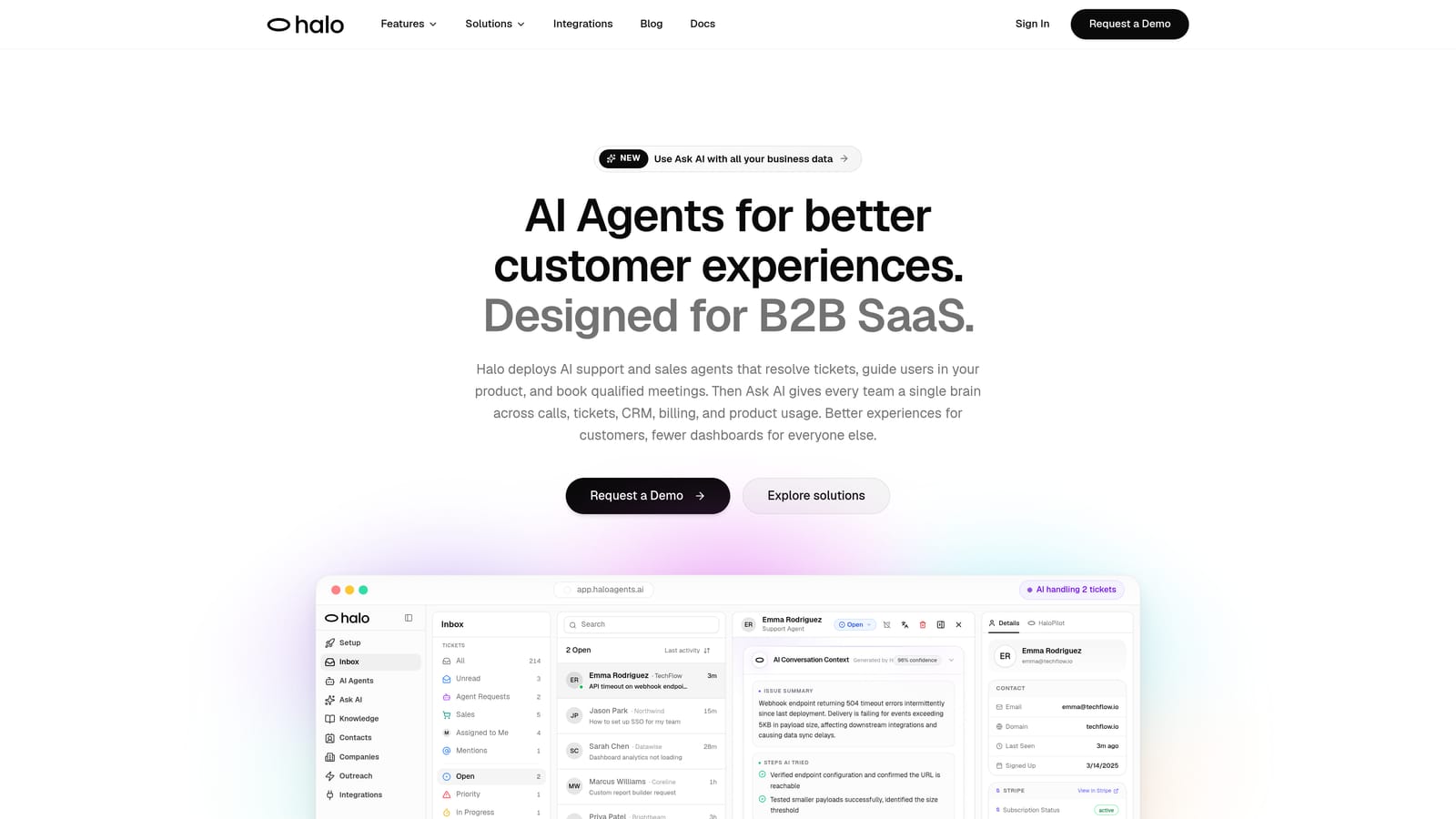
Halo AI is an AI-native customer support platform that deploys intelligent agents to resolve tickets, guide users through products with page-aware visual context, and surface actionable business intelligence — all from a single system.
Where This Tool Shines
What separates Halo from most platforms on this list is its architecture. Rather than bolting AI onto an existing ticket system, Halo was built AI-first. That distinction matters: the agents don't just suggest responses, they resolve issues, learn from every interaction, and get measurably better over time without manual retraining.
The page-aware context feature is particularly compelling for SaaS teams. Halo's AI sees exactly what the user sees on screen, which means guidance is specific and visual rather than generic. For product-led companies where in-app support quality directly affects retention, this is a meaningful differentiator.
Key Features
Page-Aware AI Agents: The AI understands which page or product state a user is on and delivers contextual, visual guidance tailored to their exact situation.
Continuous Learning: Every resolved ticket feeds back into the system, improving accuracy and resolution rates without manual configuration.
Smart Inbox with Business Intelligence: Goes beyond support metrics to surface customer health signals, revenue anomalies, and actionable insights that inform product and customer success decisions.
Auto Bug Ticket Creation: Automatically identifies and routes bug reports directly to Linear or connected dev tools, closing the loop between support and engineering without manual triage.
Live Agent Handoff: Complex issues escalate to human agents with full conversation context preserved, so customers never have to repeat themselves.
Best For
Halo is best suited for SaaS companies and B2B product teams that want AI to genuinely own ticket resolution rather than just assist agents. Teams already using Slack, HubSpot, Stripe, Intercom, Linear, Zoom, PandaDoc, or Fathom will find the integration depth particularly useful.
Pricing
Contact for enterprise pricing. A demo is available at haloagents.ai.
2. Zendesk
Best for: Large enterprises that need a proven, broadly integrated helpdesk with a growing AI capability layer
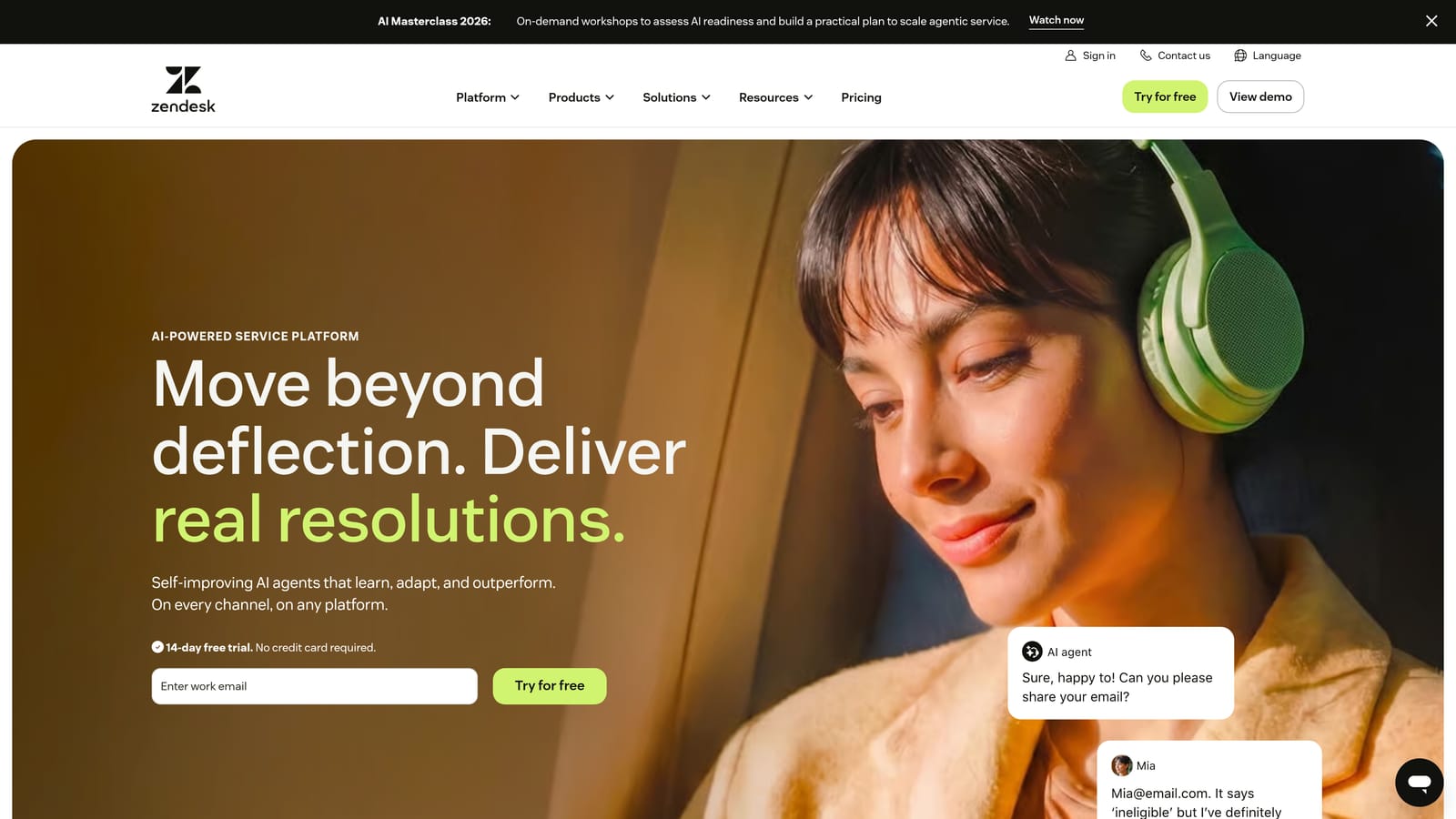
Zendesk is the most widely deployed enterprise helpdesk platform, offering a mature ecosystem of integrations, robust compliance certifications, and an increasingly capable AI layer built on top of its established ticket-management infrastructure.
Where This Tool Shines
Zendesk's biggest strength is ubiquity. With over 1,000 marketplace integrations and years of enterprise adoption, it fits into virtually any existing tech stack. For organizations where standardization and vendor familiarity matter, that track record is hard to ignore.
Zendesk AI, built on top of the platform's ticket-centric architecture, handles intelligent triage, intent detection, and automated responses. It's increasingly capable, though it's worth noting that the AI layer is an evolution of an existing system rather than a ground-up redesign.
Key Features
Zendesk AI: Handles intelligent triage, intent detection, and automated responses across channels to reduce manual workload for agents.
1,000+ Marketplace Integrations: Covers virtually every enterprise tool category, from CRMs and billing systems to communication and analytics platforms.
Advanced Reporting and Analytics: Custom dashboards and reporting give operations teams granular visibility into support performance.
Omnichannel Support: Manages email, chat, voice, social, and messaging in a unified agent workspace.
Enterprise Compliance: SOC 2, HIPAA, GDPR, and additional certifications make it a viable choice for regulated industries.
Best For
Large enterprises with complex compliance requirements, teams that need a broad integration ecosystem out of the box, and organizations that have already built processes around Zendesk's ticket-based model.
Pricing
Suite plans start around $55 per agent per month. Enterprise pricing is negotiated directly and can escalate significantly at higher tiers.
3. Intercom
Best for: Companies where real-time in-product chat is the primary support channel and autonomous AI resolution is a priority
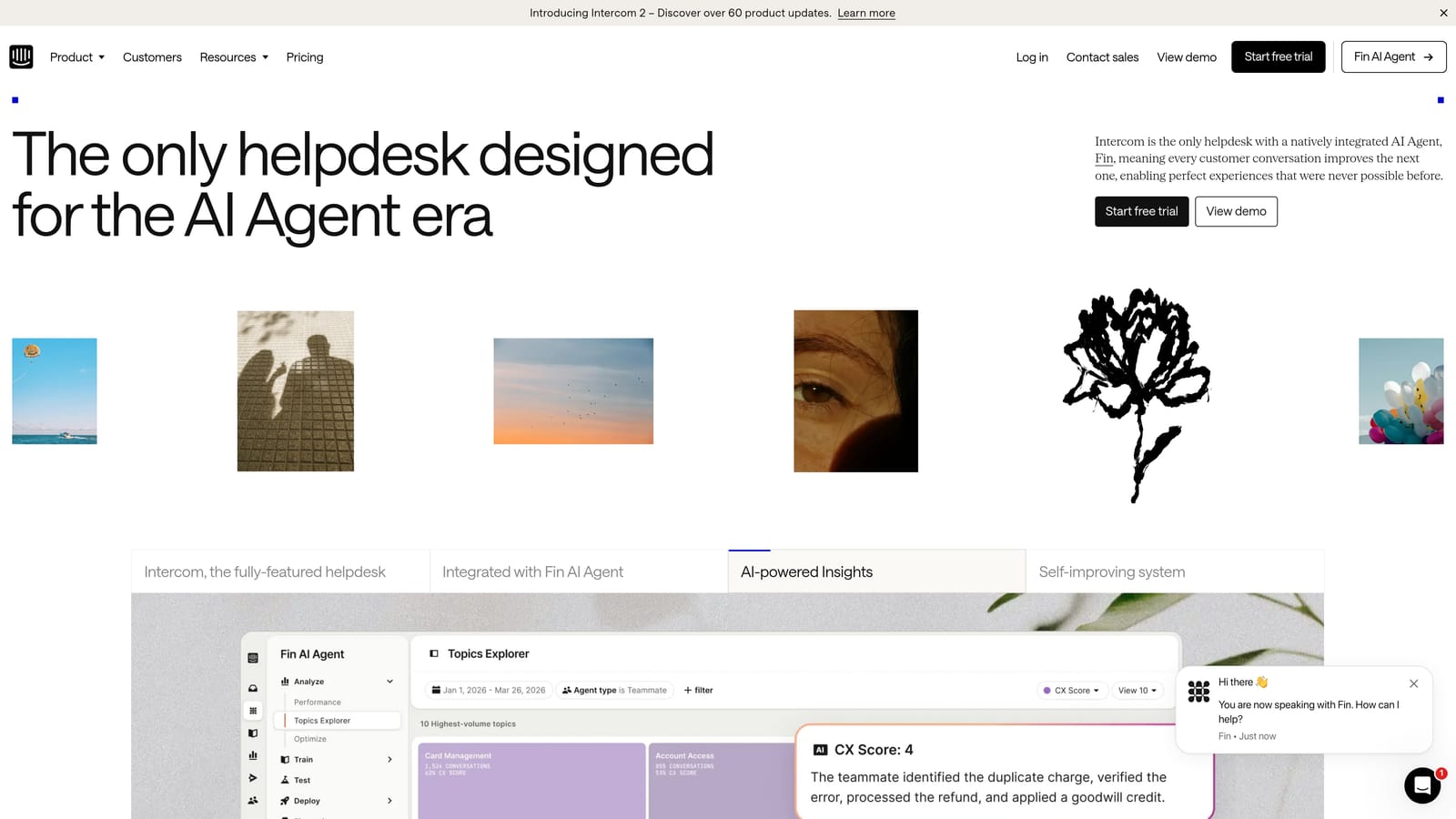
Intercom is a conversational support platform best known for its in-product chat experience and Fin, an AI agent built on large language models designed to resolve common queries autonomously before escalating to human agents.
Where This Tool Shines
Intercom's Fin AI agent is one of the more capable autonomous resolution tools currently available. It draws on your existing help content to answer questions conversationally, and for companies with a well-maintained knowledge base, it can deflect a meaningful share of inbound volume without human involvement.
Beyond AI resolution, Intercom's in-product messenger experience is polished and highly configurable. Proactive messaging, product tours, and behavioral targeting make it useful beyond pure support, particularly for teams that want to blur the line between support and onboarding.
Key Features
Fin AI Agent: Resolves common customer queries autonomously via chat, drawing on existing help content and escalating when needed.
In-Product Messenger: Highly configurable chat widget with proactive messaging and product tour capabilities built in.
Shared Inbox with AI Assist: Agents get AI-powered response suggestions and context surfaced directly in the inbox during live interactions.
Customer Data Platform: Supports segmentation and behavioral targeting for proactive outreach and personalized support.
Broad Integrations: Native connections with Salesforce, HubSpot, Stripe, and major SaaS tools.
Best For
SaaS companies where chat is the dominant support channel, teams investing in proactive customer engagement, and organizations that want strong AI deflection without a full platform migration.
Pricing
Starts around $74 per month. Fin AI usage is billed per resolution. Enterprise pricing is available on request.
4. Freshdesk
Best for: Cost-conscious enterprise buyers who need strong omnichannel support with solid AI capabilities across the Freshworks suite
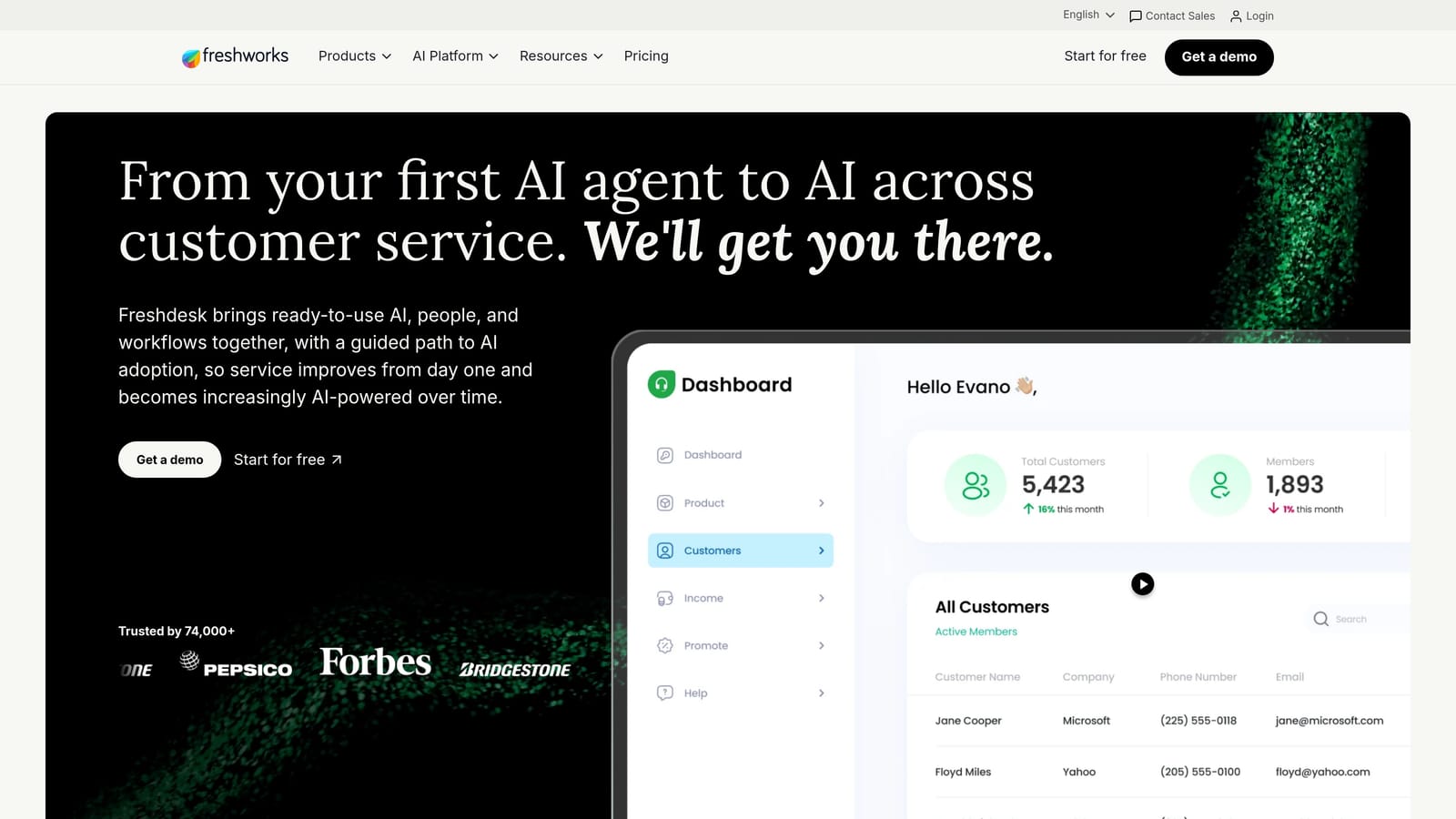
Freshdesk is a feature-rich, competitively priced helpdesk from Freshworks, powered by Freddy AI across triage, self-service, and agent assistance, with strong omnichannel capabilities and a broad integration ecosystem.
Where This Tool Shines
Freshdesk consistently punches above its price point. Freddy AI handles ticket classification, routing, and response suggestions across channels, and Freddy Self Service adds AI-powered deflection via chatbot without requiring a separate product purchase.
For teams already using other Freshworks products like Freshsales or Freshservice, the cross-suite integration creates a genuinely unified view of the customer. That native coherence is something you'd otherwise need to build manually with integrations.
Key Features
Freddy AI: Handles ticket classification, routing, and suggested responses to reduce manual triage and improve agent efficiency.
Freddy Self Service: AI-powered chatbot for deflecting common queries before they reach the agent queue.
Omnichannel Inbox: Unifies email, chat, phone, social, and WhatsApp into a single agent workspace.
Collision Detection: Prevents multiple agents from working the same ticket simultaneously, reducing confusion in high-volume environments.
Freshworks Suite Integration: Native cross-product workflows with Freshsales and Freshservice for teams running the full stack.
Best For
Mid-market and enterprise buyers looking for strong value, teams already invested in the Freshworks ecosystem, and organizations that need omnichannel coverage without enterprise-tier pricing.
Pricing
Free tier available. Paid plans start around $15 per agent per month. Enterprise plans are available with expanded AI and compliance features.
5. Salesforce Service Cloud
Best for: Large enterprises already running Salesforce CRM that need support and customer data fully unified in one system
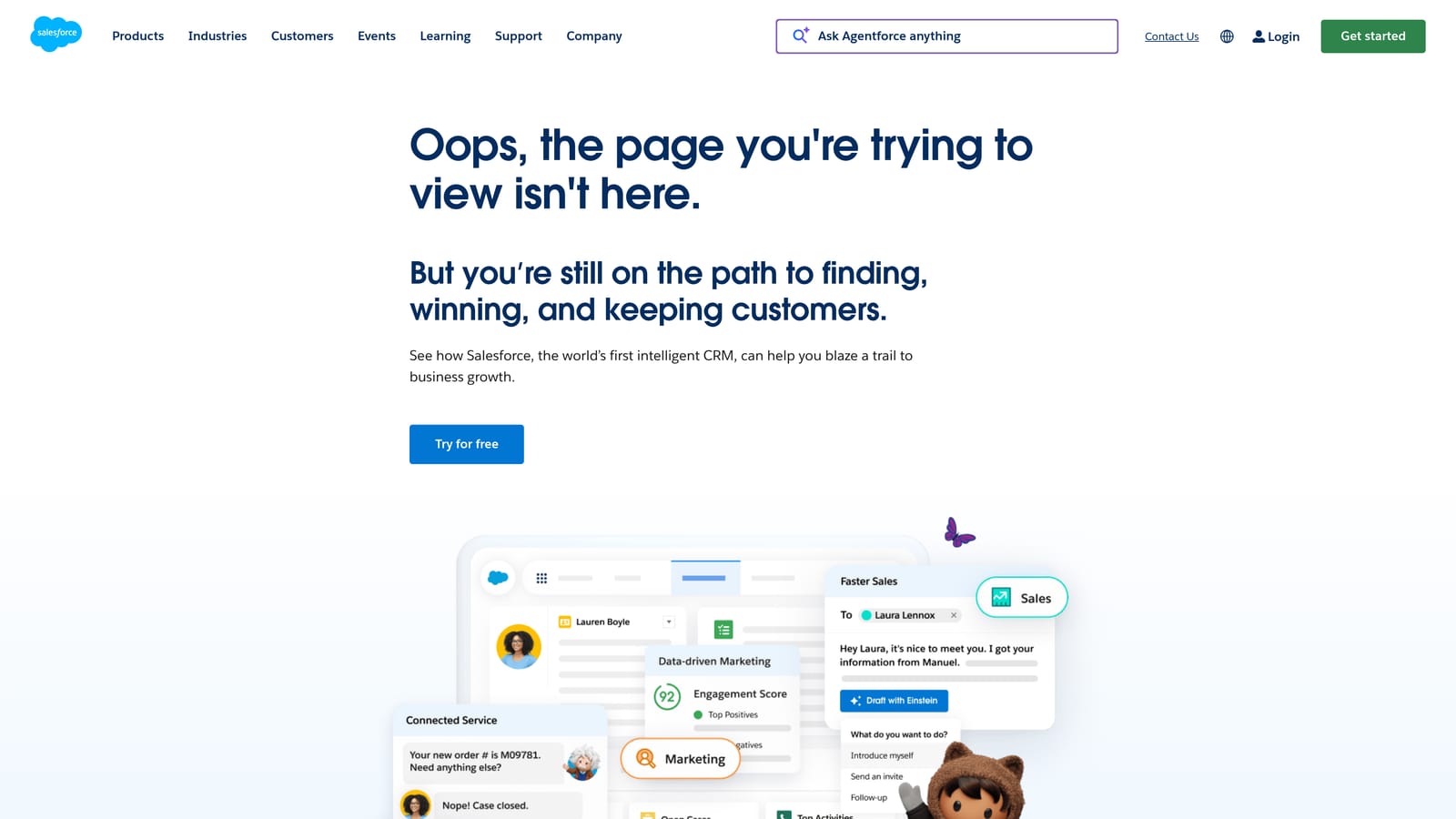
Salesforce Service Cloud is the enterprise-grade support platform for organizations already running Salesforce, combining Einstein AI, deep case management, and full access to customer account and deal data in a single interface.
Where This Tool Shines
The core value proposition here is data unification. When your support agents can see a customer's full CRM history, open deals, billing status, and past cases in one view, the quality of support interactions improves significantly. For enterprises where sales and support touch the same customers, that context is invaluable.
Einstein AI adds case classification, next-best-action recommendations, and predictive routing on top of that data foundation. The combination of rich customer data and intelligent automation is genuinely powerful, though it comes with implementation complexity and cost that smaller teams should weigh carefully.
Key Features
Einstein AI: Handles case classification, next-best-action recommendations, and predictive routing based on customer and case data.
360-Degree Customer View: Pulls CRM, billing, and support history into a single agent interface for full context on every interaction.
Omni-Channel Routing: Intelligently distributes workload across agents based on skills, availability, and case priority.
Einstein Bots: Self-service automation across digital channels, configurable for common query types.
AppExchange Ecosystem: Extensive third-party integrations and enterprise-grade compliance certifications.
Best For
Large enterprises with Salesforce already embedded in their operations, organizations where sales and support data need to be unified, and teams with the resources to support a complex implementation.
Pricing
Enterprise edition starts around $165 per user per month. Unlimited and Einstein tiers are priced higher. Implementation costs should be factored into total cost of ownership.
6. ServiceNow Customer Service Management
Best for: Large enterprises that need to unify internal IT support and external customer service under one intelligent workflow platform
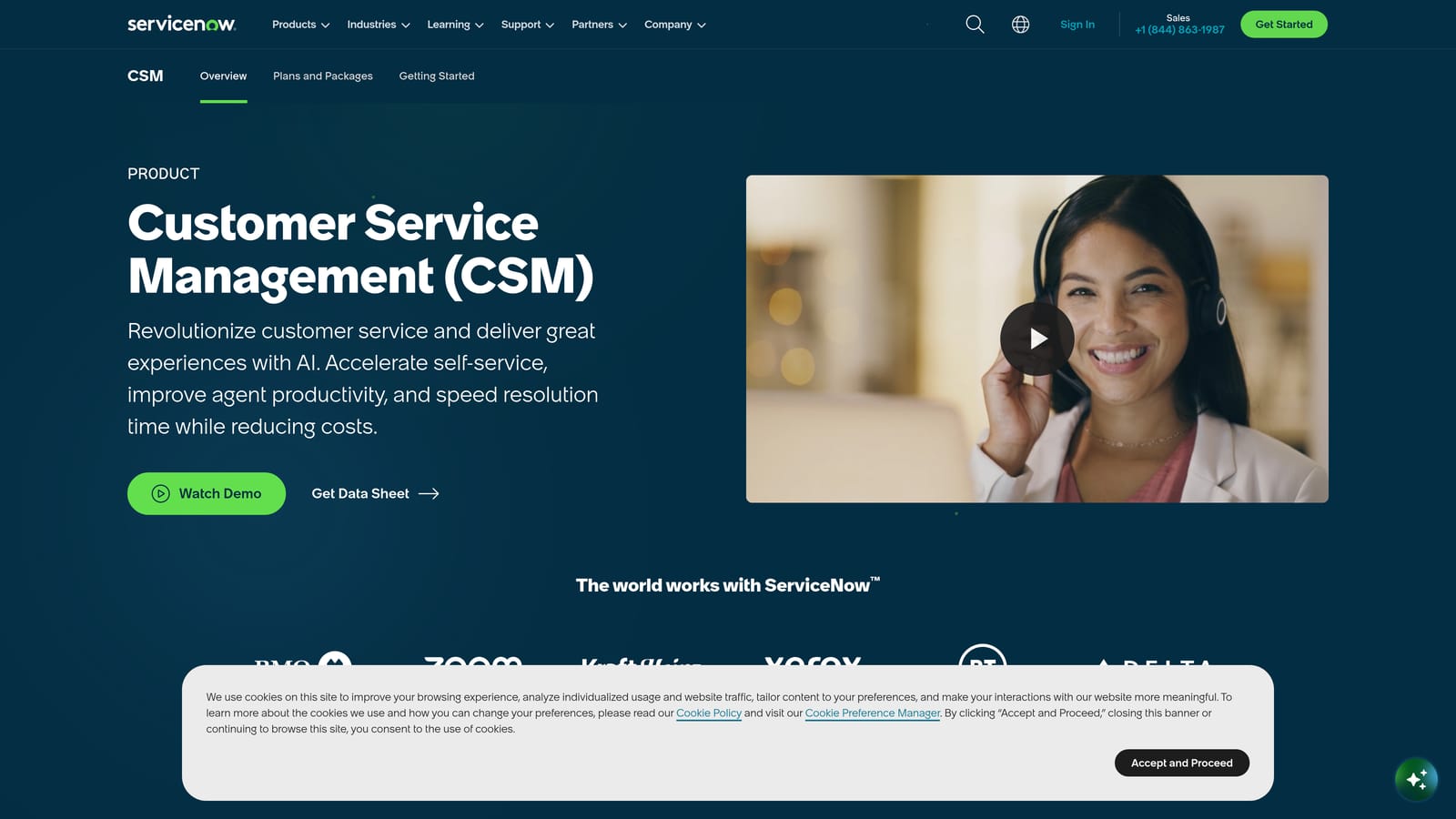
ServiceNow Customer Service Management is an enterprise workflow platform that extends its ITSM capabilities into external customer service, ideal for organizations that need to bring IT operations and customer support under a single automation layer.
Where This Tool Shines
ServiceNow's workflow automation engine is in a class of its own for complex, multi-step enterprise processes. When a customer issue requires coordination across IT, operations, and support teams, ServiceNow can orchestrate that entire flow in ways that simpler helpdesks cannot.
Now Intelligence adds virtual agents, predictive routing, and AI-powered case resolution on top of that workflow foundation. For enterprises where support complexity is driven by internal process dependencies rather than pure ticket volume, this depth is genuinely valuable.
Key Features
Now Intelligence: Virtual agents, predictive routing, and AI-powered case resolution built into the platform's workflow engine.
Unified ITSM and CSM: Internal IT support and external customer service managed in one system, reducing process gaps and tool fragmentation.
Workflow Automation Engine: Handles complex, multi-step enterprise processes that span departments and systems.
Performance Analytics: Real-time and historical reporting across both IT and customer service operations.
Configurable Self-Service Portal: AI-driven knowledge recommendations surfaced in a customizable customer-facing portal.
Best For
Large enterprises where IT and customer support operations are tightly coupled, organizations with complex internal workflows, and teams that already use ServiceNow for ITSM and want to extend it to customer-facing support.
Pricing
Custom enterprise pricing. Typically requires a dedicated implementation engagement with ServiceNow or a certified partner.
7. Kustomer
Best for: High-volume consumer-facing enterprises that need a CRM-native, omnichannel support platform with full customer timeline visibility
Kustomer is a CRM-native support platform that organizes every customer interaction, regardless of channel, into a single chronological timeline, giving agents full context without switching tools.
Where This Tool Shines
Kustomer's timeline model is its defining feature. Rather than organizing support around tickets, it organizes it around customers. Agents see the entire history of a customer's interactions across email, chat, voice, SMS, and social in one continuous view, which dramatically reduces the time spent reconstructing context before each interaction.
The flexible data model is another standout. Teams can define custom objects and attributes that match their specific business logic, making Kustomer adaptable to industries with non-standard customer data structures.
Key Features
Customer Timeline View: Unifies all interactions across email, chat, voice, SMS, and social into a single chronological record per customer.
AI-Powered Routing and Suggestions: Intelligent routing and response suggestions informed by full customer history.
Proactive Outreach and Automation: Automated workflows triggered by customer behavior for proactive engagement.
Flexible Data Model: Custom objects and attributes allow teams to model business-specific data structures within the platform.
Native Integrations: Connects with Shopify, Salesforce, Slack, and other enterprise tools out of the box.
Best For
High-volume consumer-facing enterprises, e-commerce and retail operations with complex customer histories, and teams that need CRM-level customer context inside their support platform.
Pricing
Per-agent pricing. Enterprise plan starts around $89 per user per month.
8. Gladly
Best for: Premium consumer brands where relationship continuity and customer experience quality matter more than maximum AI deflection
Gladly is a people-first support platform that eliminates tickets entirely, organizing all support around persistent, channel-agnostic customer conversations rather than case numbers, with AI assistance focused on empowering agents rather than replacing them.
Where This Tool Shines
Gladly's ticket-free model is a genuine philosophical departure from most platforms on this list. When support is organized around the customer rather than the case, agents build continuity across interactions in a way that ticket-based systems make structurally difficult. For brands where customer relationships are a differentiator, that continuity has real value.
The People Match feature routes customers to agents based on preferences, skills, and relationship history rather than simple availability. It's a nuanced approach to routing that prioritizes experience quality over raw throughput.
Key Features
Ticket-Free Model: All support organized around the customer, with persistent conversation history across every channel.
Persistent Omnichannel Threads: Voice, email, chat, SMS, and social interactions unified in one continuous customer conversation.
AI-Powered Agent Assistance: Suggested responses and knowledge surfacing to help agents respond faster without removing the human element.
People Match: Intelligent routing based on customer preferences, relationship history, and agent skills.
Self-Service AI: Handles routine queries autonomously and escalates to human agents with full context preserved.
Best For
Premium consumer brands, mid-market and enterprise teams where experience quality and relationship continuity are core to the brand promise, and organizations that prioritize agent empowerment over full AI automation.
Pricing
Custom pricing. Positioned for mid-market and enterprise buyers. Contact Gladly directly for a quote.
9. Forethought
Best for: Enterprises that want to add AI intelligence to an existing helpdesk investment without migrating platforms
Forethought is an AI layer designed to sit on top of existing enterprise helpdesks, adding intelligent triage, autonomous deflection, agent assist, and analytics without requiring teams to leave Zendesk, Salesforce, or ServiceNow.
Where This Tool Shines
Forethought's value proposition is additive rather than replacement. For enterprises that have invested heavily in a helpdesk platform and built workflows, reporting, and integrations around it, ripping and replacing is often not a realistic option. Forethought lets those teams layer meaningful AI capabilities on top of what they already have.
The four-module structure, covering triage, deflection, agent assist, and analytics, means teams can adopt selectively based on where they need the most impact rather than committing to a full platform overhaul.
Key Features
Triage AI: Intelligent ticket classification and priority routing to ensure the right tickets reach the right agents quickly.
Solve AI: Autonomous deflection of common queries before they enter the agent queue, reducing inbound volume.
Assist AI: Real-time response suggestions and knowledge surfacing for agents handling live tickets.
Discover Analytics: Identifies top ticket drivers and surfaces optimization opportunities across the support operation.
Native Helpdesk Integrations: Works directly with Zendesk, Salesforce, ServiceNow, and Freshdesk without requiring platform migration.
Best For
Enterprises with significant existing helpdesk investments, teams that want modular AI adoption rather than a full platform switch, and organizations running Zendesk, Salesforce, or ServiceNow that need to accelerate AI capability without migration risk.
Pricing
Custom enterprise pricing based on ticket volume and modules selected. Contact Forethought for a quote.
Finding the Right Fit for Your Enterprise
The right intelligent support system depends less on which platform has the longest feature list and more on where your organization sits today and where you need to go.
If you're building from scratch or re-evaluating your support stack entirely, Halo AI offers the most forward-looking architecture: AI-first by design, page-aware context that understands what users are actually experiencing, and a business intelligence layer that turns support data into revenue and product signals. It's particularly well-suited for SaaS and B2B companies that want AI to own resolution, not just assist agents.
For enterprises already deep in the Salesforce ecosystem, Service Cloud is the natural choice. If you're on Zendesk and not ready to migrate, Forethought is the most pragmatic path to better AI without disruption. Teams prioritizing in-product chat and autonomous deflection will find Intercom's Fin hard to beat. And for premium consumer brands where relationship quality is the product, Gladly's ticket-free model is worth serious consideration.
The broader shift happening across all of these platforms is the same: support is moving from reactive ticket management to proactive, intelligent engagement. The platforms that will matter most in the next few years are the ones that don't just close tickets faster, but make every interaction smarter than the last.
Your support team shouldn't scale linearly with your customer base. Let AI agents handle routine tickets, guide users through your product, and surface business intelligence while your team focuses on complex issues that need a human touch. See Halo in action and discover how continuous learning transforms every interaction into smarter, faster support.