9 Best Intelligent Ticket Resolution Platforms in 2026
Intelligent ticket resolution platforms use AI to triage, respond to, and close support tickets automatically — reducing pressure on human agents without sacrificing accuracy. This guide ranks the 9 best options available in 2026, evaluated on resolution performance, integration depth, and overall value for B2B and SaaS support teams.
 Matt PattoliFounder14 min read
When a support ticket lands in your queue, the clock starts ticking. Customers expect fast, accurate answers, and support teams are under constant pressure to deliver without ballooning headcount. Intelligent ticket resolution platforms change the equation by using AI to triage, respond to, and close tickets automatically, escalating only what truly needs a human touch.
But not all platforms are built the same. Some bolt AI onto legacy helpdesk infrastructure. Others are built AI-first from the ground up. Some focus purely on deflection; others provide deep business intelligence alongside resolution capabilities. The difference matters more than ever as buyer expectations shift from "AI-assisted" to genuinely autonomous resolution.
This list covers the top intelligent ticket resolution platforms available in 2026, evaluated on resolution accuracy, integration depth, learning capabilities, and overall value for B2B and SaaS teams. We've placed Halo AI at the top because it's the most purpose-built option for teams that want genuine AI resolution, not just smart routing.
1. Halo AI
Best for: B2B SaaS teams wanting AI-first autonomous resolution with business intelligence built in.
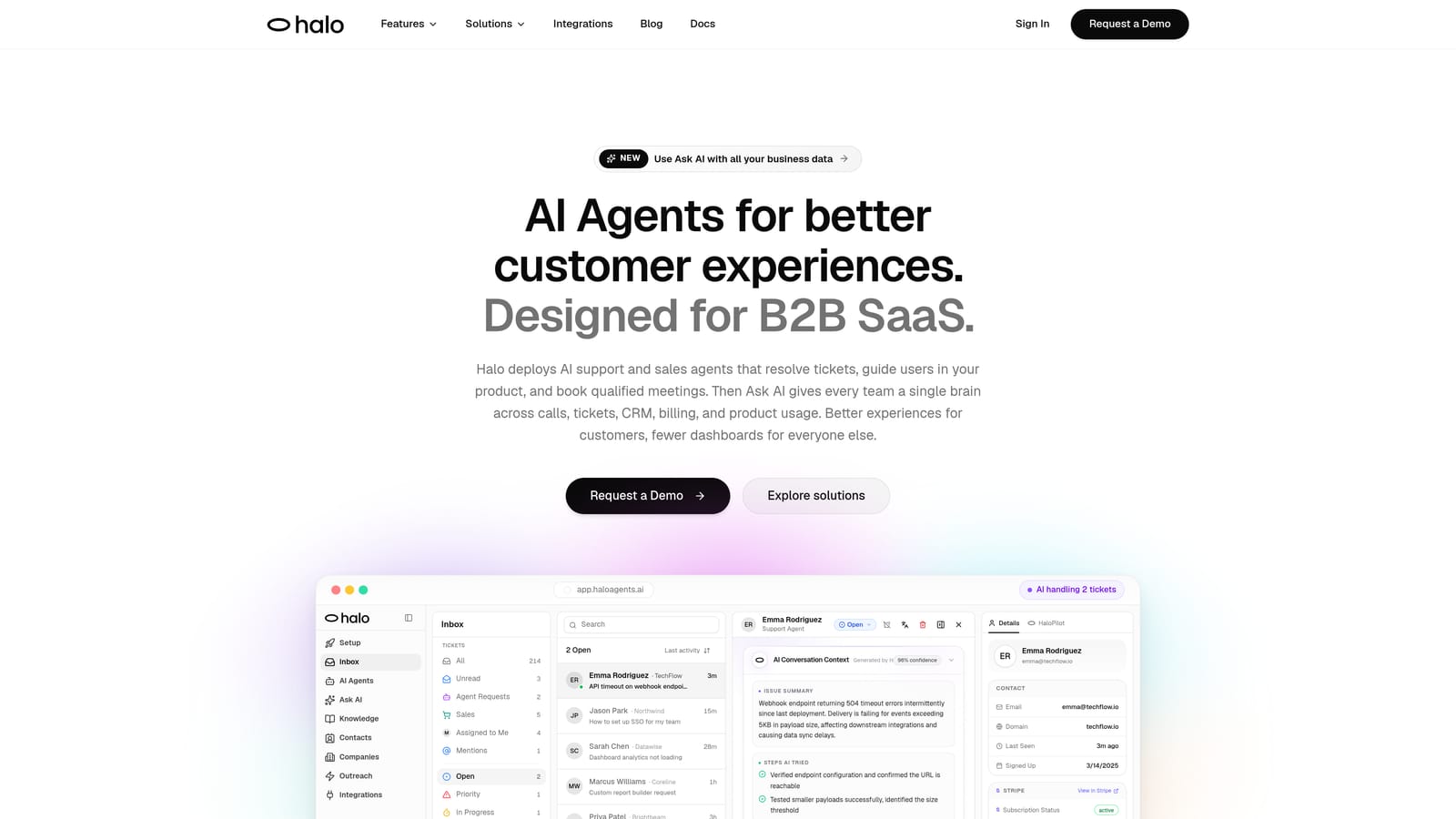
Halo AI is an AI-first customer support platform that deploys autonomous agents to resolve tickets, guide users through your product, and create bug reports, learning from every interaction.
Where This Tool Shines
What separates Halo from most platforms on this list is its architecture. It wasn't built as a helpdesk with AI layered on top. It was designed from the ground up around autonomous resolution, which means the AI isn't a feature you toggle on. It's the core of how the product works.
The page-aware chat widget is a particularly compelling differentiator. Rather than responding to text alone, Halo's agent sees what the user sees on screen, enabling contextual guidance that feels genuinely helpful rather than scripted. Combine that with a continuous learning engine that improves from every resolved ticket, and the platform gets meaningfully smarter over time without requiring manual retraining.
Key Features
Page-Aware Chat Widget: The AI agent sees the user's current screen context, enabling step-by-step visual guidance that generic chatbots simply can't replicate.
Continuous Learning Engine: Every ticket resolution feeds back into the model, improving accuracy over time without requiring manual configuration from your team.
Auto Bug Ticket Creation: When users report issues, Halo automatically creates structured bug tickets routed to Linear or other engineering tools, closing the loop between support and product.
Smart Inbox with Business Intelligence: Beyond resolution, the inbox surfaces customer health signals, anomaly detection, and revenue intelligence, turning support data into strategic insight.
Native Integration Stack: Connects out of the box with Linear, Slack, HubSpot, Intercom, Stripe, Zoom, PandaDoc, and Fathom, giving the AI full context from your business stack.
Graceful Live Agent Handoff: Complex or sensitive issues escalate smoothly to human agents with full conversation context preserved.
Best For
Halo is best suited for B2B SaaS companies and product teams that want genuine autonomous resolution rather than agent-assist features. If your team is tired of routing tickets manually, wants AI that improves without constant babysitting, and needs support data to inform product decisions, this is the platform built for that use case.
Pricing
Contact for pricing. A demo is available at haloagents.ai. Given the platform's integration depth and business intelligence capabilities, it's positioned as a premium offering for teams serious about AI-first support.
2. Zendesk AI
Best for: Enterprise teams already invested in Zendesk who want incremental AI improvement.
Zendesk AI is an AI capability suite layered onto Zendesk's enterprise helpdesk platform, covering intelligent triage, automated responses, and agent assistance.
Where This Tool Shines
Zendesk's greatest asset is its maturity. The platform has decades of helpdesk infrastructure, an enormous app marketplace, and deep enterprise workflow capabilities. For teams that have built complex processes inside Zendesk, the AI suite adds meaningful value without requiring a migration.
Intelligent triage with intent and sentiment detection helps route tickets faster, and AI-generated reply suggestions reduce the cognitive load on agents handling high volumes. It's not the most autonomous AI on this list, but it's a credible upgrade for teams that aren't ready to rethink their entire support stack.
Key Features
Intelligent Triage: Automatically detects intent and sentiment to route tickets to the right team or queue without manual intervention.
AI Reply Suggestions: Surfaces contextually relevant draft responses to agents, reducing handle time on common queries.
Automated Routing: Analyzes ticket content to assign conversations based on topic, urgency, or customer segment.
Self-Service Bot: Deflects common questions using integrated knowledge base content before tickets reach agents.
Third-Party App Marketplace: Access to hundreds of integrations across CRM, billing, analytics, and communication tools.
Best For
Teams already deeply embedded in the Zendesk ecosystem who want AI improvements without a platform switch. Less ideal for teams looking for fully autonomous resolution or AI-first architecture from scratch.
Pricing
AI features are available on Suite plans starting around $115 per agent per month. Verify current pricing at zendesk.com, as AI add-on costs can escalate at scale.
3. Intercom Fin
Best for: PLG SaaS companies with strong help center documentation and conversational support workflows.
Intercom Fin is a GPT-powered AI resolution bot that answers customer questions by reading your existing help content and conversation history.
Where This Tool Shines
Fin's conversational quality is genuinely impressive. Rather than matching keywords to canned responses, it reads your help center content and generates natural, human-like answers. For PLG SaaS products where customers are often self-sufficient and just need quick answers to product questions, Fin can resolve a meaningful portion of inbound volume without agent involvement.
The per-resolution pricing model is worth noting. It aligns costs with actual value delivered, which can be appealing for teams scaling support volume without scaling headcount. However, at high resolution volumes, the per-unit cost can add up quickly compared to flat-rate alternatives.
Key Features
LLM-Powered Resolution: Trained on your help center content, Fin generates contextually accurate answers rather than pulling static canned responses.
Conversational Response Quality: Responses feel natural and human-like, reducing the robotic friction common in older chatbot experiences.
Seamless Human Handoff: When Fin can't resolve a query, it escalates to a human agent with full conversation context intact.
Multi-Language Support: Handles queries across multiple languages without requiring separate configuration per language.
Per-Resolution Pricing: Pay only for successful resolutions, aligning cost directly with value delivered.
Best For
PLG SaaS teams with well-maintained help documentation and primarily conversational support needs. Less suited for teams needing structured ticket workflows, deep CRM integration, or business intelligence beyond resolution.
Pricing
Approximately $0.99 per resolution plus base Intercom plan costs. Verify current pricing at intercom.com, as rates may vary by plan tier.
4. Freshdesk Freddy AI
Best for: SMB and mid-market teams wanting AI-assisted support at accessible price points.
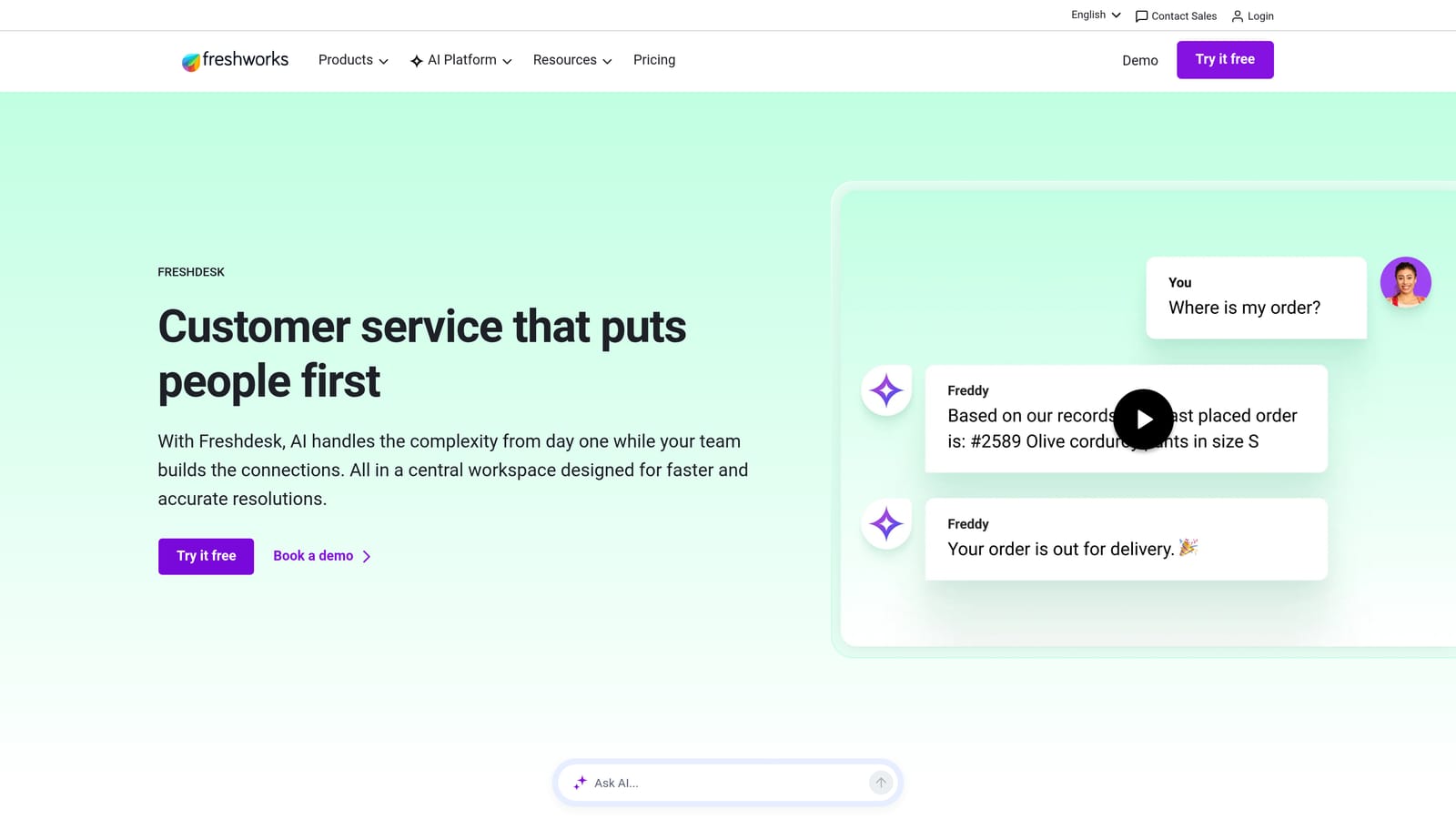
Freshdesk Freddy AI is Freshworks' AI layer for the Freshdesk helpdesk platform, offering agent assistance, auto-triage, and self-service deflection at SMB-friendly pricing.
Where This Tool Shines
Freddy AI's strongest value proposition is the combination of useful AI capabilities at a price point that doesn't require enterprise budgets. The Freddy Copilot feature gives agents AI-generated reply drafts and conversation summaries, meaningfully reducing handle time without requiring teams to trust AI with full autonomous resolution.
For teams that are AI-curious but not yet ready to hand full resolution authority to an AI agent, Freshdesk's approach is a comfortable middle ground. It improves agent productivity without the organizational change management that comes with fully autonomous platforms.
Key Features
Freddy Copilot: Generates AI-assisted reply drafts and conversation summaries directly in the agent inbox.
Auto-Triage and Categorization: Automatically classifies and routes incoming tickets based on content analysis.
Freddy Self Service Bot: Deflects common queries before they reach agents using knowledge base content.
Canned Response Suggestions: Recommends relevant saved responses based on ticket content to speed up agent replies.
AI Deflection Analytics: Built-in reporting on how many tickets the AI deflected and where escalation most commonly occurs.
Best For
SMB and mid-market support teams looking for AI-assisted productivity improvements without the complexity or cost of enterprise platforms. Teams already using Freshdesk get the most seamless experience.
Pricing
Freddy AI features are available on the Growth plan and above, starting around $15 per agent per month. Verify current pricing at freshworks.com.
5. Salesforce Service Cloud Einstein
Best for: Enterprise teams with their entire customer record in Salesforce who need AI with full CRM context.
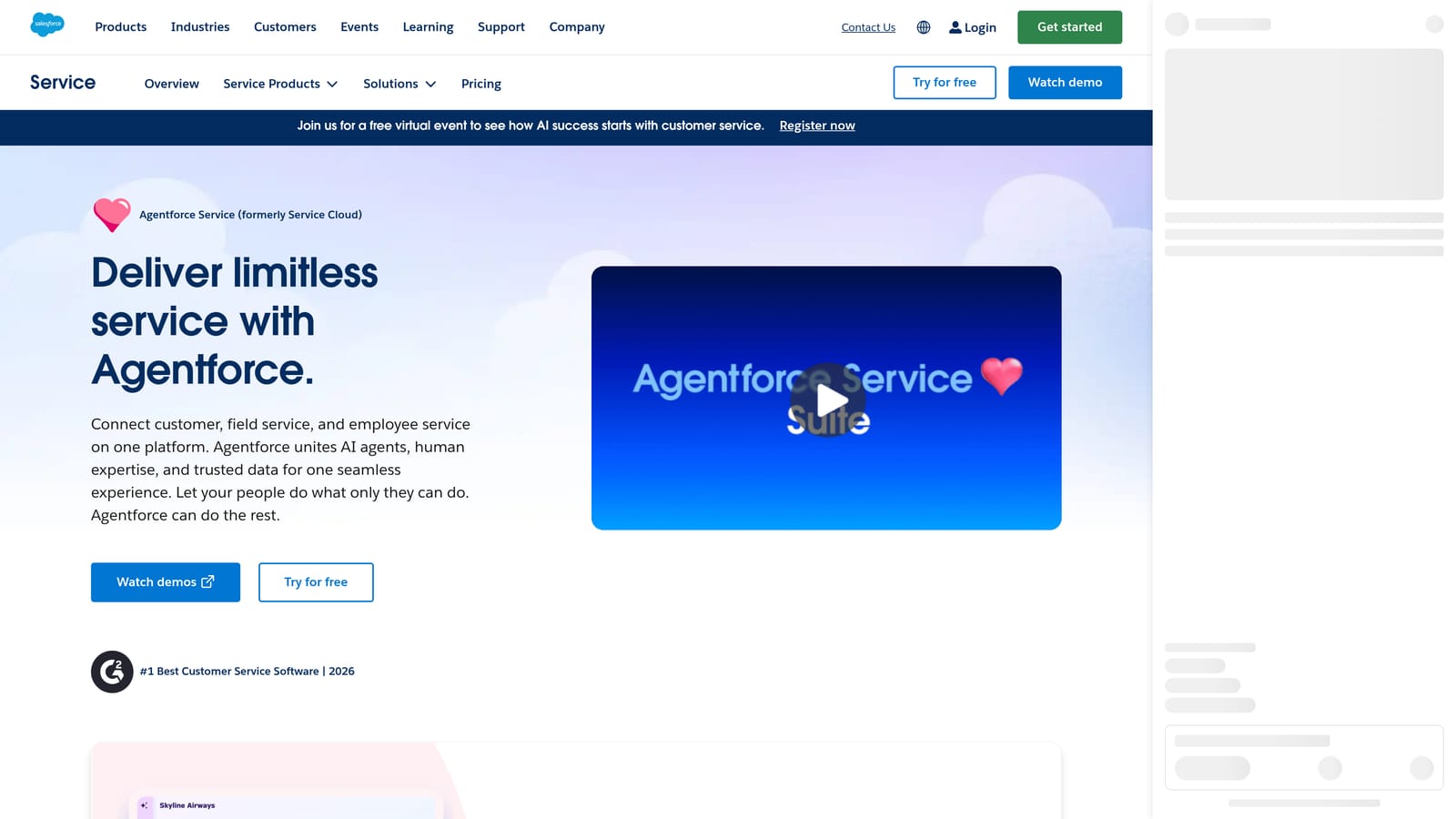
Salesforce Service Cloud Einstein is enterprise-grade AI resolution and case management built natively into Salesforce, leveraging full CRM context for every customer interaction.
Where This Tool Shines
Einstein's core advantage is context. When your entire customer record, purchase history, contract status, and relationship data lives in Salesforce, the AI can draw on all of it when handling a support case. That depth of context enables more accurate triage, more relevant next-best-action recommendations, and smarter self-service experiences than platforms working with partial customer data.
For large enterprise teams where Salesforce is already the system of record, Einstein is a natural extension rather than a new tool to adopt. The configuration complexity is real, but for teams with Salesforce expertise in-house, the payoff in AI quality is meaningful.
Key Features
Einstein Case Classification: Automatically populates case fields like category, priority, and routing based on case content analysis.
Next Best Action: Recommends the most relevant next step for agents based on case data and customer history.
Einstein Bots: Self-service deflection bots trained on knowledge base content and integrated with full CRM context.
Deep CRM Integration: Every AI decision is informed by the full Salesforce customer record, not just the current ticket.
Einstein Article Recommendations: Surfaces relevant knowledge base articles to agents mid-conversation to accelerate resolution.
Best For
Enterprise organizations already running Salesforce as their CRM who want AI that leverages that investment fully. Not recommended for teams without existing Salesforce infrastructure, given the configuration complexity and cost.
Pricing
Service Cloud starts at $25 per user per month; Einstein AI features require higher tiers. Verify current pricing at salesforce.com, as enterprise licensing structures vary significantly.
6. Help Scout AI
Best for: Small teams and human-first support cultures that want AI to assist agents, not replace them.
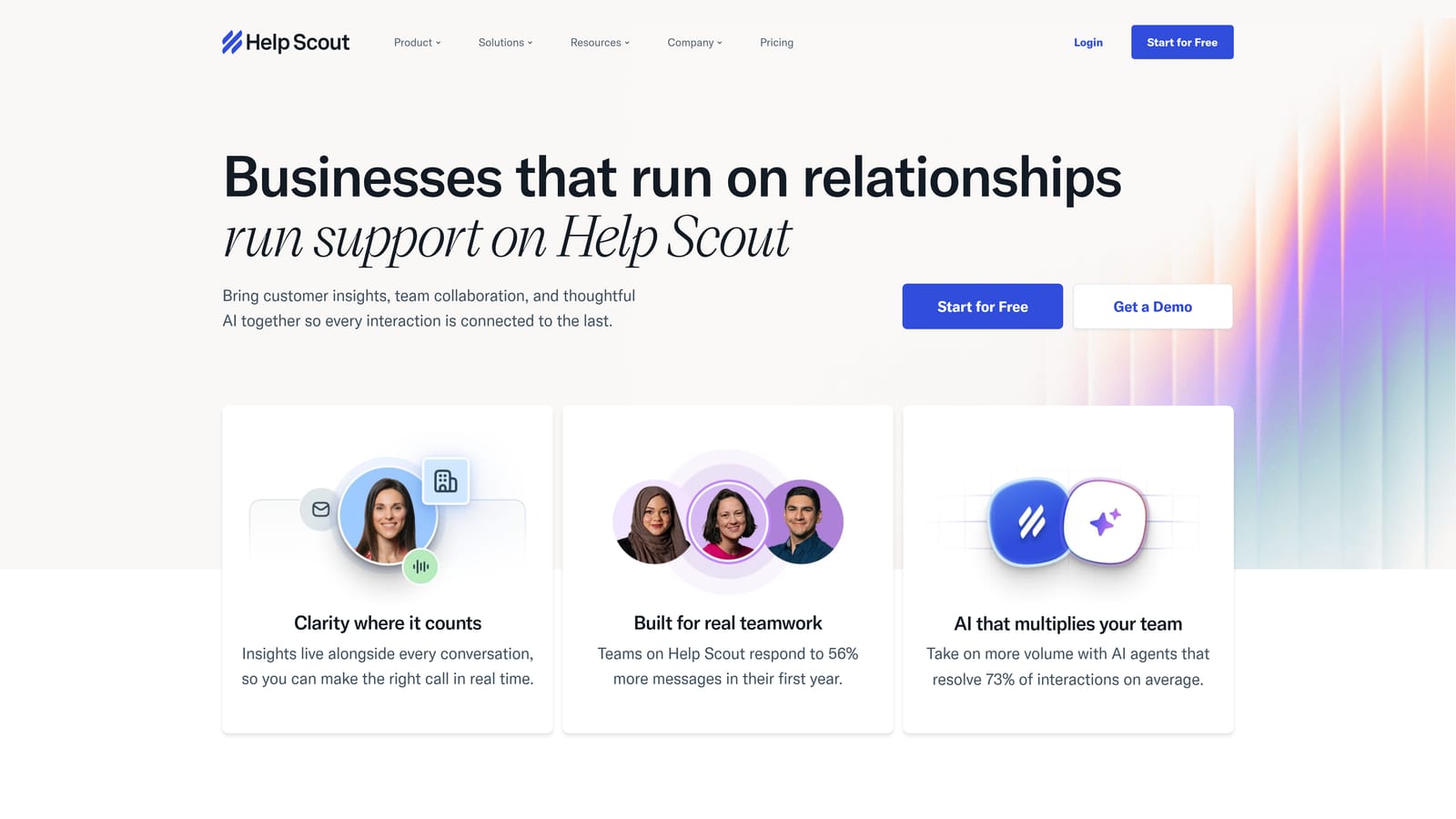
Help Scout is a human-first support platform with AI features designed to assist agents through AI Drafts, Summarize, and Answers, without removing the human from the equation.
Where This Tool Shines
Help Scout has always prioritized clean UX and a customer-centric philosophy, and its AI additions reflect that same sensibility. AI Drafts generates reply suggestions that agents can review and edit rather than sending autonomously. AI Summarize condenses long conversation threads so agents can get up to speed quickly. The result is a tool that genuinely reduces cognitive load without creating the trust issues that come with fully autonomous AI.
For teams where the human relationship is central to the support experience, Help Scout's approach is refreshingly honest. It's not trying to replace your agents. It's trying to make them faster and less stressed.
Key Features
AI Drafts: Generates suggested replies in the inbox that agents review and edit before sending, maintaining human oversight.
AI Summarize: Condenses long conversation threads into concise summaries so agents can quickly understand context.
AI Answers: Deflects simple questions before they reach the inbox using help documentation content.
Shared Inbox and Collaboration: Strong team collaboration features including collision detection, private notes, and assignment workflows.
Minimal Learning Curve: Clean, intuitive UX that new agents can navigate quickly without extensive onboarding.
Best For
Small to mid-sized teams with a human-first support philosophy, particularly those in industries where relationship quality matters as much as resolution speed. Not designed for teams seeking full autonomous ticket resolution.
Pricing
Starts at $22 per user per month on the Plus plan; AI features are included on higher tiers. Verify current pricing at helpscout.com.
7. Kustomer IQ
Best for: High-volume consumer brands needing omnichannel AI with a unified customer timeline.
Kustomer IQ is an AI-powered layer within Kustomer's omnichannel customer service platform, built around a unified customer timeline for high-volume consumer support operations.
Where This Tool Shines
Kustomer's unified timeline approach gives the AI unusually rich context. Every interaction across email, chat, social, and SMS is aggregated into a single customer view, so the AI isn't making decisions based on an isolated ticket. It's working from the full relationship history, which meaningfully improves intent detection accuracy and deflection quality.
For D2C brands and consumer companies handling large volumes across multiple channels, this breadth of context is a genuine differentiator. The platform's CSAT prediction capabilities also help teams proactively identify at-risk conversations before they escalate.
Key Features
Unified Customer Timeline: Aggregates all channel interactions into a single view, giving the AI full relationship context for every decision.
AI Intent Detection: Identifies customer intent across email, chat, social, and SMS to route and prioritize accurately.
Intelligent Deflection: Resolves common queries before they reach agents using AI trained on your content and history.
Workflow Automation: AI-driven routing and assignment rules that adapt based on conversation content and customer data.
CSAT Prediction: Flags conversations at risk of low satisfaction scores so teams can intervene proactively.
Best For
High-volume consumer brands in D2C, retail, and e-commerce that need omnichannel AI with deep customer context. Less commonly the right fit for B2B SaaS teams with structured ticket workflows and engineering integrations.
Pricing
Enterprise pricing; contact Kustomer directly for current rates at kustomer.com.
8. Tidio Lyro
Best for: Small businesses needing fast AI deployment with minimal technical setup.
Tidio Lyro is a conversational AI designed for small businesses that resolves customer queries by learning from your existing FAQ content, often deployable within hours.
Where This Tool Shines
Speed of deployment is Lyro's headline advantage. While enterprise platforms can take weeks or months to configure, Lyro can be live and handling queries the same day you sign up. It reads your existing FAQ and help content, builds a resolution model from it, and starts deflecting common queries immediately.
For small businesses with limited technical resources and a high volume of repetitive questions, this fast time-to-value is genuinely compelling. The e-commerce integrations with Shopify and WooCommerce also make it a natural fit for online retail teams that need quick answers on orders, returns, and shipping.
Key Features
FAQ-Based Training: Learns from your existing help content with minimal configuration, requiring no AI expertise to set up.
Autonomous Query Resolution: Handles repetitive, common queries end-to-end without agent involvement.
Live Chat Fallback: Escalates to human agents when the AI reaches the limits of its knowledge.
E-Commerce Integrations: Native connections with Shopify and WooCommerce for order and customer data context.
Conversation Analytics Dashboard: Simple reporting on resolution rates, escalation frequency, and common query topics.
Best For
Small businesses and e-commerce teams that need fast, affordable AI deflection for repetitive queries. Resolution depth is limited compared to enterprise platforms, making it less suitable for complex B2B support scenarios.
Pricing
Lyro AI starts from approximately $29 per month; a free tier is available with limited conversations. Verify current pricing at tidio.com.
9. Zoho Desk Zia
Best for: Teams in the Zoho ecosystem wanting AI without adding a new vendor.
Zoho Desk Zia is an AI assistant built into Zoho Desk offering sentiment analysis, anomaly detection, smart tagging, and response suggestions for teams already running Zoho products.
Where This Tool Shines
Zia's value proposition is ecosystem coherence. For teams using Zoho CRM alongside Zoho Desk, the AI has access to full customer context without any integration work. Sentiment analysis on incoming tickets helps agents prioritize emotionally charged conversations, while anomaly detection flags unusual spikes in ticket volume before they become crises.
It's not the most cutting-edge AI on this list, but for Zoho-native teams, it delivers solid AI capabilities without the complexity or cost of bringing in an additional platform. The value-to-price ratio within the Zoho ecosystem is genuinely strong.
Key Features
Sentiment Analysis: Detects emotional tone on incoming tickets to help agents prioritize urgent or frustrated customers.
Anomaly Detection: Identifies unusual ticket volume spikes and alerts teams before they're caught off guard.
AI-Powered Tagging and Routing: Automatically categorizes and routes tickets based on content analysis.
Response Suggestions: Pulls relevant knowledge base articles and canned responses based on ticket content.
Zoho CRM Integration: Native connection to Zoho CRM gives agents full customer context without switching tools.
Best For
Teams already using Zoho CRM and other Zoho products who want to add AI capabilities without introducing a new vendor relationship. AI capabilities are solid but not cutting-edge compared to dedicated AI-first platforms.
Pricing
Zia is available on the Enterprise plan starting around $40 per agent per month. Verify current pricing at zoho.com/desk.
Which Platform Is Right for Your Team?
The right intelligent ticket resolution platform depends less on features and more on where your team is today and where you want to go. Here's a quick guide to cut through the noise.
If you want AI-first autonomous resolution with business intelligence: Halo AI is the clear choice. It's the only platform on this list built from the ground up for autonomous resolution with page-aware context, continuous learning, and business intelligence baked in, not bolted on.
If you're deep in the Zendesk ecosystem: Zendesk AI adds meaningful value without requiring a migration. Expect incremental improvement rather than transformation.
If you're a PLG SaaS company with strong documentation: Intercom Fin's conversational resolution quality is impressive, especially for self-serve products with well-maintained help centers.
If budget is the primary constraint: Freshdesk Freddy AI delivers solid agent-assist capabilities at SMB-friendly pricing. It won't replace agents, but it will make them faster.
If Salesforce is your system of record: Einstein Service Cloud is the natural extension, particularly for enterprises where CRM context drives AI quality.
If your team values human relationships: Help Scout's AI assists without overriding. It's the right call for teams where the human touch is a deliberate product decision.
If you're running high-volume omnichannel consumer support: Kustomer IQ's unified timeline and intent detection across every channel makes it the strongest fit for D2C and retail brands.
If you need to be live this week: Tidio Lyro's fast deployment and simple FAQ-based training gets small teams resolving queries within hours.
If you're already running Zoho products: Zoho Desk Zia delivers strong value within the ecosystem without adding vendor complexity.
Your support team shouldn't scale linearly with your customer base. Let AI agents handle routine tickets, guide users through your product, and surface business intelligence while your team focuses on complex issues that need a human touch. See Halo in action and discover how continuous learning transforms every interaction into smarter, faster support.