9 Best Intelligent Ticket Resolution Software Tools in 2026
Intelligent ticket resolution software uses AI to automatically categorize, prioritize, and resolve support tickets without human intervention, freeing agents to focus on complex issues. This guide evaluates nine top platforms for B2B SaaS teams struggling with rising ticket volume, inconsistent resolution quality, or repetitive requests, comparing them on contextual understanding, learning capabilities, and stack integration.
 Matt PattoliFounder14 min read
When your support queue is growing faster than your team, something has to give. Intelligent ticket resolution software stops that spiral by doing more than logging and routing tickets. These platforms use AI to automatically categorize, prioritize, and in many cases fully resolve tickets without any human intervention, so your agents can focus on the issues that actually need them.
The difference between a good tool and a great one comes down to a few things: how well it understands context (not just keywords), whether it learns from your specific support history, and how cleanly it integrates with the rest of your stack. We evaluated nine platforms across these dimensions, with a focus on B2B SaaS teams that need more than a ticketing system. They need a support operation that scales intelligently.
If you're dealing with rising ticket volume, inconsistent resolution quality, or agents buried in repetitive requests, this list will help you find the right fit.
1. Halo AI
Best for: B2B SaaS teams that want AI-first autonomous ticket resolution, not a bolt-on layer
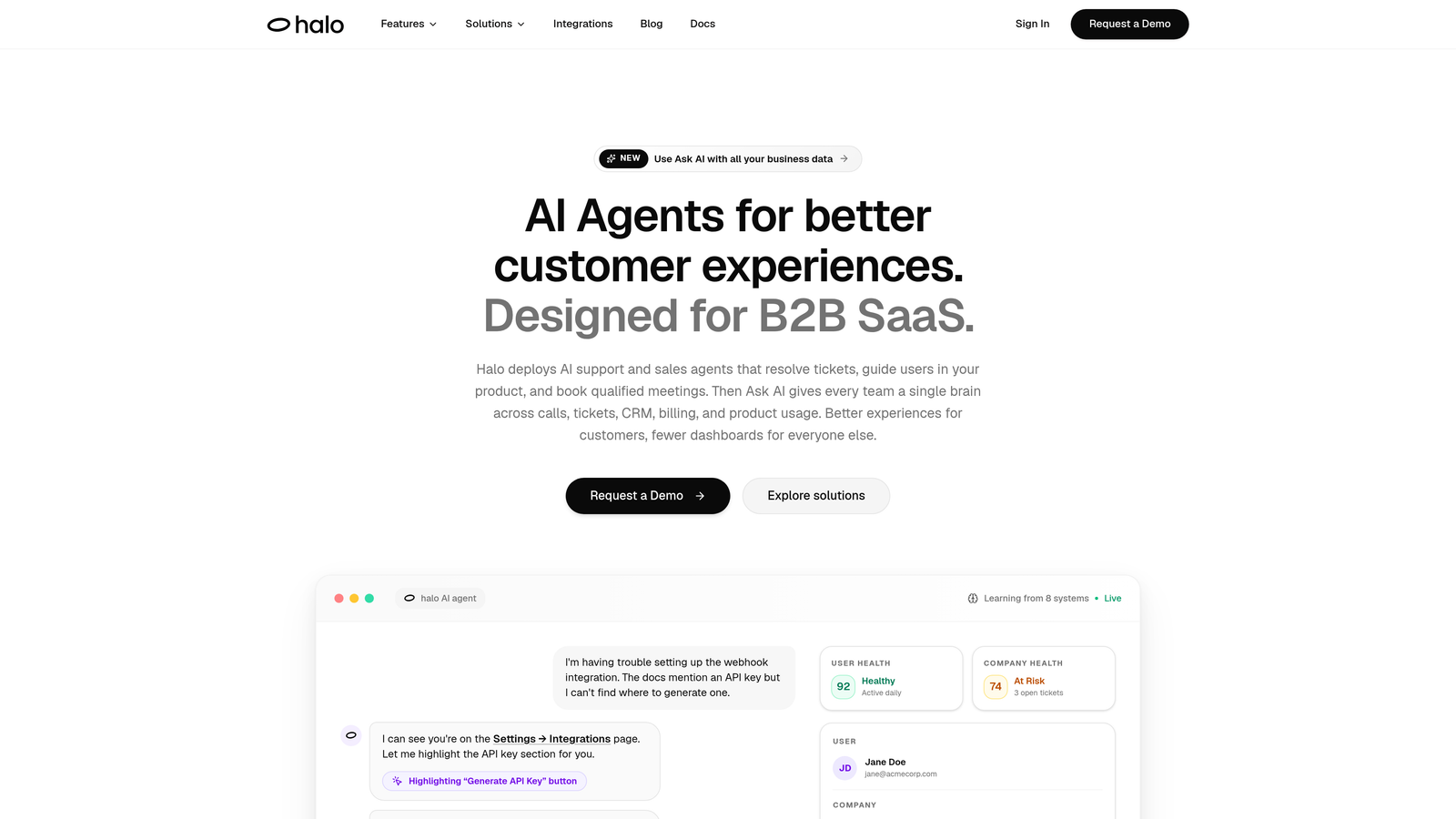
Halo AI is an AI-first customer support platform that deploys intelligent agents to resolve tickets autonomously, guide users through your product, and surface business intelligence from every support interaction.
Where This Tool Shines
Most tools in this list add AI on top of an existing helpdesk architecture. Halo AI is different: the AI is the operating layer. That means it isn't constrained by legacy routing logic or static knowledge bases. Every resolved ticket feeds a continuous learning loop, so the system gets measurably smarter over time rather than staying static.
The page-aware context feature is a genuine differentiator. When a user reaches out, Halo's AI doesn't just read what they typed. It sees what screen they're on, what they were doing, and what product state they're in. That context changes everything about how accurately and quickly a ticket gets resolved.
Key Features
Page-Aware AI Agents: The AI understands the user's current screen context, not just their typed message, enabling far more accurate resolution without back-and-forth clarification.
Autonomous Ticket Resolution: AI handles tickets end-to-end and escalates to live agents only when the complexity genuinely warrants it, passing full context on handoff.
Auto Bug Ticket Creation: When a user reports a technical issue, Halo automatically generates and routes a structured bug ticket to engineering tools like Linear, removing a manual step that typically falls through the cracks.
Smart Inbox with Business Intelligence: The inbox surfaces customer health signals, anomaly detection, and revenue flags, turning support data into operational intelligence that informs product and go-to-market decisions.
Deep Integration Stack: Native connections to Linear, Slack, HubSpot, Intercom, Stripe, Zoom, PandaDoc, and Fathom mean Halo can read from and write to your entire business stack, not just your helpdesk.
Best For
B2B SaaS companies that are outgrowing their current helpdesk and want a platform built around autonomous resolution rather than agent assistance. Particularly strong for product-led teams where in-app support context and engineering handoffs are frequent pain points.
Pricing
Contact for pricing. Halo AI is designed specifically for B2B SaaS teams and pricing is tailored to team size and usage volume.
2. Zendesk
Best for: Enterprise teams with complex routing needs and existing Zendesk workflows
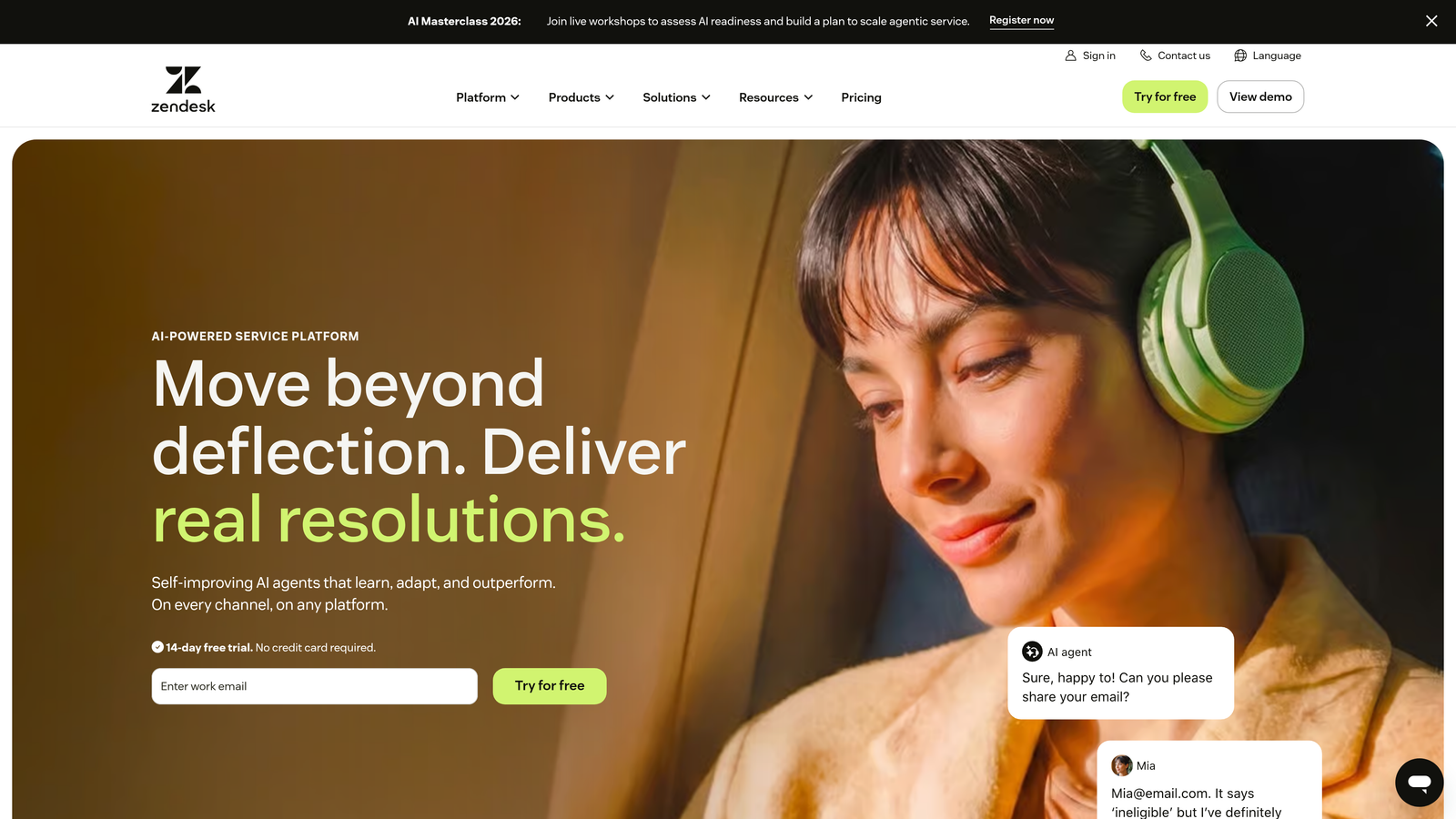
Zendesk is one of the most widely adopted helpdesk platforms globally, with AI capabilities layered in through its AI suite add-on for triage, suggested responses, and automation.
Where This Tool Shines
Zendesk's strength is its maturity. The platform has been built out over many years with enterprise configurability at its core: complex routing rules, SLA management, custom ticket fields, and a marketplace of hundreds of third-party integrations. For teams with large agent workforces and intricate workflow requirements, that depth is hard to match.
The AI features, available through the Zendesk AI suite add-on, are primarily assistive rather than autonomous. Auto-tagging, suggested macros, and response drafts help agents move faster, but the expectation is still that a human resolves most tickets. Teams looking for high deflection rates through fully autonomous AI will find the add-on useful but not transformative on its own.
Key Features
Intelligent Triage and Auto-Tagging: AI analyzes incoming ticket content to classify, tag, and route to the right queue automatically.
AI-Suggested Macros and Response Drafts: Agents receive suggested replies and one-click macros based on ticket content, reducing handle time.
Zendesk AI Suite: Advanced automation and bot capabilities available as a paid add-on, including autonomous resolution for simpler query types.
Omnichannel Support: Handles tickets across email, chat, voice, and social from a unified agent workspace.
Extensive App Marketplace: Hundreds of integrations with CRM, billing, and project management tools available natively.
Best For
Enterprise support teams with large agent headcounts, established Zendesk workflows, and a need for deep configurability. Less suited for teams starting fresh who want AI-first autonomous resolution without a significant setup investment.
Pricing
Plans from approximately $55 per agent per month. The AI suite is an additional cost on top of base plans. Verify current pricing at zendesk.com.
3. Freshdesk
Best for: Growing teams moving from email-based support who want accessible AI at a competitive price
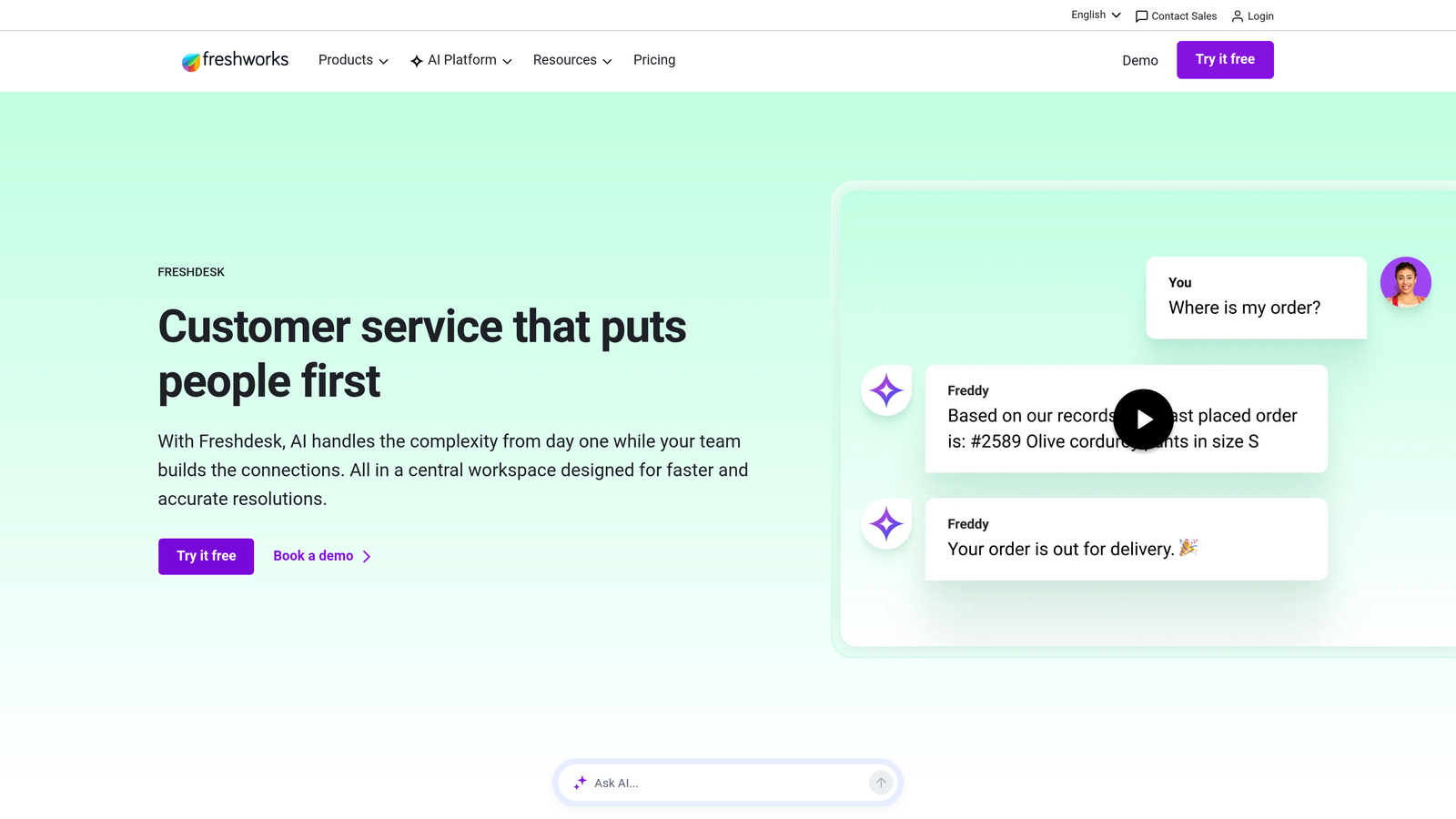
Freshdesk is Freshworks' helpdesk platform with Freddy AI built into higher-tier plans, covering auto-triage, sentiment analysis, suggested replies, and a self-service bot for ticket deflection.
Where This Tool Shines
Freshdesk tends to be more accessible in pricing than Zendesk for comparable feature sets, which makes it a practical choice for teams that are scaling but not yet at enterprise complexity. Freddy AI handles the essentials well: categorizing incoming tickets, flagging sentiment, and surfacing suggested responses so agents aren't starting from scratch on every reply.
The Freddy Self Service bot adds a deflection layer before tickets reach agents, handling common queries through a conversational interface trained on your knowledge base. It's not as sophisticated as purpose-built AI agents, but it meaningfully reduces inbound volume for teams with predictable, repetitive query patterns.
Key Features
Freddy AI Auto-Triage: Automatically categorizes, prioritizes, and assigns incoming tickets based on content analysis.
Sentiment Detection: Flags tickets with negative sentiment for priority handling, helping teams catch at-risk customers faster.
Freddy Self Service Bot: Handles common queries autonomously before routing to an agent, reducing ticket volume for repetitive requests.
Collision Detection: Prevents multiple agents from working the same ticket simultaneously, reducing duplicated effort.
AI-Powered Reporting: Built-in analytics with AI-driven insights on team performance and resolution patterns.
Best For
SMB and mid-market teams transitioning from shared email inboxes to a structured support system. Teams already in the Freshworks ecosystem (Freshsales, Freshservice) will benefit from native cross-product integrations.
Pricing
Free tier available. Paid plans from approximately $15 per agent per month. AI features unlock on higher-tier plans. Verify current pricing at freshdesk.com.
4. Intercom
Best for: SaaS products with high in-app chat volume that want conversational AI deflection
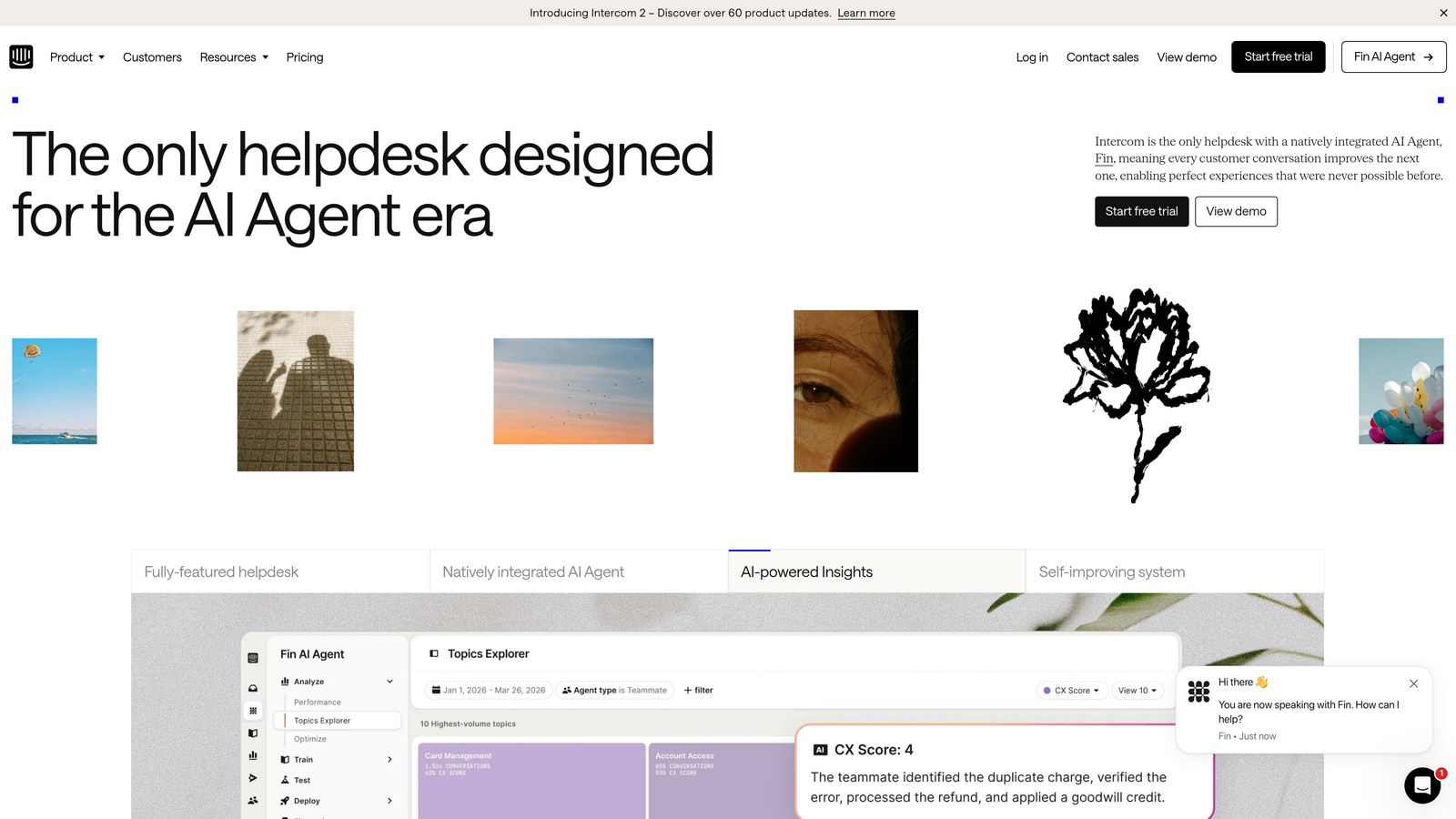
Intercom is a conversation-first support platform built around Fin, its AI agent that handles end-to-end ticket resolution through natural language understanding trained on your help content and product documentation.
Where This Tool Shines
Fin is one of the more capable AI agents in this category for handling conversational resolution. It's trained on your knowledge base and documentation, and it handles full resolution loops in natural language rather than just suggesting responses for agents to send. For SaaS products where users expect in-app chat as the primary support channel, Fin's integration with the Intercom messenger is seamless.
Where Intercom is less strong is in traditional ticket management. The platform is optimized for conversations, and while ticketing functionality exists, teams with complex multi-channel ticket workflows may find it less flexible than purpose-built helpdesk tools.
Key Features
Fin AI Agent: Handles autonomous conversational resolution across chat and email, trained on your help content without manual rule-building.
AI-Powered Inbox: Conversation summaries and suggested next actions help agents pick up handoffs without re-reading full threads.
Proactive Messaging: Trigger in-app messages and product tours based on user behavior to deflect support before it's needed.
AI Tagging and Routing: Automatically classifies and routes incoming tickets based on content and intent.
Strong In-App Chat Integration: Embeds natively into SaaS products with deep messenger customization options.
Best For
SaaS companies with high in-app chat volume and a strong knowledge base. Particularly well suited for product-led growth companies where proactive in-app engagement is as important as reactive support.
Pricing
Plans from approximately $39 per seat per month. Fin AI usage may incur additional per-resolution fees. Verify current pricing at intercom.com.
5. Salesforce Service Cloud
Best for: Enterprise organizations already embedded in the Salesforce ecosystem
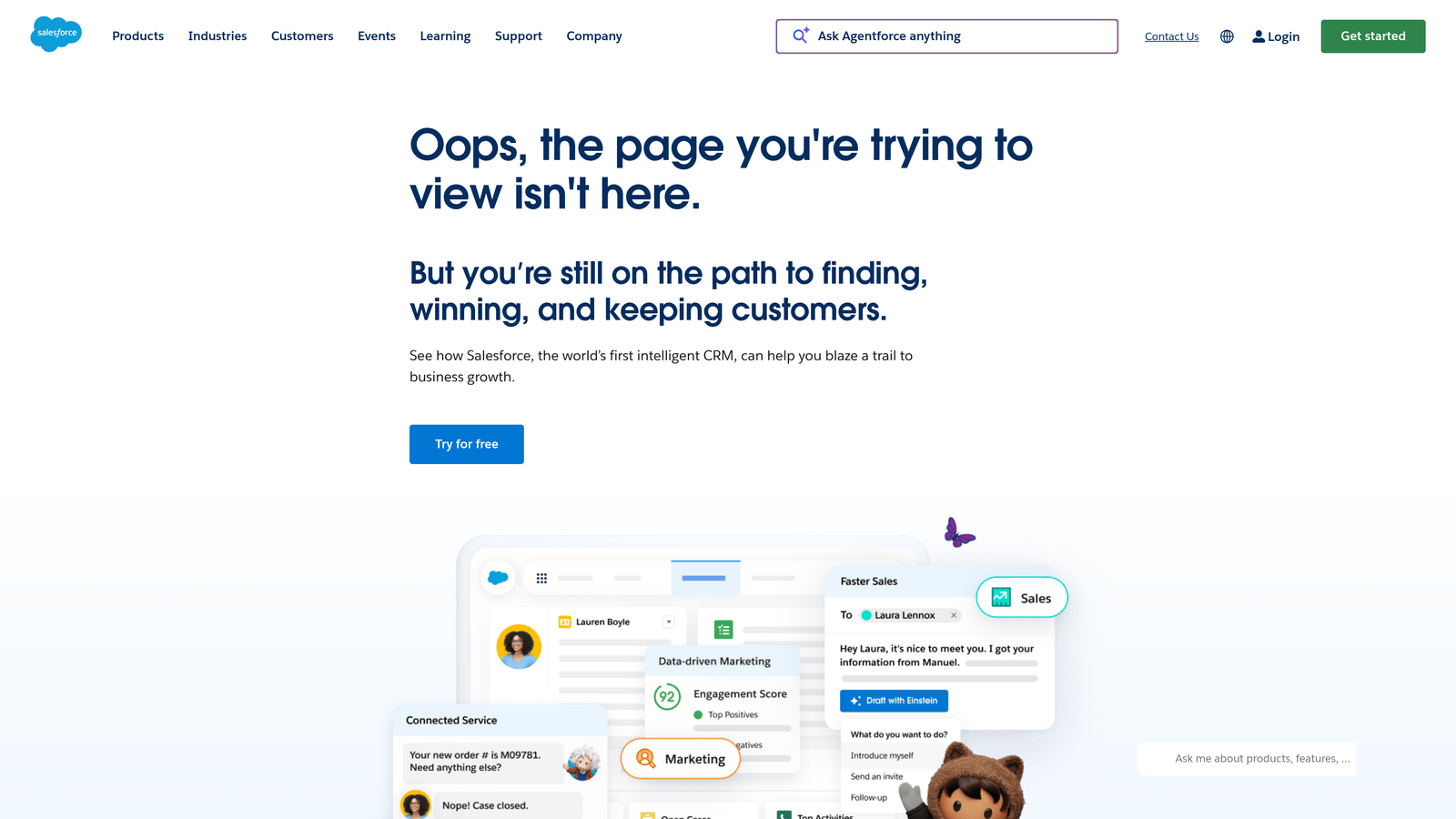
Salesforce Service Cloud is an enterprise service platform built natively within the Salesforce CRM ecosystem, using Einstein AI for case classification, next-best-action recommendations, and knowledge article surfacing.
Where This Tool Shines
The core advantage of Service Cloud is CRM context. Every support case opens with the agent seeing the full Salesforce customer record: deal history, account tier, open opportunities, and past interactions. For enterprise B2B teams where a single account might represent significant revenue, that context directly changes how cases get handled and escalated.
Einstein AI adds intelligent classification and next-best-action guidance on top of that foundation. The trade-off is complexity: Service Cloud requires meaningful implementation investment, and teams without existing Salesforce infrastructure will find the onboarding steep relative to other options on this list.
Key Features
Einstein AI Case Classification: Automatically routes and classifies incoming cases based on content and historical patterns.
Native CRM Integration: Every case surfaces the full Salesforce customer record, giving agents and AI complete account context.
AI Knowledge Article Suggestions: Einstein surfaces relevant knowledge articles during case resolution, reducing agent research time.
Omni-Channel Routing: Intelligent workload distribution across agent teams based on skills, availability, and case priority.
Einstein Bots: Self-service deflection layer before agent handoff, customizable through a visual bot builder.
Best For
Enterprise organizations already running Salesforce Sales Cloud who need support operations tightly integrated with CRM data. Not the right fit for teams without existing Salesforce infrastructure given the implementation complexity and cost.
Pricing
Enterprise plans from approximately $165 per user per month. Significant implementation investment typically required beyond licensing. Verify current pricing at salesforce.com.
6. Zoho Desk
Best for: Teams already in the Zoho ecosystem who want competitive pricing with solid AI features
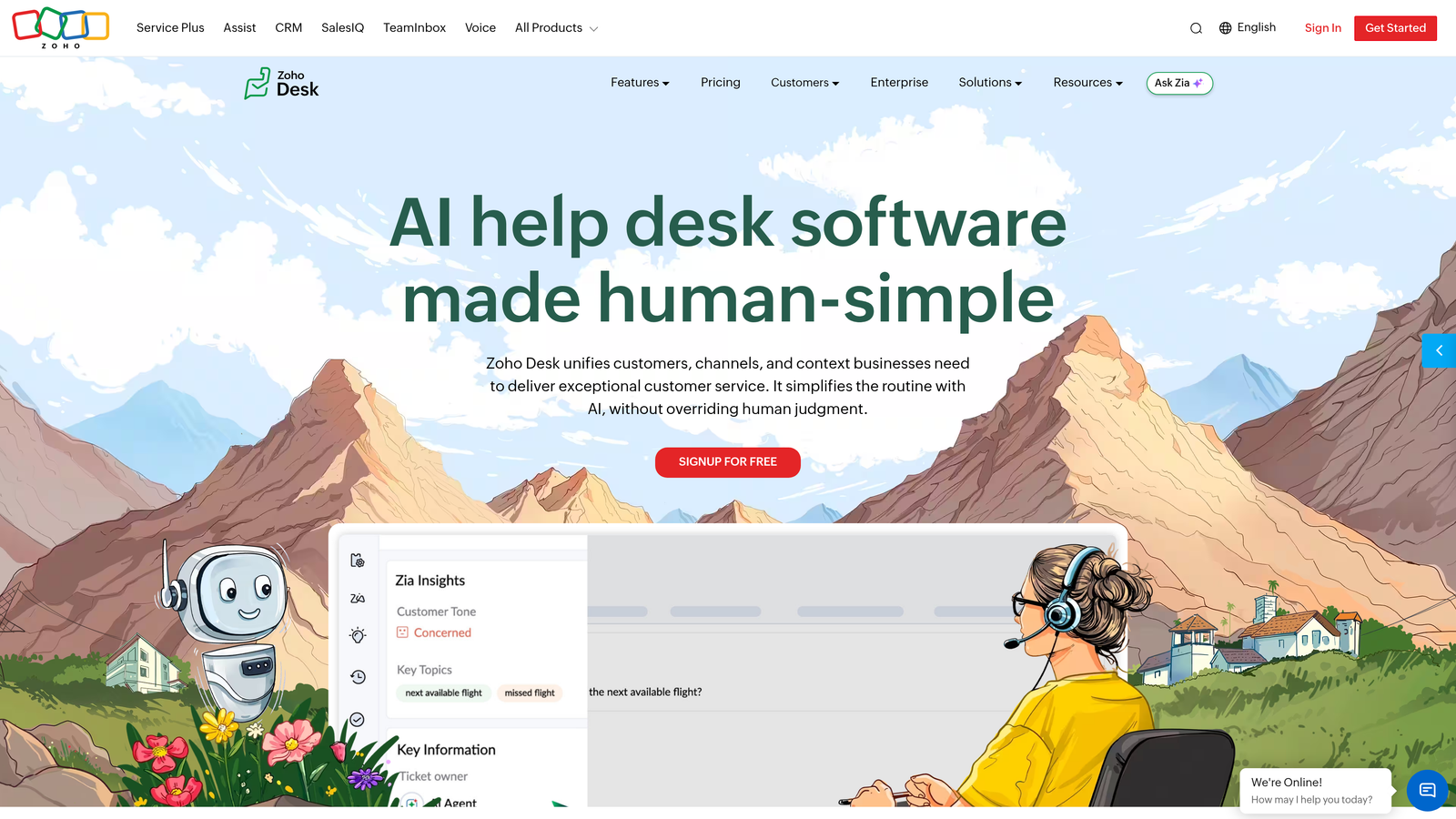
Zoho Desk is a helpdesk platform integrated with the broader Zoho suite, featuring Zia AI for sentiment analysis, ticket anomaly detection, response suggestions, and smart routing.
Where This Tool Shines
Zoho Desk offers a strong feature-to-price ratio compared to enterprise alternatives. Zia, Zoho's AI assistant, covers the practical bases: sentiment flagging, tag suggestions, response recommendations, and anomaly detection when ticket volume spikes unexpectedly. For teams that want AI-assisted support without the premium pricing of Zendesk or Service Cloud, Zoho Desk is a credible option.
The native Zoho suite integration is a meaningful advantage for teams already using Zoho CRM or Zoho One. Cross-platform data flows between CRM, analytics, and helpdesk without custom integration work, which reduces both setup time and ongoing maintenance overhead.
Key Features
Zia AI Sentiment Analysis: Detects ticket sentiment and flags negative interactions for priority handling or escalation.
Anomaly Detection: Zia identifies unusual spikes in ticket volume and alerts teams before backlogs develop.
AI-Suggested Responses: Recommends relevant responses and knowledge base articles based on ticket content.
Blueprint Workflow Automation: Visual workflow builder for enforcing consistent ticket handling processes across teams.
Native Zoho Suite Integration: Direct connections to Zoho CRM, Zoho Analytics, and the broader Zoho One platform.
Best For
SMB and mid-market teams already invested in the Zoho ecosystem. Also a strong fit for teams that want competitive AI-assisted helpdesk functionality without enterprise-tier pricing.
Pricing
Plans from approximately $14 per agent per month. Zia AI features available on higher tiers. Verify current pricing at zoho.com/desk.
7. Help Scout
Best for: Teams where brand voice and personal customer relationships are central to the support experience
Help Scout is a human-centric support platform where AI plays an assistive role, helping agents draft responses, summarize conversations, and move faster rather than replacing them with autonomous resolution.
Where This Tool Shines
Help Scout is deliberately not trying to automate agents out of the picture. The platform's philosophy is augmentation: AI makes human agents faster and more consistent, but a person still owns the customer relationship. If your support strategy is built around high-touch, relationship-driven interactions where tone and empathy matter as much as resolution speed, that philosophy aligns well.
The AI Summarize feature is particularly practical for teams handling long conversation threads. Agents picking up a ticket mid-thread get a concise summary rather than needing to read every message, which meaningfully reduces handle time on complex cases without removing the human judgment layer.
Key Features
AI Summarize: Condenses long conversation threads into concise summaries so agents have instant context when picking up tickets.
AI Assist and AI Drafts: Helps agents write faster, on-brand responses without starting from a blank screen.
Docs Knowledge Base: Built-in knowledge base with AI-powered article suggestions surfaced during conversations.
Shared Inbox with Collision Detection: Prevents duplicate agent effort on the same conversation with real-time visibility.
Beacon Embeddable Widget: In-app self-service widget for knowledge base access and chat without leaving the product.
Best For
Support teams where personal relationships, brand voice, and empathetic communication are core to the customer experience. Not the right fit for teams prioritizing high autonomous deflection rates over relationship quality.
Pricing
Plans from approximately $22 per user per month. Verify current pricing at helpscout.com.
8. Tidio
Best for: Startups and smaller teams that need accessible AI-powered chat and ticket deflection at entry-level pricing
Tidio is an accessible AI chat and ticketing platform built around Lyro, its AI agent designed to handle repetitive customer queries automatically at a price point suited to smaller teams.
Where This Tool Shines
Tidio's primary appeal is accessibility. Lyro handles common, repetitive queries autonomously without requiring a significant setup investment or technical resources to configure. For teams dealing with high volumes of straightforward questions, such as pricing, account access, or how-to queries, Lyro can meaningfully reduce the number of tickets that reach a human agent.
The visual chatbot builder adds flexibility for teams that want to customize conversation flows without writing code. That said, Tidio is best understood as a strong entry-level option. Complex B2B support scenarios with nuanced technical issues, multi-stakeholder accounts, or deep integration requirements will likely outgrow it.
Key Features
Lyro AI Agent: Handles repetitive, common queries autonomously based on your existing content and FAQs.
AI-Assisted Live Chat: Suggests responses to agents during live conversations to speed up resolution.
Visual Chatbot Builder: Drag-and-drop builder for creating custom conversation flows without technical resources.
Multi-Channel Integration: Connects email and Messenger alongside live chat for consolidated ticket management.
Analytics Dashboard: Tracks AI resolution rates and conversation outcomes to measure deflection performance over time.
Best For
Startups and small teams with high volumes of repetitive queries and limited support headcount. Entry-level pricing makes it approachable for teams not yet ready to invest in enterprise-grade platforms.
Pricing
Free tier available. Paid plans from approximately $29 per month. Lyro AI conversations may be usage-based. Verify current pricing at tidio.com.
9. Kustomer
Best for: Omnichannel support teams that need complete customer history context for every ticket
Kustomer is a CRM-native support platform that anchors every ticket to a full customer timeline, giving AI and agents complete historical context for faster, more accurate resolution across all channels.
Where This Tool Shines
Kustomer's defining feature is the unified customer timeline. When a ticket comes in, the agent or AI isn't looking at an isolated conversation. They're looking at every interaction, order, previous support request, and relevant event in that customer's history, all in a single view. For teams handling complex accounts or customers with long histories, that context dramatically reduces the time spent piecing together background before resolving the issue.
The AI layer, KustomerIQ, uses that rich data foundation to make smarter classification and routing decisions than platforms working with thinner customer records. Intent detection is more accurate when the model has historical context to work with, not just the current message.
Key Features
Unified Customer Timeline: Every interaction, order, and historical event consolidated in one view per ticket, available to both AI and agents.
AI Auto-Classification and Intent Detection: Classifies incoming tickets and detects intent using both message content and customer history.
KustomerIQ: AI engine powering suggested responses, workflow automation triggers, and routing decisions across the platform.
Omnichannel Support: Handles email, chat, SMS, social, and voice from a unified workspace without context fragmentation.
Flexible Data Model: Custom objects and data structures for complex B2B accounts with multiple contacts, tiers, or products.
Best For
Omnichannel support teams handling high contact volumes where customer history is essential for resolution quality. Particularly strong for B2B teams managing complex accounts where context from previous interactions directly affects how new issues should be handled.
Which Tool Is Right for Your Team
The right choice here depends less on feature checklists and more on one fundamental question: do you need a bolt-on AI layer, or do you need an AI-first architecture?
If you're a B2B SaaS team that wants autonomous resolution, page-aware context, and business intelligence surfaced from support data, Halo AI is the only platform on this list built that way from the ground up. Everything else adds AI on top of an existing helpdesk foundation, which means the AI's capabilities are constrained by the underlying architecture.
For teams with specific situational needs, here's how the rest of the list maps out:
Enterprise scale with existing infrastructure: Zendesk and Salesforce Service Cloud are the natural fits. Zendesk for teams that need deep configurability and a large integration marketplace; Service Cloud for organizations already running Salesforce who need CRM context in every case.
SMB and startup accessibility: Freshdesk and Tidio offer the most accessible entry points. Freshdesk for teams growing past email-based support; Tidio for startups dealing with high volumes of repetitive queries at minimal cost.
Conversational AI deflection: Intercom's Fin is one of the stronger purpose-built conversational AI agents for in-app chat environments, particularly for product-led SaaS companies.
CRM-native context: Kustomer and Zoho Desk both anchor support to broader customer data. Kustomer for omnichannel teams where full customer history is essential; Zoho Desk for teams already in the Zoho ecosystem.
Human-assisted AI: Help Scout is the clearest choice for teams where brand voice, empathy, and personal relationships define the support experience more than deflection rates do.
Your support team shouldn't scale linearly with your customer base. Let AI agents handle routine tickets, guide users through your product, and surface business intelligence while your team focuses on complex issues that need a human touch. See Halo in action and discover how continuous learning transforms every interaction into smarter, faster support.