9 Best Intelligent Ticket Triage Software for Support Teams in 2026
Intelligent ticket triage software uses AI, natural language processing, and sentiment analysis to automatically classify, prioritize, and route support tickets the moment they arrive—eliminating manual sorting and reducing resolution times. This guide evaluates the 9 best platforms available in 2026, comparing AI sophistication, integration capabilities, setup speed, and pricing to help support teams find the right fit.
 Matt PattoliFounder13 min read
Your support inbox shouldn't feel like a game of hot potato. Yet for many teams, that's exactly what manual ticket triage looks like: agents reading through every incoming request, guessing at priority, forwarding to the wrong queue, and watching resolution times creep up while customer satisfaction creeps down.
Intelligent ticket triage software changes this dynamic. These tools use AI and machine learning, including natural language processing, intent detection, and sentiment analysis, to automatically classify, prioritize, and route tickets the moment they arrive. The best ones don't just route tickets. They resolve them.
Choosing the right platform depends on several factors: how sophisticated the AI actually is, how well it integrates with your existing stack, how quickly you can get it running, and whether the pricing model makes sense as you scale. We evaluated each tool on these criteria to give you a clear picture of what's available in 2026.
Here are the top intelligent ticket triage platforms worth evaluating for your support team this year.
1. Halo AI
Best for: B2B teams that want AI agents to resolve tickets, not just route them
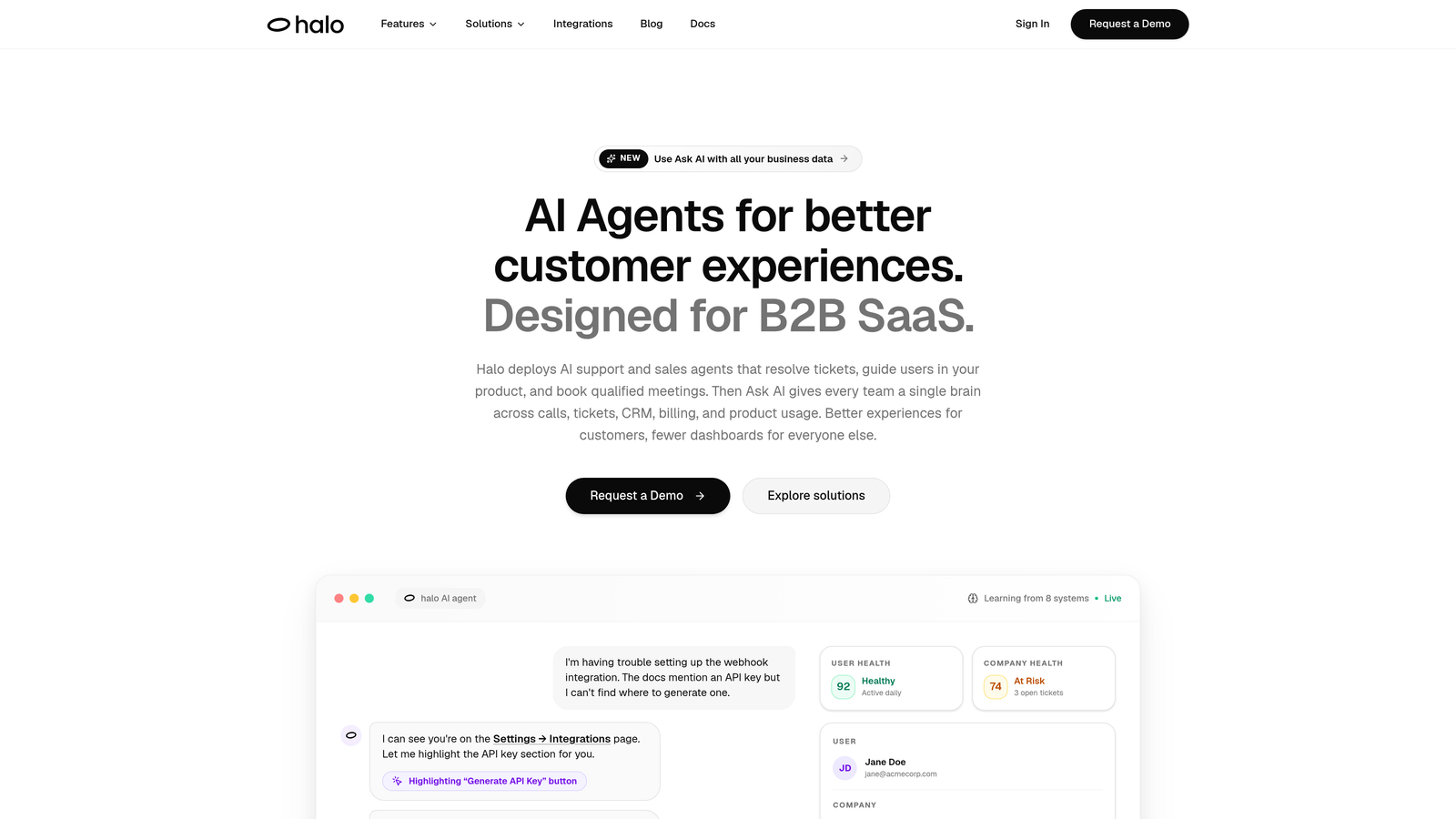
Halo AI is an AI-first customer support platform built to autonomously resolve support tickets, guide users through your product, and surface business intelligence across your entire customer base.
Where This Tool Shines
Most triage tools stop at classification. Halo AI goes further. Its AI agents don't just read a ticket and send it somewhere. They attempt to resolve it, using page-aware context to understand exactly where a user is in your product and what they're trying to do. That contextual awareness makes the difference between a generic response and one that actually solves the problem.
Beyond resolution, Halo's smart inbox layers business intelligence on top of your support queue. You're not just seeing tickets; you're seeing customer health signals, anomaly detection, and revenue-relevant patterns that most support platforms completely miss. It also automatically creates bug tickets from support conversations, closing the loop between customer issues and your engineering workflow.
Key Features
Autonomous ticket resolution: AI agents resolve tickets end-to-end, not just classify and hand off to humans.
Page-aware chat widget: Sees what users see in real time, enabling contextual triage and guidance based on where they are in your product.
Smart inbox with business intelligence: Surfaces customer health signals, anomaly detection, and revenue intelligence alongside your support queue.
Auto bug ticket creation: Automatically generates bug reports from support conversations and routes them to engineering tools like Linear.
Deep integration ecosystem: Connects natively with Linear, Slack, HubSpot, Intercom, Stripe, Zoom, PandaDoc, Fathom, and more.
Best For
B2B SaaS companies and product teams that want to move beyond basic triage into autonomous support at scale. Especially valuable for teams already using Intercom, HubSpot, or Slack who want a unified AI layer that connects support to the broader business stack without hiring linearly.
Pricing
Contact for pricing. Halo AI is designed for B2B teams scaling support operations, with plans built around business needs rather than a simple per-seat model.
2. Zendesk Advanced AI
Best for: Existing Zendesk customers who want native AI triage without switching platforms
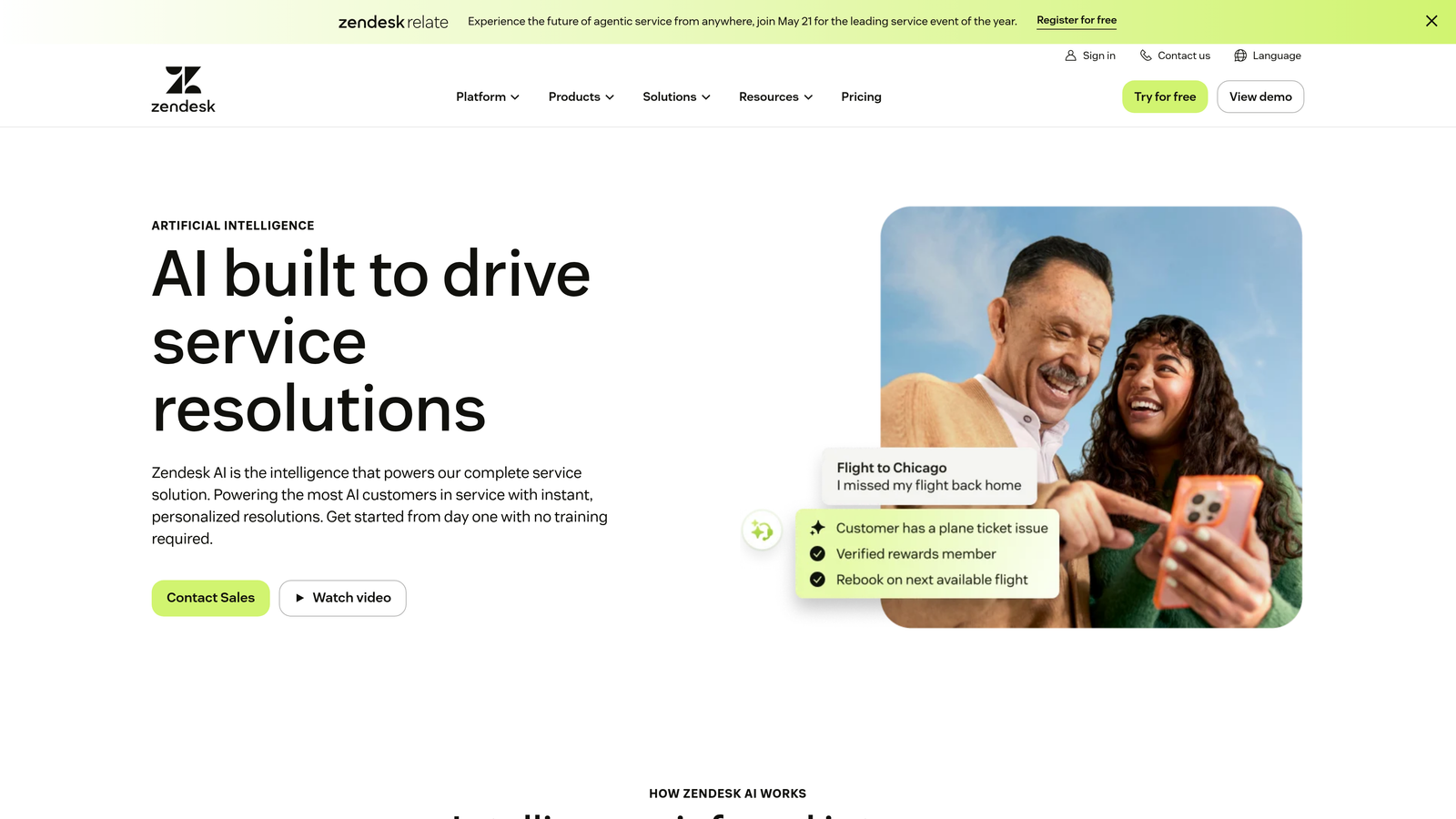
Zendesk Advanced AI is a native add-on to the Zendesk Suite that brings pre-trained intent and sentiment models directly into your existing Zendesk workflows.
Where This Tool Shines
If your team is already living inside Zendesk, Advanced AI is the path of least resistance. There's no new platform to learn and no migration headache. The AI models come pre-trained on a large volume of CX interactions, which means intent detection and sentiment classification work reasonably well out of the box.
The agent experience improvements are also notable. Suggested macros, response recommendations, and ticket summarization reduce the cognitive load on agents handling high volumes, even when the AI isn't fully resolving the ticket itself.
Key Features
Intelligent triage: Automatically classifies ticket intent, language, and sentiment at the point of entry.
Pre-trained CX models: Intent detection models trained on customer service data, requiring minimal setup for common use cases.
Suggested macros and responses: Recommends relevant canned replies and macros to speed up agent responses.
Generative AI assistance: Helps agents draft responses and summarize long ticket threads.
Native workflow integration: Triage decisions feed directly into Zendesk's routing, triggers, and reporting without any middleware.
Best For
Support teams already on Zendesk Suite Professional or above who want to add AI triage without evaluating a separate platform. Less suited for teams looking to move beyond Zendesk or needing AI that learns from their specific product context.
Pricing
Advanced AI is available as an add-on on Zendesk Suite Professional and above. Pricing varies by plan and team size; contact Zendesk for specifics.
3. Freshdesk Freddy AI
Best for: Growing teams on Freshworks looking for affordable AI triage with solid self-service deflection
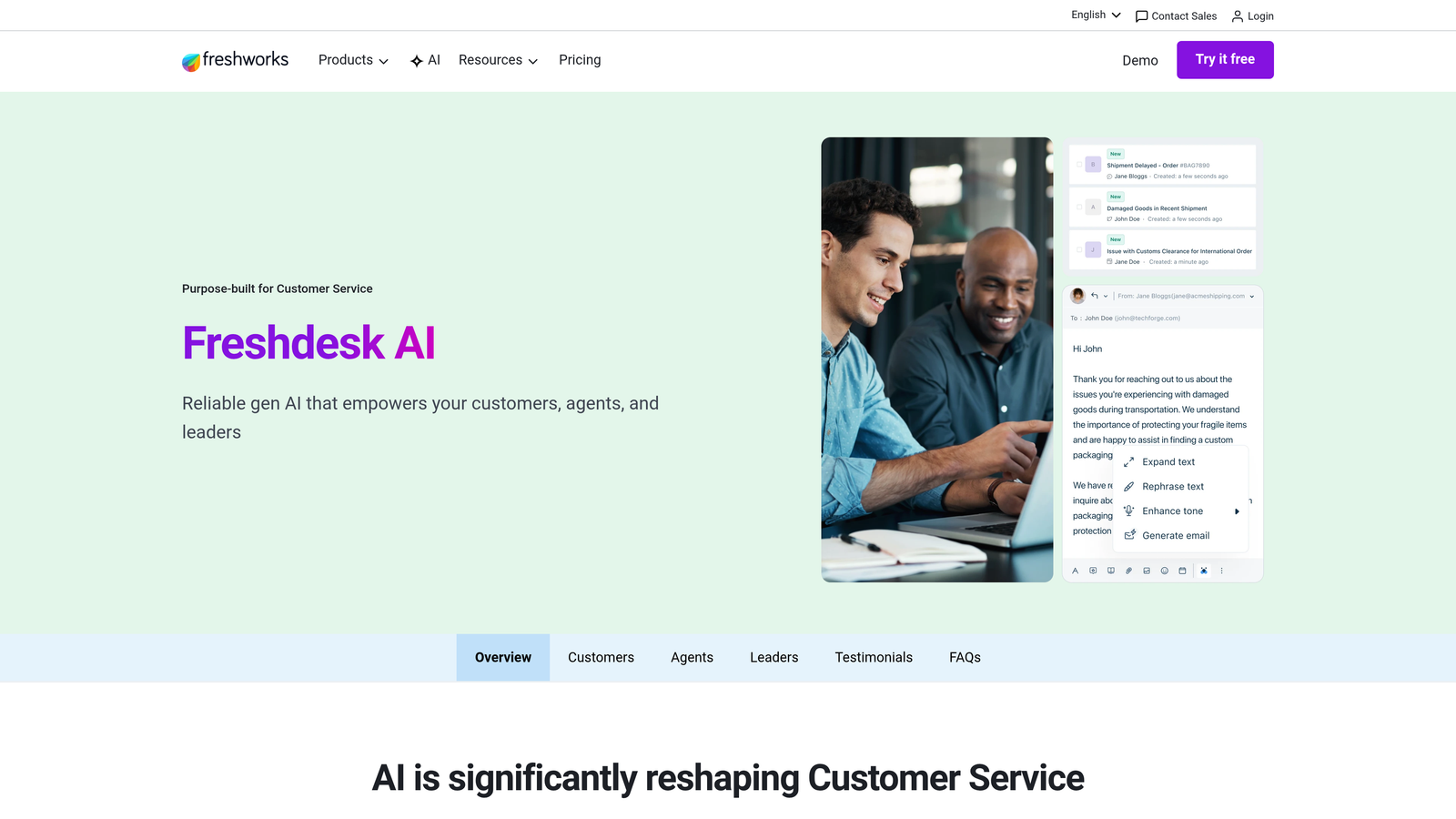
Freshdesk Freddy AI is Freshworks' embedded AI engine offering auto-triage, suggested responses, and self-service deflection at a competitive price point.
Where This Tool Shines
Freddy AI earns points for accessibility. The auto-triage capabilities, which classify tickets by type, priority, and group, are available at price points that won't break the budget for a growing team. The thank-you detector is a small but genuinely useful feature: it prevents reopened tickets from inflating your metrics when customers simply respond with "thanks."
The self-service layer through Freddy Self-service also helps deflect tickets before they ever enter the triage queue, which can meaningfully reduce volume for teams with well-documented knowledge bases.
Key Features
Auto-triage: Classifies incoming tickets by type, priority, and team group automatically.
AI-suggested responses: Recommends canned replies and relevant knowledge base articles for agents.
Thank-you detector: Identifies and suppresses ticket reopens triggered by simple acknowledgment replies.
Freddy Self-service chatbot: Handles common queries before they reach the triage queue.
Freshworks ecosystem integration: Works natively with Freshworks CRM, Freshchat, and other Freshworks products.
Best For
Small to mid-sized teams already using or considering Freshdesk, particularly those with a strong knowledge base who want to combine triage with self-service deflection. Less powerful for teams with complex routing logic or deep integrations outside the Freshworks ecosystem.
Pricing
Freddy AI features are available on the Pro plan at $49 per agent per month and above. Some Freddy capabilities are included in lower tiers.
4. Intercom Fin AI
Best for: Teams that want to resolve customer queries conversationally before routing to a human
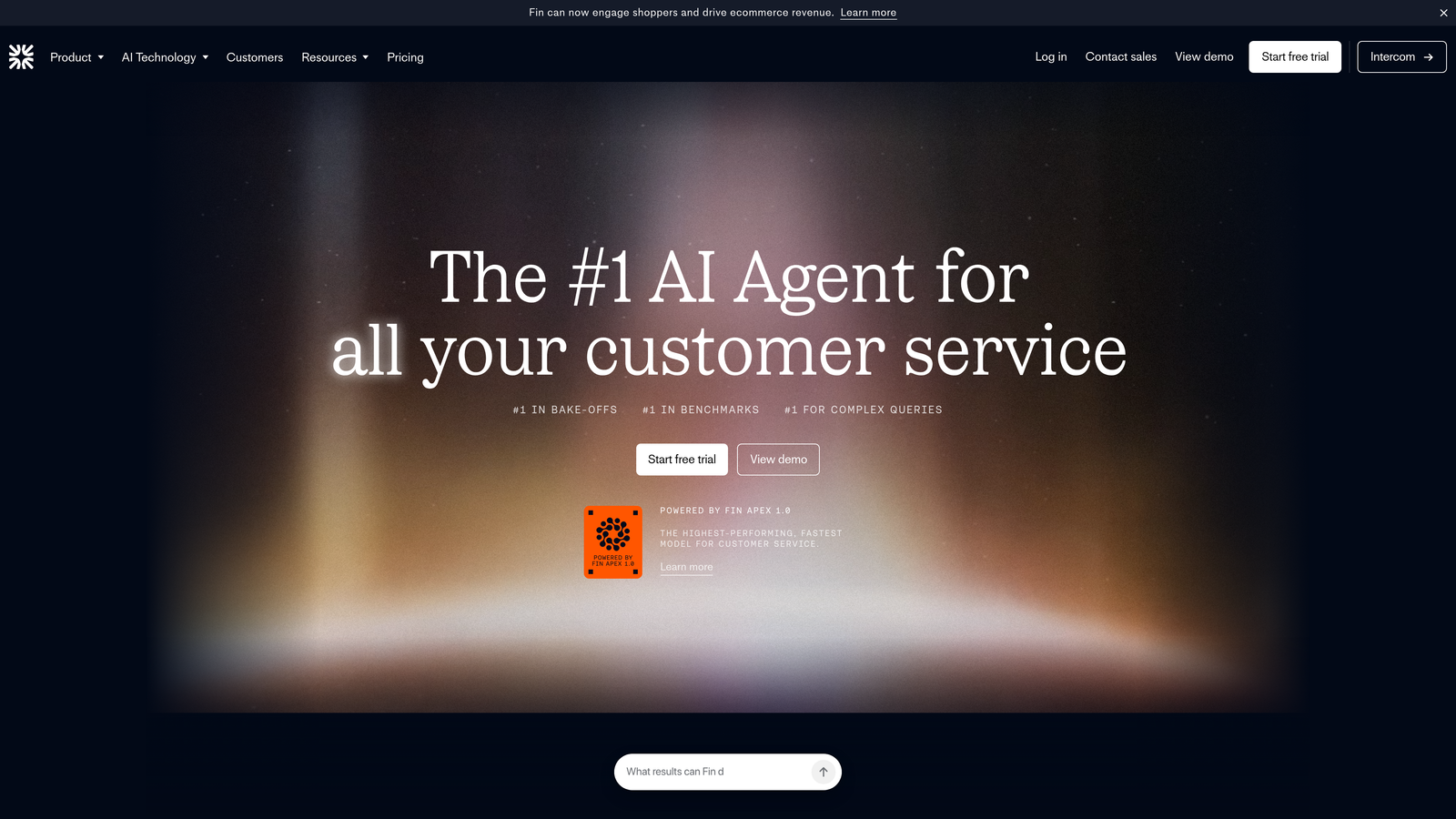
Intercom Fin is a conversational AI agent that attempts to resolve customer queries first, then triages unresolved issues to human agents with full context intact.
Where This Tool Shines
Fin's resolution-first philosophy sets it apart from tools that treat triage and resolution as separate concerns. Rather than classifying a ticket and handing it off, Fin tries to answer the question right away, drawing from your help center, past conversations, and custom data sources. Only when it can't resolve does it escalate.
The handoff experience is notably smooth. Human agents receive the full conversation history and relevant customer data, so they're not starting from scratch. Multilingual support also makes Fin a strong option for teams serving international customer bases.
Key Features
Resolution-first approach: Attempts to answer customer queries before routing, reducing unnecessary ticket volume.
Multi-source training: Learns from your help center, historical conversations, and custom data sources.
Context-rich handoff: Passes full conversation context and customer data to human agents when escalating.
Customizable routing workflows: Supports complex triage rules for teams with nuanced routing requirements.
Multilingual support: Handles customer conversations across dozens of languages.
Best For
Teams already using Intercom who want a conversational AI layer that resolves before it routes. Also suitable for companies with multilingual support needs or those prioritizing deflection rates as a key metric.
Pricing
Fin charges per resolution rather than per seat. Intercom base plans start at $39 per seat per month, with Fin pricing layered on top.
5. Salesforce Einstein for Service
Best for: Enterprise teams running support inside Salesforce Service Cloud with complex CRM-driven routing needs
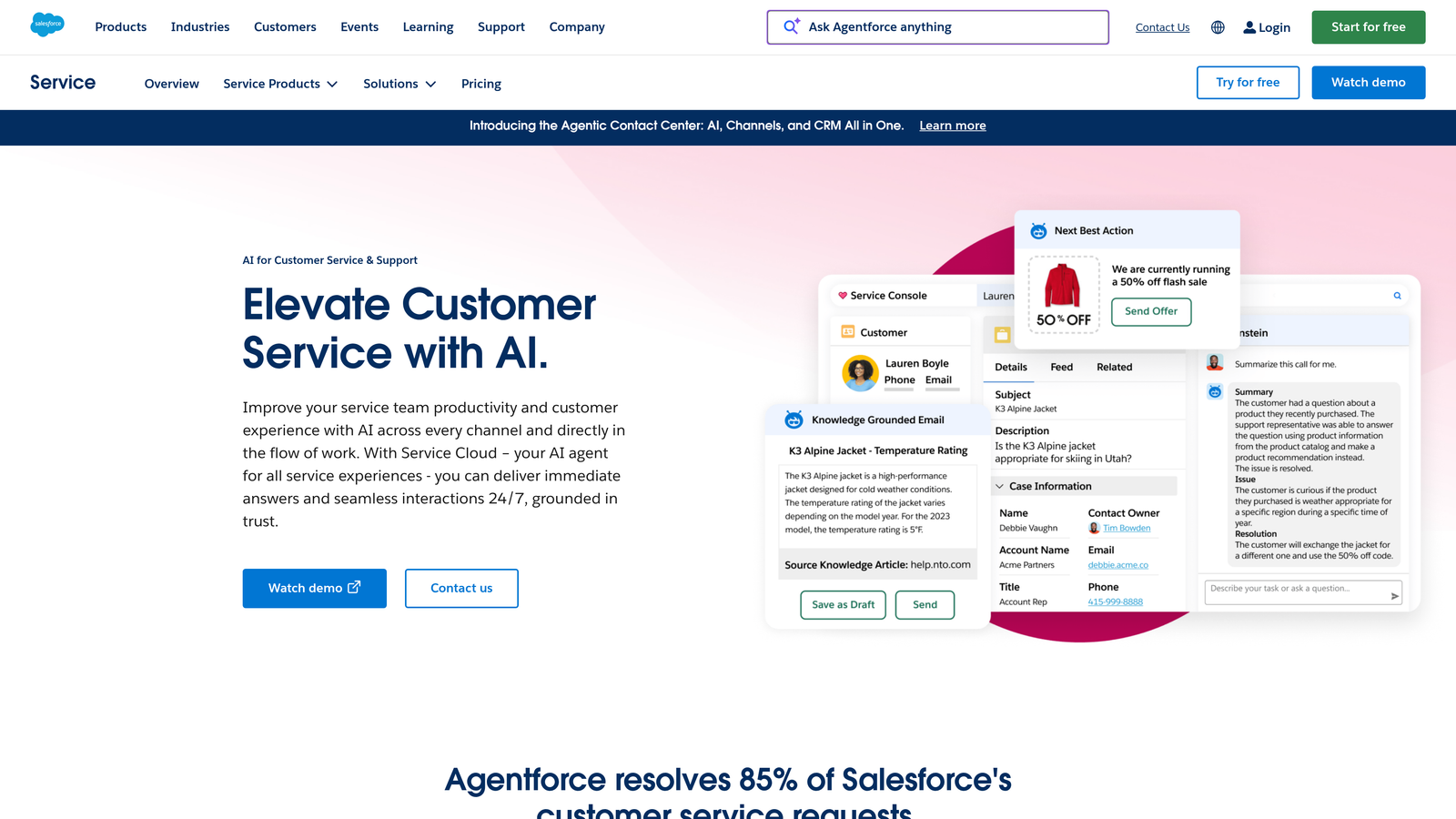
Salesforce Einstein for Service brings AI-powered case classification and routing to Service Cloud, with the full weight of Salesforce's CRM data behind every triage decision.
Where This Tool Shines
Einstein's biggest advantage is context. When it classifies and routes a case, it can factor in account tier, purchase history, contract status, and a customer's full relationship with your business. That's a level of routing intelligence that standalone triage tools simply can't replicate without deep CRM integration.
Predictive CSAT scoring adds another layer of value, flagging interactions that are at risk before they become escalations. For enterprise teams where a single at-risk account can represent significant revenue, that kind of proactive signal is genuinely useful.
Key Features
CRM-informed case classification: Routes cases using account tier, purchase history, and contract data from Salesforce.
Omni-channel routing: Assigns cases based on agent skills, availability, and case complexity across all channels.
Article recommendations and next-best-action: Surfaces relevant knowledge and suggested actions for agents in real time.
Predictive CSAT scoring: Identifies at-risk interactions before they escalate.
Full Salesforce ecosystem integration: Works natively across Sales Cloud, Marketing Cloud, and other Salesforce products.
Best For
Enterprise support organizations already invested in Salesforce where CRM context is central to routing decisions. Not the right fit for teams outside the Salesforce ecosystem or those looking for a lighter-weight solution.
Pricing
Einstein for Service is included in Salesforce Enterprise plans and above, with additional add-ons available for advanced AI capabilities. Contact Salesforce for current pricing.
6. SysAid Copilot
Best for: IT support teams and MSPs that need ITSM-native AI triage with ITIL workflow support
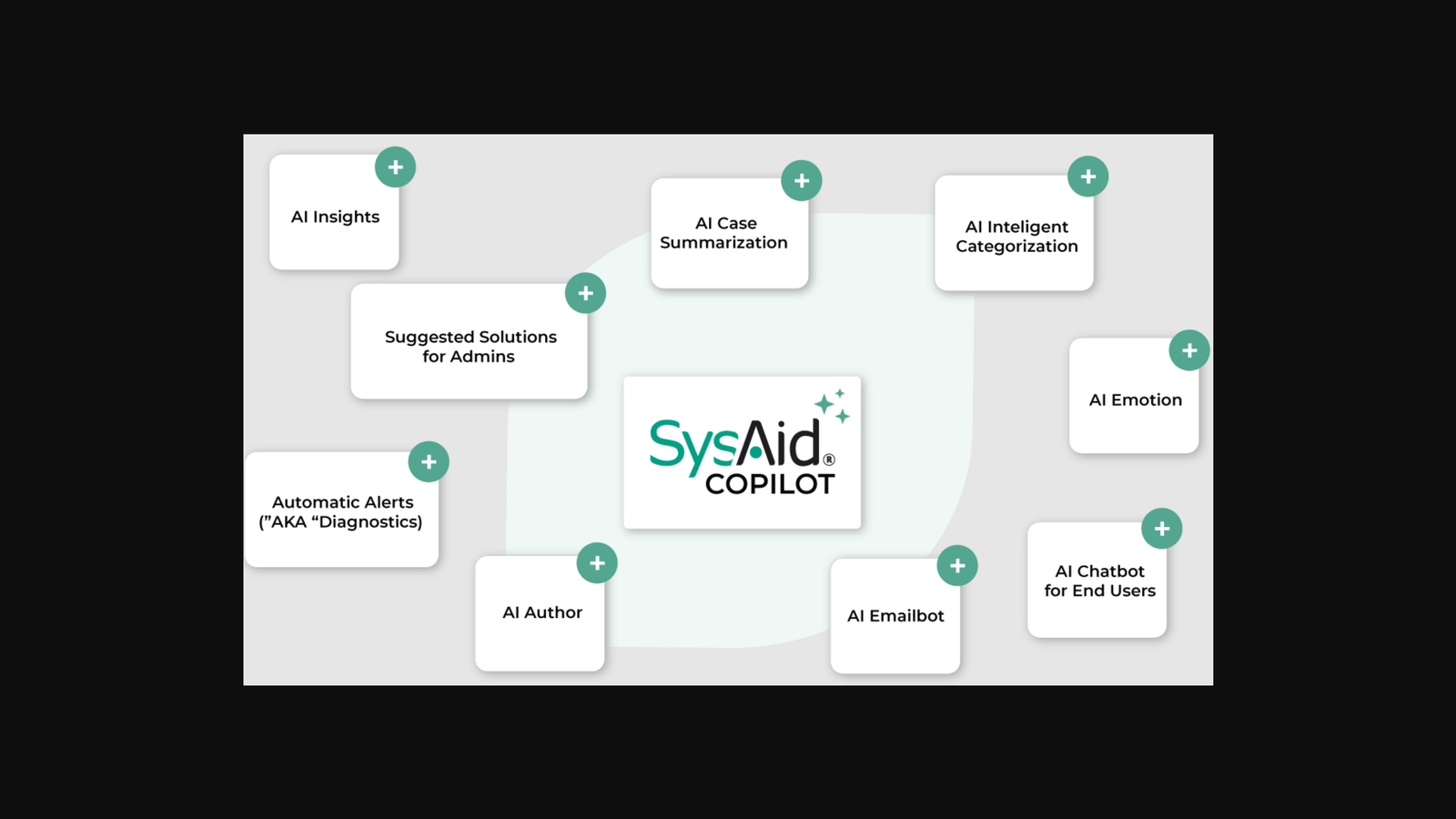
SysAid Copilot is an AI-powered assistant built into SysAid's ITSM platform, automating ticket categorization, prioritization, and assignment for internal IT support operations.
Where This Tool Shines
SysAid Copilot is purpose-built for IT service management, which means its triage logic understands ITIL concepts like impact, urgency, and incident versus problem management. That domain specificity makes it more accurate for IT use cases than general-purpose customer support AI tools.
The self-service portal is a meaningful deflection layer for common IT requests like password resets and software access. When tickets do reach the queue, they arrive pre-categorized and prioritized, so IT teams spend less time on intake and more on resolution.
Key Features
Generative AI categorization: Automatically categorizes and routes tickets using AI trained on ITSM terminology.
AI-powered self-service portal: Deflects common IT requests before they enter the triage queue.
Impact and urgency analysis: Prioritizes tickets based on ITIL-aligned impact and urgency scoring.
ITIL workflow support: Built-in workflows for incident, problem, and change management processes.
Integrations: Connects with Active Directory, Jira, Slack, and Microsoft Teams.
Best For
Internal IT support teams, help desks, and managed service providers that need ITSM-specific AI triage rather than customer-facing support automation. Less relevant for external customer support teams or those outside an ITIL-aligned environment.
Pricing
Contact SysAid for pricing. Tiered plans are available for organizations of different sizes and complexity.
7. Tidio AI (Lyro)
Best for: Small businesses and e-commerce teams that need fast setup and affordable conversational triage
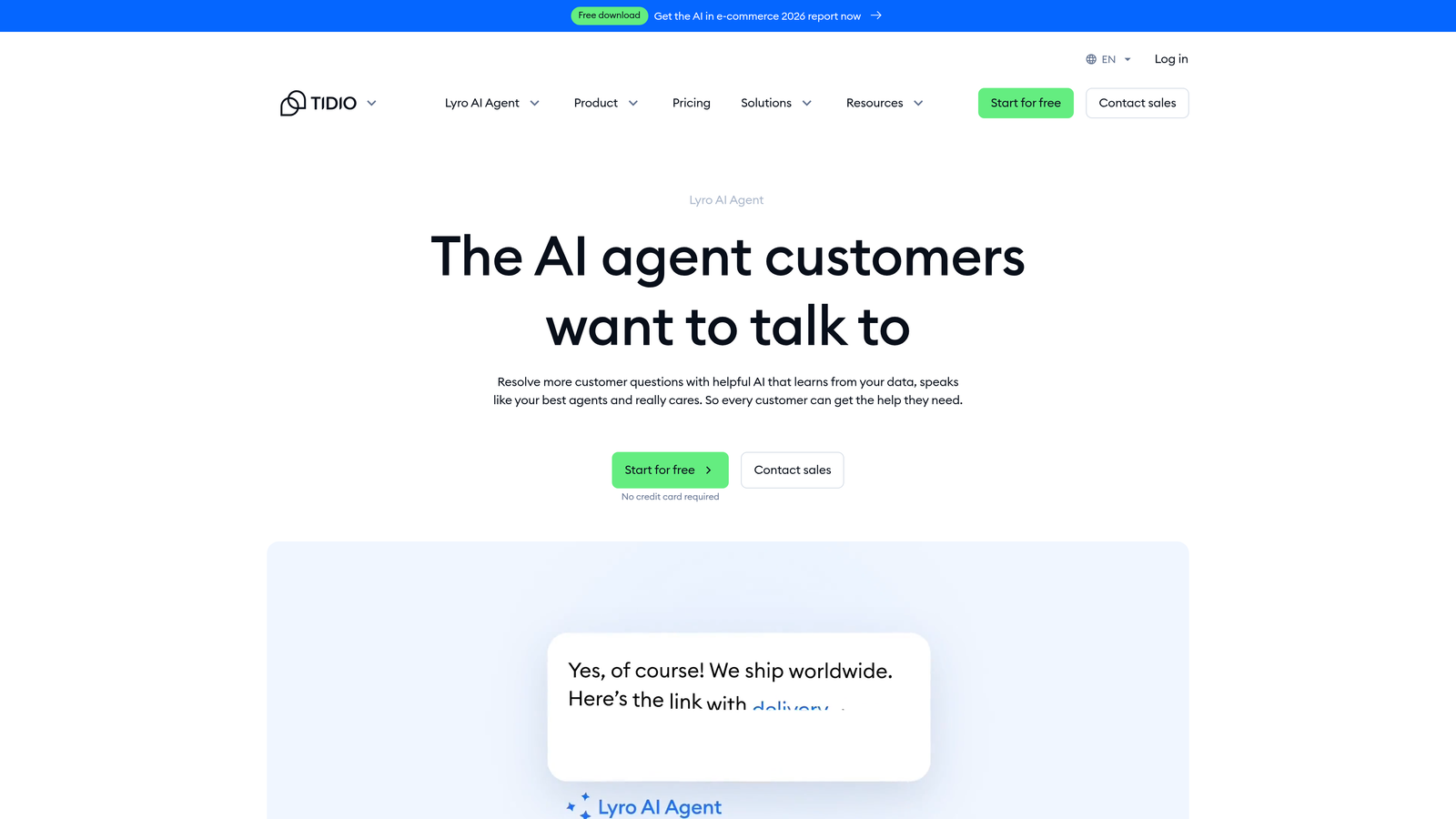
Tidio Lyro is a lightweight AI agent designed for small businesses and online retailers, combining conversational triage with automated resolution for common customer queries.
Where This Tool Shines
Lyro's setup speed is its standout quality. It can learn from your FAQ pages and existing help content in minutes, making it accessible for teams without dedicated AI implementation resources. For small e-commerce businesses handling repetitive questions about orders, returns, and shipping, Lyro can deflect a meaningful portion of tickets without any complex configuration.
The visual chatbot builder also makes it easy to create custom triage flows without engineering support, which matters for small teams where everyone wears multiple hats.
Key Features
Lyro AI agent: Handles triage and resolution from a single knowledge base with minimal setup required.
Quick knowledge base training: Learns from FAQ pages and help content in minutes, not weeks.
E-commerce integrations: Native connections to Shopify, WooCommerce, and BigCommerce.
Visual chatbot builder: Drag-and-drop interface for building custom triage flows without coding.
Live agent handoff: Escalates to human agents with full conversation history preserved.
Best For
Small businesses and e-commerce teams with high volumes of repetitive queries and limited technical resources. Not designed for complex B2B support environments or teams needing deep integrations with enterprise tools.
Pricing
Tidio offers a free plan for basic use. Lyro AI starts at $39 per month for 50 conversations, with higher tiers available for larger volumes.
8. Forethought Solve
Best for: Teams that want a helpdesk-agnostic AI triage layer without replacing their existing platform
Forethought Solve is a standalone AI triage layer that sits on top of existing helpdesks, classifying and routing tickets before agents ever see them.
Where This Tool Shines
Forethought's helpdesk-agnostic approach is its core differentiator. If you're running Zendesk but want smarter triage than what's native, or if you're on ServiceNow and need intent detection without a full platform switch, Forethought sits cleanly on top without requiring migration. That flexibility makes it particularly appealing for teams with established helpdesk investments they're not ready to abandon.
The analytics dashboard adds real accountability to triage decisions, showing triage accuracy, deflection rates, and where the AI is getting things wrong. That visibility helps teams continuously improve their routing logic over time.
Key Features
Helpdesk-agnostic architecture: Works on top of Zendesk, Salesforce, ServiceNow, and other major platforms.
Intent and sentiment detection: Classifies tickets at the point of entry using NLP-based analysis.
Predictive prioritization: Scores tickets based on urgency signals and customer value indicators.
AI-generated responses: Handles common queries with automated responses before agent involvement.
Triage analytics dashboard: Tracks accuracy metrics, deflection rates, and routing patterns over time.
Best For
Mid-market and enterprise teams that want sophisticated AI triage without replacing their current helpdesk. Particularly valuable for organizations using multiple support platforms that need a unified triage layer across all of them.
Pricing
Contact for pricing. Forethought typically operates on a usage-based model; details vary by team size and volume.
9. Assembled AI
Best for: Support operations teams that need AI routing combined with workforce management in a single platform
Assembled AI is a support operations platform that combines AI-powered ticket routing with workforce management, ensuring tickets reach the right agent based on skill, availability, and current workload.
Where This Tool Shines
Assembled approaches triage from an operations lens. Most AI triage tools focus on what the ticket is about. Assembled also asks who is best positioned to handle it right now, factoring in agent skills, real-time capacity, and queue balance. That combination of content-based routing and workforce-aware assignment reduces both misrouting and agent overload simultaneously.
The performance analytics are particularly strong, connecting routing decisions directly to resolution outcomes. Teams can see not just where tickets went, but whether those routing decisions produced better results, which creates a feedback loop for continuous improvement.
Key Features
Skills-based AI routing: Routes tickets based on agent skills, capacity, and real-time availability, not just ticket content.
Workforce management tools: Scheduling and capacity planning built into the same platform as routing.
Real-time queue monitoring: Automatically rebalances queues based on live volume and agent availability.
Helpdesk integrations: Connects with Zendesk, Salesforce, Intercom, and other major platforms.
Routing-to-outcome analytics: Ties routing decisions to resolution metrics for continuous optimization.
Best For
Mid-market to enterprise support teams where workforce planning and ticket routing are both pain points. Particularly valuable for operations leaders who want visibility into how staffing decisions affect support quality and resolution speed.
Pricing
Contact for pricing. Assembled is designed for mid-market to enterprise teams; pricing reflects the platform's dual focus on AI routing and workforce management.
Which Tool Is Right for Your Team?
The right intelligent ticket triage software depends heavily on where you are in your support maturity journey and what you're actually trying to solve.
If you want AI that goes beyond routing to actually resolve tickets, with page-aware context and business intelligence layered on top, Halo AI is built for exactly that. It's the strongest option for B2B SaaS teams that want autonomous support, not just smarter sorting.
For teams already deeply embedded in a major platform, the native options are compelling. Zendesk Advanced AI and Freshdesk Freddy AI offer the fastest path to AI triage if you're already in those ecosystems. Salesforce Einstein for Service is the clear choice when CRM context should drive routing decisions at enterprise scale. Intercom Fin is the best pick if your priority is conversational resolution before escalation.
If you need flexibility without platform migration, Forethought Solve's helpdesk-agnostic approach gives you sophisticated triage on top of whatever you're already running. SysAid Copilot is purpose-built for IT teams that need ITSM-native logic. Assembled AI stands out for operations leaders who need routing and workforce management to work together. And for small businesses or e-commerce teams on a budget, Tidio Lyro offers a fast, affordable starting point.
The most important question to ask any vendor: does this tool just classify tickets, or does it actually resolve them? The gap between those two capabilities is where support teams either scale efficiently or keep hiring.
Your support team shouldn't scale linearly with your customer base. Let AI agents handle routine tickets, guide users through your product, and surface business intelligence while your team focuses on complex issues that need a human touch. See Halo in action and discover how continuous learning transforms every interaction into smarter, faster support.