9 Best Intercom Alternatives for AI Support in 2026
Discover the 9 best intercom alternatives for AI support in 2026, evaluated across AI capability depth, integrations, and pricing for B2B SaaS teams. This guide covers AI-native platforms that autonomously resolve tickets, understand product context, and reduce human involvement—helping teams move beyond Intercom's limitations and escalating costs.
 Grant CooperFounder14 min read
Intercom built its reputation as a customer messaging platform, but many B2B teams are now hitting its limits, especially when it comes to truly autonomous AI support. Whether you're frustrated by escalating costs as your team grows, limited AI customization, or a platform that still requires heavy human involvement to function, you're not alone.
A new generation of AI-native support tools has emerged that goes well beyond chat widgets and canned responses. These platforms can resolve tickets autonomously, understand product context, surface business intelligence, and integrate with your entire stack.
This list covers the best Intercom alternatives for AI support in 2026, evaluated on AI capability depth, integration breadth, pricing transparency, and how well they serve B2B SaaS teams. We've also written a broader Intercom alternatives guide if you want context beyond AI-specific features.
1. Halo AI
Best for: B2B SaaS teams that want fully autonomous AI support with business intelligence built in.
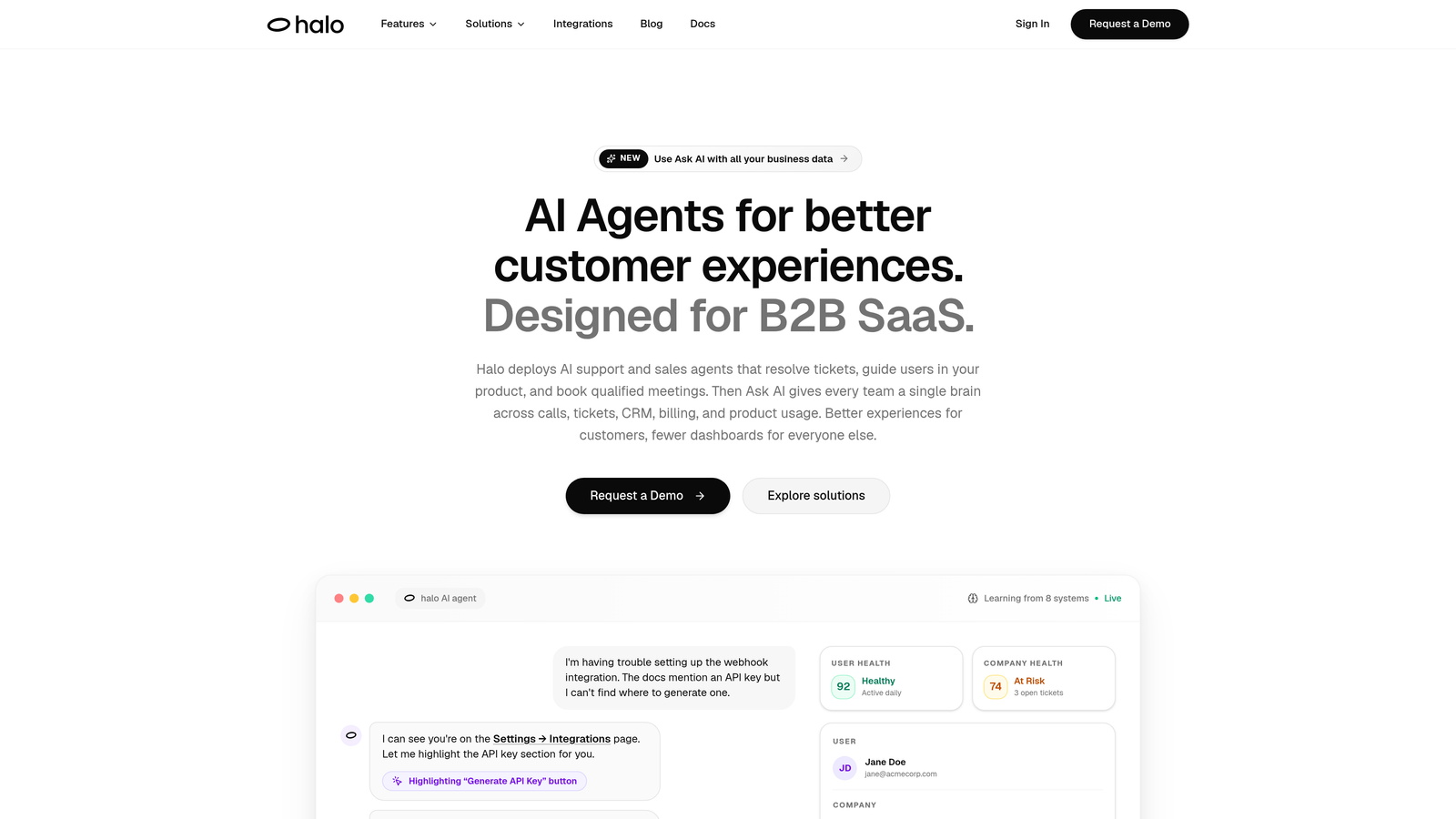
Halo AI is an AI-native customer support platform built around autonomous ticket resolution, page-aware context, and deep integrations across your product and revenue stack.
Where This Tool Shines
What separates Halo from most tools on this list is its architecture. Rather than bolting AI onto an existing helpdesk, Halo was built from the ground up around autonomous resolution. The platform's page-aware AI agents understand what a user is currently viewing, giving them context that most support tools simply don't have access to. That means fewer "can you describe the issue?" back-and-forths and faster paths to resolution.
Beyond ticket resolution, Halo surfaces business intelligence signals from support interactions: customer health indicators, revenue anomalies, and churn signals that get routed back to the teams who need them. If your support data has been sitting in a silo, this changes the picture significantly.
Key Features
Page-Aware AI Agents: The AI sees exactly what the user is viewing, enabling contextual guidance and visual UI walkthroughs without the user having to explain their screen.
Autonomous Ticket Resolution: AI agents handle routine tickets end-to-end, with smart escalation to human agents when complexity warrants it.
Auto Bug Ticket Creation: Automatically generates and routes bug reports to engineering tools like Linear, cutting the manual handoff between support and product teams.
Smart Inbox with Business Intelligence: The inbox surfaces customer health signals, revenue anomalies, and churn indicators derived from support interactions, giving leadership teams visibility they wouldn't otherwise have.
Deep Integration Stack: Connects with Slack, HubSpot, Intercom, Stripe, Zoom, PandaDoc, and Fathom, going well beyond the typical CRM and helpdesk integrations.
Best For
B2B SaaS companies and product teams that want AI support to do more than deflect tickets. Halo is particularly well-suited for teams where support data should be feeding product decisions, customer success, and revenue operations, not just living in a helpdesk queue.
Pricing
Visit haloagents.ai for current pricing. Pricing is not publicly listed, so contact the team directly for a quote tailored to your team size and use case.
2. Intercom (Fin AI)
Best for: Teams already on Intercom who want to add autonomous AI without switching platforms.
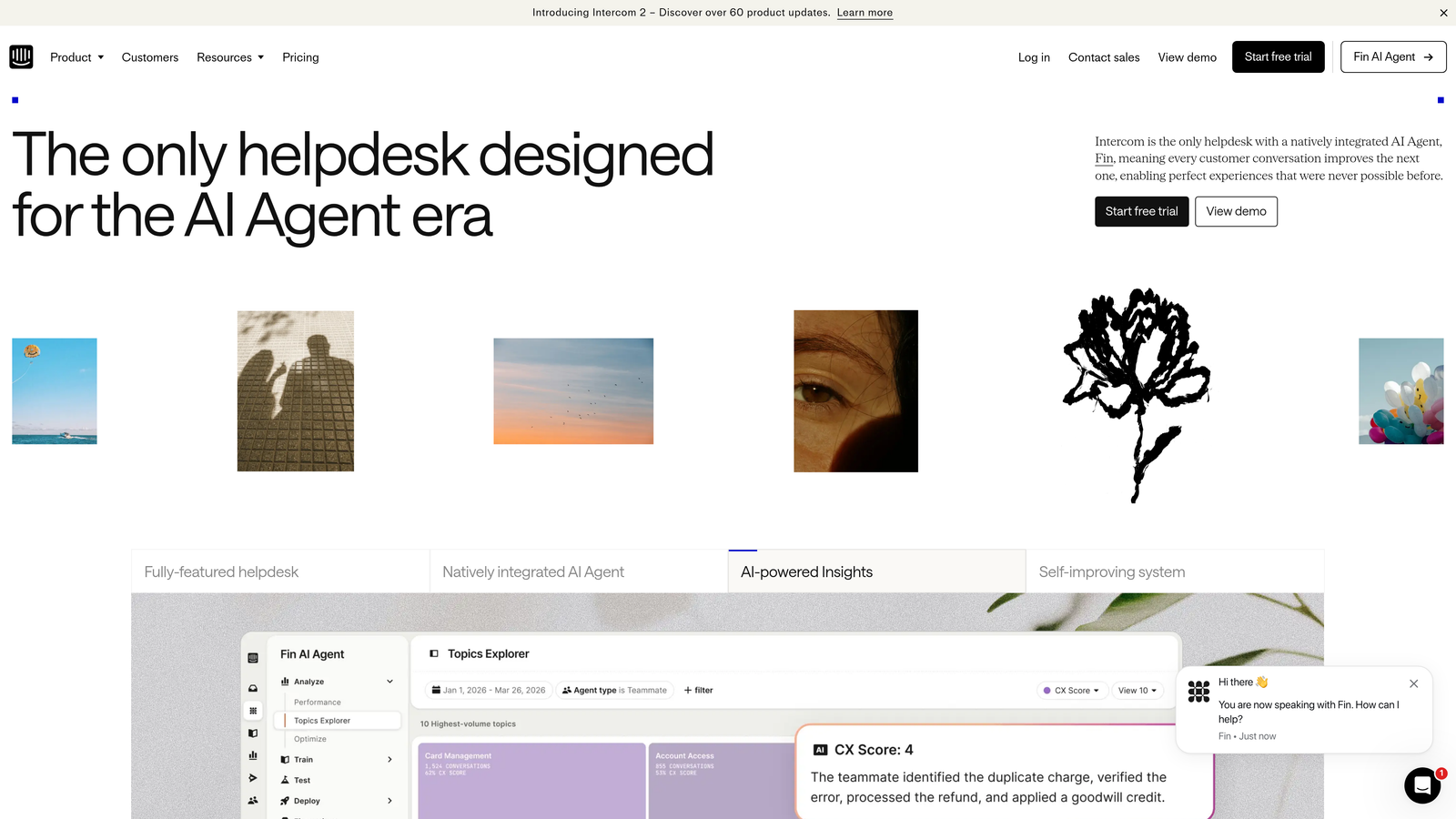
Intercom is the platform many teams are evaluating alternatives to, but its own AI agent, Fin, is worth including here as a legitimate upgrade path for teams already embedded in the ecosystem.
Where This Tool Shines
Fin is built on large language model technology and trained on your existing help center content, which means it can start resolving conversations with relatively little setup if you already have a solid knowledge base. The handoff experience between Fin and a human agent is smooth, and it all lives within the same Intercom interface your team already knows.
The challenge is that Fin is additive to Intercom's broader platform, which can make the total cost of ownership significant. Teams who are already paying for Intercom's full suite will find Fin a natural extension. Teams evaluating from scratch may find the pricing model complex to navigate.
Key Features
Fin AI Agent: Handles autonomous conversation resolution using your help center content as its knowledge base.
Human Handoff: Seamlessly escalates to live agents within the same interface when Fin can't resolve an issue.
Existing Ecosystem: Leverages Intercom's CRM, product tours, and outbound messaging capabilities in a unified platform.
Usage-Based Fin Pricing: Fin is priced per resolution on top of base Intercom plan costs, which can add up at scale.
Help Center Integration: Trains directly on your existing articles and documentation without requiring a separate ingestion workflow.
Best For
Teams already using Intercom who want to extend their investment with AI resolution rather than migrate to a new platform. Less compelling for teams evaluating from scratch given the layered pricing structure.
Pricing
Intercom plans start at approximately $39/seat/month for the Essential plan. Fin AI is priced separately on a per-resolution basis. Verify current pricing at intercom.com before committing.
3. Zendesk AI
Best for: Enterprise teams running high-volume, complex support operations that need governance and compliance alongside AI.
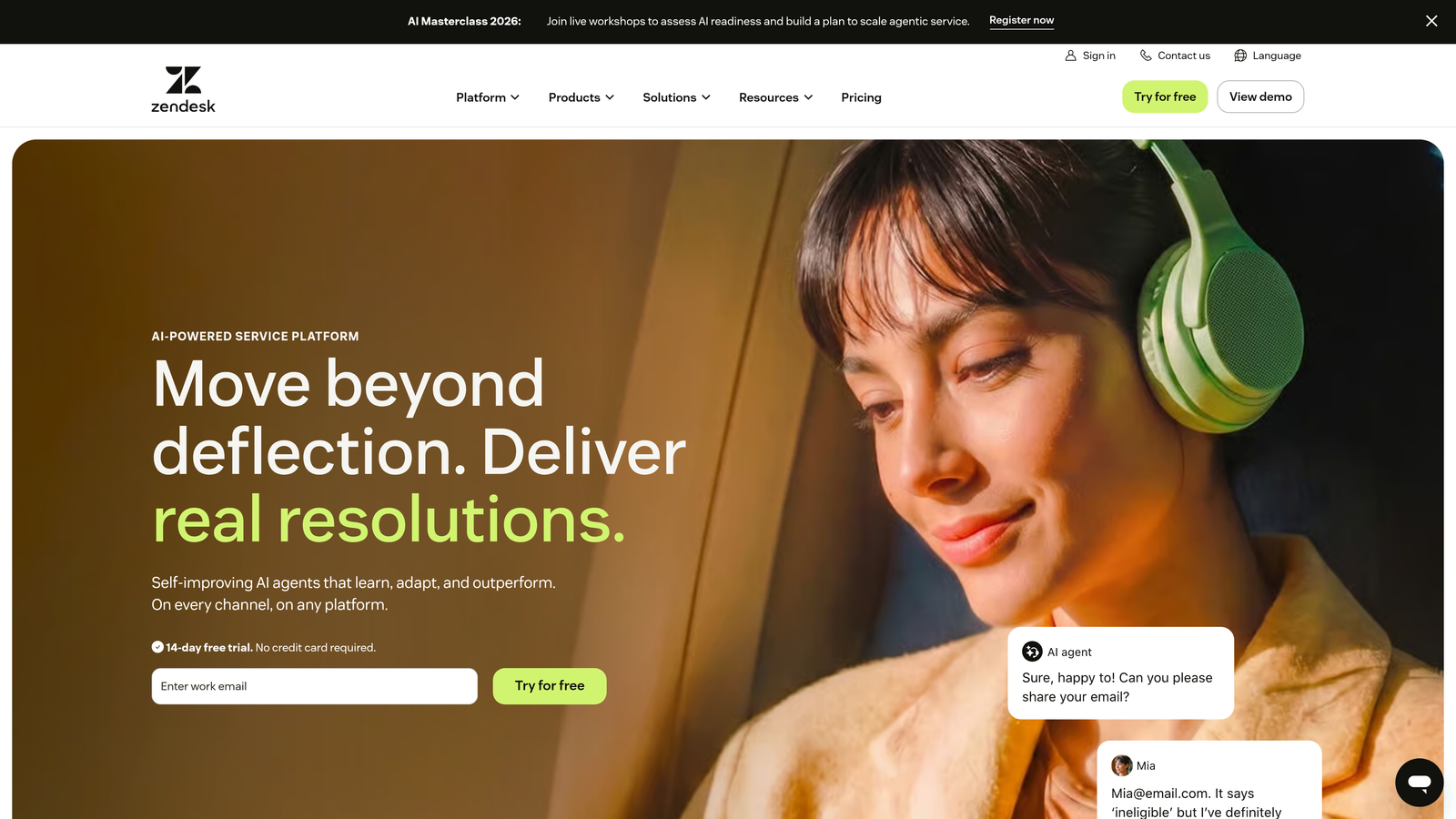
Zendesk is the enterprise heavyweight in this space, with AI woven across ticket triage, agent assist, and self-service deflection at a scale few platforms can match.
Where This Tool Shines
Zendesk has made significant AI investments, including the acquisition of Ultimate.ai, and the result is AI that touches nearly every part of the support workflow. Ticket triage, routing, macro suggestions, and agent copilot features are all AI-enhanced. For enterprise teams managing thousands of tickets across multiple channels, the depth here is hard to match.
The tradeoff is complexity and cost. Zendesk's pricing tiers can be difficult to navigate, and the most powerful AI features tend to live on higher-tier plans. Teams that need strong compliance, security controls, and enterprise governance will find Zendesk's story compelling. Smaller or more agile teams may find it more than they need.
Key Features
Intelligent Ticket Triage: AI automatically categorizes, routes, and prioritizes incoming tickets based on content and intent.
Agent Copilot: Suggests replies, next-best-actions, and knowledge base articles to help agents resolve tickets faster.
Self-Service Deflection: AI-enhanced knowledge base and bot capabilities reduce ticket volume before issues reach an agent.
Advanced Analytics: Robust reporting suite for tracking resolution rates, CSAT, and team performance at scale.
Enterprise Governance: Strong compliance, security, and administrative controls suited for regulated industries and large organizations.
Best For
Enterprise support teams handling high ticket volumes across multiple channels, particularly in industries with compliance requirements. Less suited for lean B2B SaaS teams that want quick deployment and AI-first architecture.
Pricing
Suite Team starts at approximately $55/agent/month. AI features are available on higher tiers. Confirm current pricing at zendesk.com as tiers and features change frequently.
4. Freshdesk (Freddy AI)
Best for: Mid-market teams that want AI-assisted support within a broader customer service suite at accessible pricing.
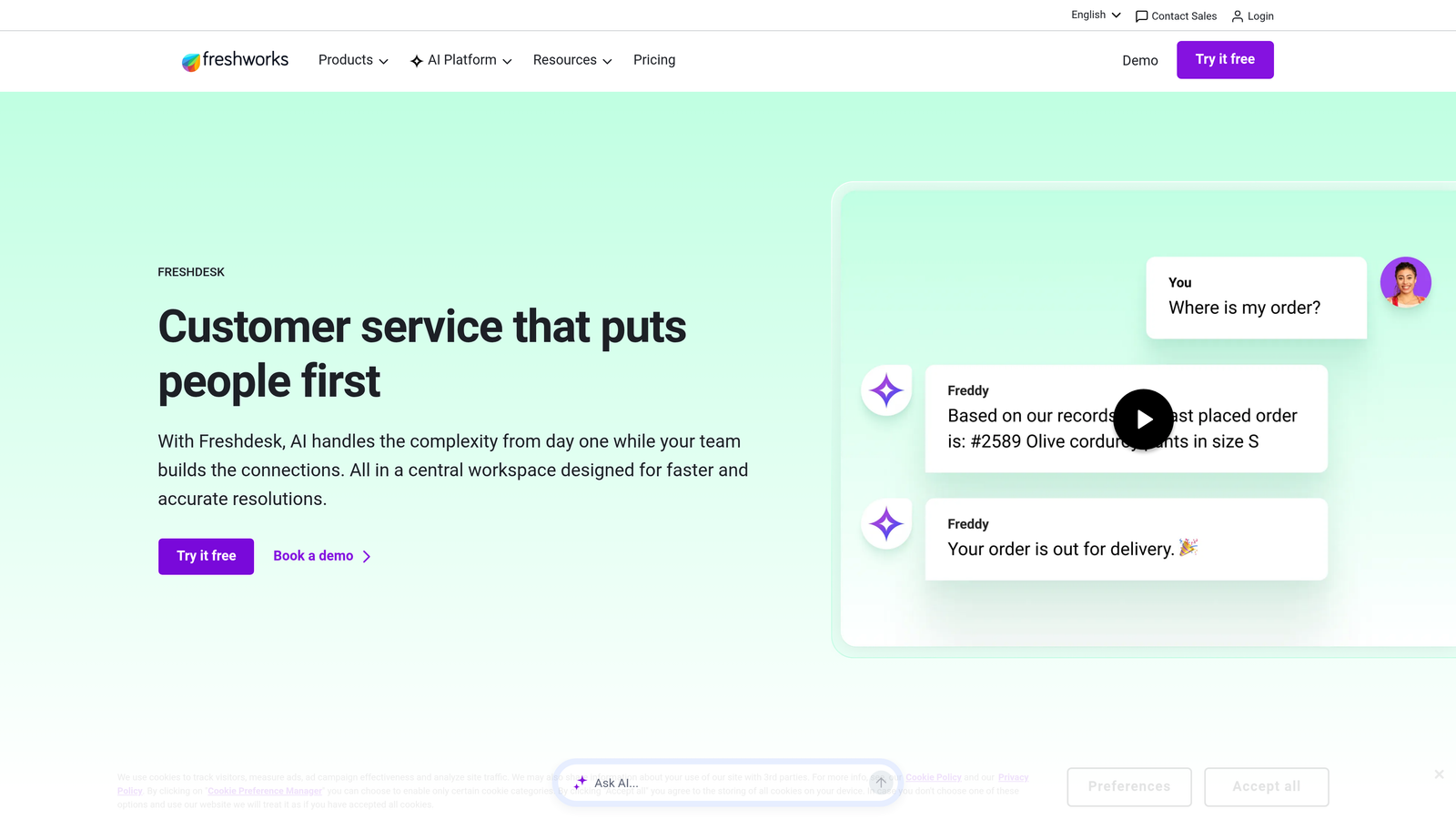
Freshdesk is Freshworks' customer support platform, with Freddy AI providing both answer bot deflection and agent copilot capabilities across its plans.
Where This Tool Shines
Freshdesk's strongest argument is value. The free tier makes it accessible for small teams, and the Growth plan's pricing is among the lowest of any full-featured platform on this list. Freddy AI handles ticket deflection via the Answer Bot and boosts agent productivity through suggested responses and summaries via Freddy Copilot.
Freshdesk also benefits from being part of the broader Freshworks ecosystem, which means native connectivity to Freshworks CRM and ITSM tools. If your team is already in that ecosystem, the integration story is tight. The AI capabilities are solid for mid-market use cases, though they don't reach the autonomous depth of AI-native platforms.
Key Features
Freddy Answer Bot: Handles automated ticket deflection by surfacing relevant knowledge base articles and resolving common queries without agent involvement.
Freddy Copilot: Assists agents with suggested responses, summarization, and next-step recommendations to speed up resolution.
Omnichannel Support: Covers email, chat, phone, and social channels within a single inbox.
Freshworks Ecosystem: Native integration with Freshworks CRM and ITSM suite for teams already using those products.
Free Tier: A functional free plan makes Freshdesk accessible for small teams testing the platform before committing.
Best For
Mid-market teams and growing startups that need a capable, affordable support platform with AI assist features. A strong choice for teams already using other Freshworks products.
Pricing
Free tier available. Growth plan starts at approximately $15/agent/month. Freddy AI features are available as an add-on at additional cost. Verify current pricing at freshworks.com.
5. Drift (Salesloft)
Best for: Teams where support and sales conversations overlap and pipeline-aware routing matters.
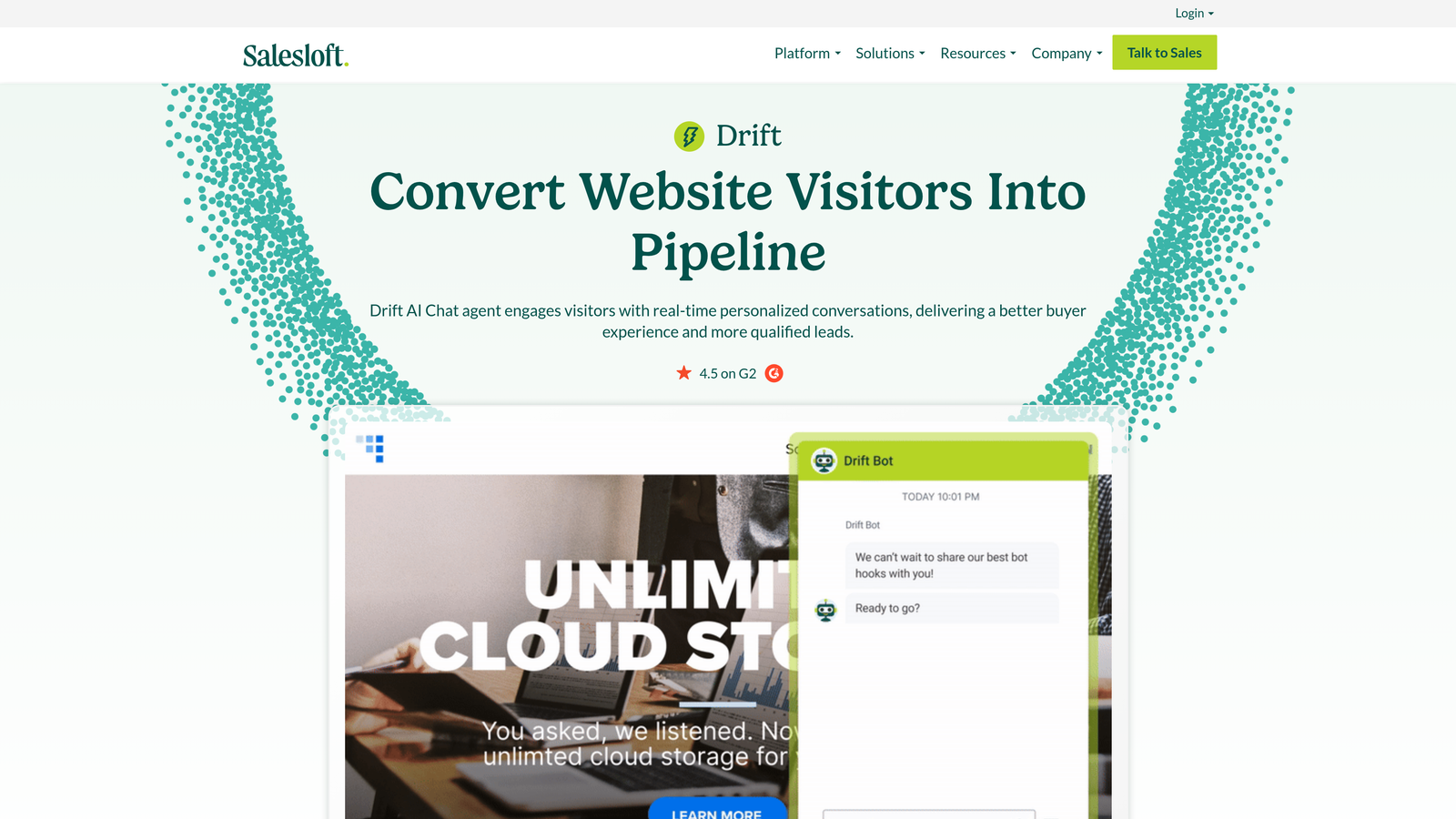
Drift, now part of Salesloft, is a conversational AI platform repositioned toward revenue teams, with strong intent detection and routing capabilities that blur the line between support and sales.
Where This Tool Shines
Drift's AI is built around buyer intent rather than pure ticket resolution. It excels at identifying high-intent visitors, routing them to the right conversation path, and connecting them with sales or support based on what they're trying to accomplish. For teams where a support conversation can turn into a renewal or expansion opportunity, that context is valuable.
The Salesloft acquisition has deepened the revenue platform integration, making Drift a natural fit for revenue operations teams. That said, if your primary goal is autonomous support resolution rather than pipeline-aware conversations, other tools on this list are more focused on that outcome.
Key Features
Intent-Based Routing: AI detects buyer intent in real time and routes conversations to the appropriate team or workflow.
Salesloft Integration: Deep connectivity with Salesloft's revenue platform for teams managing sales and support in a unified motion.
Account-Based Targeting: Personalizes conversations based on account data for more relevant engagement with target accounts.
Meeting Scheduling: Automates meeting booking and sales handoff within the conversation flow.
High-Intent Alerts: Real-time notifications when high-value visitors are active on your site or in a conversation.
Best For
B2B teams where support and sales motions are closely linked, particularly those using Salesloft for revenue operations. Less suited for teams focused purely on support ticket resolution at scale.
Pricing
Enterprise pricing applies. Contact Drift or Salesloft directly for a quote, as pricing is not publicly listed following the acquisition.
6. Tidio
Best for: SMBs and startups that need fast, affordable AI chat deployment without complex configuration.
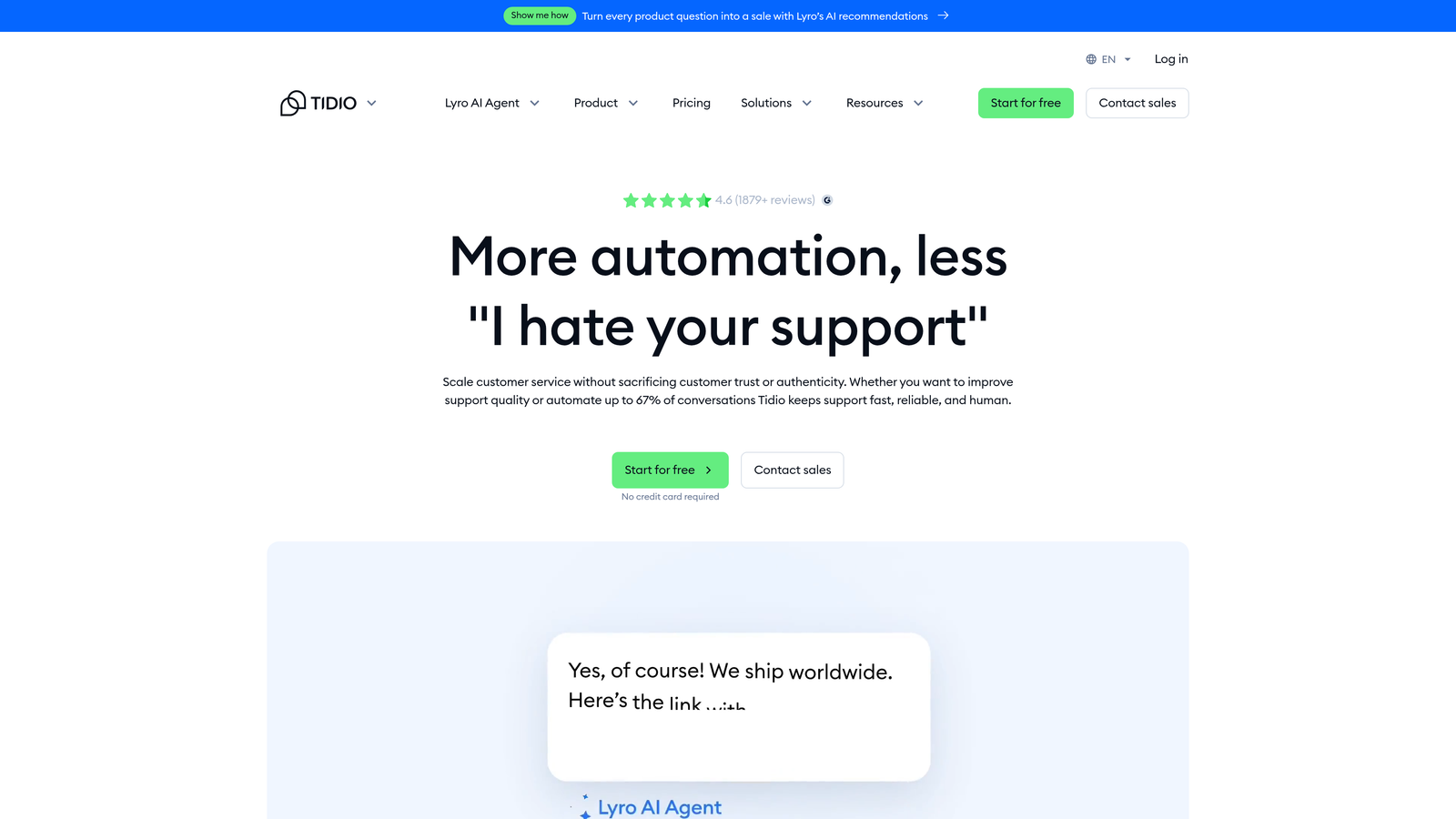
Tidio is an accessible AI chat platform featuring Lyro AI, designed for smaller teams that want autonomous conversation handling without enterprise complexity or pricing.
Where This Tool Shines
Tidio's biggest advantage is speed to value. Setup is straightforward, the no-code configuration means you don't need a technical team to get Lyro AI resolving conversations, and the pricing is genuinely accessible for early-stage companies. Lyro handles a solid range of customer queries autonomously, and the unified inbox keeps chat, email, and Messenger manageable in one place.
The platform has strong roots in e-commerce, with native integrations for Shopify and WooCommerce. For B2B SaaS teams with complex workflows or deep integration requirements, Tidio may feel limited. But for teams that need a capable, affordable AI chat layer up and running quickly, it delivers well.
Key Features
Lyro AI: Conversational AI that handles customer queries autonomously using your existing support content as its knowledge source.
Unified Inbox: Combines live chat, email, and Facebook Messenger into a single agent workspace.
No-Code Setup: Configure and deploy AI chat without technical resources, using a straightforward visual interface.
E-Commerce Integrations: Native connections to Shopify and WooCommerce for product-aware support conversations.
Free Tier: A functional free plan allows small teams to get started without upfront commitment.
Best For
SMBs, startups, and e-commerce teams that need fast, affordable AI chat. Less suited for B2B SaaS teams with complex multi-system workflows or enterprise-grade integration requirements.
Pricing
Free tier available. Lyro AI starts at approximately $29/month. Verify current plan details at tidio.com.
7. Help Scout
Best for: Support teams that want AI to enhance agent productivity rather than replace human interaction entirely.
Help Scout is a human-first support platform with AI assist features designed to make agents faster and more effective, not to automate them out of the picture.
Where This Tool Shines
Help Scout has built a strong reputation for clean UX and a support experience that feels personal. Its AI features, including Summarize, Drafts, and Answer, are deliberately positioned as agent tools rather than autonomous resolution engines. Summarize gives agents instant context on long conversations. Drafts suggests replies that agents can review and send. The philosophy is augmentation, not replacement.
For teams where the quality of human interaction is a brand differentiator, Help Scout's approach resonates. It's worth noting that if your goal is autonomous ticket resolution at scale, this isn't the right tool. Help Scout is explicitly designed for teams that want humans in the loop.
Key Features
AI Summarize: Instantly condenses long conversation threads so agents can get up to speed without reading every message.
AI Drafts: Generates suggested replies for agents to review, edit, and send, reducing time spent composing from scratch.
Docs Knowledge Base: Clean, AI-searchable knowledge base that integrates with the support workflow for self-service deflection.
Shared Inbox: Email-centric shared inbox with a clean interface that support teams consistently rate highly for usability.
AI Answer: Surfaces relevant knowledge base content within the agent interface to speed up response time.
Best For
Support teams where human interaction quality matters and agent experience is a priority. A strong fit for companies that want AI to accelerate their team without removing the human element from customer conversations.
Pricing
Starts at approximately $22/user/month. Verify current pricing at helpscout.com.
8. Crisp
Best for: Cost-conscious startups that want an Intercom-like experience at a significantly lower price point.
Crisp is a full-featured customer messaging platform with a generous free tier and growing AI chatbot capabilities, making it one of the most popular Intercom alternatives for early-stage teams watching their budget.
Where This Tool Shines
Crisp's interface will feel immediately familiar to anyone who has used Intercom. The shared inbox handles chat, email, Messenger, and Twitter in one place, and the CRM-lite features give you basic contact management without needing a separate tool. The AI chatbot supports scenario builders and knowledge base integration, giving teams a functional automation layer without a steep learning curve.
The free tier is genuinely useful for small teams, not just a stripped-down preview. For startups that need Intercom-level functionality without Intercom-level pricing, Crisp is a compelling option. It's less enterprise-ready than Zendesk or Freshdesk, but that's not its target market.
Key Features
AI Chatbot: Scenario-based chatbot with knowledge base integration for automated conversation handling.
Multichannel Inbox: Manages chat, email, Facebook Messenger, and Twitter in a single shared workspace.
CRM-Lite: Basic contact management and conversation history without requiring a separate CRM tool.
Generous Free Tier: The free plan supports small teams with meaningful functionality, not just a trial experience.
Intercom-Like UX: Familiar interface design that makes migration from Intercom straightforward for teams and agents.
Best For
Early-stage startups and small teams that want a familiar, capable messaging platform without the cost of Intercom. Teams with complex enterprise requirements or deep B2B SaaS integration needs will likely outgrow it.
Pricing
Free tier available. Pro plan starts at approximately $25/month per workspace. Verify current pricing at crisp.chat.
9. Kustomer
Best for: High-volume teams that need full customer context, including CRM history, in every support interaction.
Kustomer is a CRM-native customer service platform owned by Meta that applies AI across unified customer timelines, making it well-suited for teams where support context depends on the full customer relationship history.
Where This Tool Shines
Kustomer's core differentiator is the unified customer timeline. Rather than treating each support ticket as an isolated event, Kustomer pulls together every touchpoint, purchase, conversation, and interaction into a single view. AI is then applied across that context for routing, tagging, and suggested responses, which means agents aren't starting from scratch with every conversation.
The platform handles omnichannel support well, covering chat, email, voice, and social in one place. The workflow automation capabilities are robust for complex support processes. The enterprise pricing and Meta ownership may give some teams pause, but for high-volume operations where customer context is everything, Kustomer's architecture is genuinely differentiated.
Key Features
Unified Customer Timeline: Aggregates every customer touchpoint into a single view so agents have full context before engaging.
AI Routing and Tagging: Automatically routes and categorizes conversations based on content, intent, and customer history.
Omnichannel Support: Handles chat, email, voice, and social media in a unified agent workspace.
Deep CRM Integration: CRM-native architecture means customer data is built into the support experience, not bolted on.
Workflow Automation: Flexible automation tools for building complex support processes across teams and channels.
Best For
High-volume customer service teams, particularly in B2C or mixed B2B/B2C models, where full customer relationship context is essential to every interaction. Less focused on the autonomous AI resolution that pure B2B SaaS teams often prioritize.
Pricing
Enterprise pricing applies. Contact Kustomer directly for a quote. Pricing is not publicly listed.
Which Tool Is Right for Your Team?
The right choice depends on what you actually need AI to do. Here's a quick way to think through it.
If you want fully autonomous AI support with business intelligence signals feeding back to your product and revenue teams, Halo AI is built for exactly that. It's the only tool on this list with page-aware context, auto bug ticket creation, and a smart inbox that surfaces customer health and revenue signals from support data.
If you're already on Intercom and want to extend that investment, Fin AI is the natural path. The migration cost is zero and the handoff experience is seamless. For enterprise teams managing high ticket volumes with compliance requirements, Zendesk AI remains the most mature option. Mid-market teams on a budget should take a close look at Freshdesk Freddy, which delivers solid AI capability at a price point that's hard to argue with.
For teams where support and sales overlap, Drift's intent-based routing is worth exploring. Smaller teams and startups will find Tidio or Crisp more than capable without the complexity or cost of enterprise platforms. Help Scout is the right call when human interaction quality is a deliberate brand choice. And Kustomer earns its place for high-volume teams that need full CRM context baked into every support interaction.
The common thread across the best options: AI support in 2026 isn't about chatbots answering FAQs. It's about systems that understand context, resolve issues without human intervention, and surface intelligence back to your product and revenue teams. If your current tool isn't doing that, it's worth exploring what's possible.
For a deeper look at what AI-first support can do for your team, explore our guide to customer support AI benefits or see how automated customer support compares to traditional helpdesk approaches.
Your support team shouldn't scale linearly with your customer base. Let AI agents handle routine tickets, guide users through your product, and surface business intelligence while your team focuses on complex issues that need a human touch. See Halo in action and discover how continuous learning transforms every interaction into smarter, faster support.