9 Best Intercom Alternatives for Automation in 2026
Looking for intercom alternatives for automation that go beyond basic chatbots? This comprehensive comparison evaluates nine platforms that deliver sophisticated AI-driven workflows, autonomous ticket resolution, and intelligent automation capabilities that scale with your team—without Intercom's pricing unpredictability or bot builder limitations.
 Grant CooperFounder10 min read
Intercom has long been a go-to platform for customer communication, but its automation capabilities often fall short for teams seeking truly intelligent, hands-off support. Whether you're hitting limitations with Intercom's bot builder, frustrated by pricing that scales unpredictably, or simply need more sophisticated AI-driven workflows, you're not alone.
This guide compares top platforms that excel specifically at automation—from AI agents that resolve tickets autonomously to workflow builders that eliminate repetitive tasks. We've evaluated each tool based on automation depth, learning capabilities, integration flexibility, and value for growing teams.
1. Halo AI
Best for: B2B product teams seeking autonomous AI agents that learn and improve continuously
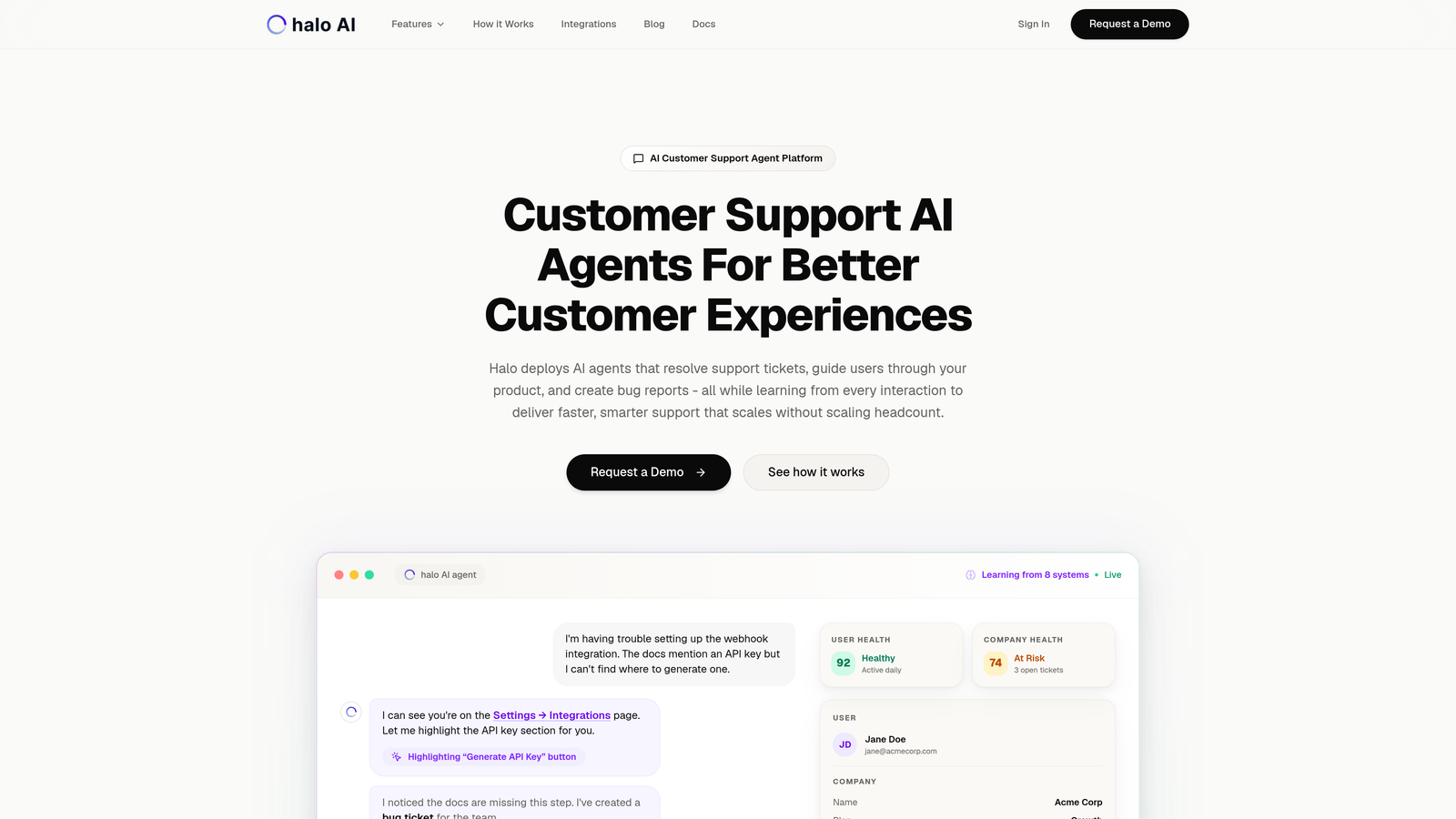
Halo AI represents a fundamental shift from traditional chatbots to truly autonomous support agents.
Where This Tool Shines
Unlike platforms that bolt AI onto existing helpdesk infrastructure, Halo is built AI-first from the ground up. Its agents don't just deflect tickets—they resolve them completely, understanding context from what users see on screen and learning from every interaction without manual retraining.
The page-aware chat widget sees exactly what your users see, enabling contextual guidance that traditional chatbots simply can't match. When users struggle with a specific feature, Halo's agents provide visual UI guidance based on their actual location in your product.
Key Features
Autonomous Resolution: AI agents handle tickets end-to-end without human intervention for routine issues.
Page-Aware Context: Widget understands user location and screen state for precise, contextual responses.
Continuous Learning: System improves resolution accuracy automatically from every interaction—no manual retraining required.
Deep Integrations: Connects to Linear for bug tickets, Slack for team notifications, HubSpot for customer data, Stripe for billing context, and more.
Business Intelligence: Surfaces customer health signals, revenue intelligence, and anomaly detection beyond basic support metrics.
Best For
B2B companies and product teams using helpdesk systems like Zendesk, Freshdesk, or Intercom who need automation that actually resolves issues rather than just routing them. Particularly valuable for teams that want their support to scale without scaling headcount.
Pricing
Contact for pricing. Designed for B2B product teams ready to move beyond basic chatbot deflection to true autonomous resolution.
2. Zendesk
Best for: Enterprise teams needing sophisticated routing and trigger-based automation at scale
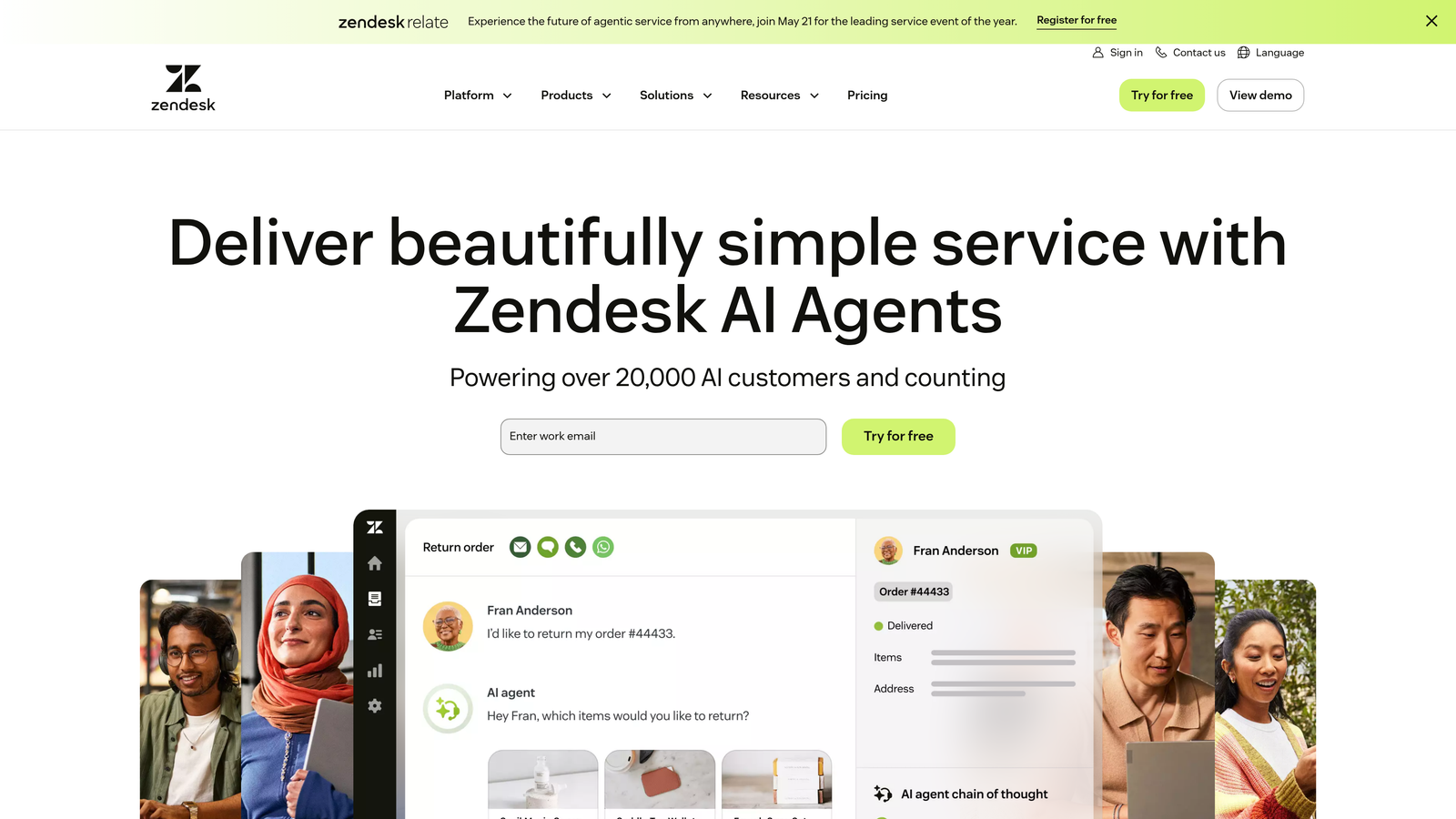
Zendesk offers enterprise-grade automation through Answer Bot, advanced triggers, and extensive workflow capabilities.
Where This Tool Shines
Zendesk's strength lies in its mature automation engine that handles complex routing scenarios across multiple channels. The platform excels at rule-based workflows—automatically categorizing tickets, assigning to the right teams, and applying SLA policies based on customer tier or issue type.
The extensive marketplace provides hundreds of automation add-ons, letting teams customize workflows without custom development. For large support organizations managing thousands of daily tickets, Zendesk's automation infrastructure is battle-tested and reliable.
Key Features
Answer Bot: Machine learning system suggests relevant knowledge base articles and can resolve simple tickets automatically.
Advanced Triggers: Create complex automation rules based on ticket properties, customer data, and time-based conditions.
Marketplace Integrations: Access hundreds of pre-built automation apps for specialized workflows.
Multi-Channel Automation: Apply consistent automation rules across email, chat, phone, and social channels.
Macro Library: Build reusable response templates with dynamic fields for faster ticket resolution.
Best For
Enterprise support teams managing high ticket volumes across multiple channels who need reliable, rule-based automation with extensive customization options. Works well for organizations with dedicated support operations teams.
Pricing
Suite Team starts at $55 per agent per month. Enterprise plans with advanced automation features require custom pricing.
3. Freshdesk
Best for: Mid-sized teams wanting AI assistance alongside traditional workflows at competitive pricing
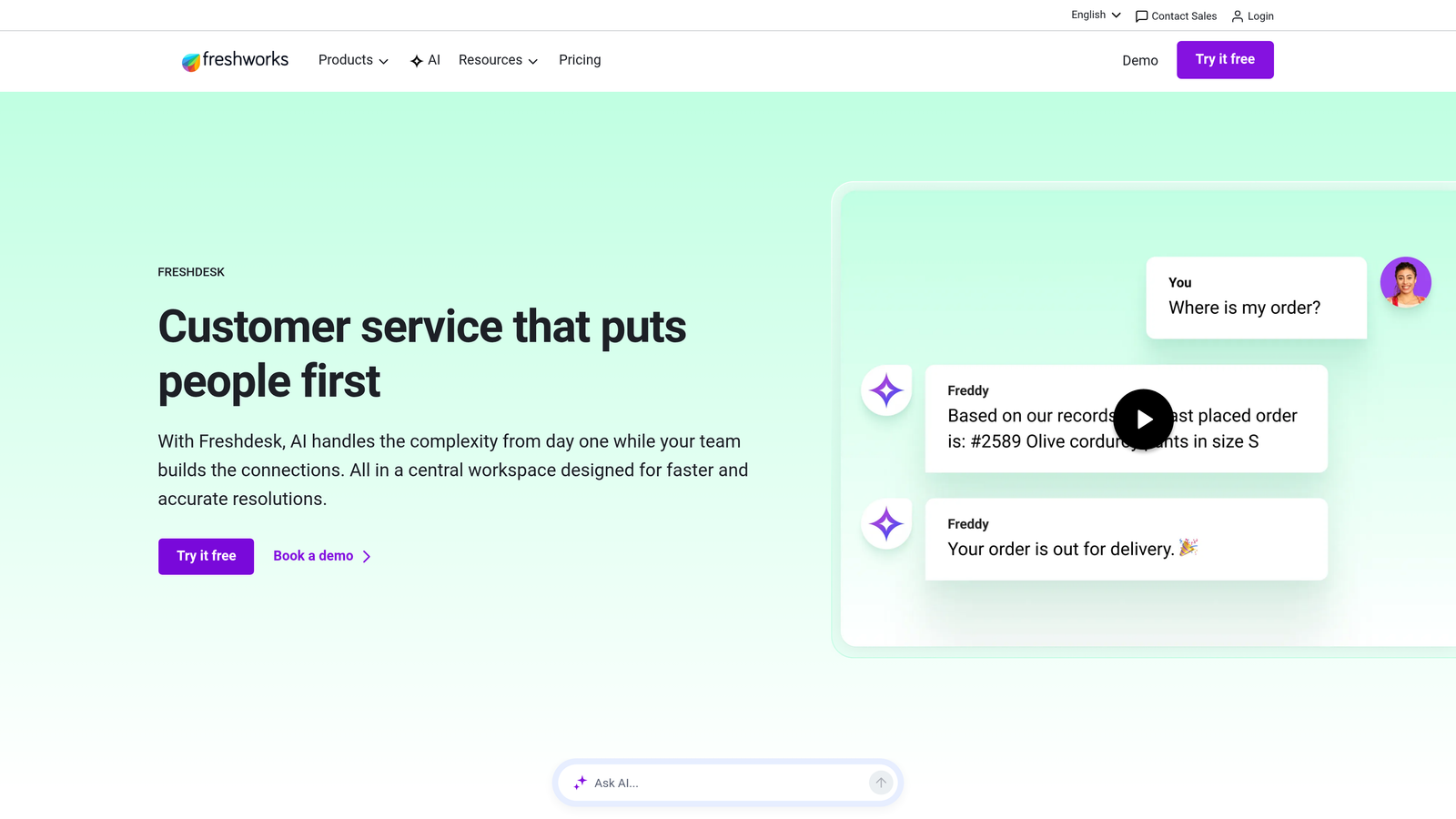
Freshdesk combines Freddy AI automation with scenario-based workflow builders and a generous free tier.
Where This Tool Shines
Freshdesk strikes a balance between AI-powered automation and traditional rule-based workflows. Freddy AI automatically categorizes incoming tickets, suggests responses to agents, and predicts which tickets might escalate—helping teams stay ahead of problems.
The scenario automation builder lets you create multi-step workflows visually, making it accessible for teams without technical expertise. Combined with competitive pricing and a robust free tier, Freshdesk offers strong value for growing support teams.
Key Features
Freddy AI: Automatic ticket categorization, agent suggestions, and escalation prediction powered by machine learning.
Scenario Automations: Visual workflow builder for creating multi-step automated processes.
Canned Responses: Template library with dynamic placeholders that pull customer and ticket data.
SLA Management: Automated escalation and notification when tickets approach SLA violations.
Team Collaboration: Automated agent collision detection and ticket assignment based on workload.
Best For
Growing companies that need AI assistance without enterprise pricing, particularly teams transitioning from basic helpdesks to more sophisticated automation capabilities.
Pricing
Free tier available for up to 10 agents. Pro plan with Freddy AI starts at $49 per agent per month.
4. Help Scout
Best for: Small teams prioritizing simplicity and personal touch over complex automation
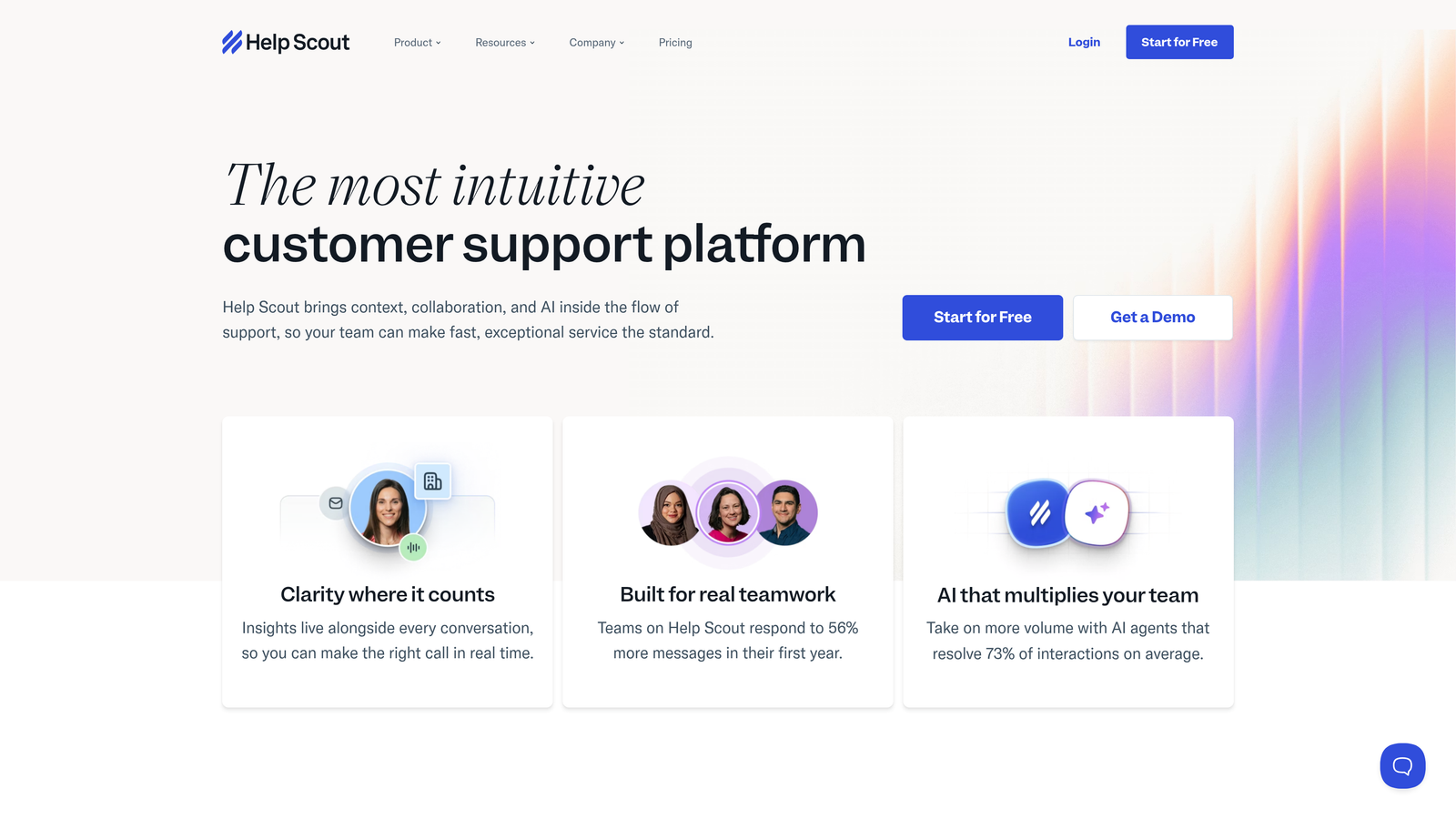
Help Scout focuses on workflow automations that maintain human connection while reducing repetitive tasks.
Where This Tool Shines
Help Scout's philosophy centers on making automation feel personal rather than robotic. The workflow engine handles routine tasks like tagging, assignment, and status updates without the complexity of enterprise platforms.
The Beacon chat widget includes basic automation for common questions while maintaining Help Scout's signature approachable interface. For teams that value simplicity and don't need sophisticated AI, Help Scout delivers clean, effective automation at an accessible price point.
Key Features
Workflows: Automated tagging, assignment, and status changes based on conversation properties.
Saved Replies: Template library with variables for personalizing common responses quickly.
Beacon Widget: Embedded chat with basic automation for answering frequent questions.
Customer Properties: Segment and automate based on custom customer data fields.
Collision Detection: Automatic notifications when multiple agents view the same conversation.
Best For
Small to mid-sized teams that value straightforward workflows over complex automation, particularly customer-centric companies that prioritize personal communication.
Pricing
Starts at $20 per user per month with a 15-day free trial.
5. Drift
Best for: Revenue teams automating lead qualification and meeting booking for high-value prospects
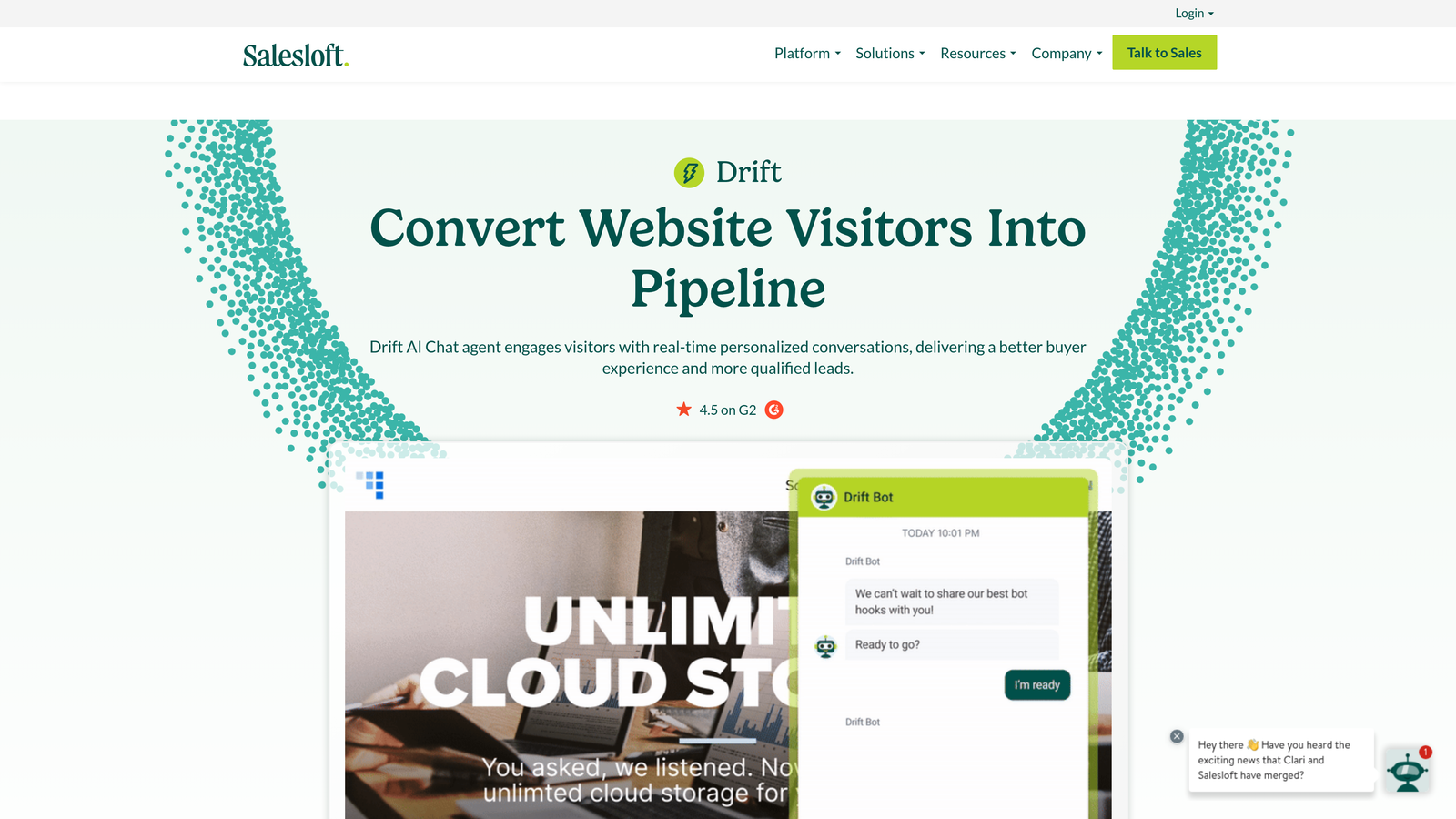
Drift specializes in conversational marketing automation with chatbots designed to identify and route qualified leads.
Where This Tool Shines
Drift approaches automation from a revenue perspective rather than support deflection. Its playbooks automatically qualify website visitors, book meetings with sales reps, and route conversations based on account value and buying signals.
The account-based targeting lets you create different automation workflows for different customer segments—showing enterprise prospects a direct path to sales while routing support questions appropriately. For teams where customer communication directly impacts pipeline, Drift's revenue-focused automation delivers measurable ROI.
Key Features
Revenue Playbooks: Automated chatbot flows optimized for lead qualification and meeting booking.
Account-Based Targeting: Show different automation workflows based on company size, industry, or account status.
Meeting Scheduler: Automatic calendar integration that books qualified prospects directly with sales reps.
CRM Integration: Deep connections to Salesforce and HubSpot for unified customer data.
Intent Signals: Automation triggers based on visitor behavior and engagement patterns.
Best For
B2B sales and marketing teams that need automation focused on revenue generation rather than support deflection, particularly companies with high-value enterprise deals.
Pricing
Premium tier starts at $2,500 per month. Enterprise pricing available for larger teams.
6. HubSpot Service Hub
Best for: Teams already using HubSpot CRM seeking unified automation across marketing, sales, and support
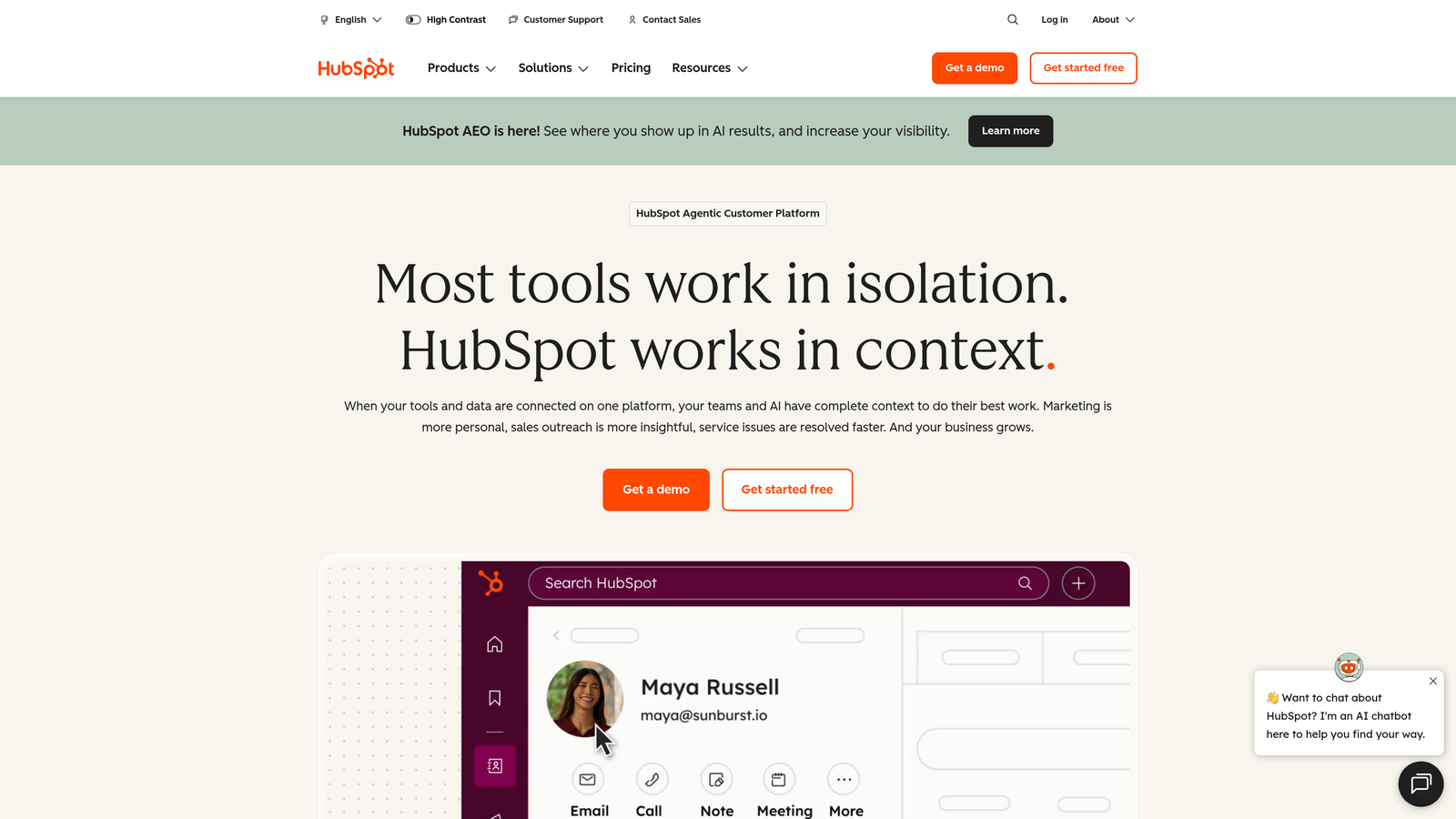
HubSpot Service Hub leverages unified CRM data to power personalized automation workflows across the customer lifecycle.
Where This Tool Shines
Service Hub's biggest advantage is access to HubSpot's unified customer database. Your automation workflows can trigger based on deal stage, marketing engagement, or lifecycle position—not just support interactions.
This means you can automatically prioritize tickets from customers in renewal cycles, route questions from trial users differently than enterprise accounts, or trigger proactive outreach based on product usage patterns. For companies already invested in HubSpot's ecosystem, Service Hub provides automation depth that standalone support tools can't match.
Key Features
Ticket Workflows: Automated routing, assignment, and escalation based on CRM properties and customer data.
Knowledge Base Integration: Chatbot automatically surfaces relevant articles based on customer questions and history.
Feedback Automation: Trigger surveys and collect customer sentiment automatically at key touchpoints.
Unified CRM Data: Access complete customer context including deals, marketing engagement, and support history for personalized responses.
Custom Workflows: Visual workflow builder that connects Service Hub to Marketing Hub and Sales Hub.
Best For
Companies using HubSpot CRM that want support automation integrated with their marketing and sales workflows, particularly B2B teams managing complex customer journeys.
Pricing
Free tier available with basic features. Professional starts at $90 per month for two users.
7. Tidio
Best for: Small businesses and e-commerce stores needing visual chatbot building without technical expertise
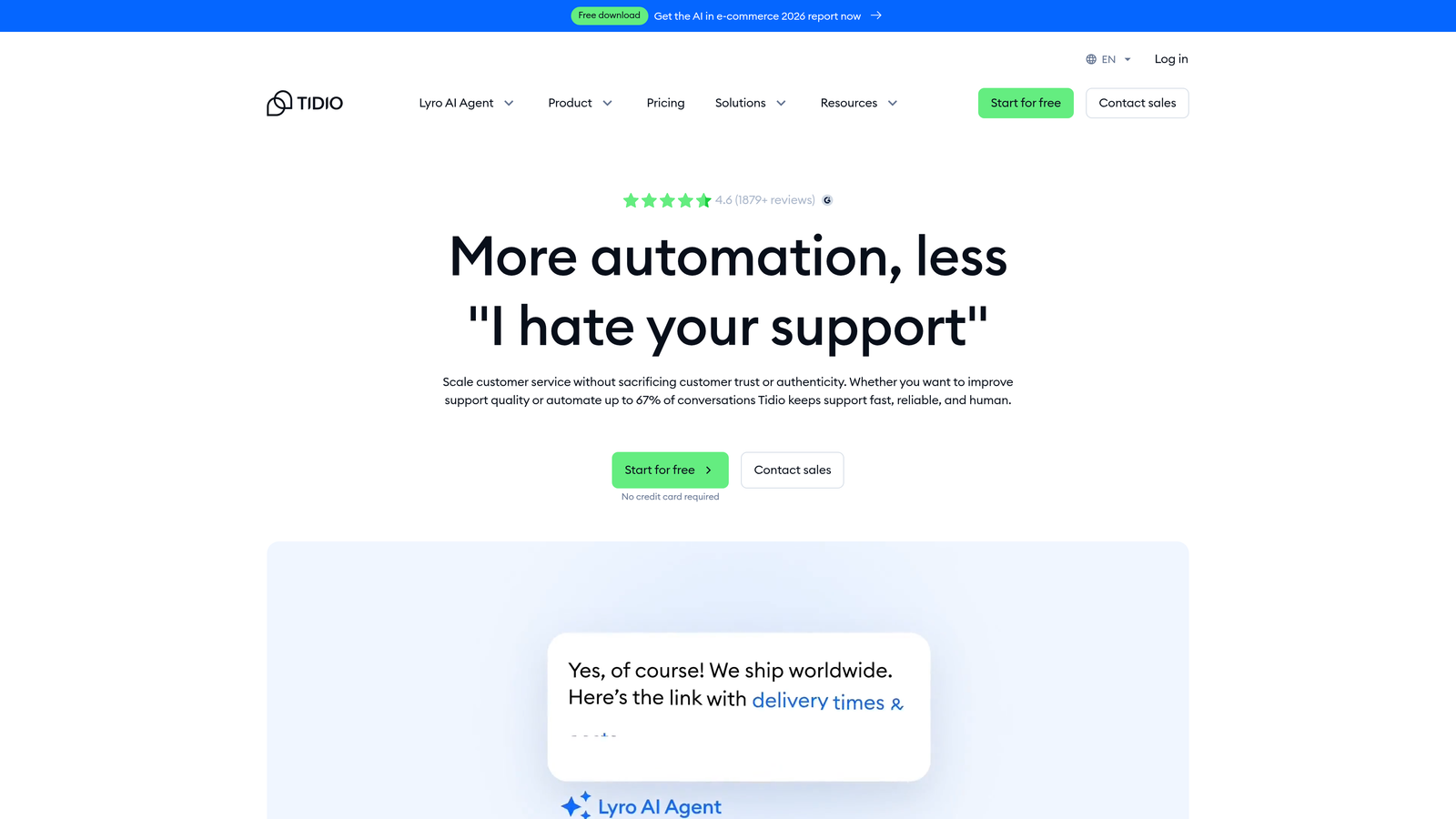
Tidio offers a visual chatbot builder with AI features specifically designed for small businesses and online retailers.
Where This Tool Shines
Tidio makes chatbot automation accessible to non-technical users through its visual builder and pre-made templates. You can create conversation flows by dragging and dropping elements—no coding required.
The Lyro AI feature adds conversational intelligence on top of rule-based flows, helping handle questions that don't fit predefined paths. For e-commerce specifically, Tidio includes order tracking automation and abandoned cart triggers that integrate directly with Shopify, WooCommerce, and other platforms.
Key Features
Visual Bot Builder: Drag-and-drop interface with ready-made templates for common automation scenarios.
Lyro AI: Conversational AI layer that handles questions outside predefined chatbot flows.
E-commerce Integrations: Built-in order tracking, cart abandonment, and product recommendation automation.
Visitor Triggers: Automated chat invitations based on page visits, time on site, or browsing behavior.
Mobile Apps: Manage conversations and monitor automation performance from iOS and Android.
Best For
Small businesses, solo entrepreneurs, and e-commerce stores that need quick-to-deploy chatbot automation without technical resources or large budgets.
Pricing
Free tier available with basic features. Paid plans start at $29 per month for increased conversation limits.
8. Front
Best for: Teams managing shared inboxes who need automation for collaboration and assignment
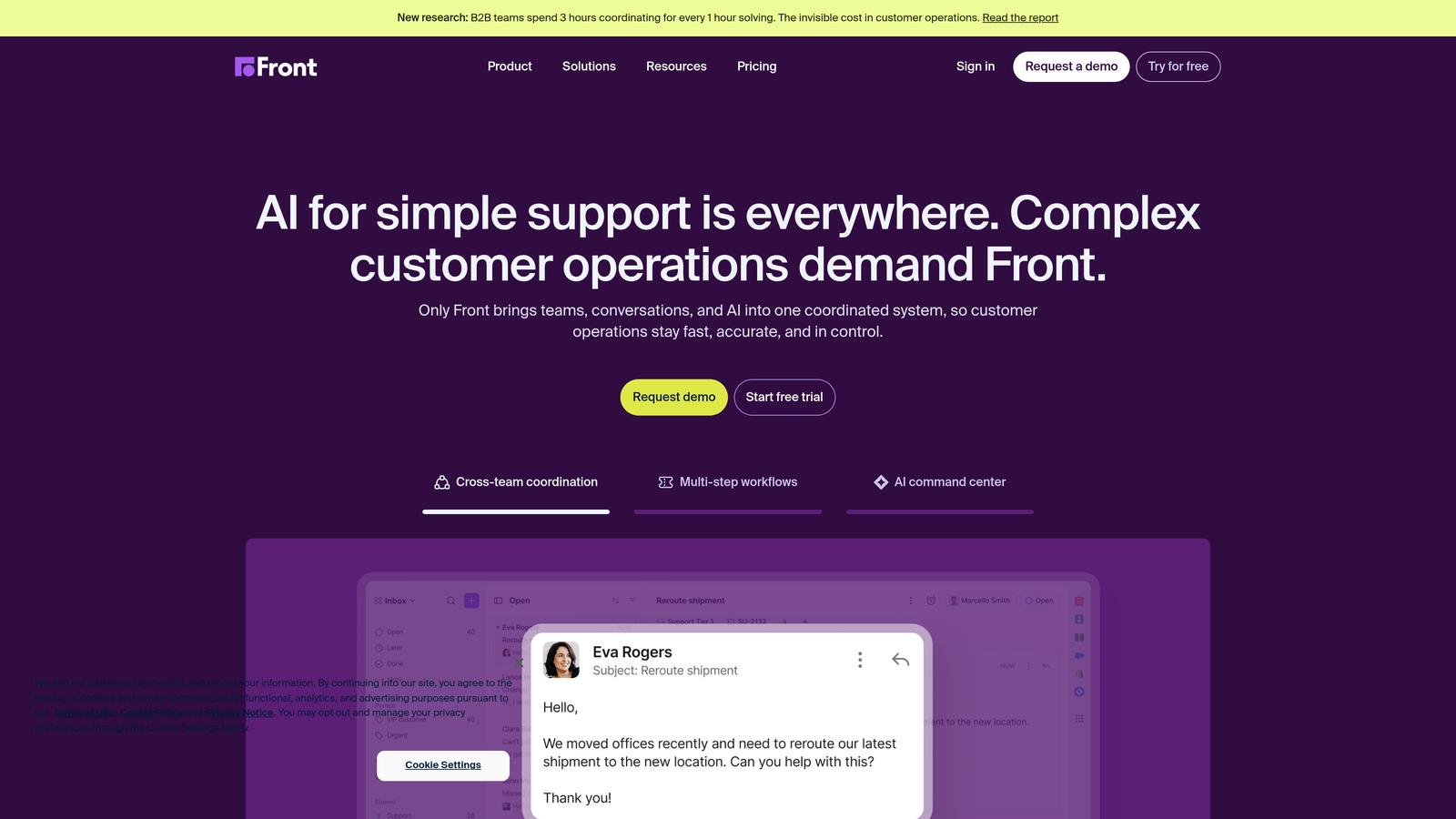
Front transforms shared email, chat, and social inboxes into collaborative workspaces with automation rules for team coordination.
Where This Tool Shines
Front excels at automating the collaboration challenges that arise when multiple team members manage shared communication channels. Its automation rules handle assignment based on expertise, automatically tag conversations by topic or urgency, and route messages to the right team member.
The platform shines for teams that need visibility into who's handling what, with automation that prevents duplicate responses and ensures nothing falls through the cracks. Think of it as adding intelligent routing to Gmail rather than replacing your entire support stack.
Key Features
Assignment Rules: Automatically route messages to specific team members based on sender, subject, or content.
Message Templates: Reusable responses with variables that pull customer and conversation data.
SLA Tracking: Automated escalation and notifications when messages approach response time thresholds.
Team Workflows: Automated handoffs between team members with context preservation.
Analytics Automation: Automatic tagging and categorization for performance reporting.
Best For
Sales teams, account management groups, and support teams managing shared email addresses who need better coordination and visibility rather than traditional helpdesk features.
Pricing
Starts at $19 per seat per month with a 7-day free trial.
9. Gorgias
Best for: High-volume e-commerce retailers needing Shopify-native automation and revenue tracking
Gorgias is purpose-built for e-commerce with deep Shopify integration and automation macros designed for online retail workflows.
Where This Tool Shines
Gorgias treats e-commerce support as a revenue channel, not a cost center. Its automation includes one-click actions for refunds, order edits, and tracking updates—all without leaving the ticket interface or switching to Shopify admin.
The intent detection automatically categorizes common e-commerce questions like "Where is my order?" or "I want to return this" and triggers appropriate macro responses with order-specific data. Revenue tracking shows which support interactions lead to repeat purchases, helping you measure support's impact on customer lifetime value.
Key Features
Order Actions: One-click refunds, cancellations, and edits directly from support tickets without accessing Shopify.
Smart Macros: Automated responses that pull order details, tracking numbers, and customer data from Shopify.
Intent Detection: Automatically categorize and respond to common e-commerce questions.
Revenue Attribution: Track which support interactions lead to purchases and measure support's revenue impact.
Multi-Channel Automation: Unified automation across email, chat, SMS, Instagram, and Facebook messages.
Best For
Shopify merchants and e-commerce brands handling high message volumes who need automation specifically designed for online retail workflows and revenue tracking.
Pricing
Starts at $10 per month for 50 tickets. Scales based on ticket volume with custom enterprise pricing available.
Making the Right Choice
The best automation platform depends on what you're actually trying to automate—and how intelligent you need that automation to be.
If you're seeking truly autonomous resolution that learns and improves continuously, Halo AI represents the next generation beyond traditional chatbots. Its AI-first architecture resolves tickets end-to-end rather than just deflecting them, while page-aware context and deep integrations provide intelligence that rule-based systems can't match.
For enterprise teams managing complex routing across multiple channels, Zendesk's mature automation infrastructure and extensive marketplace offer proven reliability at scale. Freshdesk provides similar capabilities with more accessible pricing for mid-sized teams.
E-commerce retailers should consider Gorgias for Shopify-native automation or Tidio for visual chatbot building without technical expertise. Teams already invested in HubSpot benefit from Service Hub's unified customer data, while Front excels at automating collaboration for shared inbox workflows.
The fundamental question isn't just "Can it automate?" but "How intelligently does it automate?" Legacy platforms automate routing and deflection. Modern AI-native platforms automate resolution.
Your support team shouldn't scale linearly with your customer base. Let AI agents handle routine tickets, guide users through your product, and surface business intelligence while your team focuses on complex issues that need a human touch. See Halo in action and discover how continuous learning transforms every interaction into smarter, faster support.