9 Best Live Chat Automation Software Tools in 2026
This guide evaluates the 9 best live chat automation software tools in 2026, comparing platforms on AI quality, automation depth, and integration ecosystems to help SaaS and B2B teams resolve tickets autonomously and scale support without adding headcount.
 Matt PattoliFounder14 min read
Live chat automation has moved well beyond simple chatbots that answer FAQs. Today's best platforms combine AI agents, contextual awareness, and deep integrations to resolve tickets autonomously, escalate intelligently, and surface business insights that go far beyond the support queue.
Whether you're a lean SaaS team drowning in repetitive tickets or a scaling B2B company trying to maintain response quality without growing headcount, the right live chat automation software can be a genuine force multiplier. This guide covers the top tools worth evaluating in 2026, assessed on automation depth, AI quality, integration ecosystem, and total value.
If you want a quick primer before diving in, our breakdown of chatbot vs live chat differences and customer support automation strategy are good starting points.
1. Halo AI
Best for: B2B SaaS teams that want AI-first autonomous support with business intelligence built in.
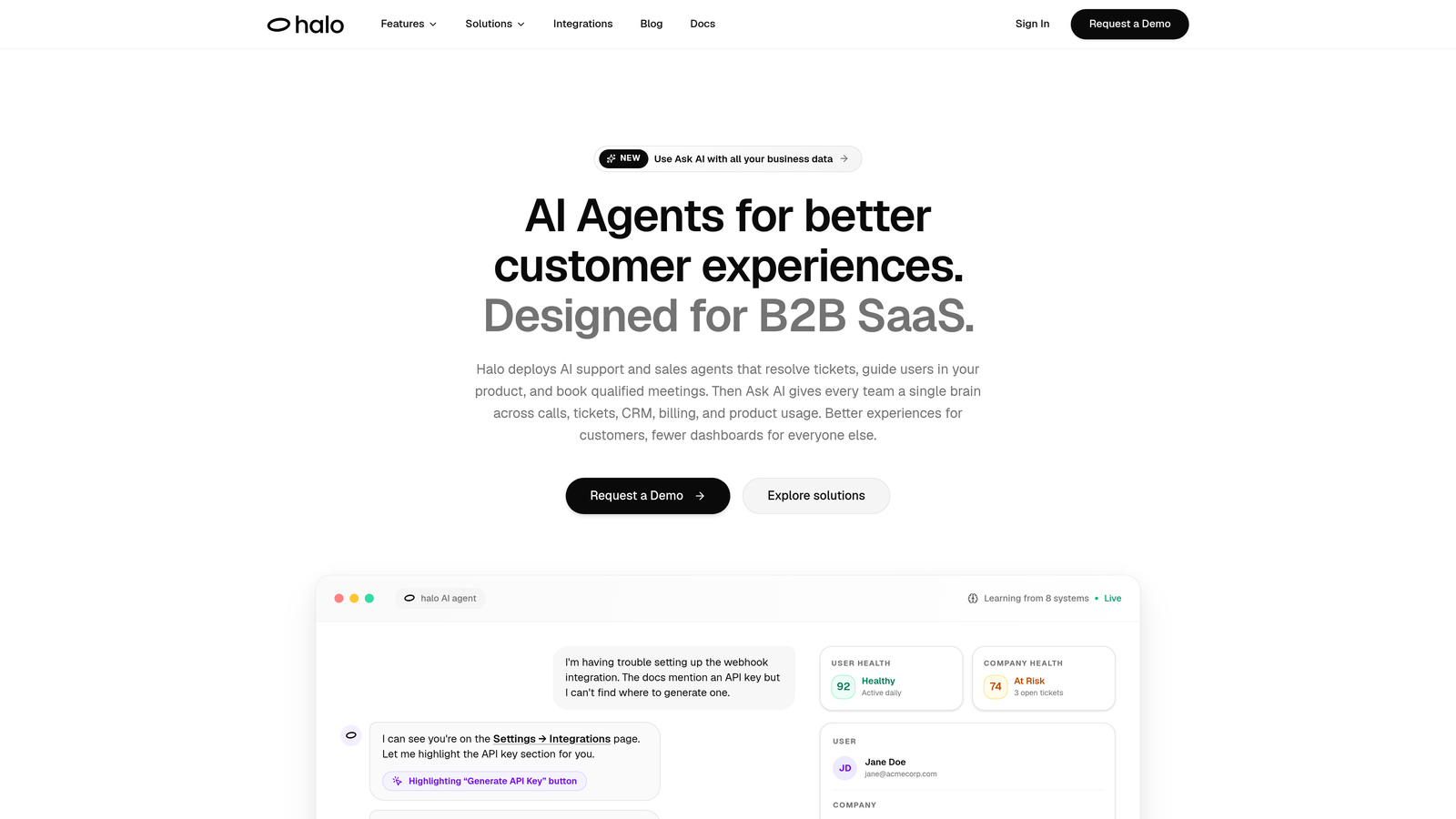
Halo AI is an AI-first customer support platform that deploys intelligent agents to resolve tickets, guide users with page-aware context, and surface business intelligence signals across your entire support operation.
Where This Tool Shines
What sets Halo apart from most tools on this list is its architecture. Rather than layering AI onto an existing helpdesk, Halo was built AI-first from the ground up. That distinction matters because it means the AI isn't just triaging or deflecting, it's resolving tickets end-to-end while continuously learning from every interaction.
The page-aware chat widget is a standout capability. Halo's agent actually knows what page a user is on and what they're looking at, enabling contextual UI guidance rather than generic scripted responses. Pair that with auto bug ticket creation routed directly to Linear and a smart inbox that surfaces customer health signals and revenue intelligence, and you have a platform that contributes to the business well beyond the support queue.
Key Features
Page-Aware Chat Widget: The agent sees what users see, providing contextual guidance based on the specific product area they're navigating.
Autonomous Ticket Resolution: AI agents handle tickets end-to-end, not just deflect them, with continuous learning from every interaction to improve over time.
Auto Bug Ticket Creation: Automatically identifies and routes bug reports to Linear or your project management tool, closing the loop between support and engineering.
Smart Inbox with Business Intelligence: Goes beyond ticket metrics to surface customer health signals, revenue intelligence, and anomaly detection across your customer base.
Live Agent Handoff: Escalates complex issues to human agents with full conversation context preserved, ensuring no loss of continuity.
Deep Integration Ecosystem: Connects with Slack, HubSpot, Intercom, Stripe, Zoom, PandaDoc, Fathom, and Linear out of the box.
Best For
Halo is best suited to B2B SaaS companies and product teams that want more than ticket deflection. If you need an AI agent that resolves issues autonomously, feeds intelligence back into your product and revenue workflows, and scales support without scaling headcount, this is the platform to evaluate first.
Pricing
Contact for pricing at haloagents.ai. Given the platform's depth and AI-first architecture, pricing is tailored to team size and use case.
2. Intercom
Best for: Mid-market SaaS teams wanting proactive messaging, product tours, and AI support in one platform.
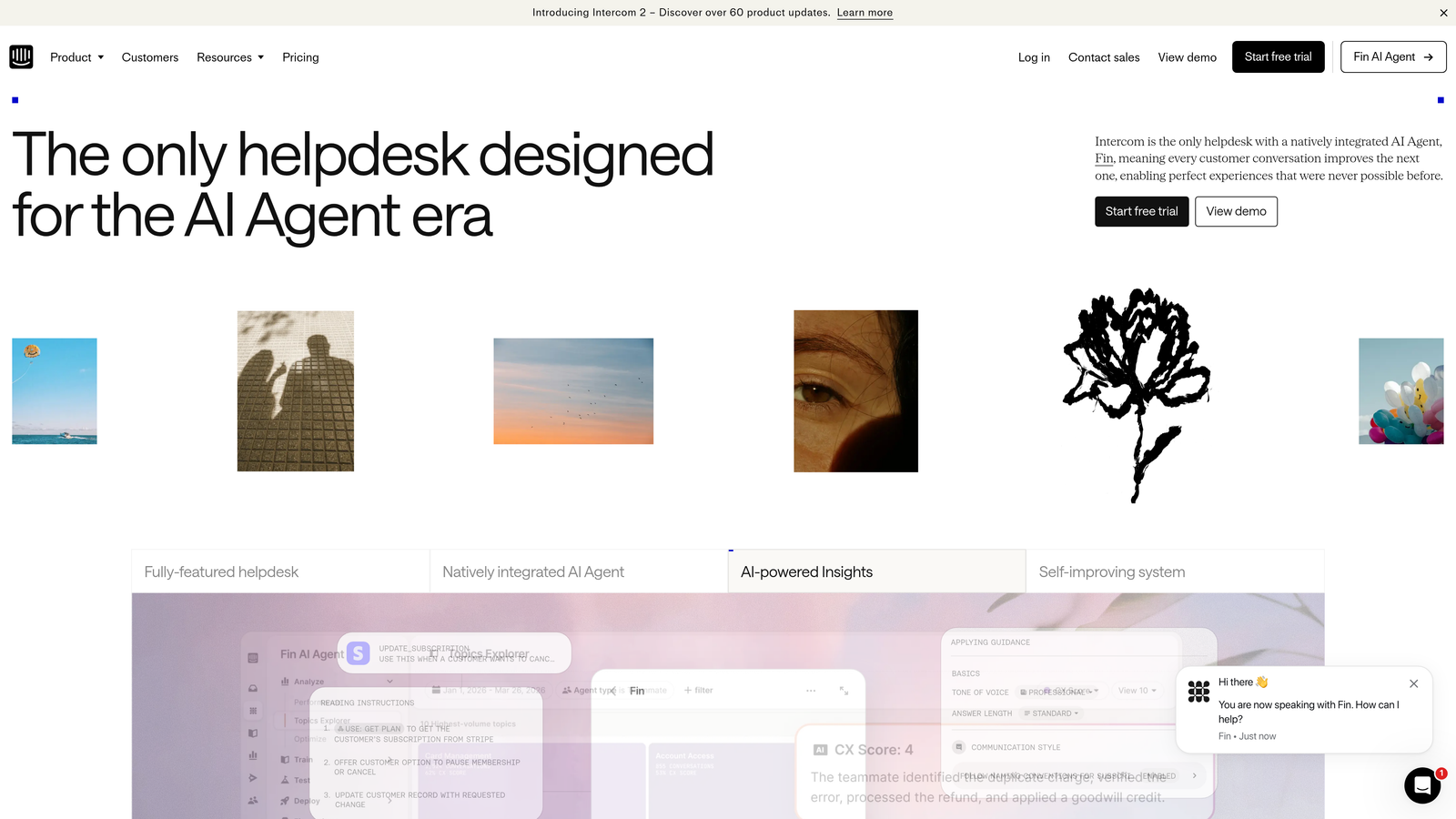
Intercom is a mature all-in-one customer messaging platform featuring Fin, its GPT-4-powered AI agent, alongside proactive messaging, product tours, and a full helpdesk suite.
Where This Tool Shines
Intercom has spent years building one of the most comprehensive customer messaging ecosystems in the market. Fin, its AI agent, handles conversational resolution with solid accuracy, and the platform's proactive messaging and product tour capabilities give support and success teams tools that go beyond reactive ticket handling.
For teams already managing the full customer lifecycle in one tool, Intercom's breadth is genuinely valuable. The tradeoff is cost: pricing has historically been on the higher end, and Fin's resolution-based pricing adds up quickly at scale. It's a platform where value depends heavily on how much of the feature set you actually use.
Key Features
Fin AI Agent: GPT-4-powered conversational agent that handles autonomous resolution across common support queries.
Proactive Messaging and Product Tours: Reach users in-app before they need to contact support, reducing inbound volume proactively.
Shared Inbox: Assignment rules, SLA management, and team collaboration built into a unified inbox.
Extensive App Marketplace: Hundreds of integrations and API access for custom workflows.
Omnichannel Messaging: In-app, email, and push messaging managed from a single platform.
Best For
Mid-market SaaS companies that want proactive engagement, product tours, and AI support under one roof. Teams that only need support automation may find the full platform more than they need at its price point.
Pricing
Starts at approximately $39/seat/month; Fin AI resolution pricing is separate and usage-based. Verify current pricing at intercom.com as rates are subject to change.
3. Zendesk
Best for: Enterprise support teams with complex routing needs and large agent workforces.
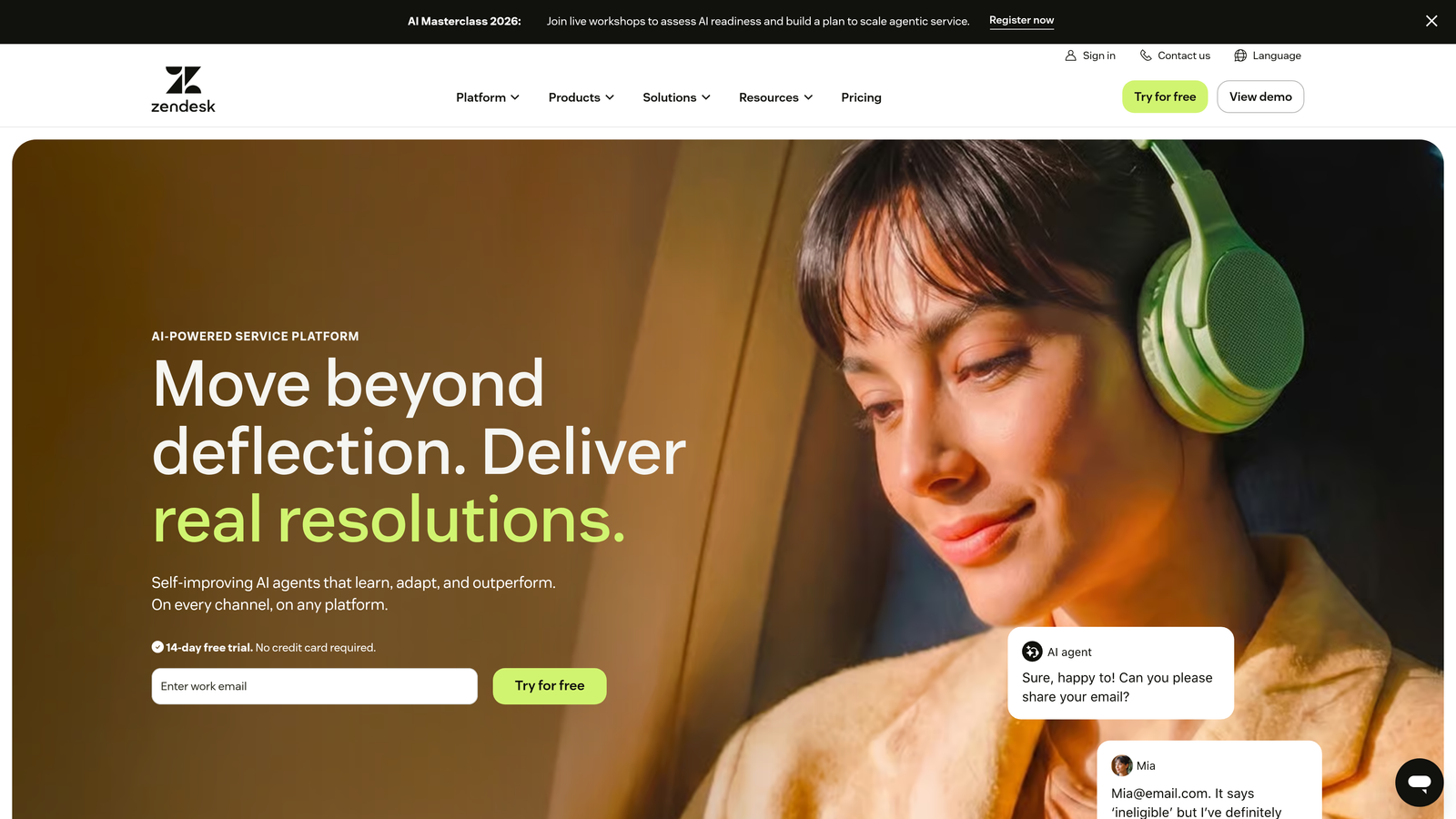
Zendesk is an enterprise-grade helpdesk platform with AI-powered triage, intelligent routing, and one of the largest integration ecosystems in the industry.
Where This Tool Shines
Zendesk's strength is its operational depth. For large support organizations managing high ticket volumes across multiple channels, the platform's routing logic, SLA management, and reporting capabilities are hard to match. The 1,500+ app marketplace means it connects to virtually any tool in your stack.
Zendesk AI (built on the foundation of the former Answer Bot) has improved significantly, offering intent detection, ticket triage, and suggested replies. That said, the AI feels architecturally bolted onto a helpdesk-first platform rather than native to it. Teams with established Zendesk workflows will find the AI additions valuable; teams starting fresh may find purpose-built AI platforms more capable out of the box.
Key Features
Zendesk AI: Handles ticket triage, intent detection, and suggested replies to reduce agent workload.
Advanced Routing and SLA Management: Sophisticated rules for assigning tickets based on skill, priority, and workload.
1,500+ App Marketplace: Extensive integration options covering CRM, billing, project management, and more.
Robust Reporting Dashboards: Customizable analytics for tracking support performance at scale.
Omnichannel Support: Unified inbox for chat, email, voice, and social channels.
Best For
Large enterprises and high-volume support operations that need proven routing infrastructure, compliance features, and a wide integration ecosystem. Smaller teams may find the complexity and cost disproportionate to their needs.
Pricing
Suite plans start at approximately $55/agent/month. Enterprise tiers are significantly higher. Confirm current pricing at zendesk.com.
4. Freshdesk
Best for: Growing teams seeking affordable helpdesk automation with AI capabilities and a free entry point.
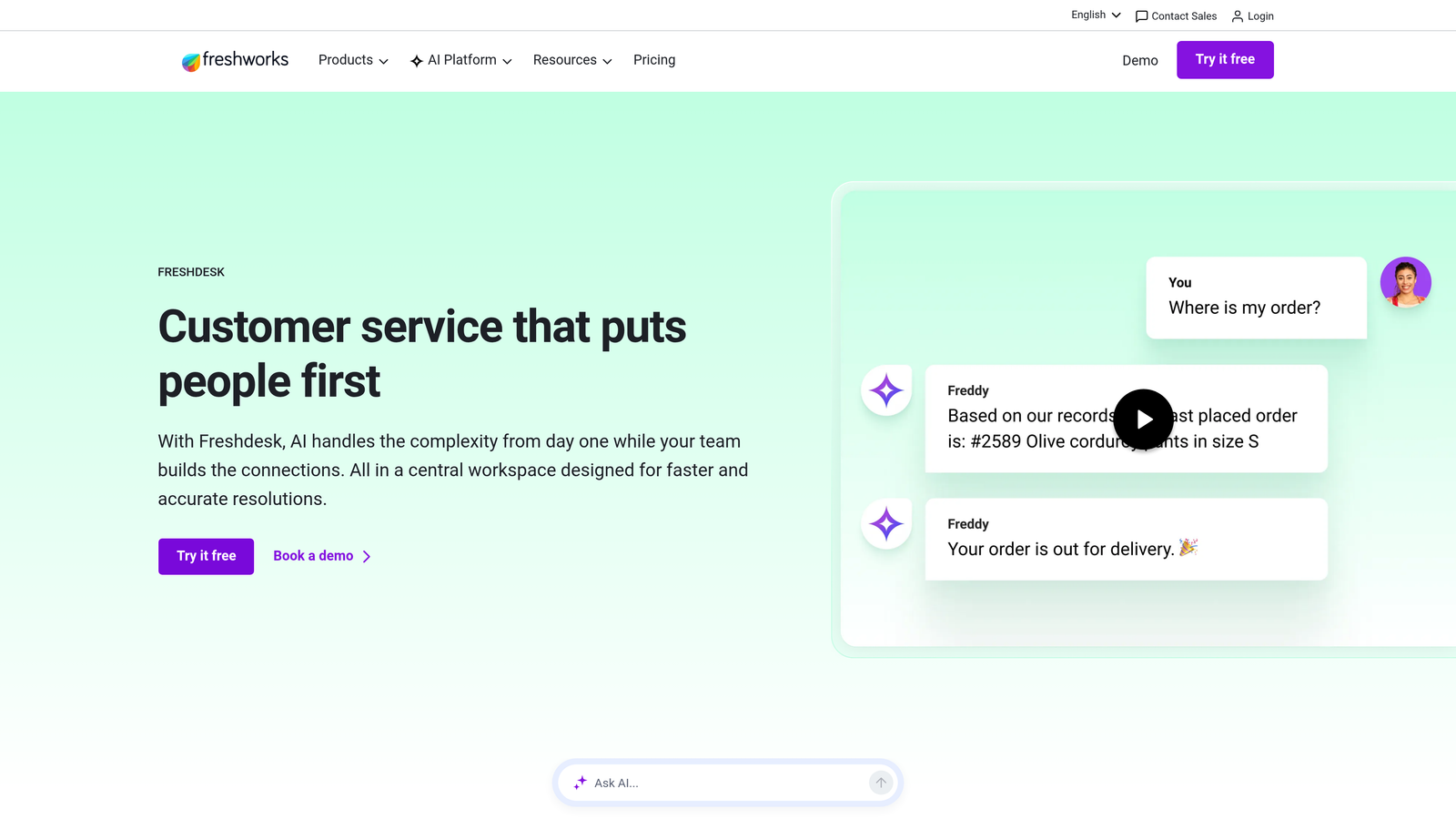
Freshdesk is a helpdesk platform from Freshworks featuring Freddy AI for automated responses, smart suggestions, and self-service, positioned as a more accessible alternative to enterprise tools.
Where This Tool Shines
Freshdesk punches above its price point. Freddy AI handles auto-triage, canned response suggestions, and basic self-service deflection at a cost that makes it accessible to teams that can't justify Zendesk or Intercom pricing. The free plan is genuinely functional for small teams just getting started.
The platform's omnichannel inbox covers email, chat, phone, and social in a clean interface. Where Freshdesk shows its limitations is at the AI sophistication level: Freddy Copilot and Freddy Self Service are separate add-ons, meaning the base AI experience is more assistive than autonomous. Teams wanting deep end-to-end resolution will need to evaluate whether the add-on costs bring it close enough to purpose-built AI platforms.
Key Features
Freddy AI: Auto-triage, suggested replies, and canned response recommendations to speed up agent workflows.
Freddy Self Service: Chatbot-driven deflection for common queries before they reach the inbox.
Omnichannel Inbox: Email, chat, phone, and social channels unified in one view.
Affordable Pricing Tiers: Free plan available with paid plans that scale gradually as teams grow.
Marketplace Integrations: Connects with popular SaaS tools including Slack, Salesforce, and Jira.
Best For
SMBs and growing teams that need a solid helpdesk with AI assistance at a reasonable price. An especially strong fit for teams already in the Freshworks ecosystem.
Pricing
Free plan available; paid plans start at approximately $15/agent/month. Advanced AI features require additional add-ons. Verify at freshworks.com.
5. Tidio
Best for: E-commerce businesses and small teams wanting AI chat with a no-code visual flow builder.
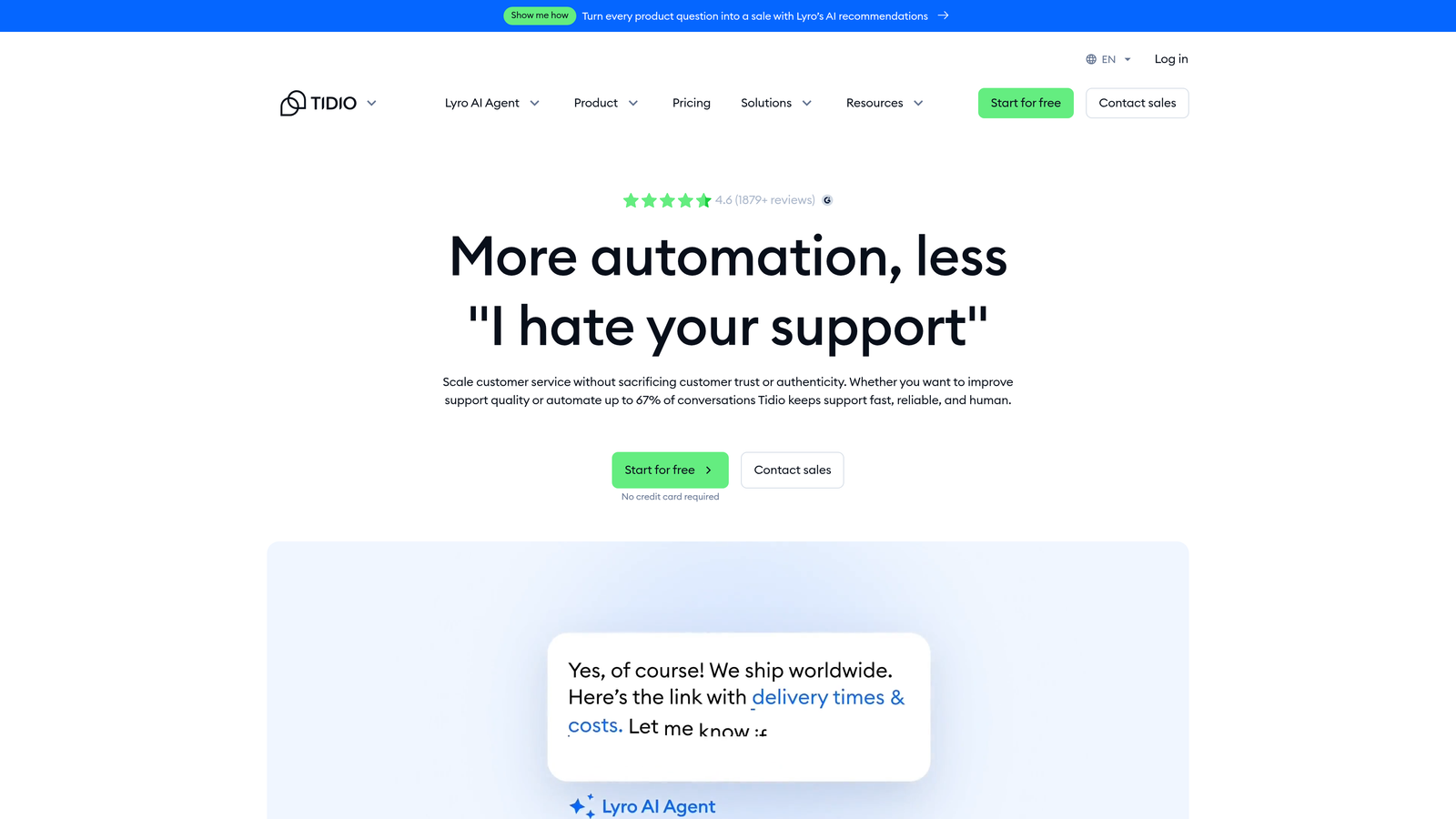
Tidio is a live chat and AI chatbot platform featuring Lyro AI for conversational resolution and a visual flow builder that makes automation accessible without technical expertise.
Where This Tool Shines
Tidio's accessibility is its biggest selling point. The visual chatbot flow builder requires no coding knowledge, making it practical for small teams or solo operators who need automation running quickly. Lyro AI handles conversational resolution for common queries with a natural tone that works well in consumer-facing contexts.
The platform's native integrations with Shopify, WooCommerce, and WordPress make it a natural fit for e-commerce teams. For B2B SaaS workflows with complex ticket types, technical user queries, or multi-system integrations, Tidio may feel limited. It's a strong tool within its lane, but that lane is primarily SMB and e-commerce rather than enterprise SaaS support.
Key Features
Lyro AI Agent: Conversational AI for resolving common customer queries without agent involvement.
Visual Flow Builder: No-code chatbot automation builder with conditional logic and branching.
Live Visitor Tracking: See who's on your site in real time and trigger proactive chat based on behavior.
E-Commerce Integrations: Native connectors for Shopify, WooCommerce, and WordPress.
Multi-Channel Support: Email and Messenger support alongside live chat in a unified inbox.
Best For
E-commerce businesses, small teams, and non-technical operators who need accessible automation with a quick setup. Less suited to complex B2B SaaS environments with deep integration requirements.
Pricing
Free plan available; paid plans start at approximately $29/month. Lyro AI conversations may be metered separately depending on the plan tier.
6. Drift
Best for: B2B sales and marketing teams focused on pipeline acceleration through conversational automation.
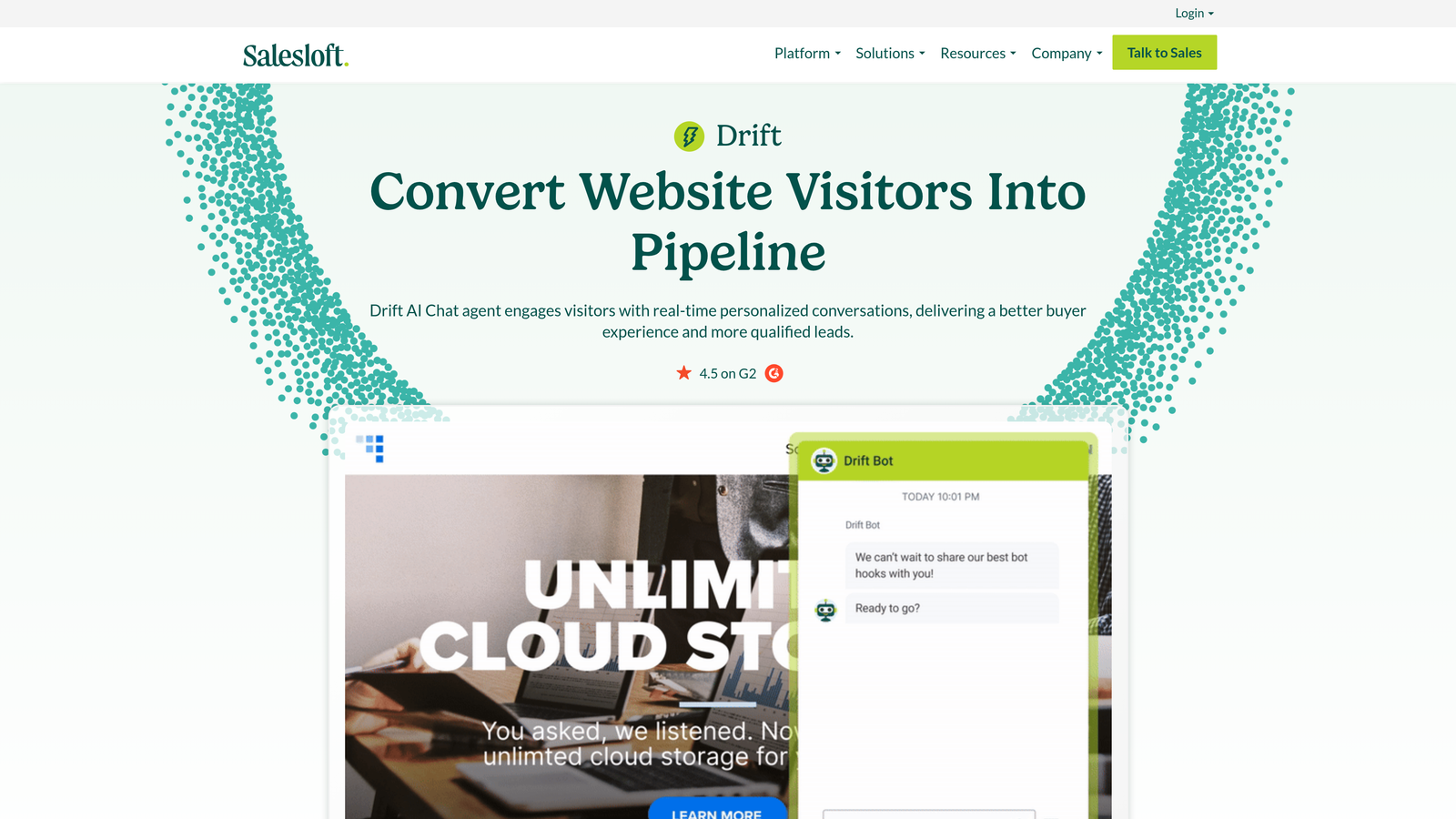
Drift (now part of Salesloft) is a conversational marketing and sales platform focused on using chat automation to qualify leads, book meetings, and accelerate B2B pipeline in real time.
Where This Tool Shines
Drift's strength is in the revenue side of the house, not the support side. Its ABM-based targeting lets you serve personalized chat experiences to high-value accounts the moment they land on your site, with automated meeting booking and AI-powered lead qualification routing hot prospects directly to sales reps. For teams where pipeline generation is the primary goal, few platforms do this as well.
It's worth being clear about the tradeoff: Drift is built for sales and marketing outcomes, not deep support resolution. If your primary need is autonomous ticket resolution, customer health monitoring, or technical support automation, Drift will feel like the wrong tool. It belongs on this list because many B2B teams use chat automation for both sales and support, and Drift excels at the former.
Key Features
ABM-Based Targeting: Serve personalized chat experiences to target accounts based on firmographic and behavioral data.
Automated Meeting Booking: Let qualified prospects book directly from chat without involving a sales rep.
AI Lead Qualification: Automatically qualify and route leads to the right rep based on defined criteria.
Playbooks: Customizable conversation flows tailored by visitor segment, intent, or page.
CRM Integrations: Deep Salesforce and HubSpot integrations for syncing conversation data to deal records.
Best For
B2B marketing and sales teams running account-based programs where real-time chat engagement with target accounts is part of the pipeline strategy.
Pricing
Contact Drift/Salesloft for current pricing. Plans vary based on usage and team size.
7. Crisp
Best for: Early-stage teams wanting broad multi-channel coverage at minimal cost.
Crisp is an affordable multi-channel shared inbox with a built-in chatbot builder, live chat, and basic automation designed for teams that need wide coverage without a large budget.
Where This Tool Shines
Crisp's value proposition is straightforward: a generous free tier, a clean multi-channel inbox, and enough automation to handle common workflows, all without the pricing complexity of larger platforms. The unified inbox covers chat, email, Messenger, Instagram, and more, which is genuinely useful for small teams managing multiple channels.
The chatbot builder is simple but functional, with conditional logic for basic routing and deflection. CRM-lite features like contact profiles, notes, and conversation history give small teams enough context to handle customer conversations without a separate CRM. Where Crisp falls short is AI sophistication: it's not a platform for autonomous resolution or business intelligence. It's a well-priced tool for teams in the early stages of building their support stack.
Key Features
Unified Multi-Channel Inbox: Chat, email, Messenger, Instagram, and more in a single shared inbox.
Visual Chatbot Builder: Simple conditional logic for routing, deflection, and FAQ automation.
CRM-Lite Features: Contact profiles, notes, and full conversation history accessible from the inbox.
Generous Free Tier: Up to 2 agents on the free plan with core chat features included.
Knowledge Base and Status Page: Available on higher tiers to reduce inbound volume.
Best For
Early-stage startups and small teams that need multi-channel coverage and basic automation without significant investment. Teams that outgrow it will likely migrate to a more AI-capable platform.
Pricing
Free plan available; Pro starts at approximately $25/month per workspace. Check crisp.chat for current tier details.
8. HubSpot Live Chat
Best for: Teams already on HubSpot that want CRM-native chat and chatbot automation at no extra cost.
HubSpot Live Chat is a CRM-native live chat and chatbot tool built into HubSpot's platform, enabling teams to automate conversations that sync directly to contact and deal records.
Where This Tool Shines
The core value of HubSpot Live Chat is its native CRM integration. Every conversation automatically updates the contact timeline, meaning sales and support teams always have full context without manual data entry. The chatbot builder handles lead qualification, meeting booking, and basic FAQ deflection with flows that connect directly to HubSpot workflows.
For teams already invested in HubSpot's ecosystem, this is often the easiest win: meaningful chat automation included in the CRM they're already paying for. As a standalone tool, however, it's limited. The AI capabilities are basic compared to purpose-built platforms, and the chatbot builder is rule-based rather than conversationally intelligent. It's best understood as a strong CRM-native feature rather than a dedicated live chat automation platform.
Key Features
CRM-Native Architecture: All chat conversations sync automatically to HubSpot contact and deal records.
Chatbot Builder: Automated lead qualification, meeting booking, and FAQ flows tied to CRM data.
Contact Timeline Integration: Chat history stored against individual contact records for full context.
Free Live Chat: Included in HubSpot's free CRM tier with no additional cost.
Ecosystem Integration: Works alongside HubSpot's email, forms, sequences, and marketing automation.
Best For
Teams already using HubSpot as their CRM who want chat and basic automation without adding another vendor. Limited value as a standalone chat solution outside the HubSpot ecosystem.
Pricing
Free with HubSpot CRM; advanced automation and reporting features require paid Marketing Hub or Service Hub plans. See hubspot.com for current plan details.
9. Chatbase
Best for: Teams wanting a fast-to-deploy GPT-powered chat widget trained on their own content.
Chatbase is a lightweight platform for building GPT-powered chat widgets trained on your own documents, URLs, or PDFs, deployable on any website with minimal setup time.
Where This Tool Shines
Chatbase earns its place on this list through sheer speed to value. You can upload your documentation, point it at your knowledge base URLs, or connect a Notion workspace, and have a GPT-4-powered chat widget live on your site in under an hour. For teams that need AI chat coverage quickly without a lengthy implementation, that's a genuine advantage.
The tradeoff is depth. Chatbase is purpose-built for content-based Q&A, not for complex ticket resolution, multi-system integrations, or business intelligence. It doesn't do live agent handoff in the way enterprise platforms do, and its analytics are relatively basic. Think of it as an intelligent knowledge base interface rather than a full support automation platform. For teams with a content-rich help center and a need for quick AI coverage, it delivers well.
Key Features
Custom Data Training: Train the AI on PDFs, URLs, Notion pages, and Google Docs without technical setup.
Embeddable Widget: Deploy on any website or app with a simple embed code.
GPT-4 Responses with Citations: Answers reference source material, giving users confidence in the information provided.
Lead Capture: Collect contact information from chat interactions for follow-up.
API Access: Available for teams that want to build custom integrations or workflows on top of the platform.
Best For
Small teams, indie developers, and content-rich businesses that want fast AI chat coverage without a full platform implementation. Not suited to teams needing deep workflow automation or enterprise integrations.
Pricing
Free plan available; paid plans start at approximately $19/month. See chatbase.co for current tier limits and pricing.
Which Tool Is Right for Your Team?
The right live chat automation software depends almost entirely on what you're trying to solve and where you are in your growth journey.
If you're a B2B SaaS team that wants genuine AI-first support, with autonomous resolution, page-aware context, and business intelligence that feeds back into your product and revenue workflows, Halo AI is the standout choice. It's built for teams that want support automation to be a strategic asset, not just a ticket deflection layer.
For teams already deep in the HubSpot or Freshworks ecosystems, HubSpot Live Chat and Freshdesk offer the fastest path to automation without adding a new vendor. Intercom is the strongest all-rounder for mid-market SaaS teams that want proactive engagement alongside support, while Zendesk remains the go-to for large enterprises with complex routing and compliance requirements.
If your primary goal is pipeline acceleration rather than support resolution, Drift's conversational marketing capabilities are hard to match in B2B contexts. Tidio and Crisp serve early-stage and e-commerce teams well at accessible price points. And if you simply need AI chat trained on your content and deployed fast, Chatbase delivers that with minimal friction.
The broader principle worth keeping in mind: the most effective support operations in 2026 aren't choosing between AI and human agents. They're designing systems where AI handles the routine, surfaces the important, and escalates the complex, so human agents can focus where they genuinely add value.
Your support team shouldn't scale linearly with your customer base. Let AI agents handle routine tickets, guide users through your product, and surface business intelligence while your team focuses on complex issues that need a human touch. See Halo in action and discover how continuous learning transforms every interaction into smarter, faster support.