9 Best Machine Learning Customer Service Platforms in 2026
Choosing the right machine learning customer service platform can dramatically improve resolution rates and reduce support costs, but the differences between AI-first and legacy systems matter. This guide evaluates the 9 best ML-powered customer service platforms in 2026, comparing autonomous resolution capabilities, learning architecture, and scalability to help B2B SaaS teams find the best fit for their support operations.
 Matt PattoliFounder13 min read
Machine learning has fundamentally changed what customer service software can do. Instead of rigid decision trees and keyword-matching bots, today's platforms learn from every interaction, predict what customers need before they ask, and resolve tickets autonomously without adding headcount.
But not all ML-powered platforms are built the same. Some bolt AI onto legacy helpdesk infrastructure. Others are built AI-first from the ground up. The difference shows up in resolution rates, escalation quality, and how quickly the system improves over time.
This list covers the top machine learning customer service platforms available in 2026, evaluated on autonomous resolution capability, learning architecture, integration depth, and how well they scale for B2B SaaS teams. Whether you're replacing a traditional helpdesk, augmenting your existing stack, or building a support operation from scratch, there's a platform here that fits.
1. Halo AI
Best for: B2B SaaS teams that need AI-first support with deep product and revenue integrations
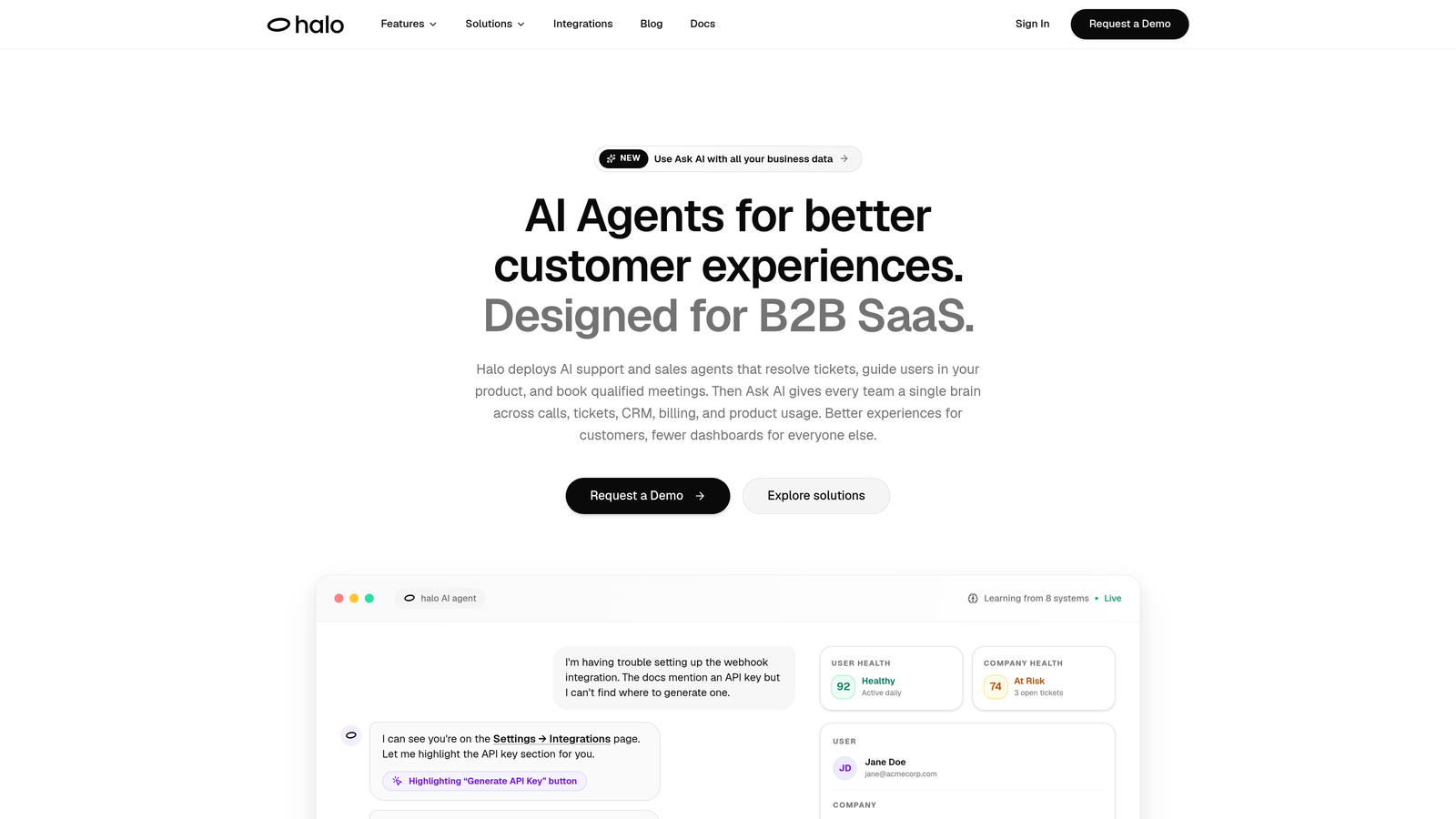
Halo AI is an AI-native customer support platform built specifically for B2B SaaS teams, deploying intelligent agents that resolve tickets, guide users through your product, and surface business intelligence from every support interaction.
Where This Tool Shines
What separates Halo from most platforms on this list is its page-aware architecture. The chat widget doesn't just respond to text: it sees what the user sees, understands which part of your product they're in, and delivers contextual UI guidance based on their exact situation. That's a fundamentally different experience than a generic FAQ bot.
Beyond resolution, Halo's smart inbox functions as a business intelligence layer. It surfaces customer health signals, detects anomalies, and flags revenue-relevant patterns from support data. Your support queue becomes a strategic feed, not just a task list.
Key Features
Page-Aware Chat Widget: Sees what users see in real time and delivers contextual UI guidance based on their current product location.
Autonomous Ticket Resolution: AI agents handle tickets end-to-end with continuous learning from every resolved interaction, improving without manual retraining.
Auto Bug Ticket Creation: Automatically detects and routes bug reports to Linear or your engineering stack, removing the manual triage step entirely.
Smart Inbox with Business Intelligence: Surfaces customer health signals, anomaly detection, and revenue intelligence directly from support interactions.
Live Agent Handoff: Escalates to human agents with full conversation context preserved, so customers never have to repeat themselves.
Deep Integration Stack: Connects natively with Linear, Slack, HubSpot, Intercom, Stripe, Zoom, PandaDoc, and Fathom.
Best For
Halo is purpose-built for B2B SaaS product teams and support leaders who want more than ticket deflection. If you need your support system to connect to your engineering workflow, flag at-risk accounts, and learn continuously without manual intervention, this is the platform designed for that use case.
Pricing
Contact for pricing, tailored to team size and usage. Visit haloagents.ai for details.
2. Intercom (Fin AI)
Best for: Teams already on Intercom who want autonomous resolution without migrating their core stack
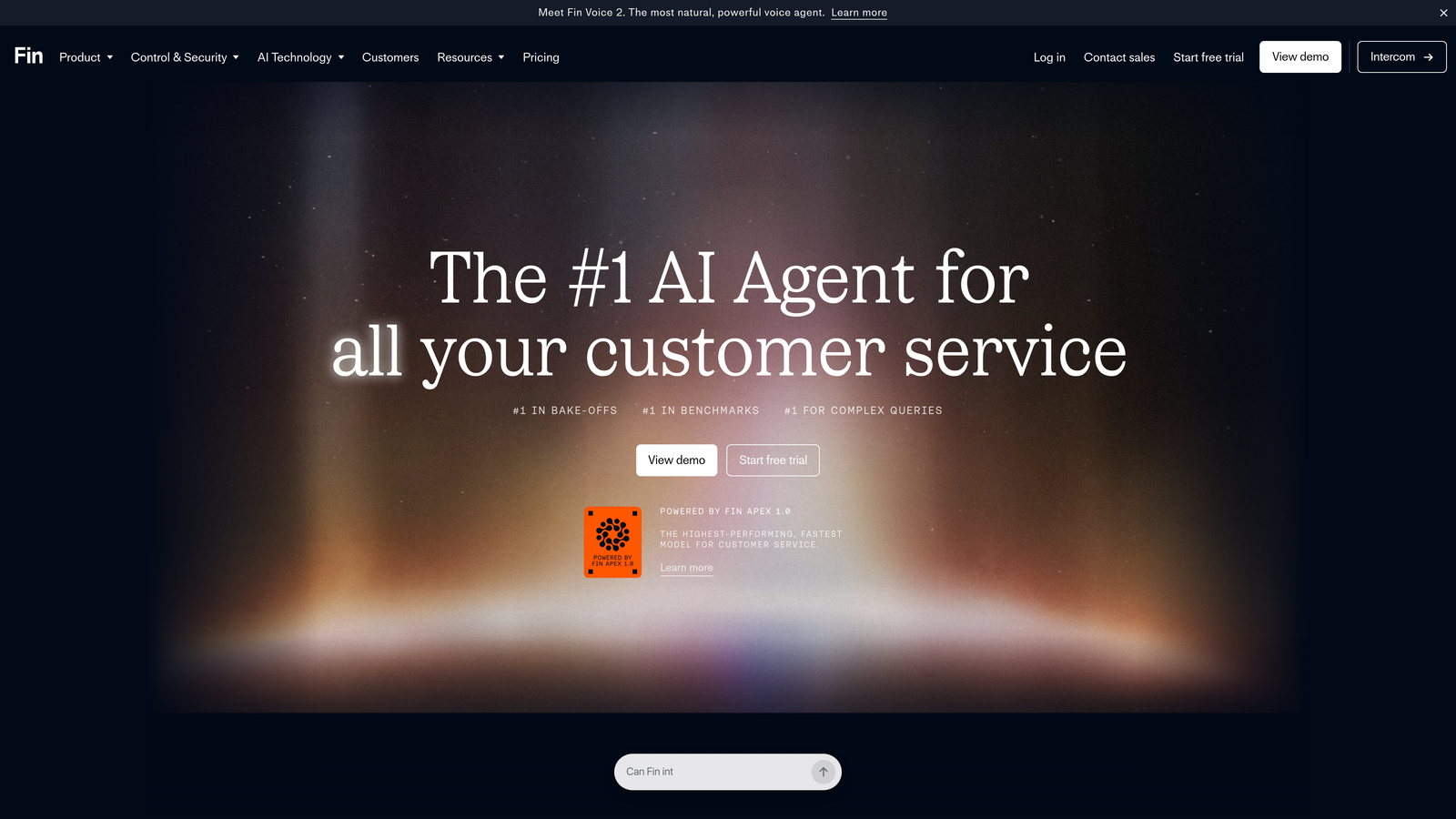
Intercom Fin is an LLM-powered resolution agent built natively into the Intercom platform, designed to answer customer questions directly from your existing help content.
Where This Tool Shines
Fin's biggest advantage is how naturally it fits into an existing Intercom setup. If your team already lives in the Intercom inbox and you've invested in a solid help center, Fin can start resolving conversations quickly without a complex migration or retraining period.
Resolution quality is closely tied to the quality and coverage of your knowledge base. Teams with well-maintained help content see strong results. Teams with sparse documentation will need to invest there first before Fin can perform effectively.
Key Features
LLM-Powered Resolution: Draws directly from your help center content to answer questions without scripted flows.
Seamless Human Handoff: Transfers to live agents within the Intercom inbox when resolution isn't possible, with context intact.
Fin Insights Dashboard: Provides visibility into resolution patterns, gaps, and conversation trends.
Customizable Tone and Behavior: Lets teams adjust response style to match brand voice.
Multichannel Coverage: Operates across chat, email, and messaging channels within the Intercom ecosystem.
Best For
Existing Intercom customers who want to add autonomous resolution without changing platforms. Less suited for teams evaluating a full stack replacement or those who need deep integration with engineering and product workflows.
Pricing
Fin is available on Intercom plans with pricing based on resolutions or seats. Check intercom.com for current tiers, as pricing structures have evolved.
3. Zendesk AI
Best for: Large enterprise support orgs with complex routing needs and existing Zendesk infrastructure
Zendesk AI adds a comprehensive ML layer on top of its established enterprise helpdesk, covering triage, intent detection, agent copilot, and automated workflow triggers.
Where This Tool Shines
Zendesk's ML capabilities are mature and battle-tested across large support organizations. The intent and sentiment classification engine handles high ticket volumes with consistent accuracy, and the agent copilot reduces handle time by surfacing relevant content and next-best-action suggestions in context.
The platform's breadth is its strength: routing logic, workflow automation, and agent assist all work within a single familiar environment. For teams with deep Zendesk customization already in place, adding the AI layer is a lower-lift upgrade than switching platforms.
Key Features
ML-Based Triage: Classifies tickets by intent, sentiment, and urgency automatically at the point of intake.
Agent Copilot: Surfaces suggested responses and next-best-action recommendations directly in the agent workspace.
Intelligent Routing: Routes tickets based on detected intent, agent skills, and current workload distribution.
Automated Workflows: Triggers workflow actions based on ML-detected signals without manual rule configuration.
Extensive Integration Marketplace: Connects with hundreds of third-party tools through Zendesk's established app ecosystem.
Best For
Enterprise support teams already invested in Zendesk who need to add ML-powered triage and agent assistance without a platform migration. Less ideal for teams looking for AI-native architecture or deep product integration.
Pricing
AI features are available on Suite plans, starting at approximately $55 per agent per month. Verify current pricing at zendesk.com.
4. Freshdesk Freddy AI
Best for: SMB and mid-market teams seeking accessible ML-powered support without enterprise pricing
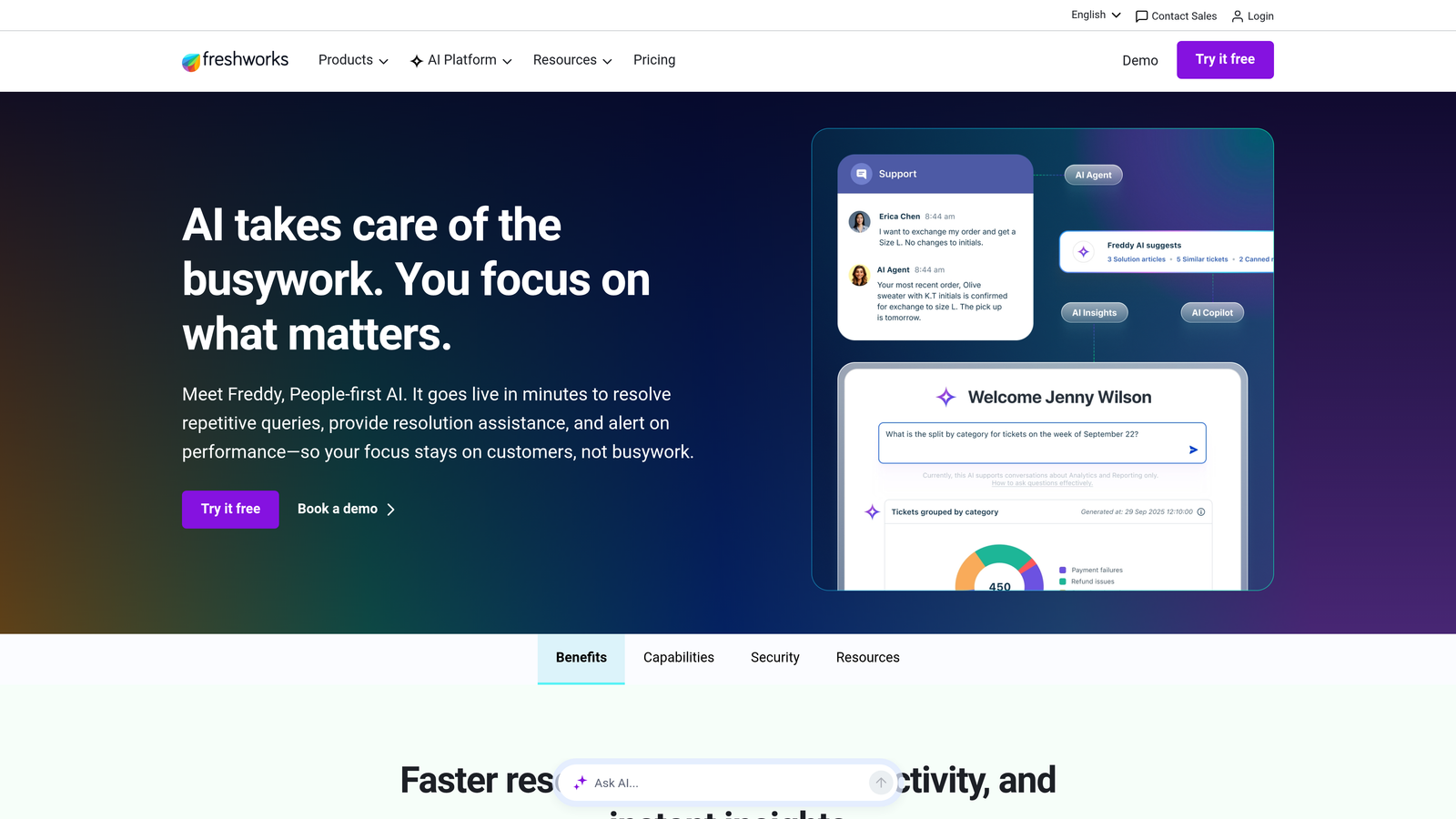
Freshdesk Freddy AI is Freshworks' embedded ML layer across the Freshdesk support suite, covering auto-triage, self-service resolution, and agent assistance at a price point accessible to growing teams.
Where This Tool Shines
Freddy's value proposition is accessibility. It brings ML-powered triage and self-service resolution to teams that can't justify enterprise-tier pricing, and it integrates naturally with the broader Freshworks ecosystem if you're already using their CRM or ITSM products.
The trade-off is depth. Freddy's ML capabilities are solid for standard triage and deflection, but teams with sophisticated routing logic or complex B2B support needs may find the learning architecture less adaptive than purpose-built AI-native platforms.
Key Features
Freddy Self Service Bot: Handles autonomous customer resolution using your existing knowledge base content.
Auto-Triage: Applies ML-based categorization and priority assignment at ticket intake.
Agent Assist: Surfaces suggested replies and relevant help articles for live agents during active conversations.
Freddy Insights: Provides analytics on support performance and automation coverage.
Freshworks Ecosystem Integration: Connects natively with Freshworks CRM, ITSM, and sales products for teams using the full suite.
Best For
SMB and mid-market support teams that want ML-powered automation without complex implementation. Teams already using Freshworks products will get the most value from the native integrations.
Pricing
Freddy AI features are available on Growth plans and above, starting at approximately $15 per agent per month. Verify current pricing at freshworks.com.
5. Salesforce Einstein for Service
Best for: Enterprises where CRM data and support operations need to be tightly unified
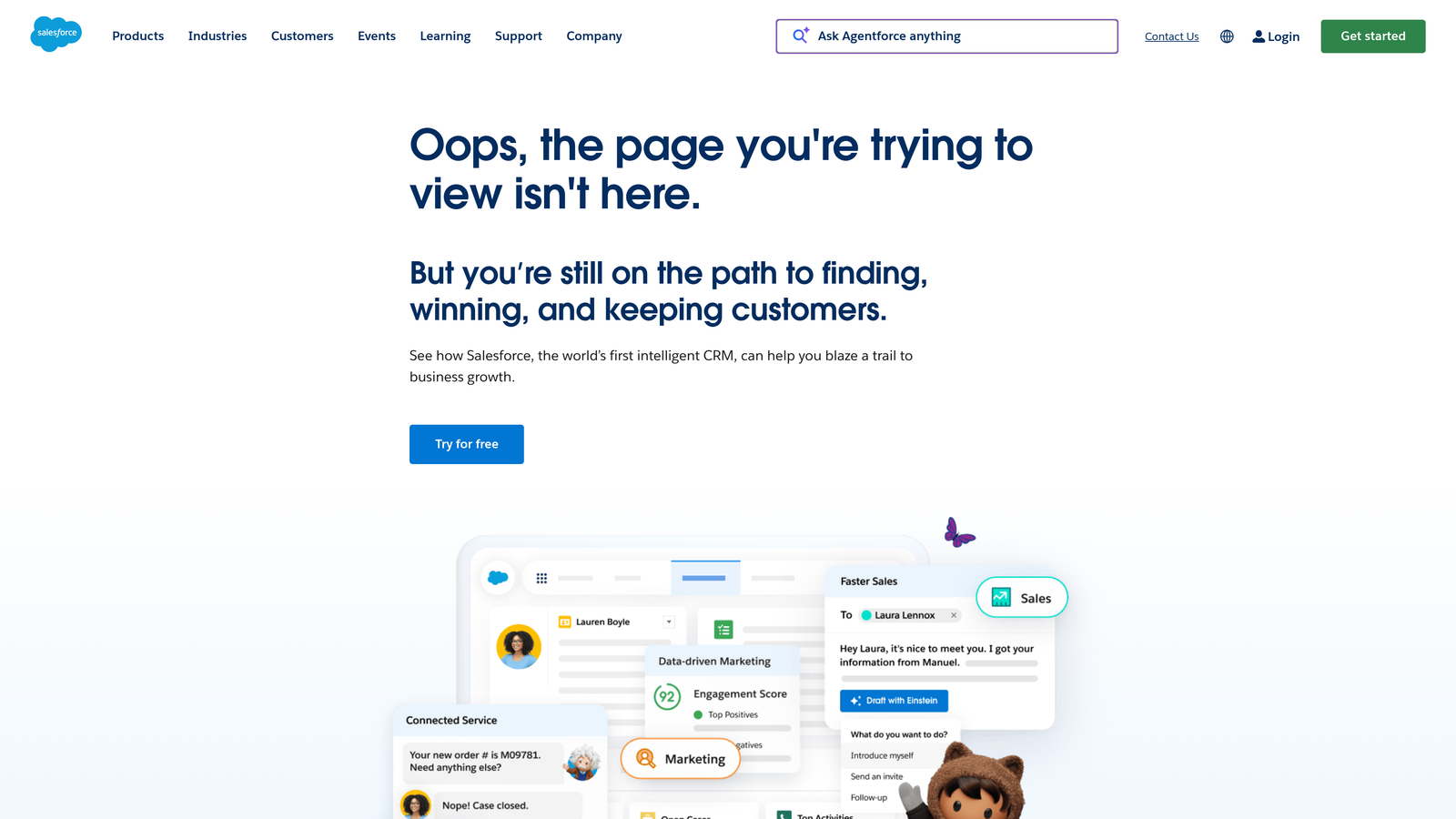
Salesforce Einstein for Service brings ML-powered case classification, next-best-action recommendations, and predictive routing to Salesforce Service Cloud, with direct access to the full Salesforce data model.
Where This Tool Shines
Einstein's core advantage is CRM depth. Because it operates within the Salesforce ecosystem, case classification and routing decisions can draw on the full account history, opportunity data, and customer lifecycle context stored in your CRM. That's a meaningful differentiator for enterprise B2B teams where support cases are tied to renewal risk or upsell timing.
The platform is complex to implement and typically requires Salesforce-certified administrators or a consulting partner to configure properly. Teams without existing Salesforce infrastructure will find the barrier to entry high.
Key Features
ML-Powered Case Classification: Automatically classifies cases and predicts field values at intake to reduce manual data entry.
Einstein Bots: Deploys self-service resolution bots with direct access to CRM data for personalized responses.
Next-Best-Action: Surfaces contextual recommendations in the agent console based on case attributes and customer history.
Predictive Routing: Routes cases based on ML-predicted attributes and agent skill matching.
Full Salesforce Integration: Connects directly with Sales Cloud, Marketing Cloud, and the broader Salesforce platform.
Best For
Enterprise organizations already running Salesforce CRM where support, sales, and marketing data need to operate from a single source of truth. Not practical for teams outside the Salesforce ecosystem.
Pricing
Available as part of Salesforce Service Cloud with enterprise pricing. Contact Salesforce directly for current quotes.
6. Kustomer
Best for: High-volume subscription and D2C brands that need unified customer timeline views with ML-driven routing
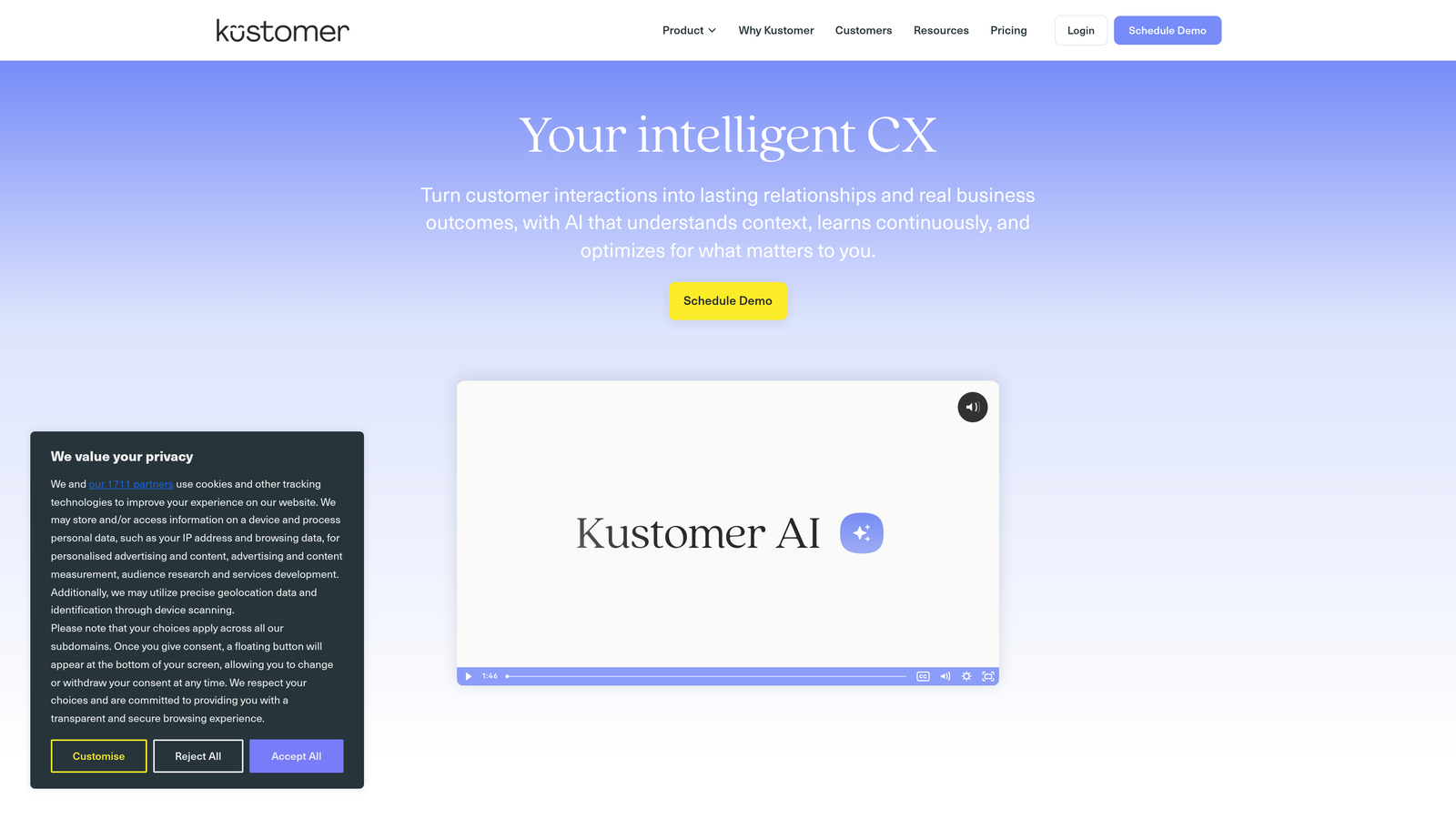
Kustomer unifies the full customer journey into a single timeline and applies ML to route, prioritize, and resolve conversations across every channel.
Where This Tool Shines
Kustomer's unified timeline is genuinely differentiated. Every touchpoint, order, interaction, and ticket is aggregated into a single customer view, and ML-powered routing decisions are made with that full context available. For high-volume brands managing complex customer histories, that context makes a real difference in resolution quality.
It's worth noting that Kustomer's design orientation leans B2C and D2C. Teams in B2B SaaS will find it capable but may encounter feature priorities that don't align with their workflows, particularly around product-level integrations and account-based support models.
Key Features
Unified Customer Timeline: Aggregates all touchpoints, order history, and interaction data into a single customer view.
ML-Powered Intent Detection: Classifies and routes conversations based on detected intent and customer context.
KustomerIQ: Handles automated deflection and surfaces suggested responses for live agents.
Proactive Outreach: Triggers outbound messages based on ML-detected customer signals before issues escalate.
Omnichannel Coverage: Manages chat, email, SMS, social, and voice from a single workspace.
Best For
High-volume subscription brands and D2C companies managing complex customer histories across multiple channels. B2B SaaS teams with standard support workflows may find other platforms a better fit.
Pricing
Starts at approximately $89 per agent per month. Verify current pricing at kustomer.com.
7. Ada
Best for: Enterprise CX teams that need non-technical operators to build and manage AI conversations at scale
Ada is a no-code AI agent builder that uses ML to continuously improve conversation flows, designed for enterprise teams where non-technical operators need to own and iterate on AI-powered support experiences.
Where This Tool Shines
Ada's no-code builder is genuinely accessible. CX teams can build, test, and refine conversation flows without engineering involvement, which dramatically reduces the iteration cycle when improving resolution coverage. The ML improvement loop means the system learns from interactions over time, even as non-technical operators manage it.
Ada's Reasoning Engine handles multi-turn conversations with more nuance than simple intent-matching bots, making it capable of navigating complex customer inquiries without immediately escalating. Enterprise compliance requirements and multilingual support are well-covered.
Key Features
No-Code Conversation Builder: Enables non-technical CX operators to build and iterate on AI conversation flows independently.
ML-Powered Intent Recognition: Continuously improves intent classification accuracy as the system processes more interactions.
Automated Resolution: Handles customer inquiries across chat, email, and messaging without agent involvement.
Ada Reasoning Engine: Manages complex, multi-turn conversations with contextual understanding across the full exchange.
Enterprise Security and Compliance: Includes multilingual support, enterprise-grade security controls, and compliance certifications.
Best For
Enterprise CX teams with non-technical operators who need to own AI conversation management. Organizations with complex compliance requirements or global multilingual support needs will find Ada well-suited.
Pricing
Enterprise pricing. Contact Ada for current quotes at ada.cx.
8. Forethought
Best for: Teams that want ML intelligence layered on top of their existing helpdesk without a full migration
Forethought positions itself as an ML intelligence layer that sits on top of existing helpdesks like Zendesk and Salesforce, adding smart triage, agent assist, and deflection without requiring a platform change.
Where This Tool Shines
Forethought's architecture is deliberately additive. Rather than replacing your helpdesk, it enhances it with ML-powered routing, knowledge surfacing, and deflection. For teams with significant investment in their current stack, this approach removes the migration risk that makes AI adoption feel daunting.
The Discover module is a particularly useful feature: it identifies gaps in your knowledge base and automation coverage by analyzing what's falling through the cracks. That kind of continuous gap analysis is valuable for teams trying to systematically improve deflection rates over time.
Key Features
Solve: An AI agent that handles autonomous ticket deflection before conversations reach a human agent.
Triage: ML-powered routing, tagging, and prioritization applied at ticket intake.
Assist: Surfaces in-context suggestions and relevant knowledge base articles for live agents during active tickets.
Discover: Identifies knowledge base gaps and automation coverage holes by analyzing unresolved or escalated tickets.
Native Helpdesk Integrations: Connects directly with Zendesk, Salesforce, ServiceNow, and other major platforms.
Best For
Support teams committed to their current helpdesk that want to add ML-powered intelligence without migrating. Particularly useful for Zendesk or Salesforce shops looking to improve resolution rates and agent efficiency incrementally.
Pricing
Contact for pricing at forethought.ai.
9. Tidio
Best for: Small businesses and early-stage SaaS teams that need accessible AI resolution with minimal setup
Tidio is a live chat and AI automation platform built for lean teams, featuring Lyro AI: a conversational ML agent that handles autonomous resolution using your existing support content.
Where This Tool Shines
Tidio's primary strength is accessibility. Setup is fast, the operator interface is intuitive, and Lyro AI can start resolving conversations without a lengthy configuration process. For small businesses or early-stage SaaS teams that don't have a dedicated support operations function, that low barrier to entry matters.
Tidio is not designed for complex B2B enterprise support needs. Teams with intricate routing logic, compliance requirements, or deep integration needs with engineering and product tools will quickly outgrow it. But as a starting point for teams that currently have no AI in their support stack, it delivers real value quickly.
Key Features
Lyro AI: Handles autonomous customer resolution by drawing from your existing support content and continuously improving with usage.
Live Chat Interface: Fast setup with an intuitive operator dashboard designed for small team management.
Pre-Built Automation Flows: Ready-to-use automation templates for common support scenarios that reduce configuration time.
Visitor Behavior Tracking: Monitors visitor activity and triggers proactive chat based on behavioral signals.
E-Commerce Integrations: Connects with Shopify, WordPress, Wix, and other major e-commerce and CMS platforms.
Best For
Small businesses, e-commerce brands, and early-stage SaaS teams that need a fast, affordable path to AI-powered support. Not suited for complex enterprise or B2B SaaS environments with sophisticated routing and integration requirements.
Pricing
Free tier available. Lyro AI plans start at approximately $29 per month. Verify current pricing at tidio.com.
Which Platform Is Right for Your Team?
Before choosing a machine learning customer service platform, audit your current stack honestly. Where are tickets stacking up? Where does context get lost in handoffs? Which integrations are non-negotiable? The answers will narrow your options quickly.
Here's a practical breakdown by team type:
B2B SaaS teams building AI-first support: Halo AI is purpose-built for this use case. Page-aware context, continuous learning, bug ticket automation, and business intelligence from support data make it the most complete option for product-led growth companies.
Teams already on Intercom: Fin AI is the lowest-friction path to autonomous resolution if your help center content is in good shape. No migration required.
Enterprise with complex routing and compliance: Zendesk AI or Salesforce Einstein, depending on whether your data model lives in Zendesk or Salesforce CRM.
SMB and mid-market on a budget: Freshdesk Freddy AI delivers solid ML-powered triage and deflection at a price point that scales with smaller teams.
Teams not ready to migrate their helpdesk: Forethought adds ML intelligence on top of your existing Zendesk or Salesforce setup without requiring a platform change.
Early-stage or small business: Tidio's Lyro AI gets you to autonomous resolution quickly with minimal setup and a free entry tier.
The broader point is this: the gap between AI-native platforms and AI-augmented legacy systems is widening. Platforms built ground-up on ML architecture tend to learn faster, integrate more deeply, and deliver better resolution quality over time because the entire system is designed around continuous improvement, not retrofitted onto existing infrastructure.
Your support team shouldn't scale linearly with your customer base. Let AI agents handle routine tickets, guide users through your product, and surface business intelligence while your team focuses on complex issues that need a human touch. See Halo in action and discover how continuous learning transforms every interaction into smarter, faster support.