9 Best Modern Customer Support Platforms in 2026
This guide evaluates nine modern customer support platforms worth considering in 2026, covering AI-powered tools that combine automation, real-time analytics, and deep integrations to help support teams resolve tickets faster and reduce costs. Whether you're replacing a legacy helpdesk or adding intelligent automation to your existing stack, this breakdown helps you identify the right solution for your team's needs.
 Matt PattoliFounder13 min read
Customer support expectations have fundamentally shifted. B2B buyers now expect instant, accurate, context-aware responses at any hour, and support teams are stretched thin trying to deliver. The old model of ticket queues, manual triage, and reactive helpdesks simply doesn't scale.
Modern customer support platforms have evolved well beyond basic ticketing. Today's leading tools combine AI-powered automation, real-time analytics, and deep integrations to help teams resolve issues faster, surface product insights, and reduce support costs without sacrificing quality.
This guide covers nine platforms worth evaluating in 2026, from AI-first agents that handle tickets autonomously to established helpdesks adding intelligent layers to their workflows. Whether you're replacing a legacy system or adding automation to an existing stack, here are the top modern customer support platforms available today.
1. Halo AI
Best for: SaaS and B2B teams wanting AI-first ticket resolution with built-in business intelligence
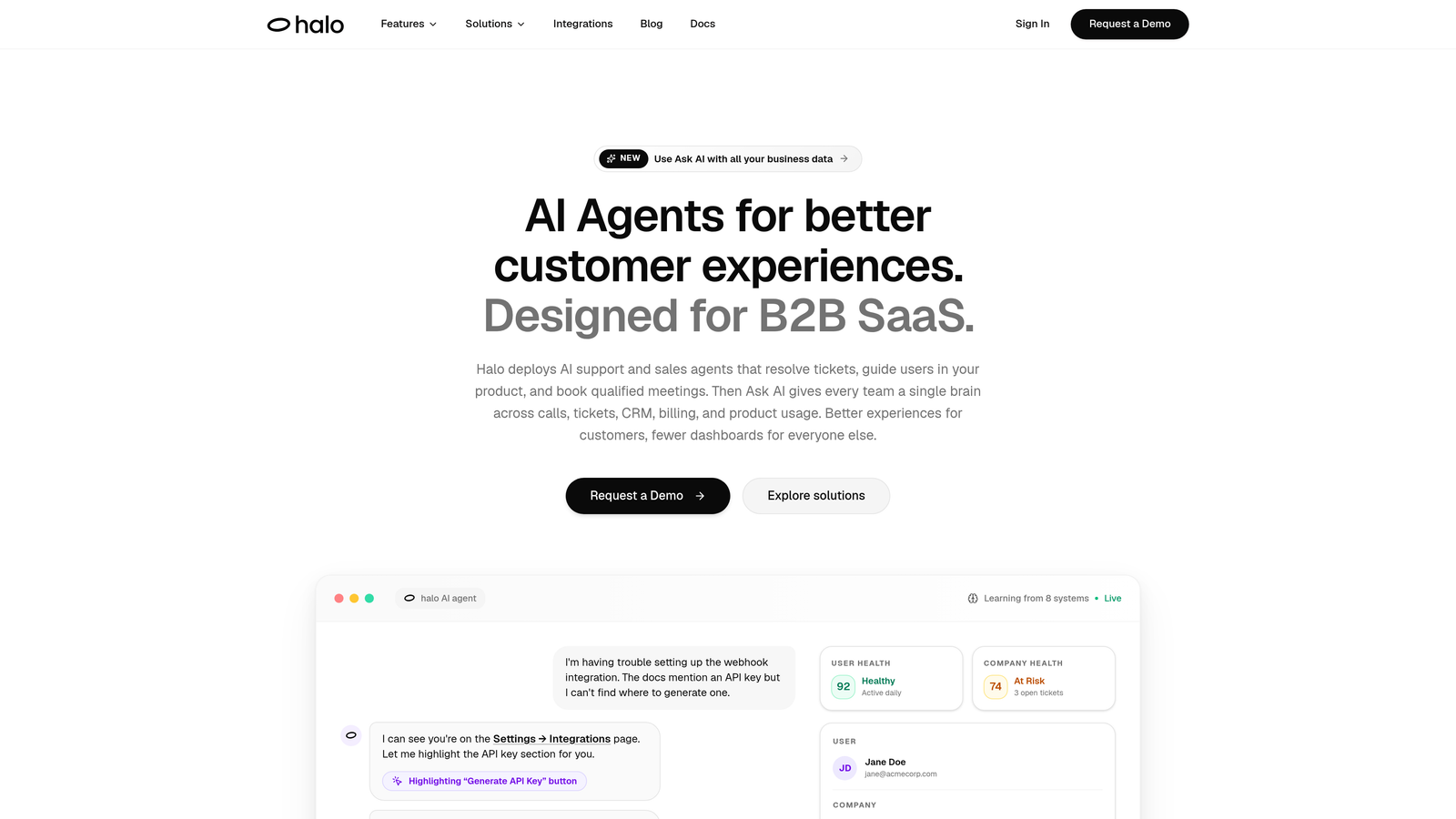
Halo AI is an AI-native customer support platform that deploys intelligent agents to resolve tickets, guide users contextually, and surface revenue and product signals.
Where This Tool Shines
What separates Halo from most platforms on this list is its architectural foundation. Rather than bolting AI onto an existing helpdesk, Halo is built from the ground up around AI agents that learn continuously from every resolved interaction. That means the system gets smarter over time rather than staying static.
The page-aware chat widget is a standout capability. It understands what a user is looking at in real time, allowing it to provide contextual visual UI guidance rather than generic responses. Combined with a smart inbox that surfaces customer health signals, revenue anomalies, and product insights, Halo turns your support operation into an intelligence layer for the entire business.
Key Features
Intelligent AI Agents: Autonomously resolve support tickets and escalate complex issues to live agents with full context preserved.
Page-Aware Chat Widget: Sees what users see in your product, enabling contextual guidance and visual UI walkthroughs without agent involvement.
Smart Inbox with Business Intelligence: Surfaces customer health signals, revenue anomalies, and product insights directly from support data.
Auto Bug Ticket Creation: Automatically generates and routes bug reports to engineering tools like Linear, closing the loop between support and product.
Deep Integrations: Connects to Slack, HubSpot, Intercom, Stripe, Zoom, PandaDoc, and Fathom for a unified support and business workflow.
Best For
SaaS companies and B2B product teams that want more than a helpdesk. Halo is particularly valuable for teams where support data should be informing product decisions, customer success, and revenue operations, not just closing tickets.
Pricing
Contact for pricing at haloagents.ai. Given the platform's AI-first architecture and business intelligence layer, pricing is tailored to team size and use case.
2. Zendesk
Best for: Enterprise teams needing a proven, deeply configurable helpdesk with broad integration coverage
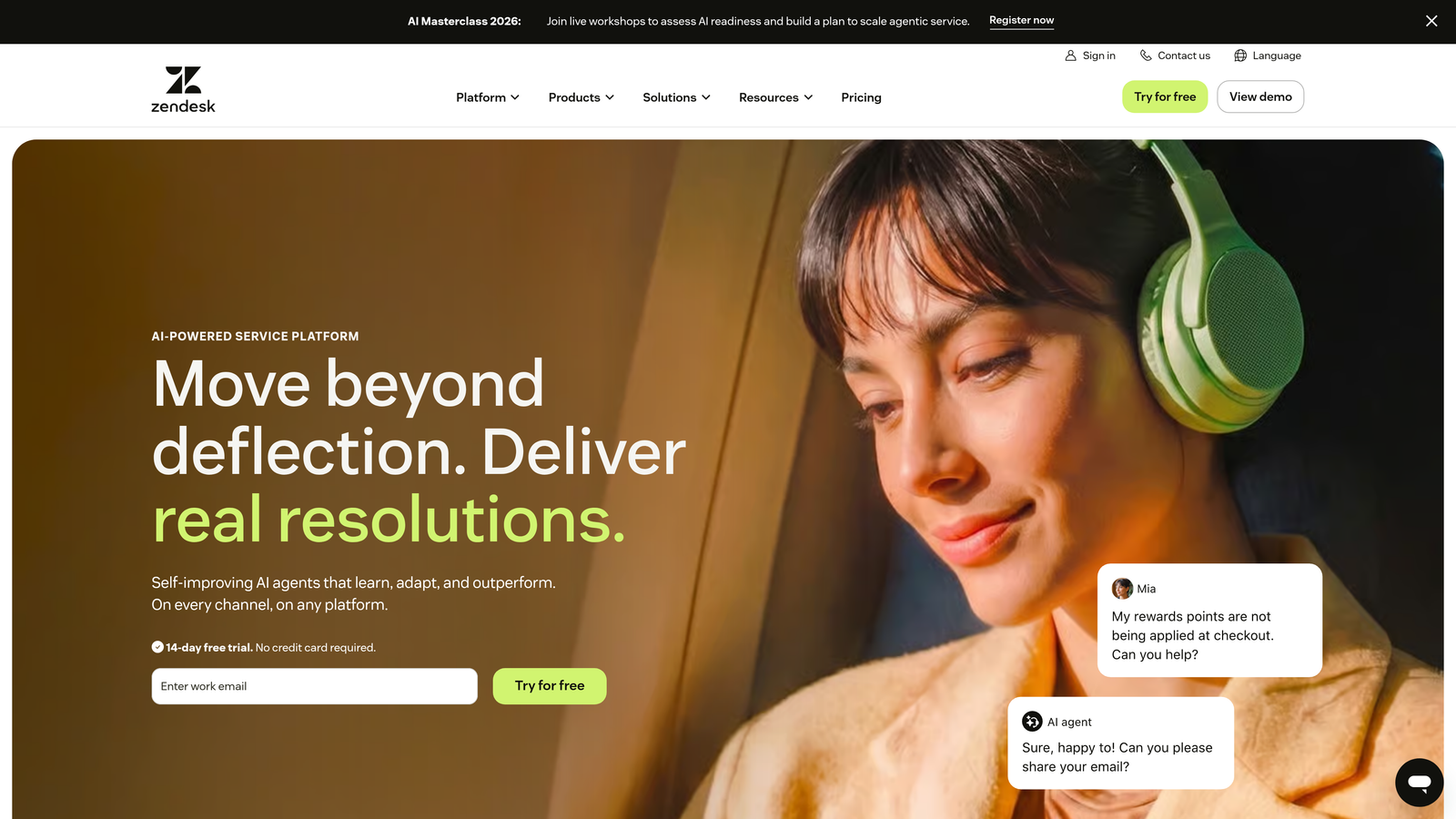
Zendesk is the industry-standard enterprise helpdesk, now with AI-powered triage, agent assist, and intelligent routing layered onto decades of workflow infrastructure.
Where This Tool Shines
Zendesk's strength is its maturity. The platform has been refined over years of enterprise use, resulting in highly configurable SLA management, routing logic, and reporting that can handle complex support organizations with multiple teams, regions, and channels.
The Zendesk AI layer, built in partnership with OpenAI, adds intelligent triage, suggested replies, and an agent copilot that assists human agents in real time. It's AI added to an existing foundation rather than AI-first, but for enterprises that need stability and customization, that tradeoff often makes sense.
Key Features
Zendesk AI: Intelligent triage, suggested replies, and an agent copilot for faster human-assisted resolution.
Configurable Routing and SLA Management: Granular control over ticket assignment, escalation rules, and service level agreements.
App Marketplace: Over 1,000 integrations available, covering CRMs, analytics tools, and productivity platforms.
Omnichannel Support: Handles email, chat, voice, social media, and self-service from a single interface.
Advanced Reporting: Customizable dashboards for team performance, ticket trends, and customer satisfaction.
Best For
Mid-to-large enterprises with established support operations that need a proven, scalable platform. Also a strong fit for teams with complex routing requirements or those heavily invested in the Zendesk integration ecosystem.
Pricing
Suite Team starts at approximately $55 per agent per month. Enterprise plans are available with custom pricing for larger organizations.
3. Intercom
Best for: SaaS teams wanting AI-powered resolution combined with in-app messaging and customer lifecycle engagement
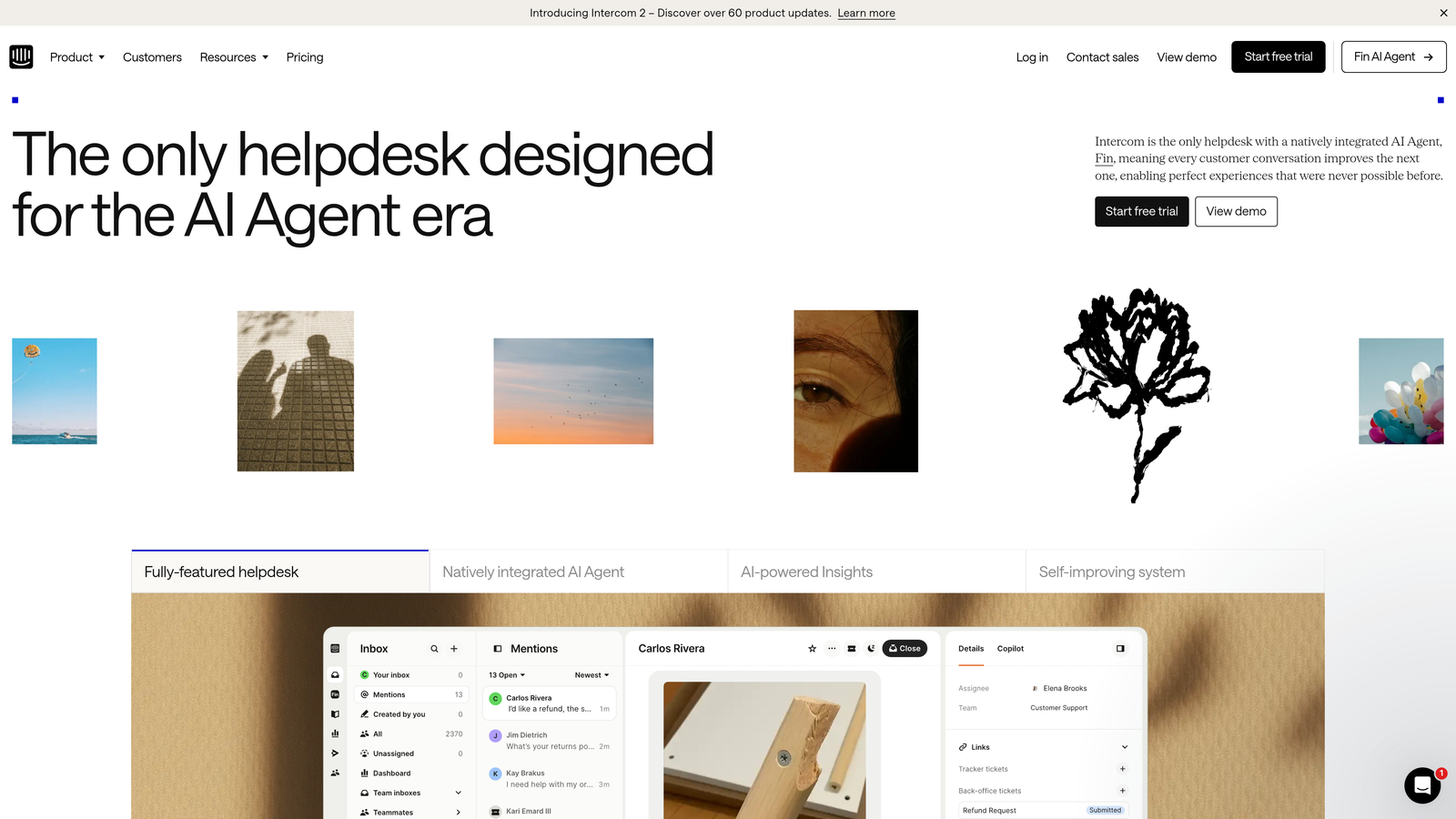
Intercom is a conversational support platform with Fin AI Agent at its core, built for SaaS teams that want in-app messaging, onboarding flows, and AI-powered resolution in one system.
Where This Tool Shines
Intercom has repositioned aggressively around AI in recent years, and Fin AI Agent is the centerpiece. Fin handles autonomous ticket resolution across channels and is priced per resolution, which aligns the cost model with actual value delivered. For teams with high deflection potential, this can be economically attractive.
Beyond support, Intercom's Messenger platform supports product tours, onboarding sequences, and proactive messaging. That makes it one of the few tools on this list that genuinely bridges support and customer success in a single interface.
Key Features
Fin AI Agent: Autonomous ticket resolution across channels with resolution-based pricing for the AI component.
In-App Messenger: Supports product tours, onboarding flows, and proactive messaging alongside reactive support.
Shared Inbox: Conversation routing, team assignments, and collaboration tools for human agents.
Customer Data Platform: Connects support conversations to lifecycle events and customer attributes.
Resolution-Based Pricing for AI: Fin AI is charged per resolved conversation, not per seat.
Best For
SaaS companies that want support and customer lifecycle tooling in one platform. Particularly strong for teams running onboarding, in-app guidance, and reactive support from the same system.
Pricing
Essential plan starts around $29 per seat per month. Fin AI is priced separately per resolution, so total cost scales with AI usage volume.
4. Freshdesk
Best for: Mid-market teams building structured support operations on a competitive budget
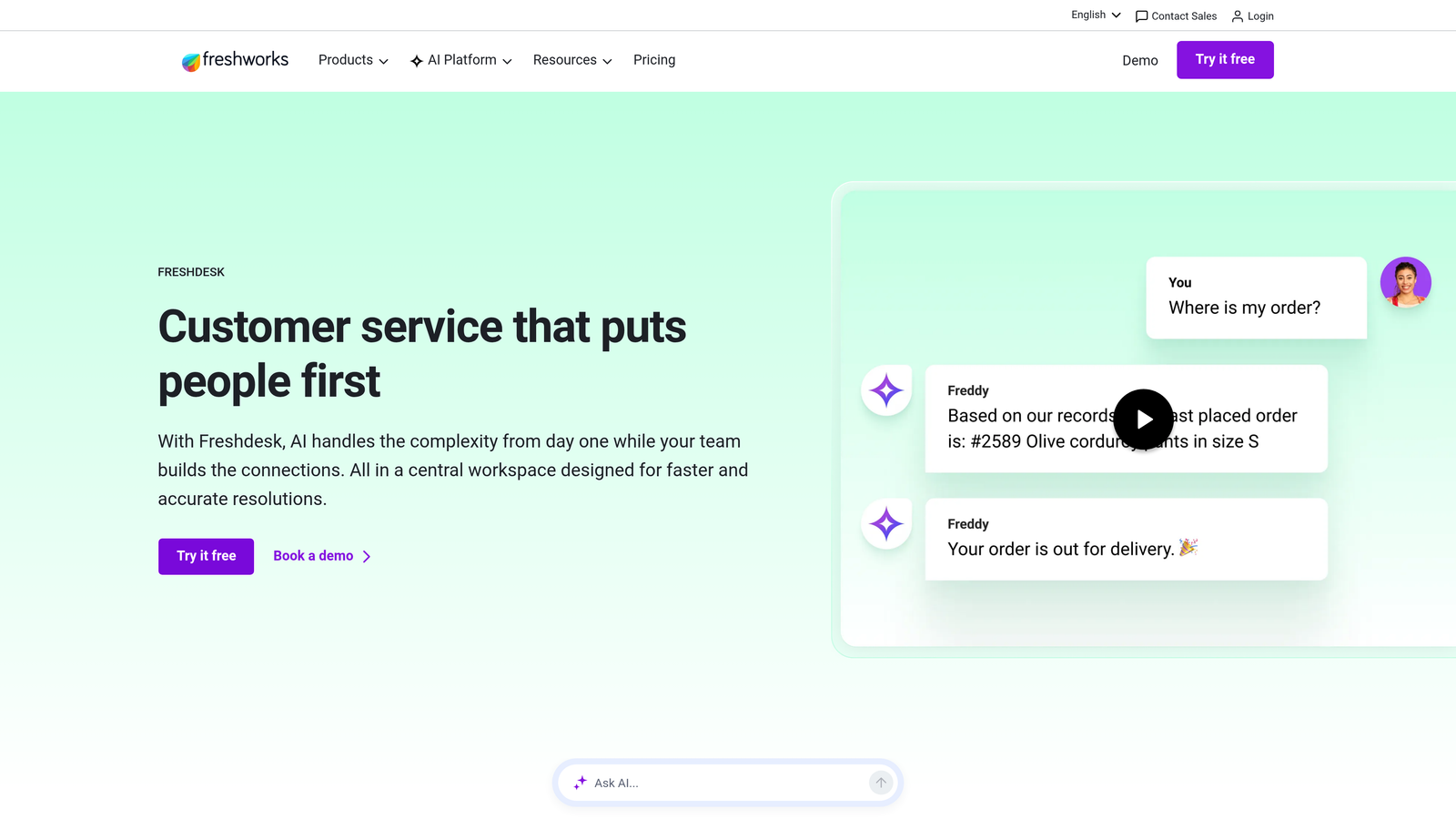
Freshdesk is a cost-competitive omnichannel helpdesk from Freshworks, with Freddy AI handling automation, triage, and self-service across a broad channel set.
Where This Tool Shines
Freshdesk's value proposition is straightforward: a full-featured omnichannel helpdesk at a price point that makes sense for growing teams. Freddy AI adds auto-triage, suggested replies, and agent assist without requiring a significant AI premium on top of base pricing.
Being part of the Freshworks suite is a meaningful advantage for teams that also use Freshsales or Freshservice. The shared data model reduces the friction of connecting support to CRM and IT service management, which matters as organizations scale their operations.
Key Features
Freddy AI: Auto-triage, suggested replies, agent assist, and self-service recommendations built into the platform.
Omnichannel Coverage: Email, chat, phone, social media, and WhatsApp managed from a unified interface.
Collision Detection: Prevents multiple agents from working the same ticket simultaneously.
AI-Powered Knowledge Base: Suggests relevant articles during ticket resolution to improve self-service deflection.
Freshworks Suite Integration: Native connections to Freshsales and Freshservice for a unified customer data view.
Best For
Mid-market teams building out their first structured support operation, or companies already using Freshworks products that want to consolidate their stack. Strong fit when budget is a primary constraint.
Pricing
Free plan available for small teams. Paid plans start around $15 per agent per month on the Growth tier, with higher tiers unlocking advanced AI and automation features.
5. Help Scout
Best for: Teams that prioritize clean, human-centered support tooling without enterprise complexity
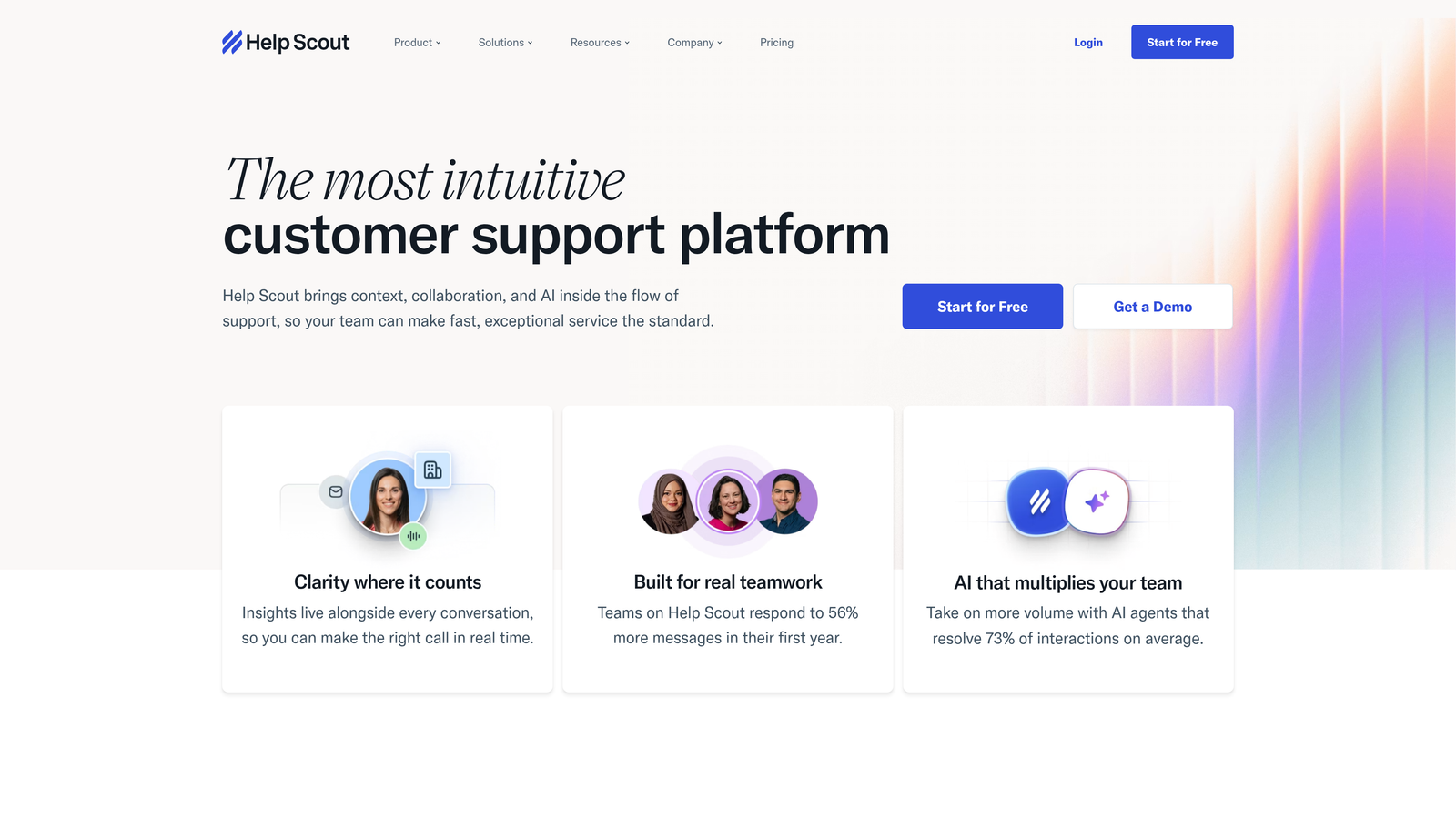
Help Scout is a shared inbox platform built for teams that want straightforward, well-designed support tooling, now with AI drafts and summarization built in.
Where This Tool Shines
Help Scout occupies a deliberate niche: excellent UX, honest pricing, and a product philosophy centered on human-quality support rather than maximum automation. The platform is genuinely pleasant to use, which matters more than it sounds when your agents are handling hundreds of conversations per week.
The addition of AI Summarize and AI Drafts brings efficiency gains without overwhelming the interface. Beacon, their embeddable help widget, adds proactive messaging and self-service without requiring a separate tool. For teams that have been burned by over-engineered platforms, Help Scout is a refreshing alternative.
Key Features
Shared Inbox with Collision Detection: Clean, collaborative inbox with internal notes and assignment workflows.
Beacon: Embeddable help widget with proactive messaging, self-service search, and in-context support.
AI Summarize and AI Drafts: Reduces time spent reading long threads and composing responses from scratch.
Docs: Integrated knowledge base for self-service content that connects directly to Beacon.
Flat Pricing: No per-ticket or per-conversation fees, just a straightforward per-user monthly rate.
Best For
Small to mid-sized teams, especially those in SaaS, professional services, or nonprofits, that want a clean, reliable support platform without the overhead of enterprise tooling. Also strong for teams where agent experience and ease of use are top priorities.
Pricing
Standard plan starts at $20 per user per month. Pricing is flat and predictable, with no usage-based surprises.
6. Gorgias
Best for: E-commerce brands, particularly Shopify merchants, connecting support performance to revenue
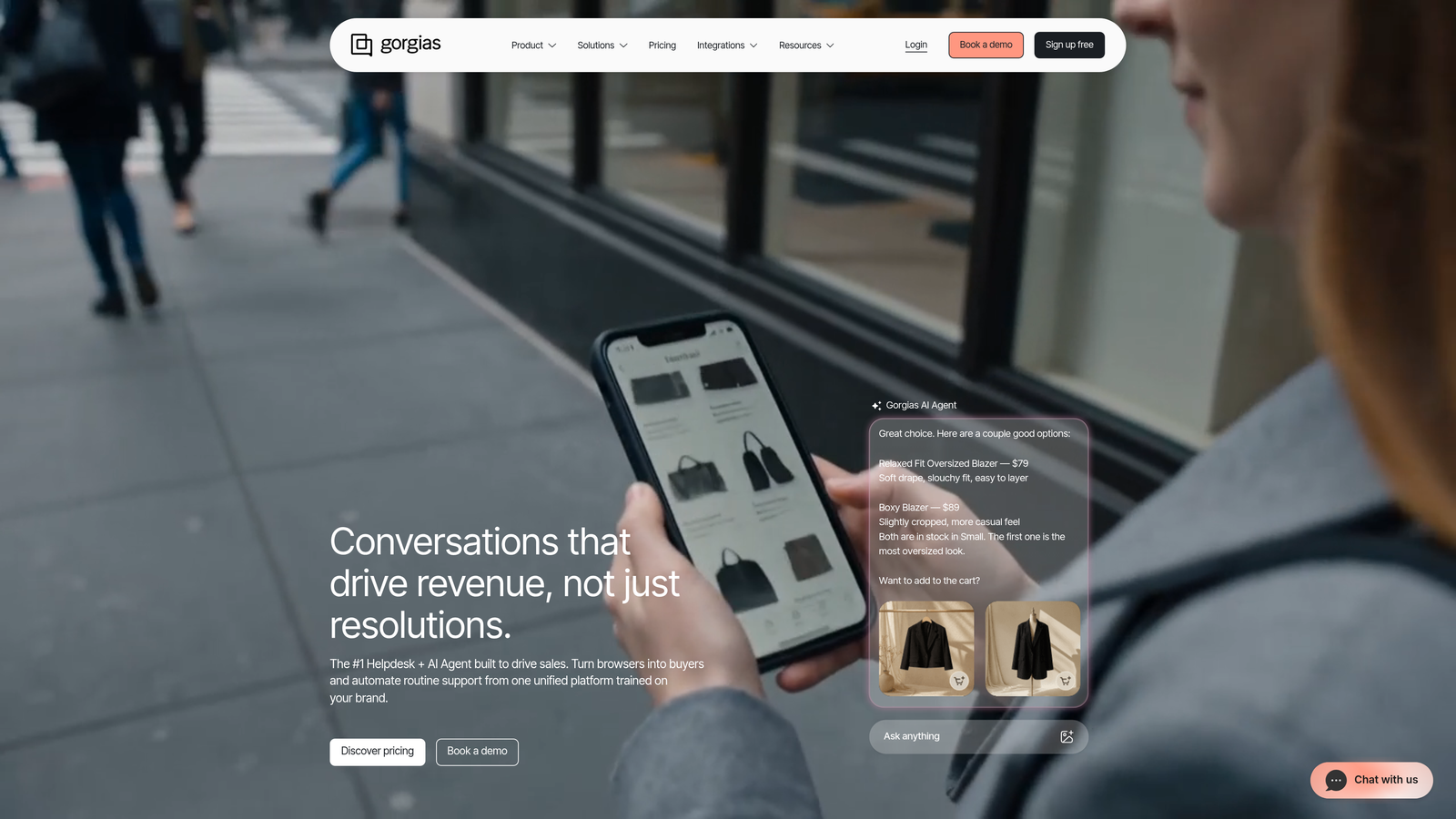
Gorgias is a support platform purpose-built for e-commerce brands, with deep Shopify integration that surfaces order data directly in the support interface.
Where This Tool Shines
Gorgias solves a specific problem that general-purpose helpdesks handle poorly: giving support agents immediate access to order data without switching tabs. When a customer asks about a return or a delayed shipment, agents see the full order history right inside the ticket. That context dramatically reduces resolution time for common e-commerce queries.
The revenue dashboard is another differentiator. Gorgias connects support activity to sales impact, letting teams see which conversations convert and which channels drive the most revenue. For DTC brands where support and sales blur together, this is genuinely useful data.
Key Features
Native Shopify Integration: Order management, refund processing, and customer data visible directly inside support tickets.
AI Auto-Replies: Automated responses for common e-commerce queries like order status, returns, and shipping updates.
Revenue Dashboard: Connects support conversations to sales impact and conversion metrics.
Omnichannel: Email, chat, SMS, social media, and voice in a single interface.
Macros and Rules: High-volume ticket automation for repetitive workflows.
Best For
Direct-to-consumer e-commerce brands, particularly those on Shopify, WooCommerce, or BigCommerce. Less relevant for B2B SaaS or service businesses without a transactional commerce component.
Pricing
Starter plan begins at $10 per month with ticket-based pricing. Costs scale with ticket volume rather than seat count, which can be advantageous or expensive depending on support load.
7. Tidio
Best for: Small businesses and e-commerce stores needing fast, affordable deployment with AI chatbot automation
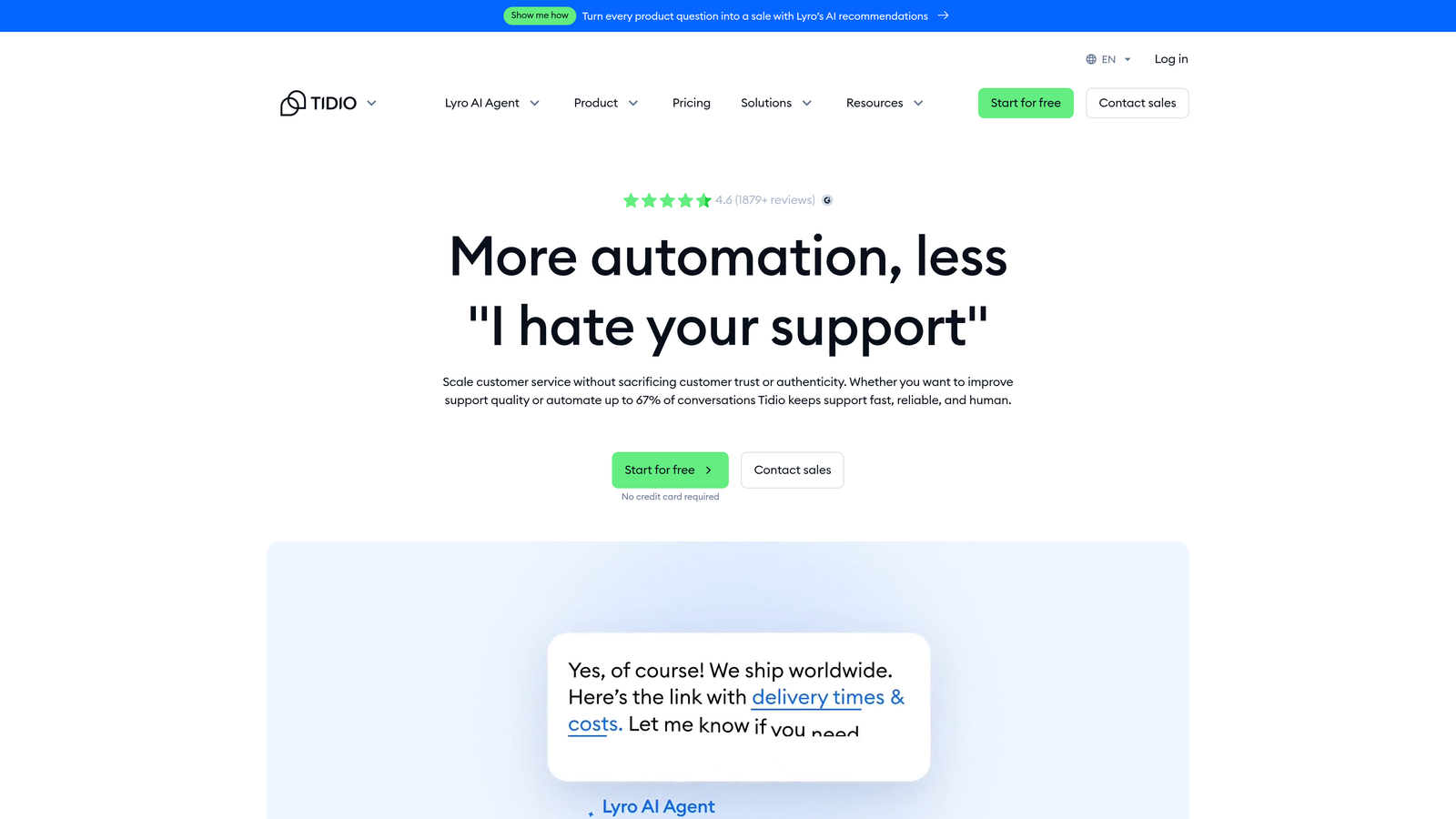
Tidio is an accessible live chat and AI chatbot platform designed for small businesses that need quick deployment, affordable pricing, and Lyro AI handling common queries automatically.
Where This Tool Shines
Tidio's core appeal is accessibility. Lyro AI can be deployed without engineering resources, and the visual flow builder lets non-technical users create chatbot sequences through a drag-and-drop interface. For a small business owner who needs something working by end of day, that matters enormously.
The hybrid model, where Lyro handles routine queries and live agents take over when needed, gives small teams a way to punch above their weight. The mobile app for live chat means agents can stay responsive without being desk-bound, which suits lean teams with flexible working arrangements.
Key Features
Lyro AI Chatbot: Automated query resolution without requiring engineering resources or complex setup.
Visual Flow Builder: No-code chatbot sequence creation for common support and sales scenarios.
Live Chat with Mobile App: Agents can handle conversations from anywhere, keeping response times low for small teams.
E-Commerce Integrations: Native Shopify and WordPress connections for fast setup without custom development.
Email Marketing Automation: Included in higher tiers, reducing the need for a separate marketing tool.
Best For
Small businesses, solopreneurs, and early-stage e-commerce stores that need an affordable, deployable-today solution. Not designed for enterprise complexity or high-volume B2B support operations.
Pricing
Free plan available with limited conversations. Paid plans start around $19 per month, making it one of the most affordable options on this list.
8. Drift (Salesloft)
Best for: B2B teams where support and sales engagement operate in close proximity
Drift, now part of the Salesloft suite, is a conversational platform that blends support and sales engagement using AI playbooks to route conversations based on account context.
Where This Tool Shines
Drift occupies a distinct position on this list: it's less a pure support tool and more a revenue-oriented conversation platform. AI playbooks route incoming conversations based on account attributes, company size, or CRM data, so a high-value prospect gets a different experience than a standard support request.
The integration with Salesloft deepens this positioning. Teams that use Drift effectively tend to have support and sales functions that overlap, where a conversation about a product issue might also be an opportunity to expand an account. If that describes your operation, Drift is worth evaluating seriously.
Key Features
AI-Powered Playbooks: Account-based conversation routing that adjusts the experience based on CRM data and account attributes.
Bionic Chatbots: Combines AI automation with seamless human handoff for complex or high-value conversations.
CRM Integration: Deep connections with Salesforce and HubSpot bring revenue context into every conversation.
Meeting Scheduling: Pipeline acceleration through in-chat calendar booking without leaving the conversation.
Salesloft Suite Integration: Full revenue workflow connectivity for teams already in the Salesloft ecosystem.
Best For
B2B companies where the support team operates close to the revenue function, particularly those in enterprise sales cycles where conversation quality directly affects expansion and retention. Less suitable as a standalone support platform for high-volume ticket operations.
Pricing
Contact Salesloft directly for current pricing. Drift is positioned as an enterprise product, and pricing reflects that positioning.
9. Kustomer
Best for: Subscription businesses with complex, multi-touch customer relationships needing full interaction history
Kustomer is a CRM-native support platform that builds a unified customer timeline across every interaction, giving agents complete context in every conversation.
Where This Tool Shines
Kustomer's fundamental design choice sets it apart: customers, not tickets, are the primary object in the system. Every interaction, across every channel, is aggregated into a single timeline so agents never have to reconstruct context from fragmented ticket histories. For businesses with complex, long-running customer relationships, this is a significant operational advantage.
The AI layer is trained on full interaction history rather than just the current conversation, which means responses are informed by everything that's happened before. Workflow automation handles routing, escalation, and proactive outreach, reducing the manual coordination that typically slows down high-volume support teams.
Key Features
Unified Customer Timeline: Aggregates all interactions across every channel into a single, chronological customer view.
History-Aware AI: AI responses informed by the full customer interaction history, not just the current ticket.
Workflow Automation: Routing, escalation, and proactive outreach automation for high-volume operations.
Omnichannel: Email, chat, SMS, social, voice, and WhatsApp all feeding into the unified timeline.
CRM Data Model: Customer-centric architecture that connects support to subscription data, lifecycle stage, and account value.
Best For
Subscription businesses, high-volume consumer brands, and any organization where agents regularly deal with customers who have long, complex histories. Kustomer is owned by Meta, which brings AI investment but is worth factoring into procurement decisions for organizations with specific data governance requirements.
Pricing
Enterprise plan starts around $89 per agent per month. Contact Kustomer directly for current rates, as pricing has evolved with the Meta ownership transition.
Making the Right Choice for Your Team
Choosing a modern customer support platform comes down to one honest question: what does your team actually need to resolve in the next 12 months? The tools on this list solve meaningfully different problems, and the right fit depends on your business model, team size, and where support intersects with the rest of your operation.
Here's a quick orientation by use case:
AI-first automation for SaaS: Halo AI is purpose-built for this, with continuous learning, page-aware context, and a business intelligence layer that no other tool on this list matches.
Enterprise helpdesk depth: Zendesk remains the standard for large organizations that need mature routing, SLA management, and a broad integration ecosystem.
Conversational lifecycle and in-app support: Intercom's combination of Fin AI and in-app Messenger makes it the strongest choice for SaaS teams managing both onboarding and support from one platform.
Cost-effective mid-market build-out: Freshdesk delivers omnichannel coverage and Freddy AI at a price point that makes sense for growing teams not yet ready for enterprise tooling.
Human-first simplicity: Help Scout is the cleanest, most agent-friendly option for teams that want excellent UX without configuration overhead.
E-commerce revenue focus: Gorgias is the clear choice for Shopify-first brands where order data and support are inseparable.
SMB affordability: Tidio offers the fastest path from zero to functional AI chatbot support for small teams and early-stage businesses.
Sales-support blend: Drift fits B2B teams where support conversations and revenue conversations happen in the same interface.
CRM-native interaction history: Kustomer is built for subscription businesses where every agent needs the full customer story before saying hello.
Your support team shouldn't scale linearly with your customer base. Let AI agents handle routine tickets, guide users through your product, and surface business intelligence while your team focuses on complex issues that need a human touch. See Halo in action and discover how continuous learning transforms every interaction into smarter, faster support.