9 Best Modern Customer Support Solutions for B2B Teams in 2026
Discover the 9 best modern customer support solutions for B2B teams in 2026, evaluated across AI capability, integrations, scalability, and deployment ease to help you move beyond reactive ticketing toward intelligent, proactive support systems that resolve issues faster and scale efficiently without increasing headcount.
 Grant CooperFounder13 min read
Customer support has fundamentally changed. Today's B2B teams are moving away from reactive ticket queues toward intelligent systems that resolve issues before customers get frustrated, surface product insights automatically, and scale without adding headcount. The old playbook of hiring more agents and buying a bigger helpdesk simply doesn't hold up when your user base grows faster than your budget.
This list covers the best modern customer support solutions available in 2026, evaluated across five criteria: AI capability depth, integration breadth, ease of deployment, scalability, and value for B2B SaaS teams. Whether you're replacing a legacy helpdesk, adding AI to an existing workflow, or building a support stack from scratch, there's a fit here for your stage and use case.
A quick note on methodology: tools are ranked by overall capability for B2B product teams, not by market share or brand recognition.
1. Halo AI
Best for: B2B SaaS teams that want AI-native support with built-in business intelligence
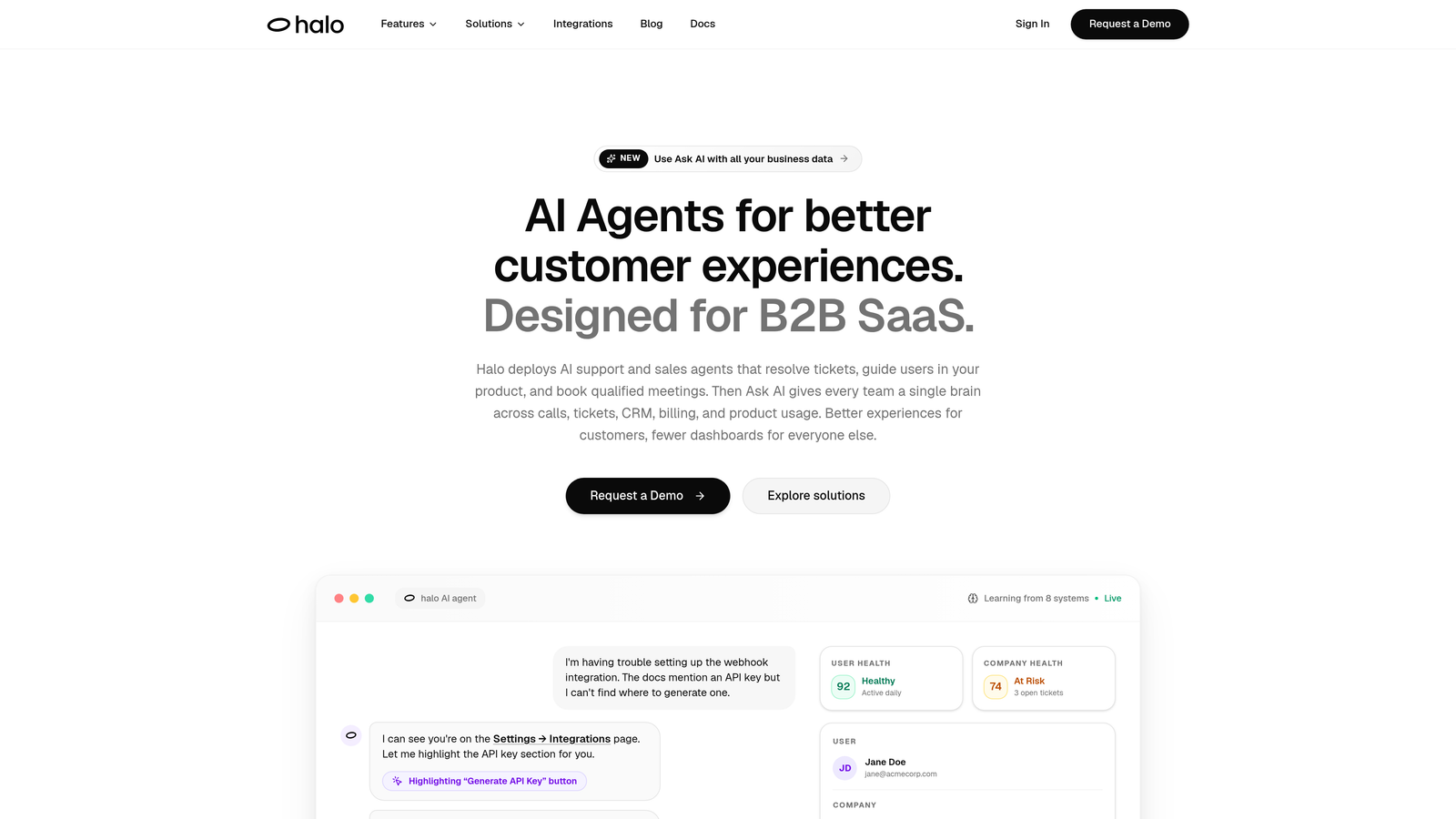
Halo AI is an AI-first customer support platform built around autonomous agents, page-aware context, and business intelligence that goes well beyond ticket counts.
Where This Tool Shines
Most support tools started as helpdesks and added AI later. Halo was designed the other way around: the AI is the architecture, not a feature layer. That distinction matters when you're dealing with complex B2B workflows where context is everything.
The standout capability is the page-aware chat widget. Rather than presenting a generic chatbot, Halo's agents understand exactly what screen the user is on inside your product, which means they can provide contextually relevant guidance rather than generic responses. Combine that with continuous learning from every interaction, and the system genuinely gets smarter over time without manual retraining.
Key Features
Page-Aware Chat Widget: Understands the user's current product context to deliver guidance that's specific to what they're actually looking at.
Intelligent AI Agents: Resolve tickets autonomously end-to-end, learning from every interaction to improve resolution quality continuously.
Smart Inbox with Business Intelligence: Surfaces customer health signals, revenue indicators, and anomaly detection directly within the support interface.
Auto Bug Ticket Creation: Automatically generates and routes bug reports to Linear without requiring agents to manually triage and escalate.
Live Agent Handoff: Seamlessly escalates complex or sensitive issues to human agents with full conversation context preserved.
Deep Integration Stack: Connects with Linear, Slack, HubSpot, Intercom, Stripe, Zoom, PandaDoc, and Fathom out of the box.
Best For
B2B SaaS product teams that want support to function as a strategic intelligence layer, not just a cost center. Particularly strong for teams where customer health signals and product feedback are as important as resolution speed. If you're building a support function that needs to scale without scaling headcount, this is the architecture to start with.
Pricing
Contact for pricing. Visit haloagents.ai for current details and to explore the platform.
2. Intercom
Best for: Teams already invested in Intercom's ecosystem looking to layer in AI resolution
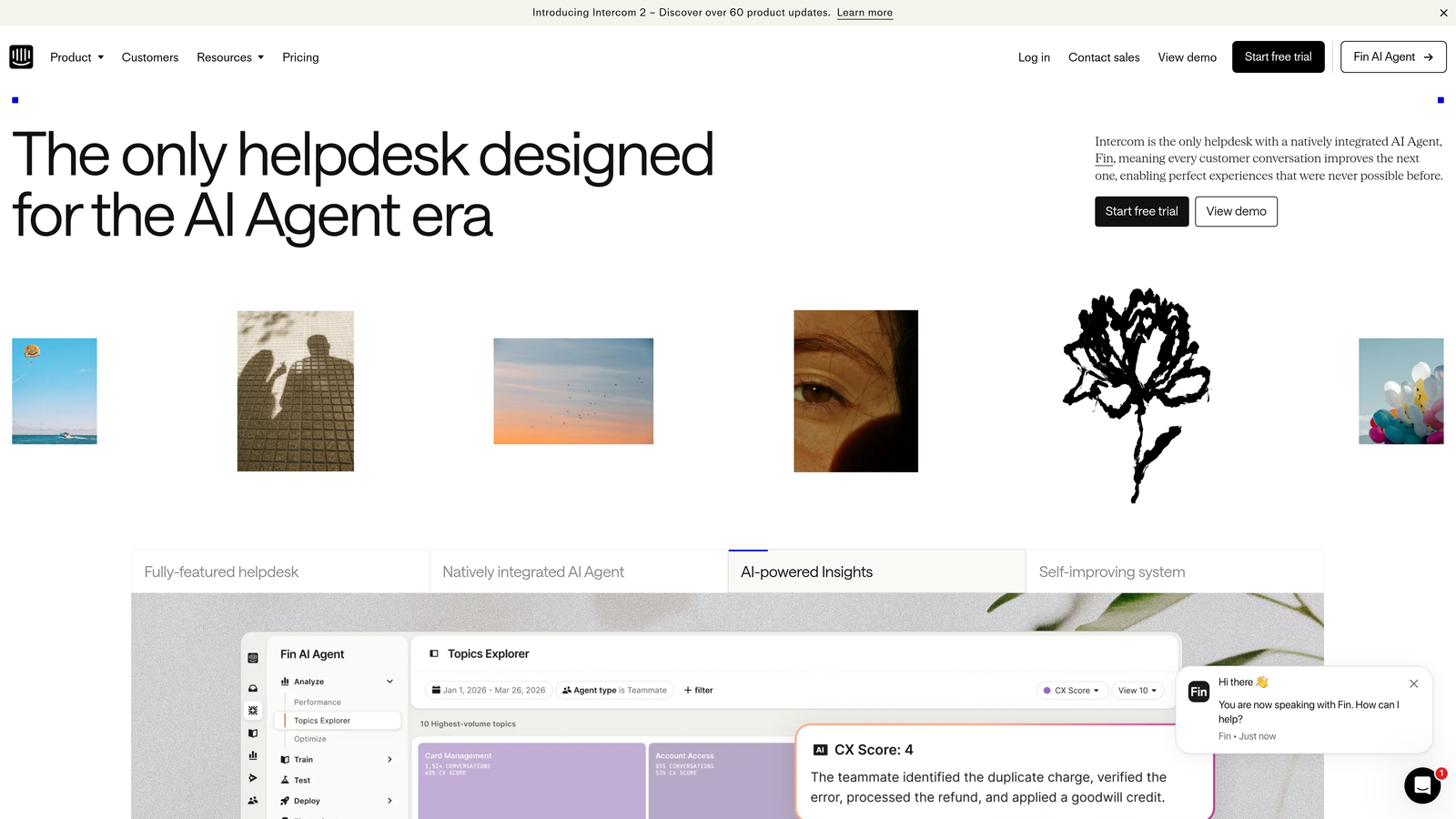
Intercom is an established customer communications platform with a mature messenger UX and Fin AI agent for autonomous query resolution.
Where This Tool Shines
Intercom has evolved significantly from its roots as a live chat tool. The platform now positions itself as a customer communications operating system, and that ambition shows in the product. The messenger UX is polished and widely recognized by end users, which reduces friction during rollout.
Fin AI, built on large language model technology, handles a meaningful share of inbound queries end-to-end. For teams already running Intercom for onboarding flows, product announcements, and in-app messaging, adding Fin is a natural upgrade path rather than a platform migration.
Key Features
Fin AI Agent: Handles inbound queries autonomously using LLM technology, resolving common questions without agent involvement.
Unified Inbox: Combines chat, email, and in-app messaging in a single workspace for agents.
Proactive Messaging: Supports onboarding flows, product announcements, and triggered in-app messages.
App Marketplace: Extensive ecosystem of third-party integrations covering CRM, billing, and productivity tools.
Conversation Analytics: Detailed reporting including CSAT tracking and resolution metrics.
Best For
Teams already running Intercom across their product and marketing stack who want to extend into AI-assisted resolution without switching platforms. Also a strong fit for product-led growth companies where in-app messaging and support overlap heavily.
Pricing
Starts at approximately $39/seat/month; Fin AI Resolution is priced per resolution. Verify current pricing at intercom.com as pricing has changed frequently.
3. Zendesk
Best for: Enterprise and mid-market teams with complex omnichannel support requirements
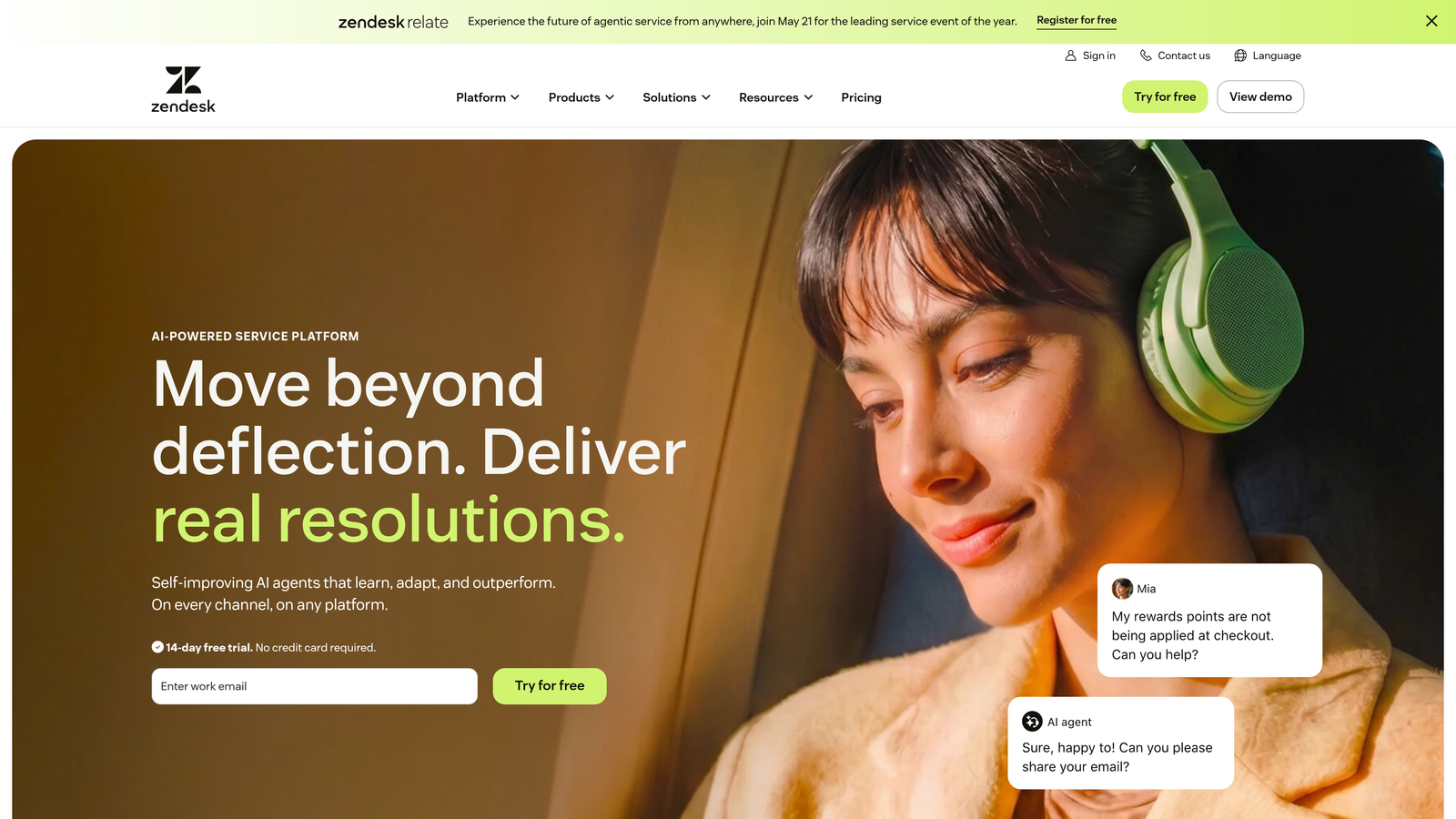
Zendesk is an enterprise-grade omnichannel helpdesk with AI automation across the full ticket lifecycle and one of the largest app marketplaces in the industry.
Where This Tool Shines
Zendesk's installed base is enormous, and that scale has produced something genuinely valuable: a deeply mature product with configurations for almost any enterprise support workflow imaginable. If your team has complex routing logic, strict SLA requirements, or compliance constraints, Zendesk has almost certainly solved that problem before.
Zendesk AI now unifies what were previously separate automation tools under a single umbrella, covering intelligent triage, suggested replies, and self-service automation. The tradeoff is implementation complexity. Teams often need dedicated admins to get the most out of the platform, and the learning curve is real.
Key Features
Omnichannel Coverage: Handles email, chat, voice, social, and messaging from a single unified workspace.
Zendesk AI: Covers intelligent triage, suggested replies, and self-service automation across the ticket lifecycle.
Configurable Workflows: Triggers, automations, and macros allow highly specific routing and escalation logic.
Advanced Reporting: Custom dashboards and detailed analytics for SLA tracking and team performance.
Large Marketplace: Hundreds of third-party integrations across CRM, billing, and enterprise systems.
Best For
Enterprise teams and larger mid-market companies with dedicated support operations, multiple channels to manage, and the internal resources to configure and maintain the platform properly. Less ideal for lean teams that need fast time-to-value.
Pricing
Suite plans start at approximately $55/agent/month. Verify current pricing at zendesk.com.
4. Freshdesk
Best for: Growing teams that want Zendesk-comparable functionality at more accessible price points
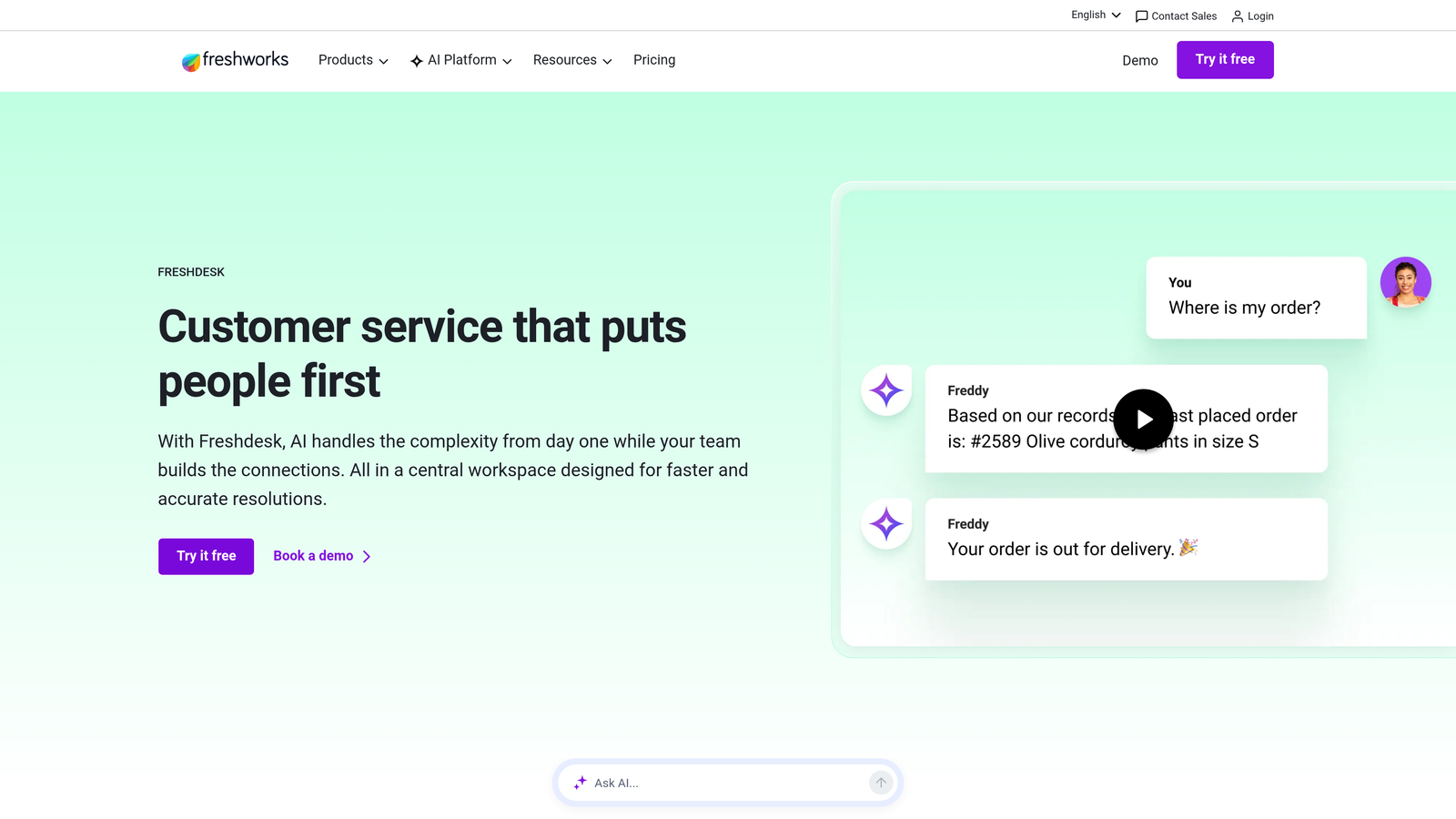
Freshdesk is a full-featured helpdesk platform with Freddy AI built in, offering strong omnichannel capabilities without the enterprise price tag.
Where This Tool Shines
Freshdesk is frequently the answer when teams outgrow lightweight tools but aren't ready for Zendesk's complexity and cost. Freddy AI is included across most pricing tiers rather than being a separate add-on, which means you're getting AI-assisted replies, ticket summarization, and self-service bots without a separate line item.
The platform's implementation experience is generally considered smoother than Zendesk's. For teams without dedicated support operations staff, that matters. Freshdesk Omni consolidates messaging, voice, and email into a single interface, which reduces the operational overhead of managing multiple channels separately.
Key Features
Freddy AI: Handles suggested replies, ticket summarization, and self-service bots across most plan tiers.
Freshdesk Omni: Unified omnichannel inbox covering email, chat, voice, and social.
Collaborative Inbox: Team huddle, parent-child ticketing, and collision detection for shared resolution workflows.
SLA Management: Built-in SLA policies with escalation rules and breach notifications.
Marketplace Integrations: Connects with CRM, billing, and productivity tools via the Freshworks marketplace.
Best For
SMB and mid-market B2B teams that need omnichannel coverage and AI assistance without enterprise-level investment or implementation complexity. Also a natural fit for teams migrating away from basic shared inbox setups who want structured ticketing without a steep ramp-up.
Pricing
Free plan available; paid plans start at approximately $15/agent/month. Verify current pricing at freshworks.com.
5. Tidio
Best for: Small teams and startups that need AI chat up and running quickly
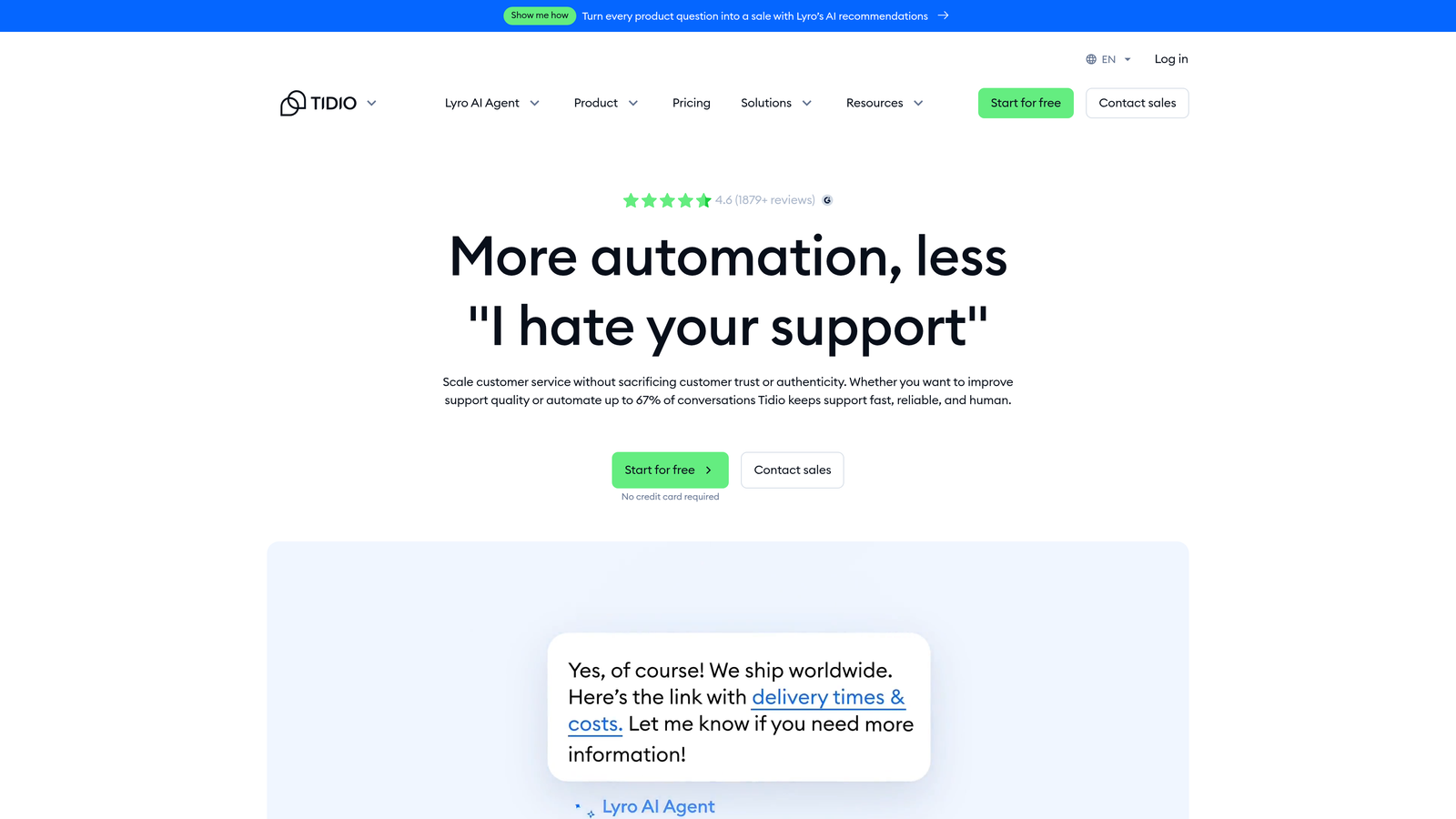
Tidio is a lightweight live chat and AI chatbot platform built for fast deployment, with Lyro AI handling automated responses without requiring technical setup.
Where This Tool Shines
Speed-to-value is Tidio's clearest advantage. Where enterprise platforms can take weeks to configure properly, Tidio can be installed and handling conversations the same day. The Lyro AI chatbot is the core of the product, designed specifically for teams that want AI-assisted resolution without needing a developer or a dedicated implementation project.
Tidio works well as an entry point into AI-assisted support. It's not designed for complex B2B workflows or deep integrations, but for small teams that need to stop handling every query manually, it delivers quickly and without friction.
Key Features
Lyro AI Chatbot: Handles automated customer query resolution with minimal setup required.
Live Chat: Includes visitor tracking and triggered messages based on user behavior.
Visual Chatbot Builder: Drag-and-drop interface for building conversation flows without code.
Channel Integrations: Connects with email and Facebook Messenger alongside the website widget.
Quick Installation: Widget-based setup compatible with most CMS platforms and website builders.
Best For
Small teams, early-stage startups, and businesses with relatively straightforward support queries who want AI chat without a lengthy implementation. Not the right fit for teams with complex routing needs, deep CRM dependencies, or high-volume enterprise workflows.
Pricing
Free plan available; Lyro AI plans start at approximately $29/month. Verify current pricing at tidio.com.
6. Drift (Salesloft)
Best for: B2B teams where support and sales conversations share significant overlap
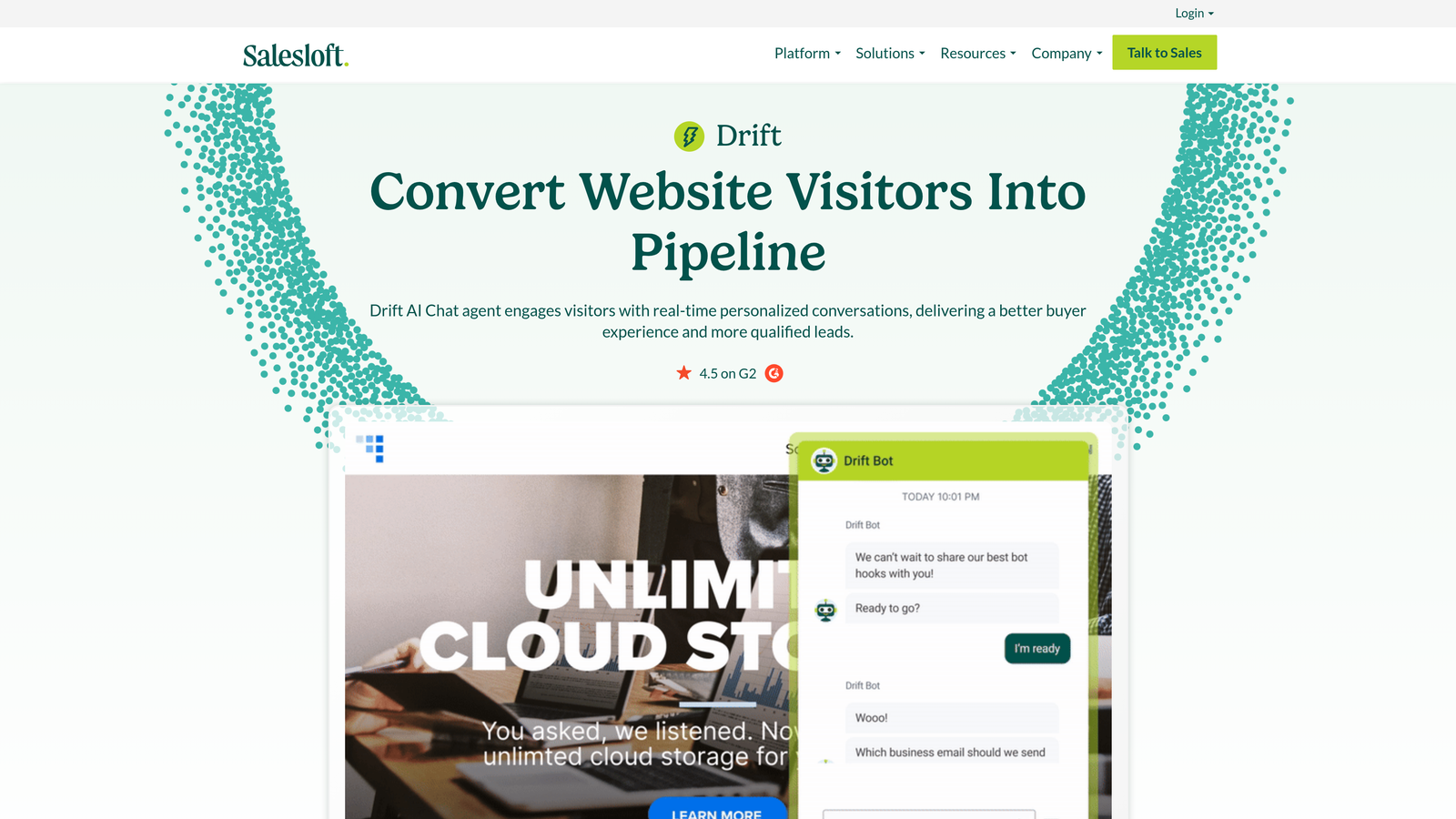
Drift is a conversational platform now part of Salesloft, combining support chat with sales qualification and routing for revenue-focused B2B teams.
Where This Tool Shines
Drift was built for the specific reality of B2B businesses where the line between a support conversation and a sales conversation is blurry. A prospect asking a product question during evaluation, a customer asking about an upgrade path, a churning account reaching out about a billing issue: these all benefit from routing logic that understands both support and revenue context.
Since joining the Salesloft platform, Drift's AI capabilities are more focused on conversation routing, lead qualification, and pipeline integration than on deep support resolution. That's a deliberate positioning choice, and it's the right one for teams where support and sales share a CRM and a pipeline.
Key Features
AI Conversation Routing: Intelligently routes conversations based on account data, intent signals, and qualification criteria.
Account-Based Targeting: Personalizes chat experiences based on company, segment, or deal stage.
Meeting Scheduling: Allows prospects and customers to book meetings directly within the chat interface.
Playbooks: Automated conversation flows for common support and sales scenarios.
CRM Integration: Deep connections with Salesforce, HubSpot, and Salesloft workflows.
Best For
B2B teams where support and revenue conversations overlap, particularly those already using Salesloft for sales engagement. Less suited for teams that need pure support depth or complex ticket management without a sales motion attached.
Pricing
Contact Salesloft for current pricing. Verify details at drift.com.
7. Help Scout
Best for: Teams that want to scale support without losing a human, personal tone
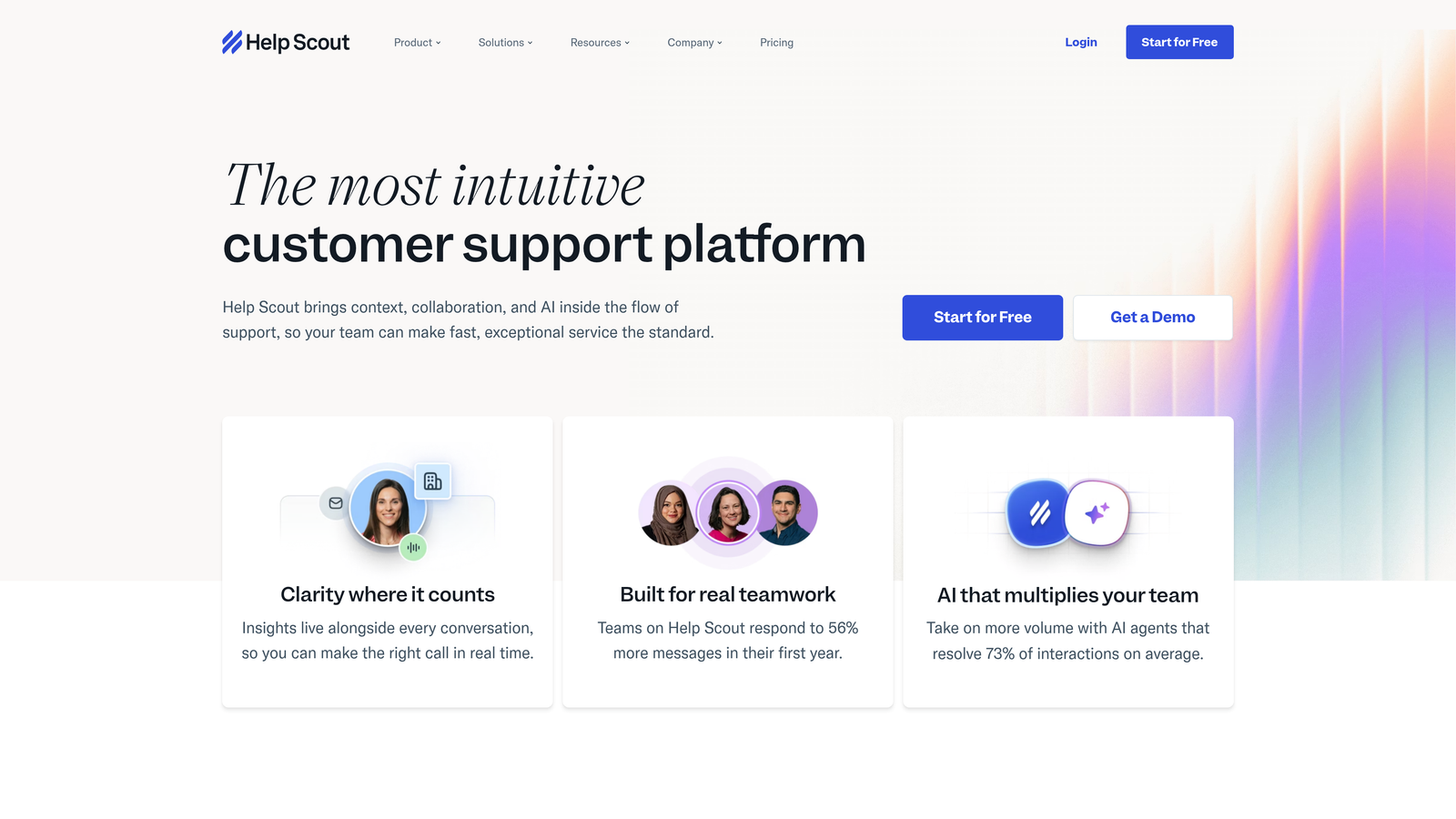
Help Scout is a human-first shared inbox and knowledge base platform with practical AI assist features that enhance agent speed without displacing the personal quality of responses.
Where This Tool Shines
Help Scout occupies a deliberate position in the market: it's for teams that worry AI will make support feel robotic. The AI features (Summarize, Assist, and Drafts) are designed to help agents work faster, not to replace them. That philosophy shows in the interface, which is clean, focused, and notably free of the complexity that can slow teams down in enterprise platforms.
The Beacon widget handles in-app help and chat with a UX that feels native to the product rather than bolted on. For B2B SaaS companies where relationship quality matters as much as resolution speed, Help Scout's approach resonates strongly with both agents and customers.
Key Features
Shared Inbox: Includes collision detection and private notes to prevent duplicate responses and enable team collaboration.
AI Assist Features: Summarize, Assist, and Drafts help agents respond faster while maintaining their own voice.
Beacon Widget: In-app chat and self-service tool that integrates smoothly with the product experience.
Docs Knowledge Base: Built-in knowledge base with search functionality and article suggestions within Beacon.
Customer Sidebar: Shows full conversation history and customer data alongside every ticket for context-rich responses.
Best For
B2B teams that prioritize relationship quality and personal tone, particularly those in professional services, consulting-adjacent SaaS, or any context where customers expect to feel like they're talking to a person. Also a strong fit for teams transitioning from email-based support who want structure without enterprise complexity.
Pricing
Starts at approximately $22/user/month. Verify current pricing at helpscout.com.
8. Kustomer
Best for: High-volume teams where full customer history context is critical to resolution quality
Kustomer is a CRM-native support platform that builds a unified customer timeline across all touchpoints, enabling context-rich resolution at scale.
Where This Tool Shines
Kustomer's core differentiator is the unified customer timeline. Rather than treating each ticket as an isolated event, the platform aggregates every interaction across every channel into a single chronological view. For high-volume teams where a customer's history is essential context for resolving their current issue, this architecture is genuinely valuable.
The CRM-native approach also means custom objects are a first-class feature: you can store business-specific data (subscription tier, usage patterns, account health) directly within the customer record and surface it automatically during support interactions. AI automation handles routing and suggested responses on top of that rich data layer.
Key Features
Unified Customer Timeline: Aggregates all interactions across channels into a single, chronological customer view.
AI Automation: Handles routing, suggested responses, and workflow triggers based on customer data and conversation context.
Omnichannel Inbox: Covers email, chat, voice, social, and SMS from a single workspace.
Custom Objects: Store and surface business-specific customer data tailored to your product and workflows.
CRM and Ecommerce Integrations: Deep connections with major CRM platforms and commerce systems.
Best For
High-volume B2B support teams with complex customer relationships where history context significantly affects resolution quality. Teams with deep CRM dependencies who want support and customer data to live in the same layer rather than syncing between separate systems.
Pricing
Starts at approximately $89/user/month. Verify current pricing at kustomer.com.
9. Gorgias
Best for: SaaS-adjacent businesses where order management and transactional queries drive support volume
Gorgias is a support platform with deep ecommerce integrations, particularly suited for businesses where billing, order management, or transactional queries are central to support workflows.
Where This Tool Shines
Gorgias dominates ecommerce support for a reason: it pulls live order data from Shopify, BigCommerce, and Magento directly into the ticket view, so agents never have to switch tabs to look up an order status. AI automation handles the most common transactional queries (order status, returns, refunds) with data pulled directly from the commerce platform.
For pure SaaS teams, Gorgias is less relevant. But for SaaS-adjacent businesses with physical product components, marketplace models, or billing-heavy support queues, the ecommerce-native architecture saves significant agent time. The volume-based pricing model also makes costs more predictable when ticket volume fluctuates.
Key Features
Native Ecommerce Integrations: Direct connections with Shopify, BigCommerce, and Magento surface order data inside every relevant ticket.
AI Automation: Handles order status, returns, and common transactional queries autonomously using live commerce data.
Macros and Rules Engine: Automates high-volume ticket responses and routing for repeatable query patterns.
Revenue Statistics: Links support interactions to sales outcomes, connecting support activity to revenue impact.
Best For
SaaS-adjacent businesses with significant ecommerce or transactional support volume. Pure SaaS teams with no commerce component will find better fits elsewhere on this list, but for businesses where order management is central to customer experience, Gorgias is the most purpose-built option available.
Pricing
Starts at approximately $10/month for 50 tickets, with volume-based pricing scaling from there. Verify current pricing at gorgias.com.
Which Tool Is Right for Your Team
The right choice depends less on feature checklists and more on three honest questions. Does this tool learn from interactions over time, or is it static? Does it integrate with your existing stack without heavy engineering lift? And does it give you intelligence beyond ticket counts: health signals, churn indicators, product feedback?
Here's a quick decision framework by use case:
Halo AI is the strongest fit for B2B SaaS teams that want AI-native support with business intelligence built in from the ground up. If you want support to be a strategic layer rather than a cost center, this is the architecture to start with.
Intercom is the natural upgrade path for teams already invested in its ecosystem. Fin AI adds meaningful resolution capability without requiring a platform migration.
Zendesk and Freshdesk suit enterprises and mid-market teams with complex omnichannel requirements. Zendesk for teams with dedicated ops resources; Freshdesk for teams that need comparable functionality with faster deployment.
Help Scout is ideal for teams that value simplicity and want to maintain a human tone at scale without a heavy implementation project.
Drift works well when support and sales share a pipeline and conversation routing needs to account for revenue context alongside support resolution.
Kustomer fits high-volume teams with deep CRM dependencies where customer history is essential context for every interaction.
Tidio is the fastest path to AI chat for small teams and startups that need to be up and running quickly without technical resources.
Gorgias is the clear pick when ecommerce order context is central to your support volume.
Your support team shouldn't scale linearly with your customer base. Let AI agents handle routine tickets, guide users through your product, and surface business intelligence while your team focuses on complex issues that need a human touch. See Halo in action and discover how continuous learning transforms every interaction into smarter, faster support.