9 Best Multi-Channel Support Automation Platforms in 2026
Discover the 9 best multi-channel support automation platforms of 2026, compared to help B2B teams unify email, chat, social, and in-app support into a single automated workspace. This guide breaks down which solutions genuinely reduce resolution times and agent workload versus legacy helpdesks with AI features added as an afterthought.
 Matt PattoliFounder14 min read
Managing customer support across email, live chat, social media, and in-app channels simultaneously is one of the most operationally complex challenges facing B2B teams today. When each channel runs on a separate tool, agents spend more time context-switching than actually solving problems. The result: slower resolution times, inconsistent customer experiences, and a support team that grows headcount every time the customer base does.
Multi-channel support automation platforms solve this by unifying channels, automating routine resolution, and giving agents a single workspace that surfaces the right context at the right moment. If you're exploring automated customer support or evaluating AI helpdesk software, the options range from legacy helpdesks with AI layers bolted on to newer platforms built around automation from day one.
To build this list, every platform was evaluated on genuine multi-channel coverage, AI and automation depth, integration ecosystem, analytics quality, and pricing transparency. Here are the top multi-channel support automation platforms worth considering in 2026.
1. Halo AI
Best for: B2B teams wanting AI-native multi-channel support with deep business intelligence
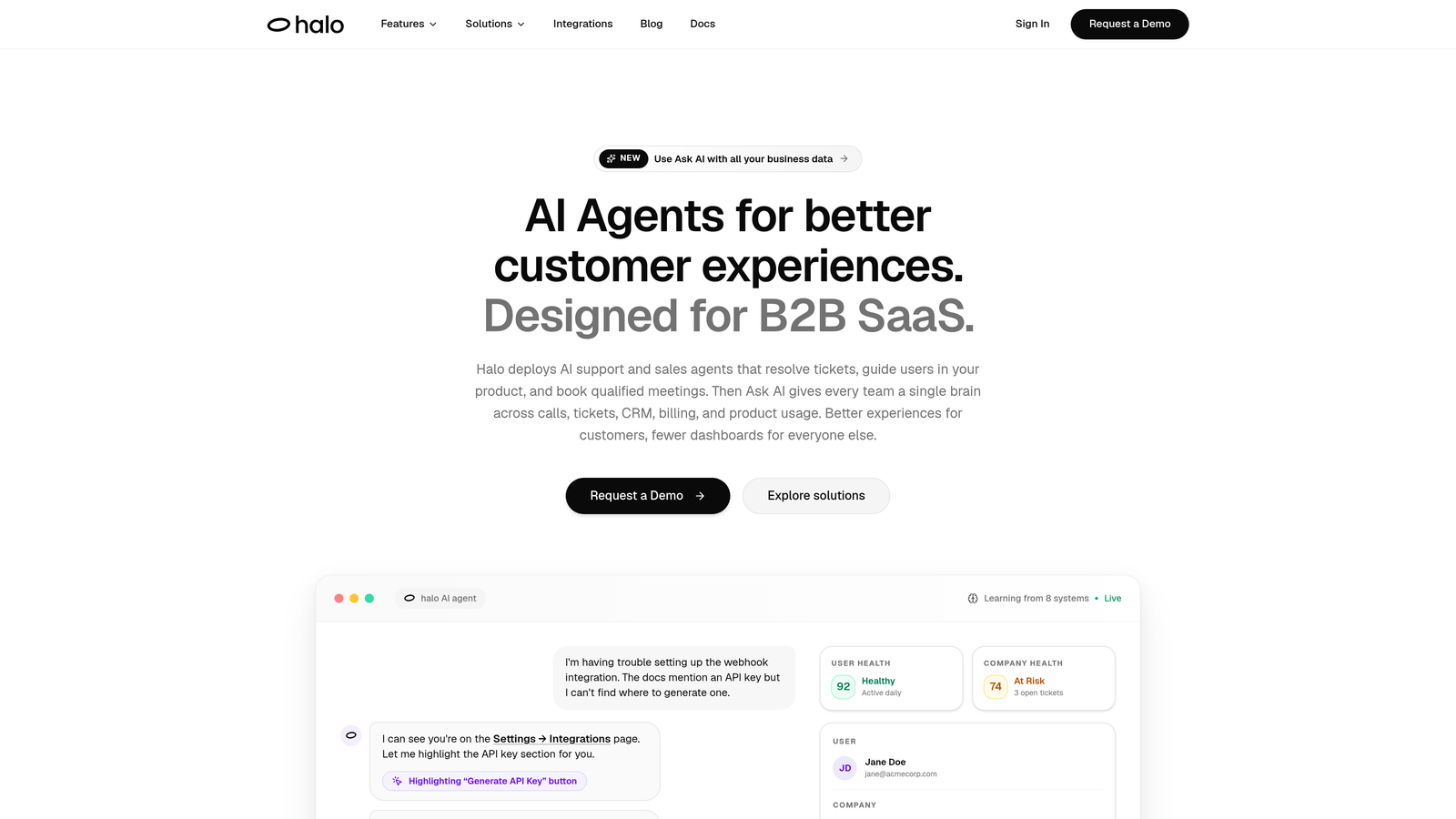
Halo AI is an AI-first support platform built from the ground up for B2B teams that need autonomous ticket resolution, contextual in-product guidance, and business intelligence — not just a faster helpdesk.
Where This Tool Shines
Most platforms treat AI as a feature added on top of an existing helpdesk workflow. Halo AI is different because the entire architecture starts with AI at the center. Its page-aware agents actually see what the user is looking at in real time, which means guidance is contextual and specific rather than generic knowledge base suggestions.
The smart inbox goes beyond ticket management. It surfaces customer health signals, revenue intelligence, and anomaly detection, turning your support queue into a source of business intelligence that product, sales, and customer success teams can act on. Every interaction feeds continuous learning, so the system gets measurably smarter over time.
Key Features
Page-Aware AI Agents: Agents see exactly what users see, enabling precise in-product guidance without requiring users to describe their screen.
Autonomous Ticket Resolution with Smart Handoff: AI handles routine tickets end-to-end and escalates to live agents seamlessly when complexity warrants human judgment.
Auto Bug Ticket Creation: Automatically generates and routes bug tickets to Linear and other dev tools, closing the loop between support and engineering without manual intervention.
Smart Inbox with Business Intelligence: Surfaces customer health signals, revenue intelligence, and anomaly detection directly within the support workflow.
Deep Multi-System Integrations: Connects natively with Slack, HubSpot, Intercom, Stripe, Zoom, PandaDoc, and Fathom — covering the full B2B tech stack.
Best For
B2B SaaS companies and product teams that want AI-native support automation rather than a traditional helpdesk with AI features added later. Particularly well-suited for teams already using tools like HubSpot, Linear, and Slack who want their support layer to integrate deeply with the rest of their stack.
Pricing
Contact for pricing. Built for B2B teams scaling support operations, so pricing is tailored to team size and integration requirements.
2. Intercom
Best for: Product-led companies wanting a messenger-first experience with strong AI resolution
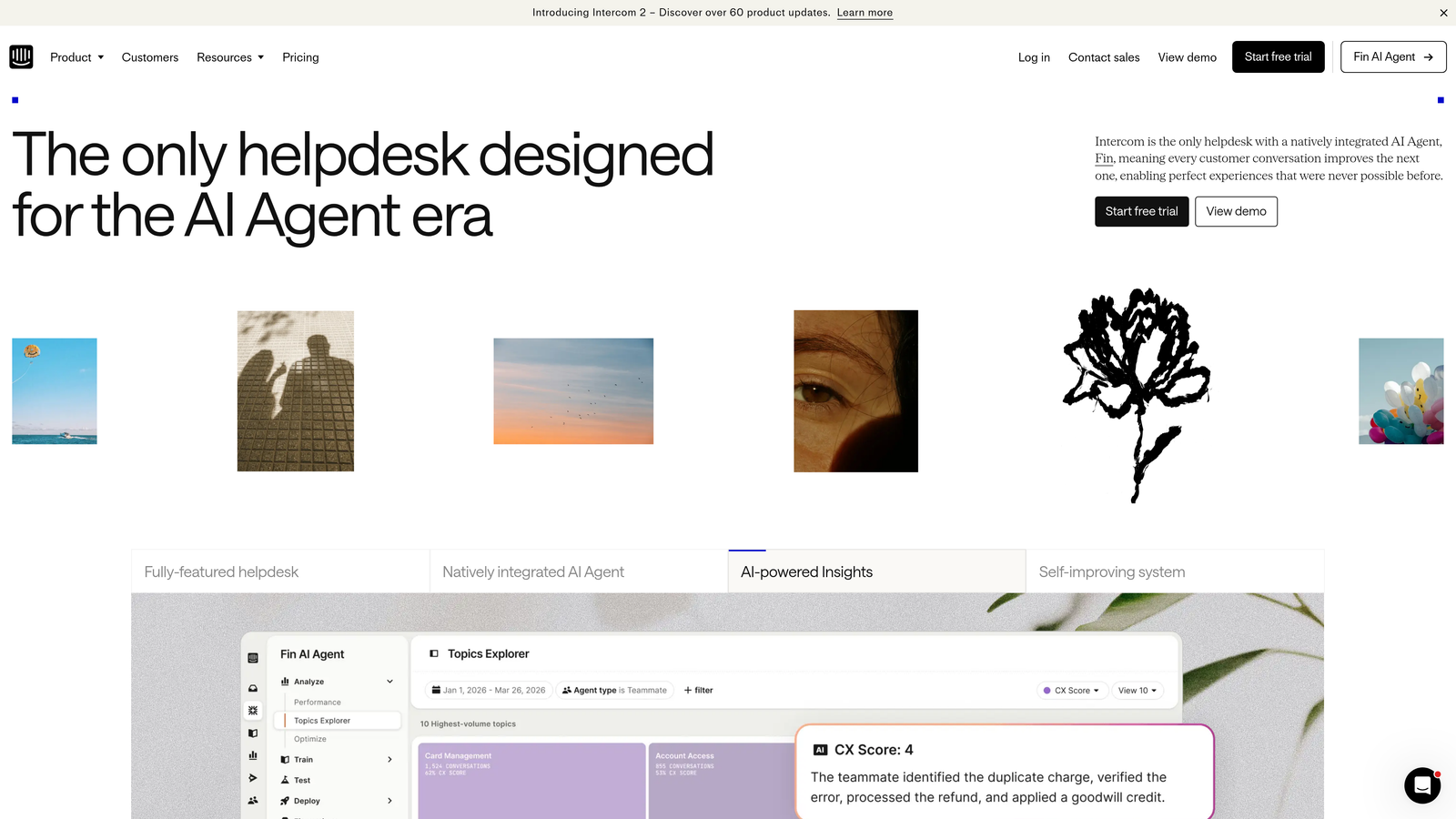
Intercom is a customer communications platform centered around its messenger experience, with the Fin AI agent handling a significant share of autonomous resolutions across web, mobile, email, and social channels.
Where This Tool Shines
Intercom's Fin AI agent is one of the more capable autonomous resolution tools in the market, designed to handle full conversations rather than just deflect tickets to a knowledge base. The messenger experience is polished and highly customizable, which matters for companies where the support widget is a visible part of the product interface.
The Workflows automation builder gives non-technical teams real power to create sophisticated routing and escalation logic without writing code. Intercom also has a mature app marketplace, making it relatively straightforward to connect with the tools most teams already use.
Key Features
Fin AI Agent: Handles autonomous conversation resolution across channels, going beyond simple deflection to actually resolving customer queries end-to-end.
Unified Messenger: Consistent experience across web, mobile, email, SMS, and social channels from a single platform.
Workflows Builder: Visual automation builder for creating custom routing, escalation, and follow-up logic without developer involvement.
Rich Reporting: Team performance analytics and conversation-level reporting to identify resolution patterns and bottlenecks.
Extensive App Marketplace: Large library of integrations covering CRM, billing, analytics, and developer tools.
Best For
Product-led growth companies and SaaS teams that prioritize a premium in-product messaging experience. Also well-suited for teams that want strong AI resolution without building complex configurations from scratch.
Pricing
Essential plan starts at $39/seat/month. Fin AI usage is billed per resolution, so costs scale with AI usage volume rather than being a flat add-on fee.
3. Zendesk
Best for: Enterprise teams needing proven omnichannel routing with a massive integration ecosystem
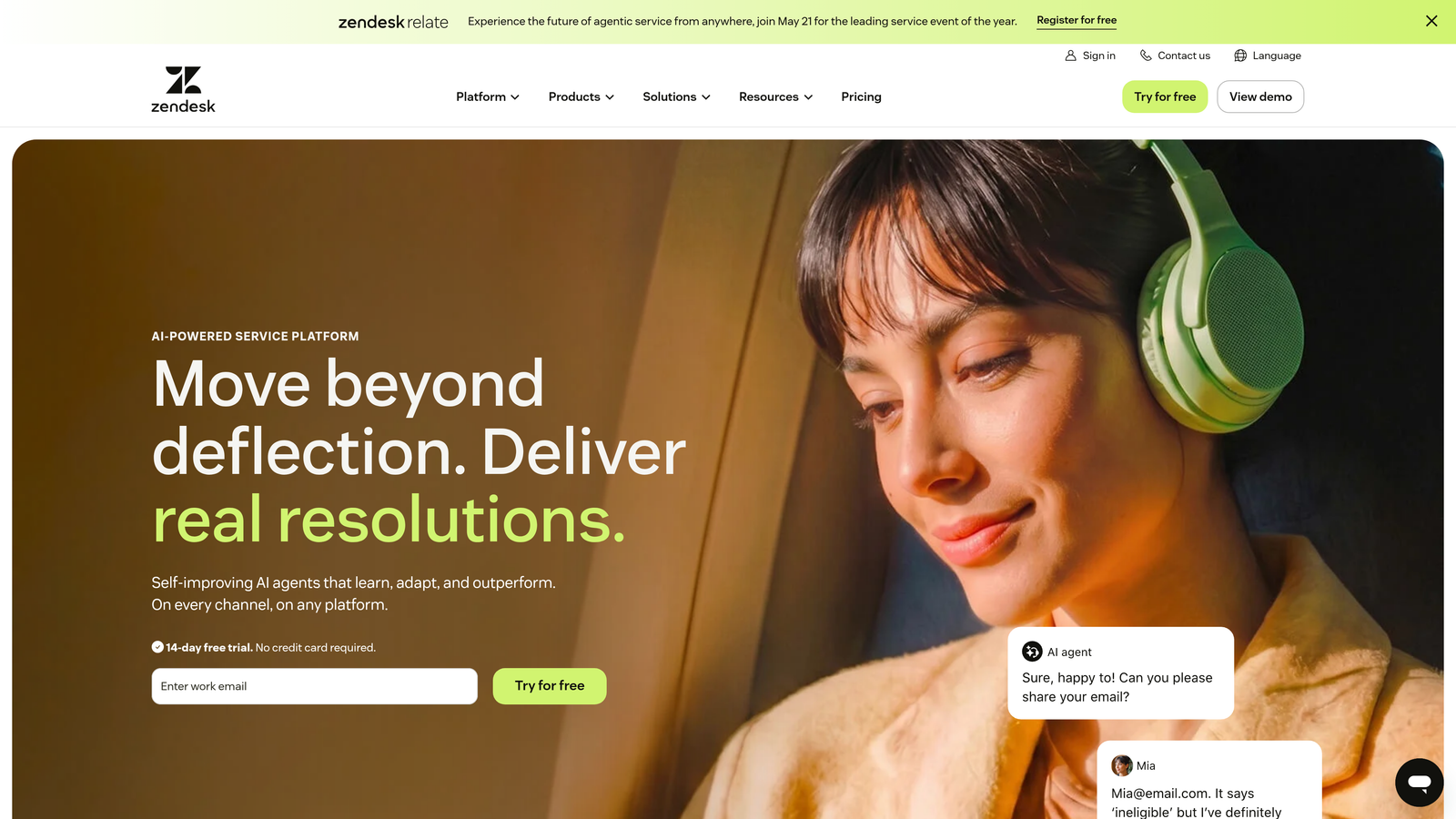
Zendesk is one of the most widely deployed enterprise support platforms, offering omnichannel routing, AI agents with pre-trained intent models, and an integration marketplace that covers virtually any tool an enterprise team might use.
Where This Tool Shines
Zendesk's strength is breadth and reliability at scale. The platform handles email, chat, voice, social media, and messaging apps through a unified agent workspace, and its routing engine is mature enough to handle complex enterprise escalation logic. For teams that need compliance certifications and enterprise-grade security, Zendesk checks those boxes out of the box.
The AI capabilities have improved meaningfully in recent product cycles, with pre-trained intent models that reduce the configuration burden compared to building custom AI flows from scratch. The 1,500+ app marketplace means that almost any integration a team needs already exists.
Key Features
Omnichannel Routing: Unified routing across email, chat, voice, social media, and messaging apps with intelligent assignment logic.
Zendesk AI Agents: Pre-trained intent models that enable faster deployment of automated resolution without extensive custom training.
1,500+ App Marketplace: One of the largest integration libraries in the support industry, covering CRM, e-commerce, analytics, and developer tools.
Advanced Analytics: Custom reporting dashboards and pre-built reports for team performance, SLA tracking, and channel-level insights.
Enterprise Security and Compliance: SOC 2, ISO 27001, HIPAA, and GDPR compliance certifications for regulated industries.
Best For
Mid-market and enterprise teams with complex routing requirements, compliance needs, or existing investments in the Zendesk ecosystem. Less ideal for early-stage teams due to pricing and configuration overhead.
Pricing
Suite Team starts at $55/agent/month. AI add-ons are priced separately, so total cost of ownership can climb quickly for teams that want full AI capabilities.
4. Freshdesk (Freshworks)
Best for: Budget-conscious teams needing solid multi-channel coverage with built-in AI assistance
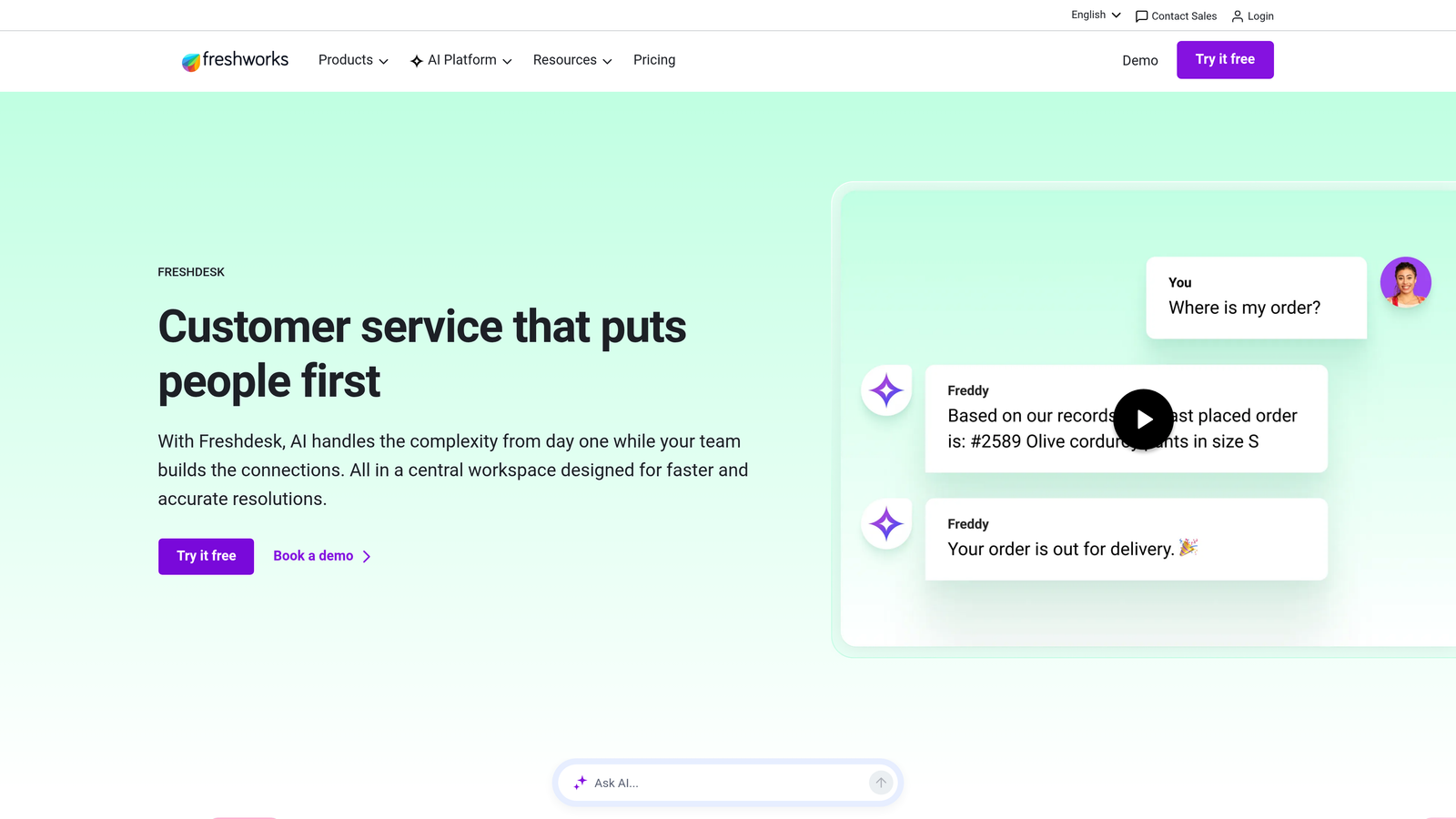
Freshdesk is a multi-channel helpdesk platform from Freshworks, offering Freddy AI for ticket automation, chatbot flows, and agent assistance across email, chat, phone, and social channels at a price point accessible to growing teams.
Where This Tool Shines
Freshdesk's value proposition is strong channel breadth at a competitive price. The platform covers email, live chat, phone (via Freshcaller), WhatsApp, and social channels without requiring separate tools for each. Freddy AI handles auto-triage and suggested responses, reducing the manual work agents spend on categorization and first-draft replies.
The free tier makes Freshdesk genuinely accessible for small teams testing multi-channel support before committing to paid plans. Collaboration features like team huddles and shared ticket ownership also make it practical for teams where multiple agents need to work together on complex issues.
Key Features
Freddy AI: Handles auto-triage, suggested responses, and chatbot conversation flows to reduce agent workload on routine tickets.
Unified Inbox: Consolidates email, chat, phone, WhatsApp, and social channels into a single agent workspace.
Built-In Phone Channel: Native voice support via Freshcaller integration, avoiding the need for a separate telephony tool.
Collaboration Tools: Team huddles, shared ticket ownership, and internal notes for complex issues requiring multiple agents.
Free Tier: Functional free plan for small teams, with paid features unlocked progressively as teams grow.
Best For
SMBs and growing teams that need genuine multi-channel coverage without enterprise-level pricing. Also a strong choice for teams that need built-in voice support alongside digital channels.
Pricing
Free plan available. Paid plans start at $15/agent/month (Growth). Higher tiers unlock advanced automation and analytics features.
5. HubSpot Service Hub
Best for: Teams already on HubSpot CRM wanting native support automation without a separate platform
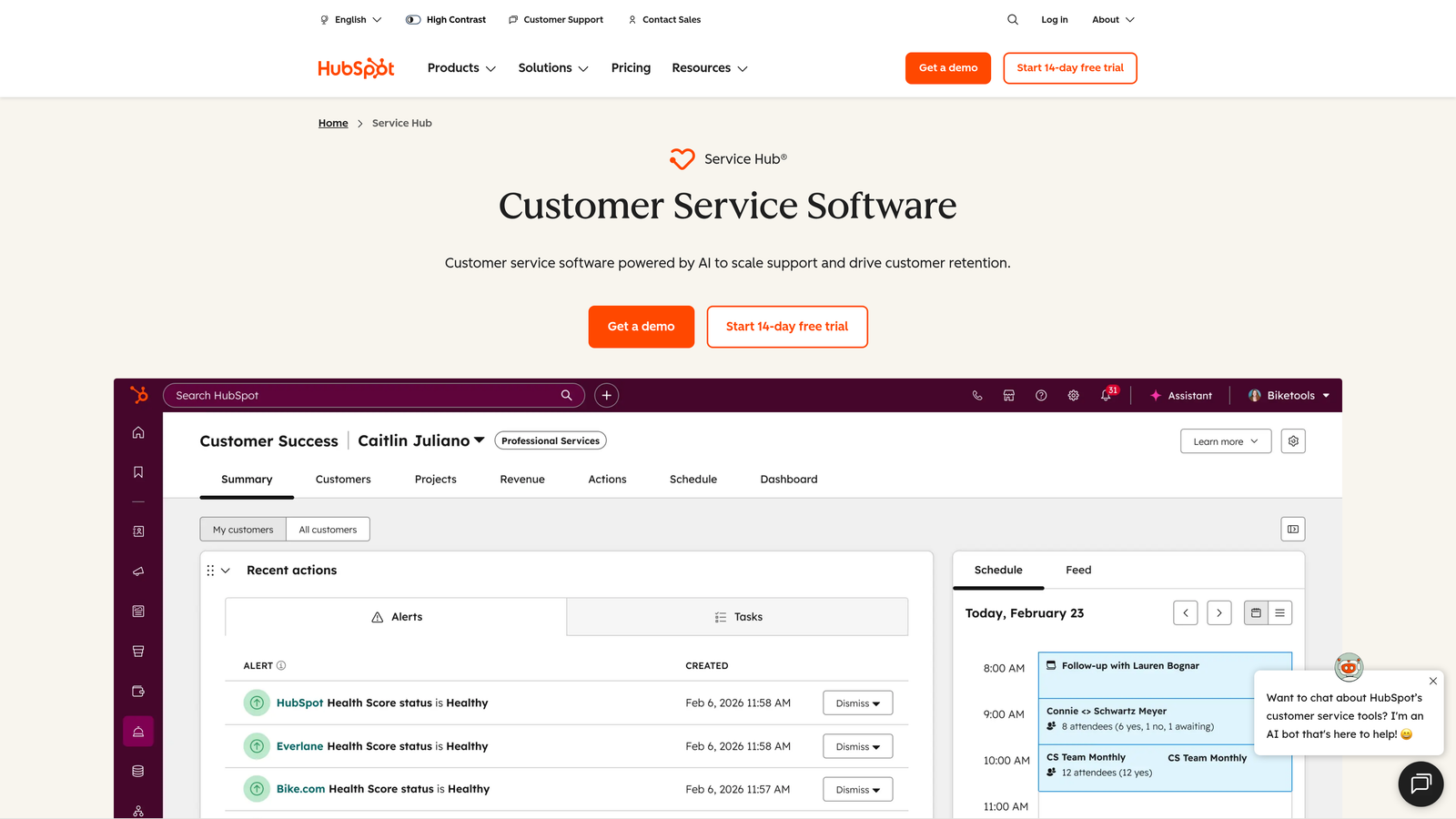
HubSpot Service Hub is a multi-channel support platform built natively into the HubSpot ecosystem, offering ticketing, live chat, knowledge base, and AI-powered automation with full access to CRM context on every interaction.
Where This Tool Shines
The core advantage of Service Hub is the native CRM integration. When a support agent opens a ticket, they see the full customer lifecycle: deals, previous interactions, marketing touchpoints, and health scores. This context is available without any integration configuration because it's all in the same system. For teams that already run sales and marketing on HubSpot, adding Service Hub eliminates the data silos that typically exist between support and the rest of the business.
The Breeze AI chatbot and ticket routing automation are solid for teams that don't need highly sophisticated AI resolution, and the built-in NPS and customer feedback surveys add a layer of customer health tracking that most standalone helpdesks don't include natively.
Key Features
Native CRM Integration: Full customer lifecycle context on every ticket without requiring any integration setup or data syncing.
Omnichannel Inbox: Unified inbox covering email, live chat, Facebook Messenger, and form submissions.
Breeze AI Chatbot and Routing: AI-powered chatbot builder and intelligent ticket routing for automating first-touch resolution and assignment.
Customer Feedback and NPS: Built-in survey tools for collecting CSAT and NPS data tied directly to contact and deal records.
Cross-Team Handoff: Seamless visibility and handoff between marketing, sales, and support teams within the same platform.
Best For
B2B companies already using HubSpot for CRM, marketing, or sales that want to unify their support operations in the same ecosystem without managing a separate helpdesk platform.
Pricing
Free tools available. Starter at $20/seat/month; Professional at $100/seat/month with advanced automation and reporting features.
6. Tidio
Best for: Small to mid-sized businesses wanting easy deployment with AI chat across multiple channels
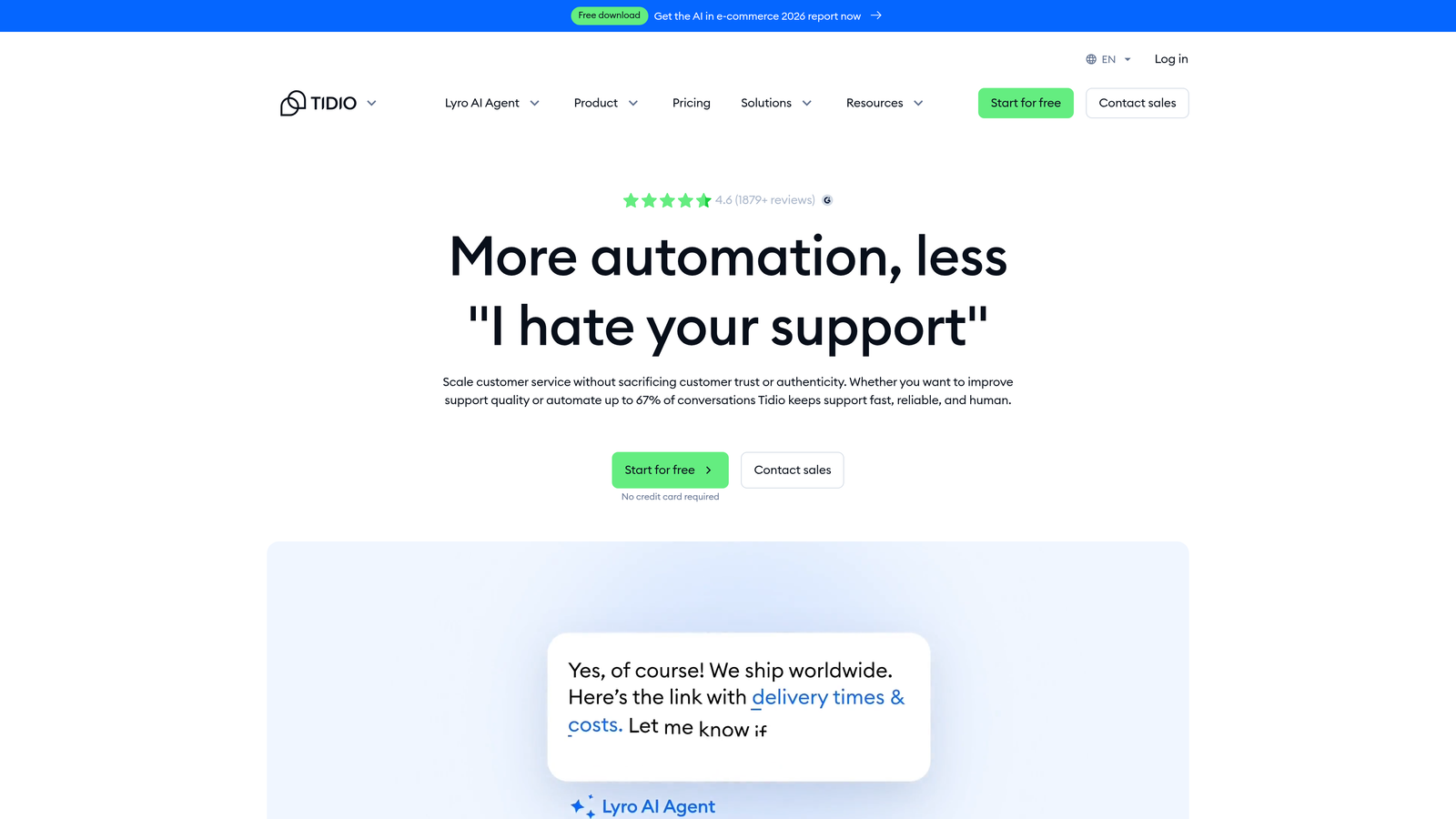
Tidio is a multi-channel chat and automation platform featuring the Lyro AI chatbot, designed for quick deployment across live chat, email, Instagram, Messenger, and WhatsApp without requiring technical expertise.
Where This Tool Shines
Tidio's biggest strength is how fast teams can get up and running. The visual chatbot flow builder requires no coding, and the platform connects to major e-commerce platforms like Shopify and WordPress in minutes. For teams that have been managing customer conversations manually and want to add automation quickly, Tidio offers one of the lowest friction entry points in the market.
The Lyro AI chatbot handles autonomous conversation resolution and improves as it processes more interactions. Visitor tracking and the real-time visitor list give agents useful context about who they're talking to before the conversation starts, which helps personalize responses without requiring deep CRM integration.
Key Features
Lyro AI Chatbot: Autonomous conversation handling that learns from interactions to improve resolution quality over time.
Visual Flow Builder: No-code chatbot and automation flow builder accessible to non-technical team members.
Multi-Channel Coverage: Live chat, email, Instagram, Facebook Messenger, and WhatsApp managed from a single workspace.
Visitor Tracking: Real-time visitor list with browsing behavior context to help agents personalize conversations.
E-Commerce Integrations: Native connections with Shopify, WordPress, and other e-commerce platforms for order and customer data context.
Best For
Small and mid-sized businesses, particularly in e-commerce, that need quick deployment and solid AI chat automation without a complex implementation process or enterprise-level budget.
Pricing
Free plan available. Paid plans start at $29/month. Lyro AI is an add-on priced separately based on conversation volume.
7. Gladly
Best for: High-volume consumer brands wanting a people-centered approach with no ticket numbers
Gladly is a customer service platform that organizes all support interactions into a single lifelong conversation per customer across voice, email, SMS, chat, social, and self-service — without ticket numbers.
Where This Tool Shines
Gladly's fundamental design philosophy is different from most helpdesks. Instead of organizing work around tickets, it organizes work around people. Every interaction a customer has ever had with a brand, regardless of channel, appears in a single chronological timeline. Agents never have to ask "have you contacted us before?" because the full history is right there.
The Gladly Sidekick AI handles automated answers and task automation, and the native voice channel with IVR and callback capabilities means teams can manage phone support without bolting on a separate telephony platform. For high-volume consumer brands where customer relationships span years and many touchpoints, this architecture genuinely reduces friction.
Key Features
Single Customer Timeline: All channels unified into one lifelong conversation view per customer, eliminating the fragmentation of ticket-based systems.
People-First Organization: No ticket numbers — work is organized by customer identity, not case ID, for more natural agent workflows.
Gladly Sidekick AI: AI-powered automated answers and task automation integrated into the agent workflow.
Native Voice with IVR: Built-in voice channel with IVR routing and callback capabilities, no third-party telephony required.
High-Volume Optimization: Purpose-built for brands handling large interaction volumes across many channels simultaneously.
Best For
High-volume consumer brands and DTC companies where long-term customer relationships and cross-channel history are central to the support experience. Less suited for early-stage B2B teams due to pricing and implementation complexity.
Pricing
Enterprise pricing; contact Gladly for a quote. Pricing typically starts around $180/hero/month, positioning this as a platform for established brands with significant support volume.
8. Dixa
Best for: Teams wanting a unified agent workspace with intelligent routing and conversational AI
Dixa is a conversational customer service platform that combines a unified agent workspace, an intelligent routing engine, and the Mim AI chatbot across voice, email, chat, and social channels.
Where This Tool Shines
Dixa's routing engine is one of its standout capabilities. Skill-based and priority-based assignment logic means the right ticket reaches the right agent based on expertise and availability rather than simple round-robin distribution. The drag-and-drop flow builder makes it accessible for non-technical administrators to configure complex routing without developer support.
The real-time analytics and quality assurance tools give team leads visibility into what's happening across channels as it happens, not just in retrospective reports. For teams that need to manage service levels dynamically during high-volume periods, this real-time visibility is genuinely useful.
Key Features
Unified Agent Workspace: Single workspace with drag-and-drop flow builder for managing all channels without switching between tools.
Intelligent Routing Engine: Skill-based and priority-based assignment logic that routes tickets to the most appropriate available agent.
Mim AI Chatbot: Automated resolution across channels with conversational AI handling routine queries before escalating to agents.
Native Channel Coverage: Voice, email, chat, and social media channels managed natively within the platform.
Real-Time Analytics and QA: Live dashboards and quality assurance tools for monitoring team performance and service levels as they happen.
Best For
Mid-market teams that prioritize intelligent routing and real-time operational visibility. Particularly useful for teams with varied agent skill sets that benefit from smart assignment logic rather than manual queue management.
Pricing
Essential plan starts at $39/agent/month. Growth and Ultimate tiers available; contact Dixa for pricing on higher plans.
9. Salesforce Service Cloud
Best for: Enterprise organizations deeply invested in the Salesforce ecosystem needing maximum customization
Salesforce Service Cloud is an enterprise-grade multi-channel service platform with Einstein AI, deep customization capabilities, and tight integration with the broader Salesforce CRM and business platform ecosystem.
Where This Tool Shines
Service Cloud's primary advantage is its position within the Salesforce ecosystem. For organizations running Salesforce Sales Cloud, Marketing Cloud, or other Salesforce products, Service Cloud provides native data sharing and workflow integration that eliminates the integration overhead of connecting separate platforms. The Einstein AI capabilities cover case classification, next-best-action recommendations, and AI-generated reply drafts.
The customization depth available through Salesforce Flow and the Lightning platform is essentially unlimited for teams with Salesforce administrators or developers on staff. Field service management, knowledge management, and self-service portals are all built in, making it a comprehensive enterprise service platform rather than just a helpdesk.
Key Features
Einstein AI: Case classification, next-best-action recommendations, and AI-generated replies to reduce manual agent effort on routine decisions.
Omni-Channel Routing: Routing across email, chat, phone, SMS, social media, and messaging apps with intelligent assignment logic.
Deep Customization: Salesforce Flow and Lightning platform enable virtually unlimited workflow and interface customization for complex enterprise requirements.
Built-In Service Capabilities: Field service management, knowledge management, and customer self-service portals included natively.
Enterprise Scalability: Enterprise-grade compliance, security, and scalability for large organizations with complex regulatory requirements.
Best For
Large enterprises already invested in the Salesforce ecosystem where native CRM integration and deep customization outweigh the significant cost and implementation complexity. Not recommended for teams outside the Salesforce ecosystem or those without dedicated Salesforce administrators.
Pricing
Starter at $25/user/month; Enterprise at $165/user/month. Einstein AI capabilities are available as add-ons at additional cost, so enterprise-level total cost of ownership can be substantial.
Which Platform Is the Right Fit for Your Team?
The right multi-channel support automation platform depends heavily on where your team is today and where it needs to go. Here's a practical breakdown to help you narrow the field.
For AI-native B2B support with business intelligence: Halo AI is the standout choice for teams that want autonomous resolution, page-aware contextual guidance, and a support layer that surfaces revenue intelligence and customer health signals. It's built for B2B teams that need their support platform to integrate deeply with the rest of their tech stack rather than operate in isolation.
For teams already on HubSpot or Salesforce: Service Hub and Service Cloud make the most sense when native CRM integration eliminates the data silos that plague teams running support on a separate platform. The trade-off is cost and, in Salesforce's case, implementation complexity.
For budget-conscious teams needing solid coverage: Freshdesk offers the best combination of channel breadth and accessible pricing, with a free tier that lets small teams start without commitment. Tidio fills a similar role for e-commerce and SMB teams focused on chat and messaging channels.
For enterprise omnichannel at scale: Zendesk remains a dependable choice for large teams with complex routing requirements, while Gladly and Dixa offer differentiated approaches for high-volume consumer brands and teams that prioritize intelligent routing respectively.
If your team is scaling support and wants AI agents that actually learn from every interaction, surface business intelligence, and integrate with the tools you already use, it's worth seeing what an AI-native architecture looks like in practice. See Halo in action and discover how continuous learning transforms every interaction into smarter, faster support.