9 Best Natural Language Processing Support Tools in 2026
This guide evaluates the 9 best natural language processing support tools in 2026, helping B2B SaaS teams identify the right NLP solution—whether they need end-to-end ticket resolution, sentiment analysis, or intelligent routing—based on language understanding quality, automation capabilities, and integration depth with platforms like Zendesk, Freshdesk, and Intercom.
 Matt PattoliFounder13 min read
Natural language processing has moved from a technical novelty to the backbone of modern customer support. Today's NLP-powered tools don't just parse keywords: they understand intent, detect sentiment, route tickets intelligently, and resolve issues autonomously.
For B2B SaaS teams managing high ticket volumes across Zendesk, Freshdesk, Intercom, and other helpdesks, choosing the right NLP support tool can mean the difference between a support team that scales and one that burns out. The tools below are evaluated on language understanding quality, integration depth, automation capabilities, and real-world support use cases.
Whether you need an AI agent that resolves tickets end-to-end, a sentiment analysis layer for your existing helpdesk, or an NLP engine to power custom workflows, there's a fit here for your team.
1. Halo AI
Best for: B2B SaaS teams wanting AI-first NLP support automation with full-stack integrations
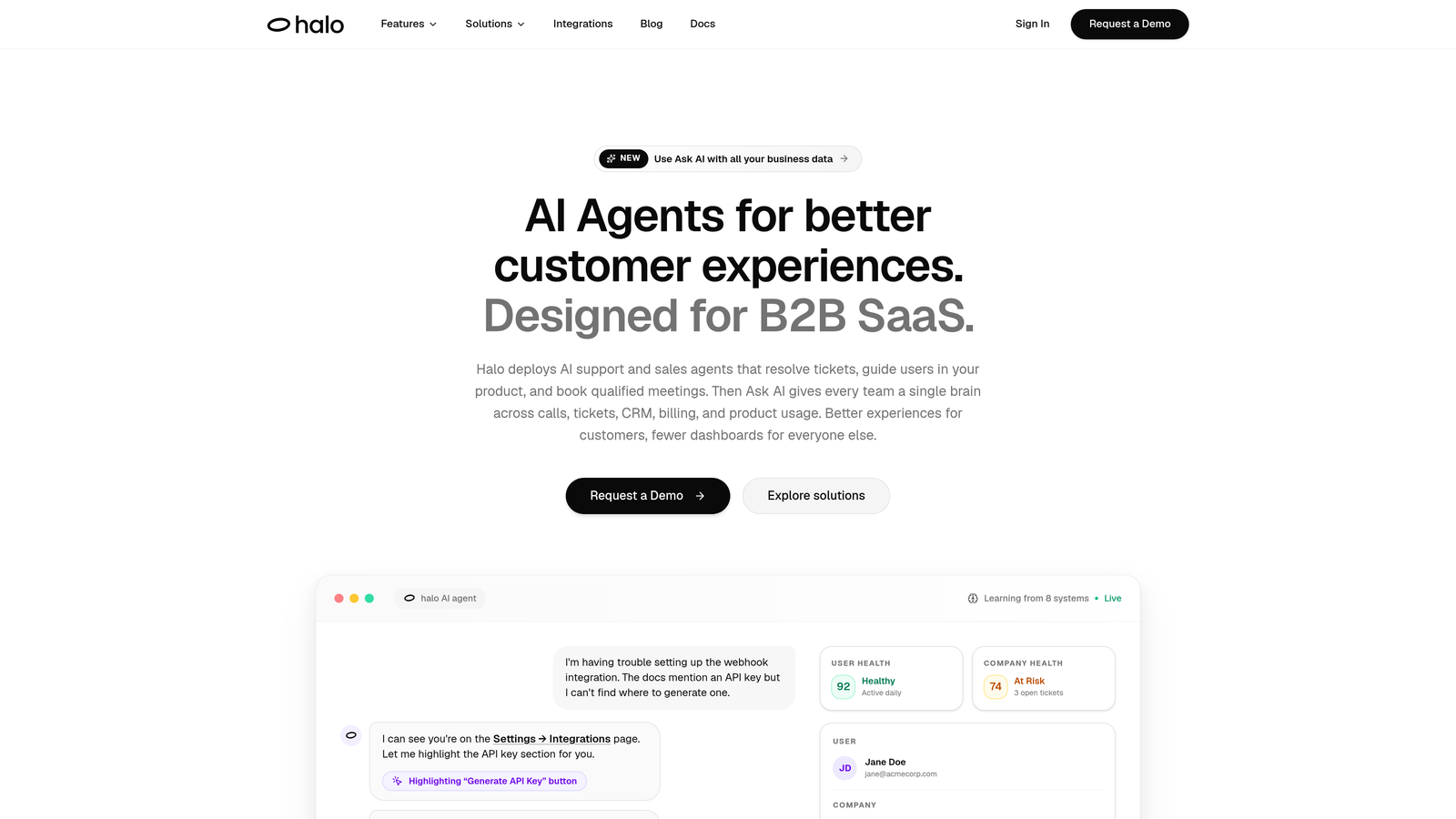
Halo AI is an AI-first customer support platform where NLP is core architecture, not a bolt-on layer added to an existing helpdesk.
Where This Tool Shines
Most NLP support tools sit on top of existing helpdesks and inherit their limitations. Halo is built differently: the NLP engine is the foundation, which means intent classification, entity extraction, and context understanding inform every part of the experience rather than being a filter applied after the fact.
The standout capability is page-aware context. The AI understands not just what a user is asking but what they're looking at in your product at that moment. This dramatically improves intent accuracy for complex B2B SaaS support scenarios where the same question can mean very different things depending on where a user is in your product.
Key Features
Page-Aware NLP Context: The AI sees what the user sees, enabling precise intent understanding based on product context rather than message text alone.
Continuous Learning Loop: Language understanding improves with every resolved ticket, so the system gets smarter the longer you use it.
Auto Bug Ticket Creation: NLP classifies and routes technical issues automatically, creating structured bug reports without agent intervention.
Smart Inbox with Business Intelligence: Conversation-level NLP analysis surfaces customer health signals, revenue intelligence, and anomaly detection beyond standard support metrics.
Live Agent Handoff: When NLP confidence thresholds aren't met, conversations escalate to human agents with full context preserved.
Deep Integration Stack: Connects to Linear, Slack, HubSpot, Intercom, Stripe, Zoom, PandaDoc, and Fathom for end-to-end workflow automation.
Best For
B2B SaaS product and support teams that want NLP to do more than deflect tickets. Particularly valuable for teams that need their support AI to understand product context, generate business intelligence from conversations, and integrate deeply with engineering and revenue tooling.
Pricing
Contact Halo AI directly at haloagents.ai for current pricing. Enterprise and growth plans are available based on team size and use case.
2. Intercom Fin
Best for: Teams already on Intercom who want native AI resolution without additional integration
Intercom Fin is Intercom's native AI resolution agent powered by large language model NLP, built directly into the Intercom messenger experience.
Where This Tool Shines
Fin's biggest advantage is its native integration. If your team is already running support through Intercom, there's no separate deployment, no data pipeline to build, and no training process to manage. Fin reads your existing help center content and begins resolving questions using GPT-class language understanding almost immediately.
The quality of natural language responses is strong. Fin handles multi-turn conversations, understands nuanced questions, and avoids the robotic tone that plagued earlier chatbot generations. When it can't resolve a query with sufficient confidence, it hands off to a human agent with the conversation context intact.
Key Features
GPT-Class NLP: Delivers natural, accurate responses to customer questions using large language model capabilities.
Zero Intent Mapping: Trains on your help center content with no manual intent configuration required.
Confidence-Based Handoff: Escalates to human agents when resolution confidence is below threshold, preserving conversation context.
Native Intercom Integration: No third-party setup or separate platform to manage.
Per-Resolution Pricing: Pay based on successful resolutions rather than a flat seat fee.
Best For
Support teams already invested in the Intercom ecosystem who want to layer AI resolution on top of their existing setup with minimal configuration. Less suited for teams wanting to run NLP across multiple helpdesks or needing deep backend integrations.
Pricing
Per-resolution pricing added to existing Intercom plan costs. Check intercom.com for current resolution rates and plan requirements.
3. Zendesk AI
Best for: High-volume Zendesk Suite teams needing intelligent triage, routing, and agent assist
Zendesk AI is the native NLP intelligence layer within the Zendesk Suite, offering intelligent triage, smart routing, agent copilot suggestions, and generative AI capabilities.
Where This Tool Shines
Zendesk AI's strength is its depth of integration with the Zendesk ticketing workflow. Rather than adding a chatbot on top, it applies NLP at the ticket level: detecting intent and sentiment on every incoming ticket, routing based on classification, and surfacing relevant context for agents before they even open a conversation.
The agent copilot is particularly useful for teams managing high ticket volumes. Real-time response suggestions and macro recommendations reduce the cognitive load on agents handling repetitive inquiries, while generative AI features help identify knowledge base gaps that create recurring ticket spikes.
Key Features
Intent and Sentiment Detection: Applied to every incoming ticket for intelligent triage before an agent touches it.
Smart Routing: NLP classification determines which team or agent receives each ticket automatically.
Agent Copilot: Real-time NLP-powered response suggestions surface during live conversations.
Generative AI for Macros: Creates and refines response macros and identifies knowledge base content gaps.
Native Suite Integration: No third-party tool required for Zendesk Suite customers.
Best For
Support operations teams running high ticket volumes on Zendesk Suite who want NLP to improve triage accuracy and reduce agent handle time. Not the right fit for teams on other helpdesks or those wanting a fully autonomous resolution agent.
Pricing
Available as an add-on to Zendesk Suite plans; pricing varies by tier. Check zendesk.com for current Advanced AI add-on pricing.
4. Freshdesk Freddy AI
Best for: Freshworks ecosystem teams wanting modular NLP across self-service, agent assist, and analytics
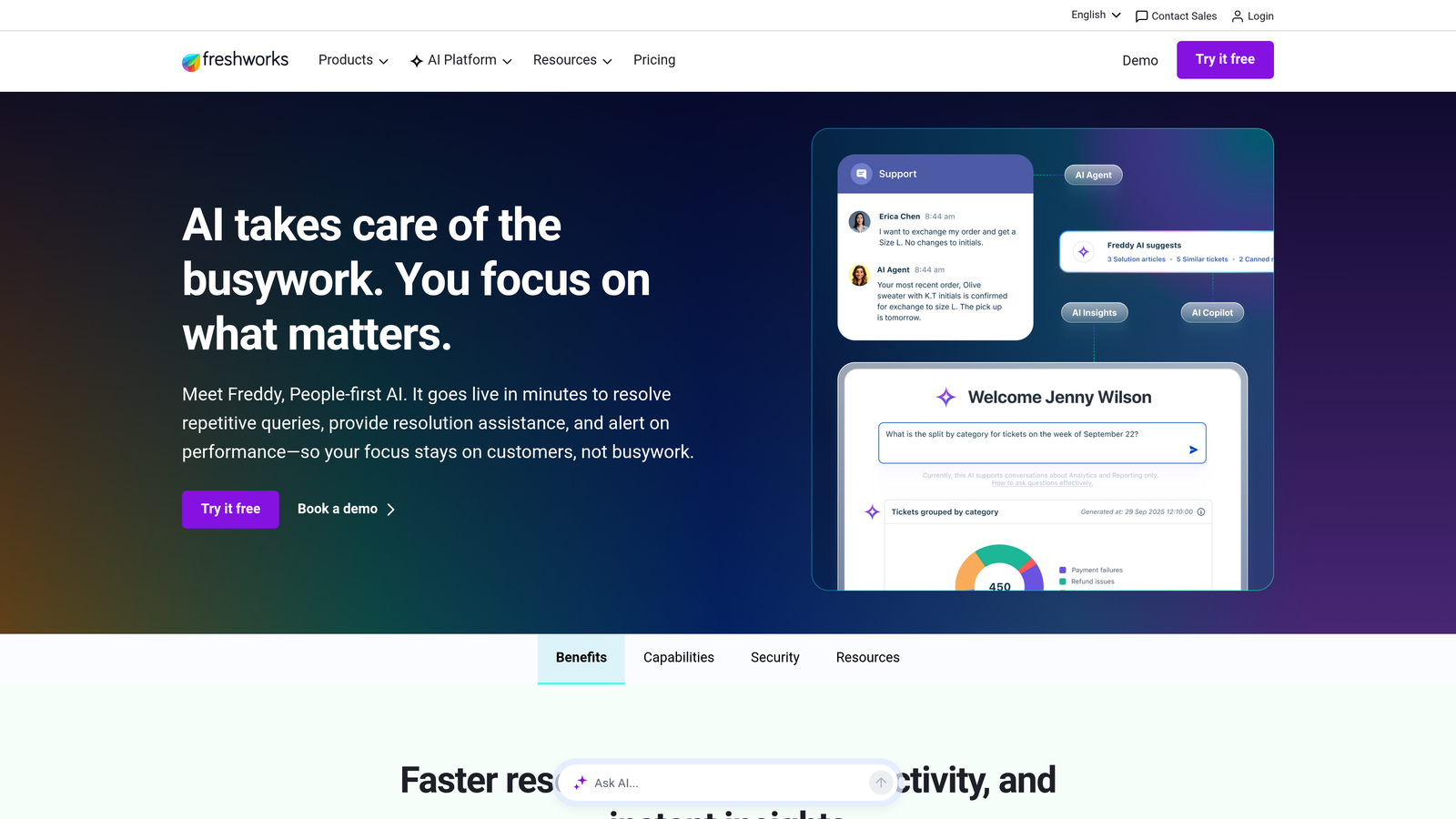
Freshdesk Freddy AI is Freshworks' NLP-powered AI suite spanning self-service deflection, agent assist, and analytics, built natively into the Freshdesk platform.
Where This Tool Shines
Freddy's modular design is its distinguishing characteristic. Rather than a single AI product, it's a suite of NLP capabilities that teams can adopt incrementally. You can start with self-service deflection, add agent copilot features as your team grows comfortable, and layer in analytics without committing to the full stack upfront.
This makes Freddy particularly practical for teams with phased AI adoption plans or budget constraints that prevent a full platform switch. The NLP quality is solid for standard support scenarios, and the native integration with Freshdesk means setup friction is low for existing Freshworks customers.
Key Features
Freddy Self Service: NLP bot that deflects tickets using your knowledge base content before they reach agents.
Freddy Copilot: Real-time NLP suggestions and response drafts for agents during live conversations.
Freddy Insights: NLP-driven analytics on ticket trends, agent performance, and support patterns.
Cross-Platform Coverage: Works across both Freshdesk and Freshservice for IT and customer support use cases.
Modular Adoption: Individual Freddy capabilities can be enabled independently based on team needs.
Best For
Teams operating within the Freshworks ecosystem who want flexible, phased NLP adoption. Also useful for organizations running both customer support (Freshdesk) and IT service management (Freshservice) who want consistent AI capabilities across both.
Pricing
Tiered add-on to Freshdesk plans; pricing varies by Freddy product. Check freshworks.com for current Freddy Copilot and Self Service pricing tiers.
5. Kustomer IQ
Best for: Mid-market and enterprise teams needing CRM-context-aware NLP across omnichannel support
Kustomer IQ is the NLP and AI intelligence layer within Kustomer's CRM-native support platform, providing intent detection, sentiment analysis, and suggested responses informed by full customer history.
Where This Tool Shines
What sets Kustomer IQ apart is the CRM context it brings to NLP. Most NLP tools analyze the current conversation in isolation. IQ has access to the full customer relationship: purchase history, previous interactions, account status, and lifetime value. This means intent classification and suggested responses are informed by who the customer is, not just what they're saying right now.
For support teams in retail, ecommerce, or B2B where customer history meaningfully changes how a ticket should be handled, this context-aware NLP produces noticeably more relevant outcomes than conversation-only approaches.
Key Features
Intent Classification and Sentiment Analysis: Applied across email, chat, SMS, social, and voice channels in a unified omnichannel view.
CRM-Informed NLP: Full customer relationship context informs AI understanding and response quality.
Suggested Responses: Powered by conversation history, knowledge base content, and CRM data together.
Conversation Summaries: Automatic NLP-generated summaries and next-best-action recommendations for agents.
Omnichannel by Design: Single NLP layer spans all channels without separate configuration per channel.
Best For
Mid-market and enterprise support teams where customer history context matters for support quality. Particularly strong for ecommerce, retail, and B2B companies with complex customer relationships and high omnichannel ticket volumes.
Pricing
Enterprise pricing model; contact Kustomer directly for current rates and plan details.
6. Forethought Solve
Best for: Support ops teams managing NLP automation across multiple helpdesk platforms simultaneously
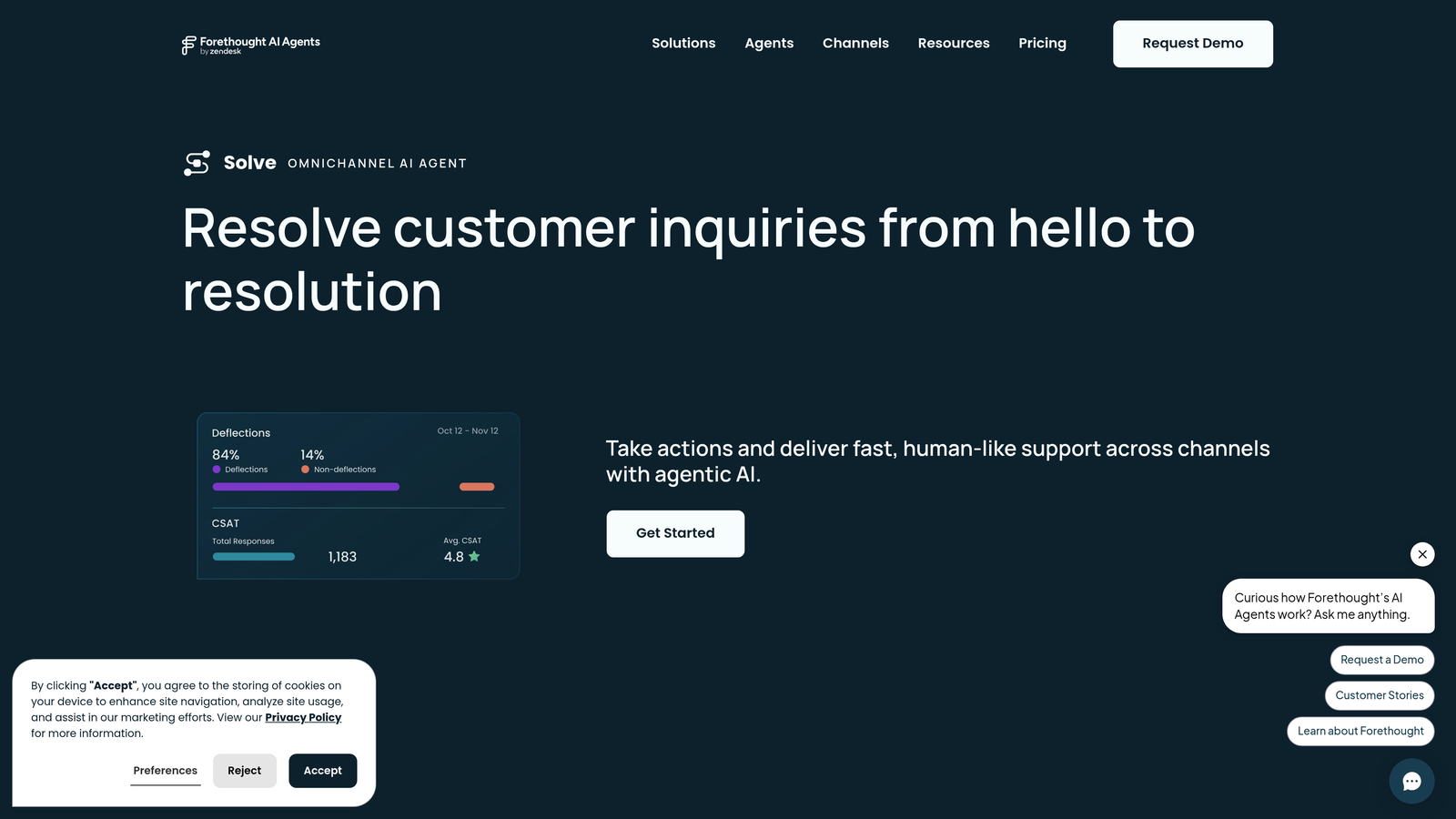
Forethought Solve is a helpdesk-agnostic NLP platform combining ticket triage, automated deflection, and agent assist across Zendesk, Salesforce, ServiceNow, and other systems.
Where This Tool Shines
The platform-agnostic design is Forethought's core differentiator. Most NLP support tools are built for one helpdesk and work best when you're fully committed to that ecosystem. Forethought works across platforms, making it the practical choice for support operations teams that run tickets across multiple systems or are mid-migration between helpdesks.
The product is structured as three distinct modules: Triage for intelligent routing, Solve for conversational deflection, and Assist for agent suggestions. Teams can adopt these independently, which gives support ops flexibility to apply NLP where it delivers the most immediate value without overhauling the entire workflow.
Key Features
NLP Intent Classification: Intelligent ticket triage and routing based on language understanding rather than keyword rules.
Conversational Deflection: Handles customer questions with NLP before tickets reach the agent queue.
Assist Mode: Surfaces NLP-ranked knowledge article suggestions to agents during live conversations.
Multi-Helpdesk Compatibility: Works with Zendesk, Salesforce, ServiceNow, and other major platforms.
Modular Products: Triage, Solve, and Assist can be deployed independently.
Best For
Support operations teams managing complex, multi-platform environments where a single helpdesk-native NLP solution isn't viable. Also strong for teams wanting granular control over which parts of the support workflow NLP touches.
Pricing
Custom enterprise pricing; contact Forethought directly for current rates and product packaging options.
7. Tidio Lyro
Best for: SMBs and ecommerce teams wanting fast NLP deployment without developer resources
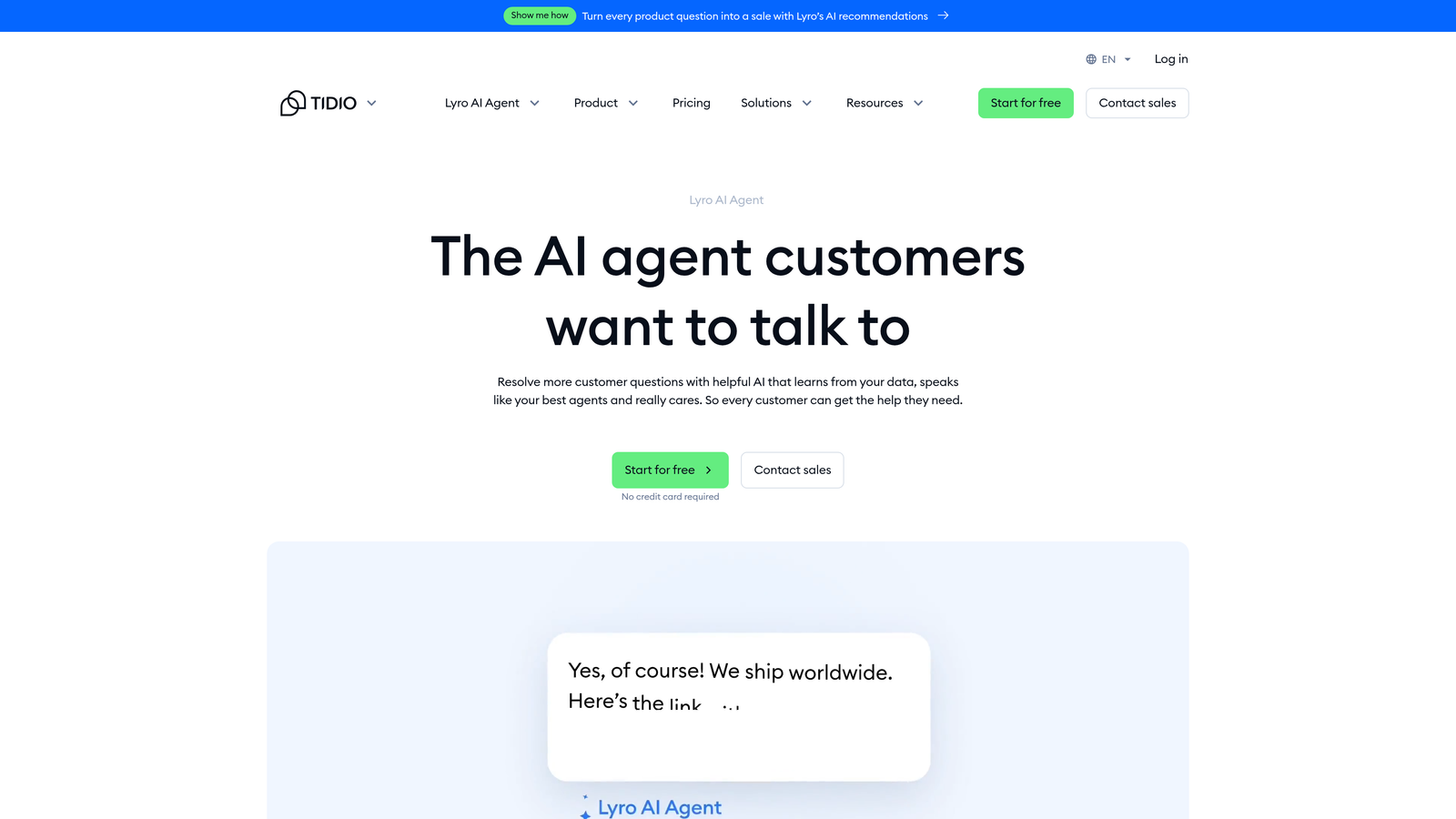
Tidio Lyro is Tidio's conversational AI product built for smaller teams, using NLP trained on your existing help content to handle customer questions with minimal setup overhead.
Where This Tool Shines
Lyro is designed for teams that want NLP-powered support automation without a lengthy implementation project. You point it at your existing FAQ documentation and help content, and it begins handling customer questions using contextual language understanding rather than rigid decision trees. For SMBs that don't have dedicated support ops resources, this low-friction deployment is a genuine advantage.
Multi-turn conversation handling is solid for the use cases Lyro is designed for: product questions, order status, basic troubleshooting. When questions exceed its scope, it hands off to a live agent cleanly. The multilingual support also makes it accessible for smaller teams serving international customers.
Key Features
Content-Trained NLP: Trains directly on your FAQ and support documentation with no manual intent mapping.
Multi-Turn Conversation Handling: Maintains context across conversation turns for natural, coherent exchanges.
Fast Deployment: No developer resources required; setup is accessible to non-technical teams.
Live Agent Handoff: Escalates questions outside Lyro's scope to human agents automatically.
Multilingual Support: Available in multiple languages for international customer bases.
Best For
SMBs and ecommerce teams that need functional NLP support automation quickly and affordably. Less suited for complex B2B SaaS support scenarios with technical troubleshooting requirements or deep backend integration needs.
Pricing
Free tier available; paid plans start at accessible SMB price points. Check tidio.com for current Lyro pricing and conversation limits.
8. Ada CX
Best for: Enterprise teams needing action-oriented NLP that executes transactions, not just answers questions
Ada CX is an enterprise-grade no-code NLP automation platform that goes beyond answering questions: Ada can execute transactions and complete multi-step support journeys across languages and channels.
Where This Tool Shines
The distinction that matters most with Ada is the difference between conversational NLP and action-oriented NLP. Most NLP support tools understand what a customer wants and provide an answer. Ada understands what a customer wants and completes the action: processing a refund, updating account details, changing a subscription tier. For support teams where a large percentage of tickets are transactional rather than informational, this is a meaningful capability difference.
The no-code conversation builder makes this accessible to support and product teams without requiring engineering involvement for every new automation. Combined with strong multilingual NLP, Ada is well-suited for global enterprise operations managing support across languages and regions.
Key Features
Action-Oriented NLP: Can process refunds, update accounts, and complete transactions rather than only providing informational responses.
No-Code Conversation Builder: NLP conversation flows accessible to non-technical support and product teams.
Multilingual NLP: Strong language support for global support operations across multiple regions.
Enterprise Integrations: Connects with major CRMs, helpdesks, and backend systems for end-to-end automation.
Enterprise Governance: Reporting, audit trails, and compliance features for enterprise oversight requirements.
Best For
Enterprise support teams with high volumes of transactional support requests and global language requirements. Also strong for organizations that want non-technical teams to own and iterate on NLP automation flows without ongoing engineering support.
Pricing
Custom enterprise pricing; contact Ada directly for current rates and implementation details.
9. Cohere
Best for: Technical teams building proprietary NLP support pipelines rather than deploying off-the-shelf tools
Cohere is an enterprise LLM API platform for teams building custom NLP support infrastructure: not an out-of-the-box support tool, but the underlying layer for proprietary AI support systems.
Where This Tool Shines
Cohere belongs on this list because many enterprise and technical teams face a genuine build-vs-buy decision when it comes to NLP support tooling. For teams with specific language understanding requirements, strict data privacy constraints, or unique support workflows that off-the-shelf tools can't accommodate, Cohere provides the model infrastructure to build something proprietary.
The model suite is well-suited for support use cases specifically. Command handles response generation. Embed powers semantic search for knowledge retrieval. Rerank scores retrieved articles by relevance before surfacing them to agents or end users. Together, these cover the core NLP tasks that underpin most support automation systems, with strong data privacy controls and on-premises deployment options that enterprise security teams often require.
Key Features
Command Model: NLP-powered response generation for building conversational support agents.
Embed Model: Semantic search and knowledge retrieval for support documentation and knowledge bases.
Rerank Model: Relevance scoring of retrieved support articles before they reach agents or customers.
Data Privacy Controls: Strong privacy options including on-premises deployment for regulated industries.
Enterprise Security: Purpose-built for enterprise with security and compliance features for sensitive environments.
Best For
Engineering teams at enterprise organizations building custom NLP support pipelines where off-the-shelf tools don't meet their requirements. Requires meaningful engineering investment to implement; not appropriate for teams wanting fast deployment without developer resources.
Pricing
API usage-based pricing with enterprise contracts available. Check cohere.com for current model pricing and enterprise plan details.
Which NLP Support Tool Is Right for Your Team?
The right choice depends less on which tool has the most features and more on where your team is starting from and what kind of NLP problem you're actually solving.
If you're building from scratch and want AI-first architecture: Halo AI is the strongest option for B2B SaaS teams. The page-aware context, continuous learning loop, and deep integration stack make it the most capable choice for teams that want NLP to do more than deflect tickets. It surfaces business intelligence, automates bug reporting, and connects to the tools your product and engineering teams already use.
If you're already on a major helpdesk: Start with the native NLP layer. Intercom Fin, Zendesk AI, and Freshdesk Freddy all offer solid NLP capabilities with minimal implementation friction. The trade-off is that you're constrained to that platform's roadmap and pricing model.
If you need NLP across multiple helpdesks: Forethought Solve is purpose-built for this scenario. It's the practical choice for support ops teams managing complex, multi-platform environments.
If you're an SMB or ecommerce team: Tidio Lyro offers the fastest path to functional NLP support automation at an accessible price point. It won't handle complex B2B scenarios, but for standard customer questions it delivers solid results without a lengthy implementation.
If you're building something custom: Cohere gives your engineering team the model infrastructure to build proprietary NLP pipelines with strong data privacy controls. Budget for real engineering time.
Your support team shouldn't scale linearly with your customer base. Let AI agents handle routine tickets, guide users through your product, and surface business intelligence while your team focuses on complex issues that need a human touch. See Halo in action and discover how continuous learning transforms every interaction into smarter, faster support.