9 Best Omnichannel AI Support Solutions in 2026
This guide evaluates the 9 strongest omnichannel AI support solutions available in 2026, comparing platforms on channel breadth, AI autonomy, and integration depth to help SaaS companies and enterprise teams reduce ticket volume across chat, email, social, and in-app touchpoints without adding headcount.
 Grant CooperFounder13 min read
When customers expect help across chat, email, social, and in-app channels simultaneously, single-channel support tools simply can't keep up. Omnichannel AI support solutions unify these touchpoints while using artificial intelligence to resolve tickets autonomously, route complex issues intelligently, and surface insights that improve your entire support operation.
This list covers the strongest platforms available in 2026, evaluated on channel breadth, AI autonomy, integration depth, and business intelligence capabilities. Whether you're a scaling SaaS company outgrowing your helpdesk or an enterprise team looking to reduce ticket volume without adding headcount, there's a solution here built for your situation.
We've included tools ranging from AI-first platforms built for autonomous resolution to established helpdesks that have layered AI onto existing infrastructure — because the right fit depends on where you are today and where you need to go.
1. Halo AI
Best for: B2B SaaS and product-led growth teams that need autonomous ticket resolution with business intelligence
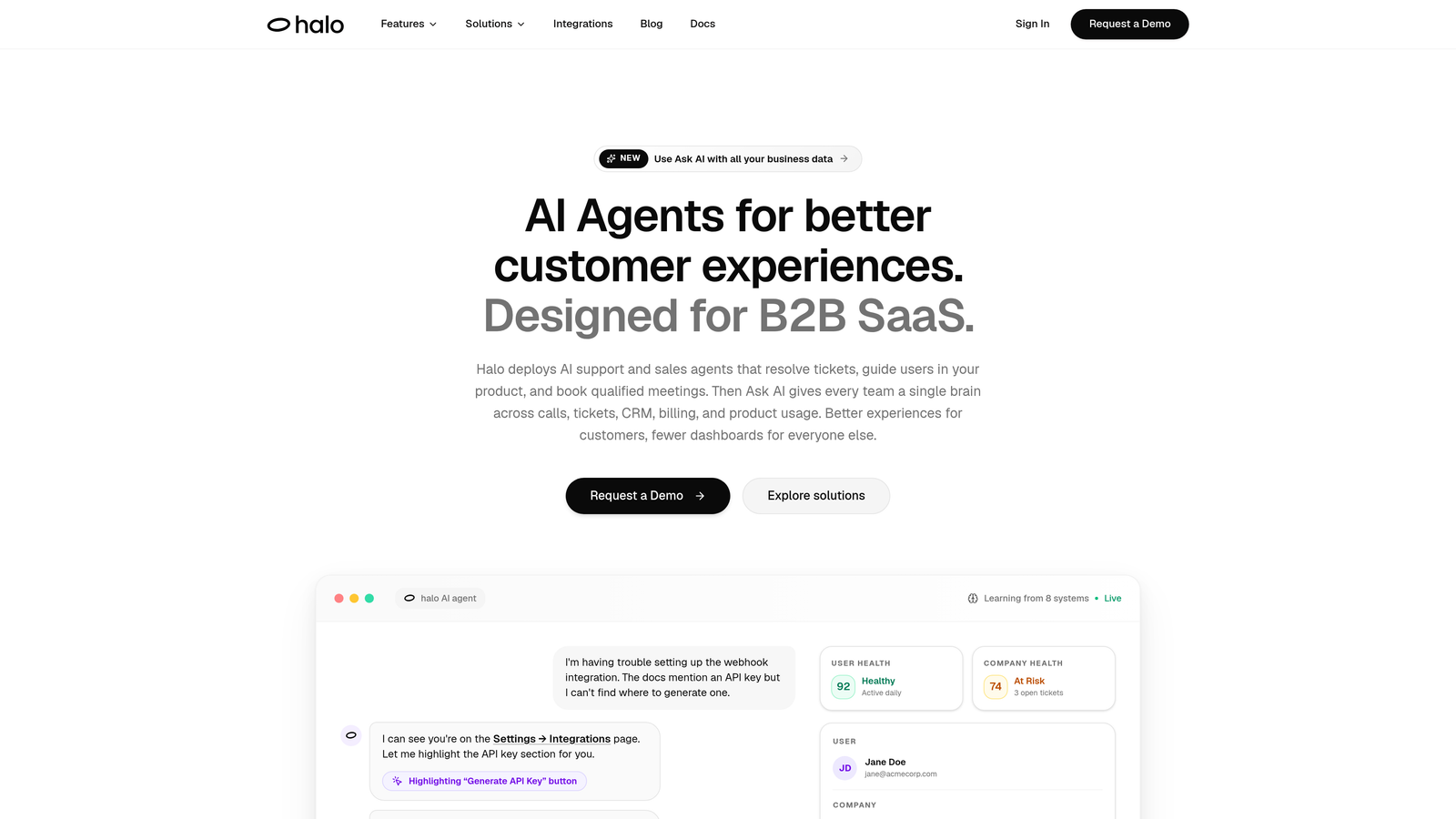
Halo AI is an AI-first omnichannel support platform that deploys autonomous agents to resolve tickets, guide users through your product, and surface actionable business intelligence signals.
Where This Tool Shines
What separates Halo from most competitors is its architectural approach. Rather than bolting AI onto an existing helpdesk, Halo is built from the ground up for autonomous resolution. The platform's page-aware AI agents actually see what users see on screen, giving them contextual awareness that generic chatbots simply don't have.
The business intelligence layer is particularly compelling for SaaS teams. Beyond resolving tickets, Halo's smart inbox surfaces customer health signals, revenue intelligence, and anomaly detection — turning your support channel into a source of strategic insight rather than just a cost center.
Key Features
Page-Aware AI Agents: The AI sees exactly what users see on screen, enabling precise contextual guidance that generic bots can't match.
Autonomous Ticket Resolution: AI agents handle tickets end-to-end with intelligent live agent handoff for complex issues that require a human touch.
Auto Bug Ticket Creation: Automatically creates bug reports and routes them directly to Linear or connected project management tools — no manual triage needed.
Smart Inbox with Business Intelligence: Customer health signals, revenue intelligence, and anomaly detection surface directly within your support workflow.
Deep Integrations: Connects across Linear, Slack, HubSpot, Intercom, Stripe, Zoom, PandaDoc, and Fathom for a fully connected support stack.
Continuous Learning: Every resolved interaction improves future responses, so the system gets smarter over time without manual retraining.
Best For
Halo is the strongest fit for B2B SaaS companies and product teams that want genuine autonomous resolution rather than deflection. If your support team is drowning in repetitive tickets and you want AI that learns from every interaction, Halo is worth a close look.
Pricing
Contact Halo AI directly for pricing. The platform is positioned for B2B SaaS and product-led growth teams — verify current rates at haloagents.ai.
2. Zendesk AI
Best for: Enterprises needing mature omnichannel infrastructure with AI layered across established workflows
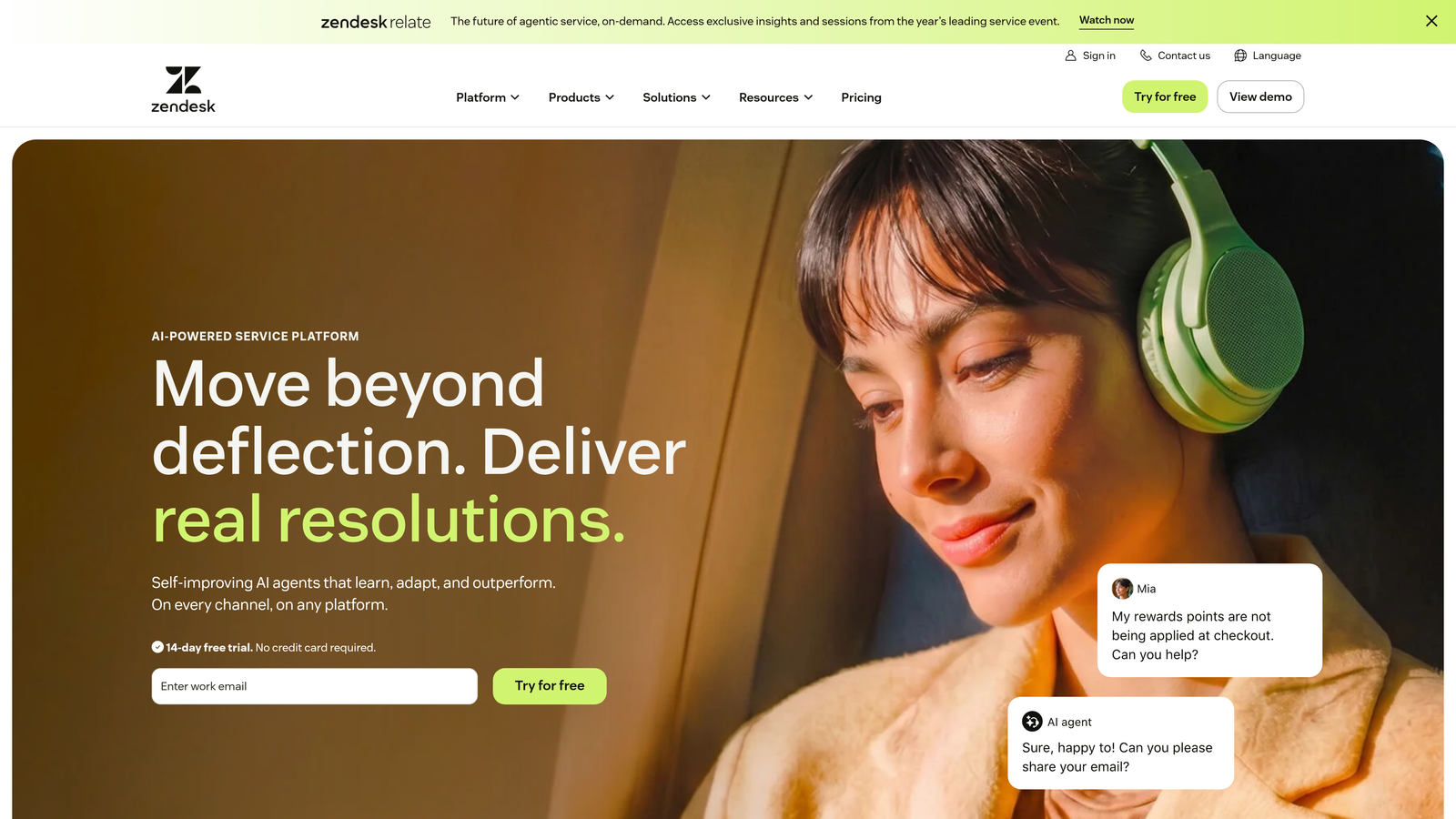
Zendesk AI is the industry-standard omnichannel helpdesk with AI Suite capabilities layered across its mature support infrastructure, covering email, chat, voice, social, and messaging channels.
Where This Tool Shines
Zendesk's strength is breadth. Few platforms match its channel coverage, compliance certifications, or marketplace depth. For enterprise teams with complex organizational structures, Zendesk's workforce management and reporting capabilities are genuinely best-in-class.
The AI Suite has matured considerably, and the agent copilot functionality is useful for teams where human agents handle the majority of tickets. That said, Zendesk's AI is additive to the core helpdesk rather than architecturally AI-first, which matters if autonomous resolution is your primary goal.
Key Features
Intelligent Triage and Routing: AI automatically classifies and routes incoming tickets across all connected channels.
Agent Copilot: Suggests replies and next-step recommendations to help agents resolve tickets faster.
Broad Channel Coverage: Email, live chat, voice, social, and messaging apps covered in a single platform.
Enterprise Compliance: Strong security, compliance, and workforce management tooling for regulated industries.
App Marketplace: 1,000+ integrations available for extending functionality across your business stack.
Best For
Zendesk is ideal for larger organizations that need proven infrastructure, strong compliance posture, and broad channel coverage. It's less suited for teams prioritizing AI autonomy over established helpdesk workflows.
Pricing
Suite plans start at mid-range per agent/month; enterprise pricing is available. Verify current rates at zendesk.com before making purchasing decisions.
3. Intercom
Best for: SaaS companies wanting conversational in-product support with autonomous chat resolution
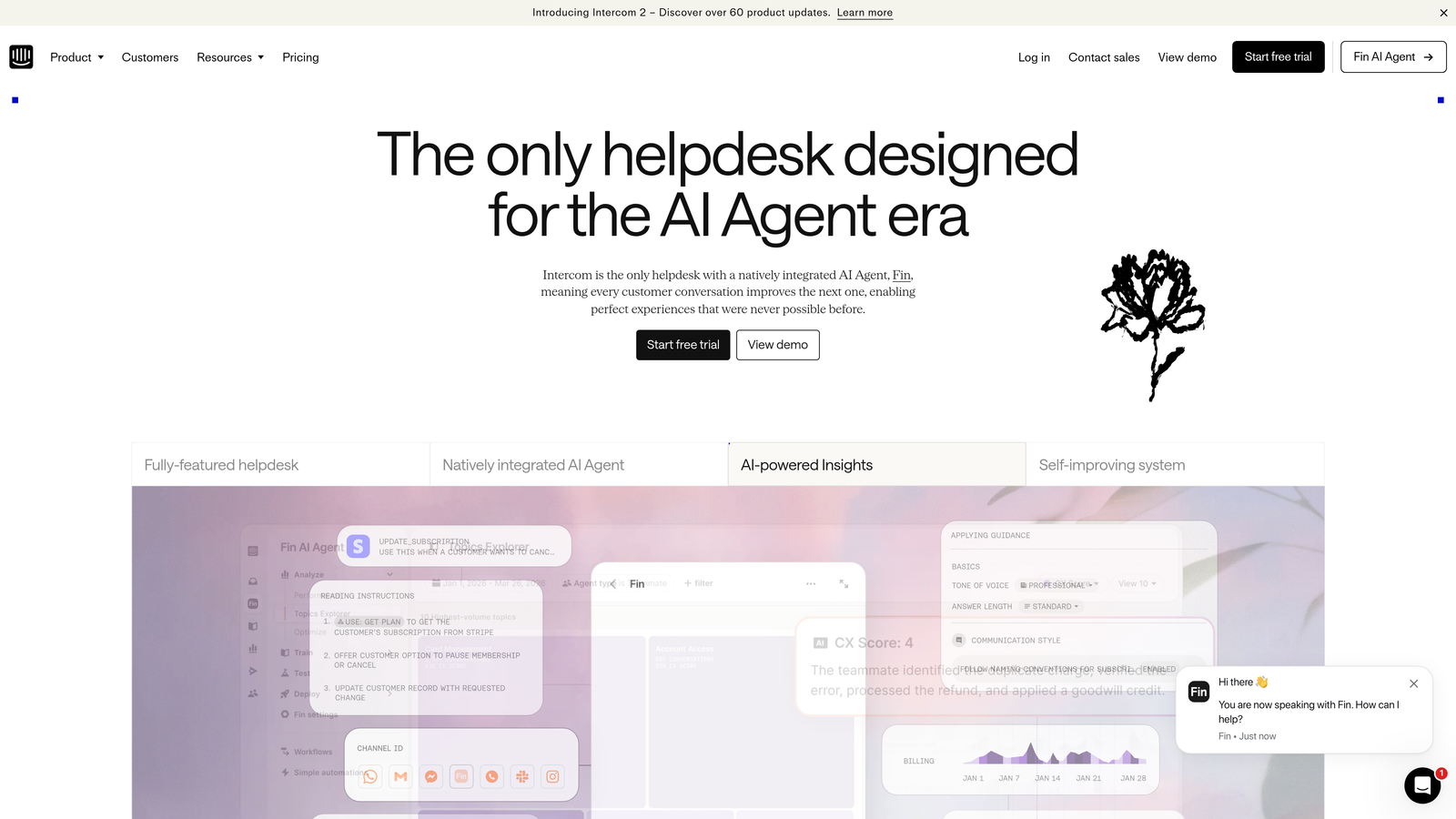
Intercom is a conversational support platform popular with SaaS companies, featuring the Fin AI agent for autonomous chat resolution and strong in-product messaging capabilities.
Where This Tool Shines
Intercom's Fin AI agent is one of the more capable autonomous chat resolution tools on the market, particularly for SaaS workflows where the knowledge base is well-maintained. The platform's in-product messaging heritage gives it strong contextual awareness that pure helpdesks often lack.
The integration of product tours and onboarding flows alongside support is a genuine differentiator for product-led growth teams. Intercom lets you handle onboarding, activation, and support in a single platform, which reduces tool sprawl considerably.
Key Features
Fin AI Agent: Autonomously resolves chat queries using your knowledge base with strong accuracy for well-documented products.
In-Product Messaging: Strong contextual awareness for SaaS workflows, including onboarding and activation messaging.
Omnichannel Coverage: Chat, email, and in-app channels covered with a unified inbox.
Product Tours: Onboarding flows integrated directly alongside support, reducing the need for separate tools.
Usage-Based Pricing: Scales with conversation volume, which can work well or poorly depending on your ticket patterns.
Best For
Intercom is a strong choice for SaaS teams that want conversational in-product support and autonomous chat resolution. Teams with high email or voice volume may find the channel coverage somewhat limited compared to enterprise alternatives.
Pricing
Usage-based pricing model. Verify current rates at intercom.com, as costs can scale significantly with conversation volume.
4. Freshdesk + Freddy AI
Best for: Mid-market teams wanting omnichannel coverage at competitive pricing with room to grow
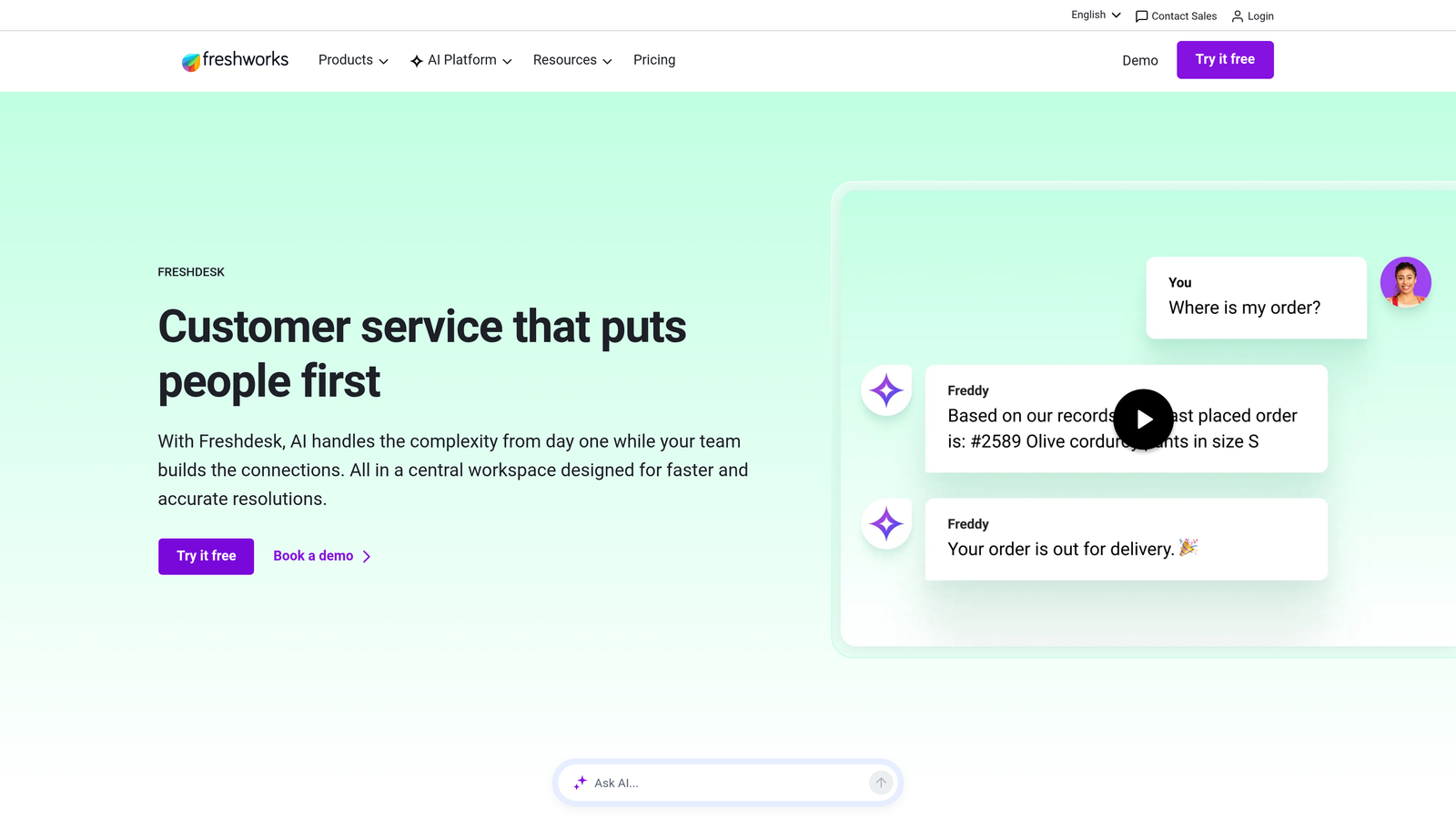
Freshdesk is a mid-market helpdesk platform with Freddy AI integrated across email, chat, phone, and social channels, offering competitive pricing relative to enterprise alternatives.
Where This Tool Shines
Freshdesk's value proposition is solid omnichannel coverage at a price point that doesn't require enterprise budget approval. The free tier makes it accessible for small teams, while the paid plans scale well into mid-market territory without the complexity of Salesforce or the cost of Zendesk.
Freddy AI handles auto-triage and suggested responses competently, and Freddy Insights adds a layer of analytics that helps teams understand their support patterns. The broader Freshworks ecosystem (Freshsales, Freshservice) is worth noting if you want a single vendor across sales, IT, and support.
Key Features
Freddy AI: Handles auto-triage, suggested responses, and basic autonomous resolution across connected channels.
Omnichannel Coverage: Email, live chat, phone, and social media covered in one platform.
Free Tier: Available for small teams getting started without committing to paid plans immediately.
Freddy Insights: AI-driven support analytics for understanding ticket patterns and team performance.
Freshworks Ecosystem: Integrates with Freshsales and Freshservice for broader business coverage beyond support.
Best For
Freshdesk is well-suited for mid-market teams that need solid omnichannel coverage without enterprise complexity. E-commerce businesses and companies with straightforward support workflows will find it a strong fit.
Pricing
Free tier available; paid plans scale with features and agent count. Verify current rates at freshdesk.com.
5. Salesforce Service Cloud + Einstein AI
Best for: Enterprise organizations where Salesforce CRM is the central system of record
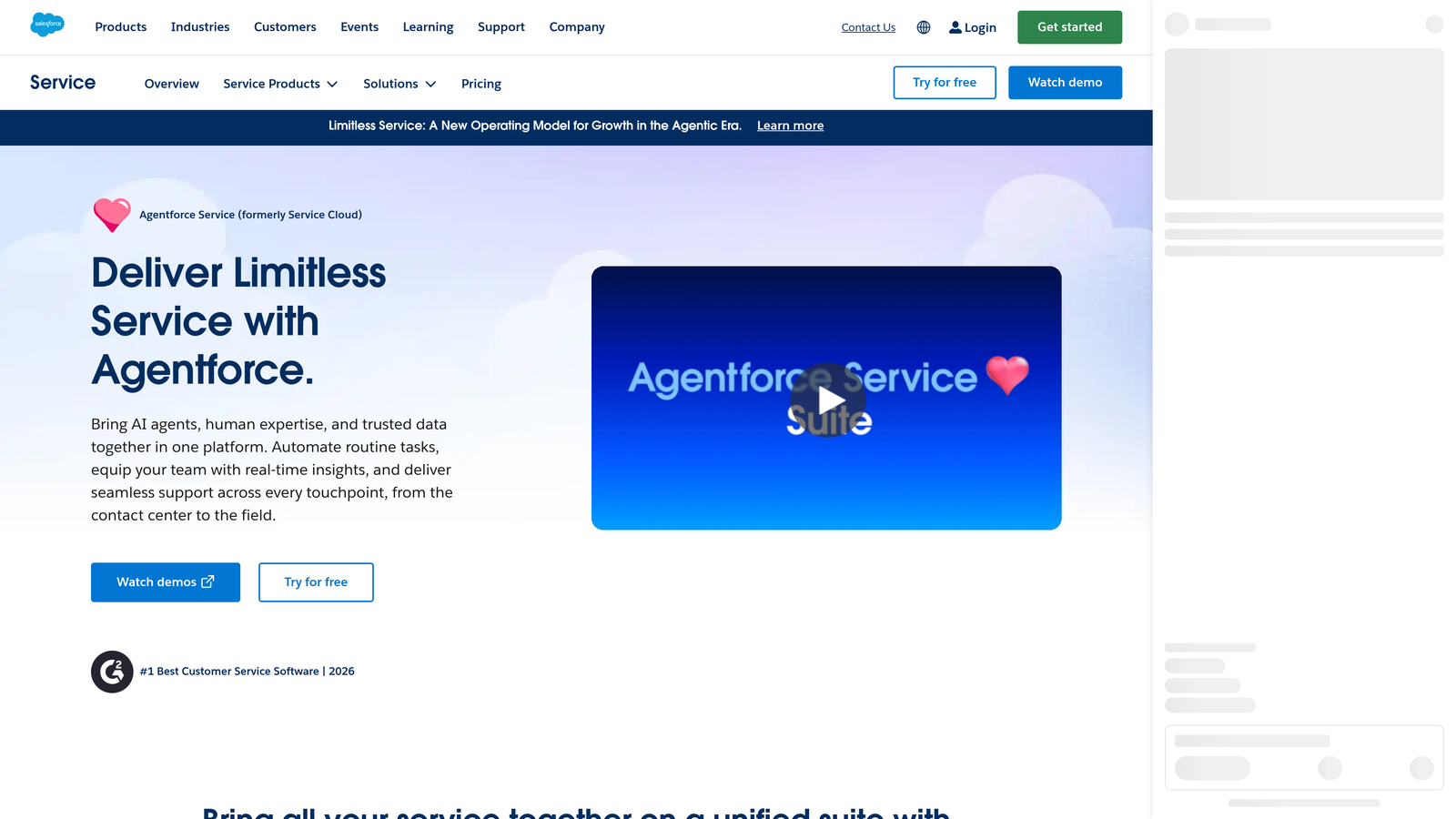
Salesforce Service Cloud is an enterprise omnichannel support platform deeply integrated with Salesforce CRM, with Einstein AI powering case classification, next best action recommendations, and agent assist across every channel.
Where This Tool Shines
If your organization runs on Salesforce, Service Cloud is a natural extension. The deep CRM integration means support decisions are informed by the full customer record: purchase history, open opportunities, account tier, and prior interactions. That context makes Einstein AI's recommendations considerably more relevant than what a standalone helpdesk can produce.
The platform's omnichannel routing and Einstein Bots for self-service create a capable end-to-end support infrastructure. The tradeoff is complexity: Service Cloud requires meaningful implementation investment and ongoing administration.
Key Features
Einstein AI: Powers case classification, intelligent routing, and next best action recommendations informed by full CRM data.
Deep Salesforce CRM Integration: Support decisions informed by complete customer data across sales, marketing, and service.
Omnichannel Routing: Email, chat, phone, social, and messaging channels with intelligent distribution.
Einstein Bots: Self-service automation handles common queries before escalating to human agents.
Salesforce Ecosystem Reporting: Comprehensive analytics within the broader Salesforce platform for cross-functional visibility.
Best For
Service Cloud is purpose-built for enterprises where Salesforce is already the system of record. Organizations without existing Salesforce investment will likely find the implementation cost and complexity difficult to justify.
Pricing
Enterprise pricing tier. Verify current rates at salesforce.com, as costs vary significantly by edition and user count.
6. Tidio
Best for: E-commerce businesses and small teams wanting accessible AI chat automation with a free entry point
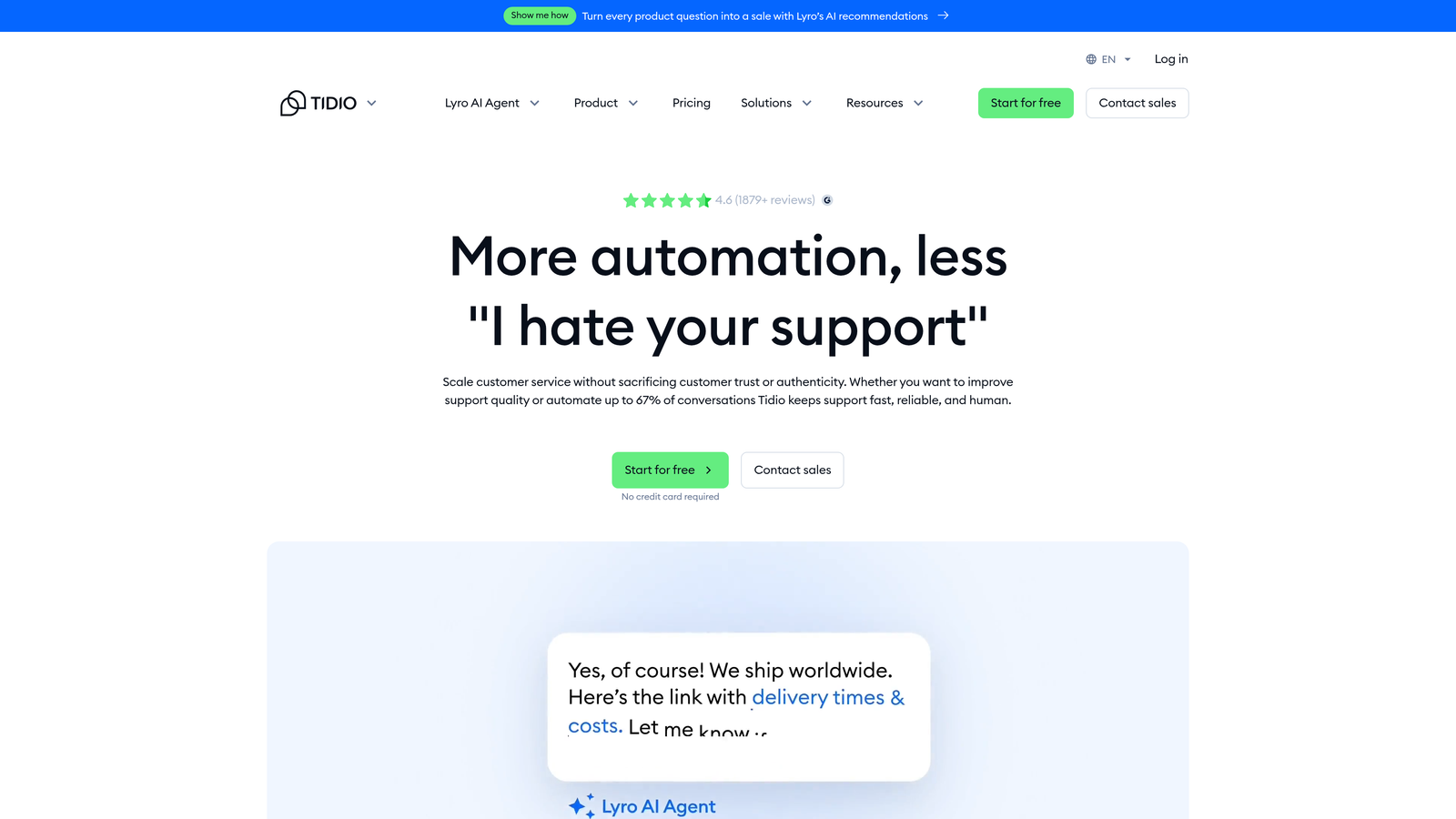
Tidio is an accessible omnichannel AI support tool popular with e-commerce and small businesses, featuring the Lyro AI chatbot for autonomous query resolution across chat, email, and social channels.
Where This Tool Shines
Tidio's accessibility is its defining strength. The free tier lets small teams get started without upfront commitment, and the Lyro AI chatbot handles a solid range of common customer queries without requiring technical expertise to configure. The visual chatbot builder is genuinely approachable for non-technical teams.
Native integrations with Shopify and WordPress make Tidio a natural fit for e-commerce operations. For businesses where most support questions are product-related, order-related, or FAQ-driven, Lyro's autonomous resolution can handle a meaningful portion of volume.
Key Features
Lyro AI Chatbot: Autonomously handles common customer queries across chat, email, and social without requiring technical configuration.
E-Commerce Integrations: Native connections to Shopify, WordPress, and major e-commerce platforms.
Unified Inbox: Live chat, email, and social messaging consolidated in one view.
Visual Chatbot Builder: Drag-and-drop flow builder accessible to non-technical teams.
Free Tier: Entry-level access available; Lyro AI capabilities unlock on paid plans.
Best For
Tidio is best for e-commerce businesses, small teams, and anyone who needs accessible AI chat automation without enterprise budget or technical resources. It's less suited for complex B2B SaaS support needs with multi-step workflows.
Pricing
Free tier available; Lyro AI features are on paid plans. Verify current rates at tidio.com.
7. Help Scout
Best for: Teams that prioritize human-centered support where AI assists agents rather than replacing them
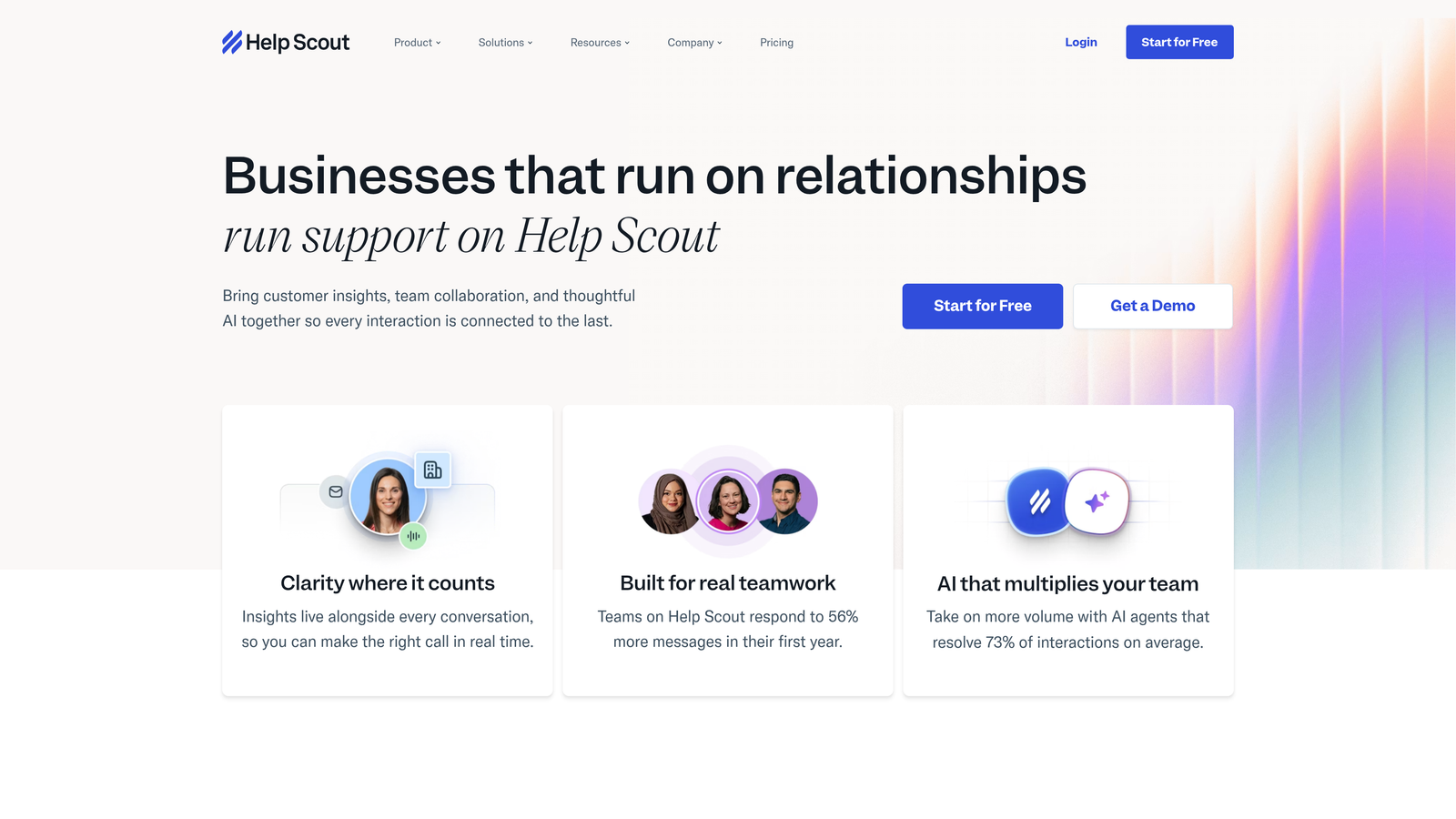
Help Scout is a human-centered support platform that uses AI to help agents work faster without replacing the personal touch, featuring AI Summarize, AI Drafts, and the Beacon in-app widget.
Where This Tool Shines
Help Scout takes a deliberately different philosophical stance than most AI-heavy platforms: it believes the human relationship is the product, and AI exists to support that relationship rather than replace it. AI Summarize gives agents instant context on long conversation threads, while AI Drafts helps them respond faster without losing their voice.
The result is a platform that feels clean and intentional. Agents can get up to speed quickly, customers get responses that feel genuinely human, and the Beacon widget handles in-app self-service for users who prefer it. If your brand is built on relationship quality, Help Scout's philosophy aligns well.
Key Features
AI Summarize: Instantly surfaces conversation context so agents don't have to read through long threads.
AI Drafts: Generates reply drafts that agents can review and personalize before sending.
Beacon Widget: In-app self-service and proactive support for users who want to help themselves first.
Unified Platform: Shared inbox, live chat, and knowledge base in a single, clean interface.
Human-Centered Design: Deliberately built to assist agents rather than automate them out of the conversation.
Best For
Help Scout is ideal for SMBs, subscription businesses, and any team where relationship quality is a competitive differentiator. Teams prioritizing high autonomous resolution rates will likely want a more AI-forward platform.
Pricing
Per-user monthly pricing accessible for SMBs. Verify current rates at helpscout.com.
8. Kustomer
Best for: High-volume consumer brands needing a unified customer timeline across every channel interaction
Kustomer is a CRM-native omnichannel platform that organizes all customer interactions into a unified timeline, with AI automation handling routing, classification, and autonomous resolution for high-volume consumer brands.
Where This Tool Shines
Kustomer's core insight is that tickets are a poor way to organize customer relationships. Instead, the platform builds a unified timeline per customer, aggregating every interaction across every channel into a single chronological view. For brands where customers contact support repeatedly over the lifecycle of an order or subscription, this context is enormously valuable.
The AI automation layer handles routing and classification competently, and the CRM-native architecture means support agents always have full order and interaction history at hand. This is particularly powerful for high-volume consumer brands where context switching between systems costs meaningful time.
Key Features
Unified Customer Timeline: All channel interactions aggregated into one chronological view per customer, eliminating context switching.
AI-Powered Routing and Classification: Automated ticket routing and classification with some autonomous resolution capabilities.
Broad Channel Coverage: Email, chat, voice, social, SMS, and messaging apps in a single platform.
CRM-Native Architecture: Support decisions informed by full order and interaction history without leaving the platform.
Workflow Automation: Automates repetitive support processes to reduce manual agent workload.
Best For
Kustomer is a strong fit for high-volume consumer brands, particularly in retail, e-commerce, and subscription businesses where customers have complex order histories and contact support across multiple channels.
Pricing
Per-user monthly pricing, enterprise-focused. Verify current rates at kustomer.com.
9. Gladly
Best for: Premium consumer brands where customer relationship quality drives long-term retention
Gladly is a people-centric omnichannel support platform that organizes all interactions around the customer rather than the ticket, with AI assist features that support agents across a single continuous conversation thread.
Where This Tool Shines
Gladly's defining feature is the absence of ticket numbers. Every interaction with a customer, regardless of channel, lives in a single continuous conversation thread. This sounds simple, but in practice it fundamentally changes how agents engage: they're talking to a person with history, not processing a ticket with a number.
The People Match AI feature routes customers to the best-fit agent based on skills, history, and customer profile, which is a meaningful differentiator for brands where relationship continuity drives loyalty. Publicly, brands like Crate & Barrel and Ralph Lauren have been referenced as Gladly customers, which signals its positioning in the premium consumer space.
Key Features
Single Conversation Thread: All channel interactions unified into one continuous conversation per customer, with no ticket numbers.
People Match AI: Routes customers to the best-fit agent based on skills, interaction history, and customer profile.
AI Assist: Surfaces relevant context and suggested responses for agents during live interactions.
Relationship-Quality Focus: Platform philosophy and metrics oriented around customer experience quality rather than throughput alone.
Best For
Gladly is purpose-built for premium consumer brands where the quality of the customer relationship is a core business asset. Teams optimizing purely for deflection rate or ticket volume will find more fitting options elsewhere.
Pricing
Per-agent pricing, enterprise-focused. Verify current rates at gladly.com.
Choosing the Right Platform for Your Team
The right omnichannel AI support solution depends heavily on your architecture, your customer base, and what you actually want AI to do. Here's a quick orientation by situation.
If you're a SaaS or product-led growth team: Halo AI and Intercom are your strongest options. Halo's AI-first architecture and page-aware agents make it the better choice if autonomous resolution and business intelligence are priorities. Intercom is compelling if in-product messaging and onboarding flows are equally important to support.
If you're an enterprise running on Salesforce: Salesforce Service Cloud is the natural fit. The deep CRM integration and Einstein AI capabilities are most valuable when Salesforce is already your system of record.
If you're in e-commerce or running a small team: Tidio's accessible pricing and Shopify integrations make it a practical starting point. Freshdesk is worth considering if you need broader channel coverage and room to scale into mid-market.
If customer relationship quality is your primary differentiator: Gladly's people-centric model or Help Scout's human-centered philosophy will align better with your values than platforms optimizing for deflection metrics.
The most important distinction in this market is architectural. AI bolted onto a legacy helpdesk typically handles simpler deflection tasks. AI-native platforms like Halo can autonomously resolve complex, multi-step tickets, learn from every interaction, and surface intelligence that goes well beyond support metrics.
Your support team shouldn't scale linearly with your customer base. Let AI agents handle routine tickets, guide users through your product, and surface business intelligence while your team focuses on complex issues that need a human touch. See Halo in action and discover how continuous learning transforms every interaction into smarter, faster support.