9 Best Omnichannel Customer Service Platforms in 2026
This guide evaluates the 9 best omnichannel customer service platforms available in 2026, comparing top solutions across channel coverage, AI capabilities, integrations, and pricing to help B2B teams unify customer conversations from email, chat, social media, and messaging apps into a single intelligent workspace that improves agent efficiency and delivers consistent customer experiences at scale.
 Grant CooperFounder13 min read
Managing customer conversations across email, chat, social media, and messaging apps shouldn't feel like juggling blindfolded. Yet for most B2B teams, that's exactly what happens when support data lives in silos. An omnichannel customer service platform unifies every channel into a single, intelligent workspace so agents have full context, customers get consistent experiences, and support teams can actually scale.
This list covers the top omnichannel customer service platforms available in 2026, evaluated across channel coverage, AI capabilities, integration depth, and pricing transparency. Whether you're a fast-growing SaaS company drowning in tickets or an enterprise team standardizing on a single support stack, there's a platform here for your situation.
We've prioritized tools that go beyond simple inbox unification. The best platforms today bring automation, analytics, and AI-driven resolution into the mix. Let's get into it.
1. Halo AI
Best for: SaaS and B2B teams that want AI-native support with built-in business intelligence
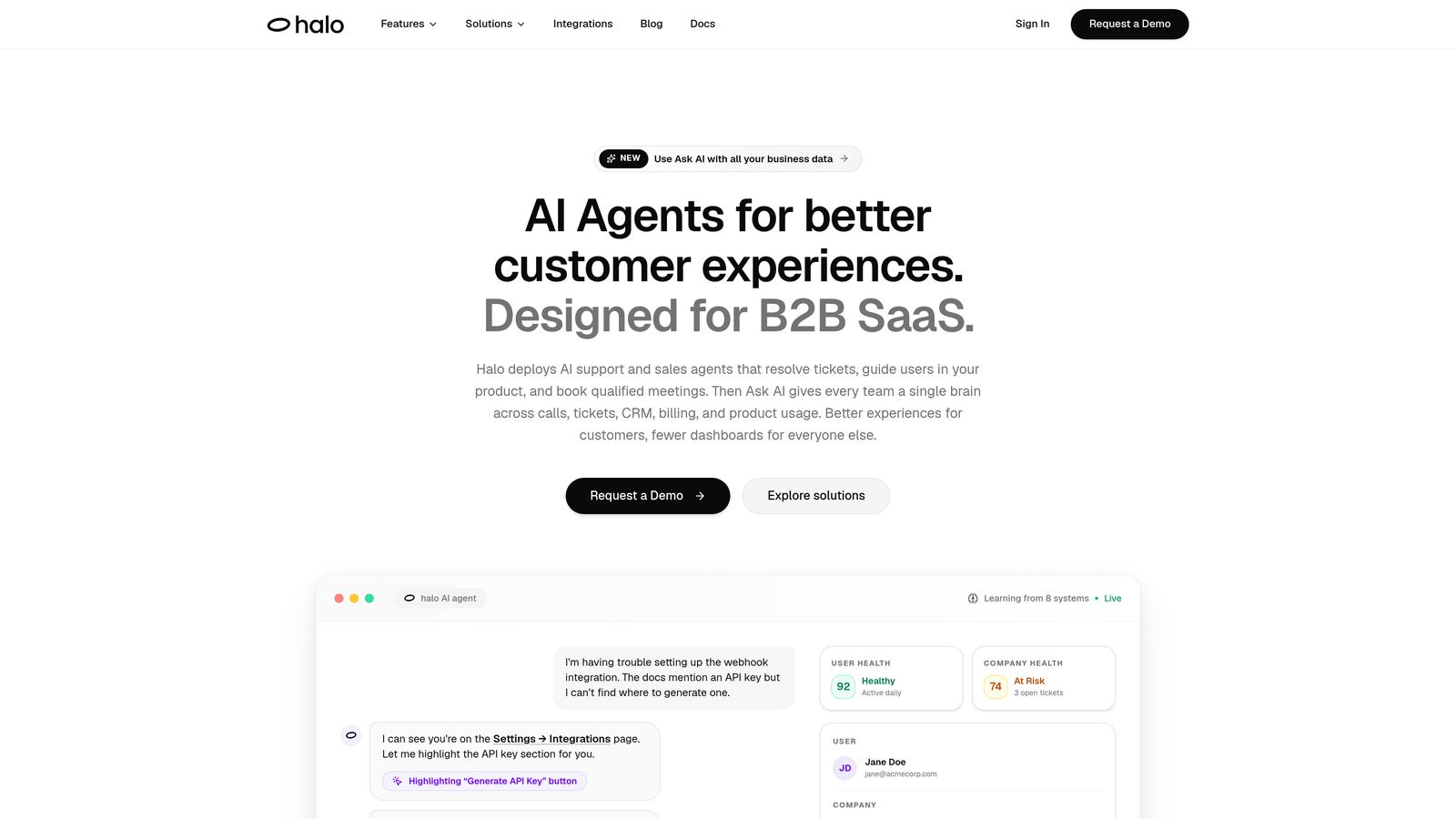
Halo AI is an AI-first omnichannel support platform purpose-built for SaaS and B2B teams, featuring page-aware agents, a smart inbox, and deep integrations across the modern SaaS stack.
Where This Tool Shines
Most platforms add AI as a layer on top of legacy ticketing infrastructure. Halo AI is built differently: intelligence is embedded in the core architecture. The AI doesn't just suggest responses — it resolves tickets, detects context from the page a user is viewing, and surfaces business signals that go well beyond support metrics.
The page-aware chat widget is a standout capability. The AI can see which feature or page a user is on and provide contextual, visual guidance — the kind of experience that previously required a live agent to replicate. Combine that with continuous learning from every resolved interaction, and the platform gets measurably smarter over time.
Key Features
Page-Aware AI Agents: The AI sees what users see, enabling contextual guidance tied to specific product pages and features.
Smart Inbox with Business Intelligence: Goes beyond ticket management to surface customer health signals, revenue anomalies, and product usage patterns — turning support data into strategic insight.
Auto Bug Ticket Creation: Automatically generates structured bug reports in Linear and similar tools directly from support conversations, closing the loop between support and engineering.
Live Agent Handoff: Escalates to human agents with full conversation context preserved, so customers never have to repeat themselves.
Deep SaaS Integrations: Connects with Linear, Slack, HubSpot, Intercom, Stripe, Zoom, PandaDoc, and Fathom — meaning support activity feeds into your entire business stack.
Best For
SaaS companies that want support to contribute to product intelligence, not just deflect tickets. Particularly strong for teams using a modern SaaS stack who want a single platform that resolves issues, guides users, and surfaces customer health signals without stitching together multiple tools.
Pricing
Agent-based subscription model. Visit haloagents.ai for current pricing details.
2. Zendesk
Best for: Enterprise teams needing proven omnichannel coverage and a large integration ecosystem
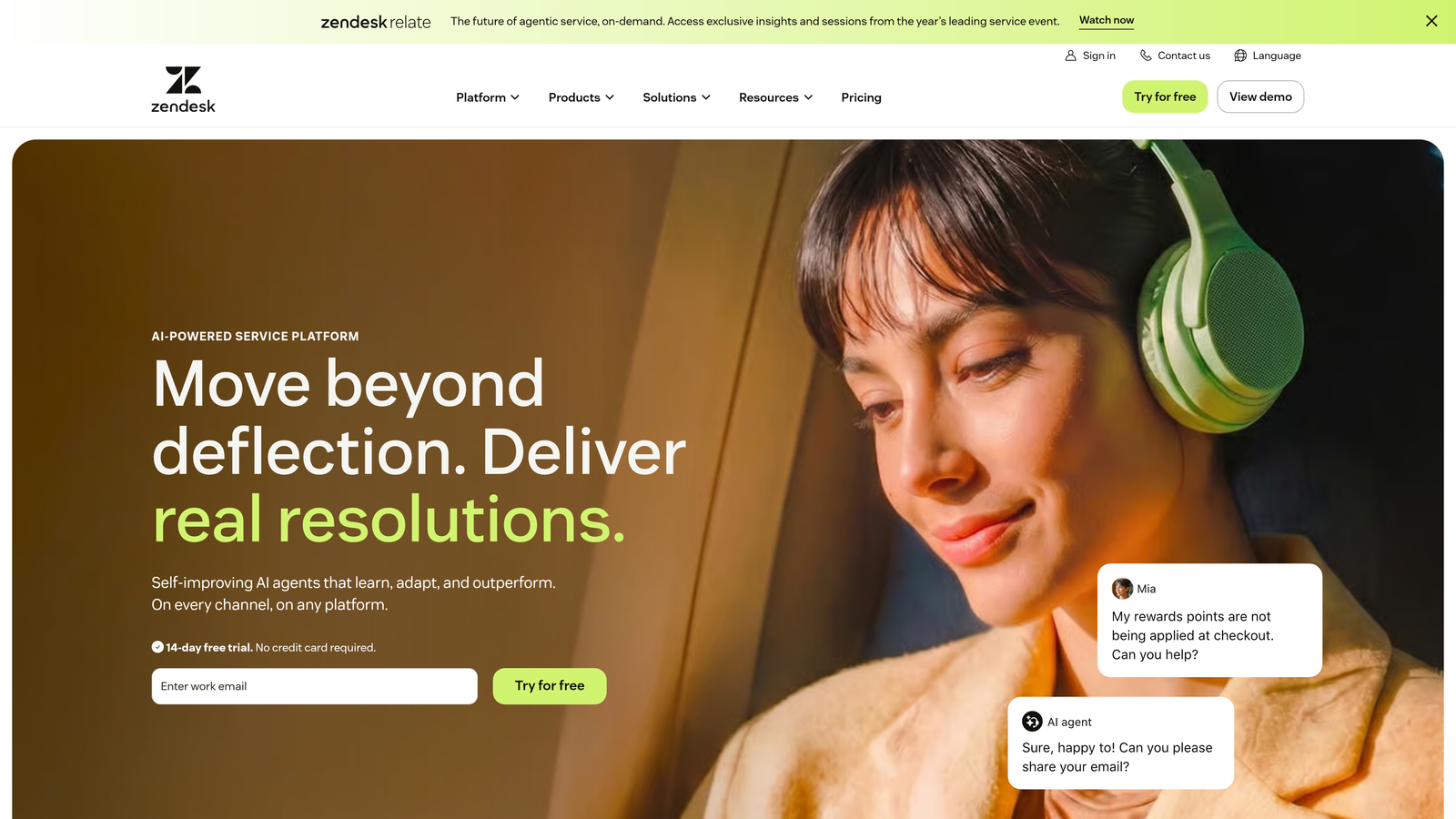
Zendesk is one of the most established helpdesk platforms globally, offering enterprise-grade ticketing, routing, SLA management, and a marketplace of over 1,000 integrations.
Where This Tool Shines
Zendesk's strength is its depth. The platform covers virtually every channel — email, chat, voice, social, SMS, and WhatsApp — and its configuration options are extensive. For enterprise teams with complex routing logic, multi-brand support needs, or strict SLA requirements, Zendesk has the infrastructure to handle it.
The addition of Zendesk AI (built in partnership with OpenAI) brings intelligent triage, macro recommendations, and suggested responses into the workflow. It's a meaningful improvement, though it reflects the "AI as layer" approach rather than AI-native architecture.
Key Features
Omnichannel Coverage: Email, chat, voice, social media, SMS, and WhatsApp all managed from a unified agent workspace.
Zendesk AI: Intelligent triage, suggested responses, and macro recommendations to reduce agent effort on repetitive tasks.
Advanced SLA Management: Custom SLA policies, triggers, and automations that support complex enterprise service agreements.
1,000+ App Marketplace: One of the largest integration ecosystems in the category, covering CRM, ecommerce, analytics, and developer tools.
Enterprise Reporting: Comprehensive analytics dashboards with custom reporting capabilities for large support operations.
Best For
Mid-market and enterprise teams that need proven omnichannel infrastructure, complex workflow automation, and a large integration ecosystem. Also well-suited for multi-brand organizations managing support across several product lines.
Pricing
Suite plans start at approximately $55/agent/month. Verify current pricing at zendesk.com. Note that costs can escalate significantly at enterprise scale.
3. Intercom
Best for: SaaS teams wanting in-app messaging with rich customer lifecycle context
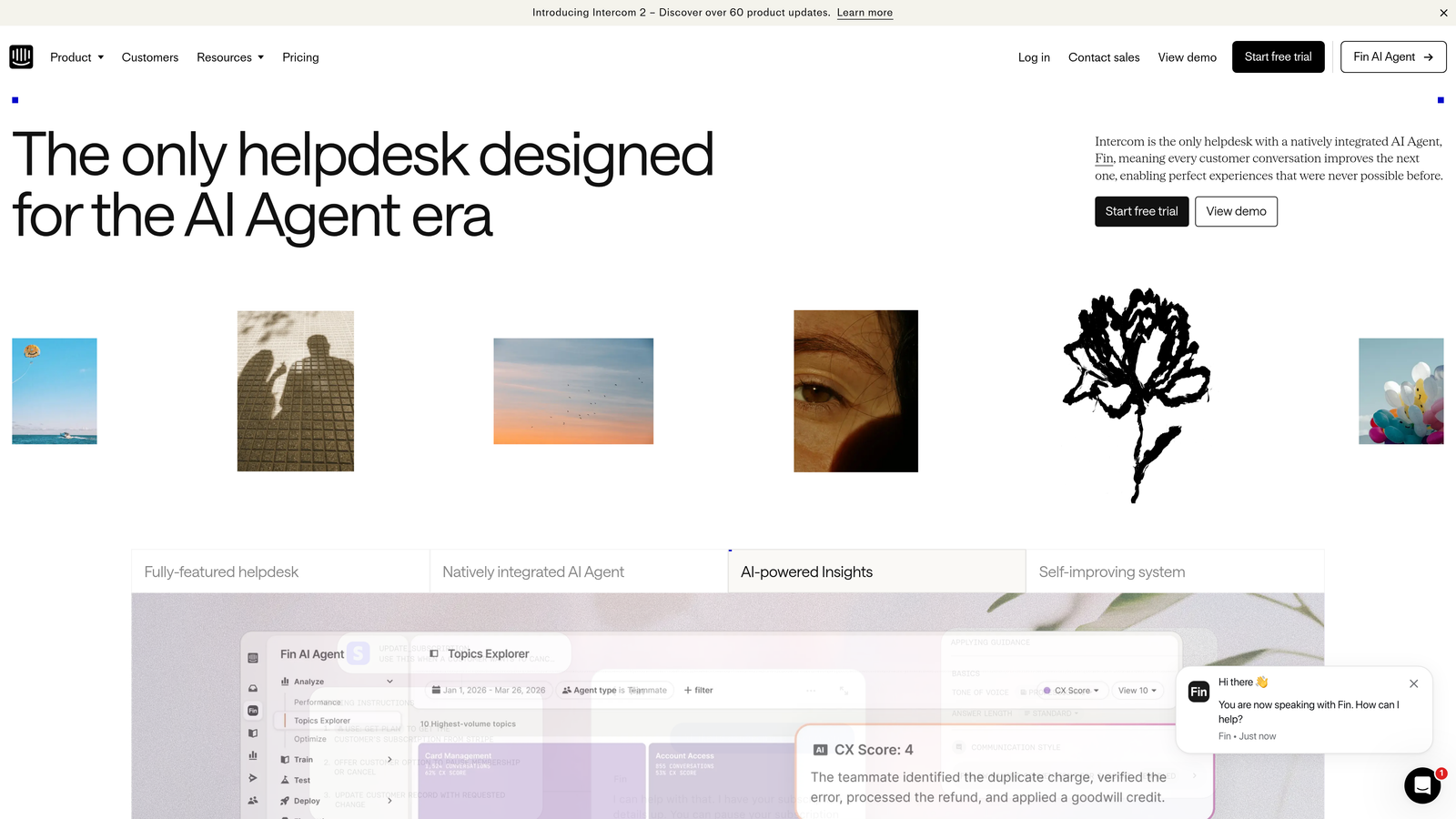
Intercom is a messenger-first customer service platform with strong in-app chat, AI-powered resolution via its Fin agent, and deep customer lifecycle context built into every conversation.
Where This Tool Shines
Intercom's advantage is context. Support agents can see a customer's onboarding stage, feature usage patterns, and subscription tier directly inside the inbox — information that makes every conversation more productive. For SaaS companies where support and customer success overlap, that lifecycle visibility is genuinely valuable.
Fin, Intercom's AI resolution agent, handles automated ticket resolution trained on your help content. It's one of the more capable AI agents in the category for straightforward FAQ-style resolution, though the per-resolution pricing model means costs can climb quickly at volume.
Key Features
Fin AI Agent: Automated ticket resolution trained on your help documentation, handling common queries without agent involvement.
Customer Lifecycle Context: Onboarding stage, feature usage, and subscription tier visible directly in the agent inbox.
Omnichannel Coverage: In-app messenger, email, WhatsApp, and SMS channels unified in a shared inbox.
Proactive Messaging: Outbound messaging and product tours built into the platform for onboarding and engagement campaigns.
Conversation Routing: Assignment rules and routing logic to direct conversations to the right team or agent.
Best For
SaaS companies where support and customer success functions overlap, and where in-app messaging is a primary support channel. Teams already using Intercom for product messaging will find the support layer a natural extension.
Pricing
Per-plan pricing plus a per-resolution fee for the Fin AI Agent. Costs can escalate at higher conversation volumes. Verify current pricing at intercom.com.
4. Freshdesk
Best for: Growing teams that want easy setup, solid automation, and a free tier to start
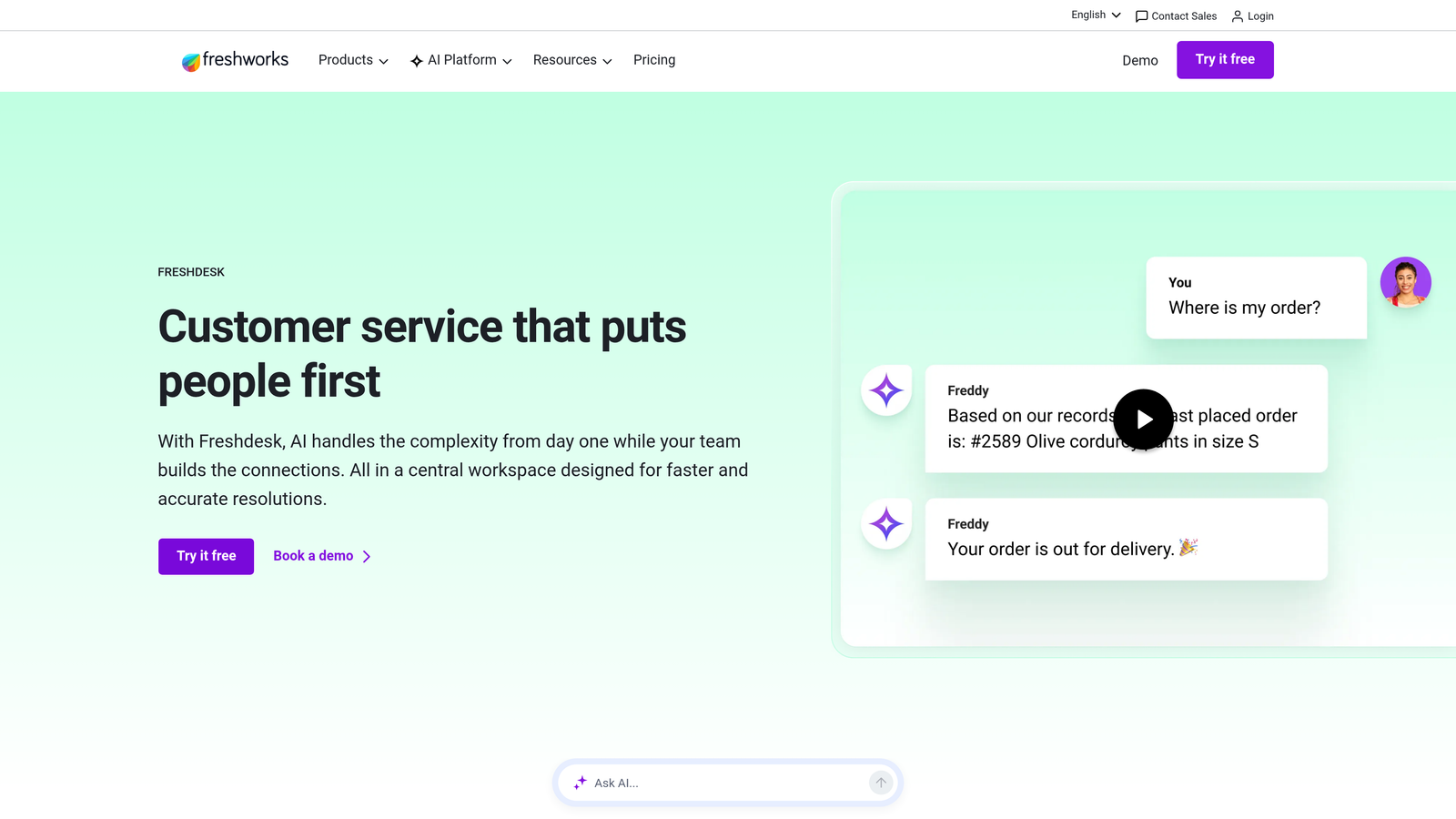
Freshdesk is an accessible omnichannel helpdesk from Freshworks, known for ease of onboarding, solid workflow automation, and built-in Freddy AI for teams scaling their support operations.
Where This Tool Shines
Freshdesk consistently earns praise for how quickly teams can get up and running. Where Zendesk can require weeks of configuration, Freshdesk tends to be operational in days. That ease of setup doesn't come at the cost of capability — the automation builder and Freddy AI provide meaningful efficiency gains for mid-sized teams.
Collision detection is a practical feature worth highlighting: it prevents two agents from simultaneously replying to the same ticket, a small but important detail that reduces friction in busy support queues.
Key Features
Omnichannel Coverage: Email, chat, phone, social media, and WhatsApp managed from a unified inbox.
Freddy AI: Built-in AI for automatic triage, suggested responses, and chatbot automation without requiring third-party add-ons.
Visual Workflow Builder: Drag-and-drop automation for ticket routing, escalation, and assignment rules.
Collision Detection: Alerts agents when a colleague is already working on the same ticket, preventing duplicate responses.
Free Tier: Core functionality available at no cost, making it accessible for small teams just getting started with omnichannel support.
Best For
Small to mid-sized teams looking for a capable omnichannel helpdesk without the configuration overhead of enterprise platforms. Also a strong choice for teams coming from email-only support who want a structured upgrade path.
Pricing
Free tier available; paid plans start at approximately $15/agent/month. Verify current pricing at freshdesk.com.
5. HubSpot Service Hub
Best for: Teams already on HubSpot CRM who want support natively connected to contact and deal data
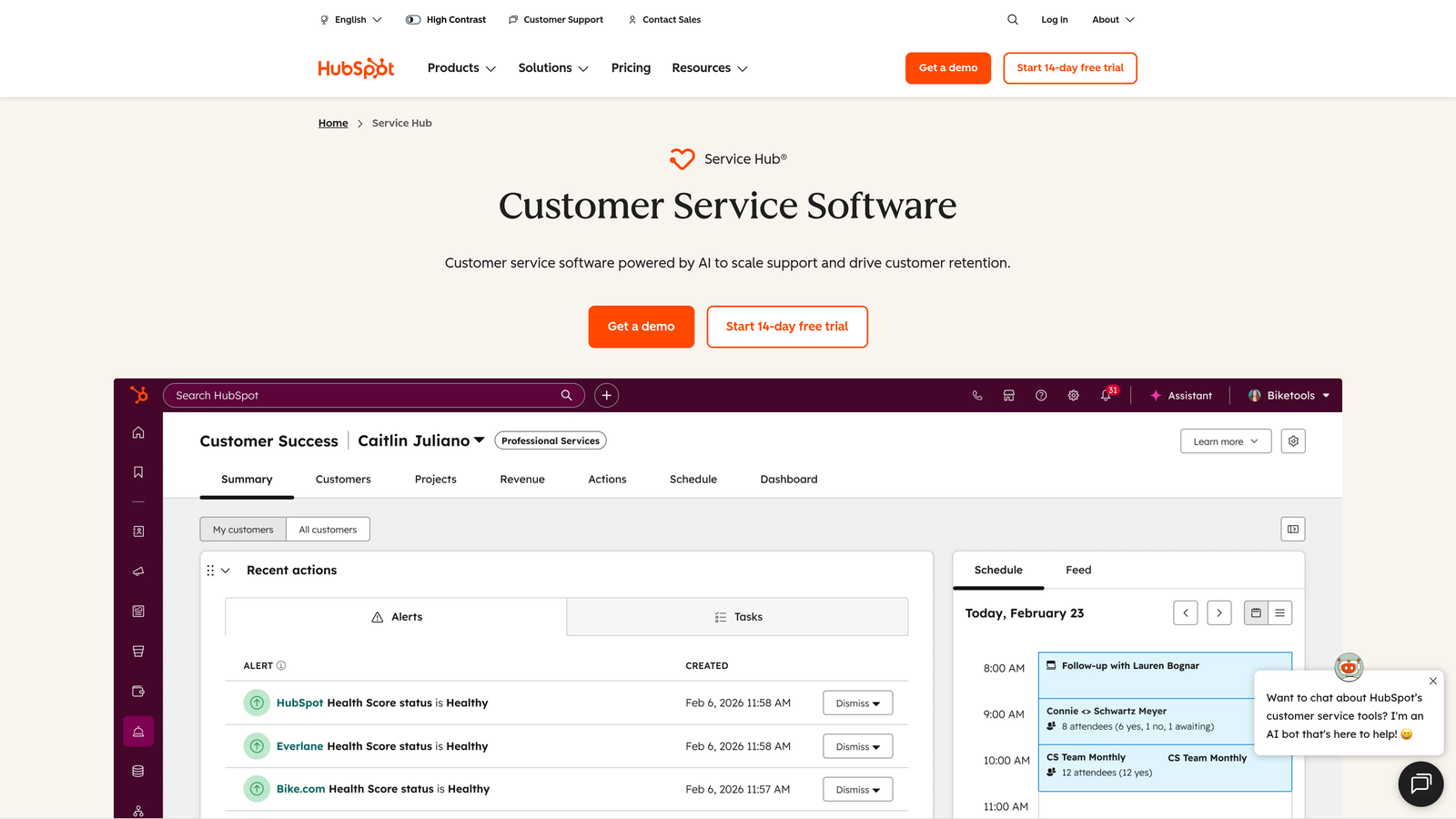
HubSpot Service Hub is customer service software built directly into HubSpot's CRM platform, connecting every support interaction to contact, deal, and company data in one unified system.
Where This Tool Shines
The core value proposition here is CRM-native support. When a ticket comes in, agents immediately see the customer's full history: what deals they're associated with, which company they belong to, past interactions across sales and marketing. That context eliminates a lot of back-and-forth that happens when support and CRM systems are separate.
For teams already invested in the HubSpot ecosystem, Service Hub is a compelling addition. As a standalone support tool evaluated against dedicated helpdesks, it's more limited — but within the HubSpot context, the integration depth is difficult to match.
Key Features
CRM-Native Ticketing: Tickets linked directly to HubSpot contacts, companies, and deals — no integration required.
Omnichannel Coverage: Email, live chat, Facebook Messenger, and WhatsApp channels supported.
AI Conversation Summaries: Automatic summaries and suggested responses to reduce agent time on routine tasks.
Customer Portal and Knowledge Base: Self-service tools included in the platform without additional licensing.
Feedback Surveys: Built-in CSAT and NPS surveys to measure customer satisfaction without third-party tools.
Best For
Teams already using HubSpot for CRM, marketing, or sales who want support activity connected to the same platform. The value compounds significantly when the full HubSpot stack is in use.
Pricing
Free tier available; Professional plan starts at approximately $90/month for 5 seats. Verify current pricing at hubspot.com.
6. Salesforce Service Cloud
Best for: Large enterprises with existing Salesforce infrastructure and complex service workflows
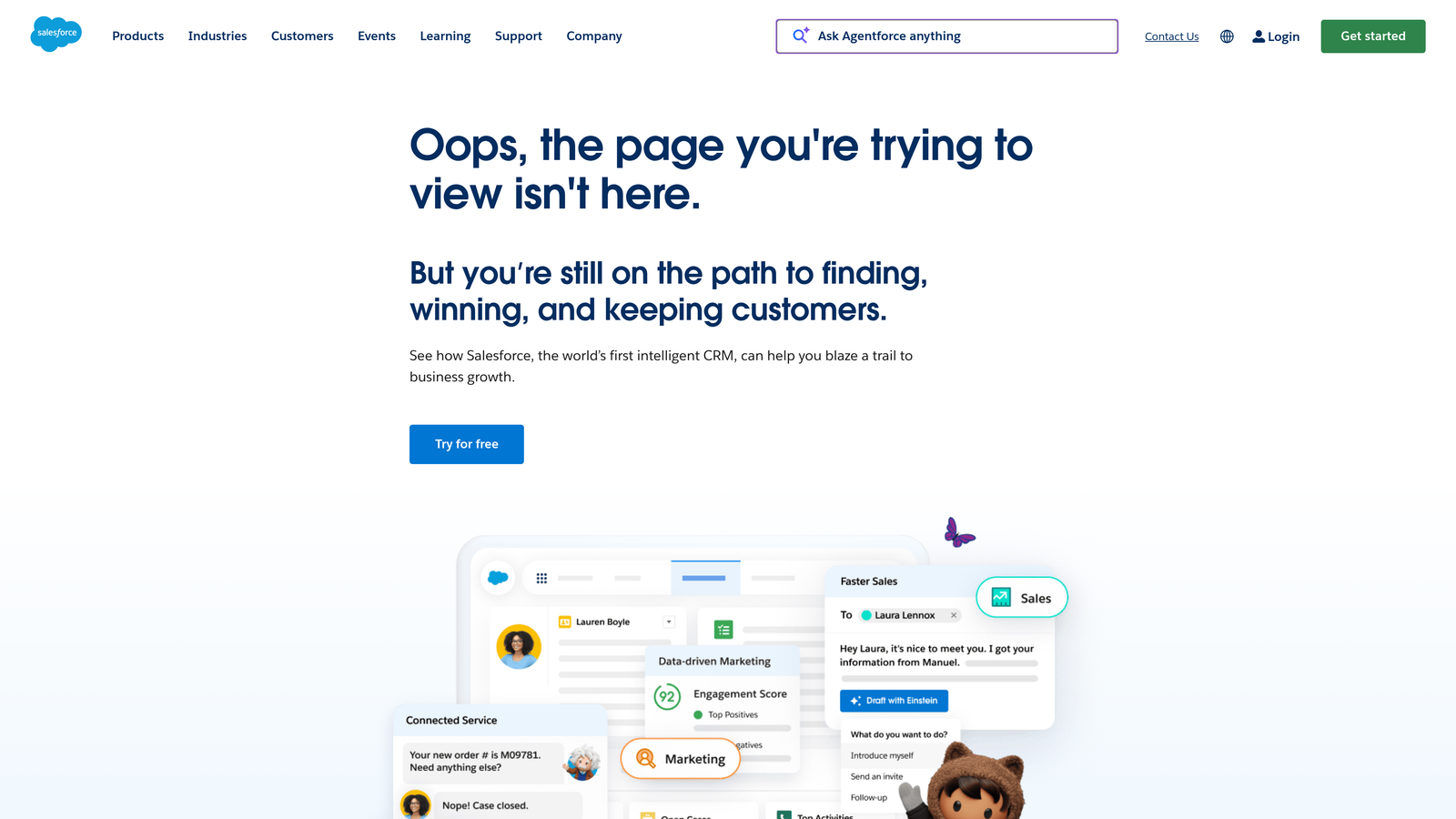
Salesforce Service Cloud is an enterprise service platform within the Salesforce ecosystem, offering deep workflow automation, Einstein AI, and comprehensive omnichannel coverage for large organizations.
Where This Tool Shines
Service Cloud is built for complexity. The Flow builder enables multi-step workflow automation that can handle sophisticated routing, escalation, and case management logic that simpler platforms can't replicate. For enterprises with highly specific service processes, that configurability is a genuine advantage.
Einstein AI adds case classification, next-best-action recommendations, and article suggestions. The real power, though, comes from the native Salesforce CRM integration — agents see full account history, open opportunities, and contract details alongside every support case.
Key Features
Omnichannel Coverage: Email, chat, social media, voice, SMS, and WhatsApp all supported within the platform.
Einstein AI: Case classification, next-best-action recommendations, and knowledge article suggestions powered by Salesforce's AI layer.
Flow Builder: Visual automation tool for building complex, multi-step service workflows without custom code.
Native CRM Integration: Full account, opportunity, and contract context available in every support case.
AppExchange Ecosystem: Extensive marketplace for additional integrations across industry-specific and enterprise use cases.
Best For
Large enterprises with existing Salesforce footprints and dedicated Salesforce admins. Organizations without existing Salesforce infrastructure should carefully evaluate the implementation investment required before committing.
Pricing
Starter tier from approximately $25/user/month; enterprise tiers are significantly higher. Verify current pricing at salesforce.com.
7. Tidio
Best for: Small businesses and ecommerce teams wanting fast omnichannel setup without technical overhead
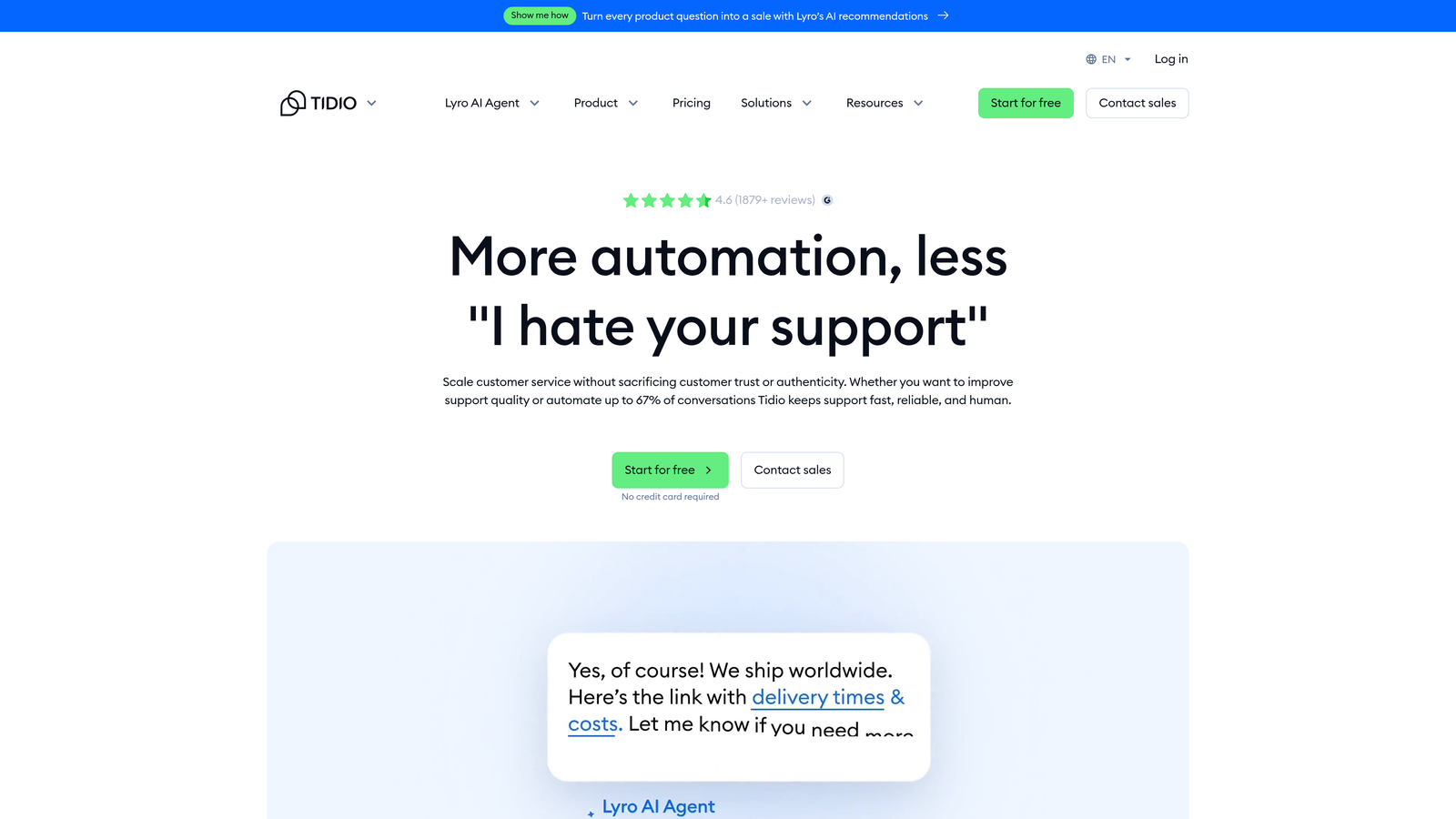
Tidio is a lightweight omnichannel platform built for small businesses and ecommerce, featuring live chat, the Lyro AI chatbot, and a no-code setup that gets teams live quickly.
Where This Tool Shines
Speed to value is Tidio's defining characteristic. Teams can typically go from signup to live chat in hours, not days. The visual chatbot builder requires no coding knowledge, making it genuinely accessible for small teams without dedicated technical resources.
Lyro, Tidio's conversational AI, handles FAQ-style queries and common support requests automatically. For small teams managing high volumes of repetitive questions, it provides meaningful deflection without requiring complex configuration.
Key Features
Lyro AI: Conversational AI chatbot for automated support resolution and FAQ handling.
Omnichannel Coverage: Live chat, email, Facebook Messenger, and Instagram managed from one inbox.
Visual Chatbot Builder: No-code flow builder for creating automated conversation sequences.
Real-Time Visitor Tracking: See who's on your site and trigger proactive chat based on visitor behavior.
Free Tier: Core live chat functionality available at no cost for teams just starting out.
Best For
Small businesses, early-stage ecommerce brands, and teams with limited technical resources that need omnichannel coverage without enterprise complexity. Not the right fit for organizations with sophisticated routing requirements or large agent teams.
Pricing
Free tier available; paid plans start at approximately $29/month. Verify current pricing at tidio.com.
8. Gorgias
Best for: Ecommerce brands running on Shopify, BigCommerce, or Magento
Gorgias is an omnichannel helpdesk purpose-built for ecommerce brands, with deep Shopify integration that surfaces order data, refund actions, and subscription details directly inside every ticket.
Where This Tool Shines
Gorgias solves a specific problem exceptionally well: ecommerce support agents spend a disproportionate amount of time toggling between their helpdesk and their store backend to answer order-related questions. Gorgias eliminates that context-switching by pulling order status, tracking information, and refund eligibility directly into the ticket view.
The revenue statistics per ticket feature is a notable differentiator. Teams can see the sales value associated with each support conversation, which helps make the business case for investing in support quality and response speed.
Key Features
Deep Ecommerce Integration: Shopify, BigCommerce, and Magento order data, refund actions, and subscription details visible inside every ticket.
Omnichannel Coverage: Email, live chat, social media, SMS, and voice channels supported.
Revenue Statistics per Ticket: Measure the sales impact of support interactions to connect service quality to revenue outcomes.
Automated Order Responses: Pre-built automations for order status, tracking, and refund requests that handle high-volume repetitive queries.
Macros and Rules: Templated responses and routing rules designed for the high-volume patterns common in ecommerce support.
Best For
Ecommerce brands, DTC companies, and online retailers whose support volume is dominated by order-related queries. Significantly less compelling for SaaS, services, or B2B organizations without a retail component.
Pricing
Volume-based pricing starting at approximately $10/month for 50 tickets. Verify current pricing at gorgias.com.
9. Zoho Desk
Best for: Budget-conscious teams wanting feature depth and strong Zoho ecosystem integration
Zoho Desk is a feature-rich omnichannel helpdesk at a competitive price point, with Zia AI built in and strong integration across the broader Zoho product suite.
Where This Tool Shines
Zoho Desk consistently delivers more features per dollar than most competitors in the category. Zia AI — Zoho's built-in intelligence layer — provides sentiment analysis, anomaly detection, tag suggestions, and response recommendations without requiring an additional tier or add-on purchase.
For teams already using Zoho CRM, the integration is tight: customer history, deal context, and account data flow directly into the support inbox. The Blueprint workflow automation tool also stands out for teams that need structured, process-driven support flows.
Key Features
Zia AI: Sentiment analysis, anomaly detection, tag suggestions, and response recommendations built into the core platform.
Omnichannel Coverage: Email, live chat, phone, social media, and WhatsApp supported.
Zoho CRM Integration: Context-aware ticketing with full customer history from Zoho CRM visible in the support inbox.
Blueprint Workflow Automation: Structured workflow tool for defining step-by-step support processes with mandatory fields and state transitions.
Free Tier: Available for up to 3 agents, making it accessible for very small teams.
Best For
Teams looking for strong price-to-feature ratio, particularly those already using Zoho CRM or other Zoho products. The UI is less polished than Zendesk or Intercom, but the functional depth at the price point is difficult to argue with.
Pricing
Free tier available for up to 3 agents; paid plans start at approximately $14/agent/month. Verify current pricing at zoho.com/desk.
Which Platform Is Right for Your Team?
Every platform on this list unifies channels and reduces context-switching for support agents. The real differences emerge when you look at who each tool is designed for and how deeply AI is embedded in the architecture.
Here's a quick-reference guide by use case:
AI-native SaaS support with business intelligence: Halo AI is the clear choice for teams that want support to do more than resolve tickets — surfacing customer health signals, guiding users through the product, and feeding structured data back to engineering.
Enterprise omnichannel with proven infrastructure: Zendesk or Salesforce Service Cloud, depending on whether you're already in the Salesforce ecosystem. Both require meaningful configuration investment but deliver the depth large organizations need.
SaaS teams with in-app messaging as a primary channel: Intercom's lifecycle context and Fin AI make it a strong fit, provided the per-resolution pricing model works at your volume.
Growing teams wanting fast setup and low cost: Freshdesk or Zoho Desk offer the best combination of capability and accessibility without enterprise pricing.
HubSpot-first organizations: Service Hub is the natural extension — the CRM-native integration is genuinely hard to replicate with other tools.
Ecommerce brands: Gorgias is purpose-built for the job. Nothing else comes close for Shopify-centric support workflows.
Small businesses wanting quick omnichannel coverage: Tidio gets you live fast with minimal overhead.
The broader trend worth noting: the market is moving decisively toward AI-native architectures. Platforms that added AI as a layer on top of existing ticketing infrastructure are increasingly at a disadvantage compared to tools where intelligence is built into the core. That distinction matters more as support volumes grow and customer expectations rise.
Your support team shouldn't scale linearly with your customer base. Let AI agents handle routine tickets, guide users through your product, and surface business intelligence while your team focuses on complex issues that need a human touch. See Halo in action and discover how continuous learning transforms every interaction into smarter, faster support.