9 Best Predictive Customer Support Tools in 2026
Predictive customer support tools are transforming how support teams operate by using AI-driven pattern recognition and behavioral signals to identify issues before customers reach out. This guide reviews the 9 best options in 2026, helping support organizations reduce ticket volume, prevent churn, and deliver proactive resolutions through smarter automation and continuous learning.
 Matt PattoliFounder13 min read
Most support teams are still playing defense. A ticket comes in, an agent responds, a problem gets solved, and the cycle repeats. But the most effective support organizations in 2026 have flipped that model entirely: they're identifying friction before customers ever reach out, routing issues before they escalate, and surfacing churn risk before it becomes a cancellation.
That's the promise of predictive customer support. These tools use AI-driven pattern recognition, anomaly detection, customer health monitoring, and behavioral signals to get ahead of problems rather than react to them. The result is faster resolution, lower ticket volume, and customers who feel genuinely understood.
Not every tool that claims "AI" actually delivers on prediction. The best ones combine deep integration with your existing stack, continuous learning from interaction data, and actionable intelligence that agents can actually use. Whether you're evaluating customer service automation software for the first time or looking to upgrade a legacy setup, this list covers the tools worth your attention.
1. Halo AI
Best for: B2B teams wanting an AI-first platform with continuous learning and cross-system predictive intelligence.
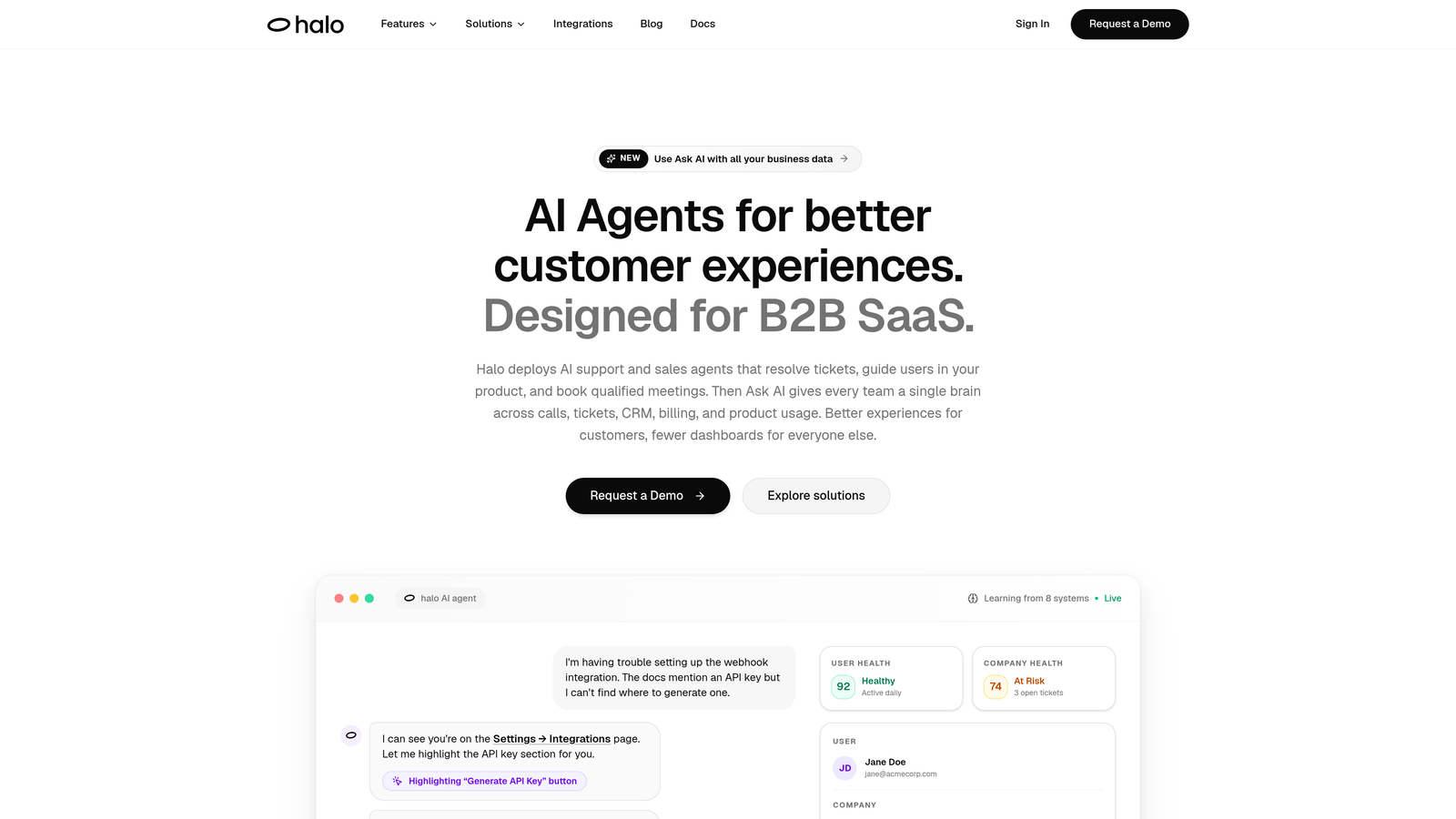
Halo AI is an AI-native customer support platform built from the ground up around prediction, context, and continuous learning.
Where This Tool Shines
Halo AI's core differentiator is that prediction isn't a feature layer bolted onto a helpdesk. It's baked into the architecture. Every ticket resolved, every user interaction, every bug pattern detected feeds back into the system, making it progressively smarter with your specific product and customer base.
The page-aware context is particularly powerful for B2B SaaS teams. Halo's chat widget sees what the user sees, meaning it can offer proactive, contextual guidance based on exactly where someone is in your product rather than generic responses. Combined with anomaly detection that surfaces emerging issues before a ticket flood hits your inbox, it functions less like a support tool and more like an early warning system for your entire customer experience.
Key Features
Anomaly Detection: Identifies unusual spikes in ticket topics or error patterns before they escalate into widespread issues, giving your team time to respond proactively.
Page-Aware Chat Widget: Understands the user's current product context to deliver targeted, relevant guidance rather than routing them through generic help flows.
Customer Health Signals and Revenue Intelligence: Surfaces patterns from support interactions that indicate churn risk, expansion opportunity, or account health changes.
Auto Bug Ticket Creation: Automatically generates tickets in Linear or Jira when recurring issues are detected, closing the loop between support and engineering without manual handoffs.
Cross-System Integrations: Connects to Slack, HubSpot, Intercom, Stripe, Zoom, and PandaDoc to build richer predictive context from your entire business stack, not just ticket data.
Best For
B2B SaaS companies and product teams that want AI-first support with genuine predictive depth. Especially well-suited for teams scaling support without scaling headcount, and organizations that want support data to feed business intelligence beyond the helpdesk.
Pricing
Contact for pricing. Visit haloagents.ai for current plan details and to request a demo.
2. Zendesk Advanced AI
Best for: Existing Zendesk users who want predictive capabilities without migrating to a new platform.
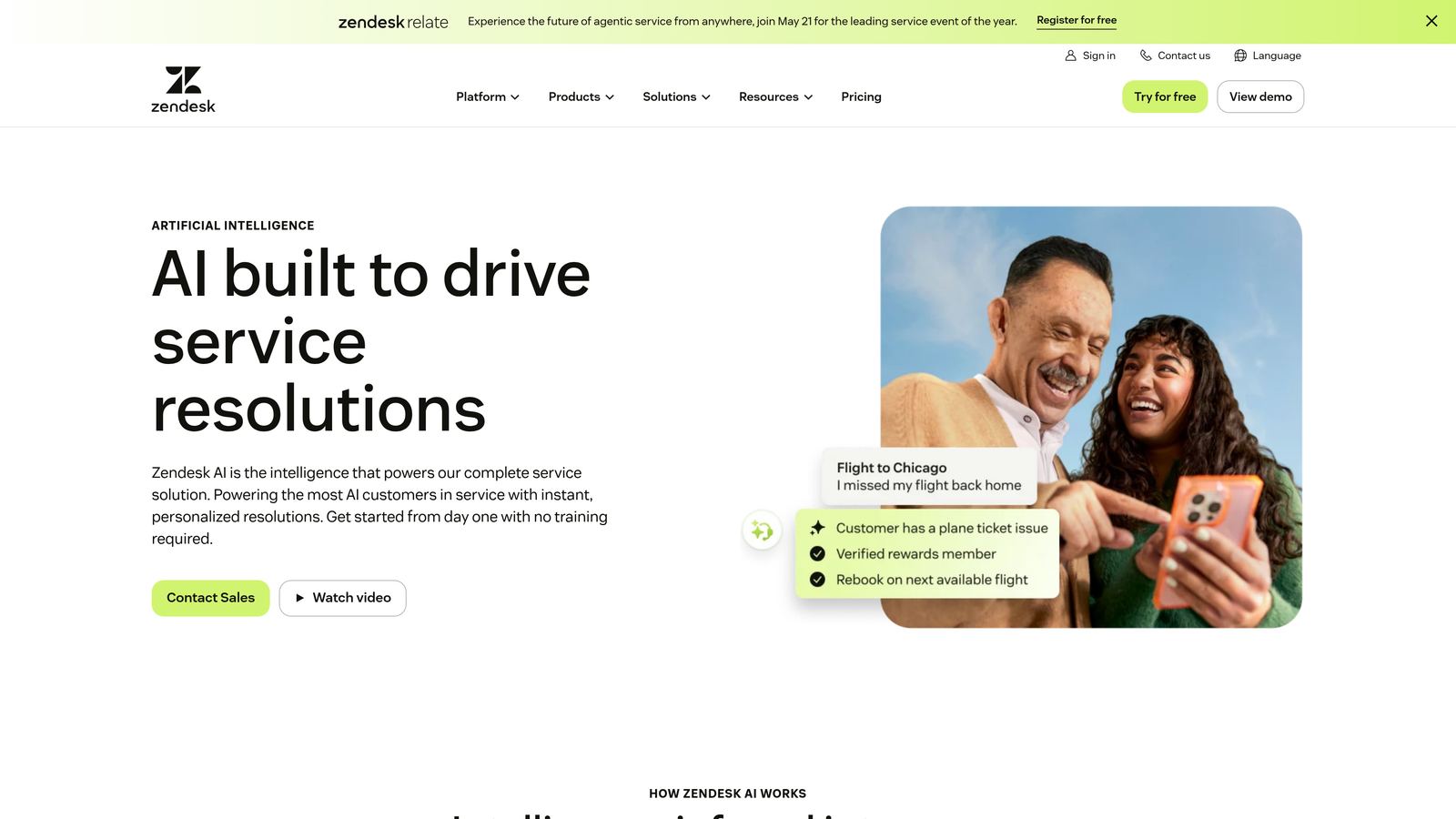
Zendesk Advanced AI is an add-on layer for the Zendesk ecosystem offering intent detection, predictive CSAT scoring, and intelligent triage.
Where This Tool Shines
If your team is already deeply embedded in Zendesk, Advanced AI is the path of least resistance to predictive support. The predictive CSAT scoring is genuinely useful: it flags at-risk interactions before they're resolved, giving agents a chance to course-correct rather than discover a bad score after the fact.
The intelligent triage also reduces manual sorting significantly. Tickets get classified and routed based on predicted complexity and intent, which means your senior agents spend less time on tickets that don't need them.
Key Features
Predictive CSAT Scoring: Flags interactions likely to result in low satisfaction scores before the conversation closes, enabling proactive intervention.
Intent and Sentiment Detection: Automatically classifies tickets by topic, urgency, and emotional tone to improve routing accuracy.
Intelligent Triage: Routes tickets based on predicted complexity and content patterns rather than static rules.
Macro Suggestions: Surfaces relevant response templates for agents based on ticket content, reducing handle time on common issues.
Best For
Teams already on Zendesk Professional plans or above who want to add predictive intelligence without replacing their helpdesk. Less compelling for teams considering a platform switch.
Pricing
Advanced AI is available as an add-on on Professional plans and above. Pricing varies by seat count; contact Zendesk for current rates.
3. Intercom Fin AI
Best for: Product-led growth companies that want proactive in-app messaging combined with AI-powered resolution.
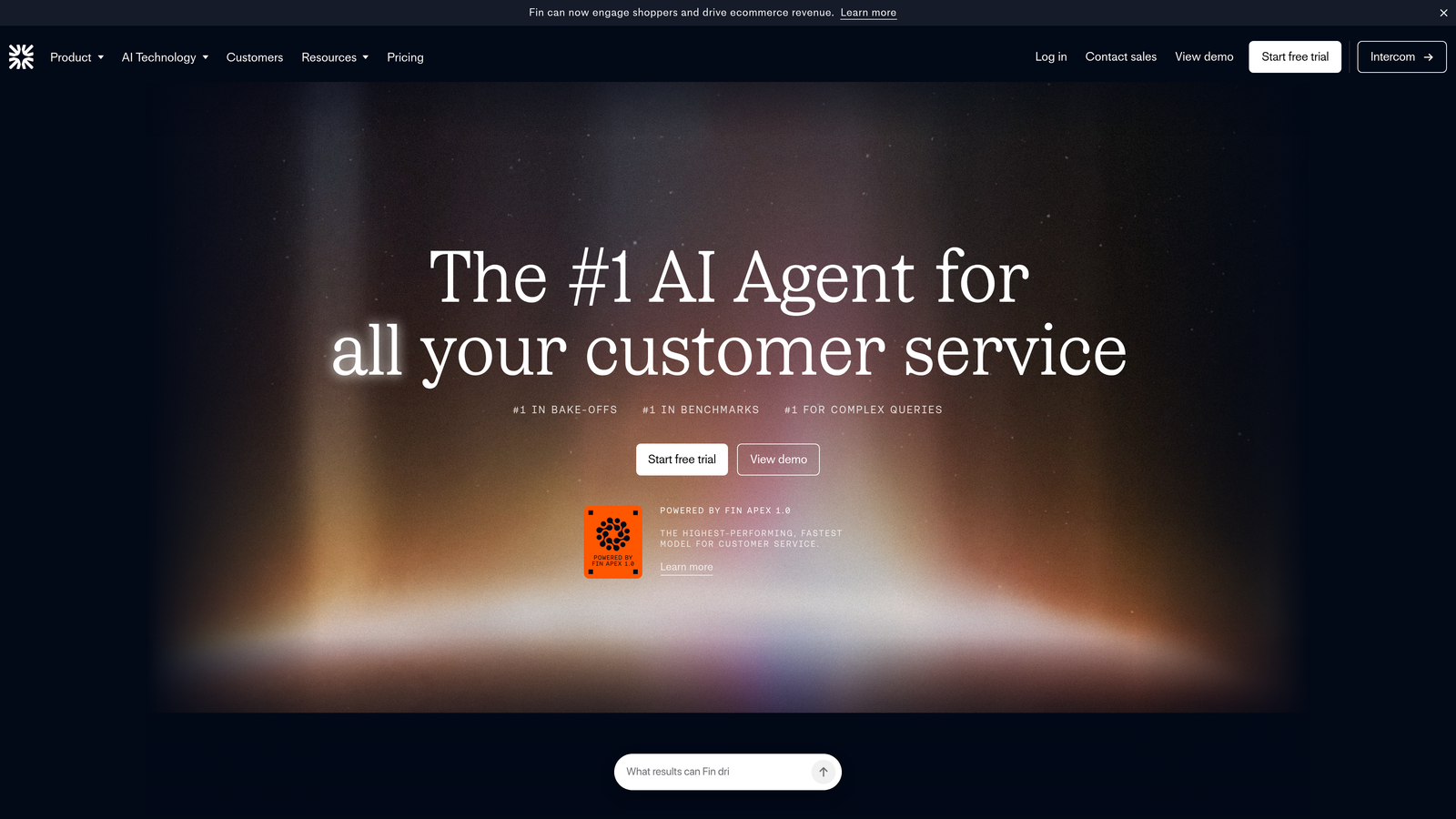
Intercom Fin AI is an AI-powered support agent with proactive messaging triggers and behavioral pattern detection, built natively into Intercom's platform.
Where This Tool Shines
Fin AI's strength is the combination of behavioral triggers and autonomous resolution. It doesn't just wait for users to ask questions. It monitors product behavior and surfaces contextual help or proactive messages based on what users are doing, making it feel more like a smart product guide than a reactive chatbot.
The native integration with Intercom's onboarding, product tours, and in-app messaging means predictive support and product adoption live in the same system, which is a real advantage for PLG teams.
Key Features
Proactive Message Triggers: Fires contextual messages based on user behavior and page context, reaching users before they hit friction.
Autonomous AI Resolution with Human Handoff: Resolves common queries independently and escalates complex issues to live agents with full context preserved.
Predictive Conversation Routing: Routes incoming conversations based on predicted topic and urgency signals.
Native Product Integration: Works alongside Intercom's product tours, onboarding flows, and in-app messaging for a unified user experience.
Best For
SaaS companies using Intercom for both support and product messaging who want proactive outreach and AI resolution in a single platform. Usage-based pricing works well for teams with variable support volume.
Pricing
Fin AI is priced per resolution. Intercom base plans start at $39/seat/month; total cost scales with resolution volume.
4. Freshdesk Freddy AI
Best for: Growing teams that need accessible AI-powered predictive support without enterprise-level pricing.
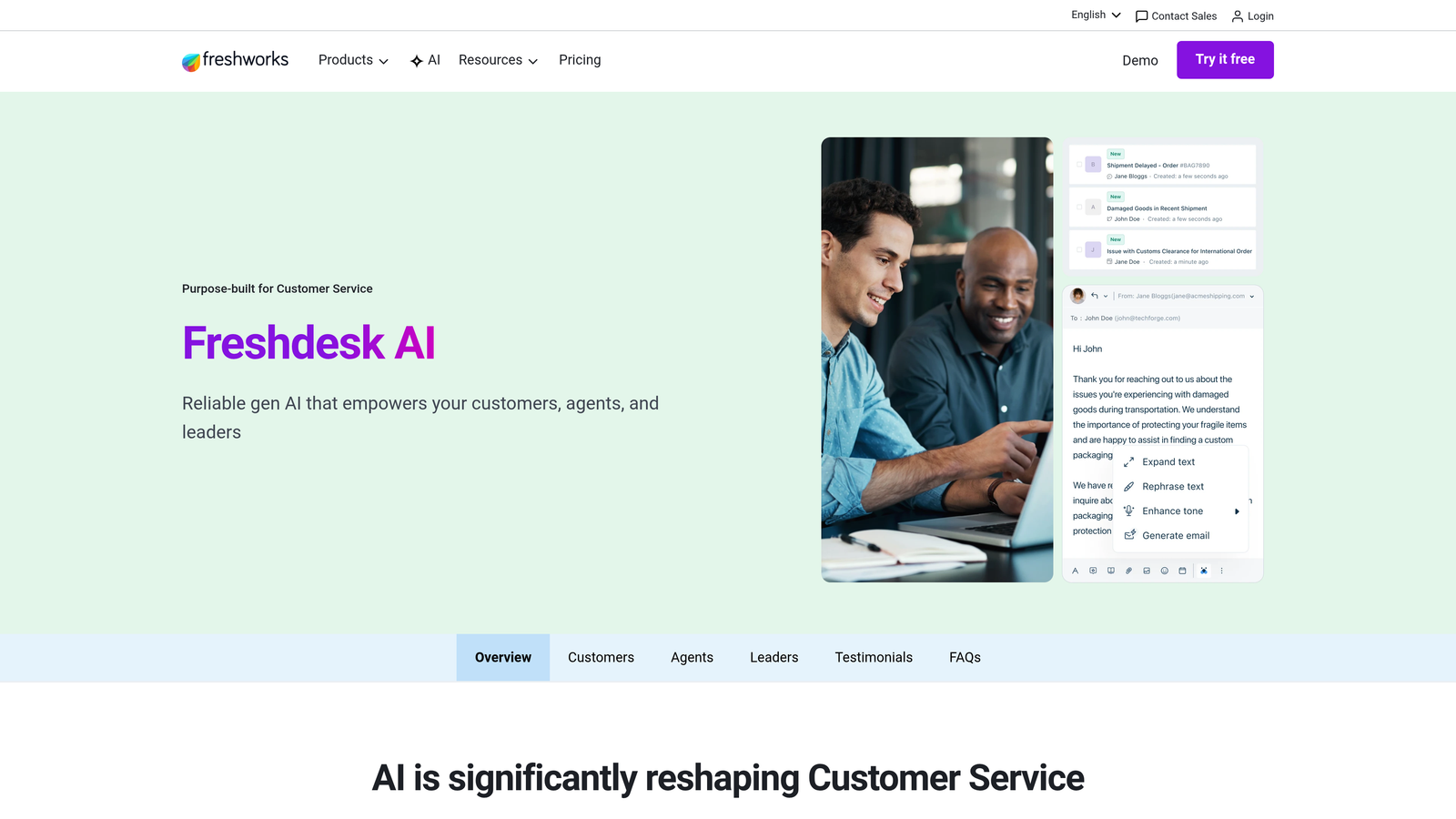
Freshdesk Freddy AI is an AI assistant built into Freshworks' helpdesk offering predictive ticket fields, auto-triage, and sentiment analysis at a competitive price point.
Where This Tool Shines
Freddy AI makes predictive support accessible for teams that aren't ready for enterprise pricing. The predictive ticket fields automatically classify priority, type, and group as tickets come in, reducing manual triage without requiring complex configuration.
The thank-you detection feature is a small but meaningful detail: it prevents tickets from being incorrectly reopened when customers simply reply to say thanks, keeping your queue accurate and your metrics clean.
Key Features
Predictive Ticket Fields: Automatically classifies incoming tickets by priority, type, and team based on historical patterns.
Thank-You Detection: Recognizes closing replies that shouldn't reopen tickets, reducing false positives in queue management.
AI-Powered Article Suggestions: Surfaces relevant knowledge base articles proactively to both agents and customers during interactions.
Sentiment Analysis with Escalation Triggers: Detects negative sentiment trajectories and triggers escalation workflows before situations deteriorate.
Best For
SMBs and mid-market teams on Freshdesk looking for a cost-effective entry into predictive AI support. Also a strong option for teams that want sentiment-based escalation without building custom workflows.
Pricing
Freddy AI is included in the Pro plan at $49/agent/month and above. A Copilot add-on is available for additional capabilities.
5. Salesforce Service Cloud Einstein
Best for: Enterprise organizations that want predictive support deeply integrated with CRM, sales, and product usage data.
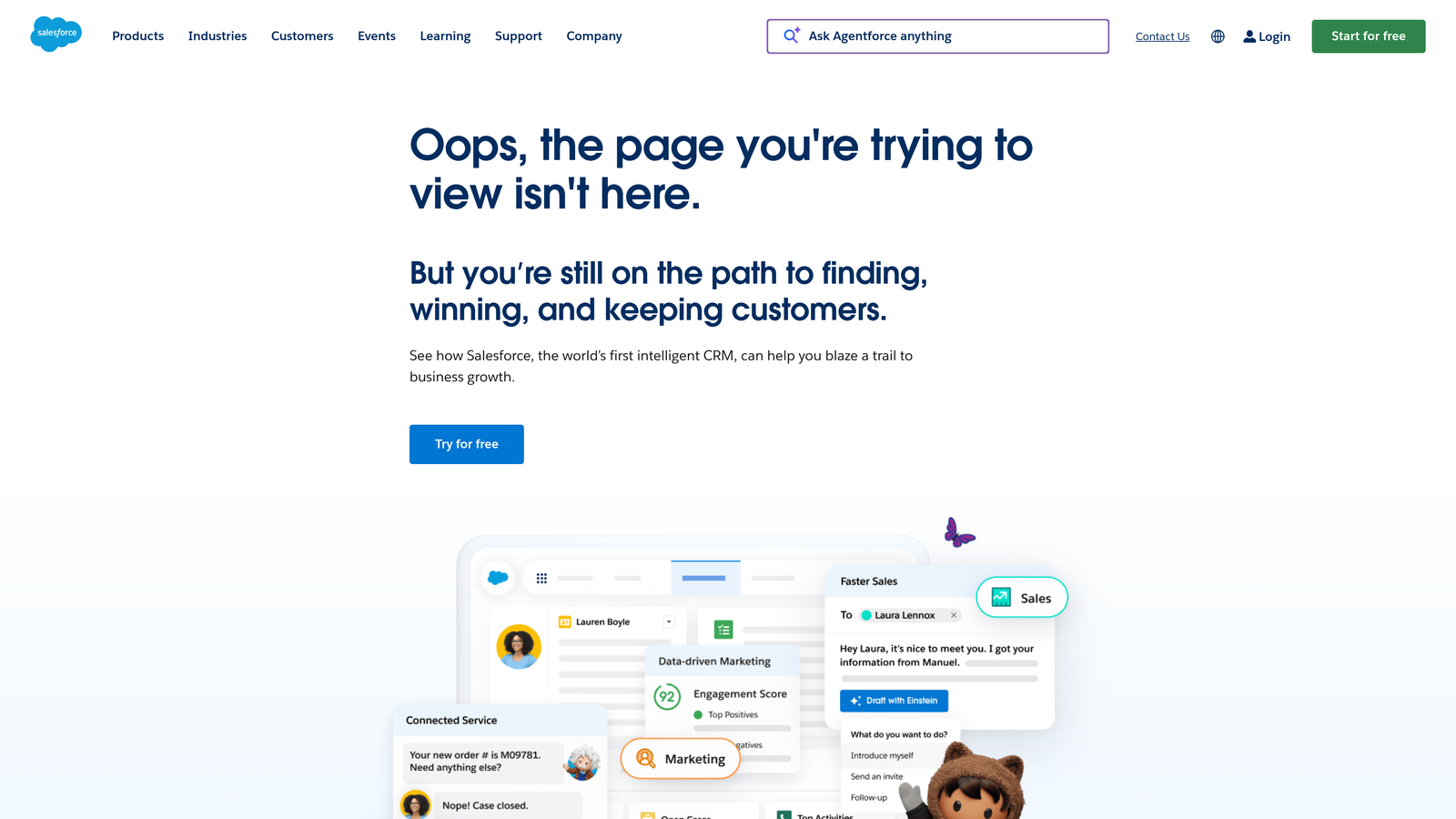
Salesforce Service Cloud Einstein is an enterprise-grade predictive support platform powered by CRM data, offering case classification, next-best-action recommendations, and customer health predictions.
Where This Tool Shines
Einstein's advantage is data depth. Because it draws from Salesforce's full CRM, support predictions aren't based solely on ticket history. They incorporate sales interactions, product usage data, account value, and more. This produces customer health scores that reflect a genuinely holistic view of account risk.
The next-best-action recommendations during live interactions are particularly valuable for complex B2B support scenarios where agents need to balance resolution with relationship management.
Key Features
Predictive Case Classification: Routes and prioritizes cases based on patterns learned from historical case data across the organization.
Next-Best-Action Recommendations: Guides agents during live interactions with AI-suggested steps based on case context and customer history.
Customer Health Scoring: Combines support, sales, and product usage signals into a unified health score for each account.
Einstein Bots with Predictive Intent: Powers self-service experiences with intent recognition that improves over time.
Best For
Large enterprises already invested in the Salesforce ecosystem where CRM-connected prediction delivers the most value. The complexity and cost make it less suitable for smaller teams.
Pricing
Service Cloud Enterprise starts at $165/user/month. Einstein AI features require additional licensing; contact Salesforce for full pricing.
6. Forethought
Best for: Teams that want a helpdesk-agnostic predictive AI layer without replacing their existing support platform.
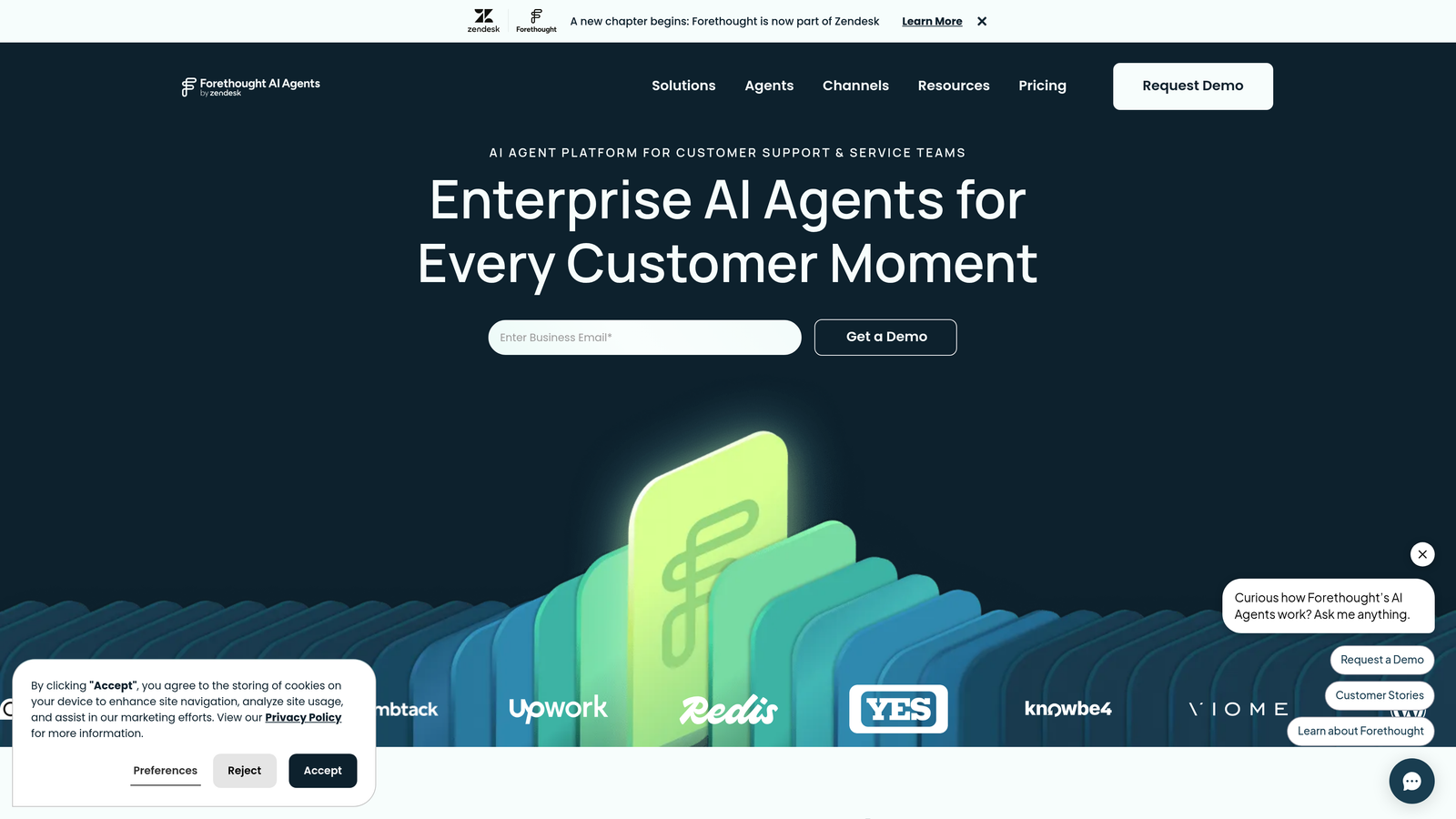
Forethought is a standalone AI platform that layers predictive triage, intelligent routing, and generative AI responses on top of existing helpdesks.
Where This Tool Shines
Forethought's biggest appeal is flexibility. It doesn't require you to switch helpdesks. It integrates with Zendesk, Salesforce, ServiceNow, and others, adding a predictive intelligence layer without disrupting existing workflows. For teams locked into a specific helpdesk by organizational constraints, this is a meaningful advantage.
The predictive ticket prioritization is particularly strong, automatically identifying high-urgency issues based on content, sentiment, and historical patterns before a human ever touches the queue.
Key Features
SupportGPT: Generates context-aware response drafts for agents, pulling from knowledge bases and historical resolutions.
Predictive Ticket Prioritization: Automatically surfaces high-urgency tickets based on content analysis and predicted impact.
Workflow Automation: Triggers automated actions based on predicted ticket category and sentiment trajectory.
Helpdesk-Agnostic Integration: Works across Zendesk, Salesforce, ServiceNow, and other major platforms without requiring migration.
Best For
Mid-market and enterprise teams with established helpdesk investments who want to add predictive AI without platform disruption. Also strong for organizations managing high ticket volumes across multiple support channels.
Pricing
Custom pricing based on ticket volume. Contact Forethought directly for a quote.
7. Gainsight Customer Success
Best for: Customer success teams that want predictive health scoring driven by support, product usage, and engagement data combined.
Gainsight is a customer success platform with a predictive health scoring engine that combines support data, product usage, and engagement signals to forecast churn and escalation risk.

Where This Tool Shines
Gainsight operates at a different level than most support tools. Where others predict the next ticket, Gainsight predicts the next churn. Its health scoring engine ingests signals from support history, NPS responses, product usage frequency, and CS touchpoints to produce account-level risk scores that CSMs can act on before a customer decides to leave.
The automated playbooks are a standout feature: when a customer's health score drops below a threshold, Gainsight can automatically trigger outreach sequences, schedule check-in calls, or alert account owners, all without manual monitoring.
Key Features
Predictive Health Scoring Engine: Combines multiple signal types with customizable weighting to produce accurate, account-level health predictions.
Early Warning System: Surfaces churn risk based on support interaction patterns, usage drops, and engagement signals before they become visible problems.
Automated Playbooks: Triggers predefined CS workflows when health score changes cross defined thresholds.
Unified Timeline View: Combines support tickets, NPS data, product usage, and CS touchpoints in a single account view.
Best For
CS-led B2B organizations, particularly those managing enterprise accounts where churn prevention justifies the investment. Less focused on frontline support automation and more on strategic account health management.
Pricing
Custom enterprise pricing. Contact Gainsight directly for a quote based on your account volume and feature requirements.
8. Tidio AI
Best for: SMBs and early-stage teams that want accessible predictive chat without technical complexity.
Tidio AI is an accessible AI chat platform featuring the Lyro AI chatbot, which predicts common questions based on visitor behavior and page context.
Where This Tool Shines
Tidio punches above its price point for smaller teams. Lyro AI learns from your existing knowledge base and FAQ content to predict what visitors are likely to ask based on their journey through your site, then surfaces answers proactively rather than waiting for a question to be typed.
The no-code setup is genuinely fast. Teams without dedicated technical resources can get predictive chat running in hours, not weeks, which makes it one of the most accessible entry points into predictive support on this list.
Key Features
Lyro AI Chatbot with Predictive FAQ Surfacing: Anticipates visitor questions based on browsing behavior and proactively offers relevant answers.
Visitor Behavior Tracking with Proactive Triggers: Monitors page visits and time-on-page to initiate chat at moments of likely friction.
Smart Routing: Directs conversations to the right agent or team based on predicted query complexity.
No-Code Setup: Deploys quickly without engineering resources, making it practical for lean teams.
Best For
SMBs, e-commerce teams, and early-stage SaaS companies that want proactive AI chat without enterprise complexity or pricing. Not the right fit for teams with sophisticated B2B support workflows or deep integration needs.
Pricing
Free plan available. Lyro AI starts at $39/month; premium plans scale with usage and conversation volume.
9. Kustomer
Best for: Omnichannel support teams that need predictive intent classification across email, chat, social, and SMS in a unified CRM view.
Kustomer is a CRM-powered support platform with a unified customer timeline, predictive intent classification, and proactive outreach triggers based on behavioral data.
Where This Tool Shines
Kustomer's unified timeline is its anchor feature. Every interaction across every channel lives in a single thread per customer, which gives the AI far richer context for prediction. Intent classification and routing decisions are informed by the full history of the relationship, not just the current ticket.
The proactive outreach triggers are well-suited for commerce and subscription businesses: Kustomer can automatically initiate outreach based on order status changes, usage pattern shifts, or sentiment signals detected across channels, catching problems before customers escalate.
Key Features
Single-Thread Customer Timeline: Unifies all channels and interactions in one view, providing full context for predictive AI decisions.
Predictive Intent Classification: Automatically routes and prioritizes conversations based on predicted intent and historical patterns.
Proactive Outreach Triggers: Initiates customer outreach based on order status, usage patterns, and sentiment signals without manual intervention.
Omnichannel Support: Handles email, chat, social, and SMS with unified context preserved across every touchpoint.
Best For
Mid-market and enterprise teams managing high-volume omnichannel support, particularly in commerce, subscription, or services businesses where proactive outreach directly impacts retention.
Pricing
Enterprise plan starts at $89/user/month. AI features are available as add-ons; contact Kustomer for full pricing details.
Which Tool Fits Your Team
The right predictive support tool depends heavily on where prediction matters most for your business. Here's a quick way to think through the decision.
For AI-first predictive support with continuous learning: Halo AI is built for B2B teams that want prediction woven into the architecture rather than bolted on. The combination of anomaly detection, page-aware context, and cross-system intelligence from Slack, HubSpot, Stripe, and Linear makes it particularly powerful for SaaS companies where support data should inform the entire business, not just the helpdesk queue.
For teams locked into existing helpdesks: Zendesk Advanced AI and Freshdesk Freddy AI are the natural choices. They add meaningful predictive capability without requiring migration, and Forethought is worth considering if you want a helpdesk-agnostic layer that works across platforms.
For CS-led churn prevention: Gainsight operates at a strategic level that pure support tools don't match. If your primary concern is predicting and preventing churn at the account level, it's the right investment. Salesforce Service Cloud Einstein plays a similar role for organizations already deep in the Salesforce ecosystem.
For proactive in-app messaging and PLG teams: Intercom Fin AI combines behavioral triggers with autonomous resolution in a way that fits product-led growth motions naturally. Kustomer is the better fit when omnichannel coverage and a unified customer timeline are the priority.
For smaller teams on a budget: Tidio AI delivers accessible predictive chat without the complexity or cost of enterprise platforms.
The shift from reactive to predictive support isn't just an efficiency play. It's a retention strategy. Teams that surface issues before customers notice them, route complexity before it bottlenecks agents, and use support data to inform business decisions are building a genuine competitive advantage.
Your support team shouldn't scale linearly with your customer base. Let AI agents handle routine tickets, guide users through your product, and surface business intelligence while your team focuses on complex issues that need a human touch. See Halo in action and discover how continuous learning transforms every interaction into smarter, faster support.
For more on building this kind of operation, explore our guides on customer support automation best practices and understanding chatbot ROI for B2B teams.