9 Best Product Support Automation Software Tools in 2026
Scaling B2B SaaS support without growing headcount requires the right product support automation software — this guide evaluates nine leading platforms across AI autonomy, integration depth, context awareness, and analytics to help support teams resolve tickets end-to-end, route intelligently, and surface actionable business intelligence beyond basic ticket deflection.
 Matt PattoliFounder13 min read
Scaling product support without scaling headcount is one of the defining challenges for B2B SaaS teams in 2026. As customer bases grow and product complexity increases, support queues expand faster than hiring budgets allow. The answer isn't always more agents — it's smarter automation.
This list focuses on tools selected across four criteria: depth of AI autonomy, integration breadth with modern SaaS stacks, context awareness, and analytics depth beyond basic ticket deflection. These aren't just chatbot builders — they're platforms capable of resolving tickets end-to-end, routing intelligently, and in some cases, surfacing business intelligence your team can actually act on.
If you're exploring how AI fits into your broader support strategy, it's worth reading about AI customer support agents and what separates genuine automation from glorified FAQ bots. This list is built for B2B SaaS teams, product managers, and customer support leaders who need to evaluate platforms seriously — not just pick the most recognizable brand.
Here are the top product support automation software tools worth your attention right now.
1. Halo AI
Best for: B2B SaaS teams that want AI-first support with business intelligence built in
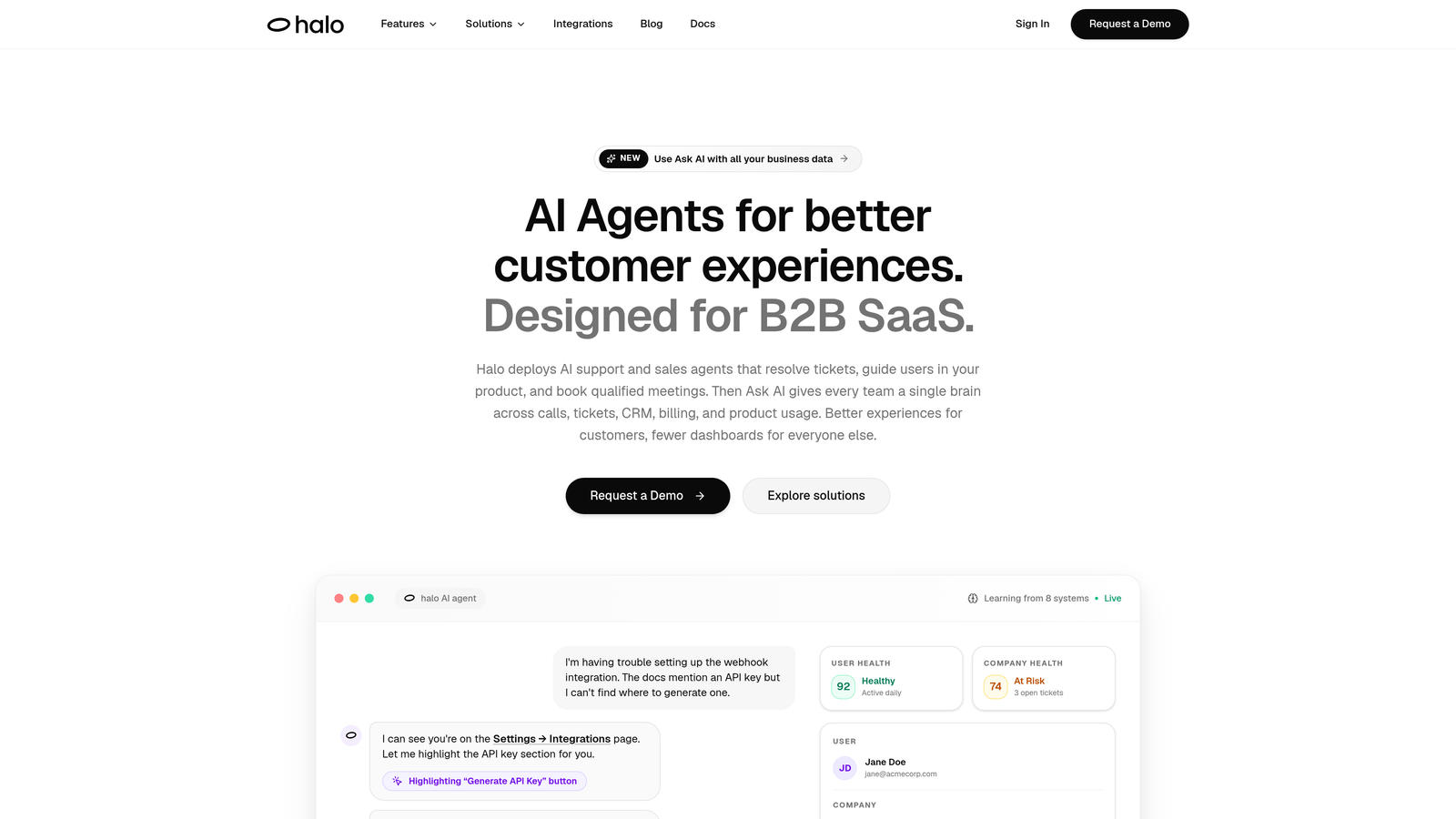
Halo AI is an AI-native customer support platform built specifically for B2B SaaS teams who need more than ticket deflection.
Where This Tool Shines
Most support tools bolt AI onto an existing helpdesk foundation. Halo was built the other way around: AI is the architecture, not the add-on. Its agents are page-aware, meaning they understand what a user is looking at in real time and can provide contextual, visual guidance rather than generic scripted responses.
What separates Halo further is the business intelligence layer. While other platforms tell you how many tickets were resolved, Halo surfaces signals like customer health, revenue anomalies, and churn indicators directly from support interactions. Your support data becomes strategic data.
Key Features
Page-Aware AI Agents: Agents see exactly what the user sees and deliver contextual, visual UI guidance specific to that moment in the product.
Autonomous Ticket Resolution: Handles tickets end-to-end with smart escalation to live agents only when the issue genuinely requires a human.
Auto Bug Ticket Creation: Automatically identifies and routes bug reports directly to engineering tools like Linear, closing the loop between support and product.
Smart Inbox with Business Intelligence: Surfaces customer health signals, revenue anomalies, and churn indicators from within the support stream.
Deep Integrations: Connects with Slack, HubSpot, Intercom, Stripe, Zoom, PandaDoc, and Fathom for a unified view across the business stack.
Best For
B2B SaaS teams that want an autonomous support layer that learns continuously, integrates across their entire stack, and delivers intelligence beyond CSAT scores. Particularly strong for product-led growth companies where support context and product context need to be unified.
Pricing
Contact for pricing — tailored to team size and usage. Custom quotes available via the Halo AI website.
2. Intercom
Best for: SaaS teams wanting a mature omnichannel platform with a capable AI agent layer
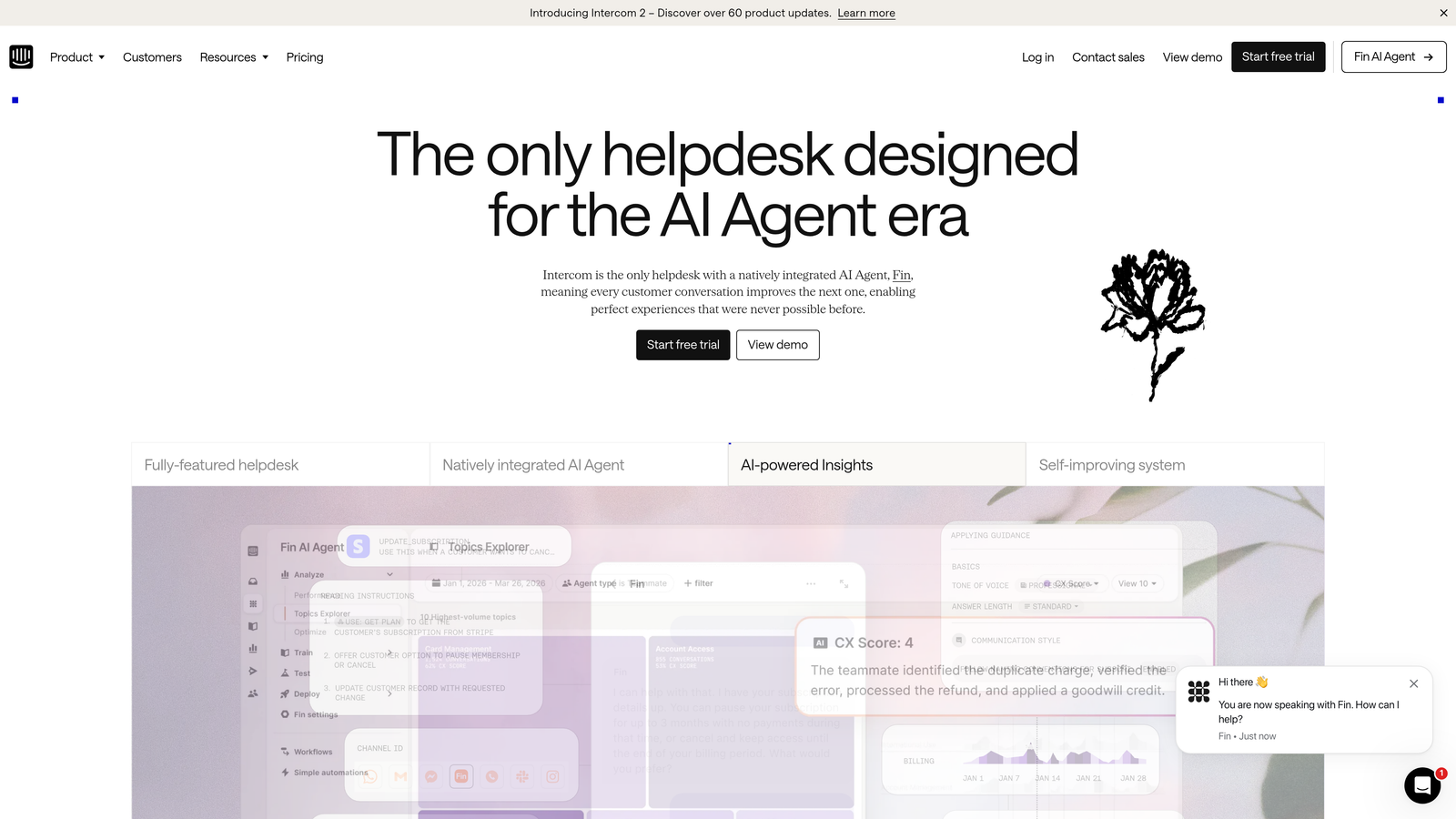
Intercom is one of the most widely adopted customer messaging platforms in SaaS, now featuring Fin, an AI agent built on large language models.
Where This Tool Shines
Intercom's strength is its ecosystem maturity. The platform covers the full customer lifecycle from onboarding to retention, with in-app messaging, product tours, and proactive support built into the same workspace as your support inbox. Fin handles a meaningful share of inbound conversations autonomously, drawing from your existing knowledge base.
The workflow builder is genuinely powerful for routing, escalation, and multi-step automation. Teams that need omnichannel coverage — chat, email, and social — from a single inbox will find Intercom's breadth hard to match at this tier.
Key Features
Fin AI Agent: Autonomous conversation resolution powered by large language models, trained on your existing content.
Omnichannel Inbox: Unified inbox covering live chat, email, and social channels with intelligent routing.
Workflow Automation Builder: Visual builder for routing rules, escalation logic, and multi-step automation flows.
Product Tours and In-App Messaging: Proactive support and onboarding tools built directly into the platform.
App Marketplace: Hundreds of integrations covering CRM, analytics, and engineering tools.
Best For
Mid-market and enterprise SaaS teams that want a mature platform covering support, onboarding, and proactive messaging in one place. Teams already invested in the Intercom ecosystem will find Fin a natural upgrade path.
Pricing
Starts at $39/seat/month. Fin AI usage is billed separately per resolution, so costs can scale significantly with volume.
3. Zendesk
Best for: Enterprise teams needing robust SLA management, deep reporting, and a massive integration marketplace
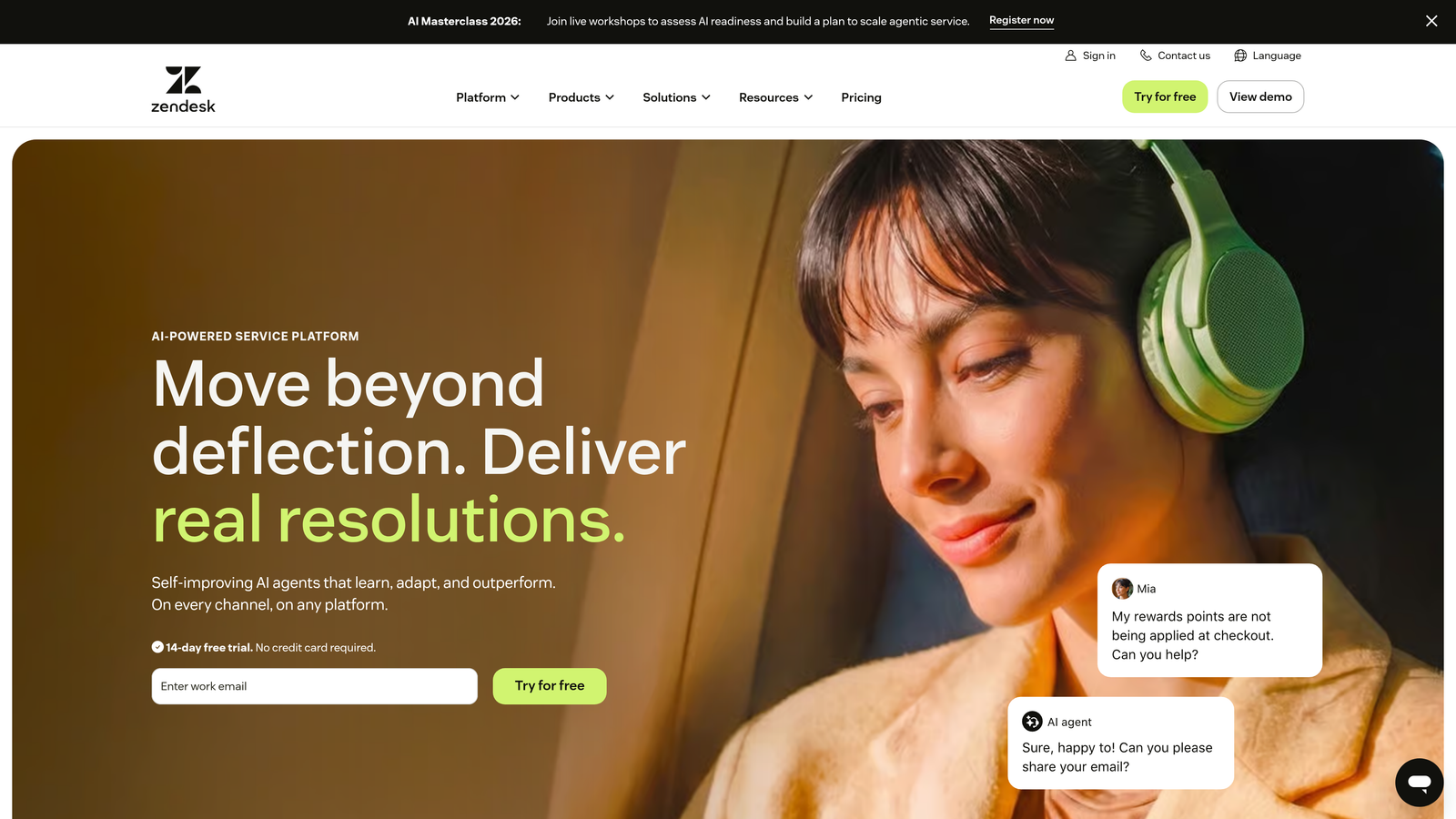
Zendesk is the dominant enterprise helpdesk standard, now layering AI agents, intelligent triage, and generative AI features onto its established ticketing foundation.
Where This Tool Shines
Zendesk's depth is its defining advantage. SLA management, advanced reporting dashboards, workforce management, and quality assurance tools are all available within the platform — capabilities that enterprise support teams often can't live without. The 1,500+ integration marketplace means Zendesk connects to virtually any tool in your stack.
The AI features have matured considerably. Intelligent triage routes tickets based on intent and sentiment, while AI agents handle automated resolution across channels. For large teams managing high ticket volumes across multiple products, Zendesk's operational infrastructure is hard to replicate.
Key Features
AI Agents: Automated ticket resolution across chat, email, and messaging channels.
Intelligent Triage: Routes tickets based on detected intent, sentiment, and urgency without manual rules.
Advanced SLA Management: Granular SLA policies with real-time tracking and escalation alerts.
1,500+ Integration Marketplace: Connects to virtually every tool in the modern SaaS stack.
Workforce Management and QA: Scheduling, forecasting, and quality assurance tools for larger support organizations.
Best For
Enterprise support teams with complex routing requirements, strict SLA commitments, and a need for deep operational reporting. Less ideal for lean teams that want fast deployment without significant configuration overhead.
Pricing
Suite plans start at $55/agent/month. AI add-ons and advanced features are available at higher tiers, with enterprise pricing on request.
4. Freshdesk
Best for: Mid-market teams wanting Zendesk-level features at a more accessible price point
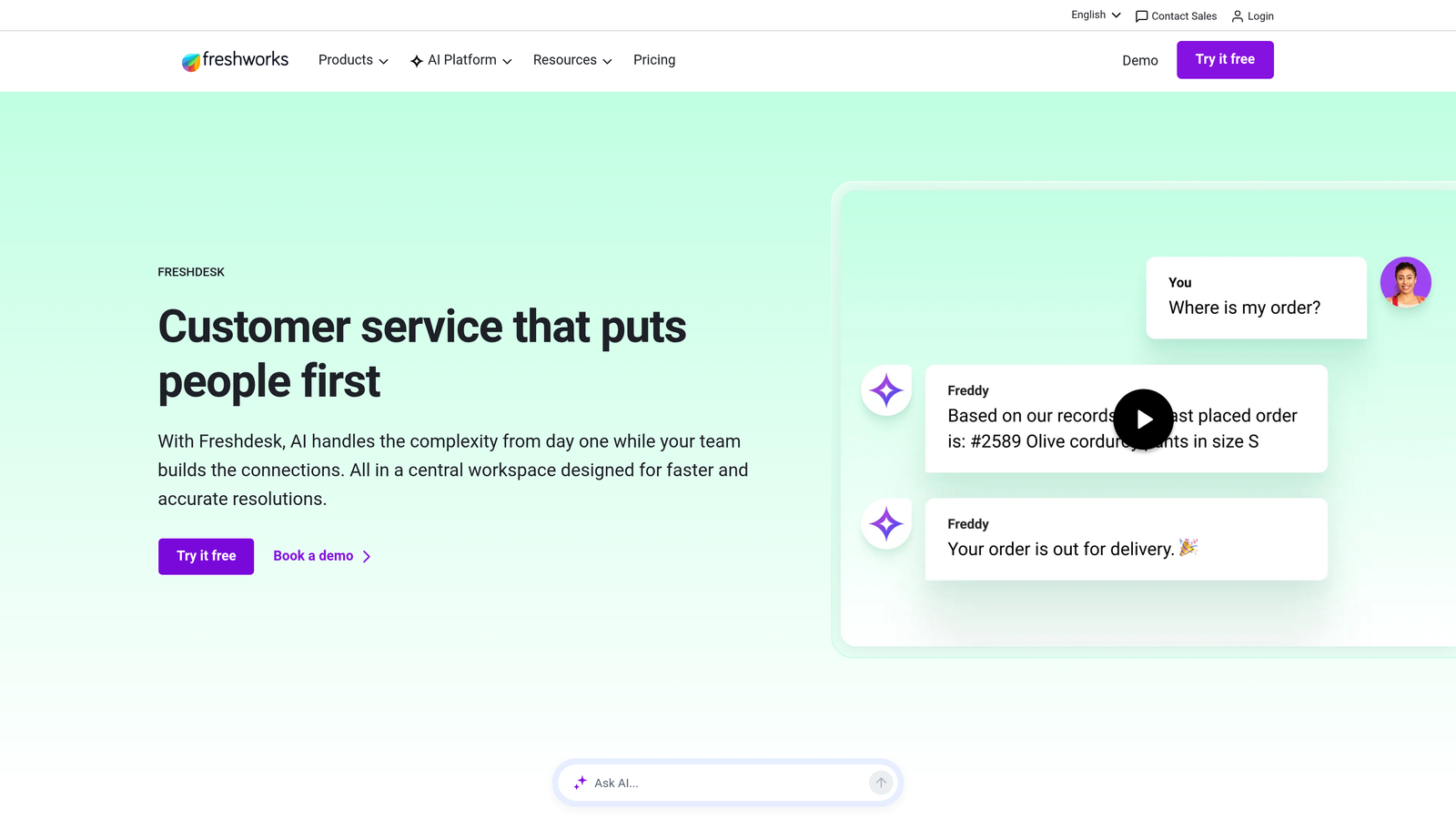
Freshdesk is a scalable helpdesk from Freshworks featuring Freddy AI across three distinct layers: self-service bots, agent assist, and autonomous response generation.
Where This Tool Shines
Freshdesk's value proposition is strong for teams that need meaningful AI automation without enterprise pricing. Freddy AI spans the full support workflow: Freddy Self Service handles bot-driven self-service without code, Freddy Copilot assists agents in real time with summarization and reply suggestions, and Freddy AI handles auto-responses and ticket tagging at the inbox level.
The platform also handles multi-channel support well, covering email, chat, phone, and social from a single workspace. Collision detection and team collaboration features make it practical for growing support teams managing shared queues.
Key Features
Freddy AI Auto-Responses: Automated ticket responses, tagging, and suggested replies based on ticket content.
Freddy Self Service: No-code bot builder for creating AI-powered self-service experiences.
Freddy Copilot: Real-time agent assistance with summarization, reply drafting, and next-step suggestions.
Multi-Channel Support: Unified inbox across email, chat, phone, and social channels.
Collision Detection: Prevents multiple agents from working the same ticket simultaneously.
Best For
Growing SaaS teams and mid-market companies that need solid AI automation across multiple channels without the complexity and cost of enterprise platforms. A strong alternative for teams considering Zendesk but sensitive to per-agent pricing.
Pricing
Free plan available. Paid plans start at $15/agent/month, making it one of the more accessible options on this list.
5. Tidio
Best for: Smaller teams that need automation deployed quickly with minimal configuration
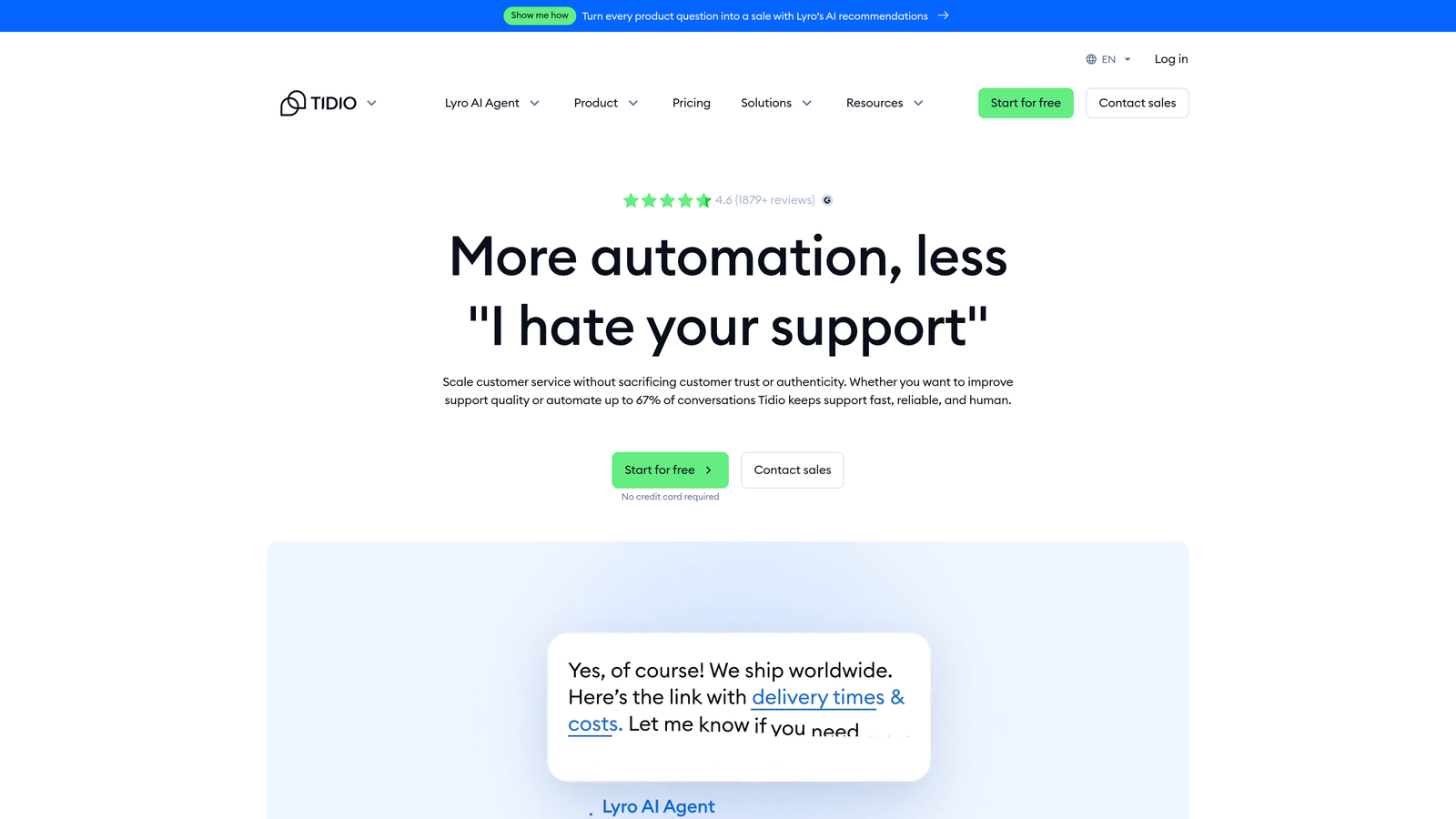
Tidio is a lightweight customer support platform featuring Lyro AI, a conversational chatbot designed for fast deployment and low operational overhead.
Where This Tool Shines
Tidio's strongest quality is speed to value. Where enterprise platforms can take weeks to configure properly, Tidio can be live in hours. Lyro AI handles conversational support using your existing content, and the handoff from bot to human agent is smooth enough that customers rarely notice the transition.
For teams that don't need deep workflow customization or enterprise-grade SLA management, Tidio removes a lot of the friction that makes other platforms feel heavy. The pre-built automation templates cover the most common support scenarios out of the box.
Key Features
Lyro AI Chatbot: Conversational AI that handles common support queries using your existing knowledge content.
Live Chat with Bot-to-Human Handoff: Seamless escalation from Lyro to a live agent when needed.
Email and Messenger Integration: Extends support coverage beyond live chat to email and social messaging.
Pre-Built Automation Templates: Ready-to-use templates for common support scenarios, reducing setup time significantly.
Simple Analytics Dashboard: Conversation tracking and basic performance metrics without overwhelming complexity.
Best For
Small teams, startups, and businesses that prioritize fast deployment over deep customization. Less suited for complex B2B SaaS workflows with multi-step escalation logic, but excellent for teams that need something functional immediately.
Pricing
Free plan available. Lyro AI plans start at $29/month, making it one of the most accessible entry points on this list.
6. Zoho Desk
Best for: Teams already in the Zoho ecosystem wanting AI-assisted support with strong CRM integration
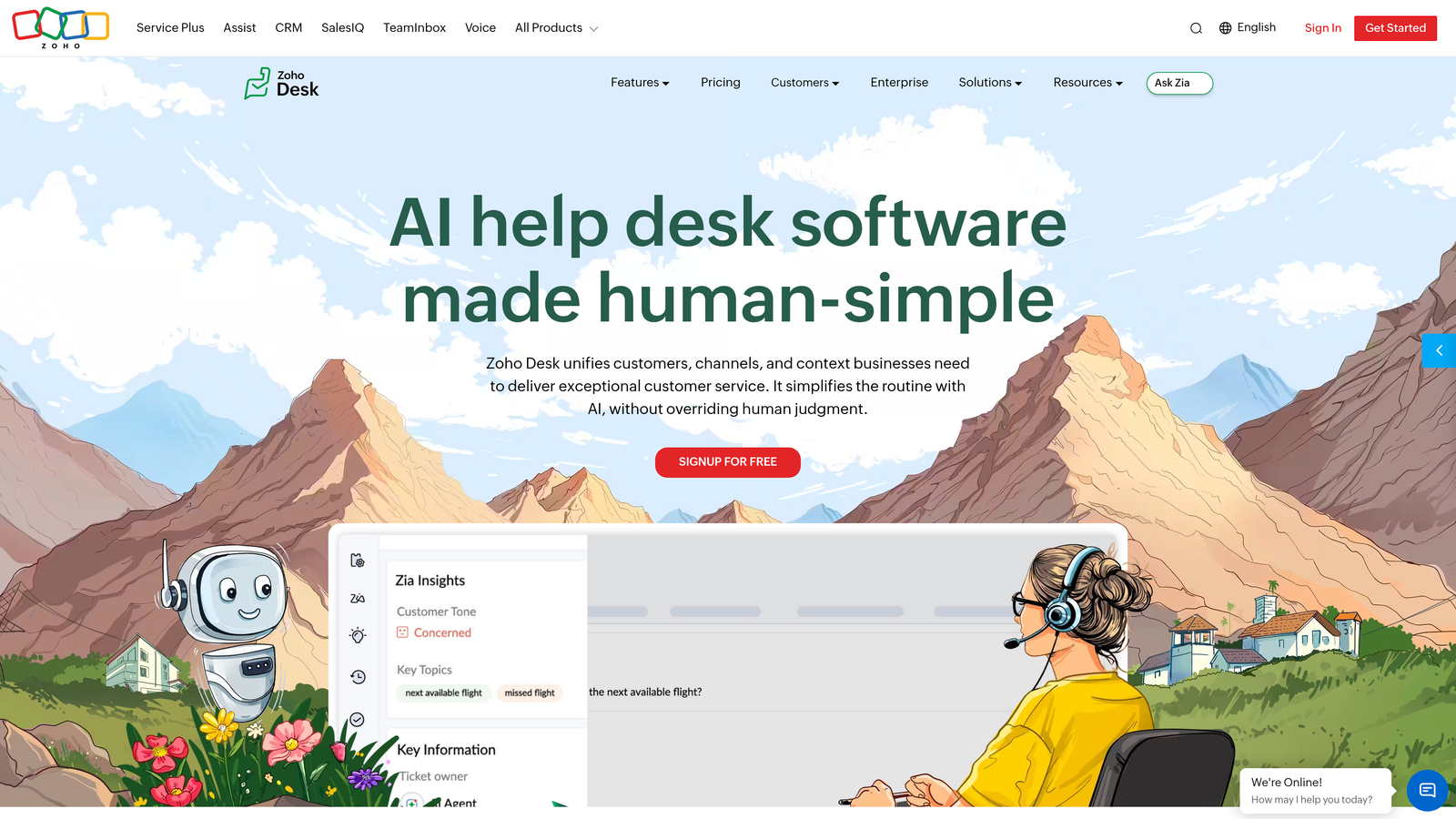
Zoho Desk is a context-aware helpdesk platform featuring Zia, an AI assistant that handles sentiment analysis, anomaly detection, and response suggestions across the full support workflow.
Where This Tool Shines
Zoho Desk's native integration with Zoho CRM is its most compelling differentiator. When a ticket comes in, agents see the full customer relationship context without switching tools — deal stage, account history, and previous interactions are all surfaced automatically. Zia adds an intelligent layer on top, detecting sentiment shifts and flagging anomalies before they escalate.
Blueprint workflow automation is worth highlighting specifically: it standardizes support processes step by step, ensuring agents follow consistent procedures for complex ticket types. This is particularly useful for teams managing multi-department support or regulated industries.
Key Features
Zia AI: Sentiment analysis, auto-tagging, anomaly detection, and response suggestions powered by AI.
Blueprint Workflow Automation: Process-driven automation that standardizes how complex tickets are handled across teams.
Native Zoho CRM Integration: Full customer relationship context surfaced directly within the support interface.
Multi-Brand and Multi-Department Support: Manage multiple support brands or departments from a single platform instance.
Radar Mobile App: Real-time support monitoring and key metrics accessible from mobile.
Best For
Teams already using Zoho CRM or other Zoho products who want a tightly integrated support platform. Competitive on price and solid on AI features, though less common in pure-play SaaS environments that prefer best-of-breed tool stacks.
Pricing
Free plan for up to 3 agents. Paid plans start at $14/agent/month, offering strong value relative to feature depth.
7. Drift (Salesloft)
Best for: Revenue teams where support automation and sales handoff need to work in sync
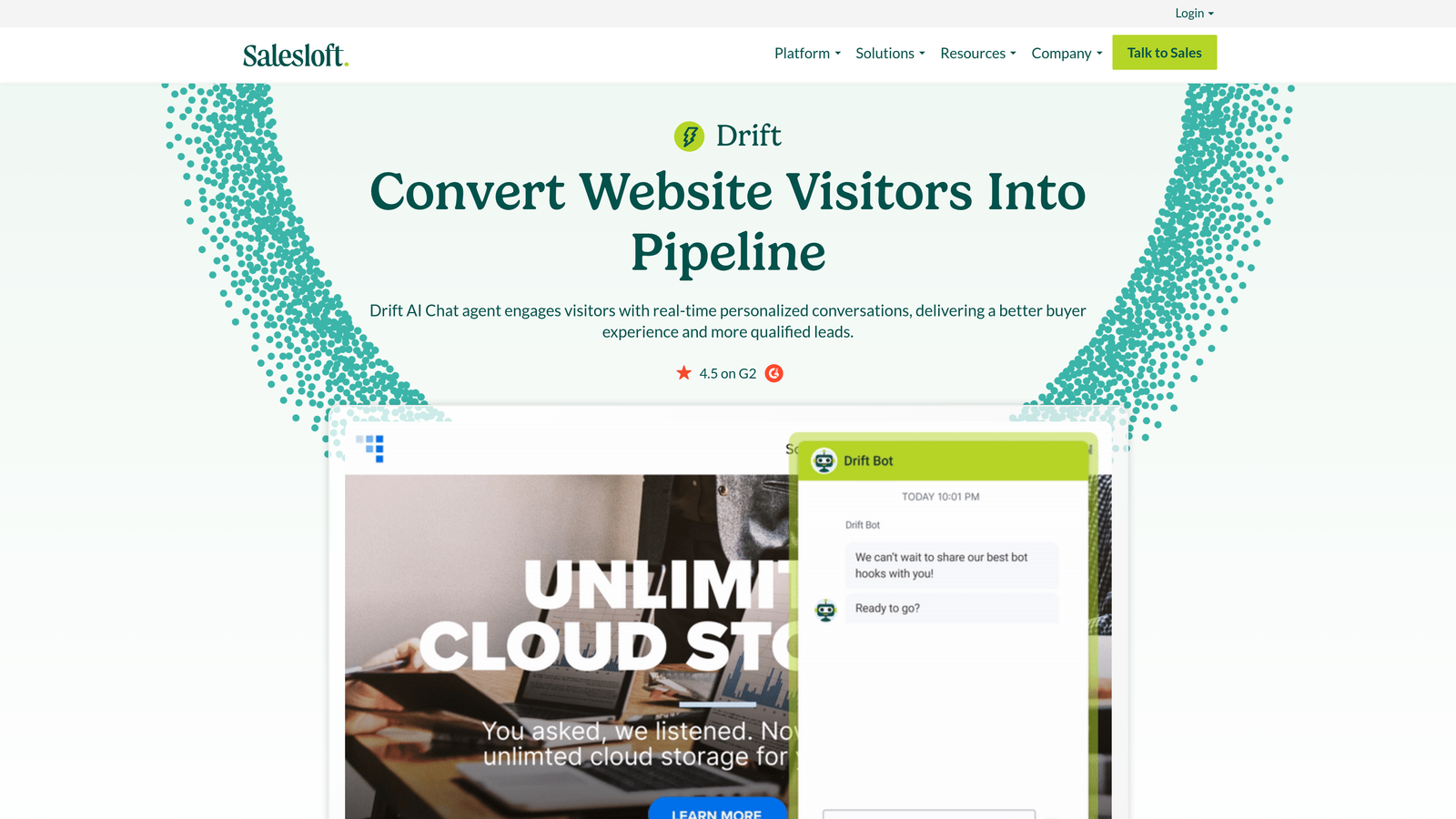
Drift, now part of Salesloft, is a conversational platform that blends support automation with sales and marketing intelligence using account-level data to route conversations intelligently.
Where This Tool Shines
Drift occupies a unique position: it's not purely a support tool, and that's intentional. Its AI playbooks route conversations based on who the visitor is — their account tier, intent signals, and deal stage — rather than just what they're asking. For companies where support and revenue motions overlap significantly, this context-aware routing creates experiences that generic helpdesks can't replicate.
The meeting scheduling automation built into chat flows is particularly useful for teams where a support conversation can naturally convert into a sales or success call. Following the Salesloft acquisition, the platform's roadmap is increasingly oriented around revenue intelligence.
Key Features
AI-Powered Conversation Routing: Routes conversations based on account data, intent signals, and visitor identity rather than keyword matching alone.
Playbooks: Automated conversation flows for support, sales handoff, and qualification scenarios.
Real-Time Account Notifications: Alerts when high-value accounts engage, enabling immediate human follow-up.
CRM and Marketing Integrations: Deep connections with Salesforce, Marketo, and major CRM platforms.
Meeting Scheduling in Chat: Calendar booking built directly into conversation flows without leaving the chat window.
Best For
Revenue-focused teams where the line between support and sales is intentionally blurred. Less suited for teams that need a dedicated, high-volume support ticketing system as their primary workflow.
Pricing
Contact for pricing. Enterprise-focused with custom quotes — not ideal for teams wanting transparent self-serve pricing.
8. Help Scout
Best for: Teams that prioritize a human-feeling support experience with AI assistance rather than full automation
Help Scout is a customer support platform built around an email-native experience, with AI features designed to make agents faster rather than replace them entirely.
Where This Tool Shines
Help Scout's philosophy is deliberately different from the AI-first platforms on this list. Rather than pushing toward full automation, its AI features — Summarize, Drafts, and AI Answers — are designed to reduce agent effort while keeping a human in the loop. For companies where the quality of the support relationship matters as much as resolution speed, this approach resonates strongly.
The Beacon widget enables in-app self-service and proactive messaging without requiring a separate tool. The Docs knowledge base builder with AI-powered search means customers can often find answers themselves before a ticket is ever created.
Key Features
AI Summarize: Instantly condenses long conversation threads so agents get full context without reading every message.
AI Drafts: Generates reply suggestions that agents can review, edit, and send — keeping humans in control of the final response.
AI Answers: Automatically surfaces relevant knowledge base articles in response to incoming questions.
Beacon Widget: In-app self-service and proactive messaging without needing a separate tool deployment.
Docs Knowledge Base: Built-in knowledge base with AI-powered search to reduce inbound ticket volume.
Best For
Customer-experience-focused teams and companies with strong brand voices that don't want automation to feel impersonal. Strong fit for B2B companies where each customer relationship has significant value and a bot-heavy experience would feel out of place.
Pricing
Starts at $50/month for up to 3 users, with pricing scaling by user count rather than per-seat, which can be advantageous for smaller teams.
9. Kustomer
Best for: High-volume, multi-channel teams that need full customer timeline context powering their AI automation
Kustomer is a CRM-native support platform that gives AI agents a unified view of every customer interaction across every channel, enabling more personalized automated responses at scale.
Where This Tool Shines
Kustomer's core differentiator is context depth. Rather than treating each ticket as an isolated event, Kustomer builds a unified customer timeline that spans email, chat, SMS, social, and voice. When AI automation runs on top of that timeline, the responses are meaningfully more personalized than what a standard helpdesk can produce.
The platform's advanced reporting goes beyond basic CSAT — customer lifetime value tracking, churn signals, and detailed interaction history give support leaders data they can bring into strategic conversations. For high-volume environments where personalization at scale is the goal, Kustomer's architecture is built for exactly that challenge.
Key Features
Unified Customer Timeline: Every interaction across all channels consolidated into a single customer view accessible to agents and AI.
Context-Aware AI Automation: Automated responses powered by full customer history rather than just the current conversation.
Omnichannel Coverage: Email, chat, SMS, social, and voice all managed from a single platform.
Workflow Automation: Routing, escalation, and SLA management automation with conditional logic.
Advanced Reporting: Customer lifetime value tracking, CSAT analysis, and interaction history reporting built in.
Best For
High-volume support operations across multiple channels where personalization and customer context are priorities. Best suited for teams managing large customer bases where generic automated responses would hurt rather than help the customer experience.
Pricing
Starts at $89/agent/month. Enterprise pricing is available for larger teams with custom requirements.
Which Tool Is Right for Your Team?
The right product support automation platform depends heavily on what you're actually trying to solve. Here's a practical way to think through the options.
For AI-first B2B SaaS teams: Halo AI is the strongest fit if you want autonomous agents that understand product context, learn continuously, and surface business intelligence beyond ticket metrics. It's built for teams where support data should inform product and revenue decisions — not just live in a helpdesk dashboard.
For enterprise helpdesk requirements: Zendesk remains the standard for large teams with complex SLA management, workforce management, and a need for 1,500+ integrations. Intercom is the better choice if omnichannel messaging and proactive customer engagement are equally important alongside support.
For lean and SMB teams: Freshdesk offers the best balance of AI capability and accessible pricing for growing teams. Tidio is the fastest path to live automation for very small teams or those with limited technical resources. Help Scout is the right pick when customer relationship quality matters more than automation depth.
For revenue-support hybrid teams: Drift works best when support conversations are part of a broader revenue motion and account-level routing intelligence matters. Kustomer fits high-volume operations where full customer timeline context is the key to personalized automation at scale.
The honest takeaway: most platforms now have AI. The real question is how deeply that AI understands your product, your customers, and your business context. Bolt-on AI features will deflect tickets. Purpose-built AI agents will resolve them, learn from them, and tell you something useful about your customers in the process.
Your support team shouldn't scale linearly with your customer base. Let AI agents handle routine tickets, guide users through your product, and surface business intelligence while your team focuses on complex issues that need a human touch. See Halo in action and discover how continuous learning transforms every interaction into smarter, faster support.