9 Best Product Support Automation Tools in 2026
This guide ranks the 9 best product support automation tools in 2026, evaluating each on AI capability, integration depth, ease of deployment, and scalability for B2B SaaS teams. Whether you handle dozens or thousands of tickets per week, it identifies the right tool to resolve more issues faster—without growing headcount.
 Matt PattoliFounder13 min read
Product support teams are under more pressure than ever. Ticket volumes keep climbing, customer expectations keep rising, and headcount budgets rarely keep pace. The right automation tool doesn't just deflect tickets—it resolves them, surfaces insights, and keeps your team focused on work that genuinely requires a human.
This list covers the best product support automation tools available in 2026, evaluated on AI capability, integration depth, ease of deployment, and how well each scales with a B2B SaaS product team. Whether you're running a lean support operation or managing thousands of tickets per week, there's a tool here built for your situation.
Halo AI leads the list because it's the most purpose-built option for the audience reading this—but every tool earns its place on its own merits.
1. Halo AI
Best for: B2B SaaS teams that need AI-native support without growing headcount
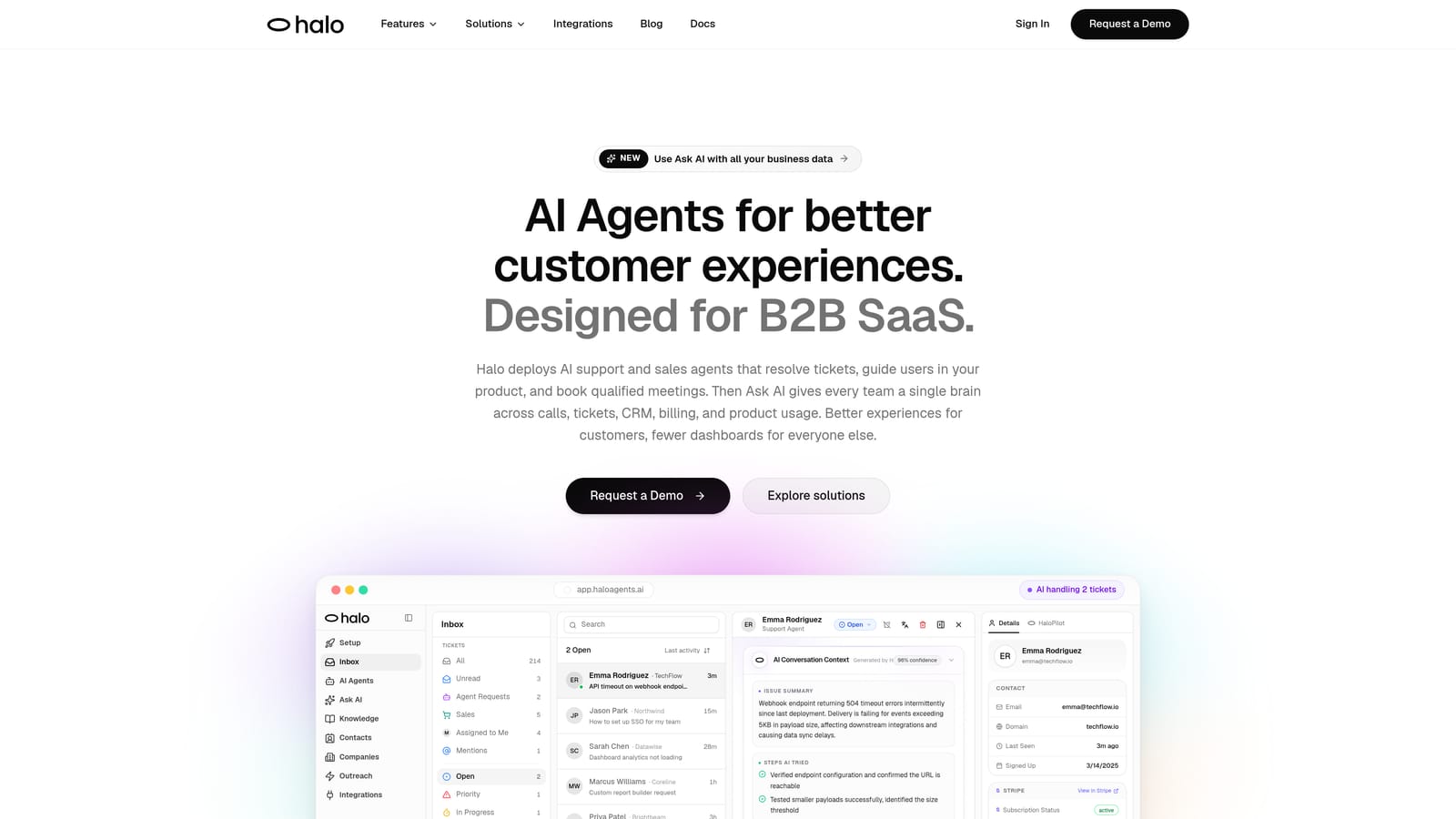
Halo AI is an AI-first customer support platform that resolves tickets, guides users through your product, and surfaces business intelligence—all without a proportional increase in team size.
Where This Tool Shines
What separates Halo from most tools on this list is its architecture. It wasn't built as an AI layer bolted onto a traditional helpdesk—it was designed from the ground up around autonomous resolution. That distinction matters when you're evaluating whether a tool will actually close tickets or simply reduce escalations.
The page-aware chat widget is a standout capability. Rather than responding to text input alone, Halo understands what page a user is on and what they're doing in your product at that moment—giving its AI agents the context needed to provide genuinely useful, step-specific guidance. Combined with continuous learning from every resolved interaction, the system gets meaningfully smarter over time.
Key Features
Page-Aware Chat Widget: Understands the user's current page and product state to deliver contextually relevant guidance rather than generic answers.
Autonomous Ticket Resolution: AI agents resolve tickets end-to-end and learn continuously from every interaction to improve future responses.
Auto Bug Ticket Creation: Automatically identifies and routes bug reports directly to Linear, removing manual triage from your engineering workflow.
Smart Inbox with Business Intelligence: Surfaces customer health signals, revenue anomalies, and churn indicators from within your support queue—giving you visibility beyond support metrics.
Native Integration Stack: Connects with Linear, Slack, HubSpot, Intercom, Stripe, Zoom, PandaDoc, and Fathom out of the box.
Live Agent Handoff: Escalates complex or sensitive issues to human agents with full context preserved, so nothing gets lost in the transition.
Best For
B2B SaaS product teams that want support to scale without scaling headcount. Particularly well-suited for teams where product complexity drives ticket volume, and where surfacing customer health signals from support interactions would have real business value beyond the support function itself.
Pricing
Contact for pricing. A demo is available at haloagents.ai/demo.
2. Intercom
Best for: Teams wanting a unified platform for support, onboarding, and product messaging
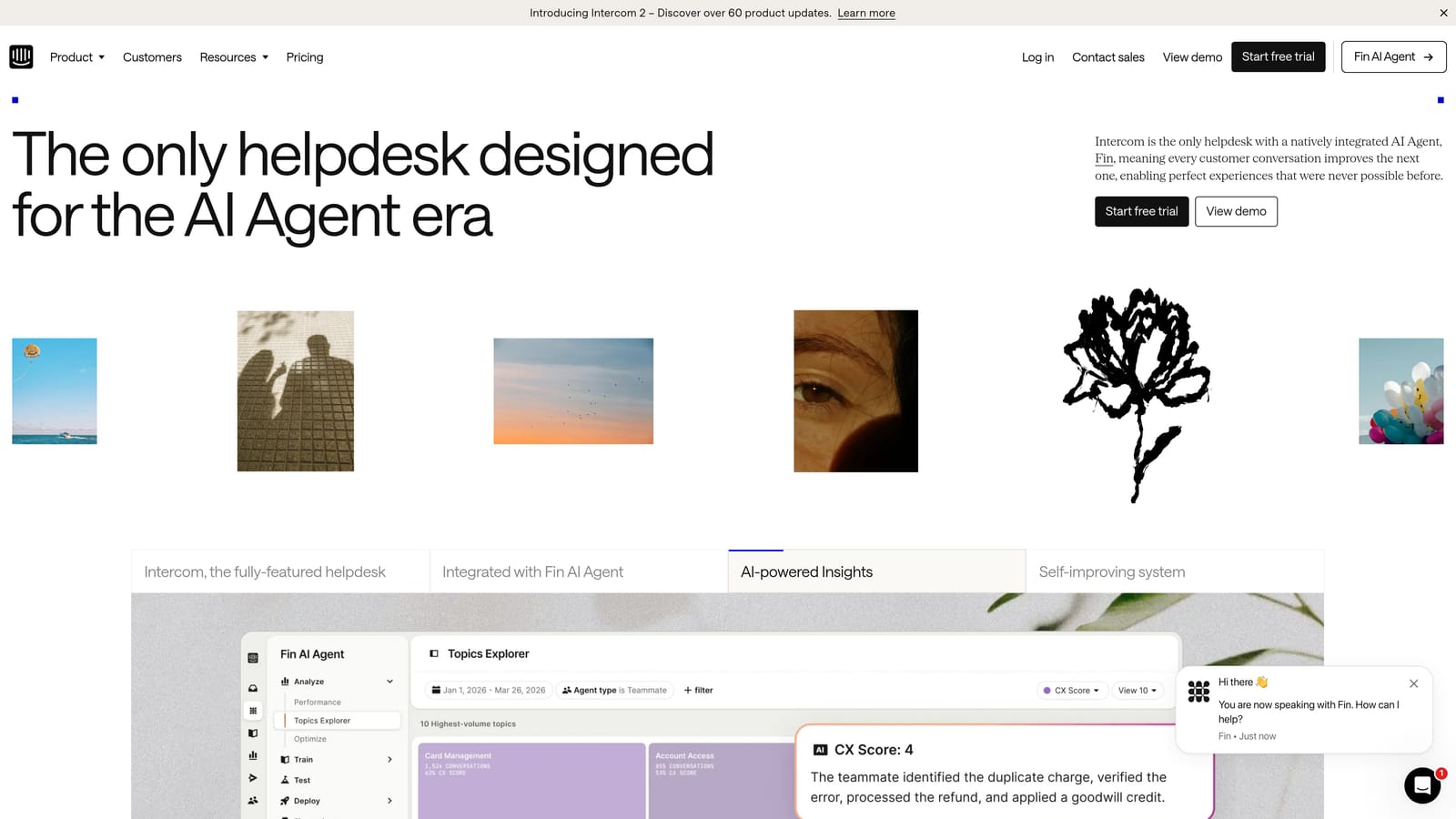
Intercom is a mature, widely adopted customer messaging platform with Fin—an AI agent built on large language models that resolves queries using your existing help center content and conversation history.
Where This Tool Shines
Intercom's strength is breadth. It handles support, onboarding, proactive messaging, and in-product tours from a single platform, which makes it attractive for teams that don't want to stitch together multiple point solutions. Fin, its AI agent, can handle a meaningful volume of common queries without human intervention by drawing on your existing knowledge base content.
The unified inbox is particularly useful for smaller teams where the same people handle support, onboarding conversations, and sales follow-ups. The app ecosystem is well-developed, and integrations with most major SaaS tools are available out of the box.
Key Features
Fin AI Agent: Resolves customer queries autonomously using your help center content and prior conversation history.
Conversation Routing: Intelligent routing and handoff to human agents based on query type, intent, and team availability.
Proactive Messaging and Tours: In-product messaging and onboarding flows to reduce support volume before it starts.
App Ecosystem: Broad third-party integrations covering CRM, billing, analytics, and more.
Unified Inbox: Single workspace for support, sales, and onboarding conversations across channels.
Best For
Teams that want one platform to handle customer communication across the full lifecycle. Works well for growth-stage SaaS companies that are managing support and onboarding with the same team and don't want to operate separate tools for each function.
Pricing
Essential plan starts at $39/seat/month. Fin AI usage is billed per resolution, so costs scale with volume—worth modeling before committing at scale.
3. Zendesk
Best for: Enterprise teams with complex routing logic and dedicated support operations
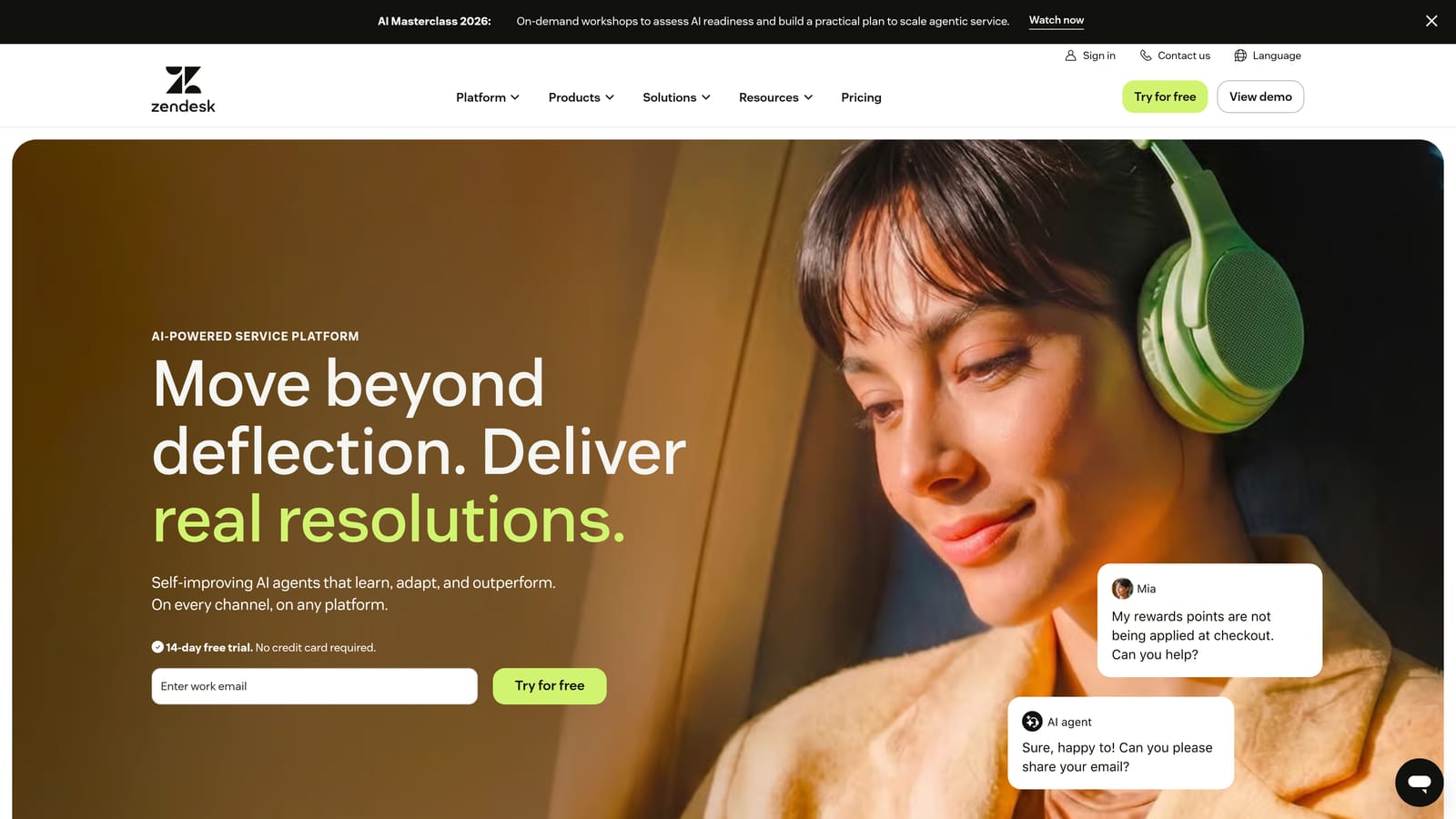
Zendesk is the incumbent enterprise helpdesk platform, now with AI-powered triage, macro suggestions, and intelligent routing layered across its ticketing system.
Where This Tool Shines
Zendesk's core advantage is its depth. After years of investment in the enterprise segment, it offers some of the most configurable routing logic, SLA management, and reporting available in the market. For teams with complex support operations—multiple products, regional teams, tiered support structures—that configurability is genuinely valuable.
The AI capabilities have improved considerably, with Zendesk AI handling intelligent triage, agent suggestions, and auto-summarization. The integration marketplace is extensive, covering most tools a modern SaaS stack would include. That said, getting the most out of Zendesk typically requires a dedicated admin or implementation effort—it rewards investment.
Key Features
Intelligent Triage: AI-powered ticket classification and routing based on intent, sentiment, and priority signals.
Macro and Trigger Automation: Configurable automation rules for routing, SLA management, and response workflows.
Zendesk AI: Agent-facing suggestions, auto-summarization, and knowledge recommendations within the agent workspace.
Integration Marketplace: 1,000+ app integrations covering the full SaaS stack.
Advanced Reporting: Detailed SLA tracking, team performance analytics, and custom dashboards for enterprise operations.
Best For
Enterprise support teams with dedicated admins, complex routing requirements, and the operational maturity to configure and maintain the platform over time. Also a good fit for teams that want to layer additional AI on top—Halo AI integrates with Zendesk for teams exploring that approach.
Pricing
Suite Team starts at $55/agent/month. AI add-ons are priced separately, so total cost scales with the features you enable.
4. Freshdesk
Best for: Teams that want a capable AI-augmented helpdesk at competitive pricing
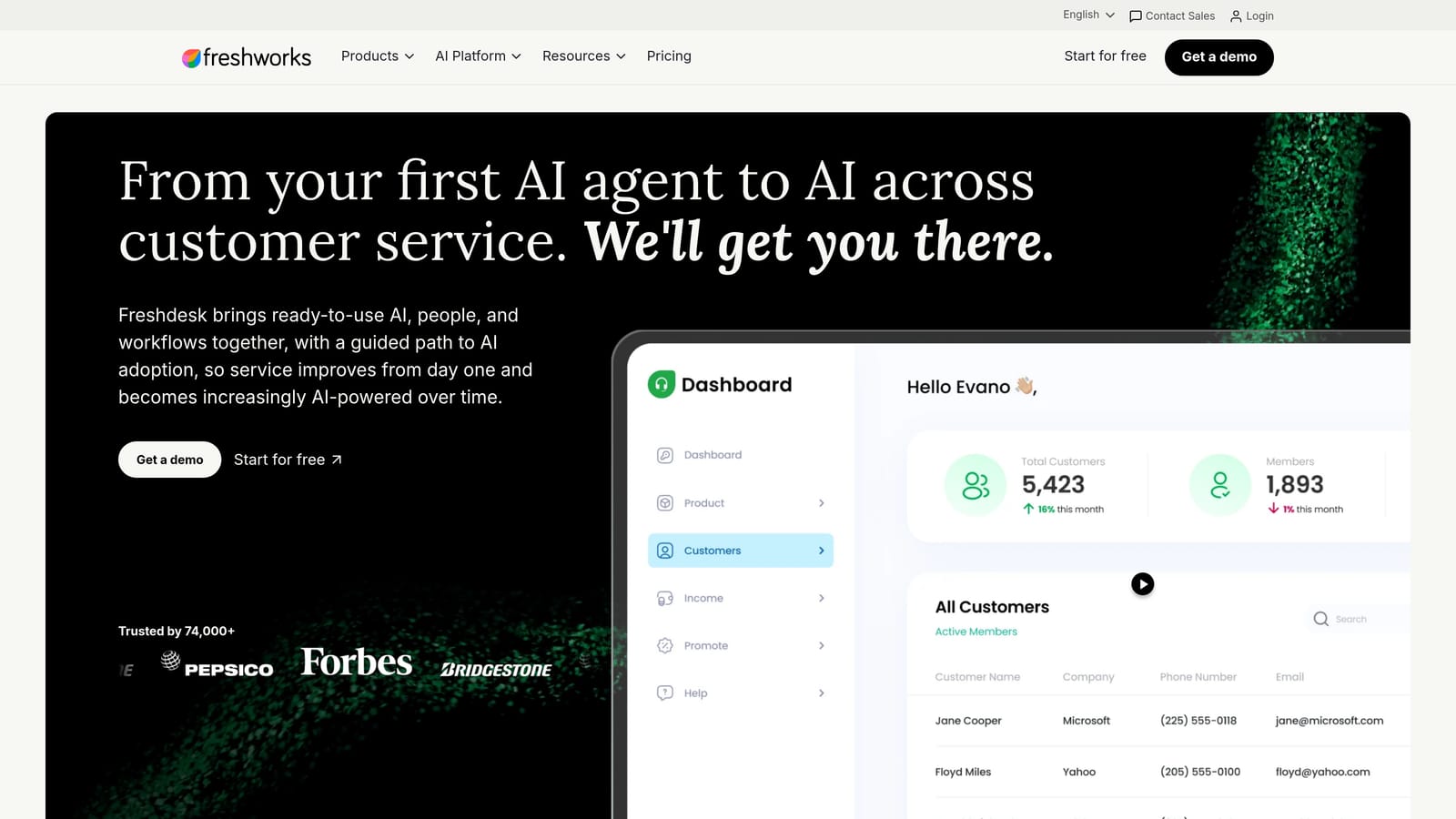
Freshdesk is Freshworks' helpdesk platform with Freddy AI built in—covering auto-triage, suggested responses, CSAT prediction, and a self-service bot without the enterprise-tier price tag.
Where This Tool Shines
Freshdesk hits a practical sweet spot for mid-market teams: it offers a meaningful set of AI features without requiring the configuration overhead or cost of Zendesk. Freddy AI is integrated across the platform rather than being a separate add-on, which means the AI capabilities are accessible earlier in the pricing tiers.
CSAT prediction is a particularly useful feature for support managers—it flags interactions that are likely to result in poor satisfaction scores before they close, giving agents a window to course-correct. Freddy Self Service handles customer-facing deflection, while Freddy Copilot assists agents in-workflow.
Key Features
Freddy AI Triage: Auto-classification and ticket routing based on content, intent, and priority signals.
Freddy Self Service: Customer-facing bot for deflecting common queries before they become tickets.
Freddy Copilot: In-workflow agent assistance with suggested replies and knowledge surfacing.
CSAT Prediction: Flags at-risk interactions before they escalate or close with a poor satisfaction score.
Omnichannel Support: Unified inbox across email, chat, phone, and social channels.
Best For
Mid-market SaaS teams looking for a full-featured helpdesk with AI capabilities at a price point below enterprise alternatives. Also a good choice for teams currently on a basic helpdesk that want to step up without a full platform migration.
Pricing
Free plan available. Paid plans from $15/agent/month. Freddy AI features are available on higher tiers—check the current plan breakdown on their site as tier structures evolve.
5. Guru
Best for: Teams where knowledge fragmentation is the primary driver of inconsistent support quality
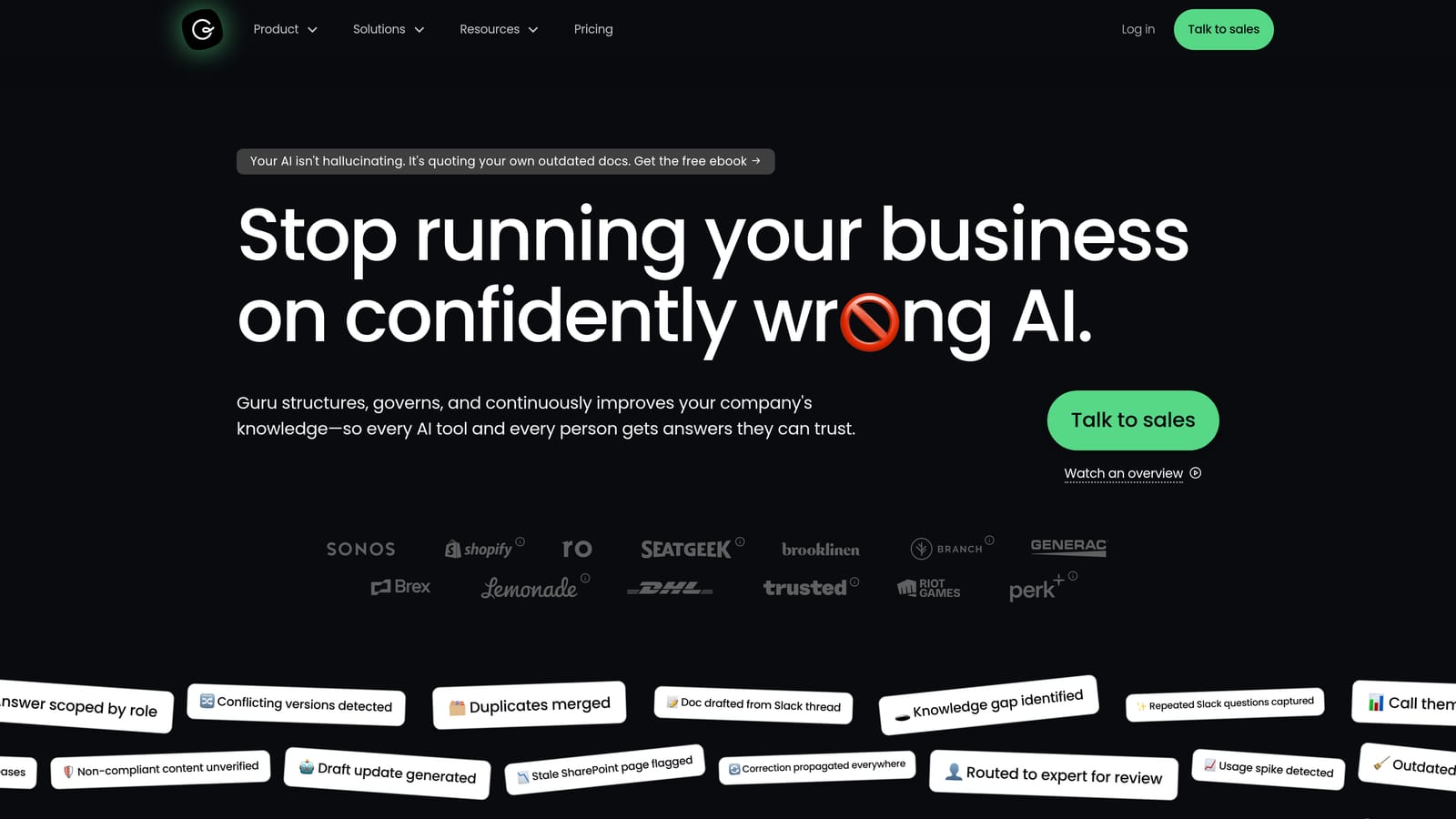
Guru is an AI-powered knowledge management platform that surfaces accurate answers inside agent workflows and customer-facing chat—designed to eliminate the knowledge bottleneck without replacing your existing helpdesk.
Where This Tool Shines
Guru occupies a different category from most tools on this list. It doesn't replace your ticketing system—it makes your agents and AI more effective by ensuring they always have access to accurate, verified knowledge at the moment they need it. For teams where outdated documentation or siloed institutional knowledge causes inconsistent support quality, this is where Guru earns its place.
The verification workflow is a practical feature often overlooked in knowledge tools: it prompts content owners to review and confirm accuracy on a set schedule, so your knowledge base doesn't quietly become stale. The browser extension means agents can access relevant knowledge in context across any tool they're using, not just within a dedicated knowledge portal.
Key Features
AI-Powered Knowledge Search: Surfaces relevant answers in real time based on the context of the current conversation or ticket.
Verification Workflows: Keeps content accurate with scheduled review prompts for content owners.
Helpdesk and Slack Integration: Works alongside Zendesk, Salesforce, Slack, and other tools without requiring platform changes.
Browser Extension: In-context knowledge access across any tool in the agent's workflow.
Knowledge Gap Analytics: Identifies what agents are searching for but not finding—highlighting where documentation needs to be created or improved.
Best For
Support teams with growing knowledge bases that are struggling to keep documentation accurate and accessible. Pairs well with any helpdesk on this list as a complementary layer rather than a standalone solution.
Pricing
Free plan for up to 3 users. Paid plans from $10/user/month, making it one of the more accessible options on this list for smaller teams.
6. Forethought
Best for: Teams that have invested in an existing helpdesk and want AI augmentation without migrating platforms
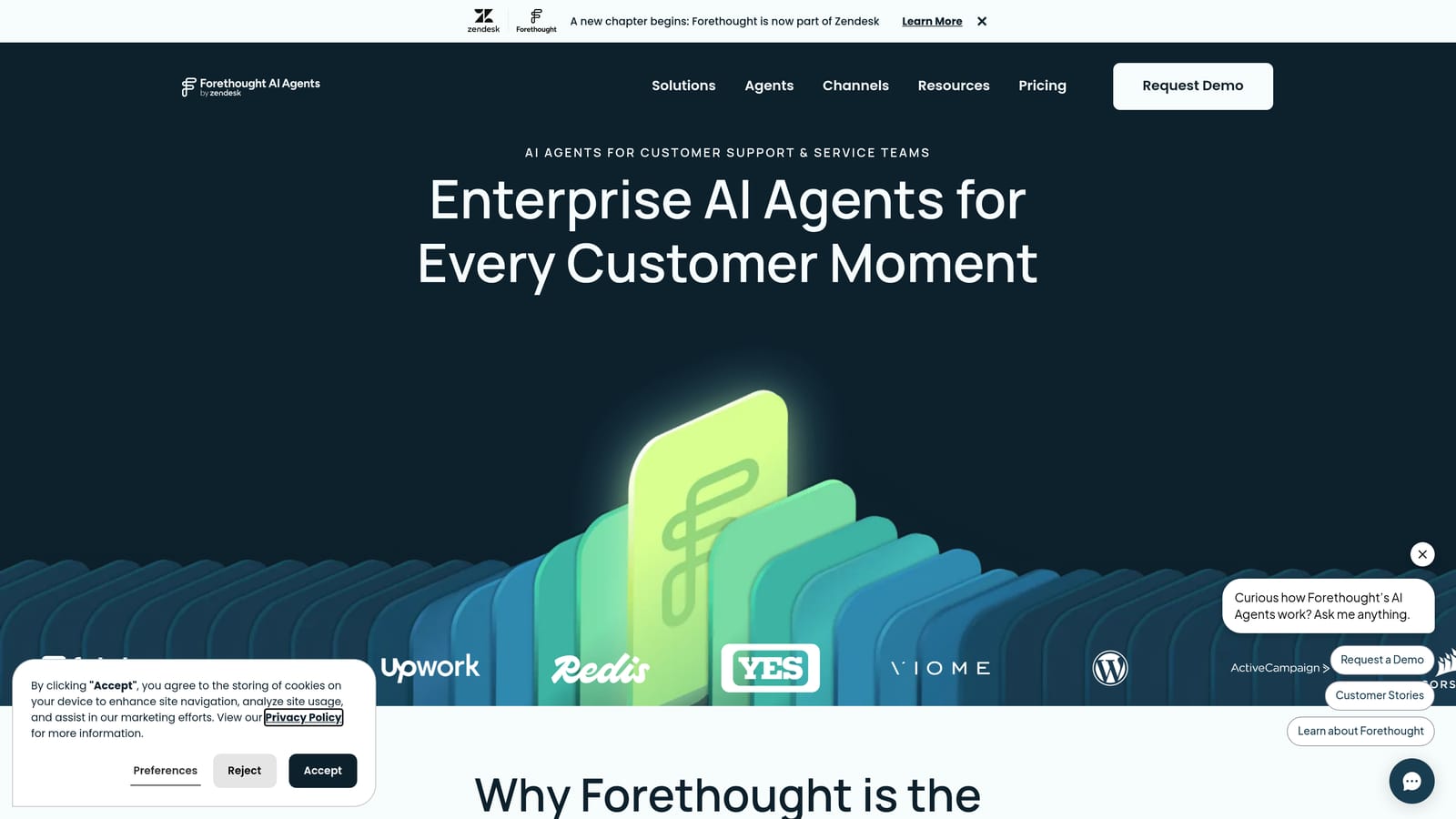
Forethought is an AI platform designed to layer on top of your existing helpdesk with modular products for deflection, intelligent routing, and agent assistance.
Where This Tool Shines
The modular approach is Forethought's defining characteristic. Rather than requiring a platform switch, it augments what you already have—Zendesk, Salesforce Service Cloud, or Freshdesk—with AI capabilities that sit across the top of your existing workflow. Teams can adopt one module at a time, which lowers the implementation risk and allows for incremental rollout.
Triage, their routing and prioritization product, is particularly strong for teams where ticket misrouting or priority blind spots are causing SLA issues. Solve handles customer-facing deflection before tickets are created, and Assist surfaces relevant knowledge and draft responses for agents mid-conversation.
Key Features
Solve: Customer-facing AI deflection that resolves common queries before a ticket is ever created.
Triage: Intelligent routing and prioritization based on detected intent, urgency, and customer signals.
Assist: Agent-facing AI with suggested responses, auto-drafts, and in-context knowledge surfacing.
Helpdesk Compatibility: Works natively alongside Zendesk, Salesforce Service Cloud, and Freshdesk.
Sentiment and Intent Detection: Analyzes ticket streams to surface patterns in customer sentiment and query intent over time.
Best For
Teams with existing helpdesk infrastructure they're not ready to replace, but who need meaningfully better AI performance across deflection, routing, and agent productivity. A strong option for Zendesk or Salesforce shops looking to add intelligence without a migration.
Pricing
Custom pricing. Contact Forethought directly for a quote based on your volume and module selection.
7. Tidio
Best for: Smaller teams looking for a fast-to-deploy AI chatbot with live chat fallback
Tidio is a live chat and AI chatbot platform featuring Lyro—an AI agent that handles common support questions using your existing content, with straightforward live chat handoff and a no-code setup process.
Where This Tool Shines
Tidio's biggest advantage is speed to value. The setup process is genuinely simple, Lyro can be trained on your existing content quickly, and the visual chatbot builder allows non-technical team members to create custom automation flows without engineering involvement. For teams that need something running fast without a lengthy implementation, Tidio delivers.
It's worth being clear about scope: Tidio is not an enterprise-grade AI platform. It doesn't offer deep business intelligence, advanced routing logic, or the kind of integration depth you'd find in Halo AI or Forethought. But for smaller teams handling manageable ticket volumes where the primary need is deflection and live chat coverage, it's a practical and affordable choice.
Key Features
Lyro AI Chatbot: Conversational AI that resolves common queries using your existing support content.
Visual Chatbot Builder: No-code flow builder for creating custom automation sequences without engineering support.
Live Chat with Visitor Monitoring: Real-time visitor tracking with seamless handoff from bot to human agent.
Omnichannel Coverage: Email and Messenger integration alongside web chat for multi-channel support.
Simple Onboarding: No-code setup designed for teams without dedicated technical resources.
Best For
Small to mid-size teams that need a quick-to-deploy chatbot solution with live chat fallback. Well-suited for teams with straightforward, high-frequency support queries that don't require deep product context or complex routing logic.
Pricing
Free plan available. Lyro AI from $29/month. Paid plans start at $29/month—one of the more accessible price points on this list.
8. Kustomer
Best for: B2B teams where customer context from CRM data meaningfully changes how support is delivered
Kustomer is a CRM-native support platform that unifies customer purchase history, product usage data, and support conversations into a single timeline—enabling context-rich AI automation at the account level.
Where This Tool Shines
The unified customer timeline is Kustomer's core differentiator. Rather than treating each support ticket as an isolated event, Kustomer gives agents and AI a complete picture of the customer: what they've purchased, how they've been using the product, and what their prior support interactions looked like. For B2B teams managing accounts where that context genuinely changes how a ticket should be handled, this is a meaningful advantage.
The workflow automation engine is flexible, allowing conditional logic that draws on CRM data fields—not just ticket metadata. This means you can build routing and escalation rules based on account tier, contract value, or product usage patterns, rather than just ticket content.
Key Features
Unified Customer Timeline: Combines CRM, support, and transactional data into a single agent view for every customer interaction.
AI Auto-Classification: Automatically classifies incoming tickets and suggests responses based on historical patterns.
CRM-Driven Workflow Automation: Conditional routing and escalation logic that draws on account-level CRM data, not just ticket content.
Omnichannel Inbox: Unified workspace for email, chat, SMS, and social support channels.
Account-Level Support Context: Deep CRM integration that makes account tier, contract value, and usage data available at the point of support.
Best For
B2B SaaS teams with complex account structures where customer context from CRM data should directly influence how support is prioritized and delivered. Particularly useful when support and customer success functions overlap significantly.
Pricing
Enterprise plan starts at $89/user/month, positioning Kustomer toward mid-market and enterprise buyers rather than early-stage teams.
9. Gorgias
Best for: Teams with high-volume transactional support workflows, particularly those with an e-commerce component
Gorgias is a support automation platform with deep e-commerce and transactional workflow integration, featuring AI auto-reply for high-volume repeatable queries and macro-driven automation.
Where This Tool Shines
Gorgias was built for transactional support volume—order status, returns, shipping queries, and the kinds of repeatable questions that arrive in high frequency and follow predictable patterns. The AI auto-reply capability handles these well, and the deep Shopify integration means it can pull order data directly into the support workflow without manual lookup.
It's worth being direct about fit: Gorgias is strongest for teams with a meaningful e-commerce or transactional component to their support operation. For pure B2B SaaS product support without transactional workflows, other tools on this list will be a better match. But for teams that straddle both—SaaS products with billing queries, subscription management, or product fulfillment—Gorgias covers that transactional layer well.
Key Features
AI Auto-Reply: Automatically handles common transactional queries like order status, returns, and shipping updates without agent involvement.
E-Commerce Integrations: Deep native integration with Shopify, BigCommerce, and Magento for in-context order data.
Macro Automation: Pre-built response templates and automation rules for fast, consistent agent responses at scale.
Revenue Statistics: Links support interactions to conversion outcomes, showing the revenue impact of support activity.
Best For
Teams managing high volumes of transactional support queries, particularly those with Shopify or other e-commerce infrastructure. Also relevant for SaaS teams with significant billing and subscription management support volume.
Pricing
Starter plan from $10/month covering up to 50 tickets. Pricing scales by ticket volume rather than seat count, which works in favor of smaller teams with predictable query volumes.
Which Tool Is Right for Your Team?
The right choice depends on where your biggest support bottleneck actually lives—and what kind of team you're running.
If you're a B2B SaaS team that needs AI-native support with genuine autonomous resolution, page-aware context, and business intelligence beyond support metrics, Halo AI is the most purpose-built option on this list. It's designed for exactly this use case and doesn't require you to build on top of a traditional helpdesk to get there.
For teams that want a single platform covering support, onboarding, and proactive messaging, Intercom is the mature, well-rounded choice. Zendesk suits enterprise teams with complex routing needs and dedicated admins to manage configuration. Freshdesk hits the practical middle ground for mid-market teams that want AI features without enterprise pricing.
If you're not ready to migrate platforms, Forethought layers AI onto your existing Zendesk or Salesforce setup without disruption. Guru solves a specific but common problem: knowledge fragmentation causing inconsistent support quality. Kustomer is the right call when account-level CRM context should drive how support is prioritized and handled.
Tidio is the fastest path to a working AI chatbot for smaller teams with straightforward needs. And Gorgias earns its place for teams managing significant transactional support volume alongside their product support operation.
The common thread across the best-performing tools: they're evaluated on autonomous resolution rate, not just deflection. Your support team shouldn't scale linearly with your customer base. Let AI agents handle routine tickets, guide users through your product, and surface business intelligence while your team focuses on complex issues that need a human touch. See Halo in action and discover how continuous learning transforms every interaction into smarter, faster support.