9 Best Purchase Support Automation Software Tools in 2026
Purchase support automation software helps B2B and B2C teams instantly resolve checkout issues—from payment questions to promo code errors—reducing cart abandonment and freeing agents for complex cases. This guide evaluates the 9 best platforms of 2026 based on AI capabilities, integration depth, and purchase-specific workflows like order status lookups and real-time product guidance.
 Grant CooperFounder11 min read
When a customer hits a snag during checkout—a payment question, a shipping concern, a promo code that won't apply—every second of delay is revenue at risk. Purchase support automation software helps B2B and B2C teams resolve these buying-stage issues instantly, without routing every inquiry to a human agent. The result: faster conversions, fewer abandoned carts, and support teams freed up for complex escalations.
The market is crowded, and not every tool is built for the same use case. Some excel at AI-driven ticket resolution, others at live chat handoff, and a few combine both with deep business intelligence. We evaluated dozens of platforms on their AI capabilities, integration depth, ease of deployment, pricing transparency, and how well they handle purchase-specific workflows—things like order status lookups, payment troubleshooting, and real-time product guidance. Here are the tools that stood out for automating purchase support in 2026.
1. Halo AI
Best for: B2B teams that need AI-native purchase support with business intelligence built in
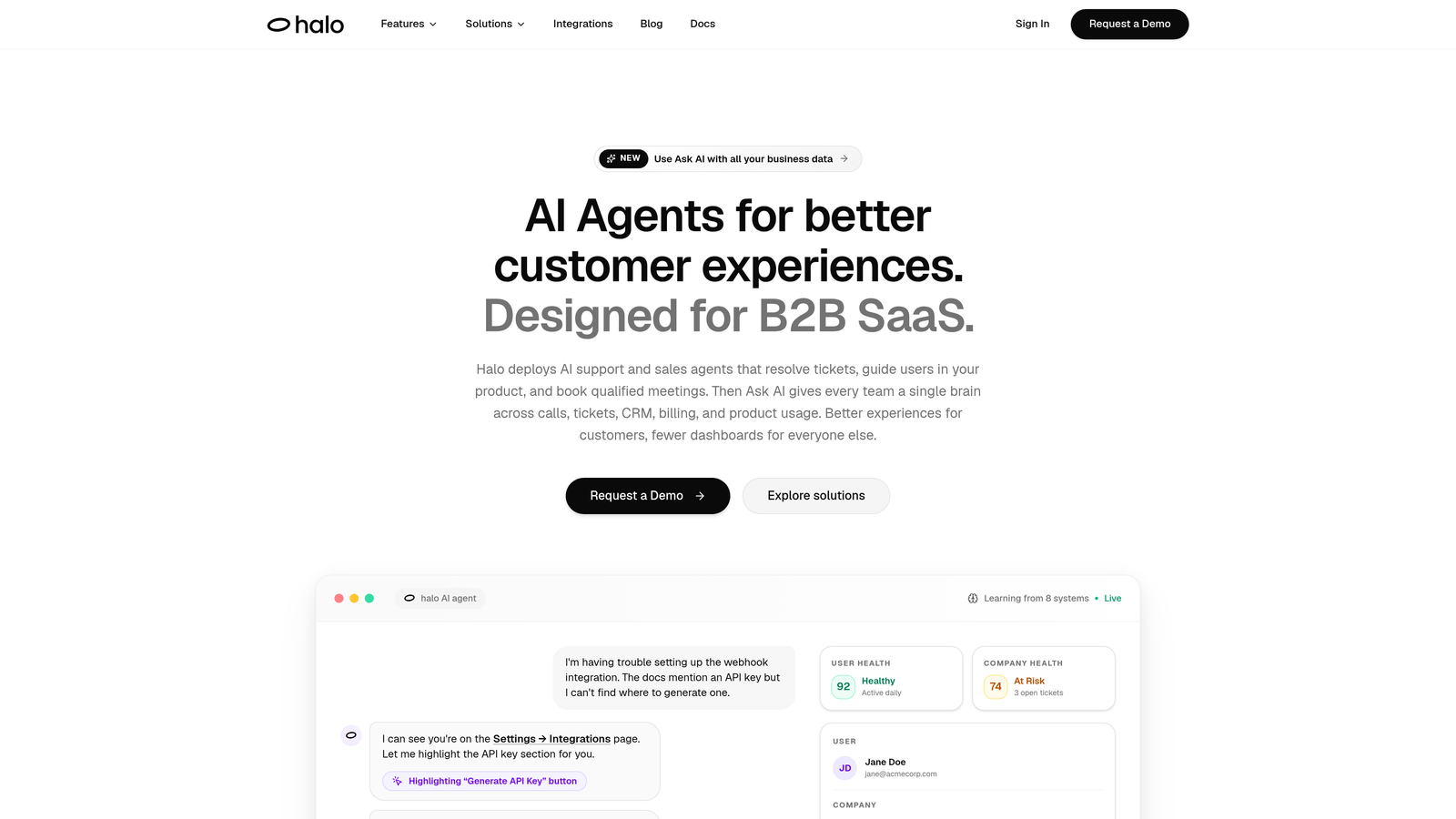
Halo AI is an AI-native customer support platform with autonomous agents that resolve purchase and product support tickets end-to-end, without requiring a human to close every loop.
Where This Tool Shines
What sets Halo apart from most tools on this list is that it was built AI-first, not retrofitted with AI capabilities after the fact. Its agents don't just suggest responses—they reason through multi-step purchase problems, learn from every interaction, and continuously improve resolution quality over time.
The page-aware chat widget is particularly useful for purchase support: it sees the same screen context your user sees, enabling real-time visual guidance when someone is stuck on a checkout page or confused by a pricing option. That level of situational awareness is rare in this category.
Key Features
Autonomous AI Agents: Resolve tickets end-to-end with continuous learning, handling everything from order status to payment troubleshooting without scripted flows.
Page-Aware Chat Widget: Understands the user's current screen context to deliver relevant, real-time guidance during the buying journey.
Smart Inbox with Business Intelligence: Goes beyond support metrics to surface customer health signals, revenue intelligence, and anomaly detection—connecting support data to business outcomes.
Auto Bug Ticket Creation: Automatically generates bug reports from support conversations, closing the loop between customer issues and product teams.
Deep Integration Stack: Native connections to Linear, Slack, HubSpot, Intercom, Stripe, Zoom, PandaDoc, and Fathom—covering the full B2B toolchain.
Best For
B2B SaaS companies and product teams that want to scale support without scaling headcount. Particularly strong for teams that need purchase support to connect with their CRM, payment systems, and engineering workflows in a single, intelligent layer.
Pricing
Contact for pricing. Halo is designed for B2B teams with meaningful support volume who want an AI-first architecture rather than an add-on to an existing helpdesk.
2. Zendesk AI
Best for: Enterprise teams already invested in the Zendesk ecosystem
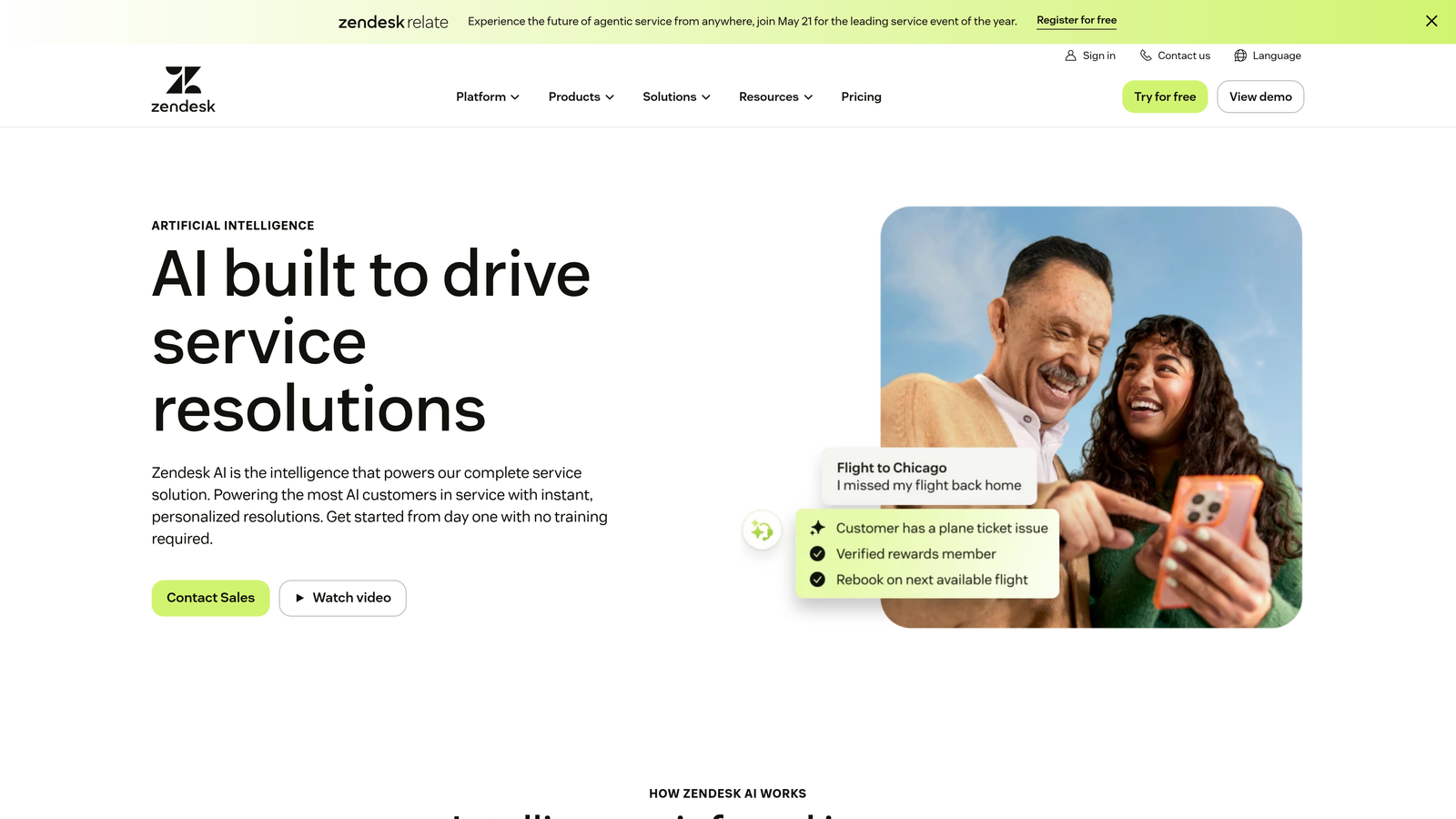
Zendesk AI is an AI-powered automation layer built into the Zendesk Suite, featuring AI agents, intelligent triage, and agent copilot tools for large-scale support operations.
Where This Tool Shines
Zendesk AI benefits from years of training data across a massive customer base, which gives its models strong out-of-the-box performance on common purchase inquiries. If your team is already running on Zendesk, adding the AI layer is a relatively low-friction upgrade.
The agent copilot is genuinely useful for purchase support teams handling high ticket volumes—it surfaces relevant knowledge base articles and suggests replies in real time, reducing handle time without fully removing the human from the loop.
Key Features
AI Agents: Auto-resolve common purchase and order inquiries without agent involvement.
Intelligent Triage: Routes tickets by intent, sentiment, and language to the right team or workflow.
Agent Copilot: Provides AI-suggested replies and knowledge surfacing to speed up human agent responses.
Marketplace Integrations: Access to 1,500+ integrations for connecting payment, commerce, and CRM systems.
Best For
Enterprise support teams with existing Zendesk infrastructure who want to layer AI capabilities onto their current workflows without switching platforms.
Pricing
Suite plans start at $55/agent/month. AI add-on pricing varies depending on usage and tier—worth verifying directly with Zendesk for current rates.
3. Intercom Fin
Best for: Product-led companies needing in-app purchase support during the buying flow
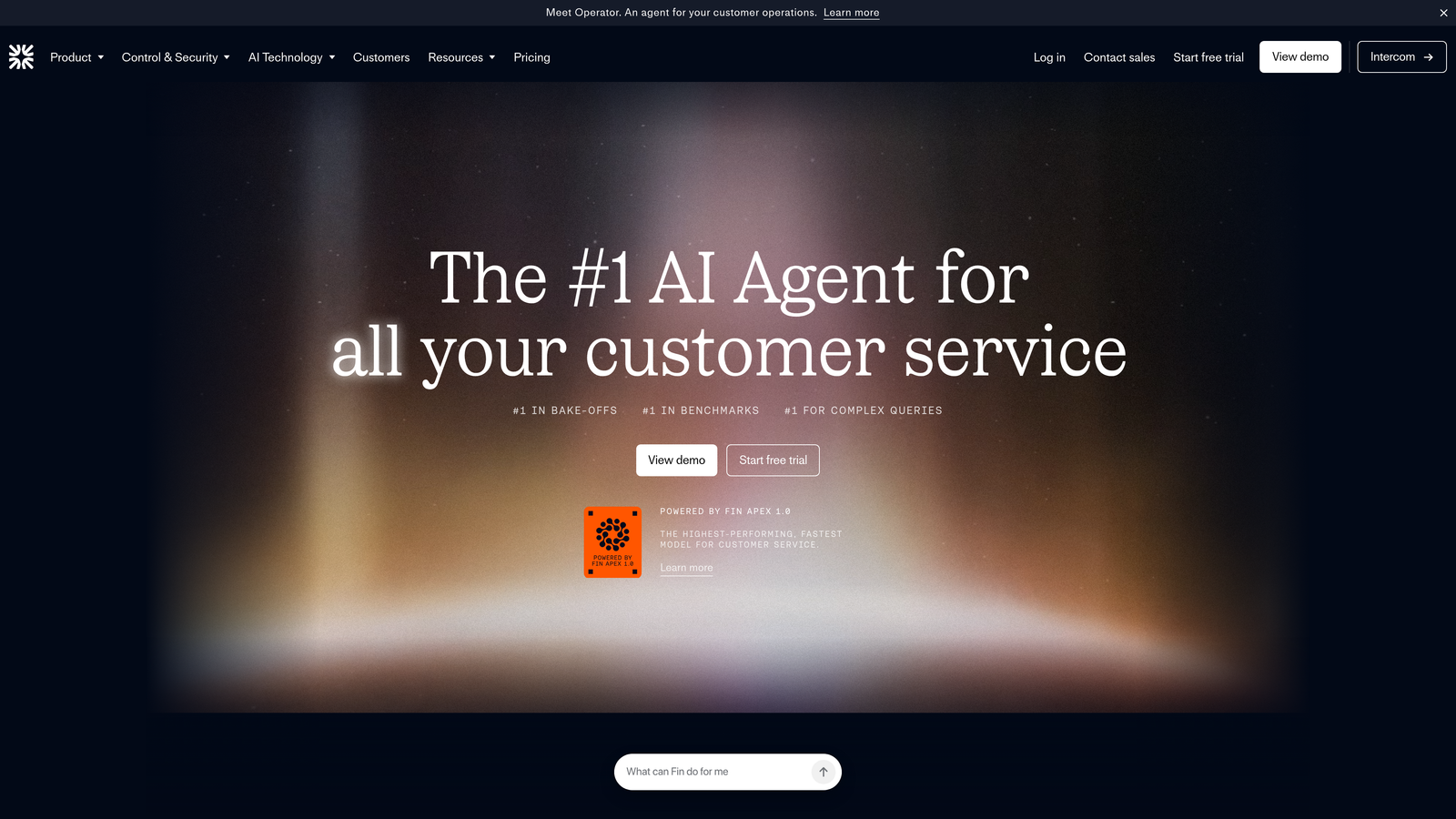
Intercom Fin is a conversational AI agent built into Intercom's customer messaging platform, trained on your help center to resolve purchase questions inside the product experience.
Where This Tool Shines
Fin's strength is context. Because it lives inside Intercom's messenger, it can engage users at exactly the right moment in the buying journey—before they abandon a page, before they submit a frustrated ticket. The proactive messaging capabilities let you preempt common purchase friction points rather than just reacting to them.
The handoff experience is also well-executed. When Fin can't resolve an issue, it passes the full conversation context to a human agent, so customers never have to repeat themselves—a small detail that matters a lot during high-stakes purchase moments.
Key Features
Fin AI Agent: Resolves queries using your existing knowledge base content, with no need to rebuild content from scratch.
In-App Messenger: Delivers real-time purchase support directly inside the product or checkout experience.
Proactive Messaging: Triggers targeted messages and product tours to address purchase friction before it becomes a support ticket.
Seamless Human Handoff: Transfers conversations to live agents with full context intact.
Best For
SaaS companies and product-led growth teams where purchase support happens inside the product itself. Strong fit for teams already using Intercom for customer communications.
Pricing
Starts at $29/seat/month. Fin usage is billed per resolution, so costs scale with automation volume—review pricing carefully for high-traffic scenarios.
4. Freshdesk Freddy AI
Best for: Mid-market teams wanting AI automation at an accessible price point
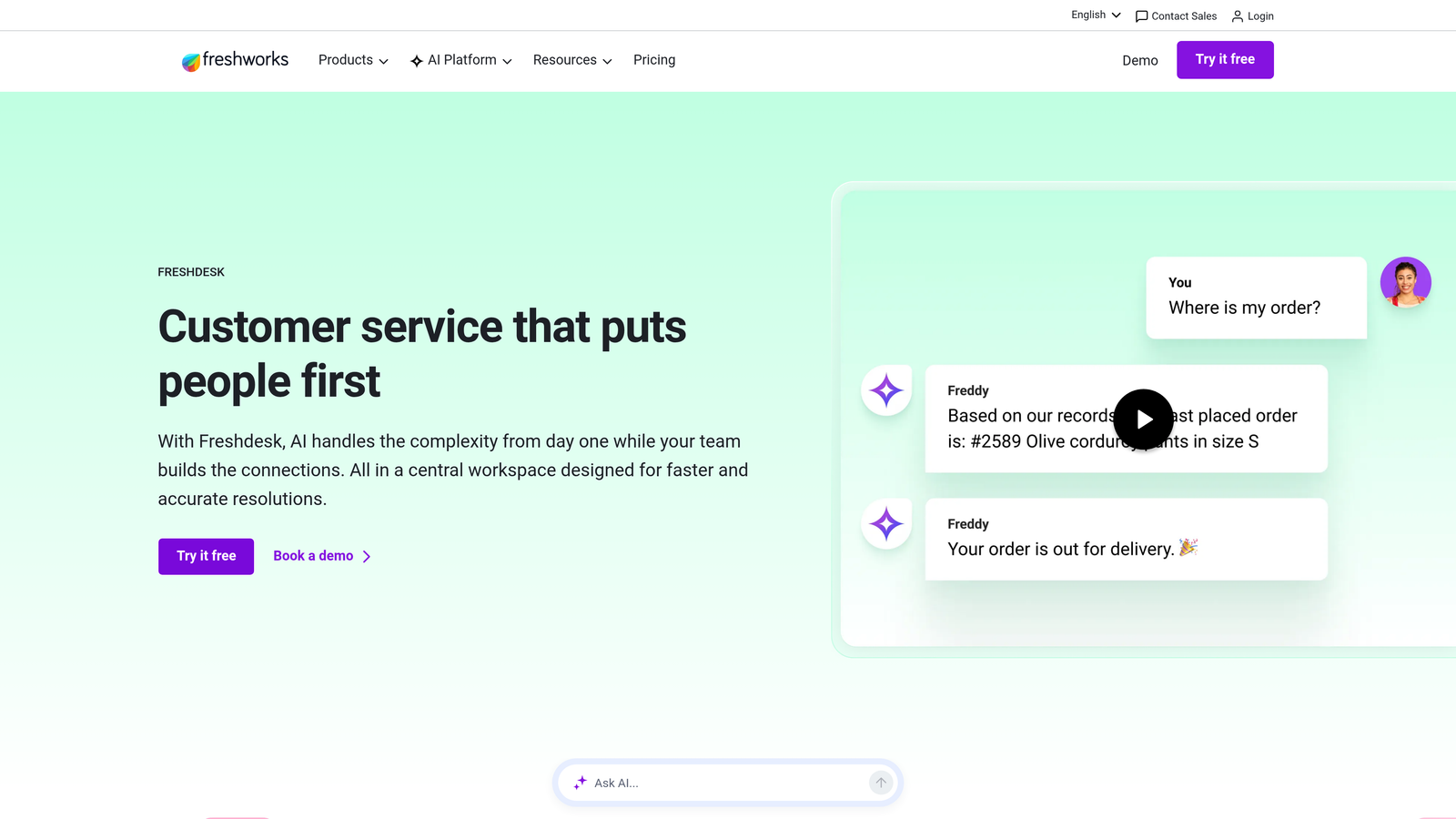
Freshdesk Freddy AI is an AI automation suite within the Freshworks helpdesk platform, offering agent assist, auto-triage, and self-service bots without enterprise-level pricing.
Where This Tool Shines
Freddy AI makes a strong case for teams that need solid AI capabilities without committing to a premium budget. The auto-triage feature is particularly relevant for purchase support: it categorizes and prioritizes incoming tickets by topic—order issues, payment failures, return requests—so the right agent or automation picks them up immediately.
The free tier and low entry-level pricing also make it a practical choice for growing teams that want to test AI-assisted support before scaling up their investment.
Key Features
Freddy AI Copilot: Suggests responses and summarizes ticket context for agents handling purchase inquiries.
Auto-Triage: Automatically categorizes and prioritizes purchase-related tickets by type and urgency.
Self-Service Chatbots: Handles common purchase FAQs without agent involvement.
CSAT and SLA Management: Built-in customer satisfaction surveys and service level tracking.
Best For
Mid-market B2B and B2C teams looking for a cost-effective entry into AI-assisted purchase support, especially those already using other Freshworks products.
Pricing
Free tier available. Paid plans start at $15/agent/month, making it one of the more accessible options on this list.
5. Ada
Best for: Teams needing a no-code AI agent for complex, multi-step purchase workflows
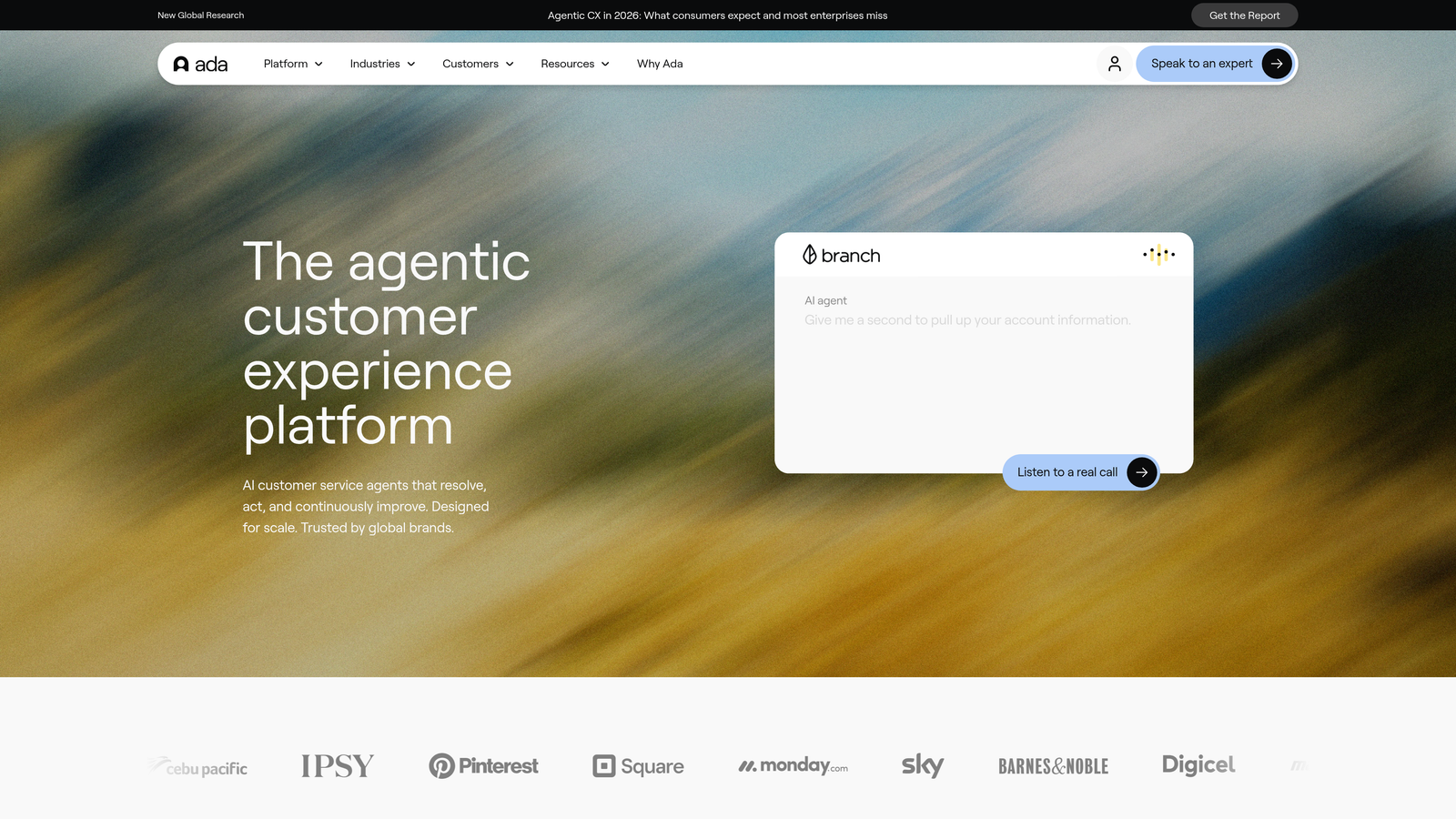
Ada is a no-code AI agent platform purpose-built for customer service, using a reasoning engine to handle complex purchase support questions without relying on scripted decision trees.
Where This Tool Shines
Ada's reasoning-based engine is what differentiates it from older chatbot platforms. Rather than following a fixed script, it can navigate multi-step purchase scenarios—think: a customer whose payment failed, who also has a pending promo code, and needs to know if their discount still applies. That kind of layered reasoning is where rule-based bots typically fall apart.
The no-code builder means non-technical teams can configure and update purchase support flows without waiting on engineering, which is a real operational advantage in fast-moving businesses.
Key Features
Reasoning-Based AI Engine: Handles multi-step purchase workflows that require contextual judgment, not just keyword matching.
No-Code Builder: Enables non-technical teams to configure, deploy, and iterate on support flows independently.
CRM and Payment Integrations: Connects with order management platforms and payment systems to pull live data into conversations.
Multilingual Support: Operates across 50+ languages for global purchase support coverage.
Best For
Customer service teams at mid-to-large companies that handle purchase inquiries across multiple channels and languages, particularly where complex, multi-step scenarios are common.
Pricing
Custom pricing. Contact Ada directly for a quote based on your volume and use case.
6. Tidio
Best for: Small and mid-sized e-commerce businesses wanting affordable live chat and AI in one
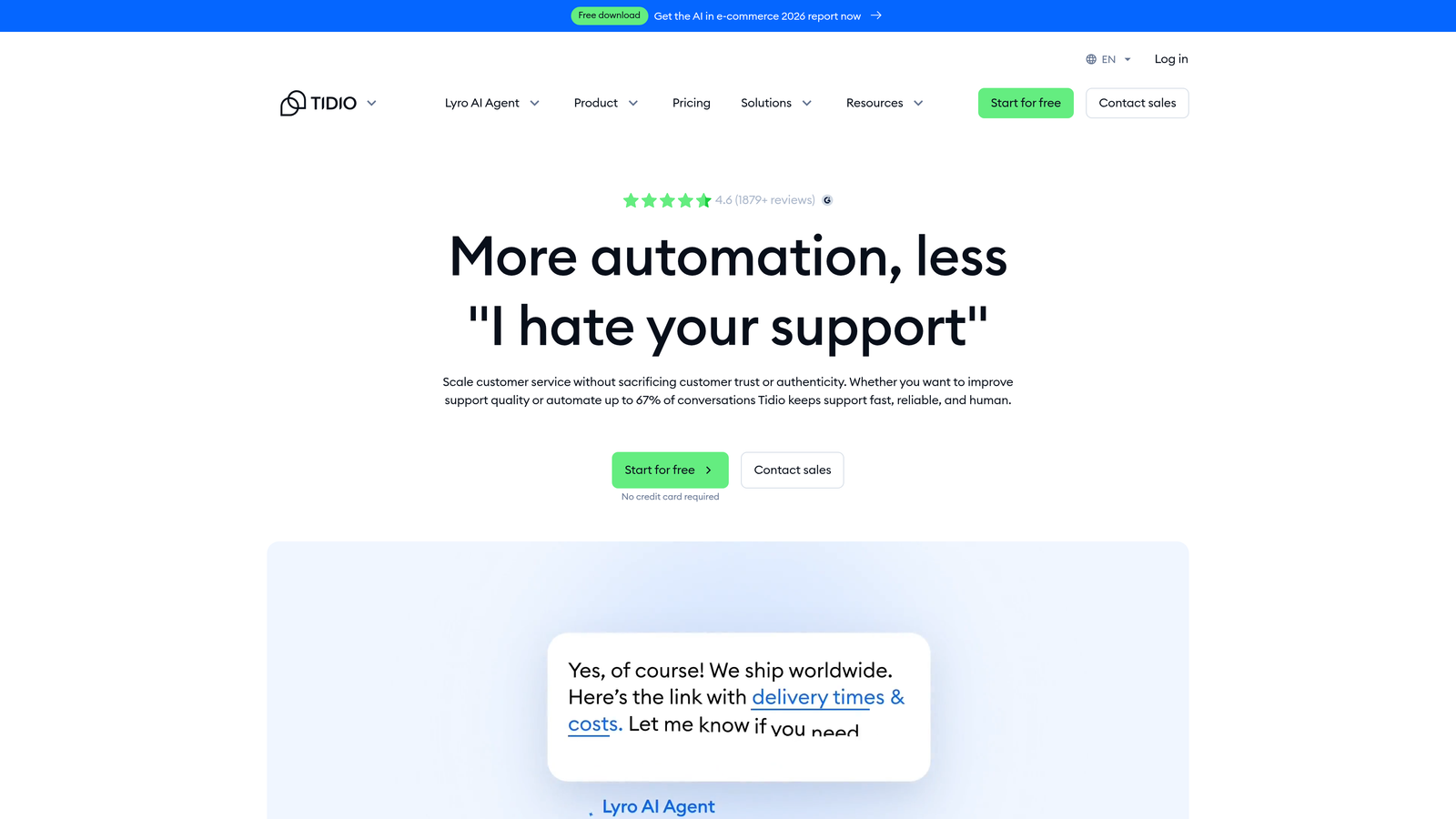
Tidio is a combined live chat and AI chatbot platform with Lyro AI handling purchase FAQs and a visual chatbot builder for custom flows.
Where This Tool Shines
Tidio punches above its price point for small e-commerce teams. The Lyro AI chatbot handles a solid range of purchase-related questions—product availability, shipping timelines, return policies—and the visual builder makes it easy to customize flows for specific scenarios without writing a line of code.
The blended live chat and AI model is well-suited to smaller teams where a human is available part of the time but automation needs to cover the gaps. The native Shopify and WooCommerce integrations mean order data is accessible directly in the support view.
Key Features
Lyro AI Chatbot: Auto-resolves common purchase and product questions using your existing content.
Visual Chatbot Builder: Drag-and-drop interface for building custom purchase support flows.
E-Commerce Integrations: Native connections to Shopify, WordPress, and WooCommerce for order data access.
Blended Live Chat and AI: Smooth handoff between automated and human support based on conversation complexity.
Best For
Small and mid-sized e-commerce businesses that need affordable, easy-to-deploy purchase support automation with live chat as a fallback.
Pricing
Free plan available. Paid plans start at $29/month, making it one of the most accessible options for smaller teams.
7. Gorgias
Best for: E-commerce brands on Shopify, BigCommerce, or Magento with high purchase support volume
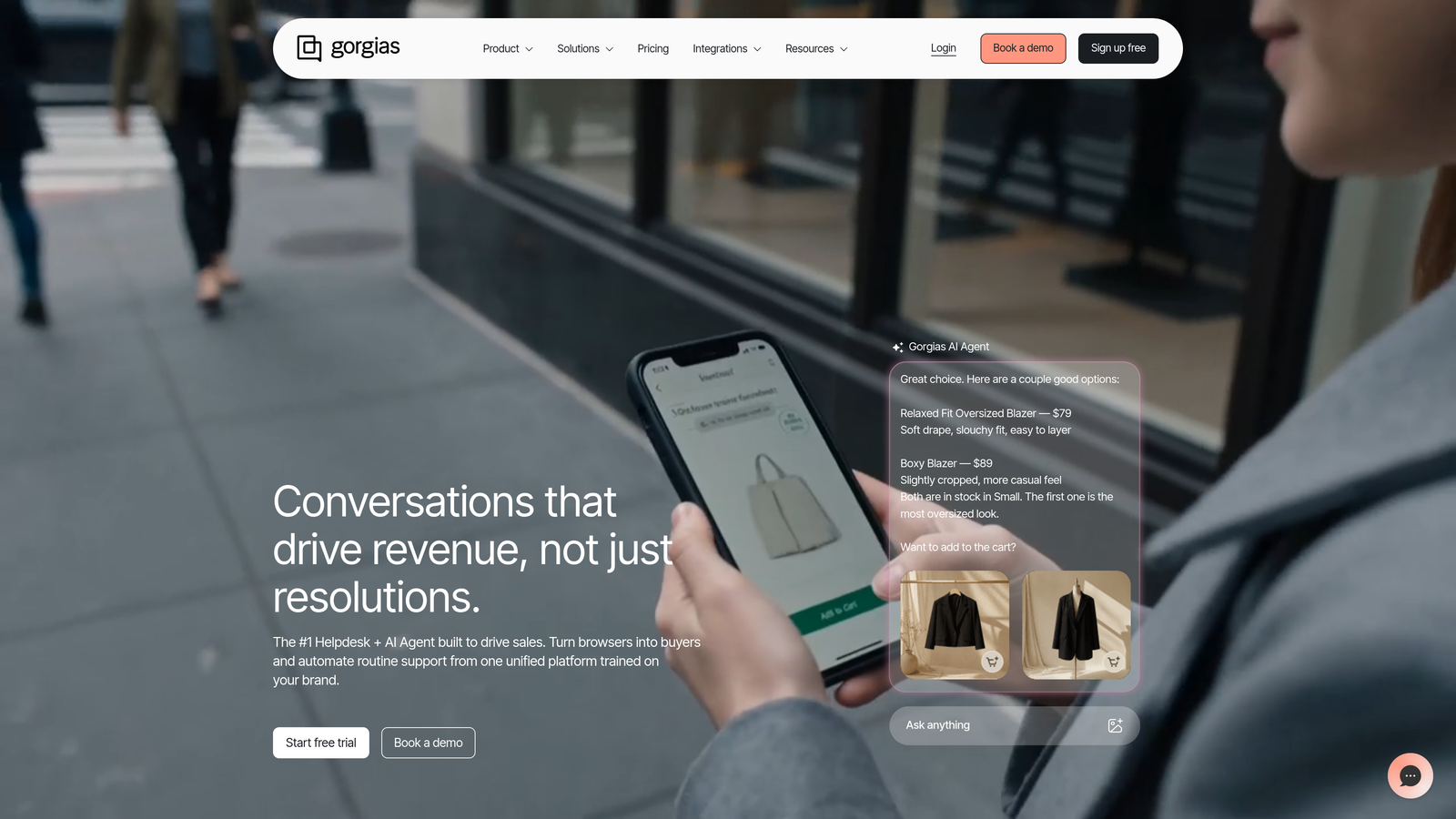
Gorgias is an e-commerce-focused helpdesk with deep platform integrations that pull order, shipping, and payment data directly into the support view for fast purchase issue resolution.
Where This Tool Shines
Gorgias was built specifically for e-commerce purchase support, and it shows. The integration depth with Shopify in particular is exceptional—agents see order history, shipping status, payment details, and customer lifetime value without leaving the ticket. This eliminates the tab-switching that slows down resolution times on other platforms.
The revenue dashboard is a standout feature: it ties support interactions directly to sales impact, giving teams visibility into how support quality affects conversion and retention. For e-commerce teams making the case for support investment, that data is valuable.
Key Features
Native E-Commerce Integrations: Surfaces order, shipping, and payment data directly within the ticket view.
AI Auto-Responses: Handles order status, returns, and cancellation requests automatically.
Revenue Dashboard: Connects support interactions to sales outcomes for business impact visibility.
Macros and Rules Engine: Automates repetitive purchase support workflows at high volume.
Best For
E-commerce brands running on Shopify, BigCommerce, or Magento that handle significant purchase support volume and want automation tightly integrated with their commerce platform.
Pricing
Starts at $10/month for 10 tickets, with pricing scaling by ticket volume. Cost-effective at lower volumes but worth modeling at scale.
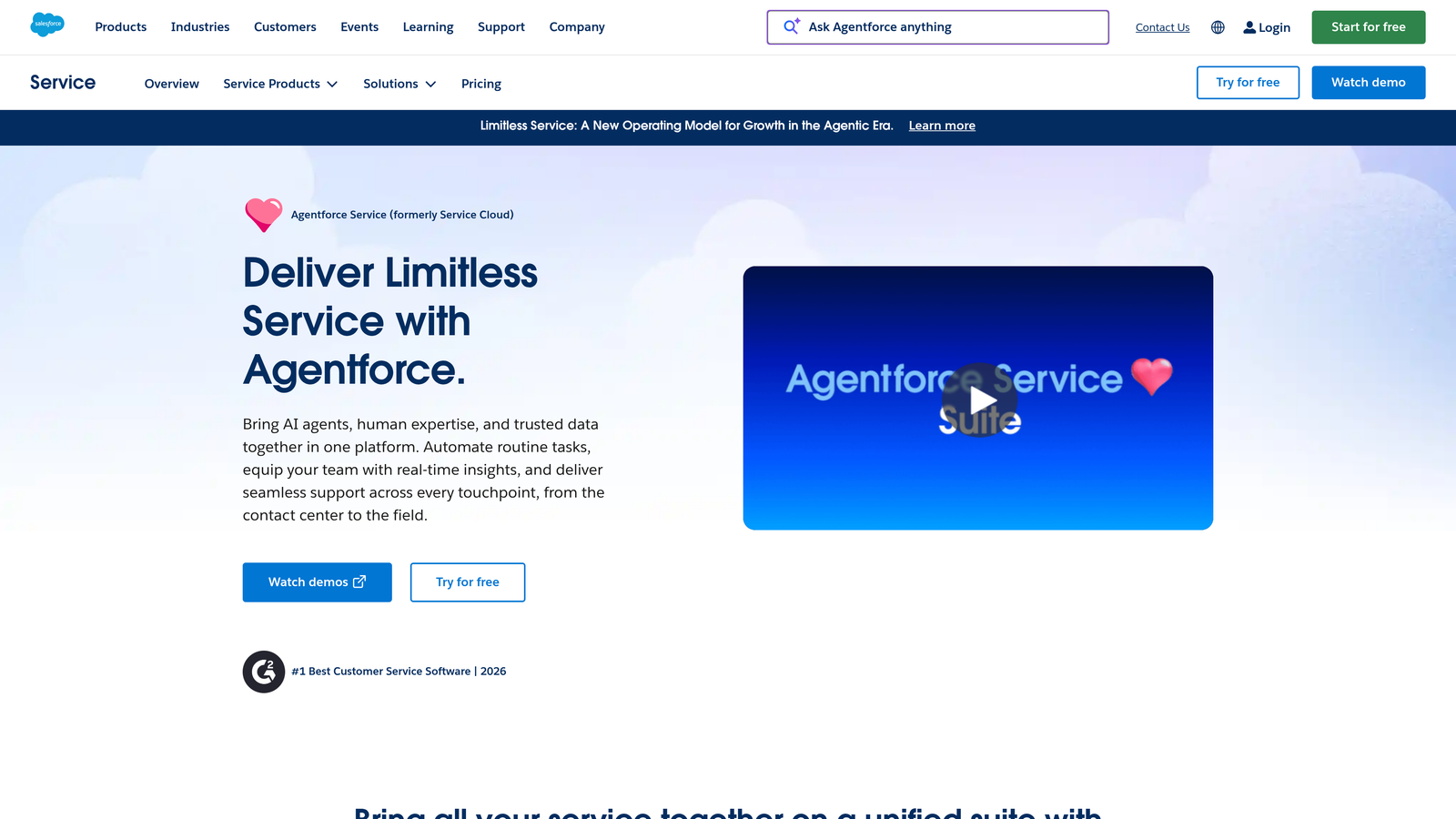
8. Salesforce Service Cloud with Einstein
Best for: Enterprise organizations with complex CRM-connected purchase support needs
Salesforce Service Cloud is an enterprise-grade service platform with Einstein AI embedded across the Salesforce ecosystem, connecting purchase support to the full CRM customer lifecycle.
Where This Tool Shines
For enterprises where purchase support is one piece of a much larger customer relationship puzzle, Salesforce Service Cloud offers something no standalone tool can match: a 360-degree view that connects support tickets to sales history, marketing interactions, and commerce data in a single record. That context transforms how agents handle purchase escalations.
The omnichannel routing capabilities are also enterprise-class, managing purchase support inquiries across chat, email, phone, and social from a unified workspace. Einstein AI handles case classification and bot interactions, reducing manual triage at scale.
Key Features
Einstein AI Bots and Case Classification: Automates purchase support routing and resolution using AI trained on your data.
360-Degree Customer View: Links support cases to sales, marketing, and commerce records for full context.
Omnichannel Routing: Manages purchase support across chat, email, phone, and social in one workspace.
Salesforce Flow Automation: Advanced workflow automation for complex purchase support processes.
Best For
Large enterprises already operating within the Salesforce ecosystem where purchase support needs to connect directly to CRM data, sales workflows, and commerce systems.
Pricing
Starts at $25/user/month on the Starter tier. Enterprise tiers are significantly higher—total cost of ownership can be substantial, so budget accordingly.
9. HubSpot Service Hub
Best for: HubSpot-native teams that want purchase support connected to CRM and deal data
HubSpot Service Hub is a service automation platform within HubSpot's CRM suite, featuring Breeze AI agents and a shared customer record that gives support teams full purchase and deal context.
Where This Tool Shines
The core advantage of HubSpot Service Hub is the shared CRM record. When a customer contacts support with a purchase issue, agents immediately see their deal history, recent marketing interactions, and any open sales conversations—without switching tools. For teams where sales and support overlap, this eliminates a lot of friction.
Breeze AI agents handle common support queries using knowledge base training, and the native connection to HubSpot Marketing and Sales Hubs means purchase support data flows into the broader customer health picture automatically.
Key Features
Breeze AI Agents: Handle common support queries with knowledge base training, reducing ticket volume for routine purchase issues.
Shared CRM Record: Gives agents full visibility into deals, purchases, and communications in a single view.
Unified Platform: Ticketing, knowledge base, and customer portal in one place, connected to Marketing and Sales Hubs.
Customer Portal: Self-service portal where customers can track purchase issues and access help content independently.
Best For
Teams already using HubSpot for sales and marketing who want to extend that ecosystem into support without adopting a separate platform.
Pricing
Free tools available. Starter at $20/seat/month; Professional at $100/seat/month. The free tier is a genuine starting point for smaller teams.
Finding the Right Fit for Your Purchase Support Stack
The right purchase support automation tool depends less on feature checklists and more on where your biggest friction lives. Are customers abandoning checkout because they can't get a fast answer? Are your agents drowning in repetitive order status requests? Is your support data completely disconnected from your revenue picture? The answers point you toward different parts of this list.
For e-commerce teams on Shopify or BigCommerce, Gorgias and Tidio offer the tightest native integrations with commerce platforms at accessible price points. For enterprises already embedded in Salesforce or HubSpot, Service Cloud and Service Hub extend existing infrastructure rather than adding another system to manage.
If you're a B2B SaaS team looking for an AI-native platform that does more than resolve tickets—one that learns continuously, understands page context, and surfaces business intelligence alongside support metrics—Halo AI is worth a close look. It's built from the ground up for teams that want support to scale without headcount scaling alongside it.
Your support team shouldn't grow linearly with your customer base. Let AI agents handle routine purchase tickets, guide users through your product in real time, and surface the business signals your team needs to act on. See Halo in action and discover how continuous learning transforms every interaction into smarter, faster support.