9 Best Tools to Handle Repetitive Support Questions in 2026
Repetitive support tickets — from password resets to billing FAQs — drain team capacity, but the right repetitive support questions solution can resolve them automatically at scale. This guide ranks the 9 best AI-powered tools for 2026, evaluated on automation depth, deployment ease, and integration flexibility, to help B2B SaaS teams find the best fit for their helpdesk.
 Matt PattoliFounder14 min read
If your support team is answering the same questions day after day — password resets, billing inquiries, how-to walkthroughs — you're not alone. Repetitive tickets are one of the biggest drains on support team capacity, and they're entirely solvable with the right tooling. A new generation of AI-powered platforms can resolve these questions automatically, without sacrificing the quality of the customer experience.
The tools below are evaluated on automation depth, ease of deployment, integration flexibility, and how well they scale with your team. Whether you're running a lean startup or managing a high-volume enterprise helpdesk, there's a solution here for you. This list is ranked by overall value for B2B SaaS teams, with Halo AI at the top as the most comprehensive AI-first option — but every tool earns its place.
1. Halo AI
Best for: B2B SaaS teams that want autonomous ticket resolution with business intelligence built in
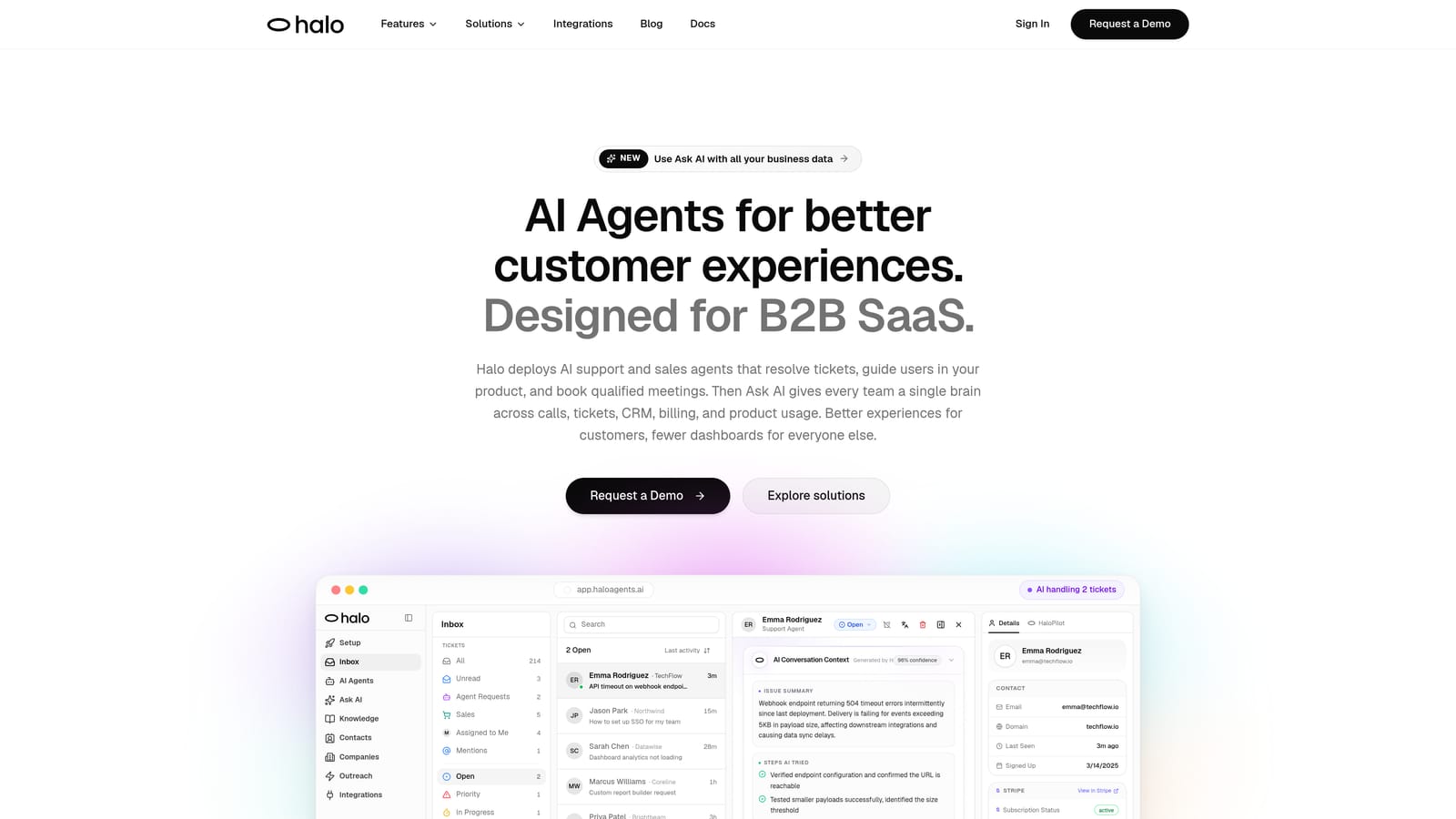
Halo AI is an AI-first customer support platform that deploys intelligent agents to resolve tickets, guide users through your product, and surface actionable business intelligence — all while learning from every interaction.
Where This Tool Shines
Most AI support tools are bolt-ons: you take an existing helpdesk and layer an AI feature on top. Halo is built differently. The AI is the architecture, not an add-on, which means every part of the platform is designed around autonomous resolution from the ground up. The result is a system that doesn't just deflect tickets — it genuinely resolves them, and gets smarter with every conversation it handles.
What really sets Halo apart is page-aware context. The AI agent sees what your user sees on screen, which means it can provide visual UI guidance specific to where someone is in your product. That's a meaningful difference when your repetitive questions are "how do I do X in your app" — and most of them are.
Key Features
Autonomous AI Agents: Resolve repetitive tickets without human intervention, handling everything from password resets to billing questions to feature walkthroughs.
Page-Aware Chat Widget: The AI sees what users see on screen and delivers contextual, visual UI guidance rather than generic help center links.
Smart Inbox with Business Intelligence: Goes beyond support metrics to surface customer health signals, anomaly detection, and revenue intelligence from your ticket data.
Auto Bug Ticket Creation: Automatically identifies and routes bug reports to Linear or your preferred issue tracker, eliminating a common manual step for support agents.
Live Agent Handoff: When issues exceed AI confidence thresholds, conversations escalate cleanly to human agents with full context preserved.
Deep Integrations: Connects with Slack, HubSpot, Intercom, Stripe, Zoom, PandaDoc, Fathom, and Linear — meaning Halo fits into your existing stack rather than requiring you to rebuild around it.
Best For
Halo is best suited for B2B SaaS product teams and support operations that are serious about AI-first automation. If you're still evaluating whether AI can really handle your tickets, Halo is worth a demo. If you already know you want autonomous resolution and you want business intelligence as a byproduct of your support data, it's the strongest option on this list.
Pricing
Contact for pricing. You can book a demo directly at haloagents.ai to get a walkthrough tailored to your team's volume and use case.
2. Intercom
Best for: Teams already in the Intercom ecosystem who want AI-powered deflection without switching platforms
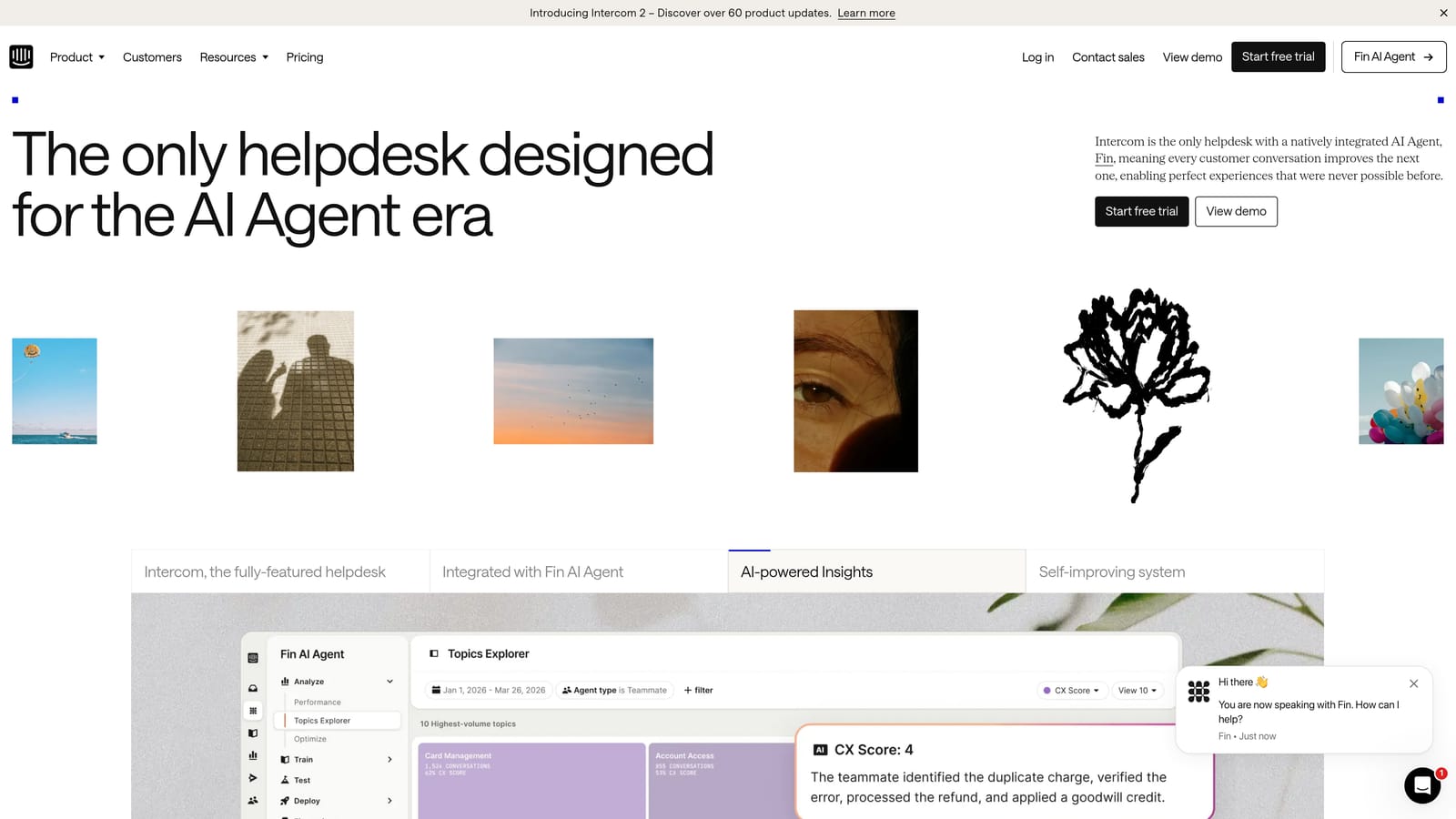
Intercom is a mature conversational support platform with Fin, an AI agent built on large language models that resolves common questions using your help center content.
Where This Tool Shines
Intercom has been iterating on its AI capabilities for several years, and Fin has become a genuinely capable agent for handling repetitive questions. It pulls answers from your existing help center content, which means setup is relatively low-friction if your documentation is already in good shape. The in-app messaging and proactive support triggers are also strong — Intercom can reach out to users before they even submit a ticket.
The platform's reporting on deflection and resolution rates is solid, giving support managers clear visibility into what Fin is handling versus what's escalating to humans. For teams already using Intercom for CRM and messaging, adding AI deflection is a natural extension rather than a separate tool decision.
Key Features
Fin AI Agent: Automatically resolves common questions by drawing on your help center articles and configured knowledge sources.
In-App Messaging and Proactive Triggers: Reach customers with relevant information before they need to ask, reducing inbound volume proactively.
Workflow Builder: Visual routing and escalation logic for handling tickets that fall outside Fin's scope.
Help Center Management: Built-in knowledge base creation and maintenance tools, keeping your content and AI agent in the same platform.
Deflection Reporting: Clear metrics on AI resolution rates and escalation patterns to track ROI over time.
Best For
Intercom works best for teams that are already using it as their primary customer communication platform. If you're starting fresh and evaluating options, the per-resolved-conversation pricing model for Fin is worth modeling against your ticket volume before committing.
Pricing
Plans start around $39/seat/month; Fin AI resolution is charged per resolved conversation. Check intercom.com for current pricing, as this changes frequently.
3. Zendesk
Best for: Enterprise support teams with high ticket volume and complex routing requirements
Zendesk is the market-leading enterprise helpdesk platform with AI-powered triage, macro suggestions, and automation capabilities built for high-volume support operations.

Where This Tool Shines
Zendesk's strength is its depth. For organizations with complex routing logic, SLA requirements, and large agent teams, it's hard to beat the breadth of configuration options available. The AI triage and ticket classification features reduce the manual sorting burden significantly, ensuring that repetitive questions get routed to automation while complex issues reach the right human quickly.
The Zendesk marketplace is also a genuine asset. Hundreds of third-party integrations mean you can extend the platform to fit almost any workflow. That said, AI capabilities in Zendesk are largely add-on layers rather than core architecture, so the experience of using AI-powered deflection feels somewhat separate from the core ticketing experience.
Key Features
Intelligent Triage and Classification: AI-powered categorization routes tickets automatically based on content and intent.
Macro and Trigger Automation: Pre-built response patterns for common questions reduce agent effort on repetitive tickets.
Zendesk AI Agents: Automated deflection capabilities available as an add-on for self-service resolution.
Routing Rules and SLA Management: Sophisticated logic for ensuring the right ticket reaches the right agent at the right time.
Extensive Integration Marketplace: Hundreds of third-party apps extend Zendesk's capabilities across your stack.
Best For
Zendesk is the right choice for enterprise teams with established processes who need a proven, highly configurable platform. It's less compelling for smaller teams who want AI-first automation without the overhead of a full enterprise helpdesk implementation.
Pricing
Suite plans from around $55/agent/month; AI add-ons priced separately. Check zendesk.com for current pricing.
4. Freshdesk
Best for: SMBs and growing teams that want AI-assisted support at an accessible price point
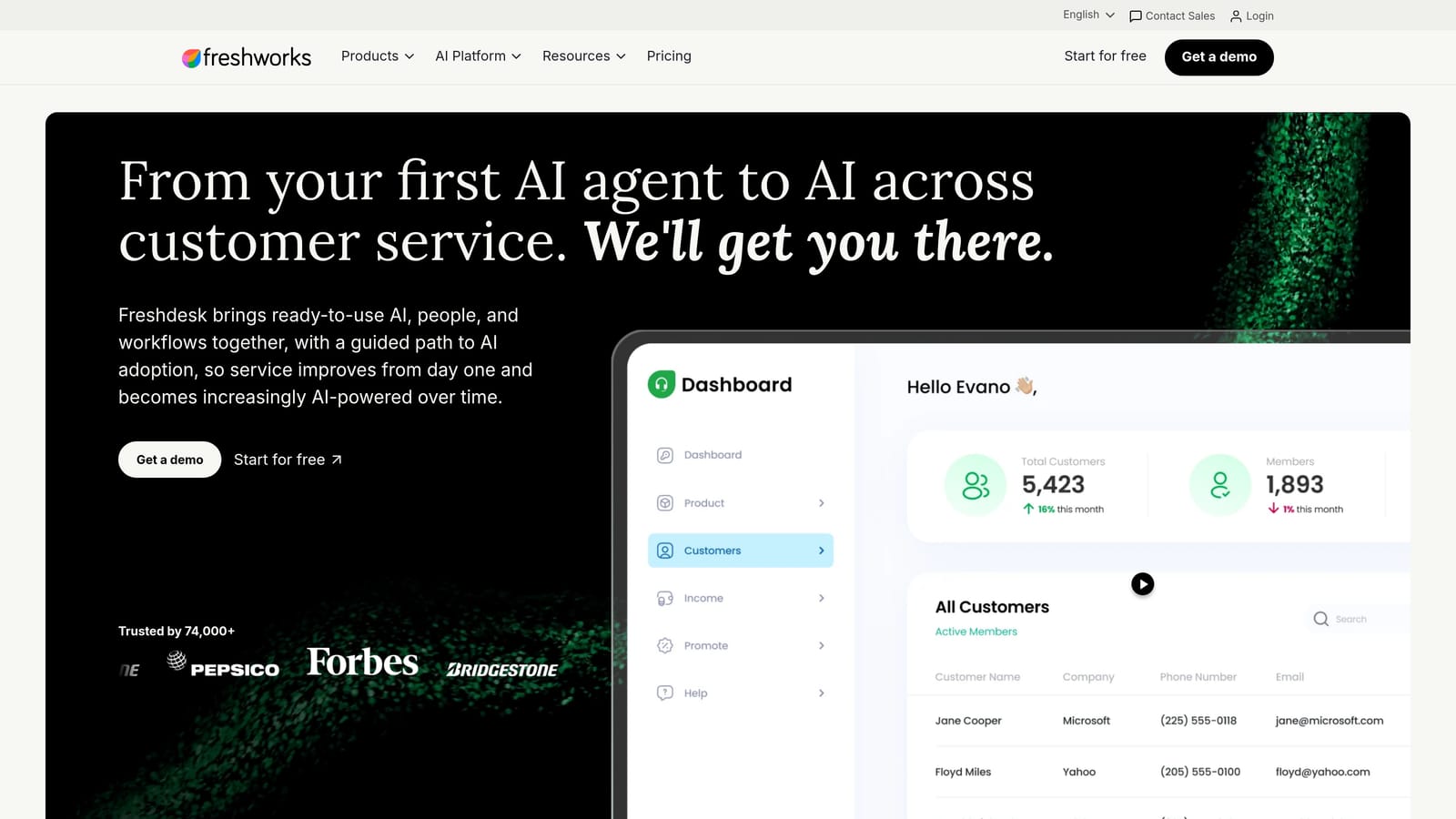
Freshdesk is an SMB-friendly helpdesk with Freddy AI, which provides automated response suggestions, article recommendations, and basic ticket deflection without the enterprise price tag.
Where This Tool Shines
Freshdesk punches above its weight class at the lower end of the market. The free tier is genuinely useful for small teams, and Freddy AI's canned response suggestions and article recommendations meaningfully reduce the time agents spend on repetitive questions even without full automation. Freddy Self Service adds chatbot-based deflection for teams ready to take the next step.
Collision detection is a small but practical feature: it prevents two agents from drafting responses to the same ticket simultaneously, which is a common source of wasted effort in shared inboxes. For teams that are growing into helpdesk tooling for the first time, Freshdesk offers a low-friction entry point with a clear upgrade path.
Key Features
Freddy AI Response Suggestions: Recommends canned responses and relevant knowledge base articles to speed up agent replies on common questions.
Freddy Self Service: Chatbot-based deflection that handles repetitive questions before they reach a human agent.
Collision Detection: Prevents duplicate agent effort on the same ticket, reducing wasted work in shared inboxes.
Automation Rules: Configurable ticket assignment, tagging, and routing based on content and metadata.
Free Tier: A genuinely functional free plan for small teams just getting started with structured support tooling.
Best For
Freshdesk is ideal for SMBs and early-stage SaaS teams that need structured helpdesk functionality and basic AI assistance without a significant budget commitment. Teams with very high automation ambitions may eventually outgrow it.
Pricing
Free plan available; paid plans from around $15/agent/month. Check freshdesk.com for current pricing.
5. Help Scout
Best for: Relationship-driven support teams that want AI assistance without fully automating away the human touch
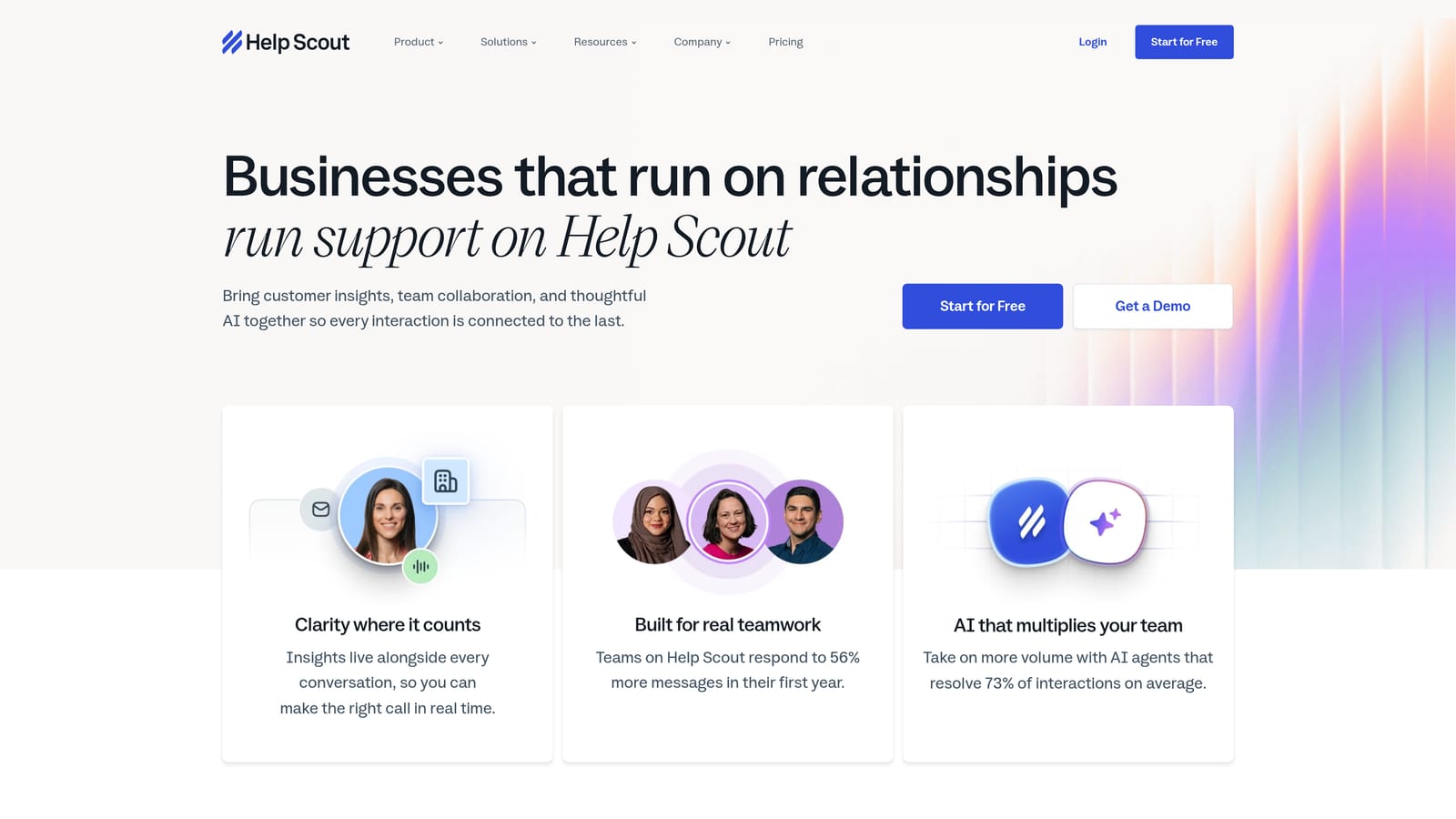
Help Scout is a customer-centric shared inbox platform with AI Assist and AI Summarize features that reduce repetitive agent effort while preserving a human, relationship-driven support experience.
Where This Tool Shines
Help Scout's philosophy is that great support feels human, and the AI features are designed to amplify agents rather than replace them. AI Summarize condenses long conversation threads into quick context so agents can get up to speed without reading every message. AI Assist helps draft replies and improve tone, reducing the time spent on routine responses without removing the agent from the loop entirely.
The Docs knowledge base and in-app Beacon widget give customers a self-service path before they reach out, while the customer data sidebar gives agents immediate context on who they're talking to. It's a coherent, well-designed system for teams where relationships matter as much as resolution speed.
Key Features
AI Summarize: Condenses long conversation threads so agents can quickly understand context without reading every message.
AI Assist: Drafts replies and suggests tone improvements to speed up responses on common questions.
Saved Replies: Canned responses for the most frequently asked questions, accessible directly from the inbox.
Docs Knowledge Base with Beacon: In-app self-service widget connected to your documentation, reducing inbound volume before tickets are created.
Customer Data Sidebar: Surfaces relevant customer context alongside every conversation for more informed, personalized responses.
Best For
Help Scout is the right fit for teams where customer relationships are a core business priority and fully automated resolution would feel off-brand. It's less suited for teams primarily focused on maximizing deflection rates through AI automation.
Pricing
Plans from around $20/user/month. Check helpscout.com for current pricing.
6. Tidio
Best for: Small teams and e-commerce businesses that need fast AI chatbot deployment with minimal setup
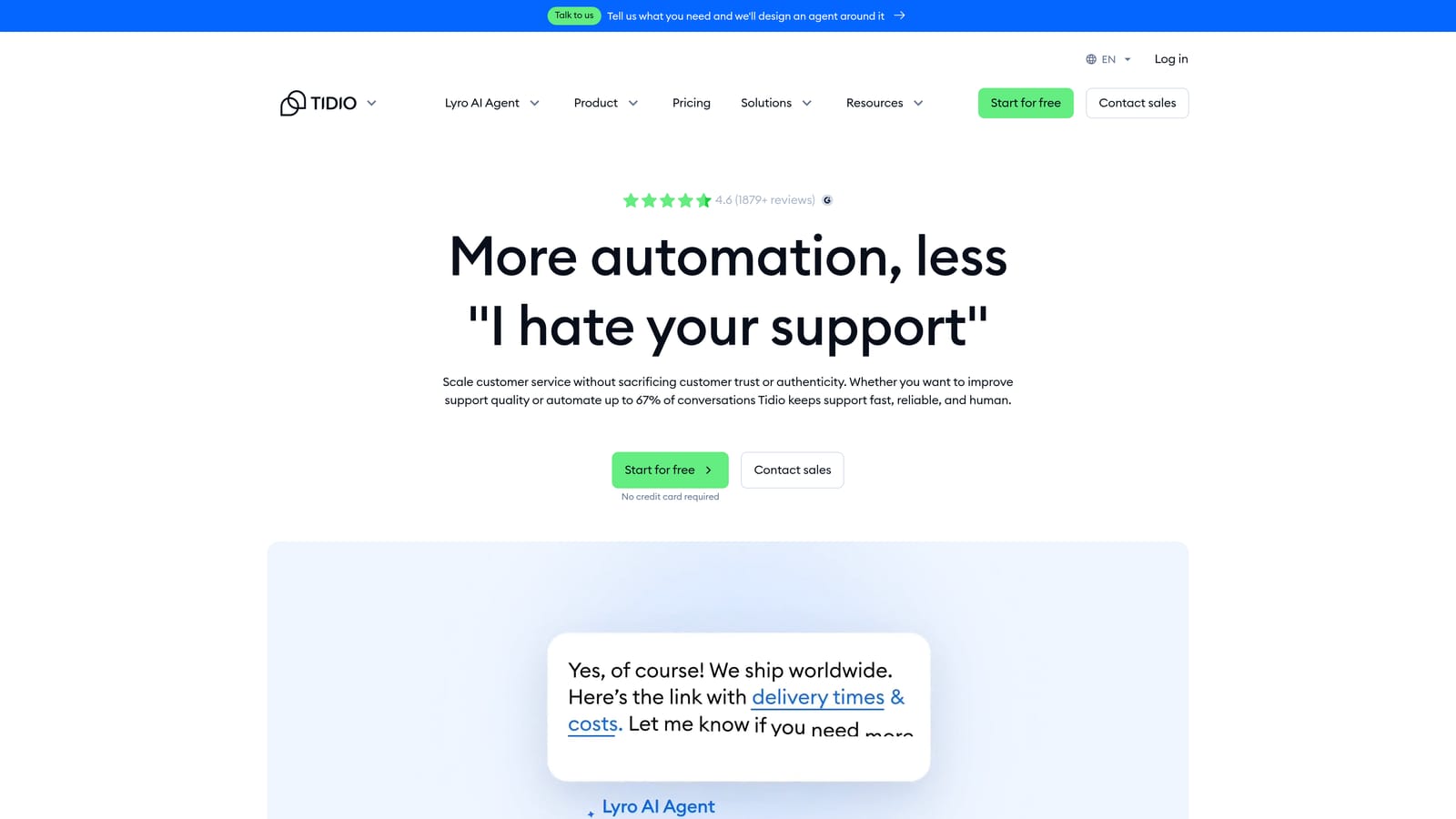
Tidio is a lightweight chatbot and live chat platform featuring Lyro, an AI agent designed to handle common customer questions with minimal configuration time.
Where This Tool Shines
Tidio's defining characteristic is speed of deployment. Lyro can be up and handling questions quickly, without the weeks of configuration that more complex enterprise tools require. For small teams that need to stop repetitive questions from overwhelming a limited support headcount, that fast time-to-value is genuinely important.
The live chat fallback is well-implemented: when Lyro reaches the limits of what it can confidently answer, the conversation transfers to a human agent without friction. Pre-built conversation flows for common scenarios further reduce setup time. Tidio's integration footprint is narrower than enterprise tools, focusing primarily on e-commerce platforms and basic CRMs, so it's best evaluated in that context.
Key Features
Lyro AI Chatbot: Handles common customer questions automatically with low setup overhead and fast deployment.
Live Chat Fallback: Smooth handoff to human agents when AI reaches its confidence limits, preserving the customer experience.
Pre-Built Conversation Flows: Ready-made templates for common question scenarios that reduce initial configuration time.
E-Commerce Integrations: Native connections to Shopify, WooCommerce, and similar platforms for product and order-related questions.
Free Plan: A functional free tier that lets small teams start automating without upfront cost.
Best For
Tidio is best for small businesses, e-commerce teams, and early-stage startups that need quick, accessible chatbot automation. B2B SaaS teams with complex product questions or enterprise integration requirements will likely find its capabilities ceiling too low.
Pricing
Free plan available; Lyro AI from around $29/month. Check tidio.com for current pricing.
7. Guru
Best for: Teams that want to reduce repetitive questions by making verified knowledge instantly findable across every workflow
Guru is an AI-powered knowledge management platform that surfaces verified answers inside any workflow, ensuring agents and customers always find accurate information fast.
Where This Tool Shines
Guru takes a different approach to repetitive questions than most tools on this list. Rather than intercepting tickets with a chatbot, it addresses the root cause: people can't find the right answer quickly enough. The AI-powered answer surfacing works inside Slack, Chrome, and your existing support tools, which means agents stop asking each other the same internal questions and customers stop submitting tickets for things that are already documented.
The verified knowledge card system is particularly useful for teams where accuracy matters. Cards have owners and expiry dates, so outdated information gets flagged and updated rather than quietly misleading customers or agents. The analytics on unanswered questions help you identify gaps in your knowledge base before they become support ticket trends.
Key Features
AI-Powered Answer Surfacing: Delivers relevant knowledge cards inside Slack, Chrome, and support tools without requiring agents to search manually.
Verified Knowledge Cards: Each card has an assigned owner and expiry date, ensuring information stays accurate and current over time.
Browser Extension: In-context knowledge access wherever agents are working, without switching tabs or tools.
Unanswered Question Analytics: Identifies which questions are going unanswered most often, highlighting knowledge base gaps before they generate ticket volume.
Helpdesk Agnostic: Works alongside Zendesk, Freshdesk, Intercom, and other platforms rather than replacing them.
Best For
Guru is ideal for teams where knowledge fragmentation is the primary driver of repetitive questions — situations where the answer exists somewhere, but nobody can find it consistently. It pairs well with any helpdesk on this list as a complementary layer.
Pricing
Free plan for small teams; paid plans from around $10/user/month. Check getguru.com for current pricing.
8. Forethought
Best for: Enterprise teams on Zendesk or Salesforce Service Cloud that want AI deflection and intelligent triage without switching helpdesks
Forethought is an enterprise AI platform for support deflection and intelligent triage, designed to layer onto existing helpdesks rather than replace them.
Where This Tool Shines
Forethought is built for organizations that have significant investment in Zendesk or Salesforce Service Cloud and want to add serious AI capabilities without migrating platforms. The Solve product handles automated ticket resolution; Triage handles intelligent routing and prioritization; and the Discover module identifies which question categories have the highest deflection potential — a useful starting point for teams that aren't sure where to focus their automation efforts first.
The enterprise-grade analytics give support leaders clear visibility into deflection rates, resolution patterns, and ROI. For large teams managing thousands of tickets per month, the combination of Solve and Triage can meaningfully reduce agent workload on repetitive categories while ensuring complex tickets reach the right person faster.
Key Features
Solve AI: Automated ticket resolution for repetitive question categories, handling common inquiries without agent involvement.
Triage AI: Intelligent routing and prioritization that ensures tickets reach the right agent or queue based on content and intent.
Discover Module: Analyzes your ticket data to identify which question categories represent the highest deflection opportunity.
Zendesk and Salesforce Integration: Deep native integration with the two most common enterprise helpdesk platforms.
Enterprise Analytics: Detailed deflection reporting and resolution metrics for support leadership and operations teams.
Best For
Forethought is purpose-built for enterprise support operations with high ticket volume and existing investment in Zendesk or Salesforce. It's not the right fit for teams looking for a standalone AI platform or those on other helpdesk systems.
Pricing
Enterprise pricing — contact Forethought directly for a quote at forethought.ai.
9. Document360
Best for: Teams that want to reduce support volume by helping customers find answers before they ever submit a ticket
Document360 is an AI-assisted knowledge base platform that reduces repetitive support questions by empowering customers to find answers through well-structured, SEO-optimized self-service documentation.
Where This Tool Shines
Document360 addresses repetitive questions at the earliest possible point: before the customer ever opens a chat widget or submits a ticket. Strong SEO optimization means customers searching for answers about your product often land directly on your documentation rather than contacting support. That's a form of deflection that doesn't require any AI agent interaction at all.
The AI-assisted article creation features help content teams build and maintain documentation more efficiently, while analytics on failed searches reveal exactly where customers are looking for answers and not finding them. The embeddable in-app widget brings that self-service experience directly into your product, reducing friction for users who need help in the moment.
Key Features
AI-Assisted Article Creation: Content suggestions and writing assistance help teams build and update documentation faster.
SEO Optimization: Structured documentation that ranks in search results, intercepting customer questions before they become support tickets.
Embeddable In-App Widget: Brings contextual self-service documentation directly into your product interface.
Failed Search Analytics: Identifies search terms that return no results, highlighting gaps in your documentation before they drive ticket volume.
Version Control and Multi-Language Support: Essential for complex products with frequent updates and international customer bases.
Best For
Document360 is the right choice for product teams and support operations where a significant portion of repetitive questions could be resolved by better, more findable documentation. It works best as part of a broader support stack rather than as a standalone solution for teams with high inbound volume.
Pricing
Plans from around $149/project/month. Check document360.com for current pricing.
Which Tool Is Right for Your Team
The right solution depends on where your repetitive questions are actually coming from. That's worth thinking about before you evaluate any tool.
If the problem is a knowledge gap — customers can't find answers that already exist — then Guru or Document360 will address the root cause directly. Guru surfaces existing knowledge inside your agents' workflows; Document360 makes that knowledge findable by customers before they ever reach out.
If the problem is workflow gaps — questions are reaching agents that should be handled automatically — then you need an AI agent or chatbot layer. Intercom's Fin, Forethought's Solve, and Tidio's Lyro all address this, at different complexity levels and price points. Freshdesk's Freddy Self Service is worth considering if budget is a constraint.
If the problem is volume at scale, and you want an AI-first architecture that resolves tickets autonomously, learns continuously, and surfaces business intelligence from your support data, Halo AI is the most comprehensive option on this list. It's not just a deflection layer — it's a full support platform built around autonomous resolution from the ground up.
For teams that want AI assistance without removing the human from the loop, Help Scout strikes the right balance. For enterprise teams with deep Zendesk or Salesforce investment, Forethought is the natural fit. And for organizations that need a proven, highly configurable platform for complex routing at scale, Zendesk remains the market standard.
Your support team shouldn't scale linearly with your customer base. Let AI agents handle routine tickets, guide users through your product, and surface business intelligence while your team focuses on complex issues that need a human touch. See Halo in action and discover how continuous learning transforms every interaction into smarter, faster support.