9 Best SaaS Customer Support Automation Tools in 2026
SaaS customer support automation tools enable growing companies to handle increasing ticket volumes without proportionally expanding their support teams. This guide evaluates the top 9 platforms based on AI capabilities, integration depth, and implementation speed—helping SaaS businesses transform support from a cost center into a strategic advantage through intelligent automation that resolves issues while continuously learning from customer interactions.
 Grant CooperFounder12 min read
Scaling customer support shouldn't mean scaling your headcount at the same rate. As your SaaS grows, the volume of tickets, product questions, and user guidance requests can quickly overwhelm even the best support teams. The solution lies in intelligent automation that doesn't just deflect tickets, but actually resolves them while learning from every interaction.
The right customer support automation tool can transform your support operation from a cost center into a strategic advantage. We've evaluated platforms based on AI capabilities, integration depth with SaaS tech stacks, implementation speed, and value for product-led companies. Here are the top tools that help SaaS teams deliver faster, smarter support without proportionally increasing costs.
1. Halo AI
Best for: SaaS teams wanting AI-first support that continuously learns and integrates across their entire business stack.
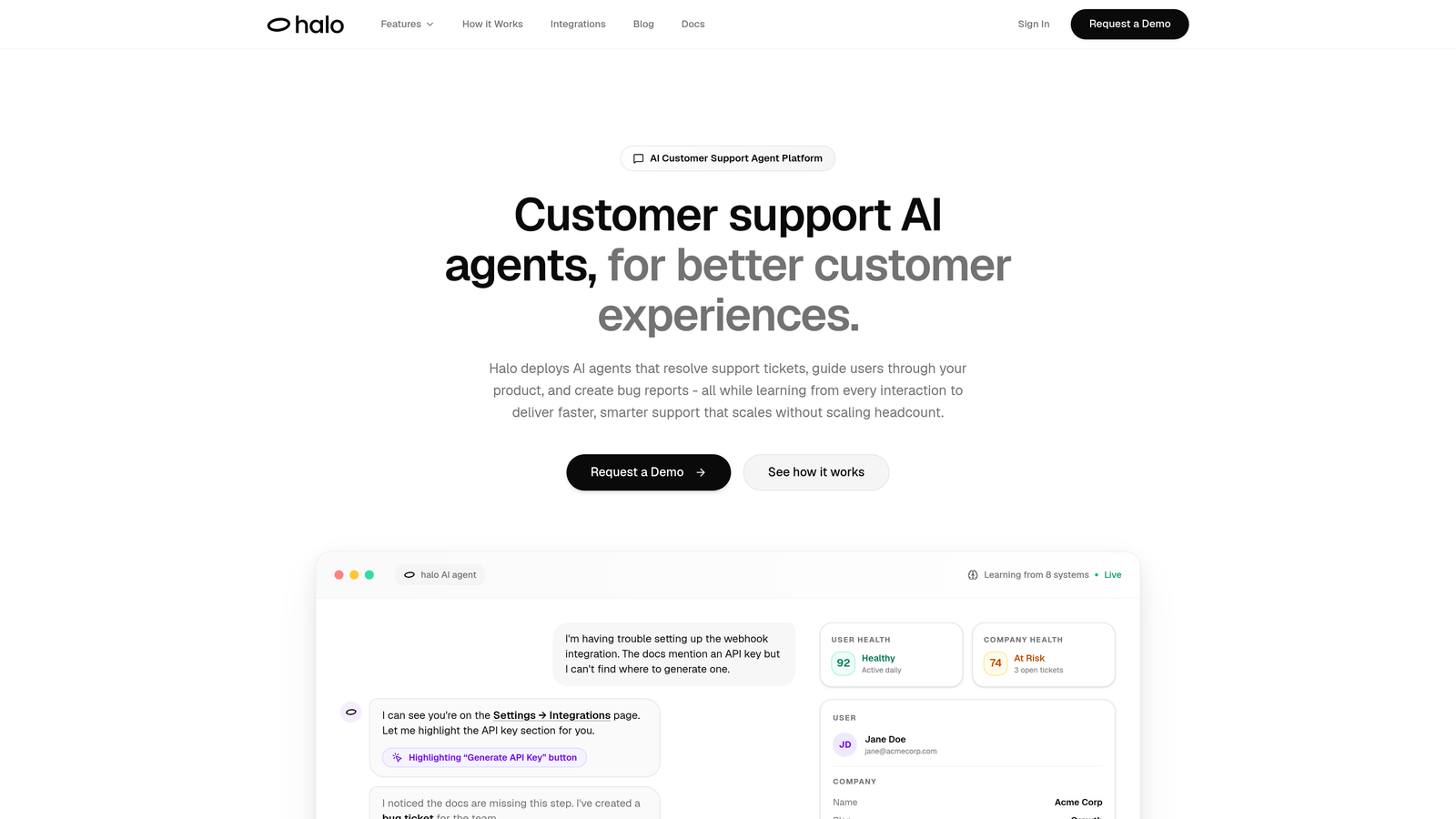
Halo AI takes a fundamentally different approach to customer support automation by deploying intelligent AI agents that don't just deflect tickets—they actually resolve them.
Where This Tool Shines
Unlike traditional helpdesk platforms with AI bolted on, Halo is built AI-first from the ground up. Its agents see what your users see through page-aware context, meaning they can provide visual guidance directly within your product interface. This eliminates the frustrating back-and-forth of trying to understand where a user is stuck.
The platform's continuous learning architecture means every interaction makes your support smarter. When users report bugs or feature requests, Halo automatically creates detailed tickets in Linear or your project management tool, complete with context and reproduction steps. This closes the loop between support and product development in a way most platforms simply can't match.
Key Features
Autonomous AI Agents: Resolve support tickets independently while escalating complex issues to human agents with full context.
Page-Aware Chat Widget: Provides visual UI guidance by understanding exactly what users are looking at in your product.
Business Intelligence Layer: Surfaces customer health signals, revenue intelligence, and anomaly detection beyond basic support metrics.
Auto Bug Ticket Creation: Automatically generates detailed bug reports in Linear, Slack, or other tools when issues are identified.
Deep Integration Network: Connects to your entire business stack including HubSpot, Intercom, Stripe, Zoom, PandaDoc, and Fathom.
Best For
B2B SaaS companies that want support automation to do more than answer FAQs. Ideal for product teams that need their support system to integrate tightly with engineering workflows, provide actionable business intelligence, and scale support quality without scaling headcount proportionally.
Pricing
Contact for pricing. The platform is designed for growing SaaS companies that view support as a strategic function rather than a cost center.
2. Intercom
Best for: SaaS companies prioritizing conversational engagement and onboarding alongside traditional support.
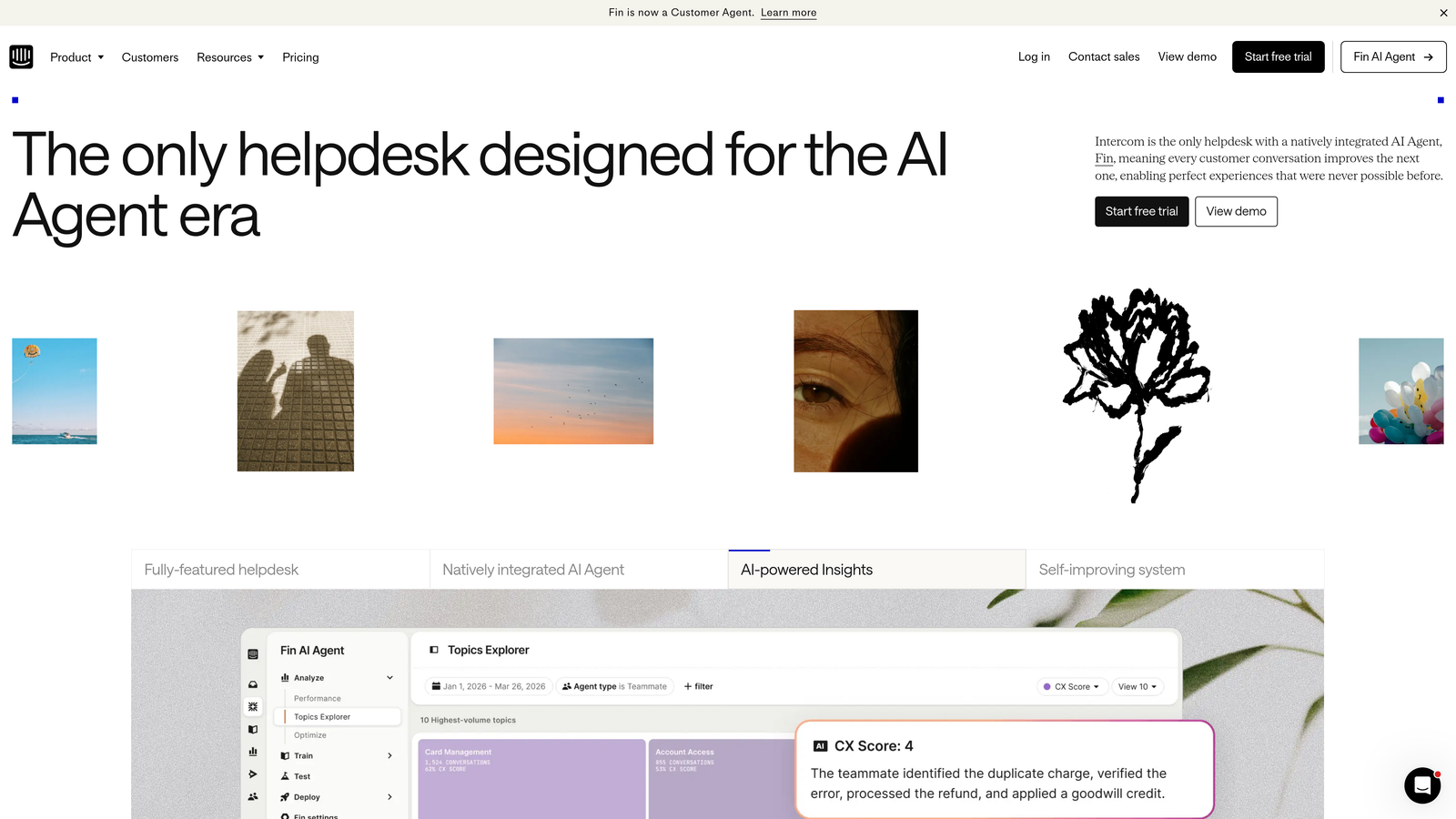
Intercom combines messaging, help center content, and AI-powered automation in a unified workspace designed for modern customer communication.
Where This Tool Shines
Intercom excels at blending proactive engagement with reactive support. The platform doesn't just wait for users to ask questions—it can trigger contextual messages based on user behavior, making it particularly valuable for product-led SaaS companies focused on activation and retention.
The Fin AI agent handles a substantial portion of routine conversations, learning from your help center content and past interactions. When it can't resolve an issue, handoff to human agents is seamless, with full conversation context preserved.
Key Features
Fin AI Agent: Conversational AI that answers questions using your knowledge base and past support interactions as training data.
Product Tours: Built-in onboarding flows that guide new users through your product's core features.
Customizable Messenger: Branded chat widget that matches your product's design language and user experience.
Smart Routing: Automatically assigns conversations to the right team member based on topic, customer value, or custom rules.
Series Campaigns: Automated message sequences triggered by user behavior or lifecycle stage.
Best For
SaaS companies that view support as part of a broader customer communication strategy. Particularly strong for teams that want to combine reactive support with proactive onboarding and engagement campaigns in a single platform.
Pricing
Starts at $39 per seat per month. Pricing scales with features and volume, which can become expensive for larger teams or high-volume use cases.
3. Zendesk
Best for: Enterprise SaaS teams needing extensive customization options and a mature integration ecosystem.
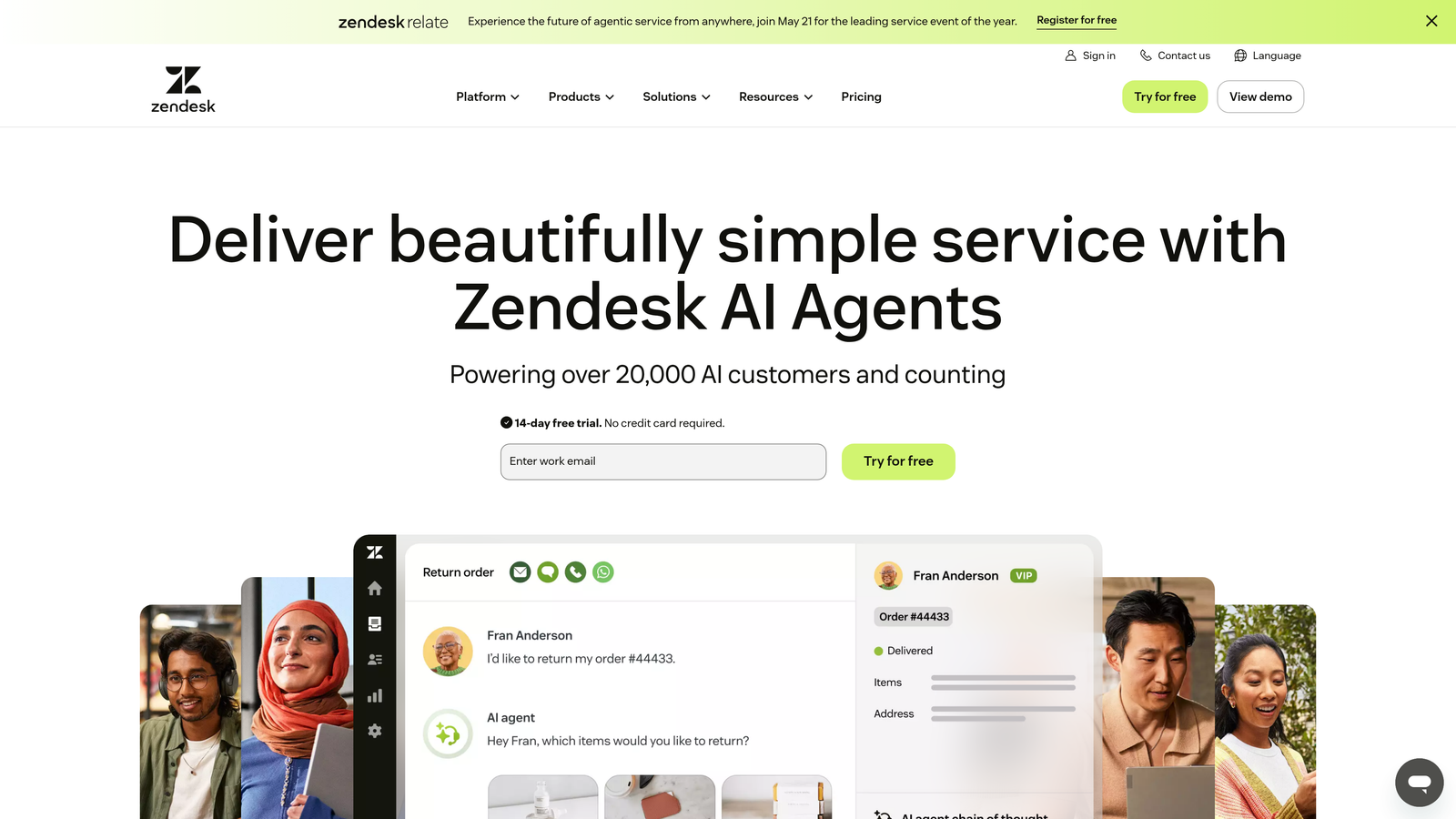
Zendesk is the established player in customer service platforms, offering enterprise-grade features with a marketplace of over 1,500 integrations.
Where This Tool Shines
Zendesk's strength lies in its maturity and flexibility. The platform has been refined over years of enterprise deployments, resulting in robust workflow automation, sophisticated reporting capabilities, and extensive customization options. If your SaaS has complex support requirements or unique processes, Zendesk can likely accommodate them.
The Agent Workspace consolidates customer context from multiple channels and tools, giving support teams a comprehensive view without switching between systems. AI-powered suggestions help agents respond faster by recommending relevant knowledge base articles or previous similar tickets.
Key Features
Answer Bot: AI-powered ticket deflection that suggests relevant help articles before tickets reach human agents.
Agent Workspace: Unified interface with AI suggestions, macros, and context from integrated tools.
Marketplace Integrations: Over 1,500 apps and integrations covering virtually every business tool category.
Advanced Analytics: Comprehensive reporting on team performance, customer satisfaction, and support trends.
Custom Objects: Extend Zendesk's data model to track SaaS-specific information like subscription tiers or feature usage.
Best For
Established SaaS companies with dedicated support operations teams who need enterprise features, extensive customization, and proven scalability. Best suited for organizations willing to invest time in configuration and optimization.
Pricing
Starts at $55 per agent per month for the Suite Team plan. Enterprise features require higher-tier plans, making it one of the more expensive options for smaller teams.
4. Freshdesk
Best for: Growing SaaS teams wanting enterprise features without enterprise complexity or pricing.
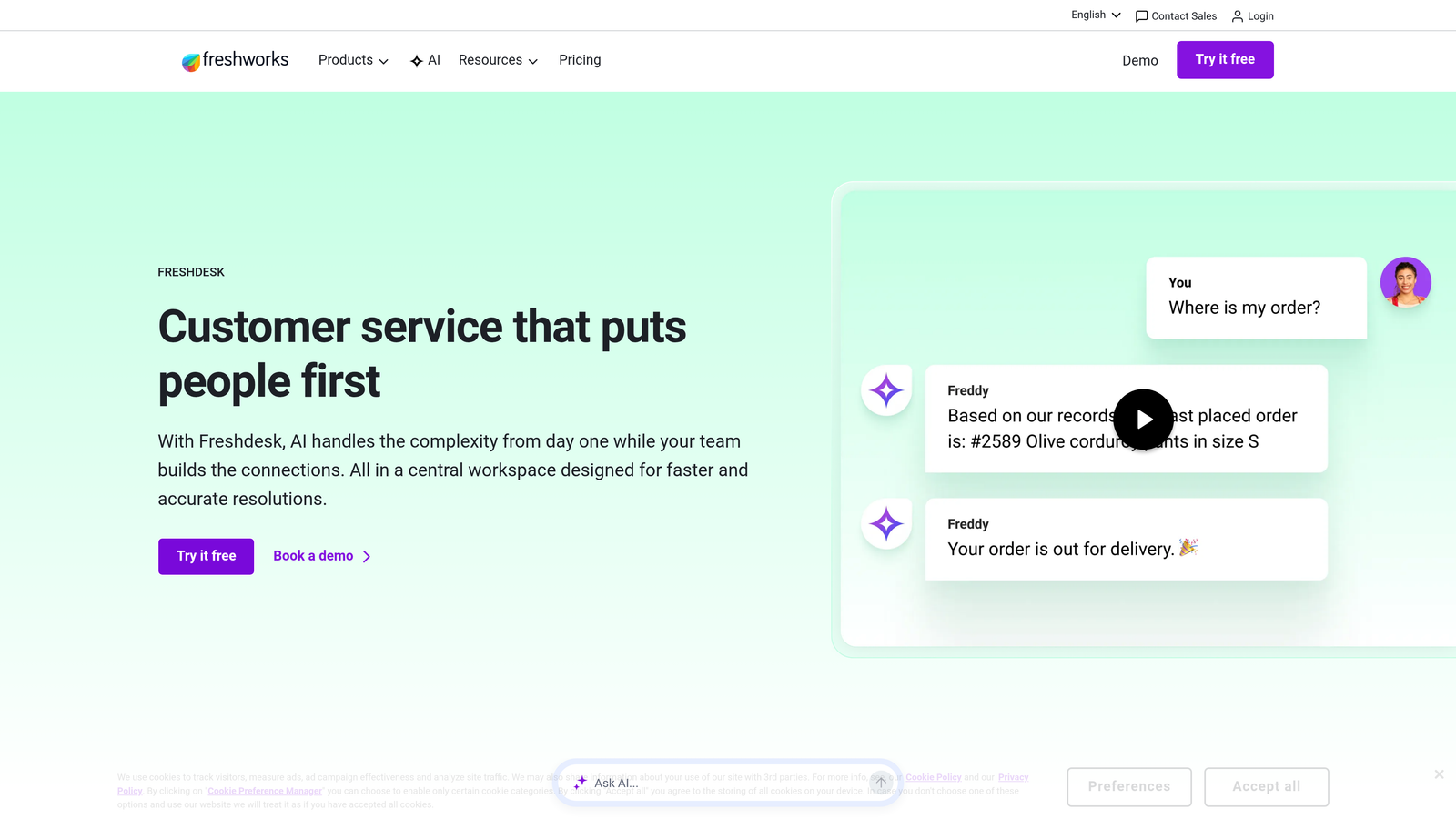
Freshdesk delivers intuitive helpdesk functionality with AI capabilities designed for teams that need to scale support operations efficiently.
Where This Tool Shines
Freshdesk strikes a compelling balance between capability and simplicity. The interface is notably more intuitive than many enterprise alternatives, reducing training time for new support agents. Despite the approachable design, it doesn't sacrifice power—automation rules, SLA management, and multi-channel support are all included even at lower pricing tiers.
The Freddy AI assistant handles ticket categorization, priority assignment, and routing automatically, learning from your team's past decisions. The generous free tier makes it particularly attractive for early-stage SaaS companies testing their support processes before committing to paid tools.
Key Features
Freddy AI: Automated ticket categorization, routing, and agent suggestions based on historical patterns.
Scenario Automation: Visual workflow builder for creating complex automation rules without coding.
Free Tier: Unlimited agents with basic features, making it viable for bootstrapped SaaS startups.
Multi-Channel Support: Unified inbox for email, chat, phone, social media, and messaging apps.
Canned Responses: Template library with dynamic placeholders for faster responses to common questions.
Best For
SaaS companies in growth mode that need professional support capabilities without the learning curve or cost of enterprise platforms. Ideal for teams of 5-50 support agents who value ease of use alongside automation.
Pricing
Free tier available with unlimited agents. Paid plans start at $15 per agent per month, making it one of the most cost-effective options for growing teams.
5. Help Scout
Best for: SaaS teams committed to maintaining personal, human-centered support while leveraging smart automation.
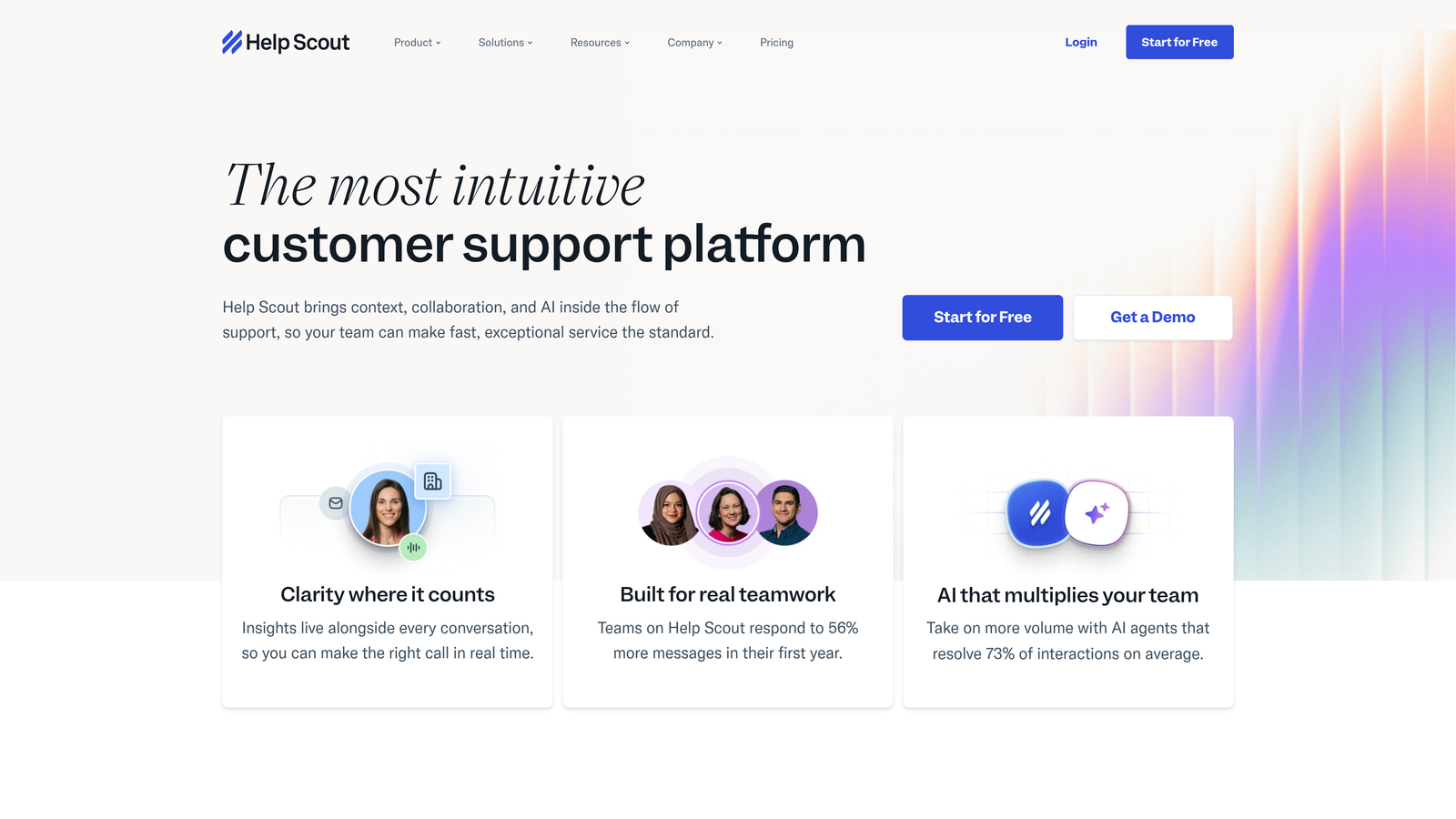
Help Scout is built around the philosophy that automation should enhance human connection, not replace it.
Where This Tool Shines
Help Scout deliberately avoids feeling like a traditional ticketing system. Conversations are presented as email threads rather than numbered tickets, preserving the personal tone that many SaaS companies want to maintain with their customers. This approach resonates particularly well with product-led companies where support is part of the overall user experience.
The Beacon widget intelligently suggests help documentation before users even submit a question, reducing ticket volume without feeling impersonal. When users do need to reach out, the integration between Docs (knowledge base) and conversations means agents can quickly pull in relevant articles or create new documentation from frequent questions.
Key Features
Beacon Widget: Embeddable help widget with AI-powered article suggestions based on user context and search queries.
Docs Integration: Knowledge base that seamlessly connects to support conversations for easy article sharing and creation.
Collision Detection: Prevents multiple agents from responding to the same conversation simultaneously.
Customer Ratings: Built-in satisfaction surveys that help identify support quality trends.
Saved Replies: Personal template library with placeholders for common responses that maintain a human voice.
Best For
SaaS companies that view support as a relationship-building opportunity rather than a cost to minimize. Works best for teams that prioritize customer experience and want automation to feel helpful rather than robotic.
Pricing
Starts at $20 per user per month. Straightforward pricing with no hidden costs for features like reporting or integrations makes budgeting predictable.
6. Tidio
Best for: Smaller SaaS teams prioritizing real-time chat engagement with visual, no-code automation.
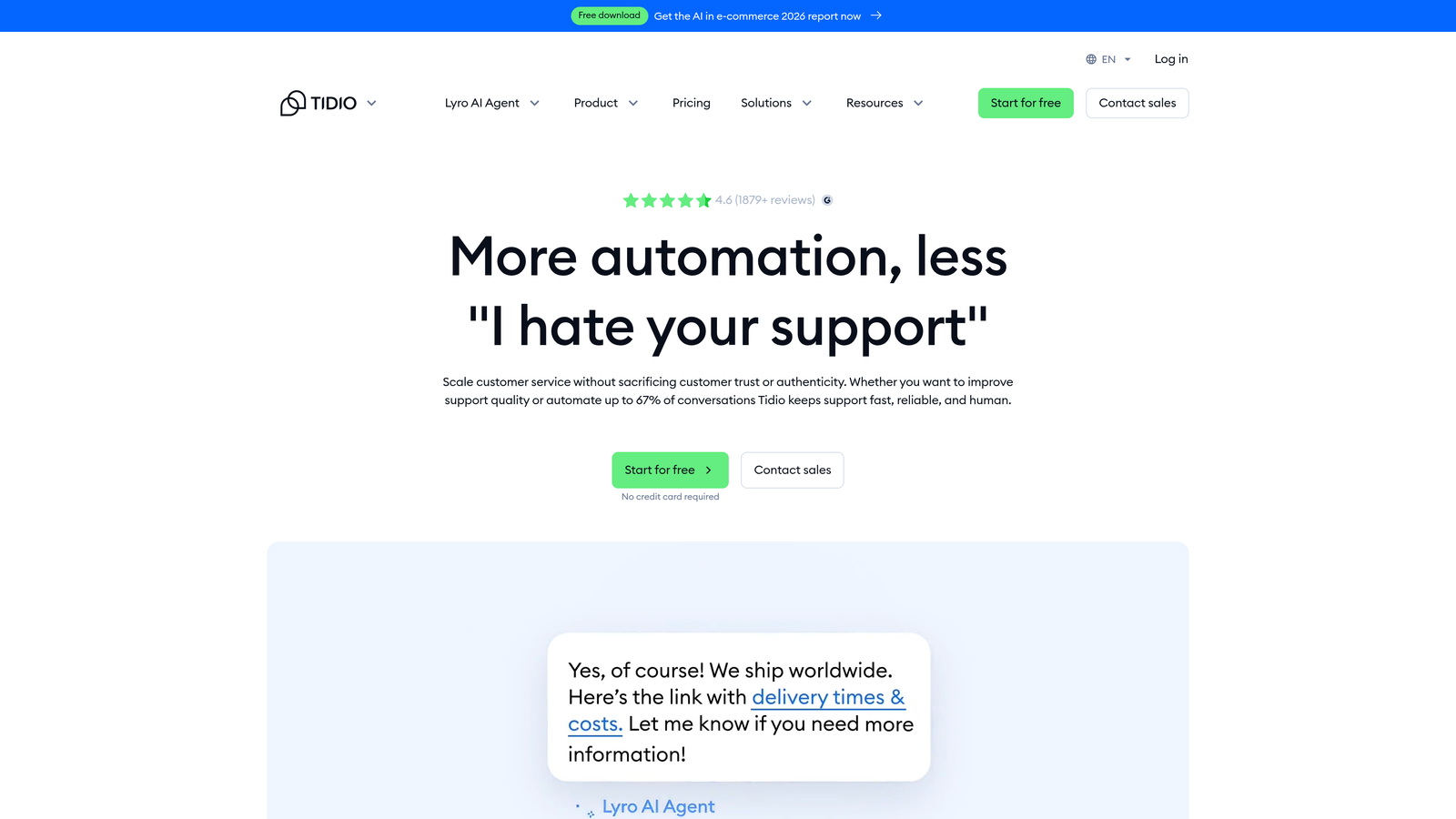
Tidio focuses on live chat and chatbot automation with a visual builder that makes creating automated flows accessible to non-technical teams.
Where This Tool Shines
Tidio's visual chatbot builder is genuinely intuitive—you can create sophisticated conversation flows by dragging and dropping elements without touching code. This democratizes automation for SaaS teams without dedicated developers. The Lyro AI chatbot handles common questions instantly, learning from your FAQ content and past conversations.
The platform excels at real-time engagement. Visitor tracking shows you who's on your site, what pages they're viewing, and how long they've been there, enabling proactive chat invitations when users might need help. For smaller SaaS companies where every conversation matters, this visibility is valuable.
Key Features
Lyro AI Chatbot: Conversational AI that answers questions instantly using your knowledge base as training material.
Visual Bot Builder: Drag-and-drop interface for creating complex chatbot flows without coding skills.
Visitor Tracking: Real-time view of who's on your site, their location, and browsing behavior.
Multi-Channel Integration: Unified inbox for website chat, email, and Facebook Messenger conversations.
Triggered Messages: Proactive chat invitations based on user behavior, time on page, or specific URL visits.
Best For
Early-stage SaaS companies or small teams that want to offer live chat without hiring dedicated chat agents. The visual builder makes it accessible for marketers or customer success managers to create automation without engineering resources.
Pricing
Free tier available with basic features. Paid plans start at $29 per month (not per user), making it extremely cost-effective for small teams testing chat-based support.
7. Kustomer
Best for: SaaS companies wanting CRM-level customer context integrated directly into support conversations.
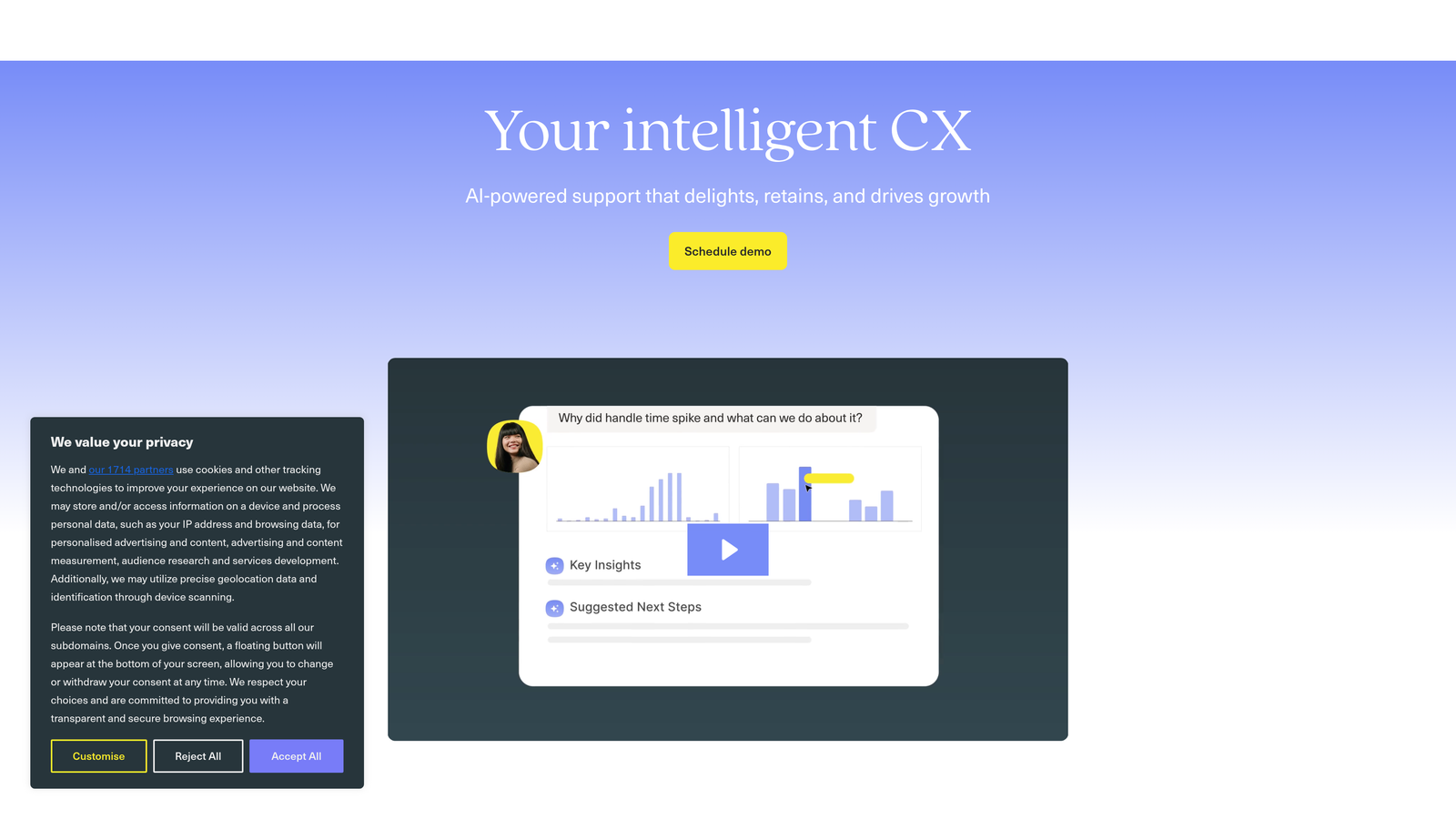
Kustomer approaches customer service from a CRM-first perspective, providing a complete timeline of every customer interaction and subscription history.
Where This Tool Shines
Kustomer's unified customer timeline is its defining feature. Instead of viewing isolated tickets, agents see a complete history of purchases, product usage, past conversations, and lifecycle events in a single interface. For SaaS companies with complex customer journeys or subscription models, this context dramatically improves support quality.
The platform's business process automation goes beyond simple ticket routing. You can build workflows that update CRM records, trigger billing actions, or notify account managers based on support interactions. This tight integration between support and business operations makes Kustomer particularly valuable for B2B SaaS with high-touch customer relationships.
Key Features
Unified Timeline View: Complete customer history including conversations, transactions, product usage, and custom events in one interface.
Business Process Automation: Workflow builder that connects support actions to CRM updates, billing changes, and team notifications.
Sentiment Analysis: Automatic detection of customer emotion to prioritize urgent or frustrated customers.
Native CRM Capabilities: Built-in customer data management without requiring separate CRM integration.
Custom Objects: Extend the data model to track SaaS-specific information like feature entitlements or usage metrics.
Best For
B2B SaaS companies with complex customer relationships where support agents need deep context about accounts, subscriptions, and usage patterns. Best suited for teams that want support and customer success tightly integrated.
Pricing
Starts at $89 per user per month. The higher price point reflects the CRM capabilities and advanced automation features included in the platform.
8. Ada
Best for: High-volume SaaS support teams focused on maximizing ticket deflection with multilingual AI capabilities.
Ada is an AI-first automation platform designed specifically for handling large volumes of support inquiries across multiple languages.
Where This Tool Shines
Ada's reasoning engine can handle surprisingly complex, multi-turn conversations without immediately escalating to human agents. The platform understands context across conversation turns, allowing it to ask clarifying questions and provide nuanced answers rather than just matching keywords to canned responses.
The no-code agent builder makes it accessible for support managers to create and refine automated responses without engineering involvement. Support for over 50 languages makes Ada particularly valuable for SaaS companies with international customer bases who want consistent support quality across regions.
Key Features
No-Code AI Builder: Visual interface for creating AI agents and conversation flows without technical skills.
Multi-Language Support: Native support for 50+ languages with consistent automation quality across all of them.
Reasoning Engine: Advanced AI that handles complex, multi-turn conversations and asks clarifying questions.
Contextual Handoff: Seamless transfer to human agents with full conversation history and customer context preserved.
Performance Analytics: Detailed reporting on automation effectiveness, deflection rates, and conversation patterns.
Best For
SaaS companies with high ticket volumes or international customer bases who want to maximize automation without sacrificing quality. Ideal for teams that need to support multiple languages consistently.
Pricing
Contact for pricing. Ada typically works with companies handling significant support volume where automation ROI is substantial.
9. Gorgias
Best for: SaaS companies with subscription billing or ecommerce components needing deep payment platform integration.
Gorgias specializes in support for subscription-based businesses, with particularly strong integrations for billing platforms and ecommerce systems.
Where This Tool Shines
Gorgias understands that many modern SaaS companies have billing and subscription management as core support issues. The platform integrates deeply with Shopify, Stripe, and other payment platforms, allowing agents to view subscription details, process refunds, or modify plans directly from the support interface without switching tools.
Revenue statistics and customer lifetime value are surfaced directly in conversations, helping agents make informed decisions about when to offer discounts, upgrades, or special accommodations. Macros with dynamic variables can pull in customer-specific data like subscription tier or renewal date, making templated responses feel personalized.
Key Features
Payment Platform Integration: Deep connections to Shopify, Stripe, and other billing systems for managing subscriptions from support.
Revenue Intelligence: Customer lifetime value and purchase history visible in every conversation.
Dynamic Macros: Template responses that automatically populate with customer-specific subscription and billing data.
Social Media Support: Unified inbox including Instagram, Facebook, and SMS alongside traditional channels.
Automation Rules: Workflow builder for routing, tagging, and responding based on order status or subscription events.
Best For
SaaS companies where billing questions, subscription changes, and payment issues represent a significant portion of support volume. Particularly strong for SaaS-ecommerce hybrids or subscription box services.
Pricing
Starts at $10 per month for 50 tickets, with pricing scaling based on ticket volume. The usage-based model can be cost-effective for companies with variable support loads.
Making the Right Choice
The best customer support automation tool depends on where you are in your SaaS journey and what you need support to accomplish beyond just answering tickets.
If you're an early-stage startup testing your support processes, Freshdesk's generous free tier or Tidio's affordable chat-first approach provide solid foundations without financial commitment. These platforms let you establish support operations while you're still figuring out your most common customer questions and optimal workflows.
For growing B2B SaaS companies that view support as strategic, Halo AI's continuous learning and deep business intelligence offer capabilities that extend far beyond traditional helpdesks. The platform's ability to automatically create bug tickets, surface customer health signals, and provide page-aware guidance makes it particularly valuable for product-led companies where support and product development need tight integration.
Enterprise teams with complex requirements and dedicated support operations will find Zendesk's extensive customization and mature integration ecosystem worth the higher price point. Companies prioritizing conversational engagement alongside support should consider Intercom's unified messaging approach, while those needing CRM-level customer context will appreciate Kustomer's timeline view.
The common thread across successful implementations is choosing tools that align with your support philosophy. If you believe support should feel personal and human-centered, Help Scout's email-style interface resonates. If maximizing automation and ticket deflection is the priority, Ada's AI-first approach delivers. For subscription-heavy SaaS, Gorgias's billing integrations solve real pain points.
Your support team shouldn't scale linearly with your customer base. Let AI agents handle routine tickets, guide users through your product, and surface business intelligence while your team focuses on complex issues that need a human touch. See Halo in action and discover how continuous learning transforms every interaction into smarter, faster support.