9 Best Self-Service Customer Support Software Tools in 2026
Self-service customer support software enables customers to resolve issues independently through knowledge bases, AI chatbots, and interactive guides—reducing ticket volume while improving satisfaction. This comprehensive guide reviews nine leading platforms for 2026, comparing AI capabilities, implementation ease, and scalability to help startups and enterprises choose the right solution for deflecting repetitive support requests and modernizing their customer service operations.
 Matt PattoliFounder11 min read
Today's customers expect instant answers—and they'd rather find solutions themselves than wait in a queue. Self-service customer support software empowers users to resolve issues independently through knowledge bases, AI chatbots, community forums, and interactive guides. The right platform reduces ticket volume, cuts support costs, and improves customer satisfaction simultaneously.
This guide evaluates nine leading self-service solutions based on AI capabilities, ease of implementation, integration flexibility, and scalability for growing teams. Whether you're a startup looking to deflect repetitive tickets or an enterprise modernizing your support stack, you'll find options that match your specific needs and budget.
1. Halo AI
Best for: B2B SaaS teams seeking autonomous AI agents that continuously learn and improve
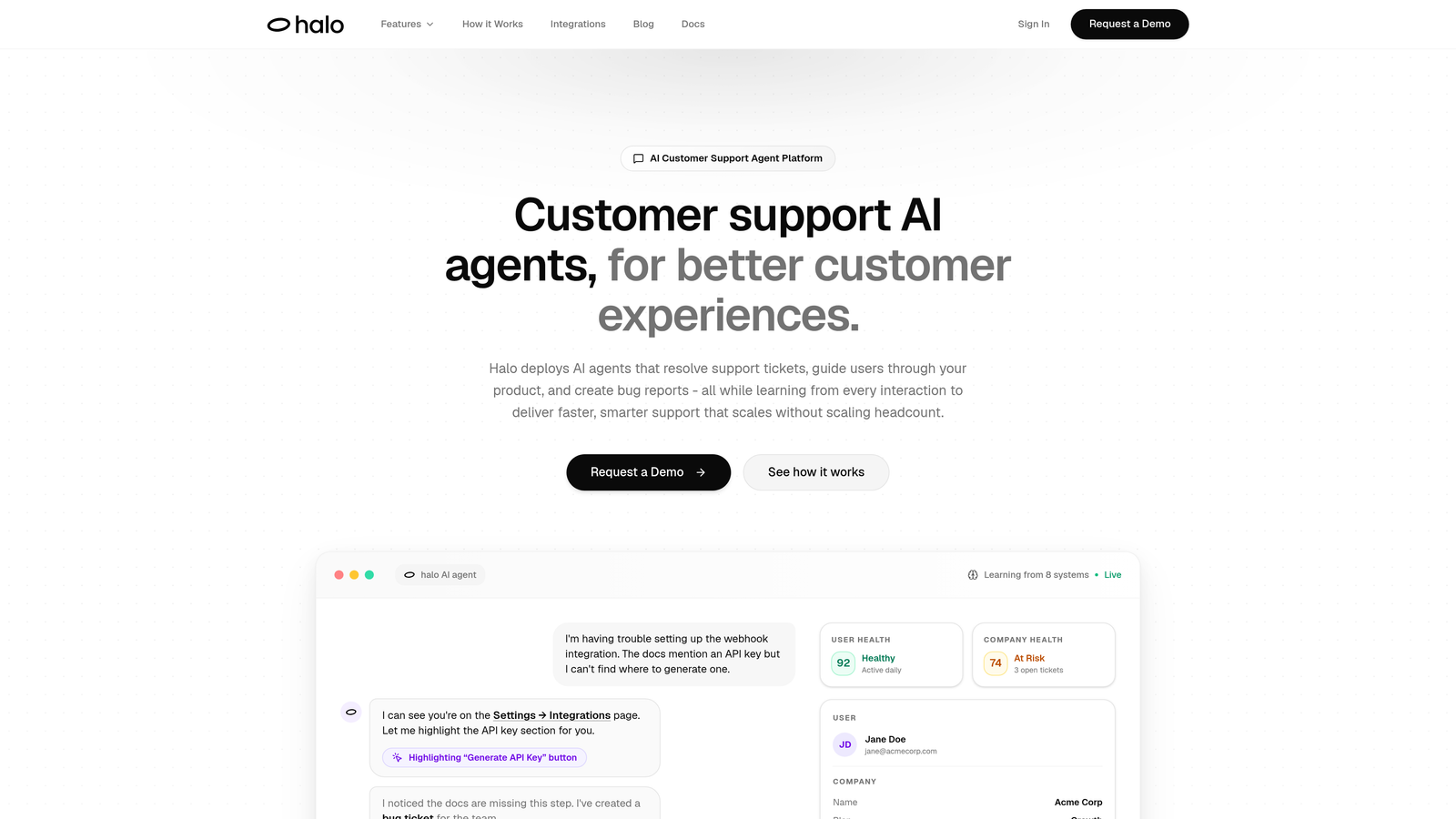
Halo AI represents a fundamental shift from traditional self-service tools to truly autonomous support agents that resolve tickets without human intervention.
Where This Tool Shines
Unlike bolt-on chatbots that follow rigid scripts, Halo's AI agents learn from every interaction. They don't just answer questions—they resolve issues, create bug tickets, and surface business intelligence signals your team actually needs.
The page-aware chat widget sees exactly what users see, providing contextual guidance based on their current screen. This eliminates the guessing game that plagues traditional chatbots, where agents lack visual context about user issues.
Key Features
Autonomous AI Agents: Resolve tickets end-to-end without human intervention, handling everything from password resets to complex product questions.
Page-Aware Context: The widget understands what users are looking at, enabling precise visual guidance through your product interface.
Continuous Learning: Every interaction improves accuracy, creating a support system that gets smarter over time rather than remaining static.
Smart Inbox with BI: Goes beyond support metrics to surface customer health signals, revenue intelligence, and anomaly detection across your business stack.
Auto Bug Ticket Creation: Automatically creates tickets in Linear, posts to Slack, and updates HubSpot when issues require engineering attention.
Best For
B2B SaaS companies tired of scaling support headcount linearly with customer growth. Ideal for product teams that need support intelligence to inform roadmap decisions, not just ticket resolution metrics.
Pricing
Contact for pricing. Designed specifically for B2B teams ready to move beyond traditional helpdesk limitations.
2. Zendesk
Best for: Enterprise teams needing comprehensive self-service with extensive third-party integrations
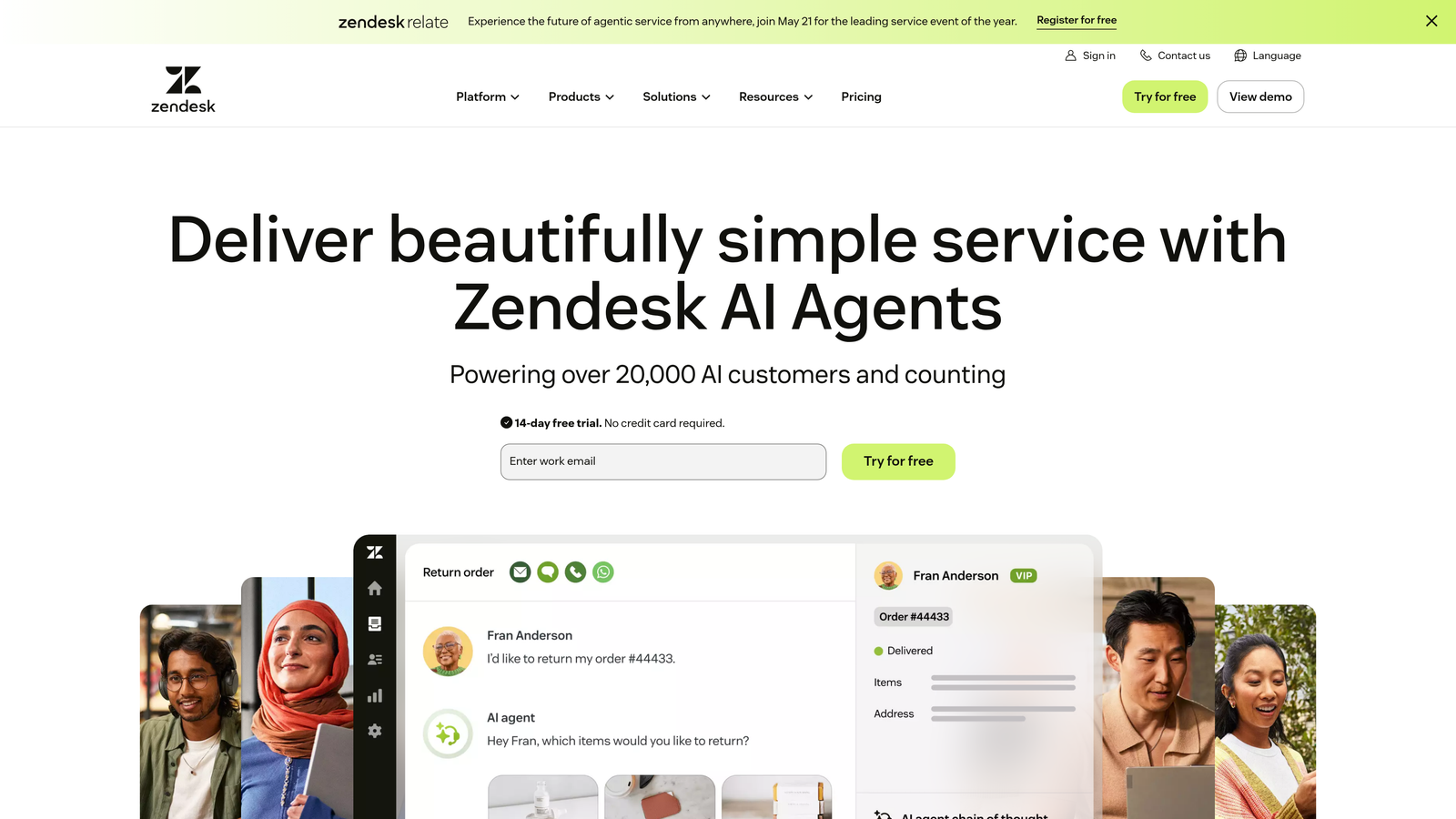
Zendesk offers an enterprise-grade customer service platform with deep self-service capabilities built around its Guide knowledge base and Answer Bot automation.
Where This Tool Shines
Zendesk's marketplace features over 1,500 integrations, making it the Swiss Army knife of support platforms. If you need to connect your helpdesk to obscure internal tools or industry-specific software, Zendesk likely has a pre-built integration.
The Guide knowledge base includes AI-powered article suggestions that surface relevant content based on ticket context. Answer Bot can deflect tickets before they reach your team, though it requires significant configuration to work effectively.
Key Features
Guide Knowledge Base: Comprehensive article management with AI-powered suggestions, SEO optimization, and multilingual support for global teams.
Answer Bot: Automated ticket deflection that suggests articles to customers before creating tickets, reducing queue volume.
Community Forums: Peer-to-peer support spaces where customers help each other, reducing load on your team.
Integration Marketplace: Over 1,500 pre-built integrations covering CRMs, project management tools, analytics platforms, and industry-specific software.
Advanced Analytics: Detailed reporting dashboards tracking deflection rates, article performance, and customer satisfaction across channels.
Best For
Large enterprises with complex integration requirements and dedicated support teams to manage platform configuration. Works well when you need robust reporting and have resources for ongoing optimization.
Pricing
Suite Team starts at $55/agent/month. Suite Professional at $115/agent/month includes Answer Bot and advanced analytics.
3. Intercom
Best for: Product-led companies wanting conversational self-service integrated with user onboarding
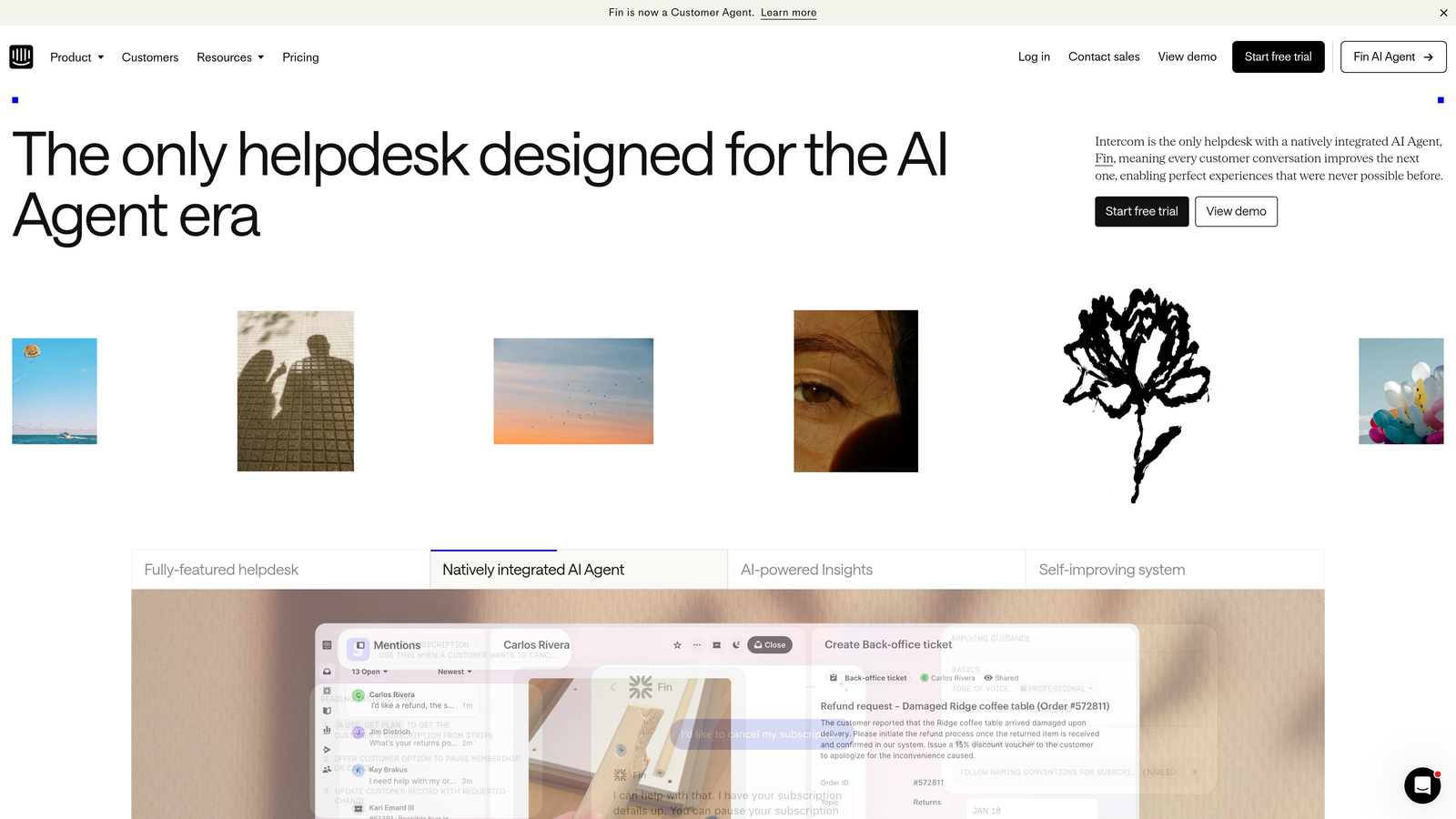
Intercom combines AI chatbots, product tours, and help centers into a unified conversational platform that feels native to modern SaaS products.
Where This Tool Shines
Intercom's Fin AI agent handles autonomous conversations with surprising sophistication, resolving common questions without escalation. The platform excels at proactive messaging—reaching out to users based on behavior patterns rather than waiting for them to ask for help.
Product Tours guide users through features at the right moment, reducing the need for reactive support. This preventive approach means fewer tickets about basic functionality.
Key Features
Fin AI Agent: Autonomous conversation resolution powered by GPT-4, handling complex queries with natural language understanding.
Resolution Bot: Customizable workflows that route conversations based on user attributes, question type, or behavioral triggers.
Product Tours: In-app guidance that walks users through features, reducing confusion and support requests about basic functionality.
Articles Help Center: Instant search functionality surfaces relevant articles mid-conversation without breaking user flow.
Proactive Messaging: Trigger messages based on user behavior, page visits, or lifecycle stage to prevent issues before they occur.
Best For
Product-led SaaS companies that want self-service tightly integrated with user onboarding and engagement. Particularly strong for teams prioritizing proactive over reactive support.
Pricing
Essential starts at $39/seat/month. Fin AI is charged separately per resolution, which can add significant cost at scale.
4. Freshdesk
Best for: Growing teams seeking feature-rich self-service without enterprise pricing
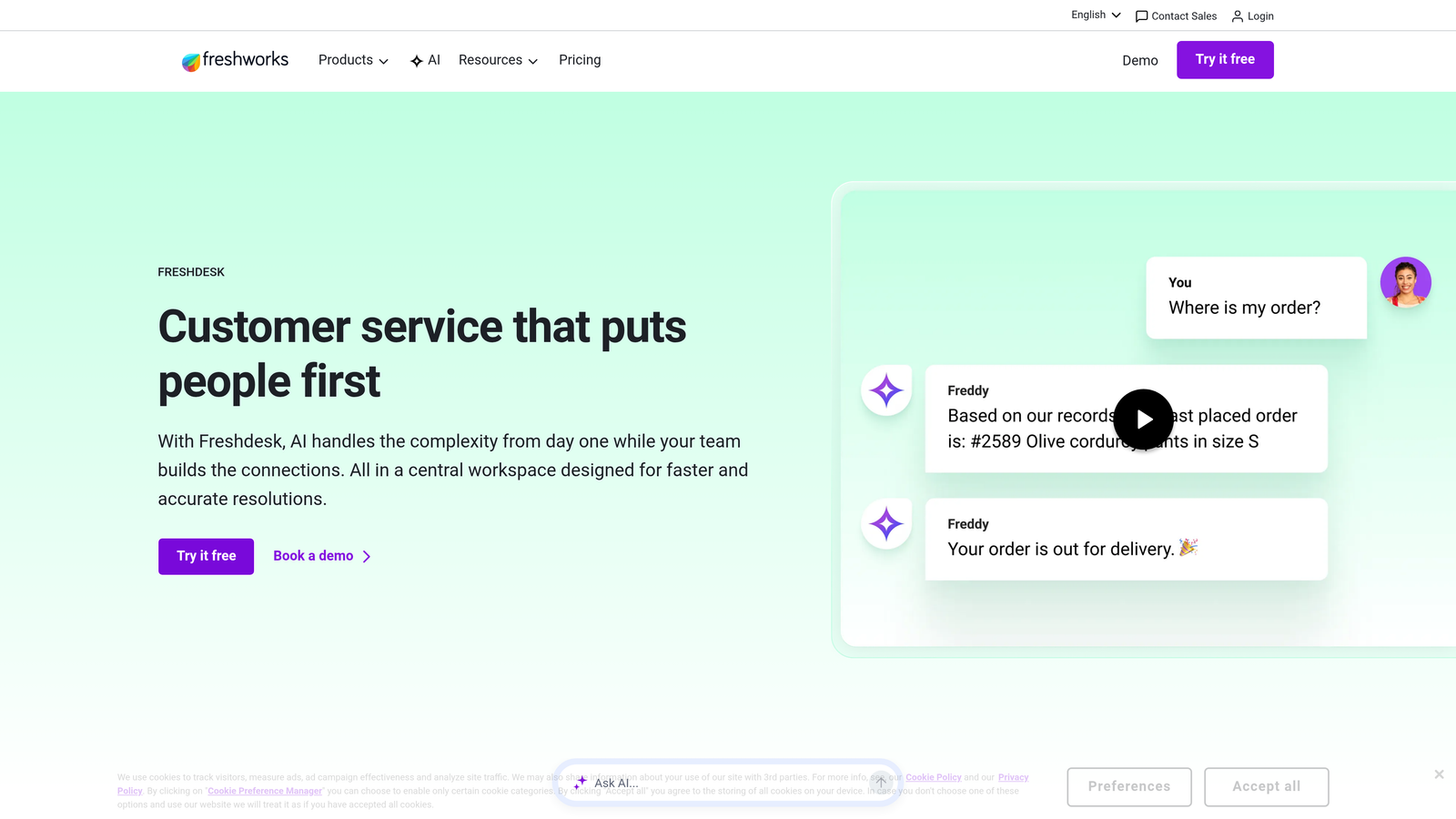
Freshdesk delivers comprehensive helpdesk functionality with Freddy AI, knowledge bases, and community forums at price points accessible to mid-market companies.
Where This Tool Shines
Freshdesk's free tier is genuinely useful, not just a trial in disguise. Small teams can start with unlimited agents and basic self-service features, then upgrade as needs grow. This makes it ideal for startups uncertain about support tool investment.
Freddy AI provides intelligent ticket suggestions and auto-responses that improve over time. The multilingual knowledge base includes SEO optimization, helping articles rank in search engines and deflect tickets before they're created.
Key Features
Freddy AI: Suggests relevant articles to agents and customers, auto-tags tickets, and drafts responses based on historical patterns.
Multilingual Knowledge Base: SEO-optimized articles in multiple languages with version control and scheduled publishing.
Community Forums: Gamification features encourage peer-to-peer support, with badges and leaderboards motivating active participants.
Canned Responses: Pre-written answers to common questions that agents can insert with keyboard shortcuts.
Free Tier: Unlimited agents with basic ticketing, knowledge base, and email support—no credit card required.
Best For
Mid-market companies and growing startups that need enterprise features without enterprise budgets. Strong choice when multilingual support is essential.
Pricing
Free tier available with unlimited agents. Growth at $15/agent/month. Pro at $49/agent/month includes Freddy AI.
5. Help Scout
Best for: Teams prioritizing simplicity and customer experience over feature complexity
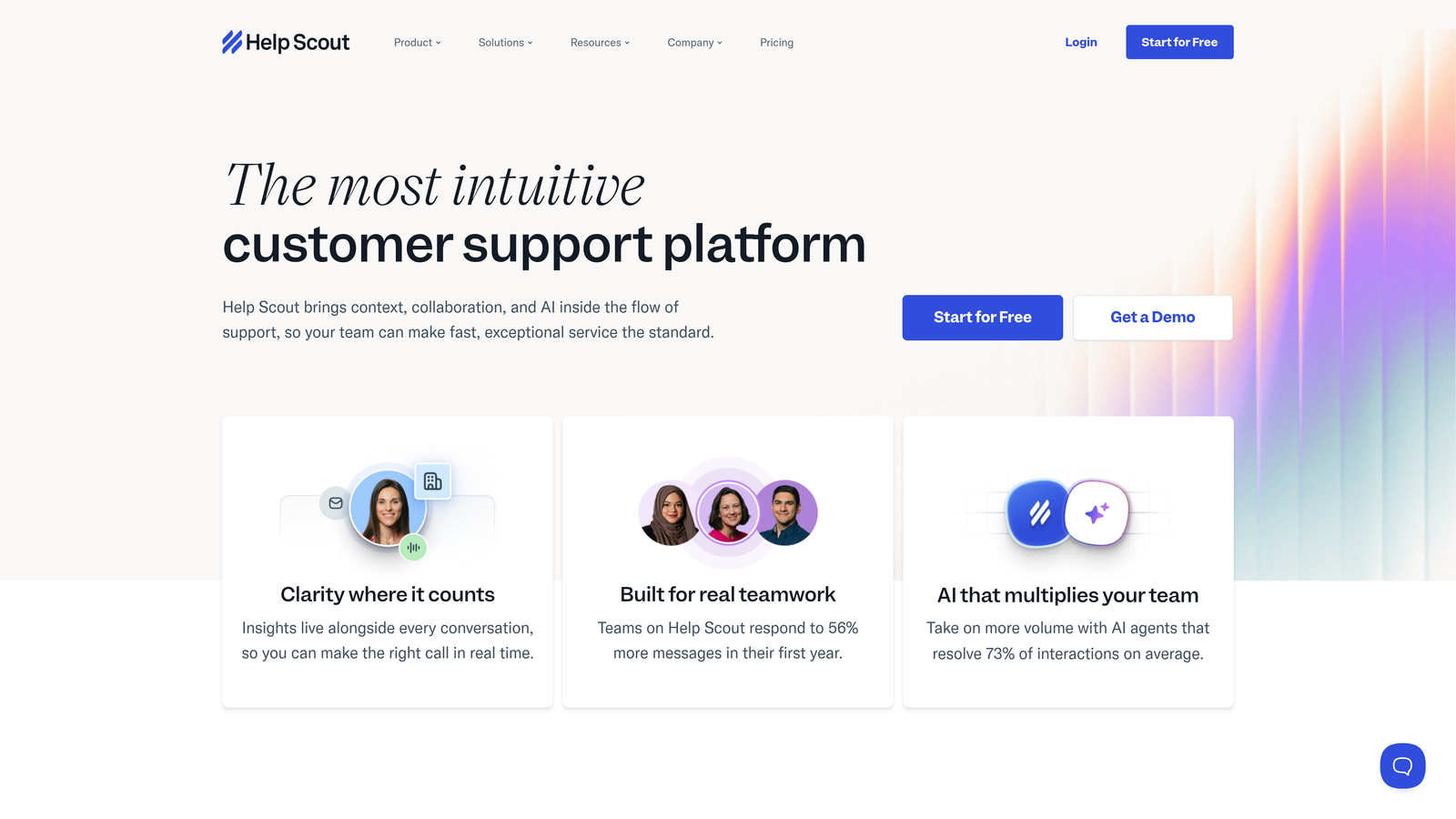
Help Scout focuses on making support feel personal through its Docs knowledge base and Beacon widget for contextual, embedded self-service.
Where This Tool Shines
Help Scout's Docs knowledge base is refreshingly simple—no overwhelming admin panels or configuration mazes. Articles look clean and readable, not like generic FAQ pages. This design-first approach means customers actually use your documentation.
The Beacon widget embeds contextually in your product, surfacing relevant articles based on the current page. It feels native rather than bolted-on, maintaining your product's user experience while providing help.
Key Features
Docs Knowledge Base: Clean, readable design with straightforward editing that non-technical team members can manage without training.
Beacon Widget: Embeddable help widget that surfaces contextual articles and enables seamless transition to live chat when needed.
AI Assist: Drafts response suggestions based on previous conversations, helping agents respond faster without sacrificing personalization.
Customer Satisfaction Ratings: Built-in CSAT surveys after every conversation, tracking satisfaction without third-party tools.
Minimal Learning Curve: Teams can be productive within hours, not weeks, thanks to intuitive interface design.
Best For
Small to mid-sized teams that value simplicity and customer experience over feature breadth. Ideal when you want support to feel personal, not automated.
Pricing
Standard at $20/user/month. Plus at $40/user/month includes AI Assist and advanced reporting.
6. Zoho Desk
Best for: Companies already using Zoho ecosystem seeking context-aware self-service
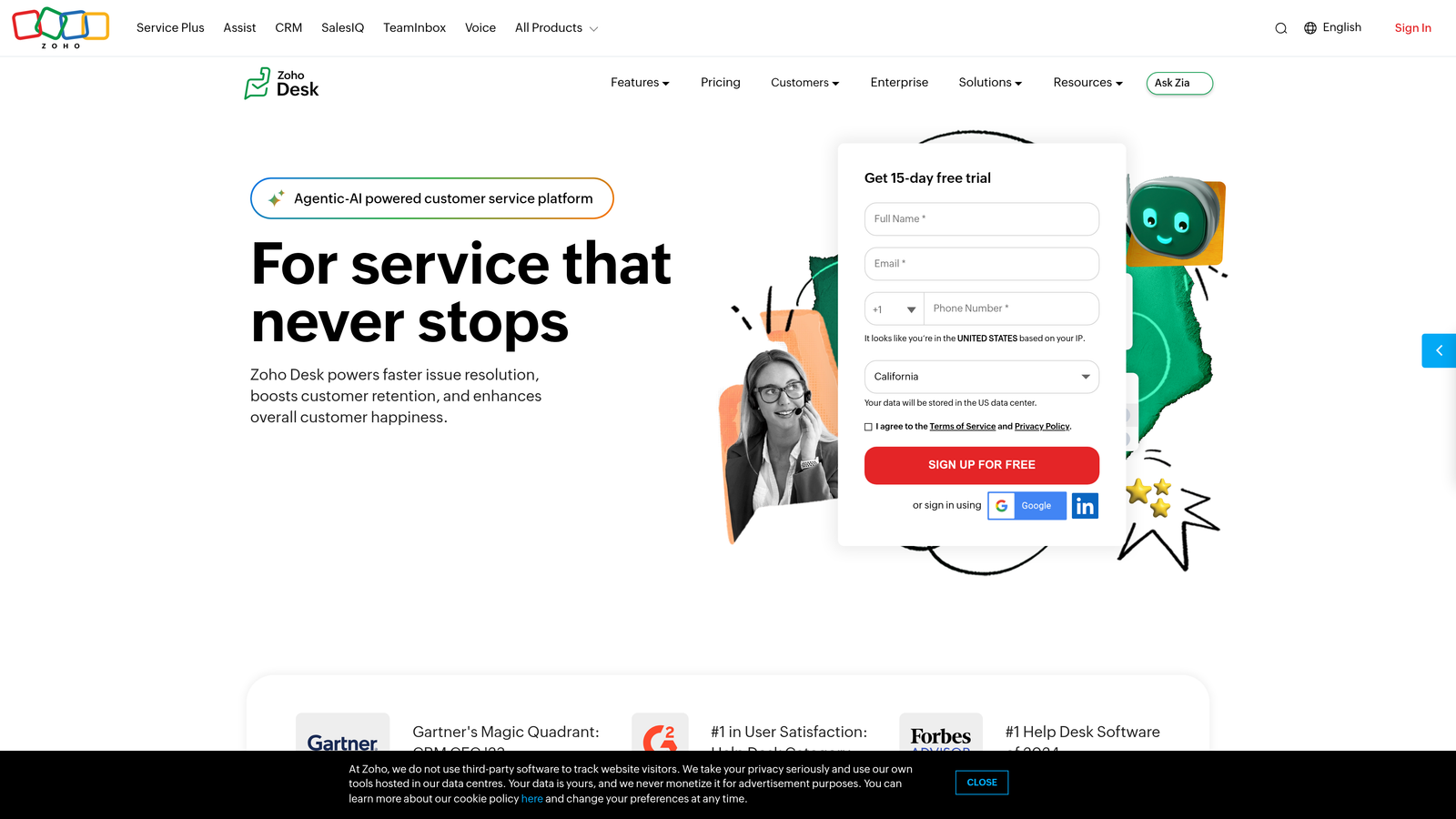
Zoho Desk provides context-aware helpdesk functionality with Zia AI assistant and ASAP widget for embedded self-service, deeply integrated throughout Zoho's business suite.
Where This Tool Shines
Zia AI goes beyond basic chatbots with sentiment analysis and intelligent auto-tagging. It understands customer emotion, flagging frustrated users for priority handling. This emotional intelligence helps teams focus attention where it matters most.
The ASAP widget embeds self-service directly into your product with guided conversations that walk users through structured troubleshooting. If you're already using Zoho CRM or other Zoho tools, the integration depth is unmatched.
Key Features
Zia AI: Sentiment analysis detects customer frustration, auto-tags tickets by topic, and suggests relevant articles based on ticket content.
ASAP Widget: Embeddable self-service with guided conversations that structure troubleshooting into logical steps.
Multi-Brand Help Centers: Manage separate knowledge bases for different products or brands from a single Zoho Desk instance.
Guided Conversations: Decision-tree style self-service that narrows down issues through structured questions before creating tickets.
Zoho Ecosystem Integration: Deep connections with Zoho CRM, Analytics, Projects, and other Zoho products for unified business operations.
Best For
Companies committed to the Zoho ecosystem seeking context-aware self-service that leverages existing CRM and business data.
Pricing
Free tier for 3 agents. Standard at $14/agent/month. Professional at $23/agent/month includes Zia AI.
7. Salesforce Service Cloud
Best for: Enterprise B2B companies needing self-service portals with deep CRM integration
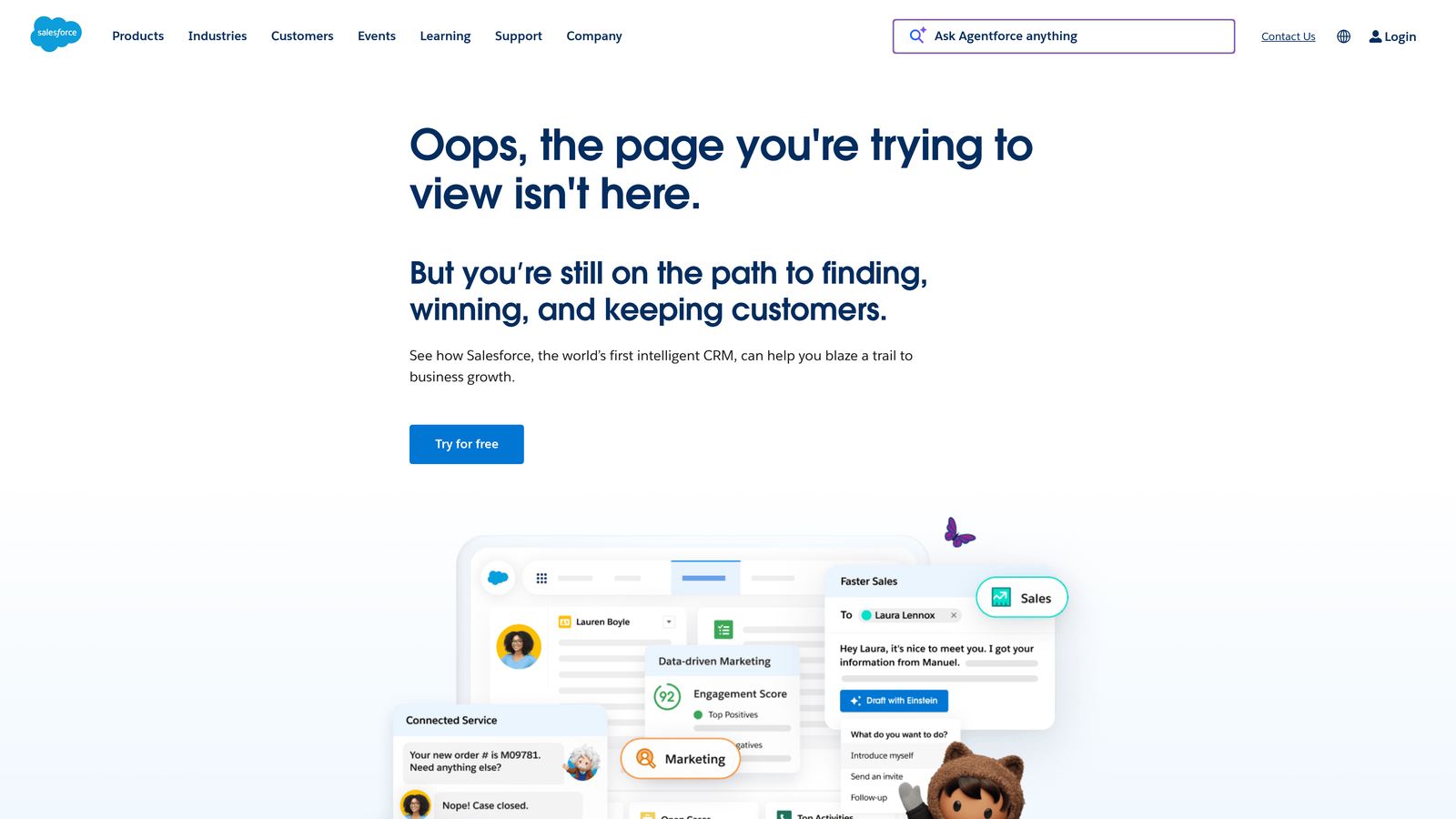
Salesforce Service Cloud delivers enterprise service capabilities with Einstein AI, Experience Cloud portals, and complete customer 360 visibility for complex B2B self-service requirements.
Where This Tool Shines
Einstein AI provides sophisticated case classification and next-best-action recommendations, routing customers through optimal self-service paths. The platform excels when support decisions require context from sales, marketing, and account data—all unified in Salesforce CRM.
Experience Cloud creates branded customer portals where clients access knowledge articles, submit cases, and track resolution status. This is particularly valuable for B2B companies serving enterprise customers who expect self-service portals, not just chatbots.
Key Features
Einstein AI: Automatic case classification, field population, and next-best-action recommendations based on historical patterns and customer context.
Experience Cloud: Build branded customer portals with custom branding, role-based access, and integrated knowledge management.
Knowledge Management: Article versioning, approval workflows, and publishing controls for enterprise content governance.
Omnichannel Routing: Intelligent routing across self-service channels ensures customers reach the right resource regardless of entry point.
Customer 360 View: Complete visibility into customer history across sales, service, and marketing for contextual support decisions.
Best For
Enterprise B2B companies with complex customer relationships requiring deep CRM integration and branded self-service portals. Best when you already use Salesforce for sales and marketing.
Pricing
Starter at $25/user/month. Professional at $80/user/month. Enterprise at $165/user/month with Einstein AI and Experience Cloud.
8. HubSpot Service Hub
Best for: Companies wanting unified marketing, sales, and service data in one platform
HubSpot Service Hub provides knowledge base, conversational bots, and customer portals unified with HubSpot's CRM, marketing, and sales tools for complete customer lifecycle visibility.
Where This Tool Shines
HubSpot's unified timeline shows every customer interaction across marketing emails, sales calls, and support tickets in one place. This context helps support agents understand customer journey before responding, eliminating the "let me pull up your account" delays.
The conversational bot builder uses visual workflows that marketers and support managers can configure without developer help. Free CRM included with all tiers means you're not paying separately for customer data infrastructure.
Key Features
Knowledge Base: SEO recommendations built into article editor, helping documentation rank in search engines and deflect tickets proactively.
Conversational Bots: Visual workflow builder for creating chatbots that qualify leads, route conversations, and answer common questions.
Customer Portal: Self-service portal where customers track ticket status, access knowledge articles, and manage their account information.
Unified Timeline: Every customer interaction across marketing, sales, and service appears in chronological order for complete context.
Free CRM: Core CRM functionality included with all Service Hub tiers, eliminating separate CRM subscription costs.
Best For
Companies seeking unified customer data across marketing, sales, and service. Particularly strong when you want one platform instead of integrating separate tools.
Pricing
Free tools available with basic features. Starter at $45/month for 2 users. Professional at $450/month includes automation and custom reporting.
9. Helpjuice
Best for: Documentation-heavy companies prioritizing knowledge base power over helpdesk features
Helpjuice is a dedicated knowledge base platform with intelligent search, extensive customization, and detailed analytics for teams where documentation quality drives self-service success.
Where This Tool Shines
Helpjuice's search engine rivals Google in sophistication, handling typos, synonyms, and natural language queries with impressive accuracy. Customers find answers even when searching with imprecise terms, which dramatically improves deflection rates.
The customization depth lets you match your exact brand aesthetic—not just colors, but typography, layouts, and custom CSS. This matters when your knowledge base is customer-facing and brand consistency is non-negotiable.
Key Features
Intelligent Search: Google-like search with typo tolerance, synonym recognition, and natural language processing for finding articles with imprecise queries.
Theme Customization: Extensive branding options including custom CSS, typography controls, and layout flexibility beyond simple color changes.
Analytics Dashboard: Detailed metrics on article views, search queries, and user paths showing exactly how customers navigate your documentation.
Multiple Knowledge Bases: Manage separate documentation sites for different products, departments, or customer segments from one account.
Content Migration Tools: Import existing documentation from other platforms with formatting preservation and bulk upload capabilities.
Best For
Companies where comprehensive documentation is the primary self-service strategy. Ideal for technical products requiring detailed guides, API documentation, or complex troubleshooting procedures.
Pricing
Starter at $120/month for 4 users. Pricing scales based on user count, with unlimited articles and storage on all plans.
Making the Right Choice
The best self-service platform depends on your specific support strategy and technical requirements. Halo AI leads when you need autonomous agents that continuously learn and improve, particularly for B2B SaaS teams tired of scaling support headcount linearly with customer growth.
For enterprise scale with extensive integrations, Zendesk and Salesforce Service Cloud deliver comprehensive capabilities—though both require significant configuration investment. Intercom excels when you want conversational self-service tightly integrated with user onboarding and product tours.
Budget-conscious teams should evaluate Freshdesk and Zoho Desk, which offer surprisingly robust features at accessible price points. Help Scout wins on simplicity when you prioritize customer experience over feature breadth. HubSpot Service Hub makes sense when you want unified customer data across marketing, sales, and service. Helpjuice dominates for documentation-heavy companies where knowledge base power matters more than helpdesk features.
The shift from reactive to proactive self-service is accelerating. Modern platforms don't just answer questions—they anticipate needs, surface contextual help, and learn from every interaction. Your support team shouldn't scale linearly with your customer base. Let AI agents handle routine tickets, guide users through your product, and surface business intelligence while your team focuses on complex issues that need a human touch.
See Halo in action and discover how continuous learning transforms every interaction into smarter, faster support.