9 Best Self-Service Support Platforms to Reduce Ticket Volume in 2026
The right self-service support platform empowers customers to resolve issues independently while reducing repetitive tickets that overwhelm support teams. We evaluated nine leading platforms in 2026 based on AI capabilities, knowledge base functionality, implementation ease, integration depth, and scalability for B2B teams—helping you choose a solution that actually delivers on reducing ticket volume while improving customer satisfaction.
 Matt PattoliFounder11 min read
Your support team is drowning in repetitive questions while customers wait in queues for answers they could find themselves. The right self-service support platform changes this dynamic entirely—empowering customers to resolve issues independently while freeing your team for complex problems that actually need human attention. But with dozens of platforms claiming to slash ticket volume, choosing the right one matters. We evaluated these platforms based on AI capabilities, knowledge base functionality, ease of implementation, integration depth, and real scalability for growing B2B teams. Here are nine platforms worth your attention in 2026.
1. Halo AI
Best for: B2B companies wanting autonomous AI agents that continuously learn and resolve tickets without human intervention.
Halo AI represents a fundamental shift from deflection-focused chatbots to resolution-focused autonomous support.
Where This Tool Shines
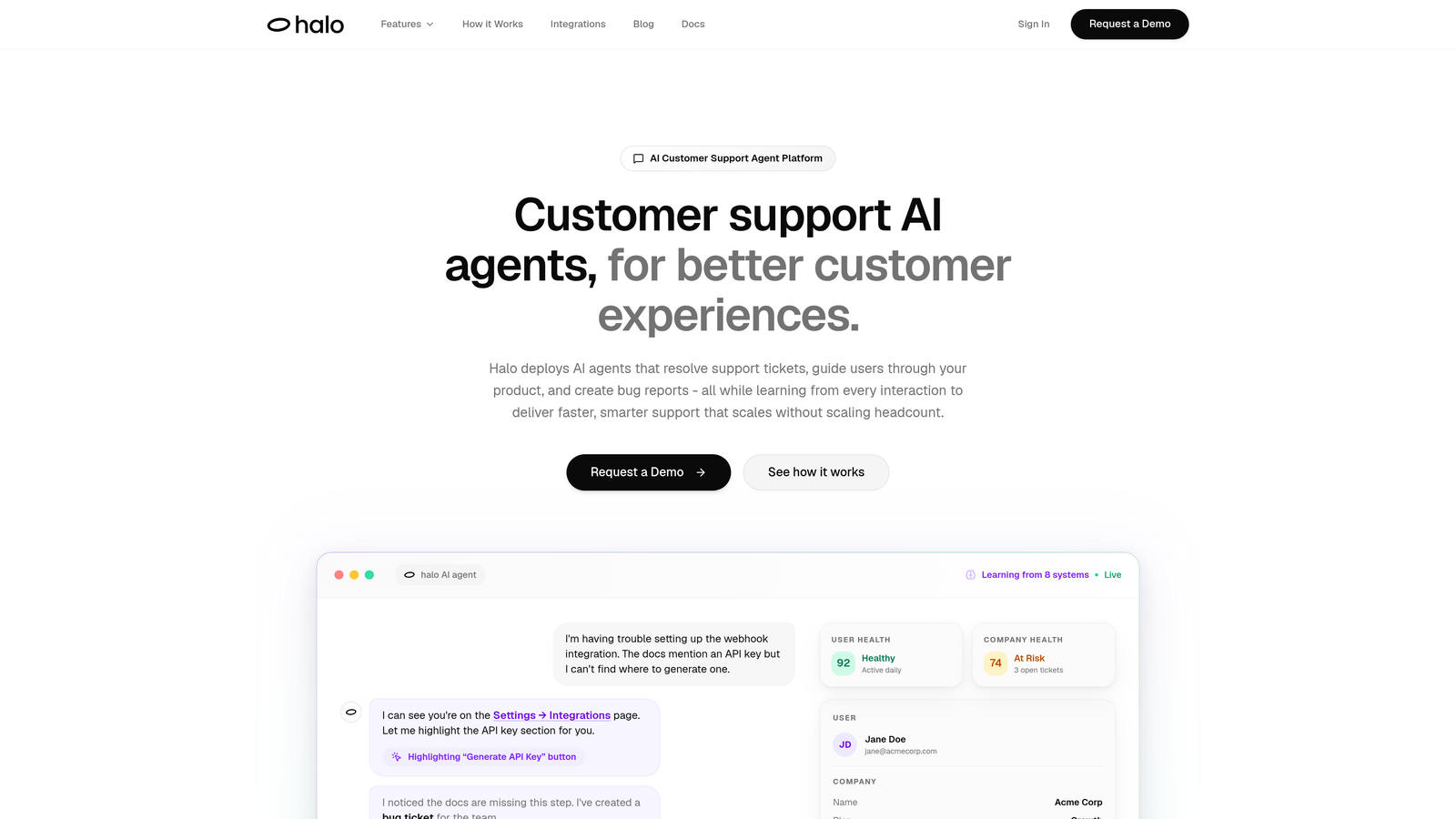
Unlike traditional self-service platforms that simply point customers to documentation, Halo deploys AI agents that actually resolve support tickets end-to-end. The platform's page-aware capabilities mean it sees exactly what your users see, providing contextual guidance that goes beyond generic help articles.
What sets Halo apart is continuous learning—every customer interaction makes the AI smarter. The platform doesn't just answer questions; it creates bug tickets automatically, hands off complex issues to live agents seamlessly, and surfaces business intelligence from support conversations that help you understand customer health and revenue signals.
Key Features
Autonomous AI Agents: Resolve support tickets independently without requiring human intervention for routine issues.
Page-Aware Chat Widget: Provides visual UI guidance by seeing exactly what users see on your product interface.
Continuous Learning: Improves resolution accuracy with every interaction, building institutional knowledge automatically.
Auto Bug Ticket Creation: Identifies product issues during support conversations and creates tickets in Linear automatically.
Deep Stack Integration: Connects to Linear, Slack, HubSpot, Intercom, Stripe, Zoom, PandaDoc, and Fathom for comprehensive context.
Best For
B2B SaaS companies and product teams currently using helpdesk systems like Zendesk, Freshdesk, or Intercom who need support that scales without scaling headcount. Particularly valuable for teams drowning in repetitive tickets and those wanting business intelligence beyond basic support metrics.
Pricing
Contact for pricing; demo available to see the AI agents in action with your specific use cases.
2. Zendesk
Best for: Enterprise teams needing comprehensive self-service as part of a full customer service suite.
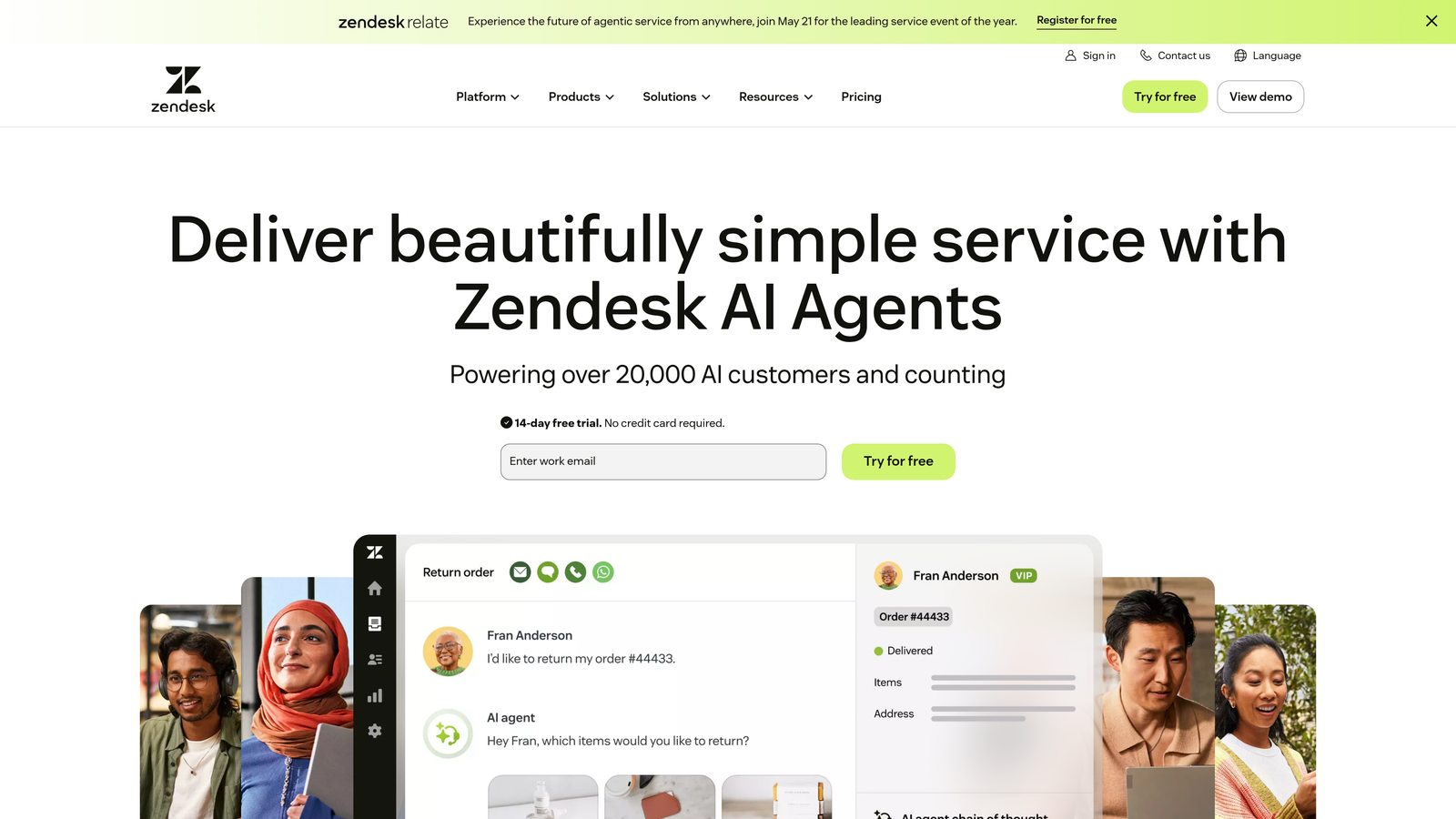
Zendesk offers enterprise-grade self-service capabilities integrated into a complete customer service platform.
Where This Tool Shines
Zendesk's strength lies in its maturity and comprehensiveness. The platform has been refined over years of enterprise deployments, resulting in robust help center capabilities, community forums for peer-to-peer support, and Answer Bot for automated article suggestions.
The platform excels at content management with content cues that identify knowledge gaps based on ticket patterns. For global teams, multi-language support comes standard, and the customization options let you create branded help centers that feel like natural extensions of your product.
Key Features
Customizable Help Center: Create branded self-service portals with extensive theme customization and custom domains.
Community Forums: Enable peer-to-peer support where customers help each other, reducing team burden.
Answer Bot: Automatically suggests relevant articles based on customer inquiries before tickets are created.
Content Cues: Identify knowledge gaps by analyzing which topics generate the most tickets without good articles.
Multi-Language Support: Serve global customers with localized help centers and automated translation workflows.
Best For
Large enterprises with complex support operations, multiple product lines, and global customer bases requiring robust localization. Teams already invested in the Zendesk ecosystem will find the self-service features integrate seamlessly with existing workflows.
Pricing
Suite Team starts at $55 per agent per month; more advanced self-service features require Suite Growth or Professional tiers.
3. Intercom
Best for: Product-led companies wanting conversational self-service that feels like messaging, not traditional help centers.
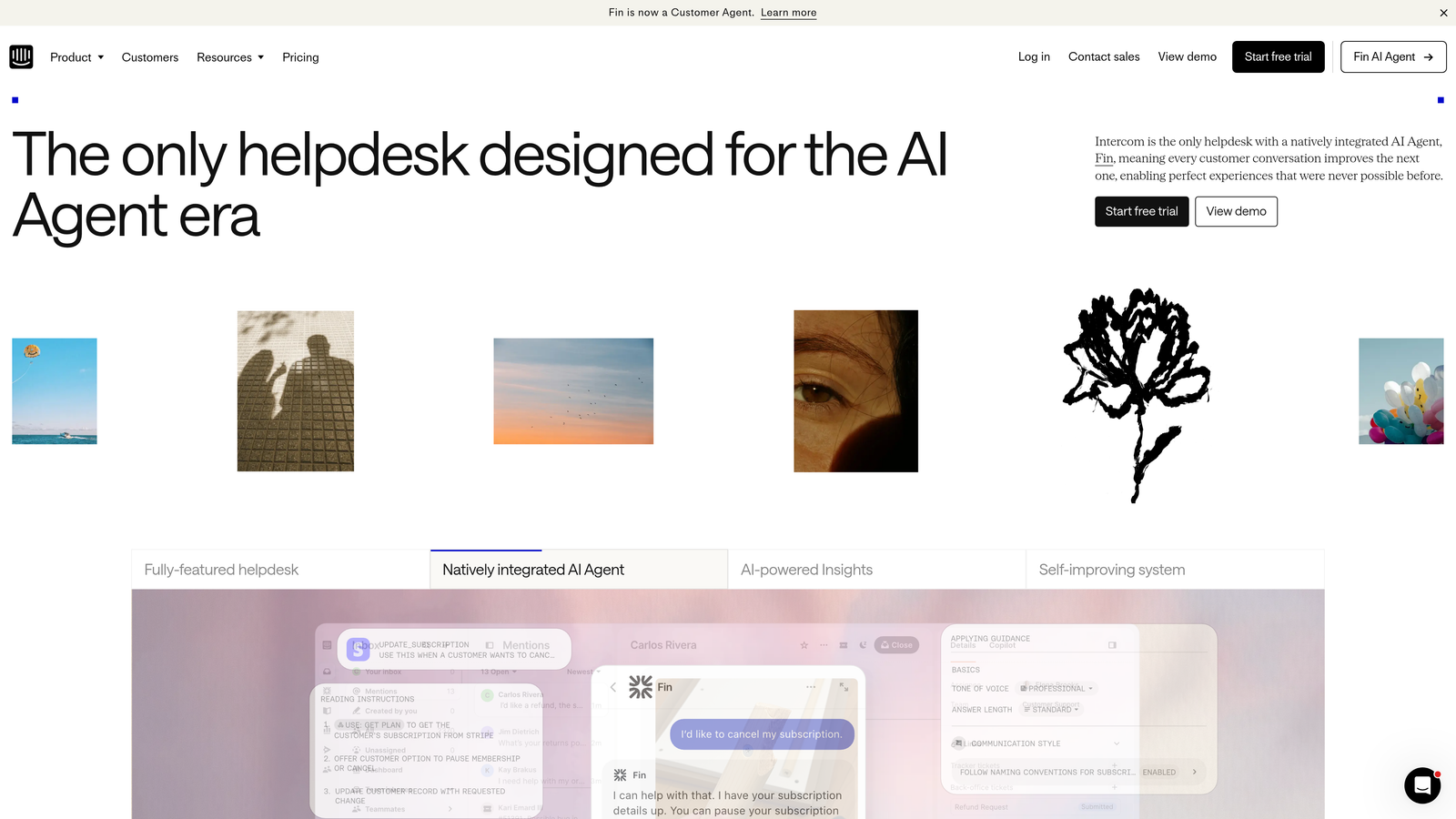
Intercom combines messenger-based self-service with Fin AI agent for automated conversational resolution.
Where This Tool Shines
Intercom built its platform around the messenger experience, making self-service feel natural rather than forcing customers to search knowledge bases. Fin AI handles conversations like a human agent, understanding context and resolving issues through dialogue rather than article links.
The platform shines for in-app guidance with product tours and tooltips that prevent issues before they become support tickets. Resolution reports measure actual self-service success, showing you which topics Fin handles autonomously versus what requires human escalation.
Key Features
Fin AI Agent: Conversational AI that resolves customer questions through natural dialogue, not just article deflection.
Messenger-First Experience: Self-service delivered through familiar messaging interface rather than traditional help centers.
Product Tours and Tooltips: In-app guidance that prevents support issues by educating users contextually.
Customizable Help Center: Traditional knowledge base available when customers prefer browsing over conversation.
Resolution Reports: Detailed analytics showing which topics Fin resolves versus what needs human agents.
Best For
Product-led SaaS companies with strong in-app engagement models. Teams wanting to blend proactive education with reactive support, particularly those already using Intercom for customer communication.
Pricing
Starts at $39 per seat per month; Fin AI charged separately per resolution, making costs variable based on usage.
4. Freshdesk
Best for: Growing teams wanting enterprise-grade self-service capabilities without enterprise pricing.
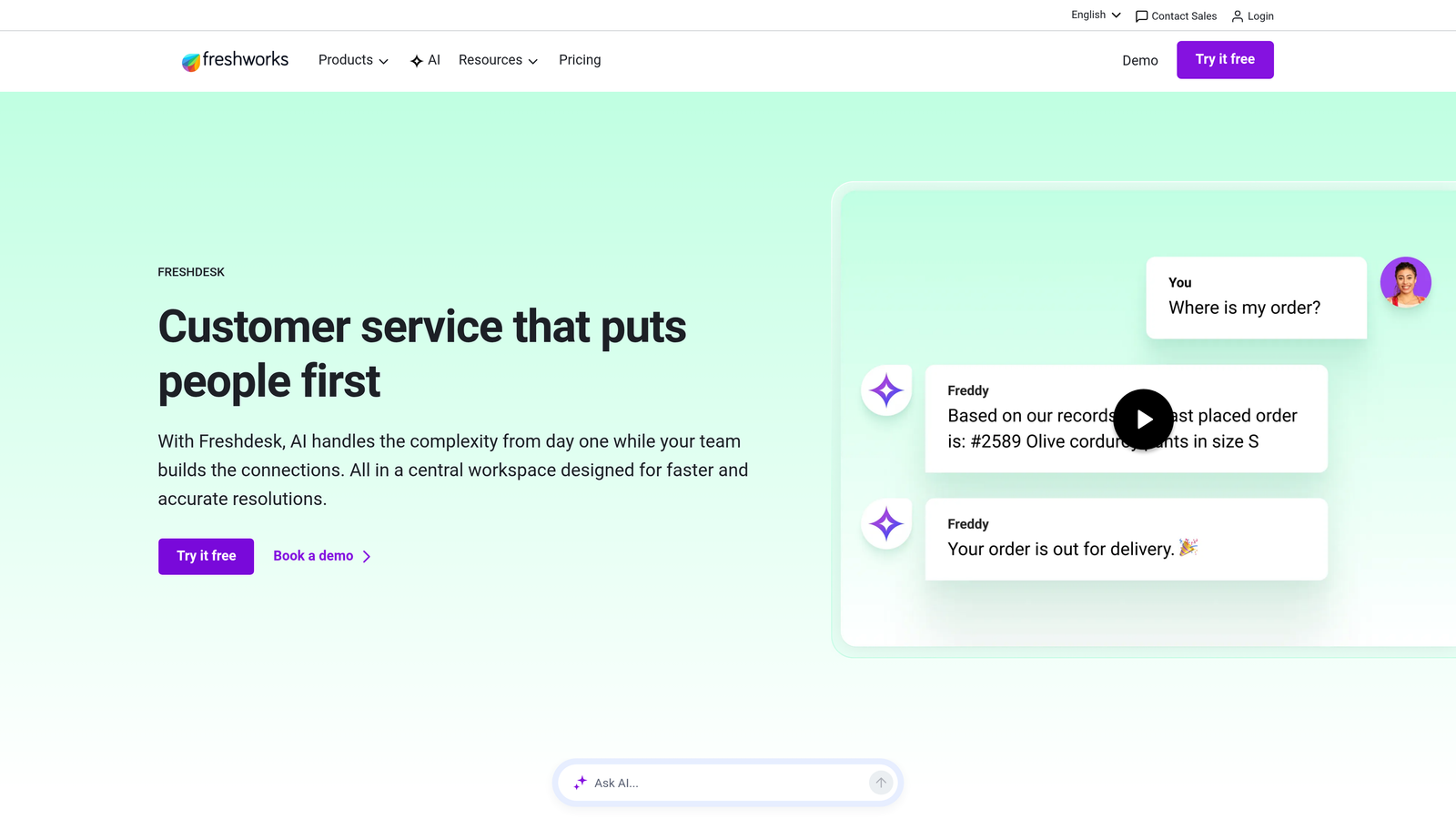
Freshdesk delivers feature-rich self-service powered by Freddy AI at competitive pricing points.
Where This Tool Shines
Freshdesk offers remarkable value, with a genuinely useful free tier and affordable paid plans that don't sacrifice features. Freddy AI provides automated responses and intelligent article suggestions, while the knowledge base includes SEO optimization to help customers find answers through search engines.
The platform's email-to-knowledge-base conversion feature automatically creates help articles from resolved tickets, building your knowledge base organically. Multi-product and multi-language portals let you serve diverse customer segments from a single platform.
Key Features
Freddy AI: Automated responses, article suggestions, and predictive support reducing ticket volume intelligently.
SEO-Optimized Knowledge Base: Help articles rank in search engines, deflecting tickets before they're created.
Community Forums: Peer-to-peer support with idea management for product feedback collection.
Email-to-KB Conversion: Turn resolved ticket conversations into help articles automatically.
Multi-Product Portals: Manage separate knowledge bases for different products or customer segments.
Best For
Growing B2B companies needing robust self-service without breaking the budget. Teams wanting to experiment with AI-powered support before committing to expensive enterprise platforms.
Pricing
Free tier available for small teams; Growth at $15 per agent per month; Pro at $49 per agent per month.
5. Help Scout
Best for: Customer-focused teams wanting self-service that enhances rather than replaces the personal touch.
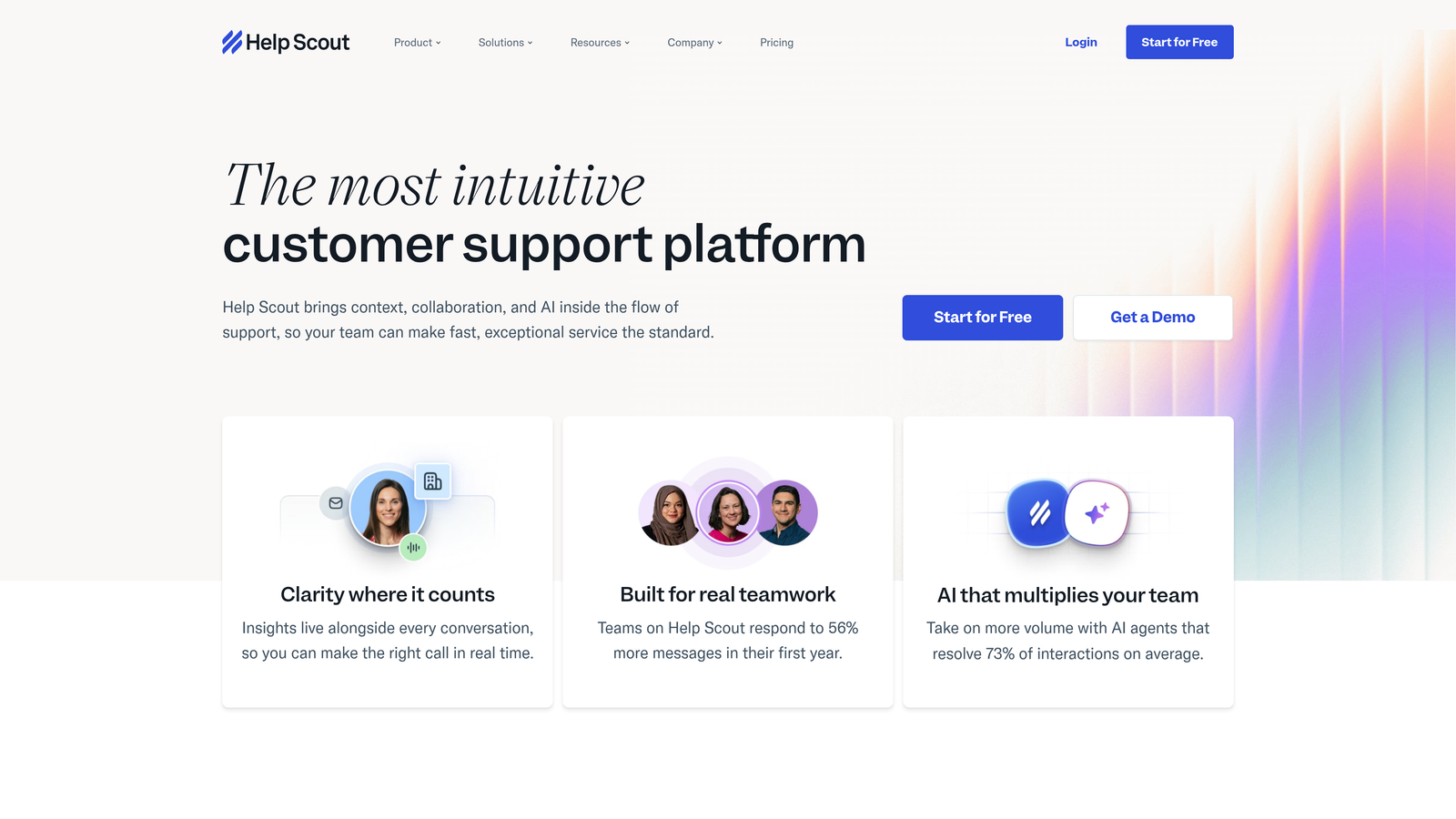
Help Scout delivers contextual self-service through the Beacon widget without disrupting user experience.
Where This Tool Shines
Help Scout's Beacon widget provides contextual article suggestions based on what page customers are viewing, making help feel proactive rather than reactive. The interface prioritizes customer experience over feature bloat, creating clean, approachable self-service portals.
AI Assist helps agents draft responses and summarize conversations, while proactive messages based on user behavior prevent issues before customers ask. The platform feels designed for teams that view support as relationship-building, not just ticket deflection.
Key Features
Beacon Widget: Contextual article suggestions based on current page, plus contact options when self-service isn't enough.
Docs Knowledge Base: Clean, searchable help center with custom domains and extensive branding options.
AI Assist: Help agents draft better responses and summarize long conversation threads efficiently.
Proactive Messages: Trigger helpful messages based on user behavior patterns to prevent support issues.
Customer-Friendly Interface: Clean design that customers actually want to use rather than avoid.
Best For
B2B companies with strong customer relationship focus, particularly those in professional services or high-touch SaaS. Teams wanting self-service that complements rather than replaces human support.
Pricing
Standard at $20 per user per month; Plus at $40 per user per month with advanced features.
6. Helpjuice
Best for: Teams prioritizing powerful search and extensive customization in a dedicated knowledge base platform.
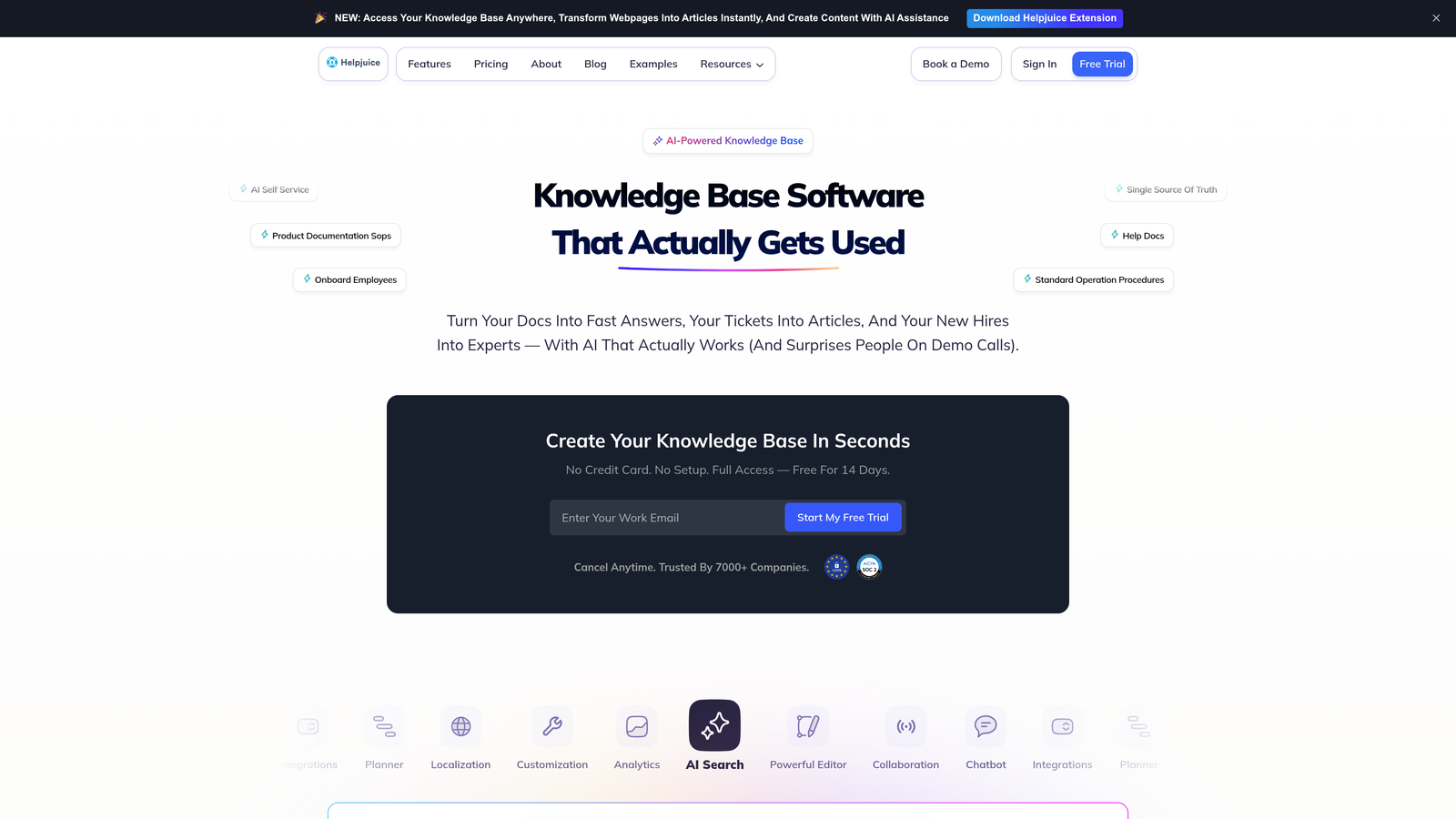
Helpjuice focuses exclusively on knowledge management with Google-like search and detailed analytics.
Where This Tool Shines
Helpjuice's search functionality rivals Google, using intelligent algorithms that understand synonyms, typos, and context. The platform provides detailed article analytics showing exactly how customers interact with your content, which articles succeed, and where knowledge gaps exist.
Version control and article workflows ensure content accuracy, while the ability to manage multiple knowledge bases from one account serves companies with diverse product lines or customer segments. Theme customization goes deeper than most competitors, letting you create truly branded experiences.
Key Features
Intelligent Search: Google-like search understanding synonyms, typos, and contextual meaning for better results.
Extensive Customization: Deep theme control creating branded knowledge bases that match your product design.
Detailed Analytics: Article-level insights showing views, searches, ratings, and user behavior patterns.
Multiple Knowledge Bases: Manage separate portals for different products or customer segments from one account.
Version Control: Track article changes, revert to previous versions, and manage approval workflows.
Best For
Companies with complex product documentation needs requiring powerful search and detailed analytics. Teams wanting a dedicated knowledge base platform rather than a full helpdesk suite.
Pricing
Starter at $120 per month for up to four users; scaling tiers available based on user count.
7. Document360
Best for: Technical teams needing robust API documentation alongside customer-facing knowledge bases.
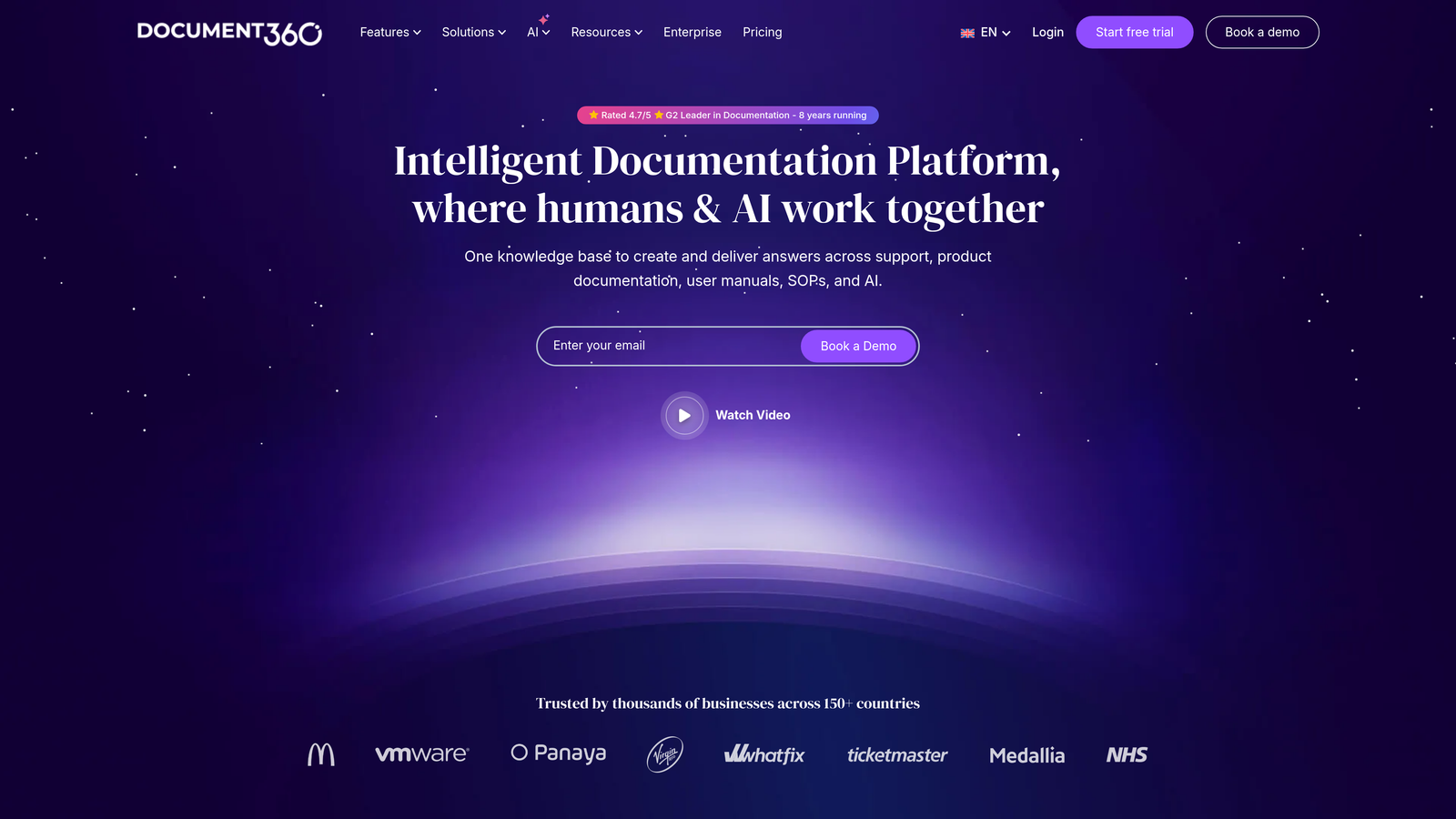
Document360 specializes in technical documentation with AI-powered search and version control.
Where This Tool Shines
Document360 understands technical documentation requirements, offering API documentation support alongside traditional help articles. The category manager handles complex documentation structures that would overwhelm simpler platforms, making it ideal for SaaS products with extensive feature sets.
Eddy, the AI assistant, powers intelligent search that understands technical terminology and provides contextual answers. Version control and branching support multiple product versions simultaneously, critical for companies maintaining legacy versions alongside current releases.
Key Features
AI-Powered Search: Eddy assistant understands technical queries and provides contextual answers beyond keyword matching.
Category Manager: Handle complex documentation hierarchies for products with extensive feature sets.
API Documentation: Dedicated support for technical documentation alongside customer-facing content.
Version Control and Branching: Manage multiple product versions with separate documentation branches.
Analytics Dashboard: Search insights showing what customers look for and where documentation falls short.
Best For
Technical SaaS companies with complex products requiring both customer documentation and developer resources. Teams managing multiple product versions needing separate documentation branches.
Pricing
Free tier available for small projects; Standard at $149 per project per month with advanced features.
8. Stonly
Best for: Teams wanting interactive, step-by-step guides rather than traditional static help articles.
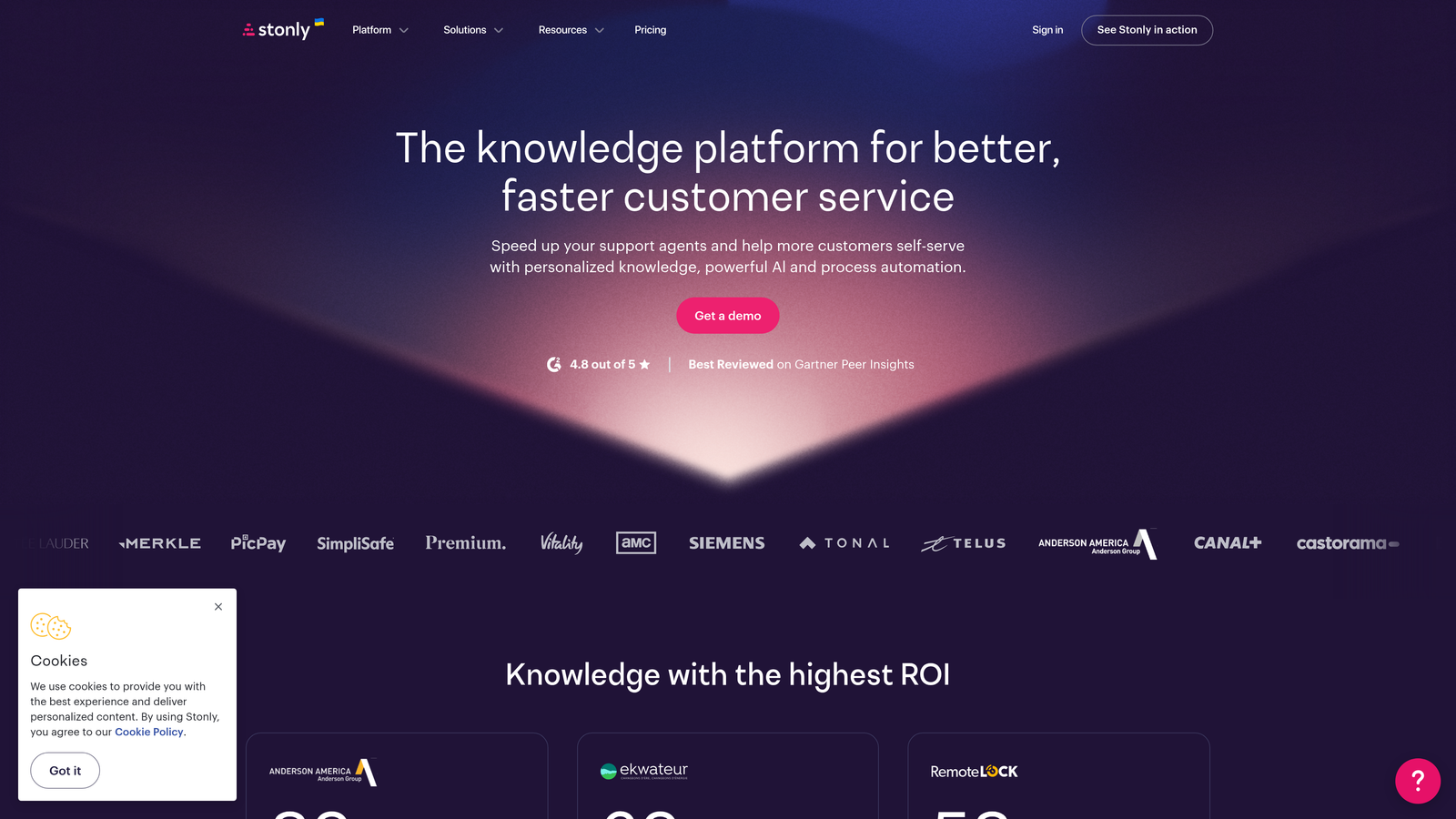
Stonly enables no-code creation of interactive guides with branching logic for personalized experiences.
Where This Tool Shines
Stonly reimagines self-service as interactive experiences rather than passive reading. The no-code builder lets non-technical team members create sophisticated decision trees that guide customers through complex processes step-by-step.
Branching logic personalizes paths based on customer responses, ensuring everyone gets relevant guidance. Analytics on guide completion rates show exactly where customers succeed or drop off, helping you refine experiences. The guides embed directly into your product or work as standalone portals.
Key Features
No-Code Guide Builder: Create interactive experiences without technical skills using visual editor.
Branching Logic: Personalize customer paths based on their responses and context.
Embeddable Widgets: Deploy guides directly in your product interface or as standalone portals.
Completion Analytics: Track where customers succeed or abandon guides to optimize experiences.
Helpdesk Integration: Connect to existing support platforms for seamless escalation when guides aren't enough.
Best For
Companies with complex setup processes or troubleshooting workflows that benefit from step-by-step guidance. Teams wanting to move beyond static articles to interactive experiences.
Pricing
Small Business at $249 per month; custom enterprise pricing for larger deployments.
9. Guru
Best for: Companies wanting to unify internal team knowledge with customer-facing self-service.
Guru bridges internal knowledge management and external customer support through AI-powered suggestions.
Where This Tool Shines
Guru's unique approach surfaces knowledge exactly when needed through browser extensions and workplace integrations. The platform suggests relevant information directly in your workflow—whether you're in Slack, Teams, or your helpdesk—eliminating the need to search separately.
Verification workflows ensure content stays accurate with designated experts reviewing articles periodically. Analytics reveal knowledge usage patterns and gaps, helping teams understand what information employees and customers actually need. The platform serves both internal teams and external customers from the same knowledge base.
Key Features
AI-Powered Suggestions: Surface relevant knowledge automatically in workflow without requiring manual search.
Browser Extension: Access knowledge contextually while working in any web application.
Verification Workflows: Designated experts review content periodically ensuring accuracy over time.
Slack and Teams Integration: Answer questions directly in workplace chat without leaving the conversation.
Usage Analytics: Understand which knowledge gets used, by whom, and where gaps exist.
Best For
Companies wanting a single source of truth serving both internal teams and external customers. Organizations struggling with knowledge scattered across multiple tools and platforms.
Pricing
Free tier for small teams; Builder at $10 per user per month; Enterprise pricing available for larger deployments.
Matching Your Self-Service Strategy to Your Reality
The self-service landscape has evolved beyond simple knowledge bases. Modern platforms fall into distinct categories, each solving different problems.
Full-service helpdesk suites like Zendesk, Freshdesk, and Intercom integrate self-service into comprehensive support operations. They work well when you need ticketing, live chat, and knowledge bases unified under one platform. The trade-off? You're buying features you might not need, and self-service capabilities sometimes feel like add-ons rather than core strengths.
Dedicated knowledge platforms like Helpjuice and Document360 excel at one thing: organizing and delivering information. If your primary challenge is content management and search, these focused tools often outperform the knowledge base modules in broader suites.
Interactive guide platforms like Stonly represent a different philosophy entirely. When your customers need step-by-step guidance through complex processes, static articles fall short. These platforms create choose-your-own-adventure experiences that adapt to each customer's situation.
AI-first platforms like Halo represent the newest category—autonomous agents that resolve issues rather than just deflecting to documentation. This matters when you're drowning in repetitive tickets that consume agent time without requiring complex problem-solving.
Your choice depends on what you're actually trying to solve. Reducing ticket volume? Look at platforms with strong AI resolution capabilities, not just deflection metrics. Managing complex technical documentation? Prioritize robust search and version control. Serving global customers? Multi-language support becomes non-negotiable.
The biggest shift in self-service isn't about features—it's about expectations. Customers no longer accept being redirected to documentation when AI could solve their problem immediately. The platforms winning in 2026 understand that self-service means resolution, not deflection.
Your support team shouldn't scale linearly with your customer base. Let AI agents handle routine tickets, guide users through your product, and surface business intelligence while your team focuses on complex issues that need a human touch. See Halo in action and discover how continuous learning transforms every interaction into smarter, faster support.