9 Best Tools to Fix Slow Support Response Times in 2026
Slow support response times stem from structural problems — ticket overload, poor routing, knowledge gaps, and scheduling failures — that hiring alone can't fix. This guide reviews 9 tools that directly address these root causes, spanning AI-first support agents, intelligent helpdesks, knowledge management platforms, and workforce planning software, so teams can reduce both first response and full resolution times.
 Grant CooperFounder13 min read
Slow support response times don't just frustrate customers — they erode trust, accelerate churn, and quietly drain your team's morale. And the traditional fix, hiring more agents, only buys you time before the same problem resurfaces at a larger scale.
The real issue is structural. Most support operations are bottlenecked by some combination of ticket volume outpacing capacity, agents spending too long finding the right answer, poor routing causing unnecessary handoffs, or scheduling gaps that leave queues unattended during peak hours. Each of these root causes requires a different type of solution.
The tools below address slow response times directly — not just by speeding up first response, but by reducing full time-to-resolution. They span AI-first support agents, helpdesk platforms with intelligent automation, knowledge management tools, and workforce planning software. Whatever the root cause of your queue backlog, there's a fit here for your team size, tech stack, and maturity level.
1. Halo AI
Best for: B2B SaaS teams that want AI agents to autonomously resolve tickets end-to-end
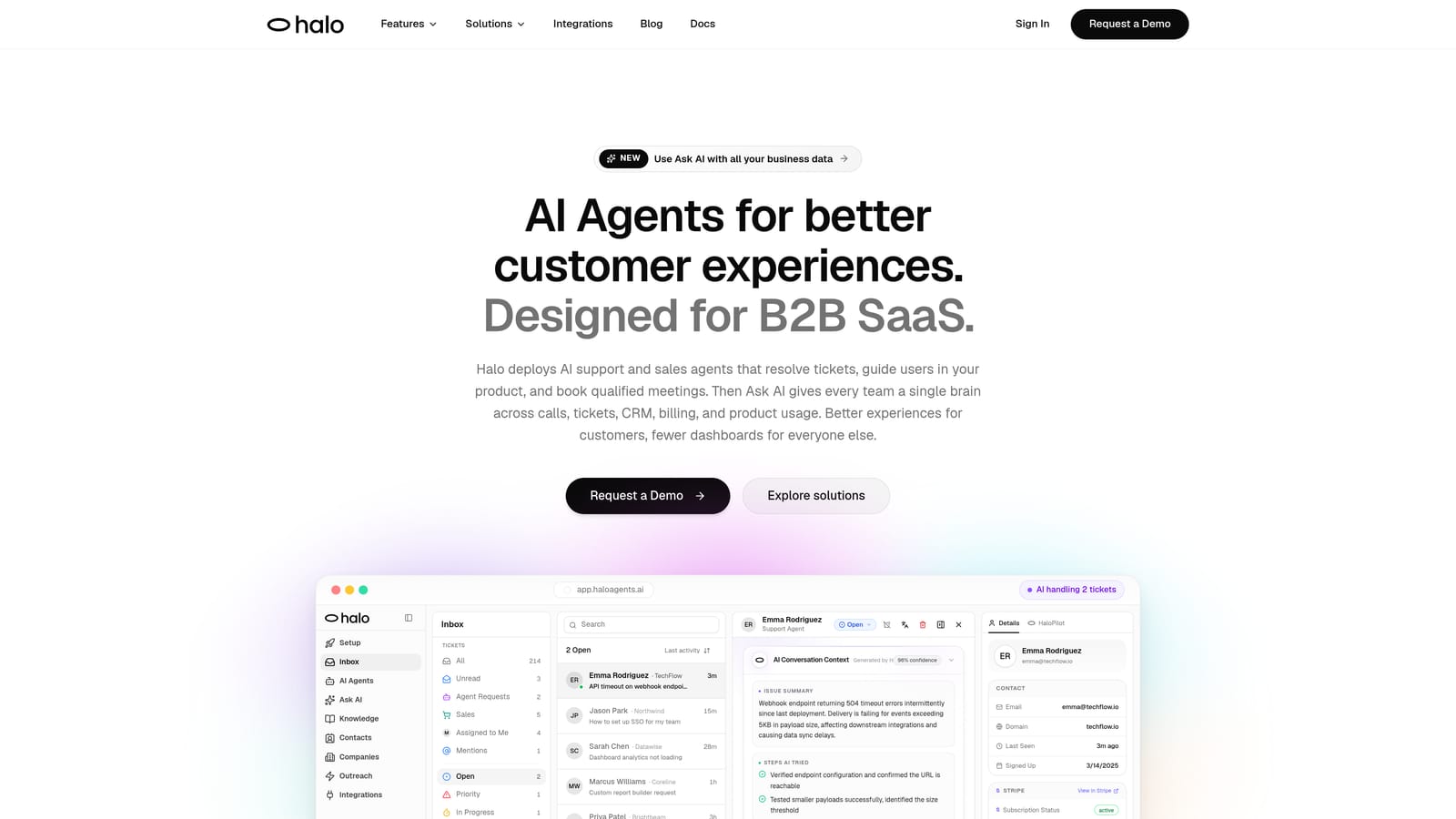
Halo AI is an AI-first customer support platform that deploys autonomous agents to resolve tickets, guide users through your product with page-aware context, and surface business intelligence — all while continuously learning from every interaction.
Where This Tool Shines
Most helpdesk tools bolt AI onto an existing agent workflow. Halo is built the other way around: the AI agent is the primary responder, not a secondary suggestion layer. That architectural difference matters when you're trying to reduce resolution time, not just first-response time.
The page-aware chat widget is particularly useful for SaaS products with complex UIs. The AI understands what the user is actually looking at in your product, which means it can deliver contextual guidance rather than generic answers. Over time, every resolved ticket makes the system smarter — so resolution quality compounds as your customer base grows.
Key Features
Autonomous Ticket Resolution: AI agents handle tickets end-to-end without requiring human review for routine queries, reducing queue depth significantly.
Page-Aware Chat Widget: The widget understands the user's current location in your product and delivers guidance that matches what they're actually seeing.
Smart Inbox with Business Intelligence: Goes beyond support metrics to surface customer health signals, revenue anomalies, and trend detection that inform broader business decisions.
Auto Bug Ticket Creation: Automatically identifies and routes bug reports directly to Linear or your engineering workflow, closing the loop between support and product teams.
Live Agent Handoff: Complex issues escalate seamlessly to human agents with full conversation context preserved, so customers never have to repeat themselves.
Deep Integrations: Connects to Slack, HubSpot, Intercom, Stripe, Zoom, PandaDoc, Fathom, and more — so the AI has access to the full business context it needs to resolve tickets accurately.
Best For
B2B SaaS companies and product teams that are ready to move beyond AI-assisted support and into AI-first support. Particularly strong for teams using Zendesk, Freshdesk, or Intercom today who want a more intelligent resolution layer on top of their existing stack.
Pricing
Not publicly listed. A demo is required to get pricing details — you can book one at haloagents.ai.
2. Intercom
Best for: Teams already using Intercom's messaging suite that want AI-powered query resolution
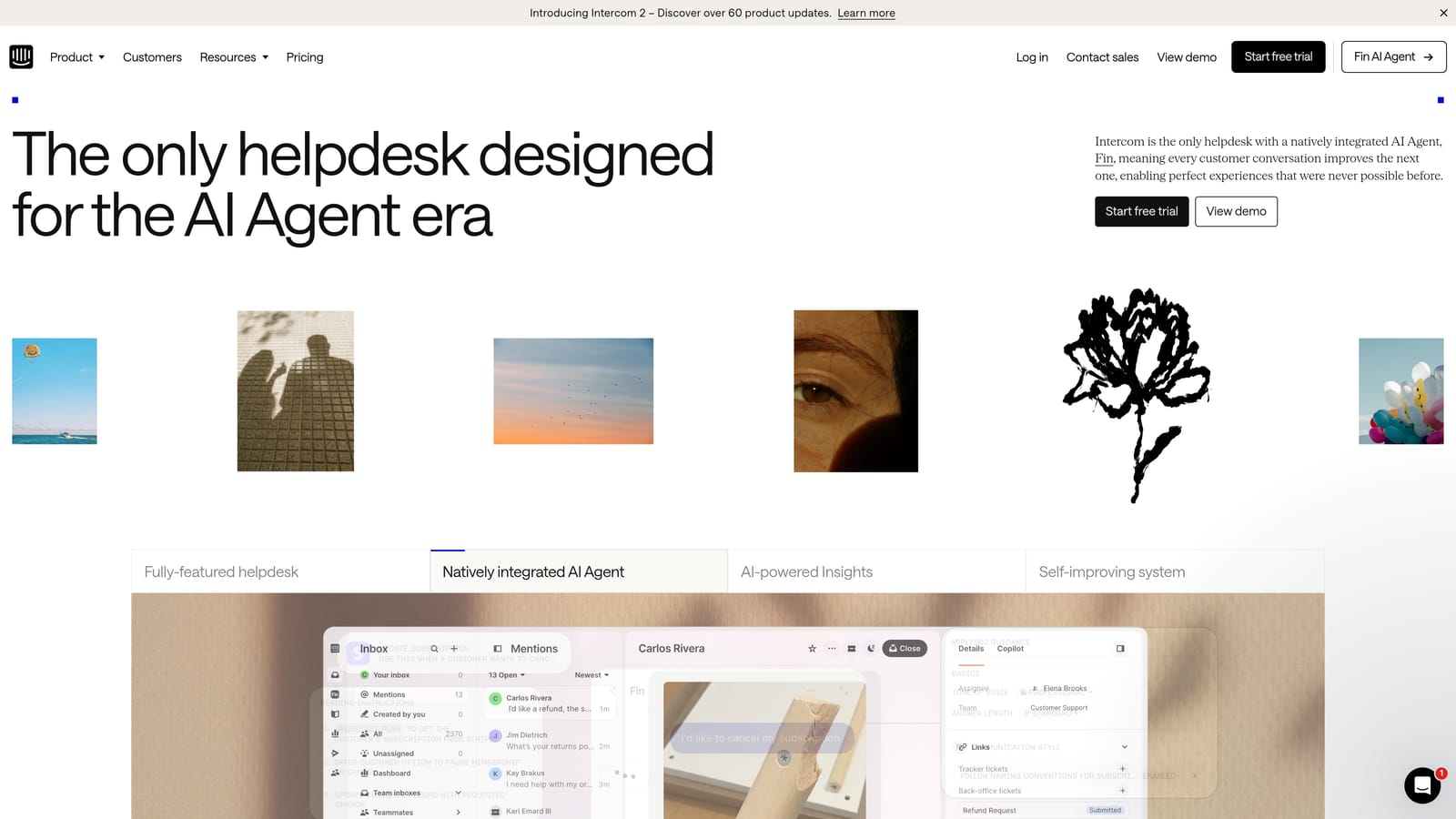
Intercom is a customer communications platform featuring Fin, an AI agent built on large language models that can handle a meaningful portion of inbound support queries without human involvement.
Where This Tool Shines
Fin works well because it's trained on your existing help content and can handle multi-turn conversations across chat and email. For teams already living in the Intercom ecosystem, the integration is seamless and the ramp time is low.
The AI Copilot feature is also worth noting: it surfaces suggested replies and relevant knowledge articles for agents handling escalated tickets, which reduces the time agents spend searching for answers mid-conversation.
Key Features
Fin AI Agent: Handles inbound queries autonomously across chat and email channels using large language model reasoning.
Unified Inbox: Combines chat, email, and in-app messaging into a single view so agents aren't context-switching between channels.
AI Copilot: Surfaces suggested replies and knowledge articles for agents, reducing handle time on escalated conversations.
Conversation Routing: Assignment rules and routing logic direct tickets to the right team or agent based on context and availability.
Reporting and CSAT: Built-in reporting on response time, resolution rate, and customer satisfaction scores.
Best For
Teams already using Intercom for customer messaging who want to add AI resolution without switching platforms. Also a strong fit for product-led growth companies with high inbound chat volume.
Pricing
Starts around $39/seat/month; Fin AI usage is priced per resolution, so costs scale with the volume of queries the AI handles. Verify current pricing at intercom.com.
3. Zendesk
Best for: Enterprise support teams with complex routing, SLA requirements, and multi-channel operations
Zendesk is the industry-standard enterprise helpdesk platform, now with AI-powered triage, an agent copilot, and intelligent routing built into its Suite offering.

Where This Tool Shines
Zendesk's depth is its strength. For teams managing thousands of tickets across email, chat, voice, and social channels, the routing logic, SLA management, and workflow automation are genuinely powerful. The platform has the maturity and configurability that complex support operations require.
The AI layer has improved meaningfully in recent years. Intelligent triage automatically categorizes and prioritizes incoming tickets, while the Agent Copilot suggests macros and next-best-action guidance that helps agents move faster without sacrificing quality.
Key Features
AI-Powered Triage: Automatically categorizes, prioritizes, and routes incoming tickets based on intent and content.
Agent Copilot: Suggests macros, next-best-action steps, and relevant knowledge to help agents resolve tickets faster.
SLA Management: Built-in SLA tracking and escalation workflows ensure priority tickets don't fall through the cracks.
Multi-Channel Support: Handles email, chat, voice, and social from a single platform.
Marketplace Integrations: Extensive library of apps and integrations for connecting to your broader tech stack.
Best For
Mid-market and enterprise teams with complex support operations, multiple channels, and strict SLA requirements. Less ideal for early-stage teams where the configuration overhead outweighs the benefit.
Pricing
Suite Team starts around $55/agent/month; AI features are available on higher tiers. Pricing changes frequently — confirm at zendesk.com.
4. Freshdesk
Best for: Growing teams that need solid AI-assisted helpdesk capabilities without enterprise pricing
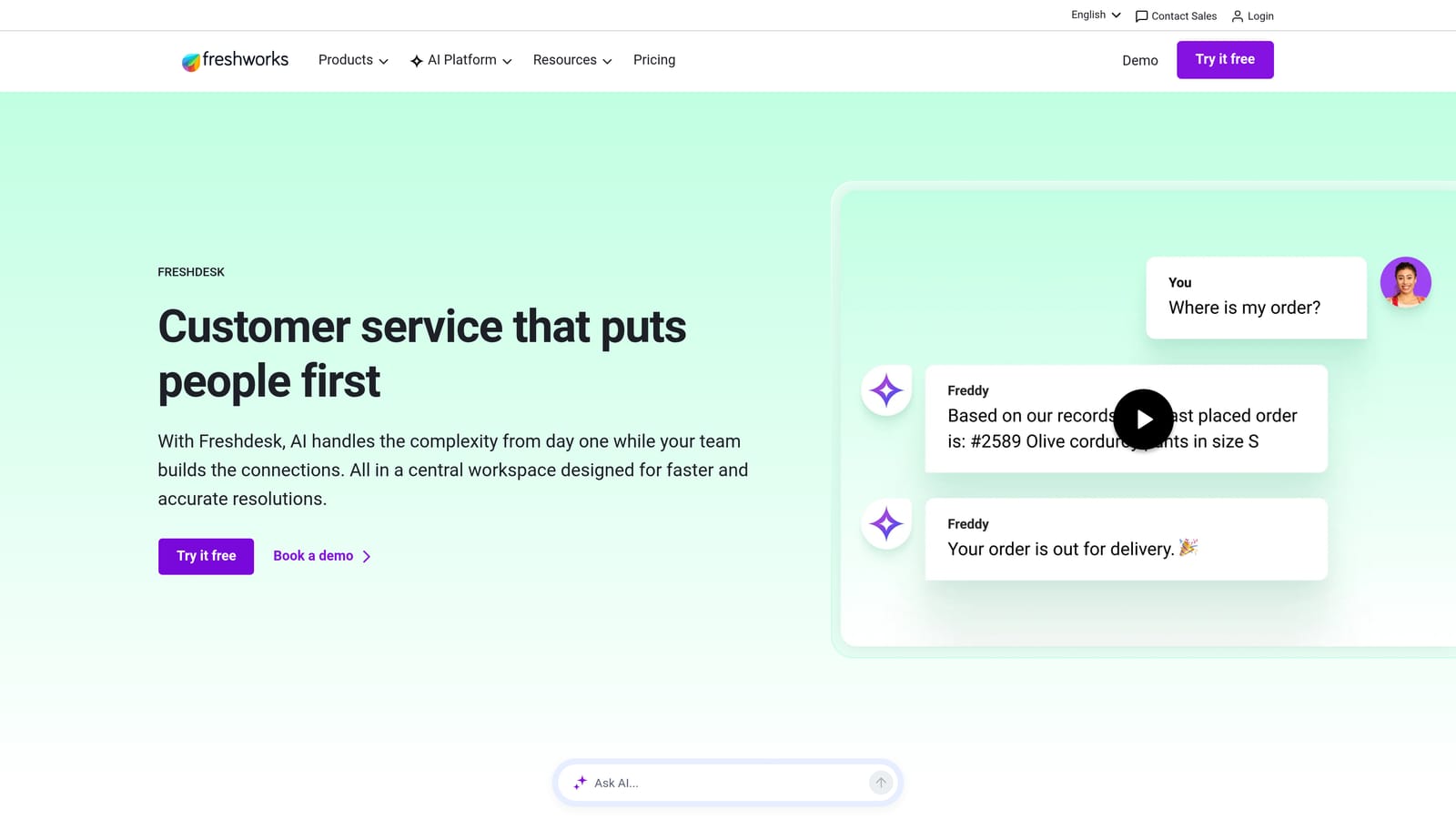
Freshdesk is a full-featured helpdesk platform with Freddy AI providing auto-triage, suggested replies, and a self-service chatbot at a price point accessible to teams that aren't yet at enterprise scale.
Where This Tool Shines
Freshdesk hits a useful middle ground: more capable than basic ticketing tools, but significantly more affordable than Zendesk at comparable feature tiers. Freddy AI handles auto-categorization and priority assignment out of the box, which means agents spend less time triaging and more time resolving.
The Freddy Self Service bot deflects common queries before they reach the queue, which is particularly effective for teams with predictable, high-volume question patterns. Collision detection also prevents the awkward situation where two agents start working the same ticket simultaneously.
Key Features
Freddy AI Auto-Triage: Automatically categorizes tickets and assigns priority levels based on content, reducing manual sorting time.
Suggested Replies: Freddy surfaces relevant response suggestions to help agents draft faster without starting from scratch.
Freddy Self Service Bot: Deflects common queries through automated conversation flows before they enter the agent queue.
Collision Detection: Alerts agents when another team member is already working on the same ticket.
Canned Responses and Automations: Scenario-based automation rules for repetitive workflows, plus a library of reusable response templates.
Best For
Startups and growing teams that need reliable helpdesk infrastructure with AI assistance. The free tier makes it accessible for very small teams, while paid plans scale reasonably as the team grows.
Pricing
Free tier available for up to 10 agents; paid plans start around $15/agent/month. Confirm current pricing at freshworks.com.
5. Gorgias
Best for: E-commerce brands running on Shopify, WooCommerce, or Magento
Gorgias is a helpdesk built specifically for e-commerce brands, with deep integrations that pull order data directly into ticket views so agents can resolve the most common queries without switching tabs.

Where This Tool Shines
The biggest time sink in e-commerce support is agents toggling between their helpdesk and their order management system to look up order status, shipping details, or refund eligibility. Gorgias eliminates that entirely by surfacing order data inline with the ticket. What used to take several minutes of tab-switching can happen in seconds.
The AI auto-reply feature handles the most predictable e-commerce queries — order status, return requests, refund policies — automatically, which can deflect a meaningful portion of ticket volume before it ever reaches an agent.
Key Features
Native E-Commerce Integrations: Shopify, WooCommerce, and Magento order data appears directly inside ticket views, eliminating tab-switching.
AI Auto-Reply: Handles common e-commerce queries like order status and refund requests automatically without agent involvement.
Revenue Statistics Per Ticket: Shows the revenue value associated with each customer so agents can prioritize high-value conversations.
Macros and Rules: Automates repetitive response patterns and ticket routing based on configurable rules.
Volume-Based Pricing: Priced per ticket rather than per seat, which suits e-commerce teams with variable staffing.
Best For
E-commerce brands on Shopify, WooCommerce, or Magento that handle high volumes of order-related queries. Less relevant for SaaS or service businesses without order management workflows.
Pricing
Starts around $10/month for up to 50 tickets; pricing scales with ticket volume rather than seat count. Verify current tiers at gorgias.com.
6. Help Scout
Best for: Teams where response quality and tone matter as much as speed
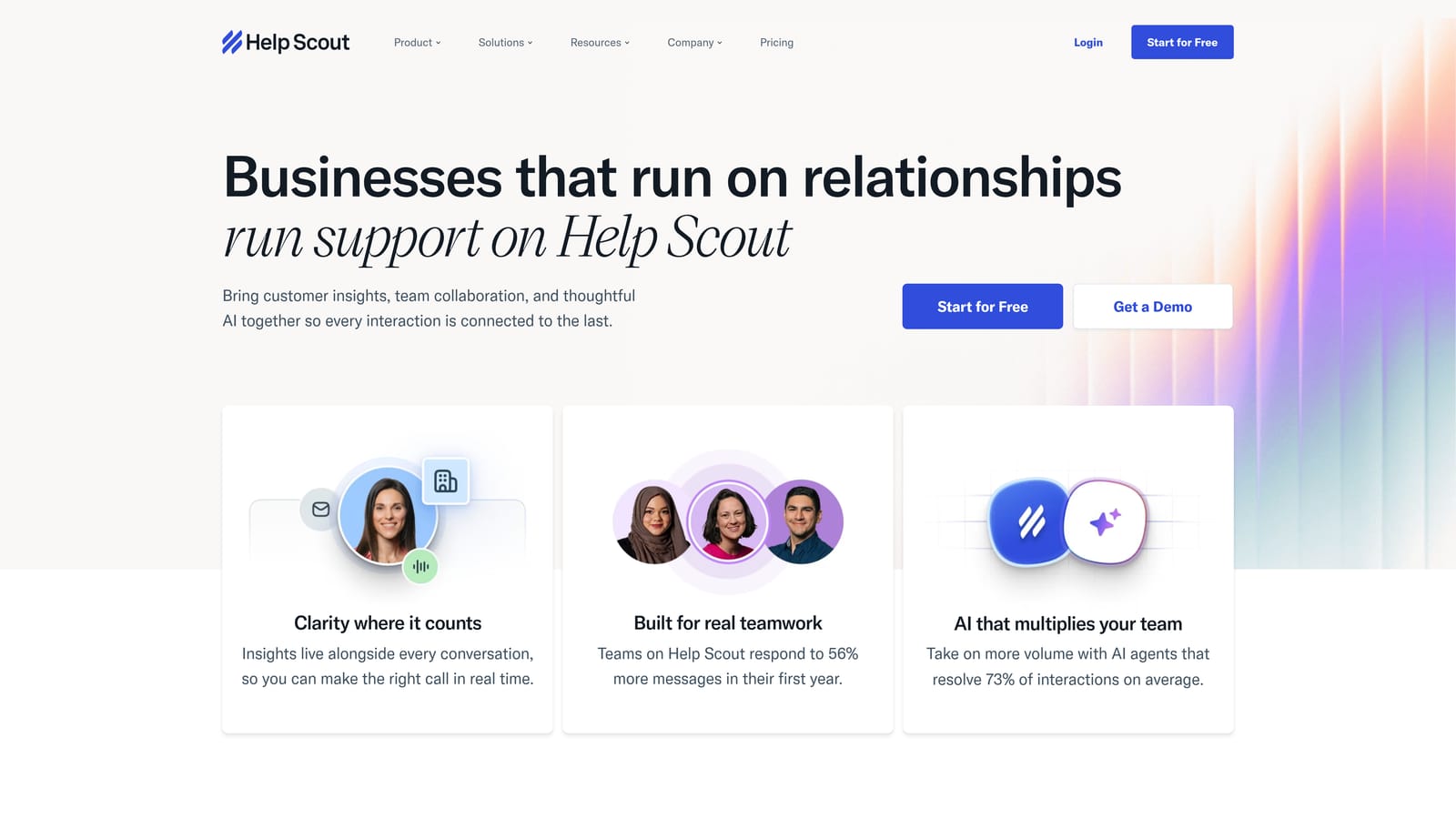
Help Scout is a shared inbox and help center platform with AI tools designed to reduce handle time while preserving the quality and warmth of agent responses.
Where This Tool Shines
Help Scout takes a different approach than pure automation-first tools. Its AI features are designed to make agents faster, not replace them. AI Summarize condenses long conversation threads so agents can catch up on context in seconds rather than scrolling through a lengthy back-and-forth. AI Drafts generates a reply based on conversation context, giving agents a strong starting point rather than a blank page.
For teams where brand voice and customer relationship quality are a priority, this approach tends to produce better outcomes than fully automated replies. It's a tool that amplifies good agents rather than attempting to replace them.
Key Features
AI Summarize: Condenses long conversation threads into a brief summary so agents can get up to speed instantly.
AI Drafts: Generates contextual reply drafts that agents can review, edit, and send — reducing time-to-send without removing human judgment.
Docs Knowledge Base: Built-in help center with AI-powered search that helps customers self-serve before contacting support.
Shared Inbox: Clean, distraction-free shared inbox with collision detection and private internal notes.
Response Time Reporting: Simple, readable reporting on team performance and response time trends.
Best For
Teams of 5 to 50 agents where relationship quality matters — professional services, SaaS companies with high-touch customers, or any team where a robotic-feeling auto-reply would do more harm than good.
Pricing
Starts around $20/user/month. Confirm current pricing at helpscout.com.
7. Guru
Best for: Teams where slow responses are caused by knowledge gaps, not ticket volume
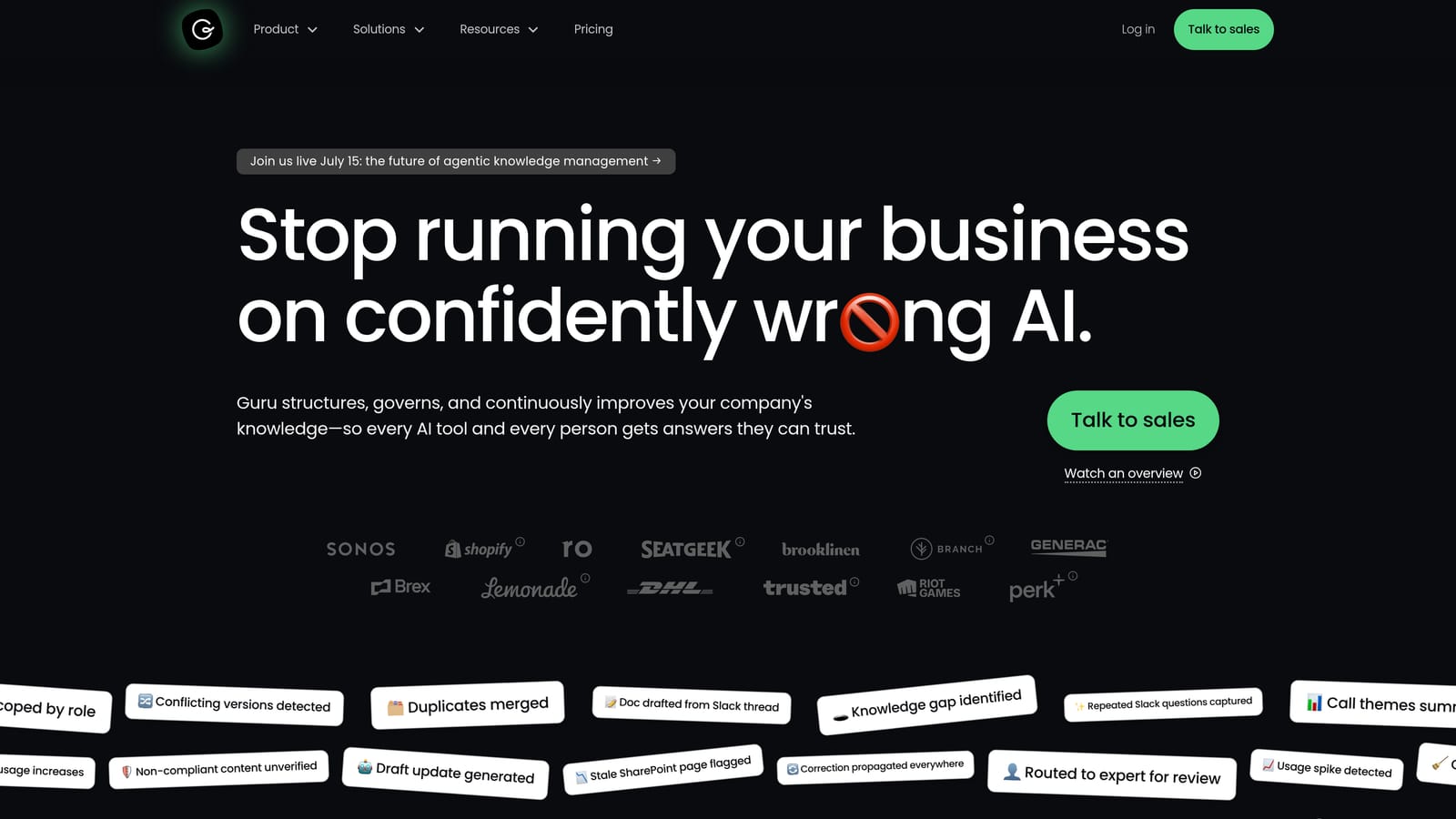
Guru is an AI-powered knowledge management platform that surfaces verified answers inside agents' existing workflows, reducing the time spent searching for the right information before responding.
Where This Tool Shines
Not every slow response is a capacity problem. Sometimes agents know the product well but can't quickly locate the right documentation, policy, or technical answer when a ticket comes in. Guru addresses that specific root cause by bringing verified knowledge to wherever agents are already working — inside Slack, in a Chrome extension, or directly within their helpdesk.
The Verified Cards system ensures that the information agents find is accurate and current, not an outdated document buried in a shared drive. Analytics also show which knowledge gaps are causing the most delays, so you can prioritize what to document next.
Key Features
AI-Powered Knowledge Search: Surfaces relevant answers inside Slack, Chrome, and integrated helpdesk tools without agents leaving their workflow.
Verified Cards: Knowledge cards are reviewed and verified by subject matter experts, ensuring agents always find accurate, up-to-date information.
Knowledge Triggers: Automatically suggests relevant content based on the context of the current ticket or conversation.
Knowledge Gap Analytics: Identifies which topics are generating the most search activity without good results, highlighting documentation priorities.
Helpdesk Integrations: Works with Zendesk, Freshdesk, Intercom, and Salesforce.
Best For
Support teams where agents frequently say "I know the answer exists somewhere, I just can't find it." Also strong for teams with high agent turnover, where onboarding speed matters.
Pricing
Starts around $10/user/month; a free tier is available for small teams. Confirm current pricing at getguru.com.
8. Tidio
Best for: Small businesses and early-stage teams that need affordable AI chat automation with minimal setup
Tidio is a live chat and AI chatbot platform featuring Lyro, an AI agent that handles common customer questions automatically and is designed for teams without dedicated technical resources.
Where This Tool Shines
Tidio's primary advantage is accessibility. Where enterprise tools require significant configuration, Tidio can be deployed quickly and delivers meaningful automation without a complex setup process. Lyro handles frequently asked questions autonomously, which frees up small teams to focus on the conversations that actually require a human.
The visual chatbot builder also makes it easy to design conversation flows without writing code, which matters for small businesses where the person managing support is often also managing five other things.
Key Features
Lyro AI Chatbot: Handles common customer questions autonomously using AI, without requiring manual flow configuration for every scenario.
Live Chat with Mobile App: Agents can respond from their phone, reducing response time when the team isn't at a desk.
Visual Chatbot Builder: Drag-and-drop flow editor for designing custom conversation paths without technical expertise.
Email and Messenger Integration: Connects to email and Facebook Messenger alongside the live chat widget.
Chat Volume Analytics: Basic reporting on chat volume, response time, and bot performance.
Best For
Small businesses, early-stage startups, and solo operators who need basic AI chat automation without enterprise pricing or implementation complexity. Less suited to teams managing complex, multi-channel support at scale.
Pricing
Free tier available; paid plans start around $19/month. Confirm current pricing at tidio.com.
9. Assembled
Best for: Support operations where slow response times are caused by staffing gaps and scheduling mismatches
Assembled is a workforce management platform for support teams that forecasts ticket volume, builds optimized agent schedules, and surfaces real-time adherence data — addressing the capacity-planning root cause of slow response times.
Where This Tool Shines
If your queue backs up not because agents are slow, but because the right number of agents simply aren't scheduled when tickets arrive, no amount of AI reply assistance will solve the problem. Assembled addresses this at the structural level by using historical ticket patterns to forecast demand and build schedules that align agent availability with actual peak periods.
Real-time adherence monitoring adds another layer: it surfaces when agents are off-task or not logged in during their scheduled hours, which gives team leads the visibility they need to intervene before a backlog develops rather than after.
Key Features
AI Volume Forecasting: Predicts ticket volume based on historical patterns so schedules are built around actual demand, not guesswork.
Automated Schedule Optimization: Builds agent schedules that align staffing levels with forecasted demand across time zones and channels.
Real-Time Adherence Monitoring: Surfaces when agents deviate from their scheduled activities so team leads can respond quickly.
Scenario Planning: Models the impact of seasonal spikes, team changes, or new channel launches on capacity and response time.
Helpdesk Integrations: Connects with Zendesk, Intercom, Salesforce, and Slack.
Best For
Support teams of 20 or more agents where scheduling complexity is a real operational challenge. Particularly valuable for teams with 24/7 coverage requirements, multiple time zones, or significant seasonal volume variation.
Pricing
Not publicly listed. A demo is required — request one at assembled.com.
Choosing the Right Tool for Your Root Cause
The fastest way to pick the right tool is to identify which bottleneck is actually slowing your team down. The nine tools above map to four distinct root causes, and matching the solution to the problem will get you further than picking the most popular option.
Too many tickets relative to agent capacity: Start with an AI-first agent. Halo AI is the strongest option for B2B SaaS teams because the AI resolves tickets autonomously rather than just assisting agents. Intercom's Fin is a strong alternative for teams already in the Intercom ecosystem. Tidio works well for smaller teams with simpler query patterns.
Agents spending too long finding answers: Guru is purpose-built for this problem. It surfaces verified knowledge inside the tools agents already use, without requiring them to leave their workflow. Help Scout's AI Summarize feature also helps agents catch up on context faster when handling escalated or long-running conversations.
Poor routing causing misassignment and handoffs: Zendesk and Freshdesk both offer intelligent triage and routing automation that can significantly reduce the time tickets spend bouncing between the wrong agents. Zendesk is better for complex enterprise routing logic; Freshdesk is more accessible for growing teams.
Scheduling gaps leaving queues unattended: Assembled is the only tool on this list that addresses capacity planning directly. If your slow response times happen at predictable times of day or week, workforce management is the fix — not more automation.
E-commerce order queries specifically: Gorgias is the clear choice. Its native order data integrations eliminate the tab-switching that inflates handle time for the most common e-commerce support scenarios.
For teams ready to move beyond AI-assisted support and into genuinely autonomous resolution, Halo AI is worth a close look. The AI-first architecture, page-aware context, and continuous learning model are built for B2B SaaS teams that want support to scale without scaling headcount in parallel. See Halo in action and discover how every resolved ticket makes the system smarter — so your support operation gets better over time, not just bigger.