9 Best Tools to Fix Slow Ticket Resolution Times in 2026
Slow ticket resolution times damage customer trust, inflate costs, and accelerate churn—but the right tools can fix that. This guide evaluates 9 platforms across AI automation, intelligent routing, knowledge management, and analytics that help support teams dramatically reduce resolution timelines in 2026.
 Grant CooperFounder14 min read
Slow ticket resolution times don't just frustrate customers. They erode trust, inflate support costs, and quietly drive churn. When a simple billing question takes 48 hours to resolve or a bug report sits untouched for days, the damage compounds: customers lose patience, agents burn out under growing backlogs, and leadership loses visibility into what's actually going wrong.
The root causes vary. Sometimes it's ticket volume overwhelming a lean team. Other times it's poor routing, knowledge gaps, or disconnected tooling that forces agents to context-switch constantly. Often it's a combination of all of the above. The good news is that a new generation of tools spanning AI agents, helpdesk platforms, and workflow automation can dramatically compress resolution timelines without sacrificing quality.
We evaluated platforms across categories like AI-powered automation, intelligent routing, knowledge management, and analytics to identify the tools that make the biggest impact on resolution speed. Whether you're a lean startup handling tickets in a shared inbox or an enterprise support org managing thousands of conversations daily, here are the top tools to get your resolution times under control.
1. Halo AI
Best for: B2B teams that want AI agents resolving tickets autonomously, end-to-end, without scaling headcount.
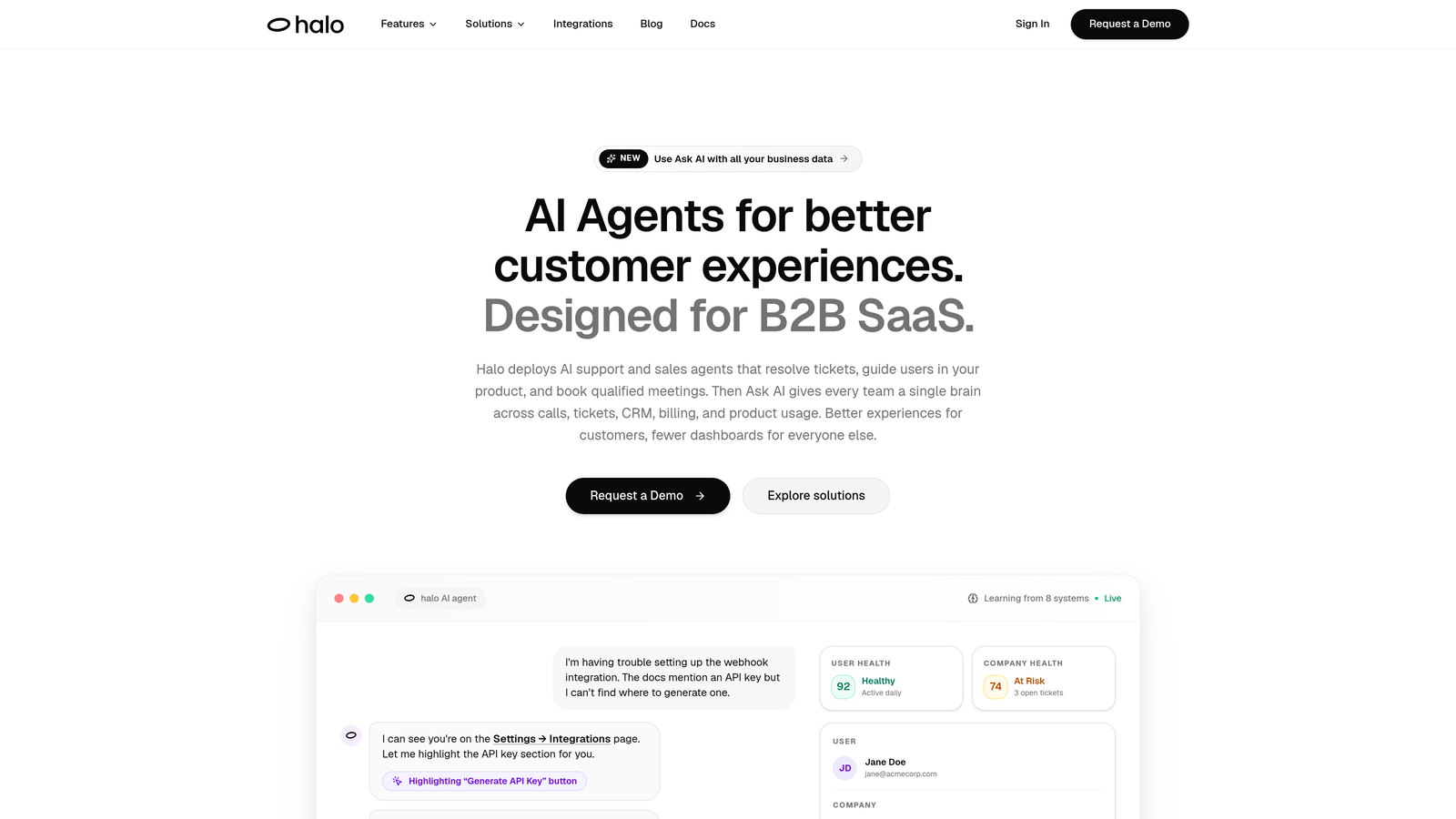
Halo AI is an AI-first customer support platform where autonomous agents resolve tickets, guide users visually through your product, and continuously learn from every interaction.
Where This Tool Shines
Most helpdesks added AI as a feature. Halo was built from the ground up as an AI-first platform, which means the intelligence layer isn't a bolt-on. The result is a meaningfully different experience: agents don't just suggest replies, they actually resolve tickets end-to-end without requiring human intervention for routine issues.
What sets Halo apart from other AI support tools is its page-aware context. The chat widget can see what the user sees in real time, which eliminates the back-and-forth diagnostic cycle that quietly inflates resolution times. Instead of asking "what page are you on?" or "can you share a screenshot?", Halo already knows. That single capability can cut multiple exchanges out of a conversation before a human agent ever gets involved.
Key Features
Autonomous AI Agents: Resolve tickets end-to-end without human intervention, handling routine inquiries at scale without adding headcount.
Page-Aware Chat Widget: Sees what the user sees in real time, enabling visual UI guidance and faster diagnosis without back-and-forth clarification.
Smart Inbox with Business Intelligence: Goes beyond ticket management to surface customer health signals, revenue intelligence, and anomaly detection across your support data.
Auto Bug Ticket Creation: Automatically creates and routes bug tickets directly to Linear when issues are detected, closing the loop between support and engineering instantly.
Live Agent Handoff: Escalates complex issues to human agents with full conversation context preserved, so agents never start from scratch.
Best For
B2B SaaS companies and product teams that are scaling customer volume faster than they can hire support staff. Particularly strong for teams already using tools like Linear, Slack, HubSpot, Intercom, Stripe, or Zoom, given Halo's deep multi-system integration capabilities.
Pricing
Contact for pricing. Halo is designed for B2B teams scaling support operations without scaling headcount proportionally.
2. Zendesk
Best for: Enterprise support orgs that need structured SLA management, advanced routing, and a deep integration ecosystem.
Zendesk is the dominant enterprise helpdesk platform with advanced SLA management, intelligent routing, and a marketplace of over 1,500 integrations.

Where This Tool Shines
Zendesk's strength is in structure. For large support organizations managing high ticket volumes across multiple channels, the platform's SLA policies, routing rules, and escalation workflows create a reliable system that keeps resolution timelines accountable. Breach alerts ensure nothing slips through unnoticed.
The AI-powered agent assistance layer has matured considerably, offering suggested replies, macros, and intelligent ticket classification that help agents move faster on familiar issue types. For teams that need a proven, enterprise-grade foundation, Zendesk remains the benchmark.
Key Features
Advanced SLA Policies: Configurable SLA rules with automatic escalation and breach alerts to keep resolution timelines accountable at scale.
Skills-Based Routing: Routes tickets to the most qualified available agent using skills-based and round-robin logic.
AI Agent Assistance: Suggests replies, macros, and next steps to help agents resolve tickets faster with less manual effort.
1,500+ Marketplace Integrations: Connects to virtually any tool in your stack, from CRMs to billing platforms to engineering tools.
Custom Reporting Dashboards: Comprehensive analytics for tracking resolution metrics, agent performance, and SLA compliance over time.
Best For
Mid-to-large support teams that need enterprise-grade SLA management, multi-channel coverage, and a mature ecosystem of integrations. Less ideal for lean teams that want simple, fast setup without extensive configuration.
Pricing
Starts at $19/agent/month (Support Team); Suite plans from $55/agent/month. Pricing scales with agent count and feature tier.
3. Intercom
Best for: Teams that want to combine AI-powered resolution with proactive engagement to reduce ticket volume at the source.
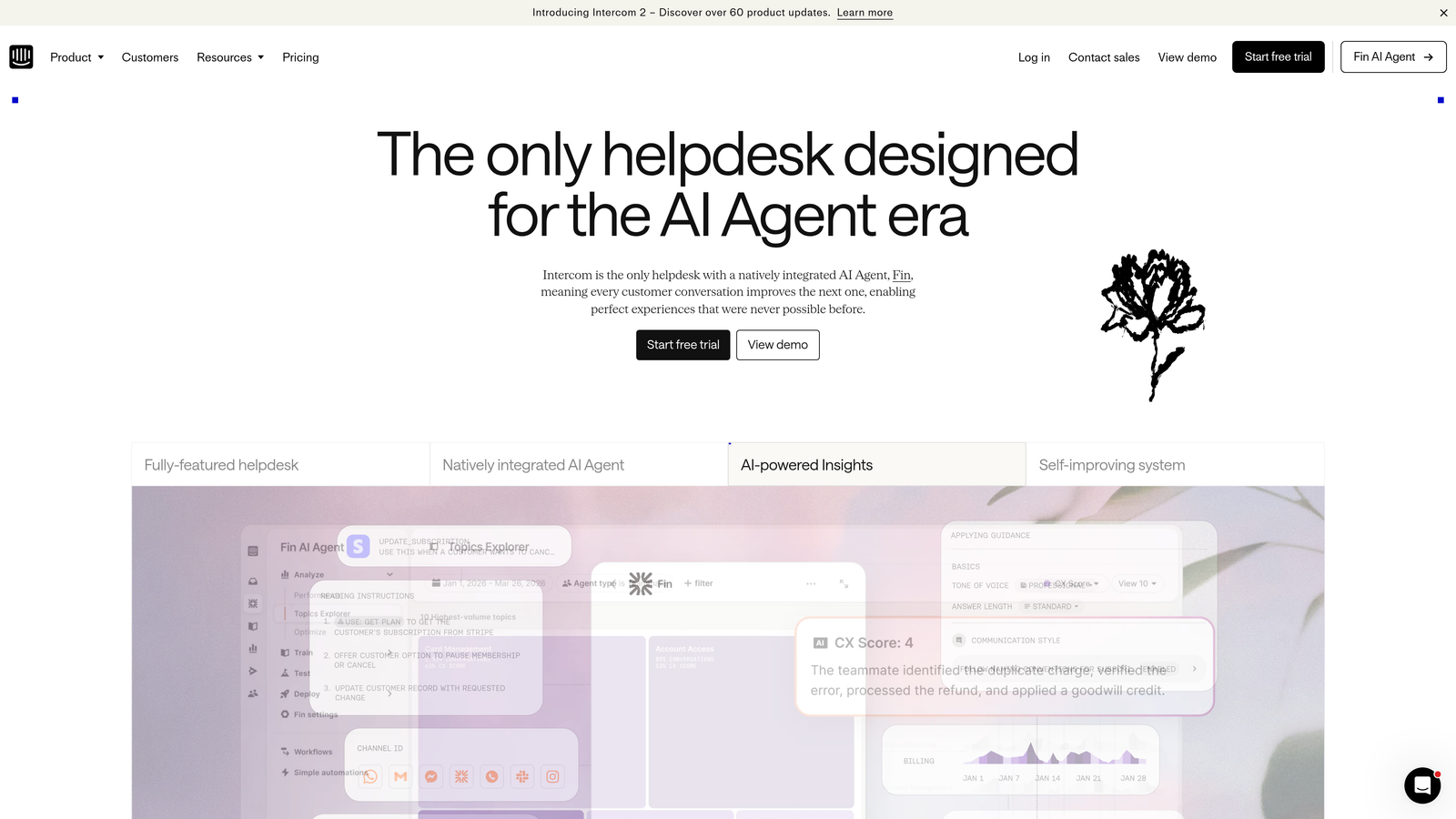
Intercom is an AI-first customer service platform that combines conversational support, proactive messaging, and the Fin AI agent for automated ticket resolution.
Where This Tool Shines
Intercom takes a distinctive approach to resolution speed: rather than just resolving tickets faster, it also works to prevent tickets from being created in the first place. Product tours, proactive outbound messages, and in-app guidance can deflect a meaningful share of common inquiries before they ever reach the queue.
Fin, Intercom's AI agent, handles autonomous conversation resolution across chat, email, and social channels. The unified inbox and rich customer data sidebar give human agents immediate context when Fin escalates, reducing the time agents spend digging through history before they can actually help.
Key Features
Fin AI Agent: Autonomously resolves customer conversations across channels without human intervention, handling common inquiries at scale.
Proactive Messaging and Product Tours: Deflects tickets before they're created by reaching customers with relevant information at the right moment.
Visual Workflow Builder: Customizable bot workflows built without code, enabling teams to design resolution paths for specific issue types.
Unified Inbox: Consolidates chat, email, and social channel conversations into a single workspace for agents.
Customer Data Sidebar: Surfaces relevant customer context alongside every conversation so agents can resolve faster without switching tools.
Best For
Product-led growth companies and SaaS teams that want to combine reactive support with proactive engagement. Strong fit for teams that see high volume of repetitive tier-1 questions that Fin can handle autonomously.
Pricing
Starts at $29/seat/month (Essential); Fin AI resolution-based pricing applies separately on top of base plan costs.
4. Freshdesk
Best for: Growing mid-market teams that want Freddy AI automation and SLA management at accessible price points.
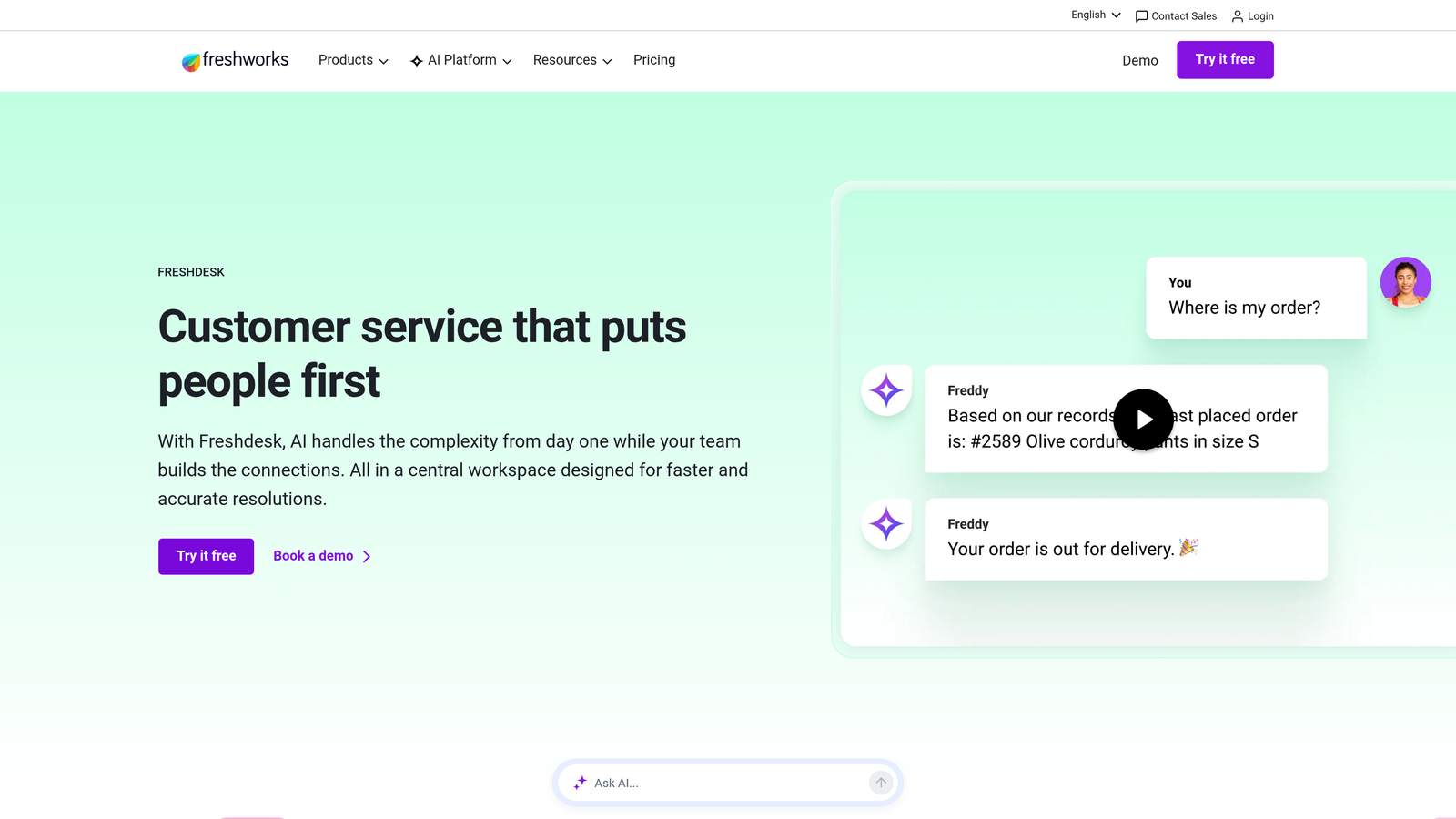
Freshdesk is a mid-market helpdesk platform with Freddy AI for ticket classification, built-in SLA tracking, and strong automation capabilities without enterprise pricing.
Where This Tool Shines
Freshdesk hits a sweet spot for teams that have outgrown basic shared inboxes but aren't ready to commit to enterprise helpdesk pricing. Freddy AI handles the repetitive work of classifying and prioritizing incoming tickets automatically, which means agents spend less time triaging and more time resolving.
The scenario automation feature is particularly useful for compressing multi-step resolution workflows into single-click actions. Combined with the integrated knowledge base for self-service deflection, Freshdesk gives growing teams a solid toolkit for reducing both ticket volume and resolution time simultaneously.
Key Features
Freddy AI: Automatically classifies, prioritizes, and suggests responses for incoming tickets, reducing manual triage time significantly.
SLA Management: Configurable SLA policies with automatic escalation rules to prevent tickets from aging without action.
Scenario Automations: Execute multi-step ticket actions with a single click, streamlining complex resolution workflows for agents.
Integrated Knowledge Base: Built-in self-service portal that deflects common questions before they reach the queue.
Collaboration Tools: Shared ticket ownership and linked tickets for issues that require input from multiple team members.
Best For
Mid-market support teams looking for a balance of AI automation, SLA management, and accessible pricing. Also a strong choice for teams that want a free starting point with room to grow into paid tiers.
Pricing
Free plan available; paid plans from $15/agent/month (Growth). One of the more accessible price points in this category for teams scaling up.
5. Help Scout
Best for: Small-to-mid teams that want a fast, human-feeling helpdesk without complex configuration overhead.
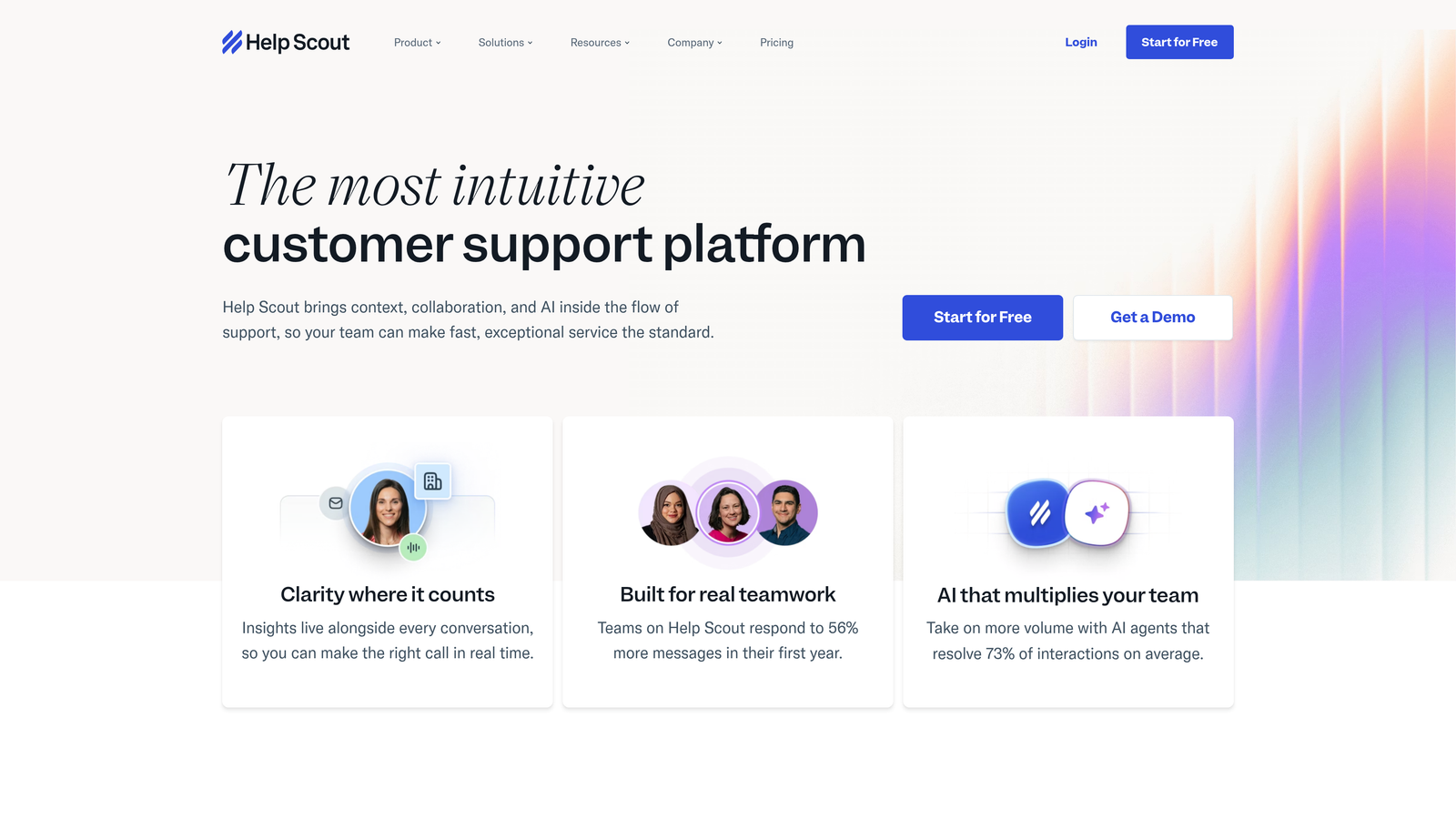
Help Scout is a clean, fast helpdesk built for teams that prioritize simplicity, speed, and a personal customer experience over feature complexity.
Where This Tool Shines
Help Scout is designed to remove friction. Collision detection prevents two agents from working the same ticket simultaneously, which is a surprisingly common source of wasted effort and delayed resolution in shared inbox environments. Saved replies and workflows handle the most common resolution patterns with minimal clicks.
The Beacon widget brings self-service directly into your product, surfacing relevant knowledge base articles before customers submit a ticket. The recently added AI Summarize and AI Assist features help agents process and respond to conversations faster without requiring a significant platform overhaul.
Key Features
Collision Detection: Prevents duplicate agent effort by showing when another team member is already viewing or replying to a conversation.
Saved Replies and Workflows: Streamlines common resolution patterns into reusable templates and automated actions.
Beacon Widget: Embeds knowledge base content directly in your product so customers can self-serve before submitting a ticket.
AI Summarize and AI Assist: Helps agents quickly understand conversation history and draft faster, more accurate replies.
Customer Satisfaction Ratings: Ties CSAT scores to individual conversations for granular quality tracking alongside speed metrics.
Best For
Small-to-mid support teams that value simplicity and speed over deep customization. Particularly well-suited to teams that want to feel human and personal in their support interactions while still moving efficiently.
Pricing
Starts at $22/user/month (Standard). Straightforward per-user pricing with no complex tier structures to navigate.
6. Zoho Desk
Best for: Teams already in the Zoho ecosystem that want CRM-connected support with AI-powered workflow automation.
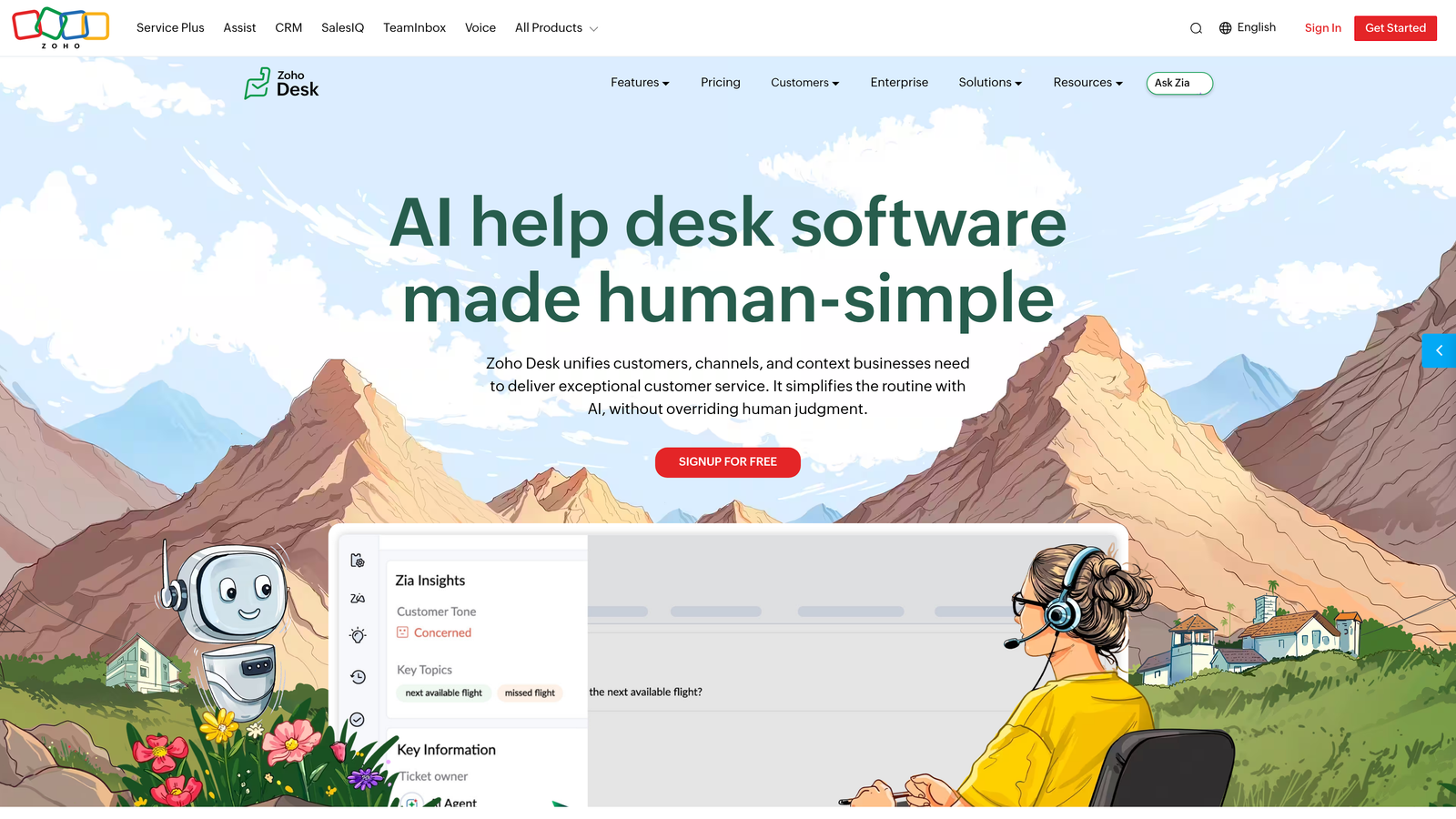
Zoho Desk is a context-rich helpdesk tightly integrated with Zoho CRM, featuring Zia AI for intelligent assistance and Blueprint automation for consistent resolution workflows.
Where This Tool Shines
The CRM integration is Zoho Desk's headline advantage. When agents open a ticket, they see the customer's full history, deal stage, and account value without switching tabs. That context eliminates the research time that often inflates resolution timelines, especially for account-sensitive issues.
Blueprint automation is a standout feature for teams that struggle with inconsistent resolution processes. It enforces specific steps and approvals in a ticket's lifecycle, ensuring that agents follow the correct resolution path every time rather than improvising. Zia AI adds sentiment analysis and auto-tagging on top, helping teams prioritize the tickets that need urgent attention.
Key Features
Zia AI: Provides sentiment analysis, auto-tagging, and anomaly alerts to help teams identify and prioritize urgent tickets intelligently.
Blueprint Automation: Enforces consistent, step-by-step resolution workflows with built-in approvals and transition rules.
Deep Zoho CRM Integration: Surfaces complete customer and account context directly within the ticket view for faster, more informed resolution.
Multi-Channel Support: Handles email, chat, phone, and social channels within a unified workspace.
Headquarters Dashboard: Real-time team performance monitoring for managers tracking resolution metrics and agent workload.
Best For
Teams already using Zoho CRM or other Zoho products who want tight integration between sales context and support workflows. Also a strong choice for teams that need enforced, auditable resolution processes.
Pricing
Free plan for up to 3 agents; paid plans from $14/agent/month (Standard). Competitive pricing, especially for teams already invested in the Zoho ecosystem.
7. Jira Service Management
Best for: Engineering-adjacent support teams where tickets frequently require developer involvement to resolve.
Jira Service Management is an ITSM and service desk platform purpose-built for teams where support and engineering workflows regularly overlap.
Where This Tool Shines
The single biggest bottleneck for technical support teams is often the handoff between support and engineering. A ticket gets escalated, context gets lost in translation, and the bug sits in a queue with no visibility for the customer or the support agent. Jira Service Management eliminates that handoff friction with native Jira Software integration, so escalations become linked issues in the engineering backlog instantly.
For IT and DevOps-adjacent teams, the built-in change and incident management workflows are genuinely valuable. Resolution timelines for incidents often suffer because there's no structured process for coordination. JSM provides that structure out of the box.
Key Features
Native Jira Software Integration: Escalates support tickets directly to the engineering backlog as linked Jira issues, eliminating context loss during handoffs.
SLA Management: Configurable SLA goals with reporting to track compliance and identify bottlenecks in resolution workflows.
Change and Incident Management: Built-in ITSM workflows for coordinating responses to incidents and managing change requests.
Automation Rules: Handles routing, status transitions, and notifications automatically based on configurable triggers.
Confluence Knowledge Base: Powered by Confluence for self-service, with the ability to surface relevant articles directly in the service portal.
Best For
Technical support teams, IT departments, and engineering-adjacent support orgs where a meaningful percentage of tickets require developer action. Less ideal for customer-facing support teams without engineering overlap.
Pricing
Free for up to 3 agents; paid plans from $17.65/agent/month (Standard). Pricing scales with agent count and ITSM feature requirements.
8. Tidio
Best for: Small businesses and e-commerce teams that want quick-to-deploy live chat and AI chatbot automation.
Tidio is a live chat and chatbot platform featuring Lyro AI for instant FAQ resolution, designed for fast deployment by small teams without technical resources.
Where This Tool Shines
Tidio's primary advantage is speed of deployment. For small teams that need to get something working quickly, the platform's no-code chatbot builder and pre-built templates mean you can have automated resolution flows running in hours rather than weeks. Lyro AI trains on your existing content and starts handling common questions immediately.
The visitor tracking and real-time typing preview features give live agents a head start before a customer even finishes typing their question. That small efficiency compounds across hundreds of conversations and contributes meaningfully to faster first-response times.
Key Features
Lyro AI Chatbot: Trains on your existing content to provide instant automated answers to common questions without manual rule-building.
No-Code Chatbot Builder: Visual workflow builder with pre-built templates for common resolution scenarios, requiring no technical expertise.
Live Chat with Visitor Tracking: Shows real-time visitor behavior and typing previews so agents can prepare responses before the message arrives.
Multi-Channel Support: Handles email, Messenger, and Instagram alongside live chat in a unified inbox.
Quick Website Integration: Simple embed setup that gets the widget live on your site with minimal configuration.
Best For
Small businesses, e-commerce teams, and early-stage startups that need fast deployment, simple automation, and live chat without the complexity or cost of enterprise helpdesk platforms.
Pricing
Free plan available; paid plans from $29/month (Starter). Flat monthly pricing rather than per-agent makes it cost-predictable for small teams.
9. Guru
Best for: Support teams where agents spend significant time searching for answers rather than actually resolving tickets.
Guru is an AI-powered knowledge management platform that surfaces verified answers inside existing agent workflows, attacking the knowledge gap that often underlies slow resolution times.
Where This Tool Shines
Guru addresses a root cause that most helpdesk tools ignore: agents often know how to resolve a ticket but can't find the right information fast enough. Searching through internal wikis, Slack threads, and outdated documentation is a significant time sink that compounds across every agent on every shift. Guru surfaces verified answers directly inside the tools agents already use, including Slack, Zendesk, and the browser itself.
The verification workflow is what separates Guru from a basic wiki. Knowledge cards have owners and expiration dates, ensuring that the information agents surface is actually current. The analytics layer shows which topics agents search for most frequently and where knowledge gaps exist, giving team leads actionable data to close the information holes that slow resolution.
Key Features
AI-Powered Search: Surfaces relevant knowledge cards inside Slack, Zendesk, and the browser without requiring agents to leave their current tool.
Verification Workflows: Assigns knowledge card ownership and expiration dates to ensure information stays accurate and trustworthy over time.
AI Suggest: Proactively recommends relevant knowledge cards based on the conversation an agent is currently handling.
Knowledge Gap Analytics: Tracks what agents search for and where searches return no results, highlighting areas where documentation needs to be created.
Helpdesk and Communication Integrations: Connects with major helpdesks and communication platforms so knowledge is accessible wherever agents work.
Best For
Support teams with distributed or growing agent populations where knowledge consistency is a challenge. Particularly valuable as a complement to an existing helpdesk rather than a standalone solution.
Pricing
Free plan available; paid plans from $10/user/month (Builder). One of the more affordable per-user options in this list, especially as a supplementary tool.
Choosing the Right Tool for Your Team
Slow ticket resolution times rarely have a single cause, which is why the right tool depends on where your biggest bottleneck actually lives.
If your primary challenge is ticket volume overwhelming a small team, AI-first platforms like Halo AI or Intercom are worth prioritizing. Both deploy autonomous AI agents that handle routine inquiries end-to-end, freeing your human team for the issues that genuinely need judgment. Halo's page-aware context gives it a particular edge for SaaS products where users need visual guidance through complex workflows.
If your challenge is scale and structure, Zendesk or Freshdesk provide the SLA management, routing, and reporting infrastructure that large teams need to stay accountable. Zendesk for enterprise complexity; Freshdesk for mid-market teams watching their budget.
If your support and engineering teams are constantly tangled together on escalations, Jira Service Management solves that specific problem better than any other tool on this list. And if agents are spending too much time hunting for answers rather than resolving tickets, layering Guru on top of your existing helpdesk can yield meaningful gains without a full platform migration.
For small teams that need something working today without a long implementation cycle, Tidio and Help Scout both offer fast setup with solid automation fundamentals.
The broader principle: resolution speed is a systems problem. The best tool is the one that removes the specific friction your team hits most often. Your support team shouldn't scale linearly with your customer base. Let AI agents handle routine tickets, guide users through your product, and surface business intelligence while your team focuses on complex issues that need a human touch. See Halo in action and discover how continuous learning transforms every interaction into smarter, faster support.