9 Best Small Business AI Support Tools in 2026
Discover the 9 best small business AI support tools in 2026, evaluated for ease of setup, automation depth, and affordability. This guide helps lean teams deliver enterprise-quality customer support by identifying the right AI solution—from autonomous ticket resolution to smart chatbots—based on your budget, team size, and integration needs.
 Matt PattoliFounder13 min read
Small businesses face a familiar paradox: customers expect enterprise-grade support, but you don't have an enterprise-sized team to deliver it. AI support tools have changed that equation dramatically. Whether you're handling 50 tickets a week or 5,000, the right AI can resolve common issues instantly, route complex ones intelligently, and give your team back hours they'd otherwise spend on repetitive tasks.
This list covers the top AI support tools built for small business realities: tight budgets, lean teams, and the need for tools that work out of the box without a dedicated IT department. We evaluated each on ease of setup, automation depth, integration flexibility, and value for money. Whether you need a full AI agent that resolves tickets autonomously or a smart chatbot to deflect common questions, there's an option here for you.
1. Halo AI
Best for: B2B SaaS teams wanting autonomous ticket resolution with built-in business intelligence
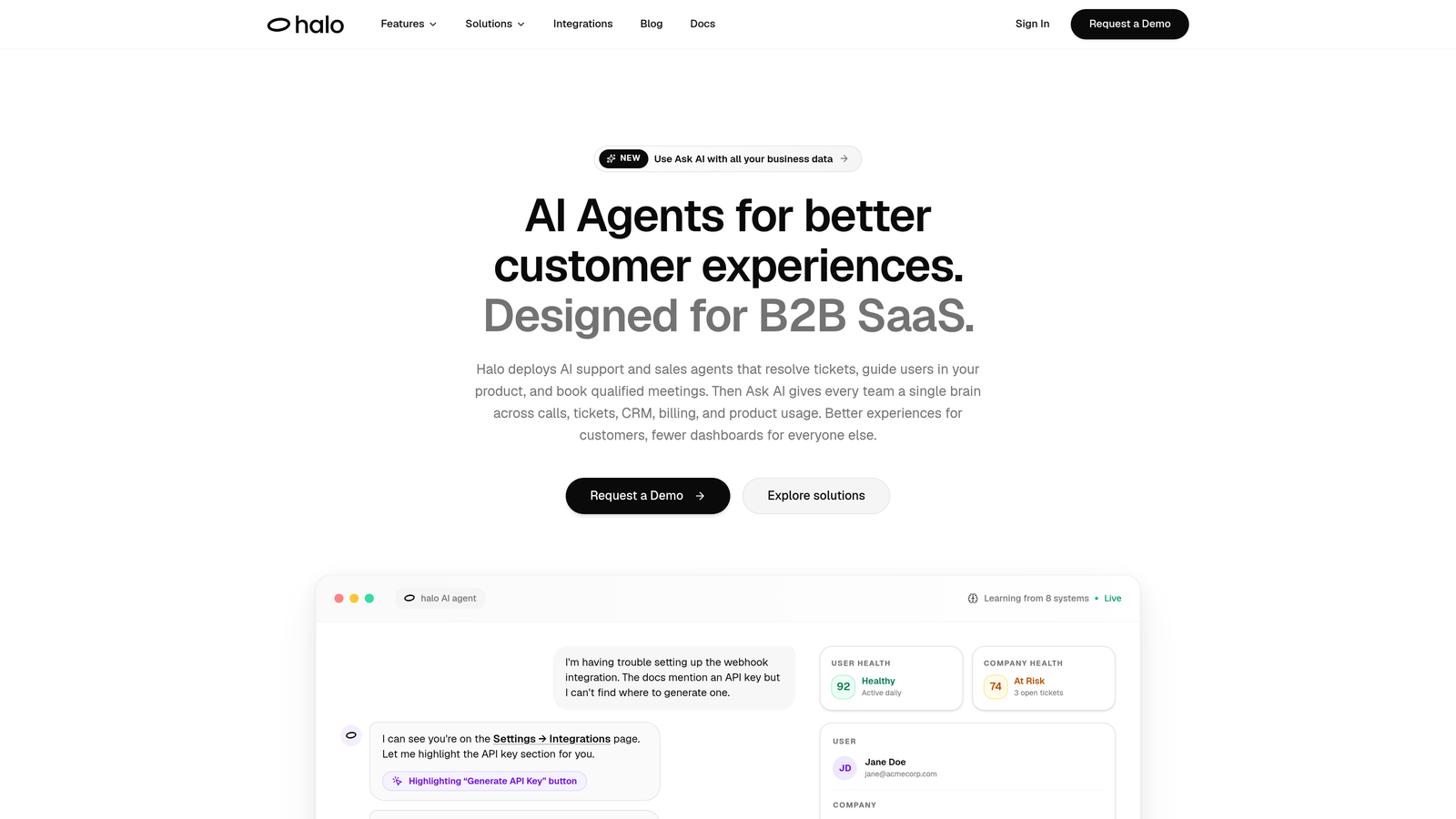
Halo AI is an AI-first customer support platform that deploys autonomous agents to resolve tickets, guide users, and surface actionable business insights.
Where This Tool Shines
Halo AI is built from the ground up around autonomous resolution, not as an add-on to an existing helpdesk. That distinction matters. Instead of AI suggesting what a human agent should type, Halo's agents actually close tickets end-to-end, learning from every interaction to get sharper over time.
What sets it apart for SaaS teams is the page-aware chat widget. It doesn't just respond to what the customer types; it sees what page they're on and what they're looking at, so guidance is contextual and visual. Pair that with a smart inbox that detects customer health signals and revenue anomalies, and you have a support tool that doubles as a business intelligence layer.
Key Features
Autonomous AI Agents: Resolve tickets end-to-end without human intervention for routine issues, escalating only when complexity demands it.
Page-Aware Chat Widget: Sees exactly what the user sees and delivers contextual, visual UI guidance based on their current location in your product.
Smart Inbox with Business Intelligence: Surfaces customer health signals, revenue anomalies, and trend detection beyond standard support metrics.
Auto Bug Ticket Creation: Captures and routes technical issues directly into your engineering workflow without manual handoff.
Live Agent Handoff: Escalates complex conversations to human agents with full context preserved, so nothing gets lost in translation.
Deep Integrations: Connects with Linear, Slack, HubSpot, Intercom, Stripe, Zoom, PandaDoc, and Fathom for a unified operational stack.
Best For
B2B SaaS companies and product teams that want AI to handle routine support autonomously while generating business intelligence from every customer interaction. Particularly strong for teams already using tools like HubSpot, Linear, or Slack who want their support layer woven into their existing workflow.
Pricing
Visit haloagents.ai for current pricing details, as plans are updated regularly.
2. Intercom
Best for: Teams wanting a mature AI messaging platform with strong conversation design tools
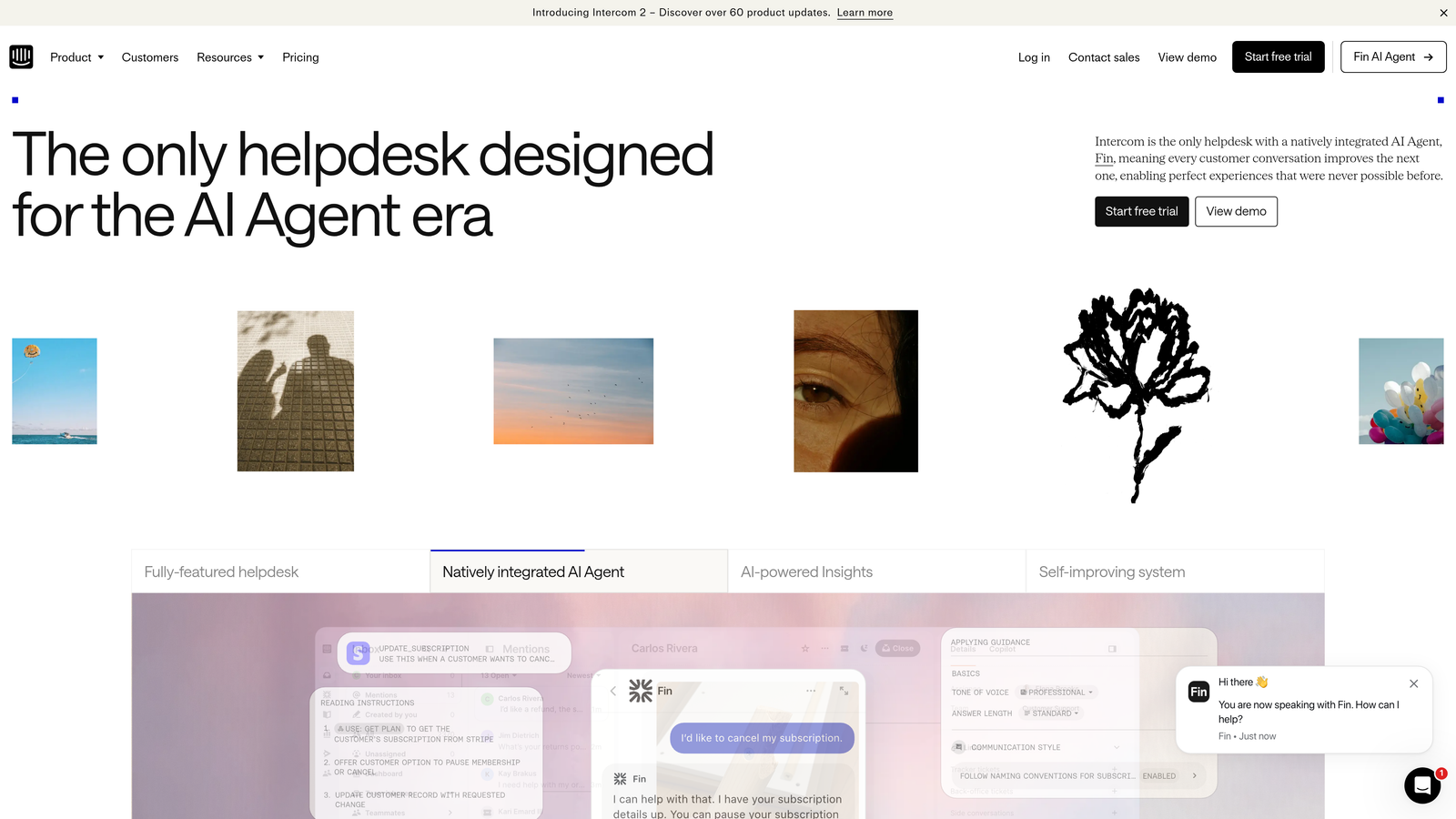
Intercom is a well-established customer messaging platform featuring Fin, an AI agent built on large language models that resolves support conversations autonomously.
Where This Tool Shines
Intercom's Fin AI agent is one of the more capable autonomous resolution tools on the market. It draws on your existing help content to answer questions conversationally, and when it can't resolve an issue, it hands off to a human agent cleanly. The conversation design tooling gives you meaningful control over how the AI behaves in different scenarios.
The platform's maturity shows in its reporting and omnichannel coverage. You get CSAT tracking, conversation analytics, and support across chat, email, and social from a single interface. The integration marketplace is extensive, which matters for small businesses that already have a stack they need to connect.
Key Features
Fin AI Agent: Handles support conversations autonomously using your help documentation as its knowledge base.
Omnichannel Support: Covers chat, email, and social channels from one unified inbox.
Conversation Design Tools: Lets you customize AI behavior and conversation flows without engineering resources.
Robust Reporting: Tracks resolution rates, CSAT scores, and conversation-level analytics.
Large Integration Marketplace: Connects with hundreds of tools across CRM, billing, and project management categories.
Best For
Growing small businesses and scale-ups that want a proven AI messaging platform with strong conversation design capabilities. Best suited for teams with a reasonable budget who want omnichannel coverage and detailed analytics from day one.
Pricing
From approximately $39 per seat per month; Fin AI is priced per resolution. Verify current pricing at intercom.com.
3. Freshdesk
Best for: Small teams looking for a structured helpdesk with a free entry point and built-in AI
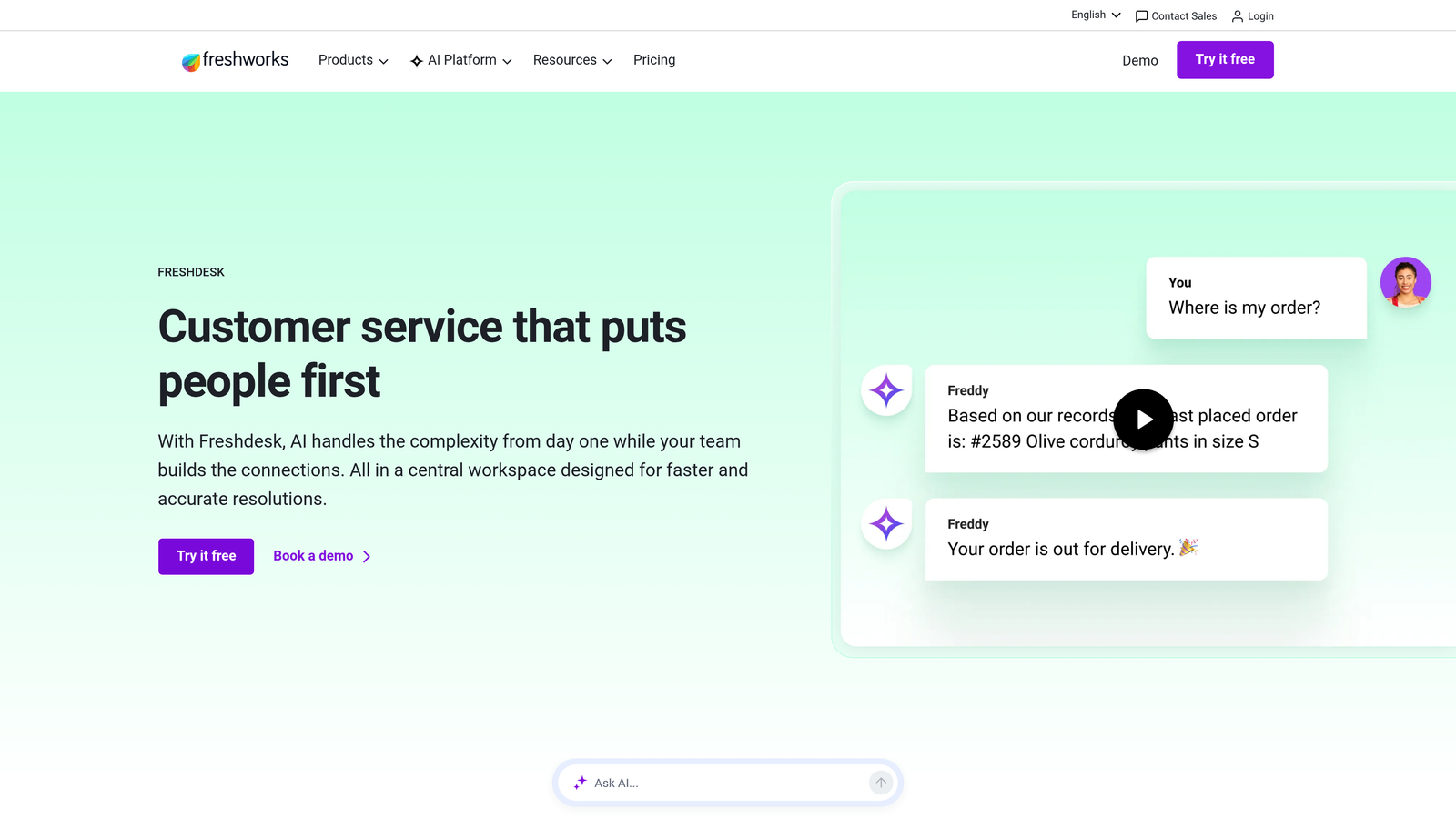
Freshdesk is a widely-used helpdesk platform with Freddy AI built in, covering ticket summarization, auto-triage, suggested replies, and a self-service AI agent.
Where This Tool Shines
Freshdesk is often the first structured helpdesk small businesses adopt, and for good reason. The free tier removes the barrier to entry, and Freddy AI features layer on top as your team grows and upgrades. For teams transitioning from shared inboxes or spreadsheets, it provides immediate structure without overwhelming complexity.
Freddy Self Service handles customer-facing resolution for common questions, while Freddy Assist helps agents write better replies faster. The multi-channel coverage, including email, chat, phone, and social, is strong relative to the price point, making it one of the better all-round value propositions at the small business tier.
Key Features
Freddy AI Assist: Summarizes tickets and suggests replies to help agents respond faster and more consistently.
Freddy Self Service: Provides automated, customer-facing resolution for common queries without agent involvement.
Auto-Triage: Intelligently routes incoming tickets based on intent, priority, and category.
Free Tier: Supports very small teams getting started with structured support at no cost.
Multi-Channel Support: Handles email, chat, phone, and social from a single platform.
Best For
Small businesses new to structured helpdesk software, particularly those that want AI-assisted features without committing to a paid plan upfront. Also a strong choice for teams that handle support across multiple channels and need everything in one place.
Pricing
Free tier available; paid plans from approximately $15 per agent per month. Verify current pricing at freshworks.com.
4. Tidio
Best for: E-commerce and small retail businesses wanting live chat and AI in a single, easy-to-set-up platform
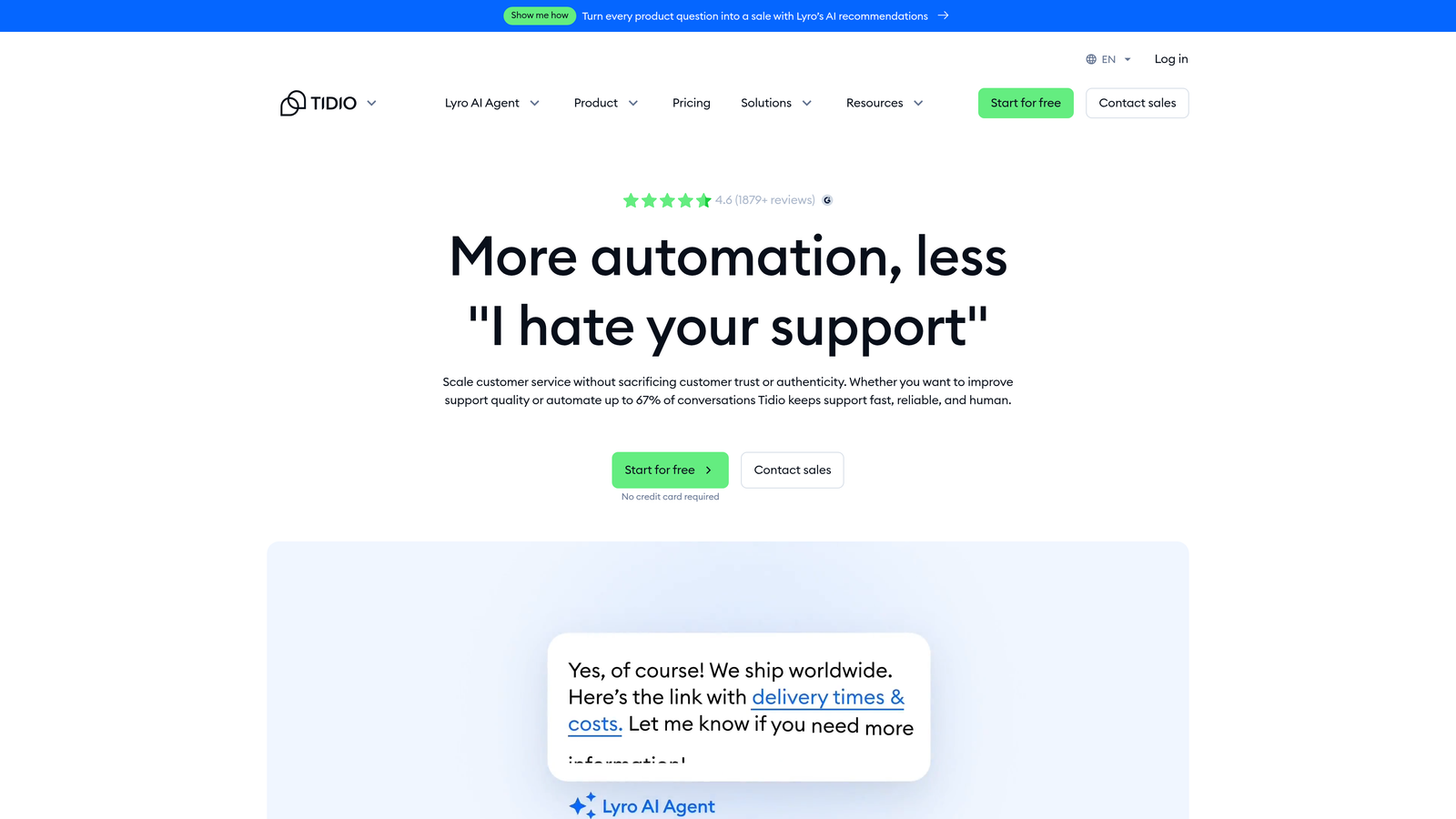
Tidio is a combined live chat and AI chatbot platform featuring Lyro AI, designed for non-technical teams who need a working solution fast.
Where This Tool Shines
Tidio's biggest strength is accessibility. The visual flow builder lets non-technical founders design conversation paths without writing a line of code, and Lyro AI handles common customer questions by drawing on your existing content. For e-commerce businesses in particular, the Shopify and WooCommerce integrations mean your support tool connects directly to order data.
The combination of live chat and AI in a single platform means you're not managing two separate tools. When Lyro can't resolve something, it passes the conversation to a live agent without the customer noticing a jarring handoff. For small teams where one person might be handling both chat and other tasks, this flexibility is genuinely useful.
Key Features
Lyro AI Chatbot: Handles common customer questions automatically using your existing help content as its knowledge base.
Visual Flow Builder: Lets you design conversation journeys without any coding knowledge.
Unified Live Chat and AI: Manages both automated and human conversations in one interface.
E-Commerce Integrations: Connects with Shopify and WooCommerce to surface order and product data in conversations.
Free Tier: Provides a starting point for very small teams before scaling up.
Best For
E-commerce businesses, small retail brands, and service businesses that want an accessible, low-setup chat and AI solution. Particularly strong for founders managing support themselves who need automation without technical complexity.
Pricing
Free tier available; Lyro AI from approximately $29 per month. Verify current pricing at tidio.com.
5. Zendesk
Best for: Small businesses planning to scale who want enterprise infrastructure from the start
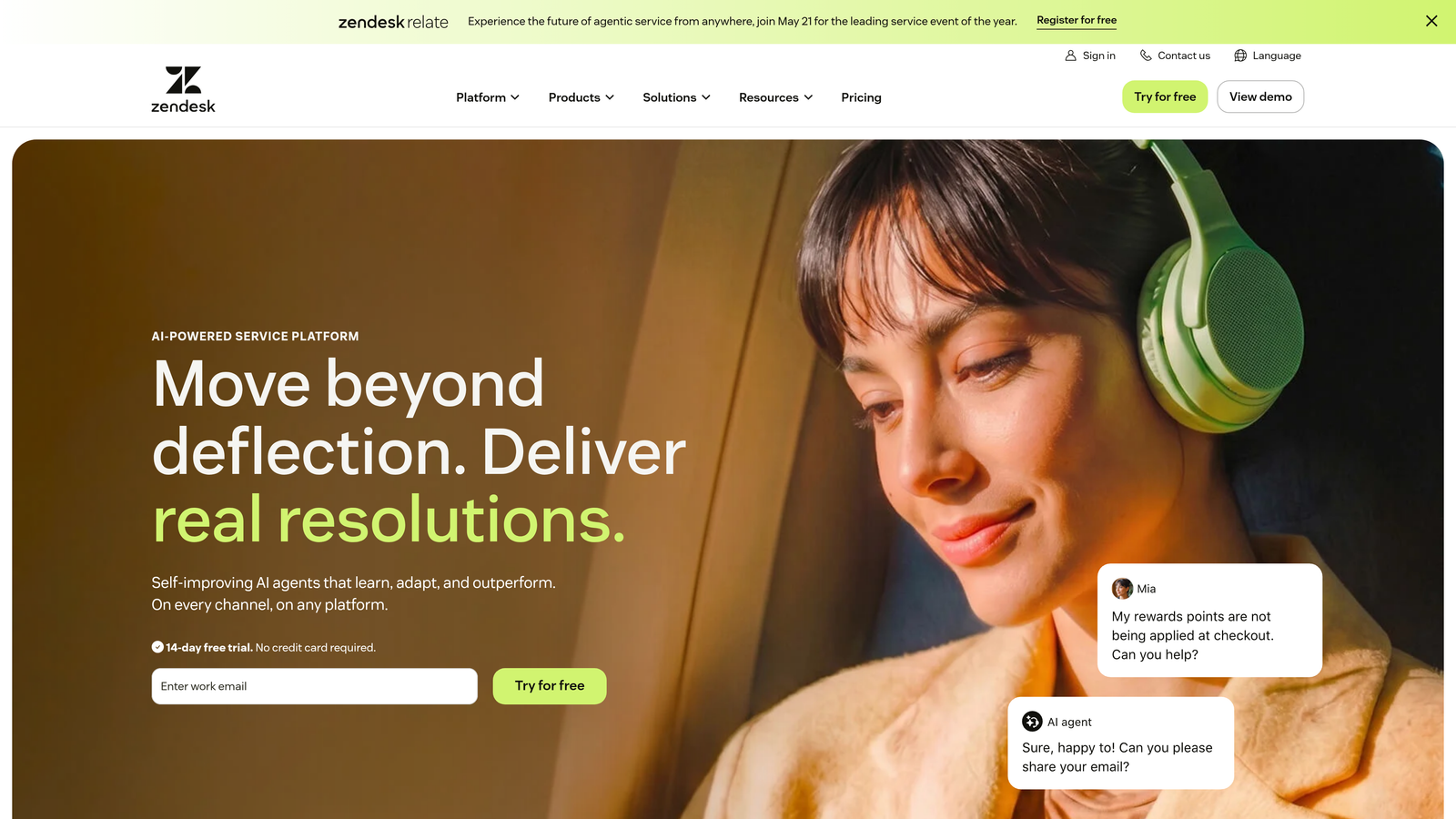
Zendesk is the industry-standard helpdesk platform with a comprehensive AI layer covering intelligent triage, macro suggestions, and an expansive app ecosystem.
Where This Tool Shines
Zendesk is the platform you grow into. For small businesses that are scaling quickly or operating in industries where support complexity is high, starting on Zendesk means you won't need to migrate later. The AI triage and intent detection work well at volume, and the macro suggestion engine helps agents maintain consistency as team size grows.
The app marketplace is one of the largest in the category, with hundreds of integrations covering virtually every tool a growing business might use. The trade-off is that Zendesk can feel like more infrastructure than a 3-person team needs. It's best suited for businesses with a clear growth trajectory rather than those in the very earliest stages.
Key Features
AI-Powered Triage: Detects ticket intent and routes conversations intelligently based on topic and priority.
Macro and Response Suggestions: Helps agents respond faster with AI-generated reply recommendations.
AI Agents: Provides automated customer-facing resolution for common support scenarios.
Extensive App Marketplace: Connects with hundreds of third-party tools across every business function.
Advanced Reporting: Delivers detailed analytics on team performance, ticket trends, and customer satisfaction.
Best For
Small businesses that expect significant growth and want to invest in infrastructure that scales with them. Also a strong fit for teams in industries with complex support requirements where a mature, well-documented platform reduces risk.
Pricing
From approximately $19 per agent per month (Suite Team). Verify current pricing at zendesk.com.
6. Zoho Desk
Best for: Budget-conscious teams already using Zoho CRM or other Zoho products
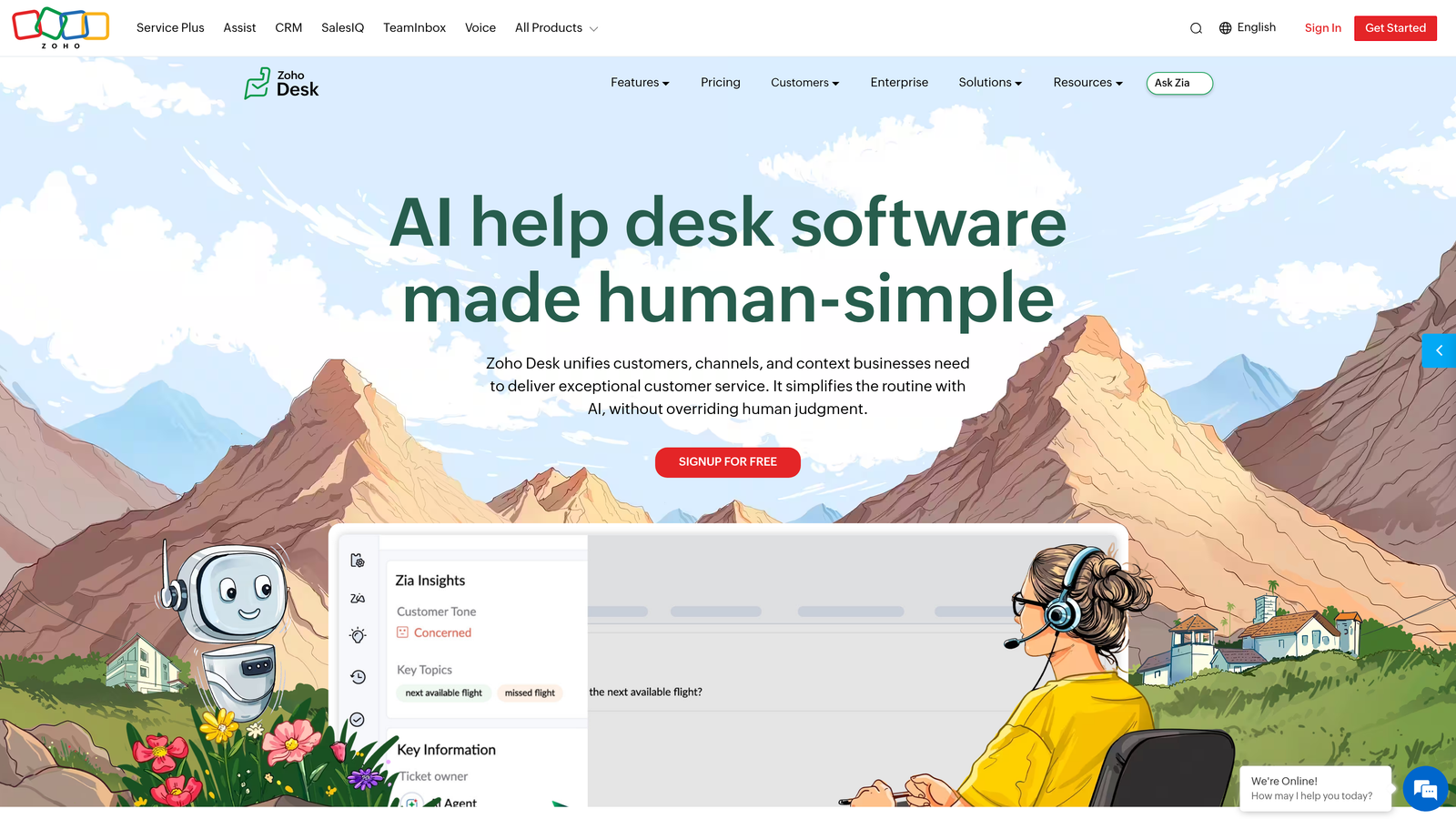
Zoho Desk is a competitively priced helpdesk with Zia AI built in, offering sentiment analysis, anomaly detection, and auto-tagging alongside deep Zoho ecosystem integration.
Where This Tool Shines
Zia AI's sentiment analysis is one of the more distinctive features at this price point. The ability to detect customer emotion in real time and flag tickets where frustration is escalating gives small teams an early warning system that would otherwise require a dedicated QA process. The anomaly detection feature, which flags unusual spikes in ticket volume, is similarly useful for catching problems before they become crises.
For teams already using Zoho CRM, the integration is seamless enough that support context and customer data feel like one unified view rather than two separate tools talking to each other. At the pricing tier, it's hard to find a more complete feature set for the cost.
Key Features
Zia Sentiment Analysis: Detects customer emotion in real time and helps prioritize tickets where frustration is high.
Anomaly Detection: Flags unusual spikes in ticket volume so teams can respond proactively.
Auto-Tagging and Classification: Automatically categorizes incoming tickets to reduce manual sorting.
Zoho Ecosystem Integration: Connects deeply with Zoho CRM, Zoho Analytics, and other Zoho products.
Free Tier: Supports up to 3 agents at no cost, making it accessible for very small teams.
Best For
Small businesses operating within the Zoho ecosystem, and budget-conscious teams that want AI-powered sentiment analysis and anomaly detection without paying enterprise prices. The free tier makes it a low-risk starting point.
Pricing
Free tier available for up to 3 agents; paid plans from approximately $14 per agent per month. Verify current pricing at zoho.com/desk.
7. Help Scout
Best for: Brands where tone, relationship quality, and the human voice in support are top priorities
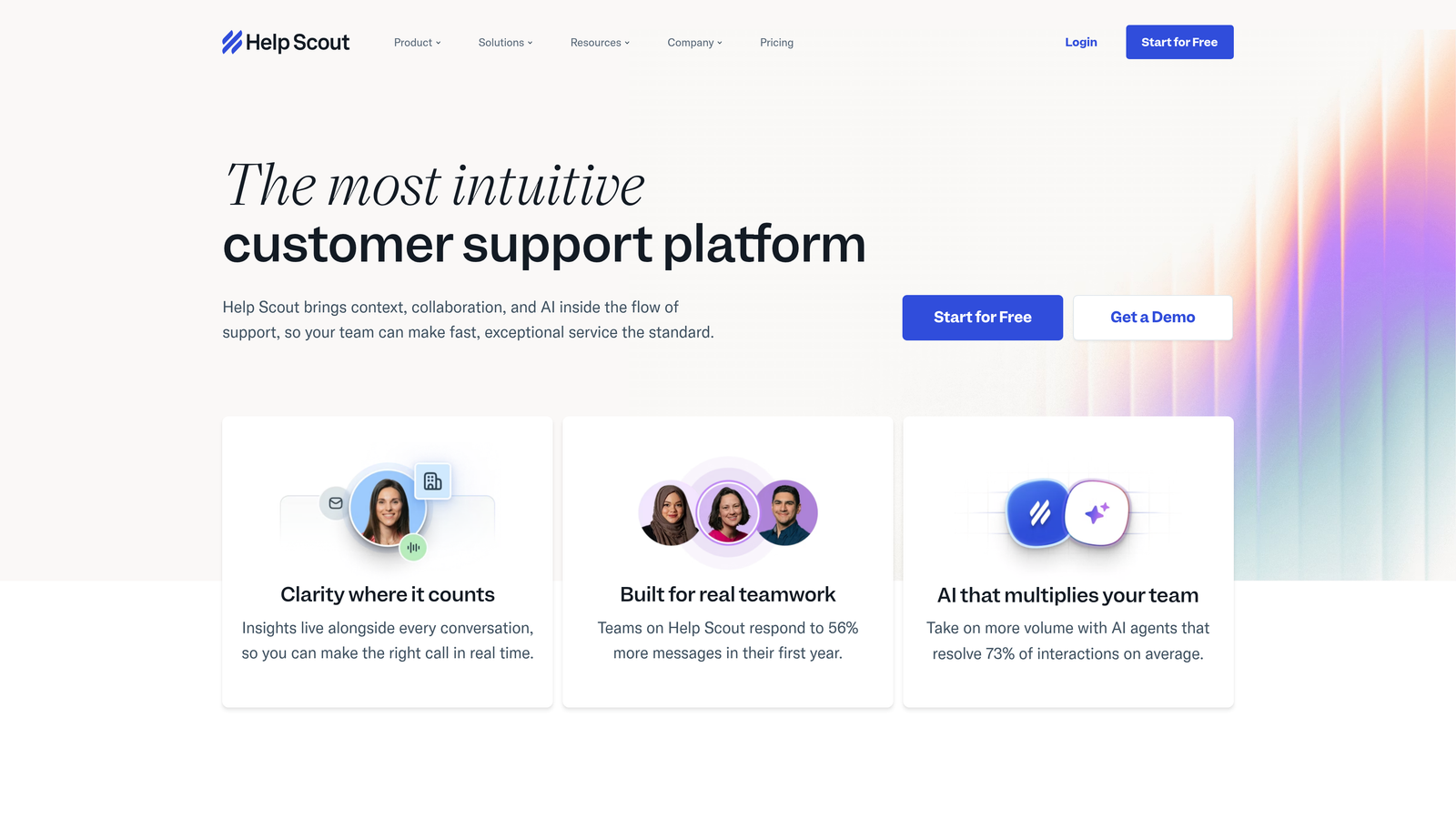
Help Scout is a human-centered support platform with AI tools designed to make agents faster without replacing the personal quality of their responses.
Where This Tool Shines
Help Scout's philosophy is that AI should amplify human agents, not replace them. That shows up in features like AI Assist, which helps agents draft, improve, and adjust the tone of replies rather than generating fully automated responses. For brands where the voice and warmth of support interactions are part of the customer experience, this approach resonates strongly.
The inbox-style UX is genuinely intuitive, and agents tend to adopt it quickly without extensive training. The Beacon in-product widget adds self-service capability without feeling disconnected from the rest of the platform. If your brand has worked hard to build a particular support culture, Help Scout is designed to preserve it.
Key Features
AI Summarize: Provides instant ticket context so agents can get up to speed on any conversation in seconds.
AI Assist: Helps agents draft replies, improve clarity, and adjust tone without fully automating the response.
Beacon Widget: Delivers in-product self-service options and proactive help without disrupting the user experience.
Inbox-Style UX: Clean, familiar interface that agents adopt quickly with minimal onboarding time.
Customer Profiles: Surfaces full conversation history and customer context alongside every ticket.
Best For
Service businesses, agencies, and SaaS companies where the quality and tone of support interactions directly affect customer relationships. Ideal for teams that want AI to make agents better rather than replace them entirely.
Pricing
From approximately $22 per user per month. Verify current pricing at helpscout.com.
8. Drift (Salesloft)
Best for: Lean B2B teams where the same tool needs to handle both inbound support and sales conversations
Drift, now part of Salesloft, is a conversational AI platform that blurs the line between support and sales, handling both functions within a single conversation flow.
Where This Tool Shines
Drift's core insight is that for many small B2B businesses, the person asking a support question is also a potential expansion opportunity. The AI can handle an inbound support query and qualify the visitor as a lead in the same conversation without requiring a handoff between tools or teams. For lean operations where one person covers both support and sales, this reduces context-switching significantly.
The playbook builder gives non-technical teams meaningful control over how conversations are structured, and the meeting booking feature built into chat flows removes friction from the sales motion. Since the Salesloft acquisition, pricing has shifted toward enterprise positioning, so it's worth confirming current plans directly.
Key Features
Unified Support and Sales AI: Handles inbound support questions and lead qualification in the same conversation flow.
Meeting Booking: Allows prospects to book calls directly from chat without leaving the conversation.
Playbook Builder: Lets teams design conversation journeys and routing logic without engineering involvement.
CRM Integrations: Syncs conversation data with CRM platforms to keep sales and support records aligned.
Account-Based Targeting: Personalizes chat experiences based on visitor company and account data.
Best For
Lean B2B teams where support and sales functions overlap, particularly those using account-based go-to-market strategies. Most valuable when the same team handles both inbound queries and pipeline development.
Pricing
Contact Salesloft for current pricing. Verify at drift.com.
9. Chatbase
Best for: Non-technical founders who need a deployable AI support chatbot as fast as possible
Chatbase is a no-code tool for building custom AI chatbots trained on your own documents or URLs, with a setup process measured in minutes rather than days.
Where This Tool Shines
Chatbase is the fastest path from zero to a working AI support widget. Upload your documentation, paste your help center URL, and within minutes you have a chatbot that can answer questions based on your actual content. There's no flow builder to configure, no AI behavior to tune, and no integration headaches for the basic use case. It just works.
The trade-off is depth. Chatbase is excellent for FAQ deflection and basic question answering, but it doesn't have the ticket management, routing, or analytics depth of a full helpdesk platform. For very early-stage businesses or specific use cases like supplementing an existing support setup, it fills the gap cleanly without overcomplicating the stack.
Key Features
Document and URL Training: Upload PDFs, docs, or paste URLs to train a custom AI on your specific content.
Embeddable Chat Widget: Deploys on any website with a simple embed code, no developer required.
No-Code Setup: Fully operational in minutes without any technical knowledge.
Conversation Analytics: Tracks conversation history and common questions through a built-in dashboard.
API Access: Available on higher tiers for teams that want custom integrations beyond the standard embed.
Best For
Early-stage founders, solo operators, and small teams that need a working AI support chatbot quickly without budget for a full helpdesk platform. Also useful as a lightweight addition to an existing setup for specific FAQ deflection needs.
Pricing
Free tier available; paid plans from approximately $19 per month. Verify current pricing at chatbase.co.
Choosing the Right Tool for Your Team
The best AI support tool is the one that matches your actual situation, not the one with the longest feature list. Here's how to think through the decision.
If you're a B2B SaaS team that wants AI to resolve tickets autonomously while surfacing business intelligence, Halo AI is built specifically for that use case. The page-aware context and deep integrations with tools like Linear, HubSpot, and Stripe make it a natural fit for product-led companies.
If you want a mature, all-in-one messaging platform with strong conversation design, Intercom is the established choice. If you need a budget-friendly helpdesk entry point with a free tier to start, Freshdesk and Zoho Desk are both strong options, with Zoho offering the better value for teams already in that ecosystem.
For e-commerce businesses that need live chat and AI in one accessible package, Tidio hits the right balance of simplicity and capability. If you need something deployed in under an hour with no technical knowledge, Chatbase is the fastest path to a working solution.
Teams where the human voice in support is a brand differentiator will find Help Scout's AI-assisted approach more aligned with their values than fully autonomous tools. And for lean B2B teams juggling both support and sales conversations, Drift's unified approach reduces the tool sprawl that comes with managing two separate platforms.
Finally, if you're planning to grow quickly and want enterprise-grade infrastructure from the start, Zendesk gives you the ecosystem and scalability to avoid a painful migration later.
Your support team shouldn't scale linearly with your customer base. Let AI agents handle routine tickets, guide users through your product, and surface business intelligence while your team focuses on complex issues that need a human touch. See Halo in action and discover how continuous learning transforms every interaction into smarter, faster support.