9 Best Smart Customer Support Systems for B2B Teams in 2026
A smart customer support system goes far beyond traditional ticket management — it automates triage, understands customer context, and surfaces actionable intelligence across your entire support stack. This guide ranks the 9 best AI-native platforms for B2B teams in 2026, evaluated on automation depth, integration breadth, learning capability, and scalability.
 Matt PattoliFounder13 min read
Your helpdesk is supposed to make support easier. But if your team is still manually triaging tickets, copying and pasting responses, and switching between five tabs to find customer context, something isn't working. That's the gap between a traditional helpdesk and a truly smart customer support system.
A smart support system goes beyond ticket management. It resolves issues autonomously, understands context, connects to your broader business stack, and surfaces intelligence that helps your team make better decisions. Teams using legacy helpdesks are increasingly switching to AI-native platforms that treat automation as a foundation, not a feature.
To put this list together, we evaluated tools across four criteria: automation depth, integration breadth, learning capability, and scalability for B2B teams. Whether you're exploring what an AI helpdesk actually means or actively comparing platforms for your customer support operation, this breakdown covers the top contenders worth your attention.
1. Halo AI
Best for: B2B SaaS teams that want AI-first support with business intelligence built in
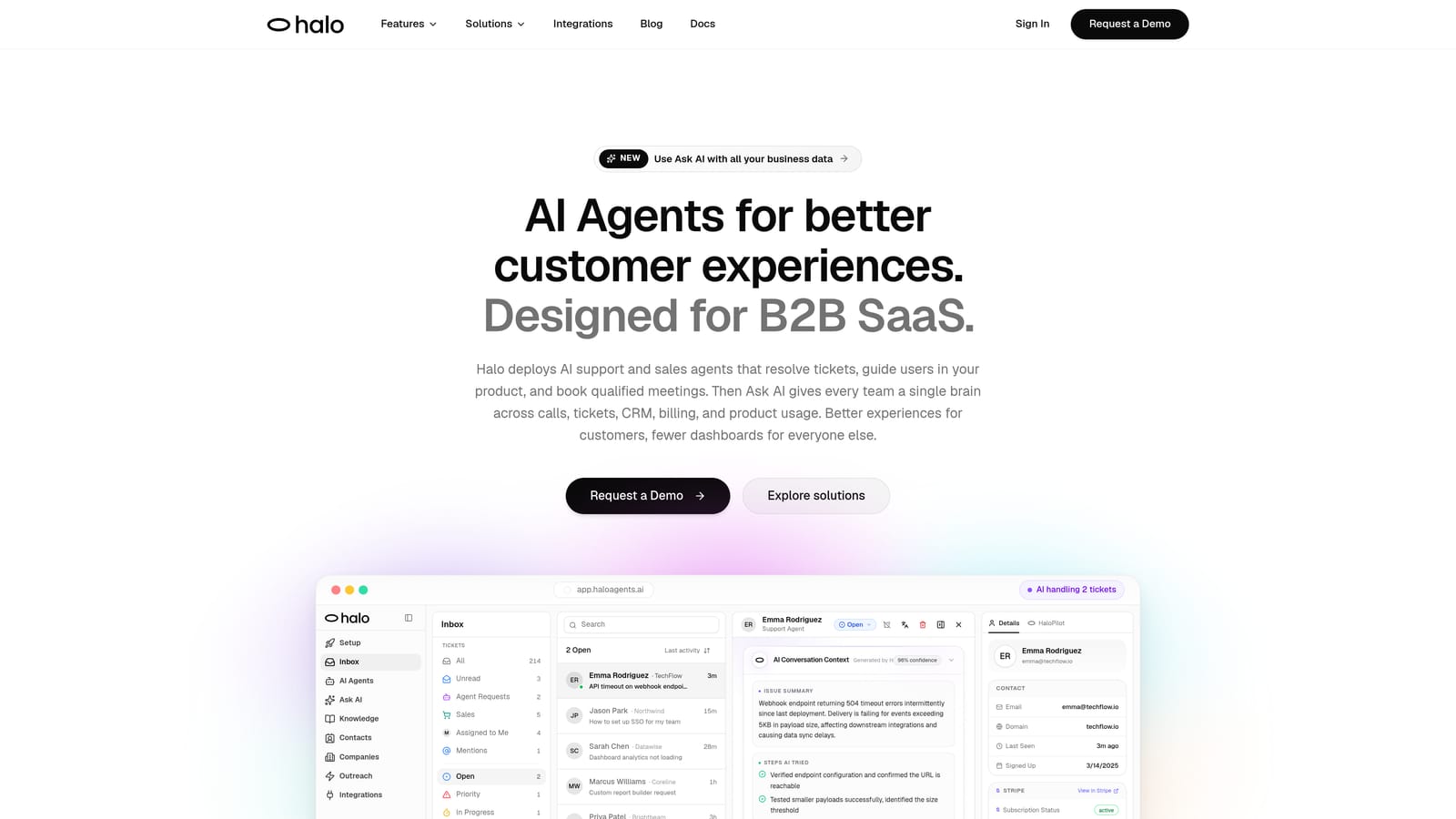
Halo AI is an AI-native customer support platform that deploys intelligent agents to resolve tickets, guide users through your product, and surface business signals from every interaction.
Where This Tool Shines
Most support tools add AI on top of an existing ticketing architecture. Halo is built the other way around. The AI isn't a feature you toggle on; it's the operating layer that handles resolution, routing, escalation, and learning from day one. That distinction matters when you're evaluating long-term scalability.
What sets Halo apart is its contextual awareness. The page-aware chat widget sees what your user sees, meaning it can provide visual UI guidance rather than generic text responses. Combined with a smart inbox that surfaces customer health signals and revenue anomalies, Halo functions less like a support tool and more like an intelligence layer across your customer base. You can read more about this in the Halo AI agent feature overview.
Key Features
Intelligent AI Agents: Autonomously resolve support tickets end-to-end and escalate complex issues to live agents with full context preserved.
Page-Aware Chat Widget: Sees what users see in real time, enabling contextual, visual product guidance rather than static FAQ responses.
Smart Inbox with Business Intelligence: Surfaces customer health signals, revenue anomalies, and product feedback automatically so your team spots issues before they escalate.
Auto Bug Ticket Creation: Detects product issues from support conversations and routes bug tickets directly to Linear without manual intervention.
Broad Integration Suite: Connects with HubSpot, Slack, Intercom, Stripe, Zoom, PandaDoc, and Fathom, making it a central node in your business stack rather than an isolated tool.
Continuous Learning: Every resolved interaction improves the model's accuracy, so resolution rates increase over time without manual retraining. Learn more about ticket deflection and how this compounds over time.
Best For
B2B SaaS teams and product-led companies that want AI to handle routine tickets autonomously while surfacing business intelligence from support data. Particularly strong for teams already using Linear, HubSpot, or Slack who want their support system to connect meaningfully to the rest of their stack.
Pricing
Contact for pricing, tailored to team size and usage volume. Designed for teams ready to move beyond per-seat helpdesk pricing models.
2. Zendesk
Best for: Large enterprises needing a mature, omnichannel helpdesk with broad marketplace integrations
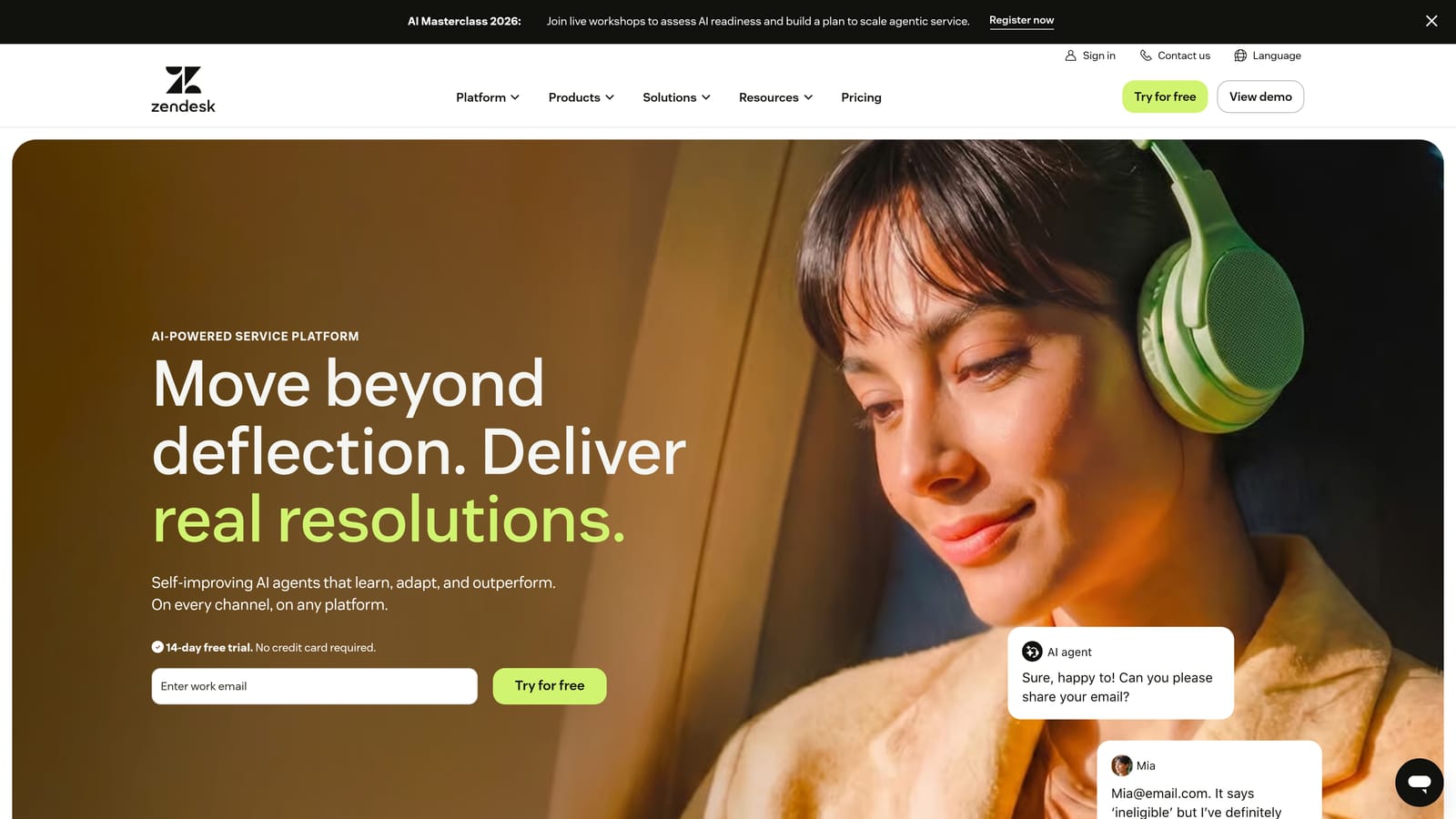
Zendesk is an enterprise-grade helpdesk platform with AI automation layered onto a robust ticketing and omnichannel foundation.
Where This Tool Shines
Zendesk has one of the most mature feature sets in the market. Its omnichannel coverage, SLA management, and app marketplace make it a reliable choice for large support organizations that need proven infrastructure. If your team has complex workflow requirements and a dedicated admin to manage configuration, Zendesk delivers.
That said, many mid-market teams find it over-engineered for their needs. AI features like Answer Bot exist as add-ons to the core ticketing architecture rather than as foundational capabilities, which can limit how deeply automation is embedded into daily workflows. Teams evaluating alternatives may want to review our Zendesk alternative comparison and automation tools breakdown.
Key Features
Answer Bot: Automated responses drawn from your knowledge base to deflect common inbound queries before they reach an agent.
Intelligent Triage: AI-powered ticket routing that classifies and assigns incoming tickets based on intent and priority.
Omnichannel Support: Unified inbox across email, chat, voice, and social media channels.
App Marketplace: Hundreds of third-party integrations for extending functionality across your business stack.
Advanced Reporting: Detailed SLA tracking, CSAT reporting, and team performance dashboards.
Best For
Enterprise support teams with high ticket volumes, complex routing requirements, and the resources to manage a sophisticated platform. Less ideal for lean B2B SaaS teams looking for AI-native automation out of the box.
Pricing
Suite plans from approximately $55 per agent per month (billed annually); AI add-ons are priced separately and can increase total cost significantly.
3. Intercom
Best for: Product-led teams prioritizing in-app messaging and conversational AI with proactive outreach
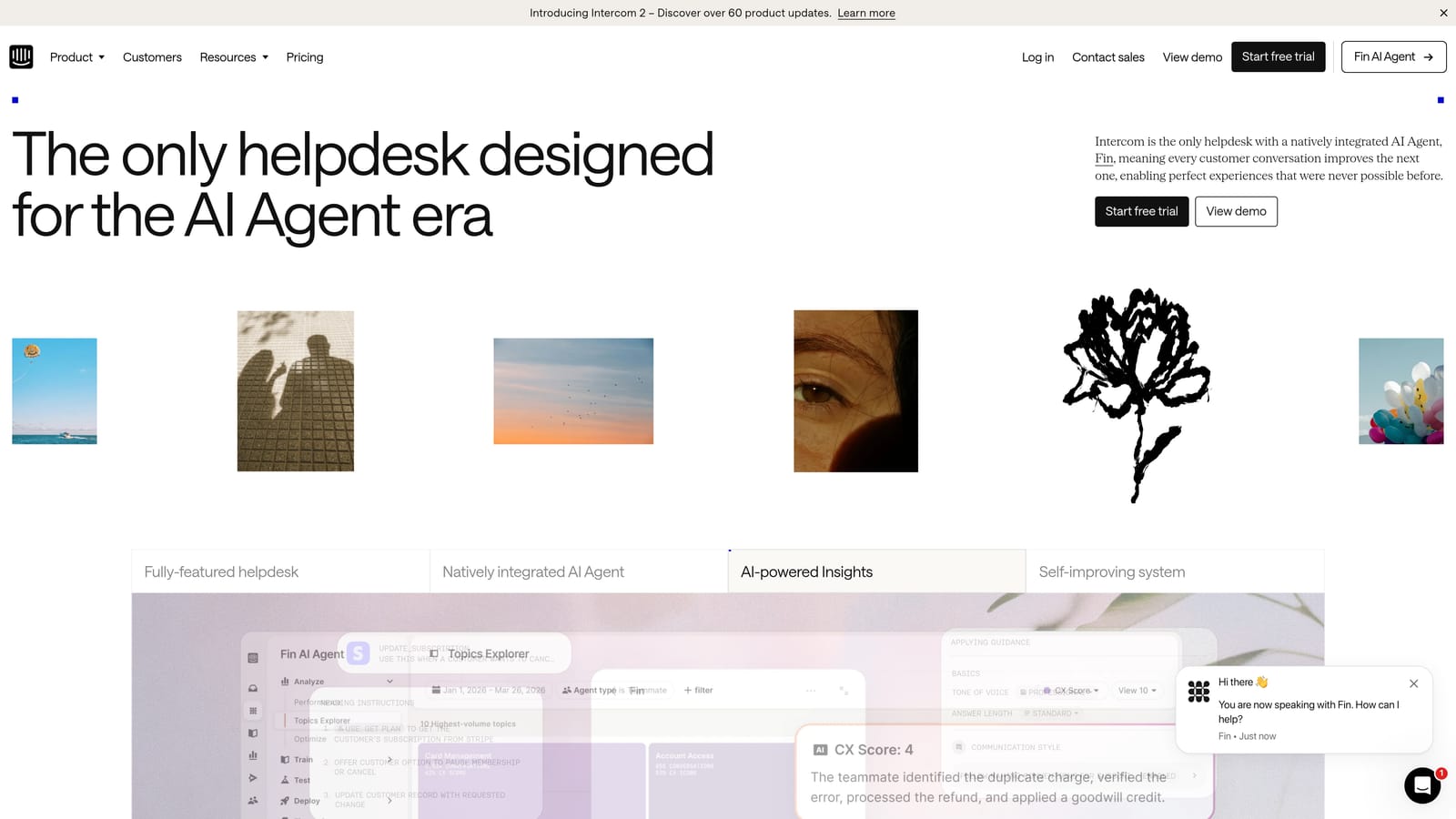
Intercom is a conversational support platform centered on in-product messaging, with Fin, its GPT-4-powered AI agent, handling a meaningful share of inbound queries autonomously.
Where This Tool Shines
Intercom's strength is the in-product experience. The messenger widget is polished, the proactive messaging capabilities are genuinely useful for onboarding and retention, and Fin AI can resolve a solid portion of common queries without agent involvement. For teams where the support experience is tightly woven into the product itself, Intercom feels native.
The pricing model is worth scrutinizing carefully. Fin AI is billed per resolved conversation, which can become expensive as volume grows. Teams with high inbound query rates should model out costs before committing.
Key Features
Fin AI Agent: GPT-4-powered autonomous resolution across chat and email, pulling from your knowledge base and help content.
In-App Messaging: Proactive outbound support and onboarding flows triggered by user behavior.
AI-Assisted Inbox: Shared inbox with AI-generated draft replies and conversation summaries for agents.
Customer Data Platform: Behavioral segmentation and customer attributes for personalized support experiences.
Help Center: AI-powered search across your documentation and self-service content.
Best For
SaaS teams that want strong in-product messaging alongside AI-powered resolution, particularly those investing in proactive support and user onboarding flows.
Pricing
Starts at approximately $39 per seat per month; Fin AI resolution is priced per resolved conversation, making total cost variable based on volume.
4. Freshdesk
Best for: Mid-market teams wanting AI-assisted support at a competitive price point within the Freshworks ecosystem
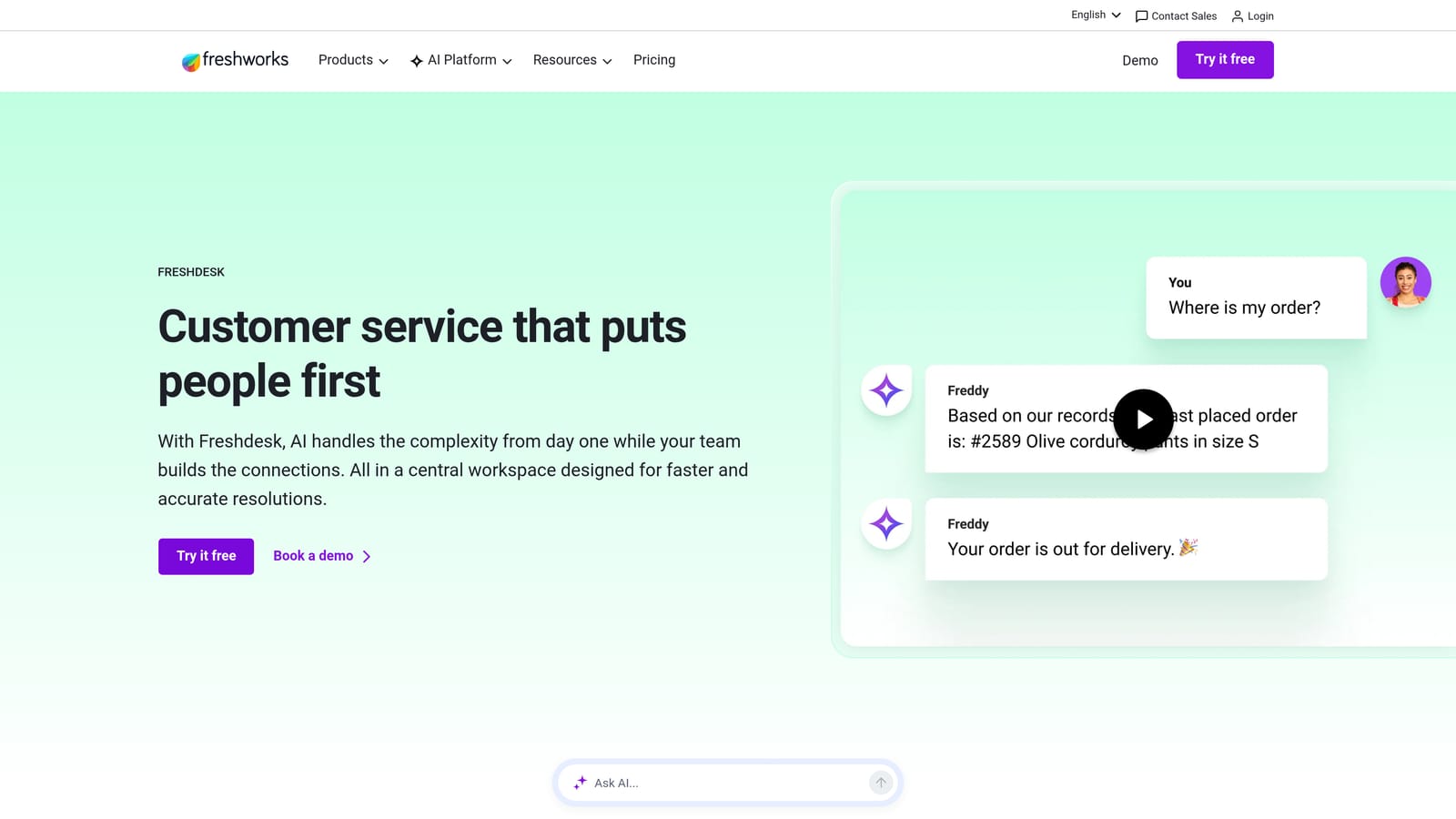
Freshdesk is a mid-market helpdesk from Freshworks with Freddy AI built in for ticket automation, intelligent routing, and self-service deflection.
Where This Tool Shines
Freshdesk hits a practical middle ground: more affordable than Zendesk at scale, with enough AI capability to handle routine automation without requiring heavy configuration. Freddy AI covers triage, suggested responses, and some autonomous resolution, making it useful for teams that want to reduce manual workload without a full platform overhaul.
The broader Freshworks ecosystem is also worth noting. If your team already uses Freshsales or Freshservice, the native integration between products reduces the stack complexity that often comes with stitching together separate tools.
Key Features
Freddy AI: Handles ticket triage, suggested responses, and auto-resolution for common query types.
Omnichannel Inbox: Unified view across email, chat, phone, and social media.
CSAT Prediction: AI-powered scoring to flag at-risk interactions before they become escalations.
Self-Service Portal: AI-powered article suggestions that surface relevant help content based on the user's query.
Freshworks Ecosystem: Native integration with Freshsales CRM and Freshservice ITSM for teams using the broader suite.
Best For
Mid-market B2B teams looking for a cost-effective alternative to Zendesk with solid AI automation and omnichannel coverage. Also strong for organizations already invested in the Freshworks product suite.
Pricing
Free plan available; paid plans from approximately $15 per agent per month; Freddy AI features are available on higher tiers.
5. Salesforce Service Cloud
Best for: Enterprise teams already embedded in the Salesforce ecosystem needing deep CRM-support integration
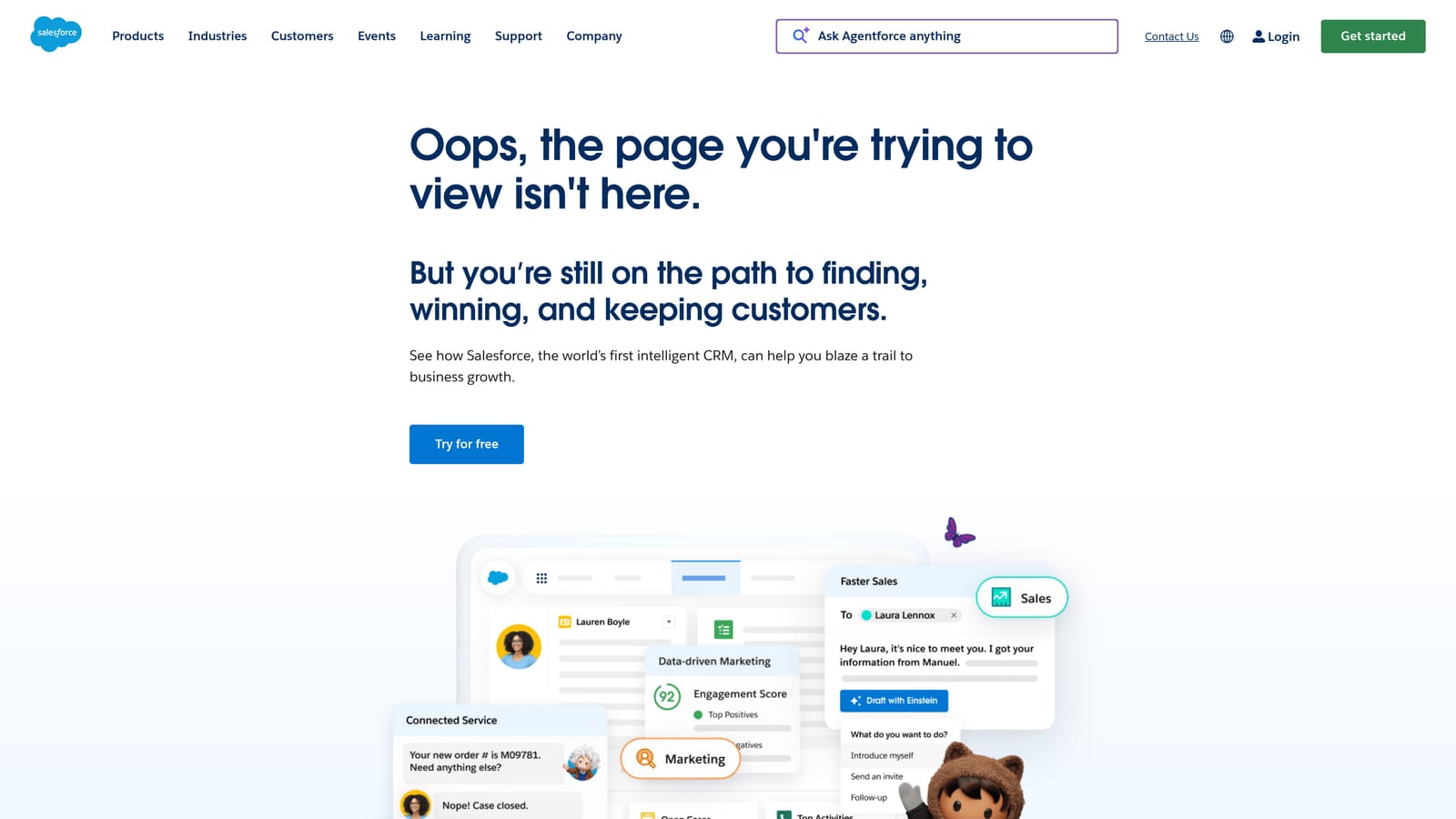
Salesforce Service Cloud is an enterprise service platform deeply integrated with Salesforce CRM, using Einstein AI for intelligent case management and omnichannel routing.
Where This Tool Shines
If your organization runs on Salesforce, Service Cloud is the natural extension. The unified agent console gives support reps full CRM context alongside every case: purchase history, account health, open opportunities, all in one view. Einstein AI adds routing intelligence and next-best-action recommendations on top of that foundation.
The tradeoff is complexity and cost. Implementation typically requires dedicated Salesforce expertise, and the licensing model can make it prohibitively expensive for smaller teams. It's a powerful platform, but one that rewards organizations with the resources to configure and maintain it properly.
Key Features
Einstein AI: Case classification, intelligent routing, and next-best-action recommendations powered by AI.
Unified Agent Console: Full CRM customer context alongside every support case, including account and opportunity data.
Omnichannel Routing: Intelligent distribution across voice, chat, email, and social channels.
Self-Service Portal: Customer-facing knowledge base and case submission integrated with the CRM.
Salesforce Ecosystem Integration: Native connectivity across Sales Cloud, Marketing Cloud, and the broader Salesforce platform.
Best For
Large enterprises with existing Salesforce infrastructure and dedicated admin resources. Not well-suited for lean teams or organizations without prior Salesforce investment.
Pricing
Enterprise plans from approximately $165 per user per month; implementation and customization costs vary significantly depending on configuration complexity.
6. Help Scout
Best for: Small to mid-size teams that prioritize a clean, human-centered agent experience with lightweight AI assistance
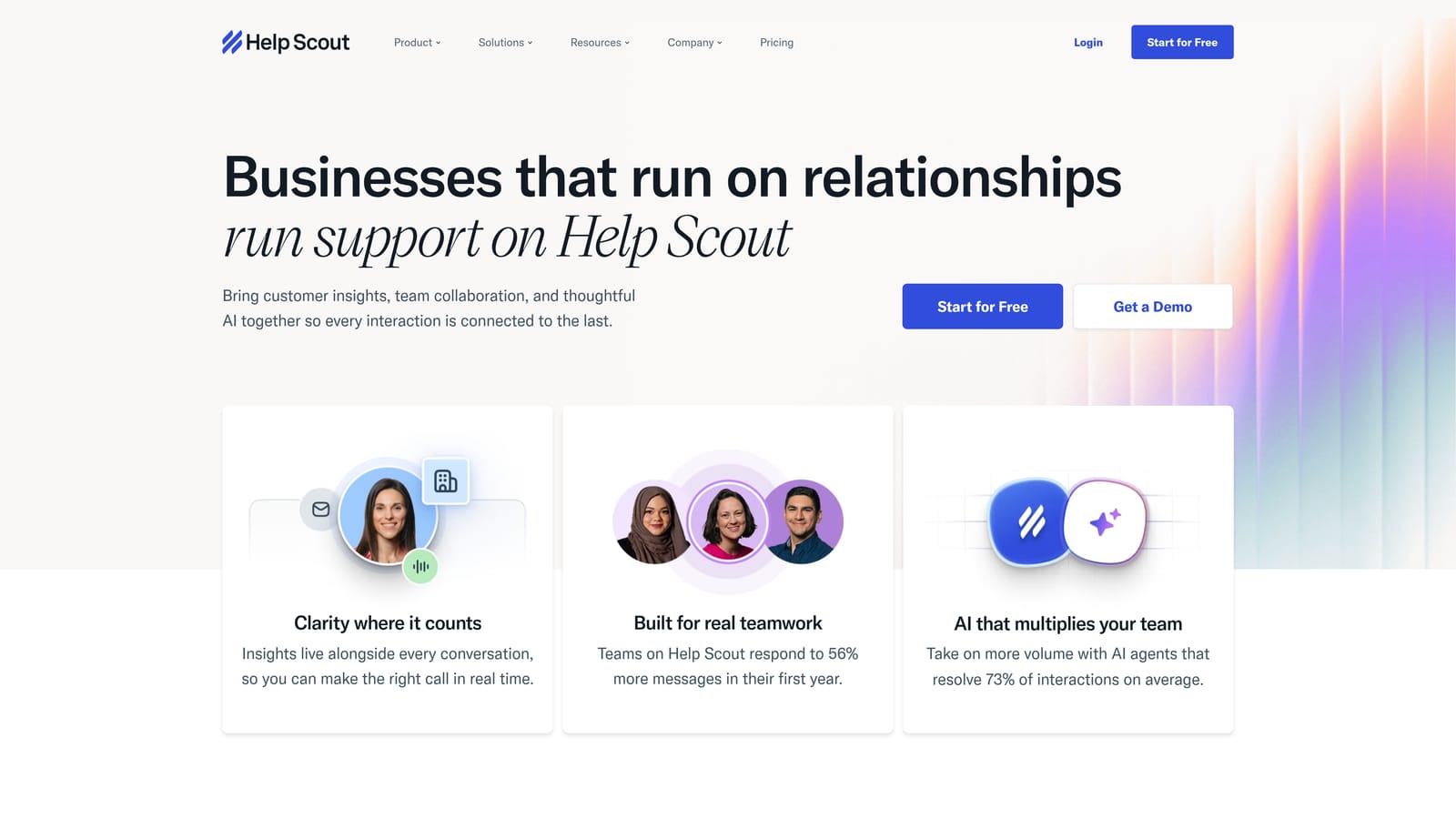
Help Scout is a shared inbox and knowledge base tool with AI features layered in for drafting, summarization, and self-service answers.
Where This Tool Shines
Help Scout's biggest strength is its simplicity. The interface is clean, onboarding is fast, and the shared inbox experience is genuinely pleasant to use. For teams where agent experience matters as much as automation depth, that usability advantage is real.
The AI features, including AI Drafts and AI Summarize, are useful additions rather than core automation engines. Help Scout won't autonomously resolve tickets at scale, but it will help your agents work faster and more consistently. It's a good fit for teams that want to improve human support quality rather than replace it with automation.
Key Features
AI Drafts: Suggested email responses generated from conversation context to speed up agent replies.
AI Summarize: Automatic conversation summaries so agents can catch up on long threads instantly.
Docs Knowledge Base: Clean, searchable help center with AI-powered content suggestions.
Shared Inbox: Collision detection and assignment tools that prevent duplicate responses.
Beacon Widget: In-app self-service widget that surfaces help articles and enables live chat without leaving the product.
Best For
Small to mid-size B2B teams that want a reliable, easy-to-use shared inbox with solid knowledge base capabilities. Less suited for teams that need deep autonomous resolution or complex workflow automation.
Pricing
Plans from approximately $22 per user per month, billed annually.
7. Kustomer
Best for: Teams that want CRM and support unified in a single platform with a customer-centric view
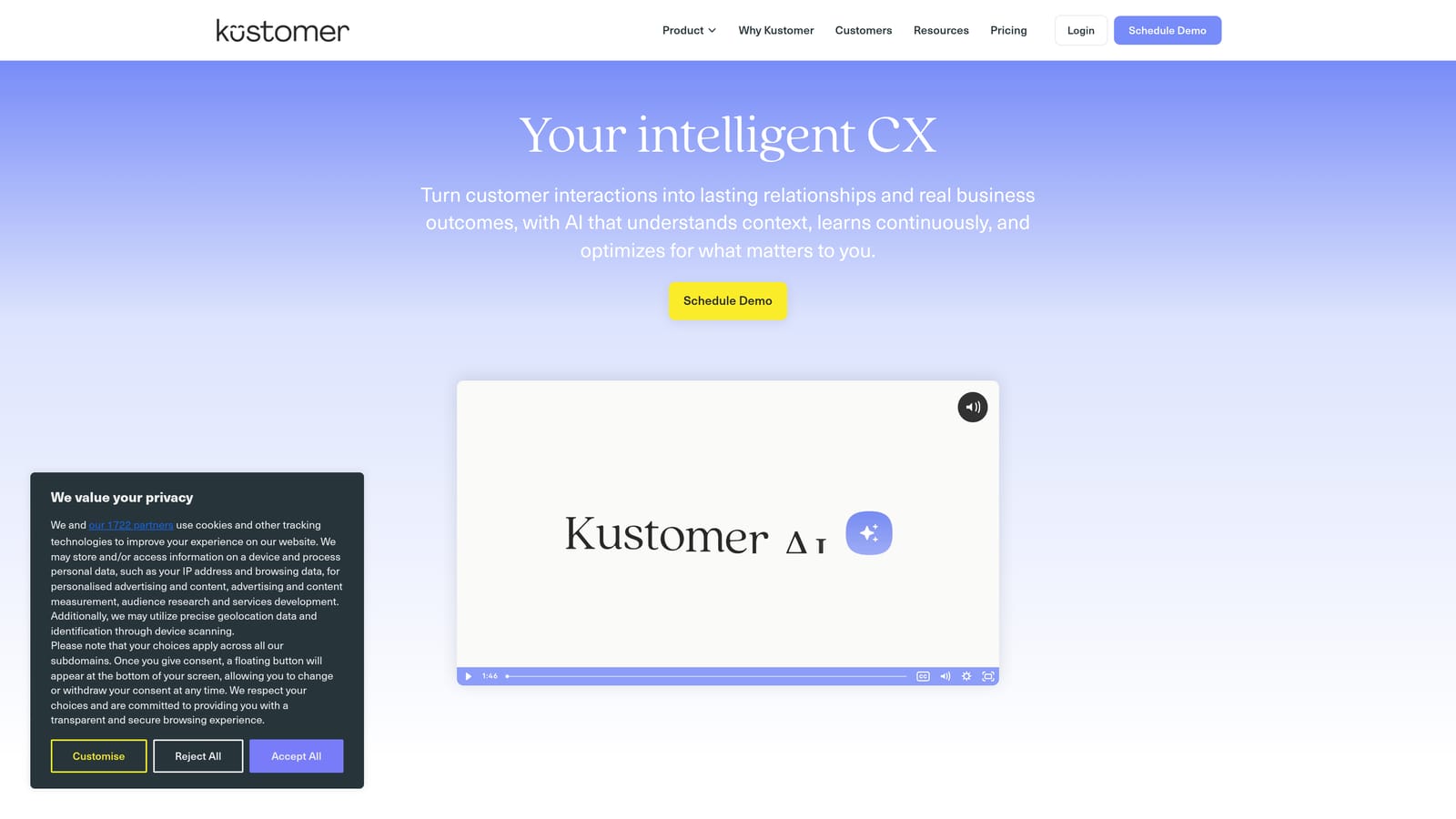
Kustomer is a CRM-centric support platform that unifies customer interactions across all channels into a single timeline, with AI-powered routing and automation built in.
Where This Tool Shines
Kustomer's unified customer timeline is its defining feature. Instead of viewing support as a series of isolated tickets, Kustomer organizes every interaction, purchase, and touchpoint by customer. That shift in perspective changes how agents approach conversations: they see the full story rather than a single thread.
The AI layer handles routing, intent detection, and workflow automation for repetitive tasks. Reporting is also oriented around customer-level metrics rather than ticket-level metrics, which aligns better with how B2B teams think about account health and retention.
Key Features
Unified Customer Timeline: All interactions across email, chat, voice, and social organized by customer rather than by ticket.
AI Routing and Intent Detection: Intelligent triage that classifies and routes conversations based on detected intent.
Workflow Automation: Rule-based automation for repetitive support tasks and escalation paths.
Built-In CRM: Customer attribute tracking and account management without a separate CRM tool.
Customer-Level Reporting: Metrics focused on customer outcomes and account health rather than ticket volume alone.
Best For
B2B teams that want CRM and support functionality in one platform, particularly those focused on account-level visibility and customer health tracking. Advanced AI features require the Enterprise tier.
Pricing
Plans from approximately $89 per user per month; Enterprise tier required for full AI automation capabilities.
8. Tidio
Best for: SMBs and early-stage teams that need fast AI chat deployment at accessible price points
Tidio is an accessible AI chat platform featuring Lyro, an AI agent that handles common support queries, designed for fast deployment at SMB-friendly price points.
Where This Tool Shines
Tidio's appeal is speed and accessibility. Lyro AI can be up and handling common queries quickly, without the configuration complexity that enterprise platforms require. For small teams or early-stage companies that need to deflect routine questions without hiring additional agents, Tidio offers genuine value fast.
The tradeoff is depth. Tidio works well for common query resolution via chat, but it lacks the business intelligence, deep integrations, and cross-channel sophistication that growing B2B teams eventually need. It's an excellent starting point, though teams often outgrow it as their support complexity increases.
Key Features
Lyro AI Agent: Autonomous query resolution via chat, trained on your help content and FAQs.
Live Chat and AI Chatbot: Combined in a single platform so teams can handle both automated and human conversations in one place.
No-Code Setup: Fast configuration without technical resources required.
Email and Messenger Integration: Extends coverage beyond chat to additional channels.
Analytics Dashboard: Conversation and agent performance tracking for ongoing optimization.
Best For
SMBs, early-stage startups, and e-commerce teams that want quick AI chat deployment without enterprise complexity or cost. Less suited for B2B teams with complex multi-channel support needs.
Pricing
Free plan available; Lyro AI from approximately $29 per month; paid plans scale with usage volume.
9. Gorgias
Best for: E-commerce brands running on Shopify or WooCommerce that need order-aware AI support
Gorgias is a support platform built specifically for e-commerce brands, with deep Shopify integration and AI auto-replies tied directly to order and customer data.
Where This Tool Shines
Gorgias is highly specialized, and that specialization is both its strength and its limitation. For Shopify-native brands handling high volumes of order status, return, and shipping queries, Gorgias is genuinely excellent. The AI auto-replies pull directly from order data, which means responses are accurate and personalized without agent involvement.
The revenue-per-ticket metric is a differentiating feature worth highlighting. Rather than measuring support purely by efficiency, Gorgias ties conversations to revenue outcomes, helping teams understand which support interactions actually drive purchases or prevent churn. For pure B2B SaaS teams, however, Gorgias is largely irrelevant, as its core strengths are built around transactional e-commerce workflows.
Key Features
Native E-Commerce Integrations: Deep connectivity with Shopify, WooCommerce, and BigCommerce for order and customer data access.
AI Auto-Replies: Automated responses to order status, returns, and FAQ queries using live order data.
Revenue-Per-Ticket Metrics: Ties support conversations to revenue outcomes to quantify the business impact of support.
Omnichannel Inbox: Unified view across email, chat, social, and SMS.
Macros and Rules: High-volume automation for repetitive workflows and response templates.
Best For
E-commerce brands with high order-related support volume, particularly those on Shopify. Not designed for B2B SaaS teams and lacks the business intelligence and product-stack integrations that those teams need.
Pricing
Plans from approximately $10 per month, based on ticket volume rather than seats, making it cost-effective for high-volume e-commerce operations.
Which Smart Support System Is Right for Your Team?
The right choice depends on where you are, what you're building, and how you think about AI in your support operation. Here's a quick way to orient your decision.
If you want AI as the foundation, not an add-on, Halo AI is the strongest option for B2B SaaS teams. The combination of autonomous resolution, page-aware context, business intelligence surfacing, and deep integrations with tools like Linear, HubSpot, and Slack makes it the most complete AI-native platform on this list.
If you're an enterprise already running on Salesforce, Service Cloud is the logical choice. If you need a mature omnichannel helpdesk with broad marketplace support, Zendesk remains a reliable, if expensive, option. For mid-market teams watching budget, Freshdesk offers solid AI capability at a more accessible price point.
Teams that prioritize in-product messaging and proactive support will find Intercom compelling, while those who value simplicity and agent experience often gravitate toward Help Scout. Kustomer suits teams that want CRM and support unified. Tidio is ideal for SMBs needing fast deployment, and Gorgias is the clear choice for e-commerce brands on Shopify.
The broader shift is worth naming directly: teams are increasingly choosing platforms where AI is foundational rather than layered on. Ticket deflection rates, autonomous resolution, and business intelligence surfacing are becoming the metrics that matter, not just response time.
Your support team shouldn't scale linearly with your customer base. Let AI agents handle routine tickets, guide users through your product, and surface business intelligence while your team focuses on complex issues that need a human touch. See Halo in action and discover how continuous learning transforms every interaction into smarter, faster support.