9 Best Software Support Automation Platforms in 2026
This guide ranks the 9 best software support automation platforms of 2026, evaluating each on AI capability depth, integration breadth, ease of deployment, scalability, and pricing transparency. Whether you run a lean startup or an enterprise support operation, it pinpoints the right platform to move beyond ticket-volume hiring and achieve genuine AI-driven resolution.
 Grant CooperFounder13 min read
Customer support is one of the fastest-growing cost centers for B2B SaaS companies, and the old playbook of hiring your way through ticket volume simply doesn't scale. The good news: the software support automation market has matured to the point where genuine AI resolution, not just chatbot deflection, is within reach for teams of all sizes.
This list covers the top software support automation platforms worth evaluating in 2026. Selection criteria include AI capability depth, integration breadth, ease of deployment, scalability, and pricing transparency. Whether you're a lean startup or an enterprise team managing thousands of tickets weekly, there's a platform here built for your situation.
If you're exploring how AI fits into your broader customer support strategy, or comparing specific tools, our Zendesk automation tools comparison is worth reading alongside this guide. Now, let's get into the platforms.
1. Halo AI
Best for: B2B SaaS teams wanting AI-native support that learns and surfaces product intelligence.
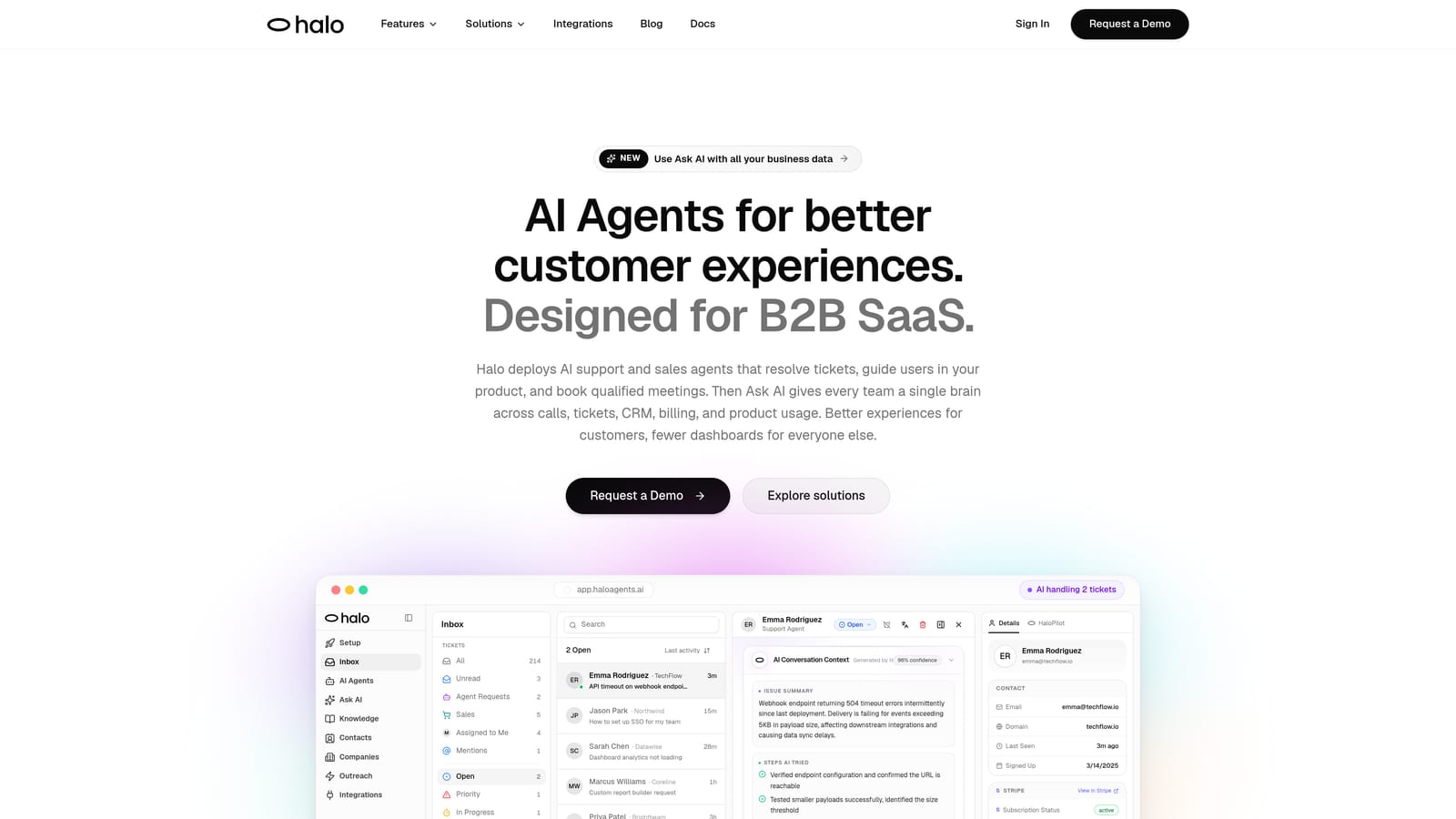
Halo AI is an AI-first customer support platform built from the ground up for B2B SaaS product teams, not retrofitted onto a legacy helpdesk.
Where This Tool Shines
Most support platforms added AI later. Halo was built with AI as the primary resolution layer, which means the intelligence runs deeper. The standout capability is page-awareness: Halo's AI agents see the exact page a user is on and can provide in-context visual UI guidance, not generic help articles.
What separates Halo further is what it does beyond ticket closure. The smart inbox surfaces customer health signals, revenue anomalies, and churn indicators, turning your support queue into a source of business intelligence. Every resolved interaction feeds back into the system, so the AI genuinely improves over time rather than staying static.
Key Features
Page-Aware AI Agents: The AI sees what the user sees on their current page, enabling precise, contextual UI guidance rather than generic responses.
Smart Inbox with Business Intelligence: Surfaces customer health signals, revenue intelligence, and anomaly detection beyond standard support metrics.
Auto Bug Ticket Creation: Automatically generates structured bug reports from support conversations and pushes them directly to Linear.
Live Agent Handoff: Escalates complex issues to human agents with full conversation context preserved, so customers never have to repeat themselves.
Broad Integration Stack: Connects natively with Linear, Slack, HubSpot, Intercom, Stripe, Zoom, PandaDoc, and Fathom.
Continuous Learning: Improves resolution quality from every interaction, compounding accuracy over time.
Best For
B2B SaaS product teams who want support that contributes to product intelligence, not just ticket closure. Particularly strong for companies whose support conversations contain valuable signals about bugs, churn risk, or feature gaps that currently go untracked.
Pricing
Contact for pricing via a demo at haloagents.ai/demo. Pricing is tailored to team size and use case.
2. Zendesk
Best for: Large enterprise support teams with complex, multi-channel workflows.
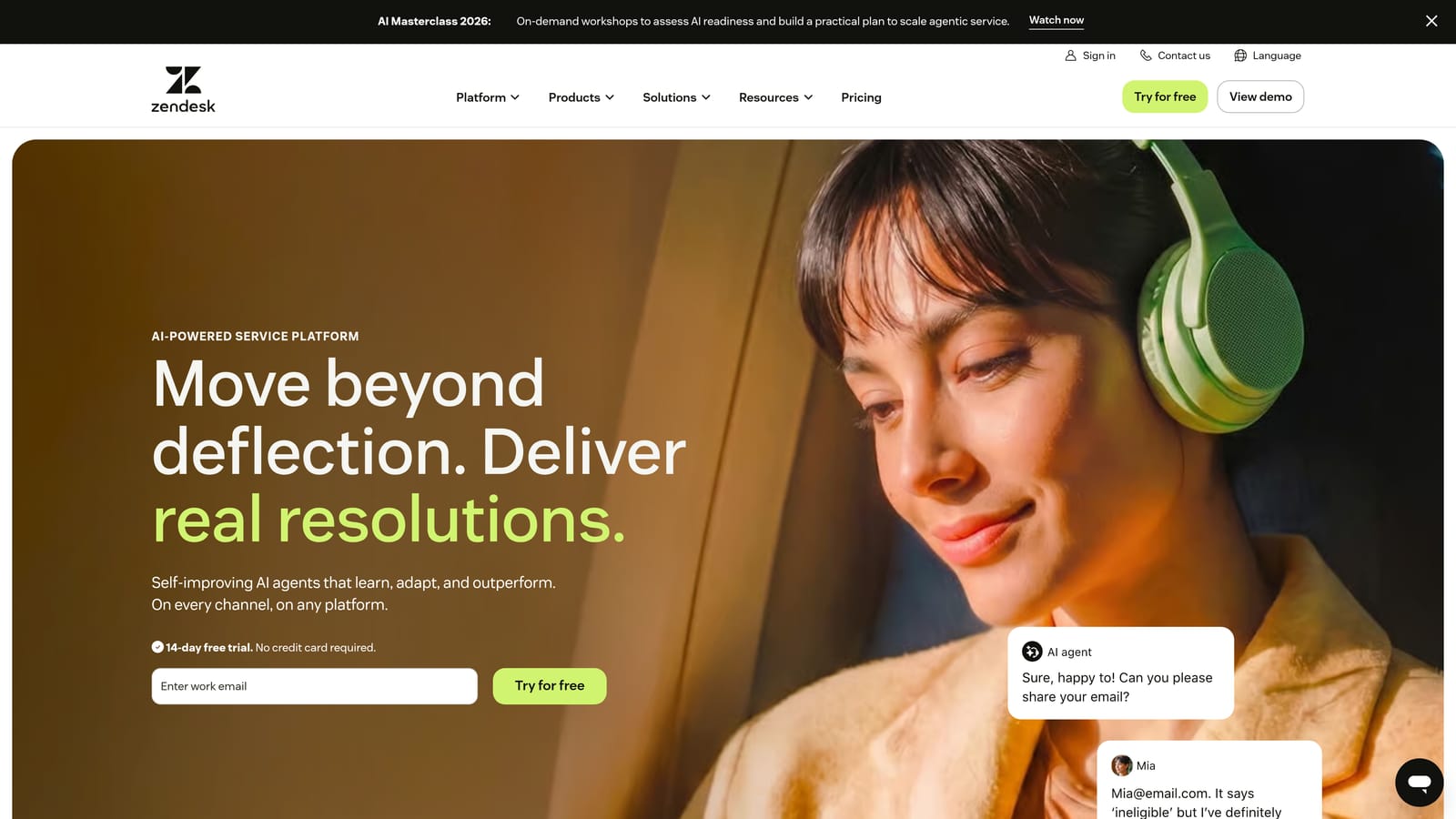
Zendesk is one of the most established helpdesk platforms globally, now layering AI agents, intelligent triage, and a vast app marketplace onto its already mature foundation.
Where This Tool Shines
Zendesk's depth is hard to match when it comes to enterprise workflow complexity. Multi-brand support, sophisticated routing rules, and a marketplace of over 1,000 integrations mean you can configure it to fit almost any support operation. For large teams with established processes, the infrastructure is genuinely enterprise-grade.
The AI capabilities, powered by an OpenAI partnership, have improved meaningfully in recent years. Intelligent triage and AI agents can handle a solid volume of routine tickets. The honest caveat: these AI features often feel like additions to the core platform rather than deeply woven throughout it, and configuration can be complex.
Key Features
Zendesk AI Agents: Automated ticket resolution drawing from your knowledge base and configured workflows.
Intelligent Triage and Routing: AI-driven ticket classification and assignment to the right agent or queue.
1,000+ App Marketplace: Extensive integrations covering CRM, e-commerce, analytics, and communication tools.
Enterprise Reporting: Detailed analytics dashboards with customizable reporting across all support channels.
Multi-Brand and Multi-Language Support: Manage multiple products or brands from a single instance, with localization capabilities.
Best For
Enterprise support teams with high ticket volumes, complex escalation workflows, and a need for deep customization. Less ideal for lean SaaS teams who want fast deployment and AI-first resolution without significant configuration overhead.
Pricing
Suite plans start at approximately $55/agent/month. Verify current pricing at zendesk.com/pricing.
3. Intercom
Best for: SaaS teams wanting conversational support and lifecycle messaging in a single platform.
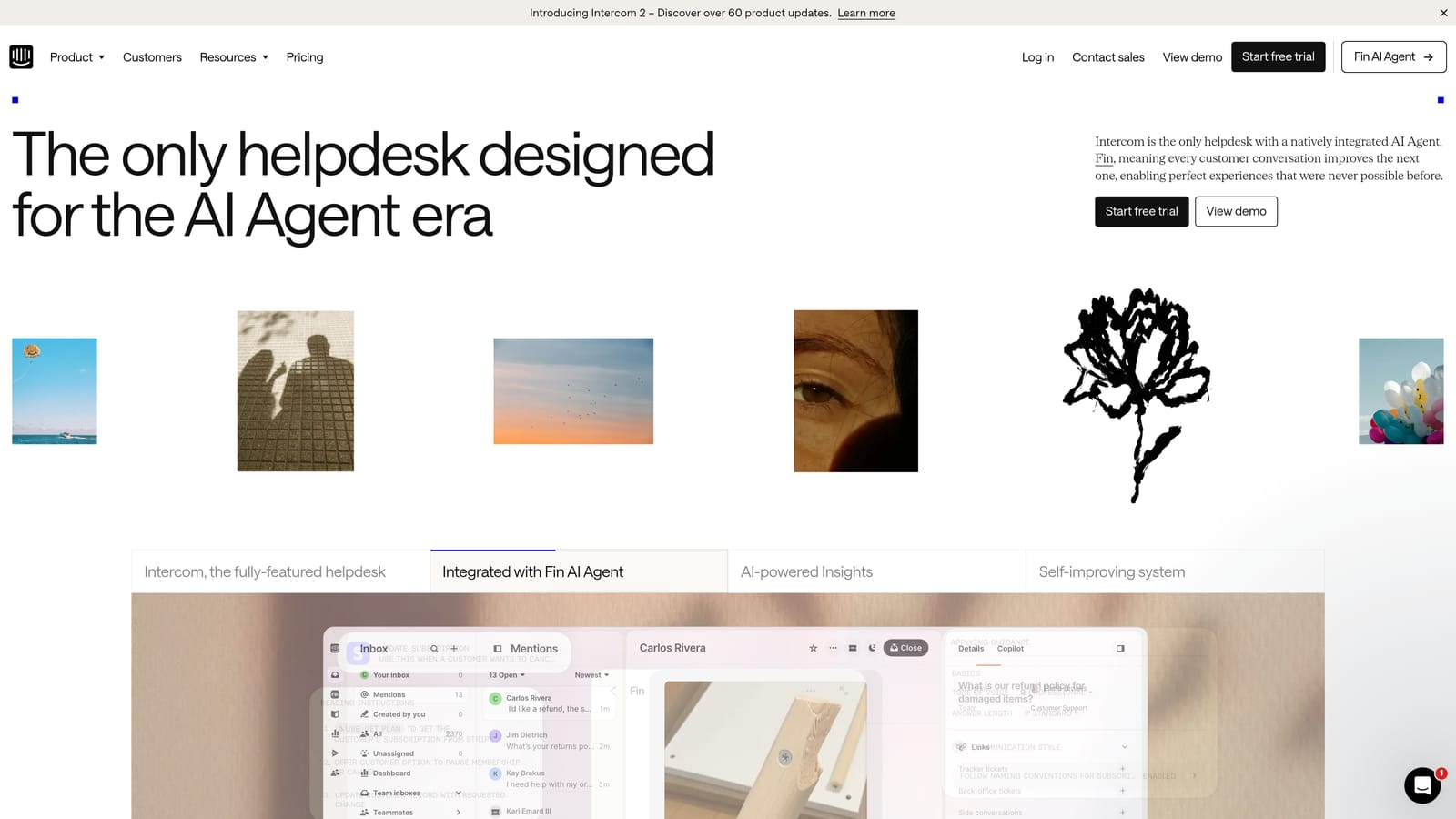
Intercom pioneered the messenger-first approach to customer communication and has since built Fin, a capable AI agent for autonomous ticket resolution, on top of that foundation.
Where This Tool Shines
Intercom's strength is the combination of support and lifecycle communication. Product tours, onboarding flows, proactive messaging, and reactive support all live in one tool, which reduces the number of vendors a growing SaaS team needs to manage. Fin AI agent is genuinely capable for FAQ-style resolution, pulling from your help content to answer common questions without agent involvement.
Where it gets interesting for SaaS teams is the customer data platform underneath, which enables personalized messaging based on user behavior and attributes. The trade-off is that pricing can escalate quickly as usage grows, and Fin's context-awareness has limitations compared to AI-native platforms built specifically for deep resolution.
Key Features
Fin AI Agent: Autonomous resolution drawing from your help center content, designed to deflect tickets before they reach a human.
In-App Messenger: Rich messaging widget with proactive outreach capabilities built in.
Omnichannel Inbox: Unified inbox handling email, chat, and social channels.
Product Tours and Onboarding Flows: In-product guidance tools for new user activation and feature adoption.
Customer Data Platform: User attribute and event tracking for personalized support and messaging.
Best For
SaaS companies that want support and customer communication managed in one platform, particularly those investing in proactive onboarding and lifecycle messaging alongside reactive support.
Pricing
Varies by plan; Fin AI agent is typically priced per resolution. Verify current pricing at intercom.com/pricing.
4. Freshdesk
Best for: Growing teams needing solid helpdesk fundamentals with AI at an accessible price point.
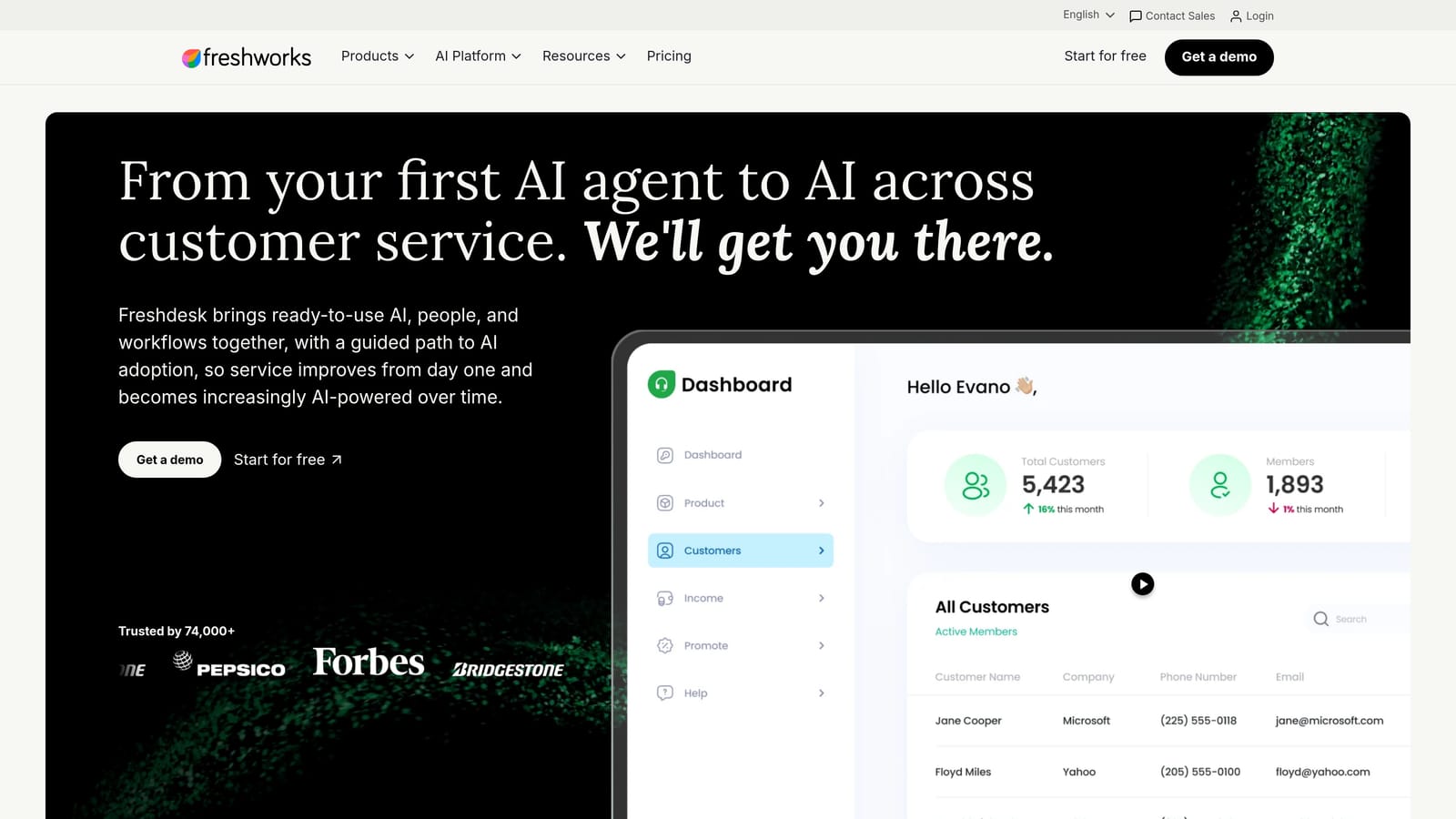
Freshdesk is Freshworks' flagship helpdesk product, popular with SMB and mid-market teams for its balance of features, usability, and competitive pricing.
Where This Tool Shines
Freshdesk earns its reputation for being genuinely easy to get up and running. The onboarding experience is smooth, the interface is clean, and the core ticket management capabilities cover what most growing support teams need without overwhelming complexity. Freddy AI adds self-service deflection and agent assist suggestions that meaningfully reduce repetitive workload.
The free plan is a real differentiator for early-stage teams: it's not a stripped-down trial but a functional starting point. As teams grow, the paid tiers add automation depth and analytics without requiring a jump to enterprise pricing.
Key Features
Freddy AI: Covers ticket deflection through self-service, agent reply suggestions, and AI-powered analytics.
Multi-Channel Support: Handles email, chat, phone, and social channels from a single inbox.
Automation Rules: Configurable routing, escalation, and assignment rules for ticket management.
Knowledge Base and Self-Service Portal: Built-in tools for creating and managing customer-facing help content.
Free Plan: A functional free tier for small teams, not just a trial.
Best For
SMB and mid-market support teams that need reliable helpdesk fundamentals, accessible AI features, and room to grow without immediate enterprise pricing pressure.
Pricing
Free plan available; paid plans start at approximately $15/agent/month. Verify current pricing at freshdesk.com/pricing.
5. Salesforce Service Cloud
Best for: Enterprises already on Salesforce CRM needing unified sales and support data.
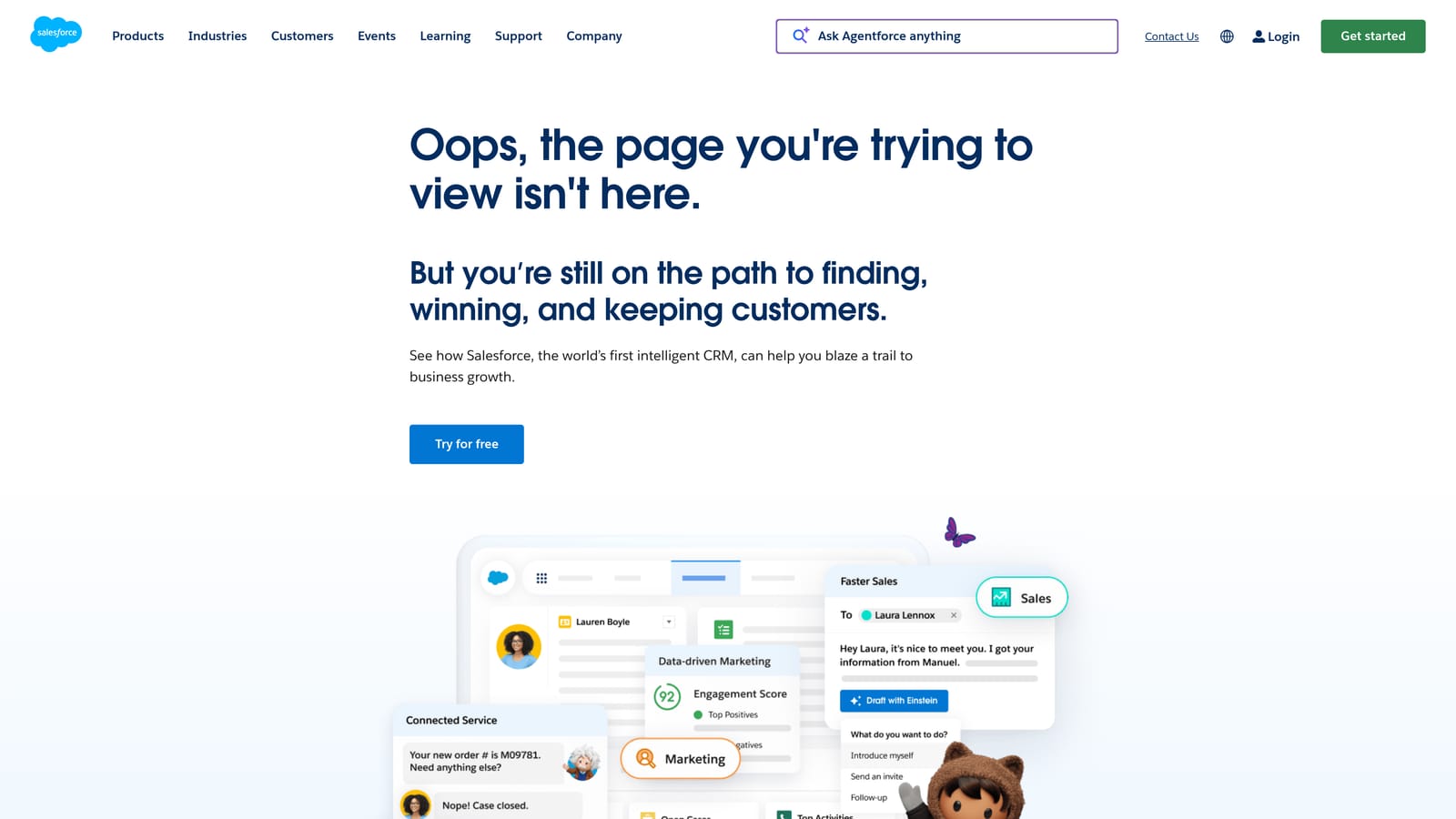
Salesforce Service Cloud is the enterprise-grade support platform built natively into the Salesforce ecosystem, powered by Einstein AI for case intelligence and agent recommendations.
Where This Tool Shines
If your organization runs on Salesforce, Service Cloud is the natural extension for support. The native CRM data integration means support agents see the full customer relationship, including sales history, contract status, and account health, without switching tools or syncing data across systems. For enterprises where support and sales alignment matters, this is a genuine advantage.
Einstein AI handles case classification, knowledge article suggestions, and next-best-action recommendations. The customization ceiling is essentially unlimited, which is both the platform's greatest strength and its most significant challenge: getting full value requires meaningful admin investment and often dedicated Salesforce expertise.
Key Features
Einstein AI: Case classification, agent recommendations, and next-best-action powered by Salesforce's AI layer.
Native CRM Integration: Full access to Salesforce account, contact, and opportunity data within the support context.
Omnichannel Routing: Intelligent case assignment across email, chat, phone, and social channels.
Self-Service Community Portals: Customer-facing portals and field service capabilities for complex support operations.
Highly Customizable Workflows: Extensive configuration options for escalation paths, approval processes, and reporting.
Best For
Large enterprises already invested in the Salesforce ecosystem who need support and CRM data unified, and have the admin resources to configure and maintain the platform effectively.
Pricing
Starter plans from approximately $25/user/month; enterprise tiers are significantly higher. Verify current pricing at salesforce.com.
6. HubSpot Service Hub
Best for: HubSpot-native teams wanting support connected to CRM without adding another vendor.
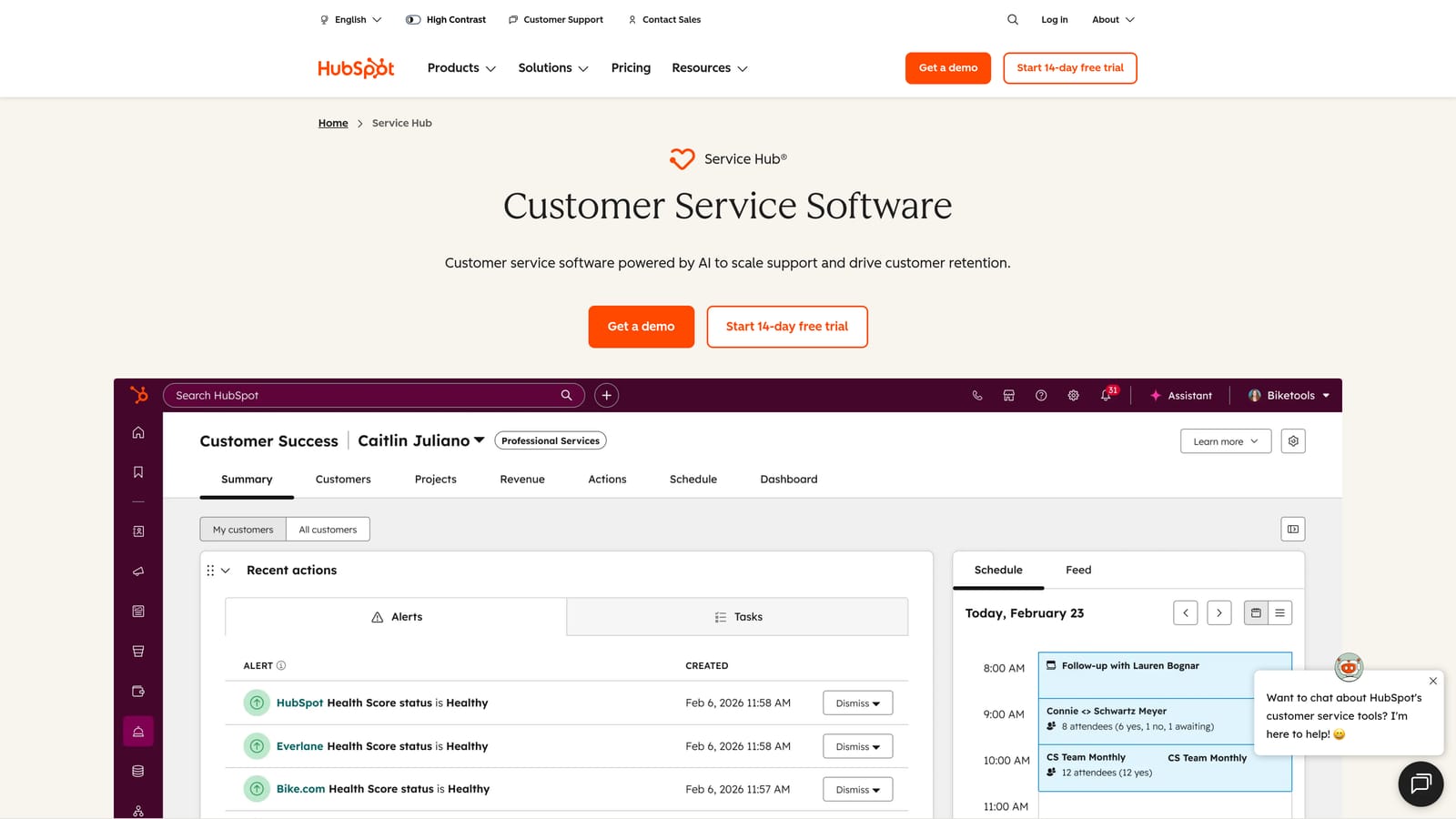
HubSpot Service Hub is HubSpot's customer service product, connecting ticketing, knowledge base, and AI-assisted support directly to HubSpot CRM for teams already living in the HubSpot ecosystem.
Where This Tool Shines
The core value proposition is consolidation. If your marketing, sales, and CRM data already live in HubSpot, adding Service Hub means support conversations are immediately connected to the full customer record without any integration work. AI-assisted reply suggestions and ticket summaries reduce agent effort on routine communication, and the feedback survey tools (NPS, CSAT, CES) are well-integrated into the ticket workflow.
It's worth being clear-eyed about what Service Hub is: it's a strong CRM extension, not a dedicated AI-first support platform. Teams whose primary need is deep AI resolution capability will find it less sophisticated than purpose-built alternatives. But for teams who value a single platform for customer-facing operations, it's a compelling choice.
Key Features
Native CRM Ticketing: Tickets created and managed within the HubSpot CRM, with full contact and deal context visible.
AI-Assisted Replies and Summaries: Suggested responses and conversation summaries to speed up agent workflows.
Knowledge Base Builder: Create and manage help articles that connect to ticket deflection workflows.
Customer Feedback Surveys: Built-in NPS, CSAT, and CES survey tools tied to ticket and contact records.
Live Chat and Chatbot Builder: Configurable chat widget with basic automation for common queries.
Best For
Teams already using HubSpot for CRM, marketing, or sales who want support tooling that integrates seamlessly without adding a new vendor or data silo.
Pricing
Free tools available; paid Service Hub starts at approximately $15/seat/month. Verify current pricing at hubspot.com/pricing.
7. Tidio
Best for: Small businesses and e-commerce teams needing fast AI chat deployment.
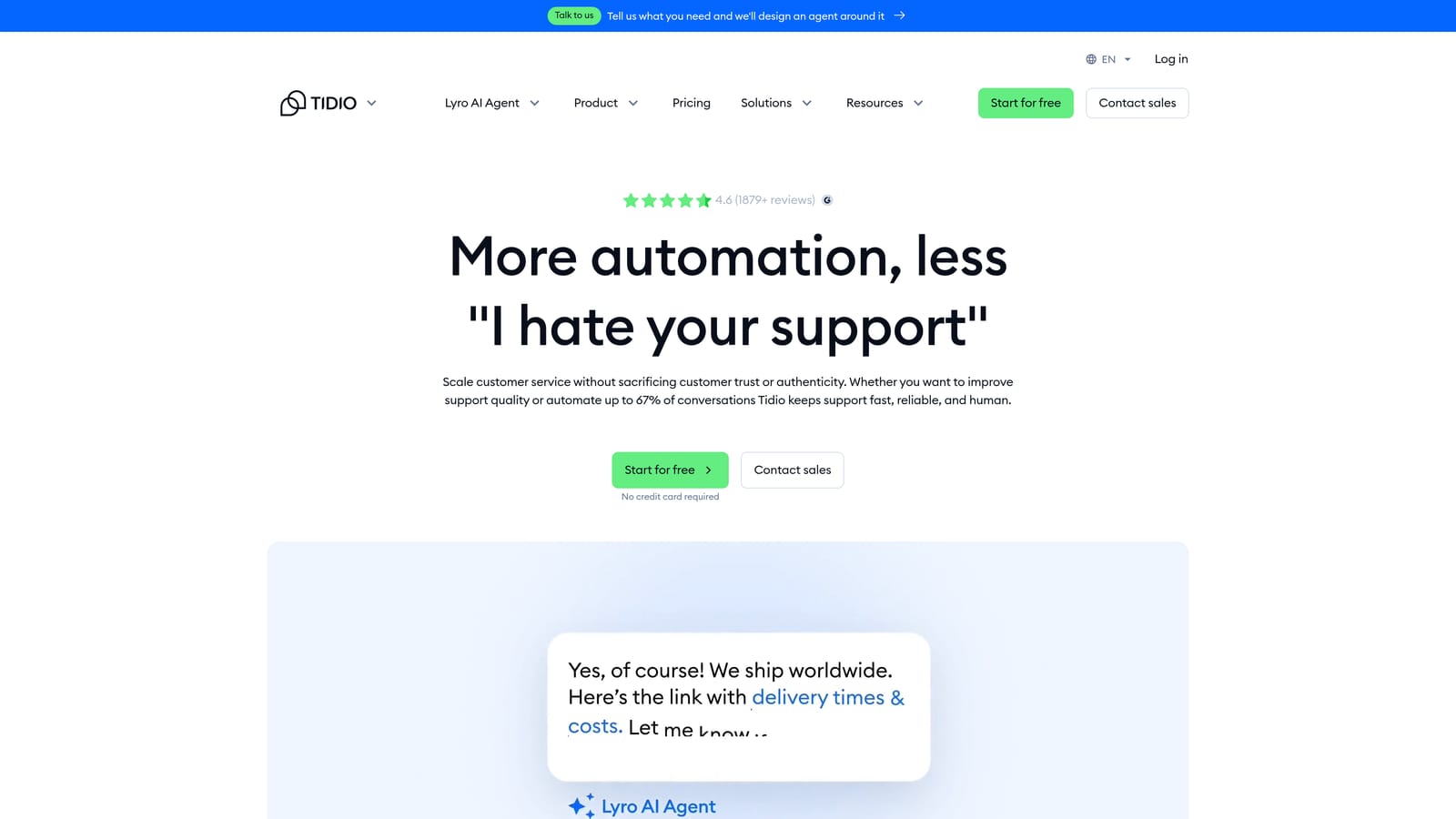
Tidio is a lightweight live chat and AI chatbot platform built for speed: fast to deploy, easy to configure, and priced accessibly for smaller teams.
Where This Tool Shines
Tidio's biggest differentiator is time to value. Teams can go from signup to a live AI chat widget in under an hour, which is genuinely unusual in this space. The visual chatbot builder requires no coding knowledge, making it accessible to support teams without technical resources. Lyro AI handles common customer queries autonomously, reducing the volume that reaches human agents.
The e-commerce integration story is strong: native Shopify and WooCommerce connections mean product data, order status, and customer history are available in context. For B2B SaaS teams with complex support workflows, Tidio's simplicity becomes a limitation, but for its target audience, that simplicity is the feature.
Key Features
Lyro AI: Automated resolution for common customer queries, trained on your support content.
Visual Chatbot Builder: No-code flow builder for creating automated conversation paths.
E-Commerce Integrations: Native connections to Shopify, WooCommerce, and other e-commerce platforms.
Live Chat with Agent Takeover: Smooth handoff from AI to human agents when needed.
Fast Setup: Full deployment possible in under an hour with no technical resources required.
Best For
Small businesses, DTC brands, and e-commerce teams that need AI chat deployed quickly and affordably, without the complexity of enterprise support infrastructure.
Pricing
Free plan available; paid plans start at approximately $29/month. Verify current pricing at tidio.com/pricing.
8. Zoho Desk
Best for: SMBs using the Zoho product suite who want unified business and support tooling.
Zoho Desk is the helpdesk platform within the Zoho ecosystem, featuring Zia AI for sentiment analysis, anomaly detection, and intelligent ticket tagging.
Where This Tool Shines
Zoho Desk's value proposition is strongest for teams already using Zoho CRM, Zoho Books, or other Zoho products. The integration depth across the Zoho suite is genuinely impressive: support tickets connect to CRM records, billing data, and project management tools without requiring third-party connectors. For SMBs running their operations on Zoho, Desk is the natural support layer.
Zia AI adds practical capabilities: sentiment analysis flags frustrated customers before they churn, anomaly detection surfaces unusual ticket volume spikes, and automatic tagging keeps queues organized without manual effort. The UI has historically felt dated compared to competitors, though recent updates have improved the experience.
Key Features
Zia AI: Sentiment analysis, anomaly detection, ticket tagging, and response suggestions powered by Zoho's AI layer.
Zoho Ecosystem Integration: Deep native connections to Zoho CRM, Zoho Books, and the broader Zoho product suite.
Multi-Channel Support: Email, chat, phone, and social channels managed from a unified inbox.
Blueprint Workflow Automation: Visual process builder for defining and enforcing support workflows.
Free Plan for Small Teams: Functional free tier for up to 3 agents.
Best For
SMBs already invested in the Zoho ecosystem who want their support tooling connected to the rest of their business operations without adding new vendors or integration complexity.
Pricing
Free for up to 3 agents; paid plans start at approximately $14/agent/month. Verify current pricing at zoho.com/desk/pricing.
9. Kustomer
Best for: High-volume B2C brands needing omnichannel support with full customer context.
Kustomer is a CRM-driven omnichannel support platform built for brands managing high volumes of customer interactions across many channels simultaneously.
Where This Tool Shines
Kustomer's defining feature is the customer timeline: a single, unified view of every interaction a customer has had across every channel, from email to SMS to social to chat. For support agents handling complex omnichannel conversations, this eliminates the context-switching that slows resolution and frustrates customers. AI-powered routing ensures conversations reach the right agent or queue without manual triage.
The platform is built for volume and breadth rather than technical depth. It excels in retail, DTC, and subscription contexts where customers contact support through many channels and agents need full purchase and interaction history at a glance. B2B SaaS teams with technically complex support needs may find it less suited to their workflows than platforms built with product-context awareness.
Key Features
Customer Timeline View: Aggregates all customer touchpoints across every channel into a single chronological view.
AI-Powered Routing and Automated Responses: Intelligent assignment and response automation for high-volume operations.
CRM Data Layer: Customer purchase history, attributes, and behavioral data available in the support context.
Workflow Automation: Configurable automation for routing, tagging, escalation, and SLA management.
Best For
High-volume B2C brands in retail, DTC, or subscription businesses that need omnichannel support with rich customer context, and can absorb the higher per-seat pricing that comes with Kustomer's capabilities.
Pricing
From approximately $89/user/month. Verify current pricing at kustomer.com/pricing.
Making the Right Choice for Your Team
The honest answer is that the best platform depends almost entirely on your team's context, not on which tool has the longest feature list. Here's a quick framework to cut through the noise.
If you're a B2B SaaS team wanting AI-native resolution with product intelligence: Halo AI is built specifically for this. The page-aware context, business intelligence signals, and continuous learning make it the strongest fit for product-led SaaS companies where support conversations contain valuable product signals.
If you're an enterprise with complex workflows and an existing Salesforce investment: Salesforce Service Cloud or Zendesk are the natural choices, depending on whether CRM unification or helpdesk depth is your priority.
If you're a SaaS team wanting support plus lifecycle messaging in one tool: Intercom's combination of Fin AI and in-app messaging is hard to beat for that specific use case.
If you're a growing team on a budget: Freshdesk offers the best balance of functionality and accessible pricing, with a genuine free tier to start.
If you're already running on HubSpot or Zoho: Service Hub and Zoho Desk respectively offer the lowest-friction path to connected support tooling without adding new vendor relationships.
If you're a high-volume B2C brand: Kustomer's omnichannel timeline view is purpose-built for your situation. For small e-commerce teams, Tidio offers a faster, more affordable entry point.
For B2B SaaS teams specifically, the gap between AI-augmented and AI-native platforms is widening. If you want to explore what a purpose-built AI support platform looks like in practice, See Halo in action and discover how continuous learning transforms every interaction into smarter, faster support. You can also read our deeper comparison of Zendesk vs. AI-native support platforms to understand where the architectural differences matter most.