9 Best Support Agent Burnout Solutions to Protect Your Team in 2026
Support agent burnout solutions are critical for businesses facing high turnover and declining customer satisfaction from overworked teams. This guide evaluates nine tools that combat burnout by automating repetitive tickets, streamlining workflows, and giving agents capacity for meaningful work—addressing the emotional labor and mounting backlogs that push support teams toward exhaustion while protecting your bottom line from costly agent departures.
 Matt PattoliFounder12 min read
Support agent burnout isn't just an HR problem—it's a business crisis that drives turnover, tanks customer satisfaction, and costs companies thousands per departed agent. The relentless cycle of repetitive tickets, emotional labor, and mounting backlogs pushes even your best agents toward exhaustion.
But here's the good news: the right tools can break this cycle by automating the draining work, providing intelligent assistance, and giving agents the breathing room they need to do meaningful work. We've evaluated these solutions based on their ability to reduce ticket volume, streamline workflows, and genuinely improve agent wellbeing.
Here are nine tools that actually deliver on the promise of burnout prevention.
1. Halo AI
Best for: Companies wanting autonomous ticket resolution that learns continuously from every interaction
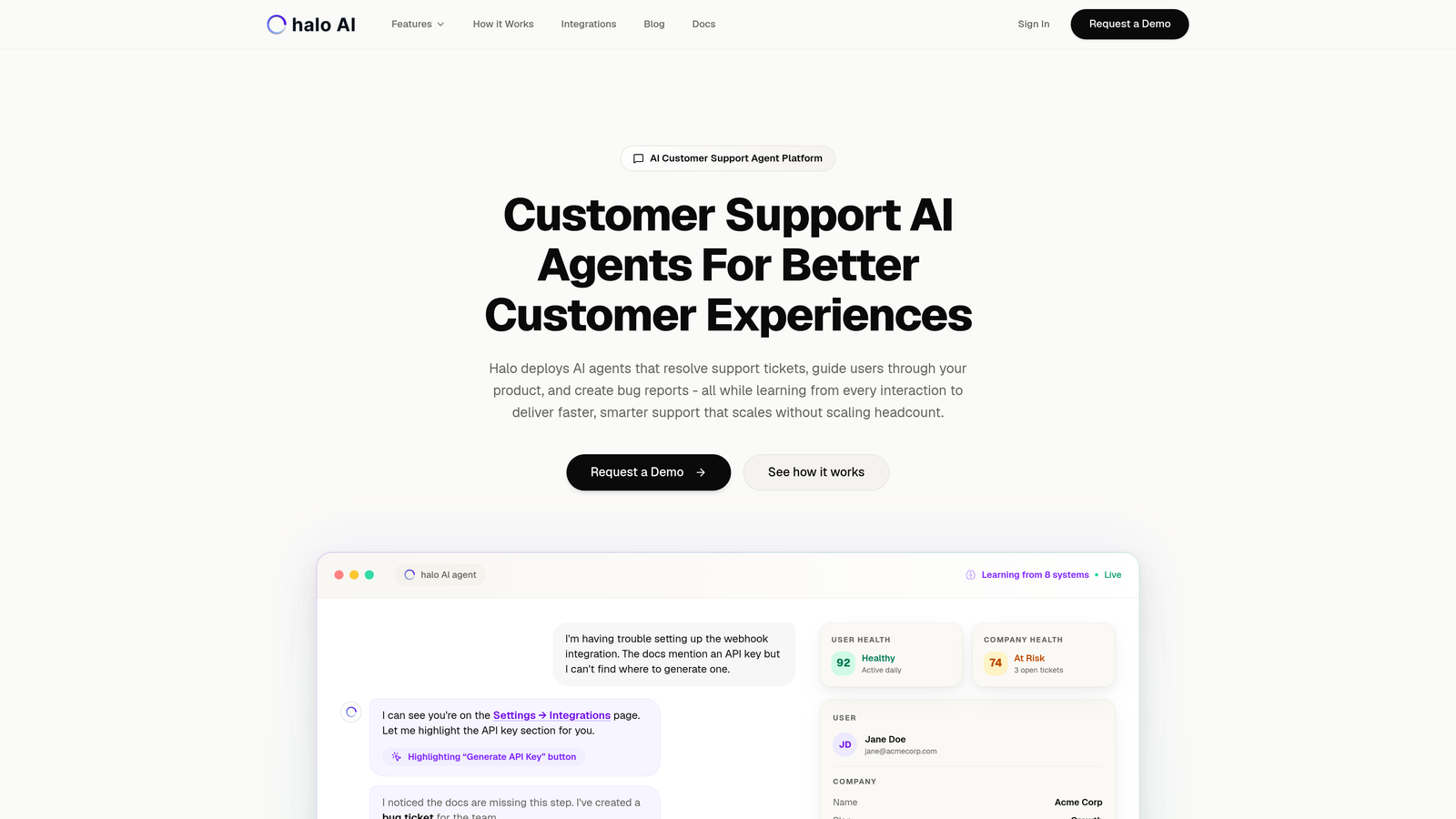
Halo AI is an AI-powered customer support platform that autonomously resolves tickets and provides page-aware chat assistance.
Where This Tool Shines
Halo tackles burnout at its source by removing repetitive work from your agents' plates entirely. Instead of just routing tickets faster or suggesting canned responses, it actually resolves common queries autonomously—meaning your agents never see them at all.
The platform's page-aware context is particularly valuable for reducing agent frustration. It sees what users see in your product, eliminating the exhausting back-and-forth of "Can you send a screenshot?" that drains agent energy throughout the day.
Key Features
Autonomous Ticket Resolution: Handles repetitive queries without human intervention, directly reducing ticket volume for your team.
Page-Aware Context: Sees the user's screen state to provide accurate guidance without requiring screenshots or detailed explanations.
Continuous Learning: Improves with every interaction, progressively handling more ticket types over time.
Smart Inbox with Business Intelligence: Surfaces customer health signals and revenue intelligence beyond basic support metrics.
Live Agent Handoff: Seamlessly escalates complex issues to human agents with full context, preventing frustrating handoff experiences.
Best For
B2B SaaS companies and product teams dealing with high volumes of repetitive product questions, particularly those using helpdesk systems like Zendesk, Freshdesk, or Intercom. Ideal if you want to scale support without scaling headcount.
Pricing
Contact for pricing. The platform connects to your entire business stack including Linear, Slack, HubSpot, Intercom, Stripe, and more.
2. Assembled
Best for: Support teams experiencing burnout from chronic understaffing and chaotic scheduling
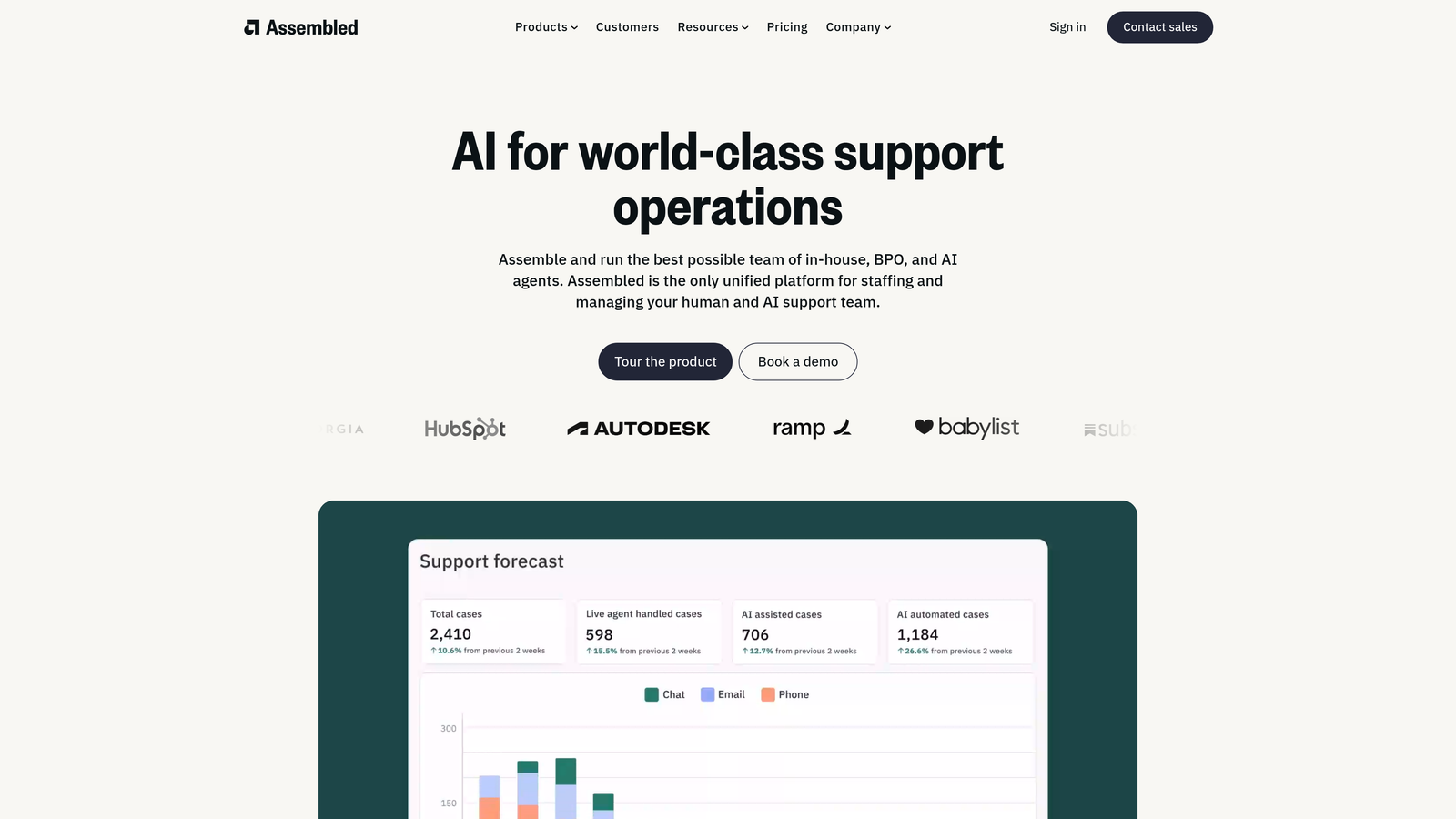
Assembled is a modern workforce management platform that optimizes scheduling, forecasting, and capacity planning for support teams.
Where This Tool Shines
Assembled prevents the type of burnout that comes from being perpetually short-staffed during peak hours. Its AI-powered forecasting actually works, giving you accurate predictions of ticket volume across channels so you can staff appropriately instead of constantly scrambling.
The platform respects agent preferences when building schedules, which sounds small but makes a massive difference in job satisfaction. When agents have some control over their schedules, they're far less likely to feel like interchangeable cogs in a machine.
Key Features
AI-Powered Demand Forecasting: Predicts ticket volume with accuracy that improves over time, preventing understaffing surprises.
Real-Time Schedule Optimization: Adjusts schedules dynamically based on actual ticket flow, not just historical averages.
Cross-Channel Capacity Planning: Balances workload across email, chat, phone, and social channels to prevent channel overload.
Agent Preference Scheduling: Incorporates agent preferences and constraints when building schedules, improving work-life balance.
Intraday Management Tools: Provides real-time visibility into adherence and allows quick adjustments when things go off-plan.
Best For
Mid-sized to enterprise support teams with predictable ticket patterns who need sophisticated workforce planning. Particularly valuable if your team works across multiple channels or time zones.
Pricing
Starts at $15 per user per month. Pricing scales with team size and feature requirements.
3. Guru
Best for: Reducing cognitive drain from constantly searching for information during customer conversations
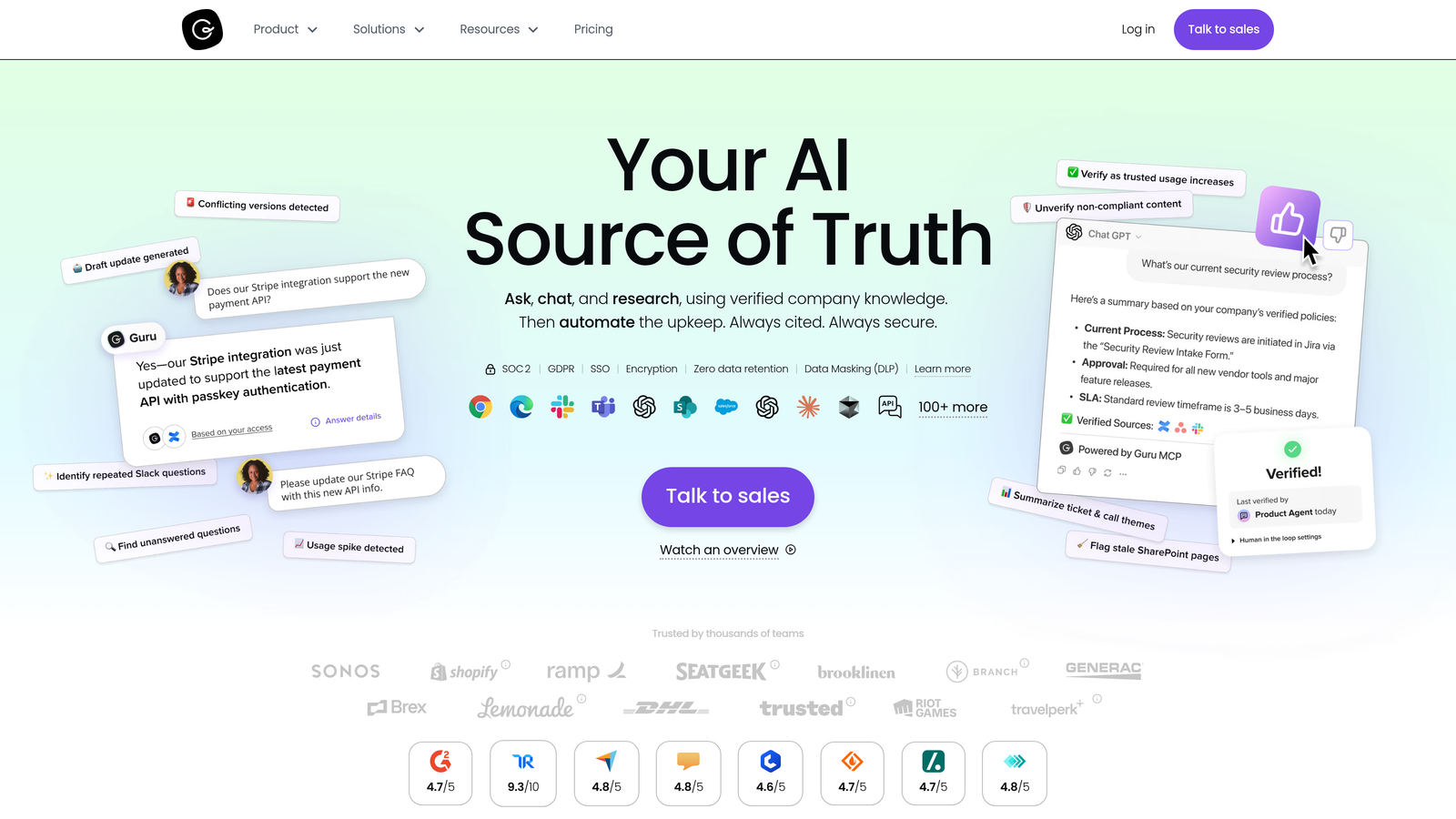
Guru is an AI-powered knowledge management platform that delivers verified answers to agents in real-time.
Where This Tool Shines
Guru eliminates one of the most draining aspects of support work: the constant context-switching to hunt for information. Its browser extension sits alongside your helpdesk and proactively suggests relevant knowledge articles as agents type, removing the need to search through outdated wikis or Slack threads.
The verification workflows ensure agents can actually trust the information they're seeing. Nothing burns out agents faster than giving customers wrong information because the knowledge base wasn't updated when the product changed.
Key Features
AI-Suggested Answers: Proactively recommends relevant knowledge articles based on the customer conversation in progress.
Browser Extension: Delivers knowledge in-context without requiring agents to leave their helpdesk or switch windows.
Verification Workflows: Ensures knowledge stays accurate with regular verification requests to subject matter experts.
Knowledge Gap Analytics: Identifies frequently asked questions that lack documented answers, preventing repeated research.
Slack and Helpdesk Integrations: Works seamlessly with tools your team already uses, including Zendesk, Intercom, and Freshdesk.
Best For
Teams with complex products or frequently changing information where agents spend significant time searching for answers. Especially valuable for companies with distributed knowledge across multiple tools.
Pricing
Free tier available for small teams. Paid plans start at $10 per user per month with advanced features and integrations.
4. Medallia Agent Connect
Best for: Managers needing real-time visibility into agent wellbeing before burnout becomes resignation
Medallia Agent Connect is a real-time coaching and performance management platform with built-in agent engagement tracking.
Where This Tool Shines
Agent Connect gives managers the early warning signals they need to intervene before an agent reaches the breaking point. The platform tracks engagement metrics and alerts managers when specific agents show signs of struggle, enabling proactive support rather than reactive damage control.
The automated coaching recommendations help managers provide meaningful support without adding to their own workload. Instead of generic feedback, the system suggests specific, actionable coaching based on actual performance patterns.
Key Features
Real-Time Performance Dashboards: Provides immediate visibility into agent performance across quality, efficiency, and engagement metrics.
Automated Coaching Recommendations: Suggests specific coaching actions based on individual agent performance trends and patterns.
Agent Engagement Tracking: Monitors engagement signals that correlate with burnout risk, enabling early intervention.
Manager Alert System: Notifies managers when agents show concerning patterns like declining quality or increased handle times.
Recognition and Gamification Tools: Provides positive reinforcement mechanisms to balance performance feedback with appreciation.
Best For
Enterprise support organizations with dedicated quality and coaching programs. Most valuable when managers struggle to maintain visibility across large teams or multiple locations.
Pricing
Contact Medallia for enterprise pricing. The platform typically requires implementation and is designed for larger support organizations.
5. Tymeshift (Zendesk WFM)
Best for: Zendesk teams needing native workforce management without adding another disconnected tool
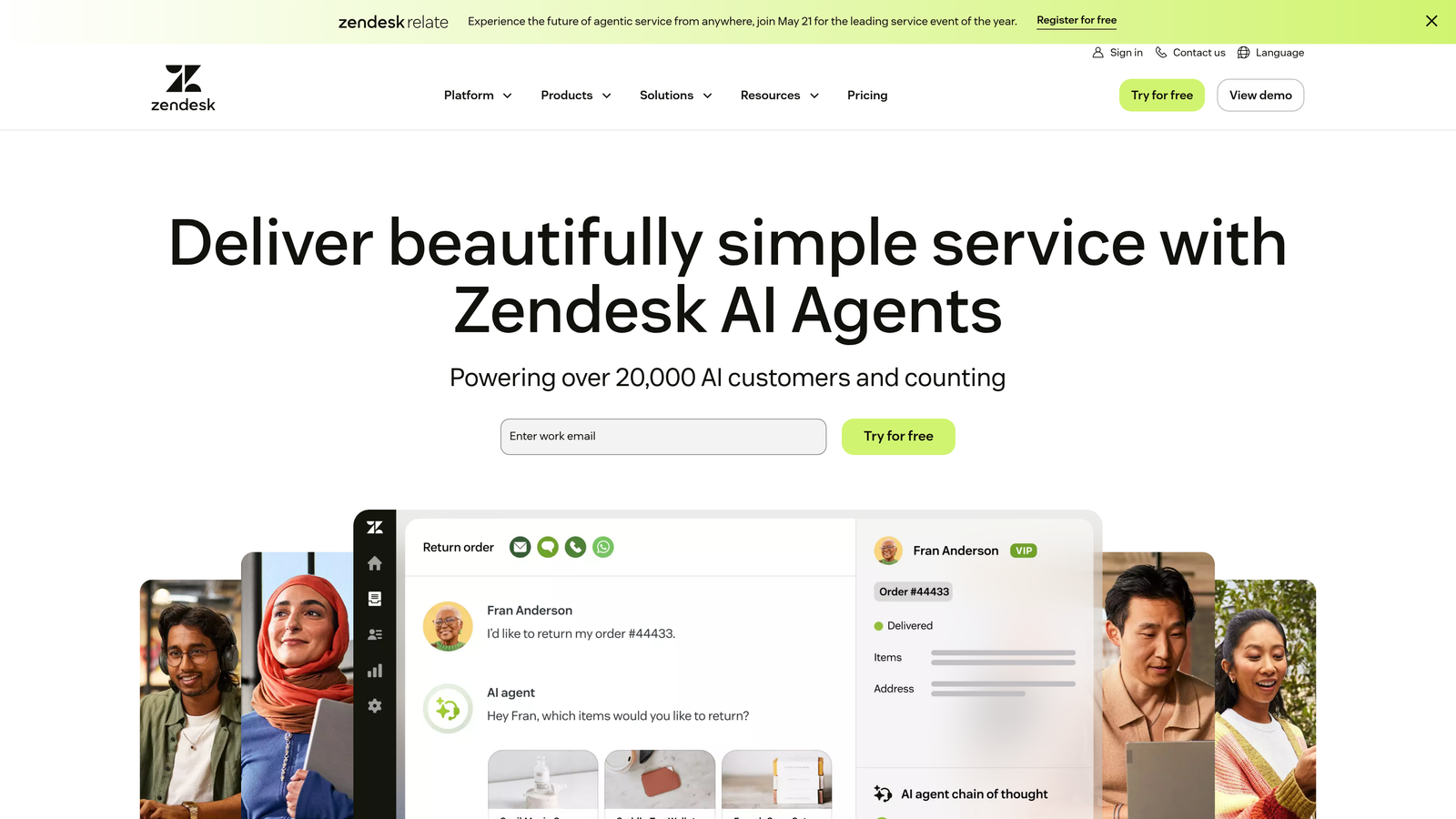
Tymeshift is Zendesk's native workforce management solution that automates scheduling and workload balancing.
Where This Tool Shines
If you're already using Zendesk, Tymeshift eliminates the integration headaches that come with third-party workforce management tools. The native integration means your ticket data flows seamlessly into forecasting models without complex API connections or data syncing issues.
The automated time-off management is surprisingly impactful for burnout prevention. When agents can easily request and track time off without email chains or spreadsheets, they actually use their vacation days instead of letting them accumulate until they're completely fried.
Key Features
Native Zendesk Integration: Works directly within Zendesk without requiring separate logins or data exports.
AI-Powered Scheduling: Creates optimal schedules based on historical ticket patterns and current team capacity.
Real-Time Adherence Monitoring: Tracks schedule adherence without micromanaging, helping identify systemic issues rather than individual problems.
Automated Time-Off Management: Streamlines vacation requests and ensures adequate coverage during planned absences.
Forecasting Based on Ticket History: Uses your actual Zendesk ticket data to predict future volume with channel-specific accuracy.
Best For
Zendesk customers who want workforce management capabilities without adding another vendor to manage. Particularly valuable for teams already invested in the Zendesk ecosystem.
Pricing
Included in Zendesk Suite Professional and above. No additional per-agent fees for existing Suite customers.
6. Klaus
Best for: Replacing stress-inducing traditional QA with coaching-focused, AI-powered conversation reviews
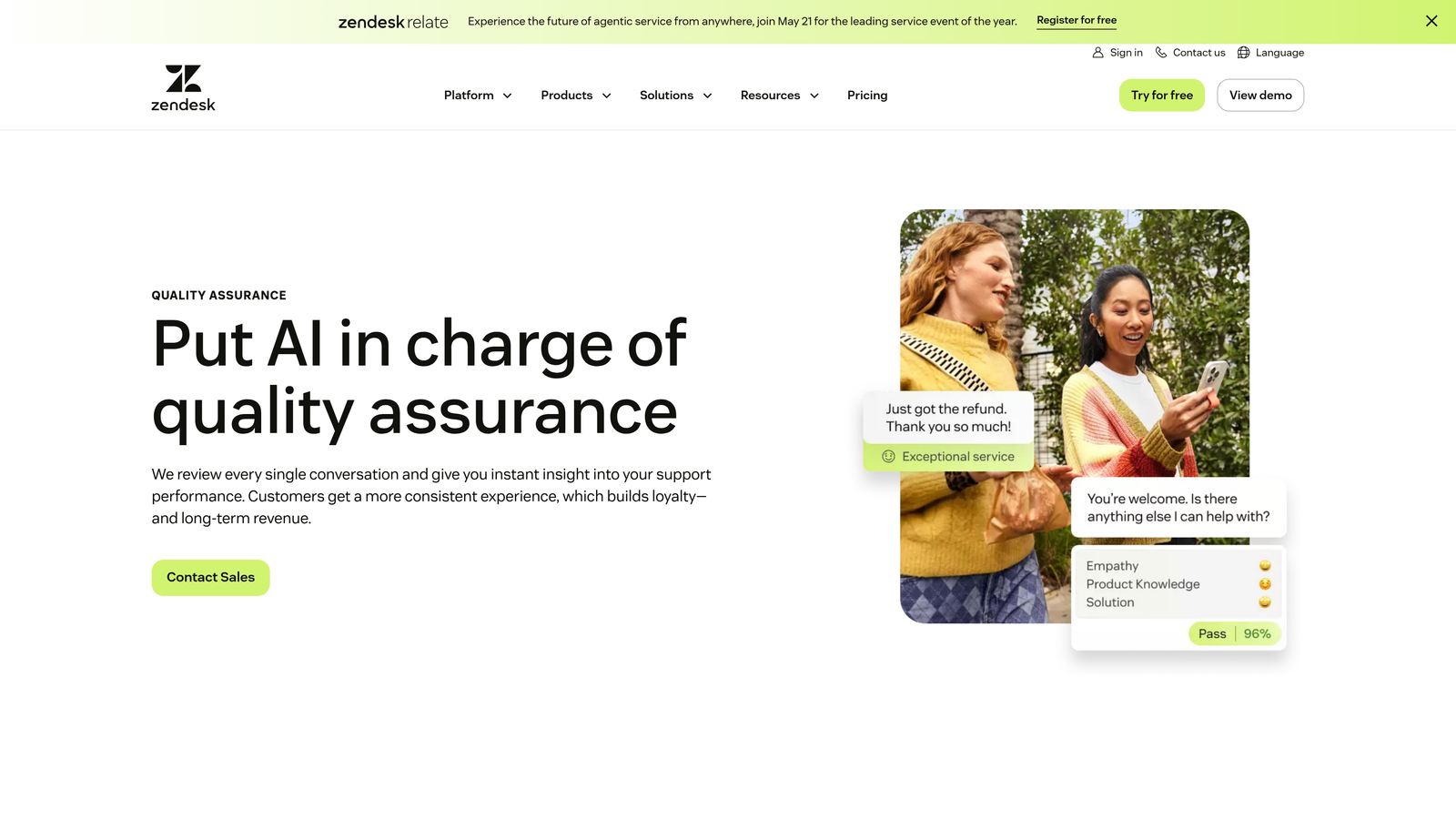
Klaus is an AI-powered quality assurance platform that provides constructive feedback without the anxiety of traditional QA approaches.
Where This Tool Shines
Klaus reimagines quality assurance as a coaching tool rather than a gotcha mechanism. The AI-driven conversation scoring removes the fear that managers are cherry-picking bad examples, while the coaching-focused feedback tools encourage growth rather than punishment.
The calibration sessions are particularly valuable for reducing the stress that comes from inconsistent feedback. When agents understand exactly what good looks like and see that expectations are applied consistently, the ambiguity that fuels anxiety disappears.
Key Features
AI-Driven Conversation Scoring: Analyzes conversations objectively based on defined quality criteria, removing bias from the review process.
Automated Review Selection: Randomly selects conversations for review, eliminating the perception that managers only review negative interactions.
Coaching-Focused Feedback Tools: Structures feedback as developmental opportunities rather than performance criticisms.
Calibration Sessions: Ensures reviewers apply quality standards consistently across the team, reducing arbitrary feedback.
Performance Trend Analytics: Tracks quality improvements over time, making growth visible and celebrating progress.
Best For
Support teams where traditional QA programs have become sources of stress rather than improvement. Especially valuable for remote teams needing consistent quality standards across locations.
Pricing
Starts at $15 per user per month. Pricing includes unlimited conversation reviews and integrations with major helpdesk platforms.
7. Forethought
Best for: Ensuring agents receive tickets matched to their skills, reducing frustration from misrouted issues
Forethought is an AI platform for intelligent ticket triage and routing that matches tickets to the right agents automatically.
Where This Tool Shines
Forethought prevents a specific type of burnout: the frustration that comes from constantly receiving tickets you're not equipped to handle. Its skill-based intelligent routing ensures technical questions go to technical agents and billing issues go to billing specialists, eliminating the time waste and stress of ticket ping-pong.
The priority prediction feature helps agents focus on what actually matters. When every ticket feels urgent, nothing is urgent, and agents burn out trying to do everything at once. Forethought's AI identifies which tickets genuinely need immediate attention.
Key Features
AI-Powered Ticket Classification: Automatically categorizes incoming tickets with accuracy that improves as it learns your specific taxonomy.
Skill-Based Intelligent Routing: Matches tickets to agents based on expertise, language, and current workload, not just round-robin assignment.
Priority Prediction: Identifies high-priority tickets that need immediate attention, helping agents triage effectively.
Agent Assist Suggestions: Provides relevant knowledge articles and suggested responses as agents work on tickets.
Workflow Automation: Automates common ticket actions like tagging, escalation, and status updates to reduce manual work.
Best For
Support teams with specialized skill sets where misrouting creates significant inefficiency. Particularly valuable for technical support organizations with tiered expertise levels.
Pricing
Contact Forethought for pricing. The platform typically requires implementation and is designed for mid-market to enterprise teams.
8. Gorgias
Best for: E-commerce teams drowning in repetitive order status and tracking inquiries
Gorgias is an e-commerce-focused helpdesk with powerful automation features for handling repetitive order inquiries.
Where This Tool Shines
If you run e-commerce support, you know that "Where is my order?" questions are the soul-crushing repetitive work that drives agents away. Gorgias eliminates this entirely with one-click order lookup and automated responses that pull real-time tracking information without agent involvement.
The revenue-focused ticket prioritization is brilliant for burnout prevention. Instead of treating every ticket equally, it surfaces high-value customer issues first, giving agents the satisfaction of solving problems that actually impact the business rather than endless low-stakes inquiries.
Key Features
One-Click Order Lookup: Displays complete order information directly in the ticket interface without switching to Shopify or other platforms.
Macro Automation for Common Queries: Handles repetitive questions like order status, returns, and tracking with automated responses.
Revenue-Focused Ticket Prioritization: Surfaces tickets from high-value customers first, helping agents focus on meaningful interactions.
Shopify and E-Commerce Integrations: Connects natively to major e-commerce platforms for seamless data access.
Self-Service Order Management: Allows customers to track orders and initiate returns without creating tickets.
Best For
E-commerce brands on Shopify, BigCommerce, or Magento dealing with high volumes of order-related inquiries. Most valuable for direct-to-consumer brands with significant order volume.
Pricing
Starts at $10 per month for 50 tickets, scaling up to enterprise plans. Pricing is based on ticket volume rather than agent count.
9. Peakon (Workday)
Best for: Continuously measuring agent sentiment and catching burnout signals before they become resignations
Peakon is an employee engagement platform that measures agent sentiment and provides early warning signals for burnout.
Where This Tool Shines
Peakon catches burnout before it reaches the crisis point. Its continuous pulse surveys measure engagement weekly rather than annually, giving you real-time visibility into how agents are actually feeling instead of discovering problems during exit interviews.
The AI-powered sentiment analysis goes beyond simple survey scores to identify specific themes in agent feedback. Instead of just knowing that engagement is declining, you understand exactly why—whether it's workload, tools, management, or career growth concerns.
Key Features
Continuous Pulse Surveys: Measures agent engagement weekly or bi-weekly rather than relying on annual surveys that miss emerging issues.
AI-Powered Sentiment Analysis: Analyzes open-ended feedback to identify themes and concerns without manual review.
Burnout Risk Indicators: Flags specific agents or teams showing early warning signs of burnout based on engagement patterns.
Manager Action Recommendations: Suggests specific interventions based on survey results and industry best practices.
Benchmarking Against Industry Data: Compares your team's engagement to industry standards, helping identify whether issues are systemic or specific to your organization.
Best For
Enterprise organizations with dedicated people operations teams who can act on engagement data. Most valuable when leadership is committed to addressing burnout systematically rather than just measuring it.
Pricing
Contact Workday for enterprise pricing. Peakon is typically sold as part of broader Workday implementations.
Making the Right Choice
The tools that genuinely prevent burnout share one characteristic: they remove work entirely rather than just optimizing how agents handle it. Halo AI excels at this by autonomously resolving repetitive tickets before they ever reach your team, while its page-aware context eliminates the exhausting back-and-forth that drains agent energy throughout the day.
Your selection depends on your primary burnout driver. If chronic understaffing and scheduling chaos are burning out your team, start with Assembled or Tymeshift to balance workload before it becomes overwhelming. If agents waste energy hunting for information, Guru delivers verified answers without the cognitive drain of searching through outdated wikis.
When you need visibility into agent wellbeing before it becomes a crisis, Medallia Agent Connect or Peakon provide the early warning signals that enable proactive intervention. For e-commerce teams drowning in order status inquiries, Gorgias automates the soul-crushing repetitive work that drives agents away.
The most effective approach often combines AI automation to reduce volume with workforce management to balance what remains. Think of it like this: automation tools like Halo remove tickets from the queue entirely, while workforce management ensures the remaining work is distributed fairly across your team. Together, they create sustainable workloads instead of just optimizing unsustainable ones.
Start with the tool that addresses your most acute pain point. If your team is handling 500 tickets per day and 300 are repetitive product questions, autonomous AI resolution delivers immediate relief. If your team is adequately staffed but constantly receiving misrouted tickets, intelligent routing prevents the frustration that builds into burnout over time.
Your support team shouldn't scale linearly with your customer base. Let AI agents handle routine tickets, guide users through your product, and surface business intelligence while your team focuses on complex issues that need a human touch. See Halo in action and discover how continuous learning transforms every interaction into smarter, faster support.