9 Best Support Agent Productivity Software Tools in 2026
Support agent productivity software helps overwhelmed teams handle increasing ticket volumes by automating repetitive tasks, providing instant access to relevant information, and streamlining workflows. This comprehensive guide evaluates nine best-in-class tools for 2026 based on time-saving capabilities, integration flexibility, and measurable impact on resolution times—helping both growing teams and enterprise operations make every support agent more efficient.
 Grant CooperFounder11 min read
Support teams are drowning in tickets while customers expect faster responses than ever. The right productivity software transforms overwhelmed agents into efficient problem-solvers by automating repetitive tasks, surfacing relevant information instantly, and streamlining workflows.
This guide covers nine tools that genuinely move the needle on agent productivity—from AI-powered automation platforms to specialized workflow enhancers. We evaluated each based on time-saving capabilities, ease of adoption, integration flexibility, and real impact on resolution times.
Whether you're scaling a growing support team or optimizing an enterprise operation, these tools represent the current best-in-class options for making every agent more effective.
1. Halo AI
Best for: Teams ready to automate routine tickets with AI that learns continuously from every interaction
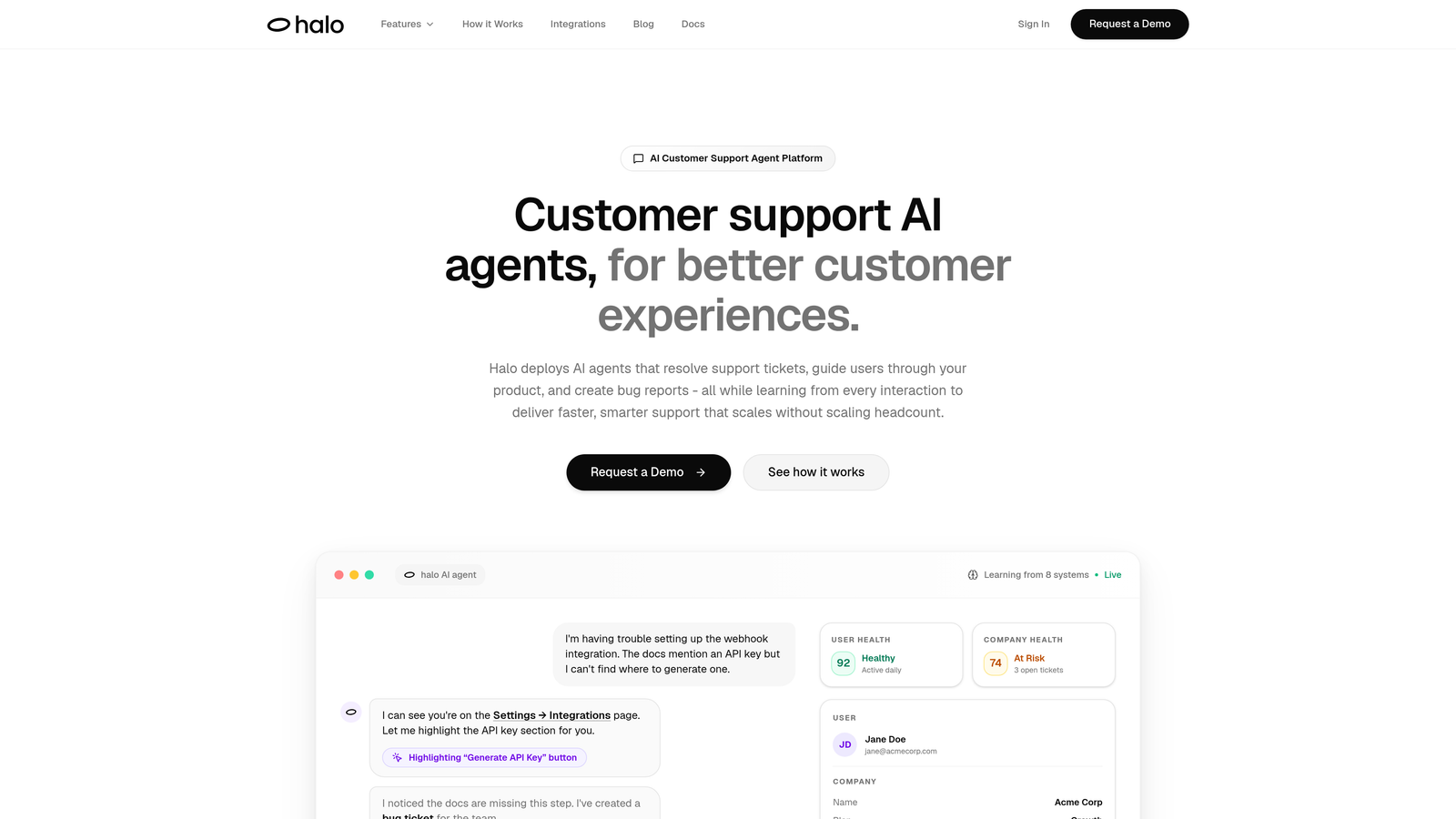
Halo AI is an AI-first customer support platform that deploys autonomous agents to resolve tickets, guide users through products, and create bug reports without human intervention.
Where This Tool Shines
Unlike traditional helpdesks that bolt AI onto existing ticketing systems, Halo builds intelligence into the foundation. The platform's AI agents don't just suggest responses—they actually resolve tickets autonomously, learning from every interaction to improve over time.
The page-aware chat widget sees exactly what users see on their screen, enabling visual guidance that traditional chatbots can't provide. This contextual awareness dramatically reduces back-and-forth clarification questions that waste both agent and customer time.
Key Features
Autonomous AI Agents: Handle complete ticket resolution without human intervention, freeing agents for complex issues requiring empathy and judgment.
Page-Aware Context: The chat widget understands what users are looking at, providing visual guidance and context-specific help that reduces confusion.
Smart Inbox with Business Intelligence: Goes beyond basic ticketing to surface customer health signals, revenue intelligence, and anomaly detection across your business.
Auto Bug Ticket Creation: Automatically generates engineering tickets in Linear, Slack, and other development tools when issues are identified.
Continuous Learning: Every interaction trains the AI to become smarter, creating a support system that improves without manual rule updates.
Best For
B2B companies and product teams using helpdesk systems like Zendesk, Freshdesk, or Intercom who want to scale support without scaling headcount. Particularly valuable for SaaS companies where product complexity drives high ticket volumes.
Pricing
Contact for pricing; scales based on ticket volume and features needed for your specific support operation.
2. Zendesk
Best for: Enterprise teams needing comprehensive ticketing with extensive customization and integration options
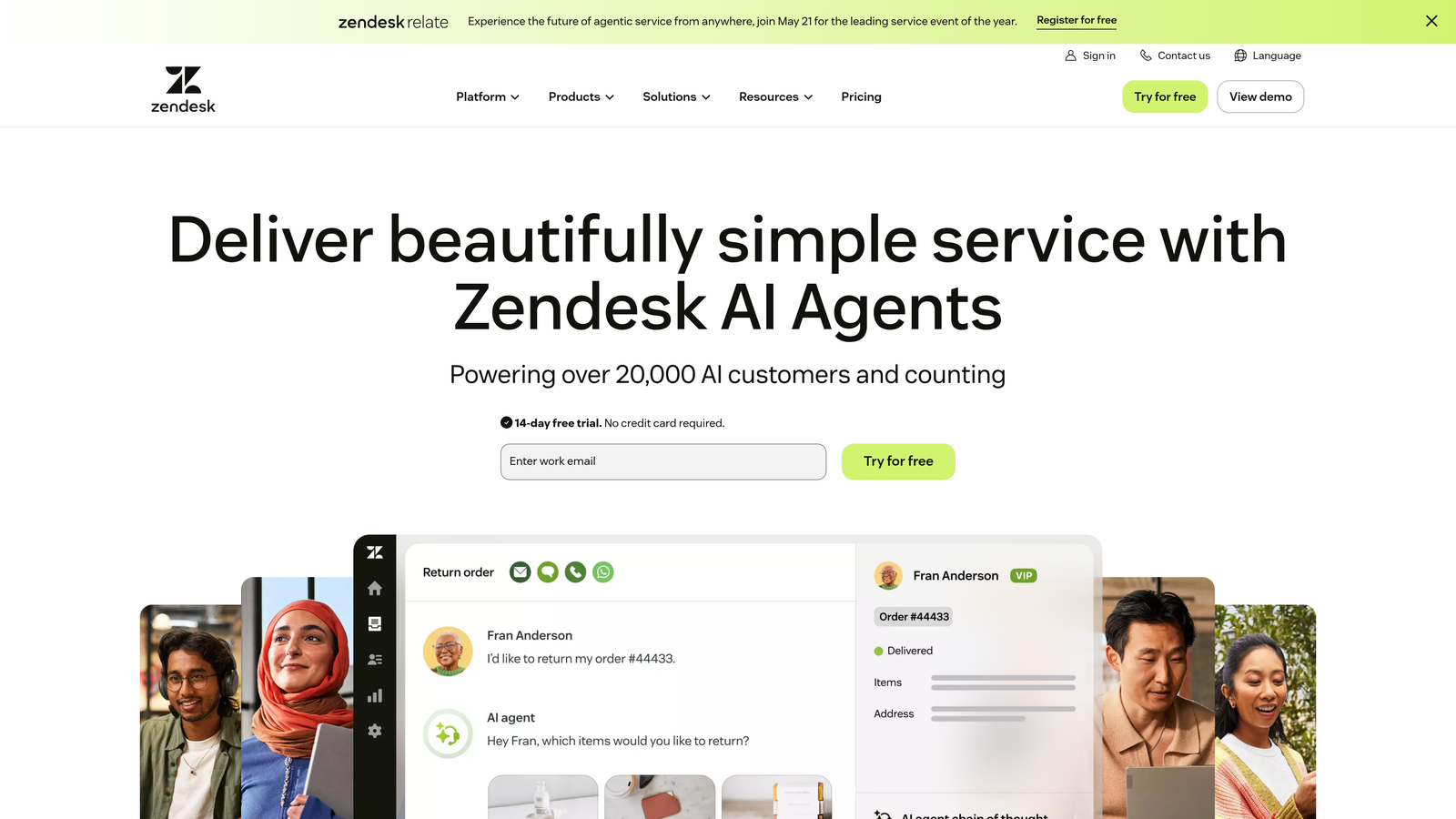
Zendesk is an enterprise-grade customer service platform offering powerful ticketing, automation, and reporting capabilities at scale.
Where This Tool Shines
Zendesk's macro system lets agents respond to common questions with a single click, transforming what might take three minutes into a five-second action. For teams handling hundreds of similar inquiries daily, this time savings compounds dramatically.
The platform's trigger and automation system allows sophisticated workflow customization. You can build complex conditional logic that routes tickets, updates fields, and notifies stakeholders based on virtually any combination of factors.
Key Features
Advanced Macro System: Pre-built responses with variables that agents can deploy instantly, maintaining personalization while eliminating repetitive typing.
Triggers and Automations: Time-based and event-based workflows that handle routine tasks like follow-ups, escalations, and status updates automatically.
App Marketplace: Over 1,500 integrations connect Zendesk to virtually any tool in your stack, from CRMs to project management platforms.
Custom Dashboards: Build reporting views tailored to different stakeholders, from agent performance metrics to customer satisfaction trends.
Multi-Brand Support: Manage multiple product lines or brands within a single instance while maintaining separate branding and workflows.
Best For
Mid-size to enterprise organizations with complex support needs, multiple product lines, or teams requiring deep customization and extensive third-party integrations.
Pricing
Starts at $55/agent/month for Suite Team plan; enterprise plans with advanced features available at higher tiers.
3. Intercom
Best for: Product-led companies wanting proactive messaging and conversational support in one platform
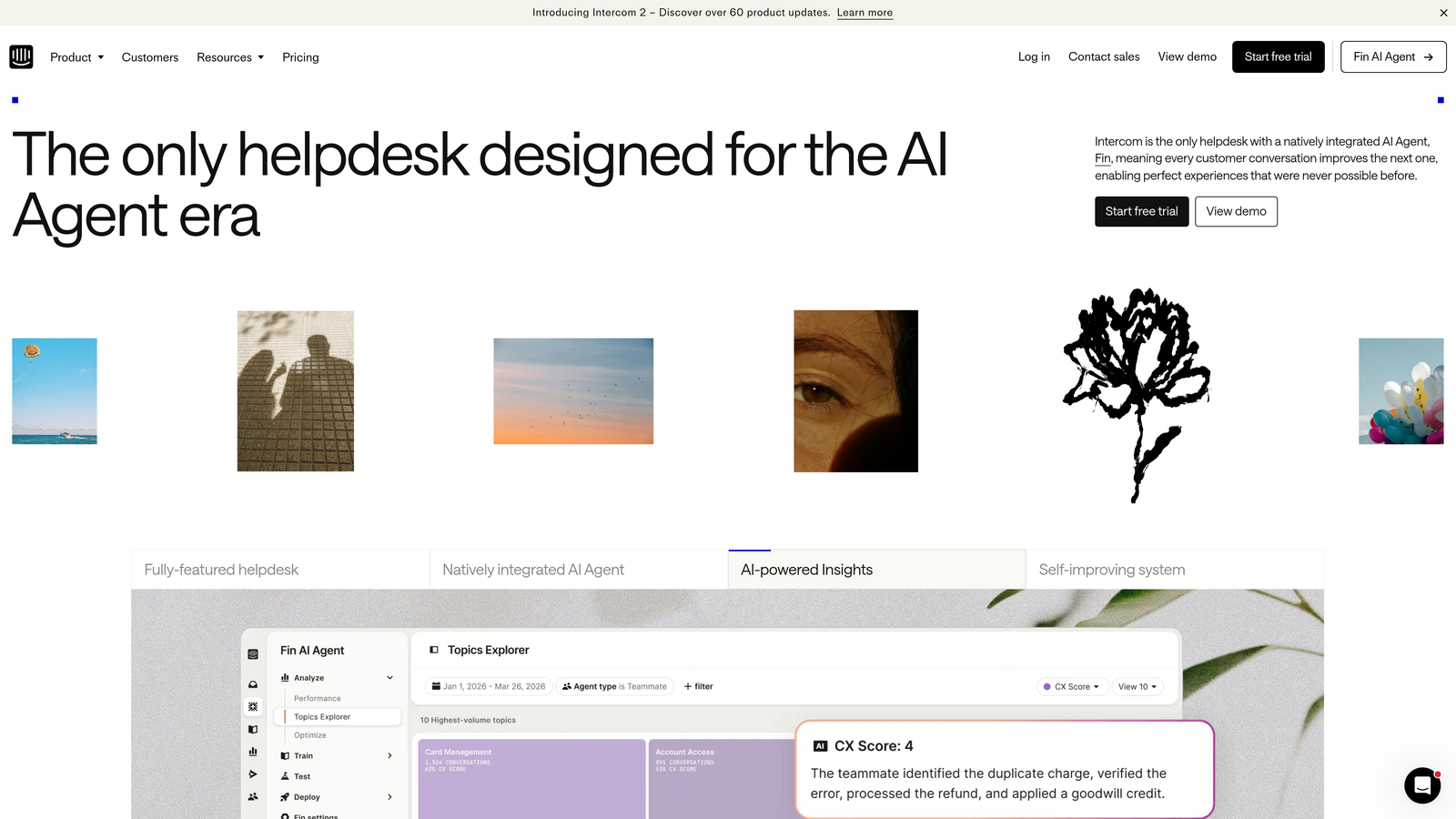
Intercom is a conversational support platform that combines live chat, automation bots, and targeted product messaging.
Where This Tool Shines
Intercom excels at preventing support tickets before they happen. The platform's product tours and targeted messages guide users through features proactively, reducing confusion that would otherwise generate inquiries.
The Resolution Bot handles common questions automatically while maintaining a conversational feel that doesn't frustrate customers. When escalation is needed, the handoff to human agents includes full context, eliminating the dreaded "let me repeat everything I just told the bot" experience.
Key Features
Unified Inbox: Conversations from chat, email, and social channels appear in a single view, eliminating context switching between platforms.
Custom Bot Workflows: Build conversation paths that qualify issues, collect information, and resolve common problems without agent involvement.
Product Tours: In-app messaging that walks users through features at the right moment, reducing support volume from confusion.
Proactive Messaging: Target specific user segments with timely information based on behavior, preventing issues before they become tickets.
Customer Data Platform: Rich user profiles combine product usage, conversation history, and custom attributes for personalized support.
Best For
SaaS companies and product teams that want to blend support with product education, particularly those with self-service products where proactive guidance reduces friction.
Pricing
Starts at $74/month for Essential plan; pricing scales with number of contacts and features activated.
4. Freshdesk
Best for: Growing teams seeking AI assistance and gamification to boost agent engagement and performance
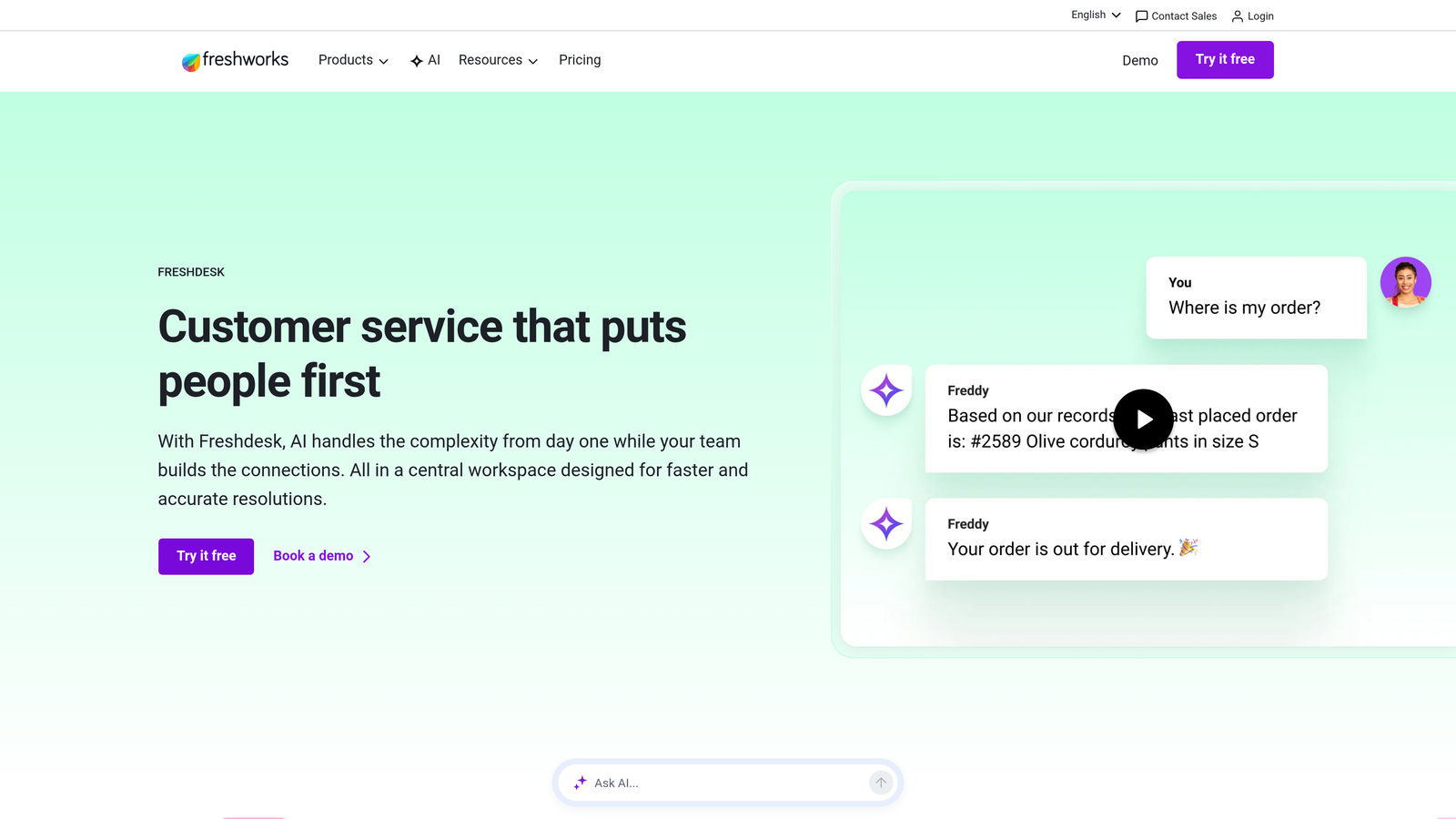
Freshdesk is a scalable helpdesk platform that combines AI-powered automation with gamification features to keep agents motivated.
Where This Tool Shines
Freddy AI automatically categorizes incoming tickets and suggests relevant solutions from your knowledge base, reducing the mental load on agents who would otherwise need to manually sort and search. This speeds up response times while ensuring consistency.
The gamification system transforms routine support work into an engaging experience. Leaderboards, achievement badges, and friendly competition motivate agents to maintain high performance without feeling like they're being micromanaged.
Key Features
Freddy AI: Automatically categorizes tickets, suggests solutions, and predicts customer satisfaction to help agents prioritize effectively.
Gamification Engine: Leaderboards, badges, and achievement systems that make hitting targets feel rewarding rather than punitive.
Multi-Channel Support: Handle inquiries from email, chat, phone, WhatsApp, and social media in a unified interface.
Team Inbox: Collaborative features let multiple agents work on complex issues without duplicating effort or losing context.
Field Service Management: Dispatch and track on-site support teams for businesses that combine digital and physical service.
Best For
Small to mid-size teams looking for an affordable entry point into AI-assisted support, plus companies where agent motivation and engagement directly impact retention.
Pricing
Free tier available for basic needs; paid plans start at $15/agent/month with AI features included in higher tiers.
5. Help Scout
Best for: Teams prioritizing personal customer relationships over transaction-focused ticket processing
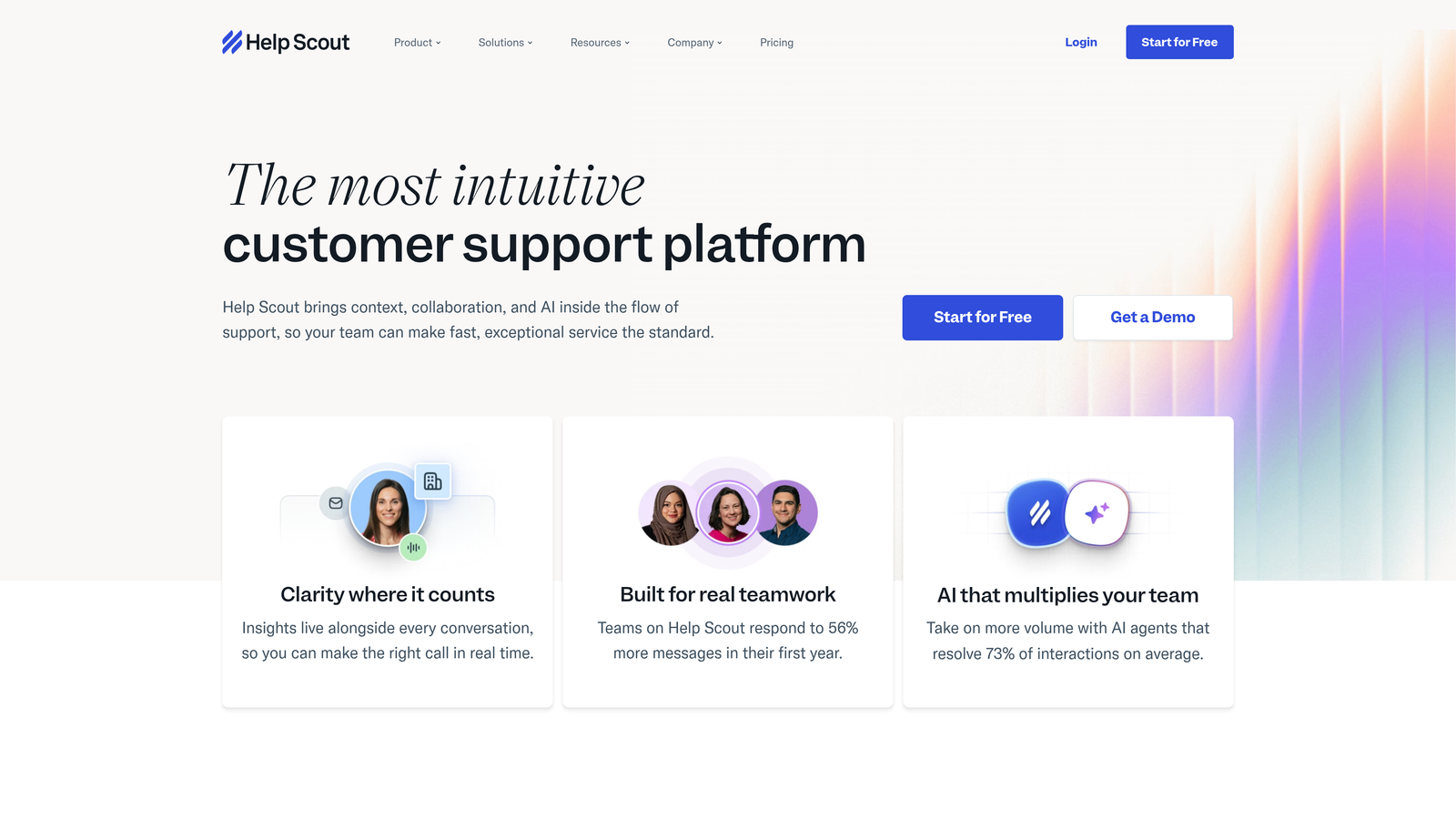
Help Scout is a human-centered helpdesk designed to feel more like email than traditional ticketing software.
Where This Tool Shines
Help Scout's collision detection prevents the embarrassing scenario where two agents respond to the same customer simultaneously. The system alerts agents in real-time when someone else is viewing or responding to a conversation, eliminating wasted effort.
Saved replies include variable fields that automatically personalize responses with customer names, account details, and other context. This maintains efficiency without sacrificing the personal touch that makes customers feel valued rather than processed.
Key Features
Collision Detection: Real-time alerts when multiple agents view the same conversation, preventing duplicate responses and confusion.
Saved Replies with Variables: Pre-written responses that auto-populate with customer-specific details for personalized efficiency.
Docs Knowledge Base: Self-service content with the Beacon widget that suggests relevant articles as customers type questions.
Customer Profiles: Complete conversation history and custom fields provide context without forcing agents to dig through systems.
Workflows: Automated actions based on conversation properties that handle routine tasks like tagging, assignment, and follow-ups.
Best For
Small to mid-size teams in industries where customer relationships matter more than transaction speed, particularly B2B companies with complex products requiring thoughtful responses.
Pricing
Starts at $20/user/month for Standard plan; scales with additional features and reporting capabilities.
6. Gorgias
Best for: E-commerce brands needing deep Shopify integration and revenue attribution for support interactions
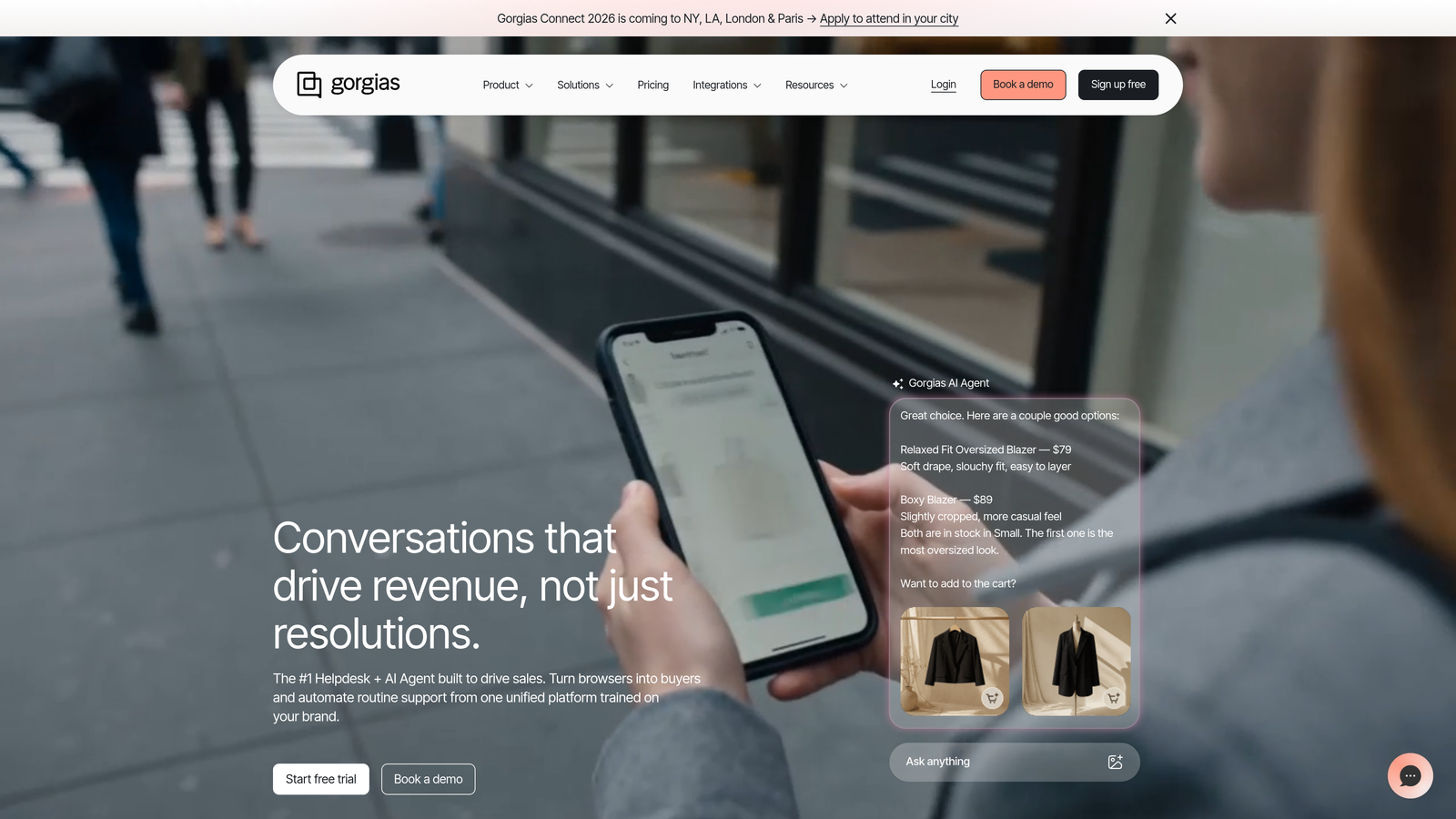
Gorgias is an e-commerce-focused helpdesk built specifically for online retailers using platforms like Shopify and BigCommerce.
Where This Tool Shines
Gorgias puts order management directly inside support conversations. Agents can process refunds, cancel orders, update shipping addresses, and send tracking information with single clicks—no switching between your helpdesk and e-commerce admin panel.
The revenue attribution feature tracks which support interactions lead to purchases, transforming support from a cost center into a measurable revenue driver. This data helps justify support investments and identify which types of conversations generate the most value.
Key Features
One-Click Order Actions: Process refunds, cancellations, exchanges, and tracking updates without leaving the conversation interface.
Deep E-commerce Integrations: Native connections to Shopify, BigCommerce, and Magento pull complete order history into every conversation.
Revenue Attribution: Track which support interactions lead to purchases, measuring support's impact on the bottom line.
Automated Order Responses: Pre-built automation for common inquiries like "Where's my order?" that resolve instantly with tracking information.
Social Media Integration: Manage Instagram and Facebook comments and DMs alongside email and chat in a unified inbox.
Best For
E-commerce brands of any size, particularly Shopify merchants who want support agents to handle order issues efficiently without admin panel access.
Pricing
Starts at $10/month for 50 tickets; pricing scales based on monthly ticket volume with unlimited agents.
7. Front
Best for: Teams wanting email-style collaboration with clear accountability and internal communication
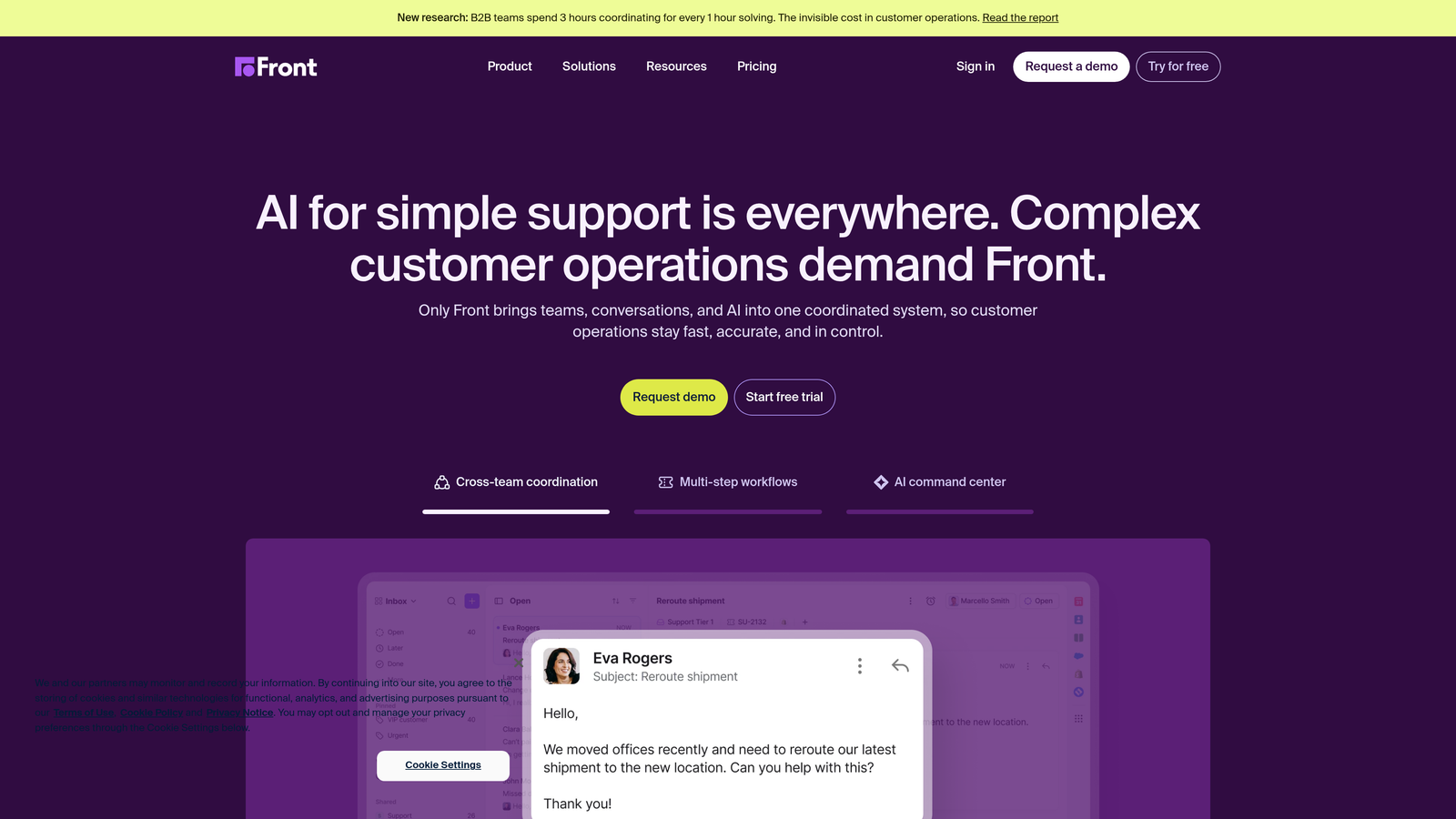
Front is a collaborative inbox platform that brings team features to email while maintaining familiar workflows.
Where This Tool Shines
Front's internal comments let team members discuss customer issues privately within the conversation thread. This eliminates the messy practice of forwarding emails or using separate Slack threads, keeping all context in one place.
The assignment and ownership model ensures every conversation has a clear owner, preventing the "I thought you were handling that" scenarios that plague shared inboxes. SLA tracking provides real-time visibility into which conversations are at risk of missing response deadlines.
Key Features
Shared Inboxes: Team email addresses with clear conversation ownership and assignment workflows that prevent dropped balls.
Internal Comments: Private discussions within customer threads using @mentions to loop in colleagues without cluttering the customer-facing conversation.
SLA Management: Real-time tracking of response and resolution deadlines with visual indicators for at-risk conversations.
Team Analytics: Performance metrics for both team and individual levels, showing response times, resolution rates, and workload distribution.
Rules and Workflows: Automated routing, tagging, and assignment based on sender, content, or other conversation properties.
Best For
Teams currently using shared email inboxes who want better collaboration and accountability without abandoning familiar email workflows for traditional ticketing systems.
Pricing
Starts at $19/seat/month for Starter plan; scales with advanced automation and analytics features.
8. Kustomer
Best for: Enterprise teams wanting CRM-level customer data integration with conversation-based support
Kustomer is a CRM-powered support platform that displays complete customer timelines rather than isolated ticket threads.
Where This Tool Shines
Kustomer's single-thread timeline shows every interaction a customer has had with your company—purchases, previous support conversations, product usage, subscription changes—in chronological order. Agents see the full story without asking customers to repeat themselves.
The AI-powered sentiment analysis detects frustration in real-time, allowing managers to intervene on at-risk conversations before they escalate to cancellations or negative reviews. Intent detection automatically categorizes what customers need, improving routing accuracy.
Key Features
Single-Thread Timeline: Complete customer history displayed chronologically, eliminating the need to dig through multiple systems for context.
AI Sentiment Analysis: Real-time detection of customer frustration or satisfaction, enabling proactive intervention on problematic conversations.
Omnichannel Conversations: Email, chat, phone, SMS, and social media appear in unified customer views rather than separate ticket silos.
Custom Objects: Extend the platform with business-specific data like subscriptions, shipments, or custom workflows beyond standard support fields.
Intelligent Routing: AI-powered assignment that considers agent expertise, workload, and customer context for optimal matching.
Best For
Enterprise companies with complex customer relationships where understanding the complete customer journey matters more than processing individual tickets efficiently.
Pricing
Contact for pricing; enterprise-focused with plans tailored to company size and feature requirements.
9. Dixa
Best for: Teams handling voice, chat, and email who need seamless channel switching mid-conversation
Dixa is a conversational customer service platform that enables real-time switching between communication channels without losing context.
Where This Tool Shines
Dixa's channel switching lets customers start a conversation in chat, continue over phone, and follow up via email without repeating information. The complete conversation history follows across channels, eliminating the frustration of explaining issues multiple times.
The conversation-based routing considers the entire customer relationship rather than treating each new contact as an isolated incident. This approach connects customers with agents who already understand their history, reducing resolution time.
Key Features
Seamless Channel Switching: Customers and agents can move between phone, chat, and email mid-conversation with full context preserved.
Conversation-Based Routing: Intelligent assignment that considers customer history and agent expertise rather than simple round-robin distribution.
Native Voice Capabilities: Built-in phone system without requiring third-party telephony integrations or additional vendors.
Agent-Friendly Interface: Streamlined design focused on minimizing clicks and cognitive load during high-volume periods.
Real-Time Analytics: Live dashboards showing queue status, agent availability, and performance metrics for immediate adjustments.
Best For
Support teams handling significant voice volume alongside digital channels, particularly those where complex issues benefit from switching between text and voice.
Pricing
Starts at $39/agent/month for Essential plan; scales with advanced features and higher contact volumes.
Choosing Your Productivity Stack
The right support productivity software depends less on feature checklists and more on how your team actually works. Think about where time gets wasted today.
If you're drowning in repetitive tickets that follow predictable patterns, AI-powered automation platforms like Halo AI can resolve those autonomously while your team focuses on complex issues requiring human judgment. For e-commerce teams spending hours switching between helpdesk and order management systems, Gorgias's integrated approach eliminates that context switching entirely.
Teams currently using shared email inboxes often resist traditional ticketing systems because they feel impersonal. Front bridges that gap by maintaining email familiarity while adding accountability and collaboration features. Meanwhile, enterprises with complex customer relationships benefit from Kustomer's CRM-level data integration that shows the complete customer story.
Consider your integration requirements carefully. A platform that connects deeply to your existing stack—whether that's Shopify and social media for e-commerce, or Linear and Slack for SaaS companies—will save more time than one with slightly better native features but weak connections to your other tools.
The conversation-based versus ticket-based distinction matters more than it might seem. Traditional ticketing treats each inquiry as an isolated incident, while conversation-based platforms like Dixa and Intercom maintain continuity across interactions. If your customers frequently have ongoing issues rather than one-off questions, conversation-based approaches reduce frustration.
Don't overlook agent experience in your evaluation. The most feature-rich platform won't improve productivity if agents find it confusing or frustrating to use. Help Scout and Front succeed partly because they prioritize interfaces that feel natural rather than overwhelming agents with complexity.
Your support team shouldn't scale linearly with your customer base. Let AI agents handle routine tickets, guide users through your product, and surface business intelligence while your team focuses on complex issues that need a human touch. See Halo in action and discover how continuous learning transforms every interaction into smarter, faster support.