9 Best Support AI Tools for B2B Companies in 2026
Discover the 9 best support AI for B2B companies in 2026, covering platforms built to handle complex technical tickets, deep integrations, and autonomous resolution—helping teams scale efficiently without sacrificing the high-stakes service quality B2B customers demand.
 Grant CooperFounder12 min read
B2B support is a different beast than B2C. Your customers aren't asking about return policies. They're filing complex technical issues, requesting integrations, and expecting fast resolution because their own business depends on it. The stakes are higher, the tickets are more nuanced, and scaling a human-only support team gets expensive fast.
AI-powered support tools have matured significantly, moving beyond simple chatbot scripts into intelligent agents that can resolve tickets autonomously, surface business insights, and hand off to humans when things get complicated. But not every AI support tool is built with B2B workflows in mind.
We evaluated dozens of platforms and narrowed it down to nine that genuinely serve B2B use cases, considering integration depth, multi-channel support, learning capabilities, analytics, and pricing transparency. Whether you're a 20-person startup or a scaling enterprise, here are the best options available right now.
1. Halo AI
Best for: B2B SaaS teams that want an AI-first support platform with deep integrations and continuous learning
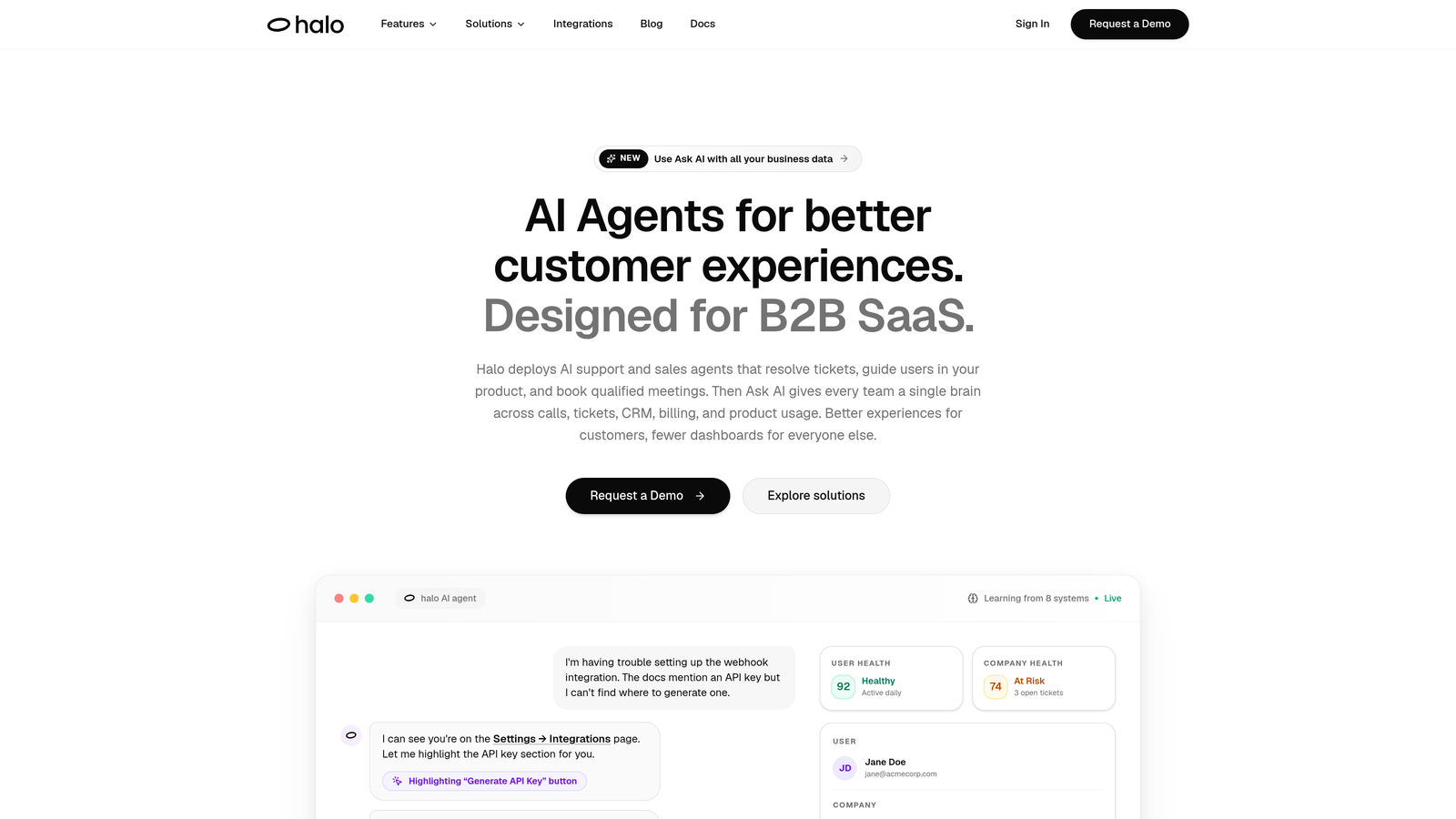
Halo AI is an AI-native customer support platform built specifically for B2B teams, deploying intelligent agents that resolve tickets, guide users through your product, and create bug reports while learning from every interaction.
Where This Tool Shines
What sets Halo apart from most tools on this list is its page-aware architecture. The AI agent can see what a user is looking at inside your product, which means it can provide contextual, visual guidance rather than generic answers. This is particularly powerful for SaaS companies where product complexity is the primary driver of support volume.
Halo is also one of the few platforms that goes beyond support into business intelligence. Its smart inbox surfaces customer health signals, anomaly detection, and revenue insights from ticket data, turning your support queue into a strategic asset rather than just a cost center.
Key Features
Page-Aware AI Agents: The AI sees what users see inside your product, enabling contextual guidance and step-by-step visual walkthroughs.
Continuous Learning: Every resolved interaction improves the model over time, so the AI gets smarter the more it handles.
Smart Inbox with Business Intelligence: Surfaces customer health signals, anomaly detection, and revenue intelligence directly from ticket patterns.
Auto Bug Ticket Creation: Automatically logs bug reports to Linear and other dev tools when recurring product issues are detected.
Live Agent Handoff: Escalates complex issues to human agents with full conversation context preserved, so nothing gets lost in translation.
Best For
Halo is best suited for B2B SaaS product teams and customer success organizations that want an AI-first platform rather than an AI add-on. It connects to a wide stack including Linear, Slack, HubSpot, Intercom, Stripe, Zoom, PandaDoc, and Fathom, making it a strong fit for teams with complex tooling environments.
Pricing
Contact for pricing. Halo is designed to serve B2B SaaS teams of varying sizes, from early-stage startups to scaling enterprises.
2. Intercom Fin
Best for: Teams already on Intercom who want AI resolution without switching platforms
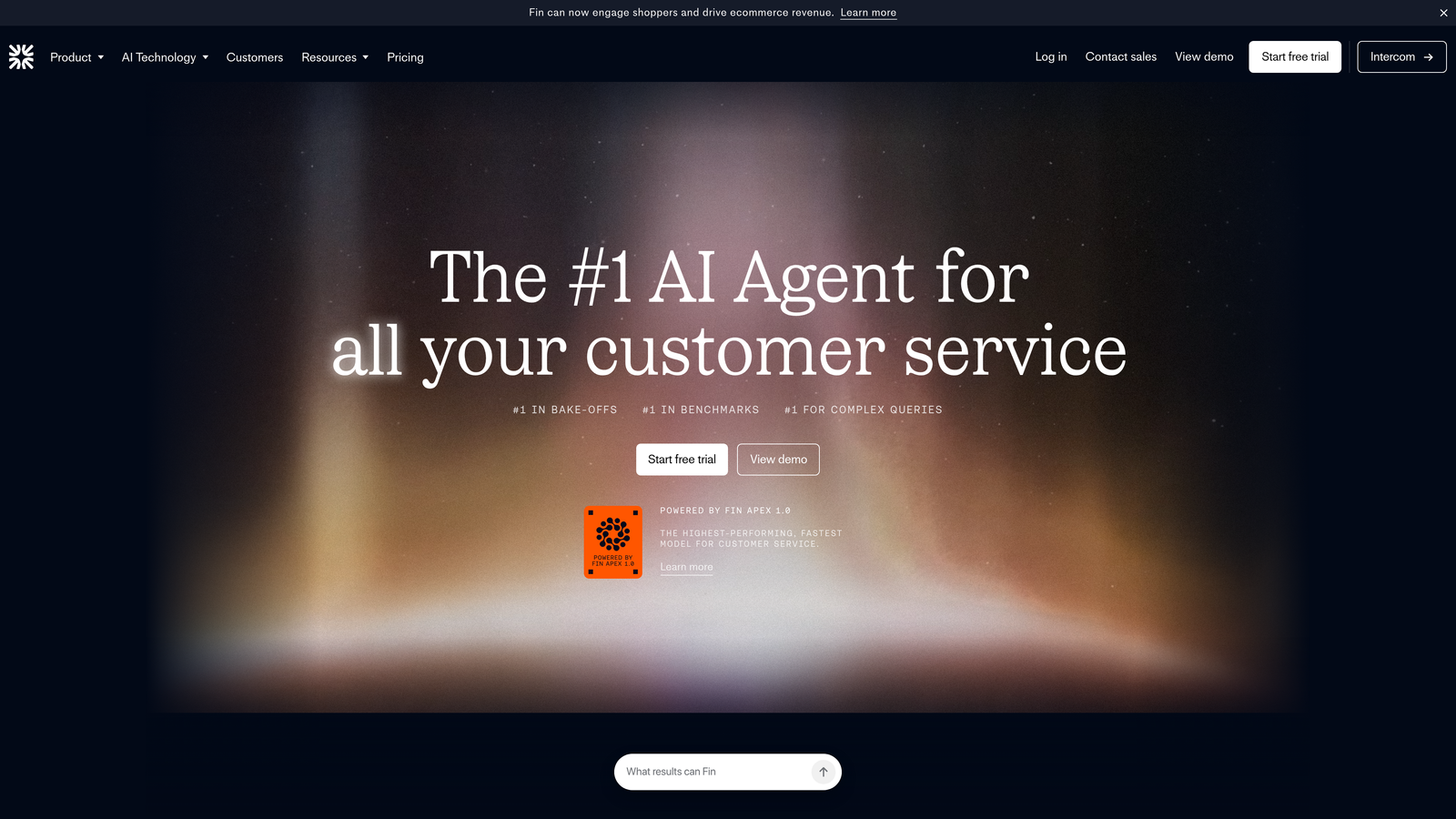
Intercom Fin is an AI agent built natively into Intercom's support platform, resolving customer questions using your help center content and conversation history.
Where This Tool Shines
Fin's biggest advantage is how tightly it integrates with the Intercom ecosystem. If your team is already using Intercom Messenger, Inbox, and Help Center, Fin layers on top without requiring any migration or re-tooling. The AI draws on your existing knowledge base to generate accurate, on-brand answers.
Fin also handles the handoff gracefully. When it can't resolve something, it passes the conversation to a human agent with context intact, which reduces the friction that often plagues AI-to-human transitions.
Key Features
Native Intercom Integration: Works directly within Messenger, Inbox, and Help Center without any third-party setup.
AI-Powered Resolution: Answers questions using your help content and automatically escalates when needed.
Customizable Tone and Sources: Configure which content sources Fin draws from and adjust its communication style.
Resolution Rate Reporting: Built-in analytics track AI resolution rates and customer satisfaction scores.
Best For
Teams already invested in the Intercom platform who want to add AI resolution without adopting a new system. Less ideal if you're looking for deep integrations outside the Intercom ecosystem or need business intelligence beyond support metrics.
Pricing
Per-resolution pricing model. Requires an active Intercom subscription. Costs can scale quickly at higher ticket volumes, so model this carefully before committing.
3. Zendesk AI
Best for: Enterprise B2B teams needing AI layered onto an established, compliance-ready helpdesk
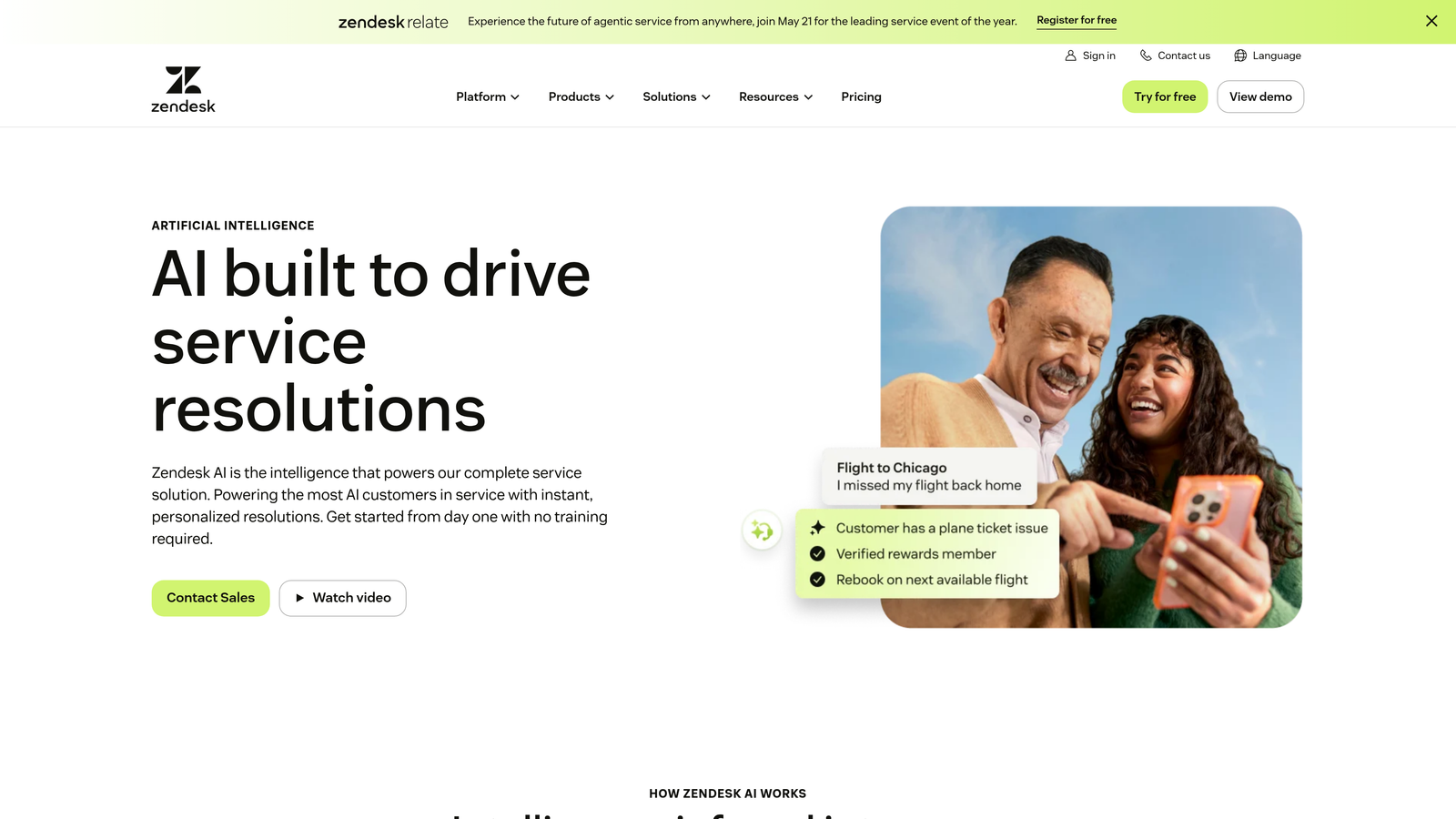
Zendesk AI is an AI layer built on top of Zendesk's support suite, offering intent detection, agent assist, and automated ticket resolution designed for enterprise-scale operations.
Where This Tool Shines
Zendesk AI benefits from years of training data across one of the largest helpdesk ecosystems in the world. Its intent detection and ticket classification capabilities are mature, and the agent assist features help human agents work faster by surfacing suggested replies and relevant macros in real time.
For enterprise buyers with strict compliance requirements, Zendesk's security certifications and governance controls are a significant draw. It's a known quantity in procurement processes, which can accelerate vendor approval.
Key Features
Intent Detection: Automatically classifies incoming tickets by topic and urgency for smarter routing.
Agent Assist: Suggests replies, macros, and next steps to human agents directly within the ticket interface.
Generative AI for Knowledge Base: Drafts and updates help center articles based on resolved conversations.
Enterprise Security: Robust compliance certifications including SOC 2 and GDPR-ready configurations.
Deep Analytics: Comprehensive reporting across the full support workflow, from first response to resolution.
Best For
Larger B2B organizations already on Zendesk or evaluating enterprise helpdesks. Teams that prioritize compliance, governance, and a proven vendor track record over cutting-edge AI-native architecture.
Pricing
Zendesk plans start at $55 per agent per month. AI features are available as an Advanced AI add-on at additional cost. Enterprise pricing is negotiated separately.
4. Ada
Best for: Global B2B operations needing multilingual, omnichannel AI without heavy technical lift
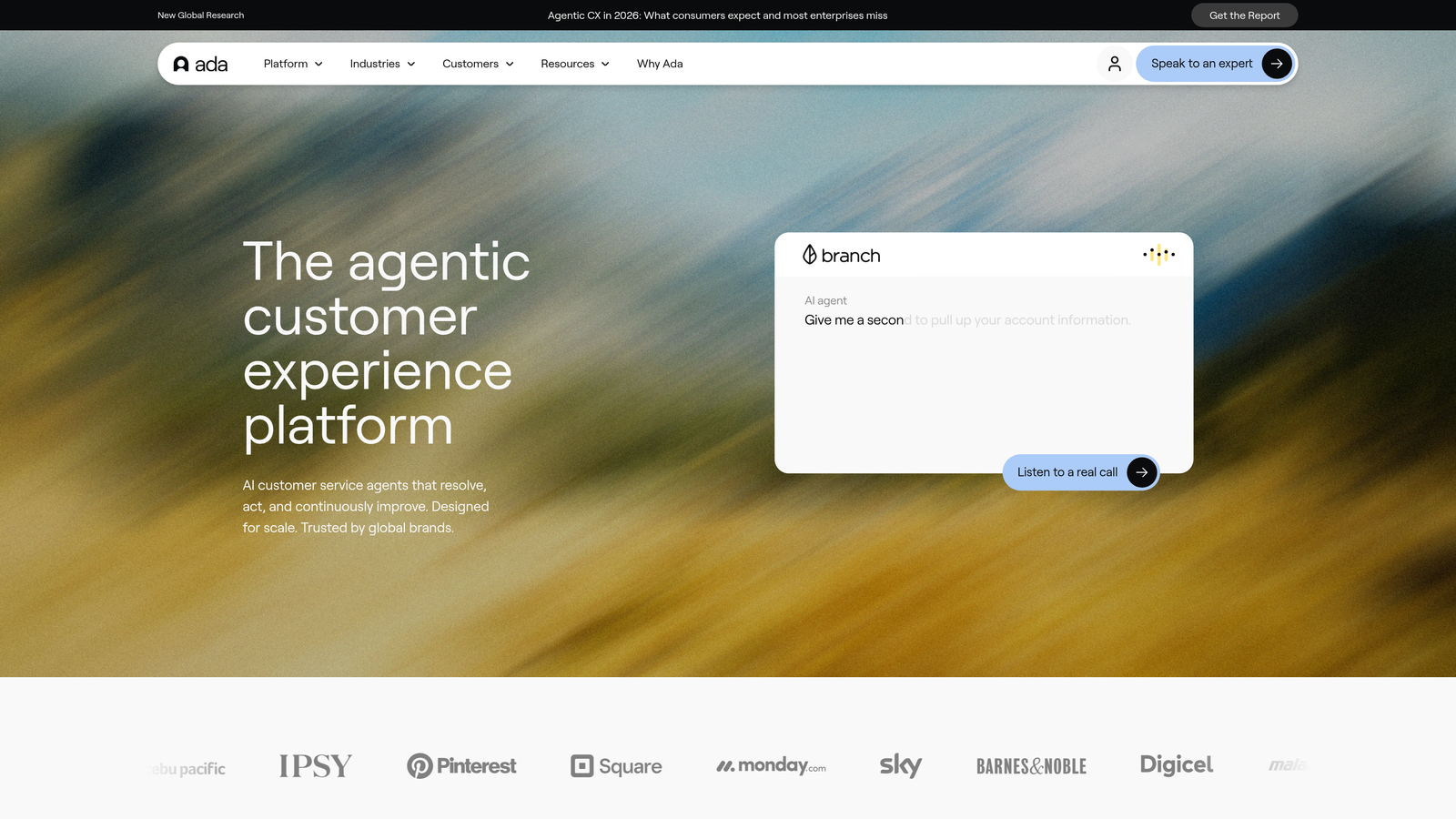
Ada is an AI-powered customer service automation platform focused on multilingual, omnichannel support with a no-code configuration approach that doesn't require engineering resources to deploy.
Where This Tool Shines
Ada's standout capability is its multilingual support, covering 50-plus languages out of the box. For B2B companies with international customer bases, this removes a significant barrier to consistent support quality across regions. The no-code builder also means customer success or operations teams can manage the AI without waiting on engineering.
Ada's enterprise security posture is solid, with SOC 2 and HIPAA compliance options that satisfy the requirements of regulated industries like fintech, healthcare technology, and legal services.
Key Features
No-Code AI Agent Builder: Non-technical teams can configure, update, and manage the AI without developer involvement.
50+ Language Support: Delivers consistent support quality across global markets without separate deployments.
Omnichannel Deployment: Operates across web, mobile, social, and messaging channels from a single configuration.
Enterprise Compliance: SOC 2 and HIPAA compliance options for regulated industries.
Best For
B2B companies with international customer bases or regulated industry requirements. Also a strong fit for ops-led teams that want to manage AI configuration without engineering bottlenecks.
Pricing
Custom enterprise pricing. Contact Ada directly for a quote based on your volume and deployment needs.
5. Freshdesk Freddy AI
Best for: Budget-conscious B2B teams that want solid AI capabilities without enterprise-level costs
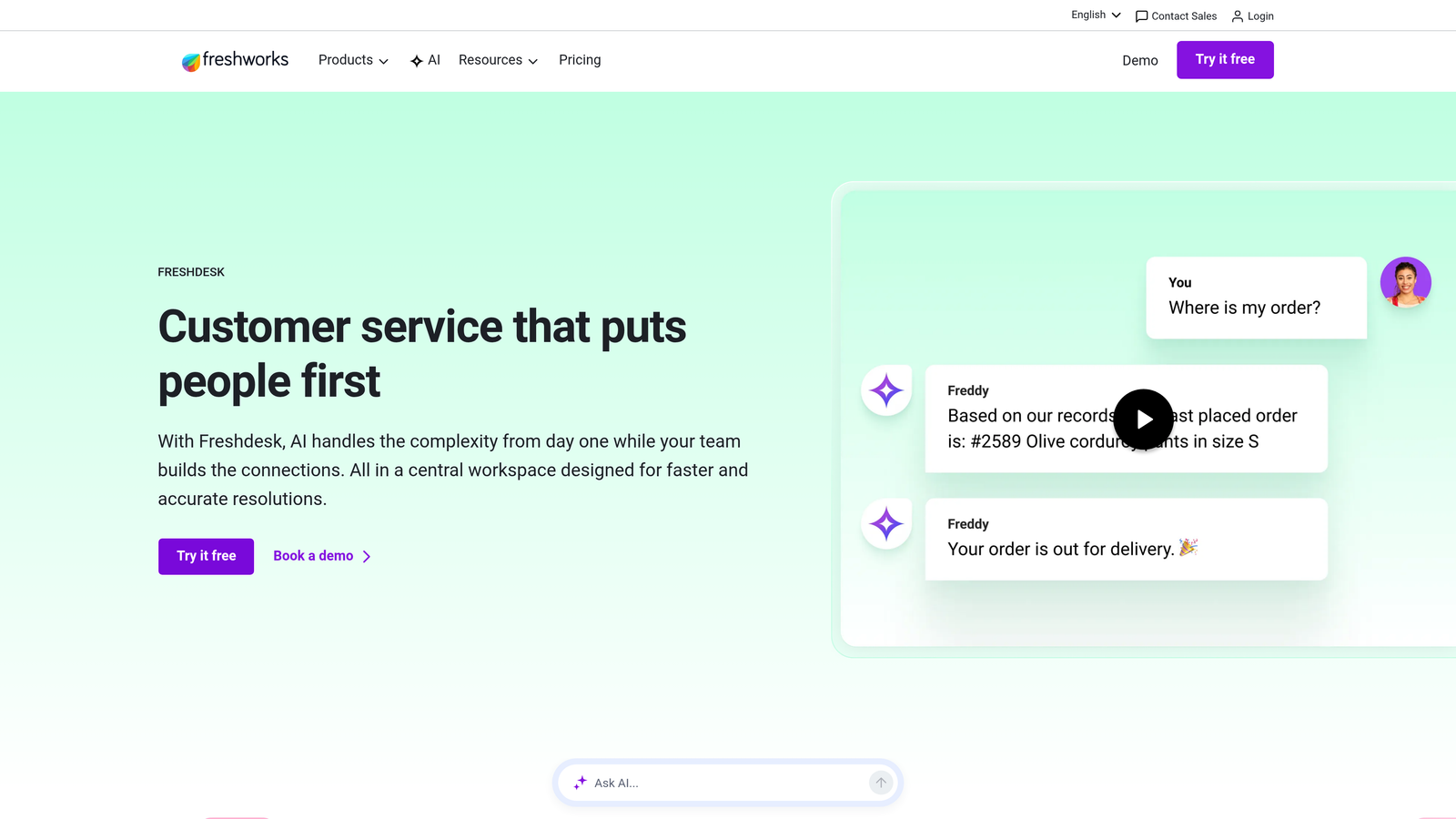
Freshdesk Freddy AI is the AI capability set embedded within Freshworks' Freshdesk helpdesk, offering ticket auto-triage, suggested responses, and a customer-facing AI bot at more accessible price points than many competitors.
Where This Tool Shines
Freddy AI's value proposition is straightforward: you get meaningful AI functionality without paying enterprise-tier prices. The auto-triage and field suggestion features help agents work faster, while the Freddy AI agent handles common customer-facing queries before they ever reach a human.
For growing B2B teams that are cost-sensitive but still want to automate repetitive ticket volume, Freshdesk offers a practical entry point. The platform is also well-established, with a broad integration ecosystem that covers most standard B2B tooling.
Key Features
Freddy AI Agent: Handles automated customer-facing responses for common queries before escalating to human agents.
Ticket Auto-Triage: Automatically categorizes, prioritizes, and routes incoming tickets based on content.
Canned Response Recommendations: Suggests relevant pre-written responses to agents based on ticket content.
Affordable Pricing Tiers: Accessible price points with a free tier available for small teams just getting started.
Best For
Smaller to mid-sized B2B teams that need reliable AI assist and basic automation without the overhead of enterprise platforms. A good starting point for teams new to AI-powered support.
Pricing
Free tier available. Pro plan starts at $49 per agent per month, with AI features included at higher tiers.
6. Forethought
Best for: High-volume B2B support teams that need autonomous ticket resolution at scale
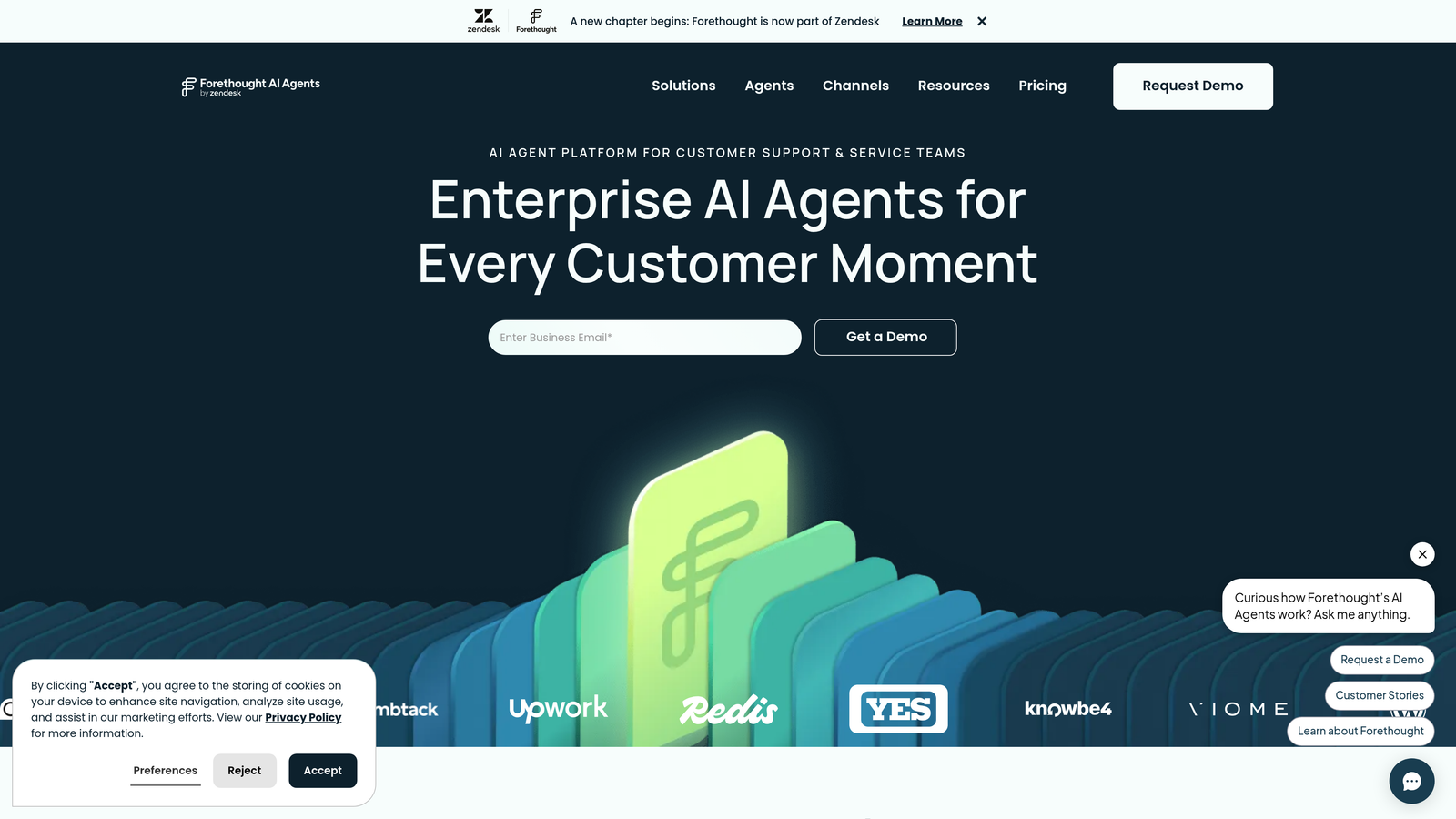
Forethought is an AI support platform using its SupportGPT technology to automate ticket resolution, intelligent triage, and agent assist for teams dealing with significant ticket volume.
Where This Tool Shines
Forethought is built for volume. Its SupportGPT engine can autonomously resolve tickets end-to-end, not just suggest answers but actually close tickets without human involvement. For B2B teams processing thousands of tickets per month, this level of autonomous resolution has a meaningful impact on team capacity.
The intelligent triage system is also worth noting. It classifies tickets by both intent and urgency, which means high-priority issues from key accounts get routed appropriately rather than sitting in a general queue.
Key Features
SupportGPT Autonomous Resolution: Resolves tickets end-to-end without human intervention for qualifying issue types.
Intelligent Triage: Classifies and routes tickets by intent and urgency, not just keyword matching.
Agent Assist: Provides real-time suggested responses to human agents for tickets that require a personal touch.
Helpdesk Integrations: Connects with Zendesk, Salesforce Service Cloud, and other major support platforms.
Best For
High-volume B2B support operations, particularly those already using Zendesk or Salesforce, that need autonomous resolution capabilities rather than agent-assist only. Best suited for teams where ticket volume is the primary scaling challenge.
Pricing
Custom pricing based on ticket volume. Contact Forethought directly for a quote tailored to your support operation.
7. Tidio
Best for: Smaller B2B teams that need fast deployment and basic AI chat without complex setup
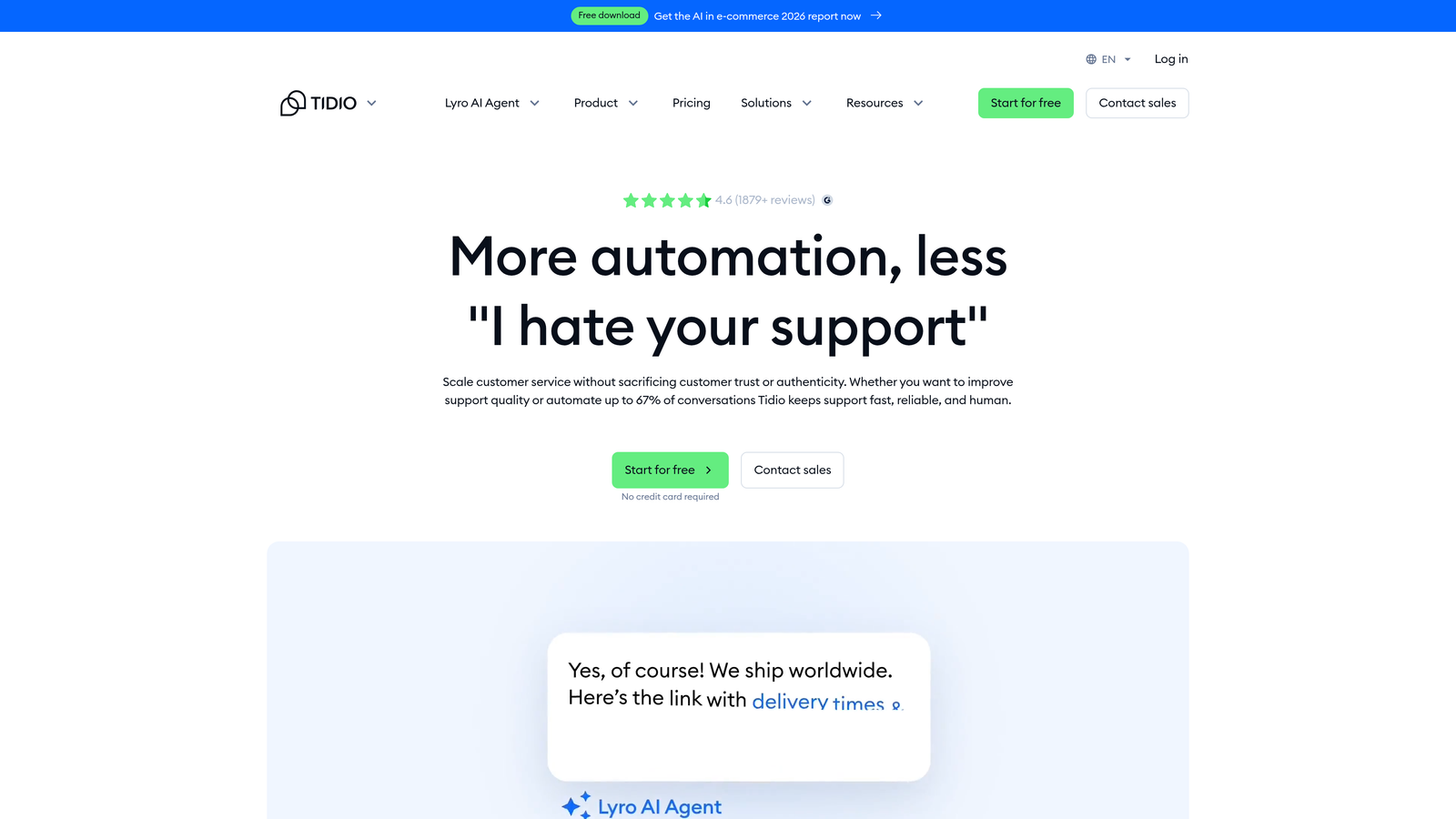
Tidio is a lightweight AI chat platform with its Lyro AI for automated conversations, designed for teams that need to get up and running quickly without a lengthy implementation process.
Where This Tool Shines
Tidio's strength is simplicity and speed. The visual chatbot flow builder lets non-technical team members design conversation workflows without writing a line of code, and Lyro AI handles common queries automatically. For B2B teams that are early in their AI journey, Tidio provides a low-risk entry point.
The live chat component is also well-executed, with smooth AI-to-human handoff that keeps conversations from feeling disjointed when escalation is needed.
Key Features
Lyro AI: Handles common customer queries automatically, learning from your existing support content.
Visual Flow Builder: Drag-and-drop interface for building custom conversation workflows without code.
AI-to-Human Handoff: Seamlessly transfers conversations to live agents when the AI reaches its limits.
Integration Options: Connects with HubSpot, WordPress, Shopify, and other common platforms.
Best For
Smaller B2B teams or early-stage companies that need a quick-to-deploy AI chat solution without enterprise complexity. Less suited for organizations with high ticket volume or deep integration requirements across a complex B2B stack.
Pricing
Free plan available. Lyro AI add-on starts at $39 per month, making it one of the more affordable options on this list.
8. Cognigy
Best for: Large enterprise B2B organizations running contact center operations across voice and digital channels
Cognigy is an enterprise conversational AI platform supporting both voice and digital channels, built for large-scale B2B contact center environments where channel complexity and compliance are primary concerns.
Where This Tool Shines
Cognigy's differentiator is its voice capability. Most AI support tools on this list are chat-first, but Cognigy is built to handle phone-based support interactions as well, making it relevant for enterprise B2B companies that still manage significant call center volume alongside digital channels.
The platform's low-code conversation designer and advanced natural language understanding capabilities allow for sophisticated, branching conversations that go well beyond simple FAQ-style responses. On-premise deployment options also make it viable for organizations with strict data residency requirements.
Key Features
Voice and Chat AI: Operates across both phone and digital channels from a single platform.
Low-Code Conversation Design: Advanced NLU with a visual builder for designing complex conversation flows.
Enterprise Integrations: Deep connections with Salesforce, SAP, Microsoft, and Genesys contact center infrastructure.
On-Premise Deployment: Available for organizations with strict data residency or security requirements.
Best For
Large enterprise B2B organizations with contact center operations spanning voice and digital channels. Particularly relevant for industries with strict compliance requirements or data sovereignty concerns that rule out cloud-only solutions.
Pricing
Enterprise pricing. Contact Cognigy directly for a custom quote based on your deployment scope and channel requirements.
9. Kustomer
Best for: B2B teams that prioritize full customer relationship context over individual ticket resolution
Kustomer is a CRM-centric customer service platform with AI capabilities that center on complete customer context and relationship history, rather than treating each support interaction as an isolated ticket.
Where This Tool Shines
Kustomer's CRM-level data model is what distinguishes it from traditional helpdesks. Every support interaction sits within a unified customer timeline that includes purchase history, previous conversations, sentiment trends, and account-level data. For B2B teams where customer relationships are long-term and complex, this context dramatically improves support quality.
The AI capabilities in Kustomer are built around this context, surfacing suggestions and automating responses that account for who the customer is and what their history looks like, not just what they're asking right now.
Key Features
Unified Customer Timeline: Full interaction history across all channels in a single view, giving agents complete context instantly.
Context-Aware AI Suggestions: AI recommendations informed by customer history, sentiment, and account data.
Omnichannel Support: Manages email, chat, social, and phone interactions from one platform.
CRM Data Model: Treats customers as relationships rather than ticket sources, enabling account-level intelligence.
Best For
B2B companies with complex, long-term customer relationships where account history and context are critical to support quality. Strong fit for customer success teams that blur the line between support and relationship management.
Pricing
Enterprise plan starts at $89 per user per month. Positioned at the higher end of the market, reflecting its CRM-plus-support positioning.
How to Choose the Right AI Support Tool for Your B2B Team
Nine tools, very different architectures. The right choice depends on where your team is today and where you need to be in twelve months.
If you're looking for an AI-first platform that goes beyond ticket resolution into business intelligence, page-aware guidance, and deep B2B stack integrations, Halo AI is the standout choice. It's built from the ground up for exactly this use case, not retrofitted onto an existing helpdesk.
If your team is already embedded in the Intercom or Zendesk ecosystem and switching platforms isn't realistic, Intercom Fin and Zendesk AI are the logical paths. They won't require you to re-train your team or migrate data, and they deliver meaningful AI capabilities within familiar interfaces.
For enterprise organizations running contact center operations at scale, Cognigy's voice-and-digital architecture and on-premise deployment options address requirements that most other tools simply can't meet. And if relationship context is your primary support challenge, Kustomer's CRM-centric model offers something genuinely different from ticket-based platforms.
Budget-conscious teams should look closely at Freshdesk Freddy AI and Tidio. Both offer real AI functionality at price points that don't require enterprise procurement cycles.
A few questions worth asking before you decide:
Do you need autonomous resolution or agent assist? Some tools focus on helping human agents work faster. Others aim to close tickets without human involvement. Know which problem you're actually solving.
How complex is your integration environment? B2B teams typically rely on a wide stack. Check whether your shortlisted tools connect natively to the systems your team actually uses, not just the popular ones listed in marketing materials.
Does the AI learn over time? Static AI that doesn't improve from interactions will plateau quickly. Continuous learning is a meaningful differentiator for teams investing in AI for the long term.
Your support team shouldn't scale linearly with your customer base. Let AI agents handle routine tickets, guide users through your product, and surface business intelligence while your team focuses on complex issues that need a human touch. See Halo in action and discover how continuous learning transforms every interaction into smarter, faster support.