9 Best Support AI Tools for Fast-Growing Companies in 2026
Support AI for fast-growing companies solves the critical gap between exploding ticket volume and limited headcount by deploying intelligent automation that scales instantly. This guide evaluates the 9 best AI support platforms of 2026 based on autonomous resolution capability, integration depth, and scalability—helping B2B teams handle rapid customer growth without proportionally growing their support staff.
 Matt PattoliFounder13 min read
When your user base doubles in six months, your support queue doesn't grow linearly. It explodes. Fast-growing companies face a structural challenge that hiring alone can't solve: customer volume outpaces headcount, and the gap between what your team can handle and what your customers need widens fast.
The smarter path is deploying AI that scales instantly. But not all support AI is built for growth. Some tools are glorified FAQ bots. Others are legacy helpdesks with AI bolted on as an afterthought. The best solutions are purpose-built to handle increasing ticket volume, learn from every interaction, and give your team intelligence rather than just automation.
This list covers the top support AI platforms for fast-growing B2B companies in 2026, evaluated on autonomous resolution capability, integration depth, scalability, and how well they serve teams that need to do more with less. For deeper context, explore our guides on automated customer support and AI support agents.
1. Halo AI
Best for: B2B SaaS teams that need AI-first support with product-aware context and business intelligence.
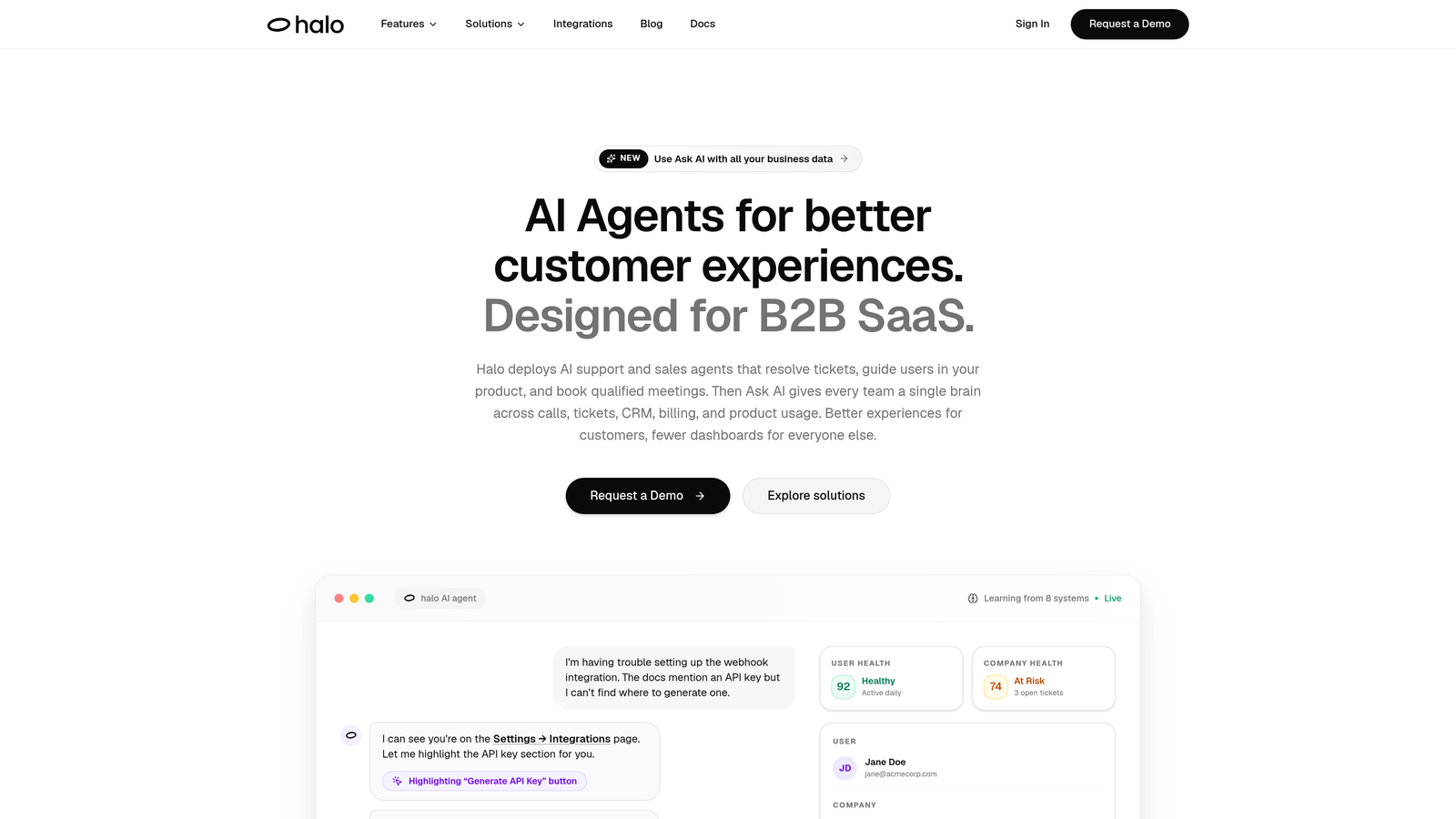
Halo AI is an AI-first customer support platform purpose-built for B2B SaaS teams that need to scale without scaling headcount.
Where This Tool Shines
Halo's most distinctive capability is its page-aware architecture. The AI doesn't just respond to what a user types. It sees where the user is in your product, giving it the context to provide genuinely useful, visually guided answers rather than generic help center links. This is a meaningful step beyond what most support AI tools offer.
Beyond ticket resolution, Halo layers business intelligence on top of every support interaction. Its smart inbox surfaces customer health signals, revenue intelligence, and anomaly detection, turning your support queue into a source of strategic insight. For fast-growing companies where churn risk is always a concern, this kind of signal is hard to put a price on.
Key Features
Page-Aware Chat Widget: The AI sees the user's current product context and delivers visual UI guidance tailored to exactly where they are in your product.
Autonomous Ticket Resolution: Resolves support tickets end-to-end, with intelligent live agent handoff for complex issues that need a human touch.
Auto Bug Ticket Creation: Automatically creates bug reports connected to Linear and other dev tools, closing the loop between support and engineering without manual effort.
Smart Inbox with Business Intelligence: Surfaces customer health signals, revenue intelligence, and anomaly detection directly within the support workflow.
Deep Integration Stack: Connects natively with Linear, Slack, HubSpot, Intercom, Stripe, Zoom, PandaDoc, and Fathom, covering the full B2B SaaS toolchain.
Continuous Learning: Improves from every resolved interaction, getting smarter as your product and customer base evolve.
Best For
Halo is built specifically for B2B SaaS teams at the growth stage. If you're running a Series A or Series B company where support volume is accelerating faster than your team can absorb, and you want AI that understands your product context rather than just your help docs, Halo is worth a close look.
Pricing
Custom pricing based on your team's needs. Contact Halo directly at haloagents.ai for a demo and pricing information.
2. Intercom (Fin AI)
Best for: Teams already using Intercom who want a capable AI agent without switching platforms.
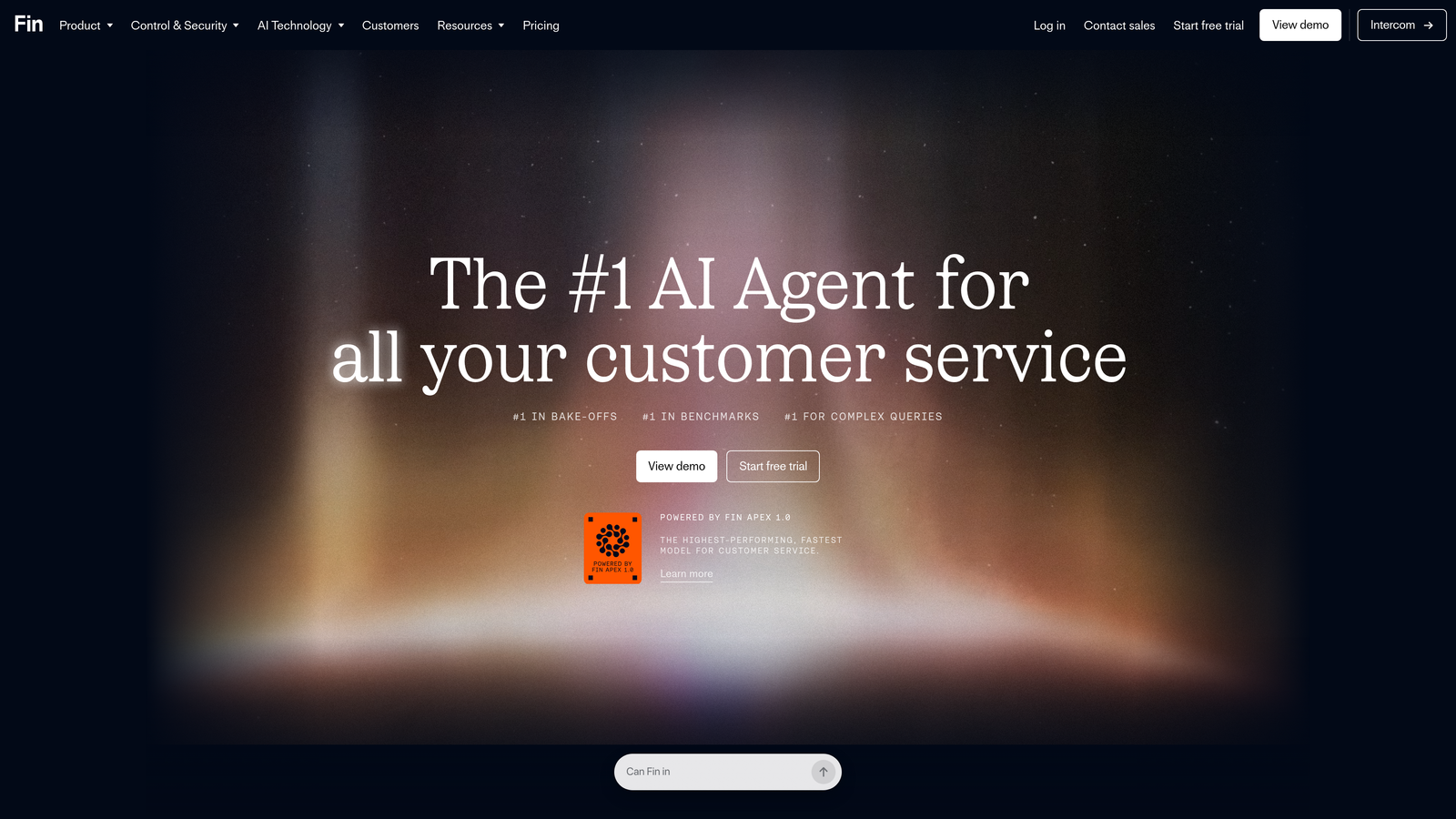
Intercom's Fin is an LLM-powered AI agent that resolves support queries by drawing from your help center content and connected data sources, operating natively within the Intercom inbox.
Where This Tool Shines
Fin's biggest advantage is how naturally it fits into the Intercom ecosystem. If your team is already working out of Intercom, Fin requires no platform migration. It reads your existing help content and starts resolving queries without a lengthy setup process.
The handoff experience is also well-executed. When Fin reaches the edge of what it can handle, it passes the conversation to a human agent with full context intact, so customers don't have to repeat themselves. This makes the AI-to-human transition feel seamless rather than frustrating.
Key Features
LLM-Powered Resolution: Draws from your help center content and connected data sources to answer queries with natural language understanding.
Native Intercom Integration: Works directly within the Intercom inbox alongside human agent workflows, with no separate tool to manage.
Context-Preserving Handoff: Transfers conversations to human agents with full conversation history intact.
Multi-Channel Support: Operates across chat, email, and messaging channels from a single interface.
Usage-Based Pricing: You pay per Fin resolution, which aligns costs with actual AI value delivered rather than seat counts.
Best For
Intercom customers who want to add AI resolution capability without disrupting existing workflows. Less compelling for teams not already in the Intercom ecosystem, where the platform cost may be harder to justify.
Pricing
Usage-based pricing per Fin resolution, layered on top of your Intercom plan. Check intercom.com for current rates, as pricing is updated regularly.
3. Zendesk AI
Best for: Large support organizations with established Zendesk workflows looking to add AI across the full ticket lifecycle.
Zendesk AI is embedded across the Zendesk Suite, offering intelligent triage, routing, agent copilot assistance, and self-service automation for teams operating at scale.
Where This Tool Shines
Zendesk's AI is most powerful for organizations that have already built deep workflows inside Zendesk. The AI triage and routing capabilities work with the existing ticket structure, and the agent copilot integrates directly into the agent workspace agents already use every day. There's no rethinking how your team works.
The breadth of AI features is also notable. From intent detection at the triage stage to ticket summarization and suggested macros during resolution, Zendesk AI touches multiple points in the support lifecycle rather than focusing on a single capability.
Key Features
Intelligent Triage and Routing: Detects intent from incoming tickets and routes them to the right team or queue automatically.
Agent Copilot: Provides ticket summarization, suggested macros, and response drafts to help agents resolve tickets faster.
Self-Service AI Bot: Deflects common queries before they reach the human queue.
Deep Workflow Integration: Works within existing Zendesk views, triggers, and reporting rather than requiring parallel systems.
Suite-Wide AI Coverage: AI capabilities span the full Zendesk Suite, not just one channel or function.
Best For
Established support organizations that are already Zendesk-native and want to layer AI onto existing operations without a platform change. Less suited for early-stage companies or teams looking for a purpose-built AI-first architecture.
Pricing
AI features are included in Zendesk Suite plans, with advanced AI capabilities on higher tiers. Check zendesk.com for current pricing.
4. Freshdesk Freddy AI
Best for: Growing teams on Freshdesk who want AI assistance across triage, agent workflows, and self-service without adding a separate tool.
Freddy AI is Freshworks' AI layer within Freshdesk, providing auto-triage, suggested responses, self-service chatbot capabilities, and agent copilot tools for growing support teams.
Where This Tool Shines
Freddy's strength is that it covers multiple AI use cases within a single, native Freshdesk experience. Rather than adding a third-party AI layer on top of your helpdesk, Freddy is already there: handling self-service queries, assisting agents, and surfacing analytics without requiring integration work.
Freddy Insights is a particularly useful addition for growth-stage teams. It surfaces performance recommendations and identifies patterns in your support data, giving team leads visibility into where automation is working and where gaps exist.
Key Features
Freddy Self Service: AI chatbot that deflects routine queries before they reach the agent queue.
Freddy Copilot: Assists agents with suggested responses, article recommendations, and response drafts during live tickets.
Freddy Insights: AI-powered analytics that surface performance patterns and recommendations for support leaders.
Auto-Triage: Automatically categorizes and prioritizes incoming tickets based on content and intent.
Native to Freshdesk: No separate integration required; all capabilities live within your existing Freshdesk environment.
Best For
Teams already using Freshdesk that want to expand into AI-assisted support without evaluating an entirely new platform. Particularly useful for mid-market teams that need both agent assist and self-service capabilities in one place.
Pricing
Some Freddy features are included in standard Freshdesk plans; advanced capabilities require higher tiers. Check freshworks.com for current pricing details.
5. Tidio
Best for: Early-stage startups and SMBs that need fast-to-deploy support AI with accessible pricing and a strong human-AI hybrid model.
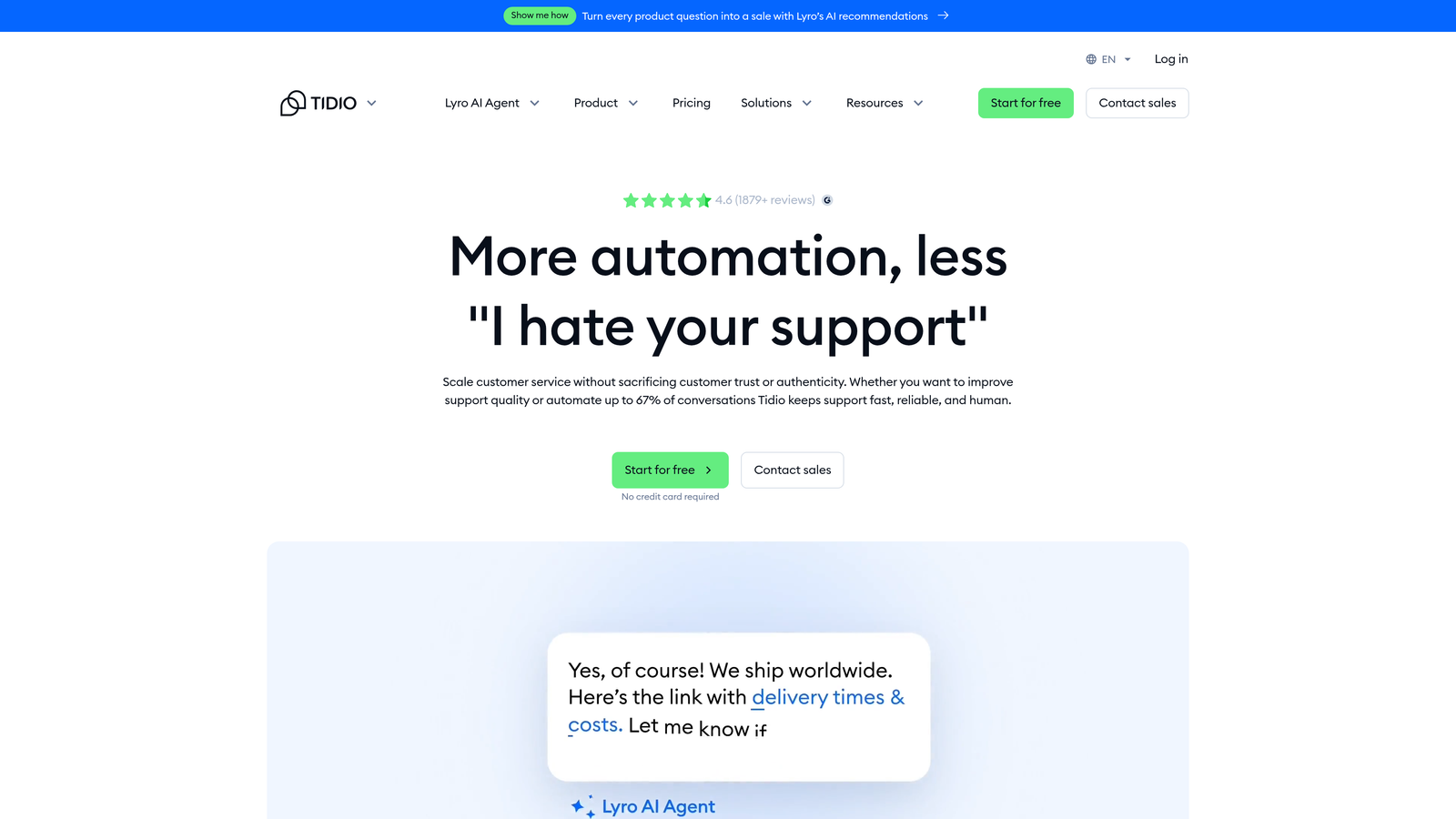
Tidio combines live chat with Lyro, its AI chatbot, offering an accessible and quickly deployable support AI solution built around a hybrid human-AI workflow.
Where This Tool Shines
Tidio's standout quality is how fast you can go from zero to live. For teams that don't have the runway for a lengthy implementation, Tidio's setup is measured in hours rather than weeks. Lyro handles common queries using natural language understanding, and the escalation to a live agent happens within the same interface, so the customer experience stays consistent.
For e-commerce and early-stage SaaS companies, the integration with platforms like Shopify and WordPress also removes a common friction point. You don't need engineering resources to get started.
Key Features
Lyro AI Chatbot: Handles routine support queries with natural language understanding, resolving common issues before they reach a human.
Seamless AI-to-Human Escalation: Transfers conversations to live agents within the same chat interface, preserving context throughout.
Fast Deployment: Deployable in hours with minimal technical overhead, making it accessible for small teams without dedicated engineering support.
E-Commerce Integrations: Native integrations with Shopify, WordPress, and other major e-commerce platforms.
Accessible Pricing: One of the more affordable options on this list, with a free plan available for teams just starting out.
Best For
Startups, SMBs, and e-commerce businesses that need AI support capabilities without enterprise-level budgets or implementation timelines. Less suited for complex B2B SaaS environments that require deep product integrations or advanced business intelligence.
Pricing
Free plan available; Lyro AI starts from approximately $29/month. Check tidio.com for current pricing, as plans are updated regularly.
6. Forethought
Best for: Data-driven support teams that prioritize measurable efficiency metrics and want granular control over AI triage, routing, and deflection.
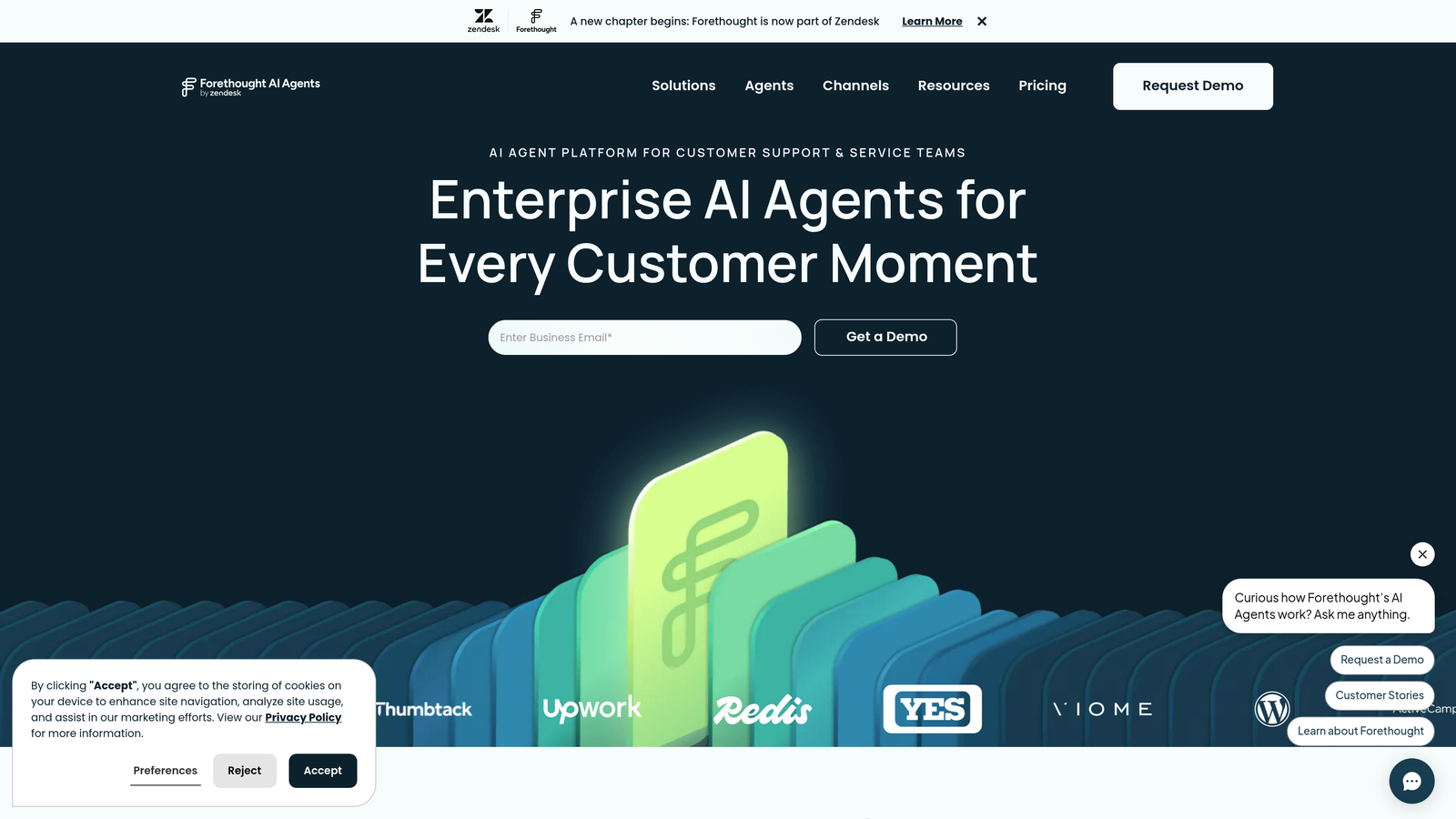
Forethought is an AI support platform built around intelligent triage, routing, deflection, and agent assist, with a strong emphasis on analytics and identifying automation opportunities.
Where This Tool Shines
Forethought is built for support leaders who think in metrics. Its Discover module is particularly useful: it analyzes your support data to identify where automation can have the most impact, so you're not guessing at which workflows to automate first. This makes it a strong fit for teams that have already invested in support operations and want to optimize systematically.
The combination of Solve (autonomous resolution), Triage (intelligent routing), and Assist (agent copilot) also means Forethought covers the full support workflow rather than focusing on a single layer. It integrates with Zendesk, Salesforce, ServiceNow, and others, making it a good overlay for teams with existing helpdesk investments.
Key Features
Solve: AI agent for autonomous ticket resolution and deflection before tickets reach the human queue.
Triage: Routes tickets based on intent, sentiment, and urgency signals to the right team or agent.
Assist: Agent copilot that surfaces contextual knowledge suggestions during live ticket handling.
Discover: Analytics module that identifies automation opportunities across your support data.
Broad Helpdesk Integrations: Connects with Zendesk, Salesforce, ServiceNow, and other major platforms.
Best For
Mid-market and enterprise support teams that are already operating a mature helpdesk and want to layer intelligent AI triage and routing on top. Strong for teams with dedicated support operations functions who track efficiency metrics closely.
Pricing
Custom pricing; contact Forethought directly at forethought.ai for a quote tailored to your team's volume and needs.
7. Drift (Salesloft)
Best for: B2B companies where customer conversations span both support and sales, and where pipeline context matters alongside resolution.
Drift, now part of the Salesloft platform, is a conversational AI tool that bridges support and sales use cases through AI-powered chat and intelligent routing.
Where This Tool Shines
Drift occupies a unique position on this list: it's not a pure support tool. It's built for B2B companies where the line between a support conversation and a sales conversation is blurry. If a customer is asking a billing question that could turn into an upsell, or a prospect has a technical question that needs support context, Drift handles both within the same conversational interface.
The playbook system is particularly well-developed. You can route conversations based on visitor behavior, intent signals, and account data, which means the right person or bot handles each conversation based on who the customer is, not just what they typed.
Key Features
Conversational AI Across Support and Sales: Handles both support resolution and sales engagement within a single AI-powered chat experience.
Lead Qualification and Meeting Booking: Qualifies leads and books meetings alongside support interactions, useful for PLG and sales-assisted growth motions.
CRM Integrations: Connects with Salesforce, HubSpot, and major CRM platforms for full account context in every conversation.
Intent-Based Playbooks: Routes conversations based on visitor behavior, intent signals, and account data.
Salesloft Platform Integration: Part of the broader Salesloft revenue platform for teams using a unified revenue stack.
Best For
B2B companies running sales-assisted or product-led growth models where support and pipeline conversations overlap. Less ideal for teams that need a dedicated, deep support AI focused purely on ticket resolution and product context.
Pricing
Custom pricing; contact Drift or Salesloft at drift.com for current rates.
8. Kustomer
Best for: High-volume, multi-channel support teams that need full customer history embedded in every interaction alongside AI automation.
Kustomer is a CRM-native support platform that combines a complete customer timeline with AI automation across email, chat, social, voice, and SMS.
Where This Tool Shines
Kustomer's core differentiator is the customer timeline. Every interaction a customer has had with your company, across every channel, is visible in a single view. When AI automation runs on top of that context, the quality of responses improves significantly because the system knows the customer's full history, not just their most recent message.
For teams managing high volumes across multiple channels simultaneously, this unified view reduces the time agents spend piecing together context before they can respond. KustomerIQ adds AI-powered routing, suggested responses, and automation on top of that foundation.
Key Features
Full Customer Timeline: Aggregates all customer interactions across every channel into a single, unified view for agents and AI alike.
KustomerIQ: AI-powered automation, routing, and suggested responses built natively into the platform.
Multi-Channel Coverage: Supports email, chat, social media, voice, and SMS from a single interface.
AI Deflection and Self-Service: Handles routine queries autonomously before escalating to human agents with full context.
CRM-Native Architecture: Customer data and support workflows live in the same system, eliminating the gap between CRM and helpdesk.
Best For
High-volume support operations managing customers across multiple channels who need CRM context embedded in every support interaction. Particularly strong for consumer-facing businesses with complex, multi-touch customer relationships.
Pricing
Starts at approximately $89/month per user. Check kustomer.com for current pricing, as rates may have been updated.
9. Ada
Best for: Enterprise teams that need scalable, multilingual, brand-safe AI support automation without depending on engineering resources to build and maintain it.
Ada is a no-code AI agent builder designed for enterprise support teams that need consistent, always-on automation at global scale.
Where This Tool Shines
Ada's no-code builder is genuinely accessible to non-technical teams. Support managers and operations leads can build, test, and deploy AI agents without writing a line of code or waiting on engineering. For fast-growing enterprises where engineering bandwidth is a constant constraint, this matters more than it might initially seem.
The multilingual capabilities and brand safety controls are also enterprise-grade. If you're supporting customers across multiple regions and languages, Ada provides the guardrails to ensure your AI stays on-brand and within approved response boundaries regardless of language or geography.
Key Features
No-Code AI Agent Builder: Non-technical teams can build and deploy AI agents without engineering involvement.
Multilingual Support: Handles customer interactions across multiple languages for global support operations.
Brand Safety Controls: Enterprise-grade guardrails ensure AI responses stay within approved boundaries and brand voice guidelines.
Broad Integration Support: Connects with major helpdesks, CRMs, and data systems to pull context into every AI interaction.
High-Volume Scale: Built for always-on, enterprise-scale automated support without performance degradation at volume.
Best For
Enterprise companies with global customer bases that need multilingual, brand-safe AI support automation they can manage without engineering resources. Less suited for early-stage teams or those needing deep product-context awareness at the interaction level.
Pricing
Custom enterprise pricing; contact Ada at ada.cx for a quote tailored to your team's scale and requirements.
Which Tool Is Right for Your Stage?
The right support AI depends on where you are in your growth journey and what your team actually needs to scale.
If you're a B2B SaaS company at the growth stage and want AI that understands your product context, surfaces business intelligence, and integrates across your full toolchain, Halo AI is purpose-built for exactly that use case. It's the only tool on this list that combines page-aware context, autonomous resolution, auto bug ticket creation, and revenue intelligence in a single AI-first architecture.
If you're already deep in the Intercom or Zendesk ecosystem, Fin AI and Zendesk AI are the lowest-friction paths to adding AI resolution without a platform change. For Freshdesk users, Freddy AI offers similar native convenience with solid self-service and agent assist capabilities.
Early-stage startups and SMBs with limited budgets and small teams will find Tidio's fast setup and accessible pricing hard to beat. For enterprise teams with global operations and no-code requirements, Ada is the strongest fit. And if your support and sales conversations overlap significantly, Drift's hybrid conversational AI model is worth evaluating.
For data-driven support operations focused on efficiency metrics, Forethought's triage and analytics capabilities stand out. And for high-volume, multi-channel teams that need full CRM context in every interaction, Kustomer's unified timeline approach is compelling.
Your support team shouldn't scale linearly with your customer base. AI agents can handle routine tickets, guide users through your product, and surface business intelligence while your team focuses on the complex issues that genuinely need a human touch. See Halo in action and discover how continuous learning transforms every interaction into smarter, faster support.