9 Best Support AI Tools with CRM Integration in 2026
This guide evaluates the 9 best support AI with CRM integration platforms available in 2026, comparing tools that offer native—not workaround—connections to sync contact data, deal history, and customer health signals in real time. Designed for B2B SaaS teams using Zendesk, Freshdesk, Intercom, or similar stacks, each platform is assessed on integration depth, AI resolution quality, and ability to surface actionable business intelligence beyond basic ticket management.
 Matt PattoliFounder14 min read
When your support AI and CRM live in separate worlds, your team pays the price. Agents switch tabs, customers repeat themselves, and revenue signals stay buried in ticket queues. The good news: a new generation of AI support tools connects directly to your CRM, turning every conversation into actionable customer intelligence.
This guide covers the best support AI platforms with genuine CRM integration. Not Zapier workarounds, but native connections that sync contact data, deal history, and health signals in real time. Whether you're running support on Zendesk, Freshdesk, or Intercom, or looking to replace your current stack entirely, there's a solution here that fits.
Selection criteria: depth of CRM integration, AI resolution quality, scalability for B2B SaaS teams, and the ability to surface business intelligence beyond simply closing tickets.
1. Halo AI
Best for: B2B SaaS teams wanting AI-first support with deep business stack integration
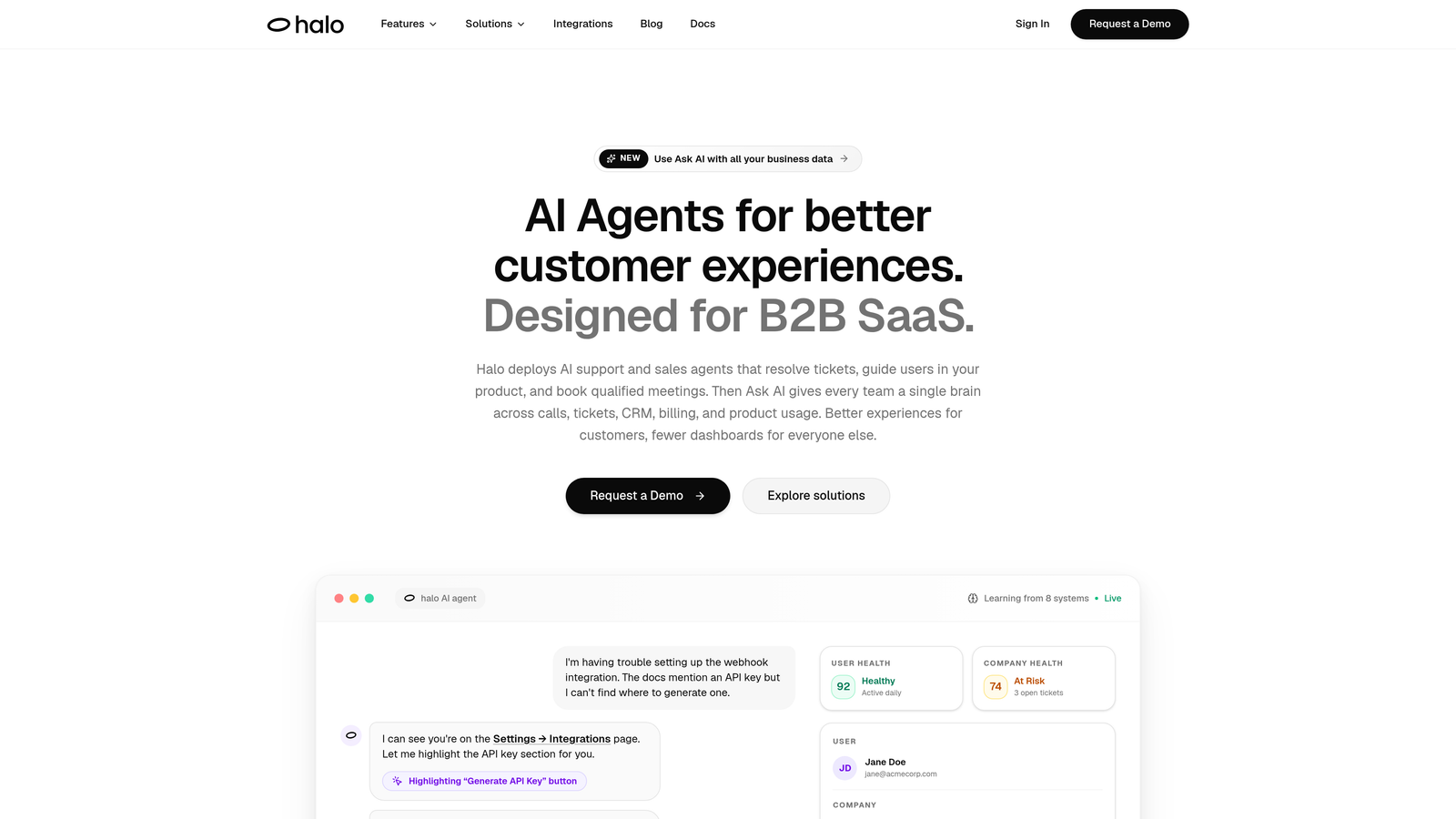
Halo AI is an AI-first customer support platform built specifically for B2B SaaS teams who need more than deflection.
Where This Tool Shines
Most support AI tools were built by adding an AI layer on top of an existing helpdesk. Halo was designed the other way around: AI and CRM context are foundational to the architecture, not retrofitted. That distinction matters more than it sounds.
The result is a platform that doesn't just resolve tickets but actively learns from every interaction, surfaces customer health signals, and connects to your entire business stack. Support becomes a source of business intelligence, not just a cost center to manage.
Key Features
Page-Aware Chat Widget: The AI sees exactly what a user is viewing inside your product, allowing it to provide contextually relevant guidance without the user needing to explain where they are or what they're doing.
Smart Inbox with Business Intelligence: Beyond ticket management, the inbox surfaces customer health signals, revenue intelligence, and anomaly detection — turning support data into signals your CS and sales teams can act on.
Auto Bug Ticket Creation: When users report issues, Halo automatically creates structured bug tickets connected to Linear, eliminating the manual handoff between support and engineering.
Live Agent Handoff with Full Context: When escalation is needed, the human agent receives the complete conversation history and CRM context, so customers never have to repeat themselves.
Native Integrations Across Your Stack: HubSpot, Intercom, Slack, Linear, Stripe, Zoom, PandaDoc, and Fathom are all natively connected, making Halo genuinely useful for B2B teams with complex toolchains.
Continuous Learning: Every resolved interaction feeds back into the AI's understanding, improving resolution quality over time without manual retraining.
Best For
B2B SaaS companies that want AI-first support architecture with genuine business intelligence capabilities. Particularly strong for product-led growth teams where support, product, and revenue data need to stay connected. Teams frustrated by bolt-on AI features from legacy helpdesks will find Halo's approach refreshingly different.
Pricing
Pricing is not publicly listed. Contact the team or request a demo at haloagents.ai for current rates tailored to your team size and use case.
2. Intercom Fin
Best for: Teams already invested in the Intercom ecosystem
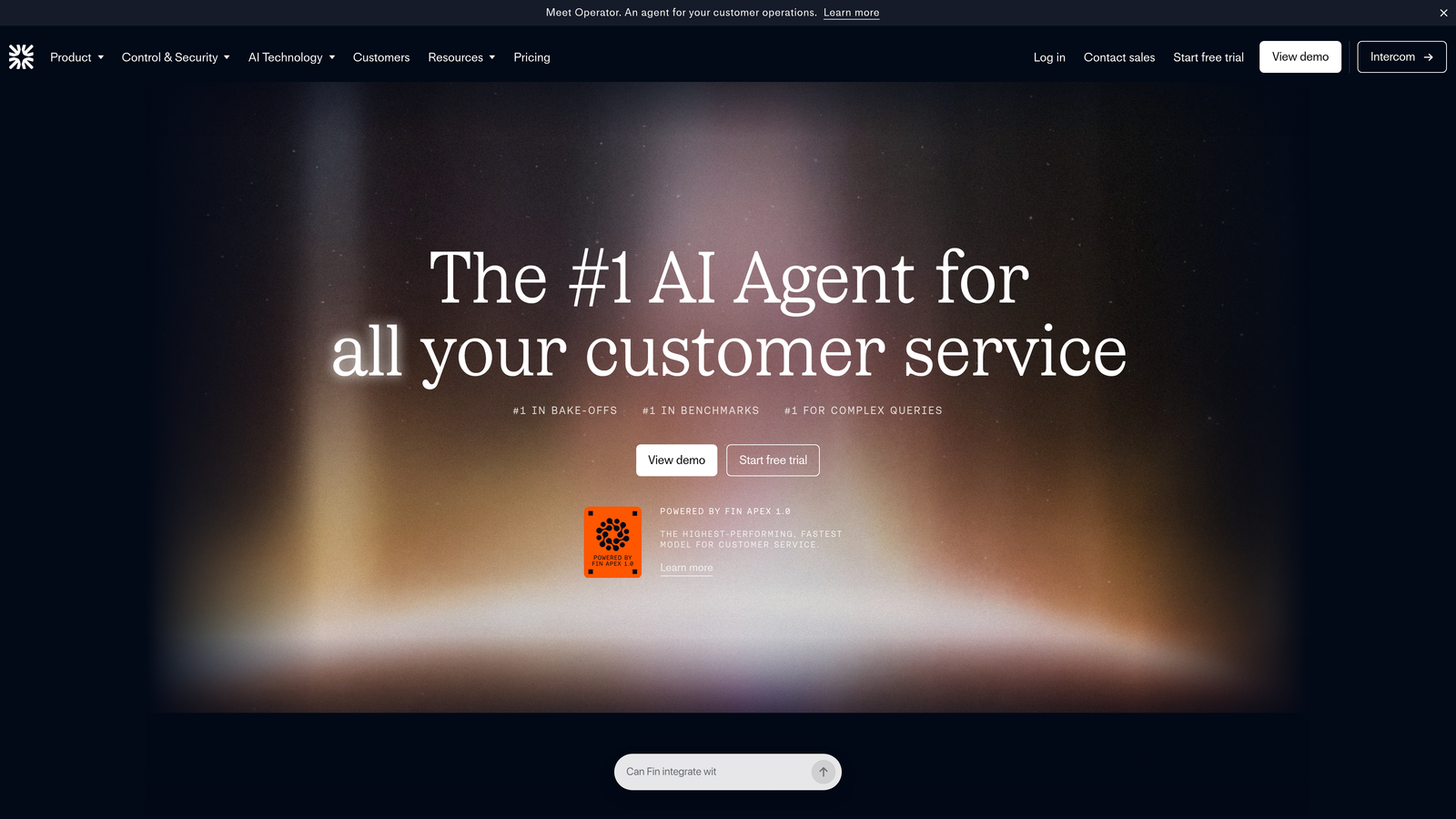
Intercom Fin is Intercom's native AI agent, designed to resolve customer questions using your knowledge base and Intercom's built-in CRM data.
Where This Tool Shines
Fin's biggest advantage is how deeply it sits inside the Intercom platform. It has native access to contact history, company details, and prior conversations without any integration work on your end. If your team already lives in Intercom, Fin feels like a natural extension rather than a new tool to manage.
The per-resolution pricing model is also worth noting. Instead of paying a flat monthly fee regardless of AI usage, you pay for conversations Fin actually resolves. For teams with variable support volume, this can make cost planning more straightforward.
Key Features
Native Intercom CRM Access: Contacts, companies, and full conversation history are available to Fin by default, enabling personalized responses without manual data passing.
Per-Resolution Pricing: Pay only for conversations the AI successfully resolves, aligning cost with actual value delivered.
Customizable AI Persona: Adjust Fin's tone and personality to match your brand voice across different customer segments.
Seamless Human Handoff: Escalations stay within the Intercom Inbox, preserving conversation context for the receiving agent.
Multilingual Support: Fin handles conversations across multiple languages, useful for teams with international customer bases.
Best For
Companies already running support on Intercom who want to add AI resolution without migrating platforms. Less compelling if you're not already on Intercom, since the CRM benefits are largely ecosystem-specific.
Pricing
Fin operates on per-resolution pricing and requires an active Intercom base plan. Contact Intercom directly for current rates, as pricing has evolved through 2025-2026.
3. Zendesk AI
Best for: Large enterprises running support at scale on Zendesk
Zendesk AI is Zendesk's native AI suite, covering intelligent triage, self-service AI agents, and an agent copilot built on top of Zendesk's customer data and ticketing infrastructure.
Where This Tool Shines
Zendesk's strength is scale. For large support organizations already running thousands of tickets through Zendesk, the AI layer fits naturally into existing workflows without requiring platform migration. Intelligent triage alone can meaningfully reduce manual routing overhead for high-volume teams.
The marketplace integrations with Salesforce and HubSpot extend CRM connectivity beyond Zendesk's native data model, though these are integrations rather than native connections and require configuration to get right.
Key Features
Intelligent Triage: AI automatically routes and prioritizes tickets based on intent, sentiment, and historical patterns, reducing manual queue management.
AI Agents for Self-Service: Deflects common queries before they reach a human agent, drawing on your knowledge base and Zendesk ticket history.
Agent Copilot: Provides suggested replies, ticket summaries, and next-step recommendations directly within the agent workspace.
Native Zendesk Data Access: Full access to ticket history and customer records within the Zendesk data model.
Marketplace CRM Integrations: Connects to Salesforce and HubSpot through the Zendesk marketplace for teams needing cross-platform CRM visibility.
Best For
Enterprise support teams with large volumes and established Zendesk infrastructure. Less ideal for teams wanting AI-first architecture or deep integration with non-Zendesk business tools.
Pricing
AI features are available on Zendesk Suite Professional and Enterprise tiers. Contact Zendesk for current pricing, as enterprise rates vary by seat count and configuration.
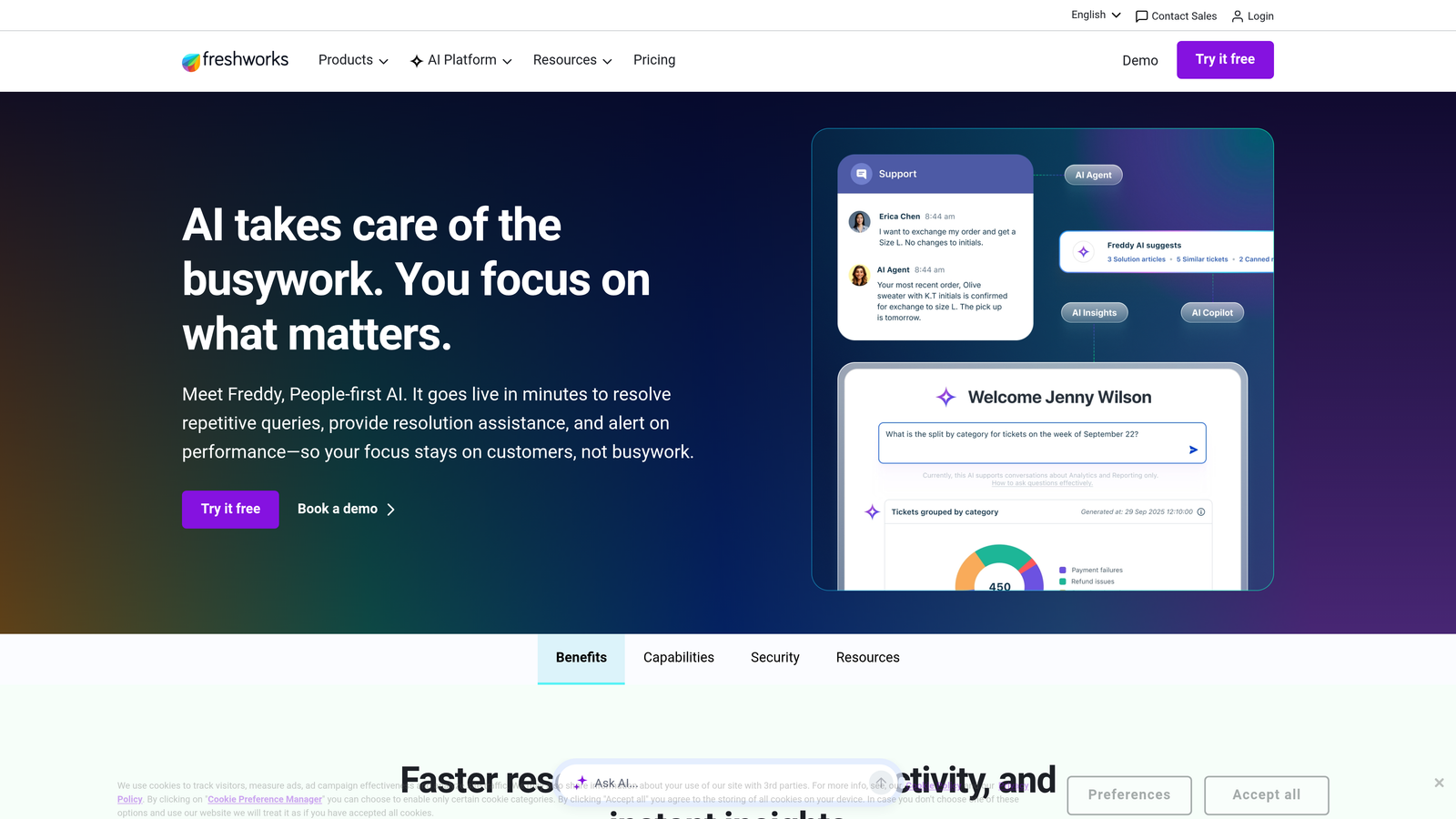
4. Freshdesk Freddy AI
Best for: SMBs and mid-market teams already on the Freshworks ecosystem
Freshdesk Freddy AI is Freshworks' AI layer for the Freshdesk support platform, with native integration into Freshsales CRM for contact-aware, personalized support automation.
Where This Tool Shines
The Freshworks ecosystem is Freddy's core strength. If your team uses both Freshdesk for support and Freshsales for CRM, the native integration means contact data, deal history, and support tickets share a unified data layer. That's a meaningful advantage over tools that require manual integration work to achieve the same result.
Freddy also offers good value at lower price tiers, making it accessible for growing teams that can't yet justify enterprise-level AI spend.
Key Features
Freddy Self Service: Customer-facing AI bot for deflecting common queries before they reach your support queue.
Freddy Copilot: AI-assisted replies, ticket summaries, and suggested responses for support agents handling complex cases.
Native Freshsales CRM Integration: Contact and deal data flows between Freshdesk and Freshsales without third-party connectors.
Auto-Triage and Categorization: Automatically classifies incoming tickets by type, priority, and urgency to streamline queue management.
Tiered Availability: Freddy AI features are available across Growth, Pro, and Enterprise plans, giving teams flexibility to start at a lower tier and scale up.
Best For
SMBs and mid-market companies already using Freshdesk or Freshsales who want to add AI capabilities without switching platforms. The value proposition weakens if you're not already in the Freshworks ecosystem.
Pricing
Freddy AI features are tiered by plan, with some capabilities available from the Growth tier. See freshworks.com for current pricing details.
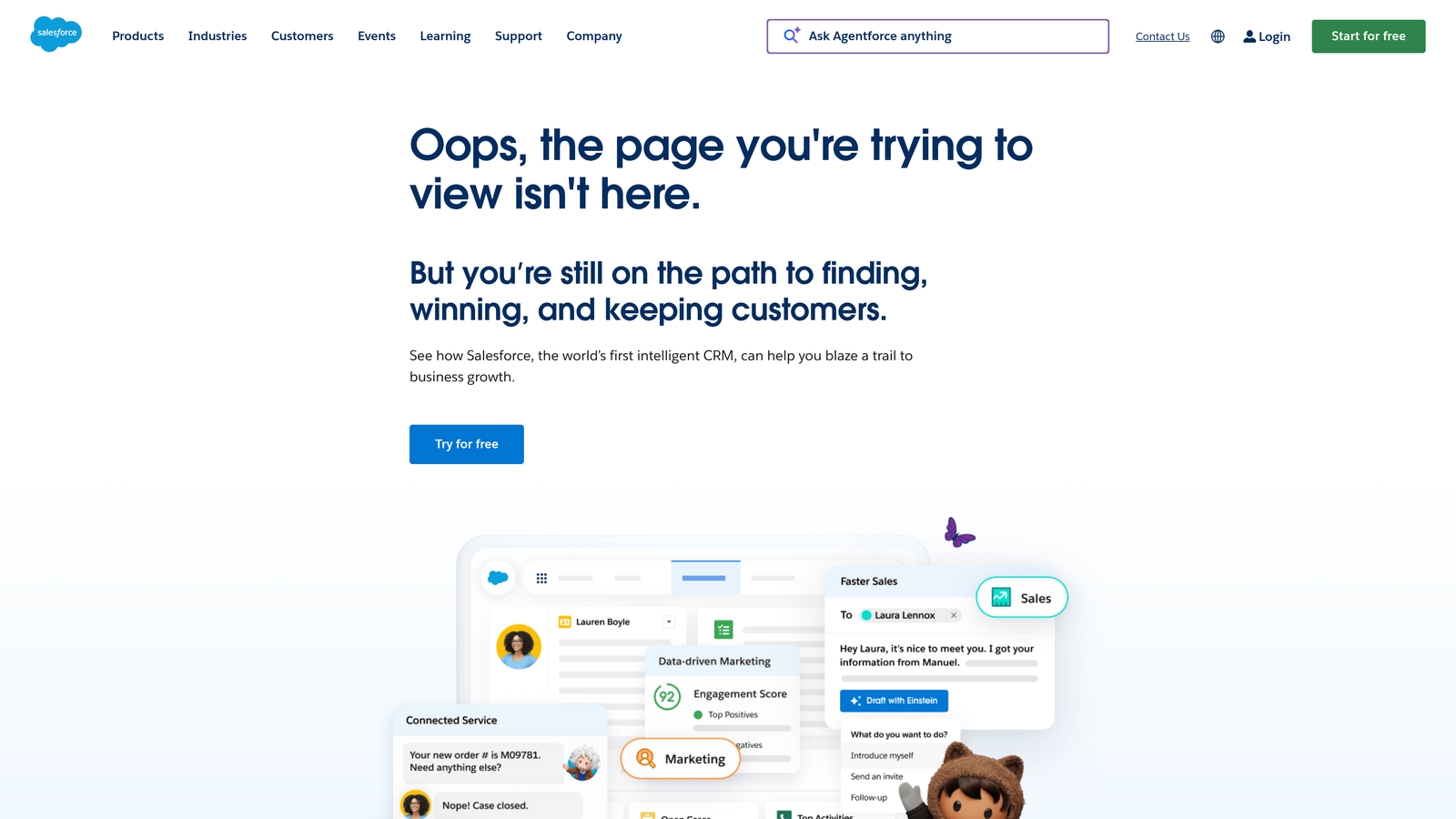
5. Salesforce Einstein for Service Cloud
Best for: Enterprises where Salesforce is the primary system of record
Salesforce Einstein for Service Cloud gives enterprise support teams AI capabilities built directly on top of Salesforce's full CRM data model, offering the deepest CRM integration available in any support AI tool on this list.
Where This Tool Shines
No other tool comes close to Einstein's CRM depth. Because it operates natively within Salesforce, the AI has access to the complete Salesforce object model: cases, contacts, accounts, opportunities, and custom objects. For enterprises where Salesforce is the single source of truth, this eliminates the integration gap entirely.
The trade-off is complexity and cost. Einstein for Service Cloud requires Salesforce Service Cloud licensing plus an Einstein add-on, and implementation typically involves significant configuration work. This is not a plug-and-play solution.
Key Features
Full Salesforce CRM Object Access: AI operates across cases, contacts, accounts, and opportunities natively, with no data syncing required.
Einstein Copilot for Service: Provides AI-assisted case handling, next-best-action recommendations, and guided resolution workflows for agents.
Case Summarization and Auto-Close: Automatically summarizes case history and recommends closure when resolution criteria are met.
Knowledge Article Recommendations: Surfaces relevant knowledge base content based on case context and customer data.
Salesforce Flow Integration: Deep automation capabilities using Salesforce's native workflow engine for complex support processes.
Best For
Large enterprises with Salesforce as their core CRM and the resources to implement and maintain a complex support AI configuration. Overkill for smaller teams or those not already committed to the Salesforce ecosystem.
Pricing
Requires Salesforce Service Cloud Enterprise or Unlimited license plus the Einstein add-on. Enterprise pricing applies; contact Salesforce for a quote specific to your configuration.
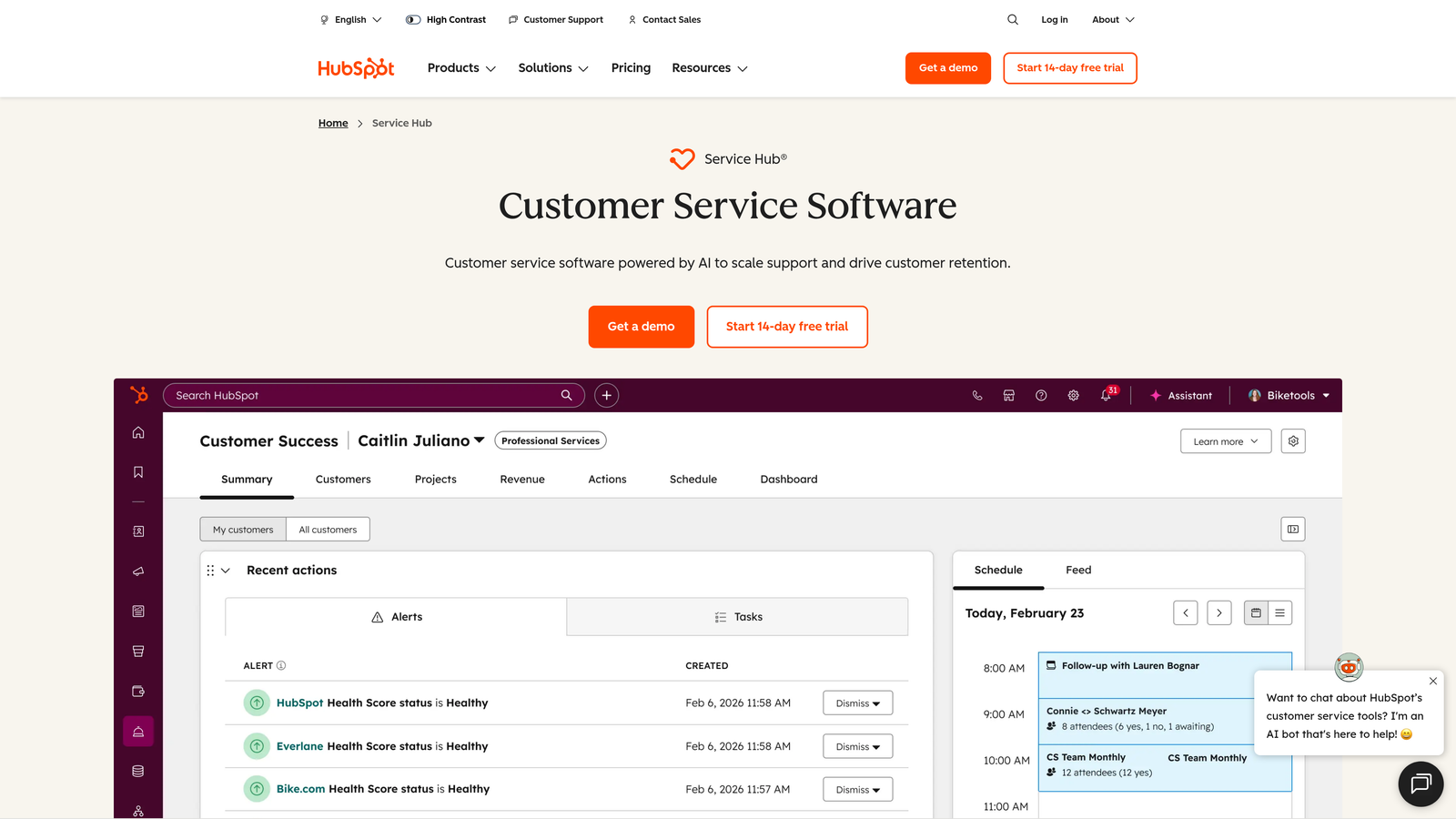
6. HubSpot Service Hub AI
Best for: Teams on HubSpot CRM wanting unified sales and support data
HubSpot Service Hub includes AI-powered features natively connected to HubSpot's unified CRM, making it a strong choice for teams that want support, sales, and marketing data to share a single contact record.
Where This Tool Shines
HubSpot's unified CRM model is the real differentiator here. When a support ticket is created, it's linked to the same contact record your sales team sees, with full deal history, lifecycle stage, and marketing interaction data attached. This makes support conversations genuinely more informed and creates natural alignment between teams.
For SMBs and mid-market companies already on HubSpot CRM, adding Service Hub AI is a low-friction way to improve support quality without introducing a new platform.
Key Features
AI Chatbot with CRM Context: The chatbot builder connects to HubSpot contact and deal data, enabling personalized conversations based on where a customer is in their lifecycle.
AI-Assisted Reply Suggestions: Agents receive AI-generated reply drafts based on ticket content and customer history, reducing response time.
Conversation Intelligence: Call summaries and conversation analysis feed back into the CRM, enriching contact records automatically.
Shared Contact Record: Sales, marketing, and support teams all work from the same customer data, eliminating siloed views of the customer relationship.
AI Ticket Prioritization: Automatically surfaces high-priority tickets based on customer health signals and deal value from the CRM.
Best For
Companies already running HubSpot CRM who want to consolidate support into the same platform. Also strong for teams where support and sales alignment is a strategic priority.
Pricing
Service Hub Professional starts at approximately $90 per seat per month; Enterprise tier unlocks advanced AI features. See hubspot.com for current pricing.
7. Tidio Lyro
Best for: SMBs and e-commerce teams wanting CRM-connected AI at an accessible price
Tidio Lyro is a conversational AI designed for smaller teams, offering CRM-connected chat at a price point that makes sense for businesses that aren't ready for enterprise-tier tooling.
Where This Tool Shines
Lyro fills an important gap in the market: not every team needs Salesforce-level complexity or Zendesk-scale infrastructure. For SMBs running support on a lean team with a tight budget, Lyro delivers solid AI resolution capabilities with integrations for the tools smaller businesses actually use.
The free tier is a genuine on-ramp, allowing teams to test AI-powered support before committing to paid volume. The integration list, while not as deep as enterprise tools, covers the key platforms for SMB and e-commerce contexts.
Key Features
Conversational AI Trained on Your Content: Lyro learns from your support documentation and FAQs to handle common queries without manual scripting.
CRM and E-Commerce Integrations: Native connections to HubSpot, Pipedrive, Shopify, and Klaviyo cover the core stack for most SMB and e-commerce teams.
Automatic Escalation: When Lyro reaches the limits of its knowledge, it hands off to a live agent without dropping conversation context.
Multi-Channel Support: Handles conversations across live chat, email, and Facebook Messenger from a single interface.
Accessible Entry Pricing: A free tier is available, with paid plans starting at approximately $29 per month for 50 conversations.
Best For
SMBs, e-commerce brands, and early-stage SaaS teams that need AI-powered support with CRM connectivity but aren't ready to invest in enterprise tooling. Not suited for high-volume B2B SaaS with complex integration requirements.
Pricing
Lyro is available as an add-on starting at approximately $29 per month for 50 conversations, with volume-based scaling. A free tier is available with limitations.
8. Drift AI (Salesloft)
Best for: Revenue teams where support and pipeline overlap significantly
Drift, now part of Salesloft, blends AI-powered support and sales routing with native Salesforce and HubSpot CRM integration, making it a strong fit for teams where the line between support and revenue generation is intentionally blurred.
Where This Tool Shines
Drift's core differentiator is CRM-aware routing. When a known contact or account visits your site or opens a chat, Drift identifies them, pulls their deal stage and account data from your CRM, and routes the conversation accordingly. A prospect in late-stage negotiation gets a different experience than a new visitor asking a basic question.
For revenue-focused teams, this is genuinely valuable. Support and sales conversations can flow through the same platform, with CRM data informing every routing decision. The Salesloft integration adds additional pipeline context for teams already on that platform.
Key Features
CRM-Aware AI Routing: Identifies known contacts and routes conversations based on deal stage, account tier, and CRM attributes from Salesforce or HubSpot.
Native Salesforce and HubSpot Sync: Bidirectional CRM sync keeps conversation data and contact records updated across platforms.
AI Conversation Qualification: Automatically qualifies inbound conversations and books meetings, reducing SDR overhead for common pipeline scenarios.
Account-Based Targeting: Uses CRM account data to customize messaging and routing for target accounts.
Unified Sales and Support Inbox: Sales and support conversations are managed in one place, improving visibility across revenue-generating interactions.
Best For
B2B revenue teams where support conversations frequently touch pipeline opportunities. Less suitable for pure support use cases where sales routing and qualification aren't relevant.
Pricing
Enterprise-focused pricing; contact Drift or Salesloft directly for current rates, as pricing has changed following the Salesloft acquisition.
9. Kustomer AI
Best for: High-volume B2C and DTC brands needing CRM-native AI support
Kustomer takes a fundamentally different architectural approach: the CRM and the helpdesk are the same system, which means the AI has full customer timeline access by default, with no integration work required.
Where This Tool Shines
The CRM-native architecture is Kustomer's most compelling feature. Most tools on this list require you to connect a support platform to a separate CRM. Kustomer eliminates that distinction entirely. The AI operates on a unified customer timeline that includes orders, interactions, sentiment history, and communication records, all in one place.
For high-frequency B2C interactions, where context from previous orders or service history is critical to resolution quality, this unified model delivers noticeably better AI performance than platforms where CRM data is synced rather than native.
Key Features
CRM-First Architecture: The support platform and CRM are one system, giving the AI full customer timeline access without integration overhead.
AI Deflection and Agent Assist: AI-powered self-service and agent assistance tools built on top of unified customer data, enabling context-aware resolution at scale.
Omnichannel Support: Handles email, chat, social media, SMS, and voice from a single platform, with customer context preserved across channels.
Automated Workflows via CRM Data: Workflows trigger based on CRM attributes and AI-detected intent, enabling sophisticated automation without manual rule-building.
Sentiment and Timeline Intelligence: AI incorporates sentiment history and interaction patterns from the full customer timeline into resolution decisions.
Best For
High-volume B2C and DTC brands where customer history, order data, and interaction patterns are central to support quality. The enterprise pricing makes it less accessible for smaller teams, and the architecture is optimized for consumer contexts rather than complex B2B SaaS environments.
Pricing
Enterprise pricing per agent per month; contact Kustomer directly for current rates specific to your team size and volume requirements.
Which Tool Is Right for Your Team?
The right choice depends less on feature lists and more on where your CRM lives and what you actually need the AI to do beyond closing tickets.
Here's a quick decision framework based on your current stack and priorities:
On Salesforce Enterprise: Einstein for Service Cloud gives you the deepest CRM integration available. The complexity and cost are real, but if Salesforce is your system of record, nothing else comes close for native data access.
On HubSpot CRM: HubSpot Service Hub AI is the natural fit. Unified contact records across sales, marketing, and support create alignment that's hard to replicate with separate platforms.
Already on Intercom: Fin is a low-friction upgrade. The per-resolution pricing model and native CRM access make it easy to add AI without disrupting existing workflows.
In the Freshworks ecosystem: Freddy AI offers solid value without requiring platform migration. The native Freshsales integration is a genuine advantage for teams already using both products.
B2B SaaS wanting AI-first with business intelligence: Halo AI is built for this. The page-aware context, continuous learning, and smart inbox that surfaces customer health signals and revenue intelligence go well beyond what bolt-on AI layers can deliver.
E-commerce or SMB on a budget: Tidio Lyro delivers real value at an accessible price point, with integrations that match the typical SMB stack.
Revenue-support overlap: Drift's CRM-aware routing makes it uniquely suited for teams where support conversations regularly touch pipeline opportunities.
High-volume B2C or DTC: Kustomer's CRM-native architecture is the strongest option for brands where order history and interaction timelines are central to every support conversation.
Before committing to any platform, ask three questions: Does the integration sync bidirectionally, or is it read-only? Does the AI learn from your specific product and conversations over time? Can it surface signals beyond ticket resolution, like churn risk or revenue opportunities?
If those questions matter to your team, your support stack should be doing more than deflecting tickets. It should be generating intelligence. See Halo in action and discover how continuous learning transforms every interaction into smarter, faster support that scales without scaling headcount.