9 Best Support Automation Tools for B2B Companies in 2026
Support automation for B2B companies has become a critical operational necessity, as unresolved tickets can directly impact renewals and accelerate churn among high-value business clients. This guide evaluates the 9 best tools available in 2026, covering AI-powered ticket resolution, smart routing helpdesks, and knowledge management platforms selected for their B2B-specific features, CRM integrations, and scalability across startup to enterprise environments.
 Grant CooperFounder13 min read
B2B support teams face a challenge that consumer-facing companies simply don't: your customers are paying businesses with SLAs, complex onboarding needs, and zero tolerance for slow responses. A single unresolved ticket can stall a renewal conversation or quietly accelerate churn. That's why support automation for B2B companies has moved from a nice-to-have into a core operational requirement.
This list covers the top support automation tools purpose-built, or well-suited, for B2B environments. The range spans AI agents that resolve tickets autonomously, helpdesks with smart routing, conversational platforms, and knowledge management layers. Whether you're running a lean support team at a Series A startup or scaling operations at an enterprise SaaS company, there's a solution here that fits your stack.
Selection criteria: multi-channel support capability, B2B-specific features like account-level context and CRM integrations, AI maturity, and realistic pricing for growing teams.
1. Halo AI
Best for: B2B SaaS teams that want AI-first autonomous ticket resolution with business intelligence built in.
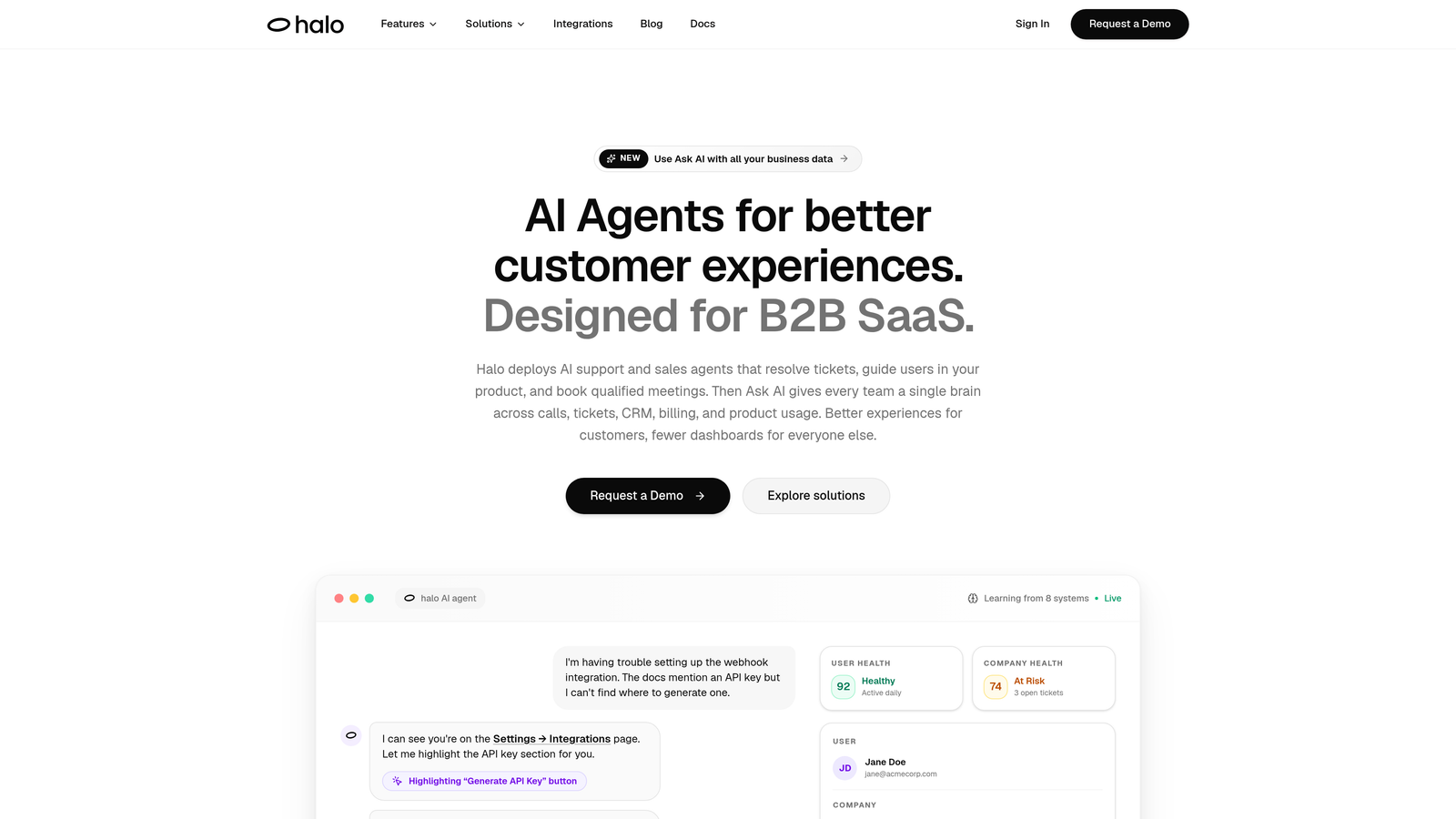
Halo AI is an AI-native customer support platform designed specifically for B2B SaaS teams who want to resolve tickets autonomously, guide users through their product in real time, and surface business intelligence signals without bolting AI onto an existing helpdesk.
Where This Tool Shines
What separates Halo from most tools on this list is the architecture. It isn't a layer of AI added to a traditional ticketing system. It is the support layer, built from the ground up around autonomous resolution and continuous learning. Every interaction makes the system smarter, which means your support quality improves over time without requiring manual tuning.
The page-aware chat widget is a particularly strong differentiator for B2B SaaS. The AI understands what page a user is on and what they're looking at, so guidance is contextual rather than generic. Pair that with auto bug ticket creation routed directly to Linear, and you have a system that doesn't just resolve support tickets but actively feeds product and engineering workflows.
Key Features
Autonomous AI Agents: Resolve support tickets end-to-end without agent involvement, escalating only when complexity warrants a human.
Page-Aware Chat Widget: The AI sees what the user sees, enabling contextual, visual UI guidance rather than generic responses.
Smart Inbox with Business Intelligence: Surfaces customer health signals, anomaly detection, and revenue intelligence signals alongside tickets.
Auto Bug Ticket Creation: Automatically generates and routes bug reports to Linear when issues are detected in support conversations.
Live Agent Handoff: Seamlessly escalates complex issues to human agents with full conversation context preserved.
Deep Integrations: Connects with Linear, Slack, HubSpot, Intercom, Stripe, Zoom, PandaDoc, and Fathom.
Best For
B2B SaaS companies that want AI to do more than deflect tickets. Particularly well-suited to product-led growth teams, companies with complex onboarding workflows, and support leaders who want visibility into customer health signals without switching between tools.
Pricing
Contact for pricing via haloagents.ai. Custom pricing model reflects the platform's enterprise-grade capabilities and integration depth.
2. Zendesk
Best for: Larger B2B teams that need a mature, highly configurable helpdesk with broad AI capabilities.
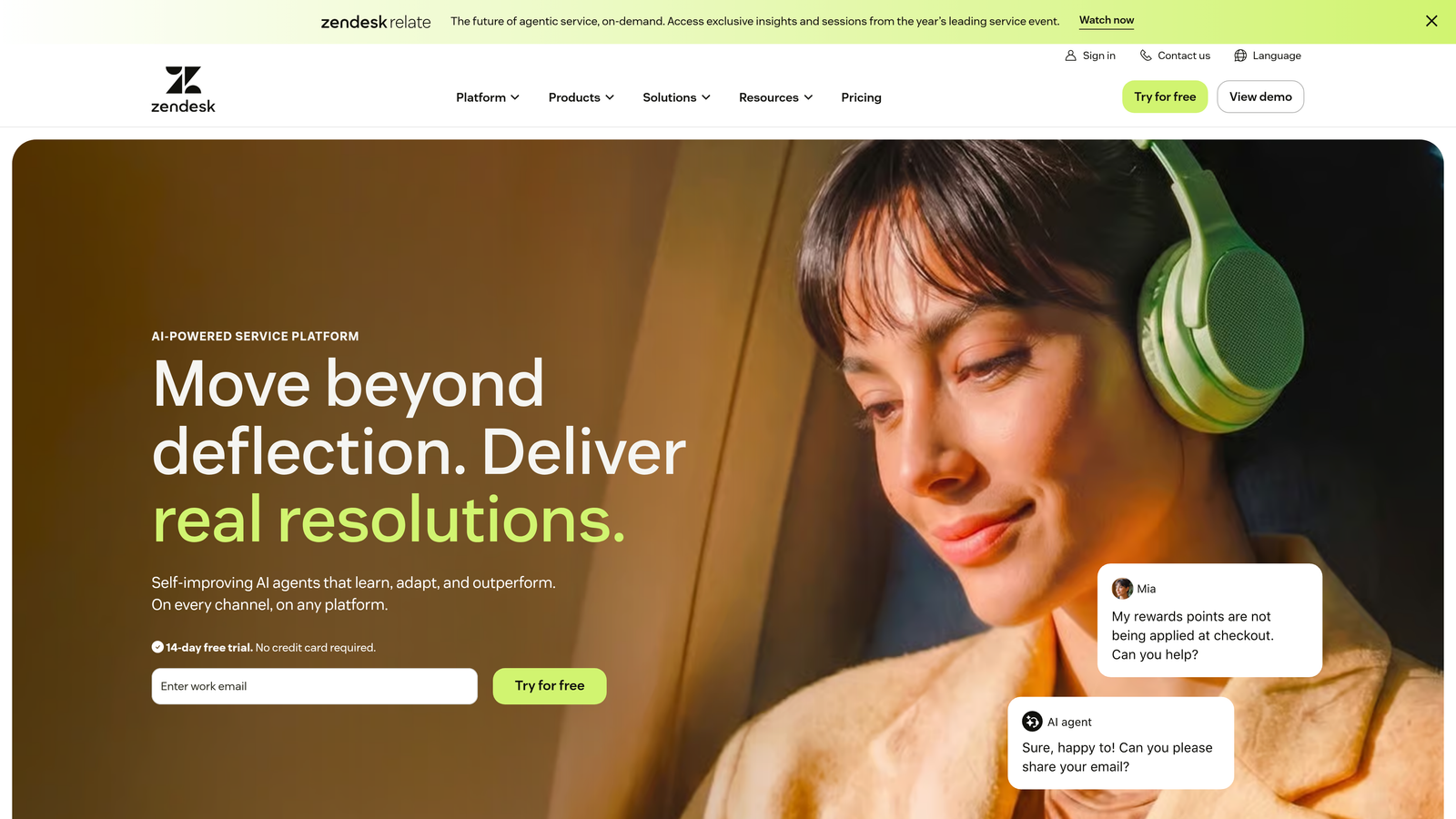
Zendesk is one of the most widely adopted helpdesk platforms globally, with a mature AI layer built on their acquisition of Ultimate.ai and a marketplace of over 1,000 integrations.
Where This Tool Shines
Zendesk's strength is depth. The workflow engine, trigger system, and macro library give operations teams enormous flexibility in how tickets are routed, prioritized, and resolved. For B2B teams with complex escalation paths or multiple support tiers, that configurability is genuinely valuable.
The Agent Copilot feature brings AI-assisted suggestions directly into the agent workflow, helping reps respond faster without fully removing the human. It's a strong middle ground for teams that want AI assistance rather than full autonomy.
Key Features
Zendesk AI: Intent detection and automated ticket routing powered by the Ultimate.ai acquisition.
Agent Copilot: Suggested replies and next-best-action guidance surfaced to agents in real time.
Workflow Automation: Extensive trigger and macro system for complex routing and escalation logic.
Integration Marketplace: 1,000+ apps covering CRM, billing, communication, and analytics tools.
SLA Management and Analytics: Robust reporting with SLA tracking and breach alerting built in.
Best For
Mid-market to enterprise B2B teams with dedicated support operations staff who can manage configuration and administration. Less ideal for lean teams who need fast time-to-value without significant setup investment.
Pricing
Suite plans start at approximately $55 per agent per month billed annually. AI features are available on higher tiers, which increases the total cost of ownership meaningfully.
3. Intercom
Best for: SaaS companies where customer support and product onboarding overlap significantly.
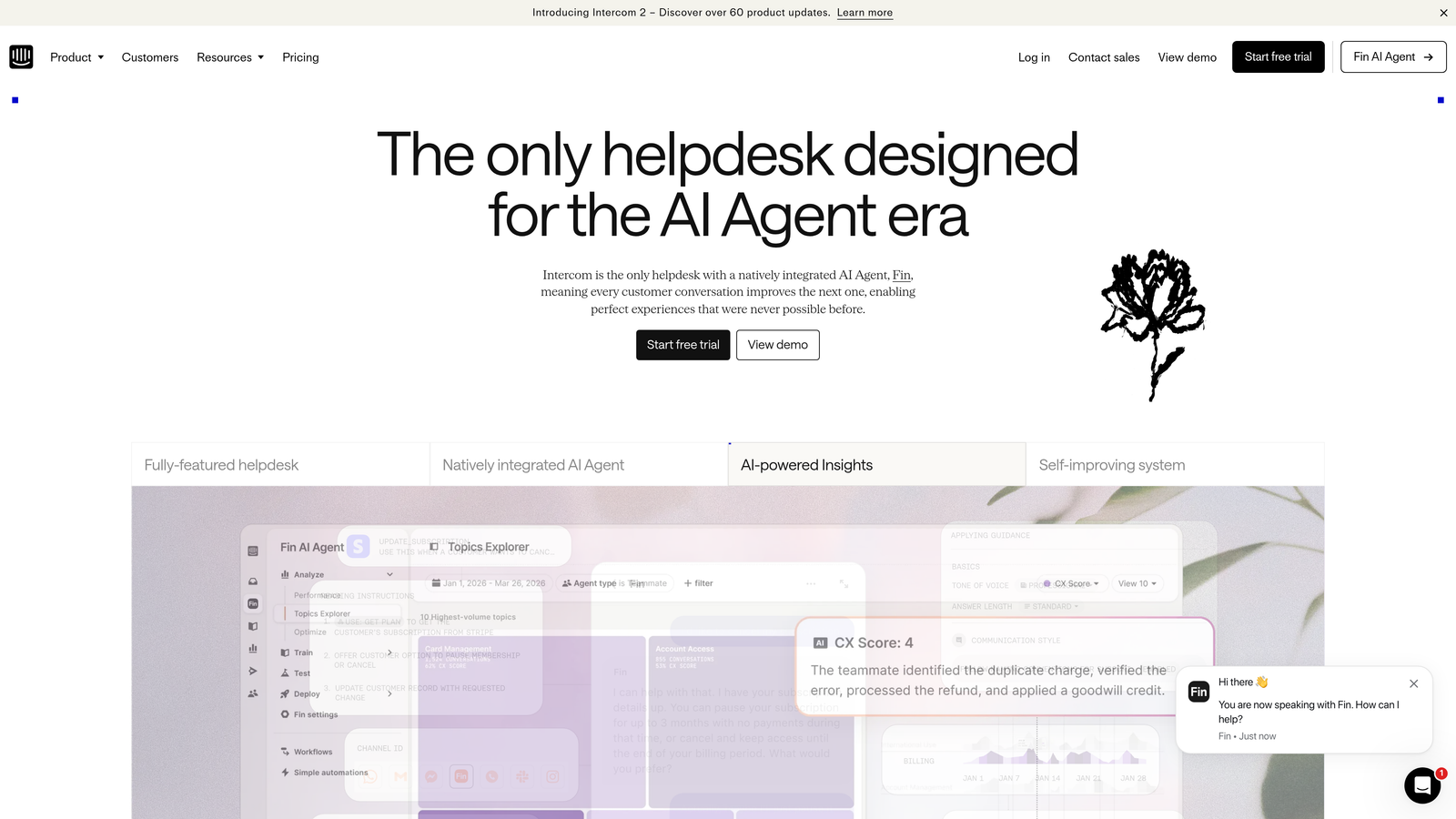
Intercom is a conversational support platform that blends proactive in-app messaging, onboarding tools, and reactive support in one product, with their Fin AI agent handling autonomous query resolution.
Where This Tool Shines
Intercom's real differentiator for B2B SaaS is the combination of support and onboarding in a single platform. Product tours, in-app messages, and reactive chat all share the same customer data layer, which means your support team has behavioral context that most helpdesks simply don't provide.
Fin, Intercom's AI agent, has matured significantly and is positioned as a fully autonomous support agent for handling common queries. For teams where a large percentage of tickets are repetitive and FAQ-style, Fin can meaningfully reduce volume hitting human agents.
Key Features
Fin AI Agent: Autonomous resolution of common customer queries using your existing knowledge base content.
In-App Messaging and Product Tours: Proactive onboarding and engagement tools alongside reactive support.
Shared Inbox with AI Assistance: AI-assisted replies and conversation summaries for human agents handling escalations.
Customer Data Platform: Behavioral segmentation based on user actions, plan type, and engagement patterns.
Proactive Support Triggers: Automated messages triggered by user behavior to resolve issues before tickets are created.
Best For
Growth-stage SaaS companies that want a unified platform for onboarding and support. Teams already using Intercom for product communication will find the support layer integrates naturally into existing workflows.
Pricing
Essential plan starts at approximately $29 per seat per month. Fin AI usage-based pricing applies separately, so total cost scales with conversation volume.
4. Freshdesk
Best for: SMB and mid-market B2B teams that need omnichannel support with AI features at competitive pricing.
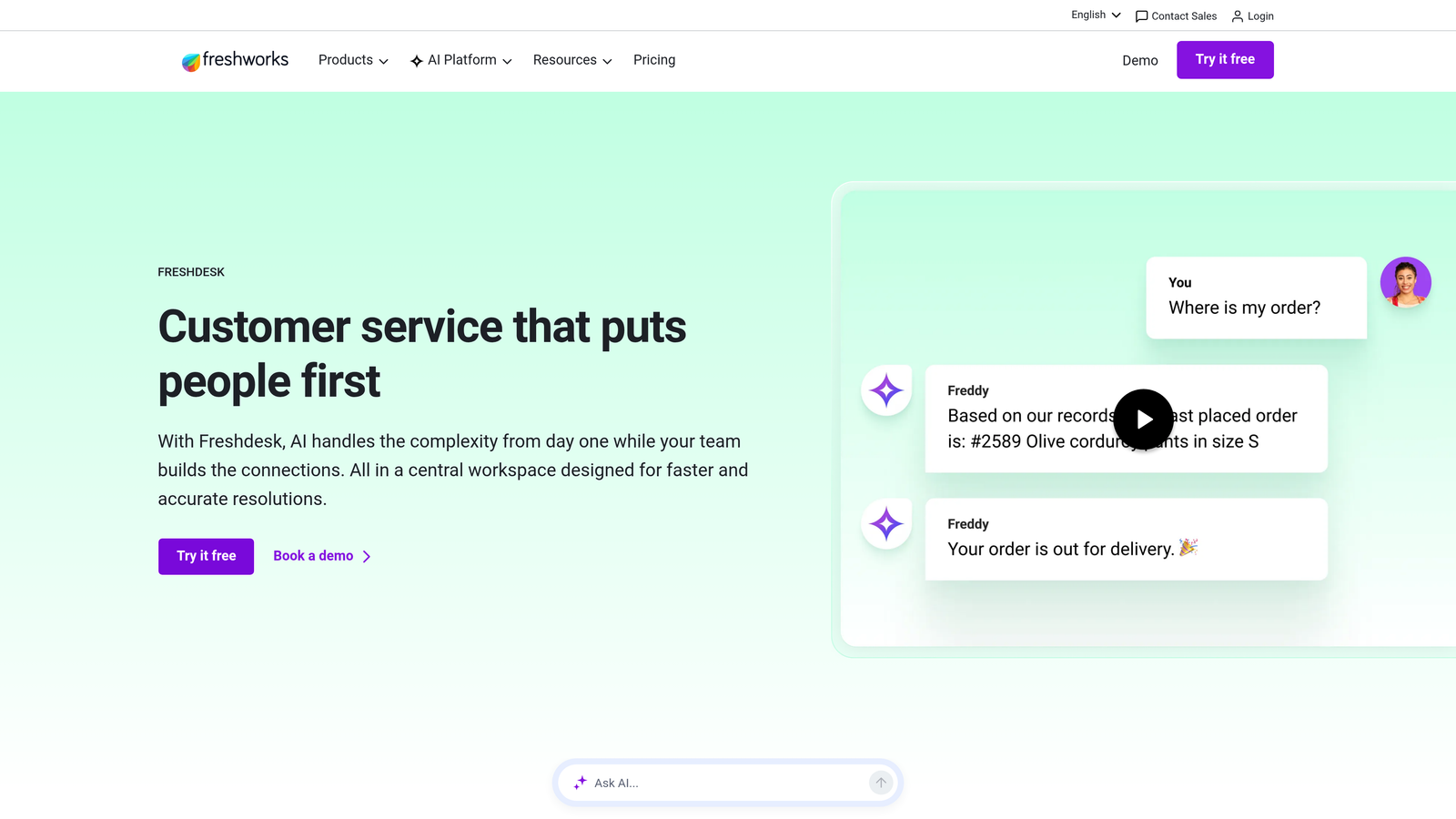
Freshdesk is Freshworks' flagship support platform, offering omnichannel ticketing with Freddy AI capabilities and one of the more accessible pricing structures in the market.
Where This Tool Shines
Freshdesk hits a practical sweet spot for growing B2B teams: enough AI capability to meaningfully reduce agent workload, enough integrations to connect with CRM and billing tools, and pricing that doesn't require a VP sign-off to get started. Freddy AI handles ticket summarization, suggested responses, and canned reply recommendations without requiring significant configuration.
The collision detection feature is a small but genuinely useful detail for B2B teams. It prevents two agents from simultaneously working the same ticket, which matters when account managers and support reps both have access to the same account's tickets.
Key Features
Freddy AI: Ticket summarization, suggested responses, and AI-powered knowledge base search for agents and customers.
Omnichannel Ticketing: Email, chat, phone, social, and WhatsApp all unified in a single inbox.
Collision Detection: Prevents duplicate agent responses on the same ticket.
Marketplace Integrations: Broad coverage of CRMs, billing tools, and development platforms.
Self-Service Portal: Customer-facing knowledge base with AI-powered search to deflect common queries.
Best For
SMB and mid-market B2B teams that need a full-featured helpdesk without enterprise pricing. Also a strong fit for teams migrating off email-based support for the first time.
Pricing
Free tier available. Paid plans start at approximately $15 per agent per month on the Growth plan, making it one of the more accessible options on this list.
5. Salesforce Service Cloud
Best for: Enterprise B2B organizations already invested in the Salesforce ecosystem.
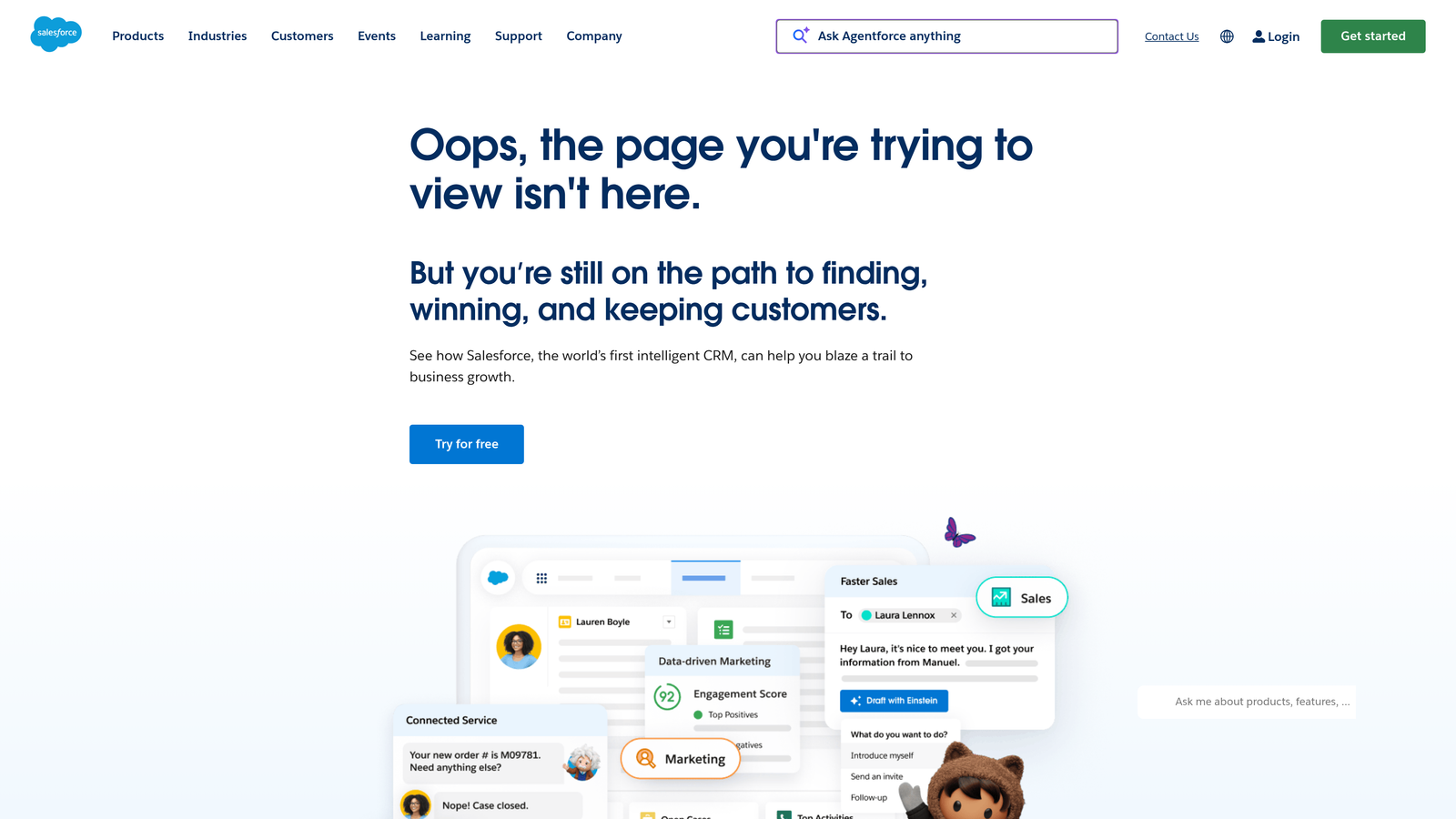
Salesforce Service Cloud is an enterprise support platform natively integrated with Salesforce CRM, giving agents full account and opportunity context alongside every ticket they handle.
Where This Tool Shines
For B2B teams, the account-level context Service Cloud provides is genuinely difficult to replicate with other tools. When an agent opens a ticket, they can see the account's health score, open renewal opportunities, contract details, and recent sales activity, all without switching tabs. That context changes how support conversations are handled, particularly for high-value accounts.
Einstein AI adds case classification, routing intelligence, and next-best-action recommendations. For enterprise organizations with complex support workflows, the combination of CRM data and AI-assisted routing is a powerful pairing.
Key Features
Einstein AI: Case classification, intelligent routing, next-best-action recommendations, and knowledge suggestions.
Native CRM Context: Account health, open deals, and contract data visible on every support ticket.
Omni-Channel Routing: Intelligent workload distribution based on agent skills, availability, and case priority.
Einstein Bots: Automated self-service flows for common queries before escalating to agents.
Salesforce Flow Automation: Deeply customizable automation logic built on the broader Salesforce platform.
Best For
Enterprise B2B organizations with existing Salesforce investments across sales and CRM. The implementation overhead is significant, so it's best suited to teams with dedicated Salesforce admins or implementation partners.
Pricing
Starter Suite from approximately $25 per user per month. Enterprise plans start from approximately $165 per user per month, reflecting the platform's enterprise positioning.
6. HubSpot Service Hub
Best for: B2B companies running their GTM stack on HubSpot who want unified support and CRM data.
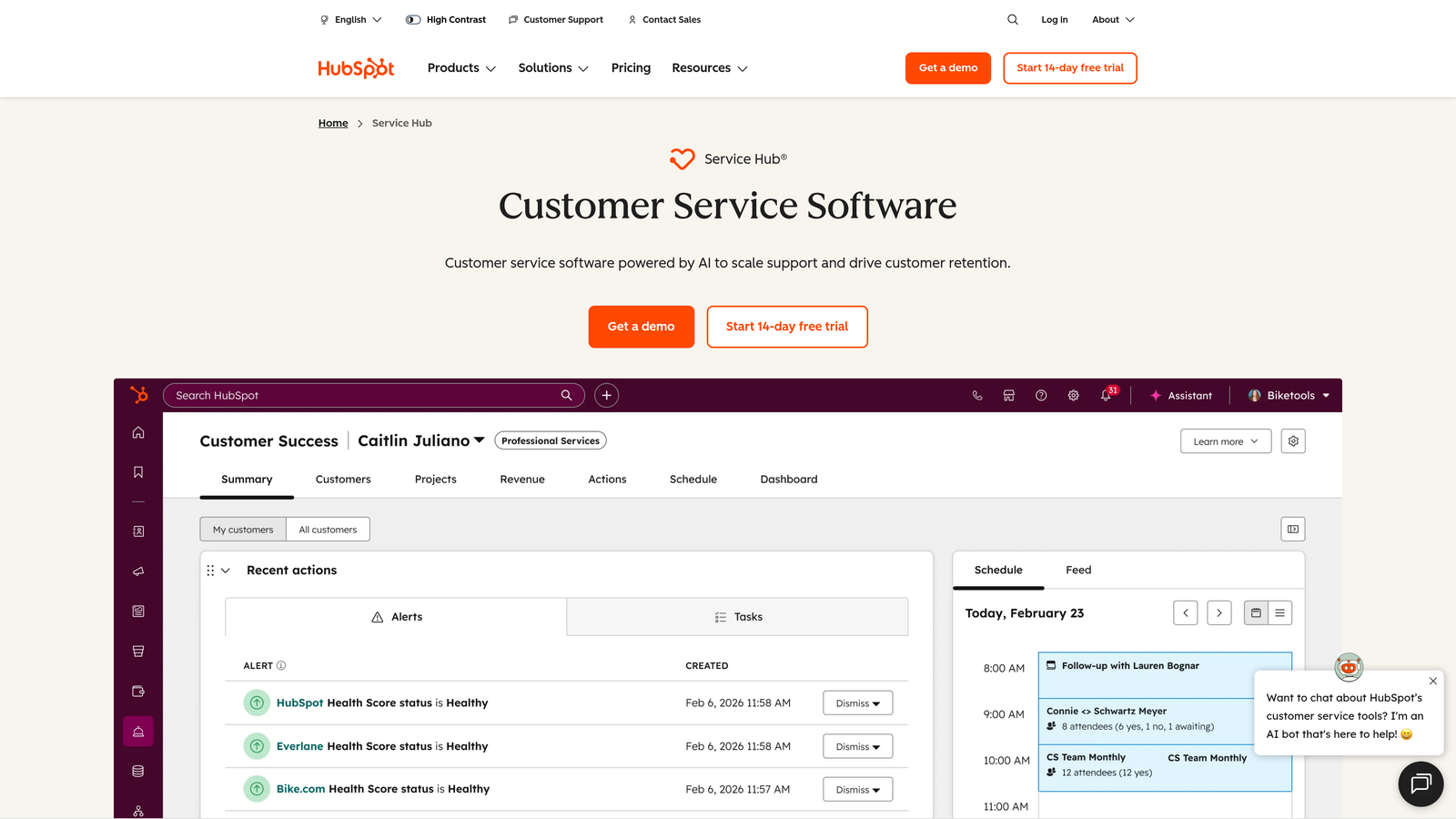
HubSpot Service Hub is HubSpot's customer service product, tightly integrated with their CRM, Marketing Hub, and Sales Hub, offering ticketing, knowledge base, live chat, and AI-assisted support in one platform.
Where This Tool Shines
The unified contact timeline is Service Hub's standout feature for B2B teams. Every marketing touchpoint, sales conversation, and support interaction appears in a single chronological view. For support reps handling accounts that are mid-renewal or in active expansion conversations, that context is immediately useful.
Service Hub is a natural fit for companies already using HubSpot across sales and marketing. The integration is native, not bolted on, which means there's no data sync overhead or field mapping to maintain.
Key Features
Unified Contact Timeline: Marketing, sales, and support interactions in a single view for complete account context.
AI-Assisted Replies: Suggested responses and conversation summarization for agents handling tickets.
Knowledge Base: Customer-facing self-service portal with SEO optimization built in.
Customer Feedback Surveys: NPS, CSAT, and CES surveys natively integrated without third-party tools.
SLA Management: Escalation rules and SLA tracking built into the ticketing workflow.
Best For
B2B companies using HubSpot as their primary CRM and marketing platform. Less suited to teams with complex enterprise support workflows that require the configurability of Zendesk or Service Cloud.
Pricing
Free tools available. Starter from approximately $15 per seat per month. Professional from approximately $90 per seat per month, which unlocks automation and reporting features most B2B teams will need.
7. Gorgias
Best for: B2B brands with an e-commerce or self-serve purchasing component that need revenue-aware ticket prioritization.
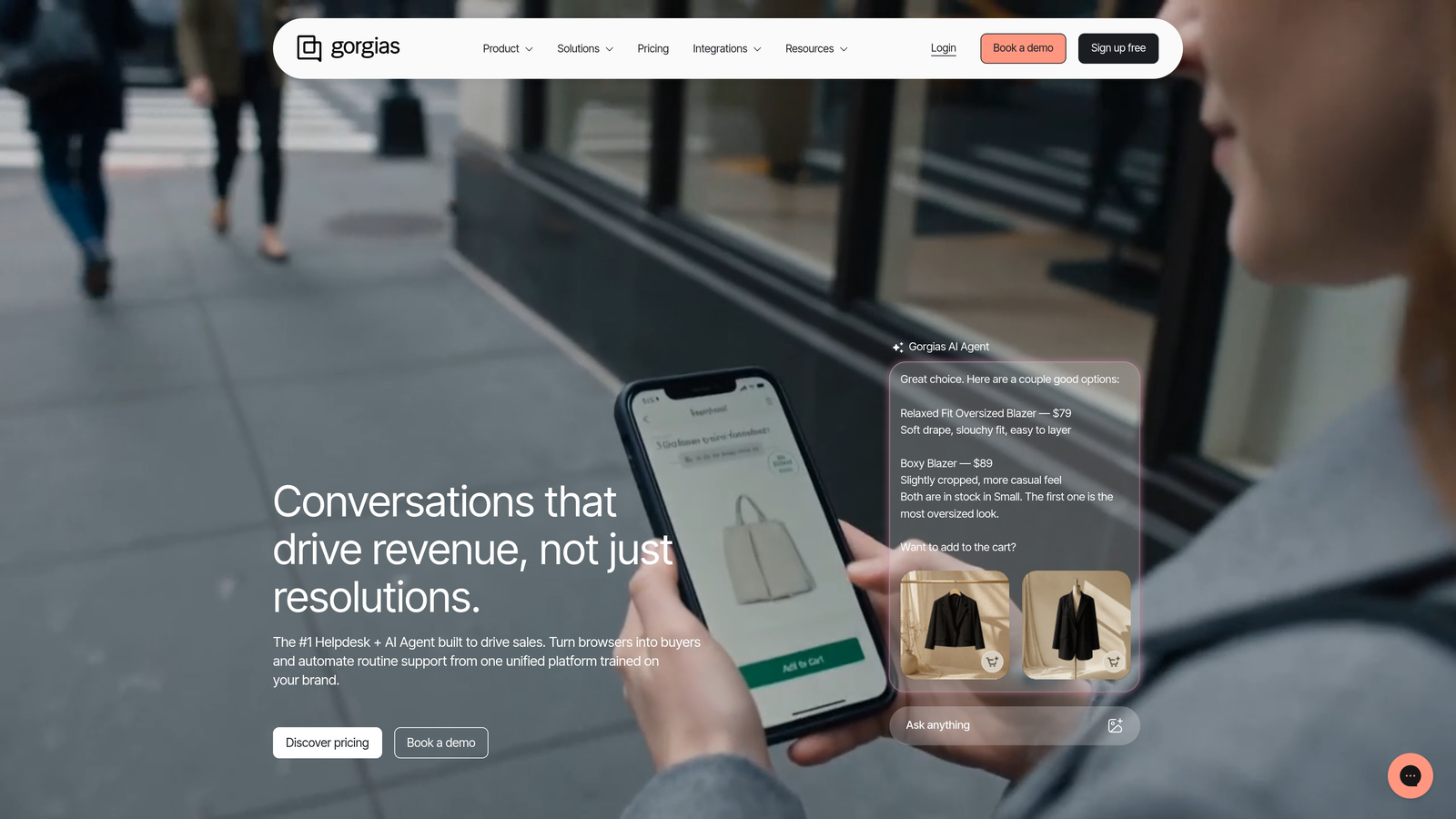
Gorgias is a support automation platform with deep e-commerce integrations, increasingly used by B2B brands that sell through digital channels and need to connect support activity to revenue data.
Where This Tool Shines
Gorgias's revenue-aware automation is genuinely useful for B2B teams that deal with high-value accounts. The ability to automatically prioritize tickets from high-LTV customers, or trigger different workflows based on order history and account spend, connects support operations directly to commercial outcomes.
Macro-based automation is another strength. For B2B teams with predictable, high-volume ticket categories, macros allow agents to resolve common issues in seconds with consistent, pre-approved responses.
Key Features
Revenue-Aware Automation: Prioritize and route tickets based on account LTV, order history, and customer spend.
E-Commerce Integrations: Deep native integrations with Shopify, BigCommerce, and WooCommerce.
Macro-Based Automation: Pre-built response templates and workflow automation for repetitive ticket types.
Unified Inbox: Email, chat, social, and SMS consolidated in a single agent workspace.
AI Agent: Automated resolution of common queries using existing help content.
Best For
B2B brands that sell through e-commerce channels or have a significant self-serve purchasing component. Less suited to pure enterprise B2B teams with no e-commerce touchpoint.
Pricing
Starter plan from approximately $10 per month using a ticket-based pricing model, which can be cost-effective for lower-volume teams.
8. Tidio
Best for: Smaller B2B teams exploring support automation for the first time who need fast deployment and low overhead.
Tidio is an accessible AI chat and support automation platform featuring the Lyro AI chatbot, designed for easy setup and fast time-to-value without requiring significant technical resources.
Where This Tool Shines
Tidio's primary advantage is simplicity. The setup process is fast, the visual chatbot builder requires no coding knowledge, and the Lyro AI chatbot can start handling common queries almost immediately after connecting to your existing help content. For smaller B2B teams that want to test automation before committing to a more complex platform, Tidio provides a low-risk entry point.
The AI-to-human handoff is smooth, which matters for B2B teams where some queries genuinely need a human. Visitors can escalate naturally without friction.
Key Features
Lyro AI Chatbot: Automated query resolution using your help content, with conversational AI handling follow-up questions.
Live Chat with Handoff: Seamless escalation from AI to human agent when queries exceed automation capability.
Visual Flow Builder: Drag-and-drop chatbot flow creation for custom automation without coding.
Email and Messenger Integration: Connects support across chat, email, and social messaging channels.
Visitor Tracking and Analytics: Real-time visitor data and conversation analytics to understand support patterns.
Best For
Small B2B teams with limited support infrastructure who want to add AI-assisted chat without enterprise complexity or pricing. A practical starting point before graduating to a more sophisticated platform.
Pricing
Free plan available. Paid plans from approximately $29 per month. Lyro AI conversations are priced separately based on volume.
9. Guru
Best for: B2B support teams that need to surface verified knowledge inside the tools agents already use.
Guru is an AI-powered knowledge management platform that surfaces verified answers inside Slack, Chrome, and any support tool your team uses. It isn't a helpdesk; it's the intelligence layer that makes every other tool on this list more effective.
Where This Tool Shines
B2B support teams often struggle with knowledge spread across wikis, Notion docs, Slack threads, and outdated help articles. Guru solves the retrieval problem by indexing all of that content and surfacing the right answer at the moment an agent needs it, without requiring them to leave their current tool.
The verified knowledge card system adds an accountability layer that most knowledge bases lack. Each card has an assigned owner and an expiry date, which means outdated information gets flagged and refreshed rather than silently misleading agents for months.
Key Features
AI Search: Surfaces verified answers inside Slack, Chrome, and connected support tools in real time.
Verified Knowledge Cards: Owner accountability and expiry dates ensure knowledge stays accurate and current.
Duplicate Content Detection: Identifies conflicting or redundant content to keep the knowledge base clean.
Helpdesk Integrations: Connects with Zendesk, Salesforce, Intercom, and other platforms to surface answers in context.
Knowledge Gap Analytics: Tracks what agents are searching for but not finding, revealing gaps in your documentation.
Best For
B2B support teams with complex, frequently updated product knowledge and agents spread across multiple tools. Particularly valuable as a complement to any helpdesk on this list rather than a standalone solution.
Pricing
Free plan for up to 3 users. Builder plan from approximately $10 per user per month, making it accessible even for lean teams.
Which Tool Is Right for Your B2B Team?
The right choice depends less on feature checklists and more on three questions: Does the tool understand account-level context, not just individual tickets? Can it integrate with your CRM, billing, and product stack? And will it scale without requiring you to hire more agents in lockstep with customer growth?
Here's a quick way to think through the options:
AI-first autonomous resolution: Halo AI is built for this from the ground up. If you want a system that resolves tickets, guides users through your product, surfaces business intelligence, and gets smarter with every interaction, it's the most purpose-built option on this list.
Enterprise helpdesk with deep configurability: Zendesk or Salesforce Service Cloud. Both require meaningful setup investment but offer the workflow depth that large, complex support operations need. Salesforce wins if you're already in that ecosystem and need native CRM context on every ticket.
Growth-stage SaaS: Intercom or Freshdesk. Intercom is the better choice if support and onboarding overlap in your product. Freshdesk is the better choice if you want omnichannel coverage at a lower price point without sacrificing core AI features.
HubSpot-native teams: HubSpot Service Hub. The unified contact timeline alone justifies it for teams already running GTM on HubSpot.
Knowledge-first teams: Guru works best as a layer on top of whichever helpdesk you choose, not as a replacement. If your team's biggest problem is finding the right answer fast, add it to your stack.
Your support team shouldn't scale linearly with your customer base. Let AI agents handle routine tickets, guide users through your product, and surface business intelligence while your team focuses on complex issues that need a human touch. See Halo in action and discover how continuous learning transforms every interaction into smarter, faster support.