9 Best Support Automation Tools for B2B Platforms in 2026
B2B platforms demand more from support tooling than generic solutions can deliver — this guide reviews nine platforms purpose-built for support automation for B2B platforms, evaluating each on automation depth, integration ecosystems, B2B-specific capabilities, and total cost of ownership to help teams reduce churn risk and resolve tickets faster.
 Matt PattoliFounder13 min read
B2B platforms face a support challenge that generic tools simply weren't designed for. Your customers are businesses themselves, with complex workflows, high expectations, and very little patience for slow resolution times. When a ticket sits unanswered, it's not just a frustrated user on the other end: it's a paying account, a renewal conversation, and potentially a churn risk.
The tools that actually move the needle in this environment combine intelligent automation with deep integrations, contextual awareness, and the ability to escalate gracefully when a human is genuinely needed. This list covers nine platforms purpose-built or well-suited for B2B support automation. Each was evaluated on automation depth, integration ecosystem, B2B-specific capabilities, and total cost of ownership.
1. Halo AI
Best for: B2B SaaS teams that want AI-first support automation with deep product and business context.
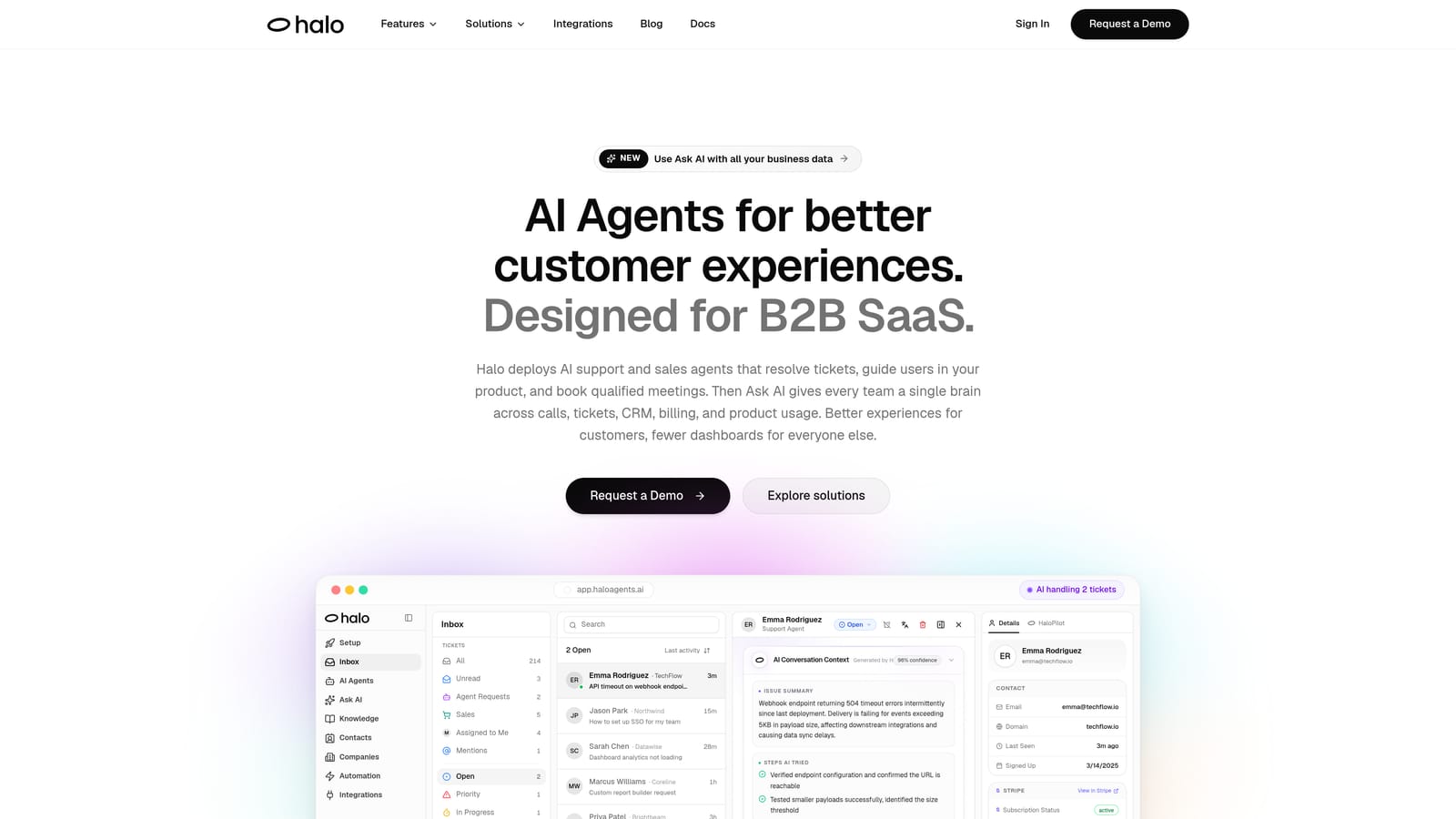
Halo AI is an AI-native customer support platform that deploys intelligent agents to resolve tickets, guide users through your product in real time, and surface business intelligence from every support interaction.
Where This Tool Shines
What sets Halo apart from most support tools is its architecture. Rather than layering AI onto an existing helpdesk, Halo is built AI-first from the ground up. That distinction matters because the system learns continuously from every resolved ticket, getting smarter with each interaction rather than staying static.
The page-aware chat widget is a standout capability. Halo's AI agents understand exactly what screen a user is on and can provide visual UI guidance specific to that context. For B2B platforms with complex interfaces and multi-step workflows, this is the difference between a bot that says "check the docs" and one that actually walks a user through the feature they're stuck on.
Key Features
Page-Aware Context: The chat widget understands the user's current screen and delivers guidance specific to what they're looking at, not generic answers.
Autonomous Ticket Resolution: AI agents resolve support tickets independently and improve with every interaction through continuous learning.
Smart Inbox with Business Intelligence: Surfaces customer health signals, revenue anomalies, and churn indicators directly from support data, turning your inbox into a business intelligence layer.
Auto Bug Ticket Creation: Automatically identifies product issues and routes bug reports directly to engineering tools like Linear, closing the loop between support and product teams.
Live Agent Handoff: Escalates complex or sensitive issues to human agents seamlessly, with full context preserved so agents don't start from scratch.
Integration Ecosystem: Connects to Slack, HubSpot, Intercom, Stripe, Zoom, PandaDoc, and Fathom, giving support agents and AI alike the full picture of each account.
Best For
Halo is an excellent fit for B2B SaaS companies and product teams that want support automation to do more than deflect tickets. If you need your support layer to surface revenue signals, integrate with your engineering workflow, and improve continuously without manual retraining, Halo is worth a close look.
Pricing
Pricing is available directly through haloagents.ai. Contact the team for a plan tailored to your team size and use case.
2. Intercom
Best for: Mid-market SaaS teams wanting a mature AI agent with proactive messaging and a unified inbox.
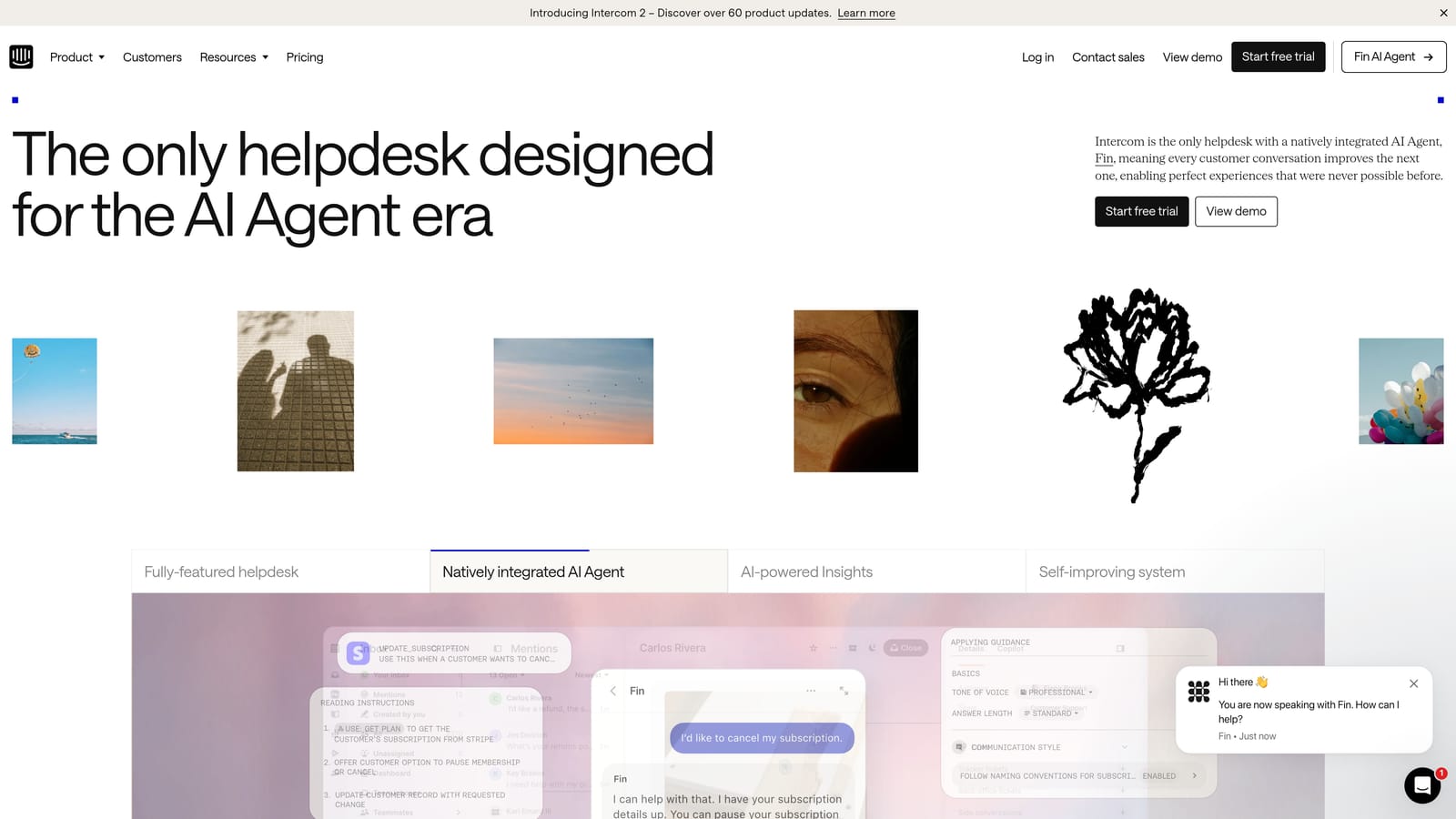
Intercom is a customer communications platform with Fin, its large language model-powered AI agent, at the center of its automation offering.
Where This Tool Shines
Intercom has been building toward AI-powered support for years, and Fin represents a meaningful step forward. The agent handles a wide range of queries conversationally, drawing on your knowledge base and documentation to resolve issues without routing to a human. The unified inbox, which combines chat, email, and in-app messaging, is one of the cleaner implementations in the market.
Intercom also excels at proactive outreach. For B2B platforms that want to engage users during onboarding or trigger support conversations based on behavior, the in-app messaging capabilities are strong. It's worth noting that Halo AI integrates with Intercom, so teams already on Intercom can layer additional AI capabilities rather than replacing what they have.
Key Features
Fin AI Agent: LLM-powered agent that resolves tickets autonomously using your existing content and documentation.
Unified Inbox: Combines chat, email, and in-app messaging channels into a single agent workspace.
Proactive Messaging: Triggers outreach and in-app messages based on user behavior, useful for onboarding and retention workflows.
Customer Data and Segmentation: CRM-style contact data with robust segmentation for targeted communication.
Integration Ecosystem: Connects to a wide range of CRMs, analytics tools, and product platforms.
Best For
Mid-market and enterprise SaaS teams that want a mature, well-documented platform with strong proactive messaging and a capable AI agent. Teams with simpler needs may find the pricing heavy at scale.
Pricing
Tiered plans are available, with Fin AI agent pricing based on usage. Current rates are listed at intercom.com.
3. Zendesk
Best for: Large enterprise support operations that need SLA management, compliance, and a massive integration marketplace.
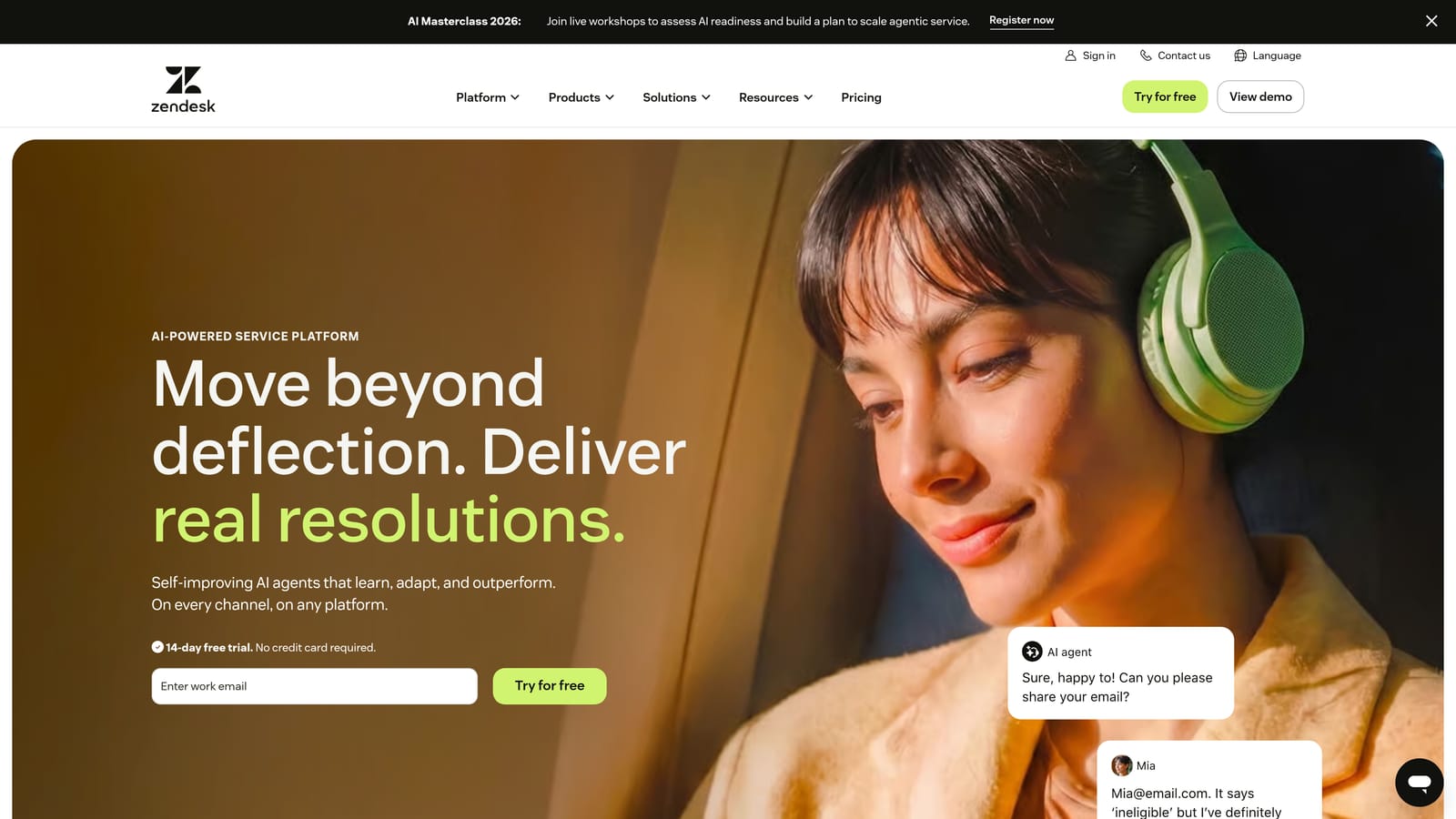
Zendesk is the market-leading enterprise helpdesk platform with AI-powered triage, intelligent bots, and over a thousand app marketplace integrations.
Where This Tool Shines
At enterprise scale, Zendesk's depth is hard to match. SLA management, compliance certifications including SOC 2 and HIPAA, and sophisticated routing logic make it a reliable backbone for large support organizations. The AI triage and macro suggestion features reduce manual work for agents handling high ticket volumes.
The app marketplace is genuinely one of Zendesk's strongest assets. If you need to connect your support layer to an unusual tool in your stack, there's a reasonable chance a Zendesk integration already exists. The tradeoff is implementation complexity: smaller teams often find Zendesk heavyweight relative to their needs.
Key Features
AI-Powered Triage: Automatically categorizes, routes, and suggests macros for incoming tickets based on content and history.
Zendesk Bots: Deflect common queries before they reach agents with configurable automated responses.
Enterprise SLA Management: Granular SLA policies, escalation rules, and compliance reporting for regulated industries.
1,000+ App Marketplace: One of the largest integration ecosystems in the support category.
Advanced Analytics: Detailed reporting on team performance, ticket trends, and resolution metrics.
Best For
Large B2B support teams with compliance requirements, high ticket volumes, and complex routing needs. Smaller teams should evaluate whether the implementation investment is justified by their scale.
Pricing
Suite plans are published on zendesk.com with per-agent pricing; enterprise plans are custom.
4. Freshdesk
Best for: Growing B2B teams that want solid AI automation and omnichannel support without enterprise-level pricing.
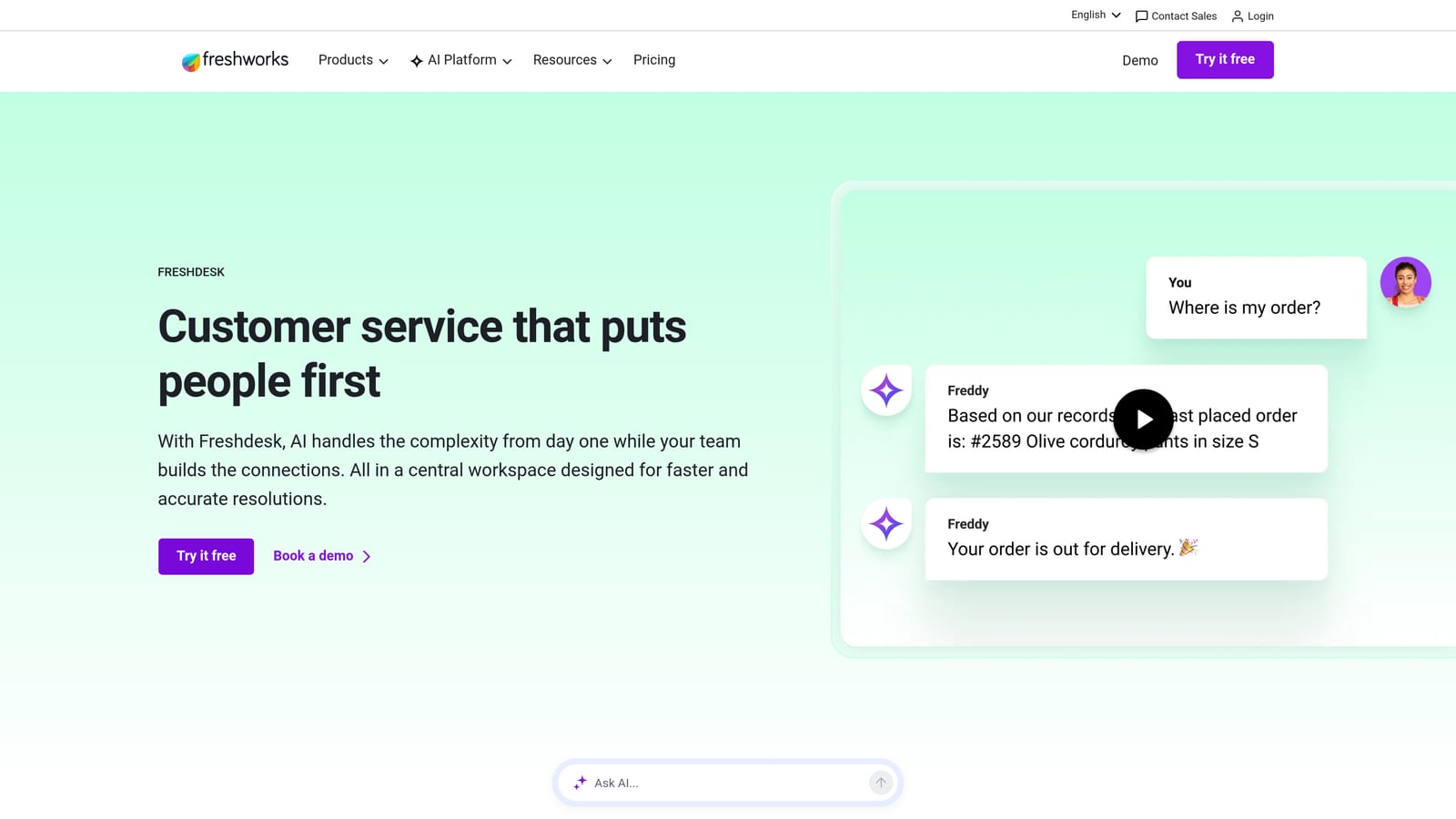
Freshdesk is a full-featured helpdesk platform with Freddy AI handling automation across ticket categorization, sentiment analysis, and self-service.
Where This Tool Shines
Freshdesk hits a useful middle ground in the market. It's capable enough for teams with real scale and complexity, but the pricing and onboarding experience are considerably more accessible than Zendesk or Salesforce. Freddy AI covers the core automation needs well: routing tickets, suggesting replies, and flagging sentiment without requiring significant configuration work.
The Freshworks ecosystem is a genuine advantage for teams that also use Freshsales for CRM. The native connection between support and sales data gives agents account context without stitching together separate integrations.
Key Features
Freddy AI: Handles ticket categorization, sentiment analysis, and suggested replies automatically.
Freddy Self Service: Builds AI-powered support bots for customer-facing deflection without code.
Omnichannel Inbox: Consolidates email, chat, phone, and social into a single agent view.
Auto-Routing and SLA Management: Rule-based and AI-assisted routing with SLA tracking built in.
Freshworks Ecosystem: Native integration with Freshsales CRM and Freshchat for a connected go-to-market stack.
Best For
B2B teams scaling beyond basic ticketing but not yet at enterprise size. Particularly strong for teams already using other Freshworks products.
Pricing
A free tier is available; paid plans scale with agents and features. Full details at freshdesk.com.
5. Salesforce Service Cloud
Best for: Enterprise B2B teams that need deep CRM integration and full account context alongside every support ticket.
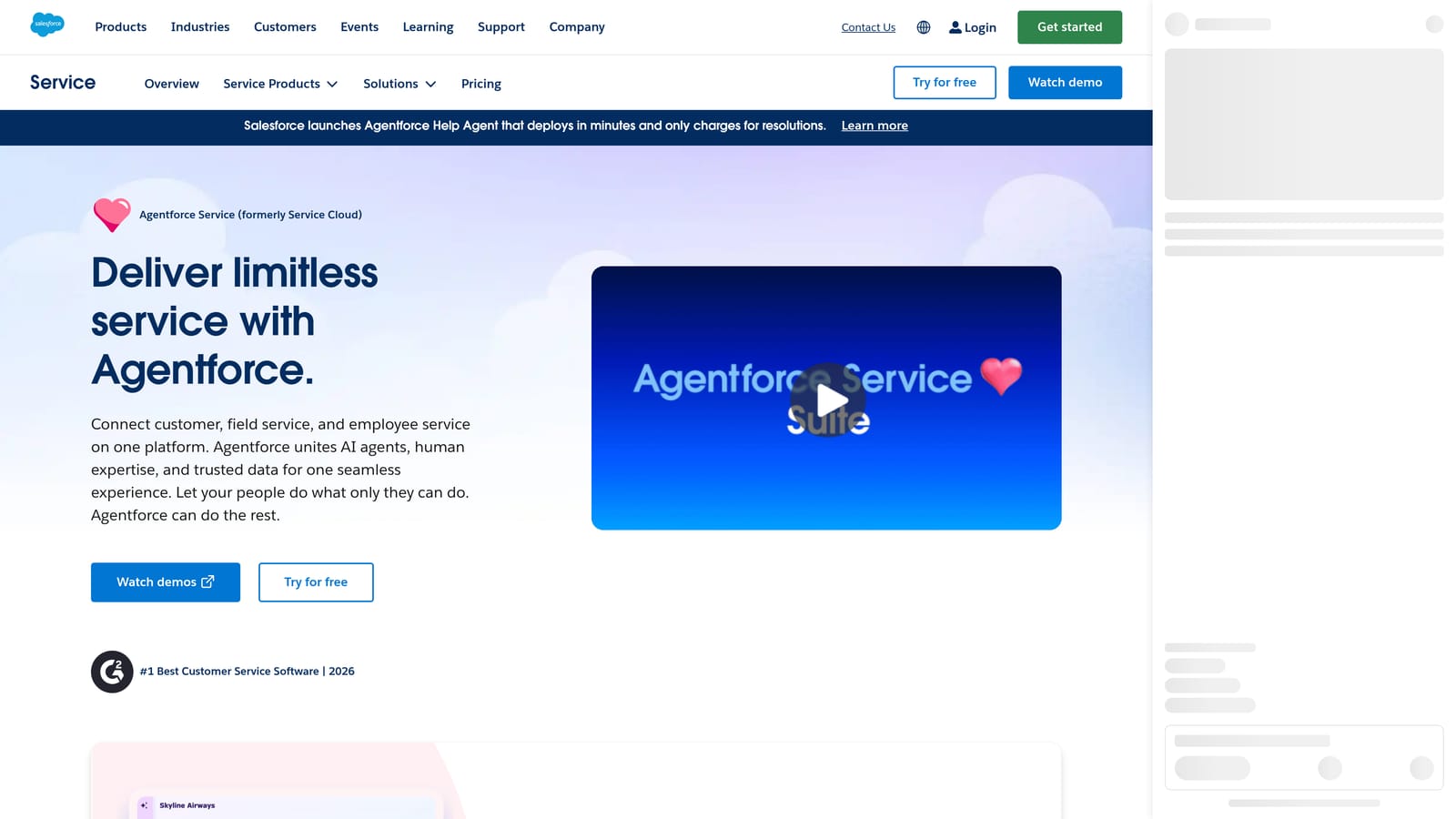
Salesforce Service Cloud is enterprise-grade support automation built natively into the Salesforce CRM, giving support agents complete visibility into deal stage, account health, and contract data.
Where This Tool Shines
No other platform in this list offers the depth of CRM-to-support integration that Service Cloud provides. When a support agent opens a ticket, they can see the account's contract value, renewal date, open opportunities, and the full history of interactions across sales and marketing. For B2B platforms where support quality directly affects revenue retention, that context changes how agents prioritize and respond.
Einstein AI and the newer Agentforce product bring autonomous case handling to the Salesforce environment. The tradeoff is real: implementation complexity and cost are significant, and organizations without existing Salesforce infrastructure will face a steep ramp.
Key Features
Native CRM Integration: Support agents see deal stage, account health, and contract data alongside every ticket without switching tools.
Einstein AI: Powers case classification, next best action recommendations, and knowledge article suggestions.
Agentforce: Salesforce's autonomous AI agent product for handling cases end-to-end without human involvement.
Enterprise Security and Compliance: Meets the security and compliance standards required by large enterprise buyers.
Omnichannel Routing: Routes conversations across voice, chat, email, and social through a unified interface.
Best For
Enterprise B2B organizations already invested in the Salesforce ecosystem where support and revenue operations need to share a single source of truth.
Pricing
Per-user, per-month enterprise pricing. Current plans are available at salesforce.com.
6. Tidio
Best for: Smaller B2B teams that want fast-to-deploy AI automation without technical complexity.
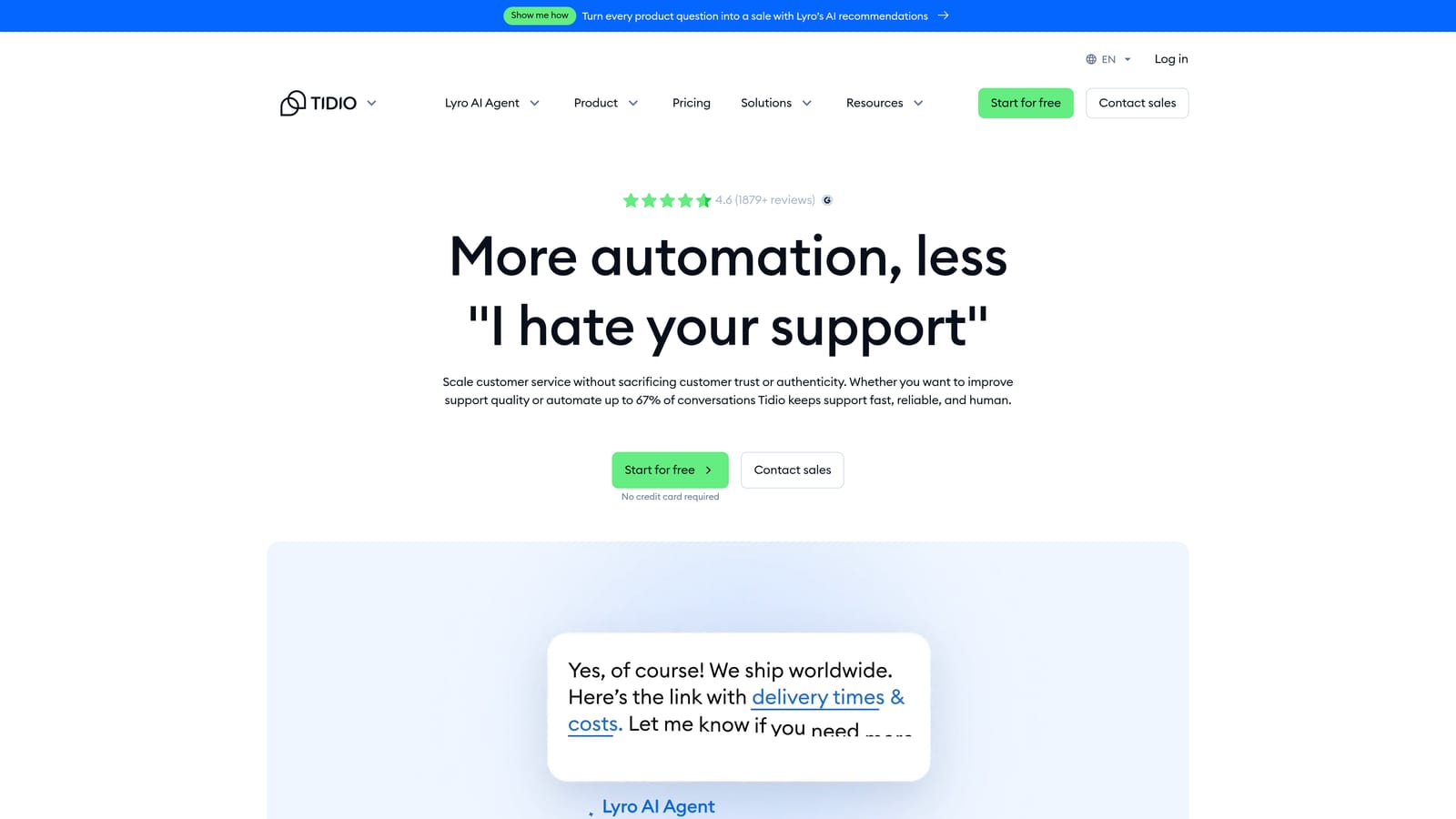
Tidio is a live chat and AI automation platform with Lyro, its conversational AI agent, and a visual flow builder for creating automation logic without writing code.
Where This Tool Shines
Tidio's main advantage is speed to value. Teams can deploy Lyro and configure basic automation flows in a fraction of the time that enterprise platforms require. For smaller B2B teams that need to automate common support queries quickly and don't have a dedicated support operations function, that low barrier to entry is genuinely useful.
The visual flow builder is accessible enough for non-technical team members to build and modify automation logic. Live agent takeover is smooth, which matters for B2B contexts where some conversations need a human to step in without friction.
Key Features
Lyro AI Agent: Handles common support queries conversationally without requiring manual rule-building for every scenario.
Visual Flow Builder: Drag-and-drop interface for creating automation logic without code.
Live Chat with Quick Handoff: Agents can take over conversations from Lyro instantly when needed.
SaaS and E-Commerce Integrations: Connects to common platforms in both categories.
Fast Setup: Minimal technical overhead; designed to be operational quickly.
Best For
Smaller B2B teams or early-stage platforms that want functional AI automation without the implementation investment of enterprise tools. Teams with higher complexity will likely outgrow Tidio.
Pricing
Free tier available; paid plans are priced accessibly relative to enterprise alternatives. See tidio.com for current tiers.
7. Drift (Salesloft)
Best for: B2B revenue teams where sales and support conversations need to live in the same layer.
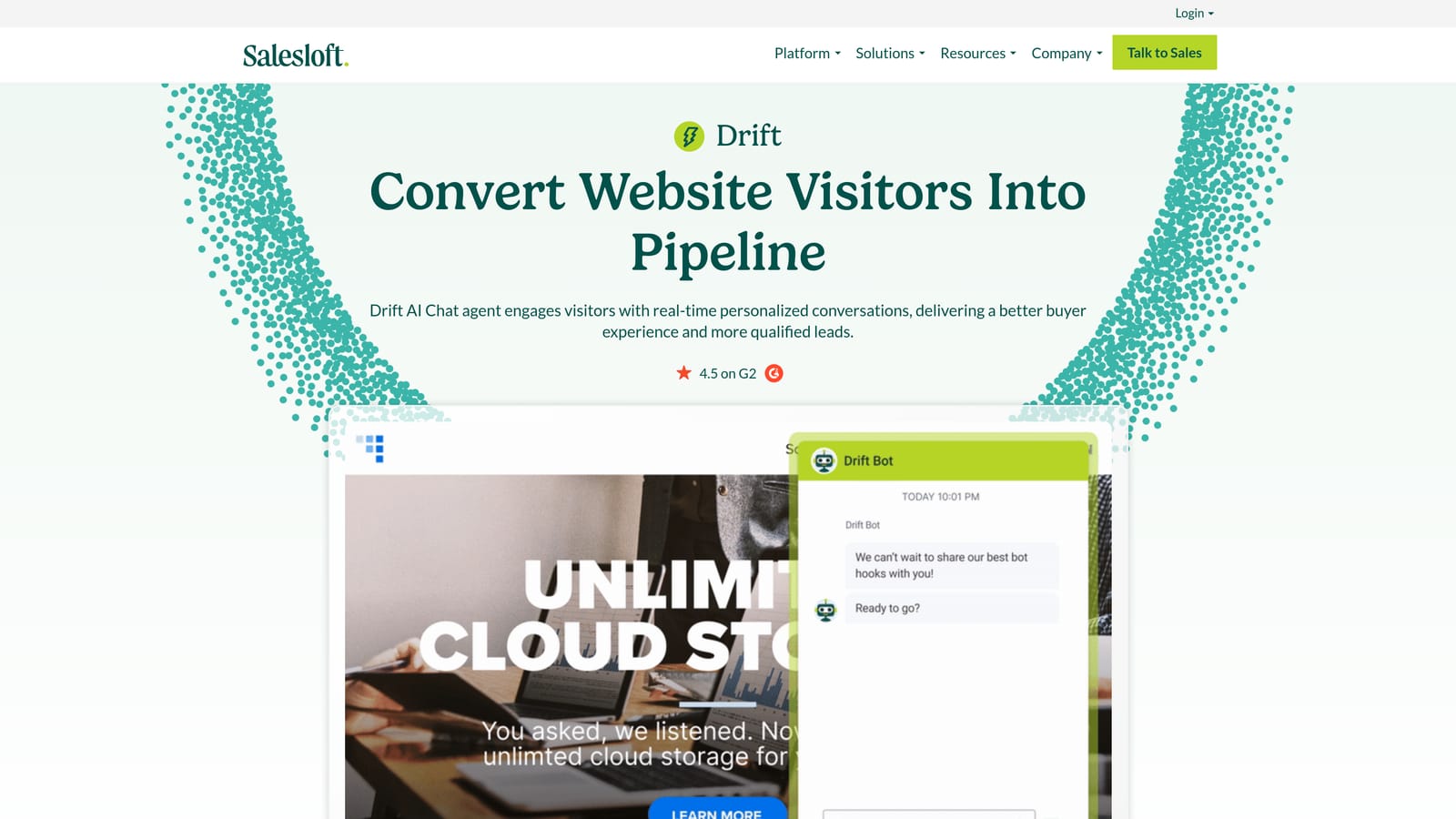
Drift, now part of Salesloft, is a conversational platform originally built for sales that extends into support automation with strong account-based routing and buyer intent capabilities.
Where This Tool Shines
Drift's core strength is account-based intelligence. It can identify which company a website visitor belongs to and route them to the right team automatically, whether that's sales, support, or a specialized account team. For B2B platforms where the same visitor might be a prospect, an existing customer, or a churned account, that routing intelligence is meaningfully different from generic chat tools.
The Salesloft integration also means buyer intent signals and CRM data flow into the conversation layer. Support is somewhat secondary to the sales use case here, which is worth understanding before evaluating Drift as a pure support automation tool.
Key Features
Account-Based Routing: Identifies company visitors and routes conversations to the appropriate team based on account data.
Buyer Intent Signals: Surfaces intent data alongside CRM information to inform how conversations are handled.
Conversational AI: Qualifies and routes both support and sales conversations without human involvement for common flows.
Playbooks: Pre-built and custom conversation flows for automating common B2B interaction patterns.
CRM Integration: Deep connections to Salesforce and HubSpot for full account context.
Best For
B2B teams where the line between support and sales is intentionally blurred, particularly those running account-based go-to-market motions where routing intelligence and CRM context are priorities.
Pricing
Custom pricing; positioned for mid-market to enterprise buyers. Details at drift.com.
8. HubSpot Service Hub
Best for: B2B teams already on HubSpot that want support and CRM data unified in one platform.
HubSpot Service Hub is a support platform built natively into the HubSpot CRM, giving teams a unified view of every customer interaction across marketing, sales, and support.
Where This Tool Shines
The value of Service Hub is almost entirely tied to the HubSpot ecosystem. If your team already uses HubSpot for marketing and sales, adding Service Hub means support agents can see the full customer journey: what campaigns a contact engaged with, where they are in the sales cycle, and what the account history looks like. That context makes support conversations more intelligent without requiring custom integrations.
The built-in customer feedback tools, including NPS, CSAT, and CES surveys, are a practical addition for B2B teams that need to track satisfaction at the account level rather than just per-ticket.
Key Features
Unified CRM View: Support agents see marketing touchpoints, deal history, and contact data alongside every ticket.
Tickets, Knowledge Base, and Customer Portal: Core support infrastructure in a single platform without third-party add-ons.
AI Conversation Intelligence: Suggested replies and conversation analysis powered by HubSpot's AI layer.
Customer Feedback Surveys: NPS, CSAT, and CES tools built directly into the platform.
Shared Inbox: Team collaboration on support conversations without losing thread context.
Best For
B2B companies already operating within the HubSpot ecosystem where consolidating marketing, sales, and support data is a priority. Less compelling as a standalone purchase if you're not already on HubSpot.
Pricing
Free tier available; paid tiers scale with contacts and features. Full details at hubspot.com.
9. Kustomer
Best for: B2B platforms with high interaction volume and complex account structures that need a CRM-native support architecture.
Kustomer is a CRM-native helpdesk that treats every support interaction as a record on a unified customer timeline, rather than an isolated ticket.
Where This Tool Shines
Kustomer's architecture is genuinely different from traditional helpdesks. Instead of a ticket-centric model, every interaction, whether it's a chat, an email, a phone call, or a social message, lives on a single customer timeline. For B2B platforms with complex account hierarchies where multiple users from the same company interact with support, that unified view reduces the risk of agents responding without full context.
The flexible data model is worth noting for enterprise B2B buyers. Kustomer can accommodate custom objects and account structures that don't fit neatly into standard helpdesk schemas. One consideration: Kustomer was acquired by Meta in 2022, and buyers evaluating long-term roadmap fit should factor that into their decision.
Key Features
CRM-Native Architecture: Full customer timeline across all channels and interactions, not just individual tickets.
AI-Powered Routing and Sentiment Analysis: Automatically routes conversations and flags sentiment for agent awareness.
Omnichannel Support: Email, chat, social, voice, and SMS unified in one interface.
Flexible Data Model: Accommodates complex B2B account hierarchies and custom data structures.
Behavior-Triggered Automation: Workflows that fire based on customer data and actions, not just ticket properties.
Best For
Enterprise B2B platforms with high interaction volume, complex multi-stakeholder accounts, and a need for support data to reflect the full relationship history rather than individual tickets.
Pricing
Per-user, per-month enterprise pricing. Current rates at kustomer.com.
Which Tool Is Right for Your B2B Platform?
The right choice depends heavily on where your team sits today and what you're optimizing for. Here's a quick way to cut through the options.
AI-first automation with deep product and business context: Halo AI is the strongest fit here. The page-aware chat widget, continuous learning architecture, auto bug ticket creation, and business intelligence layer make it purpose-built for B2B SaaS teams that want their support layer to do more than deflect tickets.
Enterprise scale with compliance requirements: Zendesk and Salesforce Service Cloud are the established choices. Zendesk wins on integration breadth and SLA management; Salesforce wins when your team needs deep CRM context and is already in the Salesforce ecosystem.
CRM-connected support without enterprise complexity: HubSpot Service Hub is the natural choice for HubSpot-native teams, while Kustomer is worth evaluating for high-volume platforms with complex account structures that need a timeline-based architecture.
Budget-conscious growth teams: Freshdesk offers the best combination of AI capability and accessible pricing. Tidio is the right call for smaller teams that need something operational quickly without technical overhead.
Sales and support overlap: Drift's account-based routing and buyer intent capabilities make it the strongest option when your support and sales conversation layers need to share the same infrastructure.
Your support team shouldn't scale linearly with your customer base. Let AI agents handle routine tickets, guide users through your product, and surface business intelligence while your team focuses on complex issues that need a human touch. See Halo in action and discover how continuous learning transforms every interaction into smarter, faster support.