9 Best Support Automation Tools for Educational Platforms in 2026
Educational platforms face intense, cyclical support pressure during enrollment windows, course launches, and exam periods that traditional helpdesks can't handle. This guide evaluates the 9 best support automation for educational platforms tools in 2026, helping edtech teams resolve common issues instantly, integrate with LMS workflows, and scale seamlessly through peak demand.
 Matt PattoliFounder14 min read
Educational platforms live with a support paradox: the moments when students need help most, like enrollment windows, course launches, and exam periods, are exactly when your support team is most overwhelmed. A single enrollment period can generate a flood of password resets, billing questions, and LMS navigation requests that would take a full team days to clear. Traditional helpdesk setups weren't built for this kind of cyclical pressure.
Support automation changes the equation. The right platform can resolve common questions instantly, deliver context-aware guidance inside your product, and escalate only the issues that genuinely need a human. But edtech environments are complex: your users span students, instructors, and administrators with wildly different technical fluency, and your workflows touch billing, LMS integrations, credentialing, and course access all at once.
This guide covers the best support automation tools for educational platforms in 2026, evaluated on AI capability, integration depth, scalability during peak periods, and fit for edtech-specific workflows. Whether you're running a self-paced LMS, a live online academy, or a corporate training platform, the right fit is here. Tools like automated customer support and AI support agents are reshaping what's possible — and this guide shows you exactly where each platform excels.
1. Halo AI
Best for: SaaS-based edtech companies that want autonomous AI resolution, not just AI-assisted agents
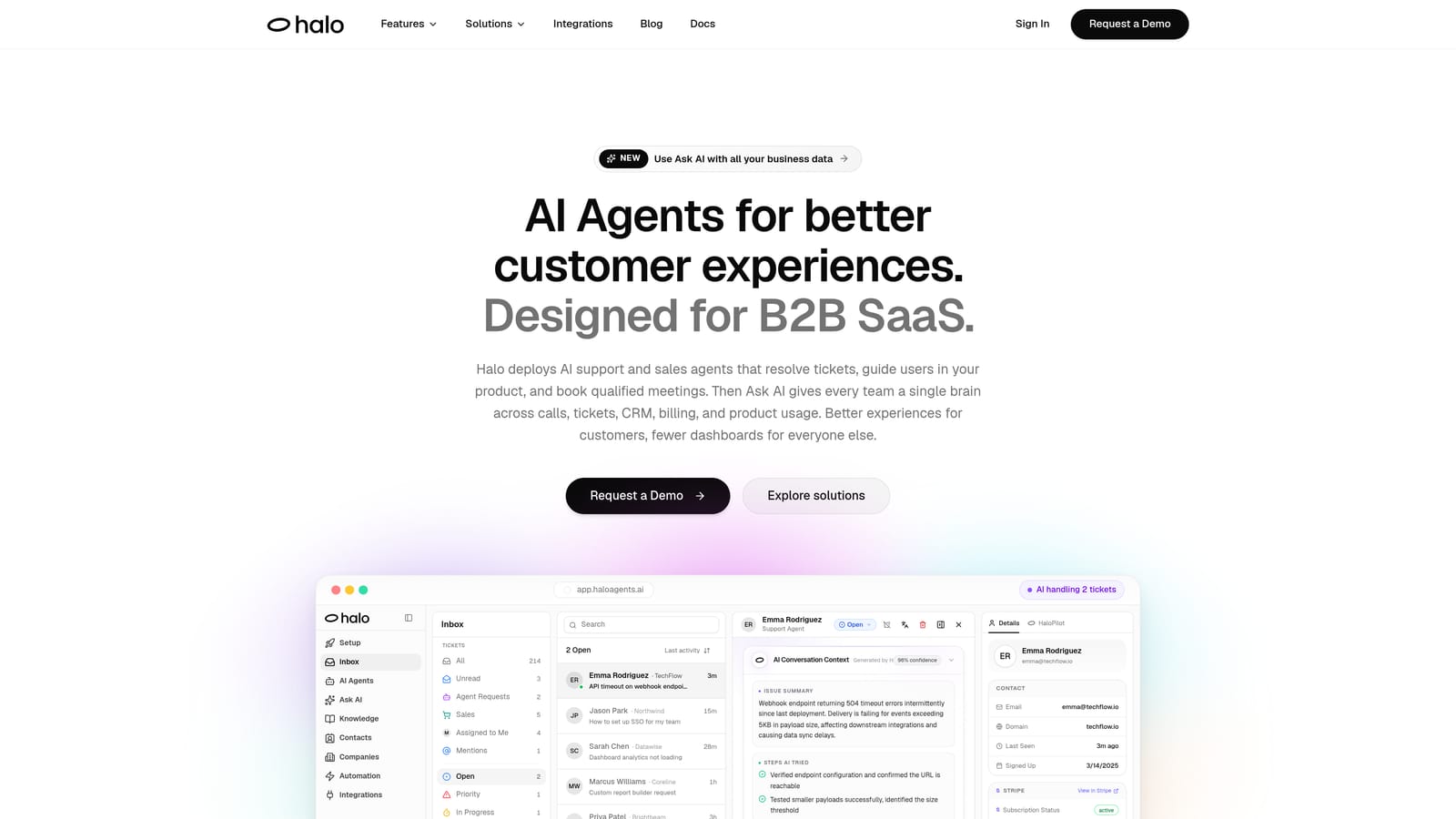
Halo AI is an AI-first customer support platform that deploys autonomous agents to resolve tickets, guide users through your product, and surface business intelligence continuously.
Where This Tool Shines
What sets Halo apart in an edtech context is its page-aware chat widget. The AI agent sees the user's current screen context, which means a student stuck on a course module gets guidance specific to that exact page, not a generic FAQ response. For LMS navigation questions, which are among the most common and repetitive in edtech support, this kind of contextual precision is a genuine differentiator.
Halo is also built as an AI-first architecture rather than a bolt-on layer over an existing helpdesk. This matters because the AI isn't just suggesting responses for a human to approve — it's resolving tickets end-to-end and continuously learning from every interaction. Over time, the system gets sharper without manual retraining, which is particularly valuable for platforms that see recurring question patterns each enrollment cycle.
Key Features
Page-Aware Chat Widget: The AI sees the user's current page context, enabling highly relevant in-product guidance for course navigation, feature discovery, and technical troubleshooting.
Autonomous Ticket Resolution: AI agents resolve tickets end-to-end, not just surface suggestions, reducing the volume that reaches human agents.
Smart Inbox with Business Intelligence: Goes beyond reactive support by surfacing customer health signals, anomaly detection, and revenue intelligence directly in the inbox.
Auto Bug Ticket Creation: Technical issues are automatically routed to engineering workflows in tools like Linear, closing the loop between support and product teams.
Live Agent Handoff: Complex escalations are handed off to human agents with full context preserved, so students never have to repeat themselves.
Deep Integrations: Connects with Linear, Slack, HubSpot, Intercom, Stripe, Zoom, PandaDoc, and Fathom for a unified operational picture.
Best For
Halo is best suited for SaaS-based edtech companies that want their support infrastructure to operate autonomously at scale. If your team is spending significant time on repetitive ticket categories like login issues, billing questions, or course navigation, and you want an AI that genuinely resolves rather than deflects, Halo is worth a close look. It's particularly strong for product-led platforms where in-app guidance is as important as reactive support.
Pricing
Pricing is not publicly listed. Contact Halo AI directly at haloagents.ai for a custom quote based on your platform's scale and requirements.
2. Intercom
Best for: Edtech teams that want polished in-app messaging and proactive student onboarding alongside AI resolution
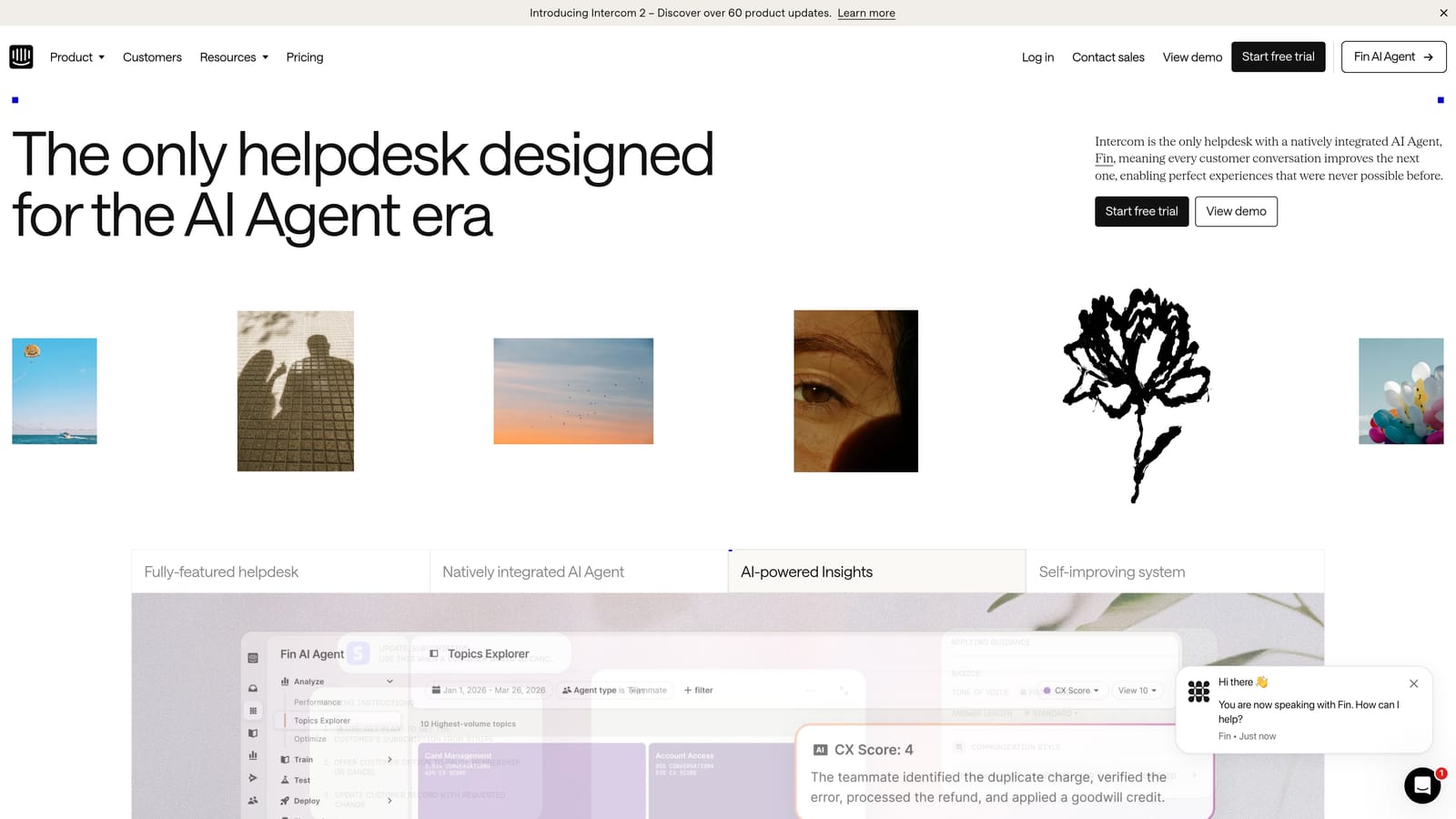
Intercom is a mature customer messaging and automation platform with Fin, its AI agent, capable of resolving common questions using existing help center content.
Where This Tool Shines
Intercom's strength for educational platforms lies in its proactive support capabilities. Product tours, targeted in-app messages, and onboarding checklists make it well-suited for guiding new students through their first course experience before they need to contact support at all. This proactive layer can meaningfully reduce inbound volume during high-enrollment periods.
Fin, Intercom's AI agent, works off your existing knowledge base content without requiring significant setup or retraining. For edtech teams that already have a well-maintained help center, this means faster time-to-value. The platform's UI is consistently praised for its polish, and its documentation and support resources are among the best in the category.
Key Features
Fin AI Agent: Resolves common queries using existing knowledge base content, with minimal configuration required to get started.
In-App Messaging and Product Tours: Proactive student onboarding flows that reduce inbound support volume from new users.
Omnichannel Support: Handles conversations across chat, email, and social channels from a unified inbox.
Extensive Integration Ecosystem: Connects with LMS and edtech tools via native connectors and Zapier for flexible workflow building.
Best For
Intercom suits mid-to-large edtech platforms that want a polished, all-in-one messaging and support solution with strong onboarding capabilities. Teams that already have a comprehensive help center will see the fastest results with Fin.
Pricing
Plans start at approximately $39 per seat per month. Fin AI agent usage carries additional usage-based pricing on top of the base plan. Costs can escalate at scale, so model your expected usage carefully.
3. Zendesk
Best for: Large educational institutions and enterprise LMS providers with complex support hierarchies
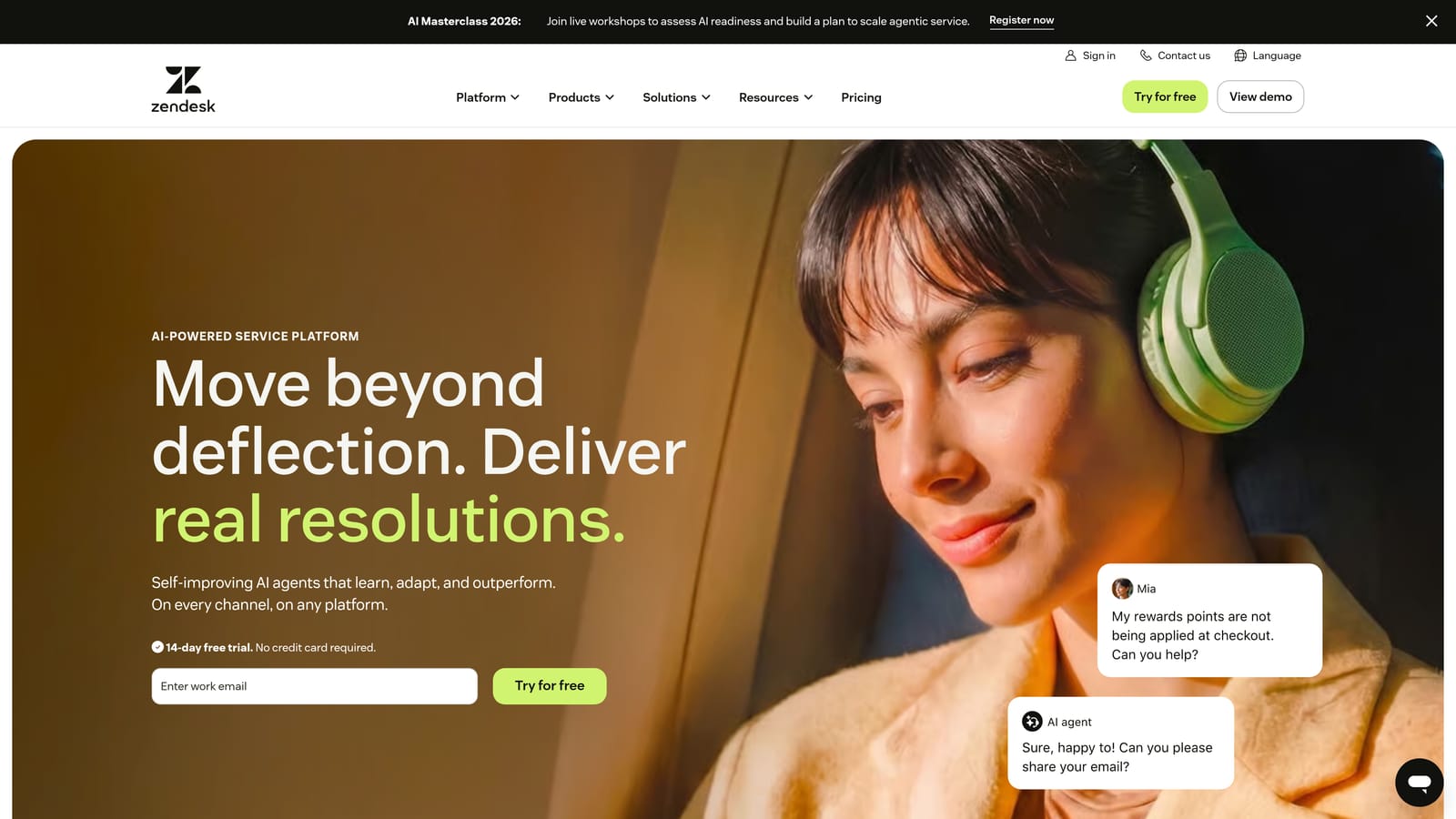
Zendesk is the enterprise-grade helpdesk standard, with Zendesk AI layered on top for ticket deflection, auto-tagging, and agent assistance across complex support workflows.
Where This Tool Shines
Zendesk's depth of customization is its core advantage for large educational organizations. Universities, enterprise LMS providers, and corporate training platforms often have multi-tier support structures spanning students, instructors, department administrators, and IT teams. Zendesk's SLA management, custom ticket workflows, and role-based access controls handle this complexity without breaking a sweat.
The Zendesk marketplace includes a wide range of LMS integrations, and Zendesk AI adds meaningful automation on top of existing processes: response suggestions, auto-tagging for routing, and query deflection via its help center. It's less about replacing your support process and more about making an established process significantly more efficient.
Key Features
Zendesk AI: Provides ticket deflection, auto-tagging, response suggestions, and agent assistance without requiring a full workflow overhaul.
Customizable Ticket Workflows: Highly flexible routing, escalation rules, and SLA management suited for complex organizational structures.
Extensive Marketplace: Hundreds of integrations including LMS platforms, making it adaptable to existing edtech stacks.
Enterprise Reporting and Compliance: Robust analytics and compliance controls for institutions with regulatory requirements.
Best For
Zendesk is the right choice for large institutions or enterprise edtech companies with established support operations that need to automate within existing workflows rather than rebuild from scratch.
Pricing
Suite plans start at approximately $55 per agent per month. Enterprise pricing is available for larger deployments with advanced requirements.
4. Freshdesk
Best for: Growth-stage edtech teams that need capable omnichannel support without enterprise-level spend
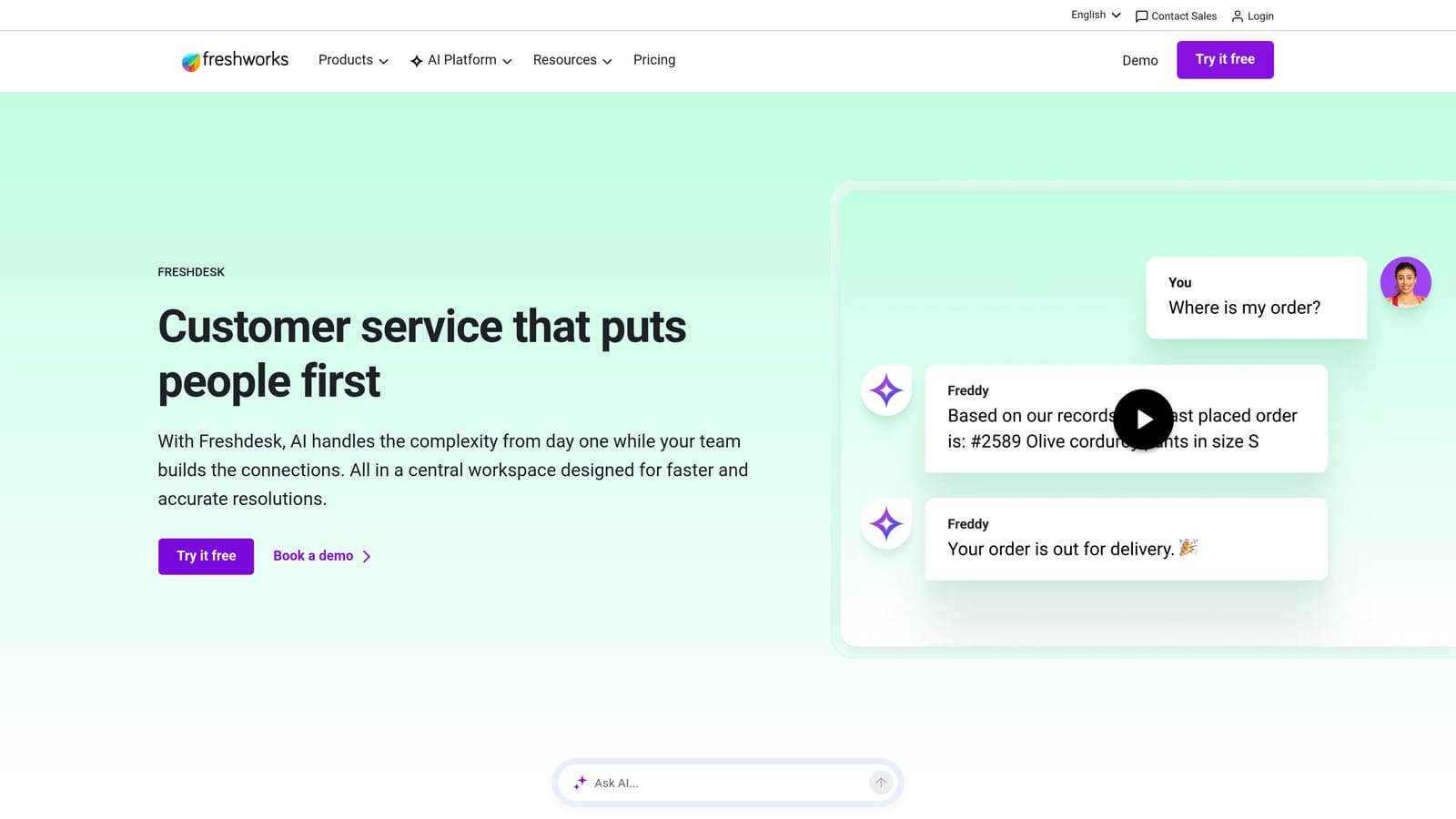
Freshdesk is an omnichannel helpdesk with Freddy AI providing automation across ticket triage, self-service, and agent assistance at a price point accessible to growing edtech teams.
Where This Tool Shines
Freshdesk hits a strong balance between capability and affordability that makes it attractive for edtech companies that are past the startup stage but not yet at enterprise scale. Freddy AI handles ticket classification, routes issues to the right team, and suggests responses to agents, reducing handle time without requiring a dedicated ops team to configure and maintain it.
The omnichannel coverage is particularly relevant for edtech platforms serving diverse student demographics. Students reach out via email, chat, phone, and social depending on their age and preference, and Freshdesk consolidates all of these into a single agent workspace. The native knowledge base builder also makes it straightforward to build and maintain a student-facing help center.
Key Features
Freddy AI: Automates ticket classification, response suggestions, and chatbot deflection for common student queries.
Omnichannel Support: Unified inbox across email, chat, phone, and social media to serve students wherever they reach out.
Native Knowledge Base Builder: Build and maintain a student-facing help center without requiring a separate tool.
Competitive Pricing with Free Tier: Accessible entry point for teams that need to prove value before committing to higher spend.
Best For
Freshdesk is ideal for growth-stage edtech companies that need solid omnichannel coverage and AI-assisted automation without the cost structure of enterprise platforms. Teams that serve students across multiple contact channels will find the unified inbox especially useful.
Pricing
A free tier is available for small teams. Paid plans start at approximately $15 per agent per month, with Freddy AI's more advanced features available on higher tiers.
5. Tidio
Best for: Smaller edtech teams that need automation deployed quickly without heavy configuration
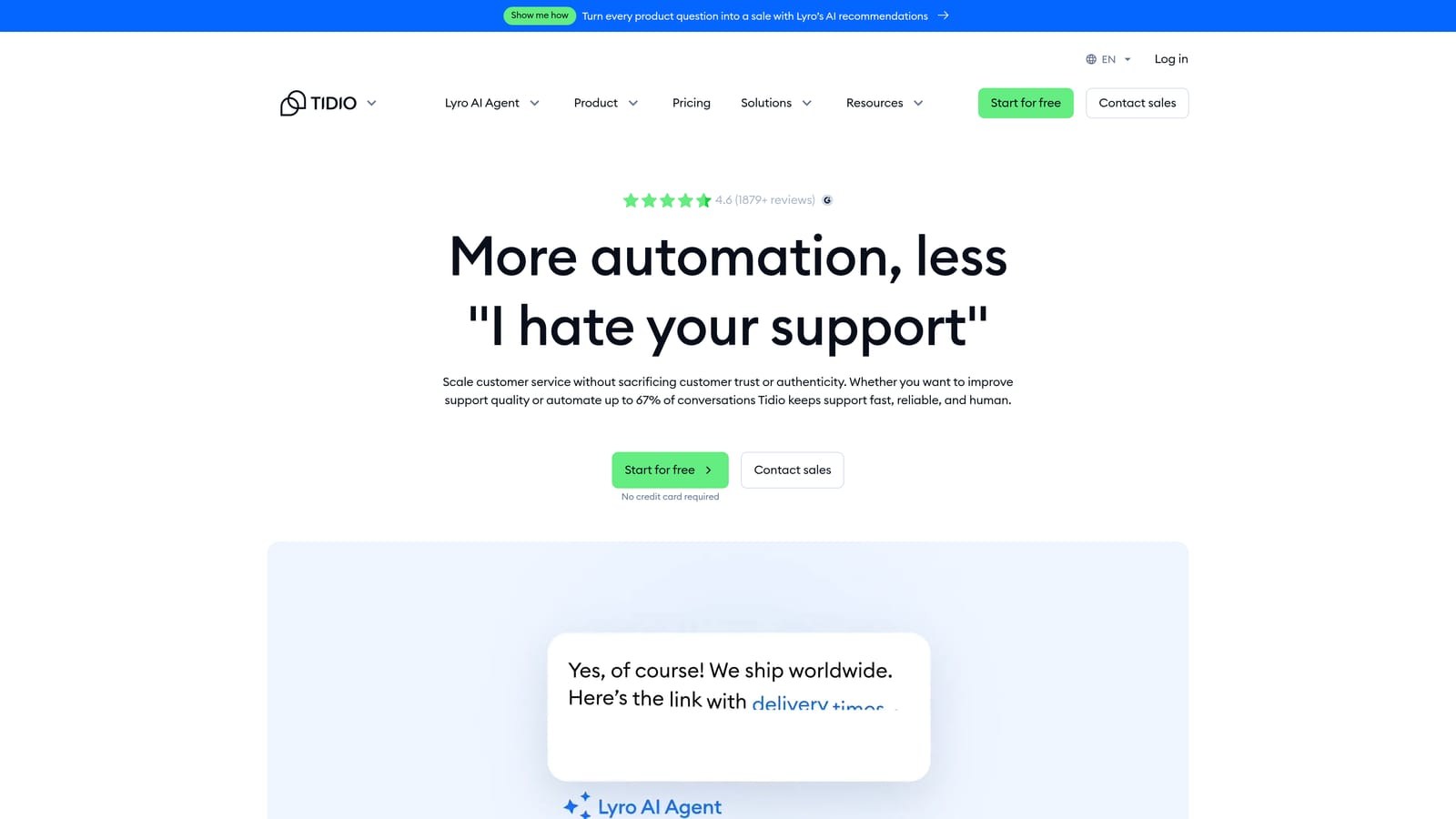
Tidio is a fast-to-deploy live chat and chatbot platform with Lyro AI, designed for teams that need automation running quickly without extensive technical setup.
Where This Tool Shines
Tidio's biggest advantage is speed to value. For smaller edtech teams without dedicated support ops resources, the ability to deploy a functional AI chatbot in hours rather than weeks is genuinely meaningful. Lyro AI handles common questions using your existing help content, and the visual no-code chatbot builder means non-technical team members can build and adjust conversation flows without engineering involvement.
It's worth being clear about where Tidio fits in the market: it's a strong option for simpler support workflows, particularly for platforms with a focused product scope and a relatively consistent set of student questions. Teams with complex, multi-tier support needs or enterprise-scale volumes will likely outgrow it.
Key Features
Lyro AI Chatbot: Resolves common questions using existing help content with minimal setup required.
No-Code Chatbot Builder: Visual, drag-and-drop interface that non-technical team members can use to build and modify conversation flows.
Live Chat with Agent Takeover: Seamless handoff from chatbot to human agent when issues require personal attention.
Fast Deployment: Deployable in hours, making it practical for lean teams that need quick results.
Best For
Tidio suits smaller edtech platforms, bootcamps, and online course creators that want to automate common student questions without a significant implementation investment. Best for teams with straightforward support workflows and limited technical resources.
Pricing
A free tier is available. Paid plans start at approximately $29 per month, making it one of the more accessible entry points in this category.
6. HubSpot Service Hub
Best for: Edtech companies already running HubSpot CRM who want unified student history across support, marketing, and sales
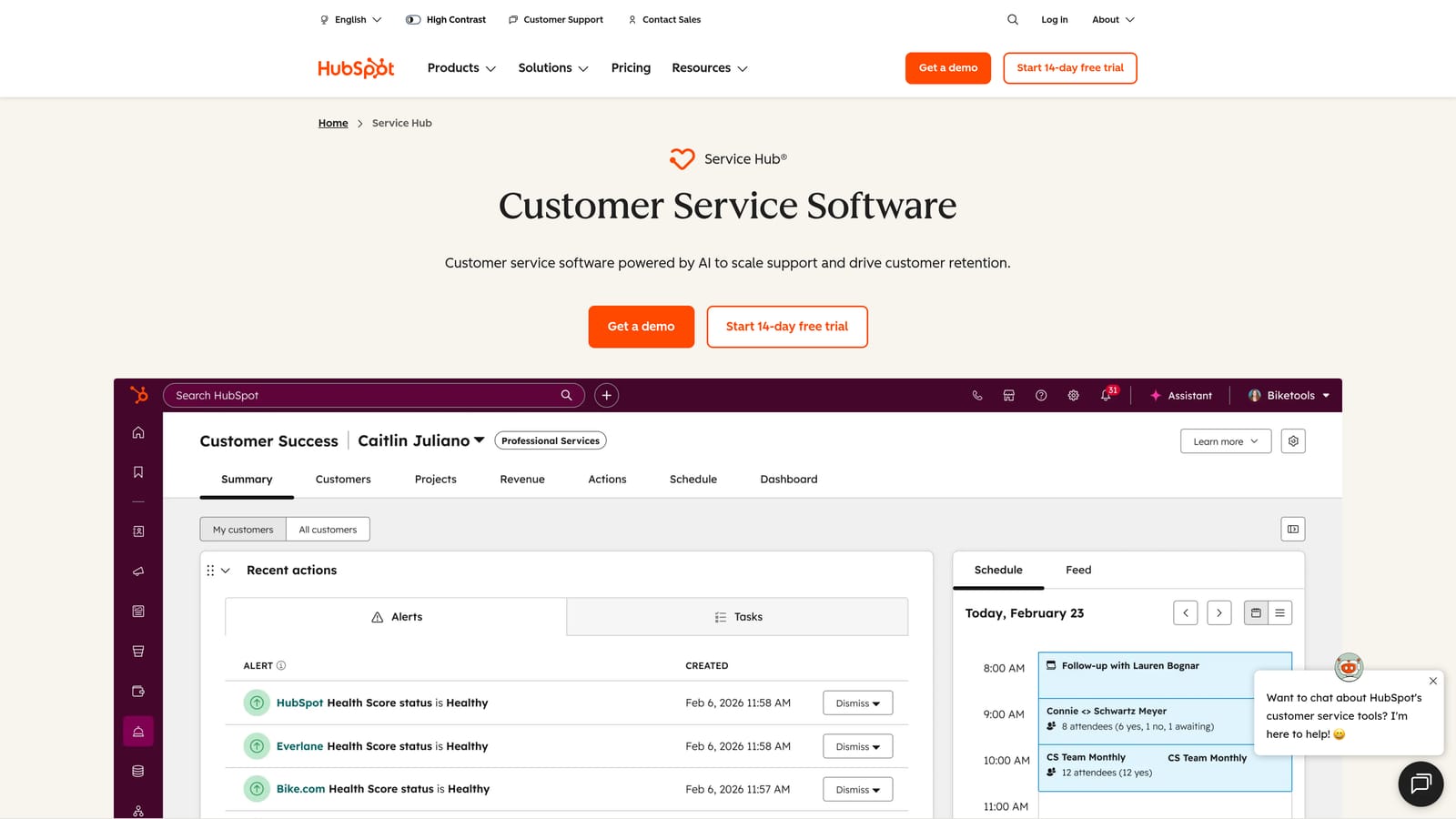
HubSpot Service Hub is a support automation platform natively integrated with HubSpot CRM, giving every support interaction full student and customer history context.
Where This Tool Shines
For edtech companies already using HubSpot for marketing automation or sales CRM, Service Hub is a natural extension that eliminates the context-switching problem. When a student contacts support, the agent sees their full history: which courses they've enrolled in, past support interactions, billing status, and marketing touchpoints. This kind of unified view leads to faster, more personalized resolutions.
The AI features within Service Hub, including conversation intelligence, ticket automation, and knowledge base content suggestions, are solid rather than cutting-edge. The real differentiator is the platform cohesion. If your edtech company uses HubSpot across the business, consolidating support here reduces tool sprawl and gives leadership a single source of truth for the student relationship.
Key Features
Native HubSpot CRM Integration: Full contact history, enrollment data, and interaction timeline visible in every support ticket.
AI-Powered Ticket Automation: Conversation intelligence and automated ticket routing reduce manual triage work.
Knowledge Base Builder: AI content suggestions help teams build and maintain a student-facing help center efficiently.
Unified Platform: Single platform across marketing, sales, and support reduces tool complexity and improves cross-team visibility.
Best For
HubSpot Service Hub is the right choice for edtech companies already invested in the HubSpot ecosystem. If you're not using HubSpot for CRM, the value proposition is less compelling compared to purpose-built support tools.
Pricing
Starter plans begin at approximately $15 per seat per month. The Professional tier, required for advanced automation features, is priced higher. Check HubSpot's current pricing page for the most accurate figures.
7. Drift (Salesloft)
Best for: B2B training platforms where support and enrollment or sales workflows overlap significantly
Drift is a conversational AI platform with strong routing logic and built-in meeting scheduling, well-suited for edtech companies where support and enrollment workflows intersect.
Where This Tool Shines
Drift occupies an interesting position in the edtech support landscape because it bridges the gap between support deflection and sales-adjacent workflows. For B2B training platforms, corporate learning and development providers, or higher-education institutions with enrollment teams, the ability to route a conversation from a support question to a scheduled admissions call within the same platform is genuinely useful.
Its playbook-driven automation creates consistent conversation flows across different visitor types, and the integration with Salesloft makes it a natural fit for organizations where the sales and support functions share data and handoffs. It's less suited for pure student-facing consumer edtech and more relevant for platforms with a meaningful B2B or institutional sales motion.
Key Features
Conversational AI with Routing Logic: Intelligent qualification and routing ensures conversations reach the right team or resource.
Built-In Meeting Scheduling: Supports high-touch enrollment flows, demo bookings, and advisor consultations without leaving the chat.
Salesloft Integration: Strong alignment between support and sales data for B2B training platforms with overlapping workflows.
Playbook-Driven Automation: Consistent, repeatable conversation flows that can be tailored by audience type or funnel stage.
Best For
Drift is best for B2B edtech companies, corporate training platforms, and higher-education institutions where support conversations frequently transition into enrollment, sales, or advisor scheduling workflows.
Pricing
Pricing is not publicly listed for most tiers. Contact Drift directly for a quote tailored to your team's size and use case.
8. Guru
Best for: Edtech support teams handling complex, nuanced questions that require accurate, consistent answers from agents
Guru is an AI-powered internal knowledge management platform that surfaces the right answers to support agents in real time, reducing handle time and improving consistency.
Where This Tool Shines
Guru takes a different approach from most tools on this list. Rather than replacing agents with AI, it makes human agents significantly more effective by surfacing the right knowledge at the right moment inside their existing workflow. For edtech support teams that handle genuinely complex questions — accreditation queries, instructor contract issues, accessibility accommodations, or nuanced LMS troubleshooting — this agent-enablement model is often more appropriate than full automation.
The knowledge verification workflow is a standout feature for edtech environments where accuracy matters. Content owners are prompted to review and confirm knowledge cards on a schedule, ensuring that agents aren't working from outdated information during critical periods like enrollment or course launches.
Key Features
Real-Time Answer Surfacing: AI surfaces relevant knowledge cards to agents inside their helpdesk workflow without requiring manual searching.
Knowledge Verification Workflows: Scheduled review prompts keep knowledge accurate and current, reducing the risk of agents sharing outdated information.
Helpdesk Integrations: Connects with Zendesk, Intercom, Slack, and other platforms so knowledge surfaces where agents already work.
Internal Focus: Designed as an agent enablement tool rather than a customer-facing chatbot, making it complementary to other tools on this list.
Best For
Guru is ideal for edtech support teams that handle high-complexity questions where accuracy is critical and full automation isn't appropriate. It works best as a complement to a helpdesk like Zendesk or Freshdesk rather than a standalone solution.
Pricing
A free tier is available. Paid plans start at approximately $10 per user per month, making it one of the most cost-effective additions to an existing support stack.
9. Capacity
Best for: Traditional higher education institutions and corporate L&D teams with Canvas or Blackboard LMS environments
Capacity is an AI helpdesk platform built for knowledge-intensive organizations, with notable LMS integrations including Canvas and Blackboard that differentiate it for traditional educational institutions.
Where This Tool Shines
Capacity's defining advantage for the education sector is its native integration with Canvas and Blackboard, the two most widely used LMS platforms in higher education. For universities and community colleges evaluating support automation, the ability to connect support workflows directly to the LMS environment removes a significant integration hurdle that other platforms on this list don't address as directly.
Beyond LMS connectivity, Capacity is designed for knowledge-heavy organizations where FAQ automation needs to handle nuanced, domain-specific questions. Its natural language understanding capabilities are built for this kind of depth, and its workflow automation for escalations and approvals maps well to the bureaucratic realities of institutional support environments.
Key Features
LMS Integrations: Native connections to Canvas and Blackboard differentiate Capacity for traditional higher education environments.
Deep FAQ Automation: Natural language understanding handles nuanced, knowledge-intensive questions common in academic support contexts.
Workflow Automation: Escalation, approval, and routing workflows that map to institutional support structures.
Higher Education Focus: Designed specifically for universities, colleges, and corporate L&D teams rather than general-purpose SaaS support.
Best For
Capacity is the strongest fit for traditional higher education institutions, community colleges, and corporate learning and development teams that operate within Canvas or Blackboard environments and need support automation that understands the institutional context.
Pricing
Pricing is not publicly listed. Contact Capacity directly for a quote based on your institution's size and integration requirements.
Which Tool Is Right for Your Platform?
The right support automation tool for an educational platform depends on three variables: your organizational complexity, your existing tech stack, and whether you need autonomous AI resolution or AI-assisted human agents.
Here's a quick orientation by use case to help you narrow the field.
AI-first edtech SaaS: Halo AI is the strongest fit. Its page-aware context, autonomous ticket resolution, and continuous learning architecture are purpose-built for product-led platforms that need support to scale without headcount.
Enterprise LMS or university environment: Zendesk handles complex support hierarchies and compliance requirements at scale. Capacity is the better choice if Canvas or Blackboard integration is a priority.
Growth-stage startup: Freshdesk offers the best balance of capability and cost. Tidio is the right call if you need something deployed in days, not weeks.
HubSpot-native stack: HubSpot Service Hub unifies your student data across support, marketing, and sales without adding another tool to manage.
B2B training with enrollment workflows: Drift's conversational routing and meeting scheduling make it a natural fit where support and sales motions overlap.
Before committing to any platform, pressure-test it against your peak-load scenarios. Ask vendors specifically how their platform handles a 5x or 10x spike in ticket volume during enrollment periods. Evaluate whether LMS integrations are native or require middleware. And be clear about whether you need autonomous AI resolution or AI that makes human agents faster — these are genuinely different architectures with different outcomes.
Your support team shouldn't scale linearly with your customer base. Let AI agents handle routine tickets, guide users through your product, and surface business intelligence while your team focuses on complex issues that need a human touch. See Halo in action and discover how continuous learning transforms every interaction into smarter, faster support.