9 Best Support Automation Platforms for Enterprises in 2026
Enterprise support teams handling thousands of daily tickets need support automation for enterprises to maintain quality while controlling costs. This guide examines nine leading platforms designed for enterprise-scale operations, comparing their AI capabilities, integration options, security features, and total cost of ownership to help you select the solution that resolves routine inquiries automatically while routing complex issues to specialized agents.
 Matt PattoliFounder12 min read
Enterprise support teams face a unique challenge: maintaining personalized, high-quality customer experiences while handling ticket volumes that can reach thousands daily. Manual processes simply cannot scale to meet these demands without exponentially increasing headcount and costs.
Support automation for enterprises addresses this gap by deploying intelligent systems that resolve routine inquiries, route complex issues to the right specialists, and provide agents with contextual assistance—all while maintaining the consistency and compliance large organizations require.
Here are the top platforms purpose-built for enterprise-scale support automation, examining their AI capabilities, integration ecosystems, security features, and total cost of ownership.
1. Halo AI
Best for: Enterprises seeking AI-native support that learns continuously and connects across their entire business stack.
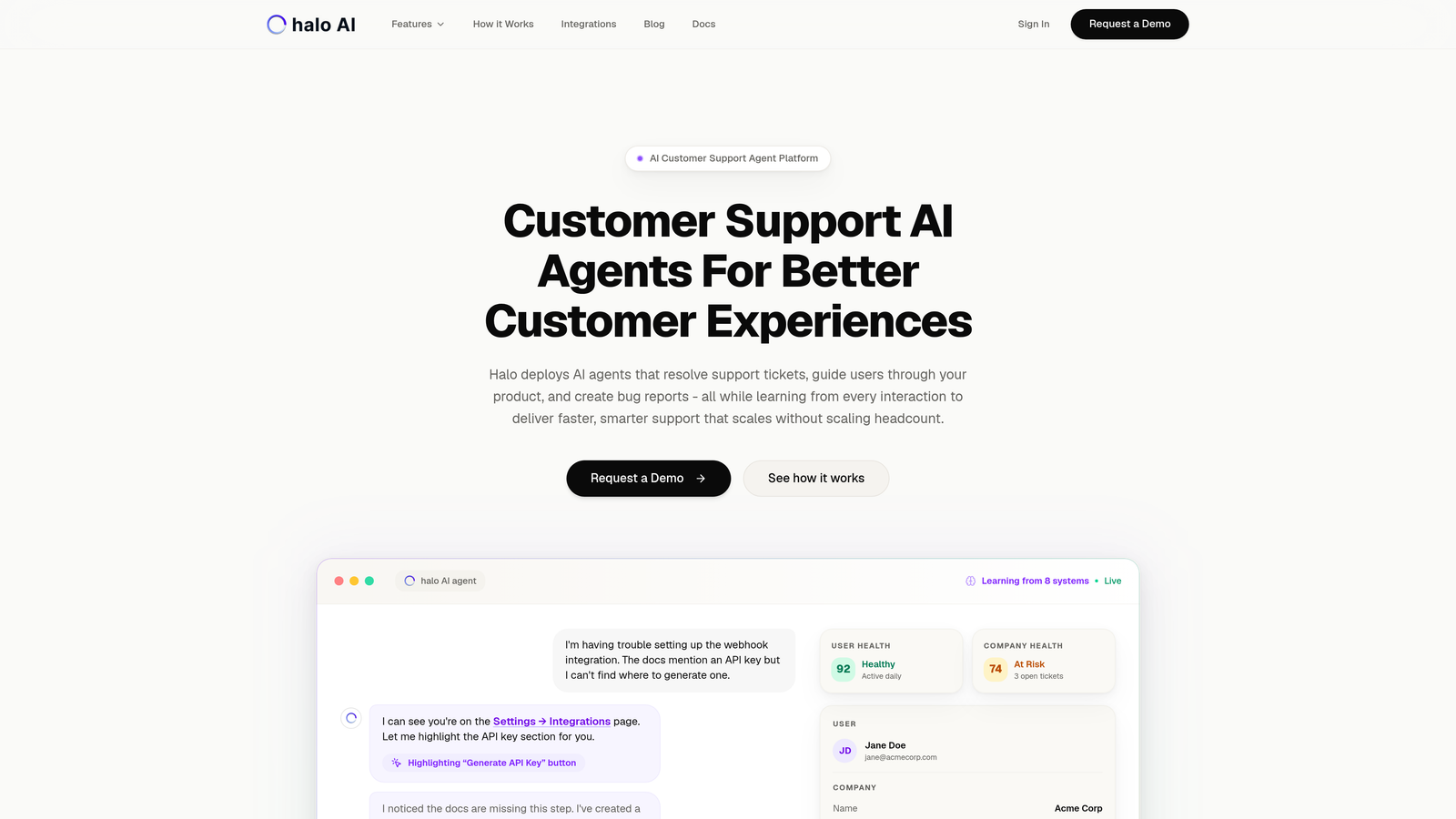
Halo AI represents a fundamental shift from traditional helpdesks with AI features bolted on—it's built from the ground up as an AI-first platform where intelligent agents autonomously resolve tickets while learning from every interaction.
Where This Tool Shines
The platform's page-aware technology sets it apart by understanding not just what customers ask, but what they're actually seeing in your product. This contextual awareness allows AI agents to provide visual guidance through complex workflows rather than generic text responses.
Beyond ticket resolution, Halo connects to your entire business ecosystem—Linear, Slack, HubSpot, Intercom, Stripe, Zoom, PandaDoc, and Fathom—surfacing business intelligence like customer health signals and revenue risks that traditional helpdesks miss entirely.
Key Features
Autonomous AI Agents: Resolve tickets independently with intelligent escalation to human agents when complexity requires human judgment.
Page-Aware Chat Widget: Sees exactly what users see in your interface, enabling contextual guidance through visual UI elements rather than generic instructions.
Smart Inbox with Business Intelligence: Goes beyond support metrics to surface customer health signals, anomaly detection, and revenue intelligence from support interactions.
Auto Bug Ticket Creation: Automatically creates engineering tickets in Linear and Slack when support interactions reveal product issues, closing the feedback loop.
Continuous Learning Architecture: Every interaction trains the AI to handle similar issues better, creating a system that becomes more capable over time without manual retraining.
Best For
Product-led B2B companies that need support automation to scale without scaling headcount, particularly those using modern tech stacks and seeking business intelligence beyond traditional support metrics. Ideal for teams frustrated with legacy helpdesks that require extensive manual configuration.
Pricing
Contact for enterprise pricing. The platform's continuous learning model means ROI improves over time as AI agents handle increasing resolution volumes autonomously.
2. Zendesk AI
Best for: Enterprises already invested in Zendesk seeking to add AI capabilities to their existing helpdesk infrastructure.
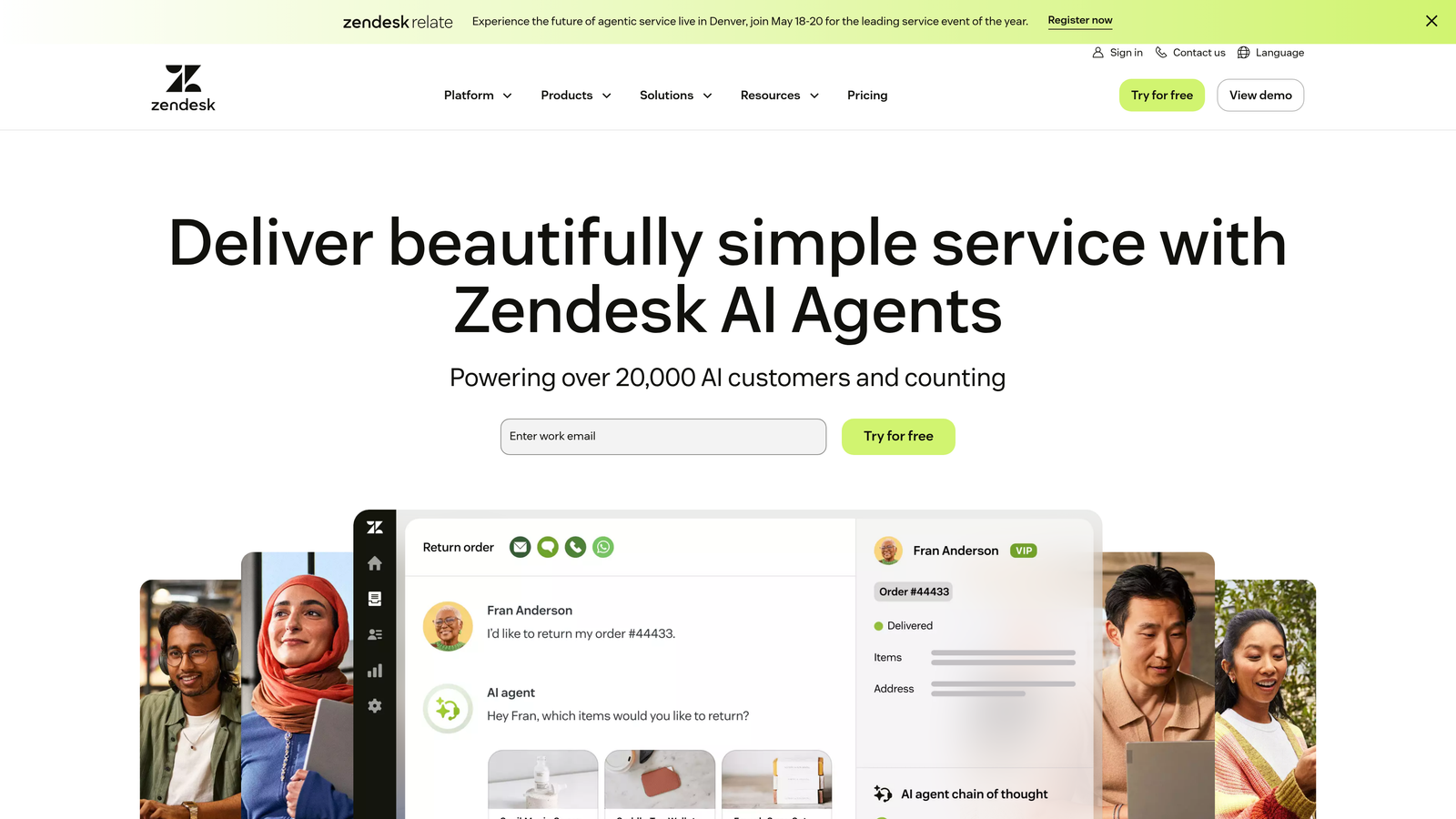
Zendesk AI layers intelligent automation onto the established Zendesk platform, offering AI-powered triage, agent assistance, and automated responses within an ecosystem many enterprises already know.
Where This Tool Shines
For organizations with years of Zendesk investment, the AI capabilities integrate directly into familiar workflows without requiring platform migration. The extensive app marketplace provides enterprise integrations that have been battle-tested across thousands of implementations.
Zendesk's compliance certifications—SOC 2 Type II, HIPAA, and FedRAMP—make it viable for heavily regulated industries where security documentation is non-negotiable.
Key Features
AI-Powered Ticket Classification: Automatically categorizes and routes incoming tickets based on content analysis and historical patterns.
Agent Assist: Surfaces suggested responses and relevant knowledge base articles while agents work, reducing handle time without full automation.
Automated Resolution: Handles common inquiries through pre-configured AI responses, though setup requires significant manual configuration.
Enterprise App Marketplace: Thousands of pre-built integrations with business systems, though many require additional licensing or third-party fees.
Compliance Certifications: Comprehensive security documentation for regulated industries including healthcare, government, and financial services.
Best For
Enterprises with existing Zendesk deployments seeking incremental AI improvements, or organizations in regulated industries requiring specific compliance certifications. Best suited for teams comfortable with traditional helpdesk paradigms.
Pricing
Suite Enterprise starts at $150 per agent monthly. AI capabilities require additional add-on licensing, which can significantly increase total cost of ownership for large teams.
3. Salesforce Service Cloud
Best for: Salesforce-centric enterprises seeking unified customer data across sales, marketing, and service operations.
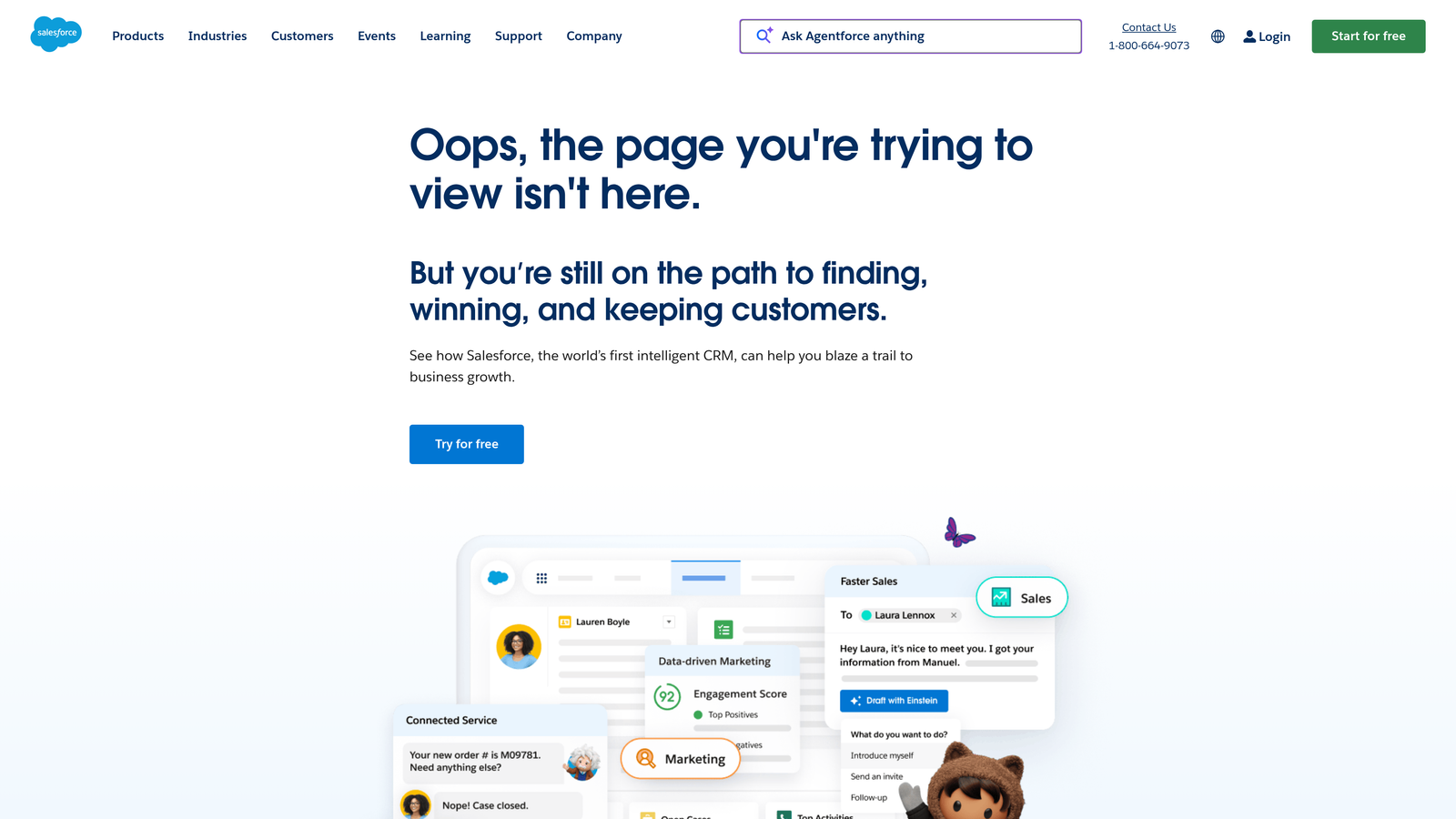
Salesforce Service Cloud integrates customer service automation directly into the Salesforce ecosystem, using Einstein AI for predictive routing and unified customer insights.
Where This Tool Shines
The platform's greatest strength is its unified customer view—service agents see the complete customer journey including sales history, marketing interactions, and support cases in one interface. This eliminates the context-switching that plagues organizations using separate systems.
Einstein AI provides predictive case routing that learns which agents handle specific issue types most effectively, reducing resolution time through intelligent assignment rather than simple round-robin distribution.
Key Features
Einstein AI: Delivers predictive case routing and next-best-action recommendations based on historical patterns and customer data.
Unified Customer View: Aggregates data across Salesforce CRM, Marketing Cloud, and Service Cloud for complete customer context.
Omnichannel Routing: Manages voice, chat, email, and social media interactions through a single queue with intelligent prioritization.
Knowledge Management: AI-powered article suggestions surface relevant documentation to agents and customers based on case context.
Native Salesforce Integration: Seamless data flow across the Salesforce platform eliminates integration middleware and data sync delays.
Best For
Enterprises heavily invested in the Salesforce ecosystem who need tight integration between service, sales, and marketing functions. Particularly valuable for B2B companies where support agents need visibility into account history and revenue data.
Pricing
Enterprise edition starts at $165 per user monthly. Einstein AI features require additional licensing, and total costs escalate quickly with add-ons for advanced analytics and automation.
4. Intercom Fin
Best for: Product-led companies prioritizing conversational experiences and proactive in-app messaging over traditional ticket queues.
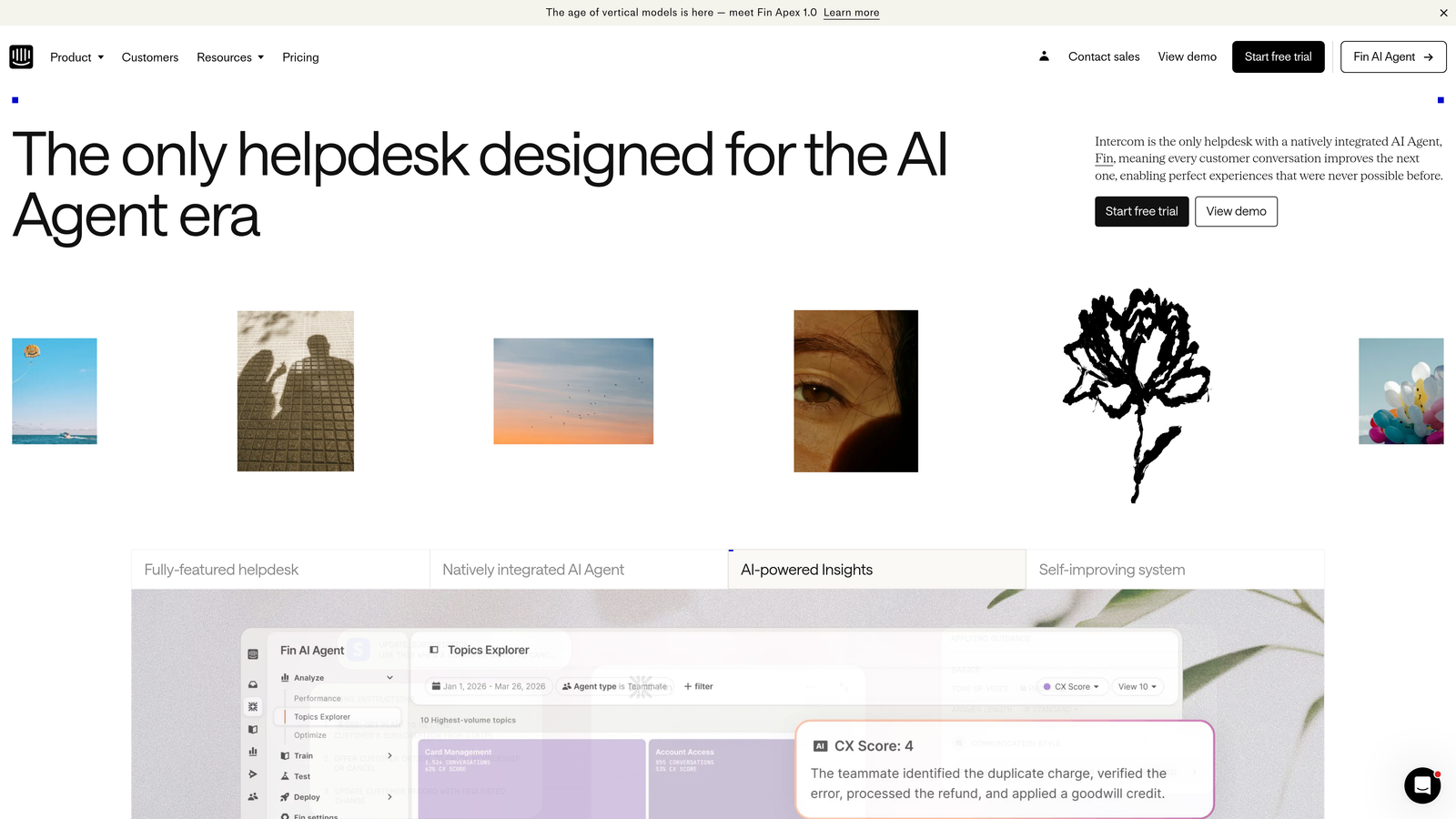
Intercom Fin combines AI-powered conversational support with proactive messaging, creating experiences that feel less like helpdesk interactions and more like natural conversations.
Where This Tool Shines
Fin's natural language understanding creates conversations that flow naturally rather than feeling like keyword-matching chatbots. The AI adapts its tone and approach based on conversation context, making automated interactions feel surprisingly human.
The platform's proactive messaging capabilities trigger contextual help based on user behavior—offering guidance before customers even realize they need it, reducing support volume by preventing issues rather than just resolving them.
Key Features
Fin AI Agent: Natural language processing enables conversational resolution that understands intent rather than just matching keywords.
Proactive Messaging: Triggers contextual help based on product usage patterns and user behavior, preventing issues before they become support tickets.
In-App Product Tours: Delivers guided walkthroughs and contextual help directly within your product interface.
Custom AI Training: Learns from your knowledge base and past conversations to provide company-specific responses aligned with your brand voice.
Seamless Human Handoff: Transfers conversations to human agents with full context, eliminating the frustrating "let me repeat everything" experience.
Best For
SaaS companies and product-led businesses that view support as part of the product experience rather than a separate function. Ideal for teams that prefer conversational interfaces over traditional ticket systems.
Pricing
Contact for enterprise pricing. Fin AI is charged per resolution, which can create cost unpredictability during high-volume periods but aligns pricing with actual value delivered.
5. Freshdesk Freddy AI
Best for: Cost-conscious enterprises seeking comprehensive AI features without premium pricing typical of established players.
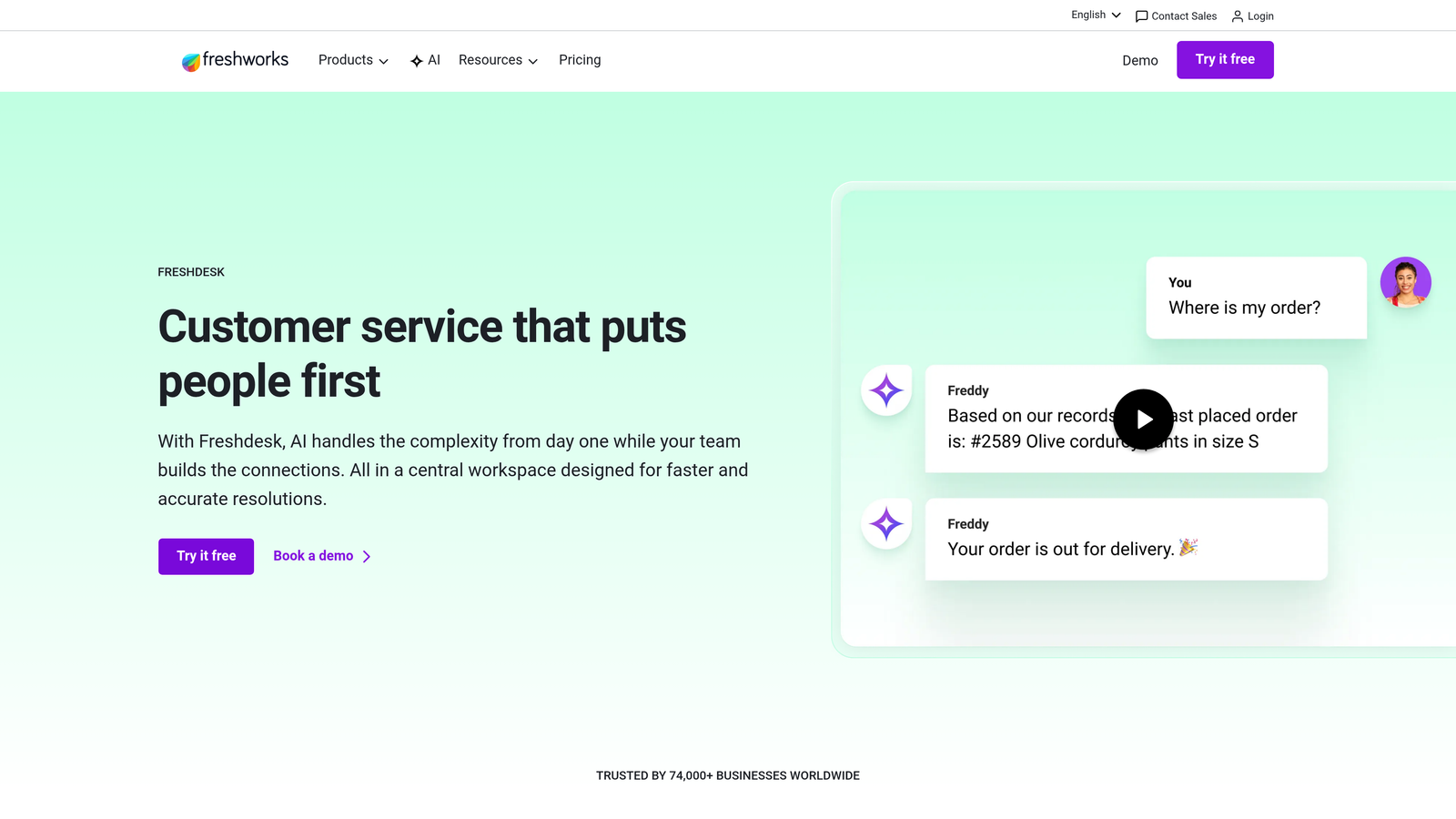
Freshdesk Freddy AI offers intelligent ticket triage, agent assistance, and omnichannel support at price points significantly below Zendesk and Salesforce.
Where This Tool Shines
Freshdesk's value proposition is straightforward—you get AI-powered automation, omnichannel support, and workflow capabilities at roughly half the cost of Zendesk Enterprise. For organizations where budget constraints are real, this matters.
The platform includes field service management capabilities that competitors charge extra for, making it particularly valuable for companies supporting both digital products and on-site services.
Key Features
Freddy AI: Automatically categorizes and prioritizes tickets, though the AI requires more manual training than newer AI-native platforms.
AI-Powered Response Suggestions: Surfaces relevant knowledge base articles and previous responses to accelerate agent workflows.
Omnichannel Support: Manages email, chat, phone, and social media interactions through unified agent interface.
Workflow Automation: Customizable triggers and actions automate repetitive tasks, though setup requires technical configuration.
Field Service Management: Coordinates on-site support teams with scheduling, routing, and mobile capabilities included in enterprise plans.
Best For
Mid-market enterprises and growing companies that need enterprise features without enterprise pricing. Particularly suitable for organizations supporting both digital and physical products requiring field service coordination.
Pricing
Enterprise plan at $79 per agent monthly with Freddy AI included in higher tiers. Transparent pricing without the hidden add-on costs that inflate total ownership expenses at competitors.
6. ServiceNow Customer Service Management
Best for: IT-centric enterprises requiring deep integration between customer service and IT service management workflows.
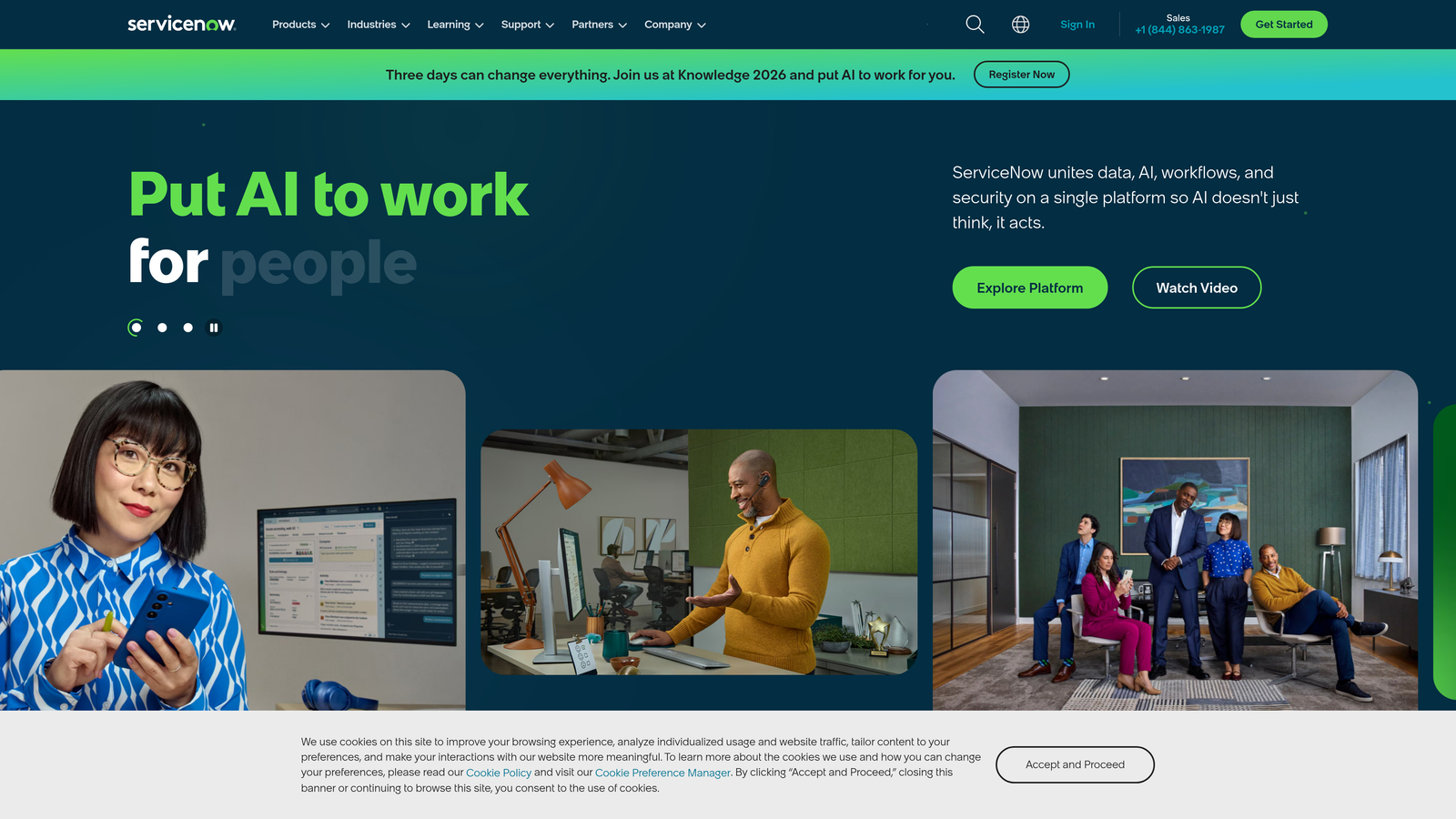
ServiceNow Customer Service Management unifies ITSM and customer service on a single platform, ideal for organizations where support issues frequently require IT involvement.
Where This Tool Shines
ServiceNow excels when customer issues require coordination across support, IT operations, and development teams. The unified platform eliminates handoffs between separate systems, tracking issues from initial customer report through engineering resolution.
For enterprises with complex approval workflows, change management requirements, and stringent compliance needs, ServiceNow's governance controls and audit trails are unmatched.
Key Features
Unified ITSM and CSM Platform: Single system of record for customer service and IT operations eliminates integration complexity.
Virtual Agent: Natural language understanding handles common inquiries, though setup requires ServiceNow-specific technical expertise.
Predictive Intelligence: Machine learning models predict case routing and escalation needs based on historical patterns.
Integration Hub: Connects to enterprise systems through pre-built connectors, though implementations often require professional services.
Compliance Certifications: FedRAMP, HIPAA, and SOC 2 compliance with comprehensive audit capabilities for regulated industries.
Best For
Large enterprises where customer support issues frequently require IT or engineering involvement, particularly in technology, telecommunications, and financial services sectors. Best suited for organizations already using ServiceNow for ITSM.
Pricing
Custom enterprise pricing based on modules and user count. Implementation costs are substantial—expect six-figure professional services fees for enterprise deployments.
7. Ada
Best for: Enterprises prioritizing self-service automation and high-volume inquiry resolution without human agent involvement.
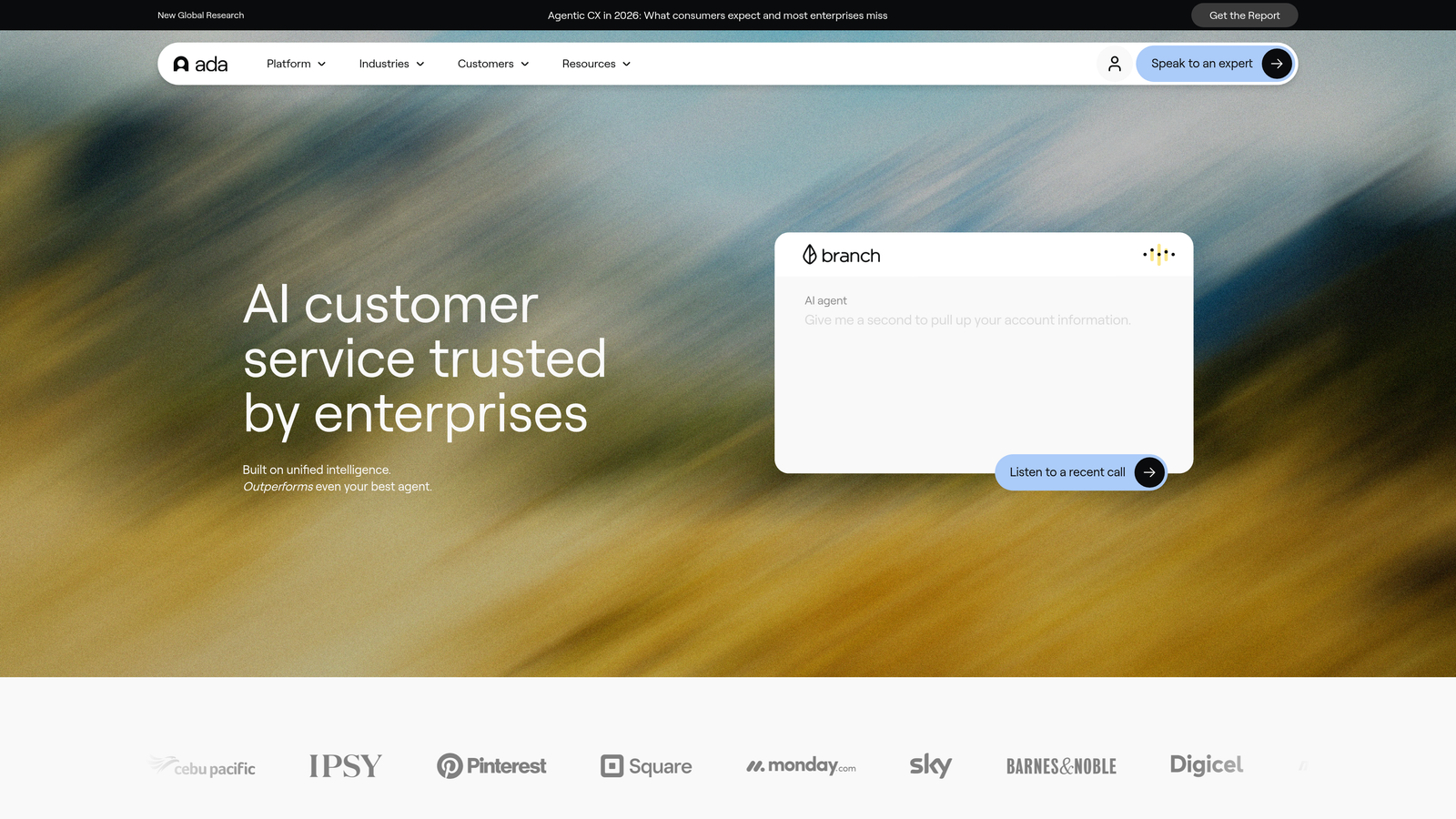
Ada focuses exclusively on automated resolution through AI-first architecture designed to handle customer inquiries without routing to human agents.
Where This Tool Shines
Ada's singular focus on automation means it excels at deflecting tickets before they reach human agents. The platform targets 70-80% automated resolution rates for common inquiry types—significantly higher than AI-augmented helpdesks.
The no-code conversation builder empowers business teams to create and modify automation flows without engineering resources, reducing the IT bottleneck that slows down traditional implementations.
Key Features
AI-First Architecture: Built specifically for automated resolution rather than agent assistance, optimizing for deflection over augmentation.
Multi-Language Support: Maintains consistent brand voice across languages, crucial for global enterprises with distributed customer bases.
No-Code Conversation Builder: Business teams create and modify automation flows without technical resources or coding knowledge.
CRM and Helpdesk Integration: Connects to existing systems to surface customer data and create tickets when human escalation is required.
Resolution Analytics: Tracks automation effectiveness and identifies opportunities to expand self-service coverage.
Best For
E-commerce, retail, and consumer-facing enterprises handling high volumes of repetitive inquiries where self-service resolution is preferable to agent interaction. Works best for straightforward support scenarios rather than complex technical issues.
Pricing
Contact for enterprise pricing based on resolution volume. The pricing model aligns costs with value—you pay based on automated resolutions rather than agent seats.
8. Kustomer
Best for: Enterprises needing unified customer timelines across all touchpoints with AI-powered sentiment analysis for personalized routing.
Kustomer positions itself as a customer service CRM rather than a traditional helpdesk, aggregating all customer interactions into unified timelines.
Where This Tool Shines
The unified customer timeline presents every interaction—support tickets, chat conversations, social media mentions, purchase history—in chronological order. Agents see the complete customer relationship without toggling between systems.
AI-powered sentiment analysis automatically prioritizes conversations based on customer emotion and frustration levels, ensuring upset customers receive immediate attention while routine inquiries queue normally.
Key Features
Unified Customer Timeline: Aggregates all interactions and customer data into single chronological view accessible to all agents.
AI Sentiment Analysis: Analyzes conversation tone to identify frustrated customers requiring priority routing and immediate attention.
Omnichannel Support: Seamless channel switching allows customers to start conversations in chat and continue via email without context loss.
Business Process Automation: Custom workflows automate repetitive tasks specific to your business processes and policies.
E-Commerce Integrations: Native connections to Shopify, Magento, and subscription platforms surface order and billing data directly in support interface.
Best For
E-commerce and subscription businesses where support agents need immediate access to customer purchase history, subscription status, and lifetime value. Particularly valuable for high-touch customer relationships where personalization matters.
Pricing
Enterprise plan at $89 per user monthly with AI features included in higher tiers. Competitive pricing for the unified CRM capabilities that would require multiple tools at competitors.
9. Sprinklr Service
Best for: Global enterprises managing customer support across social media platforms and digital messaging channels at scale.
Sprinklr Service combines social listening, digital engagement, and AI-powered support across 30+ channels in a unified customer experience platform.
Where This Tool Shines
For brands where significant support volume comes through social media—Twitter, Facebook, Instagram, TikTok—Sprinklr provides enterprise-grade social listening and response capabilities that consumer-focused tools lack.
The platform's governance controls allow global teams to maintain brand consistency across regions and languages while giving local teams flexibility to respond appropriately to cultural context.
Key Features
Unified Social and Service Platform: Single system for social listening, engagement, and customer service eliminates tool fragmentation.
AI-Powered Routing: Intelligent assignment based on content, sentiment, and agent expertise across all channels.
30+ Channel Support: Manages interactions across social platforms, messaging apps, and traditional channels through unified interface.
Customer Experience Analytics: Tracks sentiment trends and customer satisfaction across channels, identifying emerging issues before they escalate.
Enterprise Governance: Approval workflows, content libraries, and compliance controls maintain brand standards across global teams.
Best For
Global consumer brands managing high-volume social media support and enterprises where public social interactions significantly impact brand reputation. Ideal for organizations with distributed teams requiring governance and compliance controls.
Pricing
Custom enterprise pricing based on channels, users, and feature requirements. Contact for quote—implementations typically serve large enterprises with substantial social media presence.
Making the Right Choice
Selecting the right support automation platform depends on your enterprise's existing technology investments, ticket complexity, and growth trajectory.
For organizations seeking AI-first architecture with continuous learning capabilities, Halo AI delivers intelligent resolution that improves with every interaction. The platform's page-aware technology and business intelligence capabilities represent a fundamental evolution beyond traditional helpdesks—particularly valuable for product-led companies where support and product experience are inseparable.
Enterprises deeply embedded in Salesforce benefit from Service Cloud's unified customer view, eliminating the context-switching that fragments customer understanding. Those prioritizing conversational experiences may find Intercom Fin's natural language approach compelling, especially for proactive in-app guidance.
ServiceNow remains the standard for IT-centric organizations requiring ITSM integration, while Ada excels at high-volume self-service automation for straightforward inquiry types. Budget-conscious enterprises often find Freshdesk's feature-to-price ratio attractive, and Sprinklr serves global brands managing significant social media support volume.
Evaluate each platform against your specific integration requirements, compliance needs, and total cost of ownership—including the hidden costs of maintaining legacy systems versus investing in purpose-built AI solutions. Consider whether you need AI augmentation for human agents or autonomous resolution that scales independently of headcount.
The market increasingly distinguishes between AI-augmented helpdesks and AI-native platforms. Traditional players added AI features to existing architectures, while newer platforms built intelligence into their foundation. This architectural difference impacts how quickly systems learn, how naturally they handle complex scenarios, and how much manual configuration they require.
Your support team shouldn't scale linearly with your customer base. Let AI agents handle routine tickets, guide users through your product, and surface business intelligence while your team focuses on complex issues that need a human touch. See Halo in action and discover how continuous learning transforms every interaction into smarter, faster support.