9 Best Support Automation Tools for Fintech Companies in 2026
Fintech companies face uniquely high-pressure support demands — from frozen accounts to KYC failures — that traditional helpdesks can't handle. This guide reviews the 9 best support automation for fintech companies tools in 2026, evaluating each on AI capability, integration depth, compliance posture, and suitability for both lean startups and established neobanks.
 Grant CooperFounder14 min read
Fintech companies face a uniquely demanding support environment. Compliance-sensitive queries, high-stakes account issues, complex onboarding flows, and users who expect near-instant responses at any hour create a pressure cooker that traditional helpdesk setups simply weren't designed to handle. When your users are asking about frozen accounts, disputed transactions, or KYC verification failures, "we'll get back to you within 24 hours" isn't good enough.
Support automation changes that equation. The right platform can resolve common queries instantly, escalate edge cases to human agents with full context, flag anomalies that signal churn or fraud risk, and connect across your entire tech stack — from payment processors to CRMs. But not every automation tool is built for fintech's specific demands around security, integrations, and regulatory sensitivity.
This list covers the top support automation tools for fintech teams in 2026. Each has been evaluated on AI capability, integration depth, compliance posture, and how well it handles the nuanced, high-stakes nature of financial product support. Whether you're a lean startup scaling fast or an established neobank managing millions of users, there's a fit here for your team.
1. Halo AI
Best for: Growth-stage and enterprise fintechs wanting an AI-native platform that learns and integrates deeply with their full stack
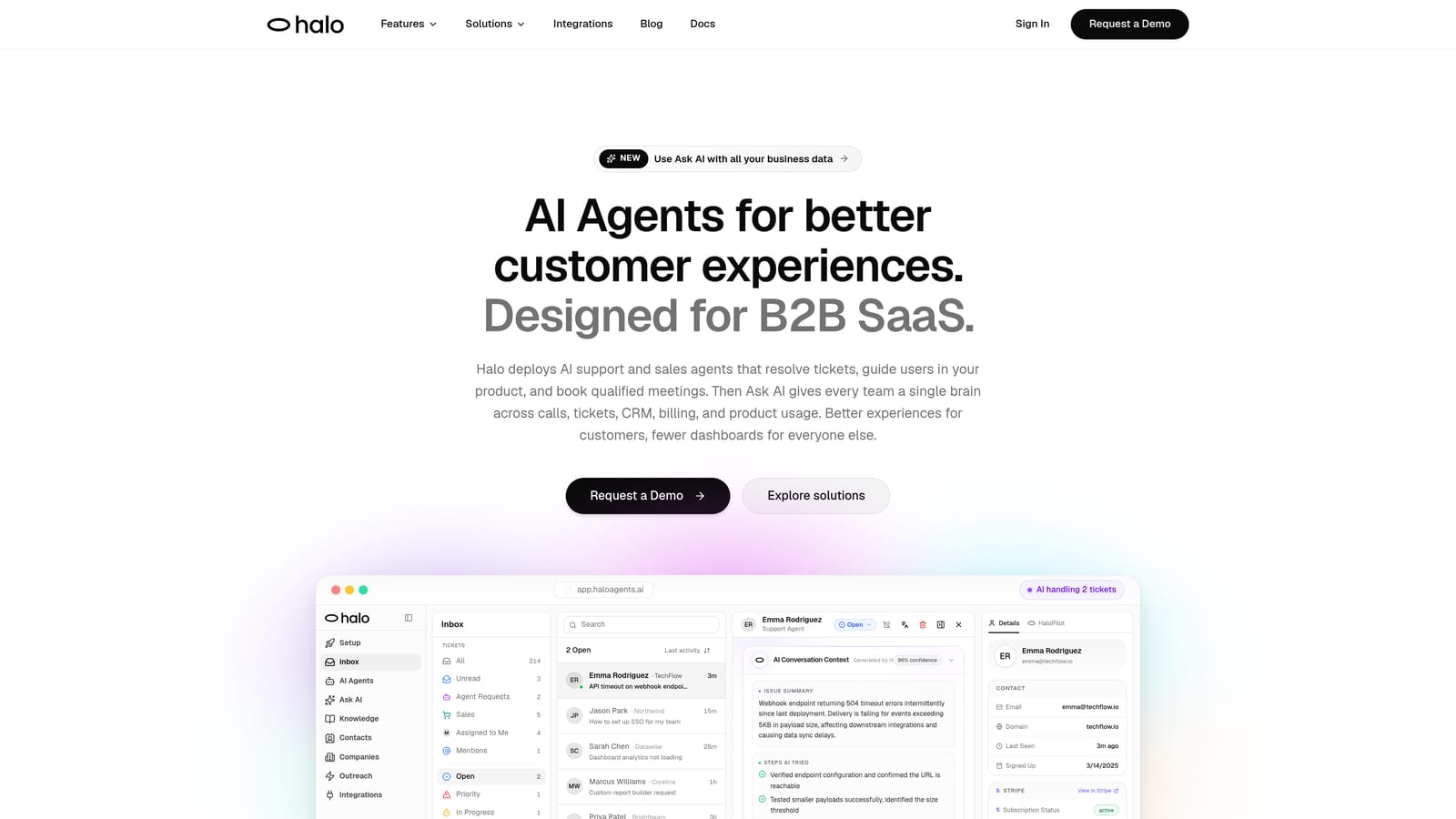
Halo AI is an AI-first customer support platform that deploys intelligent agents to resolve tickets, guide users through your product with page-aware context, and surface business intelligence signals — all while learning from every resolved interaction.
Where This Tool Shines
What separates Halo from most tools on this list is its architecture. It wasn't built as a bolt-on AI layer over an existing helpdesk. It's purpose-built around AI agents, which means the intelligence is structural, not decorative. For fintech teams, that distinction matters: you get a system that genuinely improves over time rather than one that automates the same fixed decision tree indefinitely.
The page-aware chat widget is particularly relevant for fintech products with complex UI flows. The agent understands what page and state the user is currently on, and can provide contextual visual guidance — not just text responses. Pair that with live agent handoff that preserves full conversation context, and sensitive escalations (account disputes, verification failures) become far less painful for users and agents alike.
Key Features
Page-Aware Chat Widget: Understands the user's current product state and delivers contextual UI guidance rather than generic help content.
Smart Inbox with Business Intelligence: Surfaces customer health signals, revenue anomalies, and churn indicators — going well beyond ticket deflection into genuine product intelligence.
Auto Bug Ticket Creation: Automatically routes product issues to Linear, removing manual triage from the engineering feedback loop.
Live Agent Handoff: Escalates complex or sensitive issues to human agents with full conversation context preserved, critical for high-stakes financial queries.
Native Integrations: Connects with Stripe, HubSpot, Slack, Linear, Intercom, Zoom, PandaDoc, and Fathom — covering the core of most fintech stacks without custom engineering.
Best For
Growth-stage B2B fintechs that need more than ticket deflection. If you want your support layer to surface churn signals, connect to Stripe and your CRM simultaneously, and improve autonomously with every interaction, Halo is built for exactly that use case. Also a strong fit for product-led fintechs where in-app guidance is as important as reactive support.
Pricing
Contact for pricing. Halo is enterprise-oriented; reach out directly through haloagents.ai for a tailored quote based on your team's scale and integration requirements.
2. Intercom
Best for: Fintech SaaS teams wanting mature in-app messaging combined with AI-powered front-line query resolution
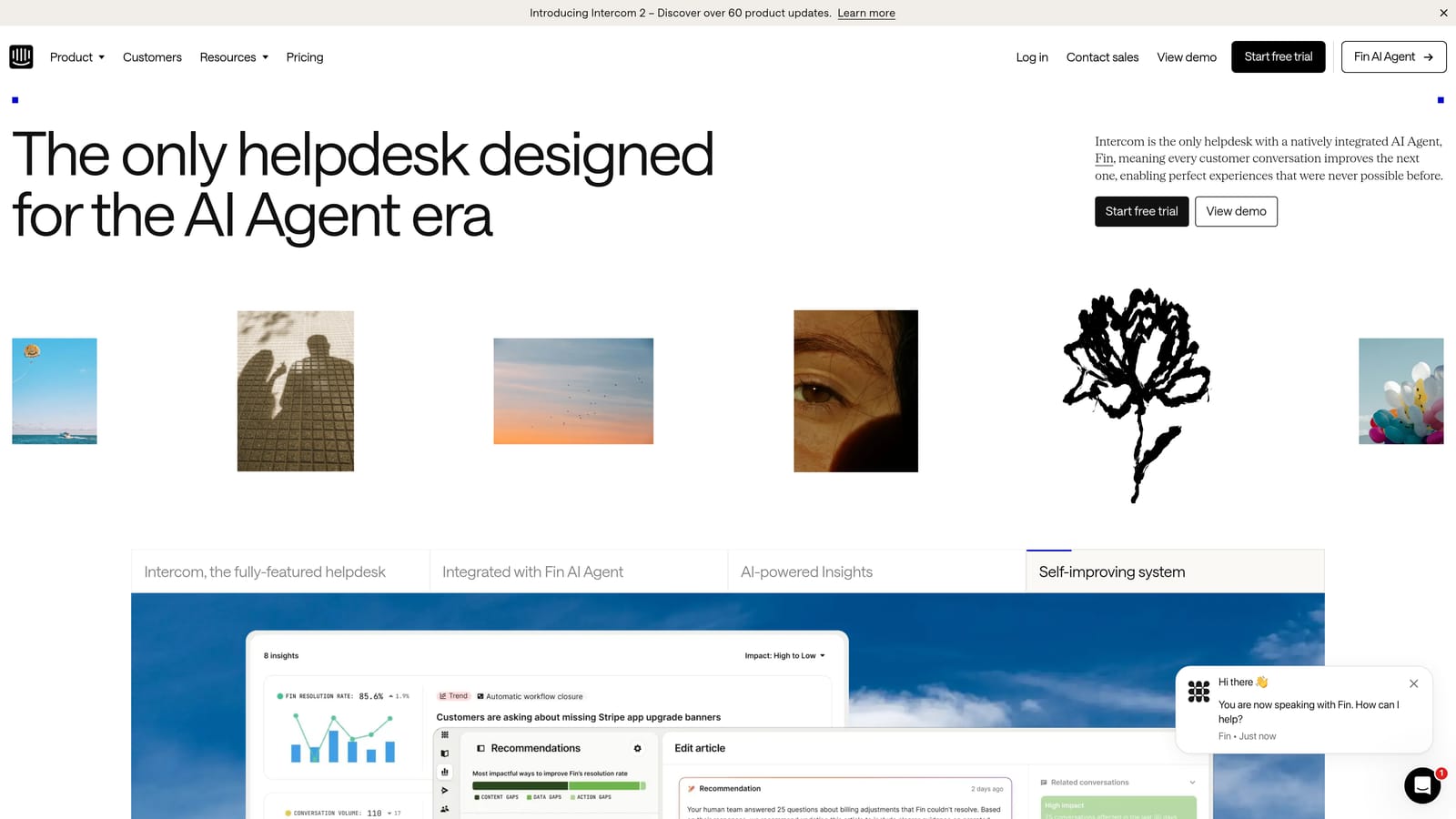
Intercom is a mature customer messaging platform with Fin, its AI agent, handling front-line support queries using your help center content — widely adopted across fintech SaaS.
Where This Tool Shines
Intercom has earned its place in fintech stacks through years of reliable in-app messaging, product tours, and proactive engagement tooling. Fin, its LLM-powered AI agent, handles a meaningful share of front-line queries by drawing on your existing help content — making deployment relatively fast for teams with a well-maintained knowledge base.
The depth of customer data profiles is genuinely useful in fintech contexts. Agents can see a user's full history before responding, which reduces the back-and-forth that frustrates users dealing with time-sensitive financial issues. The integration ecosystem is also broad, though some fintech-specific connections may require middleware.
Key Features
Fin AI Agent: Large language model-powered agent that resolves queries using your help content, with configurable escalation logic.
In-App Messaging and Product Tours: Particularly useful for fintech onboarding flows where users need guided walkthroughs of verification or account setup steps.
Deep Customer Data Profiles: Unified view of user behavior and history, enabling more personalized and context-aware support responses.
Robust Reporting and Conversation Analytics: Tracks resolution rates, CSAT, and bot performance across channels.
Large Integration Ecosystem: Connects with a wide range of SaaS tools, though fintech-specific integrations vary in depth.
Best For
Fintech SaaS companies already using Intercom for in-app engagement who want to layer AI-powered resolution on top of their existing setup. Less ideal for teams starting from scratch who want a purpose-built AI architecture rather than an AI layer added to a messaging platform.
Pricing
Tiered plans that scale from startup-accessible price points up to enterprise. Fin AI is available on higher-tier plans; check Intercom's current pricing page for up-to-date details.
3. Zendesk
Best for: Enterprise fintechs requiring battle-tested infrastructure, strong SLA management, and compliance-relevant audit trails
Zendesk is the industry-standard enterprise helpdesk platform with AI-powered ticket routing, triage, and bot capabilities layered on a deeply mature support infrastructure.

Where This Tool Shines
Zendesk's strength in fintech is its reliability and compliance posture. Audit trails, SLA management, and a massive app marketplace make it a defensible choice for regulated financial services companies that need to demonstrate process control. When a regulator asks how you handle customer complaints, Zendesk gives you clean documentation.
The AI capabilities have improved considerably, with intelligent triage and suggested replies reducing manual workload. That said, Zendesk remains a helpdesk-first platform with AI added on top — which means teams looking for a system that learns and adapts autonomously may find it less dynamic than newer AI-native alternatives.
Key Features
AI-Powered Ticket Triage and Routing: Automatically categorizes and routes incoming tickets based on intent, reducing manual sorting at scale.
Zendesk AI Bots: Handles self-service queries using your knowledge base content, with configurable escalation paths.
Advanced SLA Management: Enforces response and resolution time commitments — particularly relevant for fintechs with contractual or regulatory SLA requirements.
Compliance Reporting and Audit Trails: Provides the documentation trail that financial services compliance teams need.
Massive App Marketplace: Broad ecosystem of fintech-relevant integrations, from payment processors to CRM and identity verification tools.
Best For
Enterprise fintechs and regulated financial institutions where compliance documentation, SLA enforcement, and integration breadth are non-negotiable. Teams that prioritize process control and auditability over cutting-edge AI autonomy.
Pricing
Per-agent, per-month pricing with multiple tiers. Enterprise pricing is available for larger teams with advanced compliance and customization requirements.
4. Freshdesk
Best for: Growing fintech teams wanting solid omnichannel automation at a competitive price point
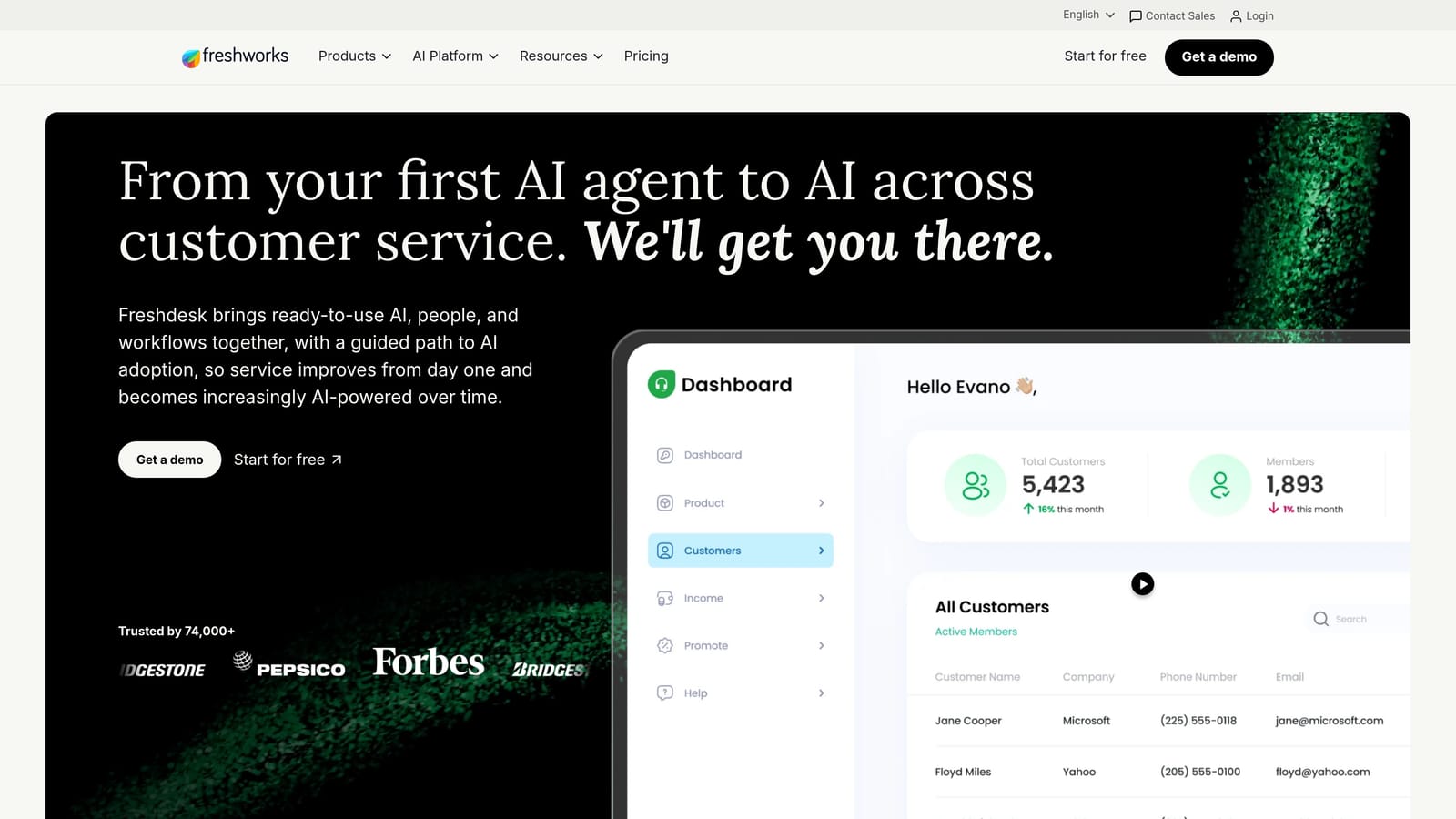
Freshdesk is a cost-competitive helpdesk platform with Freddy AI handling ticket categorization, response suggestions, and omnichannel support automation across email, chat, phone, and social.
Where This Tool Shines
Freshdesk competes effectively on value. For fintech startups and growth-stage teams that need real automation capability without Zendesk-level pricing, Freddy AI delivers practical time savings: auto-categorization, canned response suggestions, and workflow automation for repetitive query types like password resets, balance inquiries, or transaction status questions.
The omnichannel coverage is genuinely broad, which matters for fintechs whose users contact support through multiple channels. The reporting dashboard gives team leads visibility into volume trends and agent performance without requiring significant configuration work.
Key Features
Freddy AI: Handles ticket auto-categorization, response suggestions, and basic triage — reducing manual workload for common fintech query types.
Omnichannel Coverage: Manages email, chat, phone, and social channels from a unified inbox, reducing context-switching for agents.
Workflow Automation: Configurable automation rules for common fintech support scenarios, including escalation triggers and SLA reminders.
Competitive Pricing with Free Tier: Accessible entry point for early-stage fintech teams testing automation before committing to enterprise contracts.
Strong Reporting Dashboard: Provides actionable visibility into ticket volume, resolution times, and agent performance.
Best For
Early-to-mid-stage fintech teams that need solid helpdesk automation at a price point that makes sense before Series B. Also a reasonable choice for teams migrating away from manual email-based support who want a structured system without a steep learning curve.
Pricing
Free tier available for small teams. Paid plans scale with features and agent count, remaining competitive relative to enterprise alternatives like Zendesk and Salesforce.
5. Salesforce Service Cloud
Best for: Fintechs operating within the Salesforce ecosystem that need deep CRM-integrated support automation
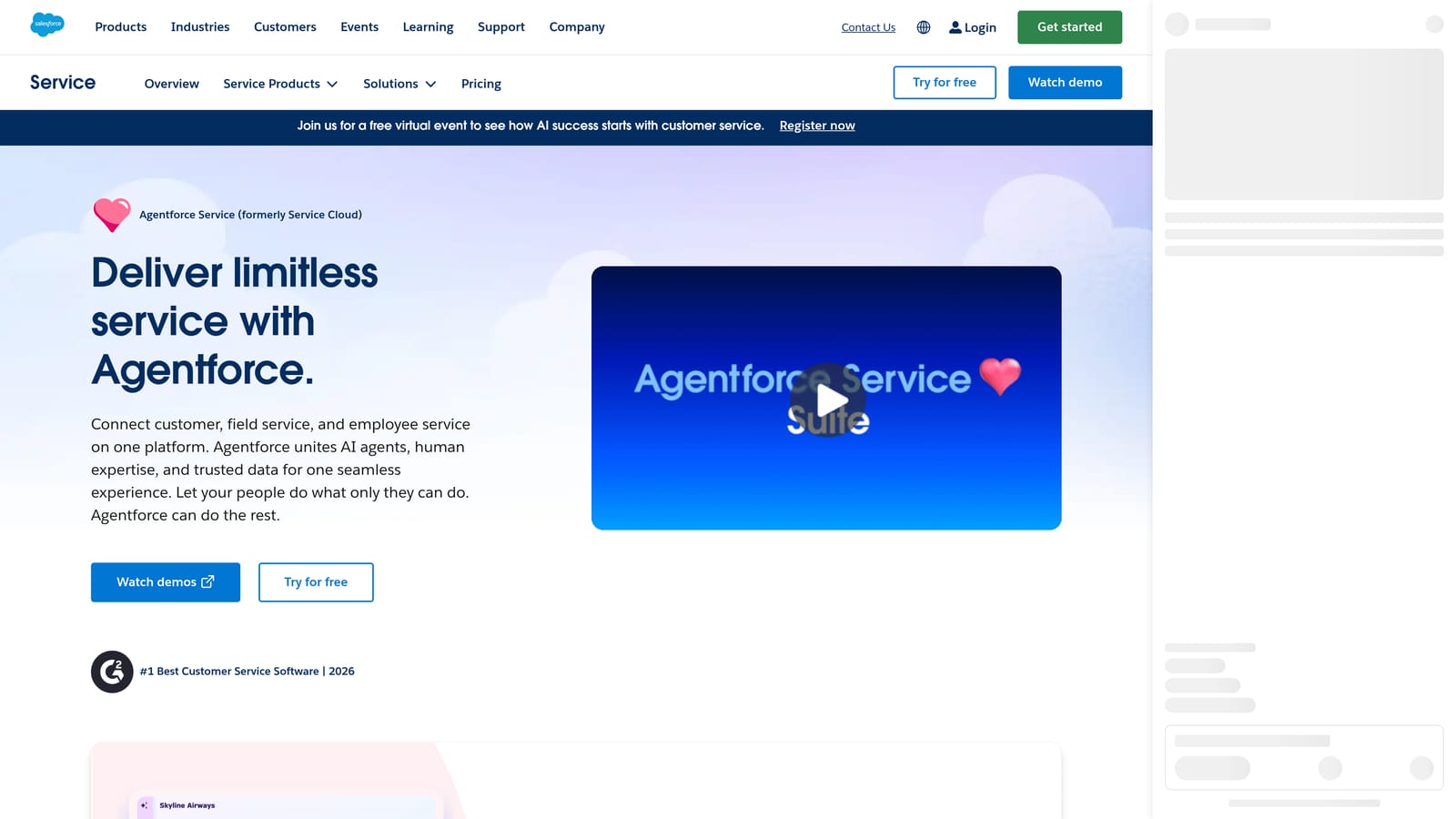
Salesforce Service Cloud is enterprise-grade support automation deeply integrated with Salesforce CRM, powered by Einstein AI — purpose-built for organizations where sales, service, and customer data live in a single platform.
Where This Tool Shines
If your fintech runs on Salesforce, Service Cloud is a natural extension rather than a separate tool. Einstein AI operates with access to the full customer record: financial history, sales interactions, account status, and support history in one place. That level of context is genuinely powerful for support agents handling complex, high-value customer relationships.
The Financial Services Cloud add-on adds purpose-built functionality for regulated industries, including household relationship mapping and compliance-relevant workflow configurations. For fintechs with enterprise sales motions and complex customer relationships, that depth is hard to replicate elsewhere.
Key Features
Einstein AI: Integrated with full Salesforce CRM data, enabling AI-powered suggestions and automation grounded in complete customer context.
Omnichannel Case Management: Routes and manages cases across channels with strong audit trail capabilities for compliance documentation.
Knowledge Base and Self-Service Portal: Enables customers to resolve common queries independently, reducing inbound volume.
Advanced Workflow Automation: Sophisticated escalation rules and automation logic for complex fintech support scenarios.
Financial Services Cloud Add-On: Purpose-built extensions for regulated industries, including compliance-relevant configurations and relationship management tools.
Best For
Enterprise fintechs already invested in the Salesforce ecosystem where consolidating customer data and support operations on a single platform is a strategic priority. Less compelling for teams not already using Salesforce, given the implementation complexity and cost.
Pricing
Enterprise per-user, per-month pricing. Implementation costs should be factored in alongside licensing, particularly for teams new to the Salesforce ecosystem.
6. Kustomer
Best for: High-volume transactional fintechs that need a unified customer timeline across every support touchpoint
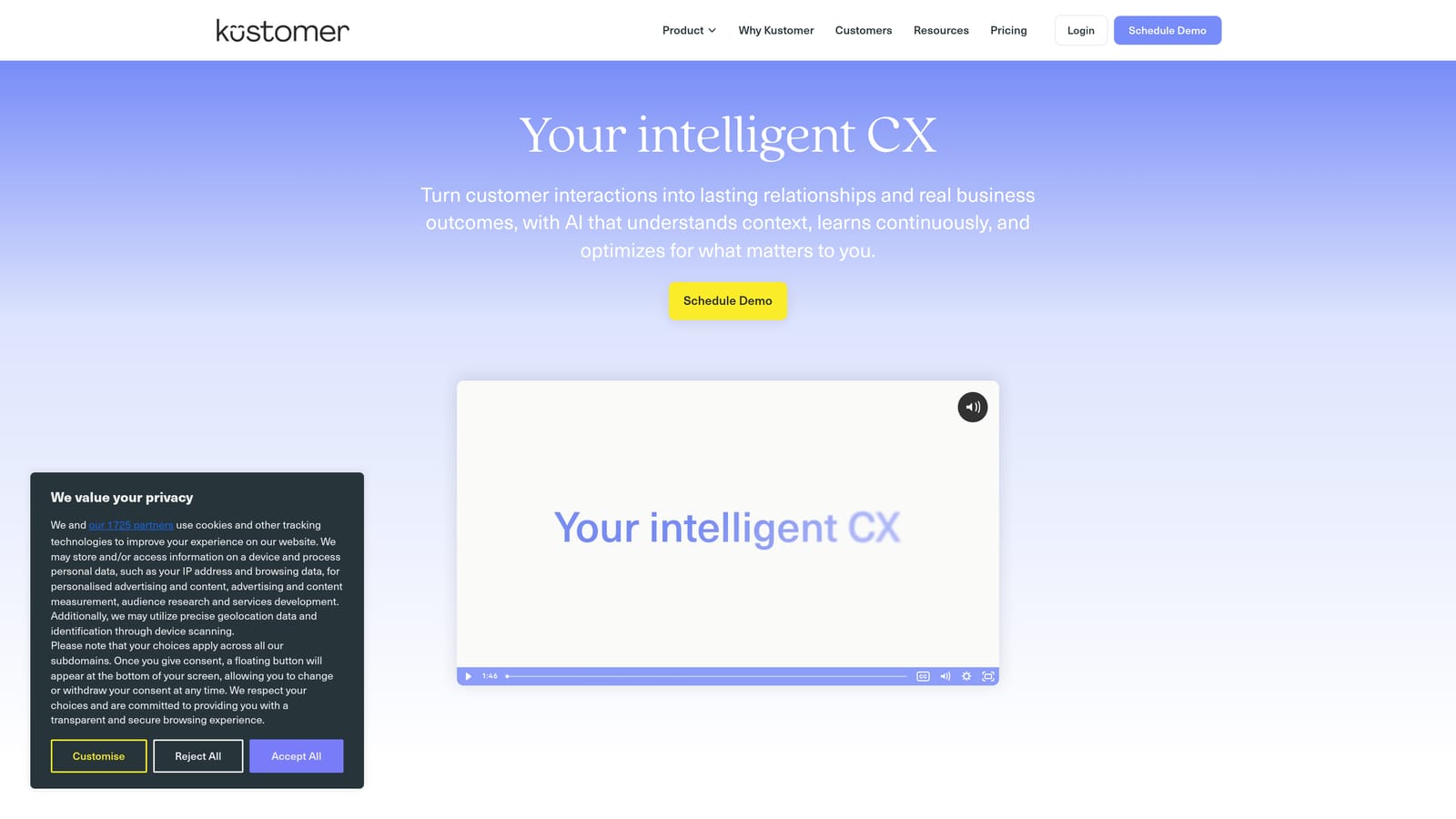
Kustomer is a conversation-first CRM and support platform that unifies every customer touchpoint into a single timeline — particularly suited to fintech operations where transaction history and support history need to live side by side.
Where This Tool Shines
Kustomer's unified timeline model is its defining strength. Rather than presenting support agents with isolated tickets, it shows the complete customer story: every conversation, transaction, and interaction in chronological order. For fintechs handling disputes, chargebacks, or onboarding issues, that context dramatically reduces the "can you explain your issue again?" moments that frustrate users.
The flexible data model is also worth noting. Kustomer allows custom objects and attributes, which means fintech teams can model their specific data structures — account types, verification statuses, transaction categories — directly within the platform rather than working around a rigid schema.
Key Features
Unified Customer Timeline: Aggregates all interactions across channels and touchpoints into a single chronological view for agents.
KIQ AI: Provides suggested replies and ticket deflection capabilities, reducing repetitive manual responses for common query types.
Strong Workflow Automation: Handles repetitive fintech query types with configurable automation rules and escalation logic.
Omnichannel Coverage: Manages chat, email, voice, and social from a unified workspace.
Flexible Data Model: Supports custom fintech objects and attributes, enabling teams to model their specific product and account structures within the platform.
Best For
High-volume transactional fintechs — payments companies, lending platforms, neobanks — where the relationship between support history and transaction history is critical to delivering effective, context-aware service.
Pricing
Per-agent, per-month pricing at enterprise-oriented rates. Best suited to teams with sufficient volume to justify the investment in a full CRM-plus-support platform.
7. Ada
Best for: Global fintech operations requiring multilingual AI self-service with API-driven personalization
Ada is an AI-first chatbot platform built for scalable, personalized self-service — with strong multilingual capabilities and API-driven personalization particularly suited to fintech companies operating across multiple markets.
Where This Tool Shines
Ada's no-code bot builder handles multi-turn financial conversations without requiring engineering resources for every update — a practical advantage for fintech teams where product and support workflows change frequently. The API integration layer allows real-time personalization using live account data, so the bot can respond with context specific to the individual user rather than generic help content.
The multilingual support is a genuine differentiator for international fintechs. Serving users across multiple languages and regulatory environments typically requires significant localization effort; Ada reduces that burden meaningfully for front-line query resolution.
Key Features
No-Code AI Bot Builder: Enables non-technical teams to build and iterate on complex, multi-turn financial conversation flows without engineering dependency.
Strong Multilingual Support: Handles queries across multiple languages, relevant for fintechs operating in international markets.
API Integration for Personalization: Connects to live account data to deliver personalized responses rather than generic help content.
Live Agent Handoff: Transfers conversations to human agents with context preserved for sensitive or complex escalations.
Analytics Dashboard: Tracks bot performance, containment rates, and escalation patterns to inform ongoing optimization.
Best For
Fintech companies operating across multiple countries and languages where multilingual self-service is a core requirement. Also well-suited to teams that want significant control over conversation design without heavy engineering involvement.
Pricing
Enterprise pricing; contact Ada directly for a quote based on conversation volume and integration requirements.
8. Dixa
Best for: Fintech teams running blended voice and digital support operations that need intelligent unified routing
Dixa is a conversation-first support platform with intelligent routing and a unified agent workspace — well-suited to fintech operations where phone support for sensitive account issues runs alongside digital channels.
Where This Tool Shines
Many fintech support operations run a mixed model: chat and email for routine queries, voice for sensitive account issues like fraud disputes or large transaction verification. Dixa's strength is unifying those channels without forcing agents to switch between disconnected systems. The dynamic routing engine directs conversations to the right agent based on skills, availability, and conversation context across all channels simultaneously.
Dixa Agent AI provides in-conversation assistance — surfacing suggested responses and relevant knowledge base content in real time while agents are engaged with customers. That kind of augmentation is particularly useful in fintech, where agents often need to navigate complex product knowledge quickly under pressure.
Key Features
Dynamic Conversation Routing: Intelligently routes voice, chat, and email conversations based on agent skills, availability, and conversation context.
Dixa Agent AI: Provides real-time suggested responses and knowledge surfacing to assist agents during live conversations.
Unified Agent Workspace: Consolidates all channels into a single interface, reducing context-switching and improving agent focus.
Real-Time and Historical Reporting: Tracks performance across channels with both live dashboards and historical trend analysis.
Strong Voice Channel Support: Handles phone-based support effectively, critical for fintechs where sensitive account calls require a human touch with full context.
Best For
Fintech teams with meaningful phone support volume alongside digital channels. Particularly relevant for companies handling high-sensitivity calls — fraud disputes, large transfers, account recovery — where voice remains the preferred channel for users and agents alike.
Pricing
Per-agent, per-month pricing. Contact Dixa for current rates based on channel mix and team size.
9. Tidio
Best for: Early-stage fintech startups that need automation running quickly without significant budget or engineering overhead
Tidio is an accessible AI chat and automation platform with Lyro AI handling FAQ-level queries — a practical entry point for fintech startups that need automation without the complexity or cost of enterprise platforms.
Where This Tool Shines
Tidio's primary advantage is speed to value. The deployment is fast, the setup is minimal, and Lyro AI starts handling common queries almost immediately. For a fintech startup in the early stages — where the support team might be one or two people and the query volume is manageable but growing — that accessibility is genuinely valuable.
The live chat with agent takeover capability means the transition from automated to human handling is smooth, which matters in fintech where some queries simply require a human. Tidio won't replace a more sophisticated platform as your operation scales, but it's a sensible starting point that gets automation in place without a lengthy procurement and implementation cycle.
Key Features
Lyro AI Chatbot: Handles automated resolution of common support queries, reducing inbound volume for small support teams.
Fast Deployment: Minimal technical setup required, enabling fintech startups to get automation running quickly without dedicated engineering resources.
Live Chat with Agent Takeover: Allows human agents to step into conversations seamlessly when queries exceed the bot's capability.
Integration with Common SaaS Platforms: Connects with widely used tools, though fintech-specific integrations are more limited compared to enterprise alternatives.
Affordable Pricing with Free Tier: Accessible entry point for pre-revenue or early-stage teams testing automation before committing to a larger platform.
Best For
Fintech startups in the early stages of scaling support who need automation running fast and affordably. Teams that have outgrown manual email support but aren't yet ready for the complexity or cost of enterprise platforms.
Pricing
Free tier available with meaningful functionality. Paid plans start affordably and scale with usage, making Tidio one of the most accessible options on this list for budget-constrained teams.
Choosing the Right Tool for Your Fintech Stage
The best support automation tool for your fintech depends on where you are, what your stack looks like, and what you actually need beyond ticket deflection.
Early-stage startups with budget constraints should start with Tidio or Freshdesk. Both get automation running fast without significant engineering lift or enterprise-level spend. You can always migrate when your volume and complexity demand it.
Growth-stage B2B fintechs looking for an AI-native platform that learns, connects to their full stack (Stripe, HubSpot, Linear, Slack), and surfaces business intelligence beyond ticket counts should evaluate Halo AI as a primary solution. The combination of page-aware guidance, smart inbox intelligence, and continuous learning is particularly well-matched to fintech products with complex user journeys.
Teams already invested in Intercom or Salesforce can extend those platforms with their native AI layers — Fin and Einstein respectively — without rearchitecting their support operations. The tradeoff is that you're working within an existing platform's constraints rather than starting with AI-first architecture.
Enterprise fintechs with complex compliance and SLA requirements will find Zendesk or Salesforce Service Cloud the most defensible choice. Both offer the audit trails, SLA management, and integration breadth that regulated financial institutions need to demonstrate process control.
The fintech-specific criteria that should drive your evaluation: Does the tool handle sensitive financial queries with appropriate escalation logic? Can it integrate with your payment processor and CRM without custom engineering? Does it surface business intelligence — churn signals, anomalies — not just deflect tickets?
The best support automation for fintech isn't just about reducing ticket volume. It's about building a support layer that makes your entire product smarter. Your support team shouldn't scale linearly with your customer base. See Halo in action and discover how continuous learning transforms every interaction into faster, smarter support — without adding headcount.