9 Best Support Automation Tools for Mobile Apps in 2026
This guide evaluates nine support automation tools for mobile apps, comparing mobile-native capabilities, AI sophistication, and integration depth to help product teams resolve user issues in real time, reduce churn, and deliver seamless in-app support experiences without disrupting user workflows.
 Grant CooperFounder13 min read
Mobile app users expect instant, in-context help. They're not willing to wait for an email reply or dig through a web-based FAQ while staring at an error screen. When someone hits a friction point inside your app, you have seconds before they abandon the session or, worse, uninstall entirely.
Support automation for mobile apps bridges that gap by resolving common issues in real time, routing complex problems to the right agents, and capturing bug reports without pulling users out of their workflow. But not every automation tool is built with mobile in mind. Some are web-first platforms with a mobile SDK bolted on; others are purpose-built for in-app experiences.
In this guide, we've evaluated nine tools based on mobile-native capabilities, AI sophistication, integration depth, and pricing transparency to help you find the right fit for your product and team.
1. Halo AI
Best for: B2B product teams wanting AI-first resolution with page-aware context and continuous learning
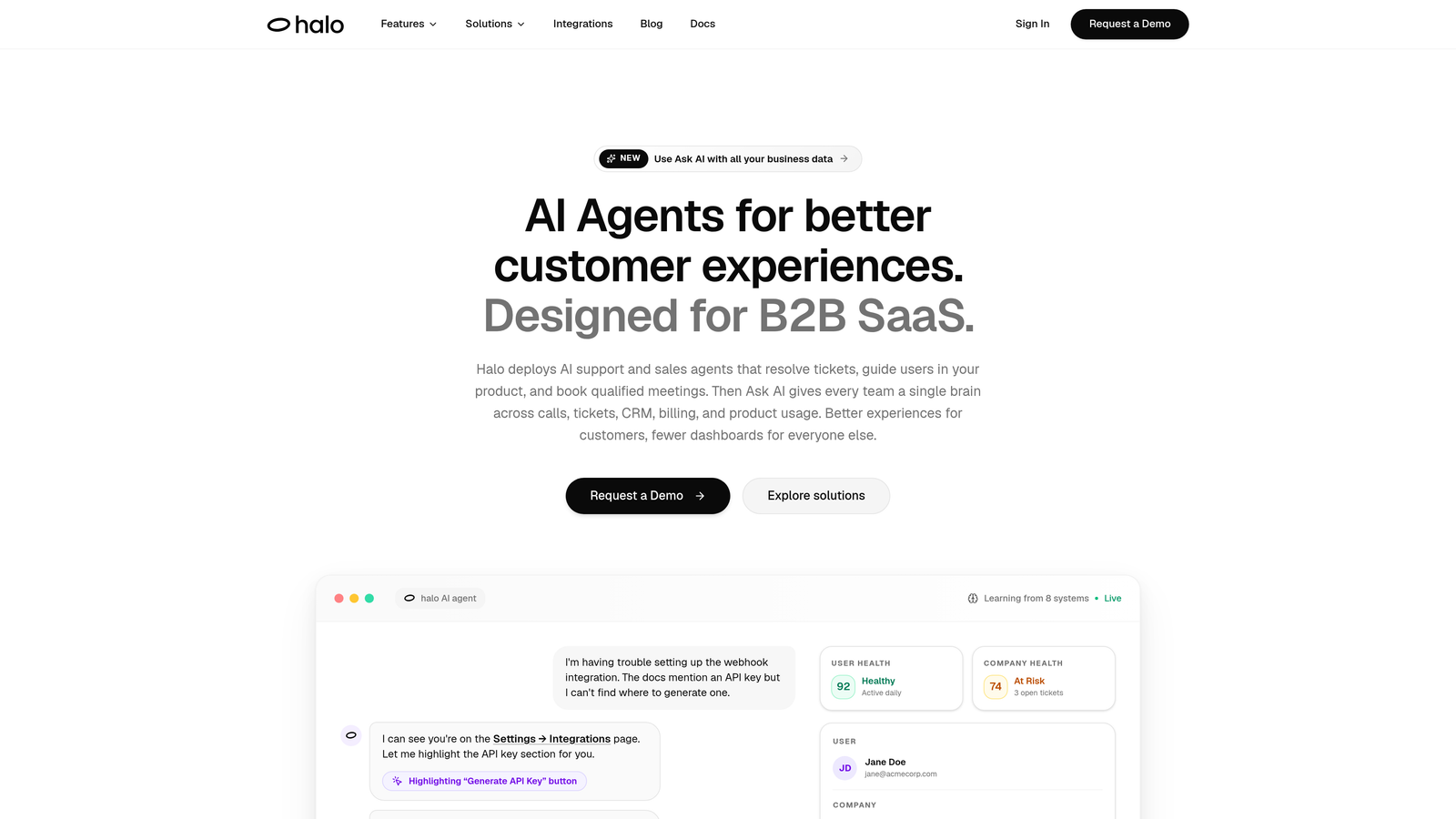
Halo AI is an AI-first customer support platform that deploys intelligent agents to resolve tickets, guide users through your product, and create bug reports autonomously.
Where This Tool Shines
What sets Halo apart in the mobile support space is its page-aware context engine. The AI agent doesn't just see a chat message — it sees what the user sees, including their current screen and UI state. That means it can provide step-by-step visual guidance that's actually relevant to where the user is stuck, rather than generic help center links.
Halo is also built as an AI-first architecture rather than a bolt-on chatbot layer. It learns continuously from every interaction, which means resolution quality improves over time without manual retraining. For teams that need support to scale without scaling headcount, that compounding intelligence is a meaningful differentiator.
Key Features
Page-Aware AI Agents: Understands the user's current screen and provides visual UI guidance specific to their context, not generic answers.
Autonomous Ticket Resolution: Handles multi-step support workflows end-to-end, with smart escalation to live agents when complexity demands it.
Auto Bug Ticket Creation: Automatically generates bug reports and routes them to Linear, Slack, or other dev tools without requiring user action.
Business Intelligence Analytics: Surfaces customer health signals, revenue intelligence, and anomaly detection — turning support data into product insights.
Multi-System Integrations: Connects with Intercom, Stripe, HubSpot, Zoom, PandaDoc, and Fathom for a unified view of every customer interaction.
Best For
B2B SaaS teams and product organizations that want AI agents handling routine tickets autonomously while capturing product intelligence. Particularly strong for teams already using Intercom or Slack who want to layer genuine AI resolution on top of their existing stack.
Pricing
Contact for pricing. Designed for B2B teams scaling support operations without proportionally scaling headcount.
2. Intercom
Best for: Teams wanting a unified platform for support, onboarding, and engagement across web and mobile
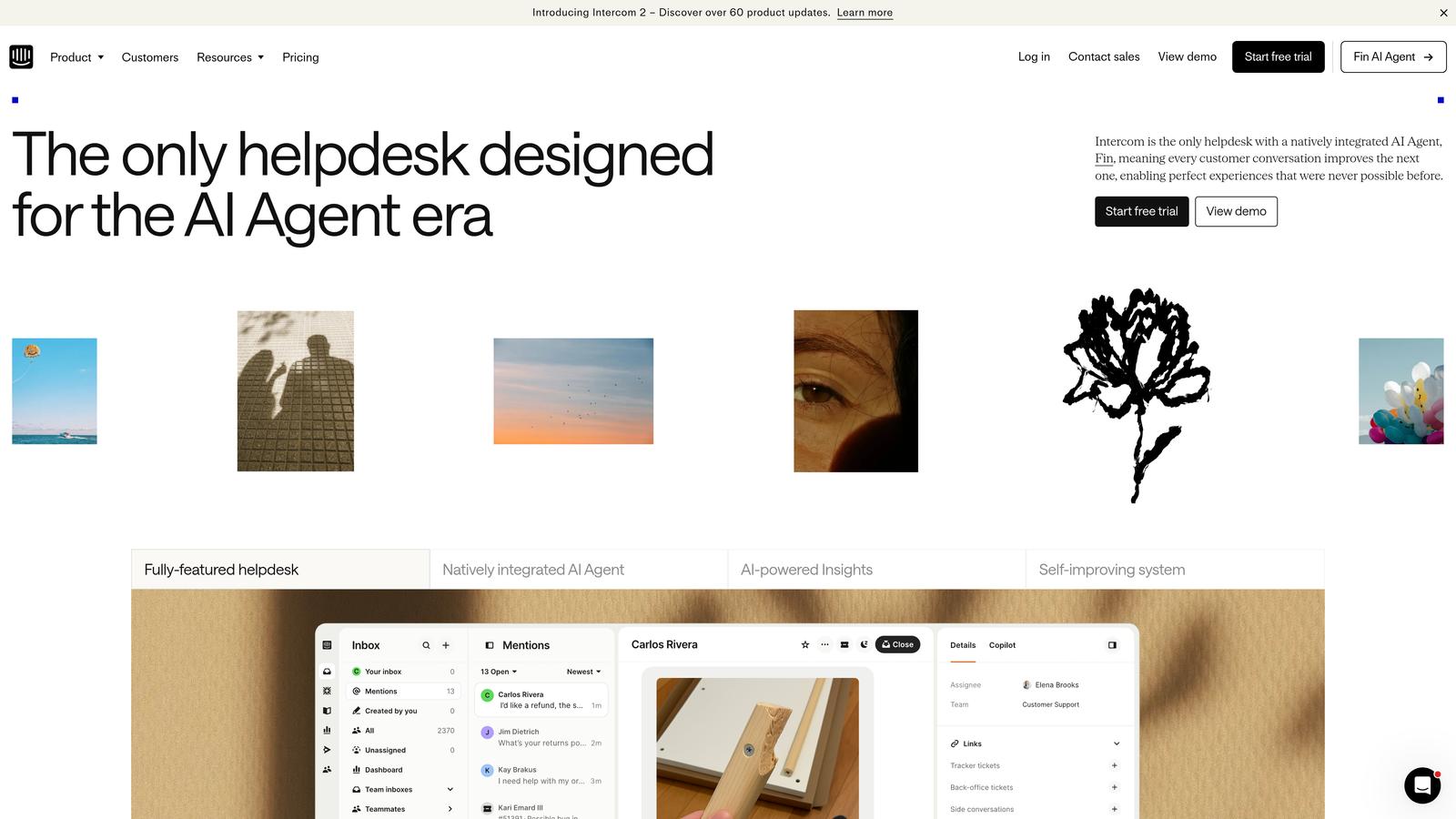
Intercom is a unified customer messaging platform combining Fin AI agent capabilities with a rich mobile SDK and automation workflows that span the full customer lifecycle.
Where This Tool Shines
Intercom's strength is breadth. It handles support, product tours, in-app messaging, and proactive engagement from a single platform, which reduces the number of tools your team needs to manage. The Fin AI agent is trained on your help center content and can resolve a meaningful portion of incoming queries without human involvement.
The mobile SDK is mature and supports rich messaging formats including carousels, buttons, and quick replies that feel native rather than web-embedded. For teams that want to move beyond reactive support into proactive in-app guidance, Intercom offers solid tooling in one package.
Key Features
Fin AI Agent: Automated resolution trained directly on your help center content with configurable escalation paths.
Native Mobile SDK: Rich messaging support on iOS and Android with carousels, buttons, and quick reply formats.
Workflow Automation Builder: Custom bots and conditional routing logic built through a visual interface.
Product Tours and In-App Messaging: Proactive onboarding and feature announcement tools alongside reactive support.
Conversation Analytics: Reporting on resolution rates, response times, and CSAT across channels.
Best For
Growth-stage and mid-market teams that want support, onboarding, and engagement under one roof. Works especially well when your support and product teams share tooling and workflows.
Pricing
Starts at $39/seat/month on the Essential plan. Fin AI usage is billed per resolution, so costs can scale with volume.
3. Zendesk
Best for: Enterprise teams with complex omnichannel support operations and high integration requirements
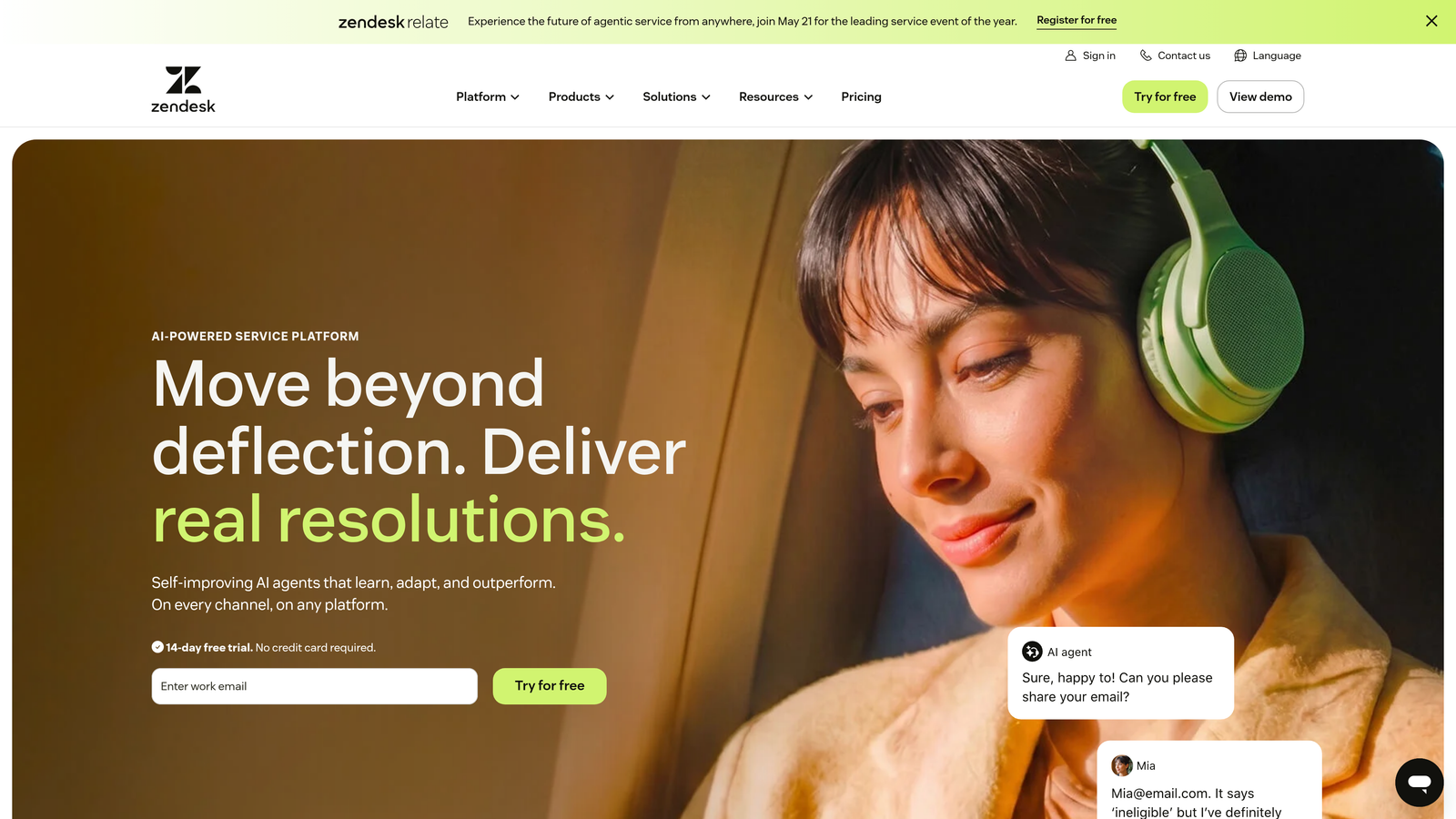
Zendesk is an enterprise-grade omnichannel support platform with mature mobile SDKs, AI-powered ticket deflection, and an extensive integration marketplace.
Where This Tool Shines
Zendesk's maturity shows in its depth. The platform handles complex routing logic, SLA management, and reporting at a scale that few competitors match. For enterprise teams with dedicated support operations, the breadth of configuration options and the 1,500+ app marketplace mean it can fit into almost any existing tech stack.
The mobile SDK covers iOS and Android with native in-app support capabilities. Generative AI features have been layered into the platform for ticket summarization, suggested responses, and Answer Bot deflection. It's not the most AI-native architecture, but the ecosystem around it is hard to beat.
Key Features
Mobile SDK: Native in-app support for iOS and Android with customizable UI components.
Answer Bot and Generative AI: Ticket deflection through AI-powered suggestions and automated responses.
Omnichannel Routing: Unified queue management across email, chat, phone, social, and in-app channels.
App Marketplace: Over 1,500 integrations covering CRM, analytics, e-commerce, and developer tooling.
Advanced Analytics: Custom dashboards and reporting with Explore, Zendesk's analytics layer.
Best For
Enterprise support operations with large agent teams, complex routing requirements, and existing investments in the Zendesk ecosystem. Less ideal for small teams looking for quick setup or AI-first resolution.
Pricing
Support Team plans start at $19/agent/month. Suite plans (which include omnichannel and AI features) start at $55/agent/month.
4. Freshdesk (Freshworks)
Best for: Growing teams seeking AI-assisted automation at competitive price points
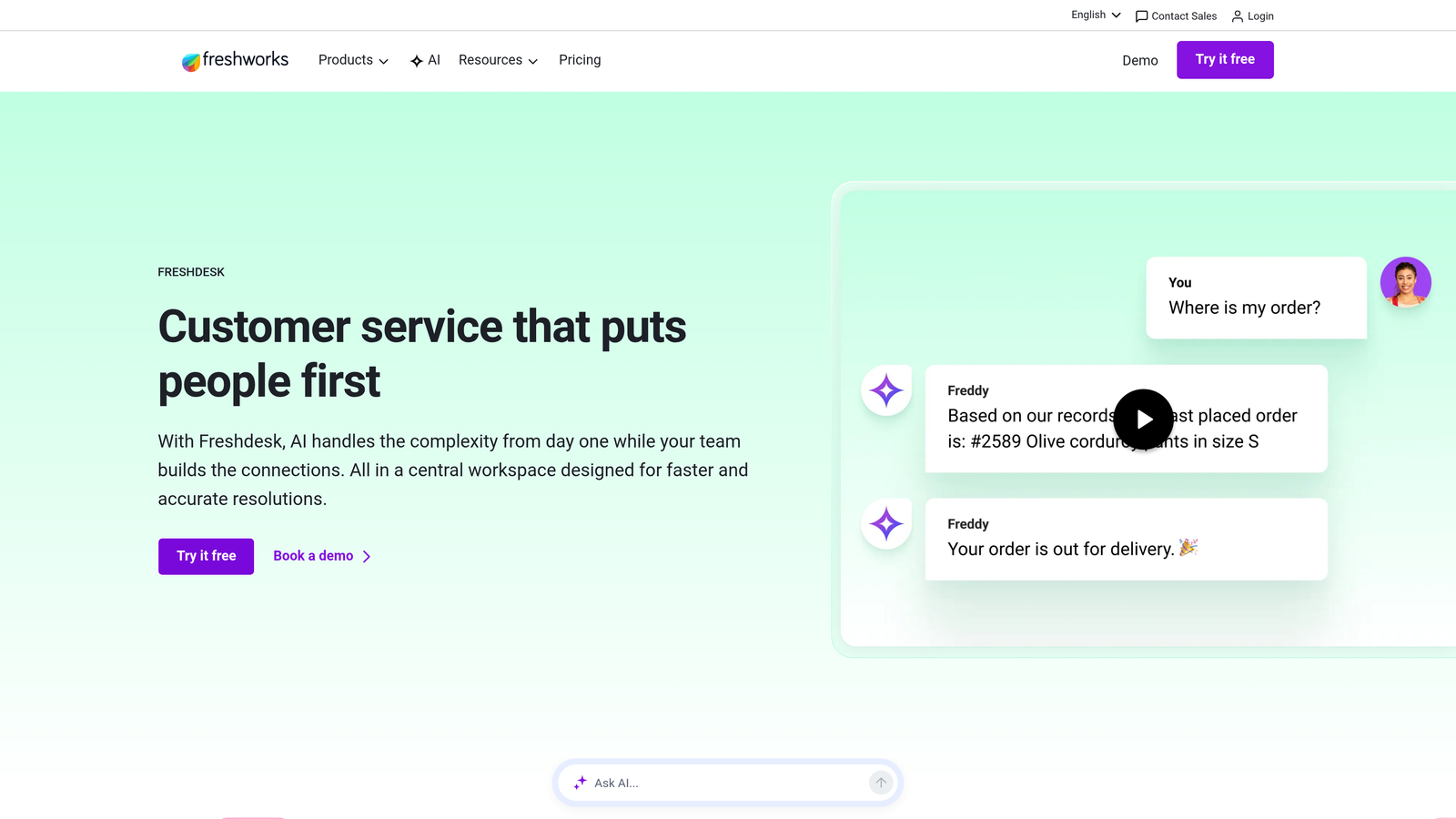
Freshdesk is a mid-market helpdesk platform with Freddy AI for auto-triage and resolution, a capable mobile SDK, and pricing that makes automation accessible to teams earlier in their growth.
Where This Tool Shines
Freshdesk occupies a practical middle ground: more accessible than Zendesk in price and complexity, more capable than entry-level tools in AI and automation features. Freddy AI handles ticket classification, suggested responses, and resolution suggestions without requiring significant configuration overhead.
The free tier is genuinely useful for small teams getting started with support automation, and the upgrade path is gradual enough that teams don't face a pricing cliff as they grow. The mobile SDK supports in-app ticketing and chat, though it's less feature-rich than purpose-built mobile platforms.
Key Features
Freddy AI: Automated ticket classification, suggested agent responses, and resolution recommendations.
Mobile SDK: In-app ticketing and chat support for iOS and Android applications.
Scenario Automations: Multi-step automation workflows triggered by ticket conditions and SLA rules.
AI-Powered Knowledge Base: Article suggestions surfaced automatically based on ticket content.
Free Tier: Functional free plan supporting up to 2 agents, useful for early-stage teams.
Best For
SMBs and mid-market teams that want solid helpdesk fundamentals with AI assistance at a lower cost than enterprise alternatives. A strong choice when budget is a primary constraint.
Pricing
Free plan available for up to 2 agents. Paid plans start at $15/agent/month, scaling with features and team size.
5. Helpshift
Best for: Mobile gaming studios and consumer apps with high-volume, in-app support needs
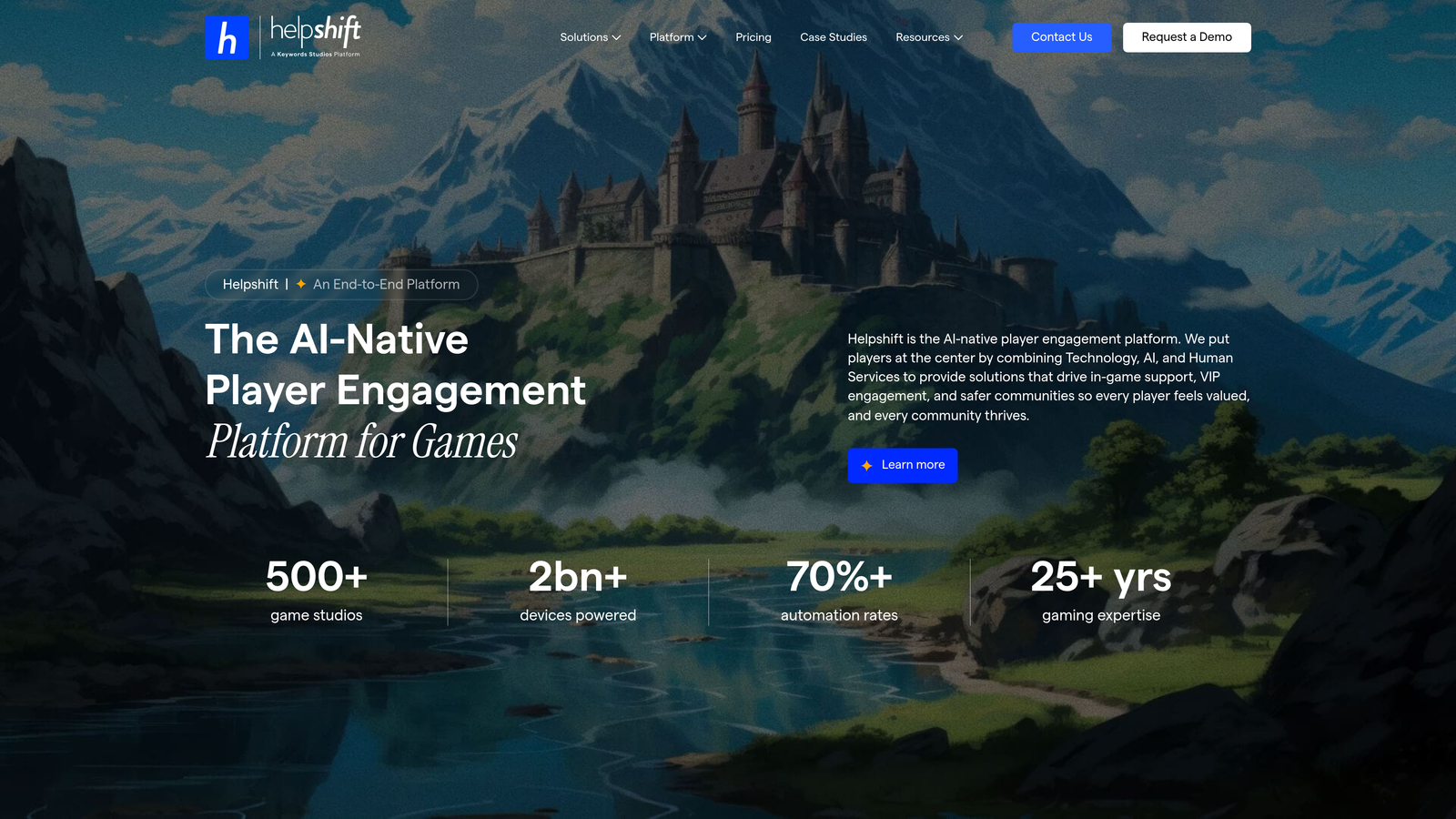
Helpshift is a mobile-native support platform purpose-built for apps and games, featuring in-app messaging, AI-powered bots, and automation designed specifically for high-volume mobile environments.
Where This Tool Shines
Helpshift is one of the few platforms in this list that was designed for mobile from the ground up rather than adapted from a web-first product. The SDKs for iOS, Android, Unity, and Cocos2d-x are deep and performant, and the in-app messaging experience feels genuinely native rather than a web view wrapped in a container.
For mobile gaming companies in particular, Helpshift's architecture handles the scale and speed requirements that consumer apps demand. AI-powered intent detection routes users to the right resolution path quickly, and smart FAQ surfacing based on the user's current screen context reduces unnecessary escalations.
Key Features
Purpose-Built Mobile SDKs: Native SDKs for iOS, Android, Unity, and Cocos2d-x with deep platform integration.
Native In-App Messaging: Chat experience designed to feel like part of the app, not a bolted-on widget.
AI Intent Detection: Automated issue routing and resolution based on detected user intent.
Contextual FAQ Surfacing: Help content surfaced based on the user's current screen and game state.
High-Volume Architecture: Built to handle the scale of consumer gaming and app support at peak load.
Best For
Mobile gaming studios, consumer app companies, and any team where in-app support volume is extremely high and the native feel of the support experience is non-negotiable.
Pricing
Custom pricing based on monthly active users and support volume. Contact Helpshift for a quote tailored to your scale.
6. Ada
Best for: CX teams building multilingual, cross-channel AI agents without engineering resources
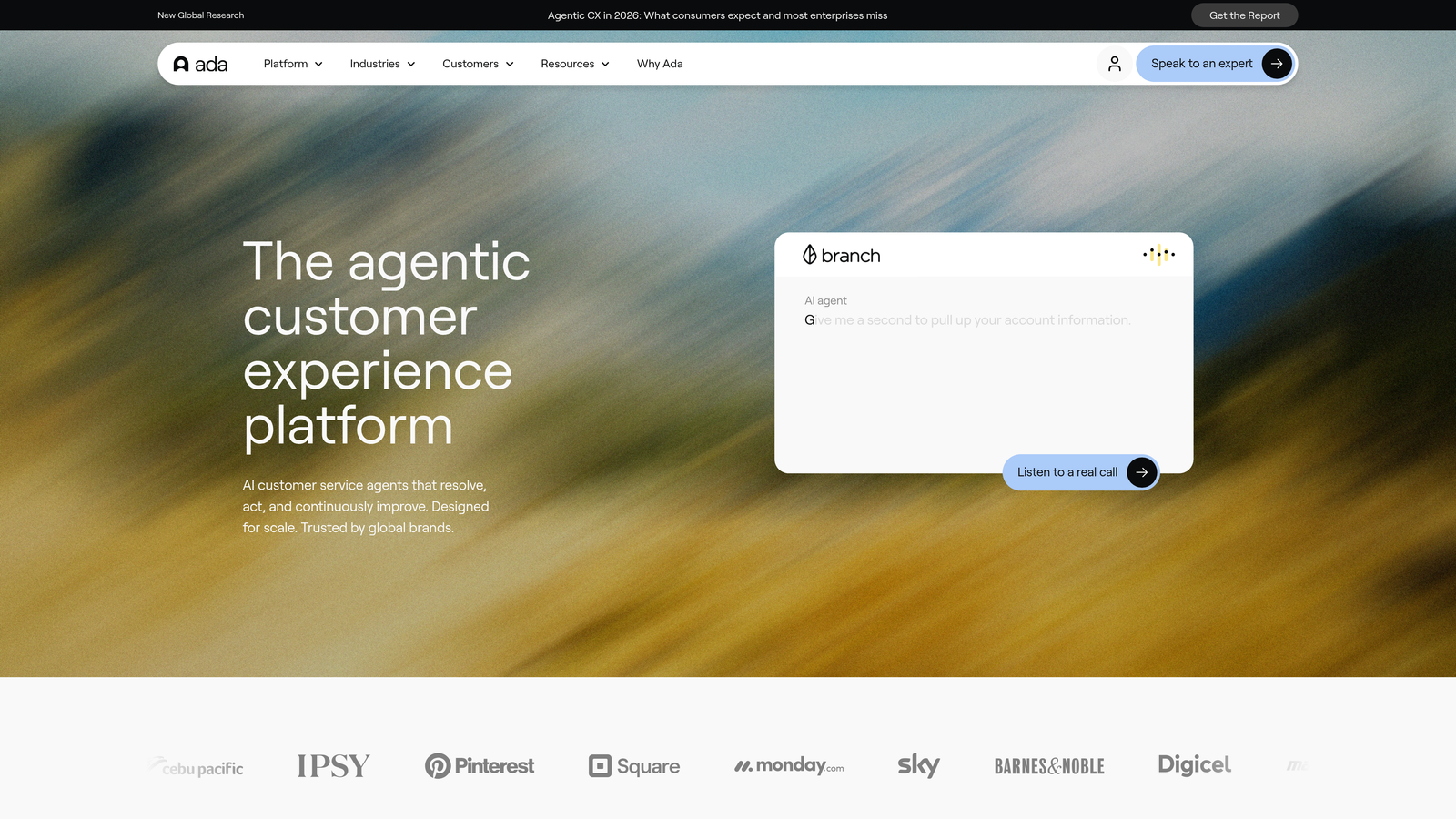
Ada is an AI-first automation platform that enables CX teams to build and deploy conversational AI across mobile, web, and messaging channels using a no-code builder.
Where This Tool Shines
Ada's differentiator is accessibility for non-technical teams. The no-code AI agent builder allows CX managers and operations teams to create, test, and deploy conversational flows without writing a line of code or waiting on engineering sprints. That independence matters for teams that need to iterate quickly on support experiences.
The multilingual capability is genuinely broad, supporting over 50 languages out of the box. For companies with a global mobile user base, that's a significant operational advantage over tools that require separate configurations per language or region.
Key Features
No-Code AI Agent Builder: Generative AI resolution flows built and managed by CX teams without engineering dependencies.
Multilingual Support: Automated support across 50+ languages without separate configuration per language.
Cross-Channel Deployment: Mobile SDK, web chat, WhatsApp, and SMS from a single platform.
Multi-Step Reasoning Engine: Handles complex, conditional support workflows beyond simple FAQ deflection.
Resolution Analytics: Dashboard tracking resolution rates, CSAT scores, and automation performance.
Best For
Mid-market and enterprise companies with global mobile audiences where CX teams need to own and iterate on AI agents independently, without relying on engineering for every update.
Pricing
Custom pricing; typically positioned for mid-market and enterprise budgets. Contact Ada for a tailored quote.
7. Tidio
Best for: Small teams and early-stage apps looking for fast setup and a generous free tier
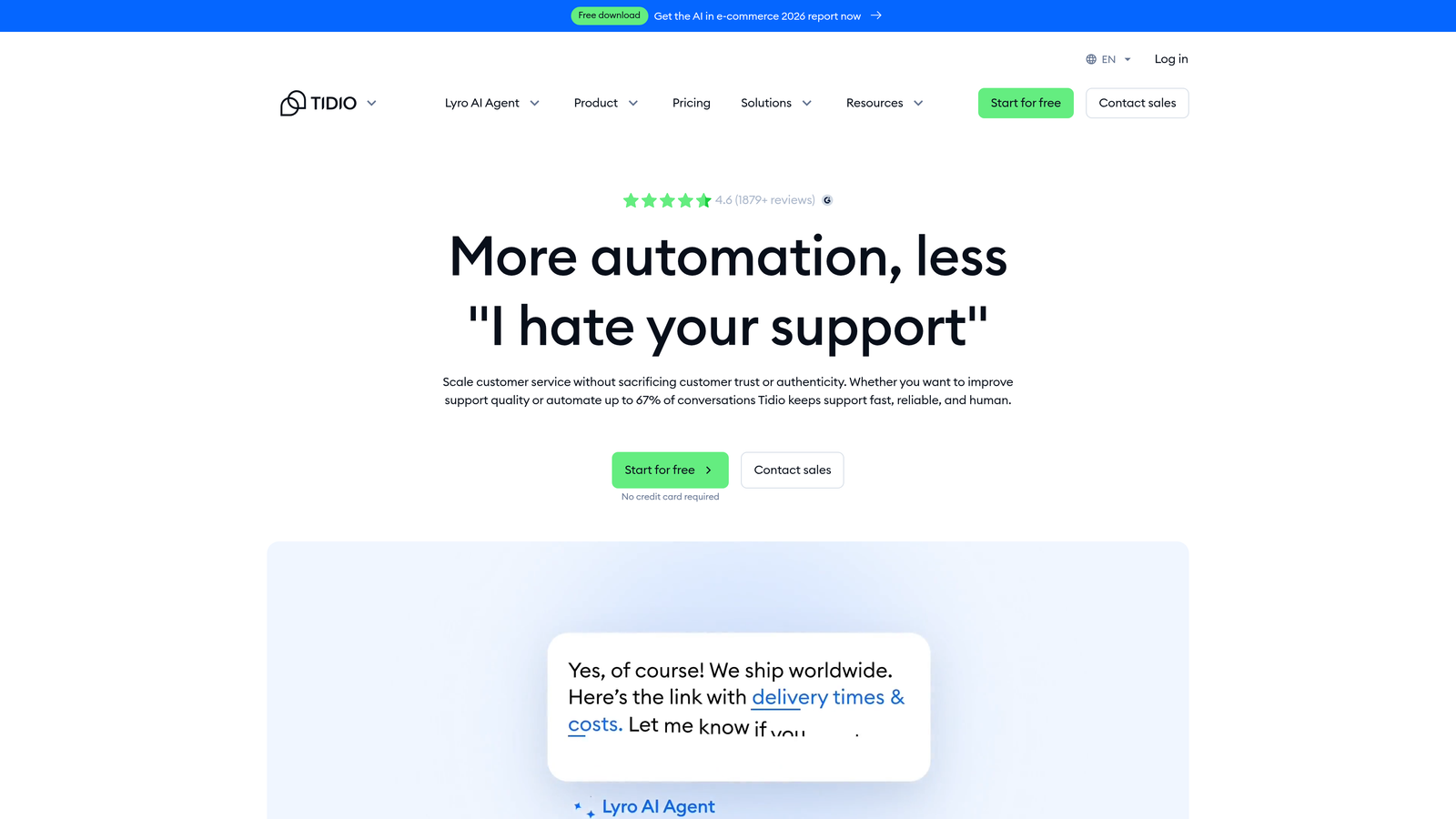
Tidio is an accessible chatbot and live chat platform featuring the Lyro AI assistant, a visual flow builder, and a free tier that gets small teams automating quickly.
Where This Tool Shines
Tidio lowers the barrier to entry for support automation significantly. The visual drag-and-drop flow builder is approachable for teams without dedicated CX operations staff, and Lyro AI can be trained on your existing content to handle conversational support without complex configuration.
For early-stage mobile apps or small product teams testing automation before committing to a larger platform, Tidio's free plan provides real utility rather than a heavily restricted trial. The chat widget is mobile-responsive, though it's worth noting that Tidio is more web-centric than mobile-native in its architecture.
Key Features
Lyro AI Chatbot: Conversational AI assistant trained on your support content for automated query resolution.
Visual Flow Builder: Drag-and-drop chatbot builder for creating automation sequences without coding.
Mobile-Responsive Widget: Customizable chat widget that adapts to mobile screen sizes.
Live Chat with Visitor Tracking: Real-time visitor monitoring with canned responses for agent efficiency.
Free Plan: Up to 50 Lyro conversations per month at no cost, useful for validating automation before scaling.
Best For
Small teams, indie developers, and early-stage startups that want to start automating support quickly without a significant upfront investment. Best suited for mobile web apps rather than deeply native mobile experiences.
Pricing
Free plan available with 50 Lyro conversations/month. Paid plans start at $29/month and scale with conversation volume and features.
8. Drift (Salesloft)
Best for: B2B mobile web apps where support conversations frequently connect to sales or renewal workflows
Drift is a conversational AI platform that blends support automation with sales acceleration, now part of the Salesloft ecosystem.
Where This Tool Shines
Drift's positioning is distinct from the other tools in this list: it treats support and sales as connected motions rather than separate functions. For B2B SaaS companies where a support interaction might reveal an upsell opportunity or a renewal risk, Drift's account-based targeting and CRM integrations make that connection explicit.
The platform is optimized for mobile web experiences rather than native app SDKs, which is an important consideration. If your primary mobile surface is a responsive web app or a mobile browser experience, Drift's conversational landing pages and mobile-optimized chat perform well. For deeply native iOS/Android apps, other tools in this list are better suited.
Key Features
AI-Powered Chatbots: Support and sales routing logic in a single conversation flow.
Account-Based Targeting: Personalized in-app experiences based on company, role, or account health data.
Mobile-Optimized Conversational Pages: Landing pages and chat experiences designed for mobile web.
CRM Integrations: Native connections to Salesforce, HubSpot, and major CRM platforms.
Meeting Scheduling and Live Handoff: In-chat calendar booking and seamless transfer to sales or support reps.
Best For
B2B SaaS companies using mobile web apps where support, sales, and customer success overlap. Less suited for consumer mobile apps or teams that need deep native SDK integration.
Pricing
Custom pricing; positioned for mid-market and enterprise B2B. Contact Salesloft for current Drift pricing.
9. Kommunicate
Best for: Developer teams wanting flexible bot integration with native mobile SDKs and custom NLP
Kommunicate is a developer-friendly support automation platform with open-source roots, native mobile SDKs for iOS, Android, and Flutter, and flexible bot integration options.
Where This Tool Shines
Kommunicate's appeal is flexibility. Rather than locking you into a proprietary AI engine, it integrates with Dialogflow, IBM Watson, and custom NLP models, allowing teams to bring their own bot intelligence and use Kommunicate as the conversation management and handoff layer. That's a meaningful advantage for engineering teams with existing AI investments.
The SDK coverage is broad, including React Native and Flutter alongside iOS and Android, which makes it practical for cross-platform development teams. The customizable chat UI allows the support widget to match your app's design system closely, which matters for products where brand consistency is a priority.
Key Features
Cross-Platform SDKs: Native support for iOS, Android, React Native, and Flutter applications.
Flexible Bot Integration: Connects with Dialogflow, IBM Watson, and custom NLP models rather than requiring a proprietary AI engine.
Bot-to-Human Handoff: Seamless escalation to live agents with full conversation context preserved.
Customizable Chat UI: Design system-friendly widget that can be styled to match your app's visual language.
CSAT and Analytics: Built-in satisfaction collection and conversation reporting without additional integrations.
Best For
Engineering-led teams that want control over their AI stack and need a conversation management layer that works with existing NLP investments. Strong choice for cross-platform Flutter or React Native apps.
Pricing
Lite plan starts at $100/month. A free trial is available to evaluate the platform before committing.
Choosing the Right Mobile Support Automation Stack
The right tool depends heavily on your team's size, technical resources, and the nature of your mobile product. Here's a quick framework to help you narrow it down.
Early-stage or small teams: Start with Tidio for low-cost entry or Freshdesk if you need a full helpdesk foundation. Both offer free tiers that let you validate automation before committing budget.
Mobile gaming and high-volume consumer apps: Helpshift is the specialist here. Its mobile-native architecture and purpose-built SDKs for Unity and Cocos2d-x are difficult to match with general-purpose platforms.
Enterprise with complex operations: Zendesk's depth, marketplace, and omnichannel routing make it a natural fit. Expect more setup time and higher per-seat costs in exchange for configurability at scale.
B2B SaaS teams wanting AI-first resolution: This is where Halo AI and Ada stand out. Both lead with autonomous resolution rather than simple deflection. Halo's page-aware context engine is particularly valuable for product-led growth companies where the support experience needs to reflect exactly where a user is inside the product.
Developer-led teams with existing AI investments: Kommunicate's flexible bot integration layer gives engineering teams control without rebuilding from scratch.
For B2B product teams that want support to scale intelligently rather than linearly, the direction is clear: AI agents that understand your product, learn from every interaction, and surface business intelligence back to your team. Your support team shouldn't grow in direct proportion to your customer base. AI agents can handle routine tickets, guide users through your product, and flag bug patterns while your team focuses on the complex issues that genuinely need a human touch. See Halo in action and discover how continuous learning transforms every interaction into smarter, faster support.