9 Best Support Automation Integration Tools in 2026
Discover the 9 best support automation integration tools of 2026, evaluated for B2B teams looking to reduce ticket volume without scaling headcount. This guide compares platforms that connect helpdesks, CRMs, product analytics, and communication channels into unified resolution engines, helping you identify whether AI-native or legacy-enhanced solutions best fit your support stack's automation and integration needs.
 Matt PattoliFounder14 min read
Modern B2B support teams are caught in a difficult position: ticket volume keeps climbing while customers expect faster, more accurate answers than ever. The instinct is to hire more agents, but that approach doesn't scale gracefully. The smarter path is connecting your support layer to the rest of your business stack so that resolution happens automatically, in context, and without a human touching every ticket.
Support automation integration tools have matured significantly. Today's best platforms go far beyond simple chatbots or ticket routing. They connect helpdesks, CRMs, product analytics, bug trackers, and communication channels into a unified resolution engine. The difference between them often comes down to a fundamental architectural question: is AI the core resolution mechanism, or is it a layer added on top of legacy helpdesk workflows?
This list covers the top tools standing out in 2026 for teams evaluating how to automate, integrate, and scale their support operations. Whether you're looking for an AI-first agent, a workflow automation connector, or a full-featured helpdesk with AI capabilities, you'll find a fit here. Selection criteria: integration depth, AI capability, ease of deployment, and fit for B2B SaaS teams.
1. Halo AI
Best for: B2B SaaS teams that want AI-native support with deep business stack integrations
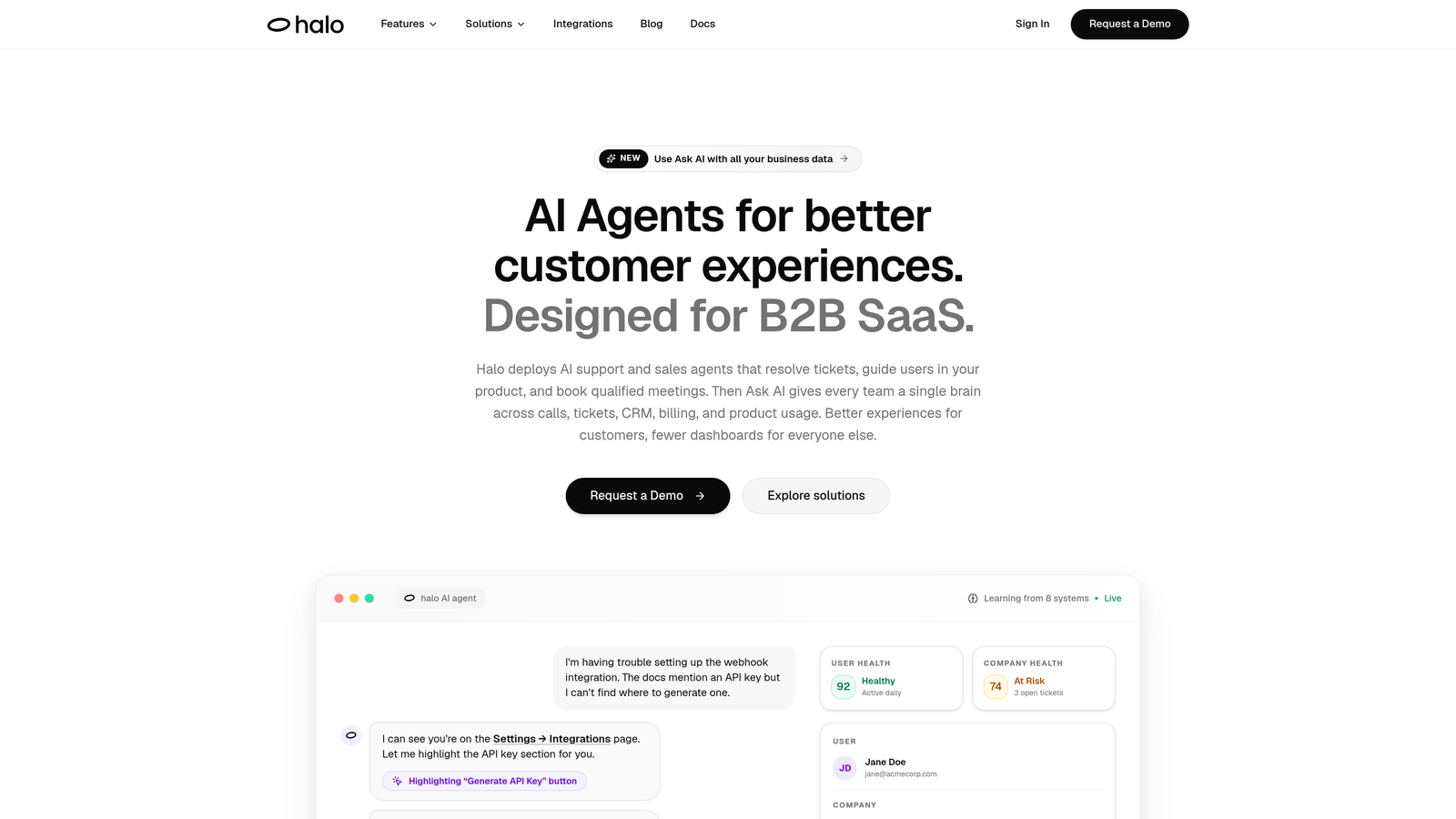
Halo AI is an AI-first customer support platform that deploys intelligent agents to resolve tickets, guide users through your product, and auto-create bug reports while learning from every interaction.
Where This Tool Shines
What separates Halo AI from most tools on this list is architectural intent. It wasn't built as a helpdesk with AI bolted on. The AI agent is the resolution engine, not an assistant. This means tickets get resolved autonomously, with human escalation reserved for genuinely complex issues rather than anything the system isn't confident about.
The page-aware context is a standout capability. When a user reaches out, Halo's agent sees what the user sees: the specific page, UI state, and context of their session. That eliminates the back-and-forth of "can you describe what you're looking at?" and allows the agent to provide precise, actionable guidance immediately. For product teams, the auto bug ticket creation feature is particularly valuable: when a user reports an issue, Halo can automatically generate a structured bug report and route it directly to Linear or your issue tracker.
Key Features
Page-Aware Chat Widget: The AI agent sees the user's current page and UI state, enabling contextual guidance without requiring users to describe their situation.
Autonomous Ticket Resolution: AI agents resolve support tickets end-to-end, with smart escalation to human agents when complexity warrants it.
Auto Bug Ticket Creation: Automatically generates structured bug reports from user-reported issues and routes them to Linear or your preferred issue tracker.
Smart Inbox with Business Intelligence: Goes beyond ticket volume to surface customer health signals, revenue intelligence, and anomaly detection — turning support data into business insight.
Native Integrations: Connects natively to Linear, Slack, HubSpot, Intercom, Stripe, Zoom, PandaDoc, and Fathom, covering the core of most B2B SaaS stacks.
Best For
B2B SaaS teams and product-led growth companies that want support automation built around AI resolution rather than AI-assisted human resolution. Particularly strong for teams whose support workflows touch bug tracking, billing, and CRM simultaneously.
Pricing
Contact for pricing. Visit haloagents.ai for details and to request a demo.
2. Zendesk
Best for: Enterprise support teams needing omnichannel coverage and a large integration marketplace
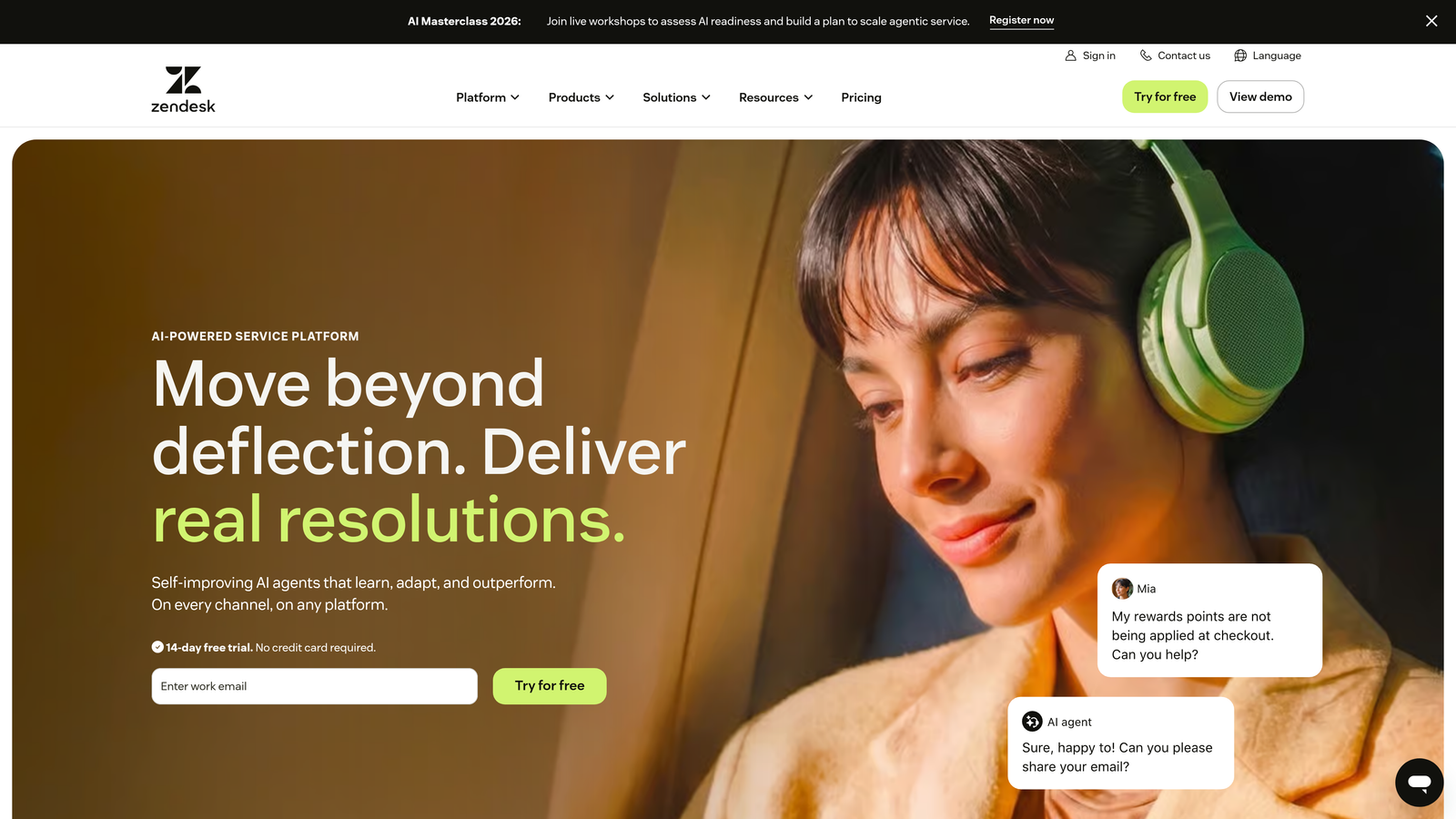
Zendesk is one of the most established helpdesk platforms on the market, offering omnichannel ticketing, a large app marketplace, and AI capabilities for enterprise-scale support teams.
Where This Tool Shines
Zendesk's primary strength is breadth. Its marketplace includes hundreds of pre-built integrations, and its omnichannel ticketing covers email, chat, social, voice, and more from a single interface. For large teams managing high ticket volumes across multiple channels, the administrative controls and SLA management tools are mature and well-tested.
Zendesk AI, informed by their acquisition of Ultimate.ai, adds automated routing, suggested responses, and ticket summarization. These are useful capabilities, but it's worth understanding that AI in Zendesk operates as a layer on top of existing helpdesk infrastructure rather than as the primary resolution engine. Teams that want deep AI autonomy may find themselves configuring around that architecture.
Key Features
Omnichannel Ticketing: Unified inbox across email, chat, social, and voice with consistent agent experience.
Zendesk AI: Automated ticket routing, suggested responses, and conversation summarization to reduce agent handling time.
App Marketplace: Hundreds of pre-built integrations covering CRMs, analytics tools, communication platforms, and more.
Advanced Reporting: Detailed SLA tracking, CSAT measurement, and custom dashboards for operations teams.
Enterprise Admin Controls: Granular permissions, compliance tools, and security features suited for regulated industries.
Best For
Enterprise teams with complex multi-channel support requirements, large agent organizations, and existing investment in the Zendesk ecosystem. Less ideal for teams looking to minimize human-in-the-loop ticket handling.
Pricing
Starts at approximately $55/agent/month (Suite Team). Pricing scales with features and agent count.
3. Intercom
Best for: SaaS teams that want support, onboarding, and product engagement in a single platform
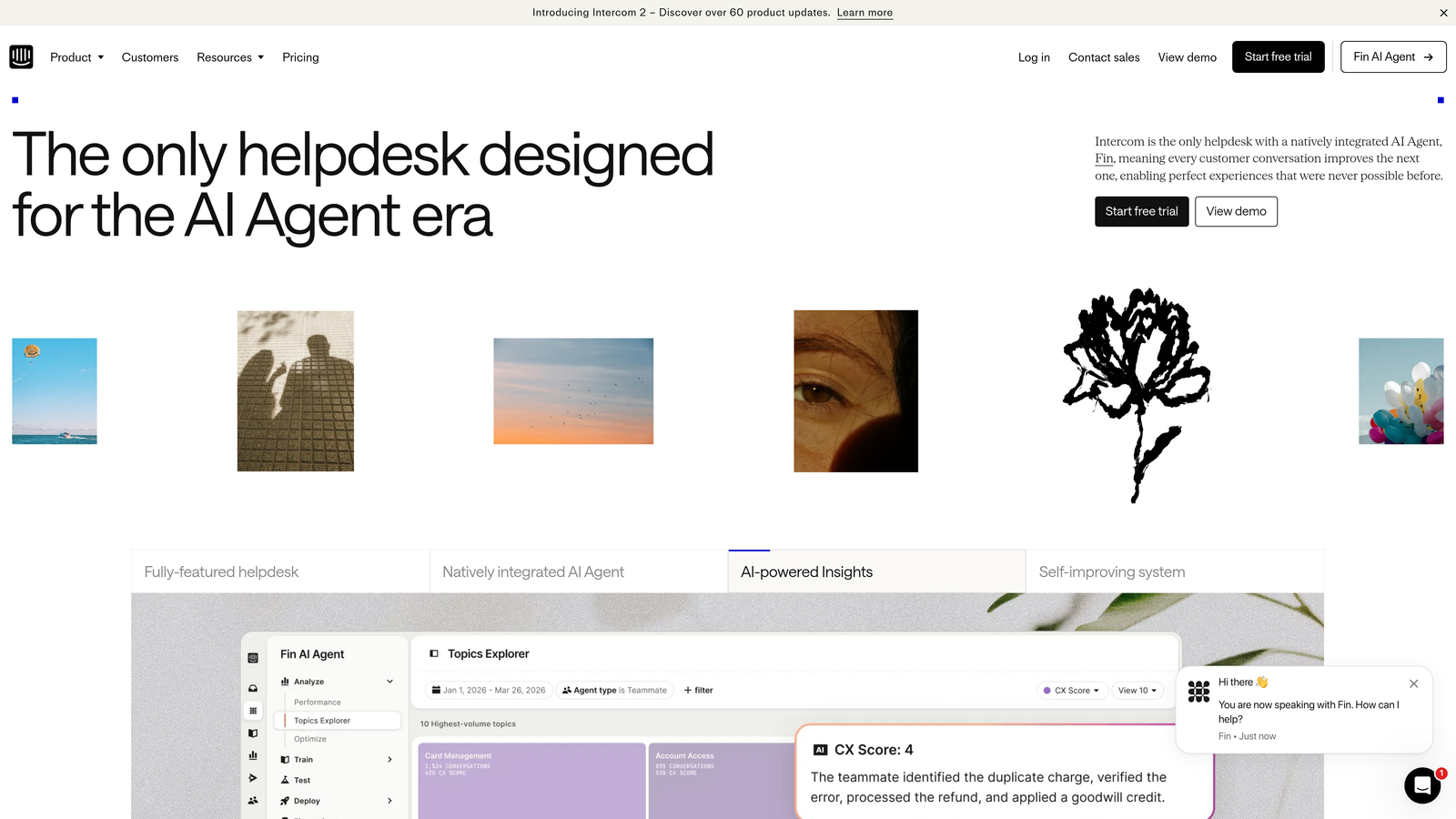
Intercom is a combined customer messaging and support platform featuring Fin, their AI agent, alongside product tours, onboarding flows, and deep CRM integrations.
Where This Tool Shines
Intercom's differentiation is in combining support with product engagement. You can run onboarding tours, in-app messages, and support conversations from the same platform, which reduces tool sprawl for SaaS teams. Fin, their AI agent, uses your knowledge base to handle common questions autonomously and has matured considerably over the past couple of years.
The platform's CRM integrations with HubSpot, Salesforce, and Stripe are well-built, and the Workflows builder gives non-technical teams meaningful control over routing and escalation logic. The tradeoff is cost: Fin's usage-based billing per resolution can become unpredictable at scale.
Key Features
Fin AI Agent: Resolves support tickets automatically using your knowledge base, with configurable handoff to human agents.
Combined Platform: Support, product tours, and onboarding flows in one tool, reducing context switching for customer-facing teams.
Messenger Widget: In-app and web support with a polished user experience across desktop and mobile.
CRM Integrations: Deep connections to HubSpot, Salesforce, and Stripe for customer context in every conversation.
Workflows Builder: Visual automation builder for routing, escalation, and tagging without engineering support.
Best For
SaaS companies that want support and onboarding managed from a single platform, particularly those with active in-app messaging strategies and existing HubSpot or Salesforce investments.
Pricing
Starts at approximately $39/seat/month. Fin AI is billed separately per resolution, so costs scale with automation volume.
4. Freshdesk
Best for: Growing teams that need a capable helpdesk with AI features at a competitive price point
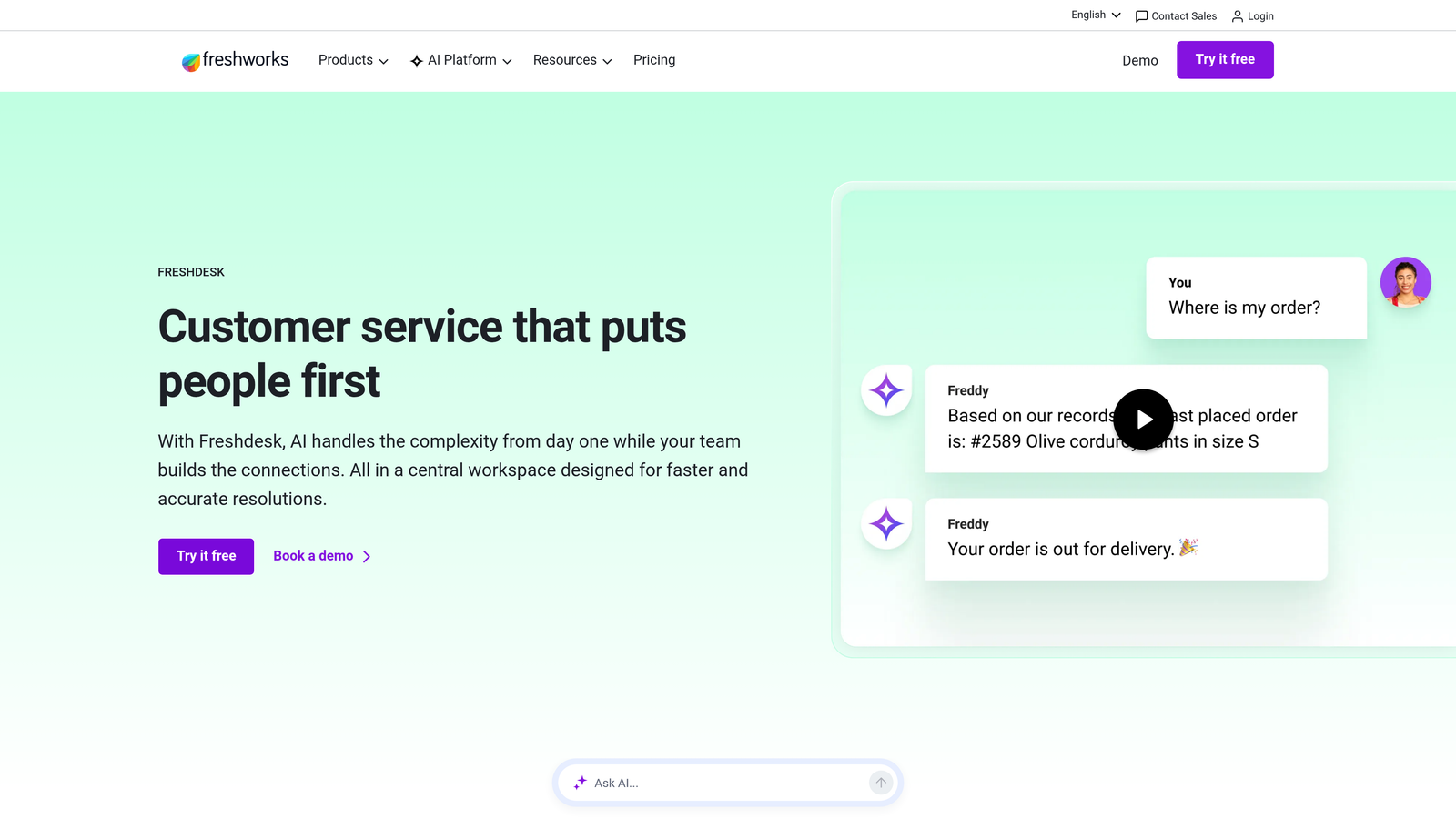
Freshdesk is Freshworks' helpdesk platform with built-in Freddy AI, offering ticket automation, a solid integration marketplace, and competitive pricing for growing teams.
Where This Tool Shines
Freshdesk occupies a useful middle ground: more affordable than Zendesk at comparable tiers, with AI capabilities that are genuinely built into the platform rather than priced as premium add-ons. Freddy AI handles ticket summarization, suggested responses, and sentiment detection out of the box on most paid plans.
The marketplace with over 1,000 app integrations covers most common SaaS stack connections, and the collision detection feature (which prevents two agents from responding to the same ticket simultaneously) is a practical quality-of-life improvement that teams often underestimate until they've experienced the problem it solves.
Key Features
Freddy AI: Built-in AI for ticket summarization, suggested responses, and sentiment analysis without separate licensing.
Multi-Channel Support: Unified inbox across email, chat, phone, and social media channels.
Integration Marketplace: Over 1,000 app integrations covering helpdesk, CRM, and communication tool connections.
Collision Detection: Prevents duplicate agent responses by showing when another agent is already working on a ticket.
Flexible Pricing: Free plan for small teams, with paid tiers that scale affordably as headcount grows.
Best For
Growing SaaS teams and SMBs that want a full-featured helpdesk with AI assistance without the enterprise pricing of Zendesk or Salesforce Service Cloud.
Pricing
Free plan available for small teams. Paid plans start at approximately $15/agent/month.
5. Zapier
Best for: Non-technical teams that need to connect support tools to the broader business stack without engineering resources
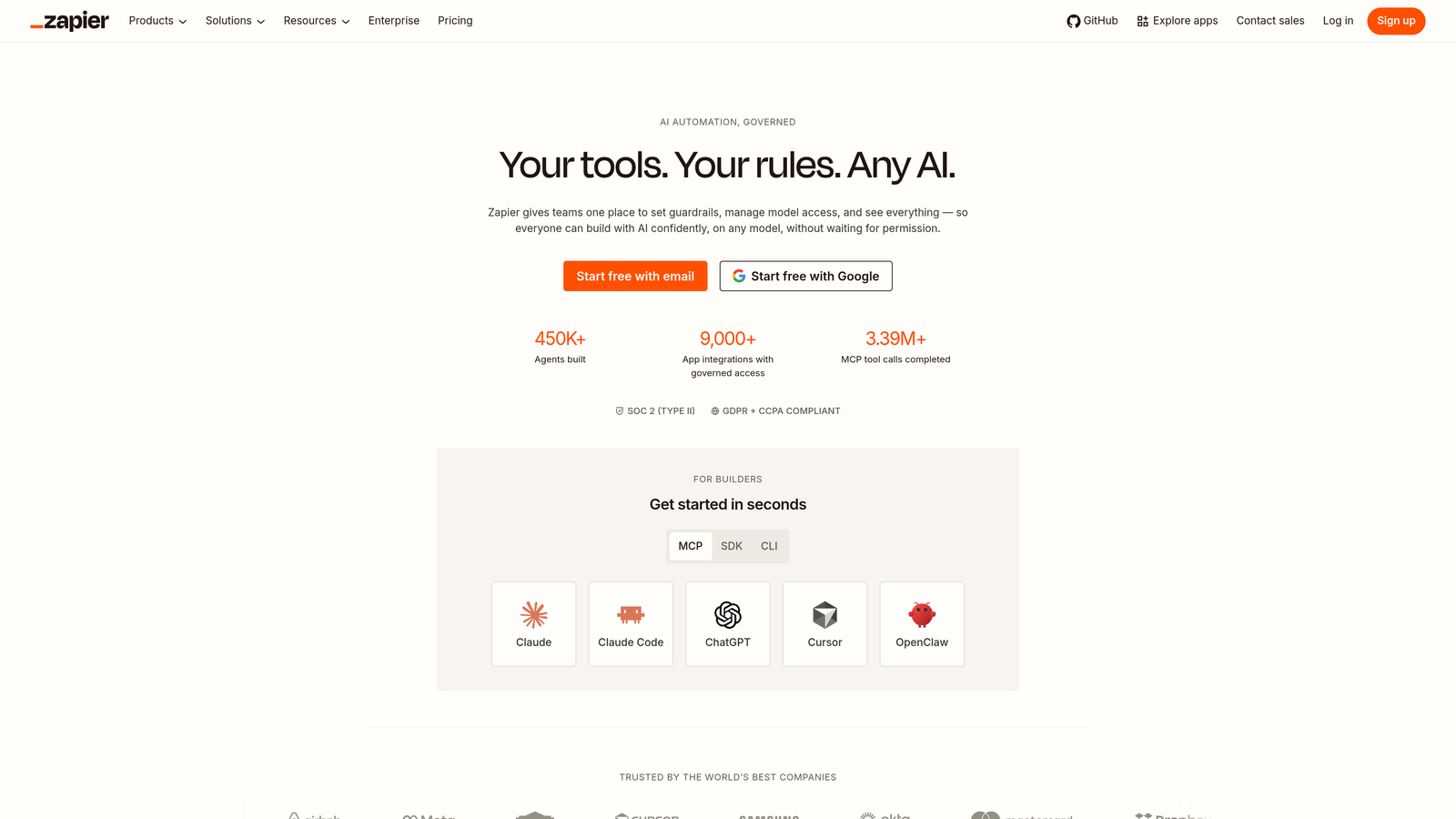
Zapier is the leading no-code workflow automation platform that connects support tools to the rest of your business stack without requiring engineering involvement.
Where This Tool Shines
Zapier isn't a support platform. It's the connective tissue between your support platform and everything else. When a new Zendesk ticket matches certain criteria, Zapier can create a Linear task, notify a Slack channel, update a HubSpot contact, and log a row in a Google Sheet — all without a single line of code. That kind of cross-tool orchestration is exactly what support teams need when their workflows touch multiple systems.
The platform's AI-powered Zap suggestions have made it easier to discover relevant automations without starting from scratch. For teams that don't have a dedicated ops engineer, Zapier often provides 80% of the integration capability they need at a fraction of the cost and time investment.
Key Features
7,000+ App Connections: Covers all major helpdesks, CRMs, communication tools, and project management platforms.
No-Code Zap Builder: Multi-step automation workflows built through a visual interface, no engineering required.
Conditional Logic: Filters, formatters, and conditional paths for routing based on ticket data, customer attributes, or other criteria.
AI-Powered Suggestions: Surfaces relevant automation ideas based on the apps you use and the workflows you describe.
Tables and Interfaces: Lightweight data management and form-building capabilities to complement automation workflows.
Best For
Operations and support teams that need custom cross-tool workflows without engineering resources. Best used alongside a dedicated support platform rather than as a standalone support solution.
Pricing
Free plan available. Paid plans start at approximately $19.99/month, scaling with task volume and feature access.
6. Salesforce Service Cloud
Best for: Enterprise teams already invested in the Salesforce ecosystem that need unified CRM and support data
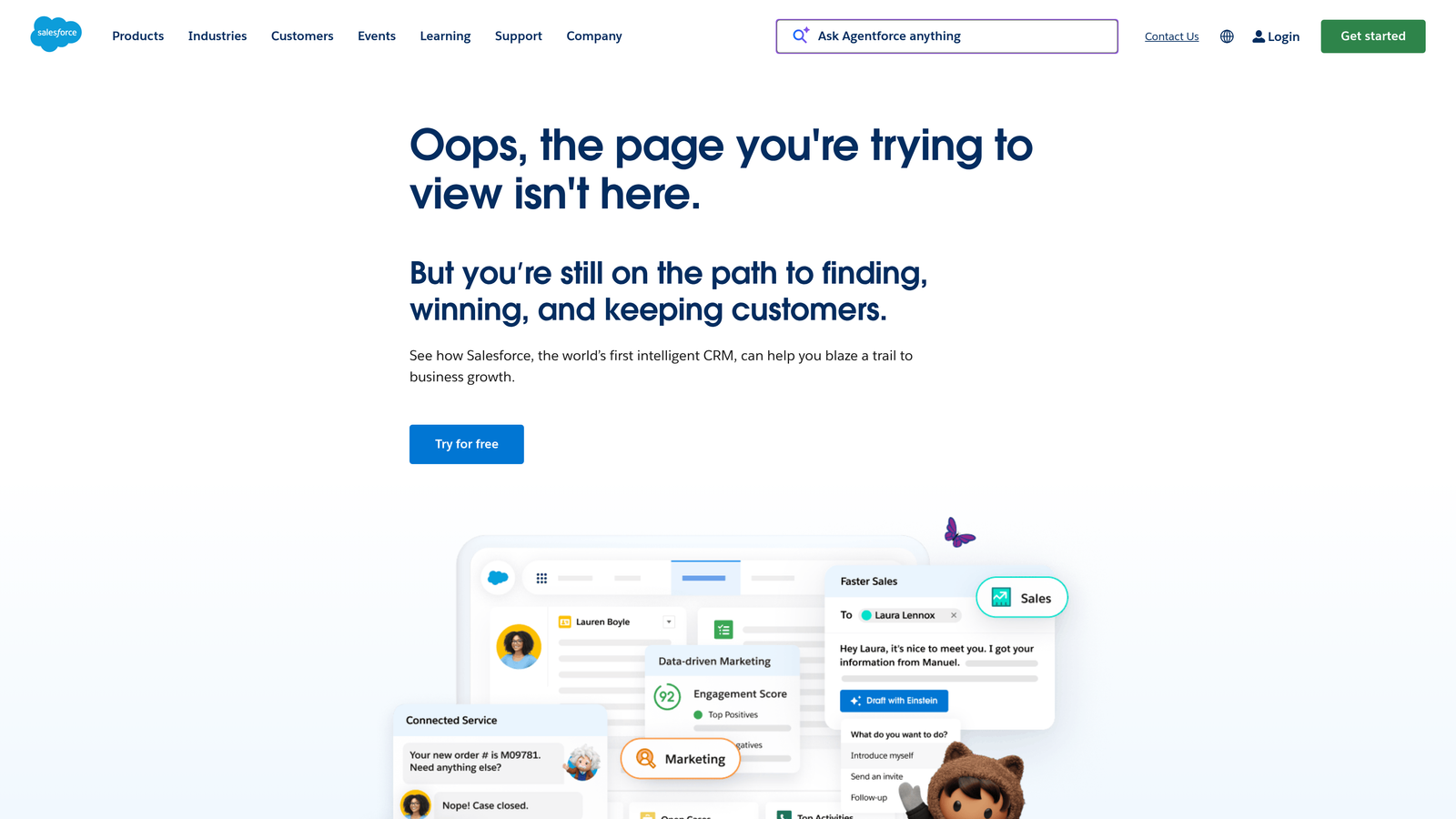
Salesforce Service Cloud is an enterprise-grade support platform deeply integrated with Salesforce CRM, offering Einstein AI, omnichannel routing, and a unified view of every customer interaction.
Where This Tool Shines
If your company runs on Salesforce, Service Cloud is the logical support choice. Every support interaction is enriched with full CRM context: deal history, account health, open opportunities, and customer lifecycle data. Einstein AI uses that data to power case classification, routing recommendations, and next-best-action suggestions that are meaningfully more informed than what a standalone helpdesk can offer.
The AppExchange ecosystem is vast, and the platform's enterprise compliance and security capabilities are among the strongest in the market. The tradeoff is complexity: Service Cloud requires significant configuration investment and typically benefits from dedicated Salesforce admin resources to get the most out of it.
Key Features
Native Salesforce CRM Integration: Full account, contact, and opportunity data available in every support interaction without syncing or mapping.
Einstein AI: Predictive case classification, intelligent routing, and next-best-action recommendations informed by CRM data.
Omnichannel Routing: Unified queue management across voice, chat, email, and social with skills-based assignment.
AI-Powered Knowledge Base: Article suggestions surfaced to agents and customers based on case context.
AppExchange Ecosystem: Extensive third-party integration library for additional capabilities and vertical-specific tools.
Best For
Enterprise organizations with existing Salesforce investment where unified CRM and support data is a strategic priority. Less suitable for teams without Salesforce admin resources or those looking for quick deployment.
Pricing
Starts at approximately $25/user/month (Starter). Enterprise tiers with full Einstein AI and omnichannel capabilities are priced significantly higher.
7. Help Scout
Best for: SaaS teams that want thoughtful automation without sacrificing the human quality of customer conversations
Help Scout is a human-centric support platform with a shared inbox model, AI-powered draft replies, and a developer-friendly API popular with SaaS teams that value relationship quality alongside efficiency.
Where This Tool Shines
Help Scout's philosophy is that great support feels personal, and the platform is designed to support that without creating friction. The shared inbox model keeps team collaboration intuitive, and the AI draft feature generates reply suggestions that agents can edit and send rather than fully automated responses. That distinction matters for teams where tone and relationship quality are competitive differentiators.
The developer-friendly REST API is a genuine strength for technical teams that want to build custom integrations without fighting against a rigid platform. Beacon, the chat widget, integrates directly with the knowledge base so users can self-serve before escalating to a conversation.
Key Features
AI Draft Replies: AI-generated response suggestions that agents review and send, maintaining human oversight of conversation tone.
Shared Inbox: Collaborative inbox with conversation assignments, notes, and status tracking for team coordination.
Beacon Widget: In-app chat with integrated knowledge base search for self-service before human escalation.
Automated Workflows: Rule-based automation for tagging, routing, and follow-up sequences without complex configuration.
Developer REST API: Well-documented API for custom integrations with tools outside the standard marketplace.
Best For
SaaS teams and SMBs where support quality and relationship continuity are priorities alongside efficiency. A strong fit for teams transitioning from email-based support who want structure without enterprise complexity.
Pricing
Starts at approximately $22/user/month (Standard plan).
8. Make
Best for: Technical ops teams that need sophisticated multi-step automation with conditional logic and data transformation
Make (formerly Integromat) is a visual workflow automation platform offering advanced multi-step scenario building with conditional logic and data transformation, making it more capable than Zapier for complex support automation requirements.
Where This Tool Shines
Where Zapier optimizes for accessibility, Make optimizes for power. Its visual scenario builder handles complex conditional branching, data transformation between systems, error handling, and retry logic in ways that Zapier's architecture doesn't support as elegantly. For support teams with sophisticated routing requirements or multi-system data flows, Make often becomes the preferred tool once Zapier hits its limits.
The pricing model is also more favorable at scale. Make charges based on operations rather than tasks, which typically makes it more cost-effective for high-volume automation scenarios. The tradeoff is a steeper learning curve: Make rewards teams with a technical ops mindset.
Key Features
Visual Scenario Builder: Drag-and-drop module connections with branching paths for complex conditional logic.
Advanced Data Transformation: Built-in tools for filtering, formatting, and transforming data between systems without custom code.
Error Handling and Retry Logic: Production-grade reliability features that catch and recover from integration failures automatically.
Broad App Connectivity: Connects to all major helpdesks, CRMs, communication platforms, and project management tools.
Cost-Effective at Scale: Operations-based pricing typically makes Make more affordable than Zapier for high-volume automation workflows.
Best For
Technical operations teams and developers who need sophisticated multi-step automation with conditional logic, data transformation, and production-grade reliability. Less suitable for non-technical users who need quick setup.
Pricing
Free plan available. Paid plans start at approximately $9/month based on operations volume.
9. Gorgias
Best for: E-commerce brands that need native Shopify, BigCommerce, or Magento integration with revenue-aware support
Gorgias is a support platform purpose-built for e-commerce brands with native integrations to major commerce platforms and revenue-per-ticket tracking that connects support performance to sales outcomes.
Where This Tool Shines
Gorgias solves a specific problem extremely well: e-commerce support teams spend most of their time answering questions about orders, shipping, returns, and product availability. By pulling Shopify, BigCommerce, or Magento data directly into every ticket, Gorgias eliminates the context-switching between support tool and commerce platform that slows agents down. An agent can issue a refund, update an order, or check inventory without leaving the conversation.
The revenue-per-ticket tracking is a meaningful differentiator for teams that need to justify support investment to leadership. Rather than reporting purely on ticket volume and resolution time, Gorgias connects support interactions to actual revenue outcomes. For pure B2B SaaS teams, Gorgias is less relevant, but for companies running e-commerce alongside SaaS, it's worth serious consideration.
Key Features
Native Commerce Integrations: Shopify, BigCommerce, and Magento data surfaced directly in every support ticket without manual lookup.
Revenue-Per-Ticket Tracking: Measures the revenue impact of support interactions to connect team performance to sales outcomes.
AI Agent: Automated responses to common order status, shipping, and return questions using commerce platform data.
Macros and Rules: High-volume ticket automation through pre-built response templates and conditional routing rules.
Multi-Channel Support: Unified inbox across email, chat, social media, and SMS for consistent customer experience.
Best For
E-commerce brands and DTC companies with high-volume order-related support needs. Also relevant for hybrid SaaS/e-commerce businesses that need commerce platform data in their support workflow.
Pricing
Starts at approximately $10/month (Starter, 50 tickets included). Pricing scales with ticket volume.
Which Tool Is Right for Your Team?
The right choice here depends on one fundamental question: do you want to bolt automation onto an existing helpdesk, or do you want to build from an AI-native foundation? That distinction shapes everything from how tickets get resolved to what business intelligence you can extract from your support data.
Here's a quick orientation by use case:
AI-first SaaS teams: Halo AI is the strongest fit. It's the only tool on this list built with autonomous AI resolution as the core architecture, not an add-on. The page-aware context, business intelligence signals, and native integrations with the modern SaaS stack make it purpose-built for teams that want support to scale without scaling headcount.
Enterprise Salesforce shops: Salesforce Service Cloud is the natural choice when CRM and support data need to be unified at the account level.
SMB helpdesk with AI features: Freshdesk delivers strong capabilities at a price point that growing teams can actually sustain.
Messaging-led SaaS: Intercom makes sense when support and product engagement need to live in the same platform.
No-code integrations: Zapier is the fastest path to connecting your support tools to the rest of your stack without engineering resources.
Complex automation workflows: Make handles multi-step conditional logic that outgrows what Zapier can manage.
E-commerce support: Gorgias is purpose-built for this use case and difficult to beat within it.
Human-touch SMB: Help Scout strikes the right balance between automation and conversation quality for relationship-focused teams.
Enterprise multi-channel: Zendesk's breadth and marketplace depth make it a reliable choice for large, complex support organizations.
Your support team shouldn't scale linearly with your customer base. AI agents can handle routine tickets, guide users through your product, and surface business intelligence while your team focuses on complex issues that genuinely need a human touch. See Halo in action and discover how continuous learning from every interaction translates into smarter, faster support that gets better over time.