9 Best Support Automation Platforms for SaaS Companies in 2026
This guide ranks the 9 best support automation platforms for SaaS companies in 2026, evaluating each on AI capability, integration depth, and fit for product-led and sales-led growth models. Whether you need end-to-end autonomous ticket resolution or a smarter helpdesk, this breakdown helps SaaS teams find the right tool to scale support without scaling headcount.
 Matt PattoliFounder13 min read
For SaaS teams, support volume scales faster than headcount. A single product update can flood your inbox overnight, and hiring your way out of that problem isn't sustainable. That's where support automation platforms come in: they handle repetitive tickets, surface answers instantly, and free your human agents to focus on the conversations that actually need them.
But not all platforms are built the same. Some are traditional helpdesks with automation bolted on. Others are AI-first systems designed to resolve tickets end-to-end. The right choice depends on your stack, your team size, and how much autonomy you're comfortable giving to AI.
Below are the best support automation platforms built for SaaS companies in 2026, evaluated on AI capability, integration depth, scalability, and how well they fit product-led and sales-led growth models.
1. Halo AI
Best for: B2B SaaS teams that want autonomous ticket resolution with deep product and business context
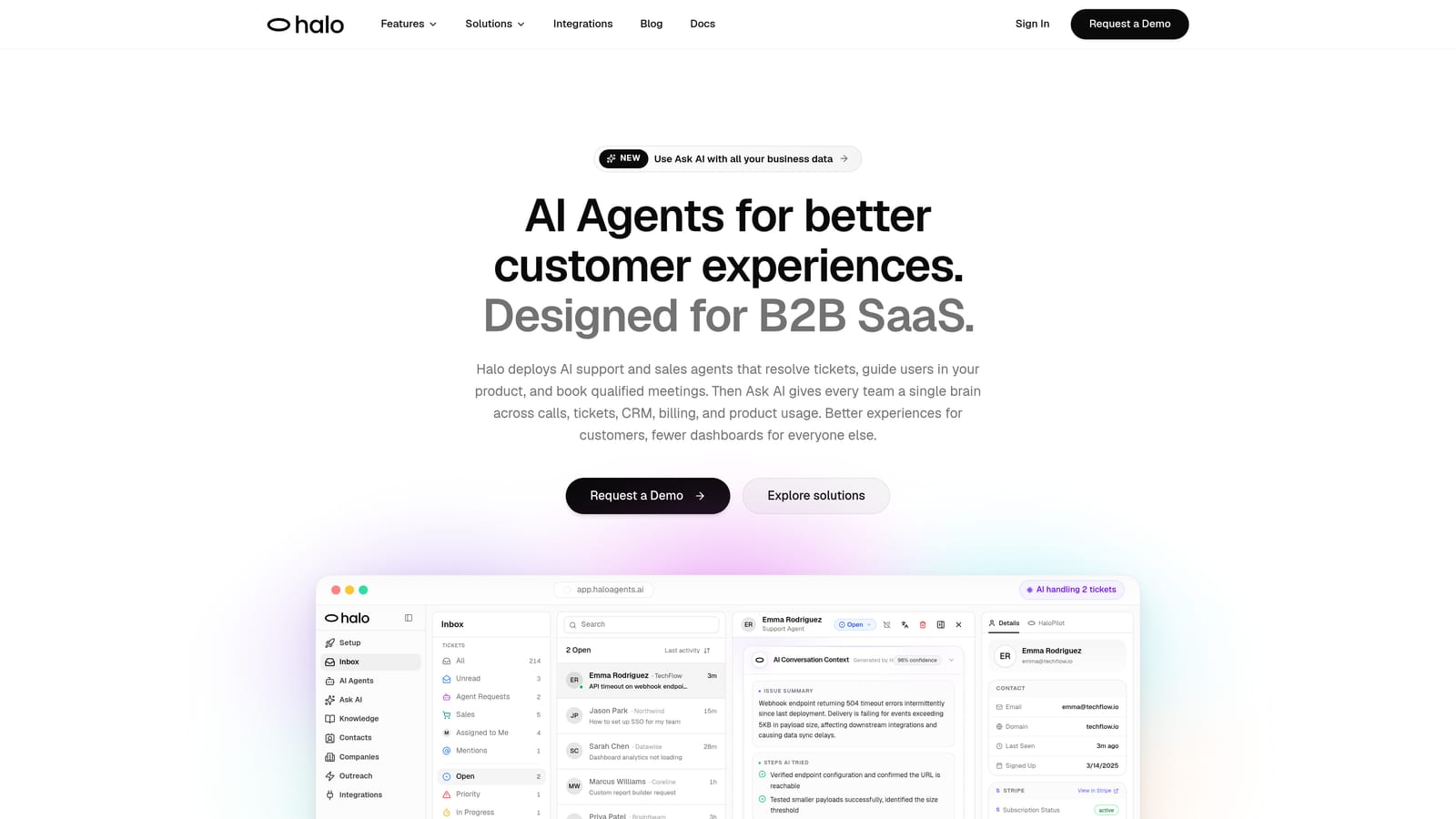
Halo AI is an AI-first customer support platform built specifically for SaaS companies that need intelligent, autonomous resolution at scale.
Where This Tool Shines
What separates Halo from most platforms on this list is its architecture. Rather than layering AI onto a traditional helpdesk, Halo was designed from the ground up with autonomous resolution as the core principle. Its page-aware chat widget is a standout capability: the AI agent actually sees what the user sees in your product, allowing it to provide contextual UI guidance rather than generic answers.
Beyond ticket resolution, Halo's smart inbox surfaces business intelligence signals that most support tools ignore entirely. Customer health indicators, revenue anomalies, and churn signals are surfaced directly from support interactions, turning your support queue into a source of product and revenue intelligence. For B2B SaaS teams where every customer relationship carries significant revenue weight, that's a meaningful differentiator.
Key Features
Page-Aware Chat Widget: The AI agent sees the user's current product context and provides specific, in-the-moment UI guidance rather than generic documentation links.
Autonomous Ticket Resolution: AI agents handle tickets end-to-end with continuous learning from every resolved interaction, improving accuracy over time.
Auto Bug Ticket Creation: Automatically identifies and routes bug reports to Linear or your preferred project management tool, closing the loop between support and engineering.
Smart Inbox with Business Intelligence: Surfaces customer health signals, revenue anomalies, and churn indicators directly from support data.
Live Agent Handoff: Escalates complex issues to human agents with full conversation context preserved, so nothing gets repeated.
Deep Integrations: Connects with Linear, Slack, HubSpot, Intercom, Stripe, Zoom, PandaDoc, and Fathom for a unified business stack.
Best For
B2B SaaS companies, product teams, and scaling startups that want more than ticket management. Halo is particularly well-suited for teams using a modern product stack who want support data to feed back into product development and customer success decisions.
Pricing
Contact for pricing. Halo is built for B2B SaaS teams and offers custom plans based on team size and usage. Visit haloagents.ai for details.
2. Intercom
Best for: SaaS teams already invested in the Intercom ecosystem seeking AI-assisted resolution
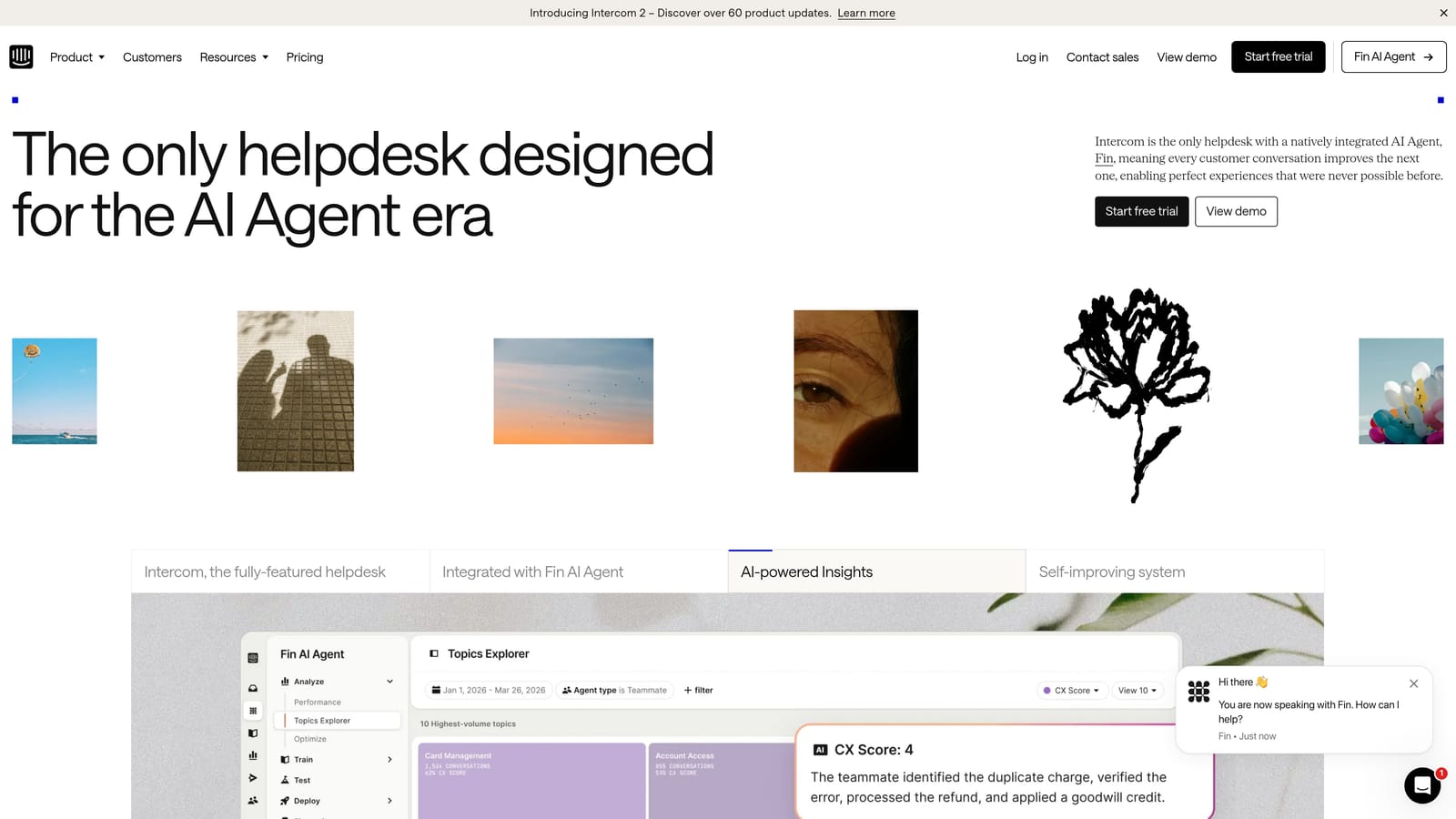
Intercom is one of the most widely adopted customer messaging platforms in SaaS, combining inbox, messenger, and AI capabilities in a single suite.
Where This Tool Shines
Intercom's Fin AI agent is its headline automation feature, built to resolve tickets using your existing help content. For teams already running their customer communications through Intercom, Fin slots in without requiring a platform migration. The messenger infrastructure is polished, and the combination of proactive messaging, product tours, and support in one tool makes it a strong choice for product-led growth companies.
The trade-off is that Fin feels like AI layered onto a messaging product rather than built natively for autonomous resolution. It performs well on documentation-backed queries but can reach its limits on complex, context-dependent issues. Pricing also scales quickly, particularly as Fin is billed per resolution.
Key Features
Fin AI Agent: Handles automated ticket resolution using your help center content and trained knowledge.
Omnichannel Inbox: Combines chat, email, and in-app messaging in a unified agent workspace.
Proactive Messaging and Product Tours: Supports onboarding flows and targeted outreach alongside reactive support.
Workflow Automation Builder: Configures routing rules, escalation paths, and ticket assignment logic.
Reporting and CSAT Tracking: Monitors team performance, resolution rates, and customer satisfaction scores.
Best For
SaaS teams that want a single platform for support, onboarding, and customer messaging. Works best for companies already in the Intercom ecosystem or those prioritizing product-led growth with in-app engagement.
Pricing
Starts at approximately $39/seat/month; Fin AI is billed per resolution. Costs can scale significantly at volume. Verify current pricing at intercom.com.
3. Zendesk
Best for: Enterprise SaaS teams with complex routing, SLA requirements, and large agent teams
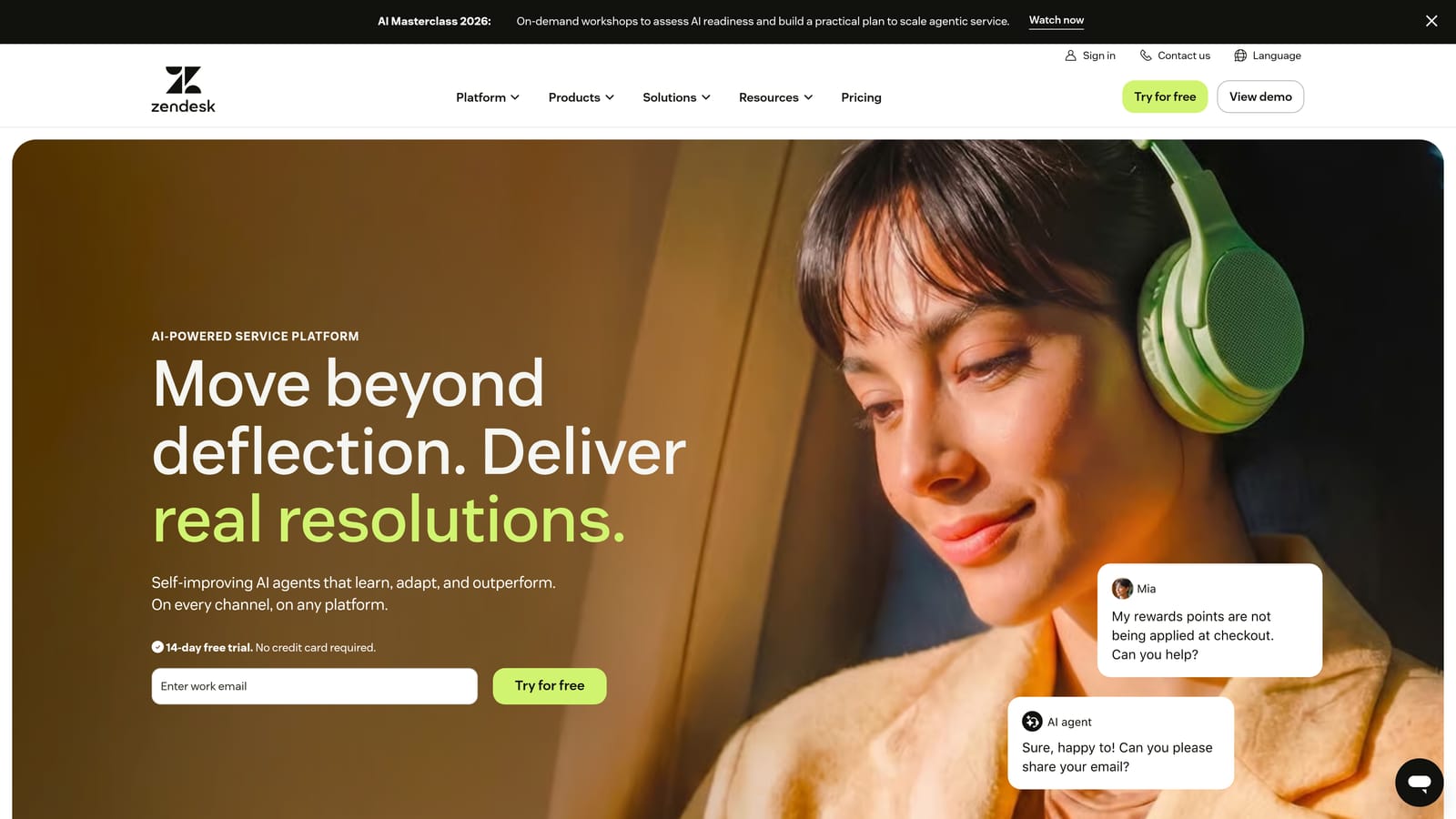
Zendesk is the enterprise standard for support ticketing, with AI features layered on top of its mature workflow and routing engine.
Where This Tool Shines
Zendesk's strength is its depth and reliability. The workflow engine, triggers, macros, and SLA management tools are among the most configurable in the market. For large SaaS organizations with multiple support tiers, complex escalation paths, or multi-brand requirements, Zendesk provides the infrastructure to handle it all. Its app marketplace with over 1,000 integrations means it connects to virtually any tool in your stack.
Where Zendesk is more limited is in autonomous AI resolution. Zendesk AI handles triage, intent detection, and suggested responses well, but it functions more as agent augmentation than end-to-end autonomous resolution. Configuration can also be time-intensive, and the platform's complexity can slow down smaller teams.
Key Features
Zendesk AI: Handles ticket triage, suggested responses, and intent detection to speed up agent workflows.
Advanced Workflow Automation: Triggers, macros, and SLA management for complex support operations.
Large App Marketplace: 1,000+ integrations covering CRM, billing, project management, and more.
Robust Reporting Suite: Deep analytics across ticket volume, resolution time, agent performance, and customer satisfaction.
Multi-Brand and Multi-Language Support: Handles global operations and separate brand identities from one platform.
Best For
Enterprise SaaS companies and scaling teams with high ticket volumes, multiple support tiers, and strict SLA requirements. Best suited for organizations with dedicated support operations staff to manage configuration.
Pricing
Suite plans start at approximately $55/agent/month. Enterprise plans are significantly higher. Verify current pricing at zendesk.com.
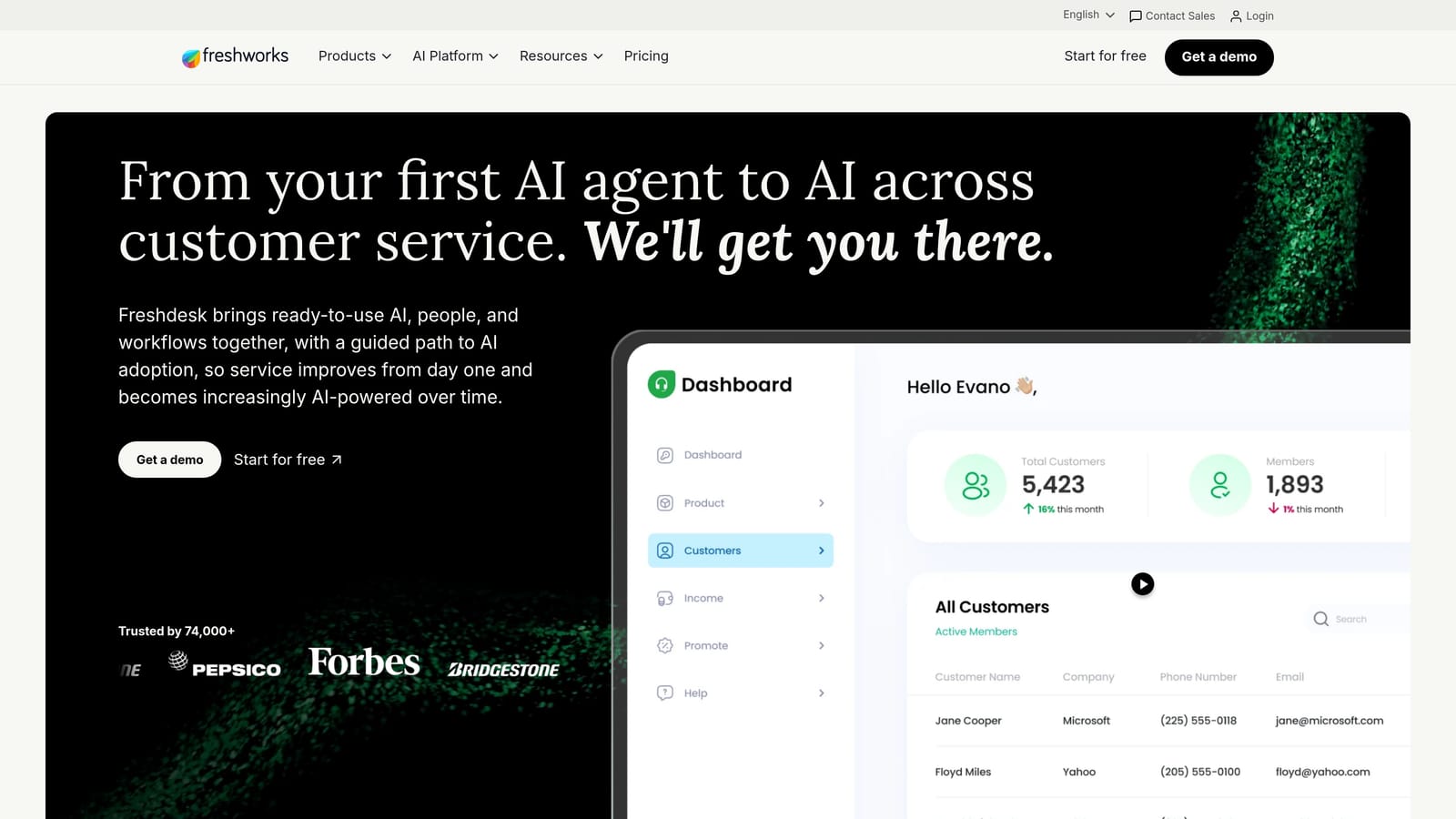
4. Freshdesk
Best for: Growing SaaS teams that need omnichannel support without enterprise-level pricing
Freshdesk is Freshworks' support platform with Freddy AI built in, offering broad channel coverage at an accessible price point.
Where This Tool Shines
Freshdesk's biggest advantage is the combination of channel breadth and affordability. Email, chat, phone, social media, and WhatsApp support are all available without needing to jump to an enterprise tier. Freddy AI handles ticket deflection, response suggestions, and sentiment analysis, giving growing teams a meaningful automation layer without a large investment.
The platform is also approachable for teams without dedicated support operations specialists. Setup is relatively straightforward, and the free tier gives small teams a genuine starting point. Freddy AI's autonomous capabilities are more limited compared to AI-native platforms, but for teams prioritizing channel coverage and cost efficiency, Freshdesk delivers solid value.
Key Features
Freddy AI: Handles ticket deflection, response suggestions, and sentiment analysis across channels.
Omnichannel Support: Covers email, chat, phone, social media, and WhatsApp from a single inbox.
Collision Detection: Prevents duplicate agent responses on the same ticket.
Canned Responses and Automation Rules: Speeds up repetitive workflows with pre-built response templates and routing logic.
Free Tier: Available for small teams with basic requirements, with a clear upgrade path.
Best For
Growing SaaS teams that need multi-channel support coverage without enterprise pricing. Also a good fit for teams transitioning from basic email support who want a structured helpdesk with AI assistance built in.
Pricing
Free plan available for basic use. Growth plan starts at approximately $15/agent/month. Verify current pricing at freshworks.com.
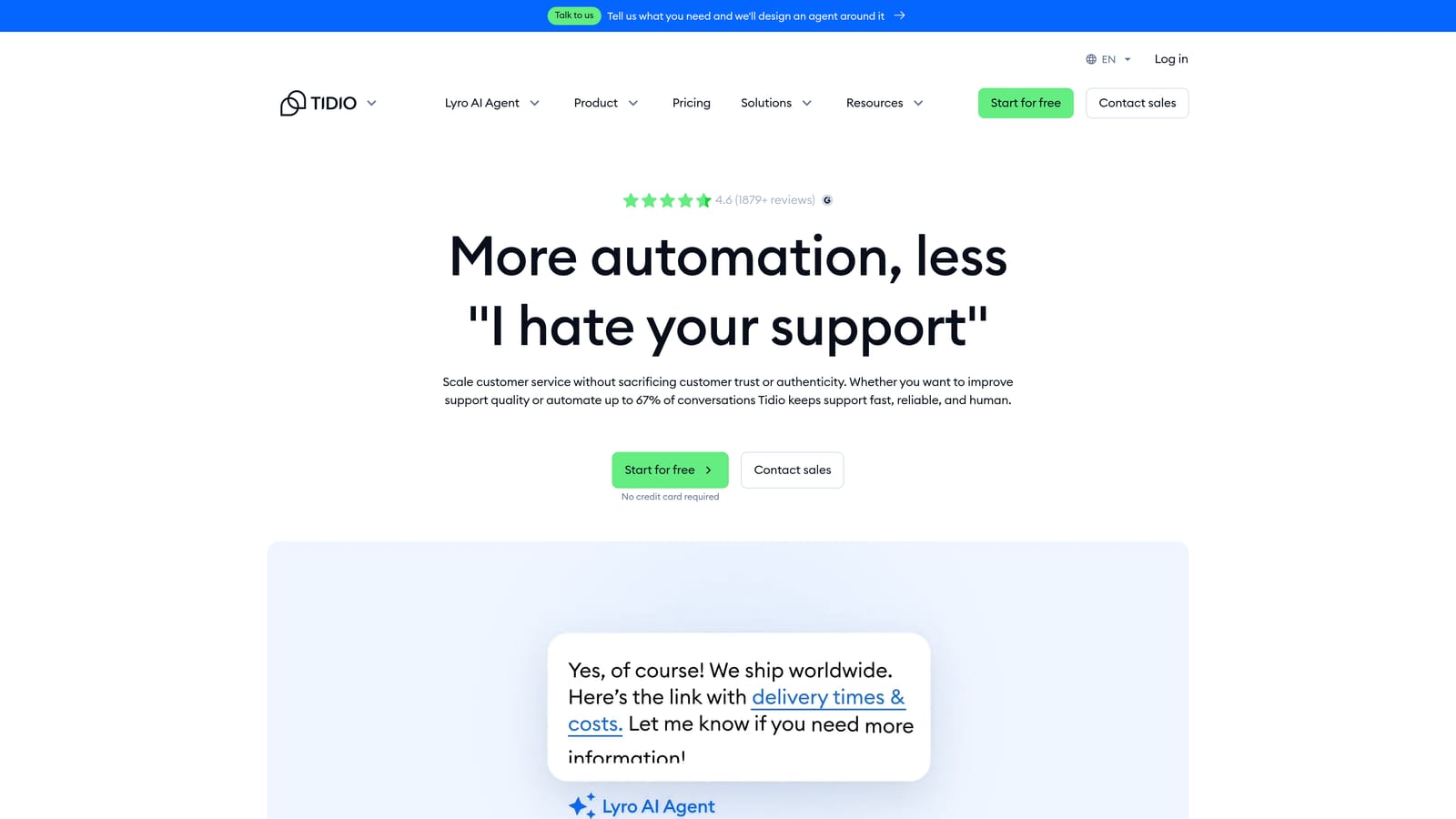
5. Tidio
Best for: Early-stage SaaS teams that need fast deployment and affordable live chat with AI
Tidio is a live chat and AI chatbot platform featuring Lyro AI, designed for teams that need something running quickly without complex configuration.
Where This Tool Shines
Tidio's primary appeal is speed and simplicity. Setup is typically measured in hours rather than days, and the visual chatbot flow builder requires no coding knowledge. For early-stage SaaS companies that need a chat widget and basic AI-handled conversations up and running fast, Tidio is hard to beat on time-to-value.
Lyro AI handles common customer conversations automatically, and live agents can take over at any point. The platform is more limited in workflow depth and integration breadth compared to enterprise tools, which is worth noting as teams scale. It's a strong starting point, but teams with complex B2B support workflows may outgrow it.
Key Features
Lyro AI Agent: Handles automated customer conversations using your support content and FAQs.
Visual Chatbot Flow Builder: Drag-and-drop interface for building conversation flows with no coding required.
Live Chat with Agent Takeover: Allows human agents to step into any conversation seamlessly.
Email and Messenger Support: Extends coverage beyond website chat to additional channels.
Quick Setup: Designed to be live within hours of installation.
Best For
Early-stage SaaS startups and small teams that need a fast, affordable live chat and chatbot solution. Less suited for complex B2B support operations with multi-tier escalation requirements.
Pricing
Free plan available. Paid plans start at approximately $29/month. Verify current pricing at tidio.com.
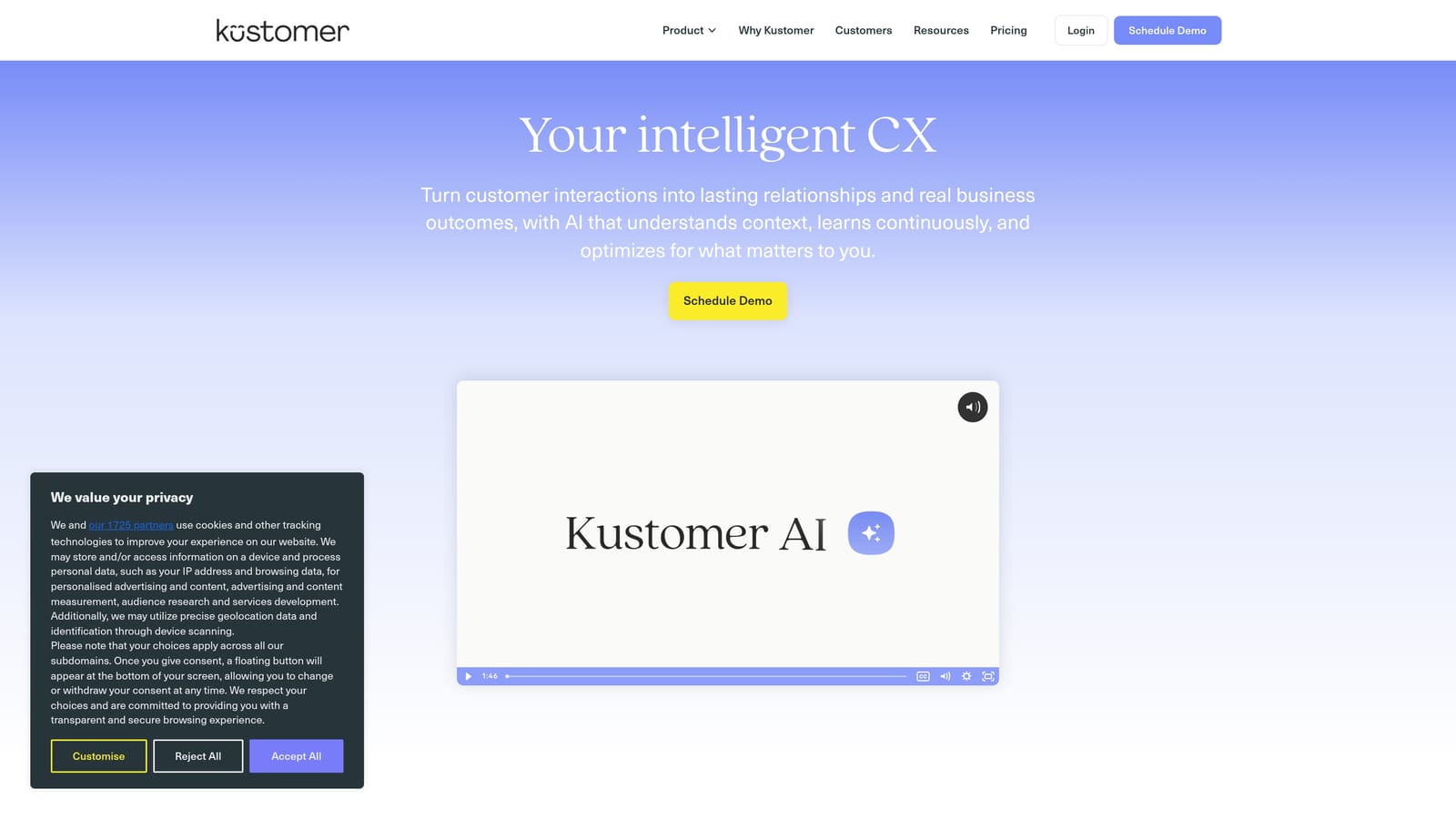
6. Kustomer
Best for: High-touch B2B SaaS teams where deep customer relationship context is critical to support quality
Kustomer is a CRM-native support platform that unifies the full customer timeline, making it well-suited for support models where relationship context matters as much as ticket resolution speed.
Where This Tool Shines
Kustomer's defining feature is the unified customer timeline. Every conversation, transaction, and interaction is surfaced in a single view, giving agents immediate context about who they're talking to and what that customer's history looks like. For B2B SaaS companies with high-value accounts where agents need to understand the full relationship before responding, this is genuinely useful.
AI-powered routing and suggested responses add automation to the workflow, but Kustomer's core strength is really the CRM-support unification rather than autonomous AI resolution. Teams that prioritize deep customer context over high-volume deflection will find it fits their model well.
Key Features
Unified Customer Timeline: Combines all conversations, transactions, and interactions in a single agent view.
AI-Powered Routing and Suggested Responses: Automates ticket assignment and surfaces relevant response options for agents.
Omnichannel Inbox: Handles email, chat, SMS, voice, and social from one workspace.
Deep CRM Data in Every Conversation: Customer purchase history, account details, and prior interactions are always visible.
Workflow Automation with Business Rule Engine: Configures routing and escalation logic based on customer attributes and ticket properties.
Best For
B2B SaaS companies with high-value accounts, dedicated customer success models, or support teams where relationship context significantly affects response quality.
Pricing
Enterprise pricing, typically in the $89–$139/agent/month range. Verify current pricing directly at kustomer.com as pricing structures can change.
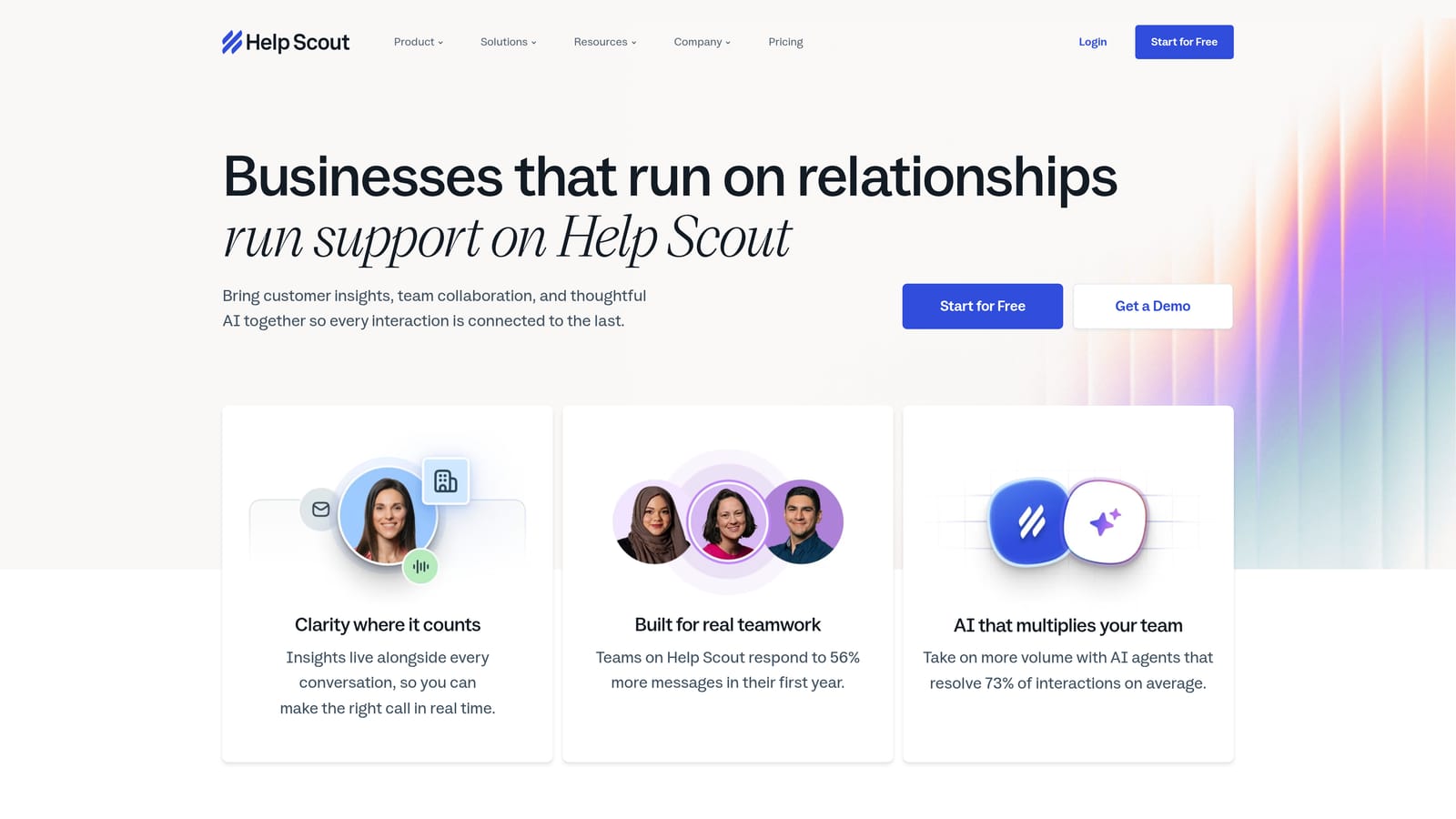
7. Help Scout
Best for: Teams that want AI-assisted support without sacrificing a human, relationship-focused experience
Help Scout is an email-centric helpdesk with a clean agent interface and AI assistance features, built for teams that believe support should still feel human.
Where This Tool Shines
Help Scout has a distinct philosophy: support should be fast and efficient, but it shouldn't feel like talking to a machine. Its AI features, including Summarize, Assist, and Drafts, are designed to help agents respond faster and more confidently, rather than replacing them. The result is a tool that reduces handle time without removing the human element from customer interactions.
The platform is also notably easy to onboard. Agents typically get productive quickly, and the shared inbox with collision detection and private notes keeps team coordination clean. For SaaS companies that prioritize relationship quality alongside efficiency, Help Scout strikes a thoughtful balance.
Key Features
AI Summarize, Assist, and Drafts: Helps agents quickly understand conversation context and compose responses faster.
Shared Inbox with Collision Detection: Prevents duplicate responses and keeps team communication organized with private notes.
Docs Knowledge Base: Built-in knowledge base that integrates directly with the chat widget for self-service deflection.
CSAT Ratings: Customer satisfaction tracking built into the platform without third-party add-ons.
Clean, Fast Agent UI: Designed for quick onboarding and minimal training overhead.
Best For
SaaS teams that want AI assistance without heavy automation. Particularly well-suited for companies where customer relationships and brand voice matter, and where support interactions are viewed as relationship touchpoints rather than tickets to close.
Pricing
Starts at approximately $22/user/month. Verify current pricing at helpscout.com.
8. Gorgias
Best for: SaaS companies operating in commerce-adjacent or marketplace verticals with high-volume repetitive tickets
Gorgias is a support automation platform built primarily for ecommerce, with strong macro and automation capabilities that can serve SaaS teams in commerce-adjacent spaces.
Where This Tool Shines
Gorgias is purpose-built for high-volume, repetitive support tickets, and it handles that use case exceptionally well. Its deep integrations with Shopify, BigCommerce, and Magento make it the default choice for ecommerce support, and its automation rules and macros can deflect a large share of common queries without agent involvement. Revenue reporting that links support tickets to order outcomes is a feature you won't find in most traditional helpdesks.
For pure B2B SaaS without a commerce component, Gorgias is likely not the right fit. Its strengths are closely tied to transactional support workflows. But for SaaS companies in marketplace, subscription commerce, or platform verticals, it's worth a close look.
Key Features
Deep Commerce Integrations: Native integrations with Shopify, BigCommerce, and Magento for order and customer data in every ticket.
Automation Rules and Macros: Handles high volumes of repetitive tickets with pre-built response and routing automation.
Revenue Reporting: Links support ticket outcomes to order and revenue data for business impact visibility.
Omnichannel Coverage: Handles email, chat, SMS, and social from a unified inbox.
AI Auto-Response: Automatically handles common order and shipping queries without agent involvement.
Best For
SaaS companies in ecommerce, marketplace, or subscription commerce verticals. Less relevant for pure B2B SaaS without a transactional commerce layer.
Pricing
Starts at approximately $10/month on a usage-based model tied to ticket volume. Verify current pricing at gorgias.com.
9. Drift (Salesloft)
Best for: Sales-led SaaS teams where inbound support and pipeline qualification overlap
Drift, now part of the Salesloft platform, is a conversational AI tool designed for teams where the line between support and sales is intentionally blurred.
Where This Tool Shines
Drift was originally built for conversational marketing and sales, and that DNA is still central to what it does. For sales-led SaaS teams, it fills a specific gap: handling inbound visitors, qualifying them against buyer criteria, and routing them to the right sales rep or booking a meeting automatically. When support and pipeline generation happen in the same conversation, Drift's playbook-based approach manages that complexity well.
It's worth being clear that Drift is not a traditional support automation platform. It won't replace a helpdesk for post-sale support operations. But for teams where the website chat is as much a sales channel as a support channel, and where Salesloft is already part of the revenue stack, it fits a real and specific need.
Key Features
AI-Powered Chatbot for Buyer Qualification: Automatically qualifies inbound visitors and routes them based on defined buyer criteria.
Meeting Scheduling Automation: Books meetings directly into sales rep calendars without manual back-and-forth.
Personalized Playbooks: Configures different conversation flows for different visitor segments, industries, or intent signals.
Salesloft Platform Integration: Connects with Salesloft's broader revenue intelligence and sales engagement capabilities.
Conversation Intelligence and Engagement Analytics: Tracks engagement patterns and conversation outcomes for optimization.
Best For
Sales-led SaaS teams using Salesloft where inbound support and pipeline qualification happen in the same channel. Not recommended as a standalone support automation platform for post-sale customer service operations.
Pricing
Enterprise pricing. Contact Salesloft directly for a quote at salesloft.com.
Which Platform Is Right for Your SaaS Team?
The right support automation platform depends on where you are in your growth stage and what you're optimizing for. Here's a practical way to think about it.
Early-stage startups: If you need something fast and affordable, Tidio or Freshdesk's free tier gets you moving without significant investment. They won't handle complex B2B workflows at scale, but they're solid starting points.
Growing SaaS teams: Intercom, Help Scout, and Freshdesk all offer strong mid-market positioning. Intercom is the right choice if you want support and product messaging in one platform. Help Scout wins if agent experience and a human feel matter to your brand. Freshdesk delivers the best channel breadth per dollar.
Enterprise and complex operations: Zendesk remains the benchmark for large teams with sophisticated routing, SLA management, and multi-brand requirements. Kustomer is the better choice when customer relationship context drives support quality. Gorgias is purpose-built if your SaaS operates in a commerce-adjacent vertical.
Sales-led teams: Drift within the Salesloft ecosystem fills the specific gap where inbound qualification and support overlap on the same channel.
Teams that want AI-first, autonomous resolution: Halo AI is built for this from the ground up. The combination of page-aware context, continuous learning, auto bug ticket creation, and business intelligence signals goes beyond what traditional helpdesks with AI layers can offer. For B2B SaaS teams that want support to actively contribute to product and revenue decisions, not just close tickets, that architecture matters.
Your support team shouldn't scale linearly with your customer base. Let AI agents handle routine tickets, guide users through your product, and surface business intelligence while your team focuses on complex issues that need a human touch. See Halo in action and discover how continuous learning transforms every interaction into smarter, faster support.