9 Best Support Automation Platforms Compared: Pricing, Features & Value in 2026
This comprehensive comparison examines support automation platform pricing across 9 leading solutions, helping businesses understand the true costs beyond advertised rates. The guide analyzes pricing structures from per-resolution to flat-rate models, feature tiers, and value propositions for different company sizes—from startups needing budget-friendly options to enterprises requiring advanced AI capabilities.
 Matt PattoliFounder13 min read
Choosing a support automation platform isn't just about features—it's about finding the right balance between capability and cost for your specific needs. With pricing models ranging from per-resolution fees to flat monthly rates, understanding the true cost of each platform requires looking beyond the sticker price.
This guide breaks down 9 leading support automation platforms, examining their pricing structures, what you actually get at each tier, and which businesses get the best value from each option. Whether you're a startup watching every dollar or an enterprise needing advanced AI capabilities, you'll find a clear comparison to inform your decision.
1. Halo AI
Best for: Companies wanting AI-first support with transparent, usage-based pricing
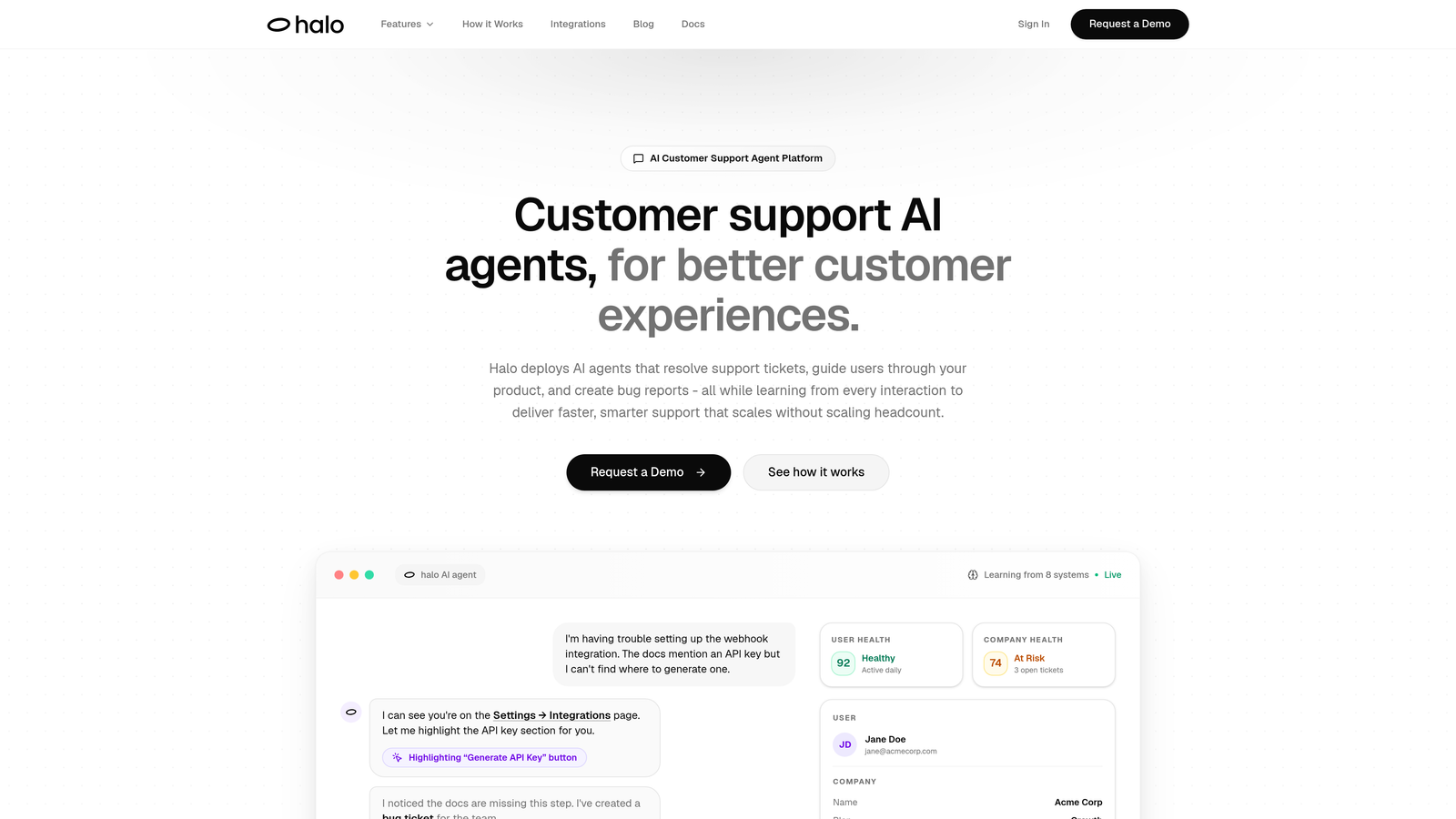
Halo AI is an AI-powered customer support platform that deploys intelligent agents to resolve tickets autonomously while continuously learning from every interaction.
Where This Tool Shines
Unlike traditional helpdesks with AI bolted on, Halo AI was built from the ground up as an AI-first platform. This architectural difference means the AI isn't just answering questions—it's seeing what your users see through page-aware context, creating bug reports automatically, and surfacing business intelligence from support interactions.
The per-resolution pricing model represents a fundamental shift from the per-agent licensing that dominates this space. You pay for outcomes (resolved tickets) rather than seats, which aligns costs directly with value delivered. As your AI agents get smarter and resolve more tickets, your cost per resolution actually decreases over time.
Key Features
Page-Aware Chat Widget: The AI sees your product's UI in real-time, enabling visual guidance that walks users through specific screens and workflows.
Continuous Learning Engine: Every interaction trains the AI, creating a feedback loop where support quality improves automatically without manual intervention.
Auto Bug Ticket Creation: When the AI detects issues beyond user error, it automatically creates detailed bug reports in Linear or your project management tool.
Multi-System Intelligence: Connects across your entire business stack—Linear, Slack, HubSpot, Intercom, Stripe, Zoom, PandaDoc—to provide context-aware support and surface revenue signals.
Smart Escalation: Autonomous operation for routine issues with intelligent handoff to human agents when complexity requires human judgment.
Best For
B2B SaaS companies and product teams looking to scale support without scaling headcount. Particularly valuable for businesses currently using Zendesk, Freshdesk, or Intercom who want more intelligent automation than traditional rule-based systems provide. Companies that view support as a source of product intelligence, not just a cost center.
Pricing
Per-resolution pricing model with custom quotes based on your support volume and integration requirements. Contact their team for specific pricing tailored to your needs.
2. Zendesk
Best for: Enterprises needing comprehensive omnichannel support with extensive customization
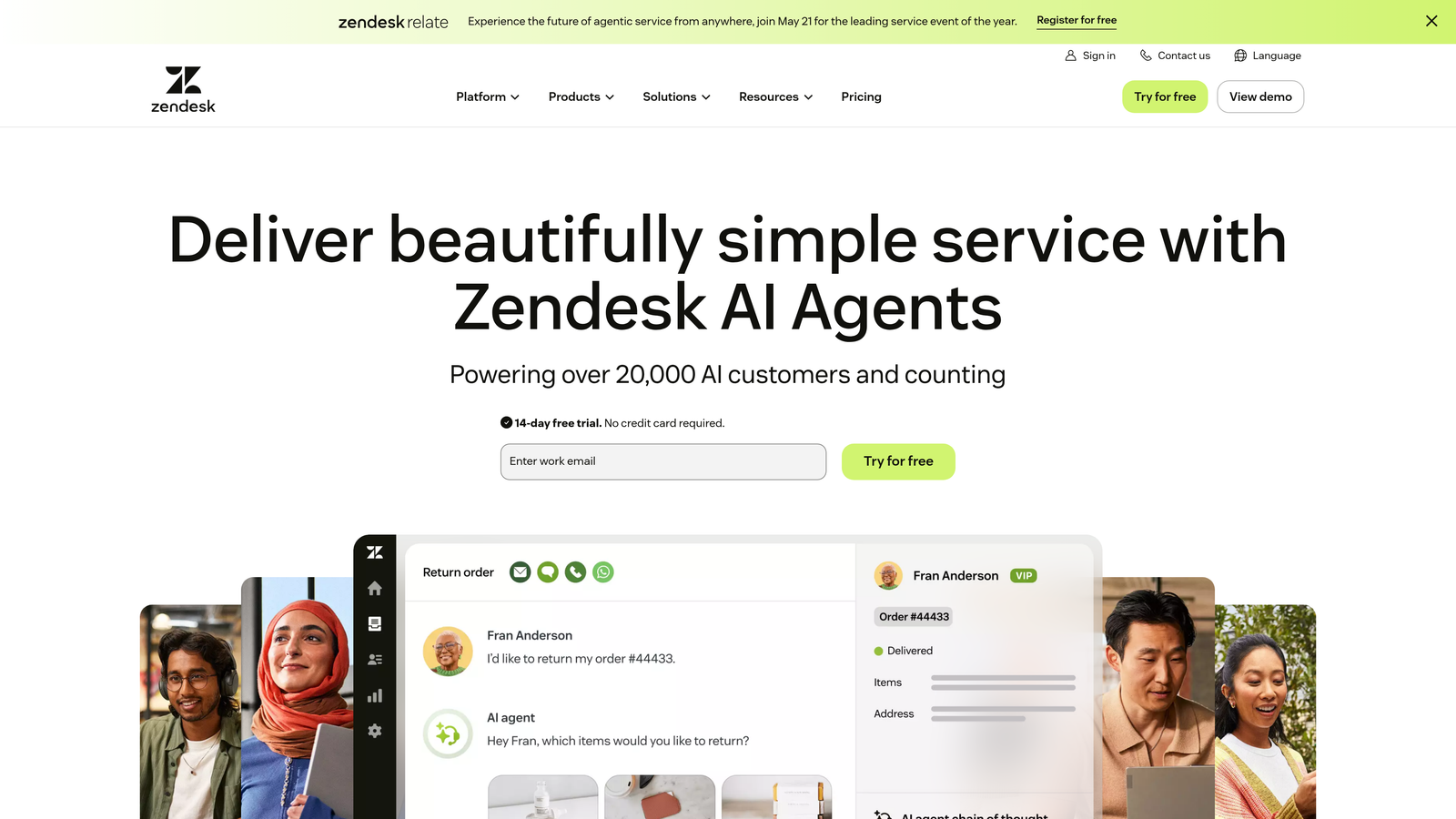
Zendesk is a comprehensive customer service platform offering omnichannel support with deep customization options and a massive ecosystem of integrations.
Where This Tool Shines
Zendesk's strength lies in its maturity and breadth. If you need to support customers across email, chat, phone, social media, and messaging apps from a single platform, Zendesk handles it all. The marketplace offers over 1,000 apps and integrations, making it possible to connect virtually any business system.
The reporting and analytics capabilities are robust, giving enterprise teams the data they need to optimize support operations. For organizations with complex workflows and multiple departments handling different aspects of customer service, Zendesk's routing and automation rules can orchestrate sophisticated ticket management.
Key Features
Suite Tiers: Team, Professional, and Enterprise plans that scale from basic ticketing to advanced AI and workforce management.
Advanced AI Add-On: Separate AI capabilities available as premium features, including intent detection and automated responses.
Omnichannel Routing: Intelligent ticket distribution across channels based on agent skills, availability, and priority rules.
Marketplace Ecosystem: Extensive third-party integrations covering CRM, e-commerce, productivity, and specialized industry tools.
Custom Objects: Build custom data structures to track industry-specific information alongside standard ticket data.
Best For
Mid-market to enterprise companies with complex support operations spanning multiple channels and departments. Organizations that need deep customization and have the technical resources to configure and maintain a sophisticated setup. Teams already invested in the Zendesk ecosystem.
Pricing
Suite Team starts at $55 per agent per month, Suite Professional at $115 per agent per month, with Enterprise pricing requiring custom quotes. AI capabilities require additional fees on top of base plans.
3. Intercom
Best for: Product-led SaaS companies prioritizing conversational support and onboarding
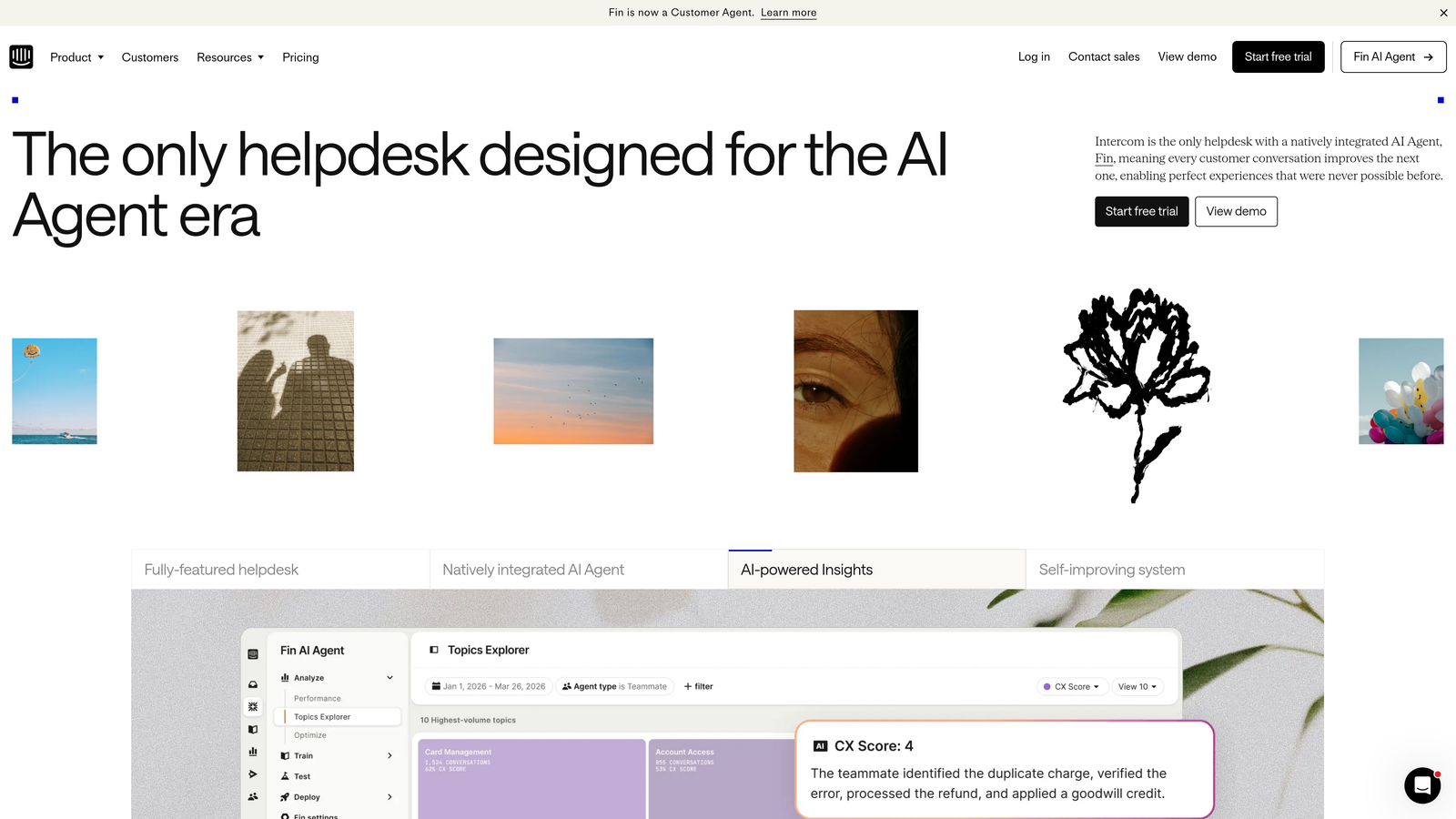
Intercom is a conversational customer platform combining messaging, AI agents, and help center capabilities designed for modern product companies.
Where This Tool Shines
Intercom excels at blending support with product experience. The in-app messaging feels native to your product rather than like a separate support channel. Product tours and targeted messages let you proactively guide users, reducing support volume by addressing issues before they become tickets.
Fin AI, their autonomous agent, handles common questions with impressive accuracy. Unlike basic chatbots following decision trees, Fin uses your help center content and conversation history to provide contextual answers. The per-resolution pricing for Fin means you can scale AI support without worrying about per-seat costs.
Key Features
Fin AI Agent: Autonomous AI that resolves customer questions using your knowledge base, charged per successful resolution.
Product Tours: Create guided walkthroughs that onboard new users and highlight features directly within your application.
In-App Messaging: Contextual chat that knows what page users are on and can trigger based on behavior or user properties.
Customer Data Platform: Unified view of customer attributes, events, and conversation history for personalized support.
Customizable Bots: Build conversation flows for lead qualification, routing, or gathering information before human handoff.
Best For
SaaS companies with product-led growth strategies where support and product experience overlap. Teams that want to reduce support volume through proactive messaging and self-service. Companies comfortable with a modern, conversational approach rather than traditional ticketing.
Pricing
Essential plan starts at $39 per seat per month. Fin AI is charged separately at approximately $0.99 per resolution, with volume discounts available for higher usage.
4. Freshdesk
Best for: Growing teams wanting solid automation features at competitive prices
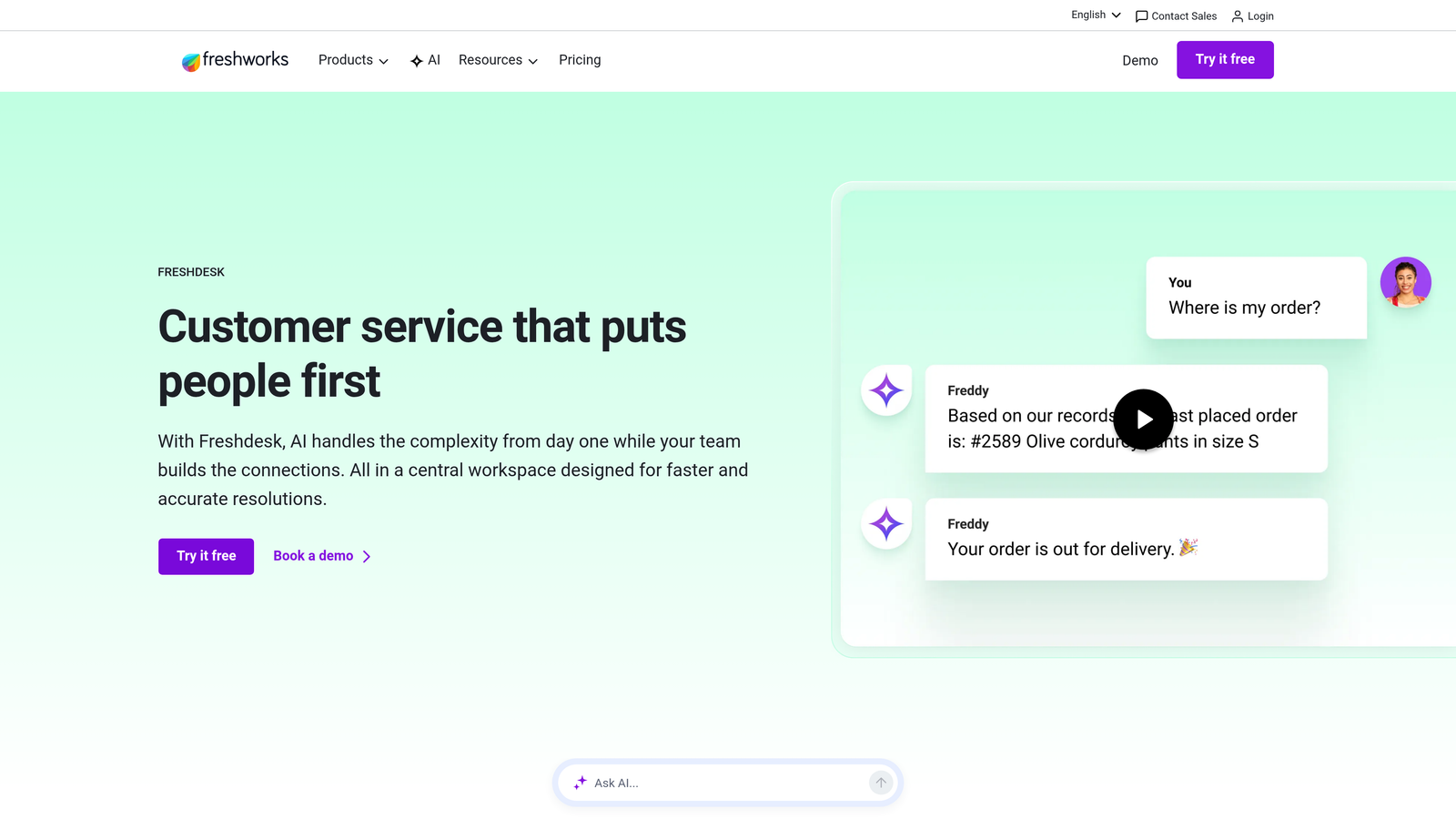
Freshdesk is a cloud-based helpdesk platform offering strong automation capabilities with pricing that scales from free to enterprise.
Where This Tool Shines
Freshdesk delivers remarkable value for the price. The free tier supports up to 10 agents with core ticketing features, making it viable for startups and small teams. As you grow, the Growth and Pro plans add automation, SLA management, and Freddy AI capabilities without breaking the budget.
Freddy AI handles ticket categorization, agent suggestions, and predictive support fields. The automation rules let you build sophisticated workflows for ticket routing, escalation, and follow-ups. For teams transitioning from email-based support to a proper helpdesk, Freshdesk provides a gentle learning curve with room to grow.
Key Features
Free Tier: Full ticketing system for up to 10 agents, including email, social media, and phone support channels.
Freddy AI: AI-powered ticket assignment, agent assist with suggested responses, and field prediction to speed up ticket handling.
Ticket Dispatch: Automated routing based on keywords, agent skills, round-robin distribution, or custom rules.
SLA Management: Define response and resolution time targets with escalation paths when SLAs are at risk.
Multi-Channel Support: Unified inbox for email, chat, phone, social media, and web forms.
Best For
Small to mid-sized businesses looking for reliable helpdesk functionality without enterprise pricing. Teams that need solid automation and reporting but don't require extensive customization. Companies wanting to start free and scale up as support volume grows.
Pricing
Free plan available for up to 10 agents. Growth plan starts at $15 per agent per month, Pro plan at $49 per agent per month, with Enterprise pricing requiring custom quotes.
5. Help Scout
Best for: Teams prioritizing human connection and simplicity in customer interactions
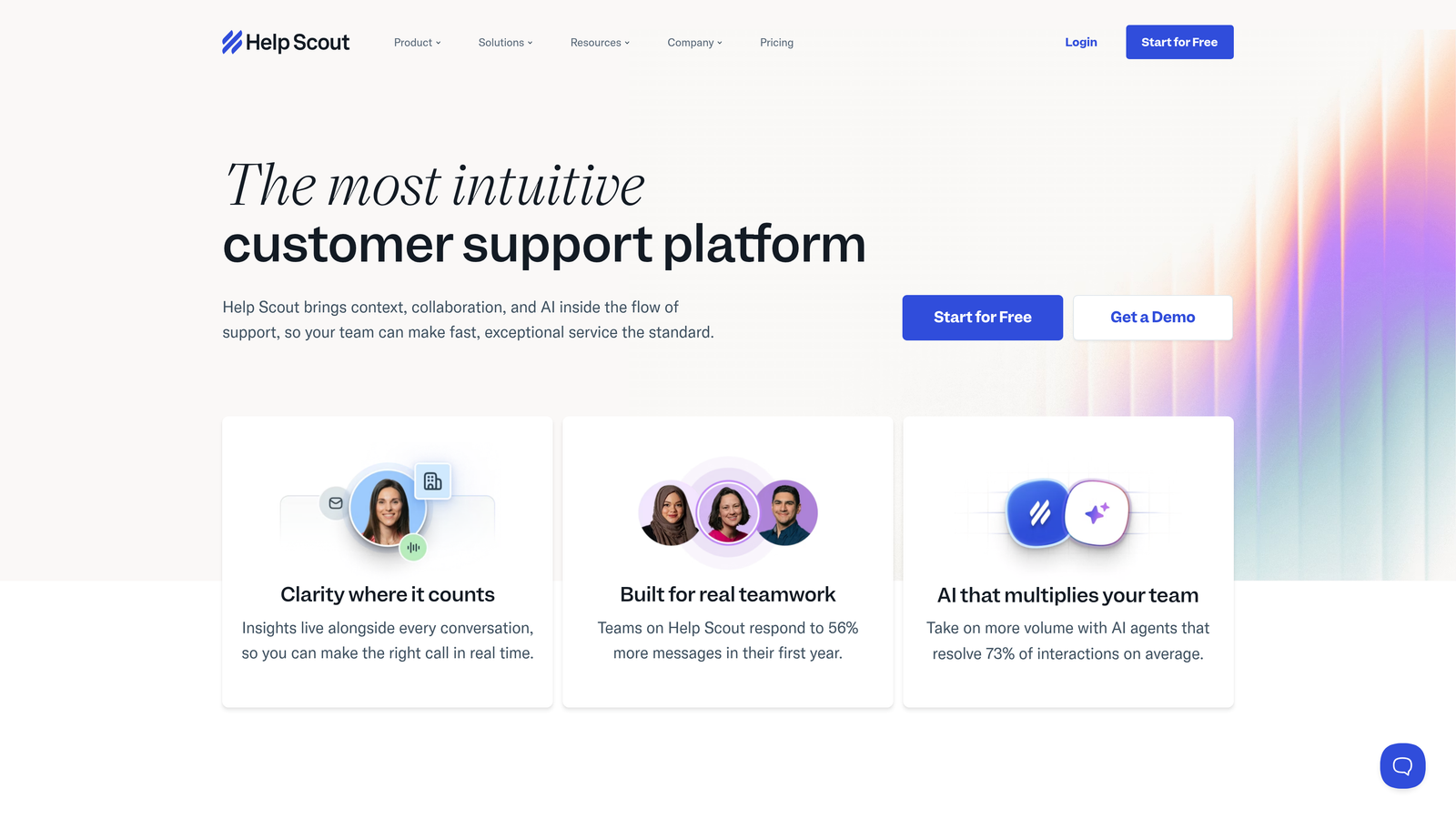
Help Scout is a customer-focused help desk that emphasizes keeping support personal and straightforward rather than overwhelming teams with complexity.
Where This Tool Shines
Help Scout's philosophy centers on making support feel human. The shared inbox looks like email rather than a traditional ticketing system, which helps maintain a personal tone in customer conversations. Collision detection prevents multiple agents from responding to the same message, while keeping the interface clean and distraction-free.
The Beacon widget integrates help center articles, contact forms, and messaging into a single interface on your website. It surfaces relevant documentation as users type questions, encouraging self-service before they reach out. The reporting stays simple and actionable rather than overwhelming teams with metrics they won't use.
Key Features
Shared Inbox: Email-style interface with collision detection, saved replies, and conversation threading that feels natural.
Beacon Widget: Embedded help center and contact form that adapts based on the page users are viewing.
Docs Knowledge Base: Clean, searchable documentation with category organization and suggested articles.
Customer Satisfaction: Automatic CSAT surveys after conversations with simple happiness ratings and feedback collection.
Simple Reporting: Focus on essential metrics like response time, resolution time, and customer satisfaction without overwhelming dashboards.
Best For
Small to medium businesses that want support to feel personal rather than transactional. Teams that value simplicity and ease of use over extensive customization. Companies where maintaining brand voice and customer relationships matters more than complex automation.
Pricing
Standard plan starts at $20 per user per month, Plus plan at $40 per user per month. Both plans include core features with Plus adding advanced automation and reporting.
6. Gorgias
Best for: E-commerce businesses needing deep Shopify and order management integration
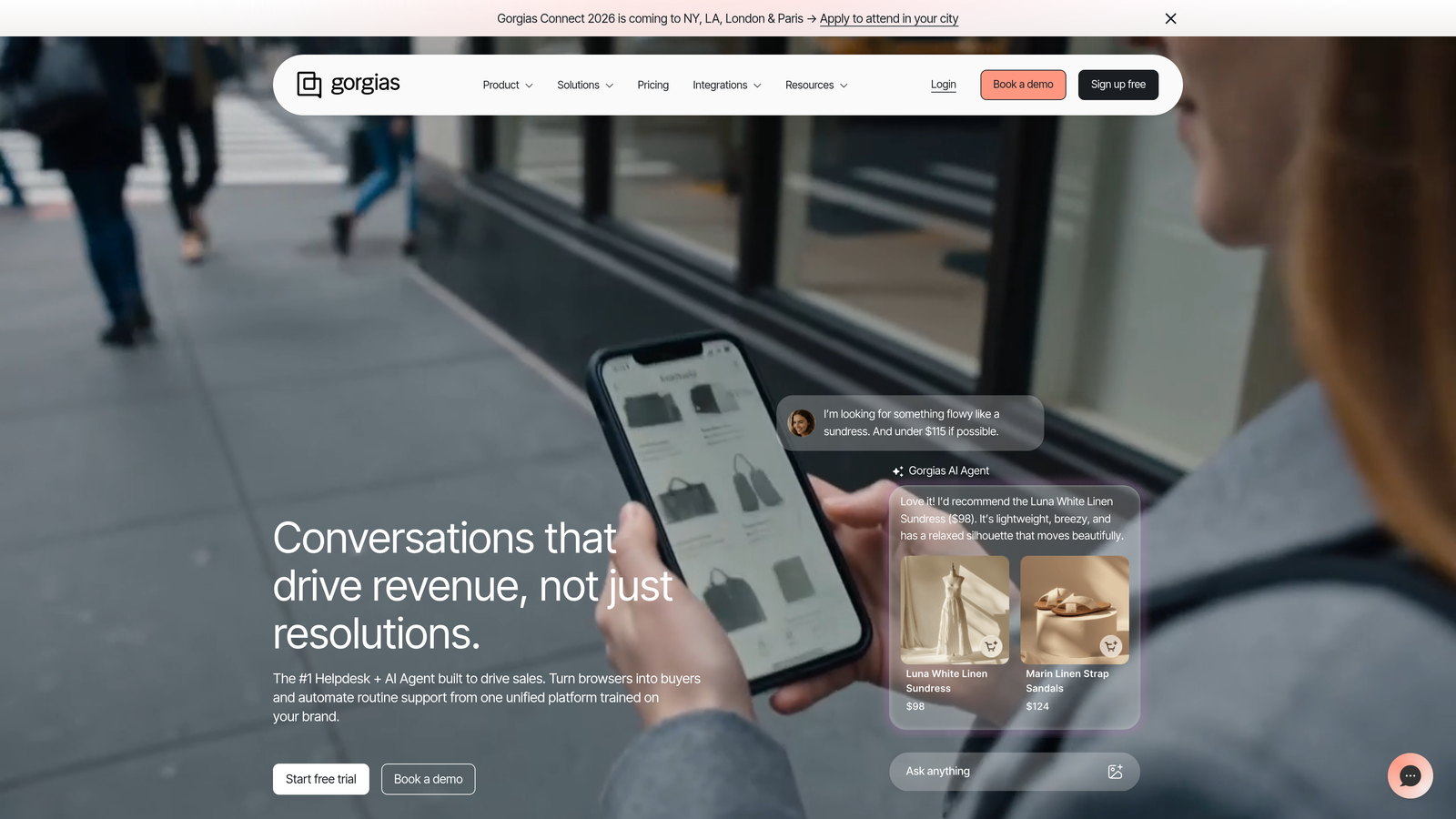
Gorgias is an e-commerce focused helpdesk with specialized integrations for Shopify, BigCommerce, and Magento that bring order data directly into support conversations.
Where This Tool Shines
Gorgias was built specifically for e-commerce, and it shows. Agents can view order details, process refunds, and update shipping information without leaving the ticket interface. The revenue attribution feature tracks how support interactions influence purchases, turning support from a cost center into a measurable revenue driver.
Macros with dynamic variables let you create templated responses that automatically pull customer-specific information like order numbers, tracking links, or product details. Social media integration means Instagram and Facebook comments flow into the same inbox as email and chat, crucial for brands with active social presence.
Key Features
Order Management: View orders, process refunds, modify shipments, and update customer details directly within support tickets.
Revenue Attribution: Track sales influenced by support conversations to measure support team's impact on revenue.
Dynamic Macros: Templated responses that automatically insert customer-specific order, product, or account information.
Social Media Integration: Unified inbox for Instagram, Facebook, email, chat, and SMS with consistent conversation history.
Automation Add-On: Additional automation rules and AI capabilities available as premium features for higher tiers.
Best For
E-commerce businesses on Shopify, BigCommerce, or Magento where support frequently involves order questions, returns, or shipping issues. Brands with significant social media presence needing unified conversation management. Teams wanting to measure support's impact on revenue.
Pricing
Starter plan at $10 per month covers 50 tickets, Basic at $60 per month for 300 tickets. Overage fees apply when ticket volume exceeds plan limits, making actual costs variable based on support volume.
7. Kustomer
Best for: Companies needing CRM-powered support with unified customer timelines
Kustomer is a CRM-powered customer service platform that provides a unified timeline view of all customer interactions across channels and systems.
Where This Tool Shines
Kustomer treats support as a CRM problem rather than just a ticketing problem. The unified customer timeline shows every interaction—support conversations, purchases, account changes, and custom events—in chronological order. This context lets agents understand the full customer journey without switching between systems.
Custom objects and attributes let you track industry-specific data alongside standard customer information. Business process automation goes beyond simple ticket routing to orchestrate complex workflows across departments. The AI-powered insights surface patterns in customer behavior and support issues that inform product and business decisions.
Key Features
Unified Customer Timeline: Chronological view of all customer interactions, purchases, and events across systems in a single interface.
Omnichannel Conversations: Email, chat, SMS, social media, and voice channels with continuous conversation threads across channels.
Business Process Automation: Workflow automation that spans departments and systems, not just ticket routing.
Custom Objects: Define custom data structures to track industry-specific information relevant to your business model.
AI-Powered Insights: Pattern detection and predictive analytics that surface customer health signals and support trends.
Best For
Mid-market to enterprise companies where understanding complete customer context matters more than simple ticket resolution. Organizations with complex customer journeys spanning multiple touchpoints. Teams wanting to unify customer data from various systems into a single support view.
Pricing
Enterprise pricing starting around $89 per user per month, with custom quotes required for advanced features and higher volumes. Implementation costs can be significant for complex setups.
8. Ada
Best for: Enterprises prioritizing AI-powered self-service at scale
Ada is an AI-powered automation platform focused on enabling customer self-service resolution across multiple languages and channels at enterprise scale.
Where This Tool Shines
Ada's no-code bot builder lets non-technical teams create sophisticated conversation flows without developer involvement. The generative AI capabilities go beyond scripted responses to understand intent and provide contextual answers. Multi-language support handles over 100 languages, making it viable for global companies with diverse customer bases.
Enterprise-grade security and compliance features meet the requirements of regulated industries. The advanced analytics provide visibility into automation performance, containment rates, and customer satisfaction with self-service experiences. Ada positions itself as a self-service layer that sits in front of your existing helpdesk rather than replacing it entirely.
Key Features
No-Code Bot Builder: Visual interface for creating conversation flows and decision trees without writing code.
Generative AI: Natural language understanding that interprets customer intent and generates contextual responses.
Multi-Language Support: Automated translation and native support for over 100 languages with consistent quality.
Enterprise Security: SOC 2 compliance, GDPR readiness, and security features required by regulated industries.
Advanced Analytics: Detailed reporting on automation performance, containment rates, and conversation outcomes.
Best For
Large enterprises with high support volume where self-service ROI justifies significant investment. Global companies needing multi-language support without maintaining separate systems. Organizations in regulated industries requiring enterprise-grade security and compliance.
Pricing
Custom enterprise pricing based on resolution volume, number of languages, and specific features required. Implementation and ongoing optimization typically require significant investment.
9. Tidio
Best for: Small businesses and e-commerce sites needing affordable live chat
Tidio is an affordable live chat and chatbot platform designed for small businesses and e-commerce sites wanting to add real-time support without enterprise complexity.
Where This Tool Shines
Tidio's free tier provides genuine value for bootstrapped businesses. You get live chat, basic chatbots, and visitor tracking without paying anything until you need advanced features. The visual chatbot builder uses a flowchart interface that makes creating simple automation accessible to non-technical users.
Lyro AI, their AI chatbot add-on, learns from your website content and FAQs to answer customer questions autonomously. E-commerce integrations connect with Shopify, WooCommerce, and other platforms to show agents order information during conversations. The mobile app lets small teams provide support on the go without being tied to desktops.
Key Features
Free Plan: Live chat widget, basic chatbots, and up to 50 conversations per month at no cost.
Visual Chatbot Builder: Flowchart-based interface for creating automated conversation paths without coding.
Lyro AI Chatbot: AI-powered bot that learns from your website content to provide automated responses.
E-Commerce Integrations: Connect with Shopify, WooCommerce, and other platforms to access order data during chats.
Visitor Tracking: See who's on your website, what pages they're viewing, and proactively initiate conversations.
Best For
Small businesses and startups with limited budgets needing basic live chat functionality. E-commerce sites wanting to add conversational support without significant investment. Teams that need mobile support capabilities for on-the-go responsiveness.
Pricing
Free tier available with basic features. Starter plan at $29 per month adds more conversations and features. Lyro AI chatbot starts at $39 per month as a separate add-on.
Making the Right Choice
The right support automation platform depends on your specific situation. If you're looking for AI-first architecture with transparent, outcome-based pricing, Halo AI delivers continuous learning and page-aware intelligence that traditional helpdesks can't match. The per-resolution model aligns costs with value, making it particularly attractive for companies wanting to scale support without scaling headcount proportionally.
For enterprises needing comprehensive omnichannel capabilities with extensive customization, Zendesk remains the market leader despite higher costs. Intercom excels for product-led SaaS companies where support and product experience overlap. Budget-conscious teams will find strong value in Freshdesk's feature set at competitive prices, while very small businesses can start with Tidio's free tier.
E-commerce businesses should seriously consider Gorgias for its specialized order management features and revenue attribution. Companies prioritizing simplicity and human connection over complex automation will appreciate Help Scout's approach. Kustomer suits organizations needing CRM-powered support with unified customer context, while Ada targets enterprises investing heavily in AI-powered self-service at global scale.
The key is looking beyond base pricing to understand total cost of ownership. Factor in implementation costs, AI add-ons, overage fees, and the value of your team's time. A platform with higher per-seat costs but better automation might actually cost less than a cheaper option that requires more manual work. Similarly, per-resolution pricing can be more economical than per-agent licensing when AI handles a significant portion of your support volume.
Your support team shouldn't scale linearly with your customer base. Let AI agents handle routine tickets, guide users through your product, and surface business intelligence while your team focuses on complex issues that need a human touch. See Halo in action and discover how continuous learning transforms every interaction into smarter, faster support.