9 Best Support Automation Platform Trials to Test Before You Buy in 2026
Before committing to a support automation platform, testing it firsthand can prevent costly onboarding mistakes and poor agent adoption. This guide evaluates nine support automation platform trials available in 2026, comparing each on AI capability, integration depth, trial quality, and how quickly teams can start resolving real tickets—giving businesses a practical framework for choosing the right solution whether they're replacing a legacy helpdesk or building their first automated support layer.
 Grant CooperFounder13 min read
Choosing a support automation platform is one of those decisions that looks straightforward on paper but gets complicated fast. A bad fit means months of onboarding friction, agents fighting the software, and customers who still can't get answers. The good news: nearly every serious platform in 2026 offers a free trial or demo, which means you can pressure-test the technology before committing a dollar.
This guide covers the best support automation platforms worth trialing right now, evaluated on trial quality, AI capability depth, integration breadth, and how quickly you can go from sign-up to actually resolving tickets. Whether you're migrating off a legacy helpdesk or building your first automated support layer, this list gives you a clear starting point.
Selection criteria: AI-first architecture, meaningful trial access (not just a sandbox), real integrations, and transparent pricing.
1. Halo AI
Best for: B2B SaaS teams that want AI-first support with deep product and business stack integration.
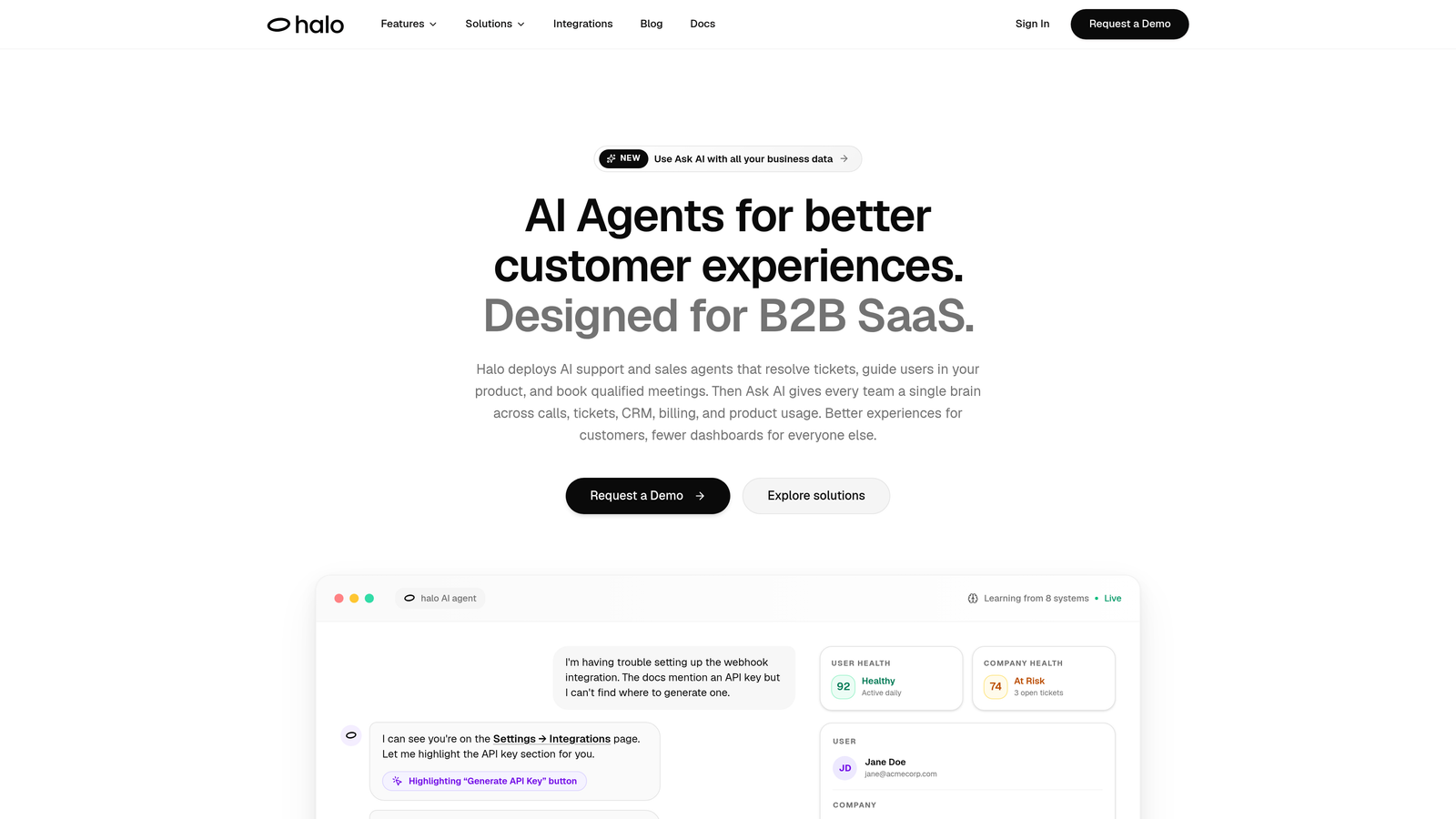
Halo AI is an AI-native customer support platform purpose-built for B2B SaaS companies that need more than a chatbot layer on top of an existing helpdesk.
Where This Tool Shines
What separates Halo from most platforms on this list is its page-aware architecture. The AI agent actually knows what page a user is on and can provide contextual, visual UI guidance in real time, rather than serving generic knowledge base articles. That context-awareness makes a meaningful difference when your product is complex and support queries are deeply tied to what users are trying to do at that exact moment.
Beyond ticket resolution, Halo's smart inbox surfaces business intelligence signals that most support platforms ignore entirely: customer health indicators, revenue anomalies, and early churn signals. For B2B SaaS teams, support data often contains early warning signs about account risk, and Halo is designed to surface those rather than bury them in ticket volume metrics.
Key Features
Page-Aware AI Agents: The AI sees what the user sees and provides contextual UI guidance specific to their current location in your product.
Auto Bug Ticket Creation: Automatically identifies and routes bug reports directly to Linear or your engineering stack, closing the loop between support and product teams.
Smart Inbox with Business Intelligence: Surfaces customer health signals, revenue anomalies, and churn indicators alongside standard support metrics.
Live Agent Handoff: Escalates to human agents with full conversation context preserved, so agents never start from scratch.
Continuous Learning Architecture: Resolution quality improves with every interaction, meaning the system gets measurably better the longer you run it.
Broad Integration Stack: Connects natively with Zendesk, Freshdesk, Intercom, Slack, HubSpot, Stripe, Zoom, PandaDoc, and Fathom.
Best For
B2B SaaS companies that need AI agents capable of handling complex, product-specific support queries and want the platform to contribute business intelligence beyond ticket deflection. Particularly strong for teams already using tools like Linear, HubSpot, or Stripe who want support data flowing into their broader business stack.
Pricing
Contact for pricing. Trial access is available directly at haloagents.ai. Pricing details are provided during the onboarding conversation.
2. Intercom
Best for: Teams wanting a mature conversational support platform with a proven AI agent and large integration marketplace.
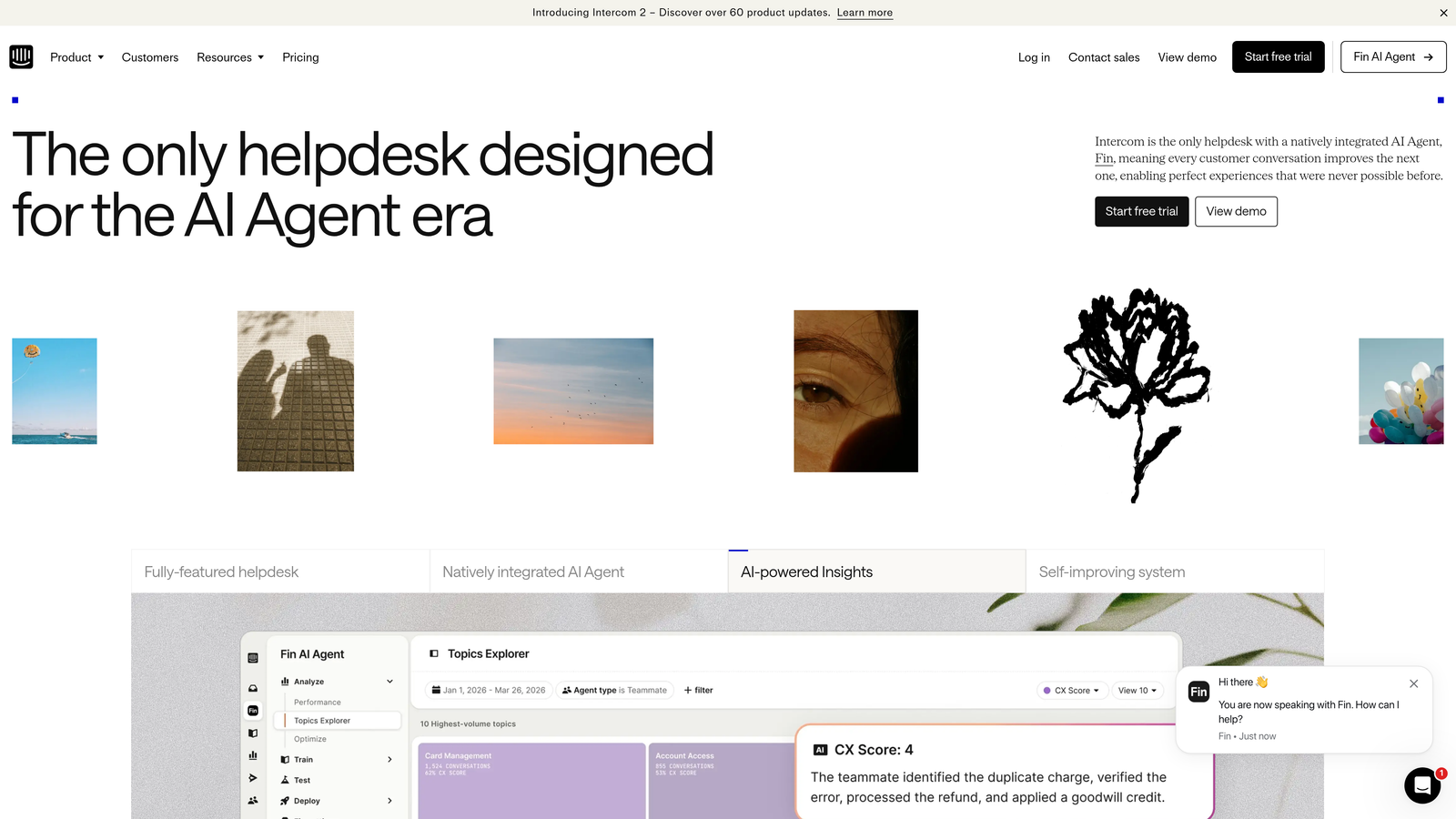
Intercom is one of the most established conversational support platforms, combining its Fin AI agent with live chat, email, and an extensive app ecosystem.
Where This Tool Shines
Fin, Intercom's AI agent, is one of the stronger performing AI agents in the market for multi-turn conversational resolution. It draws on your existing knowledge base and conversation history, which means teams with well-maintained documentation can see meaningful deflection relatively quickly after setup.
The unified inbox that combines AI-handled conversations, live chat, and email in one view is genuinely well-executed. For teams managing support across multiple channels, the consolidation alone reduces coordination overhead.
Key Features
Fin AI Agent: Handles multi-turn conversations with strong resolution capability built on your existing knowledge base content.
Unified Inbox: Combines AI, live chat, and email in a single interface for agents.
300+ App Integrations: Extensive marketplace covering CRM, billing, analytics, and engineering tools.
Customizable Workflows: Automated routing rules and workflow builder for complex support logic.
Best For
Mid-market and enterprise teams that want a mature, well-supported platform with strong AI resolution and broad integration coverage. Also well-suited to teams that already use Intercom for marketing or product communications and want to consolidate onto one platform.
Pricing
Essential plan starts at approximately $39/month. Fin AI usage is billed separately on a per-resolution basis, so costs can scale with volume. Verify current pricing at time of purchase.
3. Zendesk
Best for: Enterprise teams with complex workflows, SLA requirements, and multi-channel support needs.
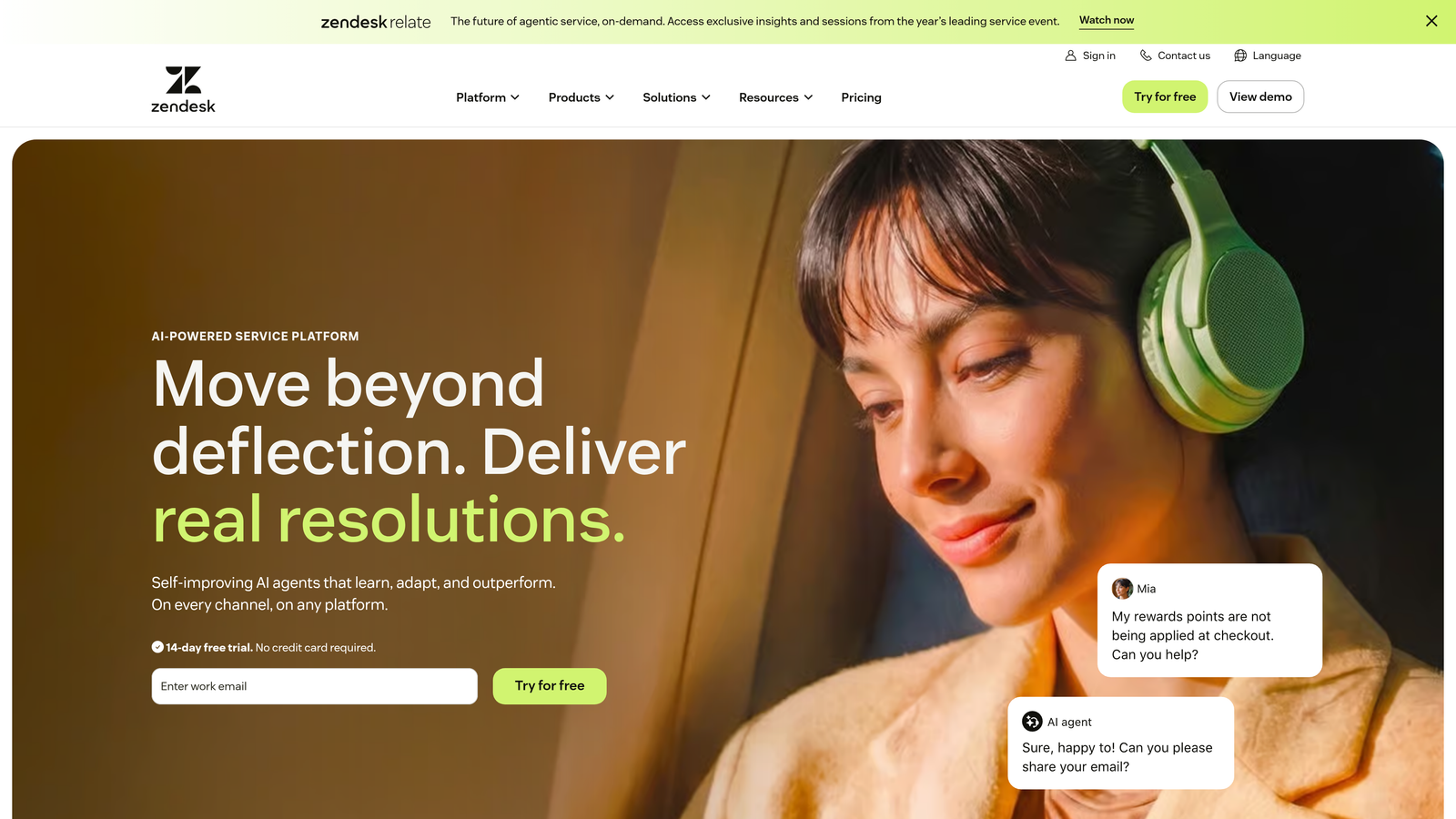
Zendesk is the market leader in enterprise helpdesk software, with AI Agents layered across email, chat, voice, and messaging channels.
Where This Tool Shines
Zendesk's strength is its depth. The platform handles complex SLA management, compliance controls, and reporting requirements that most smaller platforms simply can't match. If your support operation has regulatory requirements or needs granular workflow customization, Zendesk's infrastructure is hard to beat.
The 1,500+ integration marketplace means almost any tool in your stack already has a Zendesk connector. That breadth matters during evaluation, especially if you're migrating from another platform and need to maintain existing integrations.
Key Features
AI Agents: Handle deflection and resolution across all channels, evolved from the earlier Answer Bot capability.
Advanced SLA Management: Granular SLA policies, compliance controls, and escalation rules for complex enterprise requirements.
Robust Reporting Suite: Deep analytics across ticket volume, resolution times, agent performance, and customer satisfaction.
1,500+ Integrations: The largest marketplace of any platform on this list.
Best For
Enterprise support teams with complex workflows, strict SLA requirements, and large agent headcounts. Also a strong fit for organizations that need extensive compliance controls or are managing support across many channels simultaneously. Less ideal for teams prioritizing AI-native architecture over established helpdesk infrastructure.
Pricing
Suite Team starts at approximately $55/agent/month. AI features are available on higher tiers. A 14-day free trial is available without requiring a sales call.
4. Freshdesk (Freddy AI)
Best for: SMBs and growing teams that want capable AI support features at a budget-friendly price point.
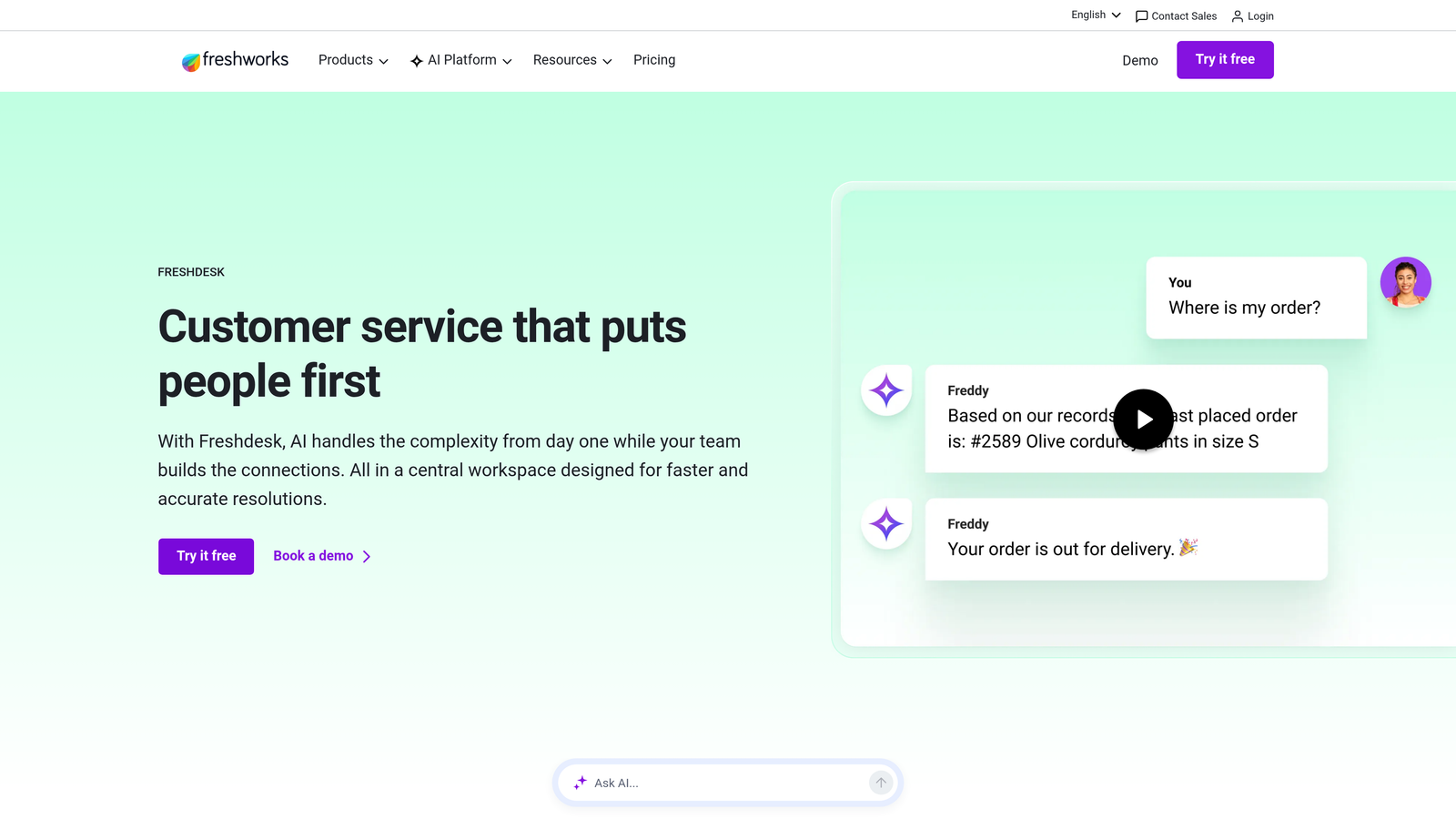
Freshdesk is Freshworks' support platform, with Freddy AI handling ticket triage, suggested responses, and self-service deflection across the product suite.
Where This Tool Shines
Freshdesk's combination of a free tier and accessible paid plans makes it one of the most approachable platforms for teams that are earlier in their support automation journey. You can get meaningful functionality running without a large upfront commitment, which makes the trial period genuinely useful for evaluation rather than just a demo.
Freddy AI has improved substantially in recent years. Triage, auto-tagging, and response suggestions work well for teams with structured ticket data. The native integration with Freshsales and Freshservice also makes Freshdesk attractive for organizations already in the Freshworks ecosystem.
Key Features
Freddy AI Triage: Automatic ticket categorization, priority assignment, and tagging to reduce manual routing work.
Freddy Self Service: Deploy AI-powered chatbots for self-service deflection without custom development.
Free Tier: Available for up to 2 agents, making it genuinely accessible for small teams evaluating the platform.
Native Freshworks Integration: Connects directly with Freshsales and Freshservice for teams using the broader Freshworks stack.
Best For
SMBs and teams with limited budgets that still want meaningful AI capability. Also a natural fit for organizations already using Freshworks products who want to keep their stack consolidated.
Pricing
Free plan available for up to 2 agents. Growth plan starts at approximately $15/agent/month. Freddy AI features are available on higher tiers. Pricing should be verified at time of purchase.
5. Tidio
Best for: E-commerce businesses needing fast, no-code AI chat deployment with native Shopify and WooCommerce integration.
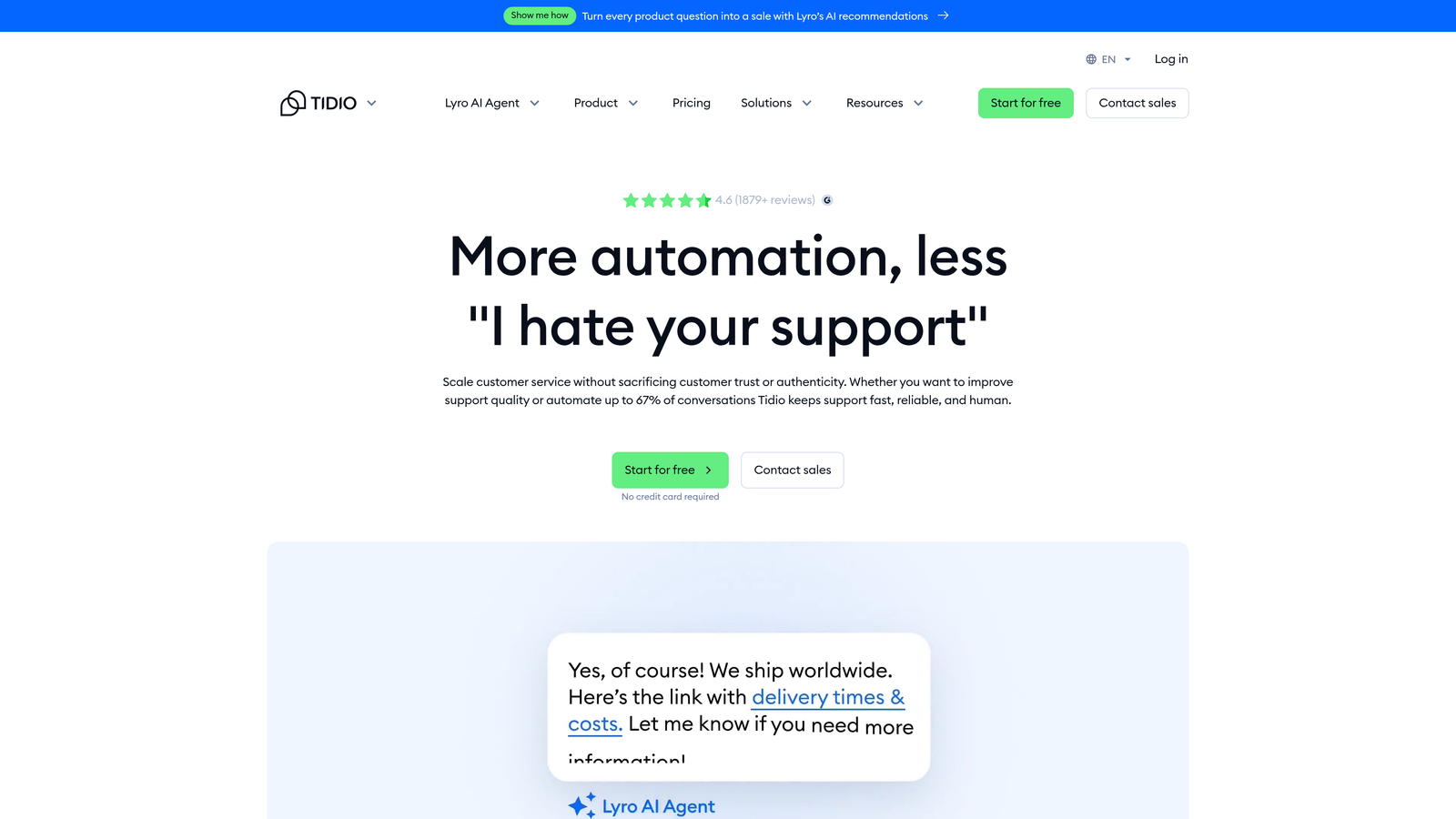
Tidio is an AI chat platform built around its Lyro AI chatbot, designed for rapid deployment without technical configuration.
Where This Tool Shines
Tidio's real advantage is speed to deployment. The no-code setup means a small e-commerce team can have Lyro AI handling common queries within hours of signing up, not weeks. For businesses with high-volume, repetitive queries around orders, shipping, and returns, that fast time-to-value matters.
The native Shopify and WooCommerce integrations give Lyro access to order data that makes its responses more useful than a generic chatbot. That said, Tidio is purpose-built for e-commerce patterns and is less suited to complex B2B SaaS support scenarios where queries require deep product context.
Key Features
Lyro AI Chatbot: No-code AI chatbot configuration that handles common queries without developer involvement.
Native E-Commerce Integrations: Direct Shopify and WooCommerce connectors for order-aware responses.
Live Chat Fallback: Mobile agent app for human handling when Lyro reaches its limits.
Visual Flow Builder: Drag-and-drop chatbot flow creation for teams that want more control over conversation paths.
Best For
E-commerce businesses, particularly those on Shopify or WooCommerce, with high volumes of repetitive customer queries. Less suitable for B2B SaaS teams with complex, product-specific support needs.
Pricing
Free plan available. Lyro AI starts at approximately $29/month with usage-based conversation pricing for higher volumes. Verify current tier limits before committing.
6. Drift (Salesloft)
Best for: B2B companies where support and sales qualification happen through the same chat channel.
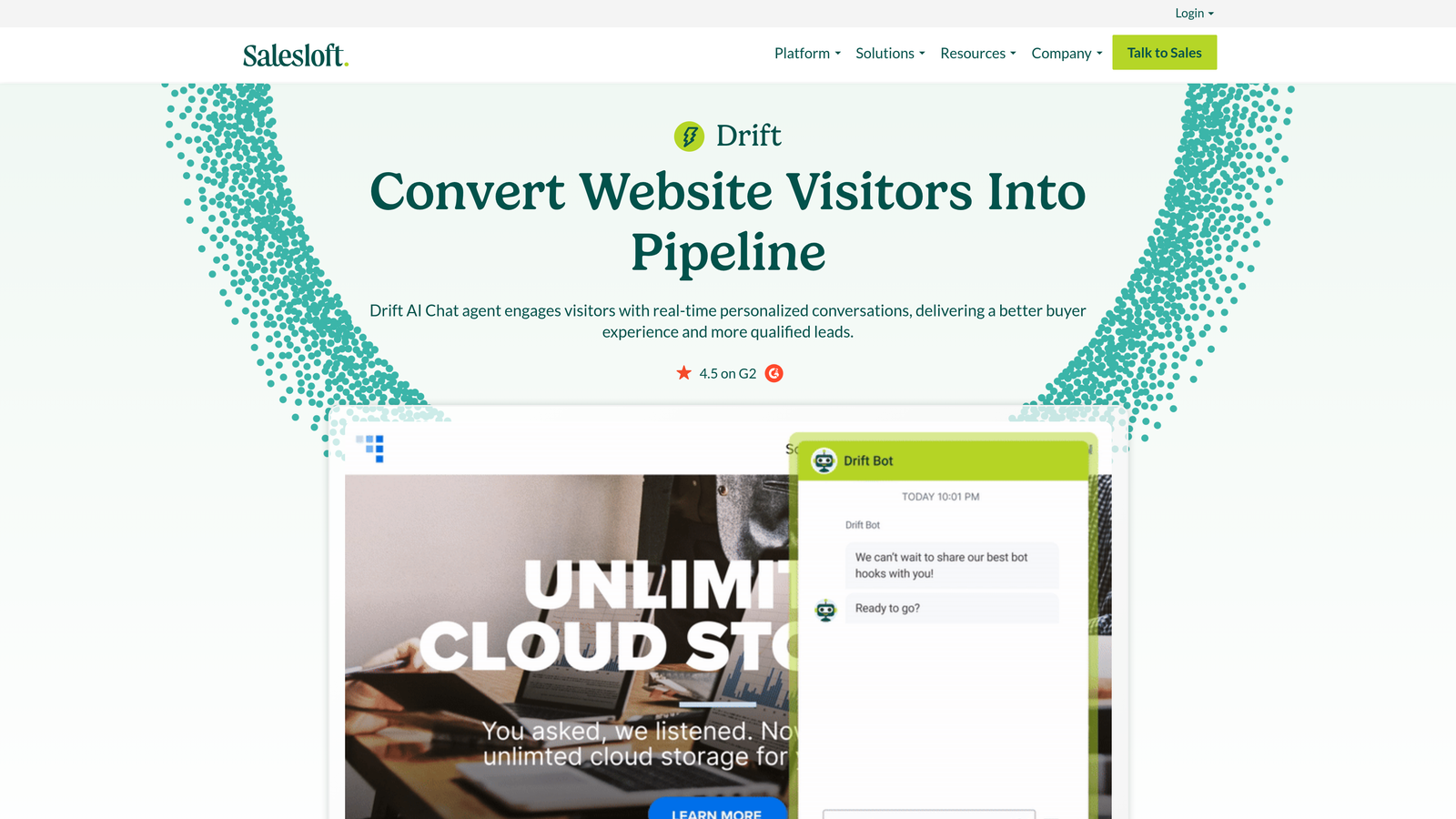
Drift is a conversational platform that blends support automation with revenue qualification, now operating as part of the Salesloft suite.
Where This Tool Shines
Drift occupies a unique position: it's designed for organizations where the same chat widget serves both inbound support visitors and potential buyers. The AI routes conversations between support resolution and sales pipeline qualification based on visitor signals, which is genuinely useful for B2B companies with a product-led or inbound sales motion.
The Salesloft integration means conversation data flows directly into sales workflows. For revenue teams that want support and sales operating from the same data layer, that consolidation has real value. Keep in mind that Drift's pricing reflects its enterprise positioning, which makes the trial evaluation especially important before committing.
Key Features
Dual-Purpose AI Routing: Intelligently routes between support resolution and sales pipeline qualification based on visitor intent signals.
Bionic Chatbots: Combine AI-driven responses with human playbooks for hybrid conversation handling.
Account-Based Targeting: Personalized chat experiences based on company identity and account data.
Native Salesloft and Salesforce Integration: Conversation data flows directly into CRM and sales engagement workflows.
Best For
B2B companies with an inbound sales motion where support and pipeline qualification share the same front door. Enterprise teams already using Salesloft who want to consolidate conversational data.
Pricing
Premium tier starts at approximately $2,500/month. Enterprise pricing is available on request. Trial access typically requires a demo call at higher tiers.
7. Kustomer
Best for: High-volume consumer support operations that need a full customer timeline as the foundation for AI triage.
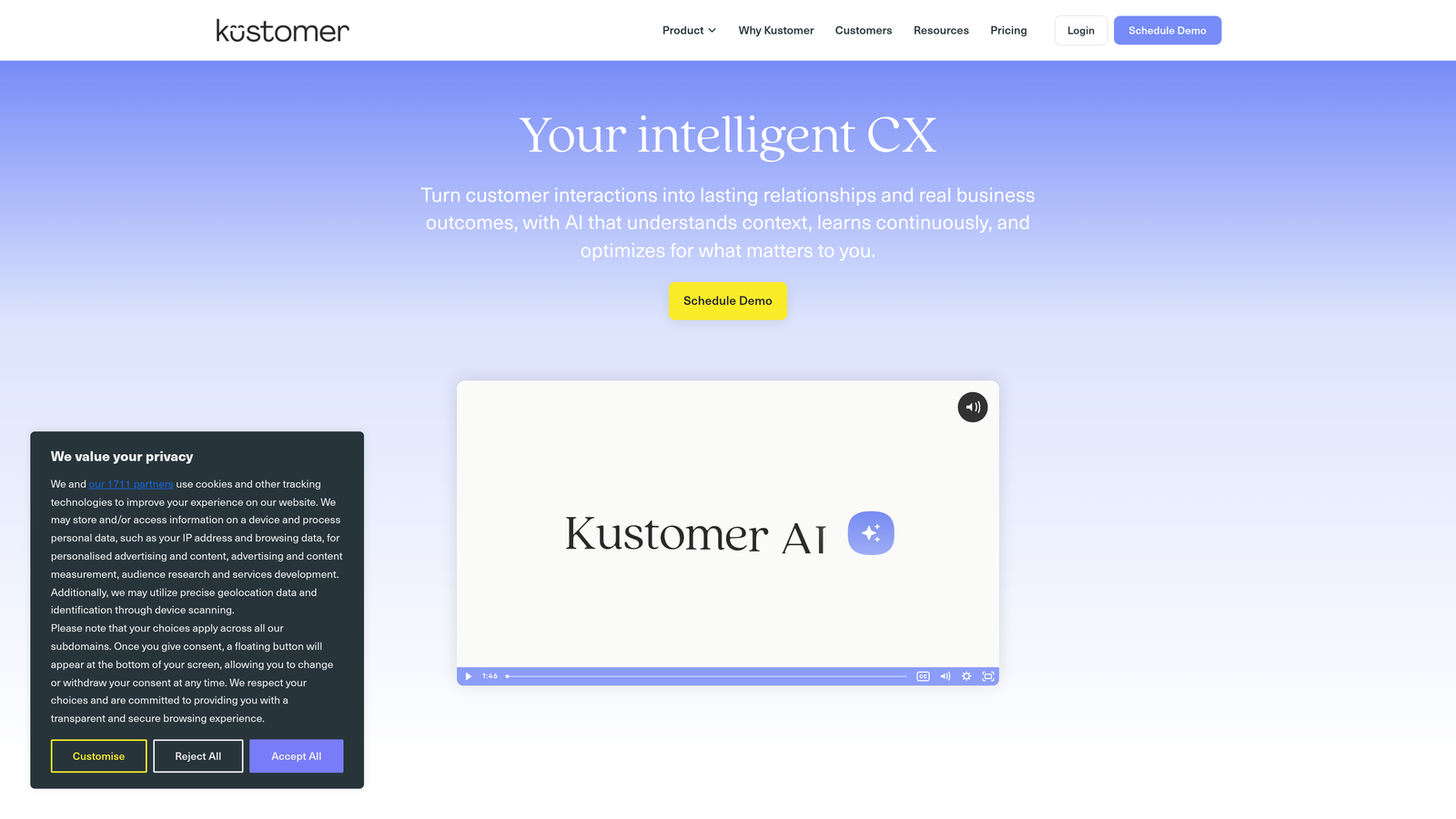
Kustomer is a CRM-native support platform that builds AI triage and automation on top of a unified customer history across all touchpoints.
Where This Tool Shines
Kustomer's differentiator is the depth of customer context it brings to every interaction. Rather than treating each ticket as an isolated event, the platform surfaces the full customer timeline: past orders, previous conversations, account status, and interaction history. For support teams handling complex customer relationships, that context changes the quality of both AI and human responses.
The omnichannel coverage is broad, spanning email, chat, SMS, social, and voice. Teams managing support across many channels with customers who expect consistent, context-aware service will find Kustomer's approach well-matched to that challenge.
Key Features
Unified Customer Timeline: Full interaction history across all touchpoints as the foundation for every support conversation.
AI-Powered Routing and Triage: Intelligent ticket assignment and prioritization based on customer context and query type.
Omnichannel Support: Covers email, chat, SMS, social media, and voice in a single platform.
No-Code Workflow Builder: Visual automation builder for creating complex routing and escalation logic without developer involvement.
Best For
Enterprise and mid-market companies with high-volume consumer support operations where customer history is central to resolution quality. Less suited to early-stage teams or those with simpler support patterns.
Pricing
Enterprise pricing starts at approximately $89/agent/month. Contact Kustomer directly for full pricing details. Trial access typically involves a sales engagement.
8. Help Scout
Best for: Teams that want AI efficiency tools to assist agents rather than fully autonomous resolution.
Help Scout is a human-friendly helpdesk with AI assist features designed to make agents faster rather than replace them entirely.
Where This Tool Shines
Help Scout takes a deliberately different philosophy from most platforms on this list. Instead of pushing toward autonomous AI resolution, it focuses on making human agents more effective through AI tools like conversation summarization, response drafting, and knowledge base deflection. For teams where high-quality human interaction is a brand priority, that approach is genuinely compelling.
The clean, minimal UI also means agent onboarding time is significantly lower than enterprise platforms. Teams that have struggled with Zendesk or Intercom adoption will often find Help Scout refreshingly straightforward.
Key Features
AI Summarize: Instantly summarizes long conversation threads so agents can get context on handoffs without reading everything.
AI Drafts: Suggests complete response drafts that agents can review, edit, and send, reducing time-to-reply.
AI Answers: Self-service knowledge base deflection that handles common queries before they reach the inbox.
Minimal, Fast UI: Low agent onboarding time compared to more complex enterprise platforms.
Best For
Teams that prioritize human-quality support and want AI as an efficiency layer rather than a replacement. Also well-suited to companies that have found enterprise helpdesks overly complex for their actual support volume and workflows.
Pricing
Standard plan starts at approximately $22/user/month. Plus plan at approximately $44/user/month. A free trial is available without requiring a sales call. Transparent per-user pricing makes budgeting straightforward.
9. Gorgias
Best for: E-commerce brands needing autonomous resolution of order-related tickets with deep Shopify, BigCommerce, or Magento integration.
Gorgias is a support platform built specifically for e-commerce, with native order data access that enables autonomous resolution of returns, refunds, and tracking queries.
Where This Tool Shines
Gorgias does one thing exceptionally well: it connects directly to Shopify, BigCommerce, and Magento order data, which means the AI can autonomously handle order status checks, return initiations, and refund processing without any agent involvement. For e-commerce brands where a large portion of tickets follow predictable patterns around order management, that automation has a direct impact on support costs.
The per-ticket pricing model is worth understanding during your trial. Unlike every other platform on this list that charges per seat, Gorgias charges by ticket volume. That model can work in your favor if your team is large but ticket volume is manageable, or against you during peak seasons.
Key Features
Native Order Data Access: Direct integration with Shopify, BigCommerce, and Magento for order-aware AI responses.
Autonomous Order Resolution: Handles tracking inquiries, return initiations, and refunds without agent involvement.
Revenue Statistics: Shows the direct relationship between support interactions and sales conversion.
Per-Ticket Pricing: Charges by ticket volume rather than by seat, which is unusual and worth modeling against your specific support patterns.
Best For
E-commerce brands on Shopify, BigCommerce, or Magento with high volumes of order-related support tickets. Not a fit for SaaS or B2B support teams whose queries don't center on transactional order data.
Pricing
Starter plan at approximately $10/month covering 50 tickets. Pricing scales with ticket volume rather than seat count. Model your typical monthly ticket volume carefully before committing to a tier.
Which Platform Is Right for Your Team?
The honest answer is that the best support automation platform is the one that fits your specific support patterns, team size, and existing stack, not the one with the most impressive demo.
Here's a quick orientation by use case. If you're a B2B SaaS team that wants AI-first architecture with genuine product context and business intelligence, Halo AI is purpose-built for that scenario. If you're migrating off a legacy enterprise helpdesk and need the deepest workflow customization and SLA management, Zendesk is the established choice. For SMBs watching budget carefully, Freshdesk's free tier and accessible paid plans make it the easiest starting point. E-commerce brands with Shopify or BigCommerce should look hard at Gorgias for order automation or Tidio for fast no-code deployment. And if your chat widget needs to serve both support and sales qualification simultaneously, Drift's hybrid positioning is hard to replicate elsewhere.
One piece of advice that applies to every trial on this list: test with your real ticket data, not demo content. Sandboxed environments consistently mask performance gaps that only appear when your actual query patterns hit the AI. Most platforms allow you to import historical tickets or connect a live channel during the trial period. Use that capability.
Also ask specifically which AI features are active versus locked during the trial. Several platforms on this list limit their most capable AI functionality to paid tiers, which means a standard trial can give you an incomplete picture of what you're actually buying.
Your support team shouldn't scale linearly with your customer base. Let AI agents handle routine tickets, guide users through your product, and surface business intelligence while your team focuses on complex issues that need a human touch. See Halo in action and discover how continuous learning transforms every interaction into smarter, faster support.