10 Best Support Automation Software Compared for 2026
This support automation software comparison evaluates the top 10 platforms for 2026 based on AI sophistication, integration capabilities, deployment ease, and actual automation rates. Whether upgrading from legacy systems or building new support infrastructure, this analysis focuses on which tools genuinely reduce human workload while maintaining customer satisfaction in an era of rapidly advancing AI and rising customer expectations.
 Matt PattoliFounder13 min read
Choosing the right support automation software can mean the difference between scaling your customer experience gracefully and drowning in ticket backlogs. With AI capabilities advancing rapidly and customer expectations at an all-time high, the landscape has shifted dramatically.
This comparison breaks down the top support automation platforms based on real capabilities: AI sophistication, integration depth, ease of deployment, and actual automation rates. Whether you're replacing a legacy helpdesk or building your support stack from scratch, we've evaluated each tool on what matters most—how much human workload it actually removes while keeping customers satisfied.
1. Halo AI
Best for: Companies seeking autonomous AI agents that continuously learn and improve from every customer interaction.
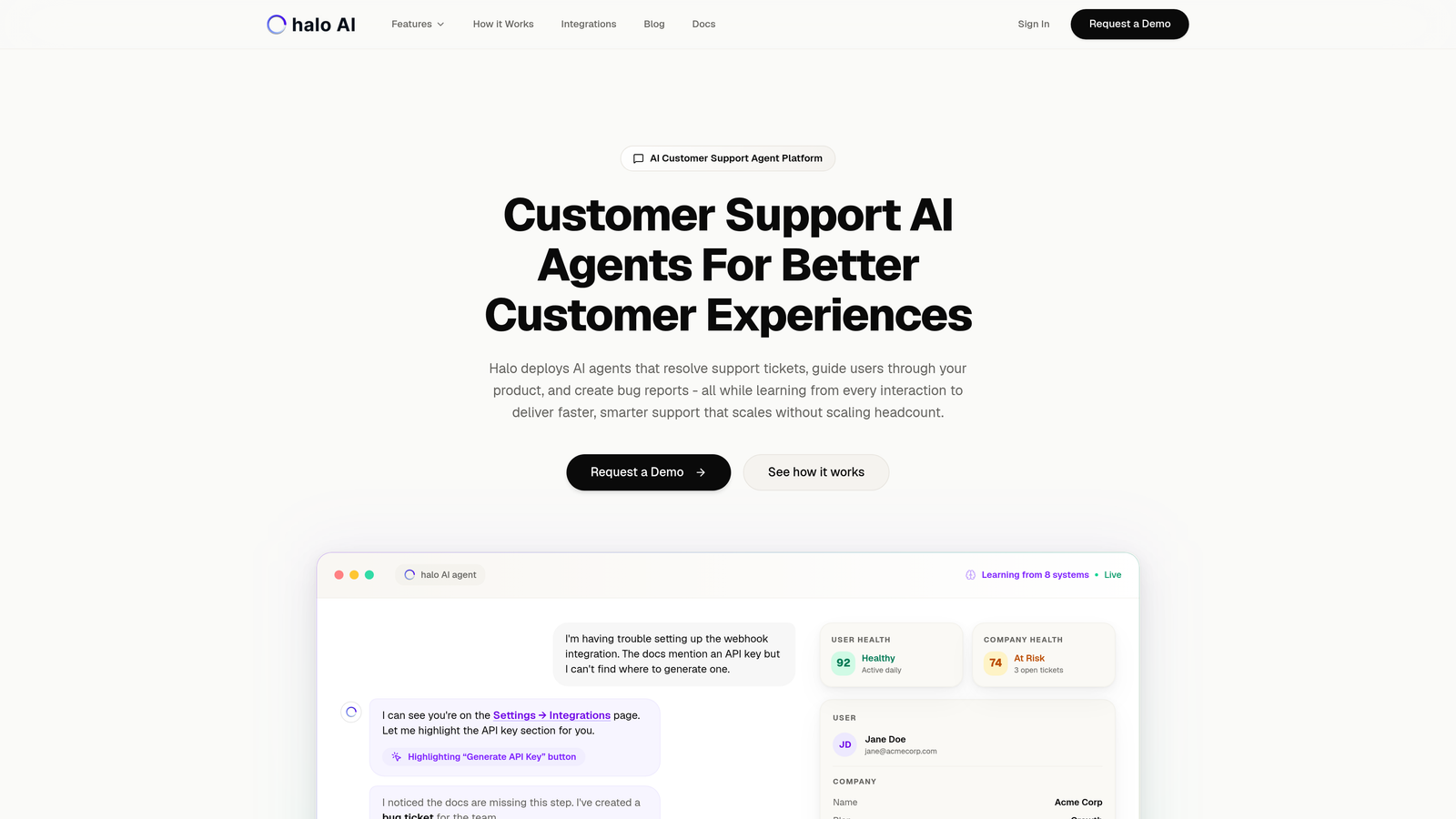
Halo AI is an AI-native customer support platform built from the ground up for autonomous ticket resolution, not a traditional helpdesk with AI bolted on.
Where This Tool Shines
Unlike platforms that added AI features to existing helpdesk infrastructure, Halo was designed with AI agents as the foundation. This architectural difference shows in how the system handles context—it's page-aware, meaning it sees what your users see in your product and can provide visual UI guidance alongside text responses.
The continuous learning architecture sets it apart from rule-based automation. Every interaction trains the system to handle similar issues better next time, creating a support experience that gets smarter without manual intervention. This means your automation rates improve over time rather than staying static.
Key Features
Autonomous AI Agents: Handle complete ticket resolution cycles from start to finish, not just deflection or routing.
Page-Aware Chat Widget: Sees user context and product state to provide relevant visual guidance and contextual help.
Continuous Learning Architecture: Improves resolution accuracy with every interaction, building institutional knowledge automatically.
Smart Inbox with Business Intelligence: Surfaces anomaly detection, customer health signals, and revenue intelligence beyond basic support metrics.
Deep Integration Ecosystem: Connects to Linear, Slack, HubSpot, Intercom, Stripe, Zoom, PandaDoc, and Fathom with auto bug ticket creation.
Best For
B2B SaaS companies and product teams that need support to scale without scaling headcount. Particularly valuable if you're using multiple systems like Zendesk, Freshdesk, or Intercom and want AI that connects across your entire business stack.
Pricing
Contact for pricing; scales based on resolution volume rather than agent seats, aligning costs with actual automation value delivered.
2. Zendesk AI
Best for: Enterprise teams needing mature helpdesk infrastructure with extensive integrations and layered AI capabilities.
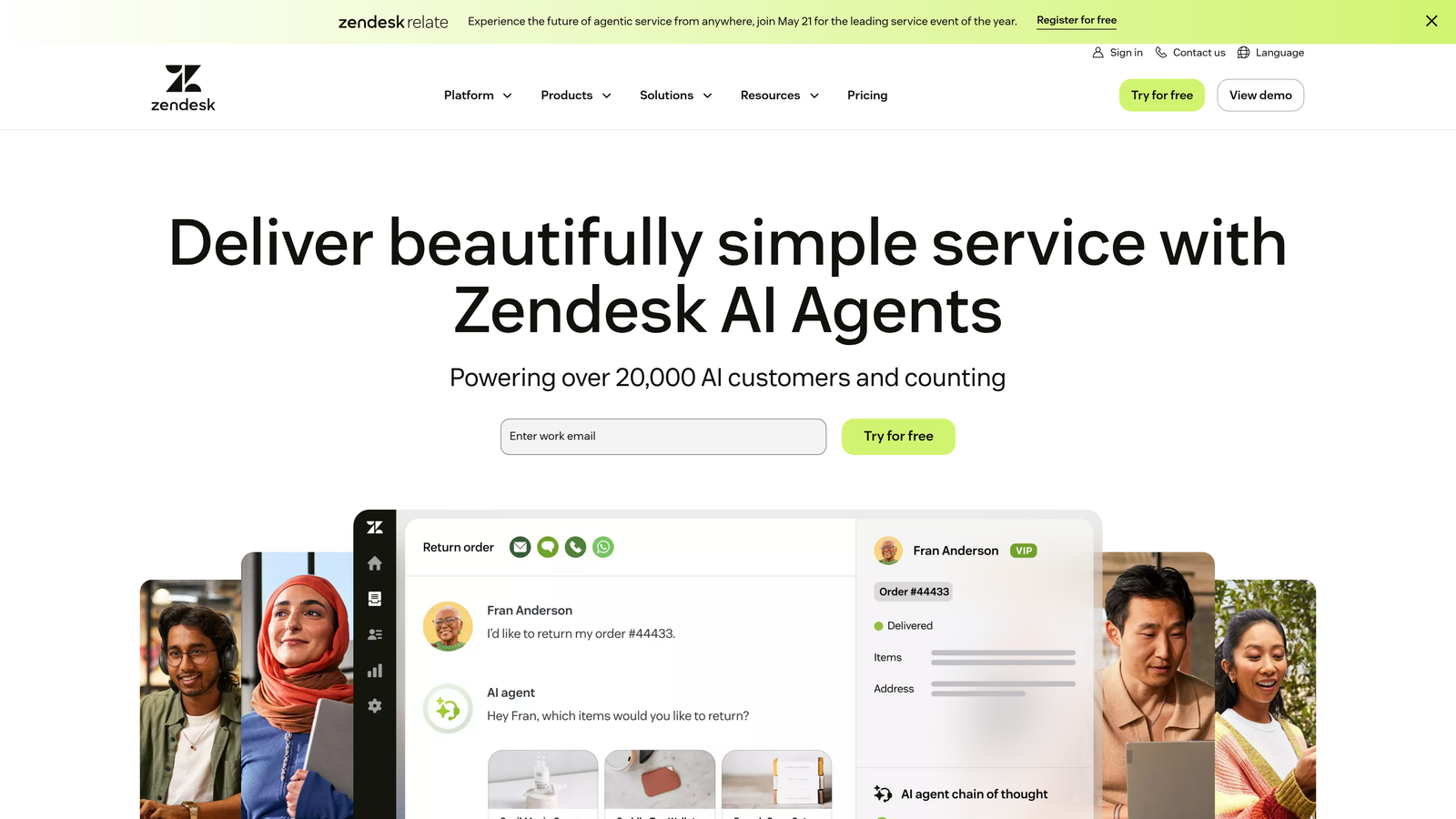
Zendesk AI is an enterprise-grade helpdesk platform with AI capabilities layered onto its mature ticketing ecosystem, offering extensive marketplace integrations and workflow automation.
Where This Tool Shines
Zendesk brings decades of helpdesk experience to the table. The platform's 1,500+ app marketplace integrations mean you can connect virtually any business tool. For large enterprises with complex workflows across multiple departments, this ecosystem depth is difficult to match.
The analytics and reporting suite is comprehensive, giving managers visibility into team performance, customer satisfaction trends, and ticket volume patterns. If you need detailed reporting for stakeholders or compliance requirements, Zendesk delivers enterprise-grade dashboards.
Key Features
AI-Powered Answer Bot: Deflects common questions by surfacing help center articles, though it requires significant content library setup.
Agent Assist: Suggests responses and articles to agents during live conversations, speeding up resolution times.
Extensive App Marketplace: Over 1,500 integrations covering CRM, analytics, project management, and communication tools.
Omnichannel Support: Unified agent workspace for email, chat, phone, social media, and messaging platforms.
Advanced Workflow Automation: Customizable macros, triggers, and automations for routing and task management.
Best For
Large enterprises with established support operations that need robust reporting, compliance features, and extensive third-party integrations. Works well for teams with dedicated Zendesk administrators who can manage complex configurations.
Pricing
Suite Team starts at $55 per agent per month. AI capabilities are priced as separate add-ons, which can increase total cost significantly for teams wanting full automation features.
3. Intercom Fin
Best for: Product-led companies wanting conversational AI that combines in-app messaging with automated resolution.
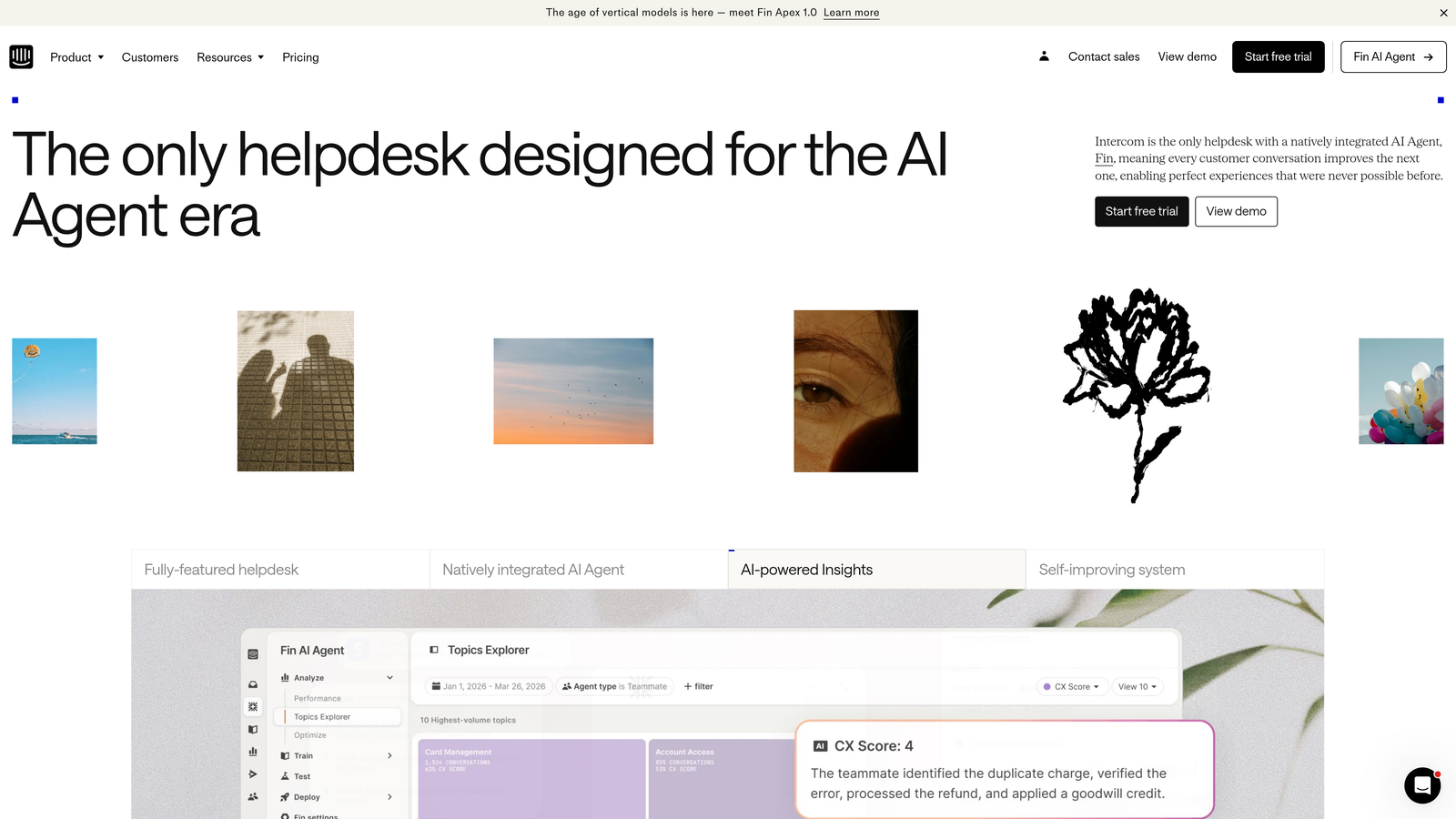
Intercom Fin is a conversational support platform with Fin AI agent designed for product-led companies, combining in-app messaging with AI-powered resolution and seamless human handoff.
Where This Tool Shines
Intercom excels at proactive, in-app support. The platform lets you reach customers inside your product with targeted messages, product tours, and contextual help. This proactive approach can prevent support tickets before they happen.
Fin AI trains on your help center content and can resolve customer questions directly in chat. The handoff to human agents is smooth, with full conversation context transferred. This hybrid approach works well for teams that want AI assistance but aren't ready for fully autonomous agents.
Key Features
Fin AI Agent: Trained on your documentation to answer customer questions with natural language understanding.
In-App Messaging: Engage customers inside your product with contextual messages based on behavior and properties.
Proactive Support Campaigns: Trigger targeted messages to specific user segments to reduce support volume.
Custom Bot Workflows: Build conversation flows without coding for common support scenarios.
Resolution Reporting: Track AI performance metrics and identify which questions Fin handles successfully versus escalates.
Best For
SaaS companies with product-led growth models that want to engage users proactively. Particularly valuable if you're focused on user onboarding and reducing time-to-value through in-app guidance.
Pricing
Essential starts at $39 per seat per month. Fin AI is charged separately per resolution, which can make budgeting complex as volume scales.
4. Freshdesk Freddy AI
Best for: Mid-market companies seeking cost-effective helpdesk automation with unified ticketing across channels.
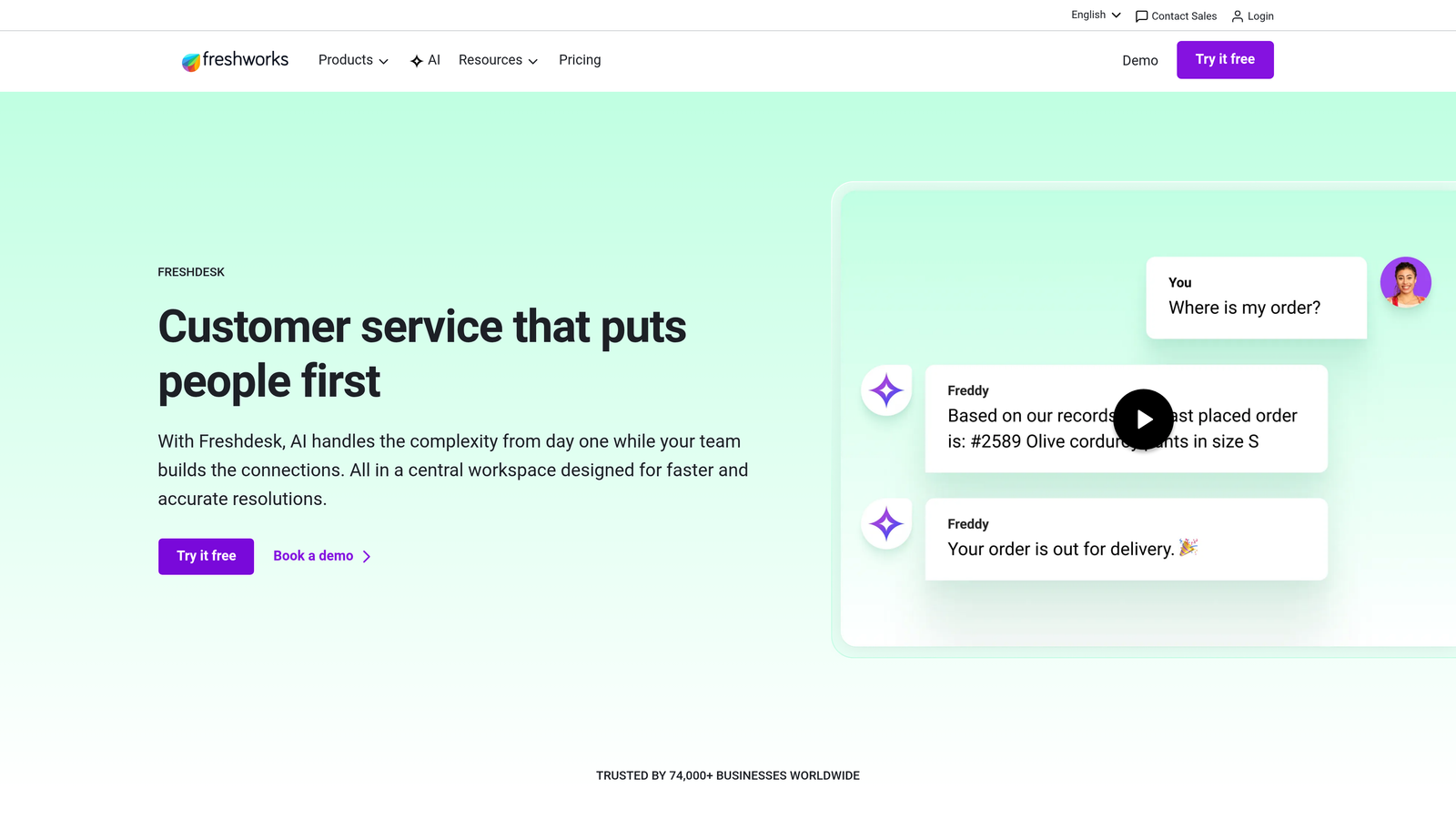
Freshdesk Freddy AI is a cost-effective helpdesk solution with Freddy AI assistant, offering unified ticketing and automation features suited for mid-market companies seeking value.
Where This Tool Shines
Freshdesk delivers solid helpdesk fundamentals at an accessible price point. The free tier makes it easy to start small and upgrade as your team grows. For budget-conscious teams, this flexibility removes financial barriers to getting started with support automation.
Freddy AI handles ticket categorization and suggests responses to agents, reducing manual sorting work. The scenario automations let you build complex workflows without developer resources, making it accessible for teams without technical expertise.
Key Features
Freddy AI Assistant: Automatically categorizes tickets, suggests responses to agents, and surfaces relevant knowledge base articles.
Unified Inbox: Manage email, chat, phone, and social media conversations from a single agent workspace.
Scenario Automations: Build complex workflow automations with conditional logic for routing and task assignment.
Self-Service Portal: Customer-facing knowledge base with search and community forums to deflect tickets.
SLA Management: Set service level agreements with automatic escalation rules and violation alerts.
Best For
Growing companies that need professional helpdesk capabilities without enterprise pricing. Works well for teams transitioning from email-based support to a structured ticketing system with basic AI assistance.
Pricing
Free tier available for small teams. Pro plan starts at $49 per agent per month, offering good value for mid-market budgets.
5. Ada
Best for: Enterprise organizations needing multilingual conversational AI at scale with no-code bot building.
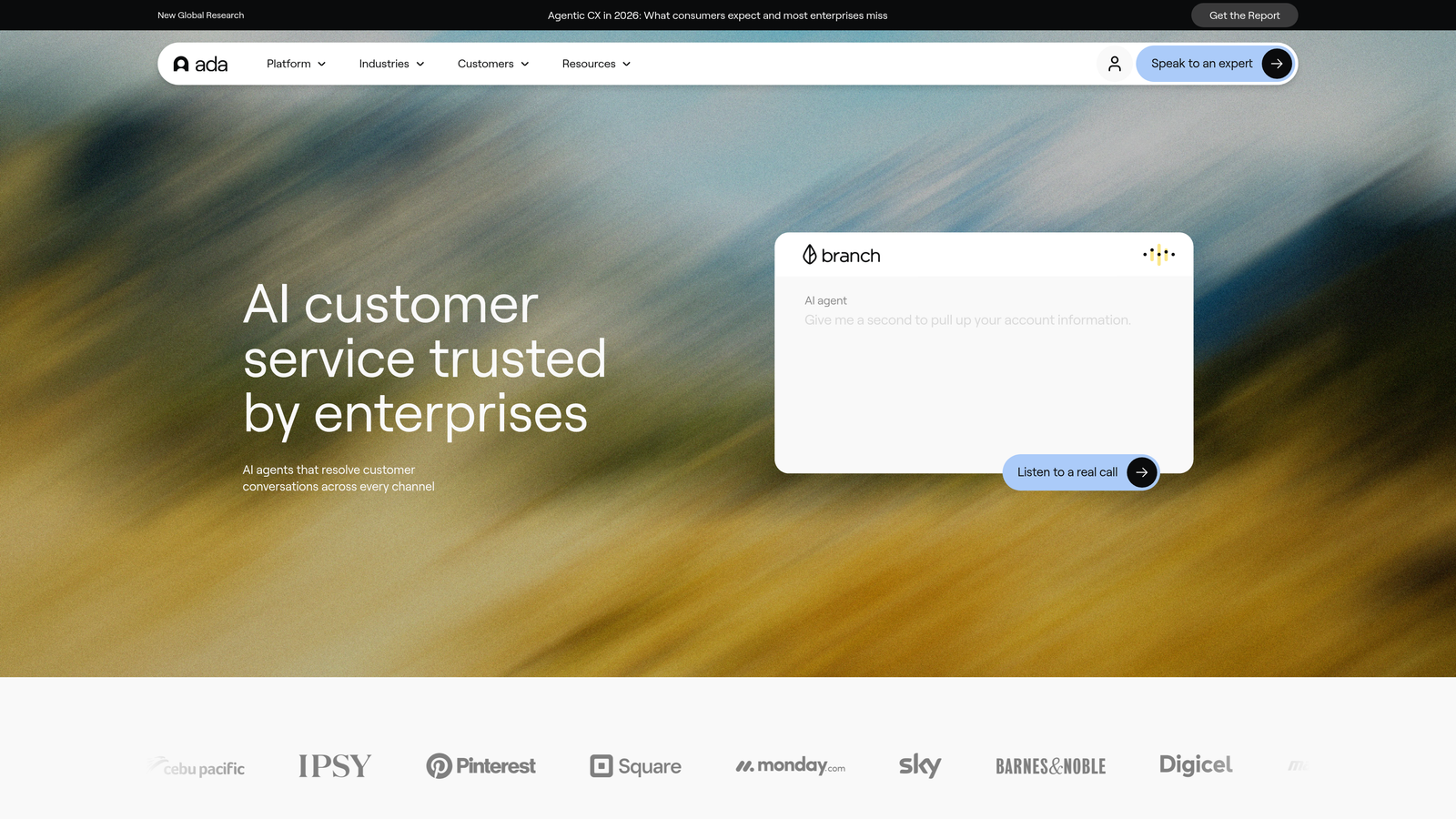
Ada is an enterprise conversational AI platform focused on automated customer service at scale, with no-code bot building and strong multilingual support.
Where This Tool Shines
Ada's 50+ language support out of the box makes it ideal for global companies. The platform handles multilingual conversations without requiring separate bot configurations for each language, significantly reducing setup complexity for international teams.
The no-code conversation builder empowers non-technical team members to create and modify bot flows. This democratization of bot building means your support team can iterate on automation without waiting for developer resources.
Key Features
No-Code Conversation Builder: Visual interface for creating complex conversation flows without programming knowledge.
50+ Language Support: Handle customer conversations in dozens of languages with a single bot configuration.
Proactive Campaigns: Trigger automated conversations based on customer behavior and attributes for personalized engagement.
Contextual Handoff: Transfer conversations to live agents with full conversation history and customer context.
Enterprise Security: SOC 2 compliance, GDPR readiness, and advanced security features for regulated industries.
Best For
Large enterprises with global customer bases that need multilingual support automation. Particularly valuable for companies in regulated industries requiring strong security and compliance features.
Pricing
Custom enterprise pricing based on conversation volume and feature requirements. Contact sales for specific quotes.
6. Gorgias
Best for: E-commerce businesses with Shopify or BigCommerce stores needing order management inside support conversations.
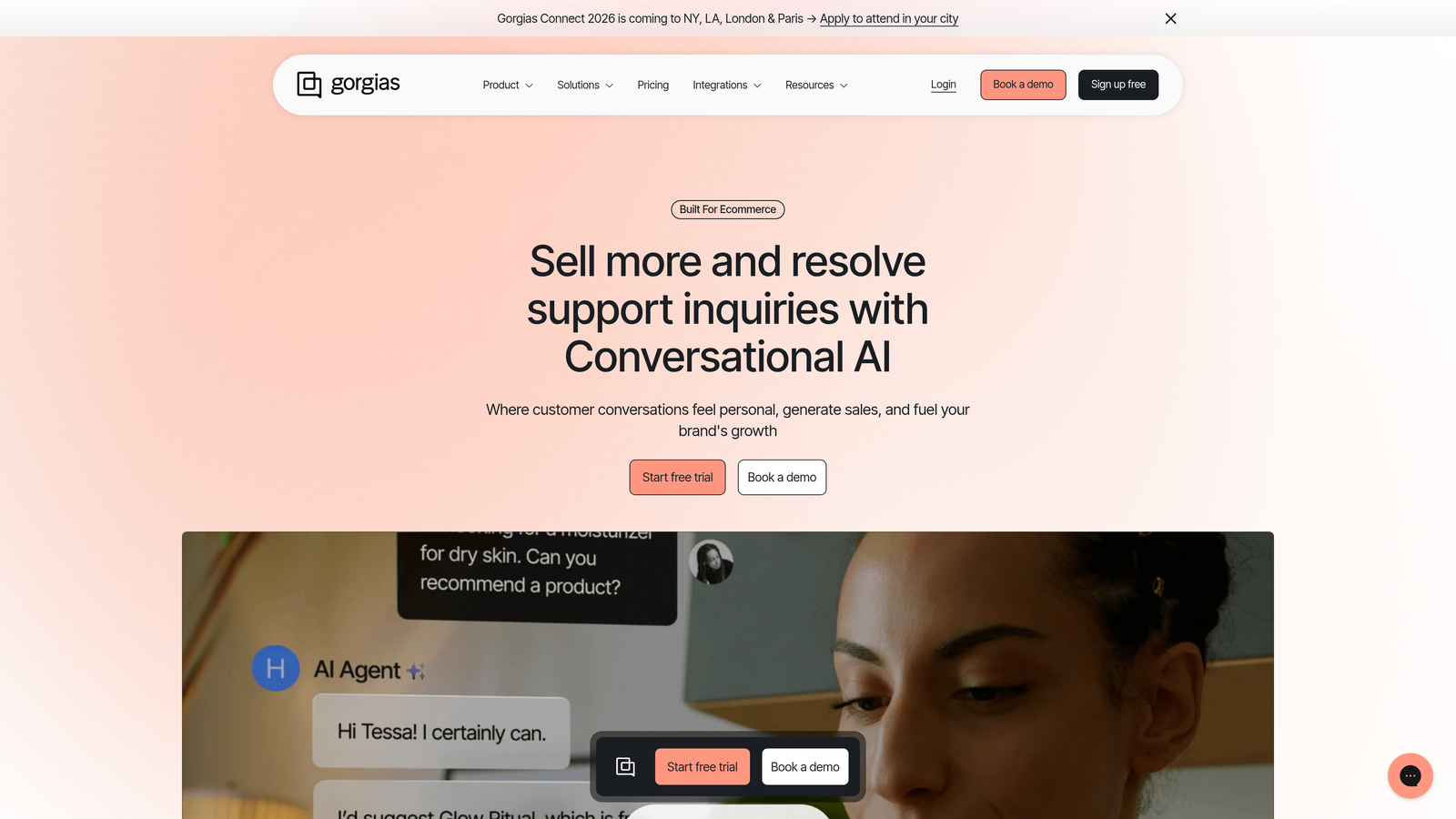
Gorgias is an e-commerce-focused helpdesk with deep Shopify and BigCommerce integrations, enabling support teams to drive revenue through automated customer interactions.
Where This Tool Shines
Gorgias brings order data directly into support conversations. Agents can view order details, process refunds, and modify shipments without leaving the helpdesk. This integration depth dramatically reduces resolution time for e-commerce support queries.
The platform tracks revenue statistics tied to support interactions, showing which conversations led to upsells or prevented cancellations. This revenue attribution helps justify support team investments and optimize for customer lifetime value.
Key Features
One-Click Order Management: View, edit, refund, and track Shopify/BigCommerce orders directly in support tickets.
Revenue Attribution: Track sales and revenue generated through support conversations to measure team impact.
Automated Order Responses: Pre-built automation for common queries like "where's my order" using real-time shipping data.
Social Media Management: Respond to Instagram comments and Facebook messages alongside email and chat tickets.
Dynamic Macros: Create response templates with variables that pull live customer and order information.
Best For
E-commerce brands selling through Shopify or BigCommerce that handle high volumes of order-related support queries. Particularly valuable during peak shopping seasons when support volume spikes.
Pricing
Starter plan at $10 per month for 50 tickets, then scales with ticket volume. Growth plan pricing increases based on monthly ticket count.
7. Help Scout
Best for: Teams prioritizing personal customer relationships while adding thoughtful AI assistance and collaboration features.
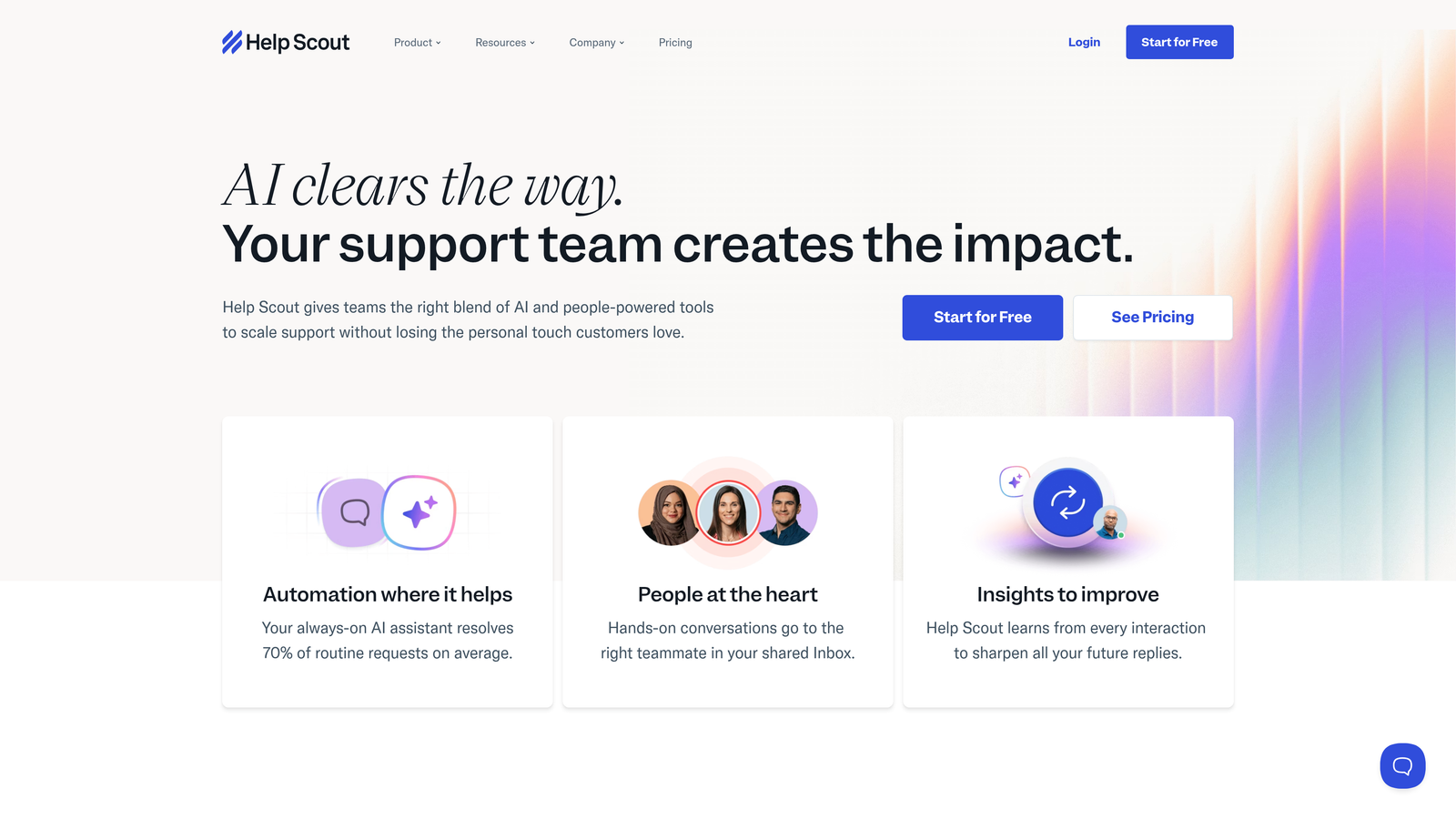
Help Scout is a human-centric helpdesk designed for teams that prioritize personal customer relationships while adding thoughtful automation and AI assistance.
Where This Tool Shines
Help Scout's interface feels like email, reducing the learning curve for new team members. The clean, distraction-free design keeps agents focused on customer conversations rather than navigating complex software.
The AI drafts and summarization features assist agents without replacing the human touch. The platform suggests response drafts that agents can edit, maintaining personal tone while speeding up replies. This balanced approach appeals to teams that value relationship-building over pure efficiency metrics.
Key Features
AI Drafts: Generate suggested responses for agents to edit and personalize before sending.
AI Summarization: Automatically summarize long conversation threads to help agents quickly understand context.
Beacon Widget: Embeddable help widget combining documentation search, contact forms, and live chat.
Collision Detection: Prevents multiple agents from responding to the same conversation simultaneously.
Built-In CSAT: Customer satisfaction ratings integrated into every conversation with automatic follow-up requests.
Best For
Small to mid-sized teams that view support as a relationship-building function rather than a cost center. Works well for companies with complex products where personalized guidance creates competitive advantage.
Pricing
Standard plan at $20 per user per month. Plus plan at $40 per user per month adds AI features and advanced automation.
8. Kustomer
Best for: Companies wanting CRM-style customer timelines with AI-powered routing for context-rich support interactions.
Kustomer is a CRM-style support platform offering a unified customer timeline view with AI-powered routing and agent suggestions for context-rich interactions.
Where This Tool Shines
Kustomer displays customer history as a unified timeline rather than separate tickets. Agents see all past interactions, purchases, and account changes in chronological order. This holistic view helps teams understand customer context quickly and provide more informed responses.
The AI-powered conversation classification automatically tags and routes inquiries based on content and customer attributes. This intelligent routing ensures customers reach the right specialist without manual triage, reducing resolution time and improving first-contact resolution rates.
Key Features
Customer Timeline View: Single chronological view of all customer interactions across channels and time periods.
AI Conversation Classification: Automatically categorize and tag conversations based on content analysis.
Intelligent Routing: Route conversations to appropriate teams based on customer data, conversation content, and agent skills.
Business Process Automation: Build workflows that trigger actions across integrated systems based on support events.
Real-Time Dashboards: Monitor team performance, conversation volume, and customer satisfaction in live dashboards.
Best For
Companies with complex customer journeys where understanding full account history is critical to resolution. Particularly valuable for subscription businesses and high-touch B2B sales models.
Pricing
Enterprise pricing starting around $89 per user per month, with final costs varying based on feature requirements and conversation volume.
9. Tidio
Best for: Small businesses and startups needing accessible live chat with AI chatbots through an intuitive visual builder.
Tidio is an accessible support automation platform for small businesses, combining live chat with AI chatbots and an intuitive visual bot builder.
Where This Tool Shines
Tidio's visual chatbot builder makes automation accessible to non-technical users. The drag-and-drop interface with pre-built templates means you can launch basic automation in minutes rather than weeks. For small teams without developer resources, this ease of setup removes traditional barriers to chatbot deployment.
The free tier includes core live chat functionality, making it easy to start conversations with website visitors immediately. Mobile apps let small teams provide support on the go, which is valuable for lean operations where team members wear multiple hats.
Key Features
Visual Chatbot Builder: Drag-and-drop interface with pre-built templates for common automation scenarios.
Lyro AI: Conversational AI that learns from your content to answer customer questions automatically.
Live Chat with Visitor Tracking: See what pages visitors browse and engage proactively based on behavior.
Email Marketing Integration: Capture leads through chat and sync to email campaigns automatically.
Mobile Apps: Respond to chats from iOS and Android devices for on-the-go support coverage.
Best For
Small businesses, startups, and solopreneurs who need basic live chat and chatbot automation without enterprise complexity or pricing. Ideal for teams just starting to build support infrastructure.
Pricing
Free tier available with basic live chat. Communicator plan at $29 per month adds advanced chatbot features and removes branding.
10. Front
Best for: Operational teams needing collaborative inbox management with AI-powered rules for shared email workflows.
Front is a collaborative inbox platform that brings team email into a shared workspace with AI-powered rules and automation for operational teams.
Where This Tool Shines
Front transforms individual email inboxes into collaborative team workspaces. Team members can see who's handling which conversations, leave internal comments with @mentions, and collaborate on responses before sending. This transparency prevents duplicate responses and improves team coordination.
The AI-powered message tagging and routing automatically categorizes incoming emails and assigns them to appropriate team members. This automation reduces manual triage work while maintaining the familiar email interface that teams already know.
Key Features
Shared Inbox: Centralize team email while maintaining individual email addresses and personal inboxes.
AI-Powered Tagging: Automatically categorize and tag messages based on content and sender attributes.
Internal Comments: Discuss customer emails internally with @mentions before responding externally.
Workflow Automation: Build rules that route, assign, and tag messages based on conditions and triggers.
Analytics Dashboard: Track team response times, message volume, and SLA compliance across the team.
Best For
Operations teams, sales groups, and small support teams that primarily use email and want collaboration features without adopting a traditional helpdesk interface. Works well for teams transitioning from shared Gmail accounts.
Pricing
Starter plan at $19 per seat per month for basic features. Growth plan at $59 per seat per month adds AI capabilities and advanced automation.
Making the Right Choice
The right support automation platform depends on where you are and where you're headed. If you're a B2B SaaS company looking for AI that actually learns and improves over time, Halo AI's continuous learning architecture delivers automation that scales with you. For enterprises already invested in Zendesk's ecosystem, adding their AI capabilities might be the path of least resistance.
E-commerce teams will find Gorgias's deep Shopify integration invaluable during peak seasons. Product-led companies benefit from Intercom's proactive in-app messaging. Small businesses just starting out can launch quickly with Tidio's accessible chatbot builder.
Here's a quick selection guide by priority:
For Maximum Automation: Halo AI and Ada lead in autonomous resolution capabilities, though Halo's continuous learning gives it an edge for long-term improvement.
For Enterprise Scale: Zendesk and Kustomer offer the depth of features and compliance requirements large organizations need.
For E-Commerce: Gorgias is purpose-built for Shopify and BigCommerce stores with order management needs.
For Budget Constraints: Freshdesk and Tidio provide solid functionality at accessible price points with free tiers to start.
For Email-Based Teams: Front and Help Scout maintain familiar email workflows while adding collaboration and automation.
The most important step is defining what you mean by "automation" before you evaluate tools. Are you looking to deflect simple questions to help center articles? Route tickets more intelligently? Or achieve true autonomous resolution where AI handles complete ticket lifecycles? Your answer determines which platform architecture makes sense.
Your support team shouldn't scale linearly with your customer base. Let AI agents handle routine tickets, guide users through your product, and surface business intelligence while your team focuses on complex issues that need a human touch. See Halo in action and discover how continuous learning transforms every interaction into smarter, faster support.